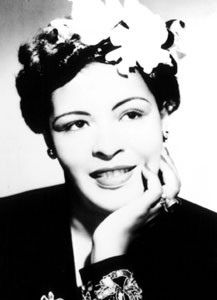
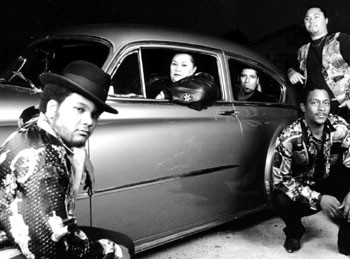
Bad Ass Blues: Etta James and the Roots Band rolls into the Robert Mondavi Summer Festival.
Popping the Summer Cherry
The long-awaited summer event season bursts with juice
By Davina Baum and Sara Bir
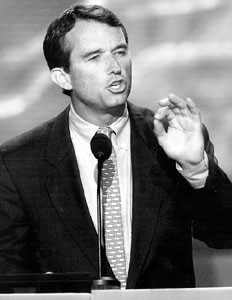
Summer in the North Bay is a panoply of pleasures, a litany of larks. For those who don’t have the luxury of three-month summer vacations, the long, sunny days go the distance in convincing us that lunch breaks in the park and early-evening bike rides down shady winding roads (swerving around the touristic masses) confer summer’s bounty well enough. But the weekend, the weekend! That’s when summer really kicks in, that’s when the choices become wrenching–when a weekend could involve rocking with Cinderella, talking water conservation with Robert F. Kennedy Jr., dipping fingers in some Italian street painting, and sitting back for some jazz at Rodney Strong (all June 7-9), if you plan it right.
Although there’s certainly a large something to be said for sitting in the hammock with a book all day, drinking lemonade and sucking on cherries, summer invites a certain amount of activity. Herewith, activities galore. The next few months are a wine-swilling, booty-shaking, fine-food-scarfing extravaganza, so plot it out carefully and save the relaxing for October.
May | June | July | August | September
Busy Beyond His Years: Julian Lage has a hectic summer ahead: He performs at the Jenner Concert Series, the Healdsburg Jazz Festival, and Jazz on the River.
May
Jenner Concert Series
The Jenner Theater has been upgraded and is ready to rock with local and international music, all for a great cause: Portions of proceeds benefit the Jenner Watershed Legal Fund. Heat up the dance floor with Julian Lage, the Dave Mac Nab Trio, and others. May 25-June 29. Jenner Theater, behind gas station, downtown Jenner. $15. 707.865.2771 or 707.865.1938. (SB)
Luce warms up the summer days.
Daze on the Green
A little alternative rock is just what the soul needs to get summer kick-started, and Mill Valley is happy to comply–with a little help from Sweetwater and KFOG. Benefiting the Southern County Youth Athletic and Music programs, this May 27 event rocks out with Stroke 9, Box Set, Vinyl, and Luce. Mill Valley Community Center Field, Mill Valley. Admission is $8. 415.388.2820. (DB)
Bluegrass in the Valley
If bluegrass gets you going, skip the Daze on the Green (see previous) and head straight for Sunday’s Bluegrass in the Valley. After all, proceeds benefit the same organization, and for $5 you can see Peter Rowan, the David Thom Band, the Modern Hicks, and the Alhambra Valley Band. May 26 at the Mill Valley Community Center Field, Mill Valley. 415.388.2820. (DB)
Babatunde Lea closes the Healdsburg Jazz Fest.
Healdsburg Jazz Festival
There will be a vast array of talent spreading itself around Healdsburg for the fourth annual Healdsburg Jazz Festival this year. Early birds can get warmed up on May 27 at 8pm with a prefestival benefit at the Healdsburg Hotel when film archivist Mark Cantor screens a few gems of jazz cinema. The festival officially kicks off on May 31 at the Raven Film Center (7pm and 9pm; $30) with African rhythms maestro Randy Weston in a solo piano recital. On June 1, the festivities move outdoors to the Rodney Strong Vineyard with a triple bill (noon; $35): the Cedar Walton Trio (featuring Jackie McLean), Curtis Fuller Super Band (James Williams, Javon Jackson, Michael Bowie, and Louis Hayes), and the Julian Lage Group (Art Hirahara, Todd Sickafoose, and Alan U’Ren). Before you know it, it’s over, with the festival finale on June 2 on the Healdsburg Plaza (2pm; free) with the powerfully talented Babatunde Lea Quintet. In addition to these main events, the festival offers a number of free concerts–see if you can keep up. On May 31 the Jeff Pittson Trio performs at the Healdsburg Hotel (8pm-midnight); the Eddie Marshall Quartet shakes up Felix and Louie’s on June 1 (9pm); and the Mark Levine Trio delivers a delightful jazz brunch on June 2, also at Felix and Louie’s (11am-3pm). Healdsburg Town Square. Tickets are available online at www.healdsburgjazzfestival.com or by calling 707.433.4633. (DB)
Wine Country Classic
Watch 30 of the world’s premier racing cars roar out of retirement at the Sears Point Raceway’s Wine Country Classic. From a 1915 Ford Model T to the 1985 Tyrell F1, all of the cars once competed for motor racing’s Holy Grail: the FIA Formula One World Championship. There will be hot-rod drag racing and a classic car rally through the lovely streets of Sonoma to the Plaza downtown with the Sonoma Valley Vintage Racecar Festival. May 29-June 2, Sears Point Raceway, Highways 37 and 121, Sonoma. Prices vary. 1.800.870.RACE. (SB)
Friday at Falkirk Cultural Series
No more fretting over how to kick off the weekend: San Rafael’s Falkirk Cultural Center has three Friday events all planned out for you. May 31’s “Totally Tango!” explores the dance, music, and food of Argentina. Slide into swanky old standards with June’s “Jazz Impressions of Cole Porter.” Falkirk transforms into a tiki paradise with the “Exotica Tribute to Martin Denny,” an evening of swizzle-stick contests, exotic drinks, and onstage totem carving. May 31-July 26, times vary. Falkirk Cultural Center, 1408 Mission Ave., San Rafael. $15 general; $13 Falkirk members. 415.485.3327. (SB)
Photograph by Joy Phoenix
Artist Genna Panzarella makes street magic.
June
Heritage Festival
If the varieties of food don’t get you (catfish, pad thai, ableskiver, kringle, borscht, baklava, cabbage rolls) then perhaps the dancing will (Greek line dancing, Thai dance and boxing, African American stomp). Or maybe it’s the world-wise handicrafts that will have you running for the Petaluma Community Center on June 1 to attend this first annual Multicultural Heritage Day. Petaluma Community Center, 320 N. McDowell Blvd., Petaluma. $8 adults. 707.763.9556. (DB)
Art at the Source
Open studios are an amazing thing, a rare chance to see artists in their native habitat. This year’s Art at the Source is especially celebratory as Sebastopol Center for the Arts recently inaugurated their new, expanded headquarters. Over two weekends (June 1-2, June 8-9), 92 artists and craftspeople will swing open their barn doors, chicken coops, lofts, or studios, and allow curious visitors to observe how they live and work. It’s entirely individualized: You can see one studio, or you can see them all (good luck!). Develop your own self-guided tour by visiting the Center’s preview exhibit or by looking at the catalog online at www.artatthesource.org. Sebastopol Center for the Arts is at 6780 Depot St., Sebastopol. 707.829.4797. (DB)
Marin Home Show
While you’re shopping for corian, shiny faucets, and the latest in recycled building material at the Marin Home Show on June 1-2, you might feel a little bump in your step, a little wiggle in your rear. It’s not the bulldozer demonstration shaking things up–it’s the jazz bands, of course. With acts like the Royal Society Jazz Orchestra and Rex Allen’s Swing Express playing, home and garden improvement has never seemed so satisfying. Marin Center Civic Center, San Rafael. $6. Check www.marinhomeshow.com for more information. 415.472.3500. (DB)
Valley of the Moon Art Association Art Show
On the super-quaint Sonoma Plaza, artists will offer their wares. This is an all-weekend event, but if you go on Sunday you can partake in the Ox Roast (see below). June 1-2, Sonoma Plaza, Sonoma. 707.996.1090. (SB)
37th Annual Ox Roast
The roasting in question is just not any ox–it’s a massive barbecue of Harris Ranch beef in Sonoma’s Plaza. Add corn on the cob, Sonoma Valley wines, and the Valley of the Moon Art Association’s art show to the equation, and you have yourself a damn fine afternoon. Stroll the plaza, roasted ox and wine in hand, and browse through local artists’ booths. The handpainted Sonoma Valley cows you may have spotted hanging around the Valley (don’t worry, they’re fiberglass, not living) will be lined up in front of city hall, mooing along with the jazz and rock bands playing. Sunday, June 2, 11am-5pm, Sonoma Plaza, Sonoma. 707.996.1090. (SB)
Healthful Living Extravaganza
If the doleful winter months have seen you planted firmly on the couch with a TV dinner on one side and a beer on the other, it’s time to learn a little bit about the benefits of healthful living. At this Healthful Living Extravaganza at the Napa County Fairgrounds on June 2, speakers such as Howard Lyman (“the Mad Cowboy”), the Benton Sisters, and Hans Diehl will put their best feet forward, sharing the knowledge of healthful living to all and sundry. Napa County Fairgrounds, Tubbs Building, 1435 N. Oak St., Calistoga. $10 donation. Preregistration is advised. Call 707.987.3995. (DB)
Hit the Road Jack Run
This 10K run, a certified ASATF course, is about as lovely as you can get, scenerywise. For you walkers and runners who just don’t feel like running a whole 10K, there’s a 2.2-mile course for y’all. Sunday, June 2, 8am. Sonoma Plaza, Sonoma. $17 adults; $13 ages 16 and under, if registration is postmarked by May 23. $20/$15, on day of the race. For more information, call 707.938.8544. (SB)
Virginia Woolf Conference
This isn’t your typical summer festival: no cotton candy or roller coasters, no smooth jazz in the sun, just hundreds of like-minded literary folk celebrating the talent of Virginia Woolf. A variety of multimedia presentations, including a musical essay, a dance performance, panels, films, and of course readings aplenty. June 6-9, Sonoma State University, 1801 E. Cotati Ave., Rohnert Park. 707.664.2882. (DB)
Photograph by Marina Chavez
Don’t stop believin’ in Journey.
Konocti Field
Konocti is going all out this year, serving as the one-stop concert venue for all the aging rockers out there. The lineup is jaw-dropping in all its hair band glory: Meat Loaf (July 6), Scorpions and Deep Purple (July 31), Lynyrd Skynyrd (Aug. 2), Heart (Aug. 3), Journey (Aug. 23), Sammy Hagar (Sept. 1). Did I forget to mention a triple bill of Poison, Cinderella, and Winger (June 7)? Make sure your lighters work, tease your hair out to there, and dig out the daisy dukes. 8727 Soda Bay Road, Kelseyville. 800.660.LAKE. (DB)
Sonoma Odyssey Bayou Boogie
Thirty Russian River wineries uncork their best at the Sonoma Odyssey, a gala replete with a Sonoma-style barbecue, a silent and live wine auction, and boogie tunes from Gator Beat (I don’t think they will be serving any gator, sadly). Proceeds go to the Sonoma County Wine Library. Psst! You gotta make reservations. Saturday, June 8, 3pm. Richard’s Grove and Saralee’s Vineyard, 3575 Slusser Road, Windsor. $30 WLASC members; $40 nonmembers. 707.837.2816. (SB)
Voices In Harmony: Copper Wimmin’s a cappella stylings will ring through the Health and Harmony Festival.
Health and Harmony Festival
From the Goddess Temple to the psychic readers to the Inner Peace Meditation Garden, there’s no lack of healing energy at this year’s Health and Harmony Festival (June 8-9 at Sonoma County Fairgrounds). Harness that energy and direct it toward the five stages, where ongoing entertainment encourages lots of wriggle dancing and harmonious swaying. Let the music move you, man. Daytime entertainment on Saturday includes the Robben Ford Band, Copper Wimmin, and Lost at Last, among others. On Sunday, groove to Taj Mahal, Jai Uttal and the Pagan Love Orchestra, and more. Saturday night kicks in with the Techno Tribal Community Dance. The festival’s theme, “One Planet, One People, One Peace at a Time,” will be expanded upon by speakers Robert F. Kennedy Jr. and Caroline Casey. Admission is $17-$20; $20-$25 for Saturday evening’s dance. Sonoma County Fairgrounds, Santa Rosa. 707.547.9355. (DB)
Italian Street Painting Festival
The streets of San Rafael burst into color during the Youth in Arts Italian Street Painting Festival. The event brings together 400 professional and student madonnari (street painters) and is modeled after a festival in Grazie di Curtatone, Italy. Besides live music and tasty treats, there’s a “Festival Mercato” (that’s “market” to you) and a “Children’s Avenue,” where junior can become a madonnari, too. Saturday and Sunday, June 8-9, 9am-6pm. Fifth and A streets, San Rafael. 415.457.4878. (SB)
Petaluma Art and Garden Festival
This is a brand-new festival that aims to provide a stylish and fun atmosphere for shoppers to get acquainted with downtown Petaluma. Food and winetastings, children’s art activities, an art display and sale, and a garden sale will compose the merriment–and there’s live entertainment, too. Sunday, June 9, 9am-6pm, A Street parking lot and Kentucky Avenue, Petaluma. 707.762.9348. (SB)
Hiroshima’s smooth jazz accompanies smooth wine.
Rodney Strong Vineyards Summer Concert Series
Smooth jazz pairs perfectly with big, fruity Chardonnay. How convenient that Rodney Strong would offer the two in the same place. The 2002 Concert Series starts on June 9 at 3pm with Richard Elliot, Warren Hill, Marc Antoine, and Jeff Golub. The summer event moves slowly toward harvest season with Bobby Caldwell and Joyce Cooling (June 29, 3pm), Hiroshima and Strunz & Farrah (July 20, 4pm), and Dave Koz and Friends (Aug. 18, 3pm). 11455 Old Redwood Hwy., Healdsburg. 707.431.0919. (DB)
Napa Valley Opera House
On Friday, June 14, at 8pm, the halls of the Napa Valley Opera House will ring out with song for the first time in 88 years. And what a song it will be. Grammy Award-winner Dianne Reeves will reinaugurate the site in fine fashion. Other events planned for the newly renovated opera house include a community showcase of local talent on June 15 and a celebration of Cole Porter songs on June 16. Mark Levine and the Latin Tinge perform on June 18, and Dix Bruce and Jim Nunally take the stage on June 21. 1030 Main St., Napa. 707.22.OPERA. (DB)
Marin Art Festival
Between the Marin Lagoon and the Marin Civic Center in the heart of San Rafael, the Marin Arts Festival promises a relaxed atmosphere and elegant ambiance. Over 200 local artists’ work–paintings, jewelry, glassware, and more–reflect the character of Marin. There’ll be jazz quartets, hands-on art projects for children, and international cuisine in the dining pavilion. If you can’t get Dad to come out, you can at least do some Father’s Day shopping there. June 15-16, Marin Center, 10 Avenue of the Flags, San Rafael. $8. 415.472.3500. (SB)
Napa County Landmarks Walking Tours
This tour was made for walking! Learn about Napa County’s rich history, and stretch your legs a little in the process. Historians guide you through the architectural styles and forgotten stories buried under the familiar facades of Calistoga Avenue, Napa’s Mansion District, downtown Yountville, and St. Helena. There’s even a tour of Tulocay Cemetery for those of you who are more into human mortality then Gothic Revival and Queen Anne. The Saturday tours (you missed the first one, ha ha!) stretch into the early fall, so there’s plenty of opportunity to get in on the walking. June 15-October 22, 9:45am. Starting locations vary. $7 general; $2 children 3-12. 707.255.1836. (SB)
Sonoma-Marin Fair
The Petaluma Fairgrounds gets a shot of retro rock at the Sonoma-Marin Fair (June 19-23) with the dulcet tones of the Beach Boys, the reigning king of ’80s rock Eddie Money, and smooth-sailing Christopher Cross. Music’s not all there is on offer. The wine competition allows local wineries to go head to head with their neighbors, while the technology pavilion promotes 21st-century knowledge. Of course, the traditional fair accoutrements–hot dogs, cotton candy, and roller coasters–will not be in short supply. Petaluma Fairgrounds, Petaluma. $12. 707.283.FAIR. (DB)
Harvey Cohen’s seed packet art springs up at the San Anselmo Art Fest.
San Anselmo Art Festival
Stroll lovely San Anselmo, sampling fine food, taking in local craftspeople’s bounty of loot, and soaking in the warm, summer sun. For a reprieve from the heat, jump into one of San Anselmo’s 130 antique dealers. Perhaps you’ll find a bargain on an antique hand fan. June 22-23, 10am-6pm. San Anselmo Ave., between Bolinas and Tamalpais streets. 510.970.3217. (DB)
The Preservation Hall Jazz Band swings at Mondavi.
Robert Mondavi Winery Summer Festival
This year’s lineup is killer, bringing in a such a string of legendary talent that it’s mind-boggling. The festival kicks off with Omara Portuondo accompanied by the 13 Buena Vista Social Club band members, then marches into Independence Day (OK, not really–it’s July 6) with New Orleans’ Preservation Hall Jazz Band. Boz Scaggs, jazzman Dave Brubeck, and Etta James and the Roots Band round out the season’s events. All proceeds from the concerts are donated to the Napa Valley Symphony, and you, my friend, get to spend intermission dabbling in Mondavi wines and Sonoma Jack cheeses. June 22-Aug. 10, Robert Mondavi Winery, Highway 29, Oakville. $42-$95. For tickets, call 888.769.5299; for concert information, call 888.RMONDAVI. (SB)
Mill Valley Wine and Gourmet Food Tasting
What better pairing is there than food and wine? Food alone is fine, maybe a little bland, and wine alone is OK–but together they work magic. On June 23 (1-4pm), Mill Valley’s Lytton Square becomes a gourmet paradise, with over 70 local wines and 35 food producers and restaurants. It’s a gourmand’s dream. $25 advance; $28 day of event. 415.388.8466. (DB)
Concerts in the Park
Bring out the blanket and relax on yo’ can or shake your booty to the groove (it depends on whose playing, I suppose). Novato’s free Concerts in the Park (Pioneer Park, that is) span from Japanese drumming to rock and roll oldies to Dixieland jazz. June 23-Sept. 29. 415.897.4323. (SB)
Windsor Summer Nights on the Green
Make tracks to the Windsor Town Green for summer markets featuring about 38 vendors including Windsor Farmers Market, Willie Bird turkey barbecue, Pasta King pasta, Bear Republic root beer and root beer floats, live music on the bandstand, and Jubilee Jumps for the kids. Buy your vegetables and flowers for the weekend, and have dinner for around $5, all to the sounds of live music. June 27-Aug. 22, 5-8pm. Windsor Town Green, Windsor. 707.838.5382. (SB)
Jarvis Conservatory Zarzuela
The 2002 season of Jarvis Conservatory’s Zarzuela Festival (a zarzuela being an operatic Spanish performance with musicians, singers, and dancers) brings this lost art to life with two productions packed into one evening: Gigantes y Cabezudos and La Alegria de la Huerta. June 28-30. Times vary. Jarvis Conservatory, 1711 Main St., Napa. $45-$30. 707.255.5445. (SB)
Kate Wolf Memorial Music Festival
Once again, people gather to commemorate and celebrate the legacy of singer-songwriter Kate Wolf. Three days on a beautiful ranch with an array of talent: Greg Brown, Utah Phillips, Bruce Cockburn, Nanci Griffith, and Kathy Mattea, among others. It’s a worthy celebration. Ticket prices range. Call 707.829.7067 for the full story, or go online at www.monitor.net/kate. Black Oak Ranch, Laytonville. (DB)
Photograph by John Livzey
Booker T. Jones sings the blues on the river.
Russian River Blues Festival
Guerneville hosts the Russian River Blues Festival (June 29-30) again this year, and again it’s not to be missed. The big-name event includes contemporary blues vocalist Robert Cray, San Francisco favorite Tommy Castro, Coco Montoya, Deborah Coleman, Kenny Neal–and that’s only Saturday. On Sunday, the Bobby Blue Band, the W. C. Handy Award All-Stars (featuring Joe Louis Walker, Billy Bob Arnold, Maria Muldaur, Duke Robillard, and the inimitable Ruth Brown), Booker T. Jones, the Elvin Bishop Band, and Mighty Sam McClain take the stage. Johnson’s Beach, Guerneville. $35-$170. 510.655.9471. (DB)
Boys Of Summer: The Beach Boys perform at the Sonoma County Fair.
July
Marin County Fair
Hot July days cool off pretty quickly when the water gets splashing, and the Marin County Fair aims its nozzle directly at you on July 4 weekend (July 3-7, to be exact). This year’s theme, “Wa-ter Way to Go!”, might be a linguistic stretch, but it hits the right spot. In addition to all the water-related activities (like water-tasting contests, watershed exhibits, and the Great American Duck Water Race) and the rollicking carnival rides, the musical entertainment makes a big splash, with stars like Judy Collins, Arlo Guthrie, and Natalie MacMaster (July 3); Preservation Hall Jazz Band (July 4); John Kay and Steppenwolf (July 5); and Mickey Hart and Bembe Orisha (July 6). 10 Avenue of the Flags, San Rafael. $9-$11. 415.499.6400.
Green Music Festival
Sonoma State University’s Green Music Festival begins with a red, white, and blue bang on July 4. “Independence Day on the Green” promises the best fireworks in Sonoma County set to patriotic standards and Wild West film favorites. “A Midsummer Night on the Green” on Aug. 3 presents the Santa Rosa Symphony with pianist Jeffrey Kahane touring Europe through classical music. Aug. 4, get hot and spicy with “Cuban Jazz and Salsa on the Green.” There’s also a new Chamber Music Series and a special visual arts event, the largest exhibition of Ansel Adams’ photographs ever presented north of the Golden Gate Bridge, with an emphasis on Northern California and Sonoma County. Sonoma State University, 1801 East Cotati Ave., Rohnert Park. 707.546.8742. (SB)
Napa Valley Shakespeare Festival
With a brand new venue at Riverbend Plaza in downtown Napa, the Napa Valley Shakespeare Festival presents the comedy As You Like It and the tragedy Othello for their 2002 season, showing both the broody and the bawdy sides of the Bard. Bring a picnic, quaff some wine, and see the works of Will in a casual comfort the stinky peasants of the Globe Theatre could not have even dreamed of. July 5-Aug. 11, Riverbend Plaza, Napa Mill, 500 Main St., Napa. $24-$18 general. 707.251.WILL. (SB)
Art in the Park
Free music outdoors–it’s what summer’s all about (well, that’s what these listings would lead you to believe). Grab that blanket and make tracks to Juilliard Park in Santa Rosa for the Art in the Park Sunday performance series, featuring local musicians–jazz from the Heavies, the Spanish guitar of David Correa and Cascada, and Caribbean steel drums with Shabang–paired with culinary samples from fine area restaurants. A silent auction of original artwork tops off the series, and don’t forget your second annual series T-shirt, available for sale (after all, what is an arts event without a T-shirt to go with it?). July 7-Aug. 25, 5-7pm. Juilliard Park, 227 Santa Rosa Ave., Santa Rosa. Free. 707.543.3737. (SB)
Sonoma County Showcase of Wine and Food
Living to excess is what this lavish weekend (July 11-13) is all about, allowing you to indulge your every wine and food whim. This year’s theme embraces the cultures and flavors of Asia and the Pacific Rim, so delectable items will be tantalizingly plated and wine glasses will spilleth over with the bounty of the vine. The experience, while not cheap (individual events run $50-$225), encompasses a wide range of events, including “appellation experience,” winery dinners, a live auction, and a gala performance on Saturday night by the San Francisco Symphony. Call for reservations, locations, and ticket prices. 800.939.7666. (DB)
Wine Country Film Festival
Offering “films alfresco,” the Wine Country Film Festival is kind of like a drive-in movie without the car and with Sauvignon Blanc and canapès instead of soda and popcorn. Under the stars and in the vineyard with a great screen towering over them, festivalgoers last year were treated to films from the world over. This year the Wine Country Film Festival moves to a new venue at Domaine Chandon in Yountville, with both outdoor and indoor theaters. Domaine Chandon will become a Film Festival Village for two weekends, complete with a Cine Cafe. The festival’s final run moves back to its old digs in Glen Ellen’s idyllic Jack London State Historic Park and Sonoma’s Sebastiani Theatre. July 18-Aug. 11. 707.935.3456. (SB)
Marin Shakespeare Company
The Marin Shakespeare Company veers slightly off the Shakespeare path this year to present A Thousand and One Arabian Nights, directed by author-director Douglas Rushkoff. The mystical, whimsical play–featuring Arabic music, dancing, and a flourish of magic–will be shown in repertory with a piece more in line with the company’s Shakespearean past, Much Ado about Nothing (July 19-Aug. 25). The season ends with a bang with the classic Macbeth (Sept. 6-28). Forest Meadows Amphitheatre, Dominican University, San Rafael. 415.499.4488. (DB)
Sonoma County Fair
Ride the Zipper! Eat funnel cakes with strawberries and whipped cream! See the goats and the flowers! Participate in the Beach Boys lip-sync contest! Witness Charo and Tower of Power perform live and in person! Throw Ping-Pong balls at 100 goldfish bowls and miss every time! Win a 3-foot-tall fluorescent green stuffed alien! And “Ride the Wave to the Sonoma County Fair” (this year’s theme, by the way). July 23-Aug. 5, Sonoma County Fairgrounds, 1350 Bennett Valley Road, Santa Rosa. $5 general; $2 kids 12-7; free 6 and under. 707.545.4200. (SB)
Keb Mo sings out for solar living.
August
Music in the Vineyards
The eighth annual Napa Valley Chamber Music Festival’s name is a bit misleading: the concerts are not literally out among the vines, but in the stately ambiance of winery settings where audiences can experience chamber music in the intimate surroundings it was originally composed for. A roster of nationally known artists in residence (e.g., the Kronos Quartet) cozy up in host wineries including RMS Brandy Distillery, Clos Pegase, and the Hess Collection. Performances take place each weekend on Saturdays and Sundays, beginning late in the afternoon or early evening, and include a winetasting at intermission. Midweek events feature new chamber music concerts, recitals, lecture demonstrations. The two open rehearsals are free and available to the public. Aug. 7-25. $25 per concert. Call 707.578.5656 for information, 800.965.4827 for tickets. (SB)
Russian River RoadRunner Road Trip
This road trip involves neither cars nor running–but this celebration of the Russian River Wine Road does involve plenty of wine. Over 40 Russian River wineries will gather at the Road Trip to pour tastings for guests, who will also be able to munch their way through gourmet Sonoma County foods and a barbecue courtesy of the Western Boot Steakhouse. Wine seminars, a scavenger hunt, and silent and live auctions mark the day’s events, all topped off with live Western swing music, making this the summer’s most effortless road trip. Saturday, Aug. 10, 12-4pm. Kendall-Jackson Wine Center, 5007 Fulton Road, Fulton. $50 general; $35 RoadRunner members. 800.723.6336. (SB)
Sonoma County Dixie Jazz Festival
Traditional Dixie jazz explodes at the Rohnert Park Doubletree Hotel on Aug. 16-18. From ragtime to hot dance to Dixieland, the foot stomping will rattle the floors and shake the skirts. Three days, four stages, 13 bands will leave the traditional jazz fan sated–at least until the next year’s festival. Bands include Steve Waddell’s Creole Bells, the Jazz Salvation Company, Clint Baker’s New Orleans Jazz Band, Cell Block Seven, and the New Orleans Wanderers. Tickets are $20-$80. Doubletree Hotel, 101 Golf Course Drive, Rohnert Park. 707.539.3494. (DB)
Cotati Accordion Festival
In what is perhaps the best summer music event in all of Northern California, the Cotati Accordion Festival allows lucky festivalgoers to experience the beauty that is the accordion. From its intricate mother-of-pearl inlays to its sonorous exhalations, the humble squeezebox deserves all the lovin’ it can get. And it gets a lot this weekend (Aug. 24-25) at Cotati’s central square, with every possible style of accordion playing imaginable. Polkacide, Dick Contino, and the lovely Lady of Spain are not-to-be-missed highlights. Cotati Town Square, Cotati. $10. 707.664.0444. (DB)
Pacific Coast Air Museum Air Show
The PCAM honors Americans who fought and sacrificed to protect our country with “The Sound of Freedom”, the theme for 2002’s air show on Saturday and Sunday, Aug. 24-25. The emphasis on vintage warbirds will include formation flybys and aerobatics throughout the show. Skydive Santa Rosa’s parachute jump follows preshow demonstrations of model airplane aerobatics. Along with memorabilia, vendors, and a pancake breakfast, SmokeN Thunder Jet Car and Dennis Sander’s Sea Fury will also be there–and while I have no idea what those are, they sound interesting. Aug. 24-25, Charles M. Schultz Sonoma County Airport, 2330 Airport Blvd., Santa Rosa. 707.575.7900. (SB)
Solar and Good Living Festival
Organic food, workshops, exhibits, music, and fun for the kids–all this to celebrate and educate about one of the most important needs this world has: renewable energy. Speakers include Amy Goodman, host of radio’s Democracy Now; Paul Hawken, founder of Smith and Hawken; David Freeman, advisor to Governor Davis on energy issues; and, for the star power, actress Shelley Duvall. Entertainment includes Keb Mo and Todd Snider. Check out the bicycle-powered stage, and get inspired to make some changes yourself. Aug. 24-25, Real Goods Solar Living Center, Hopland. (DB)
Photograph by Bruce Burr
Poncho Sanchez joins Arturo Sandoval at Kendall-Jackson.
Kendall-Jackson Outdoor Concerts
It’s said that music soothes the soul and the savage beast. Highly undocumented (and largely fabricated) is the rumor of music soothing the much-lauded grapevine. But if true, the fruit at Kendall-Jackson will swell and plump with the rollicking southern blues of the Neville Brothers and the Blind Boys of Alabama (Aug. 31, 3pm), and the searing Latin jazz of Arturo Sandoval and Poncho Sanchez (Sept. 28, 3pm). High rollers can opt for the reserved seating, which includes a split of wine and lunch ($88); lawn seating is $42. 5007 Fulton Road, Santa Rosa. 707.546.3600. (DB)
Sausalito Arts Festival
It’s the 50th year for the Sausalito Fine Arts Festival, rated America’s No. 1 outdoor fine art festival. The festival draws 60,000 attendees, who gather on the waterfront to experience world-class art and the big-draw music acts gracing the entertainment stage. This being an arts festival, there’s 20,000 original works of art by over 270 artists, plus gourmet tasty things and fine wines. Aug. 31-Sept. 2, Bay Model Visitor Center and Marinship Park, Sausalito. $15 general; $7 seniors; $5 kids. 415.331.3757. (SB)
Sex You Up: Al Jarreau kicks back at Jazz on the River.
September
Tomato Festival
Cherry tomatoes, grape tomatoes, pear tomatoes, tomato tomatoes. . . . Savor over 150 varieties of homegrown tomatoes in the prime of ripeness. The sixth annual Tomato Festival, a benefit for North Bay school gardens, also offers swing dancing, garden tours, an art show, winetasting, and gourmet foods. Tickets include food sampling, four winetasting tickets, logo wine glass, and a tasting tray. Sept. 7, 11am-4pm. Kendall-Jackson Wine Center, 5007 Fulton Road, Santa Rosa. $40 advance purchase only. 707.525.6217. (SB)
Jazz on the River
Soak in the warm weather, the warm water, and the warm sounds of cool jazz Sept. 7-8 at Jazz on the River in Guerneville. Saturday’s entertainment includes sexy soul crooner Al Jarreau, smoky-voiced Julia Fordham, as well as Peter White, Joey DeFrancesco, and the Benny Barth Trio. On Sunday, get the lawn chairs out for Rodney James, Rick Braun (with an all-star band including Steve Turre, Javon Jackson, and Cedar Walton), David Sanchez, and 14-year-old Julian Lage. Tickets can be bought per day at $37.50-$90, or a two-day package for $70-$180. 510.655.9471. Johnson’s Beach, Guerneville. 510.655.9471. (DB)
From the May 23-29, 2002 issue of the North Bay Bohemian.
© Metro Publishing Inc.