No Spray Action Network

0

Spray Watch

Sticky questions bug environmentalists

By Tara Treasurefield

Wine country is on the edge of its collective seat: It’s glassy-winged sharpshooter season. The sharpshooter is known to carry Pierce’s disease, which is deadly to grape vines. Through stringent inspections, the Napa and Sonoma County agricultural commissioners have stopped the pervasive insect at nurseries, where it arrives on plants and trees shipped from infested counties.

To keep the insect out of vineyards, agricultural commissioners and the California Department of Food and Agriculture have the authority to spray synthetic pesticides in residential areas and public places, even over the objections of property owners and residents. To date, 15 counties have been sprayed.

Because forced pesticide spraying would polarize the North Bay community, last year agricultural interests and environmentalists in Sonoma and Napa counties negotiated agreements designed to protect vineyards, the environment, and the public health. The universal wish, though, is that the agreements will never be tested, as there are some sticky questions.

For example, Lowell Downey, who serves on the Alternative Control Committee of the Glassy-Winged Action Task Force in Napa, says that few people may know that they can refuse synthetic pesticides. In the event of an infestation, agricultural commissioners will go door-to-door in affected areas. As they make their rounds, Downey wants commissioners to ask residents if they prefer organic alternatives.

But Greg Clark, assistant agricultural commissioner in Napa County, says they’ll only mention alternatives to people who object to synthetic pesticides. Downey notes that this amounts to a “don’t ask, don’t tell” policy. “If they don’t let people know what their options are,” he says, “people won’t be in a position to choose alternatives.”

Clark hesitates to advertise alternatives because no one knows if they’ll work; results of testing alternatives won’t be available until April at the earliest. The effectiveness of synthetic pesticides is also unclear, however. The sharpshooter persists in areas of Tulare, Fresno, and Butte counties that have been sprayed several times over with synthetic pesticides.

Mike Smith, assistant agricultural commissioner in Sonoma County, says, “We won’t exclude anybody from presenting alternatives.” But that doesn’t satisfy environmentalists.

“We want our agricultural commissioner to be the voice that says that pesticides are a legitimate concern to anybody, both for environmental and health reasons,” says Dave Henson of No Spray Action Network in Sonoma County.

Residents should also be aware of another sticky question, whether synthetic pesticides can be forced on them. According to the Sonoma County agreement, says Shepherd Bliss of No Spray, “Before [agricultural commissioners] can spray, they have to get the No Spray people to agree that the situation warrants it.” John Dyer, attorney with CDFA, says, “The state agreement to which the county agreement is attached contains contingency provisions that, in certain theoretical circumstances, could override the county agreement.”

Cost is another crucial question. The state pays for CDFA-recommended treatments in residential areas but not for alternatives, such as picking off or vacuuming insects and eggs, using organic pesticides, and removing infested plants. The time, energy, and money required to apply alternatives may prevent residents from choosing them.

But Nick Frey, executive director of Sonoma County Grape Growers Association, says, “If the cost of [alternative] treatments was a major stumbling block, we’d want to know, and we’d want to try to address it.”

In spite of these issues, there’s reason for optimism. Bliss says, “We have negotiated in good will, and I think they have also.”

To prevent interference from CDFA–the wild card–Bliss says, “We are asking citizens at this point to cooperate, to find alternative methods.”

Summing up, Mari Russell of No Spray says, “We’re ready to go into gear for a community working together to eradicate the sharpshooter, or to do civil disobedience if the state comes in and overrides the community agreement we made.”

To date, No Spray Action Network has trained 150 residents in civil disobedience.

From the March 14-20, 2002 issue of the North Bay Bohemian.

© Metro Publishing Inc.

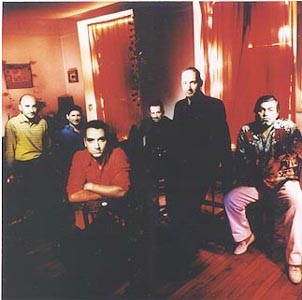
Tom Waits

0

The Tom Tom Club

Tom Waits kicks out two new CDs

By Greg Cahill

It’s a double whammy. Almost four years after the release of his Grammy-winning Mule Variations CD–arguably his most accessible material–singer-songwriter Tom Waits is following in the footsteps of Bruce Springsteen and Guns N’ Roses, who both famously released two albums on the same day.

Waits–an Occidental resident whose boozy beat poetry and eccentric song forms have made him the quintessential Bohemian–is set to release two new CDs on May 7. Waits and his wife Kathleen Brennan reportedly have wrapped up production on a pair of theatrical concept albums, Alice and Blood Money. The British rock magazine Uncut calls the two albums “startlingly different in landscape, sound, emotion, and composition.”

Of the two, the most is known about Alice, which Uncut goes on to accurately describe as “filled with unforgettable, haunting, opiate-dark tunes from an adult fairy tale.” Indeed, a bootleg of demos from Alice, recorded in 1992, has been making the rounds for years. And it’s fantastic. The songs comprise the score to Robert Schmidt’s stage production of the same name, a dark retelling of Lewis Carroll’s Alice in Wonderland, for the Thalia Theater in Hamburg, Germany. It wasn’t the first time that Waits worked with the experimental theater company: Two years earlier, he collaborated with playwright Robert Wilson and author William S. Burroughs on The Black Rider, which spawned the album of the same name.

But while that score is marked by edgy dissonance, the stripped-down, acoustic-based songs on Alice include some of Waits’ most beautiful melodies (or beautiful maladies, as Waits might say). Among the instruments used on the recording are bowed double bass, theremin (the proto-electronic device popularized by the Beach Boys on “Good Vibrations”), stroh violin, waterphones, and an odd string instrument called the bug. “Table Top Joe,” kind of a metallic, gamelan-influenced number about lost dreams (and sung to Alice by the Caterpillar in the play) is one of Waits’ catchiest tunes.

Ultimately, Alice is a mini passion play about love, lust, betrayal, and murder–a sort of Cabaret-on-laudanum that ranks with Waits’ best work.

Less is known about Blood Money (originally titled Red Drum), except that the album’s songs were inspired by the plight of the fictional Woyzeck, a poor soldier driven mad by medical experiments and an unfaithful wife. The album has been described as Tin Pan Alley meets the Weimar Republic, a dense, textured, rhythmic work replete with tarantellas, lullabies, and waltzes. Who could ask for more?

Spin du jour

Life stinks–E (aka Mark Oliver Everett) wants you to know that. The main man behind the ironic rock-meets-trip-hop band the Eels, he and his bandmates rock hard on their newly released two-CD Souljacker (Dreamworks), the follow-up to 2000’s wry, witty Daisies of the Galaxy (and a pair of contributions to the Shrek and How the Grinch Stole Christmas soundtracks). On Souljacker, the Eels team up with British rock guitarist and multi-instrumentalist John Parish (Sparklehorse, Giant Sand) for a conceptual look at moral bankruptcy. Of course, the Eels are no strangers to songs that tackle life’s heavier themes–their 1996 college-radio breakthrough hit “Susan’s House” alone focused on homelessness, mental illness, and drive-by shootings. And just in case you miss the subtle messages, E has included the Rotten World Blues EP for good measure. Life should stink so good.

From the March 14-20, 2002 issue of the North Bay Bohemian.

© Metro Publishing Inc.
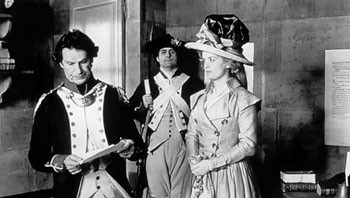
‘We Were Soldiers’

0

We Were Wives

A feminist historian looks at Vietnam, the ’60s, and ‘We Were Soldiers’

Writer David Templeton takes interesting people to interesting movies in his ongoing quest for the ultimate postfilm conversation.

In We Were Soldiers, Mel Gibson’s blood-soaked Vietnam epic, nearly 20 minutes of valuable screen time are devoted to the home-front activities of the soldiers’ wives waiting fearfully at home in Fort Benning, Ga., while their men engage in battle thousands of miles away. Given that the movie is 140 minutes long, this still leaves a full two hours for the traditional bomb bursting, napalm dropping, death dealing, and martyrdom that are war movies’ bread and butter. But according to feminist historian Estelle Freedman, what’s truly earthshaking about the film is the very existence of scenes focusing on the stories of women.

“What it says is that, in Hollywood films, even war movies have come to recognize that there is a women’s audience,” says Freedman, cofounder of Stanford University’s feminist studies program and author of the illuminating new book No Turning Back: The History of Feminism and the Future of Women (Ballantine; $26). Women, as major consumers of culture, are now insisting that their stories be told, Freedman says.

And Hollywood, it seems, is listening.

We Were Soldiers takes place in 1964 and 1965 and follows the first battlefield engagements of U.S. soldiers in Vietnam. Historically, it is a time when, as Freedman puts it, “The belief in the heroism of war is still strong. War and sacrifice have not been tainted yet with the discontent that’s going to come in the late ’60s and early ’70s.”

So the film’s depiction of Tupperware wives waiting at home for telegrams from the War Department is accurate?

“The changes,” says Freedman, “would come along a little bit later than that.”

In addition to the home-front ladies, the film hints at the stories of women on the war front, with fleeting glimpses of army nurses tending the wounded, of female war correspondents arriving postbattle to snap pictures of the carnage. Not mentioned in the film are the women in the antiwar movement at home–women who presumably would have had a lot to say to the faithful wives of We Were Soldiers.

In many ways, says Freedman, these women were not all that different.

“Early on, women were mainly providing support services in the antiwar movement, as they were in the civil rights movement,” Freedman suggests. “Which meant making the coffee, running the mimeograph machine, providing all those creature comforts, then stepping back as the men played the leadership roles.”

Freedman recalls one seldom mentioned antidraft effort, in which young women were recruited to go out and offer draftable men a good, antiestablishment roll in the hay, more or less in exchange for the men’s resistance to the draft.

“It’s true. There were buttons that said, ‘Girls say Yes to boys who say No,'” Freedman reports. “Joan Baez was once featured on a poster with that slogan. The idea being that–in the counterculture, not the mainstream culture–women couldn’t burn their draft cards, but they could say, ‘We’ll go to bed with those brave boys who resist the draft.'” Talk about bar girls.

“I actually have one of those buttons,” she laughs. “I told this story in one of my classes, and somebody brought me the button a few days later. This is exactly the kind of thing that gave birth to modern feminism. When women started moving out of those movements, it was partly in reaction to being stuck in that sexually objectified, exclusively supportive role.”

That We Were Soldiers shows women who never question their role as the supporter of their husbands makes it no less important a film, suggests Freedman. “It’s 1965,” she says. “It’s still a little early for the wives of soldiers to be doing that kind of questioning.

“But in a few years, these women will be asking a lot of questions.”

From the March 14-20, 2002 issue of the North Bay Bohemian.

© Metro Publishing Inc.
Russian Food

0

Edible Nostalgia

Sometimes there’s no substitute for cured pork fat and ketchup gravy

By Marina Wolf

The nights are cold, my job sucks, and cabbage is the freshest thing in the produce aisle. Don’t bother me. I’m having a Russia moment. They come along every winter, when I look up and remember that good tomatoes are still at least five or six months away. It might be just another case of seasonal affective disorder, or SAD, except I have a place and time to attach to the feeling: St. Petersburg, 1992-’93. I’m simply homesick.

Why I should have warm feelings for this winter wonderland of food shortages is not immediately clear, even to myself. This was a place in which sugar disappeared from stores for weeks at a time, and the best price for fish was found in the back of a dirty truck. Aren’t I just romanticizing a state of anarchic malnutrition?

Yes and no. Yes, my experience was rosier than the reality for most Russians. My companion and I were earning dollars, which meant that the farmers’ markets, with decent produce at exorbitant prices, were a viable option. And there were two of us to stand in lines, plus a Russian roommate who was happy to schlep shopping bags and make Turkish coffee in exchange for his share of the rent.

In spite of such luxuries, however, the pursuit of food demanded a significant expenditure of time, money, and energy, so we learned to appreciate the thrill of the hunt. There was always something on the street, melons from Moldova or soy sauce or British crackers. One December we feasted for three weeks on mandarins and blood oranges, which had entered the country as aid from Italy and “fell off the back of a truck” at prices well below market value. If that’s not a humanitarian act, I don’t know what is.

The deli shops had their moments of excitement, too. If you could see past the smudged showcases and cats dozing on the scales (hey, at least there weren’t any mice!), there were some real finds, like imported Dutch cheese instead of the chalky domestic stuff. As for the kolbasa counters, well, charcuterie would be too posh a term for the coarse-grained, thick-skinned bologna, but when meat prices soared, we looked forward to our dinner of fried eggs and bologna like anybody else.

Of course, we also looked forward to getting back to a normal system of food distribution. Our first return visit to an American grocery store was as exciting as we had imagined. And even now, years later, I still know we’ve got it good here. That cabbage is really fresh, and there is even some kale and good firm carrots lying about. The fish is laid out in clean ice, and there is always sugar on the shelf.

And yet . . . and yet, in the sameness of winter one longs for something else, a change of terrain or taste. So maybe it’s time for a field trip, 60 miles to the nearest Russian deli, where I can summon up my deteriorating language skills to pick up some pel’meni. These are like ravioli, only more packed, or maybe like wontons, only more securely sealed. In Russia, pel’meni were as widespread as TV dinners are here. We liked to throw them into a sputtering pan of oil and fry them on three sides until the pasta turned golden and crisp. Then we dipped them in what passed for ketchup and ate them with our fingers in front of the confusing evening news.

Here in the States, pel’meni are a more handcrafted item, selling for considerable sums at Orthodox church events. So when I visited the nearest Russian deli recently and found a 100-count bag for $10, I snagged it, feeling that familiar shiver of excitement at a miraculous food find. The respectful treatment for pel’meni is a careful simmering in beef broth, topped with a dollop of sour cream and a splash of soy sauce.

As long as I’m there at the deli, I always get a handful of candies, stale usually, with strange names like Red Riding Hood or Mishka. And of course I get a pound of salo, which has no equivalent in any other cuisine that I’m aware of. It is essentially dry-cured pork fat, very mundane if not crude, but the smell of it, salty and rich, takes me back to a little shop near the Mayakovskaya metro station.

I’m sure other stores in the city sold it, but our roommate insisted that it was the most reputable source. The hurried shopkeeper would pull a huge piece of salo out of a barrel of salt, brush it off, and hack off a small chunk with a knife that was as sharp as it was dirty, that is to say, very. He would wrap it in plain waxed paper, as expertly as an origami artist. Our Russian roommate showed us how to cut it into bits, fry it crisp, and crack eggs over the whole greasy mess. Traditionally, though, salo was eaten raw on bread spread with fiery mustard.

I have the mustard at the back of my cupboard. All that’s missing is the salo. And yes, I know about cholesterol and trichinosis, but I don’t care. I just need a break from here and now, and a taste from then and there might help.

From the March 14-20, 2002 issue of the North Bay Bohemian.

© Metro Publishing Inc.
Election Results

0

Election Selection

Mullins out, school spending in

By Patrick Sullivan

Sonoma County voters braved the rain on Tuesday to deliver an entertaining end to a lackluster primary election. Turnout was low, but the drama was high.

Easily the biggest story of the night: Incumbent district attorney Mike Mullins went down in flames, losing in a landslide to challenger Stephan Passalacqua, a deputy district attorney.

The contentious campaign, which set a new spending record for a district attorney’s race in Sonoma County, saw the candidates trading accusations of incompetence. Mullins called Passalacqua too inexperienced and uncommitted to his work. But voters seemed far more interested in the incumbent’s own recent missteps, including the two-term district attorney’s botched handling of the Louis Pelfini murder case. Final vote tallies: 57.1 percent to Passalacqua and 42.7 to Mullins.

In another high-profile but much more predictable race, Congresswoman Lynn Woolsey blew her Democratic challenger out of the water. The incumbent congresswoman scored more than 77 percent of the vote against Santa Rosa mayor Mike Martini, who had criticized Woolsey for not bringing enough federal money back to the district and for voting against the USA Patriot Act.

No new faces will appear on the Sonoma County Board of Supervisors. Both incumbents pulled off big victories against their challengers. In the second district, Mike Kerns scored 61 percent of the vote against progressive Ray Peterson, who had criticized the board’s decision to allow gravel mining in the Russian River. In the fourth district, Paul Kelley scored 58.4 percent of the vote, easily beating back what had initially seemed to be a strong challenge from Fred Euphrat, who supports urban growth boundaries and more concentrated use of open-space money.

Eureka social worker Patty Berg seems likely to go to the state house. Berg took an early lead in a crowded field of candidates to win the Democratic nomination for first assembly district. Lake County supervisor Rob Brown took the GOP nomination, but a Republican hasn’t held this seat since 1972. If Berg beats Brown in November, she’ll replace the outgoing Virginia Strom-Martin, D-Duncans Mills. The popular incumbent was prevented by term limits from running again.

Election night also found Sonoma County voters generously opening their wallets.

In Sonoma County, three school bond measures coasted to victory. Santa Rosa Junior College’s $252 million Measure A, approved by 67.2 percent of voters, will help build a new library and more parking on the campus. Also victorious: Measure B, the Santa Rosa High School District’s $77 million bond measure, and Measure C, the Santa Rosa elementary schools’ $19 million measure.

The financially troubled Sonoma Valley Hospital will stay open–at least for the time being. Voters gave resounding approval to Measure D, the Sonoma Valley Health Care District Tax, which will raise $2 million in parcel taxes a year to keep the only hospital in Sonoma afloat.

The Man Show

In a town with more than its share of cranks, longtime Petaluma men’s rights activist Joe Manthey has once again pulled ahead of the pack. After years of hounding the Sonoma County Board of Supervisors for the county’s support of “Take Our Daughters to Work Day,” Manthey has now resorted to legal action. Contending that the event unlawfully discriminates against boys, Manthey and his attorney, Chris Ferry of Pleasant Hill, have filed suit in the San Francisco U.S. District Court. Bemused county officials note that they also hold a similar day that invites boys into the workplace, as well as a third event called “Take Your Children to Work Day.”

From the March 7-13, 2002 issue of the North Bay Bohemian.

© Metro Publishing Inc.

The Blasters

0

Blast from the Past

Rockabilly legends the Blasters reunite

By Greg Cahill

To read the mid-’80s rock press, you’d have thought that Dave and Phil Alvin were the Cain and Abel of rock and roll. After a six-year run as primary songwriter and frontman, respectively, for the influential rockabilly band the Blasters–which helped launch the roots-rock movement–the brothers called it quits after a bitter clash that saw the siblings parting ways.

But blood is thicker than ink. Dave, 46, and Phil, 48, are reuniting for the first time in a decade, getting the band back together for a few dates that bring the original Blasters to the Mystic Theatre on March 10.

“My brother and I both had the same musical tastes, for the most part,” explains Dave Alvin during a phone interview from his Los Angeles home. “The problem was, as Bob Dylan sang, we just saw it from a different point of view.”

The tour isn’t exactly a family reunion. Rather, it marks the release of Testament (Rhino), a new two-CD anthology featuring outtakes, rarities, and previously unreleased tracks. While the original band split up in 1985, Phil still performs with a revamped lineup. But for hardcore rock fans, the upcoming reunion–with Dave and Phil Alvin, pianist Gene Taylor, bassist John Bazz, and drummer Bill Bateman–is on the par of a roots-rock Beatles union.

“To me,” says Dave, “the Blasters are those five guys you’re going to see.”

Indeed, the original Blasters played a pivotal role in launching the Americana movement that last week saw the O Brother, Where Art Thou? soundtrack snag Album of the Year honors at the Grammy Awards. But at a time when America’s airwaves were flooded with easy listening, country pop, and arena rock, the Blasters, from 1981-’85, spearheaded a roots-music revival with songs steeped in blues, Cajun, New Orleans R&B, boogie-woogie country, nortenos, and rockabilly, and with lyrics rife with American archetypes.

Along the way, the Blasters got Los Lobos their first Hollywood gigs and their first recording contract, and brought Dwight Yoakam on his first national tour when Yoakam was too country for Nashville.

It all started in Downey, the L.A. suburb that was home to ’70s easy-listening sensations the Carpenters. Downey also was a blue-collar bedroom community for local aerospace drones and Firestone factory workers. But two blocks away from the Alvin household sat a prime-rib joint with a lounge piano player who had been a fixture on the South Central jazz scene 20-years earlier.

The Alvins and their blues-fan pals ate a lot of prime rib that summer, and before long guitarist and singer Phil was auditioning for a spot on a show that featured Big Joe Turner himself. Another buddy, whose mom had been a jazz singer years before, introduced the Alvins to some of her famous house guests, including blues guitarist T-Bone Walker and New Orleans sax great Lee Allen (the Fats Domino sideman who later played with Blasters).

“I was just 13, so I was the guy sitting on the amp, let’s put it that way,” Dave Alvin recalls with a laugh. “But my brother was playing with all those cats.”

The Alvins learned more than licks during those visits. “There has never been anyone like those guys and there never will be, as cliché as that sounds,” Alvin says. “When you’re in the presence of those kind of people, it’s just magical. We knew then that we were blessed to be around those guys. And the best way to honor them is to be yourself.”

Before long, the Blasters–aided at times by Lee Allen and sax player Steve Berlin (a member of Los Lobos)–were burning up stages on L.A.’s burgeoning punk and roots-rock scene, where they shared the bill with such bands as Asleep at the Wheel, Black Flag, the Cramps, the Fabulous Thunderbirds, the Go-Go’s, and X.

An independently produced 1980 album, American Music (Rollin’ Rock), earned the Blasters a recording contract with Slash Records (distributed by Warner Bros.). The self-titled Slash debut, released in 1981, entered the Top 40, got the Blasters on American Bandstand, and put roots music in the mainstream. Two more albums and a live EP followed. But after the death of the Alvins’ mother, creative differences and personal conflicts started to take their toll. The band’s demise came after a gig in Montreal.

“You see, no matter what sort of soap operas or psychodramas we had going backstage, we never let it drift onstage, really,” Alvin explains. “But one night in Montreal, in ’85, it did drift onstage and I tendered my resignation–to use nicer words than I used that night–and I was gone.”

As for the “psychodrama” behind that implosion, Alvin says it extended far beyond sibling rivalry. “Everybody always pegs it on the two brothers, but it was all five of us–we’re all insane,” he says. “I’m mean, you have five guys who went way back, and there’s a lot of old hometown stuff. Everybody knows everybody’s secret spaces and all that.”

After the breakup, the much anticipated solo debuts by Dave and Phil underscored the creative differences. Phil, who had returned to UCLA to finish his doctorate in mathematics, released the eccentric 1986 solo album Un “Sung Stories” (Slash), which featured cameos by members of Sun Ra’s avant-jazz Arkestra and the Dirty Dozen Brass Band. His next and last solo album, County Fair 2000 (Hightone), appeared in 1994 and featured members of the Faultline Syncopators, a trad-jazz band.

Brother Dave has proved more prolific–and traditional–with songs that pay homage to the working man. In 1987, he helped redefine the Americana singer/songwriter idiom with his solo debut Romeo’s Escape (Epic), which included “Long White Cadillac” (later a hit for Dwight Yoakam) and “Fourth of July” (also covered by X). Dave also contributed the title track to director Allison Anders’ 1987 film Border Radio.

Meanwhile, he has chalked up a string of acclaimed folk-based recordings, including King of California and last year’s Public Domain: Songs from the Wild Land.

While his music has evolved since his stint with the Blasters, Alvin waxes nostalgic for those formative years. “I miss those days,” he admits, “because there are times when it’s a Saturday night and someone will say, ‘Hey, let’s go do something,’ and I’ll say, ‘Yeah, let’s go see Big Joe Turner! Oh, we can’t do that.” (Turner died in 1985.)

“It’s one of the reasons that I miss the Blasters in a way,” he continues, “because while there are elements of that music in my solo stuff, the Blasters were pretty darned good at reviving that period.

“I mean, my brother can sing just like Big Joe Turner, when he wants to really turn it on. . . .”

The Blasters perform Sunday, March 10, at 8pm, at the Mystic Theatre, 21 Petaluma Blvd. N., Petaluma. Tickets are $22. 707.765.2121.

From the March 7-13, 2002 issue of the North Bay Bohemian.

© Metro Publishing Inc.

Homemade Candy

0

Brittle in the Kitchen

Making candy with a broken heart

By Marina Wolf

We cook from cans now in my house. We eat soups and chili, fruit cocktail, tuna fish. Our recycling bin is filling up with the jagged edges of our indifference. It’s survivalist eating, and what is surviving is us. My live-in lover and I have not cooked together in months.

This didn’t use to bother me, back when our excuse was star-crossed schedules. And anyway, we needed a break from the intense list compiling, menu making, grocery shopping that marked a more, shall we say, creative era in our eating.

But lately I, who used to delight in feeding her, have not been able to cook for her without feeling that I am somehow doing penance for acts that we both know I commit, that we mutually agreed on, and therefore aren’t really sins–but there you have it.

Guilt is a highly effective appetite suppressant, and when you’re not that hungry, convenience food is the most efficient fuel.

So it surprised me the other morning to find us both in the kitchen. I suddenly felt awkward, as though we were two strangers in an elevator going all the way to the top of the building.

But we both had a rare day off, and confronted with the pressures of imminent gift-giving requirements, we came to an agreement: We would make candy, a homemade version of Almond Roca, to be precise, with a brittle layer of toffee slathered with milk chocolate and coated with almond bits.

She had a recipe from one of her work parties that I never have the time to go to. I had a confectionery book culled from the teetering piles of cookbooks that we argue about from time to time.

We had our issues, but we also had our mission, and somehow, together, we had to make this work.

Turns out candy is a scary substance to work with, deceptively simple in its composition, but requiring a great deal of attention, being essentially sugar on a controlled burn.

The cookbook I referred to spoke of the fact that you can interrupt melted sugar at any of five stages of increasing temperature and get five different sorts of candy. We were going for extreme confectionery. We were playing hardball, literally, going for the far side of the candy thermometer where it looks as though the mercury might shoot out the end any minute.

As soon as the sugar melted and began to thicken and bubble, I grew entranced by the obvious alchemy of it–a good thing, because at temperatures like this, you can’t look away for a second.

I stirred incessantly at the pale, glutinous mass that formed in our little pan. My lover roamed around our small kitchen, putting away dishes, looking over my shoulder. We spoke haltingly, about gift-wrap, about when I’d be taking off for my next “away” weekend.

I kept interrupting her and myself to peer more closely into the pan, my mind whirling with doubts: What if I burn myself? I don’t know how this goes. How do I know when it’s enough? This feels as though it’s taking forever. Is this how it’s supposed to be?

Here, I said suddenly, tired of searching for answers in a sugary swirl that was as inscrutable as a broken Magic 8-Ball. Will you stir? She took the wooden spoon and cautiously began stirring. I watched at first, not sure that she wouldn’t spill on herself, but then I relaxed a little.

I drank down a glass of orange juice (it was morning–did I mention this?), and then gently took the spoon back from her and continued to stir, scraping carefully along the bottom and the sides.

The changes happened almost imperceptibly at first, with the pale sludge getting more unctuous, roiling with thick, creamy strands that showed golden along the edges. The color deepened, and I stirred, hypnotized. It was starting to look promising.

Then suddenly the magic broke. The candy turned chaotic and ugly, all curds of mahogany bubbling fiercely in nothing more mystical than burning butter. The stuff had de-emulsified, broken apart. I stirred harder, but there was no going back.

Silently I showed the pan to her, and shrugged my shoulders. Maybe this was a lost cause. Almost hopelessly, I dropped a bit into a glass of cold water and fished out the result. The droplet crunched between my teeth, sweet and buttery-rich with promise.

Holding my breath, I carefully emptied the liquid onto the wax-papered pan and watched the substance spread in muddy currents across the pan, leaving hissing, curled-up edges in its wake. My lover, too, eyed the pan dubiously, then we went back to our desultory conversation while we waited for the stuff to cool. The minutes passed, and the surface of the candy dulled. I tapped tentatively on the greasy surface. It had solidified according to plan. But still, it could not be good enough, I thought, poking at the edges.

One shard came free, and I nervously put it in my mouth after offering my lover a piece. We both smiled at once. Yes. The toffee melted on my tongue, its hard edges crumbling away to a luscious, chewy mouthful.

Still grinning, I lifted the wax paper from the pan. The toffee came away in one stiff sheet. If we dropped it, it would break into a hundred little pieces.

From the March 7-13, 2002 issue of the North Bay Bohemian.

© Metro Publishing Inc.

Open Mic

Why does the American Horse Council think equines belong in the slaughterhouse?

By Colleen Murphy

To most Americans, it’s a simple question with a clear answer. Should a horse that has spent her life running the track or working the farm end up as a lump of flesh on a dinner plate in Belgium?

I think the answer is no. But I’ve lived and worked with horses most of my life, and I’ll frankly confess that I love and respect them, so my answer is no big surprise. I’m not alone in that feeling, which is why horse meat isn’t on the menu here in America.

But one group thinks I’m out of line. Am I referring to some shadowy cabal of exporters desperate to trade horse meat to Europe?

Nope. I’m talking about the American Horse Council. In fact, the council feels so strongly on this issue that it’s opposing the American Horse Slaughter Prevention Act (HR 3781). This bill, which is sponsored by Congresswoman Connie Morella, R-Md., and enjoys bipartisan support, would ban the slaughter of horses for human consumption.

Why does an organization claiming to represent horse owners oppose a bill that would put a stop to this shameful industry, which slaughters some 50,000 horses a year, including wild horses and an increasing number of stolen animals?

I don’t know. Perhaps it’s because some in the horse industry view slaughterhouses as a convenient dumping ground for unwanted animals, including the thousands who come from racetracks because they’re no longer competitive.

What I do know is that the arguments against the slaughter ban are, to put it politely, full of horse manure.

For instance, some opponents of the bill say it will cause more inhumane treatment. If people can’t easily get rid of their unwanted horses, the thinking goes, they’ll stop feeding them or abuse them in some other way.

There are two major flaws in this argument.

First, the slaughter process itself is not a humane method of disposal. Most horses arrive at slaughterhouses via livestock auctions where, often unknown to the seller, they are bought by middlemen working for the slaughter mills. These so-called killer buyers travel from one auction to the next collecting young, healthy, sick, and old animals until their trucks are full. Some are shipped for more than 24 hours at a time without food, water, or rest.

Indeed, the actual transport of the horses is just as cruel as their slaughter, if not more so. Horse protection groups have observed injured horses being beaten onto double deck trailers only to again be beaten upon arrival at the slaughterhouse.

Second, and more important, we already have a pretty good idea that the law will work well because we’ve tried it here. In California, we don’t slaughter horses, and we haven’t seen an increase in abuse.

There’s another common argument against HR 3781 that has less to do with horses than with political correctness. I call it the “Live and Let Die” argument. Who are we, say some folks, to stop the Europeans from eating horses? Why should equines be any different from cows or chickens?

In a way, I agree with these folks. That’s why I’m a vegetarian. But I don’t think you have to swear off meat to be against slaughtering horses. All it takes is a quick bit of simple analysis.

Sure, some Europeans (along with some Japanese and others) have values and attitudes that makes them feel comfortable eating horses, just as some countries are comfortable with bullfighting or cockfighting.

But in America, where horses remain a vital symbol of the untamed West, we have our own values. The thought of slaughtering a healthy horse (and make no mistake–most horses that end up in slaughterhouses are perfectly healthy) makes most of us shudder. Do we have to put aside our feelings and values and let our country serve as an abattoir for European diners?

I don’t think so.

The horse slaughter industry is already on its last legs in America. We used to kill more than 300,000 of these animals a year for human consumption. Now, only three facilities still do this dirty work: two in Texas and one in Illinois.

Can we get by without those three killing grounds? Yes. Will I sleep better knowing my two horses will never end up in them, no matter what happens? Better believe it.

Horse owner and equine advocate Colleen Murphy lives in Windsor.

From the March 7-13, 2002 issue of the North Bay Bohemian.

© Metro Publishing Inc.
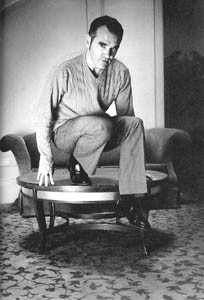
Dennis Lee

0

Evangelist Dennis Lee sells the power of God

By Kate Silver

They say all it takes is a little bit of faith, some cash, and a signature, and if everything goes as planned, subscribing Christians (and maybe a few trusting infidels) will be free of the evil power companies–and their power bills–for life.

Call it the Electric Christian Rapture Test.

“I sold all my stock last year because I would rather put it into this company than the stock market,” says Conrad Sorensen, who owns a dealership in Henderson, Nev., called Grassroot Enterprises of Tesla Inc. “I feel my money’s going to be safer here than any stock market.”

Sorensen is part of a network of disciples of the self-proclaimed anointed one, inventor and Christian evangelist Dennis Lee, who–though he has actions pending against him by attorneys general and alerts filed by Better Business Bureaus in various states–has been traveling the country, registering people for free power.

The modern-day miracle-maker says the Fourth of July will take on special meaning this year. It won’t just be Independence Day for our nation; it will also be America’s Declaration of Energy Independence Day, the day when Lee’s fabulous invention will be unveiled and the faithful will receive the free electricity that Lee and his brethren have been promising for years.

You heard it right: Free electricity will shine down on believers, they say, in a 21st-century revelation, distinguishing the shepherds from the flock. The faithful will bask in light, and the nonbelievers will go on selling their souls to the big electric companies.

Sound too good to be true?

Rising electricity costs and an increased focus on alternative energy sources seem to have exposed the nation’s vulnerable underbelly to these folks, whom skeptics consider little more than snake-oil salesmen. And they seem to know exactly what population to target–for example, disgruntled locals who show up at Public Utilities Commission hearings. At events like these, sales representatives from Lee’s companies paper cars with literature, sell videotapes, and register people for “free-electricity machines.”

Others have found willing listeners in evangelical Christians looking to discover more of the Lord’s power, and the elderly, who find fellowship in Lee’s following and have money to invest in expensive dealerships.

Looks like the nation’s power companies aren’t the only ones hoping to strike it rich.

Perpetual Motion

“Our slogan is, ‘It’s too good to be ignored,'” says Sorensen, 46, a former pipe fitter who bought his dealership from Dennis Lee in November 1999 for $20,000–a good deal, considering they reportedly go for about $100,000 today.

Lee, who owns United Community Services of America, Better World Technologies, and International Tesla Electric Co., is known to attorneys general across the nation as a threat to consumers, and to followers as a practically divine inventor. Claiming God as his companies’ chairman, Lee says he has access to a generator that uses magnets and runs at 500 percent efficiency.

He’s been peddling his devices since about 1987, having made two national tours appealing to charismatic Christian sensibilities and governmental-corporate paranoia. An appearance by Lee at the Marin Civic Center in San Rafael last October drew around 700 people.

While there’s no actual proof that these devices work, Lee insists–in segments you can view and hear on his various websites–that folks on his team have been killed and that the government and power companies will do anything and everything in their power to squash this new, threatening technology.

Attorneys general across the country think otherwise. Many have filed legal action to keep Lee’s companies from selling his wares in their states.

Lee declined an interview via e-mail through his assistant, Mike Hall, who didn’t like my story angle. “If you were doing an interview about the project and what we are trying to achieve, that would be one thing,” wrote Hall. “But if all you are interested in is getting his side to these accusations, then you can do your article without Dennis’ assistance.” (Please note: Hall bargained with me when I asked if I could quote him, saying I could do so only if I also wrote that anyone who mentioned this article could get a free videotape at www.power4free.com.)

But critics aside, Sorensen and 1,999 others across the nation, according to Lee, have invested in his rhetoric. They purchase dealerships and then sign people up for free electricity. Different dealers have different requirements. Some may charge a fee for shipping their materials, others may charge for the videotapes, and some may require membership in the North American Special Discounts Club (you got it–NASDAC).

Sorensen makes money by selling $15 videotapes of Lee’s presentations and by selling goods from Lee’s other companies–silent jackhammers, oil-eating balls, radioactive waste neutralizers, and cars that run on water, among other items. He says that he’s signed up about 800 people for free electricity nationwide, many of whom he met during a stop on Lee’s 50-state tour last year.

Although he went into hock to buy his dealership, Sorensen believes it to be a solid investment that, in due time, will pay off. He says he was willing to invest in it because he believes in the technology and the conspiracy that Lee claims keeps free electricity out of the public’s hands.

“I see how inventors get suppressed all the time,” he says. Further, Sorensen says that his involvement with the company has led him to God, and he’s not alone.

“I think that most people, when they do get involved with it, they’ll see that there really is a God,” he says. “To tell you the truth, I wasn’t much of a believer; it’s just that I know that there’s a God now because I’ve seen so many different things through this organization. We have 500 technologies we literally have on hold right now, waiting to bring out to the world, because we don’t have no finances for them, but when we start selling the power, we will.”

His goal right now is to recruit what Lee and his followers refer to as “witnesses”–people who believe in free power. Witness status used to require a one-time investment of $275, but now, at least with Sorensen’s clients, all one has to do is purchase the company’s videotape and sign a contract.

“We’re trying to recruit 1.6 million witnesses to view these generators being demonstrated in 100 homes throughout the country, two per state,” Sorensen pitches. “We’re sending out invitations to people to come witness on one day, hopefully July 4. We’ll give the people who come view this free electricity for the rest of their life. What we sell is a generator that makes 30 kilowatts per hour; the average home only uses two.

“We’re going to give you that free power in exchange for us to send that excess power back and sell it. We figure if we can sell 5 cents per kilowatt hour, that makes 12,000 per unit. So the homeowner doesn’t have to put up any cost. We just ask for them to buy a video to explain what we’re doing. Then we register you in line to have one of these generators put in.”

After witnessing the proposed July 4 free electricity show, those who’ve already signed up to receive the free electricity are expected to proclaim the greatness they’ve witnessed and proselytize nine people. But since these nine wouldn’t take a blind leap of faith, as the first witnesses did, they have to pay $1,500 for their lifetime of electricity.

“We’ll give them two months to get nine additional people to us, and after that we can get them on our own,” he says. “That was 16 million homes overnight that want this technology. With 116 million homes, that’s 100 percent of electricity needs in the U.S., and 40 million voters. Then we can get the proper deregulation in every state.”

Baddabing! Baddaboom! National domination.

Down to the Wire

Not surprisingly, the scientific community has a different perspective on Lee and his offer of free energy. Yahia Baghzouz, an electrical and computer engineering professor, looked at some of Lee’s websites. He wasn’t impressed.

“I read everything on various websites, and it’s just contradictory what they are saying,” Baghzouz says. “On some sites they say it’s gravity turning the generator; on other sites they say, ‘Oh, we have supermagnets that are powered by a battery.’ If you power something by a battery, you are using electric power to turn the thing. In many places they said, ‘We are not using any input power whatsoever.’ That’s contradictory.”

He’s not alone in his opinion. Eric Krieg, an electrical engineer in Pennsylvania, laughs when he hears that Lee has set July 4 as the date for his revelation.

“For 15 years he’s assigned a date. He said March in one show, July in another. When I first heard him in ’96, he said at the end of that year. That’s part of keeping the faithful perked up. . . . It’s about keeping a flux of new suckers in.”

Krieg has been following Lee’s claims since 1996, when he saw a full-page ad for one of his demonstrations in the Philadelphia Enquirer. His first reaction was laughter. “It was amusing how he had butchered science and manipulated all these redneck people,” he says.

But then he discovered that people were buying into it. After seeing too many older people hand over $10,000 to buy dealerships, Krieg decided to put up a website (www.phact.org/e/dennis.html) debunking Lee’s claims and drawing attention to the troubles Lee’s had throughout the country. Krieg’s even offered Lee $50,000 if he can prove that his machine works.

“I believe it’s impossible for this kind of thing to work,” Krieg says. “You can’t get something for nothing, as far as I know. Hundreds of people have been failing for hundreds of years. I have no idea what percentage are con men versus what percentage are deluded somewhere between stupid and insane.”

Troubled Past

It seems that Lee has learned much after clashing with the law in the past. These days, he words all contracts carefully. For example, when anyone signs up to get information about buying a dealership, they must initial two statements: “I/we affirm that neither UCSA or BWT are making promises about when technologies will be advanced to the market in the future” and “I/we will not be risking the welfare or security of my/our family by purchasing a UCSA dealership from an existing dealer.” And when people like Sorensen accept any money, the buyer always gets something in exchange–like a video. Because Lee’s grown accustomed to investigations.

His name brings familiar smirks to people in attorneys general offices across the nation. With a three-decade-long history of arrests and complaints against him for fraud and violation of consumer protection laws, Lee has traveled the country with a show that’s described as part crusade, part circus, peddling the wares of his many companies.

Here’s a quick look:

* He pleaded guilty to seven of 47 felony criminal counts filed by the Ventura County, Calif., district attorney in 1988 for violating the state’s Seller Assisted Marketing Plan Act, and grand theft. Lee served two years in a California state prison.

* In 1985 he was accused by Washington’s attorney general of violating the Consumer Protection Act. Though he agreed to pay $31,000 in fines, he left the state before doing so.

* Kentucky’s attorney general recently filed a lawsuit against Lee seeking to block him and companies connected to him from promoting their generator and holding seminars promoting the free-electricity device. Attorney General Ben Chandler says that these companies are defrauding customers because they don’t disclose that their device doesn’t actually exist and is based on unproven scientific theory.

* Vermont, New Mexico, and Tennessee obtained temporary restraining orders barring Lee from conducting his presentations.

* Attorneys general in Idaho and Arkansas have issued warnings to consumers to proceed with caution when dealing with Lee.

* Legal actions against Lee and his companies have been taken in Illinois, Alaska, Maine, New Mexico, Oregon, Vermont, and Washington, and include, among other things, charging a registration fee for a product that doesn’t exist, failing to register to do business within those states, and representing that consumers will soon have technology that has not been scientifically proven to exist.

* Alerts have been filed against his companies by Better Business Bureaus in Arizona, Washington, Pennsylvania, and New Jersey.

* And in states like Nevada, where no complaints have been filed yet, officials seem to be waiting to pounce. “I’m talking to attorneys general from other states to be ready for when something does come, but I can’t take action until I know [Lee’s] done something,” says Deputy Attorney General John McGlamery. “So I’m just sitting here waiting.”

Keeping the Faith

When told of Lee’s record, Sorensen is ready with a sympathetic response: “He was literally kidnapped twice because he was trying to demonstrate free electricity,” he says of Lee. Sorensen also says he thinks that any problems Lee’s had with attorneys general were straightened out after Lee sent videotapes of his demonstrations to them.

Sorensen also blames the media, which he believes is controlled by electricity giants General Electric and Westinghouse, for suppressing proof of free electricity. It’s in their best interest, he says, to ignore the revolution.

And he’s confident that his and Lee’s day will come July 4. They will bask in God-given light and be rewarded for their faith and innovative creation. And the nonbelievers?

“I think crows will be very scarce that day,” he says. “I think there will be a lot of people eating crow.”

Kate Silver writes for the Las Vegas Weekly, where an earlier version of this article originally appeared.

From the March 7-13, 2002 issue of the North Bay Bohemian.

© Metro Publishing Inc.
‘Storytelling’

Gripes of Wrath

Todd Solondz goes after the bourgeoisie in ‘Storytelling’

By

First and foremost, director Todd Solondz is a very funny guy; that is, if one can get past the provocation of his material. The director of Storytelling, whose last film was the unwatchable Happiness, plays with dynamite that would have blown the face off many an erstwhile shock comedian. But is he more than just a bilious humorist?

Storytelling is a two-part film. In the first section, “Fiction,” set in the middle of the Reagan years, a callow punk-rock girl named Vi (Selma Vlair) is used, first privately and then publicly, by her creative-writing teacher (Robert Wisdom).

The teacher, Pulitzer Prize-winning author of a story called “A Sunday Lynching,” is black. He grudge-fucks his silly white students, which has led some sensitive critics to describe what happens to Vi as rape. Certainly it’s sex on the edge of being out of bounds, and it’s hard for the referee to call. Since Solondz had to have an R rating to sell his film, he mutilated this scene by overlaying a huge, red “Censored” box to confound the prim stupidity of the MPAA. The disgusting scene, even covered over, has a hideo-comic payoff: It feeds into the second half of the film, titled “Non-Fiction,” the much more overtly comic section.

“Non-Fiction” plays as a parody on the nouveau documentary–an inside joke. Paul Giamatti plays Toby Oxman, an aspiring filmmaker currently working in a shoe store.

This ox has all the wrong instincts as a filmmaker. His tongue is clotted with sociological clichés, and he possesses an easily distracted mind. Fortunately, nobody notices: neither his subject–an inert suburban kid named Scooby Livingston (Mark Webber)–nor his subject’s grotesquely venal family.

The axe Solondz is grinding here was polished to surgical sharpness by Albert Brooks in his 1979 film Real Life. But Solondz prefers to accuse the suburban dopes as much as the sleazy idiot with the minicam: It’s easy (and just) to say that Solondz himself has shamed and distorted his characters, just as Oxman does.

As the mom, Julie Hagerty, a fine comic, is treated like a cluck for caring about her children. John Goodman, on the other hand, is more real in his truculent househusband role than anyone else in this film (Storytelling is as full of straw men as a cornfield). Goodman brings hints of compassion to the role; he’s too big to flatten. Since we routinely congratulate directors for pushing actors beyond their limits, can’t we also congratulate actors for instinctively refusing to cross certain lines, for having better sense than their directors?

Again, “Non-Fiction” is often funny, especially in its moments of vindictive political comedy about the little princeling of the Livingston family, Mikey (Jonathan Osser), hounding the Salvadoran maid (Lupe Ontiveros). Still, these scenes never pay off, except in the usual crotchets to which Solondz always returns: the cruelty and lack of feeling of the middle class. At some point, a filmmaker has to realize that the bourgeoisie, like the poor, will be with us always.

Solondz has the natural inclination of a humorist, to mock and jibe–and there are worse qualities. But Solondz needs to see his figures of authority, like the bullying teacher and the mourning maid, as worthy of mockery too. He needs to be as ruthless with his own big ideas as he is with the characters he creates.

‘Storytelling’ opens Friday, March 8, at the Rafael Film Center, 1118 Fourth St., San Rafael. For details, see , or call 415.454.1222.

From the March 7-13, 2002 issue of the North Bay Bohemian.

© Metro Publishing Inc.

No Spray Action Network

Spray Watch Sticky questions bug environmentalists By Tara Treasurefield Wine country is on the edge of its collective seat: It's glassy-winged sharpshooter season. The sharpshooter is known to carry Pierce's disease, which is deadly to grape vines. Through stringent inspections, the Napa and Sonoma County agricultural commissioners have stopped the pervasive...

Tom Waits

The Tom Tom Club Tom Waits kicks out two new CDs By Greg Cahill It's a double whammy. Almost four years after the release of his Grammy-winning Mule Variations CD--arguably his most accessible material--singer-songwriter Tom Waits is following in the footsteps of Bruce Springsteen and Guns N' Roses, who both famously...

‘We Were Soldiers’

We Were Wives A feminist historian looks at Vietnam, the '60s, and 'We Were Soldiers' Writer David Templeton takes interesting people to interesting movies in his ongoing quest for the ultimate postfilm conversation. In We Were Soldiers, Mel Gibson's blood-soaked Vietnam epic, nearly 20 minutes of valuable...

Russian Food

Edible Nostalgia Sometimes there's no substitute for cured pork fat and ketchup gravy By Marina Wolf The nights are cold, my job sucks, and cabbage is the freshest thing in the produce aisle. Don't bother me. I'm having a Russia moment. They come along every winter, when I look up and remember that...

Election Results

Election Selection Mullins out, school spending in By Patrick Sullivan Sonoma County voters braved the rain on Tuesday to deliver an entertaining end to a lackluster primary election. Turnout was low, but the drama was high. Easily the biggest story of the night: Incumbent district attorney Mike...

The Blasters

Blast from the Past Rockabilly legends the Blasters reunite By Greg Cahill To read the mid-'80s rock press, you'd have thought that Dave and Phil Alvin were the Cain and Abel of rock and roll. After a six-year run as primary songwriter and frontman, respectively, for the influential rockabilly band the...

Homemade Candy

Brittle in the Kitchen Making candy with a broken heart By Marina Wolf We cook from cans now in my house. We eat soups and chili, fruit cocktail, tuna fish. Our recycling bin is filling up with the jagged edges of our indifference. It's survivalist eating, and what is surviving is us. My...

Open Mic

Why does the American Horse Council think equines belong in the slaughterhouse? By Colleen Murphy To most Americans, it's a simple question with a clear answer. Should a horse that has spent her life running the track or working the farm end up as a lump of flesh on a dinner plate in Belgium?...

Dennis Lee

Evangelist Dennis Lee sells the power of God By Kate Silver They say all it takes is a little bit of faith, some cash, and a signature, and if everything goes as planned, subscribing Christians (and maybe a few trusting infidels) will be free of the evil power companies--and their power bills--for life....

‘Storytelling’

Gripes of Wrath Todd Solondz goes after the bourgeoisie in 'Storytelling' By First and foremost, director Todd Solondz is a very funny guy; that is, if one can get past the provocation of his material. The director of Storytelling, whose last film was the unwatchable Happiness, plays with dynamite that would...
11,084FansLike
4,446FollowersFollow
6,928FollowersFollow


