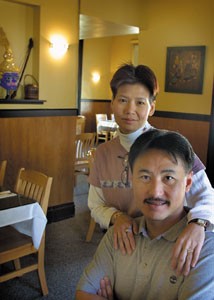
Stone Horse Farm

0

Man and Beast: Stuart Schroeder tames nature with the help of Sparky and Ike.

Plowing Forward

At Stone Horse Farm, the tractor gathers dust

By M. V. Wood

Just as the sun sets, the wind picks up and the birds start calling out in unison. Some of the calls come from atop the old oak tree–the one Denise Cadman and Stuart Schroeder were married beneath.

“I love that tree,” Cadman says. And I’m sure she doesn’t mean she’s fond of it or that she simply likes the way it looks. “When people start feeling that having an oak tree in their front yard is going to enhance their lives more than having a new car in their driveway ever could, that’s the day things will start shifting in the world.” She says this with no holier-than-thou judgment in her voice. No anger. She just says it as a wish.

Schroeder would surely agree. But he’d probably throw in the idea that people would also be happier with a couple of horses in their yard as well. Right now, he’s leading one of his two draft horses to the other side of the house for a drink. The western end of the sky is still glowing with pink streaks, and the silhouettes of man and horse look like something from a Currier and Ives print.

If you drive by Stone Horse Farm on Occidental Road, between Sebastopol and Santa Rosa, you might see Schroeder farming the land with his horses, Sparky and Ike. Schroeder owns an assortment of old farming implements, some dating back almost to the turn of the century, which he bought at auctions and other sales. He hitches the instruments up to his two Percheron horses, and that’s how he does all the plowing, mowing, and moving on the farm. The harvest is then sold at the Sebastopol Farmers’ Market.

When the horse is done drinking, Schroeder returns to the picnic table. The outdoor spot seems to serve as the hub of their home life, at least during the warmer months. Their two-year-old daughter, Rosalie, plays nearby, searching for bugs.

Schroeder, 41, sits down, his eyes scanning the small, family farm. “Sometimes people ask me why I have such a sense of nostalgia,” he says. “But I don’t think it’s nostalgia. I mean, I never even saw people using horses to work a farm when I was a kid, so I’m not nostalgic for it. It’s something else.”

As a kid, Schroeder helped out on his family’s farm–a large, modern business full of tractors and pesticides and chemicals. As he got older, he traveled to the Iowa farm during summers to help his uncle run it. On especially busy days, his grandfather would pitch in as well. But usually it was just Schroeder and his uncle, working all 800 acres. These days, Schroeder sometimes works from sunup to sundown farming his 3-acre plot. He considers this progress.

“Well, this tastes better and it’s healthier,” he says, commenting on his organic produce. “But this was really a lifestyle decision. Here, it’s not about controlling nature; it’s about developing a relationship with it. You’re always taking in information and thinking and experimenting and learning. And at the end of the day, you can feel good about what you’re doing.”

Schroeder says that from an early age he knew he liked farming, but he didn’t feel comfortable with the paradigm of the large, commercial farm. He became interested in organic agriculture and went to UC Santa Cruz as an agro-ecology major. One day in class, a student hitched up a donkey to help move some of the heavier objects in the field, “and I just had this vision that I would someday work with horses that way,” Schroeder says. “I almost don’t want to say that, it sounds so strange. But that’s what it was–a vision.”

After graduating, Schroeder and a couple of friends bought horses and rode them for four months along the Pacific Coast Trail to Three Sisters Wilderness in Oregon. From there they hitched a ride to northern Idaho where they had already scoped out a place to live.

Schroeder spent the next couple years farming with his horse there. During the winters, a friend would snowshoe over to his cabin, carrying a guitar on his back, and the two would play music and sing all day. When a popular reggae band lost their drummer, the members asked Schroeder to play with them. He sold his horse and toured with the band through the Western states, but eventually he quit and moved back to California. He still plays, though, and has been with the local reggae band Biocentrics for the past decade.

After a few years back in California, Schroeder got a job with a wildlife biologist. That’s where he met Cadman. “I wasn’t looking to get married, but when I met her, everything just fell into place,” he says with a smile. “And then we had Rosalie–and that’s been incredible.” But along with the love for a child comes the worry over what kind of world we’re handing over to all children. “We’ve got to make some changes,” Schroeder says. “We need to think about what progress actually means.”

Like his wife, when Schroeder speaks about the environment, he doesn’t sound angry or condescending. The two seem to have found a balance between being concerned for the world and enjoying the world and their lives, right here, right now.

“Oh sure, sometimes I think the world’s going to hell in a hand basket,” says Cadman with a laugh. A biologist who works part time for the city of Santa Rosa as a natural resources specialist, Cadman also teaches biology at Santa Rosa Junior College. “But thinking that way doesn’t really help anything. Besides, who wants to be upset all the time. You can strive to make a difference and enjoy your life all at the same time.”

For Cadman, that joy comes from watching a tree blossom in the springtime, she says. It comes from eating dried fruits in the winter, made from the summer harvest. And for Schroeder, joy includes working with Sparky and Ike.

From how he describes it, farming with horses sounds like an intricate dance between man and nature. Perhaps it’s the way a surfer feels, riding a wave, or a skier flying down a snowcapped mountain. There’s that state you get to, where everything flows and the experience becomes Zen-like.

There’s such an appeal to watching that flow that some people have started hiring Schroeder to plow and mow their land instead of renting a tractor. “It takes about the same amount of time with the horses as it does with a tractor and the cost is comparable, but the horses are a lot quieter,” Schroeder says. “Plus, people tell me they really like watching the work. There’s just something very soothing about the whole process.”

Schroeder and his horses also work at weddings and other celebrations. But instead of pulling the usual plows behind them, Sparky and Ike pull a white coach with red velvet interior.

“I used [the coach] on Mother’s Day,” Schroeder says. “I took Denise and Rosalie out for a ride. It was beautiful outside. I had my family with me, the horses were pulling us. It was perfect.”

Produce from Stone Horse Farm is available at the Sebastopol Farmers’ Market, Sundays 10am-1pm. Stone Horse is also a member of Farm Trails. 5743 Occidental Rd. 707.576.7237.

From the July 25-31, 2002 issue of the North Bay Bohemian.

© Metro Publishing Inc.

Bohemian Grove Protesters

0

Photograph by R. V. Scheide

Kinder, Gentler Protest

The Bohemian Grove protesters shake it gently

By R. V. Scheide

It’s just after noon on Saturday, July 13, and Greg Haas, owner of the Pink Elephant bar in Monte Rio, is pissed. In 15 minutes, a crowd of demonstrators will march across the bridge spanning the Russian River, past his establishment, and into the nearby Bohemian Grove, where the Bohemian Club has just begun its annual two-week retreat in the Sonoma County redwoods.

The exclusive all-male club, which counts some of America’s wealthiest and most powerful men among its approximately 2,500 members, has been meeting at the grove for 125 years. The intense secrecy surrounding the gathering, which in the past has been attended by such luminaries as Richard Nixon, Ronald Reagan, and both George Bushes, has led some critics, including the Sonoma County Global Justice/Direct Action Network, which organized the protest this year, to claim that the annual retreat provides conservative politicians and their rich cronies convenient cover for designing public policy in private.

But Haas has no beef with the Bohos, as they are known locally. It’s the demonstrators that have him down. They scare away the tourists, he says. They trashed Monte Rio last year, he protests. Adding insult to injury, the protesters don’t even patronize his establishment. Bucking the New World Order and hoisting drinks don’t seem to be compatible behaviors to these folks, who dubbed their protest this year the “Fat Cats Festival and Parade.”

“Why are they messing with me?” asks Haas. “I’m not a fat cat.”

And it’s true, he’s not a fat cat, and they are messing with him, if only unintentionally, standing in the public-beach parking lot across the river, listening to speeches about corrupt politicians instead of ordering drinks at the Pink Elephant. “By the time this thing is through, we’ll have her house,” Haas says, alluding to Mary Moore, the longtime Sonoma County political activist who until this year played a leading role in the annual demonstration. “I hope they have a nice house, this little group of do-gooders.”

Not all of the patrons are in agreement with the bar owner’s sentiments.

“We’ll all be living in mud huts by the time that happens,” says one silver-haired patron perched on a bar stool. “That’s the way the Bohos want it.”

Outside the bar, smoking a cigarette next to his Harley knucklehead chopper, a local biker is in concurrence when told that the demonstrators believe a bunch of rich people are trying to take over the planet, and he doesn’t seem bothered that the protest might be scaring all the tourists away.

“Get rid of all the tourists, that’s what we need to do,” he says, nervously eyeballing a squadron of CHP motorcycles parked across the street, part of a contingent of 34 CHP officers and 20 Sonoma County Sheriff’s deputies deployed to direct traffic and make sure the protesters don’t get out of hand.

Nearly 1,000 demonstrators showed up for the Bohemian Club protest last year, snarling traffic and riling some Monte Rio business owners who claim they were left to clean up the protest’s mess. This year, the local chamber of commerce tried to force the protesters to get a parade permit, but the Sonoma County Global Justice/Direct Action Network said it couldn’t afford one and planned the march anyway. About 150 protesters are gathered in the parking lot on this brilliant Saturday afternoon, some helping carry larger-than-life street puppets, including one of Vice President Dick Cheney wearing prison stripes and a sign that says “Corporate Criminal.”

According to Schuyler Erle, a spokesman for Global Justice, the protesters can roughly be divided into two camps. Generally, those over 40 fall into a group he calls the “rational left,” epitomized by the a cappella singing group the Raging Grannies, who belted out a song slamming the genetic engineering corporation Monsanto to the tune of “Old McDonald” before the march into the grove started. Those under 40, a group that includes Erle, can loosely be called “magical activists,” young people who have perhaps read their Trotskyist literature but also believe in a more holistic, New Age approach to political activism. They also tend to sport dreadlocks and wear body glitter. At any rate, the goal of the two groups is the same.

“We want justice for all the beings on this beautiful planet,” Erle explains.

Marching to the steady beat of bongo drums, the protesters, young and old alike, carrying street puppets and placards and pushing baby strollers, make their way peacefully across the bridge and past the Pink Elephant, looking more like a lost tribe than angry, leftist rebels. The CHP has temporarily closed the bridge to traffic, delaying at most a dozen motorists. The police reopen the bridge after the marchers turn left onto Bohemian Avenue and proceed into the grove, where, about a hundred yards before the encampment’s entrance, they’re met by a line of khaki-clad police officers stretched out across the road, halting the march’s progress.

The protesters begin moving in a circle, chanting “Let it go! Let it go!” Their Resurrection of Care ritual has begun. The ritual was originally intended to satirize the Cremation of Care ceremony the Bohos traditionally use to open their annual retreat, in which members don hooded, Klan-like robes and hold a mock human sacrifice. The protesters, perhaps inspired by the magical activists among them, seem to take the Resurrection of Care ceremony seriously, calling upon all of the forces of nature to restore the world’s equilibrium, knocked off balance by the evil Bohos. “Love is what will heal the world,” says Dusty, the woman leading the ceremony.

That may be so, but after all is said and done, when the last scrap of litter has been picked up and the last protester has left Monte Rio, it’s difficult not to think that the complaints of the demonstrators will have fallen on deaf ears. As Greg Haas, owner of the Pink Elephant, pointed out earlier in the day, it’s doubtful that the Bohemians, safe and secure in their private enclave, will have even been aware the protesters were here.

From the July 25-31, 2002 issue of the North Bay Bohemian.

© Metro Publishing Inc.

Wine Country Film Festival

0

Poetic Justice

Wine Country Film Festival builds cinematic bridge between cultures and arts

By Sara Bir

There are two reasons we go to see movies. One is to escape, to effortlessly slip away into another space for an hour and a half. The other is to discover–the glimmer that after it’s all over, we’ll come out knowing more about ourselves. Truly great movies do both. Mainstream movies often accomplish only the former, and those still thirsting for the latter know to look elsewhere.

Over four summer weeks, the Wine Country Film Festival, now in its 16th year, brings us a vibrant palette of cinematic experiences that not only entertain but make us richer as people, more understanding of the world around and beyond us. The films span from big-time premieres (such as Ghost World and La Bamba in the past) to tiny, obscure foreign and domestic films that would otherwise slip though the cracks of the cineplex world.

Plenty of film festivals do that, though; that’s what they are for. The distinctive factor about the Wine Country Film Festival–besides its idyllic vineyard settings and laid-back pace–is that it’s not just a receptacle for random movies. “Celebrating independent film, as well as international cinema–yes, we do that, but almost all of the films have a special purpose. One of the things we try to do is present films that have a very special reason to be made,” says Stephen Ashton, the festival’s founder and creative director, who, with his wife, Justine, puts together the festival from the couple’s ranch in Glen Ellen. The festival opened on July 18 and continues until Aug. 11.

Films to Watch: Selections from the Wine Country Film Festival schedule.

The lust for life and poetry are the heavily listing slants running through many of this year’s films, be they features or documentaries, foreign or domestic, long or short form. Looking at the selections, it’s tough to distill one specific theme rather than identifying several overlapping shared themes, a factor that allows great leeway for diversity within the festival. There will be a tribute to Argentine director Eliseo Subiela and a Life Achievement Award for actor Richard Dreyfuss, who stars in Rolf de Heer’s The Old Man Who Read Love Stories; spotlight events combine food, film, and cultural backgrounds; and “Celebrate Tibet” day brings together Himalaya and The Making of “Himalaya“, plus others.

“The Poetics of Cinema–that’s really what one of our subheads is this year,” says Stephen. “What that means is that poetry is quoted in film, like in Eliseo [Subiela’s] work, but also it is the very nature of film–nonverbal storytelling–so that your impact is really delivered on many different layers, through visual metaphors that are presented. So cinema, in one sense, is an embodiment of poetry.”

In Eliseo Subiela’s work, this is often literally the case. Subiela’s films are infused with magical images, lighthearted neorealism, and poetry employed as dialogue, probably best personified in 1992’s The Dark Side of the Heart, which presents a libidinous poet’s quest for just the right woman–“I don’t give a damn if a woman’s breasts are like magnolias or figs,” he spouts, “but I cannot abide a woman who cannot fly.” He means it too; after wooing a series of women who achieve no airborne hovering during the act of passion, he ditches them through a trapdoor in his bed.

(Subiela’s sequel, Dark Side of the Heart 2, plays at the tribute, which will feature tango dancers and a lavish Argentine dinner with lots of grilled meats and maté.)

“The work of Subiela is remarkable,” says Stephen. “In the United States, he’s not at all well-known, except for one film: Man Facing Southeast. Around the world he is highly, highly respected. His work is laced with poetic and artistic references. He comes from a tradition that’s Buñuelian-influenced.

“It’s particularly interesting,” he continues, “because when [North Americans] try to do this style–because we don’t have the stringent kind of social conditions in most parts of our society–it doesn’t ring quite right. But somehow or other, when it’s integrated into this world, it’s appropriate and fits with the poetry and goes with the metaphors that you can read all the way down into the society. Some of Subiela’s work is very socially conscious.”

In the festival’s forum sessions (Aug. 2-4), filmmakers, scholars, and the public will discuss this relationship between poetry and cinema. Stephen sees these forums as great opportunities for everyone involved. “We’ll look back at the work of Luis Buñuel, we’ll reflect back on Jean Cocteau. Our dream is that some of these independent filmmakers of the American cinema, who may not be so schooled in that tradition as they are in other parts of the world, will be able to actually be inspired by encounters with filmmakers from other countries. It could very well influence how their next films are going to be.”

Expanding our perception of film’s role worldwide and what it is capable of communicating has always been one of the festival’s strongest points. “What we frequently try to do is introduce other cultures,” Stephen says. “The festival is really quite international in scope”–which does not translate to stuffiness and cinematic trudges, but to a joie de vivre that everyone can understand.

“There’s universal stuff that goes on in film, and I don’t see it as categorized–‘African-American’ or ‘Asian,'” says Justine Ashton. “There’s such a richness out there, and when you start seeing films from all over the world, something happens and you start breaking through cultural barriers somehow. I think viewers in this area particularly are more savvy in terms of world culture, whether it’s music or dance or film or literature.” Lucky for us, we have a film festival to indulge that.

The Wine Country Film Festival’s first section (in Yountville at Domaine Chandon) runs until July 28; the second section (at Glen Ellen’s Jack London State Park and Sonoma’s Sebastiani Theatre) runs Aug. 1-11. The Eliseo Subiela tribute and dinner is Aug. 3. Call 707.935.FILM or go to www.winecountryfilmfest.com for information on prices, times, and events.

From the July 25-31, 2002 issue of the North Bay Bohemian.

© Metro Publishing Inc.

‘Anton in Show Business’

Stage Rage

‘Anton in Show Business’ plays for keeps

By Patrick Sullivan

Is theater culturally important enough to be the subject of a play?” asks an ersatz audience member as she smashes through the fourth wall to interrogate the cast of Anton in Show Business. And the real audience can’t help seeing her point. A piece of theater about the state of modern theater? That’s gotta be as annoyingly self-indulgent as an ’80s hair band singing about how tough it is being a rock star, right? Seems like a safe bet. But it turns out to be wrong, wrong, wrong.

The action in the Actors Theatre production of Anton in Show Business, directed by Joe Winkler, starts where it always does in theater–amid the heartbreaking uncertainties and perverse humiliations of auditions. Three very different actresses beat the odds to join a production of Chekhov’s Three Sisters at a backwater Texas theater. Lisabette Cartwright (Sigrid Sutter) is a pink-cheeked newbie naive enough to dream of using art to change people’s lives. Casey Mulgraw (Sheri Lee Miller) is a bitter veteran who has wracked up 200 shows without ever being rewarded with a paycheck. And last, but definitely not least, is Holly Seabe (Danielle Cain), a surgically enhanced television star who looks fresh off the set of Sex and the City. She’s hoping to pad her resume with a serious part so she can score a movie role where she doesn’t have to take off her clothes. “Chekhov, Shakespeare–that stuff gets you respect,” Holly explains. “Then you’re a classic actress with really great breasts.”

On their way to opening night, this trio encounter a horrific array of theatrical bogeymen: egoistic directors, culturally illiterate corporate funders, arrogant theater critics, indifferent audiences, and all the other ills that modern stagecraft is heir to. There’s no missing the point. As one cruelly misused creative type puts it, “[Theater] fascinates you, it seduces you, it leaves you penniless by the side of the road.” And just to be sure we get it: “The American theater is in a shitload of trouble,” someone else explains.

But this is not a pity party. Jane Martin’s script is too good to be self-indulgent–too funny, too unpredictable, too insightful, and too evenhanded in its scorching satire of everyone in the biz. Martin’s script finds the acting skill it deserves. As Holly, Cain is the obvious standout, strutting and lisping and laying about with a razor-sharp tongue like a demonically possessed Barbie doll. But as fun as that kind of behavior is to watch, Cain doesn’t take it over the top. The actress deftly hits the more subtle notes of her character, the sadness and desperation of a woman who has been under the scalpel 17 times to achieve the natural feminine beauty required for television.

Matching her blow for blow is Miller, who brings the right mix of cynical wit and genuine pain to the role of Casey, an actress so determined to beat the cruel odds of showbiz that she’s supporting her financially fruitless artistic career by working the night shift in a slaughterhouse.

Just about every character in Anton in Show Business wants theater to do something different: provoke laughter, peer into the human soul, examine the big social issues, make actors look good, improve the community’s quality of life, and so on. And yet, even as the play presents this lengthy list of apparently irreconcilable goals, it is quietly reconciling the hell out of them by being flip and funny and humane and insightful and wildly imaginative and painfully realistic. If that’s some postmodern riddle, then it’s the kind we’d like to be puzzled by more often.

‘Anton in Show Business’ continues through Aug. 31 at Actors Theatre in Santa Rosa. For details, call 707.523.4185.

From the July 25-31, 2002 issue of the North Bay Bohemian.

© Metro Publishing Inc.

Chernobyl Children’s Project Benefit Concert

0

Fresh Start

A Petaluma program helps Chernobyl’s children

By Greg Cahill

When Connie and Cliff McClain traveled to the Soviet Union in 1990, the Petaluma couple had a chance to witness first-hand the devastation caused by the worst nuclear accident in history. That 1986 accident–a catastrophic explosion in Unit No. 4 reactor of the nuclear power plant in Chernobyl in Ukraine–sent a plume of radioactive material into the atmosphere, unleashing more fallout than the combined U.S. atomic bombs dropped on Hiroshima and Nagasaki at the close of World War II.

It is estimated that three million people living in Belarus, Ukraine (the bread basket of the former Soviet Union), and Russia–including one million children–are still suffering from the long-term health effects, as well as the psycho-social repercussions of the accident.

In response, the McLains created the nonprofit Chernobyl Children’s Project, one of many similar grassroots organizations in North America, Europe, and Asia that sponsors children from the affected region for six-week vacations, allowing them to eat uncontaminated food, drink clean water, and enjoy the benefits of a relatively healthy environment.

Each year, CCP hosts up to 35 Belarussian children, from ages 9 to 17. It’s a transformative experience for many of the host families (mine being one of them) and for the children themselves, many of whom have never even been allowed to eat an apple, one of the region’s most contaminated fruits.

For the most part, CCP is supported by corporate and private donations large and small–the Bechtel Corporation pays for a day at Six Flags Marine World for the children and their host families, and the Novato-based Birkenstock shoe company donates free footwear. But the children also benefit from the largesse of the community–for instance, local dentists and opticians donate free dental care, eye exams, and even prescription glasses.

Next week, Thom and Becky Steere, owners of Sweetwater Saloon in Mill Valley and a CCP host family for the past five years, will present a benefit concert for the organization with Jesse Colin Young, Pete Sears, Mother’s Little Helper, and a live auction. The benefit takes place Monday, July 29, at 7:30pm, at Sweetwater, 153 Throckmorton Ave., Mill Valley. Tickets are $25. 415.388.2820.

Santa Rosa Symphony Award

When it comes to reaching out to the community, the Santa Rosa Symphony under conductor Jeffrey Kahane has set a high standard. Three years ago, the symphony staged Benjamin Britten’s War Requiem, an ambitious collaboration between its regular orchestra, youth symphonies, local choirs, and university and high school theater arts programs. Everyone agreed the project was a resounding success. In April, the symphony followed up with a similar endeavor: a community-wide project centered around Sir Michael Tippett’s A Child of Our Time, a musical and poetic protest against intolerance and tyranny written in response to the 1939 Nazi night of terror known as Kristallnacht.

This time, the American Symphony Orchestra League took notice. Last week, the league announced that the Santa Rosa Symphony is one of five winners of its prestigious MetLife Awards for Excellence in Community Engagement. The award–which comes with a $6,500 prize–recognizes orchestras that serve as models in the innovative and emerging field of community engagement and that are redefining what it means to be good cultural citizens.

In recognizing the symphony, the league noted that the project served as a catalyst for community building, bringing diverse groups together to find common ground on the themes of oppression, prejudice, tolerance, and acceptance while producing a memorable artistic event.

Throughout the 2001-2002 school year, Santa Rosa High School students of English, history, mathematics, and the arts studied the work’s themes, creating their own responses to it. The year-long study culminated in performances of the piece. If you missed it, Sebastopol filmmaker Tommie Dell Smith has chronicled the process in a documentary underwritten by a $100,000 grant from Santa Rosa Symphony contributor Don Green. Smith, who served as associate producer of the 1984 Oscar-winning feature-length documentary Broken Rainbow, hopes to complete a 30- to 40-minute film about the Child of Our Time project.

From the July 25-31, 2002 issue of the North Bay Bohemian.

© Metro Publishing Inc.
‘Ansel Adams Centennial’

0

Afterimage

Sonoma State’s ‘Ansel Adams Centennial’ gives us the whole man

By Sara Bir

From malls to museums, the majesty of an Ansel Adams image is instantly recognizable: billowing clouds, shimmering lakes, and razor-sharp definition come together to form impressions of nature so pure in spirit that they transmit the chill of frost on a leaf or the spray of a wave breaking across a rocky coast. Ansel Adams’ work remains so loved not only because it is striking, but because it reminds us of the awe that nature inspires. Sonoma State University’s “Ansel Adams Centennial Exhibition” contains over 70 of the photographer’s original prints, including many of Adams’ best-known works as well as images from Sonoma County and Northern California.

“You could not know any photographers at all, and you’ll know some of Ansel Adams’ photographs. It is popular through the broadest range of people,” says Jim Alinder, who with his wife, Mary Street Alinder, curated the exhibit.

The Alinders are natural curators for the show. Besides being perhaps the greatest living Adams scholars, they worked closely with the photographer as assistants during the latter part of his career, from 1979 until his death in 1984. Mary Alinder edited and compiled Adams’ 1985 autobiography and later wrote Ansel Adams: A Biography, acknowledged as the definitive Ansel Adams biography.

“What we wanted to do was show who Ansel was and the journey that he made in life, as a person and an artist,” says Mary.

The exhibit includes some of Adams’ everyday personal artifacts, touches that bring us into a fuller understanding of Adams (a factor whose absence from the San Francisco MOMA’s 2001 exhibit “Ansel Adams at 100” left a vast, gaping hole).

The exhibit goes in roughly chronological order with extensive, insightful didactics at many points. Considerable space is devoted to showing the stories behind two of Adam’s most beloved masterpieces: 1927’s Monolith and 1941’s Moonrise. The Moonrise section features a copy of the negative and the only straight print Adams ever made from it. (“It took me two years to get him to make that, because he didn’t think anybody would be interested,” says Mary.) Rather than simply looking at a striking image, we are able to see Adams’ process of visualization.

In Portfolio I, according to Mary, “you can see it as the breadth of his photography. It’s not just concerned with big landscapes.” Ropelike tree roots, a Mormon temple, a ridged Saguaro cactus, and a portrait of friend and mentor Alfred Stieglitz give us a side of Adams that we may not be so familiar with, intimate compositions no less striking in their detail than his landscapes are in their grand scope.

“It’s so rare in an exhibition that you can see a whole portfolio put together, and we have two full portfolios in this exhibition,” says Mary.

Besides the panoramic and inspirational views of national parks and monuments, the “Centennial Exhibit” houses examples of Adams’ commercial work and copies of the many books Adams produced. Through these we experience Ansel the conservationist, Ansel the innovator, and Ansel the tireless worker.

What’s so compelling about Adams? “That’s a big question,” Mary says, after a pause, “and the answer’s bigger than the question. I think he reminds me of how very special this world is–that’s a simple thing to say, but how we should look at all times with fresh eyes and not take things for granted. Also, that one man or one woman can make a difference. That’s one of the things he taught me. He was a great teacher. He shared everything; he had no secrets.

“Some of his greatest pieces were things that no one else had ever done in photography. In truth, most of his great pieces wouldn’t look like that if you were standing next to him. It’s because the way Ansel decides at one point that he can manipulate reality. A lot of the things he does are not reality, but filtered through his passion.”

The ‘Ansel Adams Centennial Exhibition,’ Sonoma State University, through Aug. 18. Tuesday-Wednesday, noon-6pm; Thursday- Sunday, noon-8pm. Closed Mondays. Reservations and advanced tickets recommended: $8 adults; $6 seniors and students. Tickets at the door as available: $10 adults; $8 seniors and students. Sonoma State University’s Art Gallery, 1801 E. Cotati Ave., Rohnert Park. 866.54.ANSEL.

From the July 18-24, 2002 issue of the North Bay Bohemian.

© Metro Publishing Inc.
Tomatoes

0

It won’t be long before backyard bounties burst into ripeness

By Sara Bir

A tomato out of season can be a most spiteful fruit, a ghastly aberration with a mealy texture, unconvincing color, little discernible flavor, and as unnaturally hard as the ass of a woman who spends too much time at the gym on the StairMaster. And yet eat out-of-season tomatoes we do, all fall and winter and spring, in salsas, on burgers, and atop salads. We love tomatoes so much that our impatience gets the best of our appetites, perhaps because a tomato’s watery tang is the epitome of freshness, a thing we crave in the steely winter months. Tomatoes, when they are good, are very, very good. But when they are bad, they are horrid.

When tomatoes are very, very good–as in homegrown, backyard tomatoes–they are also prolific, to the point that some gardeners throw up their hands to the overabundance and let the fruits ripen to a seeping, rotten squish on the vine. And to all of you people who do just that, I am jealous. I look at the red and orange and yellow orbs languishing in your garden, and I want to come rescue them.

I even did, once or twice (or maybe six times), plucking a tiny handful of diminutive cherry tomatoes from the plants that some law office down the street from my house had put in front of their practice for, I assume, decoration. No one from the office had been picking the fruits steadily ripening just beyond their door, and I finally got to the point where, facing a dismal tomatoless meal alone, I gave in and sneaked away with four or five. There in the upturned palm of my hand, they were so perfect and delicate and fragile, more precious than a tiny cargo of shrunken Fabergé eggs.

I took them home and subjected them to my all-time favorite tomato treatment: tomato eggs. Which is really just scrambled eggs with tomato, but since I like my scrambled eggs on the soft and custardy side and rarely expose them to the pan for more than 30 seconds, the tomatoes are just heated through and still maintain their sweetness, their earthy acidity blanketing the willing canvass of egg.

The reason I steal tomatoes from strangers’ yards for tomato eggs is that I grow no tomatoes myself. I am a hypocrite, stricken not with a black thumb but a thumb marked with whatever color the color of laziness is. Someone has always grown my tomatoes for me, and yet I long for tomatoey bushels and all the glories they imply: panzanella, gazpacho, salsas and relishes galore, and a never-ending succession of tomato eggs for lunch.

Summer is heaven for tomato fanatics, and now is almost our time. As you read this, a green tomato is turning gold or red or a greener, watermelon-striped green. It’s happening all over–go put your face to the dirt and you can feel it, the fertile rumbling of all those nubile tomato fruits, yearning for the pluck. In a day or a week or even a month, neighbors, co-workers, and farmers markets will have rainbow-hued heirloom tomato gems, ridged bulbous things giant as a grown man’s fist, and itty-bitty currant tomatoes just a hair larger than a hummingbird’s egg. And they are all just waiting for you to use them up!

Anyone feeling particularly determined and resourceful can put their tomato bounty to good use with a round of home canning or in a batch of ketchup, a very tomato-intensive concoction (it takes about five pounds of fresh tomatoes to make four cups). Or you can just casually incorporate tomatoes into every meal of the day, which is not difficult at all since tomatoes are so adaptable. Tomato eggs for breakfast, a sandwich with a big, juicy, perfectly round cross-section of tomato in the middle for lunch, and a tomato salad with dinner. Just remember to eat them soon, while they are still hot from the sun and rife with the taste of summer.

Tomato Bread (Pan con Tomate)

This Catalan dish, a Spanish staple, delivers deep satisfaction in its utter simplicity. Big, fat, almost mushy garden tomatoes are best suited for pan con tomate, as they smear across the bread so willingly. It’s a bit of an unrefined notion, but I like that pan con tomate is so rustic that you don’t even bother with slicing the tomatoes. There’s some kind of primal glee in mutilating them over the bread. You can serve this as a tapa, although if you are alone and feeling very lazy, a couple slices of tomato bread make a lovely and wholesome, if high-starch, lunch or dinner.

Broil or grill a thick slice of white country-style bread until it is nice and toasty. (Traditionally, tomato bread is grilled over a wood fire, but to sate our modern, erratic cravings for tomato bread, it cannot always be thus.) Rub the bread with a peeled garlic clove. Cut one very ripe red tomato in half and smear the cut side of the tomato across the surface of the toast. Drizzle the whole affair with a fruity olive oil, season with salt (unrefined sea salt elevates tomato bread to a whole other level) and pepper, and eat. Ha! It’s really good, isn’t it? I told you.

Tomato Eggs

The acidic sweetness of the tomatoes breathes life into otherwise humdrum eggs. With a slice or two of toast, you are in for a heavenly meal. Properly made tomato eggs look like puke, even if you cook the eggs lightning-fast so that they are creamy and soft. A lot of good foods look like puke, though.

Put a skillet over high heat. Break the two or three eggs into a bowl, season with salt and pepper to taste, and whisk until nice and homogenous. Add a few teaspoons of olive oil to the skillet, allow to heat, and add one large or several small chopped tomatoes. Cook, stirring, for about 30 seconds or until the tomatoes start to release their juice and begin to look slouchy. Add the eggs and cook, scrambling as per your own preference. Turn out onto a plate and top with any or all of the following: a few dashes of Tabasco, crumbled feta cheese, and a generous pinch of the Middle Eastern herb blend za’taar. Mmm! Heaven! The Lord will now smile upon you, seeing you have wed the bliss of eggs and tomato.

From the July 18-24, 2002 issue of the North Bay Bohemian.

© Metro Publishing Inc.

‘Book of Days’

Small Town Politics: Bobby (John Wallis) and James (Matthew Hammonds) scheme and manipulate.

Blank Pages

‘Book of Days’ has nothing new to say about middle America

By Patrick Sullivan

God save us from small towns. Back in the day, everybody thought these quaint little burgs were simple places full of quirky personalities, warm apple pie, and rock-solid moral values. But if decades of American theater have taught the country one thing, it’s that the sunny streets of Anytown, USA, hide a bubbling sewer of corruption and hypocrisy.

The latest attempt at educating us: Lanford Wilson’s Book of Days, now onstage in a Summer Repertory Theatre production directed by Leslie McCauley. The quirky characters remain, of course; where would we be without them? The population of Dublin, Mo.–an apparently bucolic place where, as one visitor explains, “the grass is so green it hurts your eyes”–includes a bumbling redneck sheriff à la Don Knotts, a former far-out hippie turned dean at a conservative Christian college, and a cheese factory employee so obsessed with creating the perfect cheddar that he delivers passionate monologues about his quest.

But–surprise!–a darkness lurks on the edge of town. When a bizarre hunting accident claims the life of gruff-but-good-hearted factory owner Walt Bates (played by William McNeil), one of his employees suspects foul play. Accountant Ruth Hoch (the perky Marian Partee) sets out to investigate, in between rehearsing for her starring role in a community theater production of St. Joan, George Bernard Shaw’s classic ode to Joan of Arc.

Ruth soon finds that her onstage role as the persecuted idealist is dismayingly good preparation for telling the people of Dublin that one of their leading citizens has been murdered. Everyone prefers to believe the accident theory: Walt’s mournful wife Sharon (Valerie Rachelle), his good-for-nothing son James (Matt Hammonds), and even Ruth’s own husband, the cheese-obsessed Len (Christopher Trice). Ruth’s thirst for the truth soon makes her a pariah.

This murder mystery/passion play is complicated by several subplots, including a sleazy political scheme hatched by James, who hopes to make it to the state House with the help of a wily fundamentalist preacher. Unfortunately, these plot threads come together to form an ugly, crazy quilt of a play. True, the Pulitzer Prize-winning Wilson is a giant in American theater, justly acclaimed for earlier works like The Mound Builders. Also true, Book of Days is one of his weakest efforts. Wilson doesn’t even deliver an adequate murder mystery. For instance, Act I concludes with Ruth discovering a clue about Walt’s death that’s so obvious that any cop who missed it would be busted back to dogcatcher.

On the plus side, the SRT production features some good performances. Hammonds is convincingly slimy as James, a spoiled rich kid with a passion for power. And John Wallis is a wonder as the Reverend Bobby Groves. Looking and sounding eerily like former Christian Coalition frontman Ralph Reed, Wallis slides through his scenes with Teflon-coated menace. Unfortunately, Partee is not as effective in the crucial role of Ruth. The actress has good comic timing, but when other characters discuss Ruth’s passionate intensity, the audience wonders if it missed a scene. Still, it’s hard to blame anyone for having difficulty with this script, which is riddled with clichés, irritating tangents, implausible developments, and cheesy dialogue.

In this age of Ashcroft, Wilson’s themes of religious fanaticism and moral hypocrisy in middle America are timely enough. All the more reason to wish one of our leading playwrights had something new to say about them.

‘Book of Days’ continues through Aug. 7 at Burbank Auditorium, 1501 Mendocino Ave., Santa Rosa. For details, call Summer Repertory Theatre at 707.527.4343.

From the July 18-24, 2002 issue of the North Bay Bohemian.

© Metro Publishing Inc.
Open Mic

0

Sonoma County’s water woes run deep

By Shepherd Bliss

Water, water everywhere,” Samuel Taylor Coleridge wrote. Water is so present that we tend to take it for granted. “But not a drop to drink,” the poet adds.

Coleridge’s words came to mind as I drove up Highway 116 in rural Sebastopol a couple of miles from my small organic farm and passed Elphick Road–another contaminated well site. The North Coast Regional Water Quality Control Board convened a public hearing on Elphick Road in June. Nearly 200 concerned citizens attended–what we learned was not reassuring.

Some wells in south Sebastopol are so polluted by industrial products and/or chemical agriculture that people cannot safely drink from them. When water goes bad, life can go bad, for water is the source of all life. Polluted water can cause cancer and numerous other problems.

Unsafe levels of the chemicals PCE and TCE have been discovered in some wells–probably from dry cleaning and machine shops. TCE, according to material circulated at the meeting, “may cause nervous system effects, liver and lung damage, abnormal heartbeat, coma, and possibly death.” Not the kind of thing one wants to drink or even breathe.

Nitrates and nitrites have also been discovered, probably coming from agriculture. A California Department of Health Services flyer reveals that nitrates and nitrites come from “animal waste run-off from dairies and feedlots, excessive use of fertilizers, or seepage of human sewage from private septic systems.”

Ten experts sitting at a long table admitted that they did not yet know much about how the wells were polluted. Officials advised residents in the contaminated sites to use bottled water for drinking, brushing teeth, and cooking. Even inhaled vapors can be harmful; opening windows for ventilation when showering or doing dishes was recommended.

In recent years, contaminated sites have been discovered throughout the county. A water specialist at St. Joseph Health System, Sharon Marchetti, is currently working on eight contaminated local sites.

“We have already lost two city wells to PCE and TCE,” Sebastopol City Councilmember Larry Robinson noted. “Our city well in that neighborhood has so far tested free of contaminants, but we are concerned and monitoring the water carefully.”

Many residents at the meeting were upset. Some complained that the county knew about the problem for at least three years but did not inform the neighborhood. Officials responded that funds have not been available for investigating and communicating. The tax-paying audience did not appreciate this response.

“I’m getting the hell out of here,” muttered an old man sitting behind me. “I’ve been here over 40 years. Now they tell us our water is bad. I’m out of here.” The nervous energy in the room felt that it might fuel a water uprising.

Later in June, I attended a Blue Circle gathering. It drew together government officials, professionals, and water activists to network. County Supervisor Mike Reilly implored, “We need to keep the water bags off the Gualala River.” He was referring to the scheme of Ric Davidge, once Alaska’s top water official, to export North Coast water. He wants to put it in giant sacks and tug it down the Pacific Ocean to sell in San Diego.

The Davidge proposal exemplifies the growing trend of multinational corporations seeking to buy water in one region and sell it elsewhere. Water, like air, has traditionally been understood to be part of the public trust, what some call “blue gold.” Now enterprising corporations want to commodify it in order to profit from its sale.

Geologist Jane Nielson spoke about water to the June meeting of the Blucher Creek Watershed Council, located south and west of Sebastopol. Nielson volunteers her scientific skills to the watershed group. Such citizens groups may be part of the solution to our mounting water problems. They gather various stakeholders in a water drainage area to collaborate on problem solving. There are around 300 watershed councils in California.

Nielson reported various areas in the North Coast where people are having a variety of water problems. Penngrove citizens, for example, have taken the city of Rohnert Park to court because it wants to expand to the east. The aquifer that serves Rohnert Park is diminishing, and the additional people will consume the water now used by people in Penngrove.

The rampant growth of water-consuming vineyards also presents problems. Vineyards tend to put in deep industrial wells, which can draw down the water table. Nonnative grape plants join another alien species, eucalyptus trees, to consume a lot of water, thus depriving native plants and streams.

Brock Dolman, a wildlife biologist with the influential Occidental Arts and Ecology Center, has been working with others to write a water resources element into the Sonoma County general plan. It is currently being revised and would set the policies that guide our future. Our new general plan may be the first in the state to have a water element.

“We must learn to think like a watershed and understand how human development impacts the water cycle,” Dolman commented to me.

“Considering the current degraded state of Sonoma County’s water resources, we must act now to ensure high quality and optimum quantities of pure water for future generations of all species.”

From the July 18-24, 2002 issue of the North Bay Bohemian.

© Metro Publishing Inc.
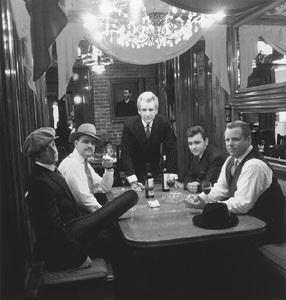
They Might Be Giants

0

Giant Step

It’s a family affair for kooky alt-popsters

By Greg Cahill

Their songs often had a certain childlike charm, so when the college-radio hits dried up for They Might Be Giants, the quirky alt-pop band made a natural shift in strategy–they recorded a straight-ahead album of children’s music.

The resulting enhanced CD, No! (Rounder), is a family-oriented disc that features special interactive sequences allowing fans of all ages to both listen to the music and play along to animated segments. The songs are a kooky and contagious mix of infectious melodies, skewed humor, and all-around goofiness (reminiscent of the Eels but without the social angst) and include such science-obsessed ditties as “Where Do They Make Balloons?”, “The Edison Museum,” and an ode to those rare souls blessed with supertasting taste buds. There’s even a song written from the point of view of a grocery bag.

No!, which marks the band’s 20th anniversary, is a career move that hasn’t surprised longtime fans. After all, TMBG picked up a Grammy Award earlier this year for the sweetly defiant “Boss of Me,” the theme song to the hit Fox-TV comedy Malcolm in the Middle.

Originally a duo, the band hails from Brooklyn. In the beginning, cofounders John Linnell and John Flansburgh played all the instruments in the studio themselves–an eclectic blend that ranged from keyboards and accordion to guitar and woodwinds. On the road, they were backed by synthesizers, drum machines, and tapes.

In 1986, the duo enlisted the help of band mates and released an eponymous debut. The album generated the surprise college-radio hit “Don’t Let’s Start,” which made waves on MTV thanks to an experimental music video. Two years later, the band matched its success with the song “Ana Ng” from the Lincoln album, capturing the attention of major labels.

In 1990, TMBG signed with Elektra Records and released the quintessentially quirky alt-rock album Flood, which produced the hits “Birdhouse in Your Soul” and “Istanbul (Not Constantinople),” the latter being a remake of the 1953 hit by the Four Lads.

During the ’90s, interest by MTV and mainstream rock radio fell off, especially after the release of 1994’s experimental John Henry album, but the band continued to tour on the college circuit and consolidated a core of cult fans.

Having made the world safe for such campy bands as Weezer and the Bare Naked Ladies, TMBG are so comfortable with their status that the band has no qualms about putting the following warning label on their latest CD: “The end of the album’s song sequence is specially designed to expedite slumber, so listeners should not operate machinery or plush animals while listening to the last three songs.”

Can you imagine Smash Mouth making that statement?

Random Notes

When the North Bay club and concert scene is good, it’s very good, and when it’s bad . . . ah, who even wants to contemplate that? Jamaican dancehall legend Yellowman and the Sagittarius Band bring their crucial dance riddims to the Last Day Saloon in Santa Rosa on July 21. The show is part of a scintillating series of top reggae acts hosted by DJ Sister Yasmin (try and catch Rasta troubadour Prezident Brown and the Orchestra of Judah at the Last Day Saloon on July 24) . . . Folk and blues great Geoff Muldaur comes to the Powerhouse Brewing Co. on July 21 . . . Brazilian rock guitar sensation José Neto, inspired by Hendrix and Santana, rocks the house July 27 at 19 Broadway in Fairfax. Meanwhile, this tiny venue has landed the world-music coup of the year: the Mighty Sparrow, the undisputed calypso king of the world, shakes it up there on July 27 . . . Telecaster master Bill Kirchen, who has recorded with the likes of Nick Lowe and Commander Cody and His Lost Planet Airmen, rides the steel breeze into Sweetwater on July 27 . . . And Cuban jazz piano great Gonzalo Rubalcaba headlines the Green Music Festival on Aug. 4 at Sonoma State University.

They Might Be Giants perform Tuesday, July 23, at 9pm, at the Mystic Theatre, 21 Petaluma Blvd. N., Petaluma. Tickets are $23. 707.765.2121.

From the July 18-24, 2002 issue of the North Bay Bohemian.

© Metro Publishing Inc.
Stone Horse Farm

Man and Beast: Stuart Schroeder tames nature with the help of Sparky and Ike. Plowing Forward At Stone Horse Farm, the tractor gathers dust By M. V. Wood Just as the sun sets, the wind picks up and the birds start calling out in unison. Some...

Bohemian Grove Protesters

Photograph by R. V. Scheide Kinder, Gentler Protest The Bohemian Grove protesters shake it gently By R. V. Scheide It's just after noon on Saturday, July 13, and Greg Haas, owner of the Pink Elephant bar in Monte Rio, is pissed. In 15 minutes, a crowd of demonstrators...

Wine Country Film Festival

Poetic Justice Wine Country Film Festival builds cinematic bridge between cultures and arts By Sara Bir There are two reasons we go to see movies. One is to escape, to effortlessly slip away into another space for an hour and a half. The other is to discover--the glimmer that after it's...

‘Anton in Show Business’

Stage Rage 'Anton in Show Business' plays for keeps By Patrick Sullivan Is theater culturally important enough to be the subject of a play?" asks an ersatz audience member as she smashes through the fourth wall to interrogate the cast of Anton in Show Business. And the real audience can't...

Chernobyl Children’s Project Benefit Concert

Fresh Start A Petaluma program helps Chernobyl's children By Greg Cahill When Connie and Cliff McClain traveled to the Soviet Union in 1990, the Petaluma couple had a chance to witness first-hand the devastation caused by the worst nuclear accident in history. That 1986 accident--a catastrophic explosion in Unit No. 4...

‘Ansel Adams Centennial’

Afterimage Sonoma State's 'Ansel Adams Centennial' gives us the whole man By Sara Bir From malls to museums, the majesty of an Ansel Adams image is instantly recognizable: billowing clouds, shimmering lakes, and razor-sharp definition come together to form impressions of nature so pure in spirit that they...

Tomatoes

It won't be long before backyard bounties burst into ripeness By Sara Bir A tomato out of season can be a most spiteful fruit, a ghastly aberration with a mealy texture, unconvincing color, little discernible flavor, and as unnaturally hard as the ass of a woman who spends too much time at the gym on...

‘Book of Days’

Small Town Politics: Bobby (John Wallis) and James (Matthew Hammonds) scheme and manipulate. Blank Pages 'Book of Days' has nothing new to say about middle America By Patrick Sullivan God save us from small towns. Back in the day, everybody thought these quaint little burgs...

Open Mic

Sonoma County's water woes run deep By Shepherd Bliss Water, water everywhere," Samuel Taylor Coleridge wrote. Water is so present that we tend to take it for granted. "But not a drop to drink," the poet adds. Coleridge's words came to mind as I drove up Highway 116 in rural Sebastopol a...

They Might Be Giants

Giant Step It's a family affair for kooky alt-popsters By Greg Cahill Their songs often had a certain childlike charm, so when the college-radio hits dried up for They Might Be Giants, the quirky alt-pop band made a natural shift in strategy--they recorded a straight-ahead album of children's music. ...
11,084FansLike
4,446FollowersFollow
6,928FollowersFollow