
‘Cradle 2 the Grave’

0

‘Screening Party’ (2002)

‘Misadventures in the (213)’ (1999)

Photograph by Claudette Barius

Maybe a Little Kick: Jet Li defeats enemies with the greatest of ease in ‘Cradle 2 the Grave.’

Hit Men

Author Dennis Hensley on Jet Li, fighting with girls, and ‘Cradle 2 the Grave’

Writer David Templeton takes interesting people to interesting movies in his ongoing quest for the ultimate postfilm conversation. This is not a review; rather, it’s a freewheeling, tangential discussion of art, alternative ideas, and popular culture.

Dennis Hensley is not talking. Not much. Not yet.

That’s good for the other popcorn-clutching theater bums scattered about the cineplex this sunny afternoon, staring in shell-shocked wonder as Cradle 2 the Grave–starring DMX, Jet Li, and Tom Arnold–explodes across the big, reverberating screen before us. Aside from occasional exhalation of “Whoa!” and “Ouch!,” my guest stays respectfully mum throughout the film, though it’s pretty unlikely–given the noise of exploding safes, heads, and helicopters, and the deafening snap! snap! snap! of loudly breaking bones–that anyone could have heard Hensley cracking jokes above all the din.

Too bad.

Hensley, after all, is a card-carrying master of the midfilm wisecrack. He’s the L.A.-based author of the new book Screening Party, a follow-up to his bestselling 1995 hit novel Misadventures in the (213), about a gay would-be screenwriter on the fringes of Hollywood. In Screening Party, Hensley gathers a motley assortment of characters to watch DVDs, capturing their bitchy banter and borderline-cruel deconstructions of everything from Steven Spielberg’s Jaws to Mariah Carey’s Glitter. Driven by Hensley’s off-kilter wit and naughty-boy style, Screening Party is an homage to the fine art of talking during movies.

But we’re in public now, and Hensley–impressively self-contained–waits patiently till the rowdy climax of Cradle 2 the Grave. The film is about a gang of born-again jewel thieves (lead by rapper-turned-thespian DMX) who steal and lose a bag of mysterious black gems, then team up with a Taiwanese secret agent (Li) and a motor-mouthed purveyor of stolen goods (Arnold) to get the jewels back and along the way locate DMX’s annoying kidnapped daughter, kill a bunch of ugly people, and save the world from a well-dressed cabal of weapons dealers trying to get their hands on the stolen gems, which turn out to be powerful pellets of concentrated plutonium capable of flattening civilization as we know it.

“It was so ridiculous,” Hensley says as we exit the theater in search of caffeine and a bit of well-earned quiet. “But it was kind of fun, in a way,” he admits. “I think I expected something darker, more realistic–less expensive to film. But it was just so silly.” After a pause, he adds, “You know a film is in trouble when Tom Arnold is a breath of fresh air.”

Whoa! Ouch!

“I kind of like Jet Li,” he goes on. “I love how he has only one expression and never breaks a sweat. He doesn’t even move, basically. In fight scenes, he just stands back and goes, ‘Maybe I’ll kick a little.'”

Cradle 2 the Grave–“What does that title mean?” Hensley asks–is the kind of movie where fight scenes include people running up walls, spinning horizontally to avoid flying bullets, and launching volleys of kicks and kung fu chops so fast and furious you begin to wonder how John Wayne ever got away with merely slugging a guy.

“Have you ever punched anyone?” I ask Hensley.

“Oh, no, I’m a huge pussy,” he laughs. “I was in a fight with a girl, once. Three girls, actually, and I think I kicked their asses. They attacked me and I freaked out and just kind of went off on them, hitting, slapping, whatever it took. So I won, but then we all got swats in the principal’s office.”

Having located a coffee shop with an outside table not overly covered in pigeon-droppings, Hensley cuddles his designer coffee as he takes a seat to swap our favorite Cradle 2 the Grave movie moments. Mine is the scene where Jet Li is chased by a vicious Doberman, and runs up the side of an alley wall, leaping over the dog’s head to land back on the ground–and then the dog does the same thing.

One of Hensley’s favorite bits is the “CSI moment,” when a bad guy gets a weaponized slug of concentrated plutonium shoved down his esophagus. We witness this event in a shot from inside the esophagus.

“I thought that was pretty delicious,” Hensley admits, “though I’ll bet, in another version of that scene, Jet Li shoved that thing right up the guy’s ass.

“Actually,” he adds, “I’ll bet it’s the same inside shot in both versions.”

From the March 13-19, 2003 issue of the North Bay Bohemian.
© Metro Publishing Inc.

Dennis Kucinich

0

Man With a Plan: Congressman Dennis Kucinich is looking to make a few changes in our administration.

Peace Initiative

Dennis Kucinich to rally forces in North Bay

By Tara Treasurefield

Voters who are looking for an alternative to duct tape, Big Brother, and decades of war certainly could do worse than Ohio representative Dennis Kucinich. The congressman, who is one of nine contenders for the Democratic presidential nomination, is lesser known than some of his colleagues–and commentators have downplayed his chances of getting the nomination–but his liberal stance on issues like the potential war in Iraq are gaining him support.

On March 29, he will speak at a Praxis Peace Institute event at the Marin Center.

His proposed legislation to create a Department of Peace would move the nation from “wars to end all wars” to “peace to end all wars.” He has also introduced legislation to label genetically engineered foods, supports single payer healthcare and retirement security for all, and wants to cancel “free trade agreements” that have lost hundreds of thousands of jobs.

Kucinich supports a woman’s right to choose, sex education, family planning, and contraception. He shows up at peace rallies, and he marched with workers through the streets of Seattle to protest the policies of the World Trade Organization. He knows what it’s like to live in a car.

In a recent interview with Kucinich, I asked a few burning questions.

Good people with good hearts believe what they hear on the nightly news or read in the morning paper. But in the corporate media, much of what passes for news is really propaganda. Do you have specific ideas for changing that?

I think there are so many different media outlets that it’s tough for people to understand what’s real and what isn’t. I think there is a sense in which we have to trust our own intuition about what we believe is going on.

Let’s take the war, for example. A lot of information is reinforcing the cause of war. And yet, we know that there has been no proof that Iraq was connected to the event of 9-11, and we know that Iraq did not attack our country. No credible information has been brought forward that suggests that Iraq was responsible for al Qaida’s role in 9-11, nor is there any evidence that Iraq had anything to do with the anthrax attack on our country. . . .

It’s important for people to look for alternative resources when the major media may not be presenting information which is at variance with the message of the day at the White House.

Do you think that recent moves to impeach George Bush have merit and are worth pursuing?

I’m not in favor of impeachment. I think we need to make the peace movement visible in this country, and we need to work for candidates who want to create structures of peace in our society [and] who want new foreign policies which rely not on unilateralism and preemption, but on cooperation and support for the United Nations. An effort towards impeachment would only serve to strengthen the current administration.

With passage of the USA Patriot Act, the attorney general of the United States gained the legal right to arrest anyone in the country without specific charges and hold them indefinitely. Do you see any way to recover our civil liberties and prevent the passage of new legislation that will erode them even further?

We need to work to regain those civil liberties that have been ceded to a government which is determined to stay at war and therefore keep this nation on alert. The Patriot Act ought to be repealed. We cannot achieve security in our society through having a government dedicated to war. The attack on Iraq will increase the jeopardy for our own citizens. We need a different response to the challenge of terrorism, which is to enforce the law using good, old-fashioned police and detective work, and wherever that can’t work, using the international community to take coordinated action towards peaceful resolution.

The Patriot Act was a step in the direction of establishing a type of government that is really foreign to everything that America stands for. This will be an issue in the 2004 election.

How did the Patriot Act get passed?

It passed in a climate of fear. That fear is being maintained in this country. . . . When people are afraid, they do things that are often against their own interests. The people in Congress aren’t any different from anybody else, in terms of their essential human makeup. The people in Congress can become afraid, and they can vote that way.

Through the Patriot Act, the administration intends to control the Internet as well. Is there any way to prevent this?

I think that the peace . . . and civil-liberties movements must become visible. People need to be heard from, so as to create some resistance to this move toward undemocratic structures.

The Bush administration’s Defense Department budget–$380 billion and climbing–represents about one-half of every tax dollar spent. Is there any way to shift government-spending priorities, especially now with fear so dominant?

Yes, [with] a new administration and a new Congress. This administration is determined to spend the treasure of this nation on war and tax cuts. There’s a trillion and a half dollars for tax cuts. But there’s no money for healthcare. No money for education. No money for creating jobs. No money for rebuilding our cities. But there’s money for war. That’s why this administration needs to be challenged and replaced.

Dennis Kucinich will speak at the Marin Center on March 29. To order tickets, call the Marin Center box office at 415.499.6800.

Send a letter to the editor about this story to le*****@*******ws.com.

From the March 13-19, 2003 issue of Metro, Silicon Valley’s Weekly Newspaper.

© Metro Publishing Inc. Metroactive is affiliated with the Boulevards Network.

For more information about the San Jose/Silicon Valley area, visit sanjose.com.

Buckethead

0

Buckethead’s ‘Electric Tears’ (2002)

William Ackerman’s‘Opening of Doors’ (1992)

Fishbone’s‘Friendliest Psychosis of All’ EP (2002)


Buy one of the following King Crimson CDs:

‘In the Court of the Crimson King’ (1969)

‘Happy with What You Have to Be Happy With’ (2002)

‘The Power to Believe’ (2003)

Face Off: Buckethead reunites with the Deli Creeps this week at the Mystic.

Head Trip

Buckethead shreds his way to the North Bay

By Greg Cahill

Let’s play six degrees of J. R. R. Tolkien. Question: What do Buckethead–the ultrastrange avant-rock guitarist who only appears in public wearing an inverted Kentucky Fried Chicken bucket on his head while garbed in a freakishly expressionless white mask–and Aragorn, son of Arathorn, have in common? Answer: Buckethead supplied those steely guitar tracks behind Viggo Mortensen’s spoken-word performance on three of the actor’s highly obscure 1999 solo poetry albums.

Live and learn.

North Bay audiences will get a chance to sample Buckethead’s rapid-fire riffing and see his robotic stage moves for themselves when the gonzo guitarist reunites with his old San Francisco metal-funk band the Deli Creeps this week at the Mystic Theatre in Petaluma, a rare event that is highly anticipated in Bay Area underground rock circles.

Widely regarded as one of the most bizarre and enigmatic figures in American underground and experimental music, Buckethead (aka Brian Carroll, a former Napa resident) is probably best known to mainstream audiences as the replacement for Slash in the latter-day Guns ‘N Roses. But his avant-garde credentials are considerable.

After the demise of the Deli Creeps, which Mike Patton of Faith No More once affectionately described as “kind of like big, fat, butcher meathead Texas Chainsaw spoof-rock,” Buckethead moved on to a prolific recording career that has included stints with New York’s downtown scene-maker John Zorn and an impressive list of bass masters such as global fusion innovator Bill Laswell (notably Laswell’s 1992 Praxis project), Les Claypool (shredding the audience but good when he joined Primus onstage at Ozzfest ’99), Bootsy Collins of Parliament-Funkadelic, and Jonas Hellborg.

Of course, it would be easy to write Buckethead off as some sort of freak. His solo material (Dreamatorium, Day of the Robot) is often inspired by ’50s sci-fi soundtracks, but his music can also be extraordinarily beautiful and melodic. His most recent album, last year’s Electric Tears, is filled with reflective instrumentals.

This, after all, is a guy as equally comfortable contributing to New Age guitarist William Ackerman’s 1992 album, Opening of Doors, as he is to the recent Fishbone’s Familyhood Nexperience release, The Friendliest Psychosis of All.

The Deli Creeps, featuring Buckethead, perform Friday, March 14, at 9pm at the Mystic Theatre, 21 Petaluma Blvd. N., Petaluma. Woven open the show. Tickets are $18 advance; $20 at the door. 707.765.2121.

More Guitar Gods

Get ready for a heady blast of “21st Century Schizoid Man.” The quintessential prog-rock band King Crimson, whose seminal sound has influenced everyone from Nine Inch Nails to Tool, come to the Luther Burbank Center in Santa Rosa later this month. The band, which emerged from the ashes of Britain’s ill-fated one-off band Giles, Giles, and Fripp, scored a hit with their 1969 debut outing In the Court of the Crimson King, a challenging blend of rock, jazz, and classical music.

The current lineup boasts the twin guitar attack of avant-rock masters Robert Fripp and Adrian Belew, as well as Chapman-stick player Trey Gunn (a veteran of Fripp’s celebrated League of Crafty Guitarists), and drummer Pat Mastelotto. In the past year, the band recorded Happy with What You Have to Be Happy With, an EP released in October, and their just-released new album, The Power to Believe. King Crimson perform at the LBC on Thursday, March 27, at 8pm. Tickets are $40.

Meanwhile, roots guitarist Bill Kirchen–a bona fide Telecaster master who has contributed his twangy licks to recordings by Elvis Costello, Nick Lowe, and Emmy Lou Harris–returns to Sweetwater in Mill Valley this week to celebrate the release of his new album, Dieselbilly Road Trip. Kirchen, a former North Bay resident, is a veteran of Commander Cody’s Lost Planet Airmen who found his place in the sun a few years back on a piece of land near the nation’s capital. Kirchen, regarded as one of the fathers of twangcore, is a one-man steel-string tour de force who knows more than a song or two about hot licks, cold steel, and trucks. Check him out on Saturday, March 15. Showtime is 9:30pm. Call 415.388.2820 for ticket information.

From the March 13-19, 2003 issue of the North Bay Bohemian.

© Metro Publishing Inc.

Joanne Rand

0

‘Into the River’ (2003)

Photograph by Michelle Cohen

Roaring of the Road: Joanne Rand has happily put what’s important to her ahead of career advancement.

Gone Swimmin

Joanne Rand’s new CD ‘Into the River,’ speaks to her personal peace

By M. V. Wood

It’s a common human struggle: Our egos yearn for success and recognition, yet there’s that part within us that wants to simply live and enjoy life instead of spending so much energy and worry in trying to achieve.

It’s a struggle that has surfaced again and again in Joanne Rand’s life. And again and again Rand has chosen to follow her heart rather than her ambition. Granted, Rand would probably have had more commercial success by now if she had kept her focus on her career. Yet the strength of her songs is that they speak so genuinely about the importance of relationships, about the desire to be in a place of natural beauty (rather than in the city, where there are better career opportunities), and about the many other facets of life that don’t have to do with making it big.

As an example of putting love before ambition, take the time, about a decade ago, when Rand and the Little Big Band were riding a wave of popularity in Sonoma County. They were receiving accolades from both critics and fans, and the sky was the limit. Then Rand found out her brother had AIDS, so she packed up and moved to Seattle to be with him.

Not long after he died, Rand wrote a song called “The Roaring of the Road,” which symbolizes career and acquisition. One line in the song says, “Love is more important than the roaring of the road.”

That may have been the first time Rand so clearly spelled out her life’s path. But her choices, both before and after, support this point of view.

Rand eventually moved back to Sonoma County. But then last November, she and her husband, Greg King, and their daughter, Georgia, moved north to the Siskiyou Mountains, where the Salmon and Klamath rivers meet.

“It simply feeds my soul to be out in nature like this, to be among the trees and mountains and the river,” Rand says by phone from her new home. “But the very first month we were here, we didn’t see a single human being. That was kind of tough, but then we met a couple of people, and they introduced us to a couple of more, and it turns out there’s a pretty cool little community here.”

Even so, Rand still considers Sonoma County her “community and cultural base. It’s still where most of my friends are and where I feel the most understood and supported.” That’s why she chose Sebastopol as the place to have her CD release party for her seventh album, Into the River.

Like all of her albums, Into the River draws upon what is happening in her life. And these songs focus on love and family and the environment. There are also many references to the Sept. 11 tragedy and its aftermath of fear and sadness.

Rand’s style is folksy, but it’s not particularly smooth, rhythmic, or lulling. Instead, her emphasis is on using her voice to express the underlying meaning and feeling of the songs. And often, her voice sounds primal, more like raw nature than something cultured and civilized.

She poignantly sings about her longing to raise her daughter in a world without anthrax and missiles and suicide bombers. She sings about the need for love and peace and compassion. But Rand doesn’t come off as the wise sage telling the rest of us what we need to do. Instead, she’s a fellow traveler just trying to make her way through the world.

In fact, her CD begins with the song “Jumpstart,” which she considers the “dropped stitch” of the album.

“‘Dropped stitch’ is a Native American concept,” Rand explains. “When making a weaving, they intentionally drop a stitch somewhere in the weave, as a testimony to our human imperfection. To me, [“Jumpstart”] is the one song where I admit my weakness and self-doubt.”

In it, she sings about that struggle between ego and the drive for success, and the desire to live a simple, content day-to-day life.

“I still have the burning desire to leave a legacy, but I don’t take it as seriously as I used to,” she says. “I consider my daughter, Georgia, to be my greatest masterpiece, my mark left on the world.”

Singer-songwriter Joanne Rand and her band will perform on Friday, March 14, at 8pm at Subud Hall, 234 Hutchins Ave., Sebastopol. $10. 877.803.1576.

From the March 13-19, 2003 issue of the North Bay Bohemian.

© Metro Publishing Inc.

‘Post Modern Post: International Artistamps’

0

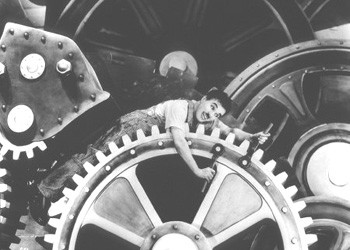
Air Mail: A visit to Terra Candella may net this work by Harley.

Stamps of Approval

Philately by the people for the people

By Gretchen Giles

On an early March day, His Serene Highness, Painter of Unicorns of Terra Candella, is himself leading a private museum tour. Culled from his personal collection, the work of 50 artists from 15 countries adorns the upper floor of the Sonoma County Museum. A full-sized outline of the Serene Highness’ own dignified nude person is under one frame, darkened at the edges by sumi ink and adorned with postage and rubber stamps. Though this is a museum, the air is anything but rarefied.

His Serene Highness is more familiarly known ’round these parts as the mono-monikered Guerneville painter and mail artist Harley, and this large accumulation of artist-made stamps (known as “artistamps”), envelopes, and obscure philately is his second life-time collection. He donated the first lifetime’s worth to Ohio’s Oberlin College in 1995, a culmination of 20 years of trading and collecting, totaling some 6,000 pieces of work by 1,250 different artists.

Subverting the system while avidly participating within it, mail art is a proudly proletariat pastime, practiced by an unusual set of people, not a few of whom find that sending a single, brilliant piece of tiny work to a stranger in another country entirely represents their preferred round of human interaction.

Literally a correspondence school that anyone so inclined may join, mail art encourages side-stepping the tightlipped insular hip of galleries and museums. Its transmission is regularly carried out by postal workers the world over, though in rougher countries, the art must be delivered by courier, as anything distinctive is generally expected to be seized.

Most of the artists collected in “Post Modern Post: International Artistamps,” showing through April 27 at the SCM, have created their own stamps, though many also fashion the envelopes as artworks, and some–like His Serene Highness–have their own imaginary countries, replete with postal cancels, seals, and tax bars.

Presiding over Terra Candella, loose Latin for “land of light” (a presence more of mind than real estate), Harley serves as a guest curator in conjunction with the museum’s examination of its building’s origins as a post office, even going so far as to obtain an official U.S. “first day” postmark for March 8, 2003, remaining good for 30 days and available for stamping in the museum’s gift shop.

The inwardly curled world of avant-garde philately includes one Clemente Padin, an Uruguayan who was sent to prison for two years for the subversive act of practicing mail art. The Argentinean artist Edgardo Antonio Vigo turned to making artistamps after his 18-year-old son was “disappeared” by the government and his grief was too large to be contained by just one continent.

Partners Alexander Kholopov and Natalia Lamanova take their official Russian documents and overlay them in a perforated collage of new economy dissent. In another gallery, Lamanova has covered a huge “stamp” sheet with a nude black-and-white portrait of herself glaring dispassionately from a couch.

The Japanese artist Ryosuke Cohen collects the artistamps sent to him, screens them onto oversized pieces of paper, and then invites such dignitaries as Harley to lie upon them to be traced. He inks out the edges, the sumi eerily not quite covering the bright images underneath, resulting in gorgeous “portraits” with hundreds of voices pulsing in them.

Harley pauses before the seemingly playful work of Italian mail artist Guglielmo Cavellini, whose oversized stamps feature droll self-portraits of himself next to reproductions of Van Gogh, Cezanne, Warhol, and the deposed Shah of Iran, all offered as equals.

“His family owned the equivalent of WalMart, and Warhol probably did do his portrait,” Harley says. “His shtick was ‘self-historicalization,’ the penultimate ego trip, megalomaniacal excess.” So these aren’t farcical? He shrugs.

One artist regularly sends Harley entire books filled with work. The pressure to create new artistamps to send out into the world must be enormous once one begins to succumb to the near-anonymous lure of mail art. Harley admits to keeping his correspondence down to “a small group,” but looks around at what he assures is but a portion of his collection and sighs, “You could do this all the time.”

‘Post Modern Post: International Artistamps’ exhibits through April 27 at the Sonoma County Museum, 425 Seventh St., Santa Rosa. Gallery hours are Wednesday-Sunday, 11am-4pm. Admission is $3 for nonmembers. 707.579.1500.

From the March 13-19, 2003 issue of the North Bay Bohemian.
© Metro Publishing Inc.

Marsha Diane Arnold

‘Heart of a Tiger’ (1995)

‘The Pumpkin Runner’ (1998)

‘The Tail of Little Skunk’ (2002)

‘Quick, Quack, Quick!’ (1999)

‘The Bravest of Us All’ (2000)

‘Metro Cat’ (2001)

Illustration of Marsha Diane Arnold by Jack E. Davis

A Tale to Tell: Marsha Diane Arnold has found herself writing in rhyme recently.

Rhyme and Reason

True stories of a not-so-hardened picture-book writer

By David Templeton

Marsha Diane Arnold understands stories. A skilled inventor, Arnold has created such charming children’s picture books as Heart of a Tiger and The Pumpkin Runner, along with popular easy-readers like The Tail of Little Skunk and Quick, Quack, Quick! Her stories are astonishingly rich, infused with humor and fine emotional detail.

The Chicken Salad Club is about a little boy’s sweet-hearted attempt to find a suitable companion for his 100-year-old great-grandfather. The Bravest of Us All is the tale of a nearly fearless Midwestern girl with a secret phobia regarding storm cellars. Last year’s Metro Cat is the story of a spoiled French kitty who becomes a dancing sensation in the Paris subways. Arnold, in other words, is a born storyteller. It’s her job, and she’s good at it.

On a nonprofessional basis–when it’s just you and her in a room together, sharing a cup of tea–Arnold is still a born storyteller. She talks in stories like it’s a native language. If you ask her a question, the answer is likely to be a story. Some of these stories are short–a sentence or two in length but jam-packed with drama–while others are so long and full and rich they deserve to become books of their own. She appears to be unaware when she’s doing it, and the stories keep spilling out as effortless and easy as water from a tap.

There’s the one about her grandmother’s house in rural Kansas.

“We were an extended family of Swiss-German-Menonite farmers,” Arnold explains, sitting in the studio of her Sebastopol home. “My grandmother wouldn’t have stood for it had we not had dinner together as a family every single Sunday, so we all showed up every week. I spent a lot of time there, and I loved it. I learned a lot from my grandmother.”

There’s another one, about her daughter’s semisuccessful attempt to trade her little brother for a coveted Barbie coloring book. That story did become a book, the silly-funny Edward G. and the Beautiful Pink Hairbow.

Then there’s the story of how Arnold quit weaving stories altogether after being diagnosed with breast cancer and her surprise discovery–once she began writing again–that her once-familiar storyteller’s voice had undergone an unexpected transformation.

“I was diagnosed in 1997,” she says, “and it just stopped me in my tracks. I had to rethink what my priorities were. Getting healthy, staying healthy, had to be number one–my health is still number one–so for a while, I didn’t write at all. I just focused on becoming healthy.”

She pauses a few seconds, and in that short moment she seems to shrink in stature, physically encompassing all the struggle and fear and fight of a women who’s spent months and years locked in a contest with her own mortality. The moment is broken when Arnold suddenly smiles, practically twinkling with amusement as she reveals the next piece of the story.

“When I started writing again,” she says, “I found that I was writing in rhyme. Before cancer, I was always a prose writer. I’d never written anything in rhyme, but after cancer, I think I was just trying to be happy and have a good time. I was just trying to have more fun with my writing. So there I was, writing in rhyme.”

The fruits of that unexpected evolution will be unveiled next year, when her next book, Prancing Dancing Lilly, is published. It’s the story of a globe-trotting cow who sends letters to her old herd back home. The letters are all written in rhyme.

“My next one after that,” she grins, “is called Roar of a Snore. That one is all in rhyme, and the one I’m working on now is in rhyme. It’s actually quite hard and frustrating sometimes. To write a story in rhyme is difficult because any little thing you change ends up changing all these other things.

“But I am having fun.”

Growing up in the Sunflower State among all those Swiss-German-Mennonites for whom English was a mystery–“We really weren’t all that literate,” Arnold laughs–she somehow grew up enamored of languages and words. In college, she majored in English literature, studying Shakespeare and Chaucer.

“I loved that language, I loved the way those words sounded,” she recalls. “I love the history of individual words, how they came to be and what they meant when they first were spoken.”

The mother of two children–both have moved away to college–Arnold has used what spare time she has now to branch out a bit. Last year she launched her first official website (www.marshadianearnold.com), which has attracted a pile of e-mails from young fans around the country. She’s also been traveling more, visiting schools to meet those fans, teach workshops, tell stories, and answer questions.

It seems that her fans have a lot of questions about her books and how she chooses the illustrators who bring the words to colorful life. According to Arnold, many people are surprised to learn the truth about picture books: Authors seldom have anything to do with the pictures that go with them, neither choosing nor even approving of the illustrations.

“Most writers don’t speak to or even know the name of the illustrator who’s illustrating their book,” she says. “The editor chooses the illustrator that they think will complement your story. Sometimes, if there are questions the illustrator has–or something specific the writer wants the illustrator to know–then they can pass messages through the editor.

“Editors,” she notes with a smile, “like to keep us apart.”

That said, Arnold admits she’s extremely pleased with the illustrators she’s been assigned, an assortment of artists she fondly refers to as “an illustrious group” (was that a pun?) who include Jamichael Henterly, Julie Downing, and Jack E. Davis. The only illustrator she’s been teemed with twice is Brad Sneed, whose beautiful work graces The Bravest of Us All and The Pumpkin Runner.

“I’ve been lucky,” Arnold says. “I have no complaints.”

Arnold has been writing more lately, in rhyme and out. One project that is especially close to her heart is a picture book with the intriguing title of Slobberchops. “When I first got sick,” explains Arnold, “I decided that my kids needed a dog–or maybe it was that I needed them to have a dog–in case I didn’t make it. My son chose the breed, and he chose a boxer.” The dog, who was named Ali, became Arnold’s close companion all during her treatment. The bond between them was remarkable, she says, still visibly grieving Ali’s death last summer following their close five-year relationship.

“Ali had an enlarged heart,” she says. “And that’s how he was with me–his heart was huge. Boxers drool a lot. They’re a mess. But I just loved Ali. He provided a lot of fun for me.” When Ali became critically ill, Arnold responded in the only way she knew how: she wrote a book, a tall tale about a big-hearted boxer. “I wrote that book more quickly than any other book I’ve written–I did it in about three weeks.” She’s currently working on a revision of the story, and hopes to see it in print within the next couple of years.

As a person who loves and understands stories, who revels in the rhythm and structure and power of stories, it is not surprising that Arnold has developed a few tricks to assist in transforming her own stories into written books.

Her favorite trick: She reads out loud as she writes.

“When you read a book out loud,” she says, “you get a really good idea how good that writer is–or not. When you are writing a children’s book, one of the things you have to do is to read it in your own voice. When I’m working, I’m reading out loud constantly, over and over, as I sit at the computer writing a story.

“Stories are wonderful to look at and read,” she says, “but they truly come to life when they are given a voice.”

Spoken like a born storyteller.

From the March 13-19, 2003 issue of the North Bay Bohemian.
© Metro Publishing Inc.

Bargain Booze

0

Science at Work: Our intrepid reporters distinguish the wheat from the chaff.

Bargain Booze

How to find a perfectly fine wine for under $10

By James Knight

Let’s say you’re walking down the wine aisle in a supermarket. You’re going to take a bottle home and uncork it with dinner. The wines in the store are conveniently grouped according to flavor–I mean varietal–and price. The bottles on the top shelf are over $35 and almost out of reach. The $8.99 varietal dinner party wines are conveniently belly-high. All the way on the bottom shelf are the $3.99 underdogs, so low you could just kick ’em.

These are topsy-turvy times in the wine market. As a result of flattening domestic sales and a grape glut still looming like the clouds of war, the fighting varietals are really ripping it up. It’s a great time to be a consumer of premium wines. Too bad about this beer-budget recession. So $50 wines are selling for $35. We applaud our neighbors–or anyway, those people in those hilltop houses–who scoop up these values, and we hope they’ll use their tax cut to further empty area warehouses.

But that nervous Nellie the consumer, whose confidence or lack thereof is scrutinized ever so closely, just isn’t pumped-up enough. Witness the hysteria over Trader Joe’s $1.99 Charles Shaw wine, which became a news event.

In this atmosphere of vinous bargains, is it indeed worthwhile to delve below the $10 . . . the $7 . . . the $4 price line? Often a $20 wine will score nary two stars and rate barely drinkable. What local consumers are surely missing is hard data on cheap wine. To that end, I organized a tasting panel to determine–in a fair and scientific way–the answer to the question, “How low can you go?”

Space does not permit me to review in detail the factors that determined which eight wines I chose for this wine survey, and the complicated formulations need not concern the layperson at this time. Here’s the gist.

Six bottles of recognizable name brands in the $4 to $8 range; a famous-name wine costing twice as much, and a boxed wine costing half as much, to provide “control groups” on both ends of the spectrum. See? Scientific.

For my tasting panel, I solicited the opinions of two esteemed colleagues, Korki and Pepe, both avid consumers of reasonably priced wines. This was a blind tasting, paper bags and all. Even the boxed wine was surreptitiously poured into a bottle. Our score sheet had five categories ranging from aroma and taste to overall impression. We scored each wine on a scale of five to 25.

Franzia Merlot
Vintage: (just kidding!)
About $9 per liter Score: 9 Rank: 8

I chose Franzia to best represent a varietal wine in the box because it’s Pepe’s house wine and he had some on hand. But he ranked it close to last, noting on his tasting sheet that it was “boring, artificial, thin” with a “modeling glue aroma.” I noted its “hamper” smell, while Korki concurred it had “dirty feet” on the nose. She also detected a hint of “butt.”

Barefoot Cabernet Sauvignon
No vintage, California
$5.99 at local market Score: 9.5 Rank: 7

Barefoot Cellars: “A jammy wine with robust flavors of wild berries and currants. Hints of toasted oak and clove complete the velvety, smooth finish. Outstanding!”

Korki: “Made stomach feel sick. Color was OK–fooled me. Stomach was sick. Blah. Worthless. Don’t eat with anything.”

Pepe: “Not repulsive. Still fermenting. Sour, uninspired, harsh. Needs strong food to forget your heartburn.”

This wine tasted like a stainless steel tank and was a rude guest on the palate. To be charitable to a local standby, I’d like to suggest that it was a bad batch. However, a gold label on the bottle proclaims it a “Consistent Quality Blends Award Winner.”

ForestVille Cabernet Sauvignon
2000, California
On sale $3.34 Score: 10 Rank: 6

Pepe enigmatically noted, “Looks can be deceiving” in the color/clarity category. The taste ranged from “Kool-Aid” to “locker room.” The aftertaste was sweetish, yucky, bearable, a little spicy, and “dirty,” as applied to “deep fryer” or “winery floor.” Pair it with “sad leftovers,” Korki suggested. “Expect hangover.”

The label wants you to know that “ForestVille varietal wines are produced from the finest vineyards in Northern California.” Enough already. The ForestVille brand has maintained a competitive price point for those who must have change from a fiver.

Sutter Home Cabernet Sauvignon
1999, California
$5.99 Score: 13 Rank: 5

Instead of the usual back label suggesting you pair the wine with an unpopular entrée like veal, the producers only note that “Sutter Home Winery is committed to finding a cure for breast cancer.” We’d like to toast their worthy effort, albeit with a more worthy wine. The best we could say was that it is inoffensive. “Could deal if I was short on cash. Eat with pizza,” Korki noted.

Robert Mondavi ‘Private Selection’ Cabernet Sauvignon
2000, Central Coast
$10.99 Score: 13 Rank: 4

For $10.99, surely there could be no finer wine at the supermarket eye-level tier than a Mondavi. The label features a church tower rising above the coastal fog–or is it heaven?

While Pepe found a “faint spice, slight plum” aroma, Korki was “fooled again” by the “OK” smell. On the tongue, it inspired comments from “boring, sour, no fruit” to “icky, burning in chest.” I felt an ineffable, dispirited feeling and wished I had a beer.

It was especially disappointing because the much cheaper Mondavi Woodbridge,
a bottom-shelf standby, is a fairly reliable value in all the usual flavors.

Canyon Road Cabernet Sauvignon
2000, California
$7.99 Score: 19 Rank: 3

I split with the panel on this one. They detected an “alcohol smell . . . slight cherry, a little oak” and found it warm and drinkable. I pegged it as the most generic bulk Merlot there ever was. Despite the enthusiasm of my associates, I maintain that it’s overpriced by $2.

Whole Foods Market 365 Every Day Value ‘Nominée’ Cabernet Sauvignon
2000, Paso Robles
$6.99 Score: 20.5 Rank: 2

This has the same Whole Foods brand label that appears on packages of toilet paper. But it was the only cabernet with varietal characteristics. It smelled meaty, smoky; Korki said it smelled like dinner.

Korki wanted to take it camping with her, while Pepe called it “complicated and mysterious, deep and private.”

Exercise caution with the brand in general. I investigated the Everyday Value French Merlot ($4.99) on a prior occasion and found it was as acrid and harsh as French bricklayer’s cigarettes. Merde!

ForestVille Sonoma Reserve Merlot
2000, Alexander Valley
$6.99 Score: 21 Rank: 1

The tasting notes became more strange. Korki noted that “shrub taste is so nice” in the overall impression category.

This wine was tops. Two of us thought it would have made a better example of Zin or Syrah. It was hearty, peppery, tannic, yet with a smooth finish. Pepe was conflicted, first wanting to lay it down for a year, then saying, “I want some more.”

If you’re dead-set on getting the biggest container of wine for the lowest price, you’re better off trucking over to Martini & Prati Winery on Laguna Road. For $12.90 they give you an authentic one-gallon jug of this historic family winery’s “new jug blend,” which is over a third cab and everything–including the kitchen sink–for the rest. It’s puckery, spicy, and clean-tasting–what you’d want to pass around a table of Italian food.

After the tasting, I joined the herd and grabbed a Charles Shaw. It’s pretty much like what they say it is. It’s sort of good and really cheap. It’s middling–like a U.N.-monitored truce between a belligerent cheap wine and a better one.

The conclusions of this survey are as groundbreaking as they are completely predictable. When scouting out a pop-it-open-in-an-hour value, we advise that you look for the label with the smallest region for the lowest price. At this price point, forget the name brands. Example: Any region northeast of Schellville is a good bet. California: iffy. Central Coast: great place for lettuce, maybe Chardonnay too. Between a $4.99 California or $6.99 Alexander Valley? Live it up, people.

From the March 13-19, 2003 issue of the North Bay Bohemian.

© Metro Publishing Inc.

Home, Green Home

0


Photograph by Rory McNamara

Back to Basics: Joe Kennedy (left) and Steve Beck warm themselves in the glow of an open-air kitchen at the home of eco-dwelling student Leslie Jackson.

Home, Green Home

New College’s eco-dwelling program is leading the pack in exploring the green building movement

By Davina Baum

It’s a wet and rainy Friday afternoon in West Marin. The wood fire is burning, the large picture window looks out on the dripping foliage, and Benjamin Fahrer has just made me some peppermint tea. I’m sitting in a house that Fahrer built, a collapsible, portable canvas dome with all the comforts of home.

It’s warm and bright inside, despite the cloudy skies outside. The cream-colored canvas skin of the dome diffuses a warm light throughout the space, which has a small, fully equipped kitchen, a dining area, a living room, and a bedroom loft. The noise of the rain against the canvas is meditative, reassuring.

The dome is 465 square feet–bigger than many a New York apartment–and it collapses into an 8-by-12-foot box that sits on a trailer. In about 12 hours, Benjamin and his wife could be on the road in their old biodiesel-fueled PG&E truck with their house on their backs–the human equivalent of the humble snail.

Fahrer graduated in December from the New College of California’s master’s program with a concentration in eco-dwelling. The dome was his thesis project. Unlike most graduate work, Fahrer’s thesis won’t gather dust in a filing cabinet. Fahrer’s thesis serves a practical purpose: shelter. And another one: sustainability.

Here’s one more: stewardship of the land we live on.

Green building, natural building, sustainable building–it’s known by many names, but it means basically the same thing. Standard construction is wasteful, toxic, and is destroying the resources that we have long relied on. Standard architecture pays little attention to maximizing a structure’s potential to employ readily available resources, like the sun, and to build community.

Natural building hearkens back to the earliest architects, who used what materials they had on hand and were careful to replenish what they used. They understood, consciously or not, that taking away from the earth requires something given back. The materials of vernacular architecture–straw bale, rammed earth, cob, adobe–are all strong, long-lasting, and nontoxic; they are good at regulating temperature, and waste very few resources in their creation.

Need heat? Get it from the sun. Climate too hot, water at a premium? Design carefully so as to maximize the cooling properties of materials and the availability of local resources. Build small, build with family, build with very little money.

For thousands of years, people operated under these premises because it was the most logical way to live. There were no highway systems carting truckloads of lumber; there was no advanced manufacturing creating more efficient synthetic materials, no oil available to heat houses, and no water piped for miles from a reservoir.

Current standard construction materials–the wood that’s clear-cut, the iron for rebar that’s mined, the cement that releases tons of greenhouse gases into the atmosphere in its manufacturing–are avoided as much as possible by green builders, in favor of materials with fewer manufacturing needs.

There is no set material list for a naturally built house, and the demands of the site–its climate and geology–often dictate the materials used. The types of materials run the gamut–earth, concrete, rocks, gravel, glass, bamboo–but share in low toxicity, little reliance on fossil fuels, and low labor and industry costs in their manufacture. Add to that locally produced substances that don’t rely on fleets of polluting trucks to get to their location and sustainably farmed wood that doesn’t destroy forests.

Steve Beck and Joe Kennedy have spent the better half of their careers thinking about how we live. As faculty in the eco-dwelling concentration at Santa Rosa’s New College campus, they lead a cohort of students who are rethinking the standards of design and construction and how they affect the way that we live.

Both come to the program with backgrounds in architecture. Kennedy’s education in natural building complements Beck’s ecological design expertise. Sitting at a vast table in New College’s beautiful building just outside Railroad Square, it’s apparent that their personalities, too, are complementary: Beck is soft-spoken, unassuming, a counterpoint to Kennedy’s warm intensity.

Kennedy–the author of The Art of Natural Building–came to natural building as a student, with the idea that he “wanted to take the destruction out of architecture.” In architecture school in Berkeley and then in Los Angeles, Kennedy found himself attracted to traditions of vernacular architecture–the humble cottages and shacks built in anonymous villages all over the world which “were not deemed very important to study” and indeed, were not considered architecture at all. “We looked at things like the Parthenon, Le Corbusier, Mies van der Rohe, and Frank Lloyd Wright . . . but I had this instinctive feeling . . . that there was some other way of building.”

As an architect, Kennedy felt very conflicted about the damage that his chosen profession was doing to the earth. “What I found was, I was increasingly unable to live with myself, especially when I was [ordering lumber] that I knew was coming from old growth forests which I enjoyed backpacking through.”

Kennedy turned to earth construction, under the mentorship of Nader Khalili of the CalEarth Institute: “It was a real awakening for me, in that there was this feeling about architecture that I wanted to have. . . . I wanted to design things that were as amazing as trees were, or birds nests or beaver dams.” He was struck by the elegance and sustainability of natural architecture. “I thought, ‘How could we as human beings do that?’ And I found that we have done that, and it’s only in the past couple hundred years or so that we’ve really come away from some sustainable traditions of our own.”

Kennedy admits that “having these thoughts as a young architecture student, I felt very alone.” But in working with Khalili, Kennedy found a community of like-minded designers, builders, and architects. A relatively recent addition to the New College faculty, he started giving public lectures in natural building on the North Bay campus over a year ago and joined the faculty soon after.

Steve Beck has gathered something of a following in his four years at New College, largely because of his radical ideas on dwelling. He has taught at the North Bay campus since it opened in 1998. His classes formed the backbone of the eco-dwelling program, which has been in place since January 2001.

Beck has developed a hypothetical living space that he calls the microhomestead. The design looks like an animal’s paw print: one central, circular structure with round offshoots.

According to Beck, a conventional city townhouse lot is based on a rectangular 200-by-400-foot city block and is 25 feet wide by 100 feet deep. “The typical [rectangular] lot is very inefficient in its usage of space,” he says. Square buildings are slightly more effective; circular, even more so. “I discovered very recently that a round footprint is actually a more efficient way of creating housing at high density than square is, which completely contradicts all of my training as an architect.

“This is a fairly recent discovery for me. . . It so perfectly illustrates the ways in which preconceptions that we learn from our culture, truths that we assume to be incontrovertible, may turn out to be not true at all when you really look closely.”

One of the major precepts that Beck and Kennedy come back to is the way we utilize space. Beck is known for his ideas on tiny dwellings. In fact, for a 15-year period, in Tuolumne County and later in Seattle, he designed, built, and lived in a series of tiny, portable solar houses. “None were more than 120 square feet, some smaller.”

Erin Fisher, another recent eco-dwelling graduate, lives in what once must have been a garden shed. It’s a total of 6 by 9 feet, in which she’s managed to fit a raised-platform bed and a tiny kitchen, including a hot plate, refrigerator, and shelves. She also has a phone, a TV and VCR, and cable Internet access. She’s lived here, behind a large group house (where she uses the bathroom and laundry) near downtown Berkeley, for six years.

Fisher’s background is in construction. A brief foray into web design (a less wasteful type of construction but with less job security) found her soon laid-off and free to search for her next career move in 2001. The permaculture design course at the Occidental Arts and Ecology Center led her to the New College eco-dwelling program.

Since graduating from the program in December, Fisher has started an alternative energy company with two other women called Solar Sisters. It’s still at a very early stage: Word of mouth has gotten them some site visits and consultations on installing solar PV systems, windmills, or solar hot-water systems.

Fisher’s thesis project, unlike Fahrer’s, is not yet built. As a scale model, it’s bare bones, lacking the warmth and comfort of Farher’s fully built, lived-in home. Fisher’s thesis is a modular, portable, solar self-reliant tiny dwelling. The cabin, when built, will be 8 by 12 feet–practically cavernous compared to Fisher’s current cabin–with a pitched roof and fully outfitted with a renewable energy system.

Composed of 2-by-8-foot panels held together by spline joints, the model is designed to be broken down into manageable panels–light enough to carry–and transported from site to site. “Kind of like a green RV,” says Fisher. “We could drive it around, take it to trade shows or schools.”

Fisher aims to use her house, when it’s built, as a teaching model for solar self-reliance. Fahrer, on the other hand, is living as a model for solar self-reliance. Both have a strong interest in educating others about natural building, and both have been clearly inspired by Beck and Kennedy.

The skeleton of Fahrer’s dome, which came from an Ashland, Ore., company called Pacific Domes, is made from 1-inch aluminum tubing–strong enough to hold a person in the hammock that hangs near the big window. The structure is not, strictly, a “natural” building, since it uses industrial materials. But Fahrer’s small, self-built, portable dwelling fits well within the New College ideal of “eco” dwelling.

Fahrer lives here with his wife, Gabriel Tiradani, who finished the New College core curriculum with an emphasis in environmental art. She’s now working with painter Adam Wolpert at OAEC.

There’s no electricity yet; they’ve made do with candlelight, which Fahrer says gives “a nice feeling at night.” A hand-cranked blender does wonders in the kitchen. They don’t see much need for television, but they do run a laptop computer on a battery so that they can watch DVDs. “We’re homesteading,” says Tiradani. “You make certain sacrifices.” When they have the time, they’re going to set up a 75-watt PV array and two deep-cycle batteries.

A composting toilet sits outside. They plan to make a bathroom, with a tub fed by a hot-water pipe system to be heated by either the wood stove or the sun.

The kitchen facilities, in addition to the blender, include a double sink, antique cabinets that came from Tiradani’s family, a full-size gas stove, and a small fridge. Tiradani shared in the design process of the entire place; the kitchen was her main concern. “We sculpted it around who we are and what we like to do in the kitchen, how we move.”

The only setbacks appear to be a few leaks in the canvas and some mildew, which Pacific Domes has promised to fix. “It’s frustrating,” says Fahrer.

But Fahrer clearly loves his project–his home–and Tiradani says “the reward is that you know you’re responsible for what you’ve created. You make mistakes, and you live with them and learn from them.”

They had a lot of help from New College’s eco-dwelling program. “The program evokes a sense of community,” says Fahrer. “Because I was actually building it, it really was inspiring for some of the other students. They say that in the natural building world it takes a community to build a house.”

Erin Fisher talks a lot about community, too, about opening up a conversation, for example, with her neighbors. “Some of them might know about permaculture, most of them probably don’t.”

Fisher says that she loves living on a tiny footprint, but she is looking to move to a bigger place. “I want more space.”

Contradictory only on the surface, Fisher explains. “I think we do need space. I think the mistake that we make in this country is creating the space so that we always have it but only using it once in a while. One of the benefits of having tiny portable houses is that you could have a cabin for every one of your friends when they were there. But then you could put it away in the closet when they’re not there.”

It’s a variation on Beck’s microhomestead idea, which Fisher calls “brilliant.”

“Not only in terms of minimizing our footprint,” she adds, “but also in terms of building community. If people don’t have fences around their yards, they’re actually going to be interacting with their neighbors. And that’s what building community’s about. . . . One of the ways is to really live by example and live transparently. Welcome strangers into your yard and tell them what you’re up to.”

Bruce Hammond may not be so concerned about space, but he would agree with Fisher’s comments on transparency. President and CEO of Hammond Fine Homes and active in the sustainability community, Hammond has built a $2.75 million, 3,900-square-foot spec home–with a granny unit–on 10.5 acres in the foothills of Sonoma Mountain.

“Steve Beck would come to this site,” says Hammond, “look around, and say, ‘I can fit 25 dwellings here.'” But Hammond has built the structure almost entirely with green building materials and believes that anyone with the financial resources to buy the house would also have the resources to spread the word about green building.

Built with a high-performance, green-building integrated design–meaning that the layout was carefully managed to maximize the lighting and temperature-regulation powers of the outside world rather than relying entirely on electricity or gas–the house is a paragon of conscientious design. It’s stunning.

The front door opens into an open-plan living/dining room with a grand fireplace. Salvaged old growth redwood beams frame the high ceiling, and light streams in from skylights and two sets of French doors opening to the backyard. The lumber that went into the built-in cabinetry–cherry, redwood, maple–is all certified by the Forest Stewardship Council, which guarantees that the timber originated from a forest managed according to certain international standards of sustainability.

The deck is made of recycled plastic and sawdust, the gutters are copper, and the roof, sidings, and trim are all cement fiber. All the materials, in fact, are the best available and, for the most part, are durable, sustainably farmed, and nontoxic.

The site was carefully planned. The house sits low in the hills, and runoff water is diverted around the house into vernal pools. A deep, gravity-pressured, solar-powered well provides water. As we’re standing outside, talking about native tree plantings and passive solar design, a stag conveniently saunters by. The setting is incredible, with views down the hillside that stretch for miles.

“This building,” says Hammond, “is a complete expression of the mainstreaming of green.” He says that green building is a market transformation: As more people find out about it, their natural inclination
is to support it.

But who will buy this house? Let’s talk stereotypes: someone who might drive the SUV down to Whole Foods to buy organic; someone who may own a vineyard that’s doused in pesticides every year; someone who could insist on limestone from Mexico and Italian granite for the kitchen counters. Someone with $2.75 million.

The lifestyle that allows someone to buy a house of such size is not entirely conducive to the other holistic aspects of green building, such as reducing our impact on the earth’s resources and encouraging community. Hammond says that “the reality is that if someone hears the story of what’s embedded here, just that gets them thinking about ways to live.”

While green building seeks to repair some of the damage done to the earth, or at least mitigate it, the movement itself will not change the very nature of our consumer culture. Progressive movements combined, however, may raise awareness.

Steve Beck and Joe Kennedy try to focus on societal change in relation to green building. “I’m really interested in the inner-outer relationship,” says Beck. I think it’s all too easy to pay attention to the physical-external conditions. It seems that the split between the two is pretty characteristic of our culture.”

Kennedy, too, is interested in the sustainability movement. “Eco-villages,” he says, “where building, waste treatment, water collection, food production, and making a living are all looked at as a whole is something that [can help us] live much more efficiently and elegantly, and have more time for those things that matter to us.”

Both of them accept that there might be “shades of green,” as Hammond puts it. Beck notes that it is very hard–almost impossible–to build without any industrial materials at all. Kennedy points out that he’s interested in how the “everyday person” can incorporate green building into his or her life. “It may be choosing to repaint their house with a less toxic paint. It might be adding a sun room to their existing house so they can have more passive solar design or putting in a solar panel.”

Kennedy has few airy notions about the reach of green building. “We’re not going to abandon all these suburban developments and build beautiful little eco-villages out somewhere else. That would be an untenable situation. So we have to work with our imperfect world and work to improve it.”

Beck agrees. “The cost of energy, heating, and cooling will have an enormous impact on how attractive large houses are perceived to be,” he says.

While the benefits of green building might be easy to establish, the city and county bureaucracies that govern zoning and building are not so quick to change. In areas where land is affordable, zoning usually prohibits high density–preventing a group of people, for example, from buying a piece of land together and building some very small houses. Alternative waste treatment is not allowed in Sonoma County, according to Kennedy. “In some places in the country, you’re not allowed to collect rainwater off the roof. It’s political.”

Beck points out that building and zoning codes are implemented, in theory, for the public good, “to protect tenants from substandard housing developed and owned by landlords. A small space poorly designed and shoddily constructed can become very unpleasant for someone who’s renting it. An even smaller space lovingly designed and built by the owner-occupant can be joyous and liberating.

“My greatest optimism is that what we’re doing can and eventually will in itself help to change codes by showing alternatives that work much more effectively than what we have now.”

The alternatives are getting attention. Bruce Hammond notes that the National Association of Homebuilders is pushing the idea of green building. In November 2001, San Francisco voters approved a bond measure that gives the city $100 million in revenue bonds for installing renewable-energy systems in public buildings.

The city of Santa Rosa–in partnership with PG&E and the Santa Rosa Chamber of Commerce–has agreed to promote green building consulting services to educate people and entice builders to use green building techniques. And New College has received a planning grant to convert its Santa Rosa campus into a model of sustainability, embodying the very values that it teaches others.

The path is clear to Kennedy and Beck–and, indeed, to Hammond, Fisher, and Fahrer, too. “We have a pattern,” says Kennedy, “that could be win-win. Provide affordable housing, save the environment, allow for more people to be homeowners, create healing environments for people that they love to live in.”

It’s a pattern that’s becoming increasingly respected, as word about the green building movement spreads. The movement has been compared to the organic movement, 10 or 15 years ago.

And, naturally, green building faces similar obstacles. But as the New College model shows, communities make things happen. With Fahrer in his dome out in West Marin; Fisher, growing community in Berkeley; Hammond, catering to the high end; and Beck and Kennedy, learning and teaching, the movement is building.

Information on the New College eco-dwelling concentration is available at . Sonoma State’s Environmental Tech Center offers educational resources (www.sonoma.edu/ensp/etc/). For more information about green building, solar self-reliance, and energy efficiency, Real Goods in Hopland (www.realgoods.com) and the Occidental Arts and Ecology Center (www.oaec.org) are excellent resources.

From the March 13-19, 2003 issue of the North Bay Bohemian.
© Metro Publishing Inc.

Naked Aggression

0


Photo Courtesy of Scott Hess

Truth Movement: Over a hundred women took their clothes off for peace in Occidental.

Naked Aggression

Sonoma County women bear witness for peace by baring ass

By Ellen C. Bicheler

I’m here because there’s a lot of power. Women have a lot of power. To me, this is about women in the flesh embodying peace and truth. It’s a wonderful way to make a statement,” declared Jacqueline Hayward of Sebastopol on Feb. 23. One hundred and three women apparently agreed. On a green, grassy knoll at Ocean Song, the farm and wilderness center near Occidental, they stripped off their clothing to spell out the words “truth” and “compassion”–words they want the nation’s leaders to notice, consider, and follow.

Motivations for participating were varied.

Elizabeth Fuller of Sebastopol said, “A lot of what’s going on right now is about patterns–seeing patterns, really looking closely at what we’re in the middle of. The idea of putting our own physical beings in the most vulnerable and beautiful and essential state as part of a pattern to be seen is to me a tremendously appropriate thing to do.”

An older woman added, “We’re little old women in tennis shoes. Nothing else we’ve done seems to have made a difference. This is not something you do every day. We’re hoping it will be fruitful and useful–bearing witness by baring ass.”

Kym Trippsmith, organizer of the Sonoma County event, explained further: “This is not just about the war; this is about the whole capitalist system that is basically bent on destroying our planet, making sure the resources are set aside for the elite. As [antinuclear activist] Helen Caldicott told us: ‘It’s the responsibility of all of us to make saving the planet your number one priority, every day.'”

For Trippsmith, a musician, writer, and producer, that means staging events like today’s nude photo or her recent Truth and Justice concert or the upcoming May Day celebration at Stafford Lake in Novato, slated for May 3–which may host another Baring Witness event.

The naked pictures are part of an international movement conceived just three months ago by Donna Sheehan, founder of a group called Unreasonable Women Baring Witness. Sheehan was captivated by the actions of a group of about a hundred Nigerian women who stormed an oil terminal owned by ChevronTexaco. The women used “the curse of nakedness”–threatening to remove their clothes–to shame executives into meeting their demands. The company was forced to promise jobs, electricity, and other improvements to villages in the Niger Delta.

Sheehan’s version of “the curse” was further motivated by a dream she had of people creating artistic shapes with their bodies. In November, she organized a group of women in Point Reyes for a spelling-out of the word “peace.”

“Bush has his weapons,” Sheehan says, “women have theirs. . . . The dynamic of nudity throws off the balance. In that moment, we are hoping our leaders will hear us.”

There have been some negative responses to some of the nudity. Some people “think it’s ridiculous,” Sheehan says.

When the nude peace photo appeared on CBS News Sunday Morning, Charles Osgood exclaimed, “Talk about a body of work.” Bob Schieffer responded, saying “I was hoping for a close-up.” Their comments sparked a lot of anger and questioning about the strategy.

Sheehan’s husband, Paul Reffell, says that this response “is the embarrassment most sober men feel when confronted by female nudity.” What the women participating in Baring Witness are attempting to convey with their nakedness is “how exhausted and frustrated they are by the state of the world in men’s hands. If that means standing naked and unprotected–unarmed in a violent world–they are ready to do so.”

In response to accusations that the events are exploitative, Sheehan said “the original idea was to make a beautiful piece of figurative art for a good cause. The fact that the media has taken notice does not mean we are exploiting our women. . . . Exploitation of women occurs when their bodies are viewed as commodities. These women are glad to expose the flesh all humans share, especially since the proceeds, if any, from photo sales go to the peace movement.”

The photo from Sonoma County will join the growing collection, part of a soon-to-be traveling exhibit and documentary. Sheehan hopes to elicit photos from every state in the union; currently, she has 14.

Sheehan and Trippsmith agree that women need to reclaim their power. “Women are feeling voiceless in the predominantly male push towards war,” Sheehan noted.

“What a collective we can be!” Trippsmith added. “There are so many kinds of women here–ages two to 70–with all kinds of religious and spiritual backgrounds. Democrats, Republican, Greens, and Pagans. Part of the power is showing that we can come from different waves of life and come into alignment with each other.”

The women at Ocean Song were greeted with warm cups of chai, held hands for prayer, were entertained by drumbeat and song, and were purified with sage before descending the hillside to form the letters, first in clothes, then without. An ocean breeze cooled the air and the ground was cold, but the camaraderie was warm as women linked bodies with friends, family, and strangers to form the letters. Women chanted “Om” while photographers snapped the shots. The group cheered upon completion.

Women mingled after the pictures were taken, exchanging e-mail addresses, passing out flyers on future events, and mulling over the experience of taking their clothes off.

Sheehan means to continue her efforts. One of her latest tactics is a vigorous letter-writing campaign to Laura Bush, Cherie Blair, Lynne Cheney, and Alma Powell, in which she implores them to talk with their husbands.

“If we cannot deter our men from violent acts, then we have failed as women, as nurturers, as guardians of our families and voices of reason. Baring Witness wants men to know they don’t have to take sole responsibility for the war, that women want a greater partnership. Men’s acts of war are linked to their biological urge to provide for what they think are women’s needs. Women are ready to be equally responsible for their men’s actions.”

Trippsmith, too, is hopeful. “I believe the women coming here today baring their bodies to the earth is a drop in the proverbial bucket, planting a seed right here. That the light in our hearts, the love we shared, the care we brought individually for each other–for the earth, our children, parents, grandparents–will allow us to change our lives by taking less from the planet.”

For further information and photos, visit www.baringwitness.org. Locally, International Women’s Day on March 8 brings a number of events, including a women’s forum at Subud Hall, March 8, 1-5pm. 234 Hutchins Ave., Sebastopol. 707.874.1744. A Wailing Wall peace action will take place March 8 at noon at the Santa Rosa Plaza. Coffee Catz (6761 Sebastopol Ave., Sebastopol) will host an evening on women, March 8, 7-10pm.

From the March 6-12, 2003 issue of the North Bay Bohemian.
© Metro Publishing Inc.

Border Dispute

0


Photograph by Michael Amsler

Medical Emergency: Dr. Douglas Pile will lift his clinic’s boycott of GlaxoSmithKline once they agree to lower prices by 25 percent or supply Canadian pharmacies.

Border Dispute

Healdsburg doctors boycott GlaxoSmithKline

By Joy Lanzendorfer

When Dr. Douglas Pile heard that one of the largest drug companies was cutting off supplies to Canadian pharmacies because Americans were buying drugs over the Internet at discount prices, he decided to put his foot down. Along with the other three doctors at Healdsburg Primary Care, a medical practice that serves more than 10,000 local patients, Pile decided to boycott the $32 billion GlaxoSmithKline.

“I just thought it was a reasonable thing to do,” says Pile. “They drew a line in the sand that said they would no longer sell to Canadians. I said, fine, I’ll see to it that you don’t sell to Americans either.”

Though the medical center will continue to refill old Glaxo prescriptions, they will not be writing any new prescriptions for Glaxo’s drugs unless there is no alternative brand available. Glaxo has many well-known products, including Paxil, Wellbutrin, and Flonase, as well as over-the-counter products like Tums, Nicorette, Tagamet, and Aquafresh toothpaste.

But Healdsburg Primary Care isn’t the only group boycotting Glaxo. In fact, boycotts have sprung up nationwide. The largest is the Tums Down Campaign, a boycott of Glaxo’s over-the-counter products. It includes senior groups from dozens of states, including Senior Action Network in San Francisco. On Feb. 27, SAN held a Tums Down demonstration on Fourth and Howard streets in San Francisco, where Glaxo representatives were holding a business meeting.

It’s obvious Glaxo’s decision to restrict Canadian sales has struck a nerve. And no wonder. Glaxo is attacking one of the few ways Americans can get around high drug costs: ordering drugs online from Canadian pharmacies for half or two-thirds the cost.

The company says its actions are not motivated by the money it is losing from Americans buying from Canadians but are meant to “prevent non-FDA-approved drugs from being sold by Canadian Internet pharmacies to U.S. consumers.” Glaxo wants patients to receive the right drugs legally and safely by buying from U.S. pharmacies.

But the boycotting groups are skeptical of Glaxo’s claims that its actions are motivated by safety and not profit.

“It’s perfectly legal and safe to sell drugs over the Internet,” says Bruce Livingston, executive director of SAN. “Glaxo just doesn’t like the possibility of the prices they give to 33 million Canadians being transferred to the U.S. market.”

Many deeply feel the high cost of prescription drugs in the United States. Some, especially senior citizens on fixed incomes, are struggling to afford much-needed medical supplies. While these people may have enough money to keep them from qualifying for need-based programs that can assist in the purchase of drugs, the monthly bills can still be steep. Some of Pile’s patients pay between $350 and $1,000 a month for prescriptions.

Buying prescription drugs from Mexico or Canada has gone on for years. Some patients take vacations in those countries specifically to buy a year’s worth of prescriptions at a cheaper price, combining vacation with necessity. The Internet has made it possible for people who don’t have the money, time, or physical capability to visit the countries directly to still buy drugs at a reduced price.

“The question shouldn’t be why are Canada’s drugs so much cheaper, but why are drugs so expensive in the U.S.,” says Livingston.

The high cost of drugs is one of the biggest contributors to the current healthcare crisis. Drug prices have skyrocketed in the last few years, rising as much as 20 percent a year. To combat the demand for drugs, spun partially from drug advertising on national TV, doctors have increased prescriptions for generic drugs. The problem is that now the price of generic drugs is rising as well. While they used to be one-quarter or one-tenth the cost of brand-name drugs, they are now half or three-quarters the price.

All this profit has made drug companies a favorite investment on Wall Street, adding to the pressure to make a profit.

Healdsburg Primary Care will lift its boycott of Glaxo when the company returns to supplying the Canadian pharmacies or lowers its U.S. prices by 25 percent.

“They would get a huge market share if they did that,” laughs Pile. “But there isn’t a lot of incentive for them to lower prices. They have a captive market in the U.S.”

He hopes his boycott will inspire other doctors to take steps in their own practices against the system.

“Obviously, this is larger than just one company,” he says. “I hope our boycott will capture other doctors’ imaginations that we can make a difference. We can bring about change in our current healthcare system.”

From the March 6-12, 2003 issue of the North Bay Bohemian.

© Metro Publishing Inc.

‘Cradle 2 the Grave’

'Screening Party' (2002)'Misadventures in the (213)' (1999)Photograph by Claudette BariusMaybe a Little Kick: Jet Li defeats enemies with the greatest of ease in 'Cradle 2 the Grave.'Hit MenAuthor Dennis Hensley on Jet Li, fighting with girls, and 'Cradle 2 the Grave' Writer David Templeton takes interesting people to interesting movies in his ongoing quest for the ultimate postfilm conversation....

Dennis Kucinich

Man With a Plan: Congressman Dennis Kucinich is looking to make a few changes in our administration.Peace InitiativeDennis Kucinich to rally forces in North BayBy Tara TreasurefieldVoters who are looking for an alternative to duct tape, Big Brother, and decades of war certainly could do worse than Ohio representative Dennis Kucinich. The congressman, who is one of nine contenders...

Buckethead

Buckethead's 'Electric Tears' (2002)William Ackerman's'Opening of Doors' (1992)Fishbone's'Friendliest Psychosis of All' EP (2002)Buy one of the following King Crimson CDs:'In the Court of the Crimson King' (1969)'Happy with What You Have to Be Happy With' (2002)'The Power to Believe' (2003)Face Off: Buckethead reunites with the Deli Creeps this week at the Mystic.Head TripBuckethead shreds his way to the North...

Joanne Rand

'Into the River' (2003)Photograph by Michelle CohenRoaring of the Road: Joanne Rand has happily put what's important to her ahead of career advancement.Gone SwimminJoanne Rand's new CD 'Into the River,' speaks to her personal peaceBy M. V. WoodIt's a common human struggle: Our egos yearn for success and recognition, yet there's that part within us that wants to simply...

‘Post Modern Post: International Artistamps’

Air Mail: A visit to Terra Candella may net this work by Harley.Stamps of ApprovalPhilately by the people for the peopleBy Gretchen GilesOn an early March day, His Serene Highness, Painter of Unicorns of Terra Candella, is himself leading a private museum tour. Culled from his personal collection, the work of 50 artists from 15 countries adorns the upper...

Marsha Diane Arnold

'Heart of a Tiger' (1995)'The Pumpkin Runner' (1998)'The Tail of Little Skunk' (2002)'Quick, Quack, Quick!' (1999)'The Bravest of Us All' (2000)'Metro Cat' (2001)Illustration of Marsha Diane Arnold by Jack E. DavisA Tale to Tell: Marsha Diane Arnold has found herself writing in rhyme recently.Rhyme and ReasonTrue stories of a not-so-hardened picture-book writerBy David TempletonMarsha Diane Arnold understands stories. A...

Bargain Booze

Science at Work: Our intrepid reporters distinguish the wheat from the chaff.Bargain BoozeHow to find a perfectly fine wine for under $10By James KnightLet's say you're walking down the wine aisle in a supermarket. You're going to take a bottle home and uncork it with dinner. The wines in the store are conveniently grouped according to flavor--I mean varietal--and...

Home, Green Home

Photograph by Rory McNamaraBack to Basics: Joe Kennedy (left) and Steve Beck warm themselves in the glow of an open-air kitchen at the home of eco-dwelling student Leslie Jackson.Home, Green HomeNew College's eco-dwelling program is leading the pack in exploring the green building movementBy Davina BaumIt's a wet and rainy Friday afternoon in West Marin. The wood fire is...

Naked Aggression

Photo Courtesy of Scott HessTruth Movement: Over a hundred women took their clothes off for peace in Occidental.Naked AggressionSonoma County women bear witness for peace by baring assBy Ellen C. BichelerI'm here because there's a lot of power. Women have a lot of power. To me, this is about women in the flesh embodying peace and truth. It's...

Border Dispute

Photograph by Michael AmslerMedical Emergency: Dr. Douglas Pile will lift his clinic's boycott of GlaxoSmithKline once they agree to lower prices by 25 percent or supply Canadian pharmacies.Border DisputeHealdsburg doctors boycott GlaxoSmithKlineBy Joy LanzendorferWhen Dr. Douglas Pile heard that one of the largest drug companies was cutting off supplies to Canadian pharmacies because Americans were buying drugs over the...
11,084FansLike
4,446FollowersFollow
6,928FollowersFollow

