
Legal Aid

0

Shrinking Aid

Low-income legal aid becomes harder to come by in Napa

By Joy Lanzendorfer

Starting this month, if you’re poor and need legal services in Napa County, you’re probably out of luck. Napa’s only major resource that offered civil legal services for low-income people, Legal Aid of the North Bay, has closed its doors from lack of funding. The office handled around 412 cases a year, all for families making less than $28,000. With the closing, Napa becomes the only county in the Bay Area without a Legal Aid office.

The Legal Aid office handled many fundamental services. It helped abused women file restraining orders against their abusers, protected tenants who were unfairly evicted, and provided resources for abused elders and advocacy for children in the foster-care system. With its demise comes a huge need for representation among the poorest in the community.

“It makes me shudder to think of all the individuals who used to come to my door and now have no services,” says Ronit Rubinoff, an attorney with Napa’s Legal Aid office for six years. “Now I don’t see those people in court. They aren’t getting through the door.”

According to census data, out of 45,395 households in Napa County in 1999, 2,533 earn less than $10,000 per year; 1,864 earn between $10,000 and $15,000; and 4,825 earn between $25,000 and $35,000.

Legal Aid of the North Bay’s Napa office cost approximately $250,000 a year to run, though it cut expenses down to $150,000 last year. The office was established more than 30 years ago through federal grants. As the years went on, the funding shrank. In the 1990s, it merged with Marin’s Legal Aid office, becoming Legal Aid of the North Bay.

By the time it closed, Napa’s office saw only $65,000 a year in government grants. The rest was covered by local sources. The problem was that the Napa office didn’t see enough private grants from the local community to continue to operate. So it subsidized expenses with trusts and endowments given to Marin County.

“Donors to the Marin office were not happy to see their donations go outside Marin County,” says Michael Holman, attorney and head of a steering committee dealing with the closing. “They asked Napa to step up to the plate and fund its own office. And why not? There are certainly plenty of private funding sources here.”

But the downturn in the economy has made many groups less giving. Nonprofits all over the country are struggling, including the Marin office.

“There’s a lot of uncertainty in the current climate,” says director of litigation Richard Marcantonio. “We are having trouble, but we’re not to the point of losing any staff yet.”

For the short term, the Marin office has opened an 800 number for Napa people to call for advice and help. It will also offer some representation for abused elders. In addition, other entities like the Napa Superior Court will offer some limited resources. But it’s not enough to cover the demand, some say.

“Legal Aid helped people in a lot of ways,” says Holman. “They did clearinghouse work and spent a lot of time giving people information and pointing them in the right direction. That sort of thing is hard to measure.”

The committee is exploring different funding opportunities to reopen some of the services. However, even with all the potential money in wealthy Napa County, the future Legal Aid will probably not be in a standalone office. Instead, it will be some sort of combination group using resources from other nonprofits and the courts, according to Holman.

For the people who need representation right now, there aren’t many options. By calling the 800 number, individuals can find out about lawyers who do pro bono work, though that can be a long shot. Free legal services are always in high demand. With the closing of the office, many hope Napa’s legal community will do more charity work.

“I hope local firms will offer more pro bono work,” says Holman. “I have always said that my own family couldn’t afford my services. Lawyers are so expensive. It starts at $125 an hour for a young, inexperienced attorney. And legal services are important. Without advocacy, there can be no justice.”

According to a letter in the Napa Valley Register, Napa citizen K. D. Yeend estimated that from the listing of 268 attorneys in the phone book, the amount of pro bono work necessary to cover the gap left by the demise of the Legal Aid office is only 1.5 cases of pro bono work per attorney per year.

From the April 17-23, 2003 issue of the North Bay Bohemian.
© Metro Publishing Inc.

Homies

0


Photograph by Troy Kooper

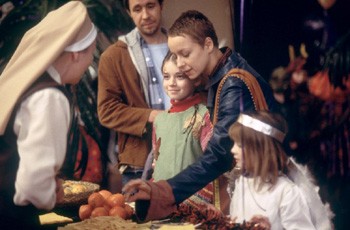
Life Lessons: According to Homies lore, Willie G. is an ex-gangster who works as a handicapped-youth counselor. “Willie rolls on a customized Lowrider wheelchair that the Homies chipped in and bought for him,” explains www.homies.tv.

Where the Heart Is

With Homies, gangsta is in the eye of the beholder

By Sara Bir

The vending machine to the left is full of gumballs in the shape of watermelons; the one to the right hawks grape jawbreakers. The candy in these machines is bright, monochromatic, and simple. You suck it and it’s gone.

The vending machine in the middle holds G’d out B-boys, scantily-clad fly girls, pit bulls wearing sunglasses, and policemen eating donuts, all piled up on top of each other, encased in plastic bubbles. Some of the characters are grimacing and beefy, like linebackers; others are grinning, thin, and wily. Zoot suits, trench coats, baggy pants, basketball jerseys, leather jackets–their attire is as varied as their facial expressions. There’s a whole barrio in there, and one by one, they funnel out of the vending machine’s opening at the drop of two quarters.

Since their arrival in 1998, Homies–plastic figurines under two inches tall–have drawn criticism for their decidedly urban, inner-city Latino look. Detractors see Homies as itsy-bitsy toys that glamorize gang lifestyle. What parent, after all, would want his or her child playing with Payday, who wears a gold dollar-sign medallion, smokes a cigar, and has cash sticking out of his pockets? Or Wino, a rumpled Homie in a stocking cap who clutches a bottle of cheap wine in a paper bag?

The playful 3D thumbnail sketches of Chicano lowrider culture have become quite a presence since their debut. Homies can be spotted on eBay, in Snoop Dogg’s video for “From tha Chuuuch to da Palace,” and in vending machines across the country. People tend to love them or hate them, or not be aware that they exist.

Homies have a curious position in the toy industry. Hipster adults in their 20s have taken to collecting Homies just as much as kids have. They’ve become an underground phenomenon–and a gigantic cash cow–selling millions of figurines and spawning a whole family of tie-ins. But unlike the blatant fantasy element implicit in most toy figurine series, Homies take their cue from reality and depict a cultural identity in a manner that’s both vibrant and controversial.

We have artist and Homies creator David Gonzales, a Richmond native, to thank. Gonzales’ company, Gonzales Graphics, has been producing lowrider-, Aztec-, and religious-inspired stickers and T-shirts for well over a decade and is widely recognized as a pioneer business in the lowrider industry.

Homies can be traced to Gonzales’ in-class high school doodles, where he drew a cartoon version of himself in the comic strip “The Adventures of Chico Loco,” later renamed “The Adventures of Hollywood,” after Gonzales’ nickname. Hollywood and his friends Smiley, Pelon, and Bobby Loco starred in what became the original Homies comic strip, which ran as a regular feature in Lowrider magazine.

In 1998 the first series of Homies figurines–Eight Ball, Smiley, Big Loco, Droopy, Sapo, and Mr. Raza–went on the market. A million Homies sold in four short months. Four series of Homies have come out since, totaling over 100 characters. They are sold not just in California and New York, but Utah, Washington, North Carolina, Iowa, and Ohio, a state about as Latino as Scandinavia. There are even a few Homies collectors in Scandinavia.

Back in 1999, when Homies were new on the scene, the Los Angeles Police Department was afraid that children were the ones buying the toys, and claimed that the Homies were clearly designed to glorify gang members. Some schools banned Homies, and a few retailers, including Vallarta Supermarkets in Los Angeles County, stopped carrying the toys. All of the publicity that came along with the controversy pushed Homies and Gonzales into the spotlight, and the Homies’ infamy grew. Eventually, all of the media fuss died down–and Homies sales went up, up, up.

With some of the Homies’ vato outfits and tough-guy stances, the figurines can be startling on first sight. But once the shock wears off, Homies reveal a great deal of charm, and it’s that offbeat combination of shock and charm that keeps collectors coming back to vending machines to fish for the newest releases.

To know the Homies is to know their website, www.homies.tv. Purchased loose from a store or a vending machine, Homies don’t come with packaging to put them in a context–which can work against them, since an offering of the more thuggish Homies mugging their standoffish poses does pack some shock value. But through the Homies website, Gonzales has been able to give the Homies a redemptive voice, crafting a complete mythology for the characters, who live and hang out together in the imaginary East L.A. barrio of Quien Sabe.

Every Homie has a bio, and through reading these you discover, for example, that the intimidating Big Loco, a muscle-bound vato in baggy pants and suspenders, no shirt, and a wide bandanna, is an ex-gang member who got his degree in social work while at Folsom, and now he’s a youth gang counselor. Willie G., commonly known as the “wheelchair Homie,” is likewise an ex-gangster who turned his life around and is now a handicapped-youth counselor. Paralyzed from the waste down, Willie works with the Homie Outreach program run by Big Loco.

Most of the bios, however, are lighthearted and goofy. Sapo (Spanish for “frog”) is a short, droopy Homie who eats a lot of Mexican food and farts uncontrollably.

Gonzales, who has avoided interviews and generally kept himself out of the public eye ever since the LAPD’s Homie crack-down (he did not respond to inquiries for this story), seems to be constantly drawing new Homies for his own whimsy. Which would explain why each series of Homies has gotten progressively more playful and outlandish. Series five features a bionic break dancer with titanium limbs and a DJ in super-baggy jeans and clown face paint.

There has also been a proliferation of less flashy, more realistic Homies, such as Schoolboy–in a cap and gown, proudly displaying a diploma–and El Profe, an unassuming high school teacher who comes with a podium.

In past interviews and on the Homies website, Gonzales has stated his commitment to keeping Homies violence- and drug-free; the overall spirit of the Homies is positive and fun-loving. But Gonzales also keeps the Homies true to real life, and he has said that his inspiration comes from years spent working in the Chicano community, being immersed in the ’70s and ’80s barrio culture he grew up in, a time Gonzales maintains was more innocent. Some of the Homies are loosely based on friends from back in those days, just regular neighborhood guys. The Homies’ binding force is their support system, which lets them rise above inner-city violence and focus on enjoying themselves and getting along.

Homies even respond to current events: a link on www.homies.tv takes you to www.elpadrecito.com, where Homie El Padrecito himself (who, Gonzales says, is based on his real brother, a Catholic priest) solicits prayers for “our homeboys and homegirls in the service.”

The Latino community’s reaction to Homies has ranged from enthusiasm to disgust to indifference. “I usually see them at the little corner store here in the Mission, but I don’t even think that I have a reaction to them,” says Pedro Tuyub, who works at Accion Latina, a San Francisco organization that promotes social change and cultural pride in the Latino community; Tuyub is the editor of their newspaper, El Tecolote.

“It’s just a waste of money for whoever buys them,” Tuyub adds, “because I don’t think they represent anything, not even in a bad way or a positive way. The people who see it as bad are the people who think that these little guys promote gangster life, that it’s cool to be a gangster, that [Homies] can actually show this to children. But focusing on that instead of focusing more on education would be a bad idea. People would say that it’s bad to have the little toys. To me, I’d say it doesn’t matter.”

Tuyub’s own kids haven’t asked for Homies. “They’re not interested,” he says. “Probably my thinking would have been different if one of them would want to buy them.

“I take a look at them, and they way they dress, the usual T-shirts, jeans, dark glasses–they portray how the people who have belonged to a gang or have been in jail really dress. I have friends that used to be gangsters; I have a lot of friends that work with them. You can see that they kind of look alike.”

Latinos are not the only people noticing and collecting Homies. Zach Martin, 17, a self-professed “probation kid,” lives in Santa Rosa and hangs out at the Abraxas Transition Program. He says he has a few Homies at home and says that they remind him of his friends. “I think they portray what it is,” he says of Homie’s image. “They don’t try to sugarcoat.”

Martin believes they are marketed to “urban cultures about our age, for youngsters all the way to grown folks. They’re not toys,” he says, although his cousins have some. “They play with them; they mount them up like G.I. Joes.

“I don’t think it glamorizes nothing,” he says of Homies’ image. “It’s just a different style that a lot of folks don’t like. They’re not used to it, and they don’t know nothing about it–not to say it’s bad or not.”

Gonzales’ figurine empire is growing in myriad directions (he has toy, film, and music rights to the Homies name). A few years after Homies figurines debuted, the decidedly more kid-friendly and cartoony Mijos debuted. There’s also a series of HoodRats, which are what Homies would be if they all turned into giant rats.

And there’s also Homie Clowns, which look like small versions of the Insane Clown Posse with red and purple hair and Emmet-Kelly-gone-mad face makeup. There are Homies stickers, T-shirts, candy, bobbleheads, and stuffed toys. Recently, Lindberg Model Company put out two Homie Hopper lowrider model car kits.

Like any commercial venture that has met some success, Homies have spawned a throng of knockoff figurines with hip, urban, multicultural appeal: Lil’ Locsters, the Puerto Ricans, Hood Hounds, Hip Chicks, SoFly Divas, and Playaz. Gonzales obviously hit a nerve–there was not previously a multitude of toys or collectibles designed to reflect the backgrounds of America’s growing ethnic populations. There are Homies characters of Puerto Rican, African-American, Filipino, Korean, Japanese, and Italian backgrounds, too. There’s even a white Homie, Angry White Boy, who looks very similar to a certain rap star turned movie star.

Kitsch-embracing hipsters in their 20s didn’t take long to attach themselves to Homies. Profiles of the figurines could be found in Spin and a slew of skate magazines. There was even a story, told in captioned digital photos of Homies, that circulated widely on the Internet.

One such Homies fan is Elizabeth Matthews, who lives in Mill Valley and works in San Francisco’s financial district. She thinks that it’s mostly adults who buy Homies. “I think I first saw them in the toy department at Super Long’s in the East Bay,” she says. “I bought them in a package of six, which I still have, unopened. I think of them as my little ghetto people, and I love the stories behind them.”

The phenomenon of adults collecting toys is nothing new. Lots of collectibles are not toys per se and are marketed directly for adults; think of those ultradetailed Matrix action figures, or Ozzy Osbourne dolls. Homies, which appeal to kids and adults, have broken down barriers in the toy world by carving an underground niche for themselves. Collectible toys are often cute, cuddly, innocent-looking, or based in fantasy. Homies (with a few exceptions, like the bionic break dancer) are supposed to echo the guys on the corner.

There’s also the thrill of having all of something, and this goes for everything from Homies to Hummel figurines. Collecting Homies is attractive because they are not terribly easy to find; there’s an element of chase, and yet they are both small and cheap. Even hard-to-find Homies on eBay go for only a few dollars, at most.

Matthews, who has about 60 Homies, found that her co-workers were more than happy to do the collecting for her. “I started with one sitting on my desk and the group began to form quickly after that. A woman in my department brings them to me every Monday after she has gone to the 99-cent store over the weekend.”

Matthews admits to playing with her Homies sometimes. “I have a Mijo, Spooky, and he rides this little skateboard on my computer.” That is, until recently, when the forces that be asked her to remove the Homies from her desk. “The facilities department asked me to take them down since half of my desk was covered in them. I think they just thought they were offensive.”

Are Homies too offensive for work? Or school? There’s no easy answer, and perhaps that’s the strongest element of Homies’ popularity. In any case, Homies don’t look to be going the way of Garbage Pail Kids or pet rocks for a long while yet–and there probably won’t be rabid parents grabbing for them at the start of the holiday season.

Homies Buying Guide

In the minds of Homie aficionados, there is a subliminal Rolodex of reliable spots to find Homies–grocery stores, toy shops, mall courtyards, and truck stops. Though this list is by no means all-inclusive, here are a few spots where you can find the little guys if you are willing, in the words of David Gonzales, to “open your mind and leave the hate behind”:

Coddingtown Center and Santa Rosa Plaza malls, Santa Rosa (in Cable Car Candy vending cart)
Very dependable locations with up-to-date Homies. In the Santa Rosa Plaza, there are also Homies in the food court on the second floor.

Sebastopol Flea Market
Sometimes you can get loose Homies from random vendors here, i.e., Homies à la carte and not in a bubble-gum machine. Highway 116, Sebastopol.

The Toy Trader
Small selection of used Homies and Mijos, as well as Homies-like figurines. 462 Mendocino Ave., Santa Rosa.

Safeway
Not all Safeways have Homies, and some of the vending machines at Safeway sell Homies for 75 cents instead of the more standard 50 cents.

G&G Market
1121 West College Ave., Santa Rosa.

Fiesta Market
550 Hwy. 116, Sebastopol.

Roxy on the Square
Big chain movie theaters are always a good bet for Homies. 620 Third St., Santa Rosa.

Frank’s Freeze
7764 Old Redwood Hwy., Cotati.

Sausalito Gift Ferry Gift Co.
A complete selection of the smaller Homies bobbleheads. 688 Bridgeway, Sausalito.

–S.B.

From the April 10-16, 2003 issue of the North Bay Bohemian.
© Metro Publishing Inc.

Steve Kimock

0

Photograph by Jennifer Brun

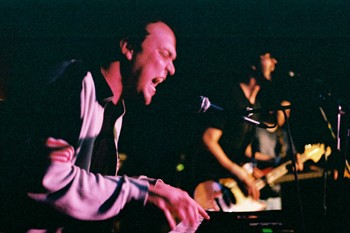
In the Moment: The Steve Kimock Band plays for keeps.

Going with the Flow

Guitarist Steve Kimock stages a strong return

By Greg Cahill

He’s been called the Bay Area’s quintessential guitarist. Steve Kimock, a longtime North Bay resident, made his name playing in the jazz-rock instrumental band Zero before getting tapped to provide the Garciaesque licks in the post Grateful Dead bands the Other Ones (comprised of surviving Dead members Bob Weir, Phil Lesh, Mickey Hart, and Bruce Hornsby) and Phil Lesh and Friends. These days, Kimock is moving beyond the jam-band label he helped define in the early ’80s with his own Steve Kimock Band, a gathering of New York-based jazz-fusion heavyweights.

The Steve Kimock Band–with guitarist Mitch Stein, bassist Arne Livingston, and drummer Rodney Holmes–perform April 13 at the Mystic Theatre in Petaluma.

It’s an impressive lineup. Stein is one of New York’s hottest guitarists, the son of a classical pianist and jazz trumpeter who studied under jazz guitar great John Scofield. Livingston has performed with Joshua Redman and Roy Hargrove.

Holmes, a member of New York guitarist David Gilmore’s quartet, used to perform with the Zawinul Syndicate (Weather Report founder and Miles Davis sideman Joe Zawinul’s band). He also can be heard pounding the skins behind Matchbox 20 singer Rob Thomas on the Santana mega-hit “Smooth,” for which Holmes shared a Grammy award or two.

As for Kimock, of course, the comparisons to Garcia come naturally. He was, after all, once pronounced by Garcia himself to be the rock icon’s favorite unknown guitarist. Born in Pennsylvania, Kimock ventured west in the mid ’70s as a member of the Goodman Brothers, a favorite at the time on the Marin music scene. He moved on to the Underdogs and later joined Grateful Dead auxiliary players Keith and Donna Godchaux in their Heart of Gold Band.

Eventually, Kimock hooked up with several refugees from the ’60s San Francisco scene, including ex-Quicksilver Messenger Service guitarist John Cipollina, former Starship keyboardist Pete Sears, and flutist and saxophonist Martin Fierro (a onetime member of the James Cotton Blues Band and sometime Dead session player), bassist Bobby Vega, and drummer Greg Anton to form Zero. The band released four albums between 1987 and 1998, when they disbanded. A posthumous two-CD live album, Double Zero, was released last year.

Kimock’s new bicoastal band, which released the live recording East Meets West a couple of months ago, finds the guitarist continuing to mature as a player, exploring odd time signatures and stretching out in freewheeling, improvisational solos that showcase his fat-toned phrases without a trace of the overindulgence that often dogs the fusion genre. It’s an impressive recording that finds Kimock very much in synch with the philosophy he espoused a couple of years ago on Puremusic.com in an interview with his old band mate Frank Goodman.

“The key thing about music is that it happens in time, right?” he noted while reflecting on the nature of his music. “And when you’re playing with time like that . . . and you get to some kind of a flow state with the whole thing, where for just an instant in the night the thing opens up, and people simultaneously are aware that they’re having this experience, that they’re just really being in the moment, they’re being in the now. They’re not experiencing the frustration of having grown up in this incredible duality of not knowing the difference between right and wrong, and not knowing the difference between food and poison, or war and peace, or having a job or being a slave or anything like that. They’re not living in their minds, they’re just in the moment, for real. . . .

“And ultimately, getting into that moment, getting into that flow state, is where I’m coming from, that’s where I want the thing to go. I want it to go to a place where you’re so engaged that you disengage from your mind, basically, and it’s all there all at once.”

The Steve Kimock Band perform Sunday, April 13, at 8:30pm at the Mystic Theatre, 21 Petaluma Blvd. N., Petaluma. Tickets are $20 (there is no opening act). 707.765.2121.

From the April 10-16, 2003 issue of the North Bay Bohemian.
© Metro Publishing Inc.

Mudbugs Cafe

0

Photograph by Michael Amsler

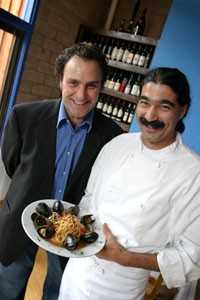
Southern Hospitality: Chef Mike Jewell guards his jambalaya carefully, and with a threatening ‘Argh!’

Bugging Out

Mudbugs Cafe deftly bridges the gaps between bayou country and Marin County

By Sara Bir

Oh, the hazy lore of Louisiana, of eccentric redneck Cajun folks and their love of pork products and hot sauce; of fatty Paul Prudhomme and his assertion that there are over 50 types of roux; of tragic French Quarter brothels and Anne Rice vampires; of rowdy, drunk sorority girls flashing their tits to get Mardi Gras beads tossed their way. It’s all been written, filmed, drawn, and sung. And eaten, over and over again: gumbo and crawfish étouffée and jambalaya and boudin and beignets and cheap, pale gold beer in cans.

There’s not much in Northern California that evokes sleepy drawls and zydeco stomps, making restaurants that peddle Cajun and Creole cuisine an anomaly. Mudbugs Cafe in Mill Valley is rapidly gaining a following by making the smart move of keeping the Louisiana influence on the menu and not the setting. The food is authentic enough soBig Easy traditionalists will not scream bloody murder upon seeing their barbecued shrimp or sipping their Cajun martinis.

Mudbugs opened last August in the downtown space once occupied by the Avenue Grill. It is owner Scott Fearon’s first go at primary proprietorship, although he previously invested in a number of Bay Area restaurants.

The first thing we noticed about Mudbugs was the valet parking. The second thing we noticed was that although Mudbugs has valet parking, it’s still a very casual and welcoming place. There’s a slightly cramped indoor dining area, as well as an enclosed outdoor patio. The decor is dark and stylish without being overbearingly hip. The bar was hopping by 7pm, but Mudbugs is also very kid-friendly; we noted an equal ratio of swinging-single types to families with young kids in tow, creating a great, everyone-belongs atmosphere.

We started with the Louisiana crab cakes ($10), two plump cakes atop a radish slaw with a Creole tomato-mustard coulis that was more like a French remoulade. The tart, crisp slaw and the coulis were terrific, but the crab cakes–fried to perfection–had a gummy, bready interior whose texture was more that of croquette than crab.

We split an arugula salad with toasted pumpkin seeds, Pt. Reyes blue cheese, an apple-vanilla vinaigrette, and a small fan of crisp Granny Smith apple slices. The bite of the baby arugula stood up to the crumbles of pungent cheese, and the vinaigrette was well-balanced.

Everyone that night was leaning toward the Cajun side, so we all ordered entrées from the box on the menu that read “Traditional Favorites”–e.g., jambalaya, a sort of anything-goes festival of meat, seafood, vegetables, and rice (much like its Iberian distant cousin, paella).

The other half of the menu presented less heavy, more California-style cuisine with a few Louisiana touches to ground it, such as seafood pasta and a cider-cured grilled pork chops with mashed sweet potatoes and rosemary biscuits. You won’t be finding smoked salmon jambalaya or Mediterranean lamb gumbo or any such fusion-happy foolishness on chef
Mike Jewell’s menu.

For lay people, it’s moderately confusing to tell the difference between jambalaya and étouffée, since both are piles of rice ‘n’ stuff. Mudbugs’ jambalaya ($13) featured meaty morsels of tasso, andouille, and chicken all smothered in tomatoes, onions, and peppers. It was heavy-duty but divine.

Étouffée derives its name from the French étouffer, which means “to smother or suffocate.” In Mudbugs’ case ($18), crawfish and rock shrimp are the subjects of the suffocation via a dark roux; it’s all served over “Southern rice,” which was pale orange and vaguely tomatoey like Spanish rice.

I tried the gumbo ($7 for a small bowl). With gumbo, it’s either right or wrong; though the stew has many variations, there is a gumbo thing. A gumbo without the gumbo thing is as easy to identify as a rubbery low-fat scone. Mudbugs’ gumbo has the thing. Its flavor was redolent of a quality dark, no-shortcuts roux, and its tidbits of fish, crawfish, crab, shrimp, oysters, and okra were not cooked to death in some steam table. In other words, the stew was stewed but not obliterated. Though my order was a small one, it was filling enough for a dinner entrée.

All of the above dishes were spicy in a flavorful way, but the kitchen at Mudbugs keeps the heat side of spicy on the mild end. I’m slightly shocked that they don’t offer hot sauce on the tables, but then again, we didn’t ask, though our server, who was amazingly on top of it, probably would have obliged. When Mr. Bir du Jour mentioned his love of the hot kind of spicy to our server, she offered to relay this information to the kitchen, who’d “spice up” his voodoo shrimp ($16) for him.

The voodoo shrimp is a takeoff on barbecued shrimp, which used to be on their appetizer menu, according to our waitress. But Mudbugs’ chef toyed around with it, adding creamy grits as the starch and crowning the shrimp with a few fried oysters. New Orleans­style barbecued shrimp is not normally spicy-hot. New Orleans barbecue shrimp are, in fact, not even barbecued; they’re baked in a ton of butter that’s spiked with Worcestershire sauce. Typically, the shrimp are cooked unpeeled, so the diners pluck greasy shrimp from a communal pan and make a wonderful, savory mess peeling shrimp and sopping up the fallout with a stack of napkins.

Voodoo shrimp were the big hit of the night. The spiced-up sauce melded with the soft grits perfectly, and the shrimp (already peeled, alas) were steamy and tender. Mr. Bir du Jour, who lives in mortal fear of all that is slimy, even enjoyed his tasty fried oysters. My only complaint is that New Orleans barbecue shrimp is best served with hunks of crusty white bread to soak up the sauce. Though our waitress kept us stocked with tender and cakey sweet cornbread throughout our dinner, it was not the same.

Amazingly, our stomachs–so swelled with rice ‘n’ stuff–had room enough for dessert. Creole bread pudding and bite-sized beignets with cappuccino dipping sauce sounded delightful, but we went with the banana cream dream ($6), which was like a refined banana cream pie, layering dainty slices of ripe banana with whipped cream, sponge cake, and banana cream on a graham cracker crumb base. While it was tasty, I was in my heart wishing for the more gloppy, white-trash joys of banana pudding.

The wine list at Mudbugs was quite impressive, with a good variety of food-friendly selections, both domestic and imported. However, we ignored it. I’m of the persuasion that this kind of food loves a good pilsner. So why, then did we all order Pyramid hefeweizen? Because it was so damned good, that’s why, embodying the floral aroma and full, crisp body of a textbook hefeweizen. I got a little silly after putting back a hurricane, one of those famous New Orleans cocktails. It’s sticky-sweet with passion fruit juice and grenadine, but sneaky-blotto with Bacardi 151.

There are a few Louisiana-inspired restaurants up and down the North Bay (Catahoula in Calistoga and GTO’s Seafood House in Sebastopol come to mind), but Mudbugs’ menu seems to be the most Louisiana-centric of them all. It’s a glorious thing. Instead of messing around trying to evoke Spanish moss and Mardi Gras all over the place, Mudbug’s keeps its interior simple and natural.

My dad spent some formative teenage years in Louisiana. It’s my understanding that that’s where he first mastered the practice of underage drinking. The man has zero tolerance for bullshit, a leather tongue, and he–the most un-Northern California fellow I know–would go nuts for this place. It’s a rare establishment that could score the Original Mr. Bir stamp of approval, but I’m glad to say that the appeal of Mudbugs Cafe easily extends beyond my dad.

Mudbugs Cafe. 44 E. Blithedale Road, Mill Valley. Open Sunday-Thursday, 5:30-10pm, and Friday-Saturday, 5:30-10:30pm. 415.381.2500.

From the April 10-16, 2003 issue of the North Bay Bohemian.

© Metro Publishing Inc.

Set Up and Escape Engine

0

‘We’ve Met an Impasse (By Midnight We’ll Be Naked)’ (2003)


So Much More Than Emo: The Set Up and Escape Engine team up on a split EP.

Sonic Boom

Two new CDs to keep you up at night

By Sara Bir

Inventing Edward is a musical/spoken word collective of sorts from Half Moon Bay, who project old Super 8 footage during their shows and often work on a spontaneous, improvised level. Given that, plus the ponderous title of their debut CD, We’ve Met an Impasse (By Midnight We’ll Be Naked) (Substandard Records), it seems easy to assume that Inventing Edward is nothing but one big art-wank project. But anyone who fell into this trap would be missing out on a splendid album that crawls with twilight spookiness.

Inventing Edward shares a few members with the melodic hardcore band Under a Dying Sun, but the two projects couldn’t be further apart, musically. Under a Dying Sun’s songs are very up-front with their emotional turbulence, while Inventing Edward’s unsettled compositions twist ominously underneath spacy, slow-motion guitar flourishes, creepy samples, accordion drones, and Rhodes piano that shimmers like neon reflecting off pavement on a black, rainy night.

Most often the vocals are courtesy of Shaye, whose beautiful ghostly warblings make the greatest impression; they don’t dominate the songs, but they grace over them lacily.

Oddly, the spoken-word vignettes–Inventing Edward’s most immediately defining element–are the disc’s weakest link. “Etude,” which relates a drunk’s temporary sheltering of a skid-row prostitute, is a poignant read in the liner notes, but the reading of it on the album assumes a pseudo-manly lush’s swagger that’s a little too easy to see through, like an unconvincing portrayal in a high school play. The spoken word is never in the forefront of the album, though; it’s kept low in the mix, and the backwash of music supporting it is evocative enough to stand on its own.

Even though Inventing Edward never approach any huge, orchestral sound of cresting sonic waves, there is a feel to We’ve Met an Impasse that recalls how important and strange and deep it felt as a teenager to sit alone in a dark room listening to a band that can lift a listener away on an invisible suspension of disbelief. The first, untitled track brilliantly draws on a sample from the prologue from Edward Scissorhands, giving the whole album a dark, storybook feel.

Inventing Edward play an organic soundtrack to the undulations of the undermind, sometimes gentle, sometimes gritty, but always compelling.

I don’t think it’s a stretch to say the Set Up and Escape Engine are two of the most promising up-and-coming local indie bands around. Their self-titled split EP (Stereovein) came out a few months ago, and it’s the recorded debut of both. On it, the bands complement each other very well.

The lineup of Santa Rosa’s Escape Engine, who have been together for about a year and a half, includes ex-members of Sometimes Y (Ash Scheiding, vocals and guitar, and Greg Kelly, guitar) and two members from the hundreds of incarnations of Life in Braille (Jay White, bass, and Ian Anderson, drums). The band’s three tracks on this EP are immediately arresting, with churning guitars, well-planted hooks, and semifragmented arrangements.

Scheiding can fix her pipes all throaty and sexy when she wants to, but she just as often takes the scream-o-core route. When the curdling rawness to her voice crests, it can easily top that of the Distiller’s Brody Armstrong. It will be very interesting to see the progression of this band, who are planning to record a full-length for 2003 release.

In the lazy critic’s vernacular, it would be the easiest thing in the world to slap an “emo” label on the Set Up and call it quits. Marked with jagged guitar attacks and growling vocals, their songs fall into aggressive, off-kilter loud-soft-loud and stop-start patterns, as some band in between Kid Dynamo and older Sunday’s Best might sound.

As a side note, it’s good to see North Bay indie bands taking matters into their own hands–it seems we’ve been in the trough end of the DIY underground life cycle up here.

Look for the Escape Engine/Set Up EP at Back Door Disc and Tape, Red Devil Records, and the Last Record Store. Inventing Edward’s ‘We’ve Met an Impasse’ is available at www.substandard.com.

From the April 10-16, 2003 issue of the North Bay Bohemian.

© Metro Publishing Inc.

‘Quickies’

Photograph by Jeff Thomas

Looks Suspicious: Amy Pinto and Brent Lindsay are two of seven actors bringing ‘Quickies’ to life.

Short Stuff

Theater gets fast and furious in ‘Quickies’

By Patrick Sullivan

Pop quiz: What do an amorous navigational computer, a heartsick college professor, a lost army patrol, and a couple of oppressed potato sorters have in common? Answer: They’re all part of “Quickies,” the fifth annual festival of short plays at Actors Theatre.

By now, many North Bay theatergoers know the drill. Every year, AT harvests a bumper crop of new works by emerging playwrights from across the country. The plays are comedies or tragedies or both or neither. They’re complicated dramas, straightforward sketches, homages to the classics, or cutting-edge experiments in stagecraft. What they have in common is extreme shortness: Each play works whatever magic it has to work in 20 minutes or less.

This time out, the festival is organized like a restaurant menu. Every night, guided by vague but intriguing descriptions, the audience chooses seven plays from a list of 14 works. A small strike-force of actors (working with four different directors) then mobilizes to bring the selections to life.

Among this year’s best offerings is Johnny Hong Kong, playwright Kate Walat’s humorous yet slightly disturbing exploration of the relationship between a manic little boy and his beleaguered mother. Walat’s play (directed by John Warren) perfectly captures the peculiar poetry found in the language of little kids: “Did you ever think what would happen if all you ever did was sit all day and think and think and think?” Johnny asks the audience.

Also excellent is Am Lit or Hibernophilia, Dan O’Brien’s story of a widowed American college professor trying to recapture his lust for life by moving back to the Auld Sod. Desperate to escape his illiterate students and the ghosts of his American past, the prof writes e-mails to old friends in Ireland: “If you don’t get me this job, I’m going to blow my fucking brains out. Sideways winky smiley face.”

Perhaps the biggest surprise of the night is Down. This dramatic encounter between an old man and his grandson could have been a dreadfully bad movie-of-the-week-style play about assisted suicide. But playwright Janet Kenney’s knack for dialogue makes Down both witty and genuinely moving.

Of course, “Quickies” is not just a showcase for playwrights. Consider that a mere seven actors have the Herculean task of bringing these diverse plays to life. Slipping in and out of so many roles on such short notice could bring out the best in an actor–or the very worst. The AT ensemble meets the challenge head-on and achieves generally positive results, though not everyone had fully mastered their lines and cues by opening weekend.

Amy Pinto achieves just the right mix of wide-eyed wonder and teeth-grinding frustration as mother to the title character in Johnny Hong Kong. Scott Wagman’s knack for physical comedy allows him to make the most of The Deluxe Option, an offering from playwright Dennis Jones that is generally funny even though it borrows at least one of its jokes from a cell-phone commercial.

But the standout performer is Brent Lindsay, who manages a seamless transition from the heartbroken college professor of Am Lit or Hibernophilia to the manic five-year-old of Johnny Hong Kong to the lustful farm boss in the Flannery O’Connor-flavored Potato Girl to the dying grandfather in Down. No one onstage comes close to matching the astonishing intensity Lindsay brings to each of these roles.

In fact, if anyone needs one simple reason to sample this complicated array of plays, Lindsay is it.

‘Quickies’ continues through May 10 at Actors Theatre, Luther Burbank Center, 50 Mark West Springs Road, Santa Rosa. For details, call 707.523.4185.

From the April 10-16, 2003 issue of the North Bay Bohemian.

© Metro Publishing Inc.

Sonoma Valley Film Festival

0


Dinner Date: Joey (Matt Price) and Melvin (Michael Blieden) go to dinner. Two other people join them. Hilarity and mayhem ensue in Bob Odenkirk’s ‘Melvin Goes to Dinner.’

‘Dinner’ and Some Movies

The Sonoma Valley Film Festival serves up Bob Odenkirk’s tasty new feature–and a film fan’s buffet of indie-world side dishes

“Imagine a friend coming up to you,” says Bob Odenkirk, “and they ask, ‘Hey, whatever happened with that really awful relationship you were in all those years ago? What was her name? How’d you ever get out of that?’ And you say, ‘Jesus! I really don’t know! It was a really freaky night and I’d just been out to dinner with a bunch of friends, and we talked for hours–it was a really weird conversation, it was really fucking amazing what we ended up talking about–and then after dinner she just showed up. And it was really uncomfortable. And then, suddenly–“

Let me stop Odenkirk right there.

Another few words and we’d have given away the ending of Melvin Goes to Dinner, Odenkirk’s sensational directorial debut, making its West Coast premiere Friday and Saturday at this year’s Sonoma Valley Film Festival. Based on the popular play of the same name by actor and writer Michael Blieden, who re-creates the role of Melvin from the original Los Angeles run of the play, Melvin Goes to Dinner follows one poor schlub of a guy whose life changes, ever so slightly, because of a very strange dinnertime conversation that he almost decided to skip.

The film debuted at last January’s SlamDance Film Festival in Utah, which features films a little too Independent for the concurrently running Sundance glamfest, and quickly became one of the most talked-about must-see films to screen at either festival.

“I don’t hold it against Sundance that they wouldn’t have my film,” insists the magnanimous Odenkirk, an Emmy-winning comedy writer (Saturday Night Live, Get a Life, The Ben Stiller Show) and sometimes actor (he played Steve the agent on The Larry Sanders Show and starred in HBO’s Mr. Show with Bob and David). “Those poor people at Sundance,” he jokes, “they have to watch so many movies, something like 1,500 films in a month. How does a mere mortal do that and still know which way is up? It’s brutal. No wonder they couldn’t see straight enough to choose my movie.”

Along with Blieden, the movie version features the play’s other original cast members: Matt Price, Stephanie Courtney, and Annabelle Gurwitch. For the film version, Blieden and Odenkirk have expanded the scope of the stage piece–which was pretty much just four people sitting at a table talking about ghosts, God, masturbation, anal sex, insanity, sweating, and the previously unknown real point of having sexual intercourse–squeezing in some hilarious and/or warmhearted cameos by Jack Black, David Cross, and ER’s Maura Tierney along the way. It’s a film about a lot of things (and yes, anal sex is one of them), but at its heart, Melvin is a mesmerizing homage to the power of casual conversation.

That’s what Odenkirk thinks, anyway.

“In the midst of certain conversations–just casual conversations that started out somewhere harmless–you can experience seismic shifts in your whole life’s outlook. I think it’s rare, and I think most changes happen because your back’s up against a wall, not because you want to change. The truth is, most people really don’t want to change, or they don’t know how to change even if they suspect they should. You just change because it’s on your schedule to change; you change because the husband of the woman you’ve been fucking suddenly pulls up in the car next to you as you wait at a stoplight.”

And sometimes you change when your wife drags you to a play you fully expect to hate. That, more or less, is how Odenkirk came to be the director of Melvin Goes to Dinner, a film about as far removed as one could get from the border-blasting zaniness of the aforementioned Mr. Show (a fearless sketch-comedy series that ran for several seasons).

“I finally saw the play,” Odenkirk says, “and I really liked it, but I went and saw it four or five more times because I honestly couldn’t believe it was as good as I thought. . . . I mean, how could these four people having this dinner conversation be as captivating and funny and moving as it was? It’s impossible! But after seeing it six or seven times, I finally had to give in and admit it was just a solid piece of writing with really good performances.”

Completely hooked, he set out to make the play into a feature film, intent on capturing the same excitement he felt while seeing the show onstage.

“The audiences were always walking out of the play talking,” he says, “just jabbering away rapidly and excitedly, talking about how they were feeling or what they were thinking. It was great! And you know what? The film does the same thing!”

Odenkirk expects to see the same thing in Sonoma when he appears, along with Blieden, for lively postfilm question-and-answer sessions. Interestingly, Odenkirk suggests that much of the film’s head-shaking appeal arises from the conflicting viewpoints he and Blieden had of the self-deceptive, emotionally elusive truth skirters that are the movie’s four main characters.

“I identify with all of them–and none of them,” Odenkirk laughs. “Blieden has great sympathy for these characters, while I actually had very little sympathy for them. I think they’re fucked up.

“Of course,” he adds with a knowing chuckle, “they’re fucked up in a very, very interesting way.”

‘Melvin Goes to Dinner’ screens Saturday, April 12, at 10pm at the Sebastiani Theatre.

Films Served Hot–and Hotter

Conversations between humans, sympathetic and otherwise, play major parts in several other films featured at the annual, rapidly growing festival.

Shut Yer Dirty Little Mouth–which, like Melvin, is based on a play–uses as its script the verbatim recordings of legendary alcoholics Pete and Ray, an astonishingly rude and contentious pair of real-life roommates who lived and abused one another, loudly and often, in San Francisco’s lower Haight district in the late 1980s.

Shut Yer Dirty Little Mouth is a story of real people who talked at each other without understanding a thing,” explains Robert Taicher, the film’s director. “Strangely enough, there’s also a lot of humor in their conversations. They were very colorful characters, and they had some extremely strange and funny things to say.”

So strange and so funny, in fact, that audiences habitually begin impersonating Pete and Ray’s conspicuous conversational style. “A lot of people leave the theater snarling, ‘Shut your dirty little mouth, no one told you to say anything!’ It’s just irresistible,” says Taicher. “There’s something hypnotic about the language. There’s something there in the way they spoke that attracts people. I don’t know why. It’s an intangible thing. But it certainly attracted me.”

The talk turns to matters of art, life, and community in the visceral, heart-tugging documentary Confessions of a Burning Man, directed by Un Su Lee and Paul Barnett, and produced and filmed by a team of former dot-com slaves including Curt Dowdy. Filmed over two years at the legendary art festival held annually in the Black Rock Desert in Nevada, the film features several artists–Petaluma’s David Best among them–discussing, debating, and interacting as the world’s biggest and oddest art show rises and burns all around them.

“We tried to dig to the core of what Burning Man is supposed to be about,” says Dowdy, “and to represent that in an artful way. Burning Man is all about community, the creation of a community that supports self-expression, and the people who get the most out of Burning Man are those who come with a contribution to make to that community.”

Since hitting the road with the finished film the filmmakers have, appropriately then, worked to incorporate what Dowdy calls “collaborative participation” into all of the screenings. In other words, he says, “We invite people to come dressed in ‘Burner chic,’ wearing whatever glow-in-the-dark electroluminescent outfits or other bizarre costumes they might wear to Burning Man.”

In Sonoma, to boost the festivities even more, there will be a festive primal drum circle in Sonoma Plaza following the Saturday screening with ongoing exhibitions by Burners who will bring along whatever expressive art they might bring with them to the desert.

“Any part of their lifestyle that they don’t get to live out in their workaday world,” says Dowdy, “they bring to Burning Man, and they live it out there to the fullest degree. We hope to see that at the film festival as well. It should be beautiful.”

If nothing else, it will give us all something to talk about.

‘Shut Yer Dirty Little Mouth’ screens Saturday, April 12, at 11pm at Andrews Hall in the Sonoma Community Center. ‘Confessions of a Burning Man’ screens Saturday, April 12, at 12:30pm at the Sebastiani Theatre and Sunday, April 13, at 12:30pm at Sonoma Cinemas.

What They’re Talking About

See www.sonomafilmfest.org for a full schedule; this is a selection of short reviews of the festival ‘s films.

Bark

An uptight dogsitter (Heather Morgan) has a nervous breakdown and starts acting like a dog. Her husband (Lee Tergensen), instead of hauling her off to the loony bin, seeks the advice of his deadbeat best friend (Hank Azaria), his dingy veterinarian (Lisa Kudrow, the movie’s lone bright spot), and a psychiatrist (Vincent D’Onofrio). Shot in a grating pseudo Dogme 95 style with sloppy editing and way too many close-ups, Bark is a faltering black comedy whose main premise is as annoying as it is dumb. Screens Saturday, April 12, at 7pm at Sonoma Cinemas and Sunday, April 13, at 9pm at Sebastiani Theatre. (Sara Bir)

And Now . . . Ladies and Gentlemen

Claude Lelouche film about a repentant jewelry thief (Jeremy Irons) with mysterious reccurring blackouts who sets sail around the world to escape his former life. In atmospheric Morocco, he finds a beautiful chanteuse (French singer Patricia Kaas) with the same mysterious ailment, but their pasts may be too much to overcome. So very moody, so very French. Screens Saturday, April 12, at 5pm at Sonoma Cinemas and Sunday, April 13, at 4pm at Sebastiani Theatre. (Davina Baum)

Bug

At least four story lines are woven into this independent feature by the creators of Crazy/Beautiful, predicated on the six degrees of separation theory. The sudden (sticky, gooey) death of a cockroach sets off the chain of events, bringing the story lines together. The coterie of curious characters includes great roles for Brian Cox and Jamie Kennedy. Screens Friday, April 11, at 2:30pm at Sonoma Cinemas and Saturday, April 12, at 8pm at Sebastiani Theatre. (DB)

Eat This, New York

Four out of five new restaurants close within five years of opening, and yet dreamers and fools continue to open them. Andrew Rossi and Kate Novack’s documentary boasts enlightening profiles of the biggest big guns of New York’s restaurant scene as well as talking-head insights from Gourmet editor Ruth Reichl. The main framework of the movie follows two young Brooklyn hipsters as they struggle through poor planning and money crunches to get their bar and cafe, Moto, up and running. The two halves of the movie never really gel, but it’s still packed with drama. Screens Saturday, April 12, at 5pm at Sebastiani Theatre. (SB)

Hang Time

Directed by Craig Gerber, this hilarious seven-minute short about a very strange elevator ride in a bustling building contains no conversation whatsoever, yet it communicates a whole range of up-and-down human emotions, along with a physics-defying flight of fancy. Screens as part of the festival’s narrative-shorts program on Friday, April 11, at noon and Sunday, April 13, at 10:30am. It also screens before ‘Melvin Goes to Dinner’ on Friday at 7:30pm at the Sonoma Cinemas and Saturday, April 12, at 10:30pm at the Sebastiani Theatre. (DT)

Happy Hour

A moment of small talk leads to a night of sharp-tongued banter (and booze), when a blocked novelist (Anthony LaPaglia) accidentally hooks up with a hard-drinking school teacher (Caroleen Feeney) in New York City. When the writer’s best friend (Eric Stoltz) gets involved, the threesome embark on a journey of the spirit that will leave them all changed for the better–and not. Well acted and moodily photographed. Screens Friday, April 11, at 9:30pm and Saturday, April 12, at 3pm at the Sebastiani Theatre. (DT)

Julie Walking Home

An emotionally fraught, meandering film by Agnieszka Holland (Europa Europa). A woman (Miranda Otto) betrayed by everyone–husband, family, God–finds refuge in a Russian healer who can help her terminally ill son. Shifting from Russia to Canada to Poland gives the film a disjointed feel, and some lose ends don’t get resolved. But proof of miracles–and Holland’s prowess behind the camera–salvages the film. Screens Friday, April 11, at 2pm and Sunday, April 13, at 6:45pm at Sebastiani Theatre. (DB)

Mergers and Acquisitions

Mitchell Bard’s drama is a protest against the Starbucking of America. Bard’s angle on the subject of the merge-and-purge method of doing business will win him sympathy with the journalists of America. Del Richards (Steven Chester Prince) is a 35-year-old spinning his wheels at a moribund NYC trade magazine. The mag is the latest target of an Iowa-based engulf-and-devour conglomerate which approaches Del to become its point man–and he’s almost ready to bite. The interesting subject matter battles with uninvolving acting and too-basic characterization. The film’s essential naiveté never gets it out of the nice-try category. Screens Saturday, April 12, at 5pm at Andrews Hall in the Sonoma Community Center. (Richard von Busack)

Miranda

Christina Ricci is not what she seems. When she slides into the life of Frank (John Simm), a love-struck English librarian, the spooky beauty passes herself off as a dance student named Miranda. And he believes her. That’s before Miranda–actually a smooth-talking con woman with a knack for selling condemned buildings to unknowing buyers–introduces poor Frank to her snaky partner and mentor (John Hurt) and the delightfully bonkers millionaire (Kyle MacLachlan) they plan to swindle next. Gentle lunacy ensues. Sex occurs. Screens Friday, April 11, at 10pm and Sunday, April 13, at 8:30pm at Sonoma Cinemas; the director and some actors will be in attendance. (DT)

Scrabylon

For those who read Word Freak, Stefan Fatsis’ 2001 exposé of the tournament Scrabble scene, Scott Petersen’s documentary is like seeing the book come to life–that is to say, there is more depth and tension in the world of Scrabble than most of us ever thought. Focusing on the major players in the 2001 World Scrabble Championship in Las Vegas, Scrabylon brings the audience face to face with players who, among the fanatical Scrabble set, are legends in their own time. Screens Friday, April 11, at 5pm at Andrews Hall in the Sonoma Community Center. (SB)

You’ll Never Wiez in this Town Again

Fans of Pauly Shore’s patented brand of coarse, mean-spirited humor will be mighty amused by the cleverly conceived mockumentary that marks the directorial debut of Shore, who all but disappeared after a string of, ahem, bad movies. It begins with Shore’s death by suicide, followed by a series of flashbacks examining the crass comedian’s rise and fall, interspersed with a galaxy of star cameos. Those allergic to cruel humor might want to avoid this, however; even when the subject is Pauly Shore, Pauly Shore is nothing short of brutal. Screens Friday and Saturday, April 11 and 12, at 9pm at Andrews Hall in the Sonoma Community Center. Pauly Shore will attend both screenings. (DT)

Welcome Sinners: The Velvet Hammer Story

Probably the only time you will see a voluptuous Marilyn Monroe lookalike shake and strain a martini with her breasts to the tune of the Mike Hammer theme is in this video diary of Velvet Hammer, the L.A. neoburlesque troupe whose brassy, saucy shows are way more than just pasties and G-strings. Screens Saturday, April 12, at 7pm at Andrews Hall in the Sonoma Community Center. (SB)

From the April 10-16, 2003 issue of the North Bay Bohemian.

© Metro Publishing Inc.

Brass Monkey

0

‘Live in Time and Space’ (2001)


That Funky Monkey: Brass Monkey bangs a gong on April 5 at Sweetwater.

Big and Brassy

Brass Monkey shines in a funky good time

By Greg Cahill

How can you not love a band that plays a song called “Drugged and Beat Up,” a sassy second-line strut that reels drunkenly with the rumbling rhythms and feel-good vibe of a Mardis Gras celebration? The song, which can be heard on Brass Monkey’s 2001 debut CD Live in Time and Space, is a staple at this popular brass band’s live shows, along with such standards as “When the Saints Go Marchin’ In” and “Do Wah Diddy Diddy” and pumped-up covers of Led Zeppelin.

For the past couple of years, Brass Monkey –a nine-member brass and percussion ensemble fashioned after the rollicking New Orleans bands that traditionally played at the Crescent City’s social clubs and funerals–has been building a considerable following through shows at Bimbo’s 365 Club and the Elbo Room.

Of late, Brass Monkey, featuring Sonoma County trombonist Adam Theis, have been making headway into the North Bay music scene with shows at the Mystic Theatre, and stints at the Falkirk Cultural Center in San Rafael and the first annual KRSH/Luther Burbank Center Rhythm and Roots Festival.

Brass Monkey makes their Marin club debut on Saturday April 5 at Sweetwater in Mill Valley. Suffice to say, the band will be raising the roof at that intimate saloon.

Formed in 1999 to play a Fat Tuesday party, Brass Monkey is the brainchild of tuba man Jon Birdsong (who has performed with Beck and Victoria Williams) and drummer Kevin Stevens. The band’s high-octane, highly danceable music–a punkier version of the fabled Dirty Dozen Brass Band–has become a hit thanks to its wild, barely tamed nature.

These days, the band includes an eclectic mix of musicians who have performed with the likes of the Barnum and Bailey Circus, Santana, KC and the Sunshine Band, Pharoah Sanders, the Glenn Miller Orchestra, Cannonball, the Marcus Shelby Orchestra, Polkacide, Casino Royale, and the New Monty Show.

Catch the funky good time when Brass Monkey perform Saturday, April 5, with former Wild Magnolia’s pianist Josh Paxton at Sweetwater, 153 Throckmorton Ave., Mill Valley. Showtime is 9:30pm (but doors open for those few coveted seats at 8pm). Call for ticket prices. 415.388.2820.

Adventures in Clubland

The Radiators–whose Colorado-by-way-of-New-Orleans jams have been listed as a major influence by Phish, the Spin Doctors, Widespread Panic, and a host of others–perform Thursday and Friday, April 3 and 4, at 19 Broadway in Fairfax. Tickets are $23 each day. Showtime is 9pm. Call 415.485.0375 for details.

Speaking of New Orleans, the Brotherhood of Groove–anchored by Crescent City funk phenoms guitarist Brandon Tarricone and drummer Dan Caro–bring their energetic jazz/funk grooves to the Fairfax nightspot on Saturday, April 6. The band often is augmented by master trumpeter Michael Ray (Sun Ra, Kool and the Gang, Phish), and sax men Mikiel Williams (Unit 1, Photon) and John Ellis (Charlie Hunter Quartet).

The Peter Welker All-Stars, headed up by the trumpet player and former Santana sideman, plays Saturday, April 5, at the Last Day Saloon in Santa Rosa. The lineup features a mighty assortment of local players: guitarists Terry Haggerty (Sons of Champlin) and Keith Allen (Steve Miller Band), keyboardist and vocalist John Allair (Van Morrison), bassist Tim Haggerty (Jesse Colin Young), harmonica ace Bruce Kurnow (Al Jarreau), drummer Terry Baker (Joe Louis Walker), saxophonist Jim Rothermel (Boz Scaggs), and vocalist Vernelle Anders (the Crusaders). Showtime is 7:30pm. Admission is $10. For details, call 707.545.2343.

Over at the Mystic Theatre, look for the John Hammond Band (April 22), Ronnie Montrose (April 23), and (straight outta Siberia) the offbeat rock and roll band the Red Elvises (April 25). Call 707.765.2121 for details.

From the April 3-9, 2003 issue of the North Bay Bohemian.

© Metro Publishing Inc.

Crisco

0

Photograph by Rachel Robinson

Fluffy Pillows of Fat: What’s inside isn’t pretty to look at, it’s not good for you, and it doesn’t taste good out of the can. But Crisco can work wonders.

The Great White Fat

The long and the shortening of fats

By Sara Bir

A young girl, too little to read, was hungry for sweets one day, so she went rummaging through the floor-level kitchen cabinets in search of goodies. And she did find something: a blue can, round and large, with a lovely photo of a chocolate cake on the front. The girl opened up the can and saw that its contents were creamy white–frosting!–just as the label had promised. So she stuck her hand in the can and licked a big blob of the stuff from her fingers, only to find that it was . . . well, it was not frosting.

Yes, that girl was me, and I have learned my lesson: Crisco is not yummy. It can, however, make things yummy, a fact, though not a pretty one. We demonize fat, and shortening is now the most demonic of fatty demons, the Saddam Hussein of fat.

Why? Fat used to be fat–nine calories per gram, end of story. But then scientists and nutritionists told us of saturated and unsaturated fats, with subheads in each category: mono, poly, etc. The only way I can keep it clear is to think of it this way: solid at room temperature, bad; liquid at room temperature, not as bad.

That means that butter, lard, schmaltz, and duck fat are bad. Which sucks, because these are truly wonderful fats, packed with flavor and aroma. Their sources are also discernible, tangible: cows, pigs, chicken–the “barnyard fats.”

Then there’s shortening. Shortening is unsaturated vegetable oil that has been hydrogenated, meaning hydrogen atoms were added so that it stays solid at room temperature. (Though shortening may look solid, it contains over 80 percent liquid oil, suspended in a lattice of fat solids. Mmm!)

Hydrogenation converts the unsaturated bonds in the oil into saturated bonds, transforming double bonds from the natural “cis” configuration to the “trans” configuration. In short, this equals the dreaded trans fat, the same trans fats that are linked to heart disease. I’m not so sure, but I think this means that shortening is even worse for you than barnyard fat, because barnyard fats are naturally saturated, while shortening is manufactured to be so.

Let’s give this satanic grease the benefit of the doubt and look at the good things about shortening (hereon referred to as Crisco, just like people call tissues Kleenex and gelatin Jell-o): it’s vegan; it’s parve (and kosher); it’s shelf-stable; and it tastes like nothing! How’s that for versatility?

Procter and Gamble launched Crisco–initially called Krispo, then Cryst–in 1911. To better acquaint housewives across the country with their new product, Procter and Gamble blanketed the nation with advertisements, cookbooks, and an army of home economists trained to demonstrate the cheaper, more convenient merits of Crisco over butter or lard. They also gave away a cookbook, The Story of Crisco, whose 615 recipes all contained Crisco.

Marion Cunningham, she of the Fannie Farmer Cookbook and the grand dame of American baking, uses shortening exclusively in her pie crusts. I like to think that if a product is backed by Marion Cunningham, who, in her 80s, is lively and active and knows more about baking than most of us ever will, it can’t be all bad.

My own pie crusts contain a 60 to 40 ratio of butter to Crisco, the idea being that the butter contributes flavor while the Crisco contributes flakiness. Martha Stewart, who is not a believer in Crisco, uses 100 percent butter in her pie crusts. Mine are better.

I’m of the opinion that the most perfect applications of Crisco are in white-trash food, a cuisine whose cornbread, biscuits, pies, and deep-fried items demand an allegiance to Crisco. Which leads up to frying. “There’s something about frying, especially in vegetable shortening and in such Rosanne-like quantities, that is so refreshingly unchic,” writes foxy English food writer and TV show host Nigella Lawson in her book Nigella Bites.

Frying in solid vegetable shortening, preferably for shallow pan-frying in a cast-iron skillet, is the fastest route to putting us in touch with our white-trash roots. Since shortening melts, I like to think that the final fried product, be it chicken or catfish, will melt in the mouth and be crisp on the exterior and tender and steaming on the interior. You can fry in vegetable oil, true–but you can also make key lime pie with regular limes. It’s for the sake of authenticity.

The greatest thing about Crisco is its duality. A just-opened can of Crisco is a thing of beauty and grace, with its pure, snowy-white top and concentric ripples of smooth, solid fat frozen in time, unmarred. And the can–the can which had so cruelly deceived me as a little girl–asserts its presence boldly in cartoon colors. Crisco is as American as Spam, and probably as loathed.

A neighbor friend who, as a hobby, makes wedding cakes for her massively extended family, frosts her cakes with a mixture of this stuff that’s nothing but a ratio of one cup Crisco to one pound of powdered sugar, with (hopefully) some vanilla in there too. “I think it’s gross,” she says, “but once it’s on the cake, people love it!”

The folks at Crisco have risen to meet the face of trans-fatty adversity, armed with promotional recipes and the claim that Crisco contains 50 percent less saturated fat than butter. In these recipes, the inclusion of Crisco is sometimes questionable at best. Broiled salmon steaks, for example, call for 1/4 cup Crisco, melted, to baste the salmon steaks with. Broiling is a mode of cooking that requires little if any additional fat, though basting a salmon steak with Crisco would probably yield a crisp, browned salmon steak.

Today I plucked my can of Crisco from its shelf in the kitchen and peeked inside. It’s about three-fourths empty and smeared with finger smudges. Taking a sniff, my olfactory nerves were pummeled with a rancid stench, and I realized that I had no idea how old this particular can of Crisco, which has traveled with me through three moves, was.

A single girl, even an avid baker, just can’t make it through a can of Crisco fast enough; once opened, it has a shelf life of about a year. I then resolved to buy a brand new can and launch into a spell of biscuit baking, pie making, and chicken frying.

This Crisco party is still pending. I can’t bring myself to throw away the rancid can of Crisco, because I hate to waste food. There is a solution: Paul Revere and the Raiders sang a song called “Crisco Party” about a supposed ’60s phenomenon that was more or less a gigantic naked, greasy, co-ed, mosh-pit orgy. This sounds very “extreme,” and I’m surprised it has not worked its way across college campuses and into the X Games.

The simple act of consuming Crisco, which still factors into our diets in the naughtiest nooks and crannies, is extreme in itself. A little trans fat every now and then might hurt a bit–but no pain, no gain.

From the April 3-9, 2003 issue of the North Bay Bohemian.

© Metro Publishing Inc.

On the Frontlines

0


Photograph by Michael Amsler

Picket Line: Peaceful protests have been going on in Sebastopol for months.

On the Frontlines

Protesters of all stripes evoke ire

By Joy Lanzendorfer

When local high school student Sierra Aizer-Keck and her friend were protesting the war in Iraq during the antiwar protest on March 20, they decided to join in by blocking an intersection in Santa Rosa. They linked hands with other protesters in front of a car waiting to go straight through the light. The man in the car put his foot on the accelerator and drove straight at them. The girls were thrown onto the hood of his car and rode for several yards before the man finally stopped. The girls got off the car unharmed, and the man drove away.

“He meant to do it,” says Aizer-Keck. “We weren’t aware he was going to accelerate. We weren’t hurt, so we didn’t do anything about it.”

Before nearly running the girls over, the man driving the car told them that he supported peace, but he was late for work.

On March 20, 50 protesters were arrested in downtown Santa Rosa after hours of snarling traffic and causing havoc. Though there have been few other incidents in Sonoma County, all over the Bay Area protesters continue to use more aggressive tactics such as blocking intersections, staging sit-ins and die-ins, and creating other disturbances.

Many rallies and protests, whether anti- or pro-war, are now tinged with an air of anxiety as if they could erupt at any moment. Some people are wondering whether, in the case of the antiwar movement, the aggressive tactics hurt the peace movement more than they help it, while others feel that it’s important to jolt people into realizing that business as usual no longer applies.

Most protesters realize they are inconveniencing people with their tactics, but many feel that aggressive dissent is an important tool for getting their voices heard.

“I think the protesters are doing a great job,” says Santa Rosa resident Sherman, who, like many people interviewed about the protests, didn’t want his last name used. “When Martin Luther King marched, there was a tirade against it; when women marched for suffrage, people were against it. You gotta do what you gotta do to create change.”

Protesters feel that a little inconvenience is nothing compared to what the war is doing to Iraq. By demonstrating, they are asking how can we just go about out lives like nothing is wrong when we are causing so much violence somewhere else?

“I regret that some people are inconvenienced,” says Patrick Burke, one of the protesters arrested in Santa Rosa. “But it does strike me as ridiculous that someone could be concerned about their schedules being interrupted when we’re blowing up people in Iraq. It seems almost comically selfish.”

Though all kinds of nonviolent protest are encouraged by the Peace and Justice Center of Sonoma County, an umbrella group that has organized dozens of antiwar protests, the organization draws the line at any kind of violence. They contend that the vast majority of protesters are peaceful, especially locally.

But others see it differently. Some are calling the protests like the one on March 20 violent, or at least provoking violence.

“I just don’t get how they can claim peace with violence,” says Dianna Murphy, who has organized pro-troop rallies in Healdsburg. “I resent the fact that here we are on high-terror alert, and our police officers have to pay attention to protesters instead of possible threats.”

Whether it’s fair or not, the perception that some peace protesters are resorting to violence and hindering innocent people from going about their daily lives may be turning some against the antiwar movement.

“I think the protests are great, but I’m not really keen on some of the aggressive tactics being used,” says Santa Rosa resident Jason. “It may make people less willing to listen to them.”

For some people, at least, this seems to be the case. Karin, a Santa Rosa resident, was initially on the fence about the war, but has since grown angry with the antiwar movement.

“I’m just sick of it,” she says. “I commute to San Francisco, and I’m tired of having my car stopped, slowed, and redirected because of protesters. The sympathy I initially had for their cause is gone. It’s one thing to hold peaceful demonstrations, but random groups stopping cars and making pests of themselves is just annoying.”

But the protests–both for and against the war–are unlikely to change people’s minds. The pro-war protest in Santa Rosa on March 22 may not have been violent, but the naked aggression of the revving cars and people screaming at passersby was unlikely to turn a peacenik’s head the other way. The Peace and Justice Center is not worried that the peace protests will turn anyone against the movement.

“I really doubt that anyone who would have to sit in their car for 20 minutes would be pro-war because of that,” says director Elizabeth Stinson. “I would argue that anyone who is stopped at a light because of a protester and turns pro-war had a tendency to support the war in the first place.”

From the April 3-9, 2003 issue of the North Bay Bohemian.

© Metro Publishing Inc.

Legal Aid

Shrinking AidLow-income legal aid becomes harder to come by in Napa By Joy LanzendorferStarting this month, if you're poor and need legal services in Napa County, you're probably out of luck. Napa's only major resource that offered civil legal services for low-income people, Legal Aid of the North Bay, has closed its doors from lack of funding. The office...

Homies

Photograph by Troy KooperLife Lessons: According to Homies lore, Willie G. is an ex-gangster who works as a handicapped-youth counselor. "Willie rolls on a customized Lowrider wheelchair that the Homies chipped in and bought for him," explains www.homies.tv.Where the Heart IsWith Homies, gangsta is in the eye of the beholderBy Sara BirThe vending machine to the left is full...

Steve Kimock

Photograph by Jennifer BrunIn the Moment: The Steve Kimock Band plays for keeps.Going with the FlowGuitarist Steve Kimock stages a strong returnBy Greg CahillHe's been called the Bay Area's quintessential guitarist. Steve Kimock, a longtime North Bay resident, made his name playing in the jazz-rock instrumental band Zero before getting tapped to provide the Garciaesque licks in the post...

Mudbugs Cafe

Photograph by Michael AmslerSouthern Hospitality: Chef Mike Jewell guards his jambalaya carefully, and with a threatening 'Argh!'Bugging OutMudbugs Cafe deftly bridges the gaps between bayou country and Marin CountyBy Sara BirOh, the hazy lore of Louisiana, of eccentric redneck Cajun folks and their love of pork products and hot sauce; of fatty Paul Prudhomme and his assertion that there...

Set Up and Escape Engine

'We've Met an Impasse (By Midnight We'll Be Naked)' (2003)So Much More Than Emo: The Set Up and Escape Engine team up on a split EP.Sonic Boom Two new CDs to keep you up at nightBy Sara BirInventing Edward is a musical/spoken word collective of sorts from Half Moon Bay, who project old Super 8 footage during their shows...

‘Quickies’

Photograph by Jeff ThomasLooks Suspicious: Amy Pinto and Brent Lindsay are two of seven actors bringing 'Quickies' to life.Short StuffTheater gets fast and furious in 'Quickies'By Patrick SullivanPop quiz: What do an amorous navigational computer, a heartsick college professor, a lost army patrol, and a couple of oppressed potato sorters have in common? Answer: They're all part of "Quickies,"...

Sonoma Valley Film Festival

Dinner Date: Joey (Matt Price) and Melvin (Michael Blieden) go to dinner. Two other people join them. Hilarity and mayhem ensue in Bob Odenkirk's 'Melvin Goes to Dinner.''Dinner' and Some MoviesThe Sonoma Valley Film Festival serves up Bob Odenkirk's tasty new feature--and a film fan's buffet of indie-world side dishes "Imagine a friend coming up to you," says Bob...

Brass Monkey

'Live in Time and Space' (2001)That Funky Monkey: Brass Monkey bangs a gong on April 5 at Sweetwater. Big and BrassyBrass Monkey shines in a funky good timeBy Greg CahillHow can you not love a band that plays a song called "Drugged and Beat Up," a sassy second-line strut that reels drunkenly with the rumbling rhythms and feel-good vibe...

Crisco

Photograph by Rachel RobinsonFluffy Pillows of Fat: What's inside isn't pretty to look at, it's not good for you, and it doesn't taste good out of the can. But Crisco can work wonders.The Great White FatThe long and the shortening of fatsBy Sara BirA young girl, too little to read, was hungry for sweets one day, so she went...

On the Frontlines

Photograph by Michael AmslerPicket Line: Peaceful protests have been going on in Sebastopol for months.On the FrontlinesProtesters of all stripes evoke ireBy Joy LanzendorferWhen local high school student Sierra Aizer-Keck and her friend were protesting the war in Iraq during the antiwar protest on March 20, they decided to join in by blocking an intersection in Santa Rosa. They...
11,084FansLike
4,446FollowersFollow
6,928FollowersFollow
