Homeward Bound

0

11.28.07

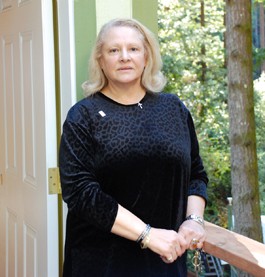
Three years ago, Nadia McCaffrey got the news that every military mom dreads: her son Patrick McCaffrey had been killed in Iraq. Her story was in part told in these pages (“The Exploitation of Pat Tillman,” June 27, 2007), adding a layer to the tale of the government’s shameful response to the death of the former NFL star and Iraqi soldier Pat Tillman from friendly fire. Soon after her son’s death, McCaffrey pledged to turn her grief and rage into a constructive project, one that is now taking shape in Guerneville: a three-story home called Veterans Village that will house up to 20 returning veterans and provide them with shelter, counseling and job-placement services as they readjust to the vastly different civilian world.

Wearing a cross pendant and a gold star pin on her indigo bIsaacse (the gold star signifies she’s lost a child in combat), McCaffrey met me in early November at the rustic facility sheltered by a redwood grove. She has a no-nonsense attitude and exudes determination and confidence, so it’s not a surprise that her pledge to have a facility up and running by the end of this year is coming to fruition.

When she made her promise, McCaffrey had no idea how or where she’d provide a residential facility for veterans or how she would finance it. But through Veterans Village workshops and events for veterans and their families, McCaffrey met a donor who agreed to help her. He asked to remain anonymous for this story. We’ll call him Isaac.

Isaac put McCaffrey in touch with the Guerneville home’s owners, who were building it as a residence, and encouraged them to let it become a facility for veterans. Isaac says he’s paying for construction improvements, appliances and furniture to get the home ready for its first residents to move in December. A veteran of the Soviet and Israeli armies, Isaac felt compelled to give something back to the men and women who have served in the U.S. military.

“I feel it’s very unjust for a person to come back after everything they’ve done for the country, and someone gives them a short briefing, drops them at the airport and says, ‘Have a nice day,'” he says.

“Only the community can correct this.” Located on a small cul-de-sac just off Drake Road, the four-bedroom house has a kitchen, common area where vets can share stories and a separate wing for female soldiers. Most rooms have views of the towering redwoods that surround the property.

McCaffrey, a resident of Tracy, will live at the facility and be what Isaac terms the “goddess mother.” A staff of three or four will be led by an on-site manager, who is a Vietnam vet. McCaffrey’s group, Veterans’ Village, is working with Farms Not Arms to give scholarships to vets who want to make farming their postwar vocation.

Veterans can stay at the house for several weeks or several months, depending on how much time they need. “It takes time for a person to reconstruct themselves and fit into civilian life,” Isaac explains. “It doesn’t happen in one day.”

Marcy Orosco, director of workforce and housing services for North Bay Veterans Resource Center, will help with job placement, résumé development and counseling for those living at the Guerneville housing facility, and she has positive news. “We have partner employers who want to hire vets first,” she says.

McCaffrey, who’s met with senior government and military officials in Washington to advocate for veterans, hopes the Guerneville house is the first of many such facilities. “This is just a pilot, a model,” she says, adding, “We’re opening another one in upstate New York.

“Noting that about 60 percent of returning vets have spouses and/or children, McCaffrey says, “We need to empower [veterans] again so they can readjust to society without destroying their families. Our goal is to give them the resources they need so they don’t end up on the street or on drugs.”

One of those tools will be voluntary meditation practice. Stephen Edwards Jr., a veteran whom McCaffrey has worked with through Veterans Village, has found solace through meditation. “Within six weeks of returning from a 12-month tour of duty in Iraq, I was diagnosed with acute post-traumatic stress syndrome,” he wrote in a post on VeteransVillage.org. “I was experiencing depression and anxiety and felt very angry. Unfortunately, I took this out on my wife and daughter, who did all they could to be helpful and understanding. But they weren’t able to heal me. I found myself trying to hold the enormity of my pain and anger inside.”

Edwards attended a retreat lead by a Vietnam veteran and Buddhist monk, and says that through meditation, he “began to learn how to accept my feelings and not to suppress or discard them, and to learn how to control my anger, anxiety and irritability.”

Dedicated to Ken Ballard, who lived in Mountain View before being killed while serving in Iraq, Veterans Village is now accepting applications for staff and for vets who need assistance.

To contact Veterans Village founder Nadia McCaffrey or to learn more, go to www.veteransvillage.org.


Back in Form

0

music & nightlife |

By Alan Sculley

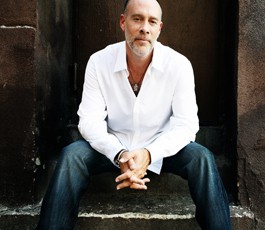
O ver the past two years, for the first time since he started his career, Marc Cohn has found himself writing songs for the most natural of reasons.

“I got back to the place I was when I first started writing songs, when it had nothing to do with career or craft. It was just about necessity,” Cohn says in a mid-October phone interview. “I had things I needed to articulate, and that was the only way I knew how.”

The organic burst of songwriting provided the bulk of material for the newly released Join the Parade , which is Cohn’s first new studio CD in nearly a decade. He plays the Mystic Theater on Dec. 3 to support Parade .

Cohn just wishes the events that helped break what had been a long and frustrating bout with writer’s block would never have happened. After finishing a show Aug. 7, 2005, in Denver, a man attempting to carjack the van in which Cohn was riding fired into the van. The bullet hit Cohn in the temple. Amazingly, the bullet lodged in tissue and did not enter the brain, and he was able to leave the hospital the next day. Cohn saw the entire event unfold, including the gunman as he aimed at him.

As Cohn hints, dealing with the emotional after-effects of the carjacking and the shooting has been difficult. Today, he’s coping as well as could be expected.

“You never totally get over this kind of thing,” he says. “There will still be something that triggers a memory and then creates some sort of disturbance or anxiety or unsettled feeling. And I’m just trying to learn how to accept that. Occasionally, there’s still a nightmare. But I’ve learned pretty well how to deal with it. But for the most part—knock on wood—I’m doing great.”

Musically, Cohn is certainly doing much better than in any time in the recent past. While he lost his muse for the better part of eight years, it returned in fine form to inspire the songs on Join the Parade . The new disc shares the soulful influence that informed his earlier albums, the 1991 self-titled debut (which included the hit single “Walking in Memphis”), 1993’s The Rainy Season and Burning the Daze (1998). But Parade has a grittier and rootsier sound that works very well for Cohn.

His live set has taken on a whole new direction with the full-band format. “It kind of starts out rocking, and kind of stays there for a good part of the night,” he says. “And then [guitarist] Shayne [Fontaine] and I go back to just a duo format for awhile, and then the band comes back out again, and that’s the show. The audience sort of decides how many encores [we do]. It’s a completely different arc to the show. I’ve really been enjoying it.”

Marc Cohn appears on Monday, Dec. 3, at the Mystic Theater. 23 Petaluma Blvd. S., Petaluma. 7pm. $30–$35. 707.765.2121.


FIND A MUSIC REVIEW

Gift to All

11.28.07

When Alorha Breaw discovered the pocket-sized paperback The Better World Shopping Guide: Every Dollar Makes a Difference, she immediately bought 17 copies. That was all the store had in stock.

“I’ve given them for everything from birthday gifts to housewarming presents,”

Breaw explains. She adds that they’ll make great stocking stuffers this holiday season. Breaw keeps one copy for herself, but laughs, “I’m having a hard time hanging on to that one.”

She uses the guide every time she shops, whether it’s for groceries, wine, clothing, gasoline—anything at all. “It’s a wealth of resources in one,” she explains. “When you’re out shopping, it’s an easy, easy, easy reference guide. And you don’t have to feel guilty as you make choices.

“The book covers 73 categories from airlines to wine, and gives manufacturers a letter grade of A to F—just like in school. Under the gasoline category, Exxon gets an F, and is described as the “#1 worst corporation on the planet” and a “renowned human rights violator.”

The book is based on the idea that individual dollars are becoming more powerful than individual votes. The average citizen casts a vote every few years—maybe every few months if the ballot initiative process goes into overdrive—while folks who are politically apathetic, unmotivated or overwhelmed might cast a vote even less often.

Yet consumers register their desires daily by how they spend their dollars. In this season of gift-buying frenzy, we’re making constant statements about which products we prefer, which stores we frequent, which websites get our credit card numbers.

“We do have a lot of power and influence, if only we can figure out what our real choices are,” says University of California sociology professor Ellis Jones, author of both The Better World Shopping Guide and the larger paperback The Better World Handbook: Small Changes That Make a Big Difference.

The power base in our society is shifting, Jones asserts.

“We have to come to grips with the idea that the economic realm may be becoming more important than the political realm. That’s just a reality. We may live in a democracy in the political world, but in the economic world, we don’t have a democracy. But we do have a role in that realm in that our dollars are our votes.”

“The bottom line is that every one of these companies needs our dollars to survive. It’s their lifeblood.”

So for the socially aware, it isn’t necessary to give up gift-giving on moral or ethical grounds, or to give only donations to worthy causes instead of actual presents.”

[The guide] provides a powerful way to make choices during the holiday season to allow your gifts to be both something nice that you’re giving family and friends, but also something nice for parts of the planet you’ll never see and for people you’ll never meet.”

Published in November 2006 with absolutely no marketing budget, the guide has already sold more than 20,000 copies. There’s a companion website at www.betterworldshopper.org, which lists background information, sells an iPod form of the guide and is beta-testing a cell phone version. The guide is also on sale at Amazon.com and has been spotted in large book chains like Borders and Barnes & Noble.

“It’s even sold at Wal-Mart—ironically, because Wal-Mart doesn’t rate too well in the book,” Jones laughs.

He recommends buying it through independent bookstores, fair trade shops or the website—but not because he’s focused on sales.

“It’s not really about the book. It’s about getting the information to people so they can make better purchasing decisions. We want to have people shift their dollars.”

He adds, “Each of our dollars has to be thoughtful and reflective and made powerful so that it makes the world a place that we would like to live in and that our children and grandchildren would like to live in.”

Which makes holiday gift-giving work on more than one level.

“Part of the gift is the gift itself, and part of the gift is building a better world.”


Dolby Days

4

11.21.07

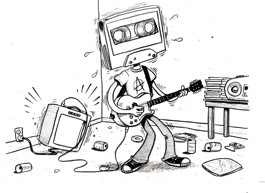
Some people keep tools in their garage. Still others have bikes, sports equipment, broken appliances, old mementos. There’re even a few odd people who have a car stowed in there. Me, I’ve got cassettes in the garage. About a thousand of them, actually.

Earlier this year, I wrote about researching old records made in Sonoma County, digging up copies of vintage vinyl, tracking down surviving band members, finding out the bands’ stories. After the article was published, I figured that my local music-historian days were over. But shortly thereafter, I received a letter from longtime local promoter and former Magnolia’s nightclub owner Scott Goree, offering me boxes of his old demo tapes from local bands. Would I be interested, he asked, in rescuing about 600 cassettes from the awaiting dumpster?

Archaeologist’s panic kicked into high gear. I raced over and loaded them into my trunk, bringing them home to my understanding wife and already cluttered garage. We immediately rifled through and puzzled over these demo tapes, seduced by the undeniable charm of the obsolete format.

A demo tape, especially between the mid-’80s to the early ’90s, was a crucial calling card for struggling bands. Since CD manufacturing wasn’t yet affordably available, a demo tape often sufficed as a band’s “album,” sold in stores and sometimes containing a dozen or more songs. And since a four-track recorder, a double-deck cassette player and a photocopy machine were the only tools required to go down in high-bias history—and especially since Photoshop and ProTools didn’t yet exist—a demo tape usually reflected a band’s individual aesthetic with alarming clarity.

Fascinated by this era’s once-dominant format, I picked out some band names that I remembered from the era, the bands that ruled the Sonoma County underground after new wave died but before Nirvana came along and kicked open the doors for every well-off suburban kid with an Ibanez—the bands that were either good enough or passionate enough to do it themselves and who invited the public in on their fun in the form of a Maxell XLII C-46 IEC Type II Dolby Audio cassette.

Take Abnormal Growth, for example, whose first recordings were multitracked on a cheap stereo console with a strategically placed ghetto blaster playing backing tracks from across the room. Guitarist John Crowhurst still remembers the exact date (Sept. 13, 1986) when he started Abnormal Growth with childhood friend Clay Butler. It marked the inception of a unique Santa Rosa band who opened for legends like NOFX, Bad Religion and GWAR, and who also existed, like so many others, solely on cassette.

“It was so anti&–the-whole-hair-metal thing, which was to try to get signed,” explains Crowhurst of the band’s demo-tape-only lifespan. “I was a big, fat, longhaired guy and Clay couldn’t sing and we really didn’t have a good drummer for the first couple years, so we just decided, ‘Screw it! We wrote 20 songs this month, we can make an album!'”

Abnormal Growth’s marketing was genius. They posted comic-book flyers around town for their third tape, Healdsburg, and their second cassette release, Let’s Grow Some Crosses, began with a hilarious commercial for their first self-titled tape. Eventually, they were making 500 copies each, selling them to punks, metalheads and “rebellious LSD-taking preppies,” while navigating the pesky crowd of skinheads who sometimes congregated around the band. During a show at a church in Santa Rosa, the meeting of one of these skinheads and a stage prop would prove immortal.

“We had a song called ‘Preschooolers of the Beast,'” Crowhurst explains, “and when we were getting ready for the show, we decided to buy a Foster Farms chicken and nail it to a cross.” During the song, a skinhead grabbed the fowl crucifix and brought it into the mosh pit, where it was shredded into tiny pieces and showered on both crowd and band. “I got hit in the head a couple of times, and there were chunks of [raw chicken] stuck in my guitar,” laughs Crowhurst, “but the promoter, who also lived [in the church] at the time, was a vegan. Oh, my. She was so not happy.”

In stark contrast to heavier hardcore bands of the day like Moto-Stillbirth and Vertical Urge, Abnormal Growth didn’t take themselves too seriously. Still, the band called it quits exactly five years after the ghetto-blaster recording sessions, on Sept. 13, 1991, after a show with Sharkbait at Guerneville’s River Theater.

These days, Crowhurst and Butler run a comprehensive website about the band, hosting songs, art and stories, and Crowhurst says he has no regrets about the band’s analog-only alignment. “It was really hard to even comprehend having any record labels giving a crap about us,” he says now, “so we figured we’d just do it ourselves and have fun.”

Get the Funk Outta My Face

Around the same time, a Santa Rosa band called Insanity Puppets formed in 1985 and released two demo tapes: And Only the Insane Shall Survive in 1987, followed by the 1988 cassette When the Tough Get Going, the Weak Get Screwed. Both were recorded live, stuffed with photocopied lyric sheets and sold directly by the band at local shows opening for the likes of the Adolescents, Agent Orange and MDC.

When the Tough Get Going specializes in societal dissertations under a haze of pot smoke; no other band could so effectively rail against media deception with a song called “The Bong That Ate Tokyo.” And though their rehearsal-space roommates Capitalist Casualties would last much longer (they’re still around), Insanity Puppets created a definitive sound of Santa Rosa punk rock from the days of its famed downtown hangout spot, Anarchy Alley.

“We were always game to play anywhere, any club, any party,” says guitarist Guthrie Lowe, “but we wound up playing with bands that we idolized—Bad Religion, SNFU and RKL.” Lowe’s not even sure if he still has a copy of the When the Tough Get Going demo tape. “I will tell you, it has lost its luster over the years a little bit,” he admits, “but it was a good snapshot at the time, that’s for sure.”

Spearheaded by promoter Laurel Pine, an arts collective called Xcntrcx began bringing touring bands to the area during Insanity Puppets’ early days, and lead vocalist Adolfo Foronda helped the band to get larger shows. But a major change was happening in the North Bay underground, one that would that would cripple the band and alter the local musical landscape completely: the infusion of—nay, invasion of—funk.

“We were very vociferous about that,” insists Lowe. “Right after Primus appeared was the first time you saw a $10 door price on anything in Sonoma County, as far as local shows went. So we were displeased about that, and a lot of bands who we thought were cool, or were friends with, started doing the funk thing. Everyone was slapping bass. It got really annoying.”

Lowe says that despite dwindling opportunities, Insanity Puppets never felt locked out by the funk explosion (“We were always out of place anyway”), and he has no regrets about sticking to a classic punk sound. “It’s always been a diverse, underground, countercultural community around here,” he says. “Everybody’s had their own stamp and style, so we weren’t really too worried about trends.”

Insanity Puppets lasted on and off until 1999, surviving changing incarnations and occasional incarcerations. A 7-inch released in 1991 called Who Brought the Corpse? would be the band’s only noncassette release, and it proves that they stuck to their guns; the thanks list includes “beers from around the world,” “the inventor of the bong” and, of course, “all those who hate funk.”

One band who fell disastrously under funk’s spell was Wasted Morality, whose Stell’s House tape was warped almost beyond recognition when I found it. But I’d seen their name on old flyers for hardcore shows, and, determined to hear some vintage Santa Rosa thrash, I carefully unscrewed the tape, transplanted its contents into a new cassette shell, put it in my player and pressed play. The shit that came out of my speakers was atrocious.

“We were a thrash metal band, mainly, from about ’85 to ’90,” explains drummer Andy Rosa, “and then things started changing—Primus and Mr. Bungle were coming on big—and we made a mistake and tried to play our own kind of funk, which wasn’t what we really were. We should never have done that, we should have just stuck with what we were doing. But thrash was dying out, and people weren’t that interested.”

While other local bands like Victims Family were able to assimilate funk elements without sacrificing impact, Stell’s House is a weak, adolescent attempt at trend-hopping, evidenced by incessant slap-bass and lyrics like “Step on over ’cause you look real sweet / Shake your butt to my funky beat.” An earlier demo tape (“Which is what we really were,” says Rosa) called Stitches reveals the powerful band who opened for DRI and Suicidal Tendencies, but Wasted Morality weren’t the best at playing funk, and Rosa says the opportunities for choice opening slots dried up. The band broke up in 1992.

Who the F*ck is Ed?

What was this great threat called funk music, and how did it take over?

Look no further than Disciples of Ed, a local funk phenomenon whose self-titled demo tape sold over 1,000 copies, who straddled the worlds of punk and funk by playing with both Operation Ivy and Primus, and who commonly sold out the Phoenix Theater on their own before breaking up in 1992. Hailing from Cloverdale, where small-town life dictated the creation of fun from scratch, Disciples of Ed made a name for themselves by hosting annual “Ugly Clothes” parties on their large rural ranch—buying plentiful kegs, inviting bands like Mr. Bungle to play and locking the exit gates at 9pm to ensure a drug-addled rager with as many as 400 revelers until the sun came up.

“It turned into this big, ugly, polyester Woodstock thing,” remembers drummer Chris Forsythe, calling the festivities “the most unappealing thing to eyeballs ever.”

This wild atmosphere found its way onto the stage, and soon Disciples of Ed were showing up at punk shows dressed in neon, wielding stuffed animals and toting cans of Cheez Balls to pour all over the audience. (The artificial snack would grow to be the band’s trademark; a famous “Cheez Ball Wrestling” show with bikini-clad girls is still whispered about, and Planters even starting giving the band discounts for ordering so many cases.) The crowds ate it up, whisked into blissful abandon by DOE’s increasingly elaborate stage antics. “We always tried to out-do the last show, and we wanted every show to be different and more over-the-top than the last,” says Forsythe.

Despite the asterisked obscenity, T-shirts with the inquiry “Who the F*ck Is Ed?” started causing administrative troubles at the area’s high schools. The band sought to answer the question by introducing the public to their namesake: Ed “Aardvark,” a Cloverdale character known for freaking kids out by eating ants. “We finally brought him out onstage, this old, funky, quirky, wiry dude with glasses,” Forsythe remembers, “and said, ‘Here’s Ed,’ and nobody believed us!” Despite widespread popularity, Disciples of Ed broke up shortly afterward.

Another funk band ruling the scene were the Louies, who made a live demo tape that captures a short-lived atom bomb of a band. Started in 1990 in Sonoma, the Louies soon annexed members from all over the county, swelling at one point to be a 14-piece funk juggernaut. The Louies were high on showmanship, costumes, antics and audience involvement—singer Blane Lyon often crowd-surfed while straddling a giant inflatable whale—and usually played to packed houses, either opening for Primus or headlining.

“We were starting off when we were young,” says Lyon now, “so we all just gave love! It was never about the money for us back then. It was all about writing songs, performing—we totally believed in it. And that was a beautiful, beautiful thing that we shared.”

Guitarist Lincoln Barr, who joined the Louies when he was just 15, remembers playing wide-eyed at the “Ugly Clothes” rite-of-passage parties with Disciples of Ed, building a huge skateboard ramp at the band’s practice space, sharing the stage with a young Green Day and sporting ridiculous, tacky outfits onstage. “I try to convince my wife that it was cool then,” he says now, “but she doesn’t buy it.”

What he doesn’t completely remember are the songs. When I rattle off a few titles, he howls with laughter, since, like Lyon, Barr hasn’t owned a tape of the band in years. Still, he misses the carefree pre-grunge atmosphere. “I have to admit—of course, my tastes in music have changed a lot and the things I want out of a show have changed and maybe I’m not as in touch as I used to be—but it would be refreshing to see people having fun a little bit more,” he says. “At least every once in a while.”

Analog Diaries

Perhaps one of my favorite demo tapes in the pile is from the decidedly un-fun Legion of Orb, an eerie goth-punk Petaluma band formed in 1988. The cassette is covered with a hand-cut label, and its plastic case, devoid of the usual insert, is labeled with a sword, a crown, some clouds and Old English lettering. One song, “Necrophiliac,” says it all: “Burning candles! / Covered knives! / You’re a necrophiliac, because I’m dead inside!”

With haunting leads, chromatic riffs and brooding vocals, Legion of Orb’s cassette sums up the attraction to extreme psychosis that lures disaffected teenagers growing up in a hick town. Elusive frontman Dan Puskar proved impossible to immediately track down, but I found guitarist Phil Lieb, who confirms that the band once aptly opened for Neurosis at the Phoenix before eventually calling it quits. “I was a few years older than the other members,” says Lieb. “There were a lot of lifestyle problems and such, and basically the band just ran its course.”

Like so many other bands I’ve tracked down, no members of Legion of Orb have any recordings of their old band at all, and the surprise existence of their demo tape represents a small-scale holy grail.

Far from cultural detritus, there’s a whole history in the cast-aside cassettes of the world, and in many ways, these old tapes are such personal documents—imagine losing a diary 20 years ago, only to have someone call up out of the blue wanting to talk about its contents—that it’s no surprise to hear the recurring question from just about every band I speak with: “Oh my God, can you make me a copy of that?”

And really, after everything they’ve given me, how can I say no? I’ve got a lot of demo-tape dubbing to do.

The Short List

Petaluma lore is a thick quilt of defunct bands, but Coffee and Donuts remain passionately in the hearts of most old-timers. Inextricably linked with the groundbreaking Jaks skateboard team, the band played a jazzy amalgam of punk, jazz, blues and reggae; played with Operation Ivy and fIREHOSE; shared a rehearsal space with Victims Family; and made the rounds of skateboard contests, parties and charity benefits.

Coffee and Donuts never officially manufactured a demo tape, but their practice tapes were passed around like secrets between friends and promoters, endlessly dubbed and cherished. Bassist K. C. Cordoza says he hasn’t owned anything by the band in years except for a third-generation cassette that an old friend recently copied for him. The mangled tape that I managed to find had to be disassembled and untwisted in order to play at all.

Cordoza’s the only member still in Petaluma, and when I ask why the band broke up, he replies with a short laugh. “The drummer slept with my girlfriend. And also . . . yeah, that was pretty much it. I wasn’t really motivated to continue. I was mature enough to kinda deal with it, but at the same time, it was my two best friends in the world stabbing me in the back.” Ouch. The band broke up in 1991.

The Garden may not have been too prominent around the late ’80s, but their silk-screened, modern rock&–inflected demo tape holds up very well as an example of the diversity in the area; no local band sounded like them, except maybe Cast of Thousands. The band played Andrews Hall, the Studio KAFE, the Cotati Cabaret and the Palace Theatre, went on a Northwest tour to open for Alice in Chains and played with Faith No More at the River Theater. Before breaking up, the band clung to a thread by auditioning drummers for over a year, which frontman Michael Estes calls “the biggest hell I think I’ve ever gone through.”

From Napa came the Bwana Devils, four oddball punk rockers from Vintage High School who released six different demo tapes during an unlikely career that began in 1983. Napa isn’t exactly a rock ‘n’ roll town, and guitarist Pat Hazen tells of a Battle of the Bands at the Napa Fairgrounds gone awry. “It was pretty confrontational,” Hazen, now 50, says. “People were screaming, I thought we were going to be killed in front of a thousand people, and we had to sneak out the back.”

The Bwana Devils instead played mostly out of town, including a show with Jane’s Addiction in Vacaville and a Davis frat party with the Replacements. Honing their unique brand of rollicking punk, a few nibbles from record labels came their way, “but nothing really panned out,” Hazen says. The band split in 1991, and the demo tapes—plus 1,500 practice cassettes—are all that remain.

Metal bands including ICE, Stone Crow and Broken Ties abounded in the ’80s, but none shredded as hard as Malicious, whose meagerly hand-drawn demo tape Addicted to Pain belies the fierce speed and volume contained within. Booking shows was hard for a speed-metal band in those days, and the band instead threw weekly parties at their practice space in Petaluma.

Drummer Matt McKillop points out that the band opened for Exodus, Death Angel and Vio-lence, and that the members goaded each other to dizzying heights of speed and volume. “When I hear that stuff, that was the baddest-ass drumming I will ever give to the world,” McKillop says. “They pushed me to a level that I’ll never get to again.” The band broke up when guitarist Joe Miller died of cancer in the early ’90s.

Originally a three-piece, Animal Farm at one point boasted over a dozen members on trumpet, sax, pedal steel, accordion, piano, mandolin and violin. “Certainly, it was a recipe for chaos,” recalls frontman Preston Booker, who started the band in 1986. “We had a lot of hectic shows where it didn’t come together, but now and then we had this huge ensemble and it would kinda work, and it would be pretty magical.”

Animal Farm played with Cake at the tiny Old Vic before that Sacramento group got huge, and won a Battle of the Bands at Magnolia’s, allowing them to record at Prairie Sun in Cotati. Like all of the band’s other temporary cassettes, the tape I found is hand-labeled. Animal Farm never did put out an official release.

Echoing the experience of so many other bands of the era, Booker sums up the group’s early-’90s demise. “We fell into anarchy at the end,” he says.—G.M.

Fork Votes

0

11.21.07

The average concerned citizen would have to be out of his or her mind not to be outraged by the Farm Bill being considered this month by the Senate and its sister legislation passed in late July by the House. Our paid representatives actually spent over a year crafting their plan to guide our food and farm sectors for the next five years. The probable outcome, if and when the Senate ever gets around to finalizing a bill: another multibillion dollar agribusiness welfare package wrapped in a veneer of reform.

Originally conceived as an emergency bailout for millions of farmers and unemployed during the dark times of the Dust Bowl and Great Depression, the Farm Bill has snowballed into one of the most—if not the most—significant force affecting food, farming and land-use in the United States. In a country consecrated to private-property rights and free-market ideals, it might seem hard to fathom that a single piece of legislation could wield such far-reaching influence. But to a large extent, the Farm Bill determines what sort of foods we Americans eat (and how they taste and how much they cost), which crops are grown under what conditions and, ultimately, whether or not we’re properly nourished.

What can we citizens look forward to for the Farm Bill’s $300 billion price tag?

— Unlimited payouts to megafarms and absentee landowners already earning record-breaking profits.

— Cheap corn and soybeans for feedlot operators that maintain animals in confinement factories, spreading disease, greenhouse gases and labor abuse wherever they set up shop. (Farm Bill “conservation” programs will even pay $450,000 for the construction of lined pits which feedlots can fill with toxic concentrations of manure.)

— The continuation of a wildly successful federally funded obesity campaign, which ensures that the cheapest foods in our supermarket aisles and convenience outlets are laden with processed flours, refined sugars, saturated fats, unhealthful meat and dairy products, and an excess of subsidized calories.

— A decline in conservation programs that protect vital habitats, help to stem erosion, filter fresh water, preserve open space and provide many other public benefits.

Sure, we’ll hear a lot about “forward-looking” new programs that will help get us on the right track. But it’s important to look behind the rhetoric and find out just how the deals are made.

We’re supposed to get excited, for example, about a USDA snack program that will help 5,000 schools and 4.5 million children “eat healthier.” Let’s do the math. According to the U.S. Department of Education, there are over 93,000 public elementary and secondary schools in this country with nearly 47.5 million students. There’s a sizable private and charter school population as well. Each child lucky enough to participate in the program will get two-thirds of an apple a day, according to school chef and nutritionist Ann Cooper.

Then there are the “energy independence” programs we’re hearing so much about. Decades of environmental-protection gains are being threatened as farmers take lands out of conservation programs to cash in on the corn-ethanol gold rush. On the one hand, using corn for agrofuels does make feed more expensive for feedlots, making family-farm-raised options a lot more reasonable. But corn farming is dependent on boatloads of toxic pesticide and fertilizer applications, and is extremely hard on the land and aquatic systems. Ethanol production also consumes enormous amounts of fresh water.

You can also follow the money. The USDA’s very own Farm Bill website, for example, posts a map of subsidy recipients who live in Manhattan. Attempts to limit the amounts of adjusted gross income (currently at $2.5 million per operation) and the number of those eligible for farm payments have consistently failed in recent decades. This year, both the House and Senate are proposing downsizing those income tests, but any millionaire with a good legal and accounting team will find a way around them.

A bipartisan amendment from senators Byron Dorgan, D-N.D., and Charles Grassley, R-Iowa, would cap total farm payments at $250,000 and require subsidy-receiving operations to be owned by actual working farmers. This would be quite an improvement over the current loophole-ridden policies, and a way to free up funds for other urgent priorities. (As of this writing, there’s still time to call your senators and ask them to support the Dorgan-Grassley amendment.)

As obscene as recent farm-payment programs have become (over $1.1 billion were paid to deceased farmers between 1999 and 2005 according to Washington Post reporter Sarah Cohen), it’s important to remember that it’s a real privilege to have a Farm Bill to debate.

The Farm Bill is our chance to set the food and farming system on the right course. It’s our chance to compensate land stewards and food providers for things the free market doesn’t value. It’s our chance to create an actual healthy food and healthy land ethic. As an old saying goes, it’s our chance to put the “culture” back into “agriculture.” The Farm Bill matters because it can actually serve as the economic engine driving small-scale entrepreneurship, on-farm research, species protection, nutritional assistance for food banks, school lunches made from scratch, habitat restoration and low-petroleum input farming systems, to name just a few. Our challenge may not be to abolish government supports altogether, but to ensure that those subsidies we do legislate actually serve as valuable investments in the country’s future and allow us to live up to our obligations in the global community.

There is still time to have a say. Every day we can vote with our forks by buying from local farmers, supporting organic producers whose practices we know and approve of, visiting farmers markets when we can. But we only get a Farm Bill every five years, and the decisions made in federal policies will affect all of us on a daily basis. It’s time to let every one of your elected officials know that you have them on notice, that you vote with your fork and you expect them to vote as if the nation’s very health, future and security is at stake.

Because it is.

Dan Imhoff is a Sonoma County resident, independent publisher and author of many books, including ‘Food Fight: The Citizen’s Guide to a Food and Farm Bill.’

Quick dining snapshots by Bohemian staffers.

Winery news and reviews.

Food-related comings and goings, openings and closings, and other essays for those who love the kitchen and what it produces.

Recipes for food that you can actually make.

Letters to the Editor

11.21.07

More info on fabry

Thank you for your article on Fabry disease (“Sleeper Cells,” Nov. 7). As discussed, patients need to educate themselves, especially because the disease is so rare. One excellent resource is the Fabry Support and Information Group (www.fabry.org). This small organization was instrumental in making enzyme replacement therapy (ERT) available in the United States in 2003 despite a slug-speed FDA approval process and underfunded “orphan drug” research.

Those taking ERT today can thank FSIG members (and others) who participated in competing drug trials and those who lobbied Congress to prod the FDA along. Perhaps most importantly, the website’s online discussion forum is a place where Fabry patients can connect. My brother Chaz died of the disease before ERT was approved; he was very thankful for the efforts of FSIG and for the circle of friends he met on its website. It’s a rare disease, but it doesn’t have to be a solitary journey. Shoshana LeibowitzSanta Rosa

Holiday hate mail

Regarding “Justice Averted” (June 13), thieves are scum of the earth and should all be shot! What kind of morons buy weed at 4am, especially at somebody’s house? Just buying weed is highly dubious. Blacks have already been known to commit armed robbery at marijuana dispensaries throughout California, so a home invasion of an alleged dealer’s home was inevitable. This was most definitely a robbery. And if they had beaten one of my family members, I would have killed them all.

It’s about time California recognized and enforced some common sense laws allowing citizens to protect themselves from scum like this. We need to take a page out of the book from Texas. Furthermore, if the roles were reversed here, you’d probably be commenting on how great it is that a black family protected themselves from a gang of “white devils.”

You people amaze me and make me sick!

John RobertsTopanga

We print this hateful slick of vitriol, just arrived due to the wonders of the Internet, solely to illustrate why it was perhaps important that Renato Hughes won a change-of-venue motion on his trial. The Associated Press picked up the story, but aired the prosecution’s side as truth, not allegation, prompting similar inflammatory responses across the United States. See

Food as a form of Moral superiority

As we enter the holiday season, the screams of vegan moralists echo across the landscape (Letters, Nov. 14). News flash: Homo sapiens is a bizarre species dissimilar from any other, a species of extreme individual differences. Humans are not primarily herbivorous, although many do well as vegans, nor are we primarily carnivorous, although many do far better physically having this type of diet. Humans are an omnivore species. Lay off the rampant vegan propaganda and let individual needs and preferences establish individual rules. One size fits all doesn’t work with humans!

I, for one, hate vegetables. Hate their texture, hate the way they look, hate how they taste. I can best tolerate the ugly things when they’re pulverized in a blender into an improved form. But an organic, raw fruit salad alongside a large, thick, rare steak? Ah! Euphoria.

Karl BosselmannForestville


First Bite

0

11.21.07

Editor’s note: First Bite is a new concept in restaurant writing. This is not a go-three-times, try-everything-on-the-menu report; rather, this is a quick snapshot of a single experience. We invite you to come along with our writers as they—informed, intelligent eaters like yourselves—have a simple meal at an area restaurant, just like you do.

Snuggled on sheepskin throws on a couch before a fire, a disheveled couple feed one another with forks and fingers. Her hair has loosened from its tie and her face is flushed. He extends his fork, she takes a coy bite and makes a pretty moue with her mouth. She giggles. We shouldn’t be watching this.

But the cozy fireside area of Sebastopol’s French Garden Restaurant and Brasserie invites such intimacies. Just celebrating its first anniversary, the restaurant has a large, well-lit dining room and a nicely dim, comfortable bar where lovers may eat tucked away while musicians play.

The dining room’s menu is French, which is a quaint oddity in Mediterranean-obsessed North Bay kitchens, and features such standards as escargot ($7), filet de beouf Wellington ($30) and chocolate soufflé (all desserts are $7). What makes the French Garden exceedingly different is that as much as possible, all fruit and produce come from what our server familiarly referred to as “Dan’s farm.”

“Dan” is co-owner Dan Smith, a community activist and former software developer. When foods come directly from an organic farm, they may be small and they may be misshapen—but they taste like real food. Those so-called baby carrots that woodenly dong out of plastic bags have nothing on Dan’s baby carrots, which are truly small sweet roots pulled right from the earth and lightly sautéed.

Such poetic revelations extend hugely to that humble cruciferous known as broccoli; rarely has it been so exalted as at the French Garden. The Brit had the appetizer du jour, which on this jour consisted of perfect broccoli napped in a cheese gratin ($6). After sharing one grudging forkful begged for review purposes, he ate the whole dish silently, swiftly, greedily. Broccoli! Who knew?

I had the persimmon salad ($8) and couldn’t be silent at all, a madwoman muttering to myself at table over the tiny plump huckleberries, the chopped, toasted hazelnuts, the pomegranate arils, the small lettuces and frisée, the perfect fans of perfectly ripe fuyu persimmon on the plate.

Stubbornly bent on bringing Merlot back into small favor, we chose the only bottle of California Merlot on the excellent French/American wine list, the fragrant Albini ($39).

For our large rations, the Brit had the New York steak ($27) with a shallot butter and served with tiny roasted beets, more little carrots and crisp pommes frites. My freshly caught medium-rare sea bass ($26) gleamed with a Meyer lemon sauce and sat upon salty Yukon gold mashed potatoes with its own raft of tiny perfect veg, including the storied broccoli. I shared none of it.

Too full for a bowl of Dan’s berries, a slice of orange blossom cake or even an assortment of cheeses, we made our way to the bar. With a light menu that includes such as a steak sandwich, all priced at $6&–$10, this is a great place to duck into without reservations.

We sat on sheepskin covers on a couch before the fire. We watched the man feed the woman. We looked at each other. We forgave all broccoli transgressions. Yes, we went home.

French Garden Restaurant and Brasserie, 8050 Bodega Ave., Sebastopol. Open for dinner, Wednesday&–Sunday, 5pm to 10pm. Brunch, Sunday only, 10am to 2pm. 707.824.2030.


Quick-and-dirty dashes through North Bay restaurants. These aren’t your standard “bring five friends and order everything on the menu” dining reviews.

Alias

11.21.07

Todd Haynes’ I’m Not There is a masterpiece of deconstruction—actually, it’s a masterpiece, period. It’s the culmination of ideas the director of Far from Heaven started years ago in his unauthorized Barbie-doll biography of Karen Carpenter, Superstar. Later, Haynes’ sometimes maddening Velvet Goldmine tried a dissection of the chameleon David Bowie, but he ended with nothing more substantial than a group of roman a clèf phantoms.

The third time is the charm. Haynes has a complex artist to admire, and a tremendously well-sifted song catalogue to pull from. I’m Not There’s starting point is the 1966 motorcycle accident that supposedly almost killed Dylan. A man like that, Kris Kristofferson’s narrator tells us, leaves more than one ghost.

There are half-dozen Dylans here: a poet under the alias “Arthur Rimbaud” (Ben Whishaw); a rising folk singer (Christian Bale); a movie star and straying husband, Robbie (Heath Ledger); a born-again preacher (Bale again); an Old West hermit (Richard Gere); and a childlike disciple of Woody Guthrie and other bluesmen (the endearing young Marcus Carl Franklin). Finally, the most authentic Dylan: “Jude” the jabbering, speeded-out London mod (Cate Blanchett), pissed off at the pissed-off fans who can’t accept amplified music.

Haynes must have a sweet spot for the Old West Dylan of John Wesley Harding and The Basement Tapes era. I’m Not There’s title comes from a rare and ethereal ballad, a bootleg song that didn’t make the official Basement Tapes release in 1975. Haynes erects a symbolist frontier village called Riddle, Mo. It’s a movie version of album-cover art, like walking right into The Basement Tapes cover with its broken accordion, greasepaint, carnies, belly dancer and fire-eater.

In this sequence, a grave and courtly Richard Gere plays Billy. He’s ruddy, bespectacled, like Dylan’s outlaw Alias in Sam Peckinpah’s Pat Garrett and Billy the Kid. A six-lane freeway is coming through town, just like the railroad displacing the small-town people in the old Westerns.

I’m Not There fights myth with myth, zeroing in on this vanishing-act artist. Whatever Dylan’s self-mythologizing means to Dylan is up to Dylan. It’s what the myths meant to us that Haynes mulls over.

I’m Not There’s principal delight is how it succeeds despite the seeming impossibility of success. I dreaded something like Across the Universe, with its coy, tedious ’60s worship. But Haynes avoids every variety of obviousness. This isn’t a reprise of the self-love orgy of Dylan’s self-made 1977 miasma Renaldo & Clara, or of the elderly kvetching of his 2003 co-effort with Seinfeld’s Larry Charles, Masked and Anonymous. Haynes may be the first filmmaker ever to not approach Dylan on bended knee.

In addition to Blanchett, Julianne Moore does such a deft Joan Baez character that the laughter bubbles up every time you see her, yet there’s not a trace of caricature or condescension on Moore’s part. The rugged-looking Charlotte Gainsbourg is called “Claire” in honor of ex-wife Sara Dylan’s own alias in Renaldo & Clara.

Prettiness isn’t Gainsbourg’s virtue—and who cares? prettiness is a small virtue—but she looks warm and alluring with false eyelashes and untidy hair. She brings in a bass-note of feminine solidity, carrying her man to temporary rest in a tangle of limbs during the song “I Want You.”

Haynes telescopes the various editions of Dylan so well that there’s not a single mixed metaphor in the film. This tour de force of music-love coalesces on one image: the real Dylan at his most angelic, his face invisible in a nimbus of spotlight, playing the waxing, waning, so sad, so sweet, blues-harp solo in the live version of “Mr. Tambourine Man.”

Throughout, Haynes insists that Vietnam was essential to Dylan’s run for cover. Yet by not slamming home the parallels between 1968 and 2007, Haynes matches the two eras better than any fiction filmmaker has yet. Dylan’s songs were right for that terrible age of violence, confusion, rudderlessness and loss. And so they are for ours.

‘I’m Not There’ opens Friday, Nov. 23, at Rialto Cinemas Lakeside (551 Summerfield Road, Santa Rosa, 707.525.4840) and the Rafael Film Center (1118 Fourth St., San Rafael, 415.454.1222)


New and upcoming film releases.

Browse all movie reviews.

Color of Money

11.21.07

On Saturday, Nov. 10, the busiest day of the San Francisco Green Festival, my brother and I drive around in the rain for a good half an hour before finding a parking space outside the Concourse Exhibition Center. There are buses lined up outside and half a parking lot full of bicycles, but even so, the number of cars has eaten up every parking spot within a multiple block radius. My brother finally manages to parallel-park between two motorcycles in a spot so tight that he is greeted with congratulatory applause from a bystander, and together we join the masses who want to find out what it means to live green.

The Green Fest is so crowded it’s hard to maneuver. The men’s bathroom, which I visit because the women’s has a line out the door, boasts a row of clogged urinals. Because it’s difficult to find the recycling stations, people are chucking their trash into anything round, and there are “Not for Garbage” signs posted on for-sale goods that might just look like waste-paper baskets. Some aisles are so packed with people that, on more than one occasion, I have to turn back and go in from another angle.

If, however, I have to be shoved into a crush of humanity, this is a good place to do it. People are friendly, polite and apologetic when they step on you. No one seems to be drinking too much microbrew, and everyone is interested and engaged in what is going on. So while our carbon footprint feels a bit more solid than would be ideal, the green vibe is still pretty strong, and the information and booths are so engaging that a couple of hours slip by almost unnoticed.

Because there’s so much to see, it takes me a while to find my focus. A woman selling portable eating sets with bamboo cutlery that rolls up into a neat little carrying case unwittingly provides it. When I ask who makes her wares, she snaps one word—”Refugees”—before returning to her book. My inner cynic awakened, I instantly lose interest in the host of people who are selling things that poor people, somewhere else in the world, are making for American consumption.

Luckily, I stumble into Brandon Bert of the local green superfood company Amazing Grass (interviewed here Oct. 31), and he feeds me some samples to boost my flagging energy levels and remind me why I’m here. I want to talk to people who are DIY: making their own stuff, keeping it local and choosing sustainable designs and products created right here in California.

I begin the healing process at Luscious Natural Body Care. Luscious is a small cottage business created by Santa Rosan Angelina Artemoff and Angeleno Julianne Lampard. All of their products—which include lotions, solid perfumes and bath salts—are hand-blended and made from pesticide-free and wild-crafted essential oil blends that they create themselves from Snow Lotus Aromatherapy oils, a Santa Rosa&–based company that specializes in therapeutic- and medicinal-grade oils. The two women have taken their passion for plants, aromatherapy and craft and created a line of products that are as beautiful to look at as they are to smell.

My next stop is Jenny Hurth Bags. An East Bay artist, Hurth sews her stylish bags and accessories from discarded vinyl banners. Hurth tells me she was blown away the first time she witnessed the mass of banners at a recycling center—mostly trade-show banners created for convention events such as this one. The next day she returned with her truck, and a forklift filled the back with banners in a range of sizes, some as big as 20-by-60-feet long. Hurth, with the help of a couple of local seamstresses, sews all of her funky shoulder bags, grocery totes and laundry hampers, and claims she has no interest in expanding out of her local area. Her goal is to use up the waste here in the Bay Area, where behemoth banners are never in short supply.

My brother and I reunite at Bear Wallow Herbs, where I’m mooning over a handmade herbal medicine first aid kit, which includes a laminated card that tells you what to do in just about any type of emergency from snake bite to blistered heel. Bear Wallow’s products are handcrafted by Cara Saunders of Sawyer Bar, Calif., who works off the grid producing her own tinctures and salves. I’m almost tempted to hurt myself just so I have an excuse to buy one.

After a brief tête-à-tête, My brother and I agree that we had better leave before I start charging, and so we make our way out of the center and back into the rain, committed to returning next year—provided, of course, that the Green Festival can find a location with more recycle stations, bathrooms and open space.

For Luscious natural body care, visit www.lusciousnaturalbodycare.com. For a hip bag, go to www.jennyhurth.com. For Amazing Grass, go to www.amazinggrass.com. For Snow Lotus Aromatherapy, go to www.snowlotus.org. For an herbal first aid kit, go to www.bearwallowherbs.com. For information on next year’s Green Festival, go to www.greenfestivals.org.


Satan’s Taco

0

11.21.07

Every issue of Bon Appétit magazine has a list of songs or CDs to play during your fashionable little tapas party or cocktail get-together. It’s in the spirit of fun, but the suggested music always has more to do with coming across as clever or trendy than with, well, food. Or, for that matter, music.

That makes sense. You can’t play music that’s too intense or awesome when your guests are nibbling on frenched lamp chops with mint-cilantro pesto, because great music demands all of your attention. Perhaps that’s because there are precious few rock songs about eating or cooking.

Actually, the role of food in pop music is symbolic. Food stands in for lust, humor, wealth, tradition, corruption, family togetherness and good old-fashioned fun. But rarely are food-related lyrics merely about how tasty food can be.

Movies, art, love affairs, politics and great literature all inspire bands to write songs. Why not a once-in-a-lifetime perfect slice of pizza? Or a multicourse festival of top-notch gluttony at the French Laundry? What about the pancakes your dad made once a month on Saturdays when you were a kid?

There are lots of songs that mention food, sure, but they’re not about food. The B-52’s “Quiche Lorraine” is not about the iconic bacon-laced French egg tart, but a runaway poodle. “Mother Popcorn” is not about James Brown’s favorite buttery movie-theater snack.

Evidence exists that rockers like food. “Joanna Newsom ate here the other night,” my friend who works as a chef at a trendy—and expensive—Chicago cafe informed me. Kara Zuaro’s cookbook I Like Food, Food Tastes Good, which came out earlier this year, collects recipes from dozens of indie rocker types, the sort of folks who spend a great deal of time eating grease-laden bar food served at the venue they happen to be playing that night. But Zuaro’s contributors offer dishes that are hardly tour food; see current critics’ darlings Battles’ preparation of roasted marrow bones accompanied with crisped duck fat, hearth-baked bread and fleur de sel.

And yet we have no influential food-centered concept albums or Billboard smash hits about Taylor’s Automatic Refresher. Is food not arty enough, or is arty food too pretentious to fit nicely into the sweaty confines of an unbridled rock song? Think about the often contrived wankery of molecular gastronomy—sea urchin foams and gelatinized pork belly extracts—then think about how much the last Oneida album jammed. Nope, doesn’t click at all, though the nuance and mastery of great cuisine and fine musicianship come from the same overdriven, obsessed nerve center.

In all but the most stoic of restaurant kitchens, a battered boom box, caked with a sticky film of vaporized grease, is the heart and soul of the kitchen, the electric coxswain that dictates a steady rhythm in an otherwise frantic zone, where the nightly battle is chef vs. time.

Cooking and rocking out go together hand-in hand. But eating and rocking out? Not so much. Rock is the fast food of the music world: 100 percent American in origin, instantly gratifying, available anywhere. But there has to be a bona fide culinary rock song out there somewhere.

Country, being the suffering-fixated genre that it is, tends to lament the scarcity of food rather than celebrate its presence, as with Little Jimmy Dickens’ 1957 “Take an Old Cold Tater and Wait,” whose main story arc concerns getting only the neck and feet from a shared chicken. Dolly Parton, a woman who came from humble means, wrote about the hunger of her youth in her autobiographical “In the Good Old Days (When Times Were Bad),” a song in which hard labor still does not ensure adequate nourishment: “We’ve gone to bed hungry many nights in the past / In the good old days when times were bad.”

Merle Haggard later added a verse in his own version of the song: “And I’ve walked many miles to an old country school / With my lunch in the bib of my overalls.” That’s not a very big lunch.

In blues and soul, food can likewise be indicative of class. What does Annie of Tony Joe White’s “Poke Salad Annie” eat? Pokeweed, a wild plant whose toxic leaves must be boiled prior to ingesting. She was so poor that “that’s about all they had to eat, but they did all right.”

Hip-hop, a genre that rarely shies away from an opportunity to rhapsodize over decadence and physical pleasure, has been the most fertile genre for the celebration of food in song. If something tastes good, your friendly neighborhood MC is gonna say so, as with Sir Mix-a-Lot in “Buttermilk Biscuits”: “Don’t make a difference what food you make / Use buttermilk biscuits to clean your plate.”

And, of course, food is symbolic of sex. In Paul Revere & the Raiders’ 1967 hit “Hungry” (penned by Barry Mann and Cynthia Weil), it’s not a bacon double cheeseburger Mark Lindsay is singing about. Nope, he’s “Hungry for that sweet life, baby / With a real fine girl like you.”

The Pixies’ “Cactus” presents a much sloppier metaphor, in which a lovesick and homesick Black Francis requests his faraway paramour to send him her food-stained dress: “So spill your breakfast and drip your wine / Just wear that dress when you dine.” Suzanne Vega’s “Caramel,” as wistful and resigned as a sigh, smoothly longs after the unattainable, be it burnt sugar or acknowledgement from her beloved.

Food, particularly the multicultural street food of L.A., crops up not infrequently in Beck’s songs, as both a reflection on the delirious muddle of class and ethnicity in Southern California and as mechanism for painting offbeat images of postmodern American pop flotsam. The near-apocalyptic opus “Satan Gave Me a Taco” (“The chicken was all raw and the grease was mighty thick”) is at once about gluttony, starvation and indifference—after all, Beck still accepts the repulsive taco Satan offers him (“There was aphids on the lettuce, and I ate every one / And after I was done, the salsa melted off my tongue).

The Rolling Stones’ “Mother’s Little Helper” is equally horrific but more realistic, an indictment of the cardboard cuisine set out by the medicated housewife in the song: “So she buys an instant cake, and she burns her frozen steak / And goes running for the shelter of her mother’s little helper.” Props to Mick for the insight, but I doubt he’s ever had to face the crushing monotony of feeding an indifferent, finicky family day after day.

“Savoy Truffle,” written by George Harrison, is perhaps the most rollicking of food rock songs. Supposedly, Harrison wrote it as a nod to his friend Eric Clapton’s chocolate fixation, and the verses tick off a list of sticky-sweet bon-bon fillings, ending of course with “But you’ll have to have them all pulled out / After the Savoy truffle.”

“Them” is your teeth, which will rot away after too many candies; the fictional food of song still has potent drawbacks. Primary among them are that there’s not enough of it, guaranteeing that Bon Appétit play lists will remain mediocre for the indefinite future.

Quick dining snapshots by Bohemian staffers.

Winery news and reviews.

Food-related comings and goings, openings and closings, and other essays for those who love the kitchen and what it produces.

Recipes for food that you can actually make.

Homeward Bound

11.28.07Three years ago, Nadia McCaffrey got the news that every military mom dreads: her son Patrick McCaffrey had been killed in Iraq. Her story was in part told in these pages ("The Exploitation of Pat Tillman," June 27, 2007), adding a layer to the tale of the government's shameful response to the death of the former NFL star and...

Back in Form

music & nightlife | By...

Gift to All

11.28.07When Alorha Breaw discovered the pocket-sized paperback The Better World Shopping Guide: Every Dollar Makes a Difference, she immediately bought 17 copies. That was all the store had in stock."I've given them for everything from birthday gifts to housewarming presents," Breaw explains. She adds that they'll make great stocking stuffers this holiday season. Breaw keeps one copy for herself,...

Dolby Days

11.21.07Some people keep tools in their garage. Still others have bikes, sports equipment, broken appliances, old mementos. There're even a few odd people who have a car stowed in there. Me, I've got cassettes in the garage. About a thousand of them, actually.Earlier this year, I wrote about researching old records made in Sonoma County, digging up copies of...

Fork Votes

11.21.07The average concerned citizen would have to be out of his or her mind not to be outraged by the Farm Bill being considered this month by the Senate and its sister legislation passed in late July by the House. Our paid representatives actually spent over a year crafting their plan to guide our food and farm sectors for...

Letters to the Editor

11.21.07More info on fabryThank you for your article on Fabry disease ("Sleeper Cells," Nov. 7). As discussed, patients need to educate themselves, especially because the disease is so rare. One excellent resource is the Fabry Support and Information Group (www.fabry.org). This small organization was instrumental in making enzyme replacement therapy (ERT) available in the United States in 2003 despite...

First Bite

11.21.07Editor's note: First Bite is a new concept in restaurant writing. This is not a go-three-times, try-everything-on-the-menu report; rather, this is a quick snapshot of a single experience. We invite you to come along with our writers as they—informed, intelligent eaters like yourselves—have a simple meal at an area restaurant, just like you do.Snuggled on sheepskin throws on a...

Alias

11.21.07Todd Haynes' I'm Not There is a masterpiece of deconstruction—actually, it's a masterpiece, period. It's the culmination of ideas the director of Far from Heaven started years ago in his unauthorized Barbie-doll biography of Karen Carpenter, Superstar. Later, Haynes' sometimes maddening Velvet Goldmine tried a dissection of the chameleon David Bowie, but he ended with nothing more substantial than...

Color of Money

11.21.07 On Saturday, Nov. 10, the busiest day of the San Francisco Green Festival, my brother and I drive around in the rain for a good half an hour before finding a parking space outside the Concourse Exhibition Center. There are buses lined up outside and half a parking lot full of bicycles, but even so, the number of cars...

Satan’s Taco

11.21.07Every issue of Bon Appétit magazine has a list of songs or CDs to play during your fashionable little tapas party or cocktail get-together. It's in the spirit of fun, but the suggested music always has more to do with coming across as clever or trendy than with, well, food. Or, for that matter, music. That makes sense. You...
11,084FansLike
4,606FollowersFollow
6,928FollowersFollow