News Briefs

11.28.07

Never Forget

Each minute, eight people worldwide are infected with HIV and another five die from HIV or AIDS. In Sub-Saharan Africa, five people each minute are infected with HIV and four people die. In the United States, someone is infected every 13 minutes, and someone dies every 33 minutes. And there’s particular concern about women. “Many women believe they are not at risk for the disease, but they may not know they are at risk,” says Marion Deeds, of the Sonoma County Commission on AIDS. “Everyone should make an HIV test part of their regular health checkup.” Sonoma County comes together on World’s AIDS Day, on Saturday, Dec. 1, to remember loved ones lost to this disease. Names of the deceased will be read aloud as part of a special memorial quilt display in Guerneville, and during an evening interfaith memorial service. See Events in our calendar, p45.

Cameo Continues

The images will keep flickering inside St. Helena’s old-time, single-screen Cameo Cinema even after mid-December, when Charlotte Wagner is stepping down after more than a decade of running the place. Enter Shawn LaRue of St. Helena and Cathy Buck of Oakville, who are buying the theater, leasing it from landlord Lydia Money of St. Helena. Built in 1915, the building boasts an art nouveau façade with a V-shaped marquee. LaRue and Buck plan to continue showing first-run movies at Napa County’s only upvalley movie house.

Barking at Geese

Corte Madera in Marin County is renting border collies to control more than a hundred aggressive wild geese in two local parks. “They leave approximately two pounds of excrement a day in the park, each goose,” explains Jackie Branch, Corte Madera’s recreation and parks director. “It’s acidic excrement, so it’s not good for the soil.” It’s also not good for children playing soccer and other games in the parks. The town council amended the local laws banning all canines in parks to allow service dogs starting Dec. 20. Branch hopes to begin employing goose-scaring collies soon after that—before nesting season starts. She’s getting bids from two East Bay companies which rent out border collies for goose patrol; one company charges $1,100 a month on a one-year contract. “The dogs will not touch a downed goose,” Branch explains. “They will go to it and point but they will not touch it.” The collies won’t be used after nearby schools have let out for the day. “They don’t want the kids chasing after the dogs.”


First Bite

0

11.28.07

Editor’s note: First Bite is a new concept in restaurant writing. This is not a go-three-times, try-everything-on-the-menu report; rather, this is a quick snapshot of a single experience. We invite you to come along with our writers as they—informed, intelligent eaters like yourselves—have a simple meal at an area restaurant, just like you do.

The Wolf House of Glen Ellen received “two forks” in the Michelin guide released a few weeks ago. That sounds impressive, though it really means that the tire company’s restaurant inspectors simply deem it “comfortable and pleasant”—a bit worthier than, say, a phone book listing.

Yet for casual diners who don’t obsessively parse the nuances and tiers of endless guides like Zagat, Mobil and such, seeing the Michelin logo in the window of the restaurant tucked between the historic Jack London Saloon and Jack London Lodge may be all it takes to get them in the front door.

Which would be a good thing. Because while there’s nothing earth-shattering going on in the kitchen here, there’s plenty to like about this place, with its generous portions of California comfort food, reasonable prices and charming chateau setting with a roaring fireplace and creekside views.

Chef Chris Kennedy Aken shines with his use of straightforward ingredients, well-treated and nicely presented, like the absolutely delightful appetizer of “crunchy little fish bites” ($10). Meaty chunks of expertly fried cod, halibut and potato arrive wrapped in a paper menu, plunked in a clever glass box and paired with a thin, bright lemon aioli. It’s a highly addictive nibble.

Another appetizer of paté ($9) was as rustic as they come, the chunky-creamy slab wrapped in bacon and decorated with candied red onions plus a dollop of grain mustard to spread on bread (though I wasn’t sure what to do with a silly tower of carrot curl stuck with frisée that was plopped on the plate).

I’ve eaten flocks of lamb chops over the years, but the Wolf’s ($29) stand out for their basic goodness—top quality meat, perfectly roasted and glistening with enough fat and drizzles of kalamata jus for deep flavor. Sides of tempura portobello fries and a flaky tomato tart soaked up the juices.

The most creative thing on my evening’s menu was the ahi ($25), seared and sliced over white shrimp-stuffed wontons and miso-marinated asparagus. It was also the least successful: the wontons went soggy under a heavy sour apple “froth” that was more like bubbly cream, and oversalting ruined the vegetables and bland fish.

Yet the simple seasonal salads were wonderful, like a tumble of roasted beets, green and yellow beans, snap peas, shaved fennel and avocado turbo-charged with fistfuls of Pt. Reyes blue cheese ($11). Another plate of cantaloupe, honeydew and yellow watermelon ($9) was sparked with sharp pickled ginger, cucumber and red onion curls under a drizzle of Sonoma Valley olive oil.

It was no surprise to see classic chocolate soufflé ($7) for dessert, and no shock that it was delicious. In old-school style, the crunchy-capped round melted into a thick liquid center, with a scoop of vanilla ice cream and a tiny pitcher of hot chocolate sauce served alongside.

This Wolf House is a nice beast—friendly, familiar, fairly priced and in a delicious storybook setting. For most diners, that warrants a pretty high rating.

Wolf House, open for lunch, Tuesday&–Friday; dinner, Tuesday&–Sunday; brunch, Saturday&–Sunday. 13740 Arnold Drive, Glen Ellen. 707.996.4401.


Quick-and-dirty dashes through North Bay restaurants. These aren’t your standard “bring five friends and order everything on the menu” dining reviews.

Toxic Toy Story

0

11.28.07

WANT TO avoid giving children the holiday gifts of brain damage, hearing loss, anemia, kidney problems and a lowered intelligence level for life? Then take a good look at this list: Children’s toys. Children’s crafts. Children’s jewelry. Children’s furniture. Children’s clothing. And then take another.

Why? Because tens of millions of such children’s items have proven to be tainted with lead. Yes, the heavy metal, the poisonous blue-gray that the state of California has been working to get out of imported candies for more than a year. Lead is now showing up on the shelves of stores across the entire nation.

So great is the number of lead-tinged items that within weeks of the time the federal government, just this August, ordered the removal of 967,000 popular Fisher-Price toys, the toys had not even reached storage warehouses before an additional 675,000 additional items—this time, Barbie accessories—were recalled. The problem, to quote the Centers for Disease Control, was that “surface paints on the toys contain excessive levels of lead, which is prohibited under federal law.”

Yet even with the drumbeat of mass recalls, neither the federal nor the state government seems to be able to keep up with the number of lead-contaminated children’s products.

In fact, in recent seasons this latest byproduct of the Clinton/Bush “free” trade agreements—usually negotiated without regard to actual costs to nations’ workers or the world’s health—has continued to spread to millions of other products intended for children. And that’s an immense human health problem, because the same properties that make lead industrially desirable also make it biologically toxic.

For one thing, it’s heavy, at an atomic weight of 207.2 (compare that to oxygen, at a weight of 16), and its structure is huge, with 82 protons and electrons and 125 neutrons, making it the heaviest of the heavy metals. It’s also the softest, most malleable and most able to ooze into just about anyplace. And then it stays put for up to a quarter-century.

Like a large drunken, pouting lout who comes into the house to rest “for just a moment,” settles in, tosses empty chip bags and beer cans all around and squirms until the sofa breaks—and then moves to a chair to repeat the process—lead enters the body, perches wherever it wishes, and never leaves.

And some 20 percent of lead never makes it through the urinary excretion process, remaining in the body. It migrates through the blood, disturbing red and white platelet processes. It settles in bone, displacing blood, cutting bone rebuilding and weakening the bone structure.

And worst of all, lead migrates into the soft tissues, most noticeably the brain. It oozes into the large spaces usually occupied by calcium, a nerve-firing helper, and displaces it, occupying synapse-firing zones and gumming up the ability of neurons to respond.

This in turn produces hearing loss, vision loss, slowing of response time, lowering of IQ, linguistic confusion and progressively more primitive social responsiveness. Lead poisoning victims are not only slower and clumsier, but more likely to misinterpret social cues, be inappropriately aggressive, and randomly exhibit cruelty and violent behavior. And that’s exactly the behavior, some historians have noted, that characterized the last generations of the Roman Empire, which had lined its cities’ water-delivering viaducts with lead.

The effect on young children is even more profound, since their rapidly forming bodies will incorporate virtually anything ingested. Infants and toddlers ingesting lead commonly develop anemia as the blood degenerates, encephalitis as the brain swells and stunted growth as bone formation and replacement slow. And given that young children stick just about anything they can in their mouths to taste the qualities of the new world they’re exploring, children can potentially ingest quite a bit of lead. In fact, the primary age for lead poisoning is in the range between 12 and 24 months of age.

Avoiding the Gift of Lead

Luckily, some people are taking effective action to combat the explosion of lead contamination of children’s products and have some clear guidance to offer those wishing to avoid giving the gift of lead. One of them is Caroline Cox, research director for the Oakland-based Center for Environmental Health.

Cox, who worked on establishing alternatives to common toxic pesticides for more than a decade before joining CEH, advises this: “The first thing to do is familiarize yourself with what toys have been recalled, so you can avoid those” (see sidebar ). She also points out that potential purchasers can look up children’s’ jewelry recalled for lead content in the last couple of months.

Additionally, she counsels shoppers to “look for toys that are not made of vinyl, and aren’t painted.” That’s because lead, being soft, malleable and stable, is still used as a stabilizer in many vinyl products and many other nations’ paints. While lead content in paint was reduced significantly by federal fiat in the United States in 1978, it isn’t controlled nearly as tightly elsewhere—and still isn’t controlled in any vinyl product but mini-blinds, even in the United States. “Lead protects the vinyl as it goes through the various heating processes,” Cox says, so it is often used, despite its dangers, in manufacturing.

And that continuing use of lead, Cox points out, results just as much from U.S. consumer preference as from manufacturers’ irresponsibility. “Somewhere between 80 percent and 90 percent of our toys come from China, but it’s important to remember that this is not solely a Chinese problem,” Cox says. The problem is also American and other consumers’ pressure on retailers to constantly move prices downward, which “emphasizes price over quality. It’s a recipe for problems.”

For testing already-purchased children’s items, Cox mentions home lead test kits, available in paint and hardware stores. Like epoxy glues, these involve mixing two separate tubes of chemical liquid, pouring the mixture on the surfaces of the items to be tested, and waiting to see which color the combined liquids turn.

The federal Consumer Product Safety Commission, however, says that they’re not accurate. “None of the kits consistently detected lead in products if the lead was covered with a non-leaded coating,” notes an Aug. 22, 2007, press release. In addition, “of 104 total test results, more than half (56) were false negatives, and two were false positives.” In short, home lead test kits, designed to measure the many times higher level of lead in old peeling paint, don’t seem to read the smaller proportion in children’s products very effectively. For that reason, they’re not a good tool for determining the safety of toys.So what’s the best thing to do overall? Follow the recalls.

Luckily for anyone with web access, that’s relatively simple to do. And it’s about to get simpler, since CEH and other organizations are, as of Dec. 4, 2007, going live with a central one-stop checkpoint for getting the word on unsafe toys. Here is a list of places that will take shoppers right to well-presented, easy-to-read information and recalls and lead toxicity prevention:

Toy safety: Central checkpoint, to be active as of Dec. 4: www.healthytoys.org.

Children’s items lead-related recalls: Federal Centers for Disease Control offers lists, with product photos, of lead-related recalled children’s products. Open page, type “lead recalls” in right-hand search box, first item links to all lists: www.cdc.org.

Overall product recalls: Central checkpoint, courtesy of the federal Consumer Product Safety Commission, for all federal recalls, from air conditioners to children’s wagons: www.cpsc.org.

Overall lead poisoning prevention: From the federal Environmental Protection Agency, a wider view of lead’s most common environmental sources and how to increase effective safety measures in the home: www.epu.gov/lead. Here’s to a safe holiday for all.

Local & Safe Toys

Perhaps the strangest news so far this shopping season is that many parents are ignoring the rash of toy recalls in their post-Thanksgiving consumer frenzy. For shoppers looking to keep their purchases kid-safe, the answer is often to shop local. Here are a few South Bay toy stores putting safety first:

Hicklebees Childrens Books & Toys

1378 Lincoln Ave., San Jose 408.292.8880

Offers games, books, board games by EEBOO, baby toys made of easily cleaned fabrics by Lamaze, Ravensburger toys, sets of audio books, action figures of knights on horses and dragons by PAPPO, and a number of plush toys.

The Wooden Horse

796 Blossom Hill Road, Los Gatos 408.356.8821

Offers wood toys painted with nontoxic natural vegetable oil, plastic toys and organic plush toys.

Legends

925 Blossom Hill Road #1230, San Jose; 408.578.5978

Offers plastic toys and acrylic paint. Products containing lead have visible warnings stating that they are not for kids.

Affordable Treasures

15795 Los Gatos Blvd., Los Gatos 408.356.3101

Offers Silly Putty, play dough, wooden toys and plastic toys.

The Train Shop

1829 Pruneridge Ave., Santa Clara 408.296.1050

Offers all lead-free trains.


Fierce Parade

0

music & nightlife |

Illustration by Nathalie Roland

By Gabe Meline

L ast month at Hollywood’s famed Troubadour club, the Velvet Teen unveiled a new lineup, new songs and a new abrasion. With frontman Judah Nagler on bass and new recruit Matthew Izen on guitar, it was clear that a completely different and complex band had emerged. The more confused members of the wall-to-wall audience, apparently unaware of the Santa Rosa–based band’s evolution since their lilting debut, Out of the Fierce Parade , could take pleasure in at least one new song, a bouncing ditty utilizing pop-song chord changes and guitar hooks. Absent of the discord that has marked the band’s recent recordings, it helped highlight a set that by now, after a month on the road, should be honed to perfection. They appear at Petaluma’s Phoenix Theater Dec. 1.

The Velvet Teen have curated their homecoming show with a smattering of new local bands, all of which deserve mention. Not to Reason Why, named after a roadside flower stand in Cotati, is the newest star on the scene to specialize in orchestral indie rock reminiscent of Explosions in the Sky or Godspeed You Black Emperor. As overexposed as their chosen genre has been in recent years, Not to Reason Why nonetheless kick against its imagined barriers and create near-perfect soundscapes from piano, guitar, bass and drums.

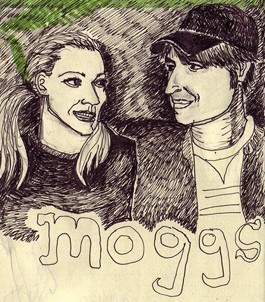
Also on the bill are Moggs, a husband and wife duo of drums and guitar who both define and minimize angularity. The band’s album, The White Belt Is Not Enough , was recorded in their home studio, a completely analog setup anchored by the very mixing board used for the blockbuster film Titanic . But the music of Moggs is as distant from Celine Dion as Mitt Romney is from the Church of Satan.

Litany for the Whale continue to make their viciously loud mark in the modern metal underworld, so committed to perfection that they recently scrapped an entire album before release. New songs have been drawn up and added to the set list, with previously absent vocals guiding the band’s journey through epic, distorted, feedback-laden territory. Don’t expect to make it out unscathed.

Chores are a fun-loving trio of guys in their early twenties whose dual screaming and odd forms owe equally to the attack of the Blood Brothers as to the avant-garde freedom of Archie Shepp. The first time I saw them was in a kitchen, and people were literally dancing upside-down on the ceiling during their set. As musical chefs of unusually long and exploratory hardcore compositions, Chores plunge in the knife, swirl it around in circles and watch the results writhe and convulse.

The Velvet Teen, Not to Reason Why, Moggs, Litany for the Whale and Chores appear on Saturday, Dec. 1, at the Phoenix Theater. 201 E. Washington St., Petaluma. 8pm. $10. 707.762.3565.


FIND A MUSIC REVIEW

The Island of Recalled Toys

0

11.28.07

This is a brief, partial list of some of the most-recognized brands of toys recently found tainted with lead. It does not list all recalled or lead-tainted toys, and is meant only to serve as an introduction to the scope of lead-related recalls. Please see federal Centers for Disease Control and Consumer Product Safety Commission websites&–listed at the end of the main article&–for more complete listings of recalled toys and other children’s’ items.

Brief Glance, Recalls By Brand

Aqua Dots by Spin Master 4.2 million recalled; beads, made to fuse to create 3-D shapes when sprayed with water, contain chemical which converts to date-rape-type drug in the body; induces dizziness; cases of coma following ingestion. Do not purchase; if purchased, remove from child immediately.

Baby Einstein Color Blocks 35,000 recalled on Oct, 4, 2007; lead in surface paint.

Barbie Accessory Toys 675,000 recalled on Sept. 5, 2007; lead in surface paint.

‘Big Red’ Wagons 7,200 recalled on Nov. 7, 2007; lead in paint on wooden surfaces and handles.

Cub Scouts Totem Badges 1.6 million recalled on Oct. 9, 2007; lead on surface paints.

Curious George Plush Dolls by Marvel 175,000 recalled on Nov. 8, 2007; lead in face and hat paints.

Disney Deluxe Winnie-the-Pooh 23-Piece Play Sets 49,000 recalled Oct. 11, 2007; lead in surface paints.

Dollar General&–distributed Children’s Sunglasses 51,000 recalled on Nov. 8, 2007; lead in yellow surface paint.

Dollar General&–distributed Super Wheels, Super Racers pull-release car toys 380,000 recalled on Nov. 7, 2007; lead in surface paint.

Dora the Explorer toys 967,000 recalled on Aug. 2, 2007; possible excessive lead in surface paint.

Duck Family Collectible Wind-Up Toy 3,500 recalled on Nov. 7, 2007; lead in surface paint.

Jeff Gordon Mini Helmet 2,500 recalled Oct. 11, 2007; lead in surface paints.

Kidnastics Balance Beams 2,400 recalled on Oct. 11, 2007; lead in surface paints.

Pirates of the Caribbean Medallion Squeeze Lights 79,000 recalled on Oct. 4, 2007; lead in surface paint on leather strap.

‘Robot 2000’ Collectible Tin Robot 2,600 recalled on Nov. 7, 2007; lead in surface paints.

Sesame Street toys 967,000 recalled on Aug. 2, 2007 (same recall as Dora the Explorer, above); lead in surface paints.

SpongeBob SquarePants Address Books and Journals 250,000 recalled on Aug. 22, 2007; lead in paint on spiral bindings.

Thomas & Friends Wooden Railway Toys 1.7 million recalled on June 13 and Sept. 26, 2007; lead in surface paints.

Winnie-the-Pooh Spinning Top 69,600 recalled on Aug. 22 and Nov. 7, 2007; lead in surface paint on tops’ handles.

Brief Summary, Other Recalls

Branded and Generic Children’s Garden Tools Kits Nearly 500,000 kits and individual items (rakes, shovels) recalled; lead in paint on surfaces.

Generic Children’s Jewelry Sets Nearly 200 million metallic jewelry items, including rings, necklaces, key chains, charm bracelets, spinning pendants, earrings and even religious ornaments (fish symbols), marketed primarily to young girls, recalled; lead in metal products and clasps.

Children’s Ornately Painted Battle Toys Nearly 2 million generic and minor-brand “Elite,” “Ultimate” and “Invincible” type small metal battle toys and sets recalled; lead in both paint and products themselves.


Out with the Old

0

11.28.07

USIC marketing during the Christmas season is filled with all sorts of repackaged crapola that caters to the emergency-driven shopper, be it the cash-in box set, the recycled anthology or the truly desperate “deluxe edition.” The result: Dad gets stuck with two CDs of Led Zeppelin songs that he already owns (Mothership); Mom’s got Van Morrison’s hits all over again but with worse artwork (Still on Top); and your brother has the same early recordings of Bob Marley that’ve been released 543 times already (eight different times this year alone).

This year, get ’em something new that they’ll love you for finding.

For example, Mom’s probably hooked on the Leonard Cohen tribute I’m Your Man, but if she’s never heard of M. Ward’s Post-War, then you alone can rescue her. For the globally minded mom, there’s Anoushka Shankar and Karsh Kale’s Breathing Under Water, a unique, elegant soundscape from worlds away. And if Mom’s too mellow for the revived howl-call of soul songstresses Bettye Lavette (The Scene of the Crime) or Mavis Staples (We’ll Never Turn Back), there’s always Robert Plant and Alison Krauss’ Raising Sand, if only for their stunning, hypnotic rendition of “Killing the Blues.”

For Dad, you could go with Neil Young’s new Chrome Dreams II, but it’s useless compared to two live recordings released this year: Live at the Fillmore East (totally rockin’; good if Dad still drinks beer) or Live at Massey Hall (captivating solo set; good if Dad still gets high). Bruce Springsteen’s Magic pales next to the Live in Dublin double CD, awash in the liberating spirit that the E Street Band once oozed. And instead of an utterly inessential repackaging of Bob Dylan songs (Dylan, foisted off as a one-, two- or three-CD set), how cool would it be to open Dad’s eyes with the soundtrack to I’m Not There, two whole CDs of Dylan’s music as played by almost three dozen newer artists like Yo La Tengo, Calexico, Jeff Tweedy and the Black Keys?

Sure, your sister’s been bumping Amy Winehouse, so buy her Sharon Jones’ 100 Days, 100 Nights. Better yet, get Jones’ earlier album Naturally—after all, Winehouse stole Jones’ backing band, the Dap-Kings, along with a few ounces of her attitude. Buying Alicia Keys’ As I Am or Colbie Caillat’s Coco won’t actually embarrass you, but wouldn’t you feel better wrapping up something less watered down? M.I.A.’s forward-thinking Kala or Stephen Marley’s Mind Control ought to fit the sisterly bill.

If your brother’s just discovered the guitar, options abound: The Cribs’ Men’s Needs, Women’s Needs, Whatever is a cornucopia of catchy hook-driven Weezer-ish pop gems; Jesu’s Life Line is a heavy soup of spaced-out distortion; and the Heavy Metal box set covers everything evil, loud and thundering from 1968&–1991 housed in a replica of a Marshall amplifier. If your brother’s a budding DJ instead, go with DJ QBerts’s helpful Scratchlopedia Breaktannica DVD, full of insider turntable tips.

Once the family’s taken care of, there are the sprinkling gifts. Got a friend who loves the Pogues? Try Gogol Bordello’s raucous Super Taranta. The Kinks? Spoon’s Ga Ga Ga Ga Ga. Talking Heads? The Arcade Fire’s Neon Bible. It’s not even a stretch for fans of the Police to love Menomena’s Friend and Foe. Ohmega Watts’ Watts Happening is perfect for kids who aren’t allowed to hear rap music with swearing. The Heliocentrics’ Out There is an intoxicating blend of hip-hop and free jazz. David Murray’s Sacred Ground and Howard Wiley’s The Angola Project are deep jazz picks, and Volker Strifler’s The Dance Goes On is a satisfying blues choice. The electronica fan can find solace in Luke Vibert and Jean Jacques Perry’s Moog Acid, Bassnectar’s Underground Communication, or !!!’s outstanding Myth Takes, and even the classical fan can have something new with Osvaldo Golijov’s beautiful Oceana.

Love Is the Song We Sing is a worthy box set that digs insanely deep into the 1960s San Francisco psychedelic scene—good for your crazy uncle?—while the Devil Makes Three and Two Gallants both have self-titled albums representing the new guard of the Bay Area.

Also, finally on DVD after decades of criminal unavailability, John, Paul, George and Ringo’s Help!, sure to be a huge hit for Christmas and something fun for the whole family to watch while cleaning up wrapping paper.

And remember: there’s nothing more boring than buying music on the Internet, so if all else fails, get ’em a gift certificate to your local independent record store.


Giving Back

11.28.07

As a young girl, I used to imagine that if I were ever rich, I would buy my mom new clothes and myself a tennis racket. By middle school, I wanted to buy her dirt fill for the retaining wall that was going to keep our house from sliding down the mountain, and some designer jeans for myself so that I wouldn’t be such a reject at school. By high school, I had pretty much given the fantasy up. The rich were rich and I was not, never had been, never would be.

Naturally, this was also around the time that I began to foster cynicism. Politicians are not to be trusted; movie stars spend too much on their lavish lifestyles to deserve any respect; and the people in the position to facilitate global change care more about their bottomless coffers than they do about rising cancer rates, sweatshop labor, contaminated rivers and oceans and our starving school systems.

Hooray for Richard N. Goldman.

A San Francisco philanthropist with whom I recently spoke via a convoluted combination of cell and speaker phones, Mr. Goldman—a man about whom it seems disrespectful to address with just a surname—managed during our brief chat to crack my cynicism right open like a stubborn coconut.

Mr. Goldman is the recipient of 36 different prestigious awards and honors, and though I am no fan of the Boy Scouts due to their refusal to accept homosexual scout leaders, I can’t help but be impressed by a man who, in his late 80s, can earn himself a Distinguished Eagle Scout award.

Mr. Goldman tells me that he and his late wife, Rhoda Goldman, became concerned after WW II with what they correctly perceived to be a drastic rise in the world’s population, a change that they felt would eventually begin to choke the earth. As a proactive measure, they founded the Goldman Fund in 1951; since its inception, the fund has distributed over $550 million, with more than $175 million donated to Bay Area projects. Believers in open space, protecting the environment and climate and population control, the Goldmans were pioneers in their support of the environmental movement.

Mr. Goldman donates to a host of agencies and projects so diverse that it would be impossible to list them all here. What is striking, and perhaps most impressively clear about the list, however, is that there is a balance. The Goldman Fund operates as a mini ecosystem of support for the planet by funding projects that reduce the impact of industry, protect and restore the environment, provide safe living environments and clean water, stabilize global population growth, protect reproductive rights and provide sexuality education across the globe. All the while, Mr. Goldman has not forgotten the importance of thinking globally but acting locally, and this focus has helped to enrich Bay Area open space, support area arts and provide a helping hand to a host of groups working to educate and assist those most in need.

He tells me that 18 years ago, while reading in the newspaper about a Nobel Prize winner, he and his wife came to the mutual realization that there was no comparable award to recognize the visionaries of the environmental movement. Since the inception of the Goldman Environmental Prize, which remains the world’s largest award honoring grassroots environmentalist, 119 people in some 70 countries have been awarded $125,000 each for their efforts to save the planet. The award is given once a year to an activist from each continent.

After speaking with Mr. Goldman, I visited the Goldman Environmental Prize website and viewed some of the short videos that tell the stories of past recipients. The winners are not fresh from high-end universities or directors of large organizations; rather, they are small-town people who have managed to commit awe-inspiring acts of bravery in order to protect their communities and the world.

When I was a young, I did have one consistent wish to go along with my illusionary riches. I wanted to purchase a magical power that would enable me to project music from above, sort of like God. I felt convinced that if I could do this, I would be able to stop violence around the world, literally freeze the armies in their tracks, and fill their hearts, at least momentarily, with love.

Ever since watching the video of one of the Goldman Environmental Prize winners—a Mongolian herder who managed to educate himself and then organize in such a way that he changed the mining practices within his country, literally saving the rivers from death—I’ve been pondering my long-ago wish. Perhaps the world is fortunate that it is Mr. Goldman, and not I, who has riches to share, because clearly, he understands what needs to be done with them.

For more information on the Goldman Environmental Prize, go to www.goldmanprize.org.


Do the Right Thing

11.28.07

SOME DAY, books as we know them—printed, bound, shaped conveniently like bricks—will no longer be available as gifts, except to cranky bibliophiles dedicated to keeping the old ways alive, like the rebel reciters in Fahrenheit 451. Instead, we will gather round the designated winter-solstice symbol and hand out URLs, so that loved ones and friends can download the latest mysteries, fantasy epics and celebrity tell-alls to their glow-in-the-dark wireless E-book readers.

The process is already under way, thanks to Google Book Search. Not that everyone thinks that’s necessarily a good idea. For one thing, the process lacks transparency, a point that French national librarian Jean-Noël Jeanneney makes forcefully in Google and the Myth of Universal Knowledge: A View From Europe (University of Chicago Press; $11 paper)—at 92 pages, it’s just the right size for a bibliophile’s stocking.

Europeans, Jeanneney argues, worry that Google’s exclusivity deal sets a dangerous precedent by “conferring a public property to a private organization.” But that’s Europeans for you—they just won’t get with the marketplace regimen. First, it’s socialized medicine, then it’s socialized book-scanning. Only Rudy Giuliani can stop them.

Eco-Chamber

Meanwhile, Google or no Google, there is still no better gift than a book. At this time of year, the title alone recommends Bill Clinton’s Giving (Knopf; $24.95 cloth), in which the presumptive First Guy offers salutary lessons in how anybody (not just Bill Gates and Warren Buffett) can make a difference with networked charity, like microloans, that can reach people in need directly.

Speaking of Bill, someone else in his administration just won the Nobel Peace Prize, which suggests some excellent new books about the environment as presents.

Earth Under Fire: How Global Warming Is Changing the World (UC Press; $34.95 cloth) chronicles the journey of photojournalist Gary Braasch as he captures images of a planet on the brink of environmental catastrophe. From Denali National Park in Alaska to Queropalca, Peru, Braasch’s photographs show the retreat of glaciers and the advance of deserts.

I know it is anthropomorphism, but the lone hungry polar bear in a melting northern landscape looks mightily annoyed at what we’ve done to his eco-niche. Earth Under Fire also features Braasch’s sobering text, based on his visits with climate-change scientists supplemented with essays by researchers in a variety of disciplines. All in all, it is a good corrective to Bjorn Lomborg’s pernicious Cool It, the new bible of the right-wing flat Earthers.

Trees of the California Landscape (UC Press; $60 cloth) by Charles R. Hatch is an exceptional reference book that discusses in detail all of California’s native and ornamental trees with photos of species in full foliage and close-ups of bark and leaves. In addition to serving as an identification guide, the book also dispenses invaluable advice for cultivating trees in the urban and backyard landscape—and enhances our appreciation for the importance of nurturing the natural world while we can.

More practically, busy activist-author Bill McKibben (who wrote the afterword to Earth Under Fire) supplies useful information for raising awareness about climate change in Fight Global Warming Now: The Handbook for Taking Action in Your Community (Henry Holt and Company; $13 paper). Written committee-style with the Step It Up Team (see Stepitup2007.org), the book tells how to convince individuals and the powers that be to cut carbon admissions. McKibben’s tips ranges from hyperlocal quick fixes (put in compact fluorescent bulbs at home) to public protests—refreshingly, the book counsels creativity and a sense of humor.

Into the Gap

Last year saw a surge in the number of books dissecting our misadventure in Iraq. This year, left-leaning pundits have taken aim at the home-front economic and governing failures of the Bush administration. The results aren’t pretty reading (you’ll wake up screaming if you get any sleep at all), but sometimes duty calls, even at the holidays.

In The Conscience of a Liberal (Norton; $25.95 cloth), New York Times columnist Paul Krugman explains why the ultrarich enjoy a new Gilded Age, while the rest of us subsist on stagnating real wages. The right people probably won’t read this, but if you have a choir to preach to, Krugman delivers the progressive message with conviction and concision.

In Takeover: The Return of the Imperial Presidency and the Subversion of American Democracy (Little, Brown; $25.99 cloth), Pulitzer Prize&–winning reporter Charlie Savage tells the hair-raising tale of how the Republicans have managed to turn the three equal branches of government into one 900-pound presidential gorilla who has packed the Supreme Court and expects Congress to buy the dubious legal notion of the unitary executive. The sordid process includes disregard for treaties, massive secrecy and signing statements that allow the president to ignore laws he doesn’t like.

For someone with a long memory, try Broken Government: How Republican Rule Destroyed the Legislative, Executive and Judicial Branches (Viking; $25.95 cloth) by John W. Dean, who seconds the opinion of many that “Bush and Cheney represent the worst example ever of the American presidency.” Since Dean was the White House legal counsel to Tricky Dick Nixon himself, he ought to know. Sadly, for us, way back when, Dick Cheney learned all the wrong lessons from the Watergate scandal.

Art for Art’s Sake

Buying large, heavily illustrated, slick-paper art books seems decadent at any other time of the year, but the holidays allow for some indulgences. Consider them good for the soul.

Two new books prove that movies can look as good on the page as they sometimes do on the big screen. Now Playing: Hand-Painted Poster Art from the 1910s Through the 1950s by Anthony Slide, with Jane Burman Powell and Lori Goldman Berthelsen (Angel City Press; $50 cloth), reveals a seemingly lost world. For decades, many theaters commissioned one-of-a-kind artist posters. Only now, through some diligent research, have these rare treasures been brought back to light.

Some artists enhanced studio publicity shots with a painterly style; others detoured into bold graphic realms, emphasizing what the individual theaters thought would sell, rather than what the distributors told them was important. Hence Batiste Madalena’s poster for 1927’s Hotel Imperial concentrates on a stunning art deco portrait of Pola Negri, eliminating the names of her co-stars and directors, and even the name of the studio. Another poster by Madalena (who needs to be folded into the pantheon of 20th-century graphic greats), for 1924’s Yolanda, goes the other direction by planting a tiny costumed figure against a black background with Marion Davies’ name in dominating type.

The images are reproduced at a generous size and evoke a bygone era of glamour. Who wouldn’t want a time machine in order to see The Woman God Changed, a 1921 barn-burner; in Ike Checketts’ poster, star Seena Owen looks like she stepped out of a Klimt painting.

Sadly, much of silent-film history is simply lost, since so many prints were neglected, discarded and destroyed (or disintegrated on their own, thanks to nitrate stock). Silent Movies: The Birth of Film and the Triumph of Movie Culture by Peter Kobel (Little, Brown and Company; $45 cloth) gives a wondrous glimpse at what we’ve been missing all these years since sound.

Drawing on the holdings of the Library of Congress, the book charts the silent era, from the early technical developments like the Electrotachyscope to the first studios, stars and directors. Kobel provides a solid overview of the period, but the pictures really tell the story. A pensive photo portrait of a half-clad Louise Brooks in her trademark flapper bob captures some of her still-fresh sensuality. A still from Cecil B. DeMille’s The King of Kings is so full of perfectly posed costumed extras that it looks like one of Jeff Wall’s elaborately staged panorama photographs.

Proving that Lindsay Lohan and Paris Hilton aren’t the first stars to get into trouble, a poster touts a forgotten feature called The Speed Girl, based on star Bebe Daniels many run-ins with traffic cops. Most intriguing of all is an image of a girl prisoner adjusting her stockings from DeMille’s juvie epic The Godless Girl, in which “a high school riot between Christians and atheists lands the leaders of the two groups in a state reformatory.” At last, a movie that even Christopher Hitchens could love.

(And in silents news: On Dec. 1 at the Silent Film Festival at the Castro Theatre in San Francisco, Anthony Slide will sign copies of Now Playing, and Christel Schmidt, one of the editors of Silent Movies will appear. See page 75 for details.)


Wine Tasting Room of the Week

0


Many of us may be asking the question, where did Roshambo go? A winery is usually the epitome of solid, long-standing institution. Yet this paradigm-shifting winery is in a state of flux, neither here nor there. Look, is that a Roshambus carrying a party army into the night? You’ll recall that the “old winery” was practically brand-new when sold to Silver Oak. Now, we find the wine country’s hippest tasting room under Blue Tree.

Visitors to Cornerstone Place on Arnold Drive south of Sonoma are invited to wander a nine-acre nexus where art meets nature and it all meets shopping. The gardens were designed by high-end landscape architects whose philosophy and vision are described beside each installation. The signature installation, Blue Tree by artist Claude Cormier, is described as giving “new life to a diseased tree slated for removal, decking its branches with 70,000 sky-blue Christmas balls. . . . Blue Tree stands out against the ever-changing sky, becoming a barometer for subtle fluctuations in light.” Disoriented, we feel as though we have stumbled into the Black Rock Desert.

Behind a red, tented entrance on the side of a tin building, the Roshambo outpost is re-imagined as a warehouse party space or perhaps a late ’90s dotcom break room. It’s party time, all the assets are liquid, and they’ll be pissed away shortly. Of course, it’s this very deracination that is the illusion:

Roshambo’s “silent partners” are acres of vineyards, their roots sunk firmly in Dry Creek Valley soil. The party will go on. Roshambo always has been more about lifestyle than the wine. But it all works because the wines have been consistently good to excellent. The 2005 “Scissors” White Blend ($25) is a celebration of Roussanne, Marsanne and Viogner. It “cuts” the boundaries between our senses, allowing us to taste a spring garden landscape, sweet citrus blossoms and ripe apricots and honeydew melon, no matter the season. Nefariously dark fruit and cured tobacco aromas emanate from the depths of the 2004 “Rock” Sonoma County Red Blend ($40). Like the revelation of texture and light when a shadow is lifted, it’s supple and agreeable.

The neighboring tasting room, Grange Sonoma, is also well worth a visit. It’s envisioned as a rural collective where artisan, small-production wines may be tasted together. Owners John Green and Heather Kirlin are knowledgeable and will engage you on whatever level of winespeak you’re comfortable with. The Derbes 2003 Carneros Chardonnay ($36) is a kinetic representation of dry, flaky and mild Parmigiano-Reggiano, with a light mushroom broth. It hits us with a slightly hot finish, perhaps an admonition for savoring it too much? Tallulah 2004 Sonoma Coast Syrah ($28) asks what would it be like to be a beautiful, cocoa-dipped olallieberry?

The Tallulah 2004 Del Rio Oregon Syrah ($30) addresses our discomfort with varietal anomalies (Syrah in Oregon?) and shows us with a variety of playful and enticing aromas—like apricot, wet sweet hay and red fruit—that the unexpected can be quite pleasing.

Cornerstone Place, 23570 Hwy. 121, Sonoma. Open daily from 10am–5pm. Roshambo charges $5 for tasting; $10 reserves. 707.431.2051. Grange Sonoma tasting fee, $10. 707.933.8980.


View All

Double-Edged Swords

0

11.28.07

‘I nnocent’ is a most approximate term.” This proclamation is made late in the second act of playwright John Strand’s satisfyingly funny, word-warring adventure Lovers and Executioners . In Strand’s view of the world, nothing is ever all black or all white, all sweet or all sour. Neither is Lovers and Executioners , a rich, thoroughly enjoyable English adaptation of La Femme Juge et Partie , a largely forgotten 17th-century play written by Molière’s most vigorous theatrical rival, Antoine Jacob de Montfleury. As staged by the Marin Theatre Company, under the sure-handed direction of Josh Costello, the wonderful period details—the witty dialogue all in verse, the magical set by Steve Coleman, the magnificent costumes by Fumiko Bieldfeldt—manage to anchor the story in France of the 1600s while maintaining a solidly contemporary sense of humor and social awareness.

Bernard (Jackson Davis) is a rich landowner in the market for a new wife after the accidental drowning of his first wife, Julie. His terrible secret, known only to his faithful but cranky servant Guzman (Gary Grossman), is that Julie’s death was not accidental; Bernard, believing her to have been unfaithful, abandoned her to die on a tiny strip of an island in the middle of the sea. What Bernard does not realize as he sets his sights on the ditsy but attractive Constance (Alexandra Creighton), is that Julie (the excellent Lisa Anne Porter, above right) is not dead; she escaped from the island, spent the last three years training herself in swordsmanship and has now returned to town in the guise of a young soldier named Frederick.

As Frederick, Julie exacts her revenge on Bernard, first by wooing Constance herself (uh, himself), and then by snatching away the job Bernard had been aiming for, that of the local magistrate. As magistrate, Julie/Fredrick ends up charging Bernard with the murder of his wife, a hanging offense, unless he can prove that she was indeed unfaithful, a shameful charge he’d almost rather die than have to live with.

The play is crammed with sword fights, wacky wordplay and pithy, thoughtful ruminations on the meaning of justice and forgiveness, while remaining miraculously light and full of mischief. The ending is powerfully ambiguous, staunchly avoiding ridiculous wrap-ups. As such, it is far more satisfying—and funnier, too. From start to finish, while ever threatening to become a tragedy, Lovers and Executioners never stops being hilarious.

Lovers and Executioners runs Tuesday&–Monday through Dec. 16. Tuesday and Thursday&–Saturday at 8pm; Wednesday at 7:30pm; Sunday at 2pm and 7pm, also Dec. 8 at 2pm. Nov. 28 at 6:30pm, happy hour. Dec. 2 at 6pm, LGBT reception. Marin Theatre Company, 397 Miller Ave., Mill Valley. $20&–$50; Tuesday, pay what you will. 415.388.5208.

DATE_TIME_PRICE


Museums and gallery notes.

Reviews of new book releases.

Reviews and previews of new plays, operas and symphony performances.

Reviews and previews of new dance performances and events.

News Briefs

11.28.07 Never ForgetEach minute, eight people worldwide are infected with HIV and another five die from HIV or AIDS. In Sub-Saharan Africa, five people each minute are infected with HIV and four people die. In the United States, someone is infected every 13 minutes, and someone dies every 33 minutes. And there's particular concern about women. "Many women believe they...

First Bite

11.28.07Editor's note: First Bite is a new concept in restaurant writing. This is not a go-three-times, try-everything-on-the-menu report; rather, this is a quick snapshot of a single experience. We invite you to come along with our writers as they—informed, intelligent eaters like yourselves—have a simple meal at an area restaurant, just like you do.The Wolf House of Glen Ellen...

Toxic Toy Story

11.28.07WANT TO avoid giving children the holiday gifts of brain damage, hearing loss, anemia, kidney problems and a lowered intelligence level for life? Then take a good look at this list: Children's toys. Children's crafts. Children's jewelry. Children's furniture. Children's clothing. And then take another.Why? Because tens of millions of such children's items have proven to be tainted with...

Fierce Parade

music & nightlife | Illustration by Nathalie Roland ...

The Island of Recalled Toys

11.28.07This is a brief, partial list of some of the most-recognized brands of toys recently found tainted with lead. It does not list all recalled or lead-tainted toys, and is meant only to serve as an introduction to the scope of lead-related recalls. Please see federal Centers for Disease Control and Consumer Product Safety Commission websites&–listed at the end...

Out with the Old

11.28.07USIC marketing during the Christmas season is filled with all sorts of repackaged crapola that caters to the emergency-driven shopper, be it the cash-in box set, the recycled anthology or the truly desperate "deluxe edition." The result: Dad gets stuck with two CDs of Led Zeppelin songs that he already owns (Mothership); Mom's got Van Morrison's hits all over...

Giving Back

11.28.07 As a young girl, I used to imagine that if I were ever rich, I would buy my mom new clothes and myself a tennis racket. By middle school, I wanted to buy her dirt fill for the retaining wall that was going to keep our house from sliding down the mountain, and some designer jeans for myself so...

Do the Right Thing

11.28.07 SOME DAY, books as we know them—printed, bound, shaped conveniently like bricks—will no longer be available as gifts, except to cranky bibliophiles dedicated to keeping the old ways alive, like the rebel reciters in Fahrenheit 451. Instead, we will gather round the designated winter-solstice symbol and hand out URLs, so that loved ones and friends can download...

Double-Edged Swords

11.28.07" 'I nnocent' is a most approximate term." This proclamation is made late in the second act of playwright John Strand's satisfyingly funny, word-warring adventure Lovers and Executioners . In Strand's view of the world, nothing is ever all black or all white, all sweet or all sour. Neither is Lovers and Executioners , a rich, thoroughly...
11,084FansLike
4,606FollowersFollow
6,928FollowersFollow