Elder Tales

0

09.19.07

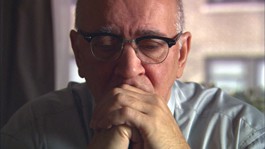
Bette Davis once said, “Old age ain’t no place for sissies.” In Pacific Alliance Stage Company’s season-opening show, Conversations with Our Elders—part of the ongoing county-wide Performance Sonoma festival—Davis’ statement is aptly illustrated by the true-life stories of over a dozen Sonoma County senior citizens. PASCO’s artistic director, Hector Correa, having amassed over 20 hours of taped interviews with local folks over the age of 70, has created a lovely performance piece that honors the lives and hard-earned wisdom of a demographic that is often overlooked and underappreciated. An oft-dropped truism within theater circles is that what audiences most want to see onstage are characters who remind them of themselves. What Correa and his cast of five actors have done with Conversations is to build a show that does exactly that.

A bare staged reading finds the actors—Gene Abravaya, Alexandra Matthew, Shannon Veon Kase, Phoebe Moyer and Norman A. Hall—seated in a row, taking turns reading and performing the words of the interviewees. They describe their feelings about historically significant moments from the bombing of Hiroshima to the death of JFK, and discuss marriage, divorce, parenthood, the groans of getting old, life after death, the best cure for depression (“Naps!”) and even ghostly visitations by deceased pets. This is pure reader’s theater, with little to look at beyond some photos floating above the simply lit stage, and the simplicity is effective. The actors do a fine job of establishing many different voices, with Gene Abravaya (recently seen in Sixth Street Playhouse’s Beauty and the Beast) a particular standout.

This is a work in progress, with a great deal of power and potential, though some of Correa’s choices infect the show with an inconsistent tone, particularly in the way Alexandra Matthew must juggle a mix of thematic narration, quotes by famous and the occasional character. This makes her contributions a bit confusing and sometimes—as when a moving series of stories by the other actors is interrupted by yet another famous quote—distracting and intrusive. On the whole, though, Conversation with Our Elders is a moving and inspiring opportunity to remind ourselves of the people who pave the way for our own lives and adventures, the people we will all one day become.

Conversations with Our Elders runs Thursday&–Sunday through Sept. 30. Thursday at 7:30pm; Friday&–Saturday at 8pm; Sunday at 2:30pm. Spreckels Performing Arts Center, 5409 Snyder Lane, Rohnert Park. $17&–$20; Thursday, $15. 707.588.3400.


Museums and gallery notes.

Reviews of new book releases.

Reviews and previews of new plays, operas and symphony performances.

Reviews and previews of new dance performances and events.

Brand-New Old Soul

0

09.12.07

The last time I saw Jesca Hoop was five years ago, when we ran into each other at the Central Library in downtown Santa Rosa. She said she was planning to move to New York. She didn’t. Instead, a downscaled version of the fabled “small-town girl makes the big time” story beckoned Hoop to L.A., and now, four years later, the soft-spoken, dark-haired musician has a promising debut album, Kismet, coming out on Sept. 18.

North Bay audiences may recall Hoop from Majesty’s Monkey, the breathtaking folk duo she and Kirana Peyton formed in the late 1990s. Though sparse on instrumentation, Majesty’s Monkey performances were high on drama; a show could include multiple costume changes or props used as percussion instruments. But the stunning interplay of Peyton and Hoop’s vocals–at turns sultry, gritty and childlike–always wove a powerful spell.

The essence of Hoop’s appeal from those days is very much alive in her current material; her music is more about a place than a genre. Hoop brings alive an era that never existed but is eerily familiar. To call Hoop a singer-songwriter would not be inaccurate, but her songs are more like little puzzles that, upon multiple listens, open up to reveal different solutions.

Kismet is the result of Hoop’s years navigating the music industry in L.A. Part of the reason she landed there can be traced back to a demo. Nic Harcourt, the DJ on KCRW’s influential Morning Becomes Eclectic show, had been playing Hoop’s “Seed of Wonder,” and listeners noticed.

Hoop was living in her van in West County at the time. “Nic called me up and said people had been calling in and they wanted to know more about me. Shortly after that, the song went to the No. 1 spot on their five most requested songs.” “Seed of Wonder” stayed in the top spot for eight weeks, a station record.

Though Hoop received offers from record labels shortly after arriving in L.A., it took three years before she found an arrangement she was satisfied with, singing with 3 Entertainment, a boutique label of Columbia (“A little company inside this big old beast,” she says).

The emotional purity of Hoop’s songs (coupled with her press photos, which display a fabulous sense of granny’s attic trunk meets 1960s Sunset Strip) can impress a sense of naiveté upon a listener. In a review of Kismet, New York magazine described Hoop as “precocious”–but at 32, she is hardly a hapless urchin. She’s very savvy about channeling a sense of character in her music and her onstage persona, about reeling some songs in while letting others run wild.

Though she is fond of incorporating offbeat instruments and arrangements, Hoop’s most distinctive trait is how she uses her own voice as an instrument, periodically abandoning a traditional lyrical narrative and letting words melt into chants or gospel-tinged inflections. Her phrasing can take surprising turns, turning a song inside out and back again in one fell swoop, as it does in “Summertime,” Kismet’s bittersweet opening track.

Hoop grew up in a Mormon family in Sonoma County, and singing together was an everyday part of her life. Hoop’s parents split, and she grew away from the church, exploring a world that had been previously off-limits. Though she always kept music a part of her life, Hoop pursued a number of career paths. “I didn’t start working in [music] as a profession until I was 28,” she says. “Until then, I did everything, filtering through different interests. I was a farmer for a while, I was a construction worker, I worked in service a lot, I worked with autistic people, I was a surveyor, I was a wilderness guide–the list goes on and on.”

After spells living in Arizona and Wyoming, Hoop returned to Sonoma County, eventually forming Majesty’s Monkey. She got a job working in West County with the family of Tom Waits and his wife and collaborator, Kathleen Brennan. Hoop spent five years with them, but until a few years ago, she stayed mum about that aspect of her life. “I was always so quiet about it because I never wanted to exploit that relationship. Eventually, I let my story be my story and let the world do what it does.” But Hoop is quick to point out the support and guidance her former employers have shared with her. “It was very serendipitous. I made my decision to make a living as an artist at the very same moment the opportunity came up to work with them.”

This summer, Hoop garnered some new fans when she toured as the opening act for the symphonic pop band the Polyphonic Spree. She quickly realized that holding her own as a solo act opening for a gigantic ensemble of two dozen members has its own challenges. “I had no idea what I was in for,” she says. “The first night I played alone, and I had never played for 2,000 people alone. My sound when I’m by myself is very intimate, so I couldn’t hold the audience. But then I learned how. Every moment on that stage I was very carefully crafting the atmosphere in that room. You’re in a pool with these people, in a body together. And if you want to connect, you can’t just sing your songs to them.”

In L.A., Hoop has found kindred spirits in the old-timey duo the Ditty Bops, with whom she frequently performs. “I met them a few years ago. They’ll sit in on my set, and I’ll sit in on theirs.” And Hoop remains close to her Majesty’s Monkey co-conspirator Kirana Peyton, who still lives in Sonoma County and performs under the moniker Black Bird Stitches. “Her music is wonderful, as always. She’ll come down here every once in a while and collaborate with me.” If the stars align in all the right places, the two may even do a Sonoma County show.

Hoop says moving to the big, smoggy city down south hasn’t influenced her artistic outlook so much as it has her career outlook. “It’s changed drastically the way I approach music as a living and music as a lifestyle. It’s never been a hobby, but making music for a living hasn’t always been a lifestyle.” Though I’d be delighted to run into Jesca Hoop at the library again someday, at this point it seems highly unlikely. But that’s fine. The more music Jesca Hoop makes, the better off we’ll all be.


Preview: Taste of Petaluma

0

09.12.07

There are no food booths at the Second Annual Taste of Petaluma, slated for Sept. 29. No tents with wineries pouring samples of their best grapes, either, or tables of organic farmers passing out bits of their seasonal bounty.Instead, attendees will wander Petaluma’s downtown area, clutching tickets in their hands, which they will redeem for tastes at the actual locations of the more than 50 participating restaurants, wineries, breweries and food purveyors. Want some bruschetta al pomodoro with feta and wild mushroom-pesto crostini from La Dolce Vita Wine Lounge? Go to La Dolce in the Theater District. Perhaps some ravioli Norma stuffed with ricotta and spinach under a ragout of eggplant, tomato, garlic, basil and goat cheese from the terrific new Vino Grigio? You’ll have to hoof it over to Western Avenue, where chef Antonio Olivia’s taken over the spot that used to be 3 Blocks Off.

It’s a concept that at first sounded to me like a whole lot of work. All that walking and studying of maps. But Taste of Petaluma organizer Laura Sunday took me on a preview tour last month, and all of a sudden, I got it. And loved it. And must now insist that everyone with $35 and the afternoon free make plans to go.

What a terrific way to get the whole historic downtown Petaluma experience, wandering from restaurant to shop, to art gallery to coffeehouse. Some restaurants that are too far from the track will be conveniently hosted by downtown shops. Haus Fortuna home décor and cooking store, for example, is hosting Divine Delights, a fine dessert bakery that’s almost in Penngrove.

For wine, you might even end up at a shoe store, because Athletic Soles on Petaluma Boulevard hosts Michael David Wines of Lodi among its New Balance sneakers. Trot over to Rex Ace Hardware for a hammer, plus puttanesca pizza from Pizzicato (down the way on Washington Street) and pours from Blackstone Winery of Kenwood.

Restaurants are making it worth our while, serving near full-size appetizer portions and some special stuff (be sure to get a taste of Jacqueline’s High Tea’s cranberry orange scone with homemade almond cream and a cup of Very Rare Imperial Republic Orchid Oolong, which boasts just a thousand tins made at $180 a pound).

And here’s another idea I can get behind: at most of the stops, we’re invited to sit, relax and eat our treats off real plates. Which means a merciful escape from what’s become the bane of food festivals: hordes of would-be gourmets scrapping and clawing to get their hands on whatever isn’t nailed down; bites sent out on tiny cocktail napkins so half the food dribbles down on our shirt fronts; and fighting against partiers whose primary purpose is to drink, drink and drink some more.

The Taste of Petaluma takes over the downtown district on Saturday, Sept. 29, from noon. Ticket books of 10 dine-around tickets (one sample per ticket) are available for $35 at these locations: Putnam Plaza on Petaluma Blvd.; Gallery One, at 209 Western Ave.; Haus Fortuna, at 111 Second St. For pre-event sales, call Cinnabar Theater, the beneficiary of this event. 707.763.8920. www.tasteofpetaluma.org.

Quick dining snapshots by Bohemian staffers.

Winery news and reviews.

Food-related comings and goings, openings and closings, and other essays for those who love the kitchen and what it produces.

Recipes for food that you can actually make.

Crack 2.0

0

09.12.07


It starts out innocuously. You buy the newest toy that makes communication cool and convenient. Maybe you used to make fun of your friends’ BlackBerrys or their need to stay constantly connected through e-mails, text messages and phone calls. It certainly won’t happen to you, right?

Next thing you know, you’re sucked in. You’re interrupting dinner conversations to respond to a text, tapping away at the Treo while driving or logging on to scan movie times while taking a shower. Maybe you’re even listening for that buzz or beep during sex.

No question about it: we’ve become gluttons for the gadgets that make us available 24/7 and for the technology that has bolstered our work ethic and productivity and given us enough flexibility to close an important business deal while standing in line at Disneyland.

Yet the portability and accessibility of this technology has also enabled what is becoming slowly recognized as a genuine addiction. “Crackberry” isn’t just a joke anymore. “It is like taking a drug,” says Robert LaRose, a professor at Michigan State University who studies Internet and WiFi addiction. “There are people who get so wrapped up, and something major goes wrong with their life, like they lose their job.”

The reason people get hooked is pretty basic: it feels good. We crave social interaction; it makes us happy. Instant communication gives us a thrill. These gadgets have the ability to make us feel needed and important. There’s also an underlying sense that if you don’t answer e-mails or text messages immediately, you might suffer social or professional repercussions.

But the pathological need to be connected might be more than psychological. New research shows that this computer overuse could also be physiological. Just as with exercise or food consumption, sending and receiving instant messages is a rush to the brain. It’s possible that engaging in compulsive e-mailing and computer use increases the levels of dopamine, the neurotransmitter associated with the pleasure part of the brain, says Carrie Ellis-Kalton, assistant psychology professor at Maryville University in St. Louis. If a person is used to getting that extra kick of pleasure throughout the day, and then it suddenly stops, they’re likely to experience withdrawal, a classic symptom of addiction, Ellis-Kalton says.

In other words, if you get anxious because you can’t check your BlackBerry while camping, then you might have a problem.The mental health community has yet to officially classify computer overuse, including e-mail and text messaging, as a mental health disorder. But psychologists believe that will soon change. Ellis-Kalton says she’s certain computer overuse will be included in the updated Diagnostic and Statistics Manual, the official bible of mental disorders as recognized by the American Psychiatric Association. If that does happen, then insurance companies may start footing the bill for crackberry addicts.”I think it will be a prominent part of mental health in the years to come,” says Ellis-Kalton.

Berry Boundaries

But just how bad is our obsession with these gadgets? When I sent out a query across the country looking for professionals to speak about technology addictions and their effects, I was struck by the number of replies, many of which naturally arrived via BlackBerry. But the thing is, these people didn’t want to talk about how to help the general population so much as they wanted to talk about their own BlackBerry afflictions. Here are some of the replies:”I have two. I even took them into the ER most recently and had a panic attack in the MRI tunnel because I knew I was missing messages.” “It’s constantly going off, and when it isn’t, it is in my hands; I sleep with it in my hand.” “My name is Renee, and I’m a recovering BlackBerry addict.” “I know it drives my wife crazy–I just cannot stop.” Many people have trouble setting BlackBerry boundaries. They let the technology dominate their day, neglecting people and other activities. “It can happen gradually and people don’t always realize that it has gotten out of hand,” says Gayle Porter, an associate professor of management at Rutgers University who studies behavioral addictions. “It’s been damaging; we should be concerned about it.”But some experts believe that people can generally get a grip on their overuse before it spirals out of control, especially if they feel guilty about how many hours a day they spend on the phone checking e-mail, browsing the Internet or sending text messages.

Not Meike Glover. The 26-year-old texter admits he’s an addict, and he’s not sorry about it. In fact, 90 percent of the time, he uses text messaging to communicate with friends and family. If it’s really dire, he’ll pick up the phone to call–reluctantly.Glover sends and receives an average of 60 messages everyday with his Verizon Razor phone. He texts while he is hanging with friends at a bar, when he is at work and even while riding his bike across town. “For me its easier, I don’t like calling people,” says Glover. “I’m not ashamed by it at all.”

Technologe-Me

The all-consuming phone might make you superhuman at work, but it can also turn you into a flaky friend, a jealous lover or a distant parent. It gives spouses the power to cheat—and get caught. It makes it easier for friends to break plans at the last minute, and it can be a social crutch, allowing people to stand in the corner at a party and text with people they know instead of meeting new people.

There’s no way to know just how many relationships have been called off over BlackBerry and other technology abuse. But April Masini, a Los Angeles&–based relationship expert, says loved ones often feel they have to compete with the phone. “I do believe relationships are breaking up more quickly than ever because the technology makes problems in the relationship more apparent,” says Masini. “People feel cheated on–by a BlackBerry.”

It also hinders interpersonal communication. People will avoid confrontation or arguments by sending an evasive e-mail or a brisk text message, Masini says.The effects of this technology dependence are hard to spot. Unlike a substance abuser who blows through paychecks or a gambling addict who puts the family in debt, society rewards people who are always reaching for their BlackBerry.

There are social and work pressures that harden our threshold for digital interruptions, says Matt Richtel, a San Francisco&–based novelist and New York Times technology reporter. Rarely will people ask their date or a friend to put away the phone or ignore incoming messages. “It’s not only tolerant, but it’s encouraging,” Richtel says. “This has become synonymous with productivity–our bosses would like us to be on e-mail, phone and instant message around the clock. It puts enormous pressure to decide, ‘Will I unhook and be intimate with people or will I participate in this very fast-paced world that requires my attention at all times?'”

It’s clear that Jim Babcock has a love-hate relationship with his BlackBerry. The 62-year-old CPA carries it in his hand with hesitation, like a favorite pair of comfortable socks that are just too dirty to wear. “I have the option of turning it off, but invariably you don’t,” Babcock says with resignation.

Babcock resisted the cell-phone culture for as long as he could, he says. After much pressure from his business associates, he finally caved and bought his first BlackBerry last year.Admittedly, it has helped push along his business interactions, but it’s also annoyed his wife, who often snaps at him to turn it off. “So I get up in the middle of the night and turn it on,” he says.

Forget how annoying it is. What about the physical danger it creates in a situation such as driving? Cell-phone distractions are already yesterday’s news; now an alarming number of drivers on the road admit to texting behind the wheel.

A June survey conducted by Zogby International, a public-opinion research group, showed that nearly 66 percent of young adults ages 18 to 24 say they are sending text messages while driving. While the California Highway Patrol doesn’t officially track the number of accidents caused by drivers who were texting, it’s common enough that many states, including California, are working to pass laws that ban sending a text while behind the wheel. The California State Assembly last month passed a bill specifically banning teenagers from using cell phones for any purpose while driving. California already has a law that bans everyone from using hand-held cell phones while driving. That law will go into effect next year.

“It’s a fairly new phenomenon,” said Todd Thibodeau, an officer with the CHP. “A lot of teenagers are apt to do that more often than others.”There are other physical consequences of our technology addiction, too. Tapping away at the Treo can also affect your health; do it long enough and it will start to hurt. Doctors say that many BlackBerry users are starting to complain about aching, sore thumbs. No wonder. The small keyboards not only put the thumb in an unnatural, awkward position, but the repetitive motion can cause wear and tear down to the bone.

“If you do it throughout the day, it can strain your thumb similar with carpal tunnel syndrome,” Stacey Doyon, president of the American Society of Hand Therapists. “Take breaks every hour or every half hour.”The ultimate cure for this syndrome is to stop using the tool, said Dr. Sean Bidic, a Texas-based plastic surgeon who has treated patients for BlackBerry thumb.”They don’t know what’s causing it,” Bidic said. “They say, ‘My thumb hurts.’ Then you see in the middle of the appointment they are banging away at the BlackBerry or the Treo.”

How to Unplug

When your partner feels neglected, your friends are annoyed and your thumb hurts, it may be time to draw some boundaries.Experts have some advice for those die-hard crackberry addicts:1. Remember that you don’t always have to answer messages immediately. If someone sends you a text message or e-mail, try to wait until later or even the next day to respond.2. Be more aware of how your BlackBerry behavior is affecting others around you. Prioritize your social time and interactions; consider what’s more important. Your text conversation or your conversation with the person sitting across from you.3. If you have to send a text message, keep it short and simple; don’t check your messages compulsively or rely on it as a primary medium for relationships.Dance instructor Jazon Escultura says that he always positions his T-Mobile PDA so that it’s visible. That way he can see when he is getting a message. But for the most part, he tries not to let his digital relationships interrupt his personal conversations. “I look at them, but I won’t necessarily respond,” Escultura says. “I won’t have separate conversations.”

It’s also becoming more important for workers to draw better boundaries with their employers, to help define work and life. Being plugged in at all times will lead to burnout among workers, experts say. In a recent survey conducted by Yahoo! HotJobs, 81 percent stay in touch with work through mobile phones and roughly 67 percent said they connect to work while on vacation using their wireless devices. About 50 percent said they feel it takes away from their time spent with family, according to the April 2007 survey.

“People have to be able to say no in terms of drawing a line on where work ends and where personal life begins,” says Jon Fitch, career expert for HotJobs. “They have to say to their manager, ‘This is when I am available, this is when I’m not going to be available.'”

It never really occurred to Alex Pasos, 32, that he might be hooked on his BlackBerry. But after thinking about it, Pasos, a radio broadcaster, admitted that his BlackBerry doesn’t leave his side. He uses his phone to check e-mail or send a text message at least every 25 minutes. He doesn’t feel guilty about his BlackBerry behavior–interrupting his conversations and social activities, including spending time with his wife.”I just need it,” Pasos says as he clutches his BlackBerry while walking. “I’m always expecting something; I want to know what’s up.”


Letters to the Editor

September 12-18, 2007

Spare us the Bigotry

I can’t believe that you published”Spare Us the Sob Stories” (, Sept. 5). Excuse me, Mr. Ratcliff, do you have Euro-American heritage? Chances are the Native Americans of the Santa Rosa/Sonoma County area did not appreciate your ancestors killing them as they immigrated to this area. (You were once an immigrant too!)

Wake up and smell your own “trashing of California!”

Christine Thomas, Forestville

Few are Fighting

I was not surprised to read about the money our government has given to corporations at the taxpayers’ expense to help rebuild Iraq ( Sept.5). Why we the people do not fight back enough I believe is because many people do not read the right articles. They are kept stupid of what is going on because this administration is trying to become an empire (if it’s not already). The corporations are taking over the world, and most of us sit back and do nothing. That includes the Democrats whom we elected to Congress. I am so disgusted with the whole country because only the few are fighting. The rest are ignoring any bad news and are not paying attention to their rights as citizens that are being changed! I do not believe that so many are hiding their heads in the sand. Wake up, America, before it’s too late!

Joyce T. Naylor, Santa Rosa

C’mon—For No reason at all?

Regarding “Bush Moves Toward Martial Law” (“Project Censored”), I recently went to a Sebastopol City Council meeting to tell the council members not to sign (but they did sign it!) a city ordinance to take properties via eminent domain, since all our constitutional property rights were taken away with the Kelo v. New London Supreme Court ruling, as did the no on Proposition 90 in last November’s election. Two women who spoke before me were part of the nonviolent antiwar movement Women in Black. They told of how a Sonoma County Sheriff showed up at their houses wanting to arrest them for no reason at all. They both resisted the brutality and were beaten and brought to jail and arrested for resisting arrest. While in jail, a Sonoma County judge determined that their children should be returned to the full custody of their proven abusive ex-spouses. I find this disgusting, as I do the faux environmental slander of homes for the government to steal and redevelop, at which time the environmentalists are nowhere to be found. All of this makes me not proud to be an American with no rights left.

Rachele Ketchem, Sebastopol

Torture R Us,

I am writing about the Shepherd Bliss article (Open Mic, Sept. 5 print edition only). I see the parallels to the United States today and Chile. Torture (or some new convoluted definition of torture) is never OK. And knowing the circumstances and the political trends and realities in Chile in the ’70s can help us all see the need to stop these same kind of fascist, dictatorial tendencies here in the U.S. now.Many communities here are suffering terribly under this new “anything goes” government. Hundreds are dying in the desert crossings from Mexico while their labor is depended upon in the global economy. Men of Middle Eastern descent are spirited away at the bidding of our government, to be tortured and years later released because they never had any connection to terrorism.U.S. citizens and residents are suffering as corporations tighten their belts to reap astounding profits, while people suffer and die without healthcare, inadequate coverage, or because insurance companies wrongly deny coverage to increase profits.

Yes, keeping more torture from continuing and expanding is vitally necessary. Frank Teruggi and Charles Horman’s deaths are proof that even with a strong and organized, dissenting public, these government-sanctioned murders can happen and increase. These two men—two of thousands killed during the following months in Chile—and all freedom-loving people around the world deserve strong community support and admiration. We, the dissenters, are those people. Stand up and be patriotic. Be democratic, do your citizenly duty and tell our representatives that they must do our bidding. Do it in Washington, the streets, in letters and e-mails and with your votes. But as Chile shows, we all must do something now!

Vicki Smith, Sebastopol


First Bite

Devil’s in the details at Stella’s

Editor’s note: First Bite is a new concept in restaurant writing. We invite you to come along with our writers as they—informed, intelligent eaters like yourselves—have a simple meal at an area restaurant, just like you do. This is not a go-three-times, try-everything-on-the-menu report; rather, this is a quick snapshot of a single experience.

When I heard that Stella’s Cafe had moved to the Russian River Vineyards site, I was thrilled. I hadn’t much liked the former occupant, Topolos, but the grounds were almost reason enough to go there. And so it seemed that my dream had been answered when one of my favorite local restaurants moved in. Because I was–I mean I am, that is, I was–a big Stella’s fan.

What happened? I don’t know, but when I ate lunch there the other day, something was off—in some cases, quite literally. It’s still a very lovely location, with arbors and a (dry) water feature, flowering vines and arching trees, but the restaurant’s petticoats were showing. Here, a ladder was left up. There, some tools were scattered around. It was as if they rushed to open before the paint had dried, although it’s been months. As for the food, let’s just say it was uneven.

My lunch date, Jude, and I ordered plates to share. Served with red pepper aioli, the Dungeness crab-rock shrimp cakes ($13.95) were yummy, but the accompanying guacamole had the dank dark taste that indicates old avocados. The pork satay ($8.95) was bone-dry like some seriously desiccated moose pemmican and tasted overpoweringly of spice rub. The Thai-spiced Alaskan pea sprouts that accompanied them offered a good counterpoint, however. The roasted artichoke ($8.95) was covered in breadcrumbs that didn’t work at all. We scraped them off and found the artichoke underneath oily, but Jude assured me that artichokes are merely dip vehicles, and she thought that the accompanying lemon garlic aioli was mighty tasty. No complaints, thank goodness, about the Thai prawn salad ($13.95), its juicy marinated prawns dressed with spicy peanut sauce.

There’s still a lot to like, if not love, about Stella’s. Chef and owner Gregory Hallihan’s menus are eclectic, blending flavors from Asia, the Middle East, New Orleans and Europe. The wine list emphasizes young California wines with reasonable markups. The pours ($8–$10) are huge and the waitstaff could not have been more congenial and helpful, bringing us a small taste of the soup, righting our wobbly table (was unevenness the theme for the day?), going to the kitchen to answer questions about ingredients. The dining room looks sleek and inviting, with a fireplace for cold weather. But the real draw is the patio, where you can imagine you’re seated on the terrace of a Tuscan villa.

So what happened, and can I learn to love again? Maybe we can chalk up the flaws to growing pains or moving mishaps or a rough transition or simply an off day. Maybe Hallihan is putting more energy into Elmo’s Steakhouse, his brand-new venture just opened at Stella’s old digs? Quien sabe, but I miss the Stella’s I knew and loved, the inspired, every-detail-delightful Stella’s, and though I remain faithful, I am a little shaken. I’ll probably go back, but I’ll need to be wooed.

Stella’s Cafe, at the Russian River Vineyards, 5700 Gravenstein Hwy. N., Forestville.

Lunch, Monday and Wednesday–Saturday; dinner, Sunday–Monday; brunch, Sunday only. Closed Tuesday. Phone 707.887.1562.


View All

Quick-and-dirty dashes through North Bay restaurants. These aren’t your standard “bring five friends and order everything on the menu” dining reviews.

White Flour Is Death

0

Photograph by Elizabeth Seward
Twelfth Night: One of the many secrets of Reinhart’s breadmaking is to cut the dough into 12 pieces before finalizing.

I‘ve been baking bread at home, by hand, for about three years. My blueprint is a friend’s recipe, drawn for me in comic-book form, which is the same basic recipe from The Joy of Cooking. The adjustments I’ve made over time–adding more butter and honey, letting the dough rise for twice as long–have kept me satisfied with a simple, easy-to-make loaf of bread.

The comic-book recipe calls for all-purpose flour, but in the last year I’ve been trying out mixtures of whole-wheat flour. What could be better than whole wheat? However, the preparation problems I encountered, many of them minor, were compounded by the final result: a thick, unlively, flat loaf of bitter-tasting brick.

Peter Reinhart, award-wining author and former owner of Santa Rosa’s Brother Juniper’s bakery, has experienced the same problems, as outlined in the fascinating and engrossing prologue to his latest book, Whole Grain Breads: New Techniques, Extraordinary Flavor (Ten Speed Press; $35), which promises to finally unlock the secret to great-tasting, high-rising whole-grain bread.

With the low-carb craze thankfully in the dust, the food-fad pendulum has swung back into whole-grain territory; even Wonder Bread now makes a whole-grain loaf. But baking whole-grain bread comes with a huge challenge: getting the bread to rise to full-size. Bran fibers, found in whole-grain breads, are bullies of the playground—they love to get in the way of the gluten’s ability to trap gas and expand the dough.

Recipe #1: WW Bread:Reinhart’s solution comes from years of globetrotting study, and no one who has ever made bread will be surprised that it involves more time. It’s a two-day process called delayed fermentation, used throughout Whole Grain Breads. Reinhart is so exact in his scientific explanation of delayed fermentation, so seductive with his anecdote-laden pitch for the process, that I, as an amateur breadmaker interested in whole wheat, had no choice but to pick out a couple recipes, ready my tiny kitchen and give it a go.Recipe #1: Whole Wheat Sandwich Bread

As tempted as I was to try more complex recipes from Whole Grain Breads, the simplicity of basic whole wheat is the best arena in which to accurately compare Reinhart’s methods against my own. On day one, I prepare the two pre-doughs: the soaker and the biga. The soaker, designed to maximize flavor in the grains, has no yeast, while the biga, with yeast, is the backbone of the delayed-fermentation concept and the source of one of Reinhart’s excellent suggestions.

Although I have an avowed disinterest in using a KitchenAid, hand-kneading often means getting gooey dough stuck all over my hands. Initially, this resulted in my overadding flour to keep the dough off my palms, and I naturally wound up with bread drier than summertime dirt. Over time, I’ve developed my kneading technique to a point where almost no dough sticks to my hands, but even so, it’s more of a circumventive defense mechanism than a skilled, integral step in the breadmaking process; I didn’t feel like I was really, as they say, at one with the dough.

Reinhart’s solution is to get one’s hands wet before kneading, and keep them wet, which, frankly, sounds gross. I try it with the biga, and it works wonderfully. It’s so simple and perfect. Why hadn’t I thought of it before?

On day two, I separate each pre-dough into 12 sections with a pastry cutter, mix them with more flour, salt, yeast, honey and butter, and unleash the glorious wet knead again. The dough feels harder than usual, but hearty. I follow Reinhart’s instructions for forming a sandwich loaf, wait for it to rise, pop it in the oven and start cleaning up.After pulling the sandwich loaf out of the oven and letting it cool a bit, I slice it open with the serrated knife. Steam billows out of the body of the loaf, lightly grazing my cheeks on its way up. I drop a pat of butter in the center of the slice and watch it slide over the rugged texture of the piping hot bread, finally face to face with the results of my two-day journey as I pop it into my mouth.

And? It’s OK. It’s still a little dense for my tastes, with slight rise and even less spring, and it tastes slightly bland. Had I not been rigorously following Reinhart’s recipe, I would have added sugar to the yeast.

Naturally, I call Reinhart up to hash it out. I don’t usually call famous bread makers up to complain, but I do want to get to the bottom of my own failure. It turns out that Reinhart, who used 350 people to test the recipes for this book, is interested in my woes. He sympathetically enlists me as tester 351.

“It could be the age of your flour, it could be the brand of flour,” he guesses. “It must have sucked up a lot more of the moisture than I would have expected.” I used Bob’s Red Mill, made from red wheat, and Reinhart points out that red wheat sucks up more water than white wheat. He suggests that I add more water to the final dough, adjusting tablespoon by tablespoon so that it is soft and supple. “The hardest thing to teach anyone who’s making any of my breads,” he says, “is that the dough, in the end, is the final decision maker, not the recipe.” Also, he says, if the dough is soft, it won’t need sugar-fed yeast, because it will rise quicker than a hard dough anyway.

Reinhart analyzes with a scientist’s zeal those elements that affect bread: the weather, temperature of refrigeration, type of water and time of year. “Those are all subtle little things that make a difference in how the dough performs,” he says. “In a book, you don’t want to go crazy and say, ‘Here’s five variations for how to do it,’ but the fact is that there are five to 10 variations for how you can put the ingredients together, and any of them are legitimate.”

Recipe #2: Multigrain Pizza DoughTo hell with the wet knead. Though it was heavenly for the sandwich bread, the consistency of the pizza biga is much wetter and stickier already, and adding water to the knead exacerbates this already irritating quality to a flustering degree. The soaker is much simpler, and it’s where I add my grains—flaxseed, amaranth and rolled oats—hoping they won’t clash with the pizza toppings.

On day two, I once again mix the two pre-doughs by chopping them into twelfths with a pastry cutter, adding more salt, yeast, flour and olive oil before the final rise. The final dough has a much different feel with pre-fermented dough, and dry-kneading it is much easier than usual. I chop it into fifths, coat it in oil and wait for it to rise.

For my toppings, I use sauce, basil, roasted eggplant, Parmesan, artichoke hearts and the last cherry tomatoes from my withering September plants in the backyard, marinated in balsamic vinegar and splashed with a couple twists of black pepper. One of Reinhart’s tips for pizza cooking is to preheat the oven an hour in advance in order to wholly infuse the pizza stone with heat. But the night outside is hot already, and even with all the windows open, the kitchen is so dastardly hot that the cheese melts on the pie even before I put it in the oven.

The recipe calls for just five to eight minutes of baking, and since I usually bake pizza for 12 minutes, I opt for the high end of this scale. After eight minutes, the crust is softer than I’d like it to be, but I pull it out anyway. It’s delicious; the grains in the dough make the crust come to life, a rockiness that marries divinely to the mushiness of the toppings. The crust was so dense that I could only eat two slices before I was stuffed to the gills. I would have loved to cook the pizza longer, since I enjoy slightly crunchier crusts and seared cheese.”If you’re cooking a pizza for 12 minutes,” Reinhart warns, “then basically you’re killing the dough, because you’re drying it out.” The sugar in the yeast is an option, and he has a tip for crisping the crust. “Try putting your stone on the bottom shelf,” he says. “You’ll get more bottom heat, and the bottom should be crisper.”The golden rule for home pizza baking is to get the oven as hot as possible. Ideally, a pizza should be cooked at 600 degrees. (In Italy, Reinhart notes, pizzas are baked at around 800 degrees.) My own oven goes to 500, and Reinhart’s only goes to 550. Of course, it’s all back to science. “It’s amazing,” he says, “what that 50 degrees will do.”


SEARCH AVAILABLE RESERVATIONS & BOOK A TABLE

View All


Quick dining snapshots by Bohemian staffers.


Winery news and reviews.


Food-related comings and goings, openings and closings, and other essays for those who love the kitchen and what it produces.


Recipes for food that you can actually make.

After the Fox

09.12.07

Speaking of TV news, Garrison Keillor once said, “You could learn more about the world if you just drank gin out of the bottle.” This is particularly descriptive of the 60-second bursts of international conflict offered by the networks. The “if it bleeds, it leads” style brings on reliable emotions: horror, despair and gratitude for the relative peace of one’s living room.

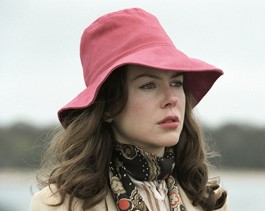
The Hunting Party, writer and director Richard Shepard’s follow-up to his evil comedy The Matador, focuses on the personal suffering of an American reporter still in Sarajevo. Simon (Richard Gere) disgraced himself live on national TV and has disappeared into badly paid freelance work. Years pass and Simon’s former cameraman and partner, Duck (Terrence Howard), turns up with novice reporter Benjamin (Jesse Eisenberg) for a quick shot in Sarajevo to document the fifth anniversary of the end of the war.

Simon tracks Duck down. Though he has no money and a drinking problem, he also has a half-brained plan to interview the internationally wanted fugitive who helped engineer Balkan genocide. The killer (Ljubomir Kerekes), known as the Fox, is a Serbian nationalist hiding in the mountains, where he is protected by loyal, homicidal followers. The three journalists head off into the Serbian wilderness. Halfway up the mountains, Simon reveals the true scope of his mission. It isn’t just to get the Fox’s side of the story, but to drag him back to justice.

A few drinks are necessary to catch up with Simon, and with the movie. It’s an alcohol-rich story, and it plays all the drunken emotions from false bravado to weeping nostalgia to blurted-out, offensive lines of dialogue. Not that there’s anything wrong with that. There’s a long streak of movies that go with too much wine, from John Ford’s Westerns to The Big Lebowski. What’s less likable is the way The Hunting Party tries to link the drunken self-indulgence of a once slick reporter with the suffering of the people he’s covering.

Yet The Hunting Party has something: a deliberate rattiness, a deep lack of worry about committing offense. There hasn’t been a movie quite this raucous about the war between the press and the dark, conspiratorial side of U.S. policy since Oliver Stone’s Salvador.

The Hunting Party is a fictionalized adaptation of Scott K. Anderson’s “What I Did on My Summer Vacation” article for Esquire. The fictionalized stuff is obvious, such as the night meeting with some Dietrich of the Balkans who runs the local mafia; it’s Diane Kruger, and she gets to make a juicily-accented threat: “Nyot even Gyod can hyelp you.” The story of the U.N.’s haplessness rings true, and the true-life failures are novel, as when NATO published an 1-800 we-tip number you couldn’t dial from anywhere but the United States.

Just as Shepard brought out the caddish side of Pierce Brosnan that wasn’t often a part of Bond films, Shepherd also manages to wake up Richard Gere. Gere has been a placid, gray bore for years, so abstracted by his inner peace that you practically wanted to shake him. But he’s avid here. It’s a real change to see him behave as what they used to call a heel. Unfortunately, the genuinely exciting actor Terrence Howard (Hustle and Flow) slouches through the buddy role, idly picking at a guitar.

The upbeat finale of this wildly uneven movie looks like the perfect example of the kind of American simplemindedness Shepard is trying to denounce. (And the film’s title-card comment at the end about bin Laden is infuriatingly smug.) Shepard is obviously far smarter than the ordinary director, but his nerviness fails him. The film takes regular turns into the kind of cuteness that can make network news a worse central-nervous depressant than hard alcohol.

‘The Hunting Party’ opens everywhere Sept. 14.


New and upcoming film releases.

Browse all movie reviews.

One Busy Dudek

0

09.12.07

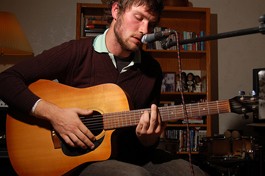
Far more people have heard Les Dudek’s playing than his name. Most recently, that would likely have been some of the incidental music he has written and played for such television shows as Extra, Friends and Access Hollywood, as well as for NBC, ABC, ESPN, etc. But his pedigree as a rock and roll sideman is even more impressive, including stints with artists as varied as Boz Scaggs, Stevie Nicks, Dave Mason and Cher. Especially attentive FM listeners may recall the two tracks from his mid-’70s solo albums that garnered significant airplay: “City Magic” and “Old Judge Jones.”

The tragic death of Duane Allman in October 1971 left a huge gap in his namesake band, and Dickey Betts invited Dudek to sit in on the sessions for the album that became Brothers and Sisters. That’s him doubling the quicksilver lead lines with Betts on “Ramblin’ Man” and strumming the acoustic intro to “Jessica,” the two key tracks from that landmark album.

But he wasn’t invited to join the Brothers, so Dudek came west, where he joined Scaggs’ touring band and appeared briefly on the mega-smash Silk Degrees album. Boz’s old boss, Steve Miller, also took a liking to the long-haired guitarist, and brought Dudek to contribute to his Fly Like an Eagle and Book of Dreams LPs.

Throughout all this, and everything that has followed, Dudek’s stylistic versatility–everything from sweet pop-rock tunes to lean, authentic blues—and tasteful understatement have served him well musically, even if they have not made him a household name. He’s a damn good singer, too.

Les Dudek samples touchstones from 40 years of personal musical history in a rare local club date at the Last Day Saloon on Friday, Sept. 13, at 8:30pm. Up-and-comers Holiday and the Adventure Pop Collective (tuba!) open. 120 Fifth St., Santa Rosa. $10&–$13. Phone 707.545.5876


News Briefs

09.12.08

Rehab Rumble

New residents were scheduled to move into Sausalito’s Alta Mira Hotel on Sept. 10, sparking opposition from neighbors and officials who said they weren’t notified about the change. Owners Michael and Ray Blatt are converting the hotel and adjacent homes into a drug and alcohol rehabilitation center, due to open with 18 beds this month; 30 more will follow. Monthly charges to stay there are expected to run $42,000&–$48,000. Under state law, facilities with six or fewer beds are licensed without local review. The Blatts obtained permits for eight contiguous sites, each with six beds. Together, they form a 48-unit rehab center, which neighbors charge is too large. The city of Sausalito has hired a San Francisco law firm to pursue legal opposition. “We just think this is a perversion of the law by the developer,” says Sausalito mayor Mike Kelly. About 200 people showed up at a Sept. 6 meeting sponsored by state Sen. Carole Migden. According to a spokeswoman, Migden has contacted the attorney general about stopping the project and is also drafting legislation to limit the number of rehab sites in one neighborhood.

Timber Plan Delayed

The Bohemian Club continues to pursue approval of a timber-management plan allowing logging of up to 1 million board-feet annually from the Bohemian Grove near Monte Rio. As reported in these pages July 4, club officials contend that their plan will reduce the hazardous fire danger. Opponents argue that it will have the opposite effect. The plan was tentatively scheduled for a meeting in August, but that has been pushed forward until mid or late October while officials review endangered species information. “It’s just taking time get the work done,” explains state employee Ron Pape, who’s overseeing the approval process. A Sept. 5 letter from State Assemblymember Patty Berg urges officials to deny the club’s application.

Red Tape Rescue

The County of Napa recently upped its budget from $60,000 to $140,000 for Maximus Inc., a consultancy firm assisting the county in its bid for more than $5 million in federal funds for damages sustained during the 2005 New Year’s Eve flooding. Maximus offers expertise in navigating the application and approval process. The County of Napa has already received some money, but is seeking $1.9 million for applications that are currently in the second appeal process, and another $3.9 million in which federal cost estimates were significantly lower than those by county engineer.


Elder Tales

09.19.07Bette Davis once said, "Old age ain't no place for sissies." In Pacific Alliance Stage Company's season-opening show, Conversations with Our Elders—part of the ongoing county-wide Performance Sonoma festival—Davis' statement is aptly illustrated by the true-life stories of over a dozen Sonoma County senior citizens. PASCO's artistic director, Hector Correa, having amassed over 20 hours of taped interviews with...

Brand-New Old Soul

09.12.07The last time I saw Jesca Hoop was five years ago, when we ran into each other at the Central Library in downtown Santa Rosa. She said she was planning to move to New York. She didn't. Instead, a downscaled version of the fabled "small-town girl makes the big time" story beckoned Hoop to L.A., and now, four years...

Preview: Taste of Petaluma

09.12.07There are no food booths at the Second Annual Taste of Petaluma, slated for Sept. 29. No tents with wineries pouring samples of their best grapes, either, or tables of organic farmers passing out bits of their seasonal bounty.Instead, attendees will wander Petaluma's downtown area, clutching tickets in their hands, which they will redeem for tastes at the actual...

Crack 2.0

09.12.07It starts out innocuously. You buy the newest toy that makes communication cool and convenient. Maybe you used to make fun of your friends' BlackBerrys or their need to stay constantly connected through e-mails, text messages and phone calls. It certainly won't happen to you, right?Next thing you know, you're sucked in. You're interrupting dinner conversations to respond to...

Letters to the Editor

September 12-18, 2007Spare us the BigotryI can't believe that you published"Spare Us the Sob Stories" (, Sept. 5). Excuse me, Mr. Ratcliff, do you have Euro-American heritage? Chances are the Native Americans of the Santa Rosa/Sonoma County area did not appreciate your ancestors killing them as they immigrated to this area. (You were once an immigrant too!)Wake up and...

First Bite

Devil's in the details at Stella's ...

White Flour Is Death

Photograph by Elizabeth Seward Twelfth Night: One of the many secrets of Reinhart's breadmaking...

After the Fox

09.12.07Speaking of TV news, Garrison Keillor once said, "You could learn more about the world if you just drank gin out of the bottle." This is particularly descriptive of the 60-second bursts of international conflict offered by the networks. The "if it bleeds, it leads" style brings on reliable emotions: horror, despair and gratitude for the relative peace of...

One Busy Dudek

09.12.07Far more people have heard Les Dudek's playing than his name. Most recently, that would likely have been some of the incidental music he has written and played for such television shows as Extra, Friends and Access Hollywood, as well as for NBC, ABC, ESPN, etc. But his pedigree as a rock and roll sideman is even more impressive,...

News Briefs

09.12.08 Rehab RumbleNew residents were scheduled to move into Sausalito's Alta Mira Hotel on Sept. 10, sparking opposition from neighbors and officials who said they weren't notified about the change. Owners Michael and Ray Blatt are converting the hotel and adjacent homes into a drug and alcohol rehabilitation center, due to open with 18 beds this month; 30 more will...
11,084FansLike
4,446FollowersFollow
6,928FollowersFollow