Growing Real Change

11.19.08

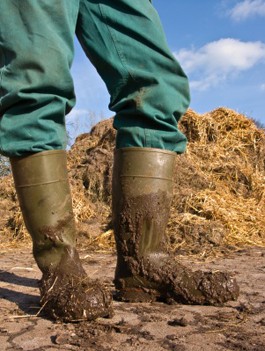
President-elect Barack Obama is starting to draw up names for various cabinet positions. The secretaries of state, defense and treasury will be the first appointments he makes. The secretary of agriculture, never a high-profile position, will surely come later. But now that our long, national nightmare of George Bush is about to come to an end, I’m hoping that Obama will give some serious thought to how we feed ourselves. I’d argue that the secretary of agriculture post and an overhaul of our food policy need to become top priorities.

Writer Michael Pollan, author of The Omnivore’s Dilemma and In Defense of Food, has become one of the leading voices in America for food policy reform. He wrote a provocative cover story in the Oct. 12 New York Times Magazine in which he offered some suggestions to the then unknown president-to-be. The basis of his advice is the belief that our food policy has become a national security issue. Because the centralized production and distribution of food in America is based on petroleum in the form of pesticides, herbicides, fertilizers and gasoline-powered distribution, this system is not only fouling the environment but it exposes our dependency on foreign oil and our vulnerability to domestic terrorism in the form of food tampering. And what we produce and the way we eat are primary factors in the skyrocketing rates of obesity and chronic diseases such as diabetes.

Unless we remake our food policy, he argues, our next president will not be able to make significant progress on the healthcare crisis, energy independence or climate change. Among other things, Pollan calls for the “resolarizing” of the food system, switching from monocrops (corn, soy) that depend on petroleum-based chemicals to more holistic, diversified agriculture that relies on the sun instead of oil. And I love his idea of ripping up five acres of the White House south lawn and replacing them with fruit and vegetable gardens to spur Americans to grow their own food.

Obama reportedly read Pollan’s “memo,” and I hope he takes the advice to heart. But there’s another writer who has some words Obama should read, Watsonville farmer Andy Griffin, who runs Mariquita Farm with his wife, Julia. Griffin is also a gifted, tell-it-like-is writer who pens a bimonthly column in his farm newsletter, The Ladybug Letter. (Mariquita means “ladybug” in Spanish). In his Oct. 28 column “Daisy Chains and Milkmaids: An Open Letter to Michael Pollan,” Griffin took Pollan to task for what he saw as a glaring omission in his Times story. Griffin had high praise for Pollan with one notable exception: nowhere in his 8,324 words did he mention farmworkers, the basis of our entire food system. He wrote about the creation of “green jobs” in a post-oil agricultural system, but farm laborers didn’t merit a mention.

“It’s an interesting oversight, but I can’t imagine you left the farm workers out intentionally,” Griffin writes. “The role of the farm worker is simply too much of a symptom of and poetic metaphor for of the chaos of our food system for a man of your learning not to notice. . . . It is precisely because Mexican peasants can’t afford to buy corn and beef in their own country, or compete with multi-national food corporations and sell their produce to their friends and neighbors in Mexico, that they come here to work. Changing our food policy is key to unlocking the dungeon that is our immigration policy.”

I don’t have a solution to our immigration challenges, but Griffin’s insistence that we own up to the reality of food production in America is a good place to start.

Quick dining snapshots by Bohemian staffers.

Winery news and reviews.

Food-related comings and goings, openings and closings, and other essays for those who love the kitchen and what it produces.

Recipes for food that you can actually make.

Win Tix! East Village Opera Company

0

The East Village Opera Company puts a decidedly modern spin on classic operatic tropes by putting a full rock band onstage with an accompanying string quartet and just two singers. They appear on Wednesday, Nov. 19, at the Wells Fargo Center and we have a couple of tickets to give away. The Toronto Globe Mail wrote earlier this month: “What fresh hell is this? The nu-opera troupe . . . runs themes from Wagner’s Ring Cycle through a Queenomatic, popaholic, trashophagic demolition machine, and comes up with the most radioactive remake I’ve ever heard. You’ve been warned.”

You want tix.

Write to Leslie Kenhart by 3pm on Nov. 19. They appear that night at the Wells Fargo Center, 50 Mark West Springs Road, Santa Rosa. Preshow discussion at 7pm; total rockage at 8pm. 707.527.1200, ext.204.

A Fan’s Notes

11.19.08

The good news is that not every scandalous life is short. Anita O’Day, billed as the “Jezebel of Jazz,” made it almost to 90. Robbie Cavolina and Ian McCrudden’s documentary Anita O’Day: The Life of a Jazz Singer charts the staying power of an irreplaceable musician. What they give us proves more interesting than the old story of four months in jail for marijuana possession, 16 years of junk addiction.

“It’s a thing that went down,” was the woman’s favorite conversation ender. O’Day uses the sentence rather politely with her interviewers here (one of whom, Cavolina, was once her manager). Nothing sums up the vicissitudes of O’Day’s life as much as her motto, “All you can do in this world is be a good loser.”

Jazz critic Leonard Feather is interviewed on the subject of what makes a jazz vocalist great. He identifies four things: timbre, phrasing, choice of accompanists and material. The arranger Russell Garcia adds that a vocalist has to add meaning; she has to be “an actress.” Anita O’Day demonstrates how O’Day possessed all five qualities. The documentary excerpts 40 songs, and yet none seems stinted or clipped off.

The forwardness of this singer surprises you at once. She was slight and curly and sad-eyed, like Piaf, only with a great, pouty lower lip. She pours her heavyweight chemistry into a duet with the African-American trumpeter Roy Eldridge, teasing out a call and response. Eldridge exclaims, “An-nee-ta, I feel somethin’!” It’s a commercial for miscegenation, “uptown” being code for Harlem. O’Day was one of the few white performers to play the Apollo.

 Eldridge and the wild Krupa soon felt upstaged, and O’Day headed for more restrained work with Stan Kenton. The lack of party-hearties in Kenton’s band cooled O’Day’s enthusiasm, but there she caused a noteworthy gender breakthrough, insisting on a band uniform instead of the usual feathers of a big-band canary. It was obviously a nightmare to keep those gowns clean and pressed during the brutal tour schedule; she preferred to sing togged out in a suit and a skirt.

 Later, in smaller groups, O’Day was an innovative bebopper. One of the many priceless TV kinescopes here features O’Day with an unidentified trio. (It’s one small lapse of the film’s otherwise excellent job of crediting musicians and sources.) Zutty Singleton is on drums, but who are the guitarist and the pianist who help O’Day deconstruct “Body and Soul”? Her asides to the audience (“This is a party”) are just part of the unique phrasing.

The Verve years—17 albums recorded from 1955 to 1964—are represented in her famous vamp on Fats Waller’s “Honeysuckle Rose.” The frenetic “Tea for Two,” recorded at a Swedish concert, has quotes—samplings, if you will—of “Hungarian Rhapsody” and “Stardust.” O’Day’s “Tea for Two” is jazz at its most arduous, reflecting the American mania for velocity. She tears up this seriously insipid song; it’s like a race for cool as it shifted elsewhere, maybe, a message to the rising rockers that they weren’t as fast as they thought they were.

These performances lead to the most famous one: Newport in 1958, where the freckly singer is squinting in the sun under a cartwheel hat. A long passage from Bert Stern and Aram Avakian’s color film Jazz on a Summer’s Day illustrates how O’Day renovated the ancient Dixieland tune “Sweet Georgia Brown.” First, she turned it into a beatnik recitative, and later sailed it away into the ether. There were 150 musicians at that particular festival, one of the most mass-culture moments jazz ever had. In old age, O’Day still called the performance “the Big Event.”

O’Day describes how she detoxed by herself on a Hawaiian beach. Then came a stint living in a trailer in Hemet and a bungled hospital stay for a minor complaint that left her throat irretrievably burned. Miraculously, O’Day was still singing and recording up to the end, even with nothing much but the phrasing left.

 O’Day was a musician’s musician. Though she has heavyweight fans—Margaret Whiting, Hedwig‘s John Cameron Mitchell, and singer and Robert Altman confederate Annie Ross (all interviewed)—the rediscovery of O’Day is still waiting. It’s a thing that needs to go down.

 ‘Anita O’Day’ opens on Friday, Nov. 21, at the Rialto Cinemas Lakeside, 551 Summerfield Road, Santa Rosa. 707.525.4840.


New and upcoming film releases.

Browse all movie reviews.

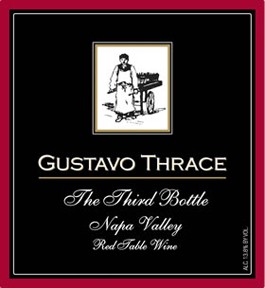
Gustavo Thrace

0

Yes, I count myself among an elite few, the select group of wine wonks who never saw Bottle Shock. To recap for the other two of you, the 2008 flick semi-fictionalized events leading up to the 1976 “Judgment of Paris” that garnered fame for Chateau Montelena and other Napa Valley wineries. Missed it. I did see a promo photo in which the young, blonde intern cavorts among the vines. More than the fictional blonde, it was the fictionally neat, vertical, drip-irrigated vineyard that caught my eye. No one grew like that in the ’70s! Imagine re-shooting The Grapes of Wrath except they’re driving a Lexus SUV (might not be a bad pitch in this economy). Of course, viticultural accuracy has never been Hollywood’s game. Remember A Walk in the Clouds? Quelle disaster! Take it easy, I’m not talking about Keanu Reeves’ performance.

Former attorney Thrace Bromberger and Gustavo Brambila, the real-life former Grgich Hills winemaker portrayed by Bottle Shock actor Freddy Rodriguez, fortuitously opened their tasting room weeks prior to the film’s opening. Their phone rang off the hook for months. Now, it’s quieted down a bit. Across the street from Napa’s Oxbow Public Market, the spacious shop is filled with shiny baubles to enchant the tourist; but the gal charged with holding down the fort on rainy fall evenings was a down-to-earth industry local who made our visit fun and relaxed. 

I thought that Gustavo Thrace’s 2005 Carneros Chardonnay ($35), with dominant notes of honeysuckle and butter popcorn reminded me of a more viscous Grgich Chardonnay. Brambila was Mike Grgich’s assistant when their Chardonnay won that famous contest. But Grgich didn’t sign off on the movie, so he was largely (and controversially) excised from the script.

For his part, Brambila refused Thrace’s “preview” lineup of Barberas specially selected before their first crush of that varietal; he just wanted to listen to the grape, and do it his way. With lip-smacking acidity and lush, not overripe black fruit, the 2006 Sierra Foothills Barbera ($30) is none the worse. The 2006 Green Valley Petite Sirah ($35), from Solano County’s warm Green Valley, is a real stemware-stainer, a purple liquid of gorgeous black-cherry goodness.

Brambila’s Old World–style makes even more curious the silver robot standing guard in the shop. From photographs, at least, the winery’s owners look like folks who have a good sense of humor. Maybe that explains why they distribute the Wine Pod, a machine about the size of an R2D2, that automatically makes wine; at least, it controls temperature, uploads data to a wine laboratory via DSL, and presses. What it doesn’t do, apparently, is almost everything else. For $8,999, it could be big fun for an elite few, but I don’t count myself among them.

Gustavo Thrace, 1021 McKinstry, Napa. Open Sunday–Wednesday, 11am to 7pm; Thursday–Saturday, 11am to 9pm. Tasting fee, $10. 707.257.6796.

Weekend alert: The wineries of chilly Carneros warmly open their doors for “Holiday in Carneros,” annual food and wine pairings, music and special events that benefits local college scholarships. Saturday-Sunday, Nov. 22-23, from 10am to 4pm. $40 at the door of any participating winery, no advance tickets needed. For more info, call 800.909.4352 or go to [ http://www.carneroswineries.org/events ]www.carneroswineries.org/events.


View All

Back for Morse

0

Torch Songs

0

11.19.08

Everything that’s ever happened in life has surprised me.”

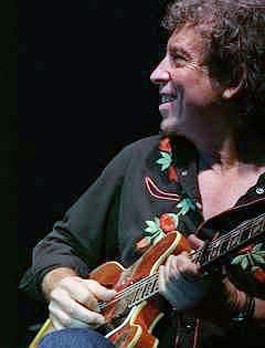
Elvin Bishop’s offhand observation summarizes a theme that has bubbled up more than once in our genial conversation—a bemused appreciation of the good fortune that has characterized his lengthy, if improbable, musical career.

“I’ve been lucky,” Bishop says. “I started out when I was maybe 14 listening to John Lee Hooker in my room in Tulsa, Okla.—before Civil Rights in a segregated society down there—and the odds that I would ever end up being good friends with him and getting a chance to play with him musta been tremendously low.” He pauses, as if digesting this good fortune anew. “But it happened.”

Bishop was just a few years older when he used a National Merit Scholarship to carry him from Tulsa to Chicago. “By that time, I’d figured out that that’s where the blues was happening, and the school was kinda my cover story.” He quickly befriended some of the black cafeteria workers on campus “and within a week, I was going down with them to see Muddy Waters and Magic Sam and people like that.”

Thrilled but not intimidated, he also sought out opportunities to play with the older bluesmen, even though Bishop says now that he scarcely knew what he was doing.

“I’d been trying. I loved blues and I loved the guitar, but there was nobody musical in my family, nobody in the neighborhood. You couldn’t really hang out with black people, and they’re the only ones who knew how to play blues in Oklahoma,” he recalls. “It was pretty slow going until I got to Chicago.”

Once there, he says, “I just introduced myself to the guys, and they were really much nicer than they had to be, ’cause I was nobody.” And thus the cross-generational torch was passed.

Chatting by phone from his West Marin homestead, the 66-year-old bluesman is gracious and relaxed, savoring the warm reception that has greeted his latest recording, a rollicking set of all-star sessions titled The Blues Rolls On. The disc features a remarkable cast of marquee names, from B. B. King, James Cotton, George Thorogood and Kim Wilson to such notable next-generation players as Warren Haynes, Tommy Castro, Derek Trucks and John Nemeth.

Two years in the planning, Bishop envisioned this self-produced CD as a new torch-passing, inspired by the tutelage and encouragement he received from the likes of Junior Wells and Hound Dog Taylor. “I really was treated nicely by these people and I’ve always appreciated it,” Bishop says slowly, “and I got to thinking about how the music flows over the generations, and I tried to line up some of the younger guys that are coming up now to do some of these old guys’ tunes.”

“I’m normally not much in favor of these all-star type of things,” Bishop allows, “because you see all these good names on the front and you take it home and you play it and you say, ‘Well, it doesn’t sound like he was into that one,’ ya know. But this one, it worked out pretty well.”

Amidst the collaborations lies “Oklahoma,” a short autobiographical summation backed only by his own crackling electric guitar in a brisk one-chord homage to Hooker. “The good ones,” Bishop acknowledges, “they just kinda come to you and they drop in your lap and they kinda write themselves, ya know? It’s a matter of luck getting something like that. I think the words fell out just about right.”

That humble hayseed persona—dubbed “Pigboy Crabshaw” by Paul Butterfield years ago when they both were young white students of Southside Chicago’s concentrated blues scene—fronts a sharply focused intelligence that has seen Bishop successfully ride through almost half a century in a notoriously unstable profession. Now he spends most of his non-musical time tending his garden and orchard of semi-dwarf fruit trees, happily cooking up and canning homemade jam for friends like B. B. King—that is, when it isn’t getting confiscated at the Oakland Airport.


“I tried to cop a plea,” Bishop says, telling of the security checkpoint guard who took a jar of jam out of his luggage recently. “I said, ‘Oh man, this is for B. B. King. Could you just give me a break and let me carry this through one time, ’cause he’s expecting it and everything.’ He looks like he’s thinking, and he says, ‘You tell B. B. King that the thrill is gone. And so is his jam.’

“The guy actually said that,” Bishop sighs. “It was cold-blooded.”

 Elvin Bishop performs Friday, Nov. 21, at the Last Day Saloon, 120 Fifth St., Santa Rosa. 8pm. $25. 707.545.2343.


Standard Bearer

11.19.08

Years ago, when I first heard the art-world term “curator” applied to someone organizing literary events, I thought it sounded pretty darn pretentious. Writing, it seemed to me, was at heart an activity for common men and women. If inner-city neighborhoods didn’t need community curators, then neither did writers. If the academics didn’t completely destroy literature with their tortured theories, here came the curators to finish the job.

I’ve given up being such a purist boor and also have had the good fortune to attend numerous literary events and series that have been shaped by a singular vision.

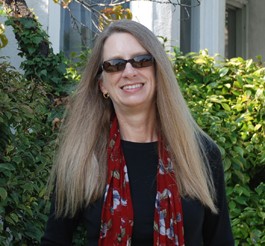
Katherine Hastings, the driving force behind the Word Temple Poetry Series, isn’t stuck on a title; she just does exceptional work. In a relatively short time (the series is in its third year), Hastings has found a way of bringing national and local poets together with a large and devoted audience. Word Temple’s success has hit the radar of major poetry publishers around the country.

As part of her series, Hastings has hosted three poet laureates of the United States: Robert Hass, Billy Collins and our current national poet, Kay Ryan of Fairfax. Other luminaries who’ve participated include Jane Hirshfield, Deborah Garrison, Ishmael Reed, Michael McClure, Al Young and Carolyn Kizer. But Hastings isn’t star-struck. Each Word Temple event kicks off with a 10-minute reading by a local, emerging poet.

Last week I attended a blockbuster Word Temple reading, celebrating the new Collected Poems of Philip Whalen, edited by Guerneville poet Michael Rothenberg. A troupe of nine poets had been recruited to read. As much as I wanted to hear the Beat master’s poems read by a myriad of voices, I feared the evening would stretch into the wee hours, as mass readings often do. But no. After a compelling kick-off by “emerging poet” Phyllis Meshulam, the Whalenites wailed for no more than an hour, wonderfully showcasing the poet’s work. I sensed the curator’s disciplined hand behind this triumph.

Hastings also hosts the eclectic monthly Word Temple radio hour on public station KRCB 91.1-FM. Here, Hastings operates as an inspired poetry DJ, sampling everything from ancient recordings of Whitman in his own voice to a rare session of Allen Ginsberg with Bob Dylan.

It turns out that Hastings is a fine poet herself, with an MFA in creative writing from Vermont College. She says that the work she’s done with Word Temple has given her work a greater sense of freedom. Here’s her poem “Pórtico.”


“Pórtico”

This porch isn’t really a porch but a stoop
of old cement, a steady rope of ants between
step and riser making its way to a mystery
that just yesterday smelled like something rotting
and today has no smell at all. Twice I’ve told people
die and meant it. Grandma Torrez spent three
comatose days draped with clinging familia. Just go,
Abuela. They’ll live
. She died that hour. Roses are lined up like laborers in the heat or hems
of Woolworth’s aprons. Some are wound tight in
jalapeño-green wraps, others unfold petal by petal
on their way to becoming nothing. Their scents
fuse in the breeze and arrive as one: Rosa. From
slavery and Mexico without a patch of ground to the
Hills Brothers factory, she found it possible then
to buy a house with a porch on Geneva Avenue.The mockingbird is trying to fool every dove, finch,
and warbler in the neighborhood. Do they fall for it?
She wasn’t really my grandmother but a brutal
lover’s. After I left she let me live behind a
curtain in her garage, taught me a little español,
cooked me menudo y tamales dulces. She was the
only grandmother I ever had. I told her to die.
¡Le dije morir! And it worked.

Sample Katherine Hastings’ curatorial work at the final Word Temple reading of the season, featuring the potent San Francisco poet August Kleinzahler, on Friday, Dec. 5, at Copperfield’s Books, 2316 Montgomery Drive in Montgomery Village, Santa Rosa. 7pm. Free. 707.578.1242.


Museums and gallery notes.

Reviews of new book releases.

Reviews and previews of new plays, operas and symphony performances.

Reviews and previews of new dance performances and events.

Letters to the Editor

11.19.08

In Praise of National Treasures

I’m writing to commend Gabe Meline’s article “The New Rules” (Nov. 5). So many of us mark time through music. I wish it could’ve been a full feature article; I wish I could have helped with it. The part that really got me was his wish that Hewlett-Packard, with its insane profits in the Vietnam War, mass-manufacture Bob Dylan’s entire back catalogue for free, sent to everyone. In Japan, certain people are named “national treasures.” Why can’t we just call Bob Dylan a national treasure? Half a century of pertinent, poignant and political comment encased in melody certainly warrants that while he’s alive.

Appreciate people while they’re still alive, that’s what I say. I react to the changing times (I’m 57)through music, and I wanted to add so many paragraphs to the article. It spoke (or sang) to me. Congratulations on a great article.

Mary Skevos

Petaluma

Damn You, Bill Gates

Great article on SlaughterhouseSpace, the new arts venue in Healdsburg (“Abbatoir Blues,” Nov. 12). The imagery was unforgettable: “The slaughterhouse’s main room overseen by large wenches, thick with rust-covered chain, which hang from the 35-foot-high ceiling.” Assuming these wenches have consented to being hung, do I gather that the San Francisco S/M scene has moved northward?

Conrad Bishop

Sebastopol

Past the Tipping Point?

The Green Zone columnist, Patricia Dines, is living in a fantasy world (“Climate Healing,” Nov. 5). She writes of a year 2050 target for reduced greenhouse gas output, carbon taxes, cap-and-trade systems, etc., as solutions to global warming.

Renowned NASA climate scientist James Hansen coauthored a paper titled “Target Atmosphere CO2.” He wrote, “If humanity wishes to preserve a planet similar to that on which civilization developed and to which life on Earth is adapted, paleoclimate evidence and ongoing climate change suggest that CO2 will need to be reduced from its current 385 ppm (parts per million) to at most 350 ppm.”

In other words, Hansen thinks that Earth has passed the “tipping point.” It will take humanity’s unified, immediate, single-minded effort to avoid climate catastrophe. Can we actually reduce the amount of CO2 in the atmosphere and save ourselves? Each year that we do nothing, another two ppm of CO2 enters the atmosphere.  

Philip Ratcliff

Cloverdale

Patricia Dines responds: I absolutely agree with your call for urgent action. The folks featured in my column also have more near-term targets; the 2050 goal just reflects the longer-term scale of cultural change needed. Also note that the plan I highlighted is actually Hansen’s plan.

Prop. 13’s Legacy Long and Gray

Californians need to wake up. This state’s budgetary problems are causing some very shortsighted measures. Cutting school funding will only come back to bite us. The results of increased class sizes and reduced course offerings will be a generation of young people who are even more underprepared to take on the world that will face them when they are adults.

It is not fair and hasn’t been since 1978, that businesses do not pay their fair share of property taxes in this state. It is not fair and hasn’t been for 30 years that two neighboring homeowners pay thousands of dollars difference in property taxes.

Proposition 13 needs to be replaced. How long will we limp along, saddled by a tax system that sounded good at the time it was proposed but was not clearly well thought-out? We need not return to a pre-1978 tax system. A replacement to Prop. 13 does not necessarily mean that people will lose their homes due to exorbitant property taxes. However, some of us do need to be paying more in taxes, businesses as well as property owners.

Mary Anne Sobieraj

Cazadero


&–&–>

Earth-Friendly Economics

11.19.08

After the exuberance of Barack Obama’s election, our attention now turns back to repairing our global economic system. Like many folks, I worry that the remedies chosen will benefit the few while costing the many, require the prudent to bail out the speculative and continue the financial thinking that caused the wreck.

But mostly I’m concerned that, in our rush to return to “business as usual,” the earth’s needs will again be shunted aside, assuring even worse disasters. My hopeful scenario, though, is that our economic remodeling includes better aligning our systems with nature’s, in ways beyond green consumerism.

I’m encouraged hearing Obama’s new chief of staff, Rahm Emanuel, say, “Never allow a crisis to go to waste. They are opportunities to do big things.”

So to help me explore the possibilities, I call Bruce Macpherson, who taught ecological economics at Sonoma State University and the SRJC for over 30 years. His journey with this topic started in the 1960s, when he concluded that environmental change required economic shifts, he says, “because so much of our behavior is economically determined.”

Regrettably, he observes, economics can appear complex and absolute, discouraging our participation in essential decisions and giving away power to the experts who created the problems. He recommends seeing economics not as a science but as a set of ideas “dressed up in numbers, a way we choose to organize ourselves.”

Macpherson says that he considers today “as good an opportunity as I’ve seen for a long while” for meaningful economic system redesign, because collapse “always leaves room for rebirth.” Despite “all the unfortunate suffering that’s been created by people’s apparent wealth shrinking, it’s perhaps a blessing in disguise,” he counsels, because it’s reduced the global consumption rates that were sending us “headlong into oblivion.” Our error, though, is in perceiving these lower consumption levels as the aberration and seeking to return to unsustainable ones.

I ask him about former Federal Reserve Chairman Alan Greenspan’s statement that the system’s meltdown was a shock, because it had worked “exceptionally well” for decades. Macpherson replies, “It’s like saying that the Titanic floated for a while, and then it didn’t. Because it had within it flaws that were destined to eventually manifest themselves.” For instance, because market fundamentalists have let free markets run wild, we’re now having to relearn the Great Depression’s lesson that restrictions are needed to control capitalism’s more “rapacious” aspects.

Macpherson’s solution isn’t eliminating free markets, but better integrating them with natural systems. We do that first by recovering our ecological literacy, understanding that we live on a finite planet with an exploding population and disappearing habitat. In classes, Macpherson illustrated the peril of ignoring the planet’s immutable realities by giving the mock homework assignment of climbing to the roof, willing away the law of gravity, then jumping.

He’d then present his summary of nature’s key design principles, calling them the “biophysical requirements for sustainable societies.” These include valuing diversity and complexity for creating stability (e.g., not putting all your eggs in one basket); limiting consumption and waste to the earth’s carrying capacity; and doing better with less.

I’m interested in further discussing these ideas, but Macpherson has largely retired, excited to travel and work through his stack of books. He indicates that various folks are implementing these principles, and suggests reading Peter Barnes’ proposals in Capitalism 3.0.

Our conversation also reminds me of Marilyn Waring’s classic video Who’s Counting: Sex, Lies, and Global Economics (now on YouTube), which demonstrates that steering ourselves with the GDP metric actually encourages harmful activities.

However, I’m thinking most of Jared Diamond’s bestselling book Collapse: How Societies Choose to Fail or Succeed. Diamond’s examination of various cultures’ collapses reveals consistent causes, including ignored environmental problems, prioritized short-term profit and isolated elites benefiting from practices that harm others. A key determinant of a society’s ultimate survival is whether it’s willing “to re-examine long-held core values, when conditions change and those values no longer make sense.”

Perhaps, with President Obama’s help, we can do just that.


Giving Thanks

0

11.19.08

With Thanksgiving upon us, we’ve all heard, seen and read seasonal pleas for charitable giving. This year things are desperate. The nation’s current financial crisis has obliged more and more people to seek charitable assistance at precisely the time that money’s tightening like a vice, leaving most everyone with diminished disposable resources. While all charities suffer in this climate, it’s perhaps most acutely felt by those who provide essential services like food. According to folks at the Redwood Empire Food Bank, as many as 93,000 people in Sonoma County alone face “food insecurity.” Though the Food Bank takes in close to 11 million pounds of food valued at $12 million, it’s simply not enough to meet the growing demand.

Fortunately, the holidays also bring out a rush of volunteers kindly giving their time and energies to organizations, especially on the holidays themselves. While many of these volunteers won’t be seen again until the next holiday season, the good news is area food banks and meals programs still need your help today. All meals listed below are free to the public.

Santa Rosa’s Redwood Gospel Mission hosts a 5,000-guest shebang the day before Thanksgiving, on Wednesday, Nov. 26, at the Sonoma County Fairgrounds, 1350 Bennett Valley Road, Santa Rosa, from 11am to 7pm. There’ll be a sit-down feast in the Showcase Cafe as well as face-painting and a bounce house at Finley Hall. St. Joseph’s mobile medical and Sutter dental volunteers will be on hand giving flu shots and checkups. Free haircuts, live music and chapel services round out the party. Turkey donators and volunteer haircutters, please call Alice at 707.578.1830.

The Napa Salvation Army serves dinner on Thanksgiving Day from 11:30am to 2pm, at 590 Franklin St., Napa. Food, monetary donations and volunteers are all needed. Call Captain Rachel Johnson at 707.226.8150, ext. 110.

St. Vincent DePaul in San Rafael needs produce packers on both the Monday and the Wednesday before Thanksgiving from 1pm to 4pm. Then come for turkey with all the trimmings on Thanksgiving Day from 11am to 1pm. According to St. Vinnie’s Mike Bromham, the San Rafael facility serves 350 free meals each day and is 99 percent dependent on public funding. So, if you have a few extra bucks, they can go to good use. 820 B St., San Rafael. 415.454.3303.

And finally, from the Only in Wine Country Files: A gourmet meal with chef Gary Edwards at the Sonoma Community Center features organic Willie Bird turkeys, along with duck, salmon, lamb, organic produce, local wines and decadent desserts all accompanied by the music of Earl Blue Quartet from 3pm to 6pm on Thanksgiving day. 276 E. Napa St., Sonoma. Call Sandra to donate cash or volunteer, 707.938.4626, ext. 1.


Growing Real Change

11.19.08President-elect Barack Obama is starting to draw up names for various cabinet positions. The secretaries of state, defense and treasury will be the first appointments he makes. The secretary of agriculture, never a high-profile position, will surely come later. But now that our long, national nightmare of George Bush is about to come to an end, I'm hoping that...

Win Tix! East Village Opera Company

The East Village Opera Company puts a decidedly modern spin on classic operatic tropes by putting a full rock band onstage with an accompanying string quartet and just two singers. They appear on Wednesday, Nov. 19, at the Wells Fargo Center and we have a couple of tickets to give away. The Toronto Globe Mail wrote earlier this month:...

A Fan’s Notes

11.19.08The good news is that not every scandalous life is short. Anita O'Day, billed as the "Jezebel of Jazz," made it almost to 90. Robbie Cavolina and Ian McCrudden's documentary Anita O'Day: The Life of a Jazz Singer charts the staying power of an irreplaceable musician. What they give us proves more interesting than the old story of...

Gustavo Thrace

Back for Morse

Torch Songs

11.19.08Everything that's ever happened in life has surprised me." Elvin Bishop's offhand observation summarizes a theme that has bubbled up more than once in our genial conversation—a bemused appreciation of the good fortune that has characterized his lengthy, if improbable, musical career. "I've been lucky," Bishop says. "I started out when I was maybe 14 listening to John...

Standard Bearer

11.19.08Years ago, when I first heard the art-world term "curator" applied to someone organizing literary events, I thought it sounded pretty darn pretentious. Writing, it seemed to me, was at heart an activity for common men and women. If inner-city neighborhoods didn't need community curators, then neither did writers. If the academics didn't completely destroy literature with their tortured...

Letters to the Editor

11.19.08In Praise of National TreasuresI'm writing to commend Gabe Meline's article "The New Rules" (Nov. 5). So many of us mark time through music. I wish it could've been a full feature article; I wish I could have helped with it. The part that really got me was his wish that Hewlett-Packard, with its insane profits in the Vietnam...

Earth-Friendly Economics

11.19.08After the exuberance of Barack Obama's election, our attention now turns back to repairing our global economic system. Like many folks, I worry that the remedies chosen will benefit the few while costing the many, require the prudent to bail out the speculative and continue the financial thinking that caused the wreck.But mostly I'm concerned that, in our rush...

Giving Thanks

11.19.08 With Thanksgiving upon us, we've all heard, seen and read seasonal pleas for charitable giving. This year things are desperate. The nation's current financial crisis has obliged more and more people to seek charitable assistance at precisely the time that money's tightening like a vice, leaving most everyone with diminished disposable resources. While all charities suffer in this climate,...
11,084FansLike
4,606FollowersFollow
6,928FollowersFollow