F*ck Section M, Revisited

0

For the September 10th issue of the Bohemian, I wrote an article about the background of Section M magazine, which covered the North Bay music scene in the late 1990s and early 2000s. As a former Section M staffer, I took pains to remain objective and not come off as as a nostalgia-drunk painter of sunny rainbows and pretty pink ponies.

But, thanks to a trio of letters to the editor from others who were once involved with Section M as well, I realized that my aimed-for objectivity came off to some as grumpy and regretful. In the article I characterized Section M as a “successful failure,” which I do stand by, but I carelessly neglected to elaborate on what was successful about Section M. And I would like to do so now.Section M was fun to read. This is why I got involved with Section M in the first place. In 2000, I’d just moved to Sonoma County and ran across an issue at the Last Record Store. Some band called The Wunder Years was on the cover. Who were the Wunder Years, and who were these people so excited about some little band that they put out a publication dedicated to such music? The tone ranged from sprightly to snarky, but the passion the writers felt for their subjects, no matter how obscure, was palpable. You could live in Maine or Cyprus and have a blast reading Section M. Oh, and they layout was cool, too—edgy like a zine, but much more professional.There was nothing else like Section M. Even though it was not so long ago, back when Section M was around, there was not a vast network of blogs and websites where music fans could express themselves and learn more about the non-mainstream bands they loved. That made Section M exquisite and valuable, and it was treated as such by a fair chunk of its readership.

All of the things that may sound like criticisms–its inability to come out on schedule, the cheap ink that tainted your hands at the merest touch, the oftentimes esoteric choices of bands placed on the cover, the blatantly dysfuntional family atmoshpere endured and enjoyed by the staff members, the incessant ads of the band Unominame appearing in the buff, the indulgences taken by writers who related more about their efforts to procure an interview than the interview itself—were the things that made Section M great. They were also the things that kept it from being sustainable; if Section M had made money, an irretreivable hunk of its grit and appeal would have been lost. And so: Section M was a creative success, and a financial failure.

The few years I spent with Section M were some of the most intense and enriching of my life. Being with the paper was awesome, but not totally awesome, because sometimes it sucked. And nothing is worthwhile if it does not suck every now and then.

It was not my intention to sully the efforts that literally hundereds of volunteers and staffers put into Section M. I’d like to thank Dominic Davi, Kevin Jamieson, and Oona Risling-Sholl for taking the time to write to the Bohemian and round out the picture. Readers are welcome to disagree with my theories of why Section M isn’t around today, but I am certainly not bitter about that period of my life.

These days I don’t read too much about music—I find a lot of music criticism to be rote and predictable. Maybe I’m spoiled, but that’s just fine with me. I have a trove of yellowing back issues of some dinky little defunct music magazine that I can read anytime I like.

Live Review: Section M Reunion at Daredevils & Queens

0

Right from the start, I suppose I should admit, I hated Section M magazine. I didn’t want anything to do with it, I didn’t think it was helping the music scene, I wrote irritated letters to the editor, and I talked shit about it as much as I could.
Mainly, though, I was jealous, both of the writers—because I wasn’t writing about music at the time—and of the bands covered, because I wasn’t playing music at the time either. When Section M hit the stands in 1998, I was coming off a four-year spree of constant touring, and I was in a weird space. I was fueled by Tanqueray, mid-20s cynicism, and avant-garde jazz. I talked a lot, but I wasn’t doing much of anything, really.
Also, at the time I was convinced, and not entirely erroneously so, that there were no good bands in Sonoma County whatsoever. Section M came along and seemed convinced otherwise. It proclaimed: Bands are great! We like all these bands! Bands, bands, bands!
Now, looking back with more clarity, I have a lot of respect for what the many volunteers at Section M pulled off. I marvel at how Section M ever could have been produced in the first place, let alone lasted as long as it did—from 1998 to 2003.
After all, this was the magazine that would hire basically anybody. When you’ve got an open-door policy, you open yourself up to flakes, crazies, egomaniacs, and just plain unqualified hopefuls. Put all those people in an room together, and they’ll either start screaming obscenities at each other or having sex in the bathroom—both of which happened, in fact, at Section M’s offices.
The inside workings of Section M often found their way into the pages, and staffers hooking up together wasn’t rare. What was rare was them staying together. After torrential, reckless flings came to a crashing halt, work at the magazine could be painfully uncomfortable until one or the other quit. (To add to the tension, hookers prowled outside the office at all hours of the night.)
Phone calls to the magazine were either weird or very weird, culminating in the members of Derge leaving repeated, insane messages on the machine revealing their obsession with gay sex and racial epithets. On a similarly bizarre note, the band Bungworm once sent Section M a bag full of actual shit, which totally confused everyone at the magazine until an astute reader wrote in to point out that they’d been running an ad for months which read “Send Us Your Band’s Shit.”
Accompanied by this rare gift was a letter that demanded the magazine never write about the band ever again; in what amounts to the best example of Section M’s attitude that I can conjure, the next issue was filled with as many references to Bungworm as possible. Yes, for all of its faults, this was Section M’s greatness: it blatantly did not give a fuck about bands that took themselves too seriously, and instead devoted lots of column space to absolutely unserious bands like the H.B.’s or Rhino Rape.
Section M petered away in 2003 without fanfare—no official final issue, no grand goodbye. One could argue that it didn’t really go away, living instead in the human form of Michael Houghton, the magazine’s founder, who continued in social situations to casually remind people years afterwards of the many thousands of dollars of credit card debt he was still saddled with from running the magazine. It was hard to tell if these repeated references to the magazine’s legacy of debt were subtle pleas for financial help, or if they pointed to something deeper—indicators, perhaps, of how hard it is to say goodbye to something that never got the chance to truly die.
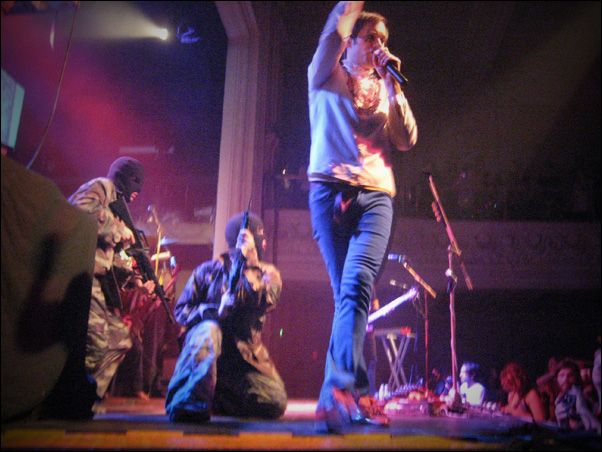
Last weekend, Michael got that chance, as did about 400 other people who crammed through the doors of Daredevils & Queens for a night that was a reunion, a nostalgia fest and a damn good time rolled up into one. Over a dozen bands from the late 1990s got back together to perform. Michael, ever the dapper stylist, even got gussied up for the occasion—in a pair of jeans with a hole in the crotch, and a “F*ck Section M” T-shirt.
I showed up a little bit late, but immediately the “reunion” aspect was made clear. I ran into people, now married and pregnant, who I once stayed up drinking gallons of gin with until 3am. I ran into people who asked, “So, how’s it going?” who didn’t bother to explain if they were asking how it’s been going for the last 10 years or the last 10 minutes. And I ran into people who referenced incredibly esoteric jokes I’d made back in 1999 with pinpoint precision—and this was all before I could make it out back to watch some bands.
Thus, the night was a blur, but in the best possible way. I played bass with the Blockheads, who hadn’t played in a decade and whose bassist Mark Aver has since moved to the East Coast. It was the most satisfying 35 minutes of fun I’ve had in a while. To Dave Fichera, Paul Fichera, and Steve Choi, the Blockheads, the only local band I truly loved besides Cropduster in the late 1990s—thanks, bros.
I caught 20 Minute Loop, Cropduster, Brian Moss, and the Paranoids, but I think the greatest slice of reunion nostalgia for the night was the Reliables, who were all, like, 13 years old when they formed and maybe 17 when they broke up. It was just like an old Reliables show—equipment failures, not knowing how to use a tuner, confusion over which song was being played, the microphone stand falling over—except that instead of standing around dumbfounded, as most people did in 2001, the large crowd showered them with love.
The Reliables’ set list canvassed the trajectory of adolescence, from early songs about suburban angst like “Sad Man” (“My mom just won’t let me be / I know that I’m kind of a loser / Masturbation is only for Godzilla”) to the totally awesome and bittersweet “Another Shitty Day” to the very last song the band ever wrote, “Houses Without Windows,” a depressing, existential rumination on life at midnight as seen from an airplane window which asks the question: “Don’t you wish sometimes you’re dead?”
Not many people cared about the Reliables when they were around, but at the Section M reunion, bolstered by guest drummer Caitlin Love, they were basically superstars. “I think this is the most people we’ve ever played to,” noted Jeremy, and he was right.
Piles upon piles of old Section M magazines were being given away at the front door (Worst cover ever? Issue #10: Halou, Cohesion, Kabala, and Skitzo) and I even saw a very dazed but very validated Michael Houghton for a second. “Can you believe this?” he asked, motioning to the incredibly packed Daredevils & Queens. “Look at all these people!” It’s true. It was pretty amazing.
One final note: in honor of the 10-Year Anniversary of the magazine, Michael has allowed me to finally spill the beans about the “Scene & Heard” column in Section M, the gossipy, newsy column written by the elusive “Jane Sez.” No one ever knew who Jane Sez was, and since “Scene & Heard” was easily the most popular column in every issue, there were many, many guesses over the years.
Now it can be told: Jane Sez was Michael Houghton. Well, for some issues, at least. The first few were written by Christine Alexander from Little Tin Frog, after which it turned over to Michael and then became a communal effort by Michael and the rest of the upper staff of the magazine, including Sara Bir. Keeping the Jane Sez identity a secret was almost as fun as writing the column itself, Michael says. “The best part about it is that so many dudes came up to me at shows, when I was doing most of the ‘Scene and Heard’ writing,” he recalled the other night, “and they’d say to me, ‘I’m so in love with Jane Sez. I totally wanna fuck her.’”
——
There’s an excellent photoset from the night, taken by Caitlin Childs, over here.
Sara Bir, who worked for Section M as a writer and managing editor, takes a good hard look at the magazine both here, and elucidates even further here.
A few members of the staff from the magazine share their thoughts and opinions here.
Section M’s official website, still up and running, is here.

T.R.O.Y. Robert Steinberg

0

Dr. Robert Steinberg, co-founder of Scharffen Berger Chocolate Maker, died yesterday after a lengthy fight with lymphoma. He was a fine person and the best maker of chocolate I’ll even know.

I worked at the Scharffen Berger factory for a little less than two years. A week into my job there, I went to a party in San Francisco and drank a lot. Just as I was getting into boorish obnoxious behavior, I turned around and who do I see standing there in a tuxedo but Robert, fresh from a benefit gala at some museum. I remember pummeling him with loud and sloppy conversation about recipe testing, and him listening patiently. Catastrophe averted.

I was lucky. Robert, to some, could come across as cranky. He had a passion for getting the facts straight, something that caused his chocolate-related writing to be wordy and dry at times. He knew more about the finer, technical points of cacao and chocolate than a lot of yahoos who claim to be chocolate experts will ever know, but he wasn’t saucy about it.

I worked at Scharffen Berger during an interesting time, a period shortly before the company was sold to Hershey. It was a difficult choice for Robert and his SBCM co-founder John to make, but it was probably for the best—Scharffen Berger needed to grow, and it had grown all it could under those circumstances. It was like sending a kid away to college, terrifying but exciting. I extend a fat middle finger to those who accused Scharffen Berger of selling out.

Anyhow, that sort of talk might have been off-putting to Robert, so I’ll cap it. I’m thankful for the chance I had to learn from him and the company he and John Scharffenberger started and led. Pastry chef and cookbook author David Lebovitz wrote some very kind and insightful words about Robert and his influence on chocolate in America in the last decade. It’s worth a read. Robert, today I will eat a Scharffen Berger 70% Bittersweet bar just for you. It’s still my favorite chocolate in the world.

Letters to the Editor

09.17.08

From Cover to Cover

I have to admit I was somewhat surprised when I read Sara Bir’s article regarding the 10th anniversary party for Section M magazine (“F*ck Section M,” Sept. 10) due to the amount of sheer bitterness and obvious personal distain that Bir has for the magazine. I don’t know if she intended that to shine through, but it was obvious.

I don’t know Ms. Bir, but I’ve been a fan of her articles in your paper for some time. Like her, I was involved with the magazine at one point, though I could hardly be called part of its staff. I also was a devoted reader throughout the magazine’s existence.

So, to answer the question: “Why celebrate a magazine that never made a profit, was littered with typos, found a miniscule readership at best and, it could be argued, existed to serve itself?”

Because it was a huge success. For a short glorious time, Section M united the music scene based out of the Phoenix Theater, gave us something to rally around and gave local bands a goal to shoot for. To be on Section M’s cover was a big deal in the small pond that is the North Bay music scene. Everyone from fans to the musicians themselves read Section M to see what everyone else was doing. Who was recording? Who was releasing an album? Who was on tour? To this day, the Bohemian really hasn’t matched Section M’s local music coverage. How could you? Section M was devoted to local music coverage from cover to cover.

It was flawed, and yes, it was troubled, but it gave us all something to debate and argue about (Why did they never give the Velvet Teen the cover?). Maybe that Section M existed in the first place is impressive enough; it helped give a lot of us our start. Even if Section M wasn’t perfect, it was a success, and just like the bands it covered—it just couldn’t last forever.

Dominic Davi

Philadelphia, PA

Define Failure

I made the two-hour trek to attend the Section M 10th anniversary reunion show, looking forward to seeing old faces and to experience again the magic of Sonoma County music. The show was an absolute, joyful success—the party that Section M never had but always deserved. As a writer and editor for the last half-dozen issues of the magazine, I finally got to connect with people who had come before me.

Imagine my disappointment upon reading the Bohemian’s retrospective article. History is littered with absolutely awesome magazines that are no longer publishing, but I don’t know how five years of publication can really constitute “failure.” I’m looking back through issues at the different bands we covered that have since broken up—have they failed, too?

So many people put so much effort into the magazine over the years that I cannot view the stack of back issues in front of me as a failure. I have my own level of regrets being involved, but Section M is the reason that I am finishing my English degree right now. Section M was the moment that I realized that I could love something enough to work for it.

Kevin Jamieson

Rancho Cordova

A rare and lucky time

While working at the Section M reunion party on Saturday night, I realized that never in my life had I seen so many people enjoying themselves at an event that might otherwise remind people of their mortality. Having worked at that music magazine for nearly every issue, I was—to say the least—a bit hesitant. However, despite my doubt and that of so many others, it was a success.

Complete with nearly all the movers and shakers of Sonoma County’s music scene of the late 1990s and early 2000s, the smiles and cringes of recognition abounded. Those who were missing were sorely missed—particularly Logan Whitehurst, whose genius cartoons and essays were one of the mag’s biggest highlights.

Despite the setbacks, the dramas and the general shittiness of volunteering for a magazine that often catered to the flaky elite of big-fish-small-pond music, the five-year run was exciting. Raised on blues and Beatles, in no other circumstance would a kid like me have been so readily exposed to so much talent and drive. A boon of inspiration, that magazine led me to pursue music and all of its facets since.

I owe a barrel of gratitude to that magazine and many of its staff members. Had it not been for them, I may not have become a published illustrator. It was a rare and lucky time for me. And despite the criticisms—many of which I once held—I have to admit there isn’t much like it out there.

Oona Risling-Sholl

Santa Rosa


&–&–>

Artist-on-Artist: Cartooning with Trevor Alixopulos and Alexis E. Fajardo

0

While working on my article about the Schulz Museum in this week’s Bohemian, I had occasion to sit down with two excellent cartoonists, Trevor Alixopolus and Alexis Fajardo. I was there, ostensibly, to ask them questions about the museum’s guest cartoonist program; but as you’ll read below, what unfolded instead was a freewheeling chat between the two artists about the comics industry at large, the artists’ distinct working methods, the public misunderstanding of comics, the magic of working with ink and paper, and the plague of the Comic Book Store Guy on The Simpsons.

The interview took place inside of Charles Schulz’s old studio at 1 Snoopy Place, where Schulz drew Peanuts every day for over 30 years. We could still see the indentation on the wood-paneled wall where the back of Schulz’s chair left a daily mark. His crow quill pen and inkwell sat nearby, and all of his books were left intact on the shelf. It was a perfect place to sit and talk about comics.

The conversation is long, but I was fascinated by the amount of common ground shared by what are two very different cartoonists. Fajardo’s series, Kid Beowulf, is a cleverly historic prequel to the famous Beuwolf story, full of swords and kings and dragons, whereas Alixopulos’ latest, The Hot Breath of War, is a surreal rumination on modern society, involving cell phones, nightclubs and one-night stands. They’re both fantastic, and I thank both Trevor and Alexis for sitting down and being so open about their work.

The conversation starts below.

The Community Organizer

0

09.17.08

I spent entire parts of August avoiding talking with my mother about the song “Sticky Sweet Jesus,” a moving new track by Santa Rosa’s NORBAY-nominated indie rockers the Spindles. “What does that song mean?” she’d keep asking me, and I’d keep answering, “I’m still trying to figure it out.” Sure, it was partly an excuse for not wanting to offend her with a heated debate about my sense that the song wrestles with the shared failures of salvation and pleasure. And yet I still feel a genuine, thrilling compulsion to know what the heck “Sticky Sweet Jesus” means after all.

Coalmine Spindle, frontman and songwriter for the Spindles, tells me that many listeners have connected to the song; musicians in particular dig it, even though it’s a simple repetitive pop tune. “I definitely didn’t write it as an antireligious rally cry,” says Coalmine, who attended Catholic school and has three aunts who are nuns. Instead, he says, “it really does point to some inner conflict I have about the guy—the revulsion of who has taken Jesus as their flag, i.e. the church establishment, yet head-to-head with that is an attraction to the first and most committed rebel, who literally gave life and limb to challenge the thoughts and schemas of his peers.” An internal spiritual tug of war? “Maybe that’s what people identify with,” he suggests.

“Sticky Sweet Jesus” is the opening cut on the Spindles’ soon-to-be-released second full-length disc Present Herman Berlin (advance tracks can be heard on the band’s MySpace page). The band’s melodic, wistful folk-rock is sharper and punchier than on earlier work, with jumpy pop tales like “Pen and Paper,” breezy country-rockers like “Something Serious” and Beatles-like dramatic build-ups like “Overhead Projector.” The final cut, “Two Guns (And the Ashes of a Dead Man),” subtly returns to family history as an awkward spiritual source for romantic discomfort.

Present Herman Berlin features music recorded last year, but “it’s a solid picture of who the Spindles were for a couple of years—lots of instruments, really using our resources of friends with amazing talent,” says Coalmine, citing the presence of notable guests like Amber Lee on accordion, Muir Houghton on cello and banjo, Achilles Poloynis on trombone and original drummer Dan “Syd” Lindley on drums. The band’s core (Jamie Voss on bass, Henry Nagle on guitar and pedal steel, Sari Flowers on vocals and Jonathan Hughes on drums) have already begun recording more new material, and Coalmine reports that “the most current stuff is a little edgier, more streamlined and frothing with confidence.”

The Spindles appear with a smattering of local bands at the Handcar Regatta on Sunday, Sept. 28, at Santa Rosa’s Railroad Square. The event, billed as “an exposition of mechanical and artistic wonders,” runs from 9:30am to 6pm; music performances begin at 11:30am. Free. For more information, visit [ http://www.handcar-regatta.com/ ]www.handcar-regatta.com.


Tortes and Tarts

09.17.08

A bent kind of trifle, a semi-translatable parable about the hazards of getting along by going along, I Served the King of England is a Central European comedy about pandering, smiling subservience to whatever class is ruling. There is no malice to it. It’s possible that some people, perhaps those who are deeply entrenched in a hospitality-industry training program, might not even suspect the film has an edge.

I Served also has the pre-morality of silent comedy, including a little chap’s unscrupulous climb to the top followed by a fall caused by too much trust in the status quo.

It’s a simple fact of cinema that no one looks trustworthy in a blonde mustache. Ivan Barnev, as Jan Dite, grows one as sign of his rising status as a waiter. He advances from an under-waiter at a provincial bar to the counter at the best hotel in Prague. As the movie begins and ends, he’s running a dusty gasthaus in the forest. He tells his life story to his friends, about his years of swanking it about in Prague. There’s a Munchausian touch to his reminiscence. He once personally served a banquet of roast camel to the emperor of Ethiopia, a shorty in a tarboosh, who honored him with a sash and a medal. He still has it, and it hangs on his small frame like the sword and braid on Buster Keaton in The General.

Jan’s acumen with a tray and a bottle of wine made him famous, but he also specialized in the arrangement of the goodies waiting upstairs for the regular customers: girls wheeled out on lazy Susans or decorated with delicacies like flower petals, slices of fruit and, especially, money. And then—always minding his role as a servant—he holds up a mirror to the reclining ladies, like Cupid in a Renaissance painting, letting these Venuses see themselves.

After the Reich acquires Czechoslovakia, Jan gets involved with a cute, ardent Nazi (Julia Jentsch) who gets inhabited by the spirit of der Führer, Exorcist-style.

As in the creamy Lubitsch comedies it echoes, I Served has plenty of babes. As the feminist cartoonist Colleen Coover put it, “Pretty girls make people happy.” If that principle seems too boneheaded to you (it’s sure working for John McCain), it’s probably best to avoid this Czech movie. Director Jíri Menzel is wry about the connivance between curvy tarts and the mustached old men who hire them. Much of the film is like that scene in Some Like It Hot where the row of millionaires in rocking chairs start rocking harder when Marilyn sashays by “like jello on springs.” While providing an array of actresses in fetching ’30s summer clothes, Menzel counterpoints by hinting at the corrosion of a society from too many sweets. This tendency is, of course, brutally overcorrected by the pious communists.


The film is a droll view of a country with two terrible occupiers, and it shows how the spirit survived even after the borders capsized. The area is still dependent on the service industry; the Pilsner Urquell product placement in this movie is as omnipresent—and as chic—as the Stella Artois ads in a Landmark Theater. I Served the King of England is slightly silly but a very succulent movie. It has the sensible idea that one can counter the nightmare of history with fervent dreams of bare skin and thick frosting.

 ‘I Served the King of England’ opens Friday, Sept. 19, at Rialto Cinemas Lakeside, 551 Summerfield Road, Santa Rosa. 707.525.4840.


New and upcoming film releases.

Browse all movie reviews.

How Long Blues

0

09.17.08

Fifty years.

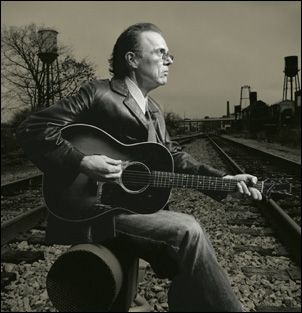
That’s how long Jorma Kaukonen and Jack Casady have been making music together, a partnership that stretches back past their time together in the Jefferson Airplane to their high school years in Washington, D.C.

“I remember it like it was yesterday,” Kaukonen says of their very first encounter, which took place at Casady’s home. Kaukonen was friends first with Jack’s older brother, “but then, as Jack was already taking music lessons, we realized we had more in common and we just started hanging out. And before you know it, half a century’s gone around.”

The biggest part of those five decades has been devoted to playing together as Hot Tuna, the blues-oriented, after-hours side project they launched while the Airplane was still soaring. Throughout that history, the band has shifted between electric and acoustic configurations; they’ll perform without amps at the Mystic on Sept. 24, which Kaukonen concedes is his preferred format.

“Electric music is very seductive. It’s a lot of fun to play and I enjoy that,” he says. “But I don’t think I love it with the same basic intensity that I love acoustic music. I’ve never loved my electric guitars the way I love my acoustic guitars. Not that I disrespect them or don’t like them, but I never had a problem with selling them or trading them. So yeah, I think the acoustic thing is closer to my heart.”

This view is entirely consistent with his early interest in the finger-picking style of country blues developed by the Rev. Gary Davis, an influence that can still be heard in Kaukonen’s recent series of solo recordings, which began with 2003’s Grammy-winning Blue Country Heart. A newly completed solo disc, set for release next spring, has provided fresh material to be “co-opted for Hot Tuna” set lists, he jokes.

While the band—which now includes mandolin ace Barry Mitterhoff as a member—still gigs regularly, a healthy slice of Kaukonen’s time is also devoted to his Fur Peace Ranch Guitar Camp, a homespun enterprise housed in the rustic rolling Appalachian foothills of southeastern Ohio.

“We’re into our 11th year now,” he says, a note of satisfaction audible in his voice. “I call it a guitar camp because I’m a guitar player, but we have all sorts of instruments”—and a revolving list of Hall of Fame instructors that also includes David Bromberg, Stephan Grossman, Larry Coryell, Rory Block, G. E. Smith, Warren Haynes and many other well-known figures.

“Our weekends are Friday morning through Monday morning and people come in for those weekends, and all you gotta do is play music and talk about gear and forget about the rest of the world,” Kaukonen chuckles.

For some, it’s a fantasy camp with tuning pegs, but there are also times when the conversation turns to the business of making music. “My take is, you just gotta love it,” Kaukonen says. “You can’t go into the music business prepared to get rich, because that’s probably not going to happen—but it might, you never know.”

Reflecting on his own musical history, Kaukonen still seems surprised by it all. “Oh man, I owe such a huge debt of gratitude to the Airplane, my various pals in the Airplane,” he says. “I wasn’t a kid when I joined the Airplane, I’d just graduated from college, but I went from being really nobody to being somebody in the blink of an eye, as did we all. I mean, how often does that happen? And as a result of my being in it, I’ve been a pretty successful folk musician for the rest of my life.

“It was just more exciting than words can express.”

While the Airplane represents the distant past, Hot Tuna have managed to stay fresh. “Jack lives in California and l live in Ohio, but every time we get together, we bring a little something new to the mix. Now, I’ll be the first to admit that maybe we’re the only people who can hear when we do new stuff,” Kaukonen jokes, “but I feel like we’re always throwing something new, in some small way, into even the oldest songs.”

So what, then, is the key to this loose but lasting partnership? “Jack and I are very different people, but we respect each other, we’ve never had an argument,” Kaukonen says. “We disagree about a lot of stuff, but we can always agree on the important things.

“And,” he laughs, “we’ve never had a band meeting.”

Hot Tuna perform Sunday, Sept. 28, at the Mystic Theatre, 23 Petaluma Blvd. N., Petaluma. 8pm. $30. 707.765.2121.


Fire On Ice

0

09.17.08

Getting caught being brown hasn’t gotten any easier in the North Bay but a new lawsuit alleging racial profiling by the Immigration and Customs Enforement (ICE) and the Sonoma County Sheriff’s department may actually change constitutional law.

With a suit brought Sept. 4 by the ACLU of Northern California on behalf of three Sonoma County plaintiffs and the Committee for Immigrant Rights of Sonoma County (CIRSC), it appears that the big guns—or at least the big acronyms—are paying attention to the local sheriff department’s three-year collaboration with ICE.

“When local police act as immigration agents, they infringe on the fundamental rights of residents and create a climate of suspicion and fear that undermines public trust and public safety,” charges ACLU lead attorney Julia Harumi Mass.

Aiming to double up efforts, ICE agents often ride along with officers, being on the spot to detain a person who does not present adequate papers or has an outstanding warrant. As reported before in these pages, such sober reasoning does not always prevail. “They’re detaining them on the color of their skin or having given a Hispanic name to an officer or anyone who looks Latino when they drive past,” says Santa Rosa attorney Richard Coshnear, a member of the CIRSC. “Once detained, they may or may not have ID and turn them over to the ICE agent and the ICE agent develops probable cause for not being documented.”

Coshnear contacted several agencies about client cases he was defending in 2006, most of which involved area residents of Latino heritage being taken into custody for such minor infractions as cracked windshields and then held for days without being charged. 

 “Racial profiling is a large part of the case,” Coshnear explains. “Another part is what the ICE puts on people in the jail—called a detainer or a hold—is being used illegally. Congress has set up a scheme that when people are arrested without a warrant on suspicion of being in the U.S. without permission, that does not involve picking them up, say, on a Thursday, keeping them until Tuesday, and then taking them to someone to discover if they’re really legally here. That’s a denial of due process.”

And that touches upon the Fifth Amendment, which protects everyone in the U.S., including non-citizens, from being punished without due process of the law.

The ACLU spent months researching constitutional law regarding the ICE sweeps in the North Bay and holding community meetings to hear personal stories before agreeing to take the case. “We want to show that what ICE is doing here in Sonoma County and across the country is a violation of due process, which is constitutional law,” Coshnear says.


Black Crowes: Scratch That

0

Three hours after our Sept. 17 issue went to the printer, we received notice that the Black Crowes, who had a Sept. 21 performance scheduled at the Wells Fargo Center, had canceled. In anticipation of the many Black Crowes fans—there are some, right?—out there who would hungrily eat up heapin’ helpin’s of Black Crowe copy, we duly engaged Karl Byrn to write a glowing Critic’s Choice on the show, which will be in print now for a full seven days without a Black Crowes show at all.

If you purchased tix, full refunds are forthcoming; charge-backs on credit cards or refund checks via post.

F*ck Section M, Revisited

For the September 10th issue of the Bohemian, I wrote an article about the background of Section M magazine, which covered the North Bay music scene in the late 1990s and early 2000s. As a former Section M staffer, I took pains to remain objective and not come off as as a nostalgia-drunk painter of sunny rainbows and pretty...

Live Review: Section M Reunion at Daredevils & Queens

Right from the start, I suppose I should admit, I hated Section M magazine. I didn’t want anything to do with it, I didn’t think it was helping the music scene, I wrote irritated letters to the editor, and I talked shit about it as much as I could. Mainly, though, I was jealous, both of the writers—because I wasn’t...

T.R.O.Y. Robert Steinberg

Dr. Robert Steinberg, co-founder of Scharffen Berger Chocolate Maker, died yesterday after a lengthy fight with lymphoma. He was a fine person and the best maker of chocolate I'll even know.I worked at the Scharffen Berger factory for a little less than two years. A week into my job there, I went to a party in San Francisco and...

Letters to the Editor

09.17.08From Cover to CoverI have to admit I was somewhat surprised when I read Sara Bir's article regarding the 10th anniversary party for Section M magazine ("F*ck Section M," Sept. 10) due to the amount of sheer bitterness and obvious personal distain that Bir has for the magazine. I don't know if she intended that to shine through, but...

Artist-on-Artist: Cartooning with Trevor Alixopulos and Alexis E. Fajardo

While working on my article about the Schulz Museum in this week's Bohemian, I had occasion to sit down with two excellent cartoonists, Trevor Alixopolus and Alexis Fajardo. I was there, ostensibly, to ask them questions about the museum’s guest cartoonist program; but as you’ll read below, what unfolded instead was a freewheeling chat between the two artists about...

The Community Organizer

09.17.08I spent entire parts of August avoiding talking with my mother about the song "Sticky Sweet Jesus," a moving new track by Santa Rosa's NORBAY-nominated indie rockers the Spindles. "What does that song mean?" she'd keep asking me, and I'd keep answering, "I'm still trying to figure it out." Sure, it was partly an excuse for not wanting to offend...

Tortes and Tarts

09.17.08A bent kind of trifle, a semi-translatable parable about the hazards of getting along by going along, I Served the King of England is a Central European comedy about pandering, smiling subservience to whatever class is ruling. There is no malice to it. It's possible that some people, perhaps those who are deeply entrenched in a hospitality-industry training program, might...

How Long Blues

09.17.08Fifty years. That's how long Jorma Kaukonen and Jack Casady have been making music together, a partnership that stretches back past their time together in the Jefferson Airplane to their high school years in Washington, D.C. "I remember it like it was yesterday," Kaukonen says of their very first encounter, which took place at Casady's home. Kaukonen was friends...

Fire On Ice

09.17.08 Getting caught being brown hasn't gotten any easier in the North Bay but a new lawsuit alleging racial profiling by the Immigration and Customs Enforement (ICE) and the Sonoma County Sheriff's department may actually change constitutional law.With a suit brought Sept. 4 by the ACLU of Northern California on behalf of three Sonoma County plaintiffs and the Committee for...

Black Crowes: Scratch That

Three hours after our Sept. 17 issue went to the printer, we received notice that the Black Crowes, who had a Sept. 21 performance scheduled at the Wells Fargo Center, had canceled. In anticipation of the many Black Crowes fans—there are some, right?—out there who would hungrily eat up heapin' helpin's of Black Crowe copy, we duly engaged Karl...
11,084FansLike
4,446FollowersFollow
6,928FollowersFollow