
Talking Pictures

0

Future Tense

By David Templeton

David Templeton takes interesting people to interesting movies in his ongoing quest for the ultimate post-film conversation. This week, he takes author/culture maven Mike Wilkins to John Woo’s potent action thriller Face/Off.

MIKE WILKINS stares blankly into space, his open, friendly face suddenly contorted into a grimace of sheer mental effort. “Sheeesh, what is the name of that movie? I should never try to remember things this late in the day,” he murmurs, shaking his head as if to wake up his brain.

We are hanging out in a big shopping mall, just after seeing the nifty new John Travolta/Nicolas Cage film, Face/Off, directed by legendary Hong Kong filmmaker John Woo. By a happy coincidence, it is June 30, the day Hong Kong passes from Britain to China. Wilkins has been passionately describing a scene from one of his favorite of Woo’s Hong Kong films–a scene in which an outrageous 30-minute indoor gun battle is interrupted by a long, calm, eventless elevator ride that delivers the protagonists from one level of lead-pumping action to another–but the name of the movie just refuses to come to mind.

Fortunately, I’ve come prepared with my copy of Sex and Zen and a Bullet in the Head: The Essential Guide to Hong Kong’s Mind-Bending Films (Fireside, 1996). Wilkins’ tortured expression melts into one of happy recognition. It’s his own book, co-written with fellow film fan Stefan Hammond. Within seconds, he’s located the chapter on John Woo and announced the name of the film: Hard-boiled, starring Danny Lee and Chow Yun Fat.

“The elevator ride was a funny, refreshing pause in the middle of all the bloody mayhem,” he says. “It’s a classic John Woo moment.”

Wilkins, perhaps best known as the author of The New Roadside America, a brilliant homage to the singular weirdness of Americans’ penchant for creating and patronizing roadside attractions, has been a fan of Hong Kong cinema since his teenage days. In Face/Off–Woo’s third film since relocating to the States–Wilkins counted a whole spate of cinematic touches that are linked with the filmmaker’s style.

“People sliding across the floor, firing with two-fisted guns,” he lists. “The doves. The extended Mexican standoff, with guns pointed in every direction. And, of course, the jacket.”

The long black coat, shown flapping in the wind, in slow motion: here worn by Nicolas Cage’s psychotic terrorist and later by Travolta’s conflicted FBI man, who has surgically swapped faces with his rival for undercover purposes, the coat has been a staple of Hong Kong movies since 1986’s A Better World.

“In fact,” Wilkins explains, “it caused a rage in Hong Kong. Chow Yun Fat wore the coat; his character’s name was Mark. So that summer in Hong Kong–a very warm place in the summer–‘Mark coats’ were the big fashion thing. All these teenagers who wanted to be cool wore these very long black coats. It was a real phenomenon.”

“We should probably discuss the significance of today,” I suggest. “The big ‘handing over’ event in Hong Kong.”

“Right,” he nods brightly. “My co-author, Stefan, is there. He lives there now.” With feigned alarm, Wilkins’ volume begins to escalate. “He’s so far undercover he doesn’t know he’s not Chinese. His loyalty is twisted! He’s actually living a John Woo movie!”

“How might the change affect the movie business in Hong Kong?” I wonder. “Well, it’s already affected it,” he replies. “You may have noticed that the stuff in our book all ends in 1995. There was a drop-off in quality, with lots of rumors of Triads [Chinese crime families] becoming more actively involved in filmmaking.

“Unfortunately,” he goes on, “they’re criminals, not moviemakers. So the product became very slapdash, very uninspired. Suddenly, too, there was a brain drain: Woo left Hong Kong, and a whole exodus of talent followed.”

He pauses to flip through the book, allowing the falling pages to create a small wind, blowing our abandoned sugar wrappers across the table and over the edge. I am about to point this out as a curiously apt–if overly poetic–metaphor, when he glances up.

“You know, though,” he says, “the takeover has been anticipated for years, decades. In many ways, the fear of the unknown, dread of the future, has been infusing the Hong Kong action films with a neat stylistic darkness, for years. Woo’s own films reflected that.

“Let’s bring Jung into it, with the whole collective unconscious thing: fear of 1997. The threat of this coming–of today coming–was an incredibly creative impetus for many of these movies.”

“And now?” I ask.

“I think people will be very timid at first,” he answers. “Filmmakers might go over the line a little bit, just to see what happens, and if they don’t get thrown in jail, the next film might go a little further. There will be some testing.

“Stefan says there have been some good things released in the last few months,” he shrugs. “Some promising directors are stepping up. So the Hong Kong movie industry–Hong Kong itself–could go either way. The future, as always,” Wilkins laughs, “is wonderfully uncertain.”

From the July 10-16, 1997 issue of the Sonoma County Independent.

© Metro Publishing Inc.
Juilliard Park

0

Faded Jewel


Michael Amsler

Looks Are Deceiving: The serene beauty of Juilliard Park belies the crack pipes in the restrooms and random violence.

Juilliard Park may get a face-lift

By Paula Harris

LIKE A ROMANTIC English-style garden replete with wooden and stone bridges spanning lily ponds, large beds of roses blooming pink and coral, and cool green expanses of manicured lawn, Juilliard Park shimmers in the sunlight. During this balmy July lunch time, the nine-acre park is a calming pocket within the downtown bustle. Yet on a day that demands walking, snoozing, and lunching al fresco, the park–Santa Rosa’s faded crown jewel–is eerily empty as usual.

Horror stories of crime in Juilliard Park–a hangout for derelicts, druggies, and hookers–have not gone unheeded. Now a cooperative effort by neighbors, parks department officials, and local police officers is having a positive effect.

“The perception that [Juilliard Park] is a snake pit is untrue,” says Santa Rosa Parks Department Deputy Director Bill Montgomery. “We’re working to offset that perception.”

In an effort to “take back the neighborhood,” Bob and Dee Wishard started the Juilliard Park Neighborhood Watch Association three years ago. The watch covers the corner of Sonoma and Santa Rosa avenues, south A Street where it meets Santa Rosa Avenue, and all of Sonoma Avenue to the freeway, encompassing some 250 households and 30 businesses.

“People say, ‘Nothing ever changes,’ but it does,” Dee Wishard says. “They don’t remember what it was like here when finding a used syringe in your yard was a regular occurrence.”

Still, she refuses to walk through the park at night. “I’ve been harassed and propositioned a few times,” she explains. “People hide in the park, sleep in the bushes, and blatantly sell drugs. It’s scary.”

Santa Rosa Police Sgt. Tony Wynne says violent crimes in the park area have declined substantially in the last several years. “Public intoxication, drug dealing, and prostitution have also decreased somewhat, but still occur and we still address them,” he says.

Police records show that there were 414 reported incidents, ranging from trivial to a serious stabbing, in Juilliard Park in 1995; 318 reports in 1996; and another 208 during the first six months of this year, up from 165 for the first six months of 1995 and 167 for the first six months of 1996. There were 27 enforcement calls in June 1995, six in June 1996, and 28 last month.

The increase may be reflect increasing vigilance on behalf of the neighbors, Sgt. Wynne says, and greater police presence; neighbors say Wynne encourages officers to write their routine reports in the park, and many residents are on first-name terms with officers.

Residents report relationships with the city have improved since the neighborhood policing strategy began four years ago. “There’s a good police response time and graffiti are way down,” says resident Edward Halton.

With the recent arrest and subsequent jailing of one drug dealer who had long plagued the park, says Wynne, comes a push to increase such family-oriented activities as a playground and sports courts to displace “undesirables” who have had the run of Juilliard Park.

“The park [which is more of a garden] was never intended for that kind of use, but the city wants to get everyone involved to make a long-lasting impact,” says Wynne. “We either have to cement over the park or change the way we use it, because the city is spending a lot of money maintaining the upkeep for a few derelicts.”

PARKS DIRECTOR Montgomery estimates it costs $54,000 a year to maintain the park. The site, across the street from the Luther Burbank homestead, once was the showplace home and gardens of C. F. Juilliard (a cousin of the Juilliard family of the famous Juilliard Music Academy in New York), who came to Santa Rosa in 1872 and went into the local wine and fruit brokerage business. In 1931, his son Frederick donated the old Juilliard home site to the city.

With $100,000 in the city budget to upgrade Juilliard Park–a project delayed for two years while the city oversaw the Creek Walk Plan–officials are grappling with making improvements while keeping the park’s sense of identity intact.

Montgomery and Park Planner David Kull revealed to residents last week that the city has been toying with ideas of creating in the park a children’s play village of Victorian storefronts, or an intricate Small World theme echoing the buildings of Santa Rosa; or a concrete zoo of sculpted animals; or an arbor housing traditional playground equipment.

Although planners favor a non-traditional playground–a “conversation piece befitting the park,” says Kull–residents prefer a more active play area. “I’d just like to see the kids out here throwing Frisbees,” says Wishard.

Other improvements may include moving the Church of One Tree, now tucked into a remote corner of the park and housing the Ripley Believe It or Not Museum, to a more visible location either at the park entrance or at the corner of Sonoma and Santa Rosa avenues at a cost of up to $3 million; reconfiguring the rose beds and building a bocce ball complex; and replacing a missing waterway bridge.

Montgomery first wants to move the group-picnic area out of the redwood grove, which he says has become a “dark, unattractive hangout.” Park rehabilitation plans are in the embryonic stage, and no action will be taken until at least next year if the plans are approved by residents and city officials.

Meanwhile, special events–such as the Arts in the Park concert series and last month’s antique auto show–are drawing visitors to the long-neglected park.

“We hope to attract a regular presence of positive use into the park,” Montgomery says.

From the July 10-16, 1997 issue of the Sonoma County Independent.

© Metro Publishing Inc.
The Scoop

An Earful

By Bob Harris

MIKE TYSON is now the demon of the sports world because he bit Evander Holyfield. That’s possibly the stupidest thing I’ve ever heard in my life.

Don’t get me wrong. I’m not pro-biting. The only time I’ve ever nibbled somebody’s ear was in vastly more pleasant circumstances.

But let’s put this in perspective. We’re complaining because Mike Tyson–a wife-beater and convicted rapist still on probation–bit somebody . . . when he should have just done the honorable thing and tried to beat the guy into unconsciousness like we were paying him to.

Nipped him on the ear? How dare he? Better he should take his fists and pound the guy until his brain shuts down. (Clipped British accent here.) His lobe is bloodied? Good God. The animal! He should have displayed some chivalry, and simply throttled the opponent’s abdomen until the guy’s organs erupted.

Don’t talk to me about rules. This isn’t the Olympics, where headgear, gloves with marked striking areas, and three-round fights emphasize skill and minimize injury. Professional heavyweights are paid millions of dollars to do exactly one thing: beat people savagely until they can no longer control their own bodies.

In boxing, you’re allowed to kill your opponent if that’s what it takes. It happens sometimes, and there’s no fine or inquiry–it’s an accepted side effect of a job well done. Hey, he’s dead, those are the breaks. Next . . .

Rules like “No Biting” allow us to pretend that it’s a noble sport–the Sweet Science–when we all know the only reason we dig the heavyweights is because they inflict the most tissue damage. There wasn’t a single person watching who didn’t expect to see blood flying around, and the only reason it’s such a big story is our morbid thrill over the unusual way in which it did. “Tyson did what?” we ask. “That’s awful,” we say. “This I gotta see.”

If we’re all that outraged, why the repeated close-ups of the wound on every channel except the Home Shopping Network, which skipped the story solely because there was only one fragment to sell?

Even the president had to announce that he was “horrified”–a word, by the way, he would never think to use regarding civilian deaths in Iraq, CIA death squads in Latin America, or the recent head-in-flames electrocution of a convict whom the victim’s family considered innocent–but Clinton didn’t say he turned away.

Yeah, I watched the videotape, too, several times. How often do you get to see a guy chomp on an ear?

You don’t see car wrecks every day, either. But that doesn’t mean we should charge admission.

If we have a societal need to see people beating each other, so be it. But let’s stop calling it a sport.

Let’s just put a camera in the LAPD holding tank, uplink the feed to a satellite, and be done

THERE’S A LOT OF TALK these days about how there are hidden patterns in the Bible which only modern computers can pick out. By choosing arcane and sometimes arbitrary patterns in the old Hebrew text, a couple of folks are trying to convince everybody that God has a secret code, and they’ve broken it.

Apparently God works a lot like the CIA. Well, they do say he works in strange and mysterious ways, and so does the agency . . . Still, it’s sort of a stretch.

Now, don’t get me wrong: This isn’t about whether the Bible is divine or God exists or anything like that. That’s all up to every one of us to decide.

But when it comes to using computers to find patterns, the fact is we can find whatever we want to.

Let’s suppose I want to prove that God planted hidden messages in the name of, oh, Ronald Reagan. It turns out the name “Ronald Reagan” contains the same letters as “Adrenal Organ.” Which, um, shows how excited the country was to elect him. Ta da!

See how this works?

Reagan was in all those Westerns in wide open spaces; his name also anagrams to “Darn Long Area.” The S&L crisis started on Reagan’s watch. Sure enough, another anagram is “Grand Loan Era.” Iran-Contra? “A Deal Rang Ron.” Of course, if you didn’t like Reagan, there’s a flipside. Count the letters in Ronald Wilson Reagan: six letters, three times–666. So you could also argue that Reagan was the Antichrist.

Then again, consider my name: Robert Edward Harris–666 again. Hmmm, looks like I’m part of the grand cabal myself. And I just blew my cover.

NASA WANTS TO SHOOT Sen. John Glenn, D-Ohio, into space. Some folks are reluctant because of his age. I say we should light that candle ASAP.

As you know, Glenn was a big hero a few decades back when he became the first American to orbit the earth. Cold War politics aside, that took courage. We don’t have many heroes. A do-over would be fine.

Heck, let’s send up the whole 105th Congress and Clinton with it. Give them two weeks of food and air, and don’t let them back down until they come up with a budget and tax system that doesn’t rip most of us off.

Y’know that stupid cliché, “We can put a man on the moon, but we can’t solve our problems here on earth?” Well, maybe we can finally do both at the same time.

From the July 10-16, 1997 issue of the Sonoma County Independent.

© Metro Publishing Inc.

Dumpster Diving

1

Trash Thrash


Buried Treasure: Ginger Quinn displays her booty from a dumpster diving session including a CD collection and de rigueur mask and snorkel.

Photo by Michael Amsler


The ins and outs, ups and downs of dumpster diving

By David Templeton

AS DUMPSTERS GO, the one I’m now lying in doesn’t smell half bad. The trash container behind that restaurant last night was much worse, a prime example of why most professional “dumpster divers” avoid food cans at all costs. It’s hard to get the memory out of my mind: ripe with the commingled remains of blue-plate specials and coffee grounds and soft shreds of slippery-brown lettuce. It was no picnic, though to the homeless guy who showed up as I was leaving, one would suppose that “picnic” is a fairly apt description.

So where am I?

That’s right. In the trash. The receptacle in which I am now submerged–a giant, treasure-filled waste bin at a Santa Rosa industrial complex–is, relatively speaking, a joy and a delight, a dumpster diver’s paradise. Dry and warm (the time being just after 10 in the morning), the air in here is peculiarly pleasant. Perfumed with the dusty musk of damp paper and office supplies, undercut by the sharp citrusy scent of aged and rusting metal, the experience is not at all bad–it’s even somewhat intoxicating.

Or is the buzz I’m feeling only the raw adrenaline rush of having hit a vein of dumpster gold? For I have just uncovered two dozen perfectly good cassette tapes–Steppenwolf! Joan Baez! Gary Puckett & the Union Gap?–buried beneath all the shredded paper and plastic bags.

“Can you imagine?” exclaims Ginger Quinn, the Sonoma County artist–and seasoned dumpster diver–who has graciously agreed to act as my trash-can tour-guide this morning. “Someone actually threw this out!” She holds up the soundtrack to Dirty Dancing, clucking with mild disdain. A moment later, she uncovers a pile of CDs, but is disappointed to discover the plastic cases are empty. A few minutes later, she nimbly pulls herself up and out into the morning light, jumping to the ground with a satisfied sigh. “Isn’t trash fun?” she whoops.

Quinn has been peering into trash cans for years. In various travels from New York City to Taos, N. M., she has learned that all communities are unified by one startling factor: everyone throws away cool stuff.

Most of the wood scraps and odd, motley tidbits Quinn has recovered have ended up in her whimsical altars and bright, mirrored sculptures. The founder of Art from the Heart–a non-profit program that reaches out to at-risk children by encouraging their creativity–Quinn discovered long ago that within the dumpsters of America lie rich mother lodes of worthy raw material, valuable stuff that, were people like herself not there to rescue it, would only end up as so much waste in our ever-growing landfills.

Glancing inside another bin, crammed with lumber and unused drywall, Quinn murmurs, “You could probably find enough construction material in dumpsters to build your own house!” Later, after striking out at several dumpsters, we notice an enormous stack of sleek wooden boxes, piled up by a back entrance, on their way to the dump.

“What a score!” she crows, loading the boxes into the car. “Isn’t it amazing what we throw away in this country? Whether it’s tapes or crates or throwaway kids, I find it incredibly troubling that we don’t try to do more with the things we have.”

Talking Trash

The phrase “dumpster diving” was coined only a decade or so ago, though the inclination to remove goodies from other people’s trash is about as old as civilization itself. From the Trojan Horse on, folks have been grabbing things that others have left behind. But it’s never been as profitable or as widely practiced as it is today.

The scavengers range from eccentric junk artists to cash-seeking, aluminum-can collectors to pragmatic flea-market vendors and fearless redistributors of memorabilia; from hardened, anti-waste activists to wide-eyed teenagers looking for cool, free goodies; from the merely curious to the severely hungry.

Dumpster diving is not exclusively an American pastime either. A cursory search of related Websites on the Internet reveals that dumpster diving has become an international phenomenon. There are sites originating from England, Ireland, France, Germany, Canada, and Japan; many of them offer books, tapes, and videos on the subject. One features catchy, grunge-style “Music to Dumpster Dive By.” The Loyal Order of Dumpster Divers in Victoria, British Columbia, has not only helpful advice but a complete line of dumpster-diving apparel as well.

So what is the attraction here? How do we explain the peculiar but undeniable appeal of climbing into big smelly trash cans? Though the cultural motivations of its practitioners shift wildly, and the laws, safety precautions, and technical difficulties (locked dumpsters, for instance) vary from city to city and person to person, the bottom line is simple: It’s the stuff.

Instant Wealth

According to the Treasures Found Website–to which divers have submitted astonishing first-person accounts of the groovy things they’ve found in the trash–sharp-eyed divers have scored such bounty as a working Pentium computer (sans keyboard), numerous mice, modems, and other computer supplies; color TVs, chairs, china, jewelry (one guy found an engagement ring in a trash bin and promptly proposed to his girlfriend); a Ralph Lauren suede skirt, a complete swing record collection, a set of lawn furniture, wood scraps and lumber (often used for firewood); a set of slides from someone’s trip to Moscow, miles of Christmas lights, an Asteroids video game player, a loaded handgun (excuse me?), $37.27 worth of pennies in a shoe box, and even–someone “swears to God”–a John Deere tractor.

“It’s like snapping your fingers and creating instant wealth–out of nothing,” exclaims author John Hoffman, speaking on the phone from Seattle. “I walk around in a constant state of shock at how much is thrown away. I see so much being wasted, but I can only capture so much of it. The rest is up to everyone else.”

Hoffman, an outgoing, gregarious guy with a contagious attitude and a passion for trash, has become something of a guru to the maligned and misunderstood dumpsterers of the world. His offbeat, philosophical guide book, The Art & Science of Dumpster Diving (Loomponics, 1994), transformed him into a household name among the diving community, and–with numerous radio and television appearances, including a weekly radio show distributed throughout Europe and spots on ABC’s Caryl & Marilyn: Real Friends–he’s earned a certain level of mainstream celebrity as well.

“It’s the role that’s been thrust upon me,” he laughs. “So be it. Anything to promote dumpsterism.”

I [Heart] Junk

Dumpsterism? “There’s capitalism, right? And Marxism. And they both have their good points,” Hoffman reasons. “My thing is that there is plenty of good stuff, and people should just, you know, scavenge it, so then everybody will have plenty. That’s dumpsterism: an alternative economic vision. It might not be respected as highly as capitalism and Marxism, but hey–it works for me.

“The point is this: Every time someone goes into a dumpster and pulls something out that they can use, that’s one thing that doesn’t have to be manufactured again. That’s good for the planet. The fact that dumpster diving is also a major kick in the butt, that’s just icing on the cake!”

Hoffman’s book brought him to the attention of San Jose artist/filmmaker Suzanne Girot. In early 1996, she and her film crew followed Hoffman for several days of dumpster diving and a heady dose of his anti-waste evangelism. The result is The Ultimate Dive, a 22-minute video in which the “Master Diver” (Hoffman) takes an apprentice and decries the rise of trash compactors and locked dumpsters. The film has been racking up awards in film festivals across the globe, including a second-place award at the Victoria International Film Fest in Canada, runner-up at the Berlin Transmedia Video Festival and at the Canyon Land Film Festival in Utah. Next month it will screen at a festival in Barcelona, Spain.

“I just wanted to show, in a fun, visual way, exactly how much we throw out,” Girot says. “Not to encourage others to go out and do it, so much as to demonstrate the negative side of all this consumerism. I mean, don’t people realize that this stuff is going to end up buried in the earth? Don’t they know that someone out there could probably use it?”

A renowned reuse artist herself, Girot has as her most striking work a series of giant sculptures depicting odd, mutating animals, constructed with castoff materials and dried seaweed. In addition to The Ultimate Dive, she directed the well-received documentary Garbage Stories, featuring four innovative public garbage recycling programs, including Petaluma’s own Recycletown.

“As much as I love junk,” she confesses, “and as much recycled scrap as I’ve worked into my various installations, I’m still more comfortable hauling it away from a dump than I am crawling into a dumpster to get it. It’s just personal choice.

“The divers like John have a special bravura that not everyone has.”

Zero Waste

Natalie Timm of Sonoma County’s Creative Reuse has mixed feelings about these people whom she affectionately refers to as “garbage scavengers”: “I’m glad that they are saving material from the landfills, but on the other hand, I wish our recycling systems were such that there were no usable materials going into dumpsters.”

Timm is a longtime supporter of the zero-waste movement, seeking to eliminate all household and corporate detritus through recycling operations and creative reuse programs.

“Our systems are not yet set up to support the reuse that is necessary,” she says. “So, of course, the dumpsters are full of stuff for the garbage scavengers to take. When I see what businesses pitch out, the total disregard for the environment that they show, it saddens me. It’s lazy and it’s uncreative. And everyone who throws something away that could be redistributed in some way is missing out on a very rewarding experience.

“I suppose that’s what drives the dumpster divers,” she adds. “Reuse is very rewarding. It genuinely feels good.”

Rhapsodic Diving

“When I first started dumpster diving, my mom used to hassle me about it,” shrugs “Spaz” (whose real name is withheld on request). He laughs a throaty, self-deprecating chuckle as he directs the beams of a tiny keychain-sized flashlight into the depths of a gloomy, but generously heaped trash bin. He immediately spies a slew of magazines, which he pulls from the dumpster and tucks under his arm.

“Then one time I found an angora sweater,” he continues. “It was just a little bit torn, so I brought it home and gave it to my mother. An angora sweater! She never bothered me again.”

It is nearing midnight–Spaz’s favorite time to explore the trash of Santa Rosa–and he is leading me, on foot, through one of his favorite “routes.” Even this late, the streets are surprisingly populated and full of noise. The creator of a notoriously confessional underground zine called Spazoleum, Spaz is known for his rhapsodic diving adventures. Although he is able to recite the same kind of anti-waste theory as Hoffman and Girot, he is quick to point out that the real motivation for these late-night trash treks is the fact that it’s “a socially unacceptable practice.”

“Since I was, I don’t know, 10 years old maybe,” he laughs, leading the way to the next stop, “if someone said, ‘Don’t do that,’ whatever it was, it was like you couldn’t keep me away after that. I guess I like pissing off the business world.”

He pounds on the side of one metallic box, as if testing its ripeness before looking further. He glances in. “Nothing,” he says. “I used to work for an appliance store,” he says, leading me on to the next stop. “Sometimes we’d pitch perfectly good used TVs and things. The boss made us smash them up so that no dumpster diver could take it without paying. I found a whole bunch of shoes once that had been thrown away. Brand-new shoes. Someone sliced them up first with a razor. Any way you look at it, that’s wrong.”

We’ve come to a promising row of dumpsters, only to discover that they are all locked. Spaz shakes the locks playfully, and the noisy clammering echoes eerily across the abandoned parking lot. “When I first started out,” he tells me, “locked dumpsters used to bug me. But not anymore.” He holds up a glittering piece of metal dangling from his flashlight. “Now I have the key!” he grins. Two seconds later, he’s inside the dumpster.

Yikes. This certainly seems to be pushing the edge of appropriate behavior. The dumpster–one of the Empire Waste company’s numerous locked boxes–has the same basic padlock that all the companies others have. One key fits all. Spurred by anger at some citizen’s attempts to lock up their garbage, a certain segment of the dumpster diving community has made it their duty to see that the point is made moot. [Empire Waste refused to return calls regarding this story.]

“I’m sworn to secrecy, basically,” Spaz grins. “But the keys are not hard to get. Punk rock concerts are a good place to ask around. As far as I know, there are plenty of [keys] circulating.” He disappears into the dumpster, bobbing up shortly with an armful of rare Tin Tin comic books. “The best stuff is in the locked ones,” he beams.

A Few Fine Legal Points

It is at this point certain questions come to mind. Mainly, isn’t all of this illegal? The answer: it depends. “As far as I know, there is no dumpster-diving ordinance, if that’s what you mean,” says Officer Dan Dragos of the Sonoma County Sheriff’s Department. He suggests that the practice of entering a dumpster might be prosecutable as trespassing and that removal of items from said receptacle might constitute theft. “But the business owner would have to make a private citizen’s arrest if he or she wanted to see that enforced,” he adds.

Calls to other law enforcement agencies revealed much the same thing. Though dumpster diving is not strictly against the law, it is frowned upon, and officers who come upon practitioners will usually send them on their way.

With the exception of Las Vegas, there are few cities with laws directly addressing dumpster diving. In Vegas, where dumpster diving has led to a series of mishaps involving people being crushed to death in waste disposal units (“It gets pretty ugly sometimes,” confirms an officer at the Las Vegas Police Department), it’s a matter of public safety.

And then there are other safety issues, such as the matter of possible exposure to toxins, rusty nails, glass, or used syringes–all dangers that are suggested by the various officers.

“Just tell these wackos to stay out of other people’s trash,” says a Los Angeles police officer who declines to give his name. It is a sentiment shared by the majority of business owners whose trash has become a playground for divers. Though some–such as waste-conscious manufacturers and others whose business generates a bounty of scrap material–will welcome scrap artists and others who present themselves and ask permission before peering into the bins, many express concern for everything from potential lawsuits to industrial sabotage or fraud. Thus, in order to discourage scavengers, many organizations deliberately destroy usable merchandise before dumping it.

“We strip the covers from books before they go into the trash, yes,” says Jason Cruces of Barnes & Noble booksellers. “We strip them at the publisher’s insistence. Otherwise someone could fish them out and then bring them into the stores for a refund.

“It’s standard practice in the industry.”

As for dumpster divers clambering through his own store’s trash, Cruces says he hasn’t been aware that it’s much of an issue. “Then again, I’m not watching the dumpsters day and night,” he shrugs. Told of Spaz’s assertion that businesses destroy merchandise out of spite, Cruces says, “If at all possible, we will recycle or redistribute books and magazines. We strip and trash books only as a last resort. I imagine that if businesses are destroying merchandise, it’s to discourage people from getting in the dumpsters and hurting themselves.”

The streets are quiet now. Only the clank, clank, clank of a woman searching out aluminum cans disturbs the silence as Spaz quietly loads his car. His bounty from the three-hour excursion is remarkable: Two classic Tin Tin books, an educational video on astronomy, a dust mop, the aforementioned magazines, two brand-new Minolta camera equipment cases, and a textbook on early California history. He considers taking a bag of shredded photographs (“They’re great for making collages”), but decides not to bother. As he closes the trunk of his car, he seems happy and satiated, like someone’s uncle pushing himself back from the table after Thanksgiving dinner.

“All in all, it’s been a pretty good night,” he says. “I know it’s not the classiest thing in the world,” he bobs his head shyly, “climbing into the trash and everything. But neither is chucking something valuable because you’re too mean to give it away or too lazy to find someone who can use it.

“If someone wants to get rid of something,” he adds, “there are plenty of us out here waiting to take it.”

From the July 10-16, 1997 issue of the Sonoma County Independent.

© Metro Publishing Inc.
Crimes of the Heart

Three Sisters

By Daedalus Howell

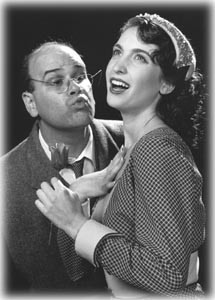
STUDIO BE’S STAGING of playwright Beth Henley’s Pulitzer Prize­winning Crimes of the Heart is an inspired reclamation of the play from the video store purgatory in which it has languished since its 1986 conversion from stage to screen.

Henley’s script is a petri dish of sororal relationships inspected beneath a Southern-made microscope. The three Magrath sisters converge on the 30th birthday of eldest sister Lenny (Sandra Speidel), with the dual homecomings of hellion middle sister Meg (Reagan Vasher)–an itinerant Hollywood actress and dog-food company clerk–and young Babe (Jenirose Friedkin), freshly sprung from a holding cell after shooting her tyrannical husband the senator in the belly.

Over the course of the next few days, the sisters contemplate, confront, and confide to each other with darkly hilarious results culled from such unlikely subjects as their mother’s suicide (she takes the cat with her), mental illness, and Lenny’s shrunken ovaries.

This is A+ material, and theater veteran Lennie Dean’s taut direction finds an excellent path through the play’s innumerable possibilities.

Costumed to look like a something out of a 1950s Betty Crocker test kitchen, Sheila Groves brings superb characterization to the role of the Southern-bred nag Chick, an ancillary cousin whose antics irritate and bait the sisters.

The set is a meticulous re-creation of a working kitchen, complete with stocked refrigerator, running water, and a real coffee maker gurgling in the background.

A collaborative effort executed by the entire company, the set optimizes Studio BE’s diminutive black-box space: curtains flank a real window out of which Meg exhales cigarette smoke and players and viewers alike share the “front door” (fire codes require the “Exit” sign to remain, only slightly diminishing the effect).

As kid sister Babe, Friedkin is to be applauded for her ability to invest herself fully into Babe’s oscillating mental states (more Ophelia than Hamlet), though at times her full-throttle performance is overwhelming.

Friedkin, however, downshifts Babe into a charming vulnerability during her scenes with Barnett Lloyd (Matt Strong), whose 5-inch sideburn chops and cheap suit complement his confident if understated performance as Babe’s rookie lawyer. Babe’s scenes with older sister Lenny are agreeably tempered by Speidel’s adept management of stoicism and warmth, resignation and resolve–effectively conveying the simmering envy sometimes genuine in older sisters.

Vasher is well cast as the wild reprobate Meg, delivering salty quips and comebacks with admirable facility. She cracks pecans with the haphazardly glued heel of her knee-high boot to punctuate such anachronistically Southern reproaches as “married a Yankee?”

Vasher is hilarious without losing Meg’s poignancy as a woman whose ambitions have degenerated into lies of success. She shines particularly during a reunion with local yokel Doc Porter (director Dean’s playwright husband, Benjamin Dean), who forsakes a life in medicine subsequent to their bungled affair.

Doc’s fascination with Vasher’s contagiously enthused Meg is completely understandable, and Dean’s characterization of the lovelorn schnook makes it hard to resist leaping to the stage and giving him a hug.

Crimes of the Heart plays July 3, 5, and 10-12 at 8 p.m. Studio Be, Lincoln Arts Center (2nd floor), 709 Davis St., Santa Rosa. Tickets are $10. 525-4770.

From the July 2-9, 1997 issue of the Sonoma County Independent.

© Metro Publishing Inc.
CD Reviews

0

Blood Brothers


Raffaella Cavalieri

Lion Heart: Wynton Marsalis’ ambitious ‘Blood on the Fields’ may be a masterpiece.

Wynton, Wayne, and Blind Pigs spin

Wynton Marsalis and the Lincoln Center Jazz Orchestra
Blood on the Fields
(Columbia)

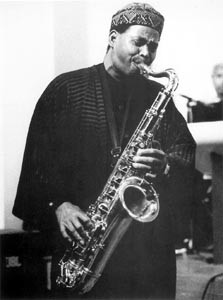
I ONCE ASKED jazz pianist and educator Ellis Marsalis–patriarch of the New Orleans dynasty that has spawned young jazz lions Wynton, Branford, and Delfaeyo–what would be the much-hyped Wynton’s legacy. He paused for a moment and then replied skeptically, “Only time will tell.” This ambitious three-CD jazz opera, first performed in 1994 and tracing the anguish and transformation of a Southern slave, answers that question but little. Still, it is an impressive work. Marsalis’ first composition for big band–bolstered by jazz vocalists Jon Hendricks and Cassandra Wilson, saxophonist and clarinetist James Carter, and pianist Eric Reed, among others–is steeped in Ellingtonia (particularly the Duke’s 1943 masterpiece Black, Brown, and Beige). It relies on such jazz fundamentals as blues and ballads, call-and-response, swing, and Afro-Caribbean rhythms. It breaks no new musical ground (though it is far more sophisticated than Marsalis’ earlier CITI Movement, a mediocre Gershwinesque impression of big city life) and is mostly scored in dense big-band arrangments; only the third disc offers dynamic soloing by Hendricks, Wilson, and Reed that will be easily accessible to casual listeners. Indeed, a more musically challenging interpretation of this same subject matter can be heard on the late clarinetist John Carter’s four-CD, untitled 1988 small-combo exploration of slavery days–a stimulating splash of hard bop and free jazz bristling with jagged melodies and sophisticated, pounding African rhythms. Yet while Wynton may never be known as an innovator who has moved beyond the traditions of his predecessors, he has learned well the lessons of his forebears. Only time will tell if Blood on the Fields is the eternal American masterpiece hailed by the New York Times and other fawning music critics. But, on the other hand, name one other living jazz artist who would even tackle a project of this magnitude.
Greg Cahill

Wayne Kramer
Citizen Wayne
(Epitaph)

WHILE MUCH OF ’90S ROCK is a stepchild of Led Zeppelin and the Velvet Underground, a more profound source is Detroit’s late-’60s punk/metal agitators the MC5 (best known for the line “Kick out the jams motherfuckers!,” later changed by the record label to “Kick out the jams brothers and sisters!”). They sit in history’s margins because they were blue-collar screwups rather than British gods or NYC artistes; yet most rockers have absorbed their legacy of high-energy guitar interplay and topical outspokenness, as their lineage has run through important bands like the Sex Pistols and the Clash, AC/DC and Lynyrd Skynyrd, Nirvana and Pearl Jam. The footnote is that the MC5 have also given ’90s rock its greatest comeback in guitarist Wayne Kramer, who after 20 inactive years has released three strong discs in three years. The latest, Citizen Wayne, finds Kramer in growth mode. Collaborating with David Was (brother of producer Don Was), Kramer leans away from the searing classic rock of his former band and into a darkly disjointed, white funk/blues that could equally suit Mick Jagger or Trent Reznor. Kramer is obsessed with the political hell-raising of his glory days, but his real focus is on inner self-help. Cynicism and hope are balanced both in world view (“Revolution in Apt. 29” takes its cue from the Tracy Chapman line “Talkin’ ’bout a revolution/ Sounds like a whisper”) and in his work in 12-step programs, which he mocks but constantly discusses. Kramer isn’t in denial, he just doesn’t concur with the prescribed answers, which makes for a virtual model of the classic rock stance.
KARL BYRN

Various Artists
Blind Pig Records: 20th Anniversary Collection
(Blind Pig)

STARTED IN AN ANN ARBOR, Mich., basement nightclub in 1977 and establishing deep roots in the Bay Area, Blind Pig Records never has received the respect it so richly deserves. While Chicago-based Alligator Records became the critics’ darling in the mid-’80s with a roster that leaned toward the pop funk-and-fedora cool of TV beer commercials, the underrated Blind Pig consistently has served up gritty gems by such traditional roots stalwarts as Charlie Musselwhite, Carey Bell, barrelhouse legend Pinetop Perkins, boogie-woogie pianoman Roosevelt Sykes, Cajun godfather Al Rapone, Big Walter Horton, Buddy Guy and Junior Wells, and Johnny Shines. The current roster boasts a great lineup, including blues guitarist Deborah Coleman, the hard-drivin’ Jimmy Thackery, W.C. Handy Award winner Coco Montoya, Bay Area guitarists Tommy Castro and Chris Cain, provocative revivalist Preacher Boy, and gospel/soul great Otis Clay. This specially priced, hip shakin’ double disc is one pig you’ll want to poke.
G.C.

From the July 2-9, 1997 issue of the Sonoma County Independent.

© Metro Publishing Inc.

Recommended Wines

0

Reflections


Michael Amsler

Days of Wine and Roses: We recommend six wines to nudge your memory, your tastebuds, and your soul.

Amazing grace, how sweet the taste

By Steve Bjerklie

THERE IS ONE REASON to indulge a winetasting. There is one reason to do anything in the world. At a big tasting on a bright blue afternoon last week, I ran into two good old friends, a married couple, who enjoy wine as much as I do. He’s an investment adviser, she’s smarter than that. We were already a couple of hours into the affair, and he was saying stupid Republican things and she was giggling at the nonsense. We swapped laughs and stories, terrifying tales of the teenaged daughters each of us parent. The afternoon’s sunlight felt creamy and yellow, as though our bodies were bathed in chardonnay.

I thought back to another tasting a few years ago, when just she was there, roaring drunk. It had been a tough year: they’d divorced, actually, and it looked as if he was going to marry someone else.

My suddenly single friend’s eyes were fuzzy and painful as unpicked nutmegs; she drank enough that day to slur her words so the real ones couldn’t get out. Now here they were a few years later, together again and married again. They told me their daughter announced the other day that she’s not ever leaving home to go to college because she likes being around them so much. I do, too. We toasted on it.

Sometimes a glass of wine holds nothing but grace. And sometimes you find grace in a book, in a song, in the sticky palms of your children, in your true love’s eyes when you see something there you’ve never seen before and fall in love all over again. But grace sure is worth looking for, worth waiting for.

One day I pulled this, incredibly enough, out of a fortune cookie: “To understand everything is to forgive everything.” That’s the reason anyone should do anything, including drink wine.

In between stories and remembrances, I enjoyed the following half-dozen quaffs at the tasting, all from Sonoma County, all coming close to the four-star top designation:

Hanna Winery:
1996 Russian River Valley Sauvignon Blanc

FRESH AND RIPE AS A PINEAPPLE in Maui. I didn’t notice it at first, but the winemaker told me he’s got 8 percent chardonnay in this wine, and once he said so the difference became obvious. Great stuff. Three stars.

Robert Mueller Cellars:
1995 Alexander Valley Chardonnay

ALMOST EVERYONE I KNOW loves this wine, and my local wine merchant tells me he sells more of it than any other chard. It’s a creamy-smooth wine, a kind of oddity I think. I like it quite a lot, but have no idea what food to pair it with. The search continues. Two and a half stars.

St. Francis:
1995 Sonoma Valley Cabernet Sauvignon

ANOTHER EXCELLENT WINE from these consistent old pros. Pleasing, satisfying, stylish, and literate, like a Woody Allen movie. For $11, there’s no other cab that comes close. Three and a half stars.

J. Stonestreet:
1994 Alexander Valley Merlot

“SMOKY AND BLUE.” At least, I think that’s what my notes say, because at my pal’s most preposterous Republican remark his wife lurched hard to the left, dousing my tasting program with half a glass of this toasty, well-balanced wine and thus giving the Stonestreet words a new look quite like a Rorschach test. Two and a half stars.

Philip Staley:
1995 Dry Creek Valley Zinfandel, Sommer Vineyard

A ZIN IN A CAB’S CLOTHING, dark and earthy with hardly any of the raspberry flavors so trendy in zins right now. Aging might do wonders for this wine, but buy enough so you can enjoy a bottle or two with steak from this summer’s grill. Two and a half stars.

Ivy:
Ruby Cabernet

JIM FIELD, FAMOUS as the best producer of quality jug wine, makes this wondrous beverage under his “upscale” label. Ruby cabernet is a hybrid of cabernet sauvignon and carignane, and is inexplicably under-used by the industry. In Jim’s hands it produces a smooth, full, fruity wine that tastes, to me at least, round as a marble. All for $4.99–the deal of the century. Ninety-six stars.

From the July 2-9, 1997 issue of the Sonoma County Independent.

© Metro Publishing Inc.

Scoop

Deep Throat

By Bob Harris

THE 25TH ANNIVERSARY of the Watergate break-in has passed, full of predictable recitations of a modern David and Goliath fable: Richard Nixon vs. Bob Woodward and Carl Bernstein, who had only their courage–and an anonymous do-gooder named “Deep Throat”–to rely on.

That’s nice as far as it goes.

What’s missing is an understanding of Deep Throat, Woodward’s garage-lurking source who guided the reporters to some of their biggest leads. If he was just a concerned citizen, great. But if Deep Throat had his own agenda, then he used the Washington Post to shape the story for his own purposes and got away clean.

“I have told Woodward everything I know about the Watergate case, except the Mullen Company’s tie to the CIA.”–Robert F. Bennett, testifying before House Special Committee on Intelligence, July 2, 1974.

Robert Bennett was the head of Robert R. Mullen and Co., a CIA front headquartered in the very same building as the CIA’s Domestic Operations Division. The Mullen Co. did legitimate PR work; it also did PR for other CIA fronts and provided cover abroad for CIA operations. Bennett’s most notable employee was Howard Hunt, a former chief of covert actions for the Domestic Operations Division of the CIA.

In 1970, Hunt retired from the CIA and accepted a job with the Mullen Co. the very next day. CIA Director Richard Helms had personally requested the company to hire Hunt. Shortly thereafter, Hunt landed a second gig, working with former FBI man G. Gordon Liddy’s secret Special Investigative Unit at the White House.

He also kept the Mullen job.

Hunt and Liddy then spent late 1971 and early 1972 engaging in various kinds of criminal mischief, using several of Hunt’s Bay of Pigs veterans as loyal foot soldiers. The CIA gave Hunt technical assistance, including false IDs, disguises, spy cameras, etc. — everything but a telephone in his shoe.

Bennett had direct input on several of these operations and personally assisted Liddy in the creation of phony organizations to launder campaign contributions to Nixon. A young friend of Bennett’s nephew, Tom Gregory, was even hired to infiltrate the Muskie and McGovern campaigns.

Strangely, just before the fateful Watergate break-in, Gregory suddenly resigned, placing his signed resignation on Hunt’s desk at Mullen the very night before the Watergate arrests.

After Hunt and six others were arrested in connection with the Watergate break-in, the FBI initially assumed the break-in was a CIA job, and Woodward’s own Washington Post stories began with that implication. However, investigators eventually began chasing down the money trail to the White House. And rightly so.

However, a thorough inquiry might have also actively pursued the following:

All five of the Watergate burglars had done CIA work with Hunt in the past. Hunt, who had staged phony CIA “retirements” twice before, was again “retired,” working this time for Bennett as a CIA front. The front company’s biggest client was Howard Hughes, who had provided the agency with information and support for over a decade –during which time Hughes had been represented by Larry O’Brien, whose office was the apparent target of the break-in.

There were a lot of other leads that weren’t pursued, too, and maybe parts of the above were just coincidence. But at first glance, the Mullen Co., Bennett, and the CIA would certainly have been prime suspects for serious investigation regarding the break-in.

Given the above, plus Tom Gregory’s sudden resignation the night before the operation–if he disapproved or wanted to cover his keester, he might make an excellent witness–it’s not hard to see how Bennett might have been given much closer scrutiny.

What gives? Was Robert F. Bennett the famous Deep Throat?

Nah.

Most serious students of the case now consider Deep Throat a composite of several sources. Some of the cloak-and-dagger stuff is just goofy: for example, Woodward’s signal to meet was given from his apartment balcony–which in reality faced an interior courtyard. Bennett was simply a Watergate figure who spun the case for himself successfully. Beyond the Post, CIA memos indicate Bennett also actively reframed the Watergate story away from the Mullen Co.’s CIA purposes for the Los Angeles Times, the Washington Star, Time, and Newsweek.

So whatever happened to this Robert Bennett guy? Did he disappear, wind up in jail, or die creatively, like so many CIA operatives? Nope. Today, he’s a U.S. senator, just like his father.

According to Roll Call, Bob Bennett, R-Utah, is now the eighth richest of the 535 members of Congress, with a personal fortune exceeding $30 million.

Public Citizen’s 1996 rating of Bennett’s willingness to serve the public, as opposed to large corporate donors, was zero out of 100. On environmental issues, the League of Conservation Voters give him another zero. On issues like increased military spending, limiting corporate liability, and dismantling welfare, the American Conservative Union gave him a 96.

As to his past affiliation with the CIA and place in the Watergate saga, Bennett’s official bio is silent. Then again, Bennett is a politician these days. He was probably more likely to tell the whole truth when he worked for the CIA.

From the July 2-9, 1997 issue of the Sonoma County Independent.

© Metro Publishing Inc.

Dr. Ben Brown

0

Mercy Mission


Michael Amsler

Making Contact: Dr. Ben Brown, left, helped Chet Win escape to a fresh start in the United States.

Local doc’s adventures in a strife-torn land

By Janet Wells

ASK DR. BEN BROWN about his numerous trips to Asia and you won’t get the usual travelogue of sunsets, pristine beaches, and tropical drinks with little umbrellas. The 33-year-old Santa Rosa­trained family practice doctor travels each year to the war-torn area between Thailand and Burma to volunteer at the only medical clinic along the volatile border.

That’s a long way from Sonoma County, which in 1989 sounded perfect to Brown, then a disillusioned fourth-year medical student at UCSF.

“In school I started feeling like I wasn’t helping people. You spend all day in class, then studying at night,” says Brown, a Sebastopol native who graduated from Analy High School. “[Overseas] you hop on a learning curve that’s so steep and so rich..”

Brown headed for Thailand with no language skills or contacts and took a bus north with a vague plan of working at one of the refugee camps that dot the borders of Burma, Laos, and Cambodia. An American doctor sketched a crude map on a napkin, pointing the way to a makeshift refugee medical clinic northwest of Bangkok.

Dr. Cynthia Maung, who had escaped the Burmese capital of Rangoon in 1988, had established the clinic in Mae Sot, Thailand, to treat the influx of refugees fleeing Burma’s repressive military regime. When Brown reached the clinic, he found a converted barn with one book and dirt floors. Soon he was delivering babies, treating cholera, malaria, worms, and anemia, and going on excursions with a mobile medical unit to treat villagers isolated by the struggle between ethnic Burmese and government soldiers.

Brown wanted to be more than a temporary pair of hands, however, and formed the Burmese Refugee Care Project to provide support for the clinic and the refugees who continue to stream into Thailand. Brown has made it a priority to return to Burma each year, with a cadre of American doctors and volunteers helping perform health-care skits, train medics, and treat patients. The project has raised thousands of dollars in supplies and donations, and the clinic is now a modern building with a lab, a library, a computer, and a fax machine.

Working in a Third World war zone certainly has been a change of pace: Brown has been chased by soldiers, spent an afternoon in a bomb shelter under fire, hiked through jungle battlefields, lived for weeks on white rice.

“The mindset is so different over there. The focus is, ‘Will I live for the next 24 hours?’ It’s constant crisis. The degree of suffering people go through and are still smiling . . . ,” Brown says, his thoughts trailing off. “Anyone who goes over there, their life changes.”

Dr. Will Tappe, who was a resident with Brown at Santa Rosa Community Hospital, agrees. “It increased my sensitivity to what else is out there in the world, and how much we have here,” Tappe says of his 1995 trip to the clinic. “What people have to go through there, it can’t help but open your heart.”

Coming home to the relative affluence of Sonoma County and coping with the enormous cultural and economic chasm between the West and the East has not been without difficulties, but Brown sees it as a “new gift every year.”

“The first year I came back appreciating freedoms. You can gather with a group of more than three, say what you want, and you won’t be reported to the government. I took that for granted,” he says.

REFUGEE CHET WIN is experiencing those freedoms for the first time. In 1988, while an Oriental Studies major at Rangoon University, Win left his parents and brother behind as he fled a government crackdown that left thousands dead and imprisoned. He made his way to the border and became one of the clinic’s first medics. Win eventually became the head medic, acting as a guide and translator for Brown’s mobile medical teams.

After eight years, Win’s popularity and visibility made him a target, and with Brown’s help, he disappeared into Bangkok, evading Thailand police for more than a year while his application to the Office of the U.N. High Commissioner of Refugees was processed.

“Ben bought me a Thai businessman outfit, a suit and a leather briefcase. I carried [the case] with nothing inside but a few papers,” Win says. “Being illegal is not easy. All this hiding, not talking too loud.”

Win, 29, received his visa in February and was resettled to Portland, where he lived with three other Burmese immigrants and worked as a grinder in a steel factory.

“I only lasted three weeks. My hand swelled up, so I quit,” Win says. While in Burma, Brown had plugged Santa Rosa Junior College as “a good school and beautiful place,” Win says.

Last month, Win moved to Sebastopol to live with Brown while training with the Red Cross to be a nurse’s assistant and home-health aide. Win will start classes at the junior college in August.

“Everything is new for him,” Brown says, laughing. “We were walking down the street and he said, ‘What’s that?’ I said, ‘Well that’s a fire hydrant.’ We go into the grocery store and there are many different kinds of cereals.”

“There are a lot of choices,” Win agrees. “I saw movies with Steven Seagal and Jean-Claude Van Damme. I thought there was a lot of shooting here. But Sebastopol is different. It is so quiet and private. Each person has his own room.”

Brown clearly is delighted to have been able to help Chet Win. “International work has become about relationships,” Brown says. “It started out as adventure and doing good work. Now it’s about making friends.”

Dr. Ben Brown will host a slide show and dinner to benefit the Burmese Refugee Care Project on Sept. 7 at the Point Reyes Dance Palace at Point Reyes Station. Call 522-9701.

From the July 2-9, 1997 issue of the Sonoma County Independent.

© Metro Publishing Inc.

Alternative Galleries

0

Off the Walls


Michael Amsler

Painter William De Raymond in the gallery space of the Studio.

In a world of commercialism, alternative galleries challenge the norm

By Gretchen Giles

WALK INTO an art gallery, I dare you. When the beautiful black-suited androgyne coolly looks up at you from the Details or Art News magazines spread open on the retail gallery’s front desk, the shamefully low numbers in your bank account seem suddenly to be emblazoned across your chest. These small digits are counted up in one short glance before the androgyne’s eyes flick back to the magazine’s slick pages. But be certain, one eye is always trained on your skulking back as you attempt to walk noiselessly around the room, becoming short of breath in the rarefied oxygen contained by those sterile white walls. Slightly dizzy, you encounter work that makes almost no sense at all, but because it’s been canonized in the gallery, you know that it must be good.

When, stifled and reeling, you finally feel for the door, the watchful eye from the desk contains a baleful certainty that you’ve exited with a piece of art under your coat. Once outside, you check your pockets just to make sure that you actually didn’t steal anything.

Where in this scene is contained joy, insight, recognition, redemption, true sorrow, or even beauty? It might be in the gallery, but if you can’t get it into your eyes, mind, and heart–it don’t mean a thing.

But art galleries are changing. The high-stakes gambles of the unstable ’80s art world are finally fading, and many artists, both in Sonoma County and abroad, are looking to subvert a system that they feel is artificial, unfair, and sometimes damaging to their work.

Contrast the above, for example, with sitting on a sofa at Charles and Georgia Churchill’s Santa Rosa Redwing Blackbird Gallery. The Modern Jazz Quartet wafts from the speakers, Georgia’s been crushing watermelon for summer drinks, and Charlie’s assemblage sculpture–wrought from the slickly painted curves of new motorcycle parts and neon–winks in the clear afternoon light streaming in from the windows of the couple’s home-based gallery space.

Stand in a shaft of pure sun in the former living room of Cloverdale sculptor Carol Setterlund’s home, an elegantly empty room that is permanently peopled only with Setterlund’s rakish, anguished, and joyful busts and torsos. Feel free to lightly stroke what you see.

Walk through the warren of reclaimed old Navy buildings restored into workspaces named the Studio in Santa Rosa. Step from the green gloom of the old military-styled hallways into a narrow, white-clean cathedral of a gallery in which the Studio collective shows its art. Ask what a particular painted image means and get an answer.

Maybe best of all, sit on the dusty floor of Susan “Sam” Wolcott’s Painter’s Eye gallery in Petaluma while the pale yellow wings of a rafter-bound butterfly float down as the insect is disemboweled by another. An enormous, reclaimed building, the Painter’s Eye houses Wolcott’s own studio space in one half, and the gallery in the other, a seamless interplay that is enlivened by Wolcott’s own large, expert canvases and her collections of old foam buoys, desiccated road kill, and camouflage netting.

Narrowly miss sending a delicate ceramic from its pedestal to the floor because you’re actually having fun.


Michael Amsler

Seeing Double: Assemblage artist Charles Churchill reflects before his work.

FROM THE HOME-BASED to the collective to the workspace, all of these are vital art galleries–and there isn’t a Details magazine among them. “Alternative galleries are a place to see everything else,” says California Museum of Art director Gay Shelton, seated on a stool at a deli near the museum, picking at her lunch. “Everything that no one’s had a time to make a market for yet.

“Do I see them growing in this county?” she asks rhetorically. “Yeah. I think I could say that, because we don’t have a real strong gallery infrastructure here. We don’t have a lot of retail galleries. We have the museum, we have the Sebastopol Center [for the Arts], we have the venues that the Cultural Art Council offers, but for a number of artists, the exhibition opportunities are few and far between.”

For Shelton, a painter herself, the central question for an underrepresented artist is “How can I show my work to my audience?”

From restaurant walls to the well-regarded shows hosted by Santa Rosa’s Elle Lui hair salon to the popular ARTrails open-studios event hosted by the Cultural Arts Council for a few weekends each fall, to the similar Art at the Source event sponsored each spring by the Sebastopol Center for the Arts, to the insightful exhibits mounted by director Michael Schwager at Sonoma State’s University Art Gallery, to the opening of their own homes and studios, artists with little or no affiliation with traditional retail galleries are finding ways to exhibit their art, an act that Shelton sees as paramount.

“I’m talking about the need for an artist to share his or her work,” she explains. “There’s a psychological need that completes the creative circuit. You make a piece, you labor over it, you work to discover your own potential at making art, and somewhere along the line you need to have intercourse with the world, you need to have that work go out to the public and to feel the ways in which it’s appreciated or not appreciated, and that can inform the work in the future.”

But then there’s that niggling little cash-flow problem. Materials, canvases, food, rent, and cat kibble all cost money. And while the notion of the starving artist has a certain romantic appeal, the reality of a hard-working artist’s poverty is far less glamorous.

Shelton, who has waited tables to support her painting, and who works late nights in her studio after long days at the museum, remains a purist. “I’ve seen a lot of local artists start out with work that had a lot of vitality, and then it’s been channeled by the market–and I’m talking about the tourist trade–and so now they’re making some very predictable, kind of little tchotchke things,” she says. “Yes, those artists are making a living from their art, but is there any art left in their art?

“They have made a choice, and I’m not begrudging them that choice; I’m just not interested, I’m not part of their audience anymore. Because I want to make art that has some depth, I’m always trying to hold my art a little bit away from the market.

“Now,” she says, warming to her subject, “that’s the advantage of a retail gallery: If you can find a retail gallery that’s got vision, they can allow you to make the work you’re going to make already, and promote it and find an audience and find a collector base for the work.”

Citing the Susan Cummins Gallery in Mill Valley as one that helps to nurture such artists as painter Jim Barsness, whose challenging canvases were recently exhibited at the California Museum of Art, Shelton nevertheless maintains the hard line. “Always, commodifying your work takes something out of it,” she says emphatically. “And we’re getting down here to what I would think would be the most important aspect of a successful alternative space: It would have nothing to do with commodifying the work. It’s presenting the work, it’s creating an audience for the work. Nothing needs to be sold, you’re not asked to create little trinkets to sell to tourists.

“In that respect,” she says, setting down her fork, “I would say that the Painter’s Eye is maybe more successful than, say, ARTrails. At the Painter’s Eye, there will be pieces on the wall for sale, but it’s a very casual process. The process that goes on there is typically more pure.”

IF ART IS JUST HOUSED in those galleries that are not comfortable to go in, or if it is just housed in museums, there is no possibility of it being spread around and no consciousness that this is really important to our social fabric and to our culture,” says ceramicist Anne Peet, seated cross-legged in shorts on the floor of the Painter’s Eye.

Peet and husband Roger Carrington are among the artists who rent the Painter’s Eye to exhibit their work. Establishing the gallery four years ago, Sam Wolcott charges just enough to offset her rent, allowing for a reception and a two-weekend exhibit. Not a vanity gallery–where artists of any level may exhibit if their pocketbook allows–the Painter’s Eye screens the work, striving to maintain a level that Wolcott characterizes as being higher than that of “watercolors of kittens seated in sunny windowsills.”

“It’s a horrible world, the regular gallery scene,” says Peet.

Wolcott nods. “It’s so against the artist’s spirit,” she says, noting that traditional retail galleries need artists to survive, a concept that most struggling artists neglect to consider. “The whole gallery atmosphere is built upon intimidation of the artist,” she emphasizes, adding that in a perfect world, artists would shop galleries for those that could best provide for them, not the other way around.

Often, Peet notes, “galleries just want the last work you did. Well, suppose you’re done with that, OK?” she shrugs. “You can’t keep doing the same thing again and again. If you have more control, you can change your work as you need to. You don’t get stuck having to make the work you don’t want to make.”

Wolcott agrees. “I’ve felt that pressure. I mean, look at many of the gallery artists: Their work hasn’t changed in 10 years, and you know that if they’re good artists, their work is changing somewhere else inside. That’s what I meant by saying that the galleries almost seem to work in opposition to the artist’s spirit. Because the spirit is to move and change, and you’re lucky to find a gallery that can do that or that has collectors that will do that.

“I’m sure that galleries have their place and have had,” Wolcott says thoughtfully. “Things are just moving so differently now. There are just so many other venues for exposure that artists can take on a little more of that.”

THE REN BROWN COLLECTION in Bodega Bay specializes in contemporary Japanese printmaking, as well as hanging about 40 percent of its gallery space with such local artists as Micah Schwaberow. Brown is supportive both of local artists and of their attempts to self-market their work.

“I keep telling the artists that come by, the more exposure the better, in any and all kinds of venues,” he says. “My aim is also to challenge the viewers, and not just put up pretty pictures that would go well with the fabric of the sofa.

“But,” he continues, “I worry about some alternative spaces like restaurants, because I think that the artists get used–in terms of the sale of the artwork. I’ve been approached by a number of businesses [that wish to borrow some of the work he represents], and it’s readily apparent to me that they’re not interested in the artists, they just want some pictures on the wall other than those posters that they can afford.”

Overhead is of little importance at the Redwing Blackbird gallery, where assemblagist Charles Churchill mounts an annual show in a gallery space he built for his art and his wife Georgia’s storytelling and acting performances. The gallery is never idle; when no outsiders are invited, it doubles as the Churchill’s bedroom. While Churchill has enjoyed success in retail outlets, he has felt the need to have an exhibition space as personal as his work itself.

Nor does overhead affect Carol Setterlund, a sculptor regularly affiliated with retail galleries, but who is just beginning to open her home to other artists for exhibitions.

In the cluster of workspaces at the Studio in Santa Rosa, artists have come together over a need to share their vision. With the landlord’s donation of two upstairs rooms, Studio artists knocked down some walls, set in some skylights, painted the walls, and created a stunning long room in which to exhibit their work. Ceramicist Glenneth Lambert and painter William De Raymond are among the 10 or so artists involved in this project, which includes monthly potluck receptions with artist talks and slide shows of new work.

“It’s kind of a funky old space,” Lambert admits, seated on a couch in De Raymond’s painting-adorned studio. “But you know, people are intimidated by galleries, so maybe this helps to break that down.”

The Studio is definitely a low-profile operation (finding it is half the fun), but De Raymond hopes to see its role expand. “I don’t see this as an alternative space specifically,” he says. “We’re doing the best that we can with what we have available to us. Ultimately we’d like to create an art center in Sonoma County just like any other art center.”

Like most artists, Lambert and De Raymond envision a day when their art alone will provide for them. “I haven’t had a lot of success with showing galleries my work and having them want it,” says De Raymond. “I’m not going to say that it’s not good enough to be shown anywhere. I’m good at what I do and I do what I do, and yet I’m not at the point yet where I’m able to live off my artwork.

“And then again, you have a whole system where it seems to be designed so that a few people will make a lot of money and not very many will make enough to live on.”

But isn’t that just the common unfairness of life? Don’t many people play college ball, only to watch as just a few are picked for the big leagues?

“We know that Michael Jordan belongs in the Bulls,” laughs De Raymond, who is well over 6 feet tall and is seated on his couch with a basketball by his feet. “But if I think that I’m the Michael Jordan of the art world, why aren’t I being shown in the galleries? If I know that I can jump from the foul line and dunk it behind my head as an artist, and yet nobody else can see that that’s what I’m doing, what’s going on?

“You can find work being done here that is on par with work being done in some of the finest places in the world,” he continues. “I’ve seen enough artwork, I’ve been to enough museums, I’ve been to enough galleries, to say that. We just happen to be here. Nobody’s been clamoring to do anything about it. All I know is that there are some serious artists working here, and here we are. This is it.”

Back at the Painter’s Eye, Anne Peet stretches her legs out on the floor. “What I like about art,” she smiles, “is that it’s a life thing, not just a commercial proposition. I mean, there can’t be an understanding of that unless people can acquire art and share it. And that is where this,” she says, waving her hand around the room, “is very, very important. It’s crucial.”

Always ready with ideas, Sam Wolcott encourages artists to rent unused storefronts to hang short simple shows. Above all, getting the work out there is paramount.

“Because the last thing you want to do,” she says with a chuckle, “is to end up in an ivory . . . basement.”

From the July 2-9, 1997 issue of the Sonoma County Independent.

© Metro Publishing Inc.

Talking Pictures

Future TenseBy David TempletonDavid Templeton takes interesting people to interesting movies in his ongoing quest for the ultimate post-film conversation. This week, he takes author/culture maven Mike Wilkins to John Woo's potent action thriller Face/Off.MIKE WILKINS stares blankly into space, his open, friendly face suddenly contorted into a grimace of sheer mental effort. "Sheeesh, what is the name of...

Juilliard Park

Faded JewelMichael AmslerLooks Are Deceiving: The serene beauty of Juilliard Park belies the crack pipes in the restrooms and random violence.Juilliard Park may get a face-liftBy Paula HarrisLIKE A ROMANTIC English-style garden replete with wooden and stone bridges spanning lily ponds, large beds of roses blooming pink and coral, and cool green expanses of manicured lawn, Juilliard Park...

The Scoop

An EarfulBy Bob HarrisMIKE TYSON is now the demon of the sports world because he bit Evander Holyfield. That's possibly the stupidest thing I've ever heard in my life. Don't get me wrong. I'm not pro-biting. The only time I've ever nibbled somebody's ear was in vastly more pleasant circumstances. But let's put this in perspective. We're complaining because...

Dumpster Diving

Trash ThrashBuried Treasure: Ginger Quinn displays her booty from a dumpster diving session including a CD collection and de rigueur mask and snorkel.Photo by Michael AmslerThe ins and outs, ups and downs of dumpster divingBy David TempletonAS DUMPSTERS GO, the one I'm now lying in doesn't smell half bad. The trash container behind that restaurant last night was much...

Crimes of the Heart

Three SistersBy Daedalus HowellSTUDIO BE'S STAGING of playwright Beth Henley's Pulitzer Prize­winning Crimes of the Heart is an inspired reclamation of the play from the video store purgatory in which it has languished since its 1986 conversion from stage to screen.Henley's script is a petri dish of sororal relationships inspected beneath a Southern-made microscope. The three Magrath...

CD Reviews

Blood BrothersRaffaella CavalieriLion Heart: Wynton Marsalis' ambitious 'Blood on the Fields' may be a masterpiece.Wynton, Wayne, and Blind Pigs spinWynton Marsalis and the Lincoln Center Jazz OrchestraBlood on the Fields(Columbia)I ONCE ASKED jazz pianist and educator Ellis Marsalis--patriarch of the New Orleans dynasty that has spawned young jazz lions Wynton, Branford, and Delfaeyo--what would be the much-hyped Wynton's...

Recommended Wines

ReflectionsMichael AmslerDays of Wine and Roses: We recommend six wines to nudge your memory, your tastebuds, and your soul.Amazing grace, how sweet the tasteBy Steve BjerklieTHERE IS ONE REASON to indulge a winetasting. There is one reason to do anything in the world. At a big tasting on a bright blue afternoon last week, I ran into two good...

Scoop

Deep ThroatBy Bob HarrisTHE 25TH ANNIVERSARY of the Watergate break-in has passed, full of predictable recitations of a modern David and Goliath fable: Richard Nixon vs. Bob Woodward and Carl Bernstein, who had only their courage--and an anonymous do-gooder named "Deep Throat"--to rely on. That's nice as far as it goes. ...

Dr. Ben Brown

Mercy MissionMichael AmslerMaking Contact: Dr. Ben Brown, left, helped Chet Win escape to a fresh start in the United States.Local doc's adventures in a strife-torn land By Janet WellsASK DR. BEN BROWN about his numerous trips to Asia and you won't get the usual travelogue of sunsets, pristine beaches, and tropical drinks with little umbrellas. The 33-year-old Santa Rosa­trained...

Alternative Galleries

Off the WallsMichael AmslerPainter William De Raymond in the gallery space of the Studio. In a world of commercialism, alternative galleries challenge the normBy Gretchen GilesWALK INTO an art gallery, I dare you. When the beautiful black-suited androgyne coolly looks up at you from the Details or Art News magazines spread open on the retail gallery's front desk, the...
11,084FansLike
4,606FollowersFollow
6,928FollowersFollow