Greek Egg-Lemon Soup

0

Greek Egg-Lemon Soup

Red Beans & Rice. Otis uses the Seme di Melone pasta–the “little boats” of his childhood–in lieu of rice, giving a succulent appeal to the broth.

One 4-5-lb. stewing chicken, deskinnedOne 49-oz. can of chicken broth (Otis uses the fat-free variety)1 small package of Seme di Melone pasta or 1 cup rice2 eggsJuice of 2 lemons; more to taste

Place the chicken in a heavy kettle and cover with water, bringing to a high simmer. Cover with a lid and cook until the meat is falling off the bone. Remove the chicken, strain the broth, and skim the fat. (When cool, chicken may be shredded and returned to the soup or served separately on the side.) To the strained broth, add the canned broth, bringing the heat up until the soup returns to a simmer. Reserve aside two cups of hot broth. Add the pasta, and cook until tender.

Meanwhile, in a mixing bowl, break the eggs and whip, gradually adding the two cups of hot broth and the lemon juice in alternating batches, until the egg mixture becomes frothy. Add egg mixture back into the simmering kettle of broth. Season to taste and serve immediately. Serves 6.

From the Nov. 6-12, 1997 issue of the Sonoma County Independent.

© Metro Publishing Inc.

The House Yes

Ricochet Theory


John Casado

Here’s Lookin’ at You: Sheri Lee Miller, left, is Jackie-O in ‘The House of Yes.’

‘The House of Yes’ scores a hit

By Daedalus Howell

IF WOODY ALLEN’S GAG, “I’m writing a non-fiction version of the Warren Report,” was a benign antecedent of the shift in national consciousness about conspiracy theories, then Actors’ Theatre’s production of playwright Wendy McLeod’s black comedy The House of Yes, under the admirable direction of Tim Hayes, represents its present evolution. The centerpiece of this play is an incestuous act predicated on a re-enactment of JFK’s assassination: gunplay meets foreplay on Mom’s couch.

In the midst of a raging hurricane, the dysfunctional Pascal family of McClean, Va. (a tony suburb of Washington, D.C., circa 1983), eagerly await the return of elder brother Marty (Dodds Delzell). More inclement than the storm, however, are the reactions of Marty’s mother (Laurie Whiteside) and his deranged twin sister, Jackie-O (Sheri Lee Miller), when, upon his arrival, he presents Lesly (Sallie Romer)–his unexpected and lissome fiancée. Of course, Anthony (Cameron McVeigh), the callow kid brother and recent Princeton dropout, is smitten with the outsider.

Complicating matters are the unsettling proximity of the remaining Kennedy clan (next-door neighbors) and, more significantly, Jackie-O’s blatant sexual longing for her twin brother (she is said to have clutched Marty’s penis in utero).

Miller is nothing short of stellar as the hostile, enigmatic twin. A wellspring of contradictions, Miller’s Jackie-O is both tempestuous and tragic, fratricidal yet incestuous, empowered but victimized.

The straight man to many of the antics of Miller and company, Delzell’s Marty is a deftly crafted totem of aspiring propriety who visibly transforms as Jackie-O systematically skins him of his façade, revealing a morass of like impulses. A keen actor, Delzell makes his understated approach a fine counterpoint to Miller’s capriciousness.

McVeigh’s doting and devoted Anthony drolly conveys the mental scarring acquired as his older sibling’s psychological chew toy. McVeigh is a subtle physical comedian whose suggestive gesturing and deadpan manner not only achieve laughs but reveal the psychic innards of a character that becomes increasingly complicated.

Sallie Romer’s Lesly capably carries the torch of reason and serves as an effective foil, making for a comforting touchstone when the audience begins to grope for the reality they left at the theater door. Also finely hewn is Whiteside’s portrayal of Mrs. Pascal’s resignation and denial, becoming all the more lurid in contrast to her sardonic performance.

Designer Vonnie Johnson’s costume selections are apropos for the era, but it is the replica of Kennedy couture worn by Miller’s Jackie-O that is Johnson’s genius. Miller is clad in a faithful reproduction of the raspberry wool Chanel outfit and pillbox hat Mrs. Kennedy wore in the Dallas motorcade. As mandated by MacLeod’s script, the outfit is garishly slopped with faux blood and strewn with macaroni in emulation of the medulla oblongata once in the President’s skull. Sick, yes–but funny.

Autumn Wilkins’ set is a lean replica of ’80s affluence, and John W. Arnold’s stylish lighting accents and punctuates scenes with concision and clarity, as does Hamid Lock’s sound design (the hurricane’s siege seldom ebbs, and yet nothing of the actors’ intonation is diminished).

Actors’ Theatre’s The House of Yes is delectably perverse and an impeccable antidote to the maudlin drivel undoubtedly slouching toward the holiday market this season.

The House of Yes plays Thursday-Sunday through Nov. 22 at 8 p.m., except Nov. 9 and 16, when the curtain lifts at 2 p.m. Actors’ Theatre, at the Luther Burbank Center, 50 Mark West Springs Road, Santa Rosa. Tickets are $6-$12. 523-4185.

From the Nov. 6-12, 1997 issue of the Sonoma County Independent.

© Metro Publishing Inc.
Roger Montgomery

0

On a Roll

Homeless, not Helpless: Roger Montgomery at rest on his Hudson Cart.

Local man strives to make dream come true

By David Templeton

THE MORNING is wet and cool, the air’s sharp chill suggesting the imminent approach of winter. In Doyle Park, in downtown Santa Rosa, a few scattered clusters of people–most of them homeless, scant belongings bundled beside them–sit at tables and benches, or sprawl stretched out on the grass, shadowed by the vast, dew-drenched cover of the trees.

From across the park, Roger Montgomery–a man with a plan–rides up to meet a guest, accompanied by his dog, Barndor, solidly perched on a flat, carpeted platform that is rigged to the front of the bicycle. According to the lean, soft-spoken Montgomery–who is fond of saying, “I’m not homeless; the world is my domain”–this whimsical dog-rig is merely one of many ideas he’s thought up since 1992, when an unspecified disability forced him out onto the streets.

“I used to keep a tally of my ideas,” he laughs, getting off to walk his bike. “I lost count after 5,000. A lot of them I’ve forgotten. I only try to hang onto the really good ones. Like the Hudson Cart.”

And there it is, parked beneath a tree up ahead: the Hudson Cart, a modest but eye-catching contraption that resembles a classic toy wagon crossed with a hot-dog cart. Designed by Montgomery over four years ago and constructed from materials he begged or scrounged from dumpsters, the cart–named in honor of late Santa Rosa philanthropist Ted Hudson and his wife, Shirley–is small enough to be towed behind any bicycle. During the day, Montgomery uses the cart to pick up litter in the park and along city streets; at night, the 2-by-4-foot bed extends to a roomy 7 feet long–sleeping bag size–and becomes a kind of mini-mobile home.

“When it rains, I can rig a nylon tent over the whole thing,” he says proudly. “I keep pretty dry. I sleep above the ground and away from the elements.”

Montgomery is not interested merely in having his own place to sleep, however. His plan is to make the Hudson Cart available to street dwellers throughout the county–and across America.

“This unit is the prototype,” he nods. “When we start manufacturing, I’ll make a few changes in the design. They will be made out 100 percent recycled materials. You can sleep in it–your own mobile home–use it for laundering, hauling, making deliveries, gathering firewood, picking up trash, probably a lot of things I haven’t even thought of yet. It will enable each person out here to fend for themselves. That’s the big plan.”

And a big plan it is. According to the meticulous, poetic “mission statement” Montgomery has written to describe his scheme, the goal is nothing less than “to get off the street and bring 250,000 homeless people with me.”

With the help of a dozen or so local businesspeople and educators, Montgomery has established Barndor Recycling (named after his acrobatic canine companion) with hopes of finding a dedicated work space where he and others can construct and distribute the carts–along with used 10-speed bicycles–to those in need. His plan calls for selling the carts at cost for $140 each or providing them free in exchange for 20 hours of service picking up trash.

“I don’t want to use the carts to make money for myself,” he is quick to say, while giving Barndor a good, long scratch on the head. “That’s what I invented the Recycling Trolley for.” Another of his inventions, the trolley sits beside the cart. It’s a clever, lightweight device on wheels that carries three plastic curbside recycling bins, allowing you to convey all bins to the curb in one trip. He’ll sell the trolleys, also made of recycled materials, for $25 each, five bucks of which will go directly toward providing a free Hudson Cart to someone in need.

Montgomery concedes that the entire plan is an elaborate one, and further insists that the carts are only Phase One. Another phase includes mobilizing Hudson Cart owners as a countywide litter removal force, using the wagons to transport trash. He envisions set-aside areas–like campgrounds–for cart owners to park. Once the work space is established, he’d like to provide studio/stalls for other homeless inventor-artist-tinkerers to work in.

When the system is in place in Sonoma County, he says, he’ll turn it over to others and start over in another county, spreading across the country until “Hudson Carts are as normal as bikes and cars.”

AS FAR-REACHING and seemingly outlandish as Montgomery’s scheme appears, he’s won the respect and support of several influential local business folk, including Mike Petrucelli, owner of Vacuums Plus in Santa Rosa.

“There is an idea out there that homeless people aren’t willing to take an active part in helping themselves or their community,” Petrucelli observes. “Roger is the exception to that belief. He’s so full of optimism and excitement, you can’t help but want him to succeed. He’s resourceful, too. He knows that to make this work he needs a phone, so he found someone to agree to take messages for him. That’s pretty smart.”

Petrucelli has agreed to act as fundraiser for Montgomery, and has himself raised several hundred dollars already. Another supporter is local writer Karen Eberhardt, who has compiled a book entitled An Attitude of Grace: Empathy in Action, detailing creative ways in which people show kindness to others. So taken was she by Montgomery that she included him in the book, and has been actively promoting his plan around the county.

“Roger sums up what I mean by ‘an attitude of grace,'” she says. “And he’s one of the most creative people I’ve ever met.”

She’s not alone in that view.

“I think it’s a great idea,” says Nick Baxter, director of the Burbank Development Project, a non-profit low-income housing organization seeking to provide permanent shelter for the homeless. “I received a very professional proposal from Roger, describing the plan. It’s positive. It’s industrious. If we didn’t have dreamers, nothing would ever happen. The Golden Gate Bridge would never have been built.

“We need people like Roger to dream these kind of dreams. Who knows, maybe with the proper community support, it could come to pass.”

Tula Jaffe of the Sonoma County Task Force of the Homeless agrees: “Anything reasonable that people do to help themselves is a good idea. The carts are certainly not a complete solution. There’s still the fact that homeless people need a living-wage job and affordable housing. But in the interim, it’s a practical way to give them a place to be.”

“It’s a start,” Montgomery shrugs, sliding the cart’s sleeping extension back inside and preparing to roll out for the day. “People die out here, you know. I’ve lost a lot of friends in the last year. Someone’s got to do something. Everything good started out with an idea. This one is mine. All I need now is people willing to help out, to find out if it can really work.

“I’m pretty sure it can.”

For further information on the Hudson Cart, the Recycling Trolley, or Barndor Recycling, leave a message for Roger Montgomery at 542-5208 or call Mike Petrucelli at 527-9831.

From the Nov. 6-12, 1997 issue of the Sonoma County Independent.

© Metro Publishing Inc.
Teen Mediation Program

0

Meeting Halfway


Michael Amsler

Peacemaker: Volunteer mediator Heidi Peyser, 17, helps teens resolve conflicts outside of the courtroom.

New program gives teen offenders a second chance

By Paula Harris

SITTING at the conference table in a small, no-frills Santa Rosa office, Heidi Peyser, 17, peels long flakes off a croissant and nimbly guides them to her mouth. “I forgot to eat,” she apologizes with a slight shrug and a smile. The school day is over for the Montgomery High School senior, but her second shift is just beginning–as a teen mediator, Peyser helps resolve conflicts between juvenile offenders and their victims.

Peyser is one of eight teenage mediators who volunteer in a Redwood Empire Conflict Resolution Services diversion program that brings youthful offenders and their victims face to face to try and resolve conflicts outside of the juvenile-criminal courts and in a non-adversarial way.

“We’ve found that younger people can really facilitate the process because of their age, openness, and creativity,” says Richard Merriss, the newly hired coordinator for the program and a former volunteer.

In addition to the offender-victim program, RECOURSE will offer in mid-November a parent-teen reconciliation mediation training session for volunteers, both adults and teens. The weekend course will foster communication and listening skills for mediation between youth offenders and their parents. After completing the training, volunteers may work on cases referred by Juvenile Hall to reunite parents and teens with a basis for improved communication.

“This is a pioneer program to have mediators available at the time a youth is taken into Juvenile Hall,” Merris says. “It’s to help a young person who shouldn’t be spending a night at Juvenile Hall just because of strained conditions between the young person and his or her parents.”

Darryl Datwyler, director of Juvenile Hall, welcomes that program, not because of limited space at juvee hall, but because the program helps achieve understanding between youths and their parents. “There’s rarely a day goes by when we don’t get a child that we have to detain, not because of delinquent conduct or because they pose a serious security risk, but where there are family issues,” he explains. “Frequently parents are reluctant to accept a child back because they’re concerned about continuing problems.

“We’d prefer to resolve issues within the family rather than hold children here and then just have them return to deal with the same issues.”

While the ongoing focus is the resolution of problems and disputes, volunteers say their mediation work gives them a better appreciation for life overall. Originally drawn to the reconciliation program because she intends to work within the criminal-justice system, Peyser says, several months as a teen mediator have had a profound effect on her.

“I’m finding that I’m learning about others, but I’m learning as much about me–how I react to things and how I can and cannot help people,” she muses. “I used to be really tense and nervous going into arranged situations like this, but now I’ve learned that I’m capable of helping people and being a positive presence.”

Currently, Peyser is mediating two cases: a petty theft and a grand theft. Her job is to listen and use questions to help guide the parties involved toward some kind of mutually agreed-upon resolution. “I don’t make suggestions. I’m trying to help them open a window,” she explains. “I can see possibilities, but they’re going to have to resolve things. I’m very curious how it’s going to work out.

“There’s no stereotype to help you understand anyone. Everyone communicates differently–it’s the utmost in diversity,” she adds.

Merriss agrees. “Even within our white, middle-class culture, there are many subcultures or mindsets,” he says.

In some instances, Merriss selects the cases to be handled by the reconciliation program, but most are referred by the Sonoma County Juvenile Probation Department. “We’re averaging 12 or 13 cases a month and looking to increase that to 20,” says Merriss.

Crimes that become candidates for mediation–mostly misdemeanors, but also some felonies–run the gamut from violent assault and battery cases to vandalism and petty theft. The youngest offender to go through the program was 8 years old, the oldest 17.

Merriss assigns two mediators who meet with the offender and his or her parents at their home to hear their story and to explain the process. Then the mediators meet with the victim to hear his or her side and to get affirmation that the victim agrees to participate in the mediation.

The mediation takes place in a neutral location, such as the RECOURSE office, a bank community room, or at the county courthouse. The victim and the offender work together to arrive at some kind of agreement, which could take the form of restitution, community service, or simply an apology.

“We’ll do a written agreement and they’ll sign it,” explains Merriss. “If there’s restitution, we’ll do it there. If it’s a larger amount, we’ll do a payment schedule. If it’s community service, it can be of the victim’s or offender’s own design. Sometimes the offender will do work at the victim’s property.”

Merriss says youthful offenders can, in talking with their victims and hearing their reaction, often realize the real harm caused. “In the ordinary juvenile-justice system, they might not make that connection,” he observes.

The program is not without flaws. In a case completed last year, involving a 17-year-old Petaluma boy who shot out the window of a parked vehicle with a BB gun, both the offender’s family and the victim say they’re pleased with the mediation process, but each has gripes about the outcome.

After going through mediation, the juvenile offender agreed to pay about $200 to repair the car damage, and complete 20 hours of community service. His mother says the punishment was extreme.

“I think the [mediation] program is good, but the downside is when a person realizes the alternative is someone going to court and spending money on attorney’s fees–and they think they can take advantage of it and make them pay more than they should,” she explains. “I thought it was a bit much–it was the money he was setting aside for driving school.”

The 49-year-old victim, who calls the offense “no laughing matter,” says she’s now frustrated because the teen didn’t complete the 20 hours of service stipulated by the agreement. “My recommendation to improve the [mediation] program would be to follow up to see the agreement has been fulfilled, because if you let down on that end, it’s been a waste,” she says.

Merriss agrees there have been problems in the past because there were no resources for tracking offenders and no means to follow up on the referrals. The state Office of Criminal Justice Planning recently awarded the offender-victim reconciliation program an Alternatives to Incarceration Challenge grant of $102,380. Sonoma County was one of only three counties in the state selected to receive these grants, and Merriss is hoping the funds will provide increased follow-up of individual cases.

The Parent-Teen Reconciliation Training will take place Friday through Sunday, Nov. 14-16, at the Santa Rosa Training Facility at Los Guilicos on Pythian Road in Santa Rosa. For more information, call 579-7928.

From the Oct. 30-Nov. 5, 1997 issue of the Sonoma County Independent.

© Metro Publishing Inc.
HIV Conference

0

Local HIV Conference Set

The conference–the first in the North Bay following the flurry of optimistic headlines reporting the supposedly miraculous results attained by some protease inhibitor users–will focus on new federal drug guidelines, procedures for treatment of multidiagnosed patients, the psychological and emotional impact of HIV treatments, and protocols for assisting patients to adhere to the complex treatments.

Dr. Paul Volberding, director of the AIDS Program at San Francisco General Hospital, will address the conference on new antiretroviral therapies. Dr. Neva Chauppette, a psychiatrist, will discuss the interaction among substance abuse, HIV, and mental illness.

The conference, to be held at the Luther Burbank Center for the Performing Arts, is being coordinated by the Sonoma County Academic Foundation for Excellence in Medicine. It is presented by Sutter Medical Center of Santa Rosa.

Registration is $80/general; $50/students (a limited number of scholarships are available).

For more information, call 527-6223.

From the Oct. 30-Nov. 5, 1997 issue of the Sonoma County Independent.

© Metro Publishing Inc.
Beekeeper Jonathan Taylor

0

To Bee

By David Templeton

FROM ACROSS this west Petaluma field, I can see the hives, sticking up from the ground like weird, squat totem poles: short, white, bare, and square–almost glowing in the bright morning sun. We are still too far away to see any of the bees, but I can hear them, buzzing mellifluently as the day grows steadily warmer.

“You ready?” grins Jonathan Taylor, master beekeeper, tucking an odd-shaped bundle–containing coveralls, gloves, and a veiled hat–under one T-shirted arm. Tossing me another bundle, he picks up a pale gray smoke can and strides away toward the hives. “Time to get up-close and personal!” he shouts as I tag tentatively along.

Now I can see them. Like wisps of cloud puffing up from the base of each of the five hives, hundreds of bees sail out and up from narrow spaces at the bottom of the columns, as others, returning from nectar-gathering at the tall eucalyptus trees across the lane, wing past them on their way back to the colony. The effervescent hum of the honey-making critters is louder now, though not nearly the volume it will rise to when Taylor peels the lid from the top of the hive–and I push my face forward to peer inside.

Known as “Bee Man” to a wide number of Sonoma County farmers, businesspeople, and schoolkids–he’s even got the nickname inscribed on the back of his coveralls–Taylor became involved with bees eight years ago when he was hired to help dislodge an enormous colony that had taken residence in the wall of a just-restored old building. After removing the bees to a new home, Taylor realized he was hooked. Or bitten. Or stung.

At any rate, he was ready for more. Now Taylor operates a year-round, full-service bee, wasp, and yellowjacket service, performing 30 to 50 hive removals a year. He’s established and tended numerous beehives of his own across Sonoma County and sells honey to various commercial enterprises.

Ever see those multiflavored honey sticks? Taylor supplies the honey and consults with hobbyists and farmers who are attempting to establish their own beekeeping expertise. In the off-seasons of fall and winter, he takes to the stage, sort of: Within a safety-netted, tentlike cage, the ruggedly handsome, pony-tailed Bee Man performs his educational, bee-taming act at area schools and fairs.

Working with a swirling hive of bees, Taylor demonstrates the workings of a colony, dispensing facts–“One third of all the food we eat had the involvement of bees; it only takes five pounds of beeswax to hold a hundred pounds of honey; drone bees have penises disproportionately large when compared to those of any other creature”–while wowing spectators by having the bees land on his arms and face. As a grand finale, he takes a live drone in his mouth and spits it into the air.

“OK. Let’s suit up,” he now directs, as we come to a stop directly behind the first of the stacks. Owned by two-year beekeeper Dan Tennyson of Petaluma, these particular hives have given him some concern of late, appearing underpopulated and quiet, even for the typically cool fall season; he’s asked Taylor to come out and have a look. “Bees are usually in a foul mood this time of year,” Taylor grins. “Be prepared for a face full of bees.”

With our coveralls on, our gloves and masks in place, and duct tape sealing up all potential entry points, we step up to the hive, consisting of stacked wooden boxes known as “supers.” He lifts off the lid, exposing a series of vertically lined-up racks.

After sifting a thin layer of acrid smoke from his can across the open box–this disorients the bees and interrupts their ability to communicate or to jointly identify us as the enemy–he pulls one up and hands it to me. It is intricately webbed with waxy yellow combwork, packed with sweet-smelling honey, and covered in bees.

Dozens of them fly up as if to stare in through the veil. Some cling to the netting. Several land on my arms, shoulders, neck. After an initial burst of adrenaline, it becomes rather pleasant having so many of these fragile aviators use me as a landing pad.

“Wow, look at all that honey!” Taylor exclaims. “These bees are making honey in October! That’s pretty unusual. This time of year the bees are usually prepared to shut down for the winter. I’d say this a real healthy hive. Let’s check another!”

THOUGH NOVICE beekeepers often start out with visions of a honey-selling retail empire buzzing in their heads, Taylor–and the majority of his fellow apiarists–will readily admit that it’s difficult to make a living by raising bees. The large commercial honey producers use mainly product from overseas, leaving the smaller producers to squabble over the relatively limited market for high-grade, “boutique” honey products.

“I can count on one hand the number of beekeepers in this county who make a living exclusively from bees,” insists Taylor, who admits to doing carpentry and woodcarving to make ends meet. “If you aren’t thinking of this as a hobby, you’re going to be disappointed. It’s too much work to do if you’re in it for the cash.”

For the serious hobbyist, though, there is plenty more to beekeeping than honey. Farmers need bees to pollinate their crops, and energetic hive owners can be kept busy transporting bees from one field to another, assisting the nectar-loving insects in that odd pastoral sex act. Certain industrious types are willing to do the excruciating work of collecting the hives’ bee pollen, a popular additive to smoothies and other health-food store concoctions, believed to give a special boost of energy to those who consume it.

Whether for income or for pleasure, though, it seems that good old-fashioned hard work is an integral part of the game.

Taylor doesn’t disagree.

Pointing out that “all beekeepers have bad backs,” Taylor hoists one of the supers and sets it down beside the rest of the hive. When I attempt to lift it myself, I see what he means. “That one probably weighs 70 pounds,” he smiles. “In the spring, in a good location, during a good honey flow, a strong hive can fill up one of those boxes a day. If it fills up and you don’t extract, the bees will run out of room and they’ll swarm. Then you could lose them. You can’t be a procrastinator if you have bees. The bees will get ahead of you.”

After Taylor has ascertained that Tennyson’s bees are thriving–he locates the queen in one of the hives; she’s fat and fine–we put the columns back together. As I walk away from the hives, those few bees still clinging to us lift off and return home.

As the buzz fades, I ask Taylor if he ever notices, after so many years among the bees, how gorgeous they can be.

“Oh yeah,” he nods. “I’m still blown away sometimes when I open up a colony and look inside. Sometimes I’ll stand there and say out loud, ‘That’s just amazing!’ I’m not a religious person, but I’ve heard everyone extol the beauty of God’s invention and all that. Fine. That’s one way of putting it. It’s just another way of saying, ‘That’s so amazing.'”

From the Oct. 30-Nov. 5, 1997 issue of the Sonoma County Independent.

© Metro Publishing Inc.
Talking Pictures

0

Moral Dilemma


Poster Boy: Undie king Mark Wahlberg stars as a porno star in ‘Boogie Nights.’

Photo by Phoebe Sudrow


Crime novelist Richard Rayner does the hustle with ‘Boogie Nights’

By David Templeton

Writer David Templeton takes interesting people to interesting movies in his ongoing quest for the ultimate post-film conversation. This time out, he meets philosophical thief-turned-crime novelist Richard Rayner to compare notes on the porno-noir epic Boogie Nights.

OUTSIDE THE LOBBY window of this downtown San Francisco hotel, an elderly woman, entirely toothless, is grinning widely at passersby, displaying a tattered slice of cardboard with the words “Singing Lessons $10 hour.” She sits on the step of a church, 20 feet from a notice board claiming “All Are Welcome,” and another sign–on the church door–reading “No Trespassing.”

As I stand observing this striking tableau, with its odd juxtaposition of themes, I notice a tall, thin, jacketed fellow sprinting down the sidewalk in my direction. I glance down at the novel in my hand, Murder Book (Houghton Mifflin, $25), by Richard Rayner. I open to the back flap displaying the author’s photograph, then glance back to the sprinter, now almost at the door of the hotel. It’s him.

“So sorry I’m late,” he gasps amiably, his English accent making itself known between gulps of air. A few moments later, we are seated in a nearby coffee shop, discussing the surprisingly popular new film Boogie Nights (starring Mark Wahlberg, Julianne Moore, and Burt Reynolds), a fascinating look at the underground world of pornographic filmmaking in Los Angeles in the ’70s and ’80s. Rayner loves the film, calling it “a great big epic played out in a world of sleaze.”

A one-time Cambridge philosophy major who minored in theft before turning to a life of crime fiction, he is the author of the darkly funny Los Angeles Without a Map (soon to be a major motion picture) and The Blue Suit, a graceful, clear-sighted memoir of his criminal past.

Murder Book, which he is in San Francisco promoting, is an example of the best of the neo-noir genre, a fiercely funny tale of a homicide cop, Billy McGrath, attempting to kill two birds with one stone–framing a confessed murderer for a second crime he did not commit in order to collect a bounty hunter’s fee from the victim’s son–a stone that quickly grows so heavy that McGrath is nearly crushed by its weight.

Of particular interest to Rayner is Boogie Nights‘ setting–Los Angeles, the city in which he now resides–and the film’s gleefully noirish structure. He has long held that film noir is a genre specific to L.A.

“Absolutely. It’s this thing about Los Angeles being the city-as-labyrinth,” he explains. “The surface of the city looks all the same, and then as you weave your way through the cracks you find these fascinating subcultural worlds. It’s a maze that you journey through looking for yourself. That’s what the noir story is. Noir isn’t suits and guns and falling rain; it’s people striving to understand something they’re not going to be able to understand. The classic noir hero is someone who’s good, but not good enough.

“In Murder Book, Billy is a good man who for complicated reasons is doing a bad thing, and he knows it, and then has to accept the consequences of the way that plays out. It’s a moral predicament. I think that the way Boogie Nights struck a nerve for me was that it turned out to be a highly moral film about an immoral world.”

I ask Rayner if he thinks that such stories, with their charismatic heroes finding elaborate ways to justify their ambiguous moral choices, are contributing to our culture’s gradual moral erosion, as some have claimed.

“Oh shit, I hope not,” he says seriously. “That is a crucial question about all fiction, though, isn’t it?

“I was reading at a bookstore the other night,” he relates. “There was a mother who’d brought her little girl, and I was reading this bit with Billy telling the story of the worst crime he’d ever seen–which is a true story, incidentally, told to me by one of the investigators at the L.A. coroner’s office–and I was reading this thing, thinking, ‘Oh, Jesus! What on earth made me write this story so unbelievably dark? And what is that mother thinking? What’s the child thinking?’

“On the subject of artistic responsibility,” he says, lowering his voice for the first time, “I was very taken, when I was a kid, when I read this novel by an English writer named Piers Paul Read, called The Upstart. It was about a guy who had a background similar to my own–slightly disenfranchised, middle-class, weird family history, went to public school where he felt an outsider, went to Cambridge–and he became a criminal, which is exactly what I then did while at university.

“That book influenced my choices. In some odd way I had taken completely the wrong thing from The Upstart. But I must say I think these things can only influence us if they are layered on top of some sort of potential that is already there inside us.” He pauses.

“That’s the dangerous thing about stories,” he muses. “To go back to the labyrinth thing, they take you into a maze, and in the end, there is only one way out. You have to make these choices the whole time. And any fiction, within the choices it makes, might speak to someone in the wrong way. Is Boogie Nights going to speak to certain people in the wrong way? Certainly. Is it therefore an immoral film? Absolutely not.

“Quite a dilemma for a moral person,” he shrugs. “Isn’t it?”

From the Oct. 30-Nov. 5, 1997 issue of the Sonoma County Independent.

© Metro Publishing Inc.

The Dog Pound

0

Give Me More

By Maddog

One of the things we were always encouraged to do while growing up–besides eat our vegetables, keep quiet, and not stuff out sister down the garbage disposal–was to collect things. What you collected wasn’t important. Stamps were good. Coins were good. And sports trading cards were even better because they ended up increasing in value faster than the Dallas Cowboys can be arrested, if you can imagine such a thing.

The point was, and is, that you decide on something to collect and horde it.

The reason behind being pushed to collect things may be tradition. Your parents were taught to do it, so you were taught to do it, so you inflict it on your kids because, well, revenge is a strong motivation. More likely though, it was a way for your parents to try to get you to sit in your room quietly while they reminisced about how nice life was before having children.

It’s also possible that collecting is a genetic disposition handed down to us by our cave dwelling forefathers who spent their leisure hours carving stone shelves on which to keep their collection of Cave Barbies, which included Hair Dragging Barbie, Gatherer Barbie, and in the later, more enlightened years, Hunter Barbie. After all, reruns of The Dick Van Dyke Show hadn’t been invented yet. But I suspect the true reason parents get kids to methodically collect, catalog, and search out things is that it’s supposed to teach them something. Like being an anal retentive obsessive-compulsive has no redeeming social value.

People collect the strangest things. Just go to any antique show or flea market and you’ll see people who collect salt and pepper shakers, thimbles, spoons with enamel images of the Corn Palace on the handle, Zippo lighters, and strange looks from those of us who don’t even have silverware that matches. On a recent weekend there were ads in the newspaper for the Rubber Stamp Festival (“I’ll trade you a 1932 Paid in Full for that 1917 Past Due and the 1940 Par Avion”), the Pen Fair (“How much do you want for that first edition BIC with the teeth marks on the top?”), and the Music Collector’s Expo (“Anybody seen the guy with the ABBA 8-tracks?”). My dryer lint collection is starting to feel downright normal.

Animals are a popular collecting motif. How many times have you walked into someone’s house and seen hundred of frogs everywhere–candy dishes, lamps, throw pillows, slippers, drink stirrers, and assorted knickknacks, which is an interior decorator’s term for things that sit on shelves cluttering up your house while serving no useful purpose other than to collect dust so it all doesn’t settle on the three microwave fondue pots you got for your wedding.

Unicorns, pigs, and mushrooms are common. Cows are big right now, probably because people think having cheap plaster bookends that look like Black Angus cows doing a Nixon imitation will give them an alibi when the Got Milk police break down their door looking for people with dark colored moustaches.

For a while I collected pink flamingos. Actually, collected is the wrong word. Amassed by proxy would be more like it. It started when some friends put two plastic flamingos in front of my house as a birthday gag. Before I knew it, everyone was giving me flamingo junk. Towels, ashtrays, pens, pins, mirrors–you name it, I got it for my birthday or Christmas. Did I tell them I loved to have my house and office look like someone poured a bottle of Pepto Bismol all over them? No. Did I ever once go out and buy something with a flamingo on it for myself? No. This makes me wonder if other people collect things because they like them or end up with them because other people think they like them.

There are exceptions to this rule. Some people obviously collect things because they crave them. Michael Jackson collects exotic animals. Rupert Murdoch collects newspapers, but not for recycling. Bill Gates collects money but, unlike most collectors, he has no desire to trade with his friends. And Bill Clinton is one of the biggest collectors around, amassing lawsuits, Senate hearings, and Big Mac wrappers, though I have to wonder whether he collects frequent flier miles for all those trips on Air Force One.

So far I’ve gone through life without any big passion for collecting, which is good. I have enough to do without searching through piles of used stamps, cataloging first edition comic books, or figuring out how to mount my collection of potato chips that look like world leaders. Besides, I’d hate to think all my work could go down the drain one day just because I needed to send a postcard to my aunt, ran out of newspapers to start a fire, or got a case of the munchies.

But there is one thing I look forward to collecting eventually–social security. Finally I’ll have a hobby I really enjoy.

Web exclusive to the Oct. 30-Nov. 5, 1997 issue of the Sonoma County Independent.

© Metro Publishing Inc. Maintained by Boulevards New Media.
Playwright Migdalia Cruz

0

Play Right

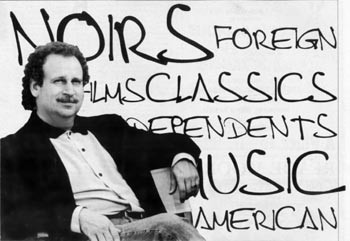
Angel of the House: With 27 produced plays to her credit, things continue to look up for Migdalia Cruz.

Playwright Migdalia Cruz opens doors at SSU in ‘Another Part of the House’

By Daedalus Howell

THE DRAMATIST’S Sourcebook, a veritable bible for playwrights, is an extensive list of theaters, companies, and their play-submission protocols. For playwrights it brims with possibilities. That’s especially the case for Bronx-bred dramatist Migdalia Cruz. Thumbing through its pages is nothing less than a life-affirming experience for her.

Vital and hardly jaded, the two-time NEA Playwriting Fellow would be hard-pressed to find a page listing a theater at which one of her 27 works has not been produced. On Nov. 14, Cruz will be at Sonoma State University’s Evert B. Person Theatre for the Bay Area opening of her Another Part of the House, a new work inspired by Federico García Lorca’s classic La Casa de Bernarda Alba.

“I like collaborative art, I like the idea of people working all in one room to re-create life,” says Cruz of her craft, during a telephone interview from her Chicago home where she is presently (and feverishly) completing the second act of Che, Che, Che, a Latin fugue in 5/8 time about Cuban revolutionary Che Guevera, due to premiere Nov. 1 at the Latino Chicago Theatre.

Cruz’s trajectory as a dramatist has gone generally unfettered since she was a child and her father constructed her a puppet-theater for which she prodigiously produced plays.

“This was during the civil-rights movement of the ’60s, so I would write all these puppet shows about civil rights,” Cruz, 38, laughs. The human concern prevalent in these embryonic sketches has persisted in the examinations of such themes as oppression and Latin American issues (Cruz is of Puerto Rican descent) that constitute much of her work.

“When I was 8, my best friend was raped and murdered and thrown off the roof of our building. That’s when my serious writing began–when writing became an outlet for me to express my feelings and emotions,” she explains. “That is when I began to understand the power of writing. Other kids played stickball; I’d write weird journal entries.”

An erudite student, Cruz graduated early from high school at age 16, routinely ditching class to scribe “bizarre musicals” with her best friend. She attended nearby City College in Queens at the behest of her parents, despite her desire to “get the hell out of the Bronx.”

Inexplicably, Cruz entered higher education as a math major. Studying drama or writing simply had not occurred to her as a viable option.

Says Cruz, “It hadn’t dawned on me that [playwriting] was a career or calling–a necessity for me.” And then she found the work of Samuel Beckett.

“It really was so clear–that you could use language to express human emotion,” Cruz recalls. “It just seemed like the greatest possible gift. It was like, ‘That’s what I want to do, but how do I tell my parents?'”

Cruz eventually earned her master of fine arts degree in playwriting from Columbia University and later gained her bearings as a dramatist at Maria Irene Fornes’ Playwright’s Laboratory, a professional workshop in New York specifically for Latino writers.

Though she maintains the trappings of much of her training, her creative process is often mitigated by the conditions of the work itself. Che, Che, Che, for example, required copious research that she says was intentionally “forgotten” and then “reconfigured.”

“For Another Part of the House, I was looking at the play of a great poet and saying, ‘Hmm, is there anything I could do here to say something else?'” Cruz avers. “What I wanted to do was write all the unspoken stuff that he didn’t write–what I thought was underneath the play. I felt that I wrote around the subtext and its viscera as opposed to its outside world form.”

She pauses. “I felt like I had to light candles to him every day and keep asking him to forgive me.”

That theater productions are necessarily wedded to the ephemeral appeals to Cruz. For her, theater is not about building monuments so much as memorable sandcastles.

“It makes it very intense and very passionate to be involved with something so temporary–it’s like falling in love. It only happens for a couple weeks, then you just have love,” she says wryly. “That ‘in love’ thing is very exciting, and I feel that playwriting is kind of like that.”

Though she maintains a love affair with her original genre, Cruz considers and has on occasion accepted other writing projects. She is currently working on a film rewrite and ponders the possibilities of writing for television.

“I think the audience I’d like to reach is increasingly an audience that stays home–a poor audience, a Latino audience, people of color, or people who feel disenfranchised. They’re not going out and they don’t feel entitled to theater. Theater is becoming more and more elitist because we just do it for each other. It seems that there are more theater people at the theater than regular people, and that’s not good.”

Cruz is not reticent, however, about the success theater has afforded her.

“I feel very lucky and blessed, but also I feel like it’s all so temporary. I feel you have to sort of appreciate it when it comes and not take it for granted,” says Cruz.

“I never know where I am in my career–I always think that if I live to be 112 like my great-grandfather, well, then I’ve just started.”

She chuckles. “I’m just a baby.”

Migdalia Cruz appears at SSU’s Person Theatre to speak on and read from her work on Friday, Nov. 7, at 7:30 p.m. $5. Another Part of the House plays Nov. 14-16 and 20-23; Friday-Saturday at 8 p.m.; Sunday at 2 p.m. $8-$16; free to students with ID. 664-2353.

From the Oct. 30-Nov. 5, 1997 issue of the Sonoma County Independent.

© Metro Publishing Inc.

Nanci Griffith

0

Storyteller


Se&ntildeor McGuire

Lucky Stars: Nanci Griffith loves it when a “real singer” performs her songs.

Folkabilly icon returns to LBC

By Mike Joyce

TOWNES VAN ZANDT, Guy Clark, Robert Earl Keen, Joe Ely–why has Texas produced so many great songwriters/storytellers? Nanci Griffith, who has earned a place near the top of the list, has her suspicions. “There’s nothing to look at, so you learn to use your imagination very early in life,” says Griffith, who brings her celebrated Blue Moon Orchestra to LBC on Nov. 9.

Imagination has fueled Griffith’s life for as long as she can remember. Born 42 years ago in Seguin, Texas, she became a voracious reader as a child and later devoured the Southern prose of Eudora Welty and Carson McCullers. So it was only natural, she says on the phone from Nashville, that the creation of character-driven songs would appeal to her. As it turned out, she had a gift for it, too.

By the mid-’70s, her literate songcraft was attracting attention around the country, winning her a prize at the 1976 Kerrville Folk Festival in Texas and allowing her to venture beyond the Texas honky-tonks she played as a budding performer and tunesmith. She still marvels at how silent audiences were when she began playing coffeehouses in New England. “I thought everybody was supposed to have a beer in their hand,” she says. “The quiet was a little disconcerting. At first I thought people didn’t like what they were hearing. I had no idea that people actually paid to hear you sing.”

Instead of trying to land a record deal in Nashville, Griffith toured the country extensively in the ’70s and early ’80s, playing her “folkabilly” at any place that would have her. “I started driving myself around America,” she recalls in a faint, girlish voice. “I just went out and worked wherever I could. I also made four albums for four different labels, and it was hard to do that then. But it was a great time in my life, and I wouldn’t trade it for anything.”

Griffith has been writing, touring, and recording ever since. Along the way, she’s developed a fervent international following and won several Grammies, including one for the 1993 album An Irish Evening with Roger Daltry and Nanci Griffith. She’s also had her songs recorded by numerous artists, such as Willie Nelson (“Gulf Coast Highway”), Suzy Boguss (“Outbound Plane”), and Kathy Mattea (“Love at the Five and Dime”). Whenever she hears someone singing one of her songs on the radio, Griffith says, “I just count my lucky stars.”

After all, she adds, “I do this so that a real singer will come along and sing these songs.”

Even so, in some circles Griffith is best known for her wistful voice and affecting interpretations. Her version of the Julie Gold song “From a Distance” topped the Irish charts several years before Bette Milder recorded it. Now Griffith regards Ireland as her second home.

These days, she touring to support Blue Roses from the Moons (Elektra), which features guest appearances by Buddy Holly’s legendary band the Crickets (who will join Griffith at LBC) and Hootie and the Blowfish frontman Darius Rucker

But her most personal and revealing album was 1994’s Flyer. Writing the songs for the album, she explains, was akin to “an exorcism–very much like that. Instead of writing about characters like I usually do, I became the character. It was very painful to put out an album that made you feel naked, but at the same time it was a great experience working with all of the musicians.”

Big-name collaborators on Flyer included REM’s Peter Buck, Mark Knopfler, Larry Mullen and Adam Clayton of U2, the Indigo Girls, Adam Gurvitz of Counting Crows, and her “hero,” Sonny Curtis of the Crickets. “I don’t know how it happened, but this block of songs just came flooding out of me–and they were all autobiographical.”

Griffith is quick to point out that her cycle of soul-baring songs has ended–at least for the time being. Her new album commemorates the 10th anniversary of her band, the Blue Moon Orchestra, and though it features a couple of guest cameos, she describes it as a small-scale, festive affair.

Meanwhile, upbeat, descriptive, or confessional, much of Griffith’s music has been disregarded by commercial country radio over the years, but she isn’t frustrated by a lack of exposure. From the beginning of her career, she notes, college radio has been her mainstay. “That’s always been the alternative, and I guess I just kind of fall into the alternative thing,” she explains.

Nanci Griffith and her Blue Moon Orchestra, featuring the Crickets, perform Sunday, Nov. 9, at 7:30 p.m. at the Luther Burbank Center, 50 Mark West Springs Road, Santa Rosa. Tickets are $22.50. For details, call 546-3600.

From the Oct. 30-Nov. 5, 1997 issue of the Sonoma County Independent.

© Metro Publishing Inc.

Greek Egg-Lemon Soup

Greek Egg-Lemon SoupRed Beans & Rice. Otis uses the Seme di Melone pasta--the "little boats" of his childhood--in lieu of rice, giving a succulent appeal to the broth. One 4-5-lb. stewing chicken, deskinnedOne 49-oz. can of chicken broth (Otis uses the fat-free variety)1 small package of Seme di Melone pasta or 1 cup rice2 eggsJuice of 2 lemons; more...

The House Yes

Ricochet TheoryJohn CasadoHere's Lookin' at You: Sheri Lee Miller, left, is Jackie-O in 'The House of Yes.''The House of Yes' scores a hitBy Daedalus HowellIF WOODY ALLEN'S GAG, "I'm writing a non-fiction version of the Warren Report," was a benign antecedent of the shift in national consciousness about conspiracy theories, then Actors' Theatre's production of playwright Wendy McLeod's black...

Roger Montgomery

On a Roll Homeless, not Helpless: Roger Montgomery at rest on his Hudson Cart. Local man strives to make dream come true By David Templeton THE MORNING is wet and cool, the air's sharp chill suggesting the imminent approach of winter. In Doyle Park, in downtown Santa Rosa, a few...

Teen Mediation Program

Meeting HalfwayMichael AmslerPeacemaker: Volunteer mediator Heidi Peyser, 17, helps teens resolve conflicts outside of the courtroom.New program gives teen offenders a second chanceBy Paula HarrisSITTING at the conference table in a small, no-frills Santa Rosa office, Heidi Peyser, 17, peels long flakes off a croissant and nimbly guides them to her mouth. "I forgot to eat," she apologizes with...

HIV Conference

Local HIV Conference SetThe conference--the first in the North Bay following the flurry of optimistic headlines reporting the supposedly miraculous results attained by some protease inhibitor users--will focus on new federal drug guidelines, procedures for treatment of multidiagnosed patients, the psychological and emotional impact of HIV treatments, and protocols for assisting patients to adhere to the complex treatments.Dr. Paul...

Beekeeper Jonathan Taylor

To BeeBy David TempletonFROM ACROSS this west Petaluma field, I can see the hives, sticking up from the ground like weird, squat totem poles: short, white, bare, and square--almost glowing in the bright morning sun. We are still too far away to see any of the bees, but I can hear them, buzzing mellifluently as the day grows steadily...

Talking Pictures

Moral DilemmaPoster Boy: Undie king Mark Wahlberg stars as a porno star in 'Boogie Nights.'Photo by Phoebe SudrowCrime novelist Richard Rayner does the hustle with 'Boogie Nights'By David TempletonWriter David Templeton takes interesting people to interesting movies in his ongoing quest for the ultimate post-film conversation. This time out, he meets philosophical thief-turned-crime novelist Richard Rayner to compare notes...

The Dog Pound

Give Me MoreBy MaddogOne of the things we were always encouraged to do while growing up--besides eat our vegetables, keep quiet, and not stuff out sister down the garbage disposal--was to collect things. What you collected wasn't important. Stamps were good. Coins were good. And sports trading cards were even better because they ended up increasing in value faster...

Playwright Migdalia Cruz

Play RightAngel of the House: With 27 produced plays to her credit, things continue to look up for Migdalia Cruz.Playwright Migdalia Cruz opens doors at SSU in 'Another Part of the House'By Daedalus HowellTHE DRAMATIST'S Sourcebook, a veritable bible for playwrights, is an extensive list of theaters, companies, and their play-submission protocols. For playwrights it brims with possibilities....

Nanci Griffith

StorytellerSe&ntildeor McGuireLucky Stars: Nanci Griffith loves it when a "real singer" performs her songs. Folkabilly icon returns to LBCBy Mike JoyceTOWNES VAN ZANDT, Guy Clark, Robert Earl Keen, Joe Ely--why has Texas produced so many great songwriters/storytellers? Nanci Griffith, who has earned a place near the top of the list, has her suspicions. "There's nothing to look at, so...
11,084FansLike
4,606FollowersFollow
6,928FollowersFollow


