
Election Results

0

Dirty Tricks

Jane Hamilton stung by last-minute hit mailer; Measure A shot down

By Greg Cahill and Paula Harris

PETALUMA, home to one of the biggest voter-fraud scandals in California history, hosted an 11th-hour dirty-tricks campaign this week aimed at discrediting City Councilwoman Jane Hamilton, a candidiate for the 2nd Supervisorial District seat.

It’s unclear whether the widely distributed hit piece swayed local voters, but Hamilton–who had been expected to garner a significant share of the votes in the crowded seven-candidate field vying for retiring veteran Jim Harberson’s seat–placed a distant second behind Petaluma Police Sgt. Mike Kerns, still ensuring a runoff in November.

“It’s obvious this is an act of cowards who know they can’t win arguments in a public forum, so they resorted to lies,” says City Councilmember Matt Maguire, a staunch Hamilton supporter. “Worse, it’s an assault on the public and a clean political process.

“It doesn’t get any more cynical than this.”

On Saturday, many Petaluma voters receivedto find a large glossy flyers in their mail boxes misrepresenting Hamilton’s position on the widening of Highway 101, a major campaign issue among frustrated commuters. The bold black-and-red mailers were designed to confuse voters, claiming erroneously that Hamilton has opposed on three occasions road improvements on Highway 101.

Hamilton, who supports a proposed sales tax measure designed to raise funding for the widening, says the flyer distorted her voting record on the issue. “This is an insult to voters,” says Hamilton. “This is sent by people who have no respect for the electorate. They distorted my voting record, and they picked a source of pain in the community.”

Last year, three people were convicted of charges stemming from a state voter-fraud investigation. In that case, supporters of a failed bid to swap city-owned Lafferty Ranch to Sonoma Mountain millionaire Peter Pfendler for $1.2 million and a dusty old dude ranch, were convicted of forging nearly 2,000 signatures to petitions intended to qualify the land deal for the 1996 ballot.

Hamilton helped lead the opposition to that swap.

The mysterious mailer that targeted her this week–which one local election official described as the most blatant example of misleading campaign literature she’d seen in 18 years–noted only that it was paid for by the ABH Committee. After county voting officials complained that the name was too vague, ABH treasurer Monica Romeyn–the only person identified on the mailer–filed a request to rename the group as the Anybody But Hamilton Committee.

Romeyn, who serves as secretary of the Sonoma County Republican Central Committee, filed no additional information about the organization. Because of the late timing of the mailer, the group’s financial disclosure report failed to state resources or funding sources. A return address listed on the mailer is the home of Romeyn’s parents, who reportedly denied any knowledge of the mailer’s origins.

Romeyn could not be reached for comment. However, the Independent traced the hit piece to the Novato-based Mail Communications, which processes bulk mail. Ron George, the firm’s owner, adamantly refused to disclose the source of the mailer or its cost. “This is confidential information,” he said.

Gary Huckaby, a spokesman for the state Fair Political Practices Commission, says the agency will examine the mailer and review complaints before deciding whether to investigate the incident.

Meanwhile, a separate flyer was left on vehicle windows and doorsteps in east Petaluma, claiming that the progressive Hamilton plans to betray environmentalists by approving construction of the controversial Rainier Avenue overpass. It urged residents to “vote for anyone but her.”

“This has the same smell, taste, and feel of the voter-fraud scandal because of the complete lack of respect for voters,” Hamilton says. “I’ve heard of recall, but this is the first time I’ve heard of a committee formed against a candidate. It’s a secret, hidden, and cowardly thing.”

IN THE FINAL TALLY, south county voters cast 36.3 percent of their votes for Kerns and 25.9 percent for Hamilton. “After 25 years as a police officer, I’m ready for some new challenges,” says Kerns.

While Hamilton says she has experience in her favor, she is “excited to finally be able to get to the level of a campaign where we can talk about issues in depth. In one minute, you can say all the buzz words, but in five minutes you have to demonstrate how you think and how much experience goes into that thinking. This is not an entry-level position.”

In the 4th Supervisorial District, local conservationists lost their dream of a first-time environmental majority on the Board of Supes when incumbent Supe Paul Kelley of Windsor fended off three challengers with a commanding 56 percent lead in the race.

Kelley, a conservative politico whose support of gravel mining in the middle reach of the Russian River has made him the scourge of local conservationists, ran a low-profile campaign.

Kelley’s re-election, and the runoff between Kerns and Hamilton in the 2nd Supervisorial District, leaves only west county Supe Mike Reilly carrying the banner for environmentalists on the conservative board.

Political neophyte Bill Smith had garnered 23 percent of the vote in the 4th District race. Smith has criticized continued gravel mining and supported tougher urban growth boundaries. He faced a pair of progressive candidates who helped split the anti-Kelley vote.

In Rohnert Park, a ballot measure that marked the first electoral challenge to one of the county’s five UGBs, rejected Measure A, which opponents called a thinly veiled ploy by developers to subvert a 1996 voter-approved four-year growth limit.

Rohnert Park Councilman Jake Mackenzie, who formed a citizens’ group to oppose the measure, was delighted by the stunning 67.6 percent defeat.

“The forces of righteousness triumphed over the forces of evil,” he says. “I’m pleased Measure N continues to govern the way we’re operating in Rohnert Park. This gives us two years to properly look at what works in the way of growth.”

Christa Shaw of Greenbelt Alliance, which also had opposed the so-called UGB agrees. “The most important message of this result is for the city of Rohnert Park to understand that the growth wars have been very damaging,” she says.

“This means the city must go back to the drawing board, continue the community summit, and come up with a real 20-year UGB.

“The message for the county is that UGBs are not to be messed with.”

IN A CLIFFHANGER that culminated in a startling upset, Petaluma City Councilwoman Pat Wiggins, a Democratic candidate for the coveted 7th State Assembly District, edged past political insider John Latimer (32.2 percent to 25.4 percent).

That seat is being vacated by incumbent Valerie Brown, forced out by term limits. In November, Wiggins will face Republican Bob Sanchez.

Some considered that Latimer, who is incumbent Valerie Brown’s legislative aide and who garnered much financial support from Brown, a shoo-in for the candidacy.

“This is an incredible upset,” Wiggins says, “John had Sacramento support, connections, and Sacramento power behind him–I had the least money.”

Indeed, Wiggins’ campaign headquarters were inside half of the Soggy Doggy dog grooming parlor in Santa Rosa. “I was in a dog-grooming parlor up against the powerful Sacramento machine,” she quips. “It feels like a lot of miracles happened.”

In other state Assembly races, Democratic incumbent Virginia Strom-Martin will meet Republican challenger Sam Crump in the 1st District; and Kerry Mazzoni, D-Novato, will face Republican businessman Russ Weiner.

In other races, state Sen. Mike Thompson, D-St. Helena, won the Democratic slot in the race for the North Coast congressional seat being vacated by conservative Rep. Frank Riggs, R-Windsor. Thompson, who will face Republican Mark Luce, is a heavy favorite.

In the 6th Congressional District, Rep. Lynn Woolsey easily held her place on the Democratic ticket for a November re-election bid against Republican challenger Ken McAuliffe.

From the June 4-10, 1998 issue of the Sonoma County Independent.

© Metro Publishing Inc.

Anything Goes

0

Going, Going, Gone


Song and Dance: Kim Chambers, Paulino Duran, and Claire Victor tango their way across the sinking set of ‘Anything Goes.’

SR Players deliver off-key ‘Anything Goes’

By Daedelus Howell

SOMETIMES a work of theater is such a formidable artistic challenge that it must be evaluated in a manner consistent with its own aesthetic criteria. Unfortunately, in this case, crayons and macaroni do not reproduce well in newsprint. The Santa Rosa Players’ production of musical-mastermind Cole Porter’s Anything Goes (directed by Peyton and Michael Maloney) is two and a half hours of idiocy posing as musical comedy.

With music and lyrics by the venerable Porter and book by Guy Bolton, P. G. Wodehouse, Howard Lindsay, Russel Crouse, and whoever else was in the room at the time, Anything Goes is a madcap, screwball excuse for a soundtrack. The book is a terribly untidy amalgamation of half-thought plots, shtick, and sketches that invariably dead-end in one of Porter’s hallmark song and dance numbers.

The play is ostensibly the story of go-getter Billy Crocker (a mugging Paulino Duran) wooing betrothed Hope Harcourt (a characteristically demure Kym Chambers) away from effete Sir Evelyn Oakleigh (in a redeeming performance by Mark Smith) during a transatlantic cruise to England. In the midst of his fervid romancing, dancing, and crooning, Billy teams up with wannabe mobster Moonface Martin (Vance Smallwood), with whom he devises myriad disguises and distractions to evade his boss, ship authorities, and other painfully injected complications. In short, he acts like a schmuck, gets in over his head, gets out, and gets hitched.

Directors Peyton and Michael Maloney stumble again and again in their calamitous madhouse of entrances and exits, replete with rueful stabs at sentiment and unnervingly humorless pleas for laughs. The play’s few hopes of salvation–the glistening performance of Jennifer Albin (as cabaret satin-doll Reno Sweeny) and Smith and Smallwood’s deft caricatures–are crushed by the accumulated gravity of the Maloneys’ poor dramatic choices.

If the directors had narrowed the scope of their production (40-plus players swarm the stage) and concentrated on the sinews of sight gags and one-liners, the show might have stood a chance. With Anything Goes, the name of the game is farce–light, snappy, frivolous farce. But the Players seem too concerned with infusing their interpretation with actorly emotion (as between the lovers Billy and Hope), and this stymies the levity necessary for the material to work. The play drags, and miserably so.

Narrowly escaping the spray of artistic misguidance that riddles this show is Laurie Glodowski’s choreography. Her work is a bright spot–though perhaps a tad glaring–that maximizes the cast’s serviceable dancing abilities (the tap sequences are particularly entertaining) as the performers cascade across set designer Joshua Reid’s quaint frontal view of a luxury liner’s deck, smokestacks, and portals.

Likewise, musical director Janis Wilson guides a competent ensemble through Porter’s effervescent score. But, unfortunately, she is undermined by the occasional clotted-cream timbre of a performer’s singing and by the theater’s sound system, which converts the bassy arrangement into a blend of champagne and mud.

Surely most people coming to a slapstick musical like this are out looking for escapist entertainment. Unfortunately, Anything Goes is anything but.

Santa Rosa Players’s production of Anything Goes plays through June 21 at the Lincoln Arts Center, 709 Davis, Santa Rosa. Tickets are $10-$12. 544-7827.

From the June 4-10, 1998 issue of the Sonoma County Independent.

© Metro Publishing Inc.

Soccer

0

Soccermania


Michael Amsler

Getting their kicks: The Raymonds–George and Susie, daughters Desaree (center), Angie, Nadine, and son George Jr.–share a passion for indoor soccer.

For worshipers at the Church of the Spotted Ball, indoor soccer is heaven

By Dylan Bennett

ON A CRUMMY SUNDAY in the wet spring evoked by the warm ocean current named for a young boy, small rivers form on the asphalt outside an off-white warehouse forgotten in an industrial suburban backwater of Santa Rosa. There’s only one reason to be here: soccer. Indoor soccer, that is. Through a single steel door the dread of El Niño blossoms into an uplifting onslaught of yapping teenagers, conversing parents, the smell of sweat, the screech of the referee’s whistle, the sonic shrapnel of video games, a stampede of running feet, and the hair-raising bang of soccer balls against the wall.

“Good try, Johnnaaaaaay!”

This is Sports City Indoor Soccer Center in Santa Rosa. Indeed, it’s not only the center of the Sonoma County soccer scene, consuming the passions of entire families, and mixing the often separate Anglo- and Hispanic-soccer cultures, but also a soccer savior. Sports City has been about the only place to play soccer in the deluge of winter, when most outdoor fields are closed to public use for months on end.

Beneath the massive steel girders that span the cavernous building shimmers an electric green AstroTurf arena enclosed by netting and Plexiglas walls and garnished with diverse international soccer flags. On this 75-yard patch of plastic the gladiators of indoor soccer–girls and boys, women and men, from under six to over 40–battle for victory.

Indoor soccer is more akin to hockey and basketball than to outdoor soccer. Passing off the wall creates an extra dimension. Hard fouls get you two minutes in the penalty box. It’s a six-on-six game played in the frenzy of a permanent fast break and constant oxygen debt that rips the lungs from the chest of even the fittest player in just a few minutes.

“It’s a lot of work indoors, but it’s so much fun. I love it,” exults George Raymond of Sebastopol United, whose wife, Susie, daughters Angie and Nadine, and son George Jr. all play at Sports City.

“It gets you to exercise on a regular basis and is fun instead of just the boring gym,” says Susie, who plays with George along with Angie on a co-ed team.

“I think it’s brought us closer together,” says Angie, “because everyone in my family is very busy and it kind of makes time for us to do something together.”

This popular indoor soccer complex opened in 1996 to a notable buzz of excitement among the dozens of adult outdoor soccer teams. In the depths of El Niño this year, Sports City operated at full capacity, hosting 250 teams and 3,000 players per week. The center employs 32 people, including 24 referees.

“I want this to be a total hub for soccer,” says Sports City owner Andrew Rowley, a former professional indoor-soccer coach. With blond hair, intense unwavering eyes, and smoothly muscled legs, Rowley looks like one those guys with posters of Franz Beckenbauer rather than of Joe Montana on his bedroom wall. It’s easy to muse that he must read, instead of Sports illustrated, obscure magazines about professional European soccer leagues.

Rowley grew up familiar with his uncle’s British pub, the Mayflower in San Rafael, where he experienced soccer culture in the European tradition. After the recreational weekend games, his father and friends retired to the pub for a few noisy pints of beer and the big game on television. “I wanted to have that atmosphere I grew up with,” says Rowley.

In his quest to make Sports City the ultimate soccer hangout, Rowley updates game scores and league standings every night. Soon he’ll offer videotaping of games, and, best of all, Sports City just landed a beer permit to help savor every World Cup game this summer on large-screen TVs.

To soccer heads, Sports City is a very juicy experience.


Michael Amsler

Fleet feet: Fast and hard–not for the meek.

IT’S ALSO a growth industry. Games go from early to late, causing some parents to protest 7:30 morning games. Not to worry. Rowley plans to open a second soccer facility, called Sports World, at the site of the old Yeager and Kirk hardware store on Santa Rosa Avenue. Set to open next January, Sports World will feature a full health club, restaurant, and sports bar that will overlook an indoor soccer field.

At thriving Sports City, Rowley says a distinct role reversal occurs between parents and children–namely, the kids cheer for their parents on the fuzzy turf. Simply put, everybody plays: Parents play, referees play, coaches play.

“And they should,” says Rowley. “It makes them realize it’s not so easy.”

Rowley has a refreshing commitment to sportsmanship and fun. “Too much pressure is what I see as a major problem in outdoor soccer,” he says. “Yelling and pressure: that stuff really takes away from the game. A lot of kids like indoor better than outdoor soccer, where sometimes the atmosphere is too competitive with too much pressure from coaches and not the right training. They come indoors and get less pressure and have more fun, which is what the game is all about.”

“I’m there for the good time,” say indoor-soccer enthusiast George Raymond. “And I get that along with a great cardio workout and tons of camaraderie.”

AS A BONUS, the short, tight passes and quick moves required by indoor soccer help players improve their passing performance outdoors. David Henry, a defensive player with Sebastopol United, coaches his son Michael’s team. “I notice that my guys improved a lot in the short passing game,” observes Henry.

“They like it a lot. It’s a very fast game. There’s no out of bounds, very little stoppage of play. The guys enjoy themselves out there.”

The supportive role of indoor soccer for outdoor soccer is epitomized by the Brazilians, the reigning world champions, who often play in confined spaces with fast surfaces like basketball courts or beaches. And this Church of the Spotted Ball gives proper respect to the apostles of Brazilian soccer with a 6-by-20-foot vinyl poster depicting the almighty Bebeto, one of Brazil’s finest.

“It really fine-tunes your skills because it’s at such a fast pace that you must keep very good control of the ball in tight spaces,” says Ian Mork, assistant men’s soccer coach at Sonoma State University and a former professional indoor player. “You have to think very quickly.”

Mork, however, warns that success indoors based on speed and power may not always translate outdoors if a player can’t “read” the more complex, full-size, outdoor scenarios.

One thing for sure, indoor soccer absolutely demands the best possible physical condition. “Indoors is tough,” says Raymond. “Indoors you have a tendency to run a lot more. You are on offense and defense constantly. Outdoors when the ball is in the upper left-hand side of the field and you’re the right fullback, there’s time to suck down some air. Indoors that’s not necessarily the case. The passing is so crisp, so quick, the transition is immediate.

“If you don’t get back on defense, your goalie is meat. It’s that quick.”

From the June 4-10, 1998 issue of the Sonoma County Independent.

© Metro Publishing Inc.
Legalizing Hemp

0

On the Ropes


Michael Amsler

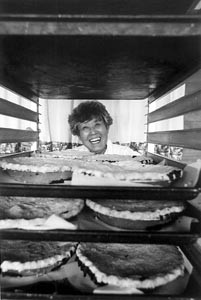
Fiber optimism: Richard Rose’s Sonoma County-based HempRella markets a variety of foods manufactured from hemp. As acceptance grows for hemp products, industry figures are vying for the hearts and minds of consumers.

Infighting erupts as hemp businesses press for legalization

By Bruce Robinson

IN EVERY ELECTION CYCLE, there are initiatives that fall by the wayside. Some regroup and achieve ballot status the next time around; others are never heard from again. Legalizing the cultivation of industrial hemp in California could go either way, but infighting among hemp proponents may be jeopardizing efforts to place the initiative on the ballot.

Hemp, as any self-respecting counterculturalist knows, is marijuana’s versatile but unsmokable cousin. Botanically different from the THC-laden buds that pot smokers prize, hemp is cultivated for its fibrous stalks and its seeds rich in essential fatty acids. Industrial hemp contains 1 percent THC or less. On the other hand, high-quality marijuana contains 10 to 13 percent or even more.

But while potent pot has a single use, hemp can be used to create literally thousands of other products, from textiles to building materials, cosmetics to foods.

“Hemp can be blended with just about anything,” according to Mary Kane, publisher of Hempworld magazine in Forestville. “It is mold retardant, anti-fungal, and rodent resistant,” qualities that benefit building materials, while the long hemp fibers weave easily with cotton and silk to create a wide range of textiles, from denim to linens, and even lingerie. “Dairy-type products are easy to make with hemp seed,” she added. “You make a soylike milk out of it first, and then do whatever after that.”

Kane was among the hemp activists who had hoped to see a legalization measure on the California ballot in November. The Industrial Hemp Act was launched with modest fanfare early this year, with a call for hemp-related businesses and other supporters to round up half a million dollars to get the initiative qualified. Then … silence.

The qualifying process, which requires some 700,000 signatures of registered voters on petitions in support of the measure, was begun on a shoestring–and some petitions are still being circulated–but little funding was forthcoming, and the initiative failed to attain much momentum, or even publicity.

“There wasn’t enough money to pay signature gatherers,” says Candi Penn, secretary of the Occidental-based Hemp Industries Association, a 280-member trade organization. Although the measure’s proponents, who came together under the banner of CAIR (Californians for Industrial Renewal) lined up Orange County political consultant Sam Clauder to guide the campaign, his signature-gathering firm received scant resources, and achieved results to match. But Penn does not second-guess that approach. “I don’t think there’s been an initiative in California that didn’t have that kind of support [signature gatherers] that made it,” she notes.

Kane agrees that the lack of financial support undid the high hopes she held for the initiative, and she blames dissent among the ranks within the world of hemp business people, a schism between the earthy, entrepreneurial “hempsters” and the more buttoned-down corporate types. “We could have had a nice initiative this year if certain people hadn’t badmouthed us,” Kane says. The “hemp right wing” poisoned the climate in Hollywood against the measure, she says, pre-empting any hopes of getting the hemp initiative bankrolled there.

And who are these naysayers? “They’re the corporate guys who are trying to get hemp corporatized,” Kane fumes. “It is safe to say that there are individuals who would rather wait for the corporate people to take over than allow the hempsters to be successful with politics.”

But John Roulac, the Sebastopol-based author of Hemp Horizons and director of the North American Industrial Hemp Council, sees the matter quite differently. Although “well-intentioned,” the CAIR campaign “was not a serious effort,” Roulac says. “They had no money to start with, no endorsements from anybody of consequence politically.” Crucially, he added, the California Farm Bureau opposed the initiative, and “unless you have the farmers supporting you, you’re not going to get very far.”

IN THE VIEW of Santa Rosa hemp entrepreneur Richard Rose, another CAIR member, the critical failing was in starting too late. “It was a matter of a really good idea, but too little, too late,” says Rose, whose HempRella company produces non-dairy cheese and other hemp-derived food items. “If we had gotten started on it earlier, there would have been enough money to push it through.”

Many of the CAIR activists are now hoping to pursue their goal through the state Legislature, and they have tabbed state Sen. John Vasconcellos, D-San Jose, as a lawmaker willing to carry such a bill. Failing that, “we’ll definitely be back with another initiative, probably in 1999 or 2000,” vows Kane.

“By the year 2000, I will be surprised if we even need it,” suggests Rose. “I think we will be there by then.” The source of his optimism lies not in Sacramento, however, but in Kentucky, where a coalition of farmers has filed suit against the federal government to force hemp off the federal Drug Enforcement Administration’s list of controlled substances and transfer it to the jurisdiction of the Department of Agriculture instead.

“We’ve all, for years, been shaking our heads over why the DEA has been so adamant about saying hemp is marijuana, when any third grader can tell you the difference,” Rose says. Now he thinks he knows.

“Their cannabis-reduction program is based on big numbers, and 99.28 percent of the plants they dig up are industrial hemp,” Rose charges.

This insight into the agency’s accounting came from careful analysis of an internal DEA report, which also revealed that the agency’s budget equaled about $3,000 for every plant it uprooted. “What that is, is a negative subsidy for industrial hemp,” Rose concludes. If the same funds were redirected to support hemp growing–which has been advanced as an ideal alternative crop for tobacco farmers in the South–the new industry would quickly be able to compete with imports from Canada, where hemp cultivation was recently legalized.

The farmers’ suit contends that the 1937 Marijuana Tax Act specifically distinguished industrial hemp from marijuana, and that the DEA has improperly included hemp in its drug enforcement actions. If that suit is successful, the basis for all state laws outlawing hemp will have been removed, and anyone who wants to should eventually be able to resume hemp farming.

“The farmers understand this, and they want to grow it,” Rose says, “so it’s really none of the drug warriors’ business.”

From the June 4-10, 1998 issue of the Sonoma County Independent.

© Metro Publishing Inc.

Late Night Dining

0

Night Shift


Michael Amsler

Night-owl cafe: Higher Grounds is one of the few places in Santa Rosa serving after 10 p.m. on weeknights.

Where to dine after nine?

By Janet Wells

AFTER CATCHING a Sunday evening movie a few weeks ago, my friend Panna suggests we find something to eat. “There’s a Thai place down the street,” she says. “Great noodle soup and cheap.” Sounds like just the ticket. Then I look at my watch and groan. “It’s almost 10 p.m. Do you think we’ll make it before it closes?”

Panna smiles. “It’s open until two.”

A late-night eatery in Sonoma County? Stop fantasizing–this Thai gem is in San Francisco.

Not to sound bitter about it, but Sonoma County’s night-owl eating options are slim pickings. The lackluster late-night dining scene here is tantamount to cruel and unusual punishment for those of us who work late or just enjoy eating and socializing after prime time.

When I moved here from San Francisco a few years ago, I didn’t expect the same kind of culinary opportunities as those in a bustling city. After all, there are trade-offs for escaping big-city parking problems, crowds, urban crime, and high rent. But I’ve had too many evenings of leaving work at 10 p.m. and driving aimlessly with a grumbling stomach, peering for a lit restaurant sign. Sorry, deep-fried zucchini at a bar or boxed macaroni and cheese isn’t my idea of quality living.

But before I surrendered to the belief that I’d been relegated to live in a provincial, small-town, sidewalks-roll-up-at-9 p.m., non-city-of-a-city burg, I figured I should do a little investigating. Maybe I just didn’t know the secret cache of late-night dining opportunities.

So I placed an ad in the Independent: “Seeking late-night dining. Sonoma County ain’t the big city, but does that mean that everyone rolls up with the sidewalks at dusk? Is it possible to get a meal after 9 p.m. (10 p.m. and later even better)? Conducting serious research… . No fast-food franchises or greasy bar fare, please.”

In two weeks, I received exactly two responses: “Unfortunately, I have no tips, but am very interested in finding the same information and would like to share any leads either of us may come up with,” wrote Serena via e-mail.

From Michelle Romero: “You’ve hit on my biggest complaint since moving back to Sonoma County after 12 years in L.A.: Where to dine after nine?”

As co-owner of Higher Grounds cafe in Santa Rosa, Romero did have valuable information: The cafe serves vegetarian meals until midnight. Hallelujah! The problem for her, of course, is that she and her husband don’t want to spend every waking moment at their business. “I long for the days of California Pizza Kitchen, or Chin Chin’s Chinese, or a trip downtown for hole-in-the-wall Chinese that is out of this world. I would love to see a guide for the late-night dinner party. Please!”

Late-night dining options.

Romero begged via e-mail. “Maybe other business people aren’t aware that there are those of us who walk the rolled-up sidewalk seeking food and entertainment after 9 p.m. seven nights a week.”

Sorry to be the bearer of bad news, but during the week, 9:30 p.m. seems to mark the restaurant witching hour (an hour or so later Friday and Saturday). And if you want to indulge your late-night palate any place in the county but Santa Rosa, your options are severely limited.

“I’ve been here 23 years,” says Cricklewood restaurant owner Michael O’Brien. “In the beginning we served dinner until 10 p.m. and it was busy. Now there’s not enough business. We struggle keeping it up after 9 o’clock. We just have staff standing around doing nothing.”

O’Brien, former president of the Redwood Empire Restaurant Association and a night-owl eater himself, thinks late-night dining is falling out of favor everywhere. “Even in San Francisco it seems there’s not as much choice late as there used to be,” he says. “I think it’s a change in the drinking habits [and stricter drunken-driving laws] more than anything else. People drink less and are concerned about getting arrested.

“It has brought about a lifestyle change.”

Too bad that alcohol has put a damper on the late-night lifestyle. Sure it’s nice to have a glass of wine in the evening. But what late eaters crave is quality food: pasta with greens, a steaming bowl of udon, a crisp salad with grilled chicken, deep-dish pizza, a juicy burger, pad thai–all of which is available in abundance in Sonoma County.

Though not after 9:30 p.m.

In the interest of night owls everywhere, we’ve compiled a selected list of late-night eateries. The criteria for making it onto the late-night dining list were “real” food (sorry, nachos and pre-fab microwaved stuff doesn’t count), a modicum of atmosphere (no fluorescent-lit fast-food joints or chain restaurants), and food service until at least 10 p.m. on weeknights. Beware of posted hours: One new Santa Rosa restaurant said it was open until 11 p.m. But when a thrilled late-night-dining devotee went in a few weeks ago at 9:30 p.m., the place had “run out of food.”

As of last week, a cafe near Airport Cinema 8 was advertising weekday hours until 10 p.m., but a phone call revealed that it actually closes an hour earlier. Many brew pubs and bars stay open until the wee hours, but close the kitchen around 9 p.m. “One of my customers is a student who commutes from the city every day and is trying to get her husband to move up here. Of course, with school and work they are also late eaters,” Romero says. “His first comment when I met him: ‘Where do you guys go to eat around here?'”

From the June 4-10, 1998 issue of the Sonoma County Independent.

© Metro Publishing Inc.

Little Shoppe of Horrors & Blue Window

Plant Food

Michael Amsler


River Rep’s ‘Shoppe of Horrors’ a blast

By Daedalus Howell

FOR BETTER or worse, the dawning of the atomic age shepherded sci-fi pen-pushers into a brave new world of “weird menace.” Even the most improbable organisms, when exposed to an atomic event, became pledges for the mayhem club. Maverick horror-schlock filmmaker Roger Corman was hip to this phenomenon and with characteristic irreverence chose a plant as the unlikely villain of his classic 1960 film Little Shop of Horrors.

Musical theater mirrors this fabled atomic augmentation: Take the most unfathomable subject or source work, radiate it with near-lethal doses of kitsch and camp, and watch it devour New York. It’s a wonderful formula that worked well as a musical, and River Repertory Theater’s able cast takes it to the stage again with great success.

Seymour (Tim Dickinson) is a bush-league botanist desperate to extricate his roots from a decrepit skid-row florist shop. The bespectacled nebbish strikes a Faustian deal with a speaking, carnivorous plant that allows Seymour to achieve fame, fortune, and the affection of shop-girl Audrey (in a strong performance by Kathleen Nordby), but only as long as he sustains the plant’s regimen of human flesh.

As the reigning monarch of the vegetable kingdom, plant puppeteer Morgan Wilson and singer Michael Fisher forge a topnotch collaboration of movement and soulful crooning. As often as the duo steals the show, however, Dickinson and Nordby steal it back, especially during their sterling “Suddenly Seymour” duet.

The play’s revolving set design makes innovative use of the Jenner Playhouse’s relatively crammed quarters and is well lit by Ricardo Zelaya’s seamless light design.

River Repertory Theater’s Little Shoppe of Horrors is a joyous romp–edgy musical theater sweetened with a generous dollop of hinterland unpretentiousness. It is an unpruned and prickly pleasure.

RHETORIC RULES in innovative playwright Craig Lucas’ Blue Window–a heady frolic through the psyches of a baker’s half-dozen of New York cognoscenti and dilettantes. Strewn with nodules of epigrammatic wit and poetic revelation, Lucas’ stage-borne dinner party is a fine match for Actors’ Theatre’s deft ensemble.

Set in mid-’80s Manhattan, Blue Window finds the neurotic Libby (in a tiptop performance by Danielle Cain) at the chaotic center of her first dinner party. The guest list is a medley of off-kilter souls acquainted with Libby through the various tributaries of metropolitan living–from shared apartment buildings to group therapy.

Libby inadvertently rips the cap off her front tooth while prying open a jar, and from then on the hostess avoids conversation lest she reveal the broken dental hardware. Undaunted, Greiver, an aspiring actor (in a divine performance by Ken Griffin), competes with lumpy Norbert (Matt Strong) for their hostess’ attention. Writer Alice (Joan Feliciano) and her lover, family therapist Boo (Sheri Lee Miller), wage subtle verbal war with each other.

In short, there is no plot, just an amicable assemblage of emotional baggage constantly rearranged on stage in new and alluring patterns.

The AT ensemble does so well with Lucas’ wonderfully conversational dialogue that it is hard to resist joining in the patter. It really feels like a dinner party. Likewise, Griffin so effortlessly emits realism as the starstruck narcissist that it seems conceivable that his character’s pithy one-liners are actually the player’s own off-the-cuff commentary. During the play’s “before” and “after” sequences, the stage functions like a multidimensional fishbowl in which the audience is privy to the private lives of all the characters simultaneously. Indeed, the whole play allows us to peer through the windows of a very interesting household.

No Windex necessary.

River Repertory Theater’s production of Little Shoppe of Horrors plays through July 4 at the Jenner Playhouse, 10432 Hwy. 1, Jenner. Thursdays- Saturdays at 8 p.m.; Sunday matinees on June 7 and 21, 2 p.m. Tickets are $10-$15. 865-2905.

Actors’ Theatre’s production of Blue Window plays through June 27 at the Luther Burbank Center, 50 Mark West Springs Road, Santa Rosa. Thursdays through Saturdays at 8 p.m.; Sundays at 2 p.m. Tickets are $6-$12. 523-4185.

From the June 4-10, 1998 issue of the Sonoma County Independent.

© Metro Publishing Inc.
Gay and Lesbian Comics

0

Gay Glib

Michael Amsler


Gay and lesbian comics fight for mainstream respect

By Marina Wolf

FOR ALL THE MEDIA hoopla surrounding the Ellen DeGeneres sitcom, you might assume that gay comedy has come of age. Don’t bet on it, says Suzanne Westenhoefer, who is as close to popular success as almost any other gay person playing the stand-up comedy circuit. The first gay comic to have her own HBO special, Westenhoefer has released a comedy CD and regularly plays to packed concert halls. Though the brash blonde is not quite as all-American as other blonde lesbians we might know, she plays relatively well in Peoria, as they say.

But Westenhoefer–who headlines the upcoming Gay and Lesbian Comedy Night at the Luther Burbank Center–is quick to reject the notion that she in particular, and gay comedy in general, has hit the mainstream.

“It’s evolving very quickly, but I wouldn’t say it’s mainstream,” she says forcefully. “Most good comics are not mainstream. By the time they mainstream they lose a lot of their edge.”

Maybe mainstream isn’t exactly the right word. What about evolution? Integration? Assimilation? Invasion? Something’s up when the flagrantly butch Lea Delaria appears on Broadway to rave reviews; when clearly queer comics like Sabrina Mathews and Scott Capurro appear regularly on Comedy Central cable TV specials; and when lesbians and gay men get applause at straight open mikes and comedy clubs all across the country, even when it’s not Pride night.

Whatever you want to call the state of gay comedy in the late ’90s, it’s a far cry from the scene a mere 20 years ago. Tom Ammiano, a San Francisco supervisor who pioneered the gay open mike in 1979 at San Francisco’s legendary Valencia Rose–a converted Mission District mortuary painted in soft pink– remembers the club as being a supportive place for gay comics to develop stand-up skills without getting killed.

“I had always wanted to do stand-up, but when I tried the [straight] open mikes, things got hostile very fast,” says Ammiano. “A lot of comics would tell fag jokes, but a fag doing it was a different story.”

Doug Holsclaw, a solo performer and playwright who started doing stand-up at Valencia Rose in 1983, found the welcoming vibe there to be almost therapeutic: “All of the sudden, all of the things that had been bad in your life, that you tried to sweep under the rug, became positive things, and that’s why people liked you and came to see you.”

And comedian/columnist Karen Ripley remembers when gay comedy venues opened up right and left to accommodate the burgeoning scene. “The straight comics were jealous,” she says. “Some of them even lied and said they were gay.”

But that cozy world split apart in the decade that followed, as an AIDS-weary and angry gay community grew tired of being in, but not altogether of, the non-gay world. A “second wave” of comics emerged, youngsters who had always planned to do straight clubs and found some space in them after the first wave had pushed the envelope. Westenhoefer was part of the second wave, as was L.A. comic Sabrina Matthews, who readily acknowledges her inheritance and her responsibility to pass it on. “As much easier as it was for me to go into straight rooms, that’s how much easier it will be for those who come after me,” says Matthews.

Until recently, the sheer paucity of gay representation placed a huge demand on those who broke through. “The first few years, when there were a lot fewer of us, I had to be really heavy-handed,” says Westenhoefer. “Gay, gay, gay, gay, gay. Me and my gay life. It was fine, but if I started going off on a little tangent about my dog, the audience wasn’t into it.”

These days new, more relaxed material has emerged to accompany gay comics’ expansion into “het territory.” Doug Holsclaw has witnessed this broadened scope in his work as associate artistic director of San Francisco’s acclaimed Theatre Rhinoceros. “As gays become more integrated into the world at large, the topics are expanding,” he says. “Now I can get up on stage and talk about movies or politics or whatever.”

That doesn’t mean he’s ready to go out there and be Mr. Universal Appeal himself. “I’ve never had the desire to try and make a room of straight people like me,” he says. “I couldn’t do it in high school, and I’m not interested now. It’s like, do I really want to repeat eighth grade every night of my career?”

Separate. Integrate. It’s an ancient quandary for gay men, lesbians, and bisexuals that feels both relevant and confusing when one looks more closely at the progress of gay comedy in terms of roles being offered. Being queer is still a liability–“We are no longer the flavor of the month,” says Matthews dryly–but trying to land mainstream gay roles or spots in shows carries its own particular risk.

Says Karen Ripley, “I’ve heard gay comics saying they went to these auditions where they were looking for gay people, and the director said, ‘You’re not gay enough.'”

“Mark Davis is on television [as Ashley on the now-canceled Fired Up], and he’s pretty much doing a queen,” Ripley continues. “He’s extremely talented in many areas, but right now they have him doing limp wrists.”

TOM AMMIANO concurs. “They’re looking for things that will broadcast that you’re gay in the most stereotypic way, rather than just integrating you into a plot,” he says. “We have to be careful of being labeled, rather than having an identity or sensibility.”

But the line is fine between integrating and maintaining cultural pride. “You don’t want to assimilate to the point where the differences aren’t there,” Ammiano adds, “because the difference give you the edge.”

The edge, of course, cuts both ways these days as queer comics and their fans struggle to make sense of Degeneres’ humiliating dismissal from prime-time television. “I don’t think we’re going to see a gay or lesbian star of a sitcom for a long time–maybe five years,” predicts Ellen Maremont-Silver of We Mean It! Productions, the two-woman team that produces the annual gay and lesbian comedy night in Santa Rosa. Nonetheless, Elias believes that incidental gay characters on TV and in the movies will continue to proliferate, and that gay and lesbian stand-up comedy will survive.

Westenhoefer, meanwhile, remains untroubled by the conflict between mainstream dreams and alt-edge reality. Her sitcom is slowly making its way through the Hollywood machine, giving Westenhoefer plenty of time to form her plans.

“I want the success,” she says, “but I’m not preparing to give up anything.”

Suzanne Westenhoefer headlines the fourth annual Gay and Lesbian Comedy Night on Thursday, June 4. Luther Burbank Center for the Arts, 50 Mark West Springs Road, Santa Rosa. Tickets are $16.50/adults; $14/students. 546-3600.

From the June 4-10, 1998 issue of the Sonoma County Independent.

© Metro Publishing Inc.

Talking Pictures

0

Bad Trip


Jerry Bauer

Viva Las Vegas: Johnny Depp as Hunter S. Thompson’s alter-ego Raoul Duke.

Novelist Nicholson Baker dissects the dark heart of ‘Fear and Loathing’

By David Templeton

David Templeton takes interesting people to interesting movies. This week, he rendezvous with noted novelist Nicholson Baker (Vox, The Fermata) to check out the ugly new adaptation of Hunter S. Thompson’s Fear and Loathing in Las Vegas.

THE MOVIE theater sits before us like a vast, squared-off reptile, lounging on this downtown Berkeley sidewalk, patiently waiting for meat. Its gaping neon maw–located just behind the box office–lies open, inviting its unwitting prey to enter.

To follow this metaphor to its natural conclusion, esteemed author Nicholson Baker and yours truly– having, of our own free will, just purchased tickets to see Fear and Loathing in Las Vegas–must be the meat. “We’re actually going to see this, then, are we?” Baker sensibly wonders, stealing a tentative glance at the uniformed adolescent waiting next to the gullet of the reptile, preparing to take our tickets.

His trepidation is understandable: we’ve seen the horrified reviews, we’ve experienced the nightmarish commercials, we’ve even read the book: Hunter S. Thompson’s scandalous 1971 description–originally published in serial form in Rolling Stone magazine– in which language is stretched to unprecedented levels of gleeful hyperbole as Thompson (grandly impersonated in the film by Johnny Depp) tells of a drug-addled, hallucination-filled excursion through Las Vegas, searching for the “heart of the American Dream” with his massive, extraordinarily unpleasant attorney, Dr. Gonzo (Benicio Del Toro).

“I do remember sitting in my living room, reading Thompson’s book, laughing out loud,” Baker admits. “I liked the verbal texture of his writing.”

Baker’s own novels–while dwelling at an opposite literary pole from Thompson’s nutty, paranoid ravings– have also been praised for their “verbal texture.” Baker’s imaginative writing–he’s often lauded as one of the English language’s best, most ingenious practitioners–is never less than flat-out beautiful; his stories are slyly offbeat, inventive, and often daringly erotic.

His first book, The Mezzanine (Vintage, 1990)– reviewed as a “novel about nothing”–demonstrated an obsession with everyday minutiae long before Seinfeld, and may have been that celebrated TV show’s earliest inspiration. Not only did Baker’s ingenious novel about phone sex, Vox (Vintage, 1995), gain him a worldwide reputation as a writer of erotica, it landed him in the middle of a national scandal when it was made known that Monica Lewinsky once gave a copy to President Clinton.

Baker’s latest work is a surprising shift in direction. The Everlasting Story of Nory (Random House, 1998) is a delightfully crafted tale of a 9-year-old American girl attending a school in England. One of the best and funniest books yet written about the inner life of a child, Nory perfectly captures the lovely imprecision and loopy inventiveness of children’s language, while casting fascinating light on the process children go through in deciding how to think and feel about the wide world around them.

FEAR AND LOATHING was really a perfect movie for me to see,” Baker merrily exclaims after the movie, having at last been expelled from the reptile’s innards, “because it runs counter to everything I hold important and valuable. There’s no beauty in it. It’s joyless. The only intellectual element going on at all is the sarcastic, negative comic moments–all at the expense of poor innocent pedestrians and service people.

“Maybe it’s childish, but I wanted these people to exhibit some warmth, some sentiment–something, anything.”

Not that the film is entirely without its pleasures– fleeting and inconsequential though they may be. When Thompson, barely able to walk after using an American flag to sniff ether with, shouts at Dr. Gonzo, “You sick, sorry bastard. You’ve gone all sideways on me!” or exhorts his drunken friend to get up off the barroom floor–“Quick! Like a bunny!”–it does raise a smile.

Speaking of the flag, the old stars-and-stripes are almost a featured character in the movie, as Thompson mangles and mutilates one flag after another in his numerous artistic trashings of various Vegas hotel rooms.

It’s almost enough to make Newt Gingrich reach for the ether.

“It’s funny about that,” Baker confesses, taking a seat at a nearby diner. “I actually feel that you shouldn’t mess with the American flag. It didn’t seem that so many instances of ‘flag abuse’ were really inspired or justified by the artistic demands of the film.

“I was talking about history textbooks with my 11-year-old daughter,” he goes on. “She’s really gung-ho about her textbook, even though it’s kind of blandly written. It’s called America Will Be. It weighs over a pound. What my daughter was saying was that she was really happy with her history book, but she really missed having a description of the circumstances surrounding the invention and the sewing of the American flag.

“All there is in the book is the fact that they used propaganda to establish national unity, and then a picture of the American flag. That’s one of those mythological things that I remember being taught in school: Betsy Ross and the flag. And my daughter was wanting that, because the flag is a symbol that actually has some importance to her.”

“Hmmmm. Are children capable of true patriotic feelings?” I wonder.

“Sure,” he replies. “I think all those innocent kinds of things–like patriotism, and religious feeling, the desire to be heroic–those things seem to come naturally to kids. One of the things that’s appealing about writing about kids–in the case of my book, a 9-year-old kid–is that she can go to England and be genuinely excited, in a straightforward way, about seeing a cathedral or something and be genuinely proud of being an American.”

“aybe I’m wrong,” Baker laughs. “But flags are clearly part of some basic identificational plumage instinct. They are deeply part of being human. Kids are fascinated with the flag pages in encyclopedias. I know a kid who knows all the flags and what countries they represent.

“Of course,” he adds, “the flag also stands for all the bad things that country has done as well. So I understand it’s being a complicated symbol for some people.”

Which brings us back to Fear and Loathing. “I was thinking,” Baker muses. “It’s supposed to be a risk-taking movie, and yet it really takes no risks. Or it takes the same risks that all the ‘risk-taking’ movies of the last few decades take: the drug use. So what? Special-effects hallucinations–we’ve seen these special effects. And by reducing all human interaction down to these two mean-spirited guys who either take from people or are taken by them–if that was once risky, it’s not anymore.

“The truly risky thing is to depict a reasonably happy life and show how that can be intellectually interesting, and beautiful, and worth thinking about. I suppose I think that sentiment–giving evidence of why you love someone–is riskier than merely showing the dark underside of someone.”

Baker gestures through the window at the theater, where a fresh group of appetizers have just disappeared down the reptile’s throat. “We’ve been to that dark underside so often already. The floodlights are already there. Now show me something I haven’t seen.”

From the June 4-10, 1998 issue of the Sonoma County Independent.

© Metro Publishing Inc.
The Scoop

Tech Torment

Today’s high-tech is tomorrow’s dreck

By Bob Harris

I’M CONSTANTLY amazed at how rapidly technology advances. My degree is in electrical engineering, which sort of sounds like a big deal, but all it really means is I once spent four years and $40,000 just to find out that college girls really don’t dig scientists.

Fifteen years ago when I was in college (a depressing introductory clause if there ever was one), I went to one of the better engineering schools in the country. And we didn’t have cell phones and fax machines and laptop computers. We didn’t even have portable phones or consumer copiers or even the 3-inch floppy disk.

We lived like animals.

The state of the art in home computing was the Commodore 64, which had enough memory to handle a graphic. Singular.

The Commodore had only slightly more processing power than the box it came in.

I spent months and years of my life studying computer languages like Fortran and Algol and APL. I would have been better off learning Aramaic. I’d be more likely to use it in my current gig, and I would have met the cute girls from the liberal arts school.

My senior project was designed around state-of- the-art million-dollar technology that you get now as a bonus when you subscribe to Sports Illustrated.

My degree means nothing. I have an honors level of knowledge about technology from 1984. Today, that means I am fully qualified to plug anything in– two-prong, three-prong, polarized, phone jack, you name it.

My VCR actually tells the correct time.

That cost me only $40,000.

That’s why I became a writer. What you do as a writer doesn’t suddenly become completely obsolete. It’s not like you turn 30 and some kid right out of college looks at you and says, “You’re still using verbs?”

I’m a low-tech guy now, largely because I know that nothing high-tech I learn or buy is going to be worth anything in five to 10 years.

So a couple of weeks ago, the Galaxy 4 satellite suffers brain freeze and rotates a few degrees off axis. I do the same thing when I see Toni Braxton. But the Galaxy 4 lock-up was a little more important. One computer glitch, and suddenly 40 million people can’t function without pagers that they didn’t even have five years ago.

If we don’t learn our lesson, next time can only be worse.

How much you wanna bet that one computer error someday crashes the whole human race, because no one will be able live without a device that you and I have never heard of yet?

Forget Deep Impact and Armageddon. The real end of the world will be titled Cancel, Abort, Retry.

FINALLY, if you get so excited watching TV sports that you scream and high-five and generally act like a guy in a beer commercial, there’s a good reason for your behavior:

You’re on drugs.

Which isn’t to say that just because you’re a big Olympic snowboarding fan you knowingly dabble with societally unacceptable mood alteration. Just that the reason you enjoy sports so much is probably related to a kick in your brain chemistry.

At least that’s what new research from the University of Utah indicates. And folks in Utah know a lot about altered brain chemistry. These people thought Donny & Marie were an actual musical group.

See, labcoats have known for years that male athletes get a major testosterone boost from winning a competition, while the guys on the losing team actually suffer a drop in testosterone levels. Y’know that whole deal where guys in a big event freak out a little and take things too seriously, like their manhood itself is on the line?

On a neurochemical level, it actually is.

And it turns out that the same thing is true for couch potatoes at home just watching the game on the drool box. You root for Michael Jordan, your testosterone levels get a 20 percent boost. Root for the L.A. Clippers, and you go home feeling like four-fifths of a man.

The exact data will be published soon in a journal called Physiology and Behavior, but the big picture is already clear. Ever wonder why winning fans often go downtown and riot, while the losers (who you’d think would be acting out their frustrations) sit quietly at home and whimper into their herbal tea?

It’s the testosterone. The winners are drunk out of their minds on it. The losers are running about a quart low.

Maybe next year the Florida Marlins can carry Viagra at the concession stands.

From the June 4-10, 1998 issue of the Sonoma County Independent.

© Metro Publishing Inc.

Spins

0

Jimi Jams


New CD showcases power trio of century

The Jimi Hendrix Experience
BBC Sessions (MCA)

THE LEGAL HASSLES are settled, Hendrix’s heirs are in control of the legendary psychedelic guitarist’s vault, and the results are, well, mixed. Of the several Hendrix releases to hit the market in the past year, this two-CD collection is one of the best and one of the worst. First the bad news: These 37 live tracks, songs culled from Hendrix’s first two albums and including such live concert staples as “Catfish Blues,” were recorded impeccably at the BBC radio studio over a period of several months in 1967. Unfortunately, they include three versions of the forgettable R&B-inflected instrumental “Driving South” (one would suffice, thanks) and three versions of “Hey Joe” (of which two are nearly indistinguishable). Now the good news: This is Hendrix in his prime, for chrissakes! It’s amazing how close these renditions are to the studio versions, right down to the guitarist’s simultaneous lead and rhythm lines. No overdubs. Just incredible, super-charged fiery pyrotechnics backed by an awesome rhythm section (bassist Noel Redding and drummer Mitch Mitchell) that rumbles along like a speeding 18-wheeler. Essential for any diehard guitar-rock fan.
Greg Cahill

Miles Davis
Panthalassa: The Music of Miles Davis, 1969-1974 (Columbia)

PRODUCER BILL LASWELL has reconstructed and remixed material from some of trumpet master Miles Davis’ most meditative works, beginning with the magnificent In a Silent Way (featuring keyboardists Chick Corea, Herbie Hancock, and Joe Zawinul, guitarist John McLaughlin, and drummer Tony Williams), and winding through tracks from the underrated On the Corner and Get up with It–subtly shaping these newly restored performances and never-before-heard themes into a rich textural landscape that throbs with passion and shimmers with what writer David Henderson aptly calls “yogi shit, sitar drones … [and] a Third World thing inspired from ancient kingdoms.” Laswell, who is known for his forays into avant-jazz and world music, has created a vibrant sonic canvas that captures the many hues of a true jazz genius. Prepare to be haunted.
GC

Various Artists
Bar-B-Que Soul-a-Bration! (Rhino)

THE FIRST RELEASE in Rhino’s party-pack series is well timed, providing that El Niño rolls over in time for the official summer start-up. Accompanied by a plastic loose-leaf mini-binder chock full of barbecue info, party games, dance steps, and themed menus with recipes, the 35 R&B/soul selections (plus two karaoke tracks) in this two-CD box may seem almost incidental to the package. But the juicy palate of tunes deserves kudos of its own for mixing classics and obscurities, ranging from King Curtis’ “Memphis Soul Stew” and Tony Joe White’s “Polk Salad Annie” to Professor Longhair’s “Red Beans” and Willie Bobo’s “Fried Neck Bones.” And when the last embers have grown cold in the grill, you’ll be needing the final song, Betty Wright’s boppin’ “Clean-up Woman,” to help tidy up that mess!
TERRY HANSEN

Hank Crawford
Memphis, Ray and a Touch of Moody (32 Jazz)

David “Fathead” Newman
It’s Mister Fathead (32 Jazz)

SOUL JAZZ is all the rage these days among retro fans looking to add a little more swing to their thing. And these budget-priced two-CD compilations, both solid sets of groove-laden soul jazz from a pair of ex-Ray Charles saxophonists-turned-bandleaders, are just the ticket. Brother Ray himself sits in on piano on eight tracks from the Newman set–both collections are compilations of four albums each–though it is the jazz ballads from the Straight Ahead album (featuring ex-Miles Davis sideman Wynton Kelly on keyboard and Newman on flute) that really stands out. Crawford can flavor his work with a hard-driving, grits-and-greens style, though he shows a real affinity for ballads and blues. Perfect summer fare.
GC

From the May 28-June 3, 1998 issue of the Sonoma County Independent.

© Metro Publishing Inc.

Election Results

Dirty TricksJane Hamilton stung by last-minute hit mailer; Measure A shot downBy Greg Cahill and Paula HarrisPETALUMA, home to one of the biggest voter-fraud scandals in California history, hosted an 11th-hour dirty-tricks campaign this week aimed at discrediting City Councilwoman Jane Hamilton, a candidiate for the 2nd Supervisorial District seat.It's unclear whether the widely distributed hit piece swayed...

Anything Goes

Going, Going, GoneSong and Dance: Kim Chambers, Paulino Duran, and Claire Victor tango their way across the sinking set of 'Anything Goes.'SR Players deliver off-key 'Anything Goes'By Daedelus HowellSOMETIMES a work of theater is such a formidable artistic challenge that it must be evaluated in a manner consistent with its own aesthetic criteria. Unfortunately, in this case, crayons and...

Soccer

SoccermaniaMichael AmslerGetting their kicks: The Raymonds--George and Susie, daughters Desaree (center), Angie, Nadine, and son George Jr.--share a passion for indoor soccer. For worshipers at the Church of the Spotted Ball, indoor soccer is heavenBy Dylan BennettON A CRUMMY SUNDAY in the wet spring evoked by the warm ocean current named for a young boy, small rivers form on...

Legalizing Hemp

On the RopesMichael AmslerFiber optimism: Richard Rose's Sonoma County-based HempRella markets a variety of foods manufactured from hemp. As acceptance grows for hemp products, industry figures are vying for the hearts and minds of consumers. Infighting erupts as hemp businesses press for legalizationBy Bruce RobinsonIN EVERY ELECTION CYCLE, there are initiatives that fall by the wayside. Some regroup and...

Late Night Dining

Night ShiftMichael AmslerNight-owl cafe: Higher Grounds is one of the few places in Santa Rosa serving after 10 p.m. on weeknights.Where to dine after nine?By Janet WellsAFTER CATCHING a Sunday evening movie a few weeks ago, my friend Panna suggests we find something to eat. "There's a Thai place down the street," she says. "Great noodle soup and cheap."...

Little Shoppe of Horrors & Blue Window

Plant FoodMichael AmslerRiver Rep's 'Shoppe of Horrors' a blastBy Daedalus HowellFOR BETTER or worse, the dawning of the atomic age shepherded sci-fi pen-pushers into a brave new world of "weird menace." Even the most improbable organisms, when exposed to an atomic event, became pledges for the mayhem club. Maverick horror-schlock filmmaker Roger Corman was hip to this phenomenon and...

Gay and Lesbian Comics

Gay GlibMichael AmslerGay and lesbian comics fight for mainstream respectBy Marina WolfFOR ALL THE MEDIA hoopla surrounding the Ellen DeGeneres sitcom, you might assume that gay comedy has come of age. Don't bet on it, says Suzanne Westenhoefer, who is as close to popular success as almost any other gay person playing the stand-up comedy circuit. The first gay...

Talking Pictures

Bad TripJerry BauerViva Las Vegas: Johnny Depp as Hunter S. Thompson's alter-ego Raoul Duke.Novelist Nicholson Baker dissects the dark heart of 'Fear and Loathing'By David TempletonDavid Templeton takes interesting people to interesting movies. This week, he rendezvous with noted novelist Nicholson Baker (Vox, The Fermata) to check out the ugly new adaptation of Hunter S. Thompson's Fear and...

The Scoop

Tech TormentToday's high-tech is tomorrow's dreck By Bob HarrisI'M CONSTANTLY amazed at how rapidly technology advances. My degree is in electrical engineering, which sort of sounds like a big deal, but all it really means is I once spent four years and $40,000 just to find out that college girls really don't dig scientists.Fifteen years ago when I...

Spins

Jimi JamsNew CD showcases power trio of centuryThe Jimi Hendrix Experience BBC Sessions (MCA)THE LEGAL HASSLES are settled, Hendrix's heirs are in control of the legendary psychedelic guitarist's vault, and the results are, well, mixed. Of the several Hendrix releases to hit the market in the past year, this two-CD collection is one of the best and one of...
11,084FansLike
4,606FollowersFollow
6,928FollowersFollow
