Talking Pictures

0

Nightmare Jobs

By David Templeton

Writer David Templeton takes interesting people to interesting movies in his ongoing quest for the ultimate post-film conversation. This time out, he connects with business consultants M. K. Key and Terrence Deal to discuss the horrors of corporate culture as portrayed in the hard-to-find indie film Clockwatchers.

For two weeks, M. K. Key and Terry Deal have been hunting for Clockwatchers.

As they’ve hopscotched across the United States, promoting their groundbreaking new book Corporate Celebration: Play, Purpose and Profit at Work, the unceasingly resourceful authors have eagerly examined the movie listings in every town they’ve visited, in hopes of finding the film that everyone seemed to be talking about at last winter’s Sundance Film Festival.

Alas, the low-budget surprise–a dark comedy about temporary office workers (Lisa Kudrow, Parker Posey, Toni Collette) slaving away in an accurately oppressive, monolithic corporation from Hell– s, despite its critical success, being released very slowly, one theater at a time, allowing for word of mouth to spread.

“Everywhere we go, it’s either just been here, or it’s just about to be released,” laments Dr. Key, calling from O’Hare International Airport in Chicago, between planes on her way home to Tennessee. There she runs Key Associates, LLC, a consultation firm specializing in corporate psychology. A clinical psychologist herself, Key has long been interested in the nature of American corporate culture and its effect on the modern workforce. Promising that she’ll still see the movie, swearing that I won’t ruin the experience if I talk about it, Key asks me to describe Clockwatchers.

I comply. As it turns out, I will end up telling the same story to Dr. Deal, also by phone, also in Tennessee, where he teaches organizational theory at Vanderbilt University. Deal is the author of 17 books on the subject of workplace empowerment. The latest, his first with Key, is a hands-on guide, offering specific celebrations and “rituals” to invigorate company morale and inspire workers and managers to work together toward mutually beneficial goals.

The company in Clockwatchers could have used this book.

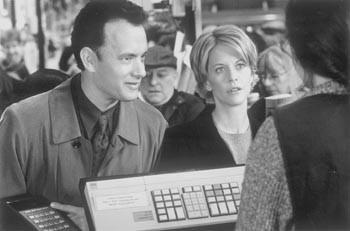
“A young woman takes a temporary job at a giant credit company,” I explain. “On day one she’s kept waiting in the reception area two hours, then blamed for not speaking up. She ends up bonding with the other temp workers, but their friendship begins to unravel under the increasingly awful working environment. Finally, when things begin to disappear from people’s desks, armed guards are brought in to search everyone’s desk drawers and purses, cameras are positioned above their work spaces, the partitions that gave the temps their own personal space–decorated with meaningful personal items–are stripped away.

“In response to all of these measures,” I sum up, “they basically all go crazy.”

Key and Deal wish they could say that this scenario was far-fetched.

“The bit about the worker’s personal spaces makes me think,” Key says. “I used to watch monkeys for a living. Basic comparative psychology. Animals scent their territories. What workers do to decorate their workspaces is very much like scenting things.

“So when management takes those personal spaces away, it’s as if they are trying to leave their own mark. ‘This is my territory, not yours.’ Taking over somebody’s space, telling them what they can and cannot do to dress it up, is a symbolic way of proclaiming your ownership of people.”

In a late scene, one of the temps–numb with boredom and despair–tears her thumb open while removing hundreds of staples (they were vertical, a direct violation of the company’s horizontal-staple rule), but doesn’t notice she’s bleeding all over the papers.

“People do go numb,” Key agrees, “because they cannot tolerate being so dehumanized. We put a thick wrapper around ourselves, to protect our human core. The unfortunate thing is that sometimes it’s too late; we check our hearts and souls at the door and just give in to the numbness.

“That,” she adds, “is the process Terry and I are trying to reverse.”

“Look at the Saturn Motor Co.,” Dr. Deal says, drawing on the book’s description of companies that have bucked that old “dominate-and-conquer” approach to management. “Saturn is an example of a place where people are hired to think,” he says, “not just go through the motions. The company in Clockwatchers doesn’t appear too receptive to its workers’ ideas.

“The bottom line is, you can’t do a good job if you work in an environment where you are being squelched.”

“So what would you suggest to a company like this,” I ask him, “one that has become so caught up in policing its employees that everyone feels like a prisoner?”

The first thing he would do, Deal says, is tell them about Continental Airlines.

“They were the worst airline in the world,” he laughs. “Rated last in the industry. And then Gordon Bethune took over the company–and he turned it around.”

One of the first things Bethune did, Deal relates, was to round up all of Continental’s old Employee Rule Books, and to have a rousing bonfire in the company parking lot.

“That sure sent a signal to the employees,” he chuckles. “That was just the beginning. The employees that once hated working there now feel empowered. Last Year Continental was voted the airline of the year.”

“What about the stealing issue?” I ask. “In the movie they tried to scare the workers into behaving.”

“And that’s exactly why the thefts increased,” he suggests. “When the surveillance cameras went up, the problem got worse. If it were my company, the first thing I’d do is ask, ‘What am I doing wrong? What’s going on in the workplace that is causing someone to want to get even?’

“This is exactly the thing that more and more companies are now learning,” he confidently states. “If there are morale problems at a bosses’ workplace, it’s not the workers’ fault. It’s the bosses’ fault. Only the bosses can turn it around.”

Web extra to the September 3-9, 1998 issue of the Sonoma County Independent.

© Metro Publishing Inc.

Mickey Hart

0

Hart Beat

John Werner


Mickey Hart returns with
new band, new CD

By Alan Sculley

WHEN JERRY GARCIA, the leader of the Grateful Dead, died in 1995, it may have appeared that drummer Mickey Hart had not been affected very deeply by Garcia’s death and the end of his much-beloved band. After all, immediately after Garcia’s passing, Hart entered the studio to work on what would become his vocal/percussion project, Mystery Box.

But don’t let appearances fool you–Hart was devastated. Diving right into a musical project was simply one way he could deal with his grief. “There’s nothing like music to relieve the soul and uplift it,” says Hart, a west county resident, explaining his decision to immerse himself in the studio. “As soon as Jerry went, that very day, the day after, I was in the studio. Yeah, I went right into the music.

“I was grieving real hard,” he adds. “Jerry was my best friend, you know, and he was the voice. He was always in my ear. That was the music I grew up with my whole adult life. That was the main lead sound. So it was a giant hole. It was ripped away from me.”

The depth of the loss Hart and the surviving members of the Grateful Dead felt was obvious as Hart spoke while taking a break from rehearsals with the Other Ones, a new group that brings together three of the four remaining members of the Grateful Dead–Hart, bassist Phil Lesh, and guitarist Bob Weir (drummer Bill Kreutzmann has retired). The new band, which also includes North Bay guitarist Steve Kimock of Zero, keyboardist Bruce Hornsby, Dave Ellis, Stan Franks, and John Molo, headlined this summer’s Furthur Festival, an annual tour that has served in part as a touring vehicle for such Grateful Dead side projects as Hart’s Mystery Box and Weir’s band Ratdog.

The Furthur Festival marked the first time Hart, Lesh, and Weir have played extensive selections of Grateful Dead material publicly since Garcia’s death.

Hart, in particular, had difficulty revisiting the Dead’s music. “I just gave it up, I hung it up,” he explains. “I didn’t want to hear any more Grateful Dead songs, not after Jerry died. And then Paul McCartney sent me a note and a little video of us back in the ’60s that he and [his late wife] Linda had done. Linda had shot us once at 710 Ashbury [the San Francisco row house where the Grateful Dead first lived together].

“McCartney took the stills and put our music to [the video]. He sent me a beautiful note. It was about a year ago, because I hadn’t listened to Grateful Dead music in almost two years. It was just not played in the house. I just couldn’t hear it. It was just too painful for me, mourning Jerry and everything. And one lifetime I thought was enough. We put the video on in the kitchen and we all danced around. We thought it was beautiful, and the music sounded great, and so that’s when it all started for me again.

“It brought the music back into my home.”

When Hart, Lesh, and Weir got together last Christmas, they took the next step by forming the Other Ones. Hart was clearly excited about how the group sounded in rehearsals. “It’s a different slant,” he says. “The songs sound the same, but they’re different. I mean, you’re going to recognize the songs because we’re going to be playing the signature songs, but the improvisation is completely different.”

In fact, Hart feels the new group has recaptured something the Grateful Dead had lost as the group moved from the ’80s into the ’90s–the spirit of musical adventure. For all of Hart’s respect and fondness for Garcia and the other members of the Dead, he isn’t sentimental about the group’s music and their successes and failings. “I thought the ’60s was the most exciting time and the most vital music, and we were really together as one mind then,” Hart says. “Then afterwards, the songs and the bad drugs, that took its toll. I thought once we started playing songs and not improvising so much that the spirit of the Grateful Dead was muted. … I thought ’93, it was pretty well close to the end.

“I thought the energy was pretty well sapped by then.”

By the early ’90s, the Grateful Dead–if they weren’t as musically vital–were an institution that had become a one-of-a-kind phenomenon. Formed in 1965 as the San Francisco music scene was leading rock into a bold new age of musical experimentation and counterculture lifestyles, the Grateful Dead grew to be much more than a band. For the group’s loyal fans–the Deadheads–Grateful Dead concerts provided a sense of community, a place where they found emotional and spiritual nourishment. By the late 1980s, the Dead had grown into the biggest cult band in rock history, with their tours playing stadiums that held 50,000 or more fans–many of whom continued to follow the band from city to city.

In Hart’s eyes, this huge success, though, didn’t do the Grateful Dead any favors on a musical level. “Every time we released a record, I was always praying that it wouldn’t sell,” Hart said. “I never wanted a hit single, ever. I thought as soon as we stopped becoming hungry, we wouldn’t play hungry. And that’s what happened. The places started getting bigger and bigger and we played stadiums. Nobody was hungry. Everybody had money in the bank. We had cars and houses and we had families and everybody got soft in a way. We weren’t hungry anymore. We weren’t on the edge.”

HART FOUND that edge by stepping outside of the Grateful Dead for side projects during that band’s latter years. He did–and continues to do–extensive research into world music, producing two compilations of rainforest music along the way.

Meanwhile, Planet Drum, Hart’s Grammy-winning group that plays percussion-based, non-vocal music, remains a going concern. The group’s second CD, Supralingua (Rykodisc), featuring an all-star lineup of world music greats, was released last month. “The first Planet Drum [conceived by African drumming master Babatunde Olatunji] was a beautiful record,” Hart says. “This new one is much more advanced, technologically speaking, the grooves are better, it’s just the next step. It’s hard for me to say. They’re all my children. I say this one is better than the last one, always the current one is better. You have to understand, let me qualify this, it’s not to slight the first one. And that was 28 weeks at No. 1 [on the world music charts] and it won a Grammy, so it couldn’t be too bad.

“So if we do as good with this one I will be happy.”

As for future projects for the Other Ones, Hart offers no predictions. But he knows one Grateful Dead member who would endorse the Other Ones’ efforts. “I think he’s riding shotgun with us,” Hart says of Garcia. “I know if we could talk to him he’d be saying, ‘Good going, guys. This is just what I want you to do.’ “

Mickey Hart will discuss Supralingua Wednesday, Sept. 9 at Copperfield’s Books at Montgomery Village in Santa Rosa, and will perform on Sept. 30 with the nine-member Planet Drum ensemble at the Luther Burbank Center, 50 Mark West Springs Road, Santa Rosa. Tickets are $25. 546-3600.

From the September 3-9, 1998 issue of the Sonoma County Independent.

© Metro Publishing Inc.
Chef David Frakes

0

Top Rung


Michael Amsler

Born to cook: Chef David Frakes draws crowds with a fresh appeal.

Applewood’s youthful chef climbs into the Big Time

By Marina Wolf

THE WALKWAY from the Applewood Inn restaurant to the orchard curves past a burbling fountain, apple trees, and Mediterranean landscaping. The morning sun casts a golden glow over the little Guerneville valley in which the inn rests, and executive chef David Frakes seems pleased with the surroundings. “I’m very happy to be here right now, doing this,” says Frakes, as he squints at the apples, which are almost ripe. “I’m learning where the food comes from, when it’s supposed to be picked and served.”

It’s an interesting contrast to his three-year stint at the prestigious Ritz-Carlton Hotel Dining Room and Terrace Restaurant in San Francisco, where one could get anything, as Frakes says, “flown in from Maine at 2 o’clock in the morning.

“But out here you actually see that you’re not supposed to pick peaches until they’re ripe.”

From the reviews that Frakes has gotten since his arrival at the Inn in January of 1997, it’s clear that he’s got the hang of the harvest thing. Frakes’ snappy creations, based on the wine country sensibility that Applewood owners Jim Caron and Darryl Notter had cultivated for years, have been drawing attention from travel and lifestyle magazines from along the West Coast and across the country.

And yet, as he walks briskly away from the garden, Frakes, 29, offers some perspective on what looks to an outsider like a rather exciting climb up the ladder. “I have 10 years left to prove to myself whether or not I deserve it,” he says. “I feel like I’m on the right path, but I’m at a point where I have a lot of growing to do.”

Growth, in this case, has as much to do with earning potential as artistic genius or culinary skill. “I’m working this hard because eventually I’ll be making enough money to provide a house and all that stuff, maybe have a family,” says Frakes. “But the only way I’m going to do that is if I work my ass off right now.”

In the rarefied world of fine cuisine, Frakes’ manners and ambitions are appealingly straightforward; this Sacramento boy knows his economics from his escargot. But he was raised for life in a toque by his grandmother, a well-to-do gastronome who urged the young Frakes to enter the culinary world from a very early age, and took him to fine restaurants in San Francisco when he was 15 or 16. Grandma also picked up the tab for Frakes’ tuition at the California Culinary Academy in San Francisco, where he fled from the Sacramento wastelands in 1991.

About a year after he emerged from the culinary academy, Frakes landed the first of a series of positions at the Ritz-Carlton, and eventually snared the lead fish station under the famed chef Gary Danko. It would prove to be yet another formative experience for the wide-eyed young Frakes. “I was getting my ass whipped every day by a hard-core chef. Gary was difficult,” Frakes continues in a more careful tone–after all, he is discussing his mentor–“but I appreciate every moment that he ever gave me, because he’s such a perfectionist. He knows his stuff and he goes out of his way to teach it. … That’s something I hope I would eventually be able to give other cooks.

“If I’m lucky, when I’m 45 or 50 I might be able to get a job working for the CCA.”

Forty-five may not seem very advanced in a culture that routinely pushes the envelope of longevity. But Frakes talks sometimes as if he is already hitting middle age. “I feel like I’m going to hit 30, and it’s going to be like Logan’s Run. I’m going to float up to the ceiling and blow up or something,” jokes this young man who just 30 seconds earlier shared his unlikely predilection for the Brazilian thrash-metal band Sepultura and other “aggressive” rock “that probably teenagers listen to.

“My 20s are over; I really do need to have a game plan now. By the time I’m 40 I do want to be able to consider retiring, and that groundwork needs to be laid now, 401(k)s and stuff like that.”

Chef David Frakes’ recipe for pan-seared scallops.

FRAKES LAYS out his next steps methodically: maybe a slightly larger place, or a big house supervising 10 cooks, and eventually owning a small restaurant in the avenues in the west side of San Francisco. This is a man with a game plan. But the next minute he’s talking about his chocolate Labrador retriever puppy or angsting a little about the high divorce rate among chefs. “I have more respect for chefs who are [professionally] successful and are happily married, too,” he says thoughtfully, stroking his brown goatee. “There must be a secret to it, and I’m hoping we’re working on it.’

So far, so good, for his five-year marriage. “I feel like I’m very fortunate to have an understanding wife who knows, or I think knows,” he amends with a grin, “that the reason I’m putting all the effort into this is for us.”

Frakes is not letting the effort go unrecorded, either: He keeps albums of his work at Applewood. After an unsettling interview experience at a famous San Francisco restaurant, he decided that he never wanted to feel empty-handed and open-mouthed in that situation again, so he began assembling recipes, menus, and photographs of his work. “I look back and I’m not happy with it,” says Frakes. “Right now I’m doing the foods I wish I had started out doing when I first came here.”

Nevertheless, he’s finishing up the third album now, and has already given a copy of the first two to his grandmother as a thank-you gift.

“She helped me make a really good decision, thank God. If she hadn’t, who knows where I’d be?”

From the September 3-9, 1998 issue of the Sonoma County Independent.

© Metro Publishing Inc.
Stage Events

0

Balancing Act


Sheri Lee Miller, Mollie Boice, and Betty Cole-Graham star in Kindertransport, starting Sept. 18 at Actors’ Theatre.

Michael Amsler


Local theaters strive to combine fine art with big receipts for fall season

by Daedalus Howell

WITHOUT an audience there is no theater,” renowned director Viola Spolin once remarked. “They are our guests, our evaluators, and the last spoke in the wheel which can then begin to roll. They make the performance meaningful.”

Audiences also make a performance profitable, which has increasing significance as local theater companies embark on their fall seasons. Many have found themselves walking the razor’s edge that divides artistic integrity and commercial viability.

Will achieving balance leave these companies neutered or noteworthy?

“We still have to get butts on the seats, as they say,” explains Jim DePriest, artistic director of the sister Sonoma County Repertory and Main Street theaters. “But we also have to challenge our audiences, actors, and directors or we’ll die on the vine.”

This year’s lineup underscores the commitment of local companies to staging artistically challenging shows that also appease the grumbling box office gods.

Main Street has already begun mounting Othello in Sebastopol as part of its annual Shakespeare in the Park series, and the theater will stage Charles Dickens’ A Christmas Carol in the dogleg between Thanksgiving and Christmas. Molière’s Tartuffe will usher in the companies’ new year, while Tennessee Williams’ signature work, A Streetcar Named Desire, looms in spring.

Likewise, Santa Rosa Players will follow their fall season’s spate of box office-friendly family fare (Neil Simon’s proven comedy Biloxi Blues book-ended by musical chestnuts Peter Pan and West Side Story) with a musical version of Kiss of the Spiderwoman (an evocative depiction of an imprisoned gay cinemaphile becoming embroiled in the political and amorous intrigues of his cellmate).

“We wanted to reach, we wanted to do something different. We’re using this production as a kind of barometer,” says Players manager Gene Abravaya. “People are always saying, ‘Oh, the Players are always doing such old, run-of-the-mill things.’ Now we’re giving the people the opportunity to see something really contemporary. Let’s see if they come.”

Actors’ Theatre confidently expresses the philosophy that fine art will attract brisk commerce: “We assume that any production that will be aesthetically excellent will be commercially viable as well,” says Sheri Lee Miller, AT’s director of public relations, then wryly adds, “Naïve, perhaps, but that’s how we do it.”

Highlights of AT’s 10th season include the Sept. 18 opening of Kindertransport–a rigorous, emotional portrait of a Jewish girl who, along with 10,000 other children, was rescued from Nazi Germany and placed in English foster homes. To commemorate the 60th anniversary of the Kindertransport, the theater hosts a panel discussion Sept. 24 about the little-known mission that will feature four survivors. November will see the opening of the hit comedy Medea, the Musical, directed by its author, John Fisher. (After its Santa Rosa staging, the production moves straight to New York.) The acclaimed Fisher will also begin instructing playwriting classes in late September. Finally, AT also offers staged readings from its New Plays Festival, interspersed throughout the season.

Petaluma’s Cinnabar Theater celebrates its 25 anniversary with the opening of Christopher Fry’s The Lady’s Not for Burning, featuring a champagne and dessert reception on Sept. 25. In late October, the theater transforms into an “Interactive Halloween Scare House,” followed by theatrical dynamo Lucas McClure’s Eclectic Theater Festival in November. Gian-Carlo Menotti’s holiday opera, Amahl and the Night Visitors, pilots the theater’s Christmas programming, and satirist songwriter Tom Lehrer’s send-ups of contemporary culture cap the year with the return of the musical revue Tom Foolery.

Sonoma State University opens the fall season with the arrival of noted theater critic and playwright Eric Bentley (consult your play anthologies–he’s edited most of them). Bentley will lecture on Bertolt Brecht and perform selections of the playwright’s work on Sept. 29.

“We really are a working theater. This year at Sonoma State we’re introducing a completely revamped theater curriculum which is much more intensive,” says Jeff Langley, chair of Performing Arts. “To some extent we’re trying to model our productions after the curriculum itself. It’s going to change the way we do everything around here. It will be a major shift from what we’ve done in the past… . The performance aspect of our curriculum is being stressed more and more.”

OTHER SSU HIGHLIGHTS include a student production of Thornton Wilder’s The Skin of Our Teeth and the Engelbert Humper-dinck opera Hänsel and Gretel. SSU closes the year with Celebrate the Solstice— tableaus and vignettes created and performed by faculty and students.

The Santa Rosa Junior College Theater Department opens its fall season Oct. 9 with Roosters, Milcha Sanchez-Scott’s explosive drama about a Latino family in the rural Southwest. Then it’s on to Christmas in November as SRJC stages a musical production of Miracle on 34th Street.

Pacific Alliance Stage Company (the resident company at Rohnert Park’s Spreckels Performing Arts Center) begins its season Sept. 17 with playwright Stephen Malatratt’s thriller The Woman in Black, followed in November by Daniel Sullivan’s comedy Inspecting Carol.

Meanwhile, Russian River-based Michael Tahbib’s fledgling Pegasus Productions waits in the wings after its recent production of Taming of the Shrew. The company is on hiatus while establishing permanent digs.

“Because of the move, we’ve basically had to defer our production until next year,” says Tahbib, who intends to “introduce the public to more ancient and modern classic works as well as present new points of view on older classics where that’s needed.”

So, will the new season find theaters packing the seats or falling instead upon the sharp sword of public indifference? There are no foreseeable close calls, but let the high-wire act begin.

From the August 27-September 2, 1998 issue of the Sonoma County Independent.

© Metro Publishing Inc.
Jethro Tull

0

Solid Rock

Tobi Corney


Ian Anderson keeps Jethro Tull classically rolling along

By David Templeton

IAN ANDERSON is a talker. The legendary force behind the equally legendary rock band Jethro Tull–after 30 years, still recording, still touring, still twisting, and still tweaking its eclectic musical style–had agreed to chat by phone from his home in the south of England. A limit of 20 minutes was set (he’s got a lot going on this week, it turns out). Yet Anderson, after chatting amiably for over 40 minutes on what he describes as “this warm English evening in a sparkling English summer,” still has plenty to say.

He’s already given his opinion of “classic rock” radio, the leading format on American airwaves: “The good thing is that classic rock is probably the only place you’ll hear Led Zeppelin, Elton John, Rod Stewart, and, of course, Jethro Tull. The awful thing is that you only hear the same five songs from each artist. I’ve been in some classic-rock stations where I’m amazed that the entire collection is contained on one wall. I have a larger collection of CDs than some classic-rock stations.”

Reissued Jethro Tull.

Anderson also discourses on the lack of attention radio gives to Tull’s newer works: “Listening to the radio, you’d think Jethro Tull had stopped recording in 1977. Our biggest competition when we release a new album isn’t Pearl Jam or Oasis or the Spice Girls–it’s our own back catalog. Though that’s not really something to complain about, I suppose. It’s something to celebrate. It’s really very nice and very flattering to have a bunch of records and a bunch of old songs that people still want to buy.

“It’s just that we aren’t dead yet,” he adds with a chuckle. “We are still making music.”

Indeed. Anderson has recently completed studio work on a new solo album, a follow-up to 1995’s Divinities: Twelve Dances with God. Jethro Tull–named for an 18th-century agriculturist and inventor, the 31-year-old band also includes Martin Barre and Dave Pegg–have been consistently putting out albums, hitting the studio every few years or so since 1969. The group’s last album was 1997’s Roots to Branches, and they will be taking to the studio again this fall, with plans to release a new album next spring. At that time, Jethro Tull–best known for such classic-rock-station standards as “Aqualung,” “Thick as a Brick,” “Locomotive Breath,” “Bungle in the Jungle,” and “Too Old to Rock and Roll, Too Young to Die”–will take to the road on another of the major, high-energy world tours for which they are renowned.

The band swings through Konocti Harbor Spa and Resort on Sept. 3.

Though few know it, and he does little to call attention to it, Anderson keeps himself busy with a number of side businesses, including a fish farm.

For the last 17 years, the rock-and-roller has owned and operated four salmon hatcheries in the highlands of Scotland, making him the third-largest supplier of smoked salmon in the United Kingdom.

“Today’s not a good day to ask about that,” he politely remarks, going on to describe a fire that, just last weekend, burned one of the factories to the ground. “I just received official permission this afternoon to have the remains demolished,” he says. “It’ll take four to six months to rebuild it. On one level, hey, it was just a building, right? But on another level, 160 people were employed there on Friday who on Monday will no longer have jobs.”

As he talks, Anderson hardly sounds like the wild flute-playing madman once known for his outrageous onstage shenanigans–the frantic gestures and airborne leaps, the outrageous neo-Elizabethan costumes with exaggerated codpieces. This Anderson seems, well, proper. And he is.

But in spite of his respectable side, the Anderson audiences love still shows up, though the 51-year-old doesn’t leap quite as high as he once did. “Our shows still have elaborate music,” he remarks, “though the staging is not so elaborate as it once was. No rockets and smoke bombs and crazy costumes. I think people come to hear the music nowadays, to see a real musician on stage doing a real man’s job, not some fellow prancing about in tights and a codpiece.

“Though I can still do that,” he adds, “if the money’s right.”

Jethro Tull performs Thursday, Sept. 3, at 6:30 p.m. at Konocti Field in Kelseyville. Tickets are $29, $39, and $49. Call 800/762-BASS.

From the August 27-September 2, 1998 issue of the Sonoma County Independent.

© Metro Publishing Inc.
Fall Arts Events

0

Fall Arts Events


Creative types go into overdrive as summer ends

WEIRD WEATHER cut our summer short, but there’s no need to fear the fall. A potent cocktail of events is brewing in the world of arts and entertainment that will erase that bratty El Niño kid from memory and leave you basking in the warm glow of local creativity. Below you’ll find our selective guide to the fall arts, compiled by Greg Cahill, Shelley Lawrence, Patrick Sullivan, and Marina Wolf.

Tibetan Art

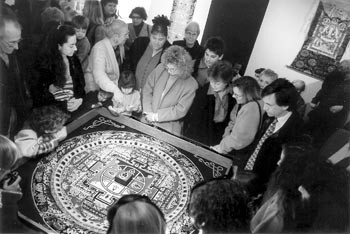
The SoFo2 Gallery kicks off its fall season with an unusual display of Tibetan religious scrolls. The exhibit–which opens Sept. 4 and runs through Sept. 30–features an array of the vividly colorful scrolls (called “thankas”) painted on silk or cloth. On opening night, Edward Kunga Van Tassel of the Golden Ridge Sangha will deliver a lecture on “The Sacred Image in Tibetan Art.” 602 Wilson St., Santa Rosa. Free. 579-2787.

Sebastopol Center for the Arts

Two shows about the art of eating fill the center’s Upfront Gallery: “Let’s Do Lunch: A Fresh Look at Food” is an exhibit of paintings and prints by Rod Emilio and photographs by Rod Nidecker; “Food, Glorious Food” is an all-media exhibit juried by acclaimed chef and art collector John Ash. Both shows are now open and run through Sept. 27. Receptions will be held Sept. 3 at 5 and 7 p.m. “Shrine/Icons/Mystical Places” opens Oct. 1. 6821 Laguna Park Way, Sebastopol. Free. 829-4797.

Opera Guild

Far from the glitter of San Francisco opera, the Sonoma County chapter of the San Francisco Opera Guild still manages to capture the soul of the art with passionate preview lectures. Another great season begins Tuesday, Sept. 8, with a 10 a.m. presentation on Arabella. But it ain’t just hangin’ with other opera amoreuses: all proceeds benefit Opera à la Carte, bringing opera–this year, Madame Butterfly–to schoolchildren throughout the county. Other lectures topics: Sept. 18 at 2 p.m., A Streetcar Named Desire; Oct. 7 at 6 p.m., Manon; Oct 22 at 10:30 a.m., Don Carlo; Nov. 2 at 10:30 a.m., Peter Grimes. Locations vary. Meals are often packaged with the lectures, with suggested donations ranging from $15 to $25. 546-4379.

University Art Shows

The Santa Rosa Junior College Art Gallery presents two shows this fall: Sept. 10 through Oct. 15, “Adjunct Faculty: New Work,” and Nov. 5 through Dec. 11, “Peter Broome Memorial Show” (1501 Mendocino Ave., Santa Rosa; 527-4298). The SRJC Petaluma campus will display “Maurice Lapp: Paintings and Watercolors” throughout October and “Endangered Species: Portraits from Papua New Guinea,” a collection of photographs of tribal peoples taken by Healdsburg physician Philip Rasori, Nov. 9 to Dec. 18 (Herold Mahoney Library, 680 Sonoma Mountain Parkway; 778-2410)… . The University Art Gallery at Sonoma State University presents an exhibit Sept. 10 through Oct. 18 of faculty work, including prints by Kurt Kemp and photography from Marsha Red Adams (1801 E. Cotati Ave., Rohnert Park; 664-2295).

Ballet Folklórico

For both artistic excellence and pure entertainment, you can’t beat the dramatic spectacle of what may well be the world’s most colorful dance company. Ballet Folklórico de Mexico draws on the richly diverse heritage of Mexico, including historical events and Mayan and Aztec rituals, to create breathtaking displays of energy in motion, complete with fantastic costumes. This year’s tour–which arrives Sept. 11 at 8 p.m. at the Marin Center in San Rafael–includes the U.S. premiere of Dance of Quetzales, a new creation of Latin American choreographer Amalia Hernandez. $22, $28, and $35. 415/472-3500.

Art for Life

Talent and compassion don’t always go together, but the two seem inseparable companions at the Art for Life Exhibit and Auction. Each year, some 200 of the region’s finest artists donate works to the event, now in its 11th year, which raises much needed cash for essential AIDS services in Sonoma County. The free exhibit opens Sept. 16. The auction on Sept. 19 at 3:30 p.m. features fine food, wine, and live jazz from the Ben Hill Quartet. Friedman Center, 873 Second St., Santa Rosa. $39. 544-1581.

Something’s Brewing

Brew swillers, ale sippers, hops lovers and fans of malt, take heed. The 13th annual Something’s Brewing beer tasting is once again fermenting, sudsing up on Sept. 18 from 5:30 to 8 p.m. at the Santa Rosa Veterans Building. With unlimited beer tasting from more than 40 of the finest specialty breweries in Northern California, the bash–which is presented by the Sonoma County Museum–also features food from local delis, restaurants, and grocers. Brookwood and Maple avenues (across from the fairgrounds), Santa Rosa. $18. 579-1500.

Chamber Music

Devotees of this oft-overlooked genre will attest that an intimate room and manageable acoustics lend any small-scale arrangement a certain piquant joy. Catch a delightful earful at these and other assemblages popping up here and there throughout the season: The Redwood Arts Council’s 19th season starts Sept. 19 with Ad Vielle Que Pourra, a transcendent folk troupe from old France. The Oct. 17 program blends the capers of the Carter Family Marionettes with the boisterously operatic stylings of Magnificat. Classical guitarist Paul Galbraith presents RAC’s final fall show Nov. 14. $17/general, $16/senior, and $10/students. 874-1124… . As if the regular season isn’t enough for them, Jeffrey Kahane and other members of the Santa Rosa Symphony are kicking off a new chamber music series this fall at the Spreckels Performing Arts Center (5409 Snyder Lane in Rohnert Park) Oct. 9 and Nov. 6. 546-8742… . The Sunday Chamber Music Series at SSU is one way to relax after a grinding week of homework or work work. Drop by Oct. 11 at 4 for an afternoon of music by Schumann, Ravel, and Turina, presented by members of the San Francisco Symphony with SSU instructor Marilyn Thompson. $10/general, $8/SSU faculty, staff, and alums, $6/students. 664-2353… . The Russian River Chamber Music Society offers an evening of strings with a decidedly young attitude at a performance by the Cypress String Quartet on Oct. 24. Call for showtimes and ticket prices. 524-8700.

Petaluma Poetry Walk

Trail poets like a bloodhound through seven locations in historic downtown Petaluma at the third annual Petaluma Poetry Walk on Sept. 20. Hear some of the Bay Area’s finest poets, such as Diane DiPrima, Ron Salisbury, and Patti Trimble, read at different locations from noon to 8 p.m. Take a load off and be inspired by their artistic wisdom at the Deaf Dog Cafe, have a futuristic snack at the 21st Century Bakery, and finish the day off at Andresens’ Tavern. The Petaluma Poetry Walk, brainchild of Geri Digiorno, is sponsored by Poets and Writers Inc. 763-4271.

Celtic Festival

Watch folks in kilts throw big tree trunks across a field, drink from animal horns, and dance while remaining motionless from the waist up. Yep, the fourth annual Sebastopol Celtic Festival is arriving once again in Sonoma County. On Sept. 25-26, visitors will be enchanted by wandering musicians and storytellers, and enticed by vendors and food. And, of course, lots of music, headlined by seminal Celtic rocker John Renbourn, the legendary guitarist who co-founded Pentangle. Other acts include Martin Hayes and Dennis Cahill, Liam O’Flynn and Arty McGlynn, and traditional Dublin music from Susan McKeown. Locations vary. $50/general full festival pass, $60/reserved full festival pass, $15/Friday night or Saturday afternoon, $22/Saturday night. Passes can be purchased in Sebastopol at Copperfield’s Music and at the Community Center. 829-7067.

Festa Italiana

Ciao, bella, it’s time for the eigth annual Festa Italiana, celebrating the cultural contributions of Italian Americans. Come wet your whistle on Italian ices and espresso, while leaving the bambinos at the children’s center, or take them to see the Coro Allegro singers and the Balliamo dancers. Play bocce ball and ooh-aah at the fine collection of Italian autos on display while you hope to win an Italian treat through the raffle. Sept. 27, 11 a.m. to 6 p.m. at the Veterans Building, at Brookwood and Maple avenues (across from the fairgrounds), in Santa Rosa. $4/advance donation, $5/at door, free for children under 10. 522-9448.

Performing Arts at SSU

Sonoma State University starts off the fall season on Sept. 29 with critic and playwright Eric Bentley sharing his critical and personal perspective on the work of German dramatist Bertolt Brecht. Geoffrey Chaucer and Co. arrives Oct. 9 with a performance of stories from The Canterbury Tales. On Oct. 10, dancer and humorist Claire Porter delivers deft physical comedy in a series of vignettes. And on Oct. 16, SSU presents Thornton Wilder’s Pulitzer Prize-winning The Skin of Our Teeth. Person Theatre or Warren Auditorium, 1801 E. Cotati Ave., Rohnert Park. Prices and times vary. 664-2353.

Family Showtime

Big names often come with big price tags at the Luther Burbank Center, but its fall lineup of family-oriented shows is an unrivaled theatrical bargain. The Fred Garbo Inflatable Theater Company sets gigantic props drifting across the stage on Oct. 1; then, on Oct. 10, kids’ singer/songwriter John McCutcheon sits in for a special set. Jackie Torrence, “the Story Lady,” spins a mysterious web of words on Oct. 21 (just in time for Halloween). Two distinctly different cultures of dance and sound–Cambodia and the Emerald Isle–meet on Nov. 3. Finally, the California Theatre Center presents The Princess and the Pea on Nov. 19. All shows start at 6:30 p.m. Reserved seats for the series are $35/children and $45/adults; individual ticket prices vary. Tickets are available for limited-income families through the ArtReach program. 546-3600.

Santa Rosa Symphony

In the face of market fluctuations and the pre-holiday financial crunch, a year’s subscription to Sonoma County’s largest symphonic ensemble may be the best return available on a couple hundred dollars. The culture-to-kopecks ratio is high, and you’re guaranteed a seat at some of the hottest classical happenings this fall. On Oct. 10-12, youthful cellist Alisa Weilerstein stars in a concert of orchestral rhapsodies by Bloch, Enesco, and Ravel. Then on Nov. 7-9 Canadian pianist Jon Kimura Parker joins music director Jeffrey Kahane for a juxtaposition of Bartók and Gershwin. Hel-lo! It oughta be good. But if you just don’t get it, don’t worry: All concerts are preceded by one-hour “Tune-Up” lectures. Non-subscription performances include Kahane in a benefit piano recital on Sept. 18 (at the Santa Rosa High School Auditorium, 1235 Mendocino Ave., Santa Rosa), featuring Bach’s Goldberg Variations. The Santa Rosa Symphony takes the civic-minded thing even further with a Saturday afternoon Discovery Series, the first two shows on Oct. 10 and Nov. 7, and features post-concert Q&As with The Man Kahane himself. All shows except the piano benefit are held at the Luther Burbank Center, 50 Mark West Springs Road, Santa Rosa. Depending on your seating preferences, the seven-concert series can be had for between $110 and $210, with substantial discounts for seniors and students; individual shows are $17-$35, or $12-$17 for seniors and students. The Discovery series is $42 ($30 for youth under 21), with individual tickets going for $7.50/general and $5.50/youth. 564-8742.

La Traviata

Go slumming on the seamy side of opera with Verdi’s deliciously scandalous tale of illicit passion, performed Oct. 13 by San Francisco’s Western Opera Theater at the Luther Burbank Center. The evening also features a buffet supper. 50 Mark West Springs Road, Santa Rosa. $32.50/dinner and opera, $22/show only. 546-3600.

Santa Rosa Community Concerts

Catch the golden anniversary season of this community-based music series. The 1998-99 concerts range from season opener Chanticleer on Oct. 14 to Quartetto Gelato in April. Luther Burbank Center, 50 Mark West Springs Road, Santa Rosa. $17.50/concert, $45/all six (but Aug. 31 is the deadline to buy season tickets). 542-2032 or 528-2731.

California Small Works Show

Small is beautiful–or provocative, or deeply mysterious–in this annual display of Lilliputian creativity at the California Museum of Art. The name says it all: Big is out, and no piece may be more than 12″x12″x12″. The 10th year of this event features works by more than 100 artists, exhibited Oct. 14 through Dec. 20, opening with a reception on Oct. 16. (Artists: Ship your own entry by Sept. 23 or hand-deliver it Sept. 26-27; call for prospectus.) 50 Mark West Springs Road, Santa Rosa. 527-0297.

Chiapas Concert

Musicians and activists come together Oct. 16 for a benefit concert to raise money for the beleaguered indigenous people of Chiapas, Mexico. The event features legendary folk singer Utah Phillips, Irish balladeer Andy Irvine, and the traditional music and dance of the Los Cenzontles Youth Touring Company. Proceeds will fund humanitarian relief and human rights monitoring efforts in Chiapas, where Mexican army troops and right-wing paramilitary groups are waging a campaign of terror against Mayan Indian communities. Sebastopol Community Center, 390 Morris St., Sebastopol. $15. 874-1611.

Ready, Steady, Go!

Race down the ARTrails of Sonoma County, the 13th annual open-studio tour of Sonoma County. This trek through the local arts takes place Oct. 17-18 and Oct. 24-25, from 10 a.m. to 5 p.m. each day. Gain inspiration by ogling over 120 artists in their own habitats. Painters, sculptors, photographers, printmakers, and craft artists of all kinds will be available to enlighten visitors. The Sonoma County Museum gets an early start with ARTrails, hosting a preview of the program starting Oct. 9 with a meet-the-artist reception from 6 to 8 p.m. 579-ARTS.

Orchestra Sonoma

Small and supple, Orchestra Sonoma plays with some of the big boys of classical music this fall, with a weekend salute to “Beethoven and Friends” on Oct. 24 and 25. Director Nan Washburn leads the orchestra through Beethoven’s Symphony No. 8 and works by Glinka, Shostakovich, and Roberto Sierra. Principal cellist Julian Hersh will support Shostakovich’s Cello Concerto No. 1, while the SSU Chorus lends its voices to Roberto Sierra’s tropical piece. Spreckels Performing Arts Center, 5409 Snyder Lane, Rohnert Park. $18/general, $14/youth and seniors. 584-1700.

Festival of Harps

Few musical instruments can match the magical appeal of the harp. From the majestic concert version to the 11-string African adungu, all these angelic instruments have a unique power to thrill and enchant. It’s a lucky thing, then, that the ninth annual Festival of Harps will touch down at Spreckels Performing Arts Center Nov. 7 to offer a smorgasbord of sound from the wide world of harp music. This year’s festival features both international performers (including Latin harp virtuoso Carlos Reyes) and musicians from the Bay Area. 5409 Snyder Lane, Rohnert Park. $18/adults, $14/youth.

Jive 4

Tune in to tales of the weird at the awards evening for the Sonoma County Independent‘s fourth annual jive writing contest. This year, we’ve asked contributors to deliver the jive on “Coincidences and Strange Encounters.” With that kind of mandate, no rational seer would even try to predict what sort of brushes with the bizarre will fill the room when the winners read their work aloud. Food, drink, and jaw-dropping prizes round out the fun. Oct. 21 at A’Roma Roasters and Coffeehouse, 95 Fifth St., Railroad Square, Santa Rosa. 576-7765.

Harvest Fair

With such attractions as the Championship Grape Stomp, an ongoing three-day contest in which funkily costumed teams of two compete in wild hopes of being named the “world’s fastest grape stomp team,” who could resist the annual Sonoma County Harvest Fair? And that’s only a teensy sample of the fun to be had here; other attractions include an art show, continuous wine and food tasting, a 10K and 3K run, and ongoing kids’ activities. The fair runs October 2-4. $5/adults, $2/children ages 7-12, and $2/seniors on Oct. 2. 545-4203.


Diva Fest

FORGET THE LILITH FAIR June and Jean Millington of the Slammin’ Babes know a thing or two about women in popular music. June, who now serves as artistic director of the Bodega-based Institute for the Musical Arts, honed her chops in 1970 as a member of Fanny, the first all-female hard-rock group. These days, she’s helping steer the IMA, a non-profit organization that supports women in the music business. And the IMA is hosting the Diva Fest, which is raising funds to purchase and renovate the Old Creamery in Bodega for new IMA digs. Performing at the event are the cream of women’s music: Ferron (shown above), Rhiannon, Barbara Higbie and Teresa Trull, Gwen Avery, Amy Simpson, Lynn Vidal, Copper Wimmin, and the Slammin’ Babes. Sept. 27 at 11 a.m. Caswell Vineyards, 13207 DuPont Road, Sebastopol. $22/adults, $10/youths ages 13-20, free for children 12 and under. 876-3028.


Laughing the Night Away

SONOMA COUNTY comedy audiences flock to the Luther Burbank Center to catch the semi-final rounds of the annual San Francisco International Comedy Competition (held this year on Oct. 2 at 8 p.m. at the LBC; tickets are $19.50 to $22.50; 543-3600), which in its 23 years has helped launch the careers of Robin Williams, Dana Carvey, Ellen DeGeneres, Marsha Warfield, and many others. But die-hard comedy fans know that some of the best talent is to be found at the preliminary rounds, where raw talent often shines in the spotlight. (Unfortunately, such competition-savvy buffoons as Sinbad often grab the eyes of judges and step into the winner’s circle.) This year, Sonoma State University for the first time will host a preliminary round, featuring 15 hopeful entrants and lots of laughs. Johnny Steele (above), a 1992 competition winner and former Live 105 morning show host, will emcee. Friday, Sept. 18, at 8 p.m. SSU’s Evert B. Person Theater, 1801 E. Cotati Ave., Rohnert Park. Tickets are $6/students advance; $10/general advance; $12 at the door. For info, call 664-2382.


Poetry in Motion

FALL OFFERS an action-packed, star-studded schedule for dance enthusiasts. First, the internationally renowned Ballet Stars of Moscow hit the Luther Burbank Center Oct. 30. Composed of principal dancers from Moscow’s leading companies, including the Bolshoi Ballet, these 10 dancers present selections from the classical Russian repertoire as well as contemporary ballets ($22/adults; $20/seniors; $17/seniors). Then, the Alvin Ailey Repertory Ensemble arrives at the LBC for a show Nov. 12. This may be Alvin Ailey’s second company, but they still deliver first-rate performances that pull audiences to their feet ($22/adults; $20/seniors; $17/students). LBC shows take place at 50 Mark West Springs Road, Santa Rosa; 546-3600. Finally, Spreckels Performing Arts Center hosts the popular and critically acclaimed Smuin Ballets/SF (shown above) for two shows–Sueños Latinos on Nov. 21 and Carmina Burana on Nov. 22 ($25 or $22/youth and senior; $44 both shows). Spreckels is located at 5409 Snyder Lane, Rohnert Park; 584-1700.

From the August 27-September 2, 1998 issue of the Sonoma County Independent.

© Metro Publishing Inc.
Horror Flicks

0

Fall Maul

I Still Know What You Did Last Summer, part of the gore-filled season of fall film.

Sidney Baldwin


Horror flicks lead the fall film invasion

By

IN THE SMOKING ruins of local theaters, blasted by Nazi ammo, asteroids, and Godzilla, peace reigns at last. The summer blockbuster season is over. What an appropriate word for all that demolition: “Blockbuster” comes from a slang term used during World War II for a huge bomb.

After Thanksgiving, that cold snap in the air means that the sap is running; sentimental contenders for the Oscar will ooze up from Southern California like ground fog. But this fall, horror films mob the cineplex. One good bet for the smartest and the scariest of the lot: Apt Pupil (Oct. 23). Directed by Bryan Singer (The Usual Suspects), the film is based on the memorable Stephen King novella collected in Different Seasons. The eerie Sir Ian McKellan (Richard III) stars as a disguised Nazi war criminal who passes on his special knowledge to an eager young suburban brat.

Bride of Chucky (Oct. 16) stars Jennifer Tilly as the love interest of the infernal talking doll from 1988’s Child’s Play. John Carpenter’s Vampires (Oct. 30) is based on John Streakley’s novel, outlining the war between the Vatican and the Vampires. James Woods stars as John Crow, a member of what could be described as the Green Berets of the Swiss Guards. Urban Legend (Sept. 25) is a tale of a mad psych professor, thought to be nothing but a rumor, who comes back to clean out the clocks of a bunch of arrogant students.

Practical Magic (Oct. 9) stars Sandra Bullock and Nicole Kidman as white witches who look for love in all of the wrong places. Dianne Wiest and Stockard Channing co-star as the women’s aunts, who taught them everything they know about magic. The film is based on Alice Hoffman’s novel.

Bringing up the rear: I Still Know What You Did Last Summer (Nov. 20), starring a hook-wielding weirdo chasing Freddie Prinze Jr., Jennifer Love Hewitt, and eyebrowless TV cutie-pie Brandy. If all of the above doesn’t curdle your blood, there’s Gus Van Zant’s remake of Psycho (Dec. 4). Is it shot for shot, as is rumored?

Even two of the romantic films on offer this fall are tinged with the occult. What Dreams May Come (Oct. 2) stars Robin Williams and is directed by Vincent Ward–that exotic New Zealand director who gave us The Navigator. Dreams is an Orpheus story: Williams plays a man killed in an auto wreck; Annabella Sciorra is his wife, who commits suicide and thus goes to hell, where Williams has to track her down. Meet Joe Black (Nov. 13), a remake of the 1934 Frederic March film Death Takes a Holiday, stars Brad Pitt as the Reaper. (How can death be any worse than a Brad Pitt movie?)

While the fall season may look like nothing but scream fests, there are some films for adults. One romance asks the musical question, Why Do Fools Fall in Love? (“Because they’re fools, that’s why”–Matt Groening.) Halle Barry, Vivica Fox, and Lela Rochon contend for ’50s teen idol Frankie Lymon. Strike, which follows a women’s college rebellion against the plan to go coed, is the feature film debut of noted documentary maker Sarah Kernochan (who directed the early evangelist exposé Marjoe).

William Styron adapted his moving short story Shadrach into a film starring Harvey Keitel and Andie Macdowell; it’s a tale of a 100-year-old ex-slave returning to the plantation where he was born. The film version of Toni Morrison’s Beloved (Oct. 16) is produced by Oprah Winfrey, who also stars in the movie alongside Danny Glover. The movie version of Anna Quindlen’s bestseller One True Thing (Sept. 19) stars Meryl Streep, William Hurt, and Renee Zellweger. Devil with a Blue Dress helmer Carl Franklin directs.

Due this fall, from Miramax: the film 54. At last, many years too late, you’ll be able to get inside. Austin Powers‘ Mick Meyer plays Steve Rubell, septum-impaired overlord of Studio 54, the infamous ’70s New York disco. Salma Hayek, the serpent dancer in From Dusk Till Dawn co-stars. In need of more dance-floor sleaze? Theater-switch afterwards for A Night at the Roxbury, a Lorne Michaels-originated picture based on a Saturday Night Live sketch about two lecherous disco-doofuses.

And for children: DreamWorks releases Antz (Oct. 2), the computer-animated adventure about Z-4195, an ordinary worker ant (Woody Allen does the voice) who falls for the Ant Queen’s daughter (Sharon Stone). The Rugrats Movie (Nov. 27) is based on the animated TV show. The live-action Jack Frost (Nov. 6) stars Michael Keaton as a dead dad who comes back as a snowman to nurture his children. Yeccccchhhh! I’m sure the producers would like you to forget that there already was a direct-to-video splatter movie titled Jack Frost, all about a Bad Frosty, a psycho snowman with a big butcher knife. Properly re-released and marketed, this gore fest could have been made a crossover from a horror-movie heavy fall to post-Thanksgiving family movies season.

SPEAKING of re-releases: Fall will bring Jacques Demy’s The Young Girls of Rochefort, his 1968 follow-up to the exquisite 1964 The Umbrellas of Cherbourg . Rochefort stars Gene Kelly and those fetching Dorléac sisters, Françoise and Catherine (Deneuve). As in Cherbourg, the music is by Michel Legrand. Lastly but not leastly, Orson Welles’ 1958 Touch of Evil returns, recut by noted editor and director Walter Murch according to Welles’ notes. This is a fresh opportunity to see the greatest of all film noirs, and it’s being re-released right when Welles’ stock is high, thanks to the American Film Institute list naming Citizen Kane the No. 1 film of all time. Touch of Evil destroys the argument that Welles was finished after Citizen Kane. Many of Welles’ old associates turn up for cameos, especially Marlene Dietrich as a Gypsy bordello keeper who is also the angel of death.

From the August 27-September 2, 1998 issue of the Sonoma County Independent.

© Metro Publishing Inc.

The Scoop

Blast It!

Warning: Hazardous debris from NASA’s latest inferno

By Bob Harris

THIS JUST IN, courtesy the brilliant minds of NASA: If you come across a piece of flaming space debris, don’t play with it. Cassini was the deep-space doohickey NASA sent up last October to get some neato scientifical factulation about the moons and rings of Saturn.

Trouble was, lots of highly respected scientists outside of NASA’s O-ring were worried, because the probe’s batteries were powered by plutonium-238, an isotope 280 times more radioactive than the stuff in nuclear warheads. Plutonium is the most toxic, vile, deadly substance this side of the new Avengers movie. A sugar packet of the stuff could hypothetically wipe out Indianapolis. Which would be bad, what with that new mall they just put in and everything.

Cassini didn’t just have a sugar packet of the stuff; it contained more than 72 pounds of Pu-238. Evenly distributed–as in, say, a vaporizing explosion occurring in the upper atmosphere–that’s enough plutonium to imaginably kill hundreds of millions of people.

And NASA strapped it all on top of a Titan IV rocket, which is generally considered to be only about 95 percent reliable.

Sometimes it just blows up instead. Which NASA said wouldn’t be a big deal, even with 72 pounds of plutonium on board. NASA says its method of containing the plutonium in ceramic is sufficient to prevent any widespread release. But other reputable scientists disagree, contending that NASA has insufficiently accounted for the local temperatures and pressures present in a catastrophic explosion.

One of NASA’s own former chiefs of emergency preparedness even compared the whole deal to the Titanic catastrophe.

But the launch went off, the Titan IV managed not to blow up–it does that only about one time in 20–and so the concerned scientists were written off as alarmists. The media moved on.

So, a few days ago …

Dateline Florida: A Titan IV rocket went kablooey, turning into a giant fireball 40 seconds after launch, showering over a billion dollars’ worth of fiery crap into the Atlantic Ocean.

Nowhere that I can find in the mainstream media has anyone drawn the connection between that explosion and the fears of rocket scientists so recently dismissed as alarmists.

The latest payload–apparently a National Reconnaissance Office eavesdropping satellite code-named Vortex–was considered Way Top Secret, so I haven’t yet been able to find out much, but here’s something creepy: The Air Force is warning anyone who comes across any of the debris to consider it hazardous material and stay the heck away from it.

However, and fortunately, there’s no indication so far there was plutonium fuel in the payload.

This time.

That still doesn’t change a disturbing fact: Last I checked, NASA is still planning roughly a dozen more launches of plutonium-fueled probes. On Titan IV rockets. Which go boom sometimes.

One of these days, if our luck runs out, the Florida coast might be warmed by something other than just the sun.

From the August 27-September 2, 1998 issue of the Sonoma County Independent.

© Metro Publishing Inc.

Logging in the Russian River Area

0

Long Shot


Michael Amsler

Timber wars: When the logging industry pushed hard on an Alpine Valley neighborhood last fall, Randy Hurley and other residents struck back .

Logging foes face uphill battle

By Dylan Bennett

FORESTRY OFFICIAL Dennis Hall was on the hot seat. Posted on the wall behind his head a sign read: “Maximum capacity: 20.” Seated at the big table in front of him were 23 residents outraged at proposed logging above their homes near the tiny town of Duncans Mills in the Russian River area. In 90 minutes of cordial yet pointed exchange on a Monday morning, Hall listened to technical questions in a specialized forestry jargon of abbreviations as well as plain talk about public safety and wildlife.

By lunchtime, residents had made their point. Hall, review-team chair for the California Department of Forestry, said he would not accept the disputed timber harvest plan, or THP, for consideration. He would require improvements before the plan to log a sensitive forest above Austin Creek Road could enter the CDF’s approval process.

For the neighbors on Sylvia Drive, Hall’s decision was only a small victory. The THP will come back, and there is little likelihood that the nearly 40 members of the Austin Creek Alliance can stop it.

Summertime is logging season, and a new onslaught of timber harvest plans have had opponents scrambling to express their concern and protect their interests in rural residential areas, which increasingly have become battlefields between developers–especially giant grape-growers–and residents trying to preserve the rustic character of their neighborhoods.

Under the Forest Practice Rules, public protests might affect the details of a THP, but have little chance of actually preventing logging.

The rules prescribe an approval process citizens say moves too fast, fails to adequately consider cumulative impacts, and doesn’t get enough involvement from water-quality and wildlife agencies.

“The process is very quick,” says Jay Halcomb, coordinator of Russian River Residents Against Unsafe Logging. “We have no time to get organized… . It’s a desperate situation.”

Near the Russian River, five new THPs have neighborhood groups alarmed. Three plans clustered on a steep mountain form essentially one large area of 585 acres directly above a community of 60 homes off Austin Creek Road. In East Guernewood, a plan calls for cutting 89 acres and constructing seven crossings on Hurlbut Creek, a steelhead-bearing tributary to the Russian River. Across from Guerneville’s Northwood Golf Course another THP aims to cut 89 acres in a timber stand that includes the county’s oldest and tallest tree, known as the Clar Tree, a 336-foot-high, 1,000 year-old redwood.

Meanwhile, across the county on St. Helena Road, the Indian Rock Alliance has filed a lawsuit against the CDF over a THP filed last year near the origin of Mark West Creek (see “The Unkindest Cut,” Nov. 13).

IN EACH CASE, the CDF is required by law to complete the approval process within 45 days. Although that deadline often is extended, the speed of the complex, multiphase process leaves concerned citizens bewildered. “There just isn’t time when a THP lands in the backyard of someone who doesn’t understand the process, has never seen a THP, and doesn’t know what the hell is going on,” says Helen Libeu, timber consultant to RRRAUL and Sonoma County’s foremost citizen authority on timber harvest rules. “When you figure it out, it’s too late.

“The CDF does not have the authority to extend the built-in time limits unilaterally,” Libeu explains. “They have to ask the forester who submitted it if he would agree. And normally they do, because it’s sort of an unspoken blackmail arrangement in which each side is bluffing the other.”

Libeu says even the CDF has proposed that the deadlines be extended, but any rule change requires a change in the law requested by the state Board of Forestry. The board, Libeu claims, is industry-dominated and won’t ask a legislator to sponsor such a law. “I think they should have the unilateral right to extend the time limits for good cause without having to go hat in hand to the plan submitter,” says Libeu.

The CDF’s Hall disagrees. “I don’t think more time is necessary,” he says. “If I was a landowner I would probably be hesitant to have that kind of regulation because that’s basically open-ended, and that’s difficult.”

But the difficulty for those opposed to logging begins when the official THP notification arrives from the CDF. The notice states the earliest possible date of approval for logging–only 15 days after the CDF has accepted the plan for consideration.

The CDF only rarely approves plans this quickly.

“Citizens get panicked and think there is no time to do anything,” says Libeu. “It keeps some people from even getting active, because they think it’s all over. The CDF could make that better. The time to respond is the first time you hear about it, but don’t presume that the first possible decision date is anything but a fiction. It’s always later.”

On this point, Hall agrees. “It’s like sticker shock,” he says. “They get this notice in the mail, and it’s like, geez, the earliest date to approve the plan is 15 days from today. And by the time they get it, maybe five or six days have elapsed and they’re thinking, wow, the CDF is just going to shove this through the system.”

Hall says that less than 1 percent of THPs qualify for the earliest possible approval date. Nonetheless, with the notification, the fast-moving, hard-to-follow approval process begins. Citizens say just finding out about review meetings is an inappropriate hassle. “You have to call every day,” says Austin Creek Alliance member Pamela Connelly. “And in that short time you have to try to get as many bodies there as possible. The public doesn’t have enough time to get people there.

“I think it’s planned that way.”

Connelly’s husband, Dennis Beall, describes the first meeting he attended as a “sophisticated stone wall.”

SECOND ONLY to the fast-paced approval process is the issue of cumulative environmental impacts and how the CDF regards them. The prime example of cumulative impacts is the Russian River. Already degraded by human activity, and home to endangered salmon and steelhead, how is it impacted by logging near a creek tributary? The rules call for “professional judgment” about cumulative impacts, but state plainly, “No actual measurements are intended.”

Says Libeu: “The Board of Forestry was forced to adopt cumulative-impacts rules by citizen litigation, so their heart wasn’t in it. So they adopted something filled with all sorts of verbiage. My lord, you’d think if they did all that everything would be beautifully taken care of. But it says in there three times: ‘No actual measurements are intended.’ How are you going to say anything about the water temperature if you can’t use a thermometer? They simply never regard that for anything. In the paper THP, if there’s some cumulative-impacts verbiage there, that’s all the CDF cares about.

“Same is true for other rules.”

Inadequate professional judgment on cumulative impacts is one of four points of the lawsuit filed by environmental attorney Kimberly Burr on behalf of the Indian Rock Alliance in eastern Sonoma County. “They want to drag logs across a Coho-bearing creek,” argues Burr. “There is no way to avoid sedimentation. The creek is already overwhelmed. They even say that in the plan.”

The Forest Practice Rules call for “professional judgment” to gauge the extent of cumulative impacts.

“I do know that the people in this office take them seriously,” offers Hall. “But they aren’t measured. The system does rely on professional judgment. We are trying to mitigate the plan so there are no significant impacts. One of the unfortunate things is, if we haven’t developed trust with the public, and often times that is the appearance–we don’t have their trust–it won’t matter how many professionals we have out there, they won’t think we’ve sufficiently mitigated those plans.”

Libeu says the mitigations don’t do enough: “I have a letter from a well-respected forester who has worked not only for the CDF, but for Georgia Pacific and Louisiana-Pacific, and as a consultant. She wrote the board saying they ought to knock off that dumb rule. She submitted a THP once, saying, ‘Of course this will have significant negative impacts.’ They approved it anyway.”

THP review is further hampered by Pacific Lumber’s habitat conservation plan that has diverted the attention of the Department of Fish and Game and the Water Quality Control Board from the THP review process, Libeu says. Although the rules describe the intimate involvement of these agencies, Libeu contends that over the last 18 months they have been mostly absent from the process.

Hall says he gets adequate participation from these agencies via e-mail and the telephone. He concedes the review process could be re-evaluated in terms of staffing.

“Maybe [we should have] more people altogether,” he says, “reviewing agencies and field inspectors.”

So with little chance to stop proposed logging, what can the public do short of expensive litigation? The answer, state forestry officials and activists agree, is: Stay involved.

“The public can make a huge difference in how much better it turns out,” notes Libeu. “And they should get active for that reason. Also, it sets up the record for legal grounds if they must sue. The main thrust, in my opinion, should be to get the plan improved and highlight the performance of all the state and private foresters.”

Adds Hall: “Continue to be involved in the review process. The public concerns, the letters that we get, are seriously considered. We go through those with a fine-tooth comb. Often it seems like we give canned answers, but often the questions and the situations are very similar. Obviously, I’m not at ease with the 20 or 30 people sitting in the room with me, but I do appreciate them coming.”

From the August 27-September 2, 1998 issue of the Sonoma County Independent.

© Metro Publishing Inc.

Sonoma County Chef’s Tasting

0

Tasty, Indeed!


Michael Amsler

Gathering of the scribes (and others): Food, wine, and camaraderie flow freely at the Sonoma County Chef’s Tasting, an outdoor gathering of Sonoma and Napa vintners and restaurateurs that is akin to a high-brow foodie Woodstock.

Roll out for the magical culinary tour

By Marina Wolf

A LOW-FLYING PLANE adds a thrill of danger to anything, even an upscale food event like the Sonoma County Chef’s Tasting held Aug. 23. Everybody around me at Richard’s Grove and Saralee’s Vineyard in Windsor seems curious but unconcerned by the regular buzzes of aircraft (that’s what you get for booking the same day as a nearby air show), so I stifle my conspiracy theories and turn my attention to the spectacle before me.

And it is a spectacle, in spite of the outdoor setting and casual attire (maybe because of the casual attire). The event, now in its sixth year, is designed for chefs, food purveyors, writers, and anybody else having anything to do with the Sonoma County food industry to get acquainted. But if anybody ever needed an excuse to drink early and graze hard, this party would be it.

There’s a festive air in the park as guests begin to check in. As a member of the press, I zip to the head of the line and pick up a free tote bag, a press packet, and a badge with both my names spelled wrong.

Now that’s special treatment.

The workshops are many and varied, so I pick one that offers an answer to my favorite culinary ship-in-a-bottle: sausage-making. Gerhard Tele of Napa’s Gerhard Sausages feeds the grinder while answering food-geek questions about post-marinade residual moisture (sounds like Guy Fieri of Johnny Garlic’s might be researching some additions to the menu). The answer is lost on my companion and me; we are too distracted by the Pink Floyd undertones of the process.

Easier for me to take in is the Kendall Jackson-sponsored lecture on the pairing of wine with vegetables based on color. Head gardener Jeff Dawson leads the group around a color wheel of vegetable snippets as we actually taste for ourselves how smoothly red wine goes with beets, and how a yellow tomato blends almost seamlessly with a chardonnay but gets mowed over by even a lighter merlot.

Overall, the tomato population at the tasting is surprisingly hit or miss in the quality department. KJ’s tomato table is a delight, and good thing, too, since they’re banging the drum for their tomato festival on Sept. 12. A bowlful of cherry tomatoes at the DaVero olive oil stand really plays up the fruity flavors of the oil. (Thank you, sir, may I have another?) But a nearby dairy table (whose name, fortunately for them, escapes me) pairs a bland, I mean subtle, mozzarella with slices of watery tomatoes. Bleah.

In between workshops, I scan tags. It’s the name of the game at large-scale events like this. I recognize a few faces, a few names. Ooh, someone from Appellation. Would now be a good time to let him know that the name of his otherwise elegant wine-culture magazine always makes me think of handicrafts from the Ozarks? Hey, the Grossi Farm people are out. Nice tomatoes! The colors of summer–red, yellow, orange–burst out all over the whole vegetable area: Mother Nature’s best and brightest is on display. Toyon Books’ board is groaning with a feast of books, and there are free samples everywhere.

The wine tables, of course, draw layers of tasters two and three deep. Limit the search to labels that are never going to turn up in the staff refrigerator. Hey, look, Iron Horse! As winemaker Forrest Tancer pours me a chardonnay he mentions that his wife, Joy Sterling, is about to publish a third book. The chardonnay is too dry for my taste, but the sparkling brut rosé is lovely at 10:30 in the morning. Yes, he says, it’s a breakfast wine.

That may qualify for an only-in-wine-country award.

The food samples are a bit more traditional. There’s something so pleasingly focused about meat on a toothpick. No potatoes or pasta or greens to make that plate well-rounded: just a piece of meat on a tiny stick. Bite-size barbarianism.

I am bemused by the little girl standing near the table of Sonoma County Poultry, where boneless duck breasts are being seared next to a perky ceramic duck. “Why is the duck there, mommy?” she asks. Her mother is busy procuring two toothpicks of dead duck. “Mommy!” the tot persists loudly, “why is there a duck on the table?” None of the adults nearby turn to look, and the mother says distractedly, “Well, it’s decoration, dear.”

Great shades of Babe! Sounds like the birds-and-bees discussion needs to debunk more than babies under the cabbage leaves.

Just before lunch, we sit in on a workshop on palate development. Chef Keith Keough, president of the prestigious California Culinary Academy, runs a packed tent through the paces with five kinds of salt, six kinds of dried powdered chili, sugar, and vinegar. The salts are easy, the chili powders, mixed with hot water to release the oils, are less so to this chili wuss. Some Rocky Chicken reps range themselves behind our table and ask us how things taste, which goes over like a dentist asking about your vacation when he’s got a drill, a vacuum hose, and both hands in your mouth at once. I gamely sample everything, and am rewarded with a tear-fogged but indelible memory of the different flavor points.

AFTER SOOTHING our chipotle-charred palates with some sweet butter on bread, we sit down for lunch. There are 36 chefs, mostly from Sonoma County, a few from Napa and San Francisco, who pair up talents to feed over 400 people. At a table full of well-heeled people whose eyes I can’t see through their sunglasses we end up eating lamb sausage shishes and, for dessert, a crunchy but oh-so-good baked apple on brandied currant toast with lavender-scented ice cream. I want to talk with the sausage maker, who is seated on the other side of the table, but it would be impolite to yell. We content ourselves with enthusiastic dining and a spirited critique of our table partners’ jewelry and prissy eating habits. (Just pick the toast up with your fingers, dammit!)

Afterward we visit our cooks, Pascal Chureau from Mistral and Christopher Fernandez of Crescent Park Grill. My French-speaking friend gets into a light banter with Chureau (everything sounds like banter in French), while I pass our compliments to Fernandez. He says it was just a good match. “When we faxed our initial ideas to each other, they were very similar,” says Fernandez, who had met his collaborator for the first time earlier today.

Hey, if the cooks like it, then no complaints here. Keep the chefs and the farmers networking and happy, the theory goes, and the food in our restaurants will just keep getting better and better. But next year I’m going to volunteer, scooping ice for water glasses or emptying garbage cans for the cooks: anything except just sitting and eating, and then fighting for toilet paper afterward in a hot restroom full of half-drunk women.

A few workshops on a lazy summer afternoon are nice, really nice, but not quite enough for me.

From the August 27-September 2, 1998 issue of the Sonoma County Independent.

© Metro Publishing Inc.

Talking Pictures

Nightmare JobsBy David TempletonWriter David Templeton takes interesting people to interesting movies in his ongoing quest for the ultimate post-film conversation. This time out, he connects with business consultants M. K. Key and Terrence Deal to discuss the horrors of corporate culture as portrayed in the hard-to-find indie film Clockwatchers.For two weeks, M. K. Key and Terry Deal have...

Mickey Hart

Hart BeatJohn WernerMickey Hart returns withnew band, new CDBy Alan SculleyWHEN JERRY GARCIA, the leader of the Grateful Dead, died in 1995, it may have appeared that drummer Mickey Hart had not been affected very deeply by Garcia's death and the end of his much-beloved band. After all, immediately after Garcia's passing, Hart entered the studio to work on...

Chef David Frakes

Top RungMichael AmslerBorn to cook: Chef David Frakes draws crowds with a fresh appeal. Applewood's youthful chef climbs into the Big TimeBy Marina WolfTHE WALKWAY from the Applewood Inn restaurant to the orchard curves past a burbling fountain, apple trees, and Mediterranean landscaping. The morning sun casts a golden glow over the little Guerneville valley in which the inn...

Stage Events

Balancing ActSheri Lee Miller, Mollie Boice, and Betty Cole-Graham star in Kindertransport, starting Sept. 18 at Actors' Theatre.Michael AmslerLocal theaters strive to combine fine art with big receipts for fall seasonby Daedalus HowellWITHOUT an audience there is no theater," renowned director Viola Spolin once remarked. "They are our guests, our evaluators, and the last spoke in the wheel which...

Jethro Tull

Solid RockTobi CorneyIan Anderson keeps Jethro Tull classically rolling along By David TempletonIAN ANDERSON is a talker. The legendary force behind the equally legendary rock band Jethro Tull--after 30 years, still recording, still touring, still twisting, and still tweaking its eclectic musical style--had agreed to chat by phone from his home in the south of England. A limit...

Fall Arts Events

Fall Arts EventsCreative types go into overdrive as summer endsWEIRD WEATHER cut our summer short, but there's no need to fear the fall. A potent cocktail of events is brewing in the world of arts and entertainment that will erase that bratty El Niño kid from memory and leave you basking in the warm glow of local creativity. Below...

Horror Flicks

Fall MaulI Still Know What You Did Last Summer, part of the gore-filled season of fall film. Sidney BaldwinHorror flicks lead the fall film invasionBy IN THE SMOKING ruins of local theaters, blasted by Nazi ammo, asteroids, and Godzilla, peace reigns at last. The summer blockbuster season is over. What an appropriate word for all that demolition: "Blockbuster" comes...

The Scoop

Blast It!Warning: Hazardous debris from NASA's latest infernoBy Bob Harris THIS JUST IN, courtesy the brilliant minds of NASA: If you come across a piece of flaming space debris, don't play with it. Cassini was the deep-space doohickey NASA sent up last October to get some neato scientifical factulation about the moons and rings of Saturn. Trouble...

Logging in the Russian River Area

Long ShotMichael AmslerTimber wars: When the logging industry pushed hard on an Alpine Valley neighborhood last fall, Randy Hurley and other residents struck back . Logging foes face uphill battleBy Dylan BennettFORESTRY OFFICIAL Dennis Hall was on the hot seat. Posted on the wall behind his head a sign read: "Maximum capacity: 20." Seated at the big table in...

Sonoma County Chef’s Tasting

Tasty, Indeed!Michael AmslerGathering of the scribes (and others): Food, wine, and camaraderie flow freely at the Sonoma County Chef's Tasting, an outdoor gathering of Sonoma and Napa vintners and restaurateurs that is akin to a high-brow foodie Woodstock. Roll out for the magical culinary tourBy Marina WolfA LOW-FLYING PLANE adds a thrill of danger to anything, even an...
11,084FansLike
4,606FollowersFollow
6,928FollowersFollow