
The Scoop

Nudes and Prudes

By Bob Harris

SO DISNEY pulled 3,4 million copies of The Rescuers off the shelves because of some mystery smut they wouldn’t identify.

Geez, will anybody ever learn that censoring something is the fastest way to get people to want to see it? Apparently not.

Well, here we go again. Disney says there’s something dirty in The Rescuers, but they won’t say what. And now all anybody wants to know is, OK, what’s so awful that they’re willing to spend millions of dollars to cover it up?

Here we go: 38 minutes into the film, while Bernard and Bianca are flying around town, windows in city buildings are going by in the background. If you advance frame by frame, you’ll see two frames where one of the windows contains a tiny, distant picture of a nude woman who is visible from the waist up.

Apparently somebody in post-production thought it was funny, although opinions differ as to exactly when the images were inserted. You can see the frames for yourself at the Urban Legends Reference Pages at http://snopes.simplenet.com/disney/films/rescuers.htm. Anyhow, it’s completely invisible at full speed, the unidentifiable woman is not doing anything remotely obscene or gratuitous, and absolutely none of you would have any idea it’s there if Disney hadn’t called such attention to it.

So two points: (1) Censorship doesn’t usually work too well; and, more important, (2) what’s so obscene about a nude female body? Since when do children of breast-feeding age have to be protected from the image of … breasts?

Excuse me, but the Disney corporation’s attitude seems like what our kids really ought to be protected from.

IN MAY 1997, this space (along with Mother Jones, which rules) pointed out the odd coincidence between the $300,000 Bob Dole fronted to bail Newt Gingrich’s more photogenic end out of his Ethics Committee penalty for lying and the $300,000 Dole received a few days earlier as a signing bonus to begin working for the tobacco lobby.

In December 1997, this space predicted that Liddy Dole would definitely seek the presidency in 2000, and that Newt Gingrich would not. Instead, Newt would defer and support Liddy as a quid pro quo.

So. Am I nuts, or was the tobacco money loan from Dole part of a deal to buy Gingrich’s patronage? And did Dole, by fronting for them, buy Gingrich’s support for Liddy?

Time cut to the present. Liddy’s running. Newt’s not.

Instead, Newt’s setting up Gingrich Enterprises, a consulting firm to lobby on (get this) health issues. Newt’s also about to start a speaking tour at $50,000 a pop. He’s also setting up a new PAC, the Friends of Newt Gingrich Political Action Committee. So obviously he’ll be raising money for somebody in 2000.

Maybe Newt won’t support Liddy. Maybe he will. Let’s watch. I give it six months.

Let’s also see if Newt starts doing a bunch of speeches for tobacco growers and the like. Let’s see how much FNGPAC (which I suggest we begin pronouncing as “Fringe-Pac”) money winds up in Liddy’s coffers.

Just as a coincidence, of course.

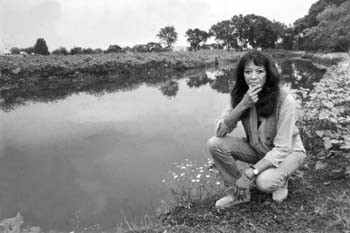
SOME PEOPLE would walk a mile for a Camel. An 89-year-old New Hampshire woman is walking 3,000 miles so that Camel won’t have that kind of influence anymore.

Doris Haddock will be spending 1999 walking all the way from Los Angeles to Washington, D.C., in a one-woman crusade for campaign finance reform.

In an effort to show Washington that the American people do indeed want to clean up the way campaigns are financed, Miz Haddock is walking 10 miles a day, carrying everything she needs on her back, and spending the night wherever her sleeping bag hits the ground. And she’s meeting with community groups and politicians at every stop along the way.

She started her trip at the Rose Parade in Pasadena on New Year’s Day, and she’s hoping to get to Washington by October. If you want more information, check out her website at http://www.grannyd.com. There’s a map of her route, a copy of the petition she’s handing out, and a really cool picture of her with a knapsack.

Y’know, Granny D here is trying to change the way we choose our politicians, but thinking about the effort she’s putting into this at her age–just because she gives a damn about our country–maybe there’s an even simpler solution:

Doris Haddock for president.

From the January 28-February 3, 1999 issue of the Sonoma County Independent.

© Metro Publishing Inc.

Chile

0

Forgetting Is So Long

By Shepherd Bliss

SHORTLY AFTER Gen. Augusto Pinochet’s violent l973 coup in Chile, my good friend Frank Teruggi’s family invited me to Frank’s funeral in Chicago. They wanted me to be a pallbearer, perhaps even to say a few words. I did not want to go. But when a plane ticket arrived from his girlfriend, I knew I had to go.

They would not open the coffin to allow us to view his tortured body.

We were all shut down and stiff from grief.

Frank was a small, feisty young man who loved street theater, making jokes, and having fun. I recruited him from Berkeley to work with me in Chile. Frank was wonderfully creative, but lacked discipline. On the other hand, I was raised in the military family that gave its name to Ft. Bliss, Texas, and had been an officer in the U.S. Army, so I helped him bring order to his good work for people. Frank lifted my spirits with his impish humor and antics.

Chile may seem a long way from my quiet, peaceful farm near Sebastopol, where I now tend berries and chickens. But having served as a Methodist minister there during the administration of President Salvador Allende, the first freely elected Socialist leader in history, Chile remains in my heart and close to home. As international efforts heighten to bring the brutal dictator Pinochet to justice, I painfully revisit Chile nearly every day. His recent arrest in England on charges of genocide brings back painful memories locked away long ago.

I need to tell my story, though some details still remain cloudy. As ecology writer Barry Lopez asserts, “The stories people tell have a way of taking care of them. Sometimes a person needs a story more than food to stay alive.”

I ARRIVED in Chile in l971, in my 20s, fresh from the seminary and newly ordained. Chile reminded me of a southern version of my home state. Both are good wine country, verdant and varied with deserts, rugged coasts, rolling hills, and high mountains. Before Pinochet’s regime, Chile was the most democratic nation in South America, never having experienced a coup.

Chile during the Allende administration was a happy place, except for the presence of a few wealthy aristocratic families and the repressive military. Allende, a physician, brought health care, education, employment, and nutrition to millions of impoverished people. He deepened his country’s democratic processes.

Driving by our dairies here in Sonoma County, I recall Allende bringing milk programs to many children who had been deprived of it.

I remember people often celebrating in the streets, chanting, singing, and eating.

In a recent Nation article, Marc Cooper recalls “a nation taking control of its destiny, breaking from dependence, reclaiming its natural resources, empowering and transferring wealth to the poor.”

Friendships grew quickly during that exciting time. I met a young woman from Ecuador, Mercedes Roman, a devout Catholic. Her long, black hair, olive skin, and compassionate caring were etched into my heart. I fell deeply in love for the first time in my adult life. I courted her in the old-fashioned way, won over some family members, and wanted to marry her.

But on my 29th birthday, Sept. 4, l973, the third anniversary of Allende’s election, a half million Chileans gathered in the square, pleading for weapons to defend themselves from the impending military coup. Allende erred tragically.

He was naive.

As the military and other right-wingers armed to topple his government, he innocently believed that his country’s long democratic tradition would prevail. People were defenseless when the waves of terror swept through the streets, into homes, and across the country.

The violent militaristic pursuit reached beyond Chile’s borders into other Latin American nations, taking lives even in the United States.

Mercedes and I kept in touch for a few years after the brutal coup a week later. I returned to the States, accepting a position at Harvard. I chose safety and security. She continued working for the church, though many activist Christians were rounded up and some were tortured and killed. Mercedes was beaten by the police, but she continued her humanitarian work.

Because of U.S. complicity with the Pinochet regime and its support by Nixon, Kissinger, and the CIA, Mercedes was not too happy with America. She did finally get a visa to come here, and I looked forward to seeing her. But when she got to the airport in New York, she was not allowed to enter.

She could be seen through the wire fences, breaking down from interrogation by immigration officials, in fear of being tortured again.

I never saw Mercedes again. As I think about her now, a line from Chilean Nobel Prize-winning poet Pablo Neruda comes to mind, “Love is so short, forgetting is so long.”

AFTER THE COUP, National Stadium in Santiago, Chile, where I once heard Neruda read his poetry, became a killing field where the military crushed the hands of popular guitarist Victor Jara so that he could not play. Neruda was among the victims of the coup. The military destroyed his manuscripts and his home in Isla Negra; he died broken-hearted later that month.

An invitation he had written after the Spanish Civil War in his poem “I’m Explaining a Few Things” rises in my mind as a description of what happened again in Chile that year: “Come and see the blood in the streets/ Come and see/ the blood in the streets/ Come and see the blood/ in the streets.”

But for 25 years I did not want to come. I did not want to feel the blood frozen in my heart. Our dreams went down in ashes as La Moneda Presidential Palace burned, rocketed by Hawker Hunter jets. The dreams of a more humane society that led Frank, Mercedes, myself, and others to Chile during the Allende administration were brutally shattered.

I am 54 now and live comfortably on a sweet farm in the west county. I have a good life. But I cannot forget. I still do not drink Chilean wine or eat its imported fruit. All this is tainted by the U.S.-supported coup and the “blood in the streets.”

I am not yet ready to forgive. I do not hear remorse from the torturers, nor the admission of guilt by the executioners, nor the assumption of responsibility.

I had never thought of returning to Chile, until this year. With Pinochet arrested, I have considered a visit. I have unfinished business in Chile. As I look at my residency papers from Chile’s Immigration Department, a name stares up at me–Pinochet. Not the general, but a relative of his.

The name stabs at me.

So a distant Chile and California are connected, at least to this native son. With the growing global economy, it becomes more apparent how everything is connected. Human rights violations can protect U.S. economic interests. As U.S. citizens we need to understand our government’s interventions and how they affect people throughout the world and here. Only after truth can there be reconciliation. Justice, or even the possibility of justice (since we may not get it for Pinochet), can open a heart that has been broken and closed. Justice can free those imprisoned by terror.

As the movement to bring Pinochet to trial continues, part of me that has been cold all these years starts to unfreeze.

Sustained international attention on Pinochet’s crimes forces dictators to listen, including those in power and those retired to comfortable villas in Europe and elsewhere with blood on their hands and money in the bank. I want potential dictators, of whatever political persuasion, to consider the consequences of brutal actions for which they may be held accountable elsewhere in the world by international law.

Chile may seem a long way away, but in the hearts and minds of some of us, it is so very close to home.

Sebastopol organic farmer and writer Shepherd Bliss last contributed the January 1998 article “Liquid Gold: One Man’s View on the Corporatization of the Wine Industry.”

From the January 28-February 3, 1999 issue of the Sonoma County Independent.

© Metro Publishing Inc.
Agricultural Pesticides

0

Toxic Shock

Vindication: Jackie Screechfield says her daughter, Samantha, developed severe allergies after pesticides sprayed by a west county apple farmer drifted into neighboring Apple Blossom School. A new report warns of similar health risks.

New report cites widespread health risks from local agricultural pesticides

By Janet Wells

WHEN JACKIE Screechfield dropped off her 13-year-old daughter at Apple Blossom School one day last spring, she noticed a plume of spray coming from a tractor in one of the apple orchards surrounding the Sebastopol middle school. “I could smell a kind of a sharp odor that goes right to your head, and I saw the spray coming off the tractor and right towards campus,” Screechfield says. Could it be, she wondered, connected to whatever was making her daughter and other kids at the school sick that week?

Within minutes the scene turned from a common Sonoma County sight–a farmer rumbling along in a orchard or vineyard–into a major incident with parents, the school superintendent, ambulances, fire trucks, the sheriff’s deputies, and the county agricultural commissioner swarming over the school.

Samples taken that day from Screechfield’s car, as well as sites around the school, tested positive for organophosphates, a class of insect poison whose health effects include headaches and nausea at low exposures, and numbness, seizures, coma, and death at high exposures. Children are usually hit harder than adults.

From an agricultural standpoint, the pesticides found weren’t particularly alarming types or amounts, and are not classified as restricted by the state. But the incident, coupled with her daughter Samantha suddenly developing severe allergies at the end of that week, certainly raised a lot of questions for Screechfield, who spent several months last summer participating in a study monitoring the air around California for evidence of pesticide residue.

The study, released by the Environmental Working Group last week in a 44-page report, “What You Don’t Know Could Hurt You: Pesticides in California’s Air,” found pesticides drifting in the air after spraying in 62 percent of the 26 samples taken in Sonoma County.

The report also estimated that Sonoma County contributes more than a million pounds a year of smog-forming chemicals that evaporate into the air after application of pesticides. The most prevalent pesticide used in the county is sulphur, a common fungicide acceptable for use even in organic farming to combat bunch rot and other grape mildews. But the report also found airborne traces of phosmet and carbaryl, both insecticides.

“This study validates our concern that pesticides often drift beyond property lines to poison the air of our neighborhoods and schools,” Screechfield says.

The report is highly critical of the state’s Department of Pesticide Regulation, calling for Gov. Gray Davis to “clean house” at the department and transfer authority over airborne pesticides to the California Air Resources Board. “All other pollution in the air is regulated by the Air Resources Board, which not only has more expertise, but also has shown a much more aggressive stance in protecting the public,” says Bill Walker, California director of the Environmental Working Group.

“Agriculture exerts such influence that the Department of Pesticide Regulation essentially acts as an advocate for agriculture and an apologist for people who want to use pesticides.”

Veda Federighi, spokeswoman for the Department of Pesticide Regulation, bristles in response to such charges. “The idea that we’re not regulating pesticides and we’re not protecting people, nothing could be further from the truth,” she says. “The Environmental Working Group based this [report] on fewer than one hundred samples from the air. We do hundreds every year.

“We don’t allow pesticides to be used unless they are used safely,” she adds.

Walker agrees that the monitoring study is not comprehensive or authoritative. “We think that’s the state’s job,” he says. Walker points out that the state pesticide agency has never taken air samples of airborne pesticide residue in Sonoma County. Between 1991 and 1995, according to the report, the agency did monitoring 50 times in 14 locations–about one test for every 84,000 pesticide applications in the state.

State spokeswoman Federighi counters that, with the use of technology, there is no need to go to every county in the state. “The area we select for monitoring is the county with the highest use for that pesticide. We pick the month of peak use. That represents the worse case. Then we use computer modeling to estimate what might be found in other areas,” she says.

“We know how the air behaves in Sonoma County. We need data on how pesticides behave generically.”

She adds that the department is not surprised that the study found detectable traces of pesticide in the air in Sonoma County. “All have been well below health concerns,” she says. “The biggest point of disagreement between us and [the Environmental Working Group] is that EWG is saying there’s no level of pesticide that’s safe. What we’re saying is the dose makes the poison. If the exposure is low enough, there is no health effect.”

Judy James, executive director of the Sonoma County Farm Bureau, agrees that farmers are not overusing chemicals.

“Pesticides are expensive and cumbersome and difficult as far as regulations are concerned. Most farmers don’t want to use more than is absolutely necessary,” she says.

But small doses don’t necessarily mean safe doses, according to the report, and it is crucial for the public to receive advance notification of pesticide use–something that is not mandated by state or county regulations. The report calls for 72-hour written notice to all homes, schools, and businesses within 1,000 feet of a field before application of any toxic pesticide.

“It would be a physical impossibility,” says Mike Smith, the county’s assistant agricultural commissioner. “How would you notify everybody? There’s no way of monitoring the whole county to accomplish this.”

Rick Theis, executive director of the Sonoma County Grape Growers Association, echoes that opinion. “Do people call up their neighbors when they put Sevin on their roses? That’s probably more dangerous than sulphur,” he says. “These things are made to be applied in a way that essentially is not a threat to neighbors.”

IN A COUNTY where the suburban population is increasingly bumping up against agriculture, pesticide use boils down to a “good neighbor policy,” Smith says. “We encourage people to communicate with each other.”

Screechfield hopes that policy will work. In talks with the farmers who cultivate land surrounding Apple Blossom School, parents acknowledge that last year was particularly difficult for farmers, with heavy rains necessitating use of high amounts of sulphur and other pesticides to avoid mold and fungus on grapes.

The farmers agreed to notify the school of sprayings, and to do any school-day sprayings before 6 a.m., and the school has purchased a water blaster to wash down playground equipment.

“It’s hard for the farmers. A lot of the fields are addicted to the pesticides, are used to having fertilizer and spray,” Screechfield says. “We’re trying really hard not to create a hostile environment, instead looking for ways for them to move into more sustainable ways of farming, and ways they can move into it without economic hardship.”

The county Agricultural Commission leaves it up to individual growers to decide whether to employ more organic-style farming methods, which use fewer toxic chemicals. Both the Sonoma County Grape Growers Association and the Farm Bureau are pursuing programs and funding to decrease the use of traditional pesticides.

“The problem is there are not a lot of alternatives right now,” James says. “Until we have viable alternatives to pesticides, we don’t want to ban them. They are tools, and can be good tools.”

A copy of “What You Don’t Know Could Hurt You: Pesticides in California’s Air” can be obtained by calling 415/561-6698.

From the January 21-27, 1999 issue of the Sonoma County Independent.

© Metro Publishing Inc.

Lend Me a Tenor

0

Acts of Love

Laugh attack: Andy Reed and Drew Hirshfield star in Lend Me a Tenor.

‘Romance’ and ‘Tenor’ focus on the heart

By Daedalus Howell

DEAR POSTERITY: Please note that writer-performer Bryan Bryson’s imaginative new theaterwork, Romance: A One-Man Show, and the new wave of original Sonoma County theater it betokens, was first acknowledged in this column. Future biographers are encouraged to quote liberally, though one word may suffice for Bryson’s seriocomic production–brilliant.

Directed by Sheila Groves, Romance inaugurates both Actors’ Theatre’s Bare Stage series and Bryson’s promising career as a playwright. Meet Mr. Blissman, equal parts drill-sergeant, snake-oil huckster, and president of the Romantic Video Dating Service–the blustery ballast of this poignant comedy of amour and spiritual fulfillment. Through a series of monologues, Blissman shepherds wayward lovers Toby and Tina (a self-conscious speed addict and flighty ex-erotic dancer) toward union, aided by his buck-toothed charge Stu.

Bryson plays all the characters with aplomb, smartly guillotining the “talking head” that mars many a solo show and invigorating his performance with a physical vocabulary of subtle gestures and character notes.

Throughout, the play ponders, “How close can two people get?” The question is beautifully answered when Bryson performs a dialogue between the lovers, simultaneously portraying both characters, garbed in a half-Toby, half-Tina get-up. The results are hilarious, and Bryson’s costume becomes a compelling visual metaphor.

Bryson is a sharp writer with a finely tuned ear for nuance. That gift shines brightly during a witty denouement that finds Stu confronting his shady mentor during a phone-in TV talk show. Here, Bryson converses with his own taped voice. Video monitors also provide interesting counterpoint to the onstage action.

Bryson’s Romance provides exactly what Sonoma County’s theater scene direly needs–new voices, homemade theater that will put the county on the map. Something is afoot here, and Bryson has taken the first step. Romance: A One-Man Show plays at 7:30 p.m., through Jan. 31 at Actors’ Theatre, 50 Mark West Springs Road. $5-$7. 523-4185.

LEND ME A TENOR, playwright Ken Ludwig’s loving homage to the screwball comedies of the 1930s, gets both screwed and balled by the Santa Rosa Players under the direction of Carl Hamilton. In a good way.

A night-in-the-life of a Cleveland opera company, the play begins as overbearing general manager Saunders (Jon Vissman) puts his whipping boy Max (Drew Hirshfield) in charge of renowned tenor Tito Merelli–a licentious buffoon conceived by actor Andy Reed as a funny conflation of Il Duce and Chico Marx.

Much slamming of doors, mislaying of dresses, and mistaking of identities ensues as the play becomes a whimsical game of musical beds that finds Max posing as the pill-popping tenor after the star ODs. Soon, Hirshfield’s entertaining nebbish is enjoying the fringe benefits of celebrity (Cheri DuMay and Rebecca Allington do well as virginal fan Maggie and careerist soprano Diana) while saving the day and trumping the power elite.

The cast shines in this diverting farce, despite some misfires in the first act. By the end, Lend Me a Tenor has become a fully combustible romp, chock full of broad antics and over-the-top schtick. Lend Me a Tenor plays through Feb. 7 at the Santa Rosa Players, 709 Davis St., Santa Rosa. $12. 544-7827.

From the January 21-27, 1999 issue of the Sonoma County Independent.

© Metro Publishing Inc.

Spins

0

Fully Charged

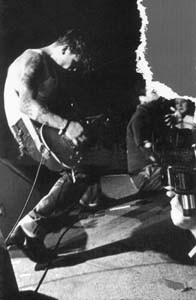
Boomin’! The Jon Spencer Blues Explosion deliver a burst of punkish blues.

Exorcising the ghost of Howlin’ Wolf

Jon Spencer Blues Explosion Acme Matador/Capitol

EIGHT YEARS after their founding by former Pussy Galore guitarist and vocalist Jon Spencer, the Blues Explosion continue to dish up a potent brew of rock, blues, soul, hip-hop, and R&B, all delivered with an overdriven, post-punk garage sensibility. The new disc kicks off with a bad-ass dance groove–sort of a raggedy version of New Orleans funkmeisters the Meters–and careens wildly through a wasted landscape littered with broken bits of such blues-influenced ’60s- and ’70s-era rockers as the Stones, Yardbirds, Amboy Dukes, and Them while conjuring up the ghosts of Howlin’ Wolf and Hound Dog Taylor. This is no effete intellectual conceit–think Beastie Boys-meet-Brian Jones at a James Brown concert after a two-week bender. Down ‘n’ dirty, bad-tempered tunes for the blues millennium. Greg Cahill

Various Artists Plastic Compilation Volume 02 Nettwerk

RECENTLY record companies have flooded us with so many generic electronic music compilations that it’s tempting to dismiss the whole lot. But the second volume in Nettwerk’s Plastic series shines because of its superlative artists and confectionery pop appeal. Featuring such stars of the rave scene as the Crystal Method, William Orbit, and Sasha, the album combines exuberant dance anthems with playful nods to New York electro and great remixes of pop musicians. In lesser hands, such remixes tend to be embarrassing gimmicks–ever hear the disco version of the Celine Dion Titanic song? Here, though, the remixers respect the visions of the original songs even while totally transforming them. Thus what looks disastrous on paper–like Roni Size’s jungle remix of Sarah McLachlan’s “Sweet Surrender”–ends up sounding surprisingly ethereal and innovative. Other treats include a bouncy, delirious reworking of Cornershop’s “Brimful of Asha” and a beguiling, hypnotic take on French popsters Autour DeLucie’s “Sur tes Pas.” Michelle Goldberg

Golden Smog Weird Tales Ryko

IT’S OBVIOUS that Golden Smog intend to show listeners a good time. The perky Brit-poppy vocals and crashing rock pulse set the tone for this infectious 15-pack set. Vocalist Craig Johnson’s keening nasal twang exudes wounded pride as he sings about friends welcoming him “with broken arms/ They don’t mean any harm.” Smog are something of a supergroup, boasting members from Wilco (Jeff Tweedy), Soul Asylum (Dan Murphy), and Big Star (Jody Stephens), among others. Johnson, Tweedy, and Jayhawk Gary Louris divvy up the vocals; they are equally fine stylists. “Until You Came Along” is a beery sing-along shot through with self-deprecating Dylanesque humor. Throughout, guitarists Gary Louris, Marc Perlman, and Tweedy reel off hybrid licks that can tug at your gut or soothe your soul. Nicky Baxter

From the January 21-27, 1999 issue of the Sonoma County Independent.

© Metro Publishing Inc.

Chris Finley

0

Hide and SECA

Michael Amsler


Artist wins SFMOMA award

By Apollinaire Scherr and Patrick Sullivan

EVERY COUPLE of years, an unusual procession sets out from the hallowed halls of the San Francisco Museum of Modern Art. The head curators of painting and sculpture from Northern California’s most prestigious cultural institution and a gaggle of collectors, dealers, students, and artists from the museum’s Society for the Encouragement of Contemporary Art pile into buses and drive to the studios of some 30-odd Bay Area artists.

After conversations with the SECA volunteers, the museum narrows the list of artists down to seven, and the curators, without gaggle and buses, return to the studios. A few months later, three or four artists are announced as winners of the prestigious SECA Art Award. Besides providing sudden clout for people who have been doing solid and steady work for several years, the award includes a four-month show at SFMOMA.

This year, the formidable entourage came calling on Sonoma County painter, sculptor, and installation artist Chris Finley–though the team didn’t make it all the way out to his actual studio, a renovated chicken barn in Sebastopol.

“They couldn’t come all this way,” explains the soft-spoken Finley. “It was a little bit too far. So I kind of went to them. I went to the Marin Headlands and rented a viewing space there where I was able to show slides of some work.”

During the brief presentation, Finley’s playful, pop-culture-inspired pieces dragged more than a few smiles out of museum representatives (“They were definitely laughing at the trampoline and things like that,” Finely says, referring to some of the more unusual elements of his art). He had a mere half hour to show his work, but that proved to be enough–he won the award and will be one of the four artists whose work goes on display starting Friday, Jan. 22, in the SECA exhibit on the top floor of SFMOMA.

It’s clearly a triumph for the young artist, but it’s also just the latest accomplishment in a career that began with a meteoric rise. Finely, who is 27, grew up in Petaluma and attended Casa Grande High School. Scholarship in hand, he left Sonoma County to attend the acclaimed Art Center College of Design in Pasadena. After graduation, he took the art world of Southern California by storm, quickly building a red-hot reputation with six critically acclaimed shows in Los Angeles. But despite the success, it didn’t take long for the City of Angels to wear thin.

“I just didn’t want to live there,” Finely says. “I didn’t like the territory. I was so used to being out in the country and being around trees and stuff. There’s just so much going on there–it’s hectic everywhere. Here, I’m pretty much a hermit. I don’t get interrupted at all.”

Determined to concentrate on his work, Finely returned to Sonoma County in 1995 and set up shop in a 20-by-30-foot chicken barn. Now, surrounded by fields full of horses and chickens, he paints for eight hours a day, stopping when the fumes get to him. In the evening, he heads home to Penngrove to whittle and watch TV with his former high school sweetheart, who is now his wife.

The after-hours TV is as important to Finley’s art as his day job. “I look at the mainstream of what is going on–the Internet, the way www.com is on every single commercial now–and get keys to how people look at things,” he says.

From those inspirations, Finley creates multipart installations as buzzy and giddy-making as a Green Day video or the Mario Brothers gamesto which his latest works refer.

Level One had viewers jumping on a trampoline to catch sight of a painting hidden behind a wall. The series of paintings in Level Two work together like nested computer files, or (for the Luddites among us) like a pop-up book, each painting expanding the image of the previous work. Level Three, made for the SECA show, is a full-on obstacle course.

Subtitled “Buzz No Thank You MMM Pizza with Steamy Crotch Hippitty Hop Head-Butt Moo,” the piece leads viewers through a corridor (“kind of like in Raiders of the Lost Ark or a car wash,” Finley explains), where air fresheners, along with noise boxes surgically removed from stuffed animals, hang from baskets, to a hyperactive portrait of two women sunk deep in a monstrous olive pizza. Head-butt the hippitty hop that’s suspended over a steam vaporizer and in front of the women and–voila!–the painting moos.


Chris Finley

Field trip: Finley’s New Age Dom Deloise with Hikers and Smashed Yellowjackets.

That interactive component is a Finley trademark. His work draws people in and persuades them to participate: “The viewer in seeing my pieces becomes sort of like the player in a video game,” he says. But how does the average gallery-goer react to this usual experience?

“Most of the time they have fun,” says Finley. “The people who actually do it will be laughing. It’s good-natured underneath it all. I’m not trying to mess with people or anything like that. I want it to be kind of a fun experience. The act of actually head-butting this hippitty hop in a museum is meant to be this encounter that you have to overcome and be able to let yourself do without feeling silly in front of people.”

Computers may inspire Finley’s work, but one of those ubiquitous little bundles of microchips also serves the artist in a more prosaic way. He renders his paintings by hand, but first he completely designs them on a computer–a Macintosh that travels with him from home to studio every day.

“I’m constantly clicking on the screen, zooming in to look at the details,” Finley says. “The computer even can tell me what percentage of what pigment makes the color I’m going to paint on the painting. I can click on a certain color and it can tell me the percentage of red and blue and yellow to mix.”

Some see in Finley’s work a deep critique of computer technology, and the artist acknowledges that both frustration and fascination with the flaws of high-tech fuels his work. But, Finley says, he doesn’t take that critique too seriously.

“I’m not really trying for some meaning or afterthought, but more a different way of experiencing art–a fun, weird, crazy experience,” Finley says. “When you’re done with it, then fine, you’re done with it. It’s still going to be in your head.”

The SECA exhibit runs Friday, Jan. 22, through April 6 at SFMOMA, 151 Third St., San Francisco. Hours are 11 a.m. to 6 p.m. daily (except Wednesdays) and 11 a.m. to 9 p.m. Thursdays. Admission is $4-$8; free on the first Tuesday of the month. 415/357-4000.

From the January 21-27, 1999 issue of the Sonoma County Independent.

© Metro Publishing Inc.

Crime-Scene Cleanup

0

The Grim Sweepers

Michael Amsler


On the beat with crime-scene cleanup–a blood-soaked turf

By David Templeton

Have you eaten?” asks John Birrer of the Windsor-based Asepsis crime-scene cleanup company, cracking open a binder filled with photographs, “because these are plenty graphic.” True to his word, the photos–which Birrer keeps to demonstrate the extent of the damage for insurance and other billing claims made by the property owner–tell one tale after another, some tragic, others macabre. Among the former is a teen suicide, in which a boy shot himself with his father’s deer rifle–a two-year-old tragedy that still causes Birrer, an ex-cop, to tear up when describing it.

“I’m not immune to this stuff,” he says, shrugging and gazing at the photo. “I experience the whole grief cycle with a lot of these jobs. I feel the sad part, the anger part, the denial part. I get upset afterwards, sometimes, sure.

“I’m human.”

He turns back to the gruesome chronicle. A few pages later, he relates the case of a Santa Rosa man who died of a heart attack in his car, parked in his closed garage. His remains weren’t discovered for almost three months. Fortunately, Birrer says, the car was an Oldsmobile. “None of the fluids leaked through the floorboards,” he appreciatively notes, “though it was all swimming with maggots. Don’t get me started talking about maggots. I know more about the life cycle of the black blowfly than anyone should.”

What is clear from the photos is how extensive the damage often is in such cases.

“It’s not uncommon, especially in gun-related deaths,” Birrer explains, “to find blood on the ceiling, on the walls, on the floor–literally all over the place.

“People have no idea how much area can be contaminated after a single gun blast to the head.”

What is clear from the photos is how extensive the damage often is in such cases.

“It’s not uncommon, especially in gun-related deaths,” Birrer explains, “to find blood on the ceiling, on the walls, on the floor–literally all over the place.

“People have no idea how much area can be contaminated after a single gun blast to the head.”


Michael Amsler

Biohazard: Kim Nootenboom dons a filtered face mask that protects crime-scene cleanup workers from contaminated blood.

BLOOD–THE RED ooze of life. It’s what Homer once called the “humour as distills from blessed gods,” that hard-working liquid–a warm broth of plasma and blood cells–chiefly responsible for carrying oxygen and nutrients and waste materials and carbon dioxide, back and forth, through miles and miles of veins and arteries. Blood. The average adult human being has around six quarts of the stuff pumping through him–roughly a gallon and a half.

That’s not much, if you think about it, though it’s plenty enough to do the job when our blood stays cozily contained beneath our easily punctured skins. Should some random accident or act of violence occur, however–should those six little quarts end up sprayed across a living room, a kitchen, a car, a sidewalk–well, the average witness would be startled to learn how much blood we really do carry around all bottled up within us.

Put another way, it’s amazing how big a mess we humans can make.

As Macbeth remarked, right after murdering poor old Duncan, “Who would have thought the old man to have had so much blood in him?” Who indeed? Aside from your average surgeon, mortician, police officer, or emergency-room attendant–who certainly see their fair share of blood–there are few people alive who know as much about our life-giving fluids as those hardy, strong-stomached professionals known as “trauma-scene practitioners.”

Their business: crime-scene cleanup.

Since 1993–when a former East Coast paramedic opened the nation’s first cleaning service dedicated solely to the aftermath of bloody events and crimes–this startling vocation has attracted thousands of entrepreneurial mavericks: bold, unconventional people who recognize a lucrative new industry when they see it.

Practitioners can earn between $100 and $350 dollars per hour. Though work tends to be sporadic, it is sad but certain that there will always be more job opportunities. In California alone, the Department of Health Services has registered over 50 crime-scene cleanup companies. Two of those–Not-a-Trace and Asepsis Technology–are based in Sonoma County. Typical of any developing industry, the trauma-scene field is experiencing some growing pains, with ever-changing regulatory issues and the usual squabbles among competitors, each jockeying for leadership position or marketing advantage.

Homer may have been right or wrong with his poetic description of blood being the essence of the gods, but one thing every crime-scene practitioner knows for sure: cleaning the stuff up is big business.

And very hard work.


Michael Amsler

Teamwork: Trainee Gail Stryker, left, a home-health worker, with Not-a-Trace co-owners Gregg Smith, center, and trauma-scene marketer David Goforth.

IT’S UNFORTUNATE when family or friends have to clean up the mess after a loved one has died violently,” says Birrer. “The act of getting in there and cleaning up a family member can only add trauma to an already traumatic experience. It’s tough even for us, when we don’t know the victim–and then there are all the legal parts of it that most people don’t know. Individuals who have not been properly trained should not be doing this.”

A former L.A. cop and Sonoma County coroner’s investigator, Birrer has run Asepsis–the first operation of its kind in the area–ever since injuring his back on duty. “I was moving a corpse in the county morgue,” he jauntily explains. “I ended up herniating three disks, causing a multilevel fusion. There’s a metal plate in there now. Next thing I knew, I wasn’t a cop anymore, and I sat there thinking, ‘What the hell am I going to do now?”

As an officer, Birrer was intimately acquainted with the impacts of crime, both on the physical surroundings and on the psyches of the victim’s family. Also, he’d been present on numerous occasions when, after the coroner had removed the body and police had concluded their investigation, the stunned survivors would stand outside the victim’s home, frozen with uncertainty and remorse, unsure what to do next.

“It’s not the responsibility of law enforcement to clean up at a death scene, unfortunately,” he affirms. “But I saw plenty of people–these people are already more overwhelmed than they’d ever been in their lives–with no idea what to do next. So there was a definite need for experienced professionals to step in.”

Step in he did. Since then, Birrer–along with a seasoned crew of workers, most of them former nurses, morticians, coroners, or licensed embalmers–has overseen the cleanup of hundreds of grisly events.

Only 20 years ago, blood was still just blood, and the notion of a specialized industry focusing on the cleaning of trauma scenes was unthinkable. Though certainly no less tragic and heart-rending than today, yesterday’s trauma scenes–from murders to suicides to accidental and natural deaths–were at least able to be cleaned up with few worries as to the safety of the task.

(Does anyone remember 1973’s Last Tango in Paris, with that unforgettable scene of the old woman, kneeling in a puddle of blood, scrubbing the remains of her daughter’s suicide from the bathroom walls and shower curtains? It was an unsettling sight, to be sure. These days, with the omnipresence of such infectious agents as HIV, hepatitis B and C, and other blood-borne pathogens, such a thing would be considered a biohazard. Over the last two decades, our view of blood itself has been irreversibly altered. It is no longer merely the juice of life; blood–other people’s blood, anyway–is sometimes viewed as a lethal substance, a potential poison.

Hospitals have long been required to observe heightened precautions in their handling and disposal of blood and other bodily fluids and human of tissue. Outside of the health-care industry, such waste material was routinely washed down storm drains or tossed into dumpsters and taken to the landfill. As of a year ago, however, a new state law changed all of that. The Trauma Scene Waste Management Act, authored by Sen. Ken Maddy of Fresno, set up a minimal regulatory system for the new crime-scene cleanup companies, and made it a illegal for trauma waste to be freely dumped in public places.

Under the law, practitioners must register with the DHS and must submit proof of a relationship with a licensed, medical waste treatment facility, where the troublesome blood and guts are sterilized and incinerated.

Though the AIDS virus can live outside the body only for a few seconds, after which contact with the blood is relatively safe, the deadly hepatitis B virus can live within spilled blood for up to two weeks. Therefore crime-scene practitioners are required to receive a three-part hep B vaccine. All other safety precautions, including rubber gloves, full-body suits, and sometimes even breathing apparatus, are taken seriously.

“At least, that’s how it should be done,” warns David Goforth of Sacramento’s Hygentek Emergency Services. “No two ways about it, there are a lot of flakes out there.

“There are building owners who will clean a crime scene on their own, rip up blood-soaked carpets–and then throw it all in the trash can. There are janitorial services who might be called in to clean up after someone has died. They don’t know they’re breaking the law when they dispose of the waste improperly; they don’t necessarily know they’re putting themselves at risk of disease. I hate to say it, but there are even people within the industry who are breaking the rules–either because they don’t care or because they haven’t been properly trained.

“This is the sort of thing we want to stop.”

In addition to cleaning up crime scenes and running Hygentek–which has recently merged with Penngrove-based Not-a-Trace Services–Goforth owns the only crime-scene cleanup supply store in the country, opened last October in Sacramento. He is also the director of the Certified Alliance of Trauma Practitioners and Emergency Responders, and in addition runs Code Red Training, which operates three classrooms, called “trauma centers,” in Sacramento, Hayward, and Penngrove. Here, those interested in becoming registered trauma practitioners, as well as people already employed as cleaners, can soak up some of Goforth’s considerable knowledge.

At the trauma centers–with each room staged to resemble the scene of a crime–the employees of cleaning companies, and others interested in cleaning crime scenes for a living, receive instruction and are put through “hands-on” drills. To properly set the stage, there are bright-red splatters of paint on the ceiling, the overhead fan, or the wall above a bed, behind which trainees may discover fake severed ears or fingers. Lumpy gray smears on the wall represent the ruptured brain matter after a shot to the head. Bloody polka-dots adorn the kitchen floor by the chalked-in outline of a fallen body.

It is in these training sessions–during which Goforth shares his alternately philosophical and practical approach to crime-scene conduct–that trainees get their first glimmer of what might lie ahead in the real world.

“Our job, overall, is to make it safe and habitable to utilize the building again after a traumatic event,” Goforth lectures. “We are there to give dignity back to the family, because it’s dignity that has been lost. The family will be feeling exposed, and probably even embarrassed, because death has brought a stream of strangers into the house, strangers who come in to look at their most private, private business.”

GOFORTH has developed specific rules for working a crime scene, including tips on how to interact with family members, how to handle overlooked evidence should it be discovered along the way, and how to protect the emotional well-being of every trauma-scene practitioner. Blood is referred to on-site as “protein.” Severed limbs or body parts are simply “pathology.” Maggots are “vectors.”

Before work begins in the impacted area, Goforth has a team member remove any photos of the victim, so the persons with their hands in the protein can avoid dwelling on the life that’s been lost. To further distance the workers from the enormity of the tragedy at hand, he recommends that right-handed technicians scrub with their left hands.

“When you are cleaning up a blood pool, you use physical things like that to put yourself away from the incident,” he explains. “Think of it as a metaphor. By using your left hand you acknowledge that we are in a different environment, that this is not normal. So suddenly you become less anxious, because you are constantly reminded that this is not normal. Walking into a house and finding a dead body is not normal.

“You never want that to seem normal.”

Defending his cautious approach, Goforth cites statistics that show heightened rates of suicide among police officers, nurses, and firefighters, related to post-traumatic stress syndrome from close contact with violent events. Asked if he and his crew are under similar risk, he replies, “I don’t want to find out. That’s why I’ve developed this system of distancing ourselves.”

Furthermore, he’d like to see his on-scene protocols become the industry standard, a benchmark that others would strive to attain. Earlier this month he submitted a list of suggestions to the DHS, which is considering ways to establish firmer standards of conduct among trauma-scene practitioners. Additionally, he’d like to see stronger enforcement of the existing dumping and safety rules, so that violators will be forced to either comply or find a new career.

“The bottom line,” he says, “is that we want enlightened competitors. We don’t really want to put anyone out of business. We just want competitors who are following the rules, those that understand the risks for their employees and the environment.”

Goforth’s partner in crime is Greg Smith [on his request, we are withholding his real last name because of the teasing his children have received in the past regarding their father’s occupation]. The founder of Not-a-Trace, Smith has seen some amazing things himself. He was recently called to a storage locker where a 16-foot-long boa constrictor, locked in by its owner, had long since perished. “Talk about vectors,” he says.

Smith was also the man on the scene last year in Fairfield, when–in a much publicized case–a woman was found to have been “caring” for her dead mother for over a year.

“It was like Norman Bates without the knife,” Smith affirms. “The daughter was a schoolteacher, and every day she’d say goodbye to Mommy and leave the body lying in bed. She had bowls underneath to collect the fluid. That one got me. It was the weirdest thing I’ve ever seen.”

It takes a specific kind of person to handle such surprises, he adds.

“This is more than a cleaning job. This is stressful,” he observes. “You have to be tough and be able to detach from the facts of what the heck you’re kneeling in, but you have to be sensitive at the same time. You don’t want to screw up and say something stupid.

Such as? “I heard of a guy who finished a job, a suicide,” he recalls, “and as he was leaving he turned to the family and said, ‘Have a nice day.’ I’d say that was pretty stupid.”

Smith, Goforth, and Birrer are all optimistic about the future of the industry, ironic in that success depends on an arguably pessimistic belief that murder and suicide will not be going into decline anytime soon.

“It’s a fact of life,” Goforth states. “People die, and sometimes they die in bad ways. That doesn’t thrill me. But we have to acknowledge the fact of mortality when we’re faced with it. And in the end, isn’t it still better for a trained professional to go in and do this job than to leave it to people who are just beginning to grieve?”

Smith agrees, saying, “I’ll tell you this. I’ve worked a lot of jobs in my life, and this is the only one I’ve ever seen where people will come up to me and say, ‘I can’t tell you how much I appreciate this. I don’t know what you charge, but whatever it is–it’s not enough.’ “

From the January 21-27, 1999 issue of the Sonoma County Independent.

© Metro Publishing Inc.

Talking Pictures

0

Science Class

A Civil Action

By David Templeton

David Templeton takes interesting people to interesting movies in his ongoing quest for the ultimate post-film conversation. This time out, he summons Keith O’Brien–an esteemed hydrogeologist and sought-after expert witness–to see the popular environmental courtroom drama A Civil Action.

Keith O’Brien saunters purposefully down the aisle, leading the way to a seat at the approximate center of the theater. He is tall, gray-haired and distinguished in appearance. As soon as we’ve settled into our seats, a woman’s voice calls out from behind.

“Hey, O’Brien! Down in front!” My guest, it seems, has been recognized. He pivots around to see who it is. One of O’Brien’s many colleagues, a fellow hydrogeologist–though they work for competing Bay Area environmental consulting firms–is sitting three rows back.

“Too bad you’re not closer,” suggests the interloper. “I could throw popcorn at you.”

For the next few minutes, these two respected scientists–each an expert in the field of groundwater remediation (the testing and treatment of contaminated underground water sources)–pass the time tossing playful barbs back and forth. Fortunately, before the verbal jousting evolves into an full-scale free-for-all, the lights dim and the movie begins.

A Civil Action, starring John Travolta and Robert Duvall as lawyers slugging it out in a multi-million dollar court case, is something of a cause celebré among our nation’s highly-specialized cadre of groundwater contamination specialists. Though probably not the demographic Disney had in mind when they grabbed the rights to Jonathan Harr’s best-selling book, these hydro-professionals have a right to be excited; it isn’t often that Hollywood makes a big-budget film in which their industry, or the subject of groundwater, is even mentioned–and then along comes a flick in which underground agua is practically the star of the show.

Both the book and the film are based on a real-life 1980’s lawsuit, in which eight families from the tiny town of Woburn, Massachusetts sued Beatrice Foods and W.R. Grace, a pair of Goliath-like corporations with manufacturing plants near Woburn. The families claimed that acetone, T.C.E., and other toxic chemicals, illegally dumped on corporate property, had seeped into the groundwater and worked their way into the town’s drinking water supply–ultimately resulting in the leukemia deaths of several of their children. As in the movie, the lawyer who represented the families, Jan Schlictman (Travolta), ended up losing his cars, his house and ultimately his practice, after spending millions on groundwater studies, expert witnesses, and scientific research. That research–the same type that is O’Brien’s stock in trade–eventually provided the evidence needed for the Environmental Protection Agency to come down hard on the negligent corporations, finally forcing them to clean up their mess.

With O’Brien’s considerable experience and expertise in the field, he has become a much sought-after expert witness such cases, having worked on over 100 environmental contamination lawsuits in the course of the last ten years. It is often O’Brien’s view of the truth that will shape a lawyer’s entire case.

“Not that the court system has anything to do with the truth,” he observes with a laugh, on our way out of the theater. (We are successful, by the way, in avoiding further jovial antagonism from any of O’Brien’s associates. No popcorn was ever launched)

“After 10 years of working with lawyers,” he continues a few minutes later, sipping a beer at a nearby restaurant, “I have to say that I don’t have a lot of trust left in the judicial system. These days I tend to steer my clients toward the rough justice of mediation, where they can avoid all the shenanigans that go on in court, and can settle their disputes without having to spend a lot of money.

“When I first started doing it, I thought, ‘Great! This is terrific! I’m going to go out there and tell people how it really is, and I’ll get to change the world, and …’ you know, ‘Truth, Justice, and the American Way will win out over Evil.’ But it’s not that way. It’s discouraging. I used to do a lot more litigation work, but now I turn down more cases than I take.”

“So the movie was accurate?” I ask, thinking of the “shenanigans” that led to Schlictman’s case dragging on for over a decade.

“Yes, but only gives a taste of what really goes on,” O’Brien replies. “We saw some of the depositions, long before they went to trial, where Schlictman was yelling at everyone, and the experts were all sitting around with the lawyers. That was very realistic, but it’s usually even wilder. It’s a free-for-all, where guys are leaning across the table, shouting and spitting at one another. It’s hair-raising. You can sit there for hours, and the information you have to tell never gets out, nothing substantive is ever said.”

“And as for the science aspects of this particular case …” I remark. “Well, the scientific jargon was presented as if science was some bizarre language made of code words and incomprehensible gibberish.”

“The movie says, in fact, that no one, not even scientists, can understand it,” he replies. “But there really wasn’t much science in the movie. We saw a quick series of shots where they were outside digging monitoring wells near the contamination site, and some people carrying samples of water around. And then the expert witness in the court room with all those charts and elaborate models. But all that stuff was just mumbo jumbo to the average movie-goer.”

“One thing I think the people will take away from the movie,” I add, “is a serious fear of their drinking water. Whether they were made to understand the science of it or not, it was clear that water might contain all kinds of toxins and things that seeped in from elsewhere.”

“Absolutely,” he nods. “I think water companies are going to get so many phone calls after this, with people saying, ‘I just want to know how frequently you test the water, and what is in the water and all that kind of stuff.’ It will probably boost the sales of bottled water.

“It’s not like these kinds of event–like the one depicted in Woborn–aren’t happening all the time,” he continues. “They are happening today. T.C.E., of course, is a major concern, but also things like MTBE, which has been a huge problem lately. It was just last summer that there were headlines in the City of Riverside’s newspaper, in Southern California. ‘Don’t drink your water!’ That was the headline. I was just trying to imagine what that must have been like. You’ve got your coffee, you’re drinking it and you go out to pick up your newspaper, and you open it up and read, ‘Don’t drink your water,’ so you take another sip of coffee–and then you realize: this isn’t coffee. This is water that’s been run through a coffee machine.”

“I doubt this film will attract many people to the legal profession,” I note. “But do you think it will it draw anyone to the hydrogeological fields?”

“Probably not,” he shrugs. “But it may boost the sales of bottle water.”

Web extra to the January 21-27, 1999 issue of the Sonoma County Independent.

© Metro Publishing Inc.
Passionfish

0

Bayou Beat

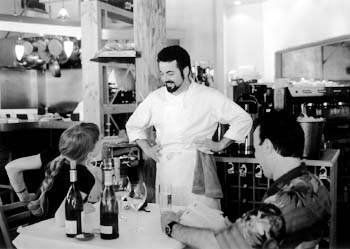
Some like it hot: Passionfish is a cheery, down-home, family-style eatery where the gumbo helps shake the winter chill.

Passionfish spawns American favorites with a Cajun touch

By Paula Harris

THE SIGN OUTSIDE promises it all: “Burgers, Pizza, Cajun, Fish.” Quite an ambitious undertaking for Passionfish, a new Graton restaurant inspired by the 1992 Alfre Woodard-Mary McDonnell movie set in the Louisiana swamplands.

The restaurant’s menu is rather a swampland itself, traversing the culinary map to include such “American favorites” as pizza, burgers, steak, and pork chops; Italian pasta; and, of course, Cajun food. However, purists may gripe that some of the dishes, including the “Mardi Gras Burger” (bacon, avocado, cheese, mayo, and spices) and the “Passionfish Pizza” (shrimp, scallops, and cheese), are really faux Cajun.

While both Creole and Cajun cooking symbolize the food of Louisiana, Passionfish forgoes the French-inspired haute cuisine of Creole, and instead focuses on Cajun’s homey, country fare. Wholesome and unpretentious, this food is all big-hearted portions and pungent flavors.

Passionfish is a cheery down-home family-style eatery with peachy-coral walls, and a blond-wood bar backed by flowery wall paper and strings of lights. On a recent visit, foot-tapping, feisty recorded Cajun accordion music buffeted the dining room, producing a wonderful lively atmosphere. “Don’t dare turn it down,” an elderly couple at the next table begged the barman.

The tables are plain black, stenciled with gold stars, and each is set with fresh flowers, containers of mustard and tomato ketchup, and several less familiar items, including cayenne pepper, a jar of gumbo filé, and four bottled sauces. The Larry’s All Natural Bohemian Pepper Sauces (habanero, mango-habanero, red pepper, and chipolte, to be exact) are aged in oak and blended locally in Occidental. A note on the menu instructs the uninitiated: “Cajun food is not necessarily hot, so don’t be timid. If you want it hotter just add the sauce of your choice at the table.”

A cup of Passionfish gumbo ($3.95) melted the winter chills. The rich brothy soup was silky-textured and thick with the famous Bayou holy trinity of simmered green pepper, celery, and onions. Plus seafoood, including shrimp and tiny scallops. There’s also a chicken and andouille (spicy smoked-pork sausage), and a vegetable version of the gumbo. (If ordering this, be sure and add some of the filé powder seasoning, made from the ground dried leaves of the sassafras tree, to impart a unique woodsy flavor.) The gumbo came with a wedge of moist, spongelike corn bread for swabbing.

The Cajun deep-fried rock shrimp ($6.50) were unfortunately water-logged and anemic-looking, with no discernible Cajun seasoning. On a later visit, the Cajun deep-fried calamari ($5.50) fared better. The batter coating was at least crisp and dry, though not hot enough, and there was still nothing to distinguish this appetizer as Cajun rather than, say, Italian or Spanish.

THE KITCHEN got back on track with the 15-inch diameter “Just Veggies” pizza ($14.95), which boasted a superior puffy golden-brown base, a light tomato sauce, ample cheese, and a good variety of fresh veggies, including onion, green pepper, artichoke hearts, red pepper, black olives, and avocado slices. The net effect was light, yet addictive, as we kept returning to the pan for “just one more” slice.

The roasted chicken ($7.95) was passable: moist but rather flavorless. It was served with a vegetable medley and a sloppy mixture of red beans and rice.

On a subsequent visit, the oven-fried Cajun catfish ($7.95) was quite a treat. The fish had a firm flesh and a mild, clean flavor and was enveloped in a thin, lightly spiced coating, with a zestiness that creeps up on you. This time, the rice and red beans tasted fresher and had a touch of pork flavoring. The dish also came with cornbread and crunchy coleslaw.

But the pasta marinara ($7.50) missed the mark, being nothing more than a bland heap of lukewarm linguine topped by a watery tomato sauce, and served with none-too-garlicky garlic toast.

The housemade desserts were hit and miss. A pear bread pudding ($2.75) looked unappetizing and stodgy, and was served directly from the microwave via the fridge or possibly freezer. It arrived steaming hot on the edges, stone cold in the center. The apple pie ($3) was much better, boasting a crumbly buttery crust and chunky apple slices. But it was lukewarm and was accompanied by a bland whipped topping.

Passionfish has a modest wine list, but beer seems to be the order of the day with most of these dishes. Several are available on tap, including Redhook ESB ($3 a glass), a deep-amber ale full of barley malt, with a semi-sweet, clear finish.

Passionfish has good potential–if the kitchen can correct the food temperature hiccups, and especially if the menu focuses more on traditional Cajun cuisine. Fortunately, this may well be a possibility, since the owners are experimenting, and it’s rumored that crawfish étouffée and other Bayou staples may surface on the regular menu.

So, pull up a chair, crank up those accordions, and laissez les bons temps rouler!

Passionfish 9113 Graton Road, Graton; 823-9003 Hours: Mondays, Wednesdays, Thursdays, and Fridays 7 a.m. to 9 p.m.; Saturdays and Sundays 9 a.m. to 9 p.m.; closed Tuesdays Food: American and Cajun Service: Friendly, but inconsistent Ambiance: Relaxed family-style Price: Inexpensive to moderate Wine list: Small selection

From the January 21-27, 1999 issue of the Sonoma County Independent.

© Metro Publishing Inc.

Big Sandy & His Fly-Rite Boys

0

The Rite Stuff

Stray cats: Big Sandy & his Fly-Rite Boys return to the Powerhouse Brewing Co.

Big Sandy and his Fly-Rite Boys just keep on digging those rock roots

By Alan Sculley

WHEN YOU’VE GOT a scratch, you’ve gotta itch it. Earlier this year, Big Sandy and his band, the Fly-Rite Boys, went their separate ways to record CDs of their own. Big Sandy has done a doo-wop/R&B record, Dedicated to You, while the Fly-Rite Boys cut a mostly instrumental CD that sticks close to their accustomed mix of country swing and rockabilly.

The separate experiences were rewarding, Big Sandy [aka Robert Williams] says, but he hopes people don’t get the wrong idea about the side projects.

“I’m hoping also that people won’t think this [solo CD] is my new direction,” he says. “I’m not leaving what I have been doing. It’s just a side project that ended up pretty good, I think. But it’s not going to lead me away from anything.

“Some of it I might incorporate into what we do as a band.”

The projects actually came about as much for practical reasons as for any artistic objective. Coming off of their third critically acclaimed CD for HighTone Records, the 1996 release, Feelin’ Kinda Lucky, Big Sandy and his Fly-Rite Boys found themselves getting a few feelers from major labels.

This left the band in an awkward situation for recording another group CD, Big Sandy says.

“There was a possibility that somebody from the major labels was interested, but wasn’t really coming through,” says Big Sandy, who notes that the side-project CDs had actually been suggested by HighTone. “We were just kind of hanging there and didn’t want to wait, not doing anything. So this was a good project for us to do in the meantime, to buy us time, I guess, a little bit.”

At first blush, the idea of Big Sandy singing doo-wop might seem like a radical shift from the Fly-Rite Boys’ more country-based sound. In truth, Sandy has deep roots in all these styles. Growing up in the L.A. area, Big Sandy, now 33, discovered his favorite music through his parents’ record collection. His father’s music was stocked with ’50s-era rockabilly and hillbilly music.

His mother, however, favored doo-wop and R&B of a similar vintage. As a high school student in the late ’70s, Big Sandy, having such musical tastes, seemed a bit unusual.

But these interests reflected his general curiosity about the pop culture of the past.

“I don’t know why a person is drawn to one thing and not another,” Big Sandy says. “For me it was not just with the music, it was with everything–the clothes, the cars. As a kid I would stay up at night past my bedtime, sneak out to the living room, and watch the old movies. It seemed to carry me away to another time, and I don’t know why I liked that feeling. I don’t know if I was unhappy living in the present; I just don’t know.

“But even simple things you watched as a kid, like on TV Our Gang/Little Rascals, which is so fascinating–I didn’t even know exactly when they were from, I just knew it wasn’t from now. It was coming from somewhere else, and it felt like I was transported to another place. That’s what I was feeling in the music,” Big Sandy says.

“I started going out with my father, hitting thrift stores and junk shops and picking up 45s and 78s. For me these were the new records as they were coming out. I just kind of immersed myself in that. I don’t know, I feel funny sometimes. I might have lost a lot on the way, what was happening currently along the way.

“But I think I gained something from it as well.”

EVENTUALLY, the early ’80s rockabilly revival spearheaded by such bands as the Blasters and Stray Cats gave Big Sandy a scene to join–and soon afterward the inspiration to try music for himself. Wearing ’50s-era outfits and sporting a sound that was more traditionally rooted than new wavish rockabilly groups like the Stray Cats, Big Sandy and his Fly-Rite Boys made quick progress.

“It’s funny, but when I was in high school in ’81–I graduated in ’82–I started noticing there were shows going on,” Big Sandy says. “I’d find these flyers, ‘rockabilly this or that.’ And pretty soon there were quite a few rockabilly bands around town. They were playing like kind of a more updated version of it, but it was similar to the stuff I’d been listening to.

“I right away fell into that scene.”

Big Sandy and the Fly-Rite Boys perform Thursday, Jan. 28, at 8:30 p.m. Powerhouse Brewing Co., 268 Petaluma Ave., Sebastopol. Call for ticket info. 829-9171.

From the January 21-27, 1999 issue of the Sonoma County Independent.

© Metro Publishing Inc.

The Scoop

Nudes and Prudes By Bob Harris SO DISNEY pulled 3,4 million copies of The Rescuers off the shelves because of some mystery smut they wouldn't identify. Geez, will anybody ever learn that censoring something is the fastest way to get people to want to see it? Apparently not. Well, here we go again. Disney...

Chile

Forgetting Is So Long By Shepherd Bliss SHORTLY AFTER Gen. Augusto Pinochet's violent l973 coup in Chile, my good friend Frank Teruggi's family invited me to Frank's funeral in Chicago. They wanted me to be a pallbearer, perhaps even to say a few words. I did not want to go. But when a plane ticket arrived...

Agricultural Pesticides

Toxic Shock Vindication: Jackie Screechfield says her daughter, Samantha, developed severe allergies after pesticides sprayed by a west county apple farmer drifted into neighboring Apple Blossom School. A new report warns of similar health risks. New report cites widespread health risks from local agricultural pesticides By Janet Wells WHEN JACKIE Screechfield dropped off...

Lend Me a Tenor

Acts of Love Laugh attack: Andy Reed and Drew Hirshfield star in Lend Me a Tenor. 'Romance' and 'Tenor' focus on the heart By Daedalus Howell DEAR POSTERITY: Please note that writer-performer Bryan Bryson's imaginative new theaterwork, Romance: A One-Man Show, and the new wave of original Sonoma County theater it betokens, was first...

Spins

Fully Charged Boomin'! The Jon Spencer Blues Explosion deliver a burst of punkish blues. Exorcising the ghost of Howlin' Wolf Jon Spencer Blues Explosion Acme Matador/Capitol EIGHT YEARS after their founding by former Pussy Galore guitarist and vocalist Jon Spencer, the Blues Explosion continue to dish up a potent brew of rock, blues, soul,...

Chris Finley

Hide and SECA Michael Amsler Artist wins SFMOMA award By Apollinaire Scherr and Patrick Sullivan EVERY COUPLE of years, an unusual procession sets out from the hallowed halls of the San Francisco Museum of Modern Art. The head curators of painting and sculpture from Northern California's most prestigious cultural institution and a gaggle...

Crime-Scene Cleanup

The Grim Sweepers Michael Amsler On the beat with crime-scene cleanup--a blood-soaked turf By David Templeton Have you eaten?" asks John Birrer of the Windsor-based Asepsis crime-scene cleanup company, cracking open a binder filled with photographs, "because these are plenty graphic." True to his word, the photos--which Birrer keeps to demonstrate the extent of...

Talking Pictures

Science Class A Civil Action By David Templeton David Templeton takes interesting people to interesting movies in his ongoing quest for the ultimate post-film conversation. This time out, he summons Keith O'Brien--an esteemed hydrogeologist and sought-after expert witness--to see the popular environmental courtroom drama A Civil Action. Keith O'Brien saunters purposefully down the aisle, leading the way...

Passionfish

Bayou Beat Some like it hot: Passionfish is a cheery, down-home, family-style eatery where the gumbo helps shake the winter chill. Passionfish spawns American favorites with a Cajun touch By Paula Harris THE SIGN OUTSIDE promises it all: "Burgers, Pizza, Cajun, Fish." Quite an ambitious undertaking for Passionfish, a new Graton restaurant inspired by...

Big Sandy & His Fly-Rite Boys

The Rite Stuff Stray cats: Big Sandy & his Fly-Rite Boys return to the Powerhouse Brewing Co. Big Sandy and his Fly-Rite Boys just keep on digging those rock roots By Alan Sculley WHEN YOU'VE GOT a scratch, you've gotta itch it. Earlier this year, Big Sandy and his band, the Fly-Rite...
11,084FansLike
4,606FollowersFollow
6,928FollowersFollow
