Austin Powers: The Spy Who Shagged Me

0

Power Up

Shagadelic, baby: Mike Myers is international super-spy Austin Powers in Austin Powers: The Spy Who Shagged Me.

‘Austin Powers’ brings back the low-brow camp

By Nicole McEwan

SOMETIMES movies are less significant as films and more important as cultural signifiers. Three years ago, director Doug Liman turned the burgeoning swing subculture into a national sensation with Swingers. In 1997, Austin Powers: International Man of Mystery created a similar stir by launching its outrageous mojo-working hero at a phenomena-hungry public, quickly adding such catch phrases as “groovy, baby” and “shagadelic” to the American lexicon.

In an age in which free love had come to be associated with its possible consequences–free STDs–Austin functioned like a raging collective id, a sexual superhero whose main power was the ability to bed gorgeous women despite his rotting teeth, shaggy chest, and super-sized ego. No doubt it was his unflappable lust for life that turned them (and us) on. The film was a clear admission that, in a culture starved for something new, re-cycled kitsch would just have to tide us over.

Austin Powers: The Spy Who Shagged Me picks up where the first film left off, smack in the middle of Austin’s honeymoon with the deliciously dishy Vanessa, the woman who turned Austin on to the heretofore unexplored “joys of monogamy.” Alas, Vanessa is no ordinary woman–in truth she’s a fem-bot emissary of Dr. Evil sent to seduce and kill our love-crazed hero.

Before you can say “Groovy, baby,” the honeymoon is over, and just in time, because the nefarious Dr. Evil is on the loose again, more hell-bent than ever on world domination. It’s up to Austin and shapely superagent Felicity Shagwell (Heather Graham) to stop him. To make matters worse, the power-hungry fiend has stolen Austin’s mojo, leaving him very, shall we say, un-shagadelic.

Anyone who’s seen the original film or any of the countless James Bond flicks the franchise satirizes can imagine the stock scenarios that follow: basically, a series of car chases and last-minute rescues, mixed in with lots of sexual innuendo, next-wave gadgetry, and scantily clad supermodels. Add a few campy dance sequences and extreme potty humor and you have a pop culture cocktail that references everything from Jerry Springer to the chi-chi coffee craze of the ’90s.

And that brings us to one of the film’s low points. In a supposed effort to spoof the product-placement frenzy that makes some blockbuster films resemble billboard-size virtual catalogs, Spy includes over-the-top usage of logos or products from Starbucks, AOL, and, most pointedly, a garishly painted new VW bug. Memo to director M. Jay Roach: You really can’t have it both ways.

What’s more, though the film’s lead sex kitten, Miss Graham, certainly fills out her halter-tops quite nicely, she lacks the comic timing and innate sauciness that Elizabeth Hurley showcased last time around. Spy’s absurd anti-plot frequently places the two superagents in compromising positions. Sadly, the only thing truly compromised is the hope of any sexual chemistry between the pair.

What’s truly impressive about Spy is the talent of Mike Myers, Canada’s Man of a Thousand Faces. Besides reprising Austin and Dr. Evil with immeasurable gusto, Myers also portrays the villainous Scotsmen Fat Bastard, a metric ton of unadulterated lechery who thrives on mayhem and dreams of snacking on small children. It’s not an overstatement to say that Myers virtually disappears into the role.

With its take-no-prisoners approach to humor and machine-gun barrage of gags, Spy is a hit-or-miss affair. But, building on a marketing campaign designed to sell it as an antidote to The Phantom Menace, the movie will likely rock the multiplexes and produce more sequels. Like George Lucas, another retrofitted nerd, Austin Powers’ force is destined to be with us for a very long time.

From the June 10-16, 1999 issue of the Sonoma County Independent.

© Metro Publishing Inc.

Wine Country Jazz

0

All That Jazz

Bone master: Steve Turre is one of a new generation of jazz torch bearers.

Wine country jazz swims in chardonnay haze

By Greg Cahill

FIRST, A FEW confessions. My record collection still harbors a scratchy copy of saxophonist Tom Scott and the L.A. Express’ seminal 1975 L.A. jazz-pop album Tom Cat (A&M). Those funky lite-jazz elements–gorgeous arrangements featuring Steps Ahead saxophonist Michael Brecker, guitarist Larry Carlton, and others–that punctuated Steely Dan’s melancholy pop first drew me in to the Boston studio band’s trademark sound. And I occasionally used to whip up a Sunday morning omelet while vegging out to the smooth jazz beamed over Sebastopol station KJZY.

That said, I shudder at the way slick, commercial pop jazz dominates the local music scene: David Sanborn and Keiko Matsui at the Luther Burbank Center. Richard Elliot, and Willie and Lobo at the Rodney Strong Jazz Concert Series. An utterly tepid lineup at the upcoming Russian River Jazz Festival that features ex-Starship guitarist-turned-New Age picker Craig Chaquico, sax player Dave Koz, and (gasp!) puppy-love vocalist Michael Franks in place of such past festival headliners as jazz legend Dizzy Gillespie, young jazz lion Roy Hargrove, and Latin percussionist Tito Puente. What a snore-a-thon. And KJZY–which is sponsoring the festival and includes unapologetic pop artists Loggins and Messina among its roster of “jazz” artists–now has taken to calling itself KJAZ, a slap in the face to every dedicated music fan that mourns the 1994 demise of the real KJAZ, the Alameda-based outlet that was the country’s last all-jazz FM station and one that never ever played smooth jazz.

If all this sounds like a lot of pissin’ and moanin’, consider that a recent Downbeat article chronicling the rise of smooth jazz found that heavy reliance on market testing at stations like KJZY has all but killed not only straight-ahead jazz artists, but even those mainstream fusion players who once defined contemporary jazz. Pat Metheny, Chick Corea, and even the Yellowjackets (never known as a cutting-edge band) seldom get air time because they’re viewed as too adventurous. And even the improvisation that is the heart and soul of the genre is dismissed at these stations (one major consultant refuses even to test any track that features a solo in excess of 10 seconds).

“I’m really at the point where I’d rather they just didn’t play any of our music than what they do,” Metheny complained to Downbeat, noting the practice of stations editing out his solos. “On the other hand, because we are in an era where there are so few opportunities to be heard, I can’t say, ‘Go away.’ We actually need every bit of exposure we can get. I’m not going to lie about it.

“It’s a matter of survival.”

SO WHAT CAN you do? Patronize those local jazz concerts–last weekend’s Healdsburg Jazz Festival (which featured the Bobby Hutcherson and Cedar Walton quartets, a pair of jazz films, and a free concert with local jazz players Cannonball), the upcoming Cotati Jazz Festival, the Spreckels Performing Arts Center jazz series–that feature mainstream, Dixieland, straight-ahead, and fusion jazz artists.

And, for crying out loud, embrace the spirit of pure jazz. You can hear it in the plethora of recent Miles Davis-inspired works. For example, there’s film composer and trumpeter Mark Isham’s electrifying Miles Remembered: The Silent Way Project (Columbia), an homage to the late trumpet master’s landmark 1969 fusion album. Or the newly released Panthalassa: The Remixes (Columbia), the follow-up to Bill Laswell’s 1998 tribute in which he reconstructed Davis’ “In a Silent Way” and other fusion-era tracks. Or Cassandra Wilson’s spellbinding Traveling Miles (Blue Note), in which the genre’s best young female vocalist reinvents songs covered by Davis in genre-bending renditions that range from jazz to pop to rock. Or Lew Soloff’s superfine With a Song in My Heart (Milestone), the first solo album by this longtime session player who eerily channels Davis’ ballad style.

You can hear it on Wynton Marsalis’ new Marsalis Plays Monk–Standard Time, Vol. 4 (Columbia), a gorgeous collection of songs by Thelonious Monk that features young lion Eric Reed on piano. You can hear it–in a more accessible but less intriguing manner–on ex-Police guitarist Andy Summers’ recent Green Chimneys: The Music of Thelonious Monk (BMG).

YOU CAN HEAR IT in the playful elegance of violinist Regina Carter’s alluring Rhythms of the Heart (Verve), with Carter leaving behind her lite-jazz past on this outing with pianist Kenny Barron and vocalist Cassandra Wilson. Or on trombonist Steve Turre’s Lotus Flower (Verve), with a super sextet that features Regina Carter and cellist Akua Dixon–the exchange between Turre and Dixon on Gordon Jenkin’s lament “Goodbye” alone is worth the price of admission.

You can hear it in the fiery free-jazz of saxophonist Dewey Redman, pianist Cecil Taylor, and drummer Elvin Jones on their acclaimed Momentum Space (Verve)–a trio of jazz masters at a career crescendo. Or the experimental explorations of Steve Coleman and Five Elements’ The Sonic Language of Myth (RCA Victor), a kinetic concept album that expands on the non-melodic, post-bop styles of Coleman’s M-Base collective. Or ex-Cream drummer Ginger Baker and the DJQ20’s Coward of the County (Atlantic), the startlingly fresh pairing with saxophonist James Carter that ranges from bop to lyrical ballads.

Or you can hear it on bassist Charlie Haden’s stunning The Montreal Tapes: Liberation Music Orchestra (Verve), the latest in a series of Montreal Jazz Festival concert recordings (this 1989 date includes trumpeter Tom Harrell, saxophonists Ernie Watts and Joe Lovano, pianist Geri Allen, and drummer Paul Motian). Or on Stan Getz and Chet Baker’s three-CD The Stockholm Concerts (Verve), a 1983 date chronicling two jazz giants at war on stage in some of their finest live material (Getz reportedly was so incensed at Baker’s heroin-induced stupor that he later had him thrown off the tour). Or Bill Evans’ Homecoming (Milestone), 75 minutes of inspired reflection from the pianist, captured in 1979 at his Southern Louisiana University alma mater. or you can hear it on Ella Fitzgerald in Budapest (Pablo), in which the late jazz singer scats and swings her way through jazz standards, show tunes, and pop hits.

It’s a safe bet that nobody else could make “Raindrops Keep Falling on My Head” sound this soulful–and it’s a sure cure for a chardonnay haze.

From the June 10-16, 1999 issue of the Sonoma County Independent.

© Metro Publishing Inc.
Marga Gomez

Love Bites

Photo by Linda Sue Scott


Comedian Marga Gomez chews on all the funny flavors of modern romance

By Daedalus Howell

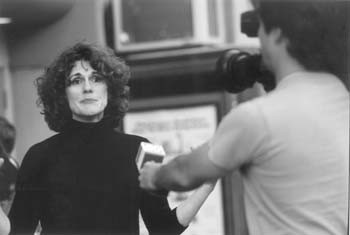
COMEDY IS EASY–interviews are hard: “He was so fucked up,” says comedian Marga Gomez of the reporter who preceded this one during a spate of telephone interviews she endured while plugging the upcoming Fifth Annual Lesbian and Gay Comedy Night at the Luther Burbank Center, at which Gomez is the headlining act.

“He was like a Don Rickles fan–everything had to, in some way, relate to Don Rickles,” Gomez exclaims. “‘Contrast and compare yourself to Don Rickles.’ He was insane. It was like a barrage. He kept telling me ‘Sell yourself, sell yourself.'”

Of course, for comedians, the ability to hustle one’s act is second in importance only to actually having a sense of humor. For Gomez–who enjoys the tripartite distinction of being a woman, Latin, and gay–the twin gifts of comedy and the hard sell paid off during the stand-up renaissance of the early ’80s, when she first took the mike. Back then, the alternative was starvation.

Now, after dozens of television appearances, a juicy guest role on HBO’s Tracy Takes On, a handful of theatrical monologues, a comedy record, and several film roles (she acted with Dustin Hoffman and Sharon Stone in Sphere), Gomez prefers the soft sell. This is, in part, why the attractive comedian recently moved from the entertainment epicenter of Los Angeles to Williamsburg, an arty neighborhood in Brooklyn, N.Y.

“Los Angeles was about being quiet and being more concerned about your appearance than what you were doing. Now I’m on a track to make my work stronger than ever,” explains Gomez, now in her late 30s.

“A year ago I was trying to do all the right things to get to that Barbara Walters special where I would cry about what kind of tree I am.”

Gomez’ new strategy is to concentrate on her work and let her fame come naturally. The plan has proven artistically gratifying.

“I get so much pleasure from working in different ways and from relying on a loyal following as well as a network of artists and presenters throughout the country. I get to really experiment and go a little bit deeper to try to make an impact,” says Gomez, who is confident that national recognition is on the way. “I’m already a celebrity in gay circles, which is fun, especially with people I’m going to try to date.”

Her act, full of urbane, sexy patter about modern love, aims to be both arty and funny. But “funny” is a relative notion that Gomez confronts daily on the road. Consequently, she sometimes adjusts the sophistication of her act to suit the venue or region she’s in.

“Something I do in New York could actually ruin me for playing in Iowa,” explains Gomez, who counts Lenny Bruce, Lily Tomlin, and Richard Pryor among her influences. “When you’re playing a bar, however, you can’t get too low. I enjoy it, though it takes me hours to try to make it smart as well as filthy. When I play a big place, I don’t go for the easy laugh that you can get in a bar where the people are drunk and can’t take anything ‘smart.’ I try to play to a higher level of intelligence and give them a couple of boners along the way.”

The comedian says she is looking forward to returning to the Bay Area, where she feels the local crowds’ interest in work transcends the notion of “special interest” comedy.

“When I play Santa Rosa, what’s great is that it’s kind of like coming home again. There are a lot of people who know what I do and appreciate my style–it’s pretty idiosyncratic out there,” she says. “Even though I am Latina and lesbian, I don’t exactly operate totally from that perspective–I feel pulled by many different forces and influences in my life. My interests are pretty vast. Consequently, my expression is kind of hard to pin down.”

Gomez is confident that her biographical details have little bearing on audiences’ perceptions of her.

“I don’t think people are pigeonholing me. The crowds aren’t, at least. If they come to see me, they’re coming because they know I’m funny,” she says. “There are white folks that just love to be part of the struggle, so they’ll come see a Latina if she’s spinning plates on sticks–‘We must support her!’ I love them–they mean well.”

To wit, Gomez performs a bit lampooning the PC mindset called “The Serious People’s Collective,” a fictional group that organizes comedy shows as well as boycotts of them.

“I was raised on that kind of politically correct entertainment, but I don’t think I would have lasted this long unless people thought that I was just funny,” she says.

LIKE MANY comedians, Gomez culls inspiration from her daily experience and keeps a keen eye on her surroundings. “I watch people. Being in New York, however, you just don’t know who to watch. I’m kind of a voyeur,” says Gomez, who admits to “always being on the job.”

“Sometimes I would rather just have authentic moments that are complete in and of themselves and there’s no exploitation of it. Comics and storytellers are always looking for material and for stories,” she explains. “What’s really a drag is when people think I might use stuff from their lives when it really isn’t that interesting. Something mundane might happen and someone will say, ‘Oh, you’re going to use that!,’ as if they’re being so scandalous that I would. First of all, I don’t invade people’s privacy–that’s kind of bizarre.”

The award-winning Gomez (she has captured Theatre L.A.’s Ovation Award and San Francisco’s Solo Mio Award, among others) is preparing her latest theatrical work, Jaywalk, an incendiary riff on her L.A. experience, for the upcoming New York International Fringe Festival. She’s also tending to her love life.

“I want to marry my dog. I might even have a wedding at the end of June,” she quips. The pending nuptials with her Jack Russell terrier come on the heels of a seven-year relationship Gomez recently ended. Now the comedian enjoys what she call “relationship bites.”

“The lesbians I’ve known are not good at dating. We’re good at relationships, so all our dates are like relationships–even a first date. We would go to dinner, discuss our innermost secrets and the secrets of our ex-lovers; then we’d have dessert, pay the check, and maybe I’d have the guts to pop the question ‘Do you want to come back to my place and weep?’ Then there would be couple’s counseling and division of property by the second date,” she says with a laugh.

Unfortunately for her fans, Gomez’s LBC appearance is just a one-night stand. But, true to form, she issues an earthy invitation to enjoy the show.

“Come see me if you want to see a Latina lesbian with a nice ass!” she says.

Marga Gomez performs with Doug Holsclaw at the fifth annual Lesbian and Gay Comedy Night on Saturday, June 12, at 8 p.m. at the LBC, 50 Mark West Springs Road. Tickets are $16 general, $13 for students and seniors (the show benefits the Sonoma County Pride Committee). For more information, call 546-3600.

From the June 3-9, 1999 issue of the Sonoma County Independent.

© Metro Publishing Inc.
Laxmi Hiremath

0

Spice Girl

Photo by Olan Mills


Laxmi Hiremath points the way to fresh, light southern Indian cooking

By Marina Wolf

AS WITH MANY an immigrant before her, Laxmi Hiremath found her culinary skills sorely taxed when she arrived in the United States from India with her husband in 1986. Though she had watched her mother in the kitchen from a very early age, Hiremath had always had cooks to do the cooking.

There was only one Indian grocery store near the Hiremaths’ first American home in Columbus, Ohio, and the food there was too expensive. So aside from long phone calls to her mother and sister in India, Hiremath was on her own. “I’d go into the supermarket and pick up any vegetable,” she recalls of those first confusing years. “I’d take avocado and turn it into curry, or make chutney out of kiwi fruit.

“That’s how I started to innovate.”

Hiremath’s cooking is innovative in other ways as well. She is a prominent advocate of the cuisine of the Indian South, a culinary tradition that has emerged in the United States over only the past decade or two. Its use of rice, seafood, and lighter breads set southern Indian cooking apart from the rich, heavy foods of the landlocked, mountainous north, which up until now have been the staples of Indian restaurant cooking in America. It’s this richness that has driven many non-Indians away from either eating or making Indian food, according to Hiremath. “Sometimes when people go to Indian restaurants and they find the food a little heavy and greasy, then they just get turned off and they don’t want to try again.”

With its emphasis on high flavor and lighter ingredients, southern Indian cooking fits right in with the current American passion for lighter fare. It is also ideal for summer days and hotter climes, as the prominent use of chilis encourages sweating, our body’s natural cooling mechanism. And though southern Indian cooking offers an extravaganza of fish-based curries, it is also rich with vegetarian choices–by one count, over 80 percent of the population of India is vegetarian. This predominance has meant that a strong, vibrant vegetarian repertoire is very much part of mainstream Indian cooking, as Hiremath demonstrated in 1995 in her first book, Laxmi’s Vegetarian Kitchen.

ANOTHER ASPECT of Indian cooking has been a little more difficult to demystify: spices. The use of spices in Indian cuisine is legendary: spice blends, or masalas, are often passed along from generation to generation like precious heirlooms. Hiremath’s mother has developed a 50-spice masala for use at home, which Hiremath has “simplified” to include only 25. But once American cooks learn the basics of selecting and using spices, as Hiremath outlines in her book and in her many classes, they can begin to create their own blends from the spices found in any well-stocked Western grocery store.

Hiremath has further streamlined Indian cooking by simplifying techniques. For example, stuffed bread, a perennial favorite, is a thin piece of dough filled with a precooked vegetable stuffing, sealed, and then rolled flat before griddling, a complicated procedure that Hiremath says is fraught with danger. “With someone who is not an expert, the filling starts to come out; it spills out and just makes a mess on the griddle.” Hiremath solved the problem by incorporating seasonings and raw vegetables into the dough itself, using a non-traditional food processor.

Such innovations may shock more traditional Indian cooks, but Hiremath has found that even other Indian immigrants welcome such suggestions. Like their American-born neighbors, they are getting busier, Hiremath says with a shrug and a smile. “Everybody is looking to save time.”

Laxmi Hiremath will teach “Flavors of Tropical India” at the Santa Rosa Food for Thought on Saturday, June 5. The fee is $30. To register or to receive a catalog of classes, call 575-5363.

From the June 3-9, 1999 issue of the Sonoma County Independent.

© Metro Publishing Inc.
Buddy Guy

0

The Big Guy

Hey, good Buddy: Even Jimi Hendrix worshipped at the feet of Buddy Guy .

Chicago blues guitar legend Buddy Guy is a humble mentor

By Alan Sculley

WHEN BUDDY GUY began his music career in the late 1950s, he couldn’t imagine himself being put on the same level as blues stars like Muddy Waters, Howlin’ Wolf, and B. B. King. Indeed, Guy remembers himself as someone who took years to come out of his shell–a fact that may surprise anyone who has seen Guy, an electrifying guitarist with a magnetic onstage personality and blistering chops. “I was so shy I wouldn’t talk to nobody,” Guy recalls. “Muddy helped me out a lot with that. I was like, I’ve got a little talent, but I’m ashamed to show it. And I think what held me back a lot is I don’t have an education. My mama had a stroke and I had to drop out of my first year of high school and I was always afraid I was going to say the wrong thing and I didn’t know how to explain myself. I just said, well, I know how to do that.

“I’ll just keep my mouth shut.”

Today, Guy is making more noise than ever. The native of Lettsworth, La., is a 40-year veteran of the music scene, having arrived in Chicago in 1957. And while he was part of the famed roster of the Chicago-based Chess Records, cutting several albums of his own while serving as a valued session guitarist for artists like Waters, Wolf, Little Walter Jacobs, and Sonny Boy Williamson, and recording a string of cult classics with former sidekick and harmonica ace Junior Wells, only in the 1990s has Guy seen his career generate significant momentum.

After spending most of the 1980s without a recording contract, Guy signed with Silvertone Records and released three straight Grammy-winning studio CDs. In 1996, he added an acclaimed live CD, The Real Deal, to his catalog, followed last year by the studio CD Heavy Love. Songs from each of those CDs are included on Buddy’s Baddest: The Best of Buddy Guy, a recent 14-song collection.

As Guy–who performs June 9 at the Phoenix Theatre in Petaluma–has returned to a busy schedule of recording and touring, praise from such guitar heroes as the late Stevie Ray Vaughan and Eric Clapton (who proclaimed Guy “by far and without a doubt the best guitar player alive”) has helped Guy gain recognition as one of great talents of his generation. But over the years, he has influenced dozens of players, including Clapton, Vaughan, Jimi Hendrix (who used to attend Guy’s shows as often as possible in the 1960s), and, more recently, blues wunderkind Johnny Lang, with whom Guy has recorded and toured.

Despite such praise, Guy remains a soft-spoken and highly gracious man. He still downplays his talents next to legends like Waters or B. B. King, both of whom took Guy under their wing after the young guitarist arrived in Chicago.

“I went to sleep and I was a young guy listening to Muddy and them,” Guy says, recognizing how quickly the years have passed. “And you wake up, and now the young guys are looking at me just like I did with Muddy, and I’m very proud to be able to sit there and talk to them like he did with me. But those shoes he wore, ain’t none of us who will ever be able to wear those shoes. They’ll be there for a long time.”

SUCH respect shown, Guy now eagerly embraces his leadership role in the blues. He openly talks about wanting to expand the audience for blues and open up new opportunities for the artists who will follow him.

“What I’m trying to achieve now is more recognition for the music that we play, not just what Buddy Guy plays,” says the guitarist, whose boyish face and easy smile make him look many years younger than his age of 62. “If I can expose this music a little wider than what it is, some people are going to know more about this music than they knew before they got a chance to hear me or hear some of the questions I answered for you. Because I’m not going to let the names of Muddy Waters, T-Bone, and Lightnin’ Hopkins die.

“That’s what I’m working on very hard now,” Guy said. “If I don’t achieve it, I would like to leave the road half blacktopped, and maybe someone else might see the other end and say, ‘You know, I’ll carry this on because Buddy almost got it across. I’ll fix it where you can go on across.’ I would be happy with that.”

Buddy Guy performs Wednesday, June 9, at 7 p.m. at the Phoenix Theatre, 201 Washington St., Petaluma. Angela Strehli and Legion of May open the show. Tickets are $30. For ticket info, call 415/974-0634.

From the June 3-9, 1999 issue of the Sonoma County Independent.

© Metro Publishing Inc.
Hillside Vineyards

0

Slippery Slope

Voice in the wilderness: The county’s new ordinance on hillside vineyard planting is a model of consensus, many conservationists say. West county activist Ann Maurice begs to differ, calling the long-awaited law ” a scam.”

Is the county’s new ordinance on hillside vineyard planting a bust?

By Janet Wells

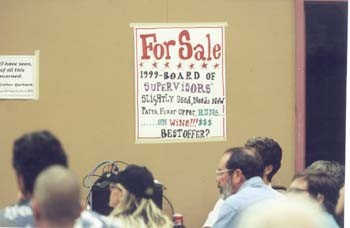
THAT’S NOT their job!” Ann Maurice’s voice practically explodes into the phone before launching into a tirade about county officials who Maurice says are selling the deed to the proverbial ranch to the burgeoning wine-grape-growing industry. “The wine industry is just too close to this county. This is proof that the Board of Supervisors is selling us out to wine interests,” she says.

What has Maurice in such a tizzy? The county’s long-awaited vineyard-planting ordinance, to which the Board of Supervisors is slated to give final approval June 15. Vineyard neighbors and many other county residents had hoped the ordinance would stem the tide of forest conversion, help curtail increasing pesticide use, and stop the degradation of fish habitat.

But Maurice argues that the resulting law falls far short of those goals.

First Maurice takes umbrage against the ordinance’s stated purpose to “protect the lands … while ensuring the ongoing economic viability of the wine industry.”

“I wish they had ensured the viability of the fishing industry. Then the marina out at Bodega Bay wouldn’t be in the disaster it is in,” she fumes. “If one of their purposes was to ensure the viability of salmon and steelhead, there wouldn’t be a problem in the river. But they didn’t give a damn, no.

“They’re going to lead us to hell in a hand basket,” she adds. “It’s not in the personal interest of the people in the county to have methyl bromide all over their property. It’s not in our interest to have a mono-crop.”

Maurice, a Sebastopol artist who has done graduate work in land use and economic geography, criticizes the ordinance as putting the cart before the horse by penalizing growers for failing to comply with erosion-control standards that the county has not yet adopted.

“How could they pass an ordinance that says we’ll throw you in jail if you don’t comply with regulations that don’t exist?” she says. “They’re telling us, ‘We’ll come up with those.’ This should be one whole package. How do we know if those erosion-control guidelines are going to be worth dog shit?”

Finally, there’s the part that really galls Maurice: The ordinance has no appeal process.

“So if you’re next door to the [new vineyard], you’re clean out of luck if you don’t like it,” she says. “Even rapists and mass murderers have the right to appeal. Isn’t that a fundamental right of due process guaranteed in the Constitution? Since when did any county bureaucrat get to be king?”

While west county activist Maurice is the leading–and loudest–voice against the law she calls a “scam” and a “sick game,” more than 1,000 residents have agreed with her, signing a petition asking the supervisors to delay voting on the ordinance. And even a consultant hired by the county cautions that the ordinance may have significant flaws.

On the other side, many in the county are hailing the hillside-planting ordinance as a landmark in agricultural regulation and a positive step in relations between environmentalists and growers. “You never get everything you want when you sit down with the other side, who never gets what they want either,” says Sonoma County Conservation Action board chairman Bill Kortum, regarded as the dean of the local conservation movement. “This was a classic case where we finally reached a compromise. There are aspects that could be improved upon, but we’re way ahead of where we were.”

Says Sonoma County Conservation Action director Mark Green, who spent the better part of two years negotiating the tenets of the ordinance with growers, “We made a great leap forward with this vineyard-planting ordinance. The status previously was unregulated, where landowners could do whatever they wanted.”

THE BASIC PROVISIONS of the ordinance require growers to obtain and pay for permits to plant grapes and to provide erosion-control plans for steeper acreage. In addition, the ordinance requires that vineyards on the edge of waterways abide by a 25- to 50-foot setback, depending on the slope of the acreage.

The ordinance reflects the public’s growing concern as the region’s $300 million wine-grape industry expands into erosion-prone hills and fragile riparian zones. In the past few years several incidents spurred environmentalists to make noise about a ballot initiative to put limits on vineyard development. Gallo Winery was cited for recontouring hills and planting along the edge of Porter Creek, and a vineyard above Warm Springs Dam was fined $50,000 for steep-slope planting that led to an enormous amount of soil eroding into the Gualala River during a severe winter storm.

A proposal that surfaced recently to convert 10,000 acres of forestlands in Mendocino and Sonoma counties into vineyards–a project that would equal one sixth of all currently cultivated vineyard land in both counties–is the kind of mammoth scheme that motivates the public to call for stringent regulations.

Maurice, no surprise, is of the opinion that any environmentalist who backs the ordinance has sold out. She has harsh words for a law that does not address pesticides or habitat protection and mandates modest setbacks that she calls “outrageous.” Federal agencies have recommended setbacks of 300 feet or more when threatened species like coho salmon and steelhead are in the area, Maurice hastens to point out.

“Better than what the county did is if they said that setbacks had to be adequate to protect aquatic life in creeks and waterways for maintenance of the ecosystem, rather than say 25 feet is fine,” she says. “I’m concerned that plugging that number in at 25 undermines other regulatory agencies that have been arguing for more.”

Green, whose voice gets weary at criticism of the end result of a delicate negotiating process, explains that growers and others with vested agricultural interests refused to include habitat protection as part of any discussion.

“There are state laws that do that,” he says. “And the moment that the industry wasn’t willing to have habitat on the table, they relinquished the right for us not to complain about habitat. The setbacks are for erosion control, not habitat.

“Considering that we have no setbacks now, at any angle the setbacks are a significant step and a significant concession from the growers,” he adds.

Scarred landscape: Felled trees marked Gallo’s west county hillside.

THE ORDINANCE itself is a work in progress, since June 15 marks the third time it has come before the supervisors. On April 13 and again on May 11, the supervisors indicated support for the ordinance, but sent the document back to staff for changes in language and policy.

One of Maurice’s hot-button issues–the county’s nonexistent erosion-control guidelines–is expected to be adopted by the supervisors before the ordinance goes into effect on Oct. 1 and will be based on standards recommended by the Resource Conservation District, says Supervisor Mike Reilly. “The question is whether we want to adopt those in whole or tinker with them. We want a little bit of time to fine-tune stuff for Sonoma County,” he says.

Napa County’s 8-year-old vineyard-planting ordinance, known as the Conservation Regulations and that served as a model for the new Sonoma County law, has worked “extremely well,” reducing potential erosion from 14 tons per acre annually to 2.5 tons per acre, says Jeff Redding, Napa’s director of Conservation, Development and Planning.

While both ordinances seek to reduce damage caused by soil runoff into local drinking water and habitat, the two have several critical differences. Sonoma County’s law will be regulated by the county agricultural commissioner. Napa’s Resource Conservation Department works with growers to develop an erosion-control plan and sends growers to the county planning department for a use permit only if the vineyard site is over a 30 percent slope.

Unlike Sonoma County, Napa requires projects with greater than 30 percent slope to undergo review based on the tougher California Environmental Quality Act.

“Our Agriculture Department is not a regulatory agency,” Redding says. “[The slope planting is] really a land-use issue. Unless yours has skills ours doesn’t, the ag commissioner is not trained in soil erosion.”

Says Dave Steiner, a soil conservationist with the Napa Resource Conservation District, hired by Sonoma County as a consultant on its ordinance, “Sonoma County is trying to say it’s not a land-use issue. Agriculture is a permitted land use, so it’s not subject to CEQA review.”

Steiner says the biggest red flag he sees in Sonoma County’s ordinance is a loophole that allows growers to plant on hills with more than 50 percent slope if less than 7.5 percent of the planting area is over the 50 percent mark.

“People are going to spend a lot of time nitpicking and making determinations. It will take a lot of staff time,” he says. “If a corporation came in with a 100-acre project with only 7.5 percent over the threshold, they would be able to satisfy the ordinance,” he explains. “But if a small farmer came in with those same 7.5 acres as a stand-alone project, it wouldn’t be exempted.”

The penalty structure for the two ordinances also differ. Sonoma County can fine up to $1,000 a day or six months in jail. Napa has fined growers up to $10,000 for failing to comply with regulations, enforced through the Business and Professions Code, Redding says. “Our zoning ordinance has a $500 maximum or six months in jail. That’s not enough,” he says. “This is a business decision, often. If the cost of the fine is less than the benefit of not following the regulations, that’s what [businesses] do.”

SONOMA COUNTY, says Steiner, has “a lot of holes to fill in” before the ordinance will be ready to go into effect in October. But, he adds, “a public forum is not very helpful in working out the details.

“The problem with the current concord is that it was not worked out with much technical expertise. The negotiating team worked in good faith, long and hard, but they have an emotional stake in the compromises whether or not they are going to work,” he says. “I don’t see a problem with leaving the fine-tuning to the ag commissioner and the county counsel. It may not be popular,” he adds.

“I don’t know the extent to which the public and the growers trust the county.”

That would be not much, if you ask firebrand Ann Maurice. “Trust the supervisors? Ha!” she scoffs. “What did somebody say, the price of democracy is eternal vigilance’?

“Double that for Sonoma County.”

From the June 3-9, 1999 issue of the Sonoma County Independent.

© Metro Publishing Inc.
Zinfandels

0

Zin City

Photo by Michael Amsler


Sonoma County now a hotbed of zinfandels

By Bob Johnson

ZAP! NO, this is not a rerun of Batman, the campy action/adventure/dark comedy/tilted-camera series of the small screen that preceded the multimillion-dollar movie franchise. Under the Eats banner, ZAP is an acronym for Zinfandel Advocates & Producers, a far-flung fraternity of winemakers, wine marketers, and wine drinkers who possess a particular affinity for wines made from the zinfandel grape.

Each year, ZAP stages several road shows around the country, the largest of which takes place in San Francisco. This year’s S.F. ZAP event attracted 5,500 people–you read that correctly; two fives and two zeroes–all eager to sample and savor the latest bottlings of what many people refer to as “America’s wine.”

For years, the zinfandel grape was believed to have originated in the New England states, then transported to the West during California’s gold rush. That certainly would explain why most of our state’s oldest zin vines have their roots deeply embedded in the Sierra foothills.

Only in recent months have scientists brought zin’s heritage into question through high-tech testing. Now the strong belief is that the grape actually originated in Croatia. DNA fingerprinting, it would seem, may not be enough to banish O.J. from the fairways, but it is sufficient to rewrite California’s wine history.

Domestic in origin or not, there’s no denying zinfandel’s important place in the California wine industry. Before we blinked, there were nearly 50,500 acres of zinfandel vines planted in the state–more acreage than cabernet sauvignon, chardonnay, merlot, or any other varietal–with more being planted all the time. And based upon the ZAP turnout in San Francisco, it’s obvious that not all of California’s zinfandel grapes are doomed for white zinfandel purgatory–not by a long shot.

Sonoma County has emerged as a hotbed of zinfandel production, with the Dry Creek Valley, which spreads north and west from Healdsburg, considered by some as the “holy land” of zin. As the summer barbecue season kicks into gear, there is no better time to stock up on homegrown zin bottlings because there is no better red wine match for barbecued food than zinfandel.

It is zin’s inherent fruitiness that makes it the perfect foil for barbecued chicken, steak, and lamb; the fruit flavors provide a beguiling contrast to the char of grilled meats.

This is no mere ranting and raving of a professed zin lover. It is a contention backed up by no less of an authority than Weber-Stephen Products, manufacturer of Weber barbecues, through its new book, Weber’s Art of the Grille (Chronicle Books, $35). Subtitled “Recipes for Outdoor Living,” the book includes wine pairing suggestions for most of the featured recipes, and in many cases, the suggested wine is California zinfandel.

One of the finest zins made in the state each year comes from Napa Valley’s Grgich Hills. This should come as no surprise, especially to those who believe that everything in the world is somehow connected, since winemaker Mike Grgich traces his roots to Croatia.

However, one need not venture over the hill to secure satisfying, succulent zinfandel bottlings. There’s plenty to be had right here in Sonoma County. Start with zins recently featured as “Wines of the Week” in the Independent‘s weekly Touring the Vine feature: Yoakim Bridge 1997, Dry Creek Valley ($20); Ridge 1997, Coast Range ($17); Rabbit Ridge 1997, Olsen Vineyard ($20); Dashe 1997, Russian River Valley ($20); Collier Falls 1997, Dry Creek Valley ($20); and Kenwood 1996, Nuns Canyon ($17).


Photo by Michael Amsler

To this shopping list, you may take comfort in adding:

Pezzi King 1996 Dry Creek Valley ($20). Silky, creamy, and elegant. Rating: 3.5 corks.

Ridge 1997 Lytton Springs ($28). A raspberry, pepper, and mineral bombshell. 4 corks.

Gundlach-Bundschu 1996 Rhein-farm Vineyard ($15). Big, rich, and fruity. Despite its 15 percent alcohol, not at all “hot.” 3.5 corks.

Nalle 1997 Dry Creek Valley ($22). Spice and vanilla frame luscious blackberry and raspberry flavors. In perfect balance. 4 corks.

Tria 1997 Dry Creek Valley ($16). Jammy, and at once intense and smooth. 3.5 corks.

Seghesio 1997 Sonoma ($10). Mildly spicy and fruity, it may be overwhelmed by barbecued dishes, but matches perfectly with pasta. A bargain hunter’s dream wine. 3 corks.

Quivira 1997 Dry Creek Valley ($16). Steadily improving with each vintage. This ’97 is the best yet. Jammy, concentrated, and nicely balanced. 3.5 corks.

Now for the bad news: Sonoma County zins in general, and Dry Creek zins in particular, have earned such a sterling reputation that some bottlings now sell out quickly. This kind of demand creates shortages and inflates prices.

So the next time you hear ZAP!, it could very well be the sound of sticker shock.

Cork ratings: 1, commercially sound; 2, good; 3, very good; 4, outstanding.

From the June 3-9, 1999 issue of the Sonoma County Independent.

© Metro Publishing Inc.

Syrah

0

Say Syrah!

City chic, country comfort: Chef/owner Josh Silvers, formerly of Mustards Grill in Napa, has created a warm, welcoming atmosphere at Syrah.

Chic dining in Railroad Square

By Paula Harris

IF YOU BELIEVE perky professional greeters lurk solely around the electronic entrances of big-box stores, think again. A young man with gelled hair and a dark suit, poised by the back door in the ample back parking lot, jubilantly hails us when visit Syrah, a new restaurant located in Santa Rosa’s historic Railroad Square. Not a server, host, or car valet–this fellow appears to be some kind of salutation specialist as he gestures toward the new eatery named for the trendy Rhône grape.

But this is no supermart.

The gray building is a sophisticated indoor shopping/dining mall. A stylish tranquil lobby boasts muted lighting, designer benches, and a modern indoor fountain. Syrah shares the building with several businesses, including a flower vendor and an upscale hair salon.

Several tables spill forth into the lobby, giving diners the impression of sidewalk dining, except that the “street” is surrounded by curving gray slate walls set beneath a roof. Inside the restaurant are hanging golden mesh lamps, warm wood accents, and plenty of visible wine bottles. The sizzling pans in the semi-open kitchen compete with recorded smooth jazz. Yet the ambiance manages to be warm and relaxing.

Servers in shin-skimming white aprons bustle around, and the service seems to have improved in promptness and attention to detail since Syrah first opened a few weeks ago.

Chef-owner Josh Silvers, who previously worked at Napa Valley’s renowned Mustards Grill, creates imaginative California-French dishes with a penchant for variety.

The menu will change every month, Silvers tells us, so dining at Syrah should be a constant enticement. Here’s a recent sample:

Seared Sonoma foie gras ($14) featured two lobes of rich, warm foie gras melting like butter, with crisp brioche toast and three thin slices of fresh pear napped with caramelized sauce. Paired with a glass of luscious sweet Castelnau de Suduiraut sauterne from the dessert menu ($5), this was an opulent treat.

If you seek lighter fare, the haricot vert salad ($7) should suffice. A generous heap of garden-fresh green beans was topped with tiny sweet cherry tomato halves and crunchy toasted hazelnuts. An excellent whispery-light vinaigrette made with aged sherry rounded out the hazelnut flavor.

The fresh Maine crab cakes ($11) were perfect. Small delicate and greaselessly golden, they were packed with fresh crab meat and minuscule diced vegetables and served with a light silky champagne-chive beurre blanc.

A pan-roasted half chicken in a veal reduction sauce ($14) was beautifully presented with a chunky savory bread pudding, asparagus spears, shallots, and crispy sage leaves, but the overall dish tasted flat and didn’t match the visual impact.

The spring vegetable risotto with wild mushroom jus ($16) featured slender baby carrots, doll-sized zucchini, and rice rich with sweet-corn kernels and mushrooms. But we were disappointed by the skimpy portion (this isn’t a cheap dish, after all) and by the overemphasis on sweet corn, which obliterated the other flavors.

The grilled cider- and laurel-brined pork tenderloins with whole-grain mustard and Provençal honey glaze ($19) was a hearty bistro-style dish. Rosy-pink pork slices (possibly a bit too rare for some) were served with flageolet beans, torn kale leaves, and a mustard garnish.

The marzipan butter cake with sweet and sour cherries and crème brûlée pudding ($7) was wonderful. The small cake was concealed beneath a cloak of crème brûlée and plump black cherries. A scattering of whole almonds mirrored the lush flavor of the marzipan.

The appealingly titled “lemon-lavender crème anglaise with vanilla meringue pillows and fresh berries” ($6) was another winner. The “pillows” were arranged like butterfly wings amid fresh raspberries and blackberries, candied orange peel, edible flowers, pastry triangles, and a sweet soup of rich custard. Amazingly delicious.

Syrah has a varied wine list, with California and French offerings, unusual varietals, and some great selections by the glass, including Jade Mountain Carneros syrah ($7), Philip Stanley Russian River mourvèdre ($5), and Preston Dry Creek viognier ($7).

Lovers of “big reds” may enjoy a bottle of the Eberle Fralich vineyard 1996 syrah from Paso Robles ($30), a garnet-colored wine full of plums and pepper.

“Thank you for dining at Syrah,” called out the professional greeter, still stationed in the parking lot, after we’d polished off our abundant meal. “Come back soon.”

No problem.

Syrah 205 Fifth St., Santa Rosa; 568-4002 Hours: Lunch, Tuesdays-Saturdays, from 11:30 a.m. to 2:30 p.m.; dinner, Tuesdays-Thursdays, from 5:30 to 9 p.m., and Fridays-Saturdays, till 10 p.m. Food: California/French Service: Friendly and efficient Ambiance: City chic Price: Expensive Wine list: Varied selection, including plenty of Rhône wines Overall: *** (out of 4)

From the May 27-June 2, 1999 issue of the Sonoma County Independent.

© Metro Publishing Inc.

Sonoma County Open Studios

0

Open-Studio Tour Schedule

Patrick Fanning has considered for some time, and he has identified the best reason to invite strangers into his workspace.

“This is the one time of the year that my studio gets really cleaned up,” he says. “It’s like having your mom over to dinner. You suddenly feel the desire to spruce things up.”

No shirker in this regard, Fanning has installed a new tile floor in his studio, just for this occasion. “I’ve even raked the gravel walkway,” he adds.

Fanning is not alone. Across the most picturesque portions of Sonoma County, his 68 fellow painters, sculptors, artisans, and craftspeople are similarly occupied, tidying up their studios–be they located in lofts, chicken coops, back rooms, or barns–in anticipation of the throngs of guests who will be dropping in during the open-studio weekend, June 5 and 6, to peek around, catch of glimpse of how the artists work and live, and maybe even buy something. All manner of art will be for sale during the increasingly popular self-guided event, from oil paintings and sculptures and watercolors to jewelry and pottery and stuffed animals and hats.

Such events provide a valuable experience to an appreciative public, who are happy to get up close and personal to the creative people whose work enriches our lives–and the feeling is clearly mutual.

“It’s great for an artist to have this opportunity,” says Fanning, “because it reminds you, ‘Hey, I’m a real artist. I must be a real artist, because I’m opening my doors to people who want to see what I’ve been up to in here. I’m on display, I’m open for business.‘”

For more information about the Art at the Source event on Saturday and Sunday, June 5 and 6, or to find out where to pick up a map and tour listing, along with a copy of the brochure “How to Buy Real Art from a Real Artist,” call the Sebastopol Center for the Arts at 829-4797.

From the May 27-June 2, 1999 issue of the Sonoma County Independent.

© Metro Publishing Inc.

Patrick Fanning

0

New Vision

Michael Amsler


Patrick Fanning’s paintings explore a Sonoma County that never was

By David Templeton

IMAGINE downtown Petaluma, circa 1879. The giant granaries rise into the sky, the clock tower perches high atop the stone edifice of the Masonic Lodge building, the canals and waterways bustle with the merry traffic of barges full of produce and gondolas ridden by singing Mexican “vaqueros de agua,” as crates of pickled eggs lie waiting for their passage to the Russian gold fields up north.

Or conjure up a picture of Bodega Head as it once was, the ancient Spanish garrison sprawled at the ocean’s side, a mere 18 miles from the Spanish-Russian border. To the right of the lighthouse, the distinctive onion-shaped domes of the new Russian Orthodox Cathedral can be seen faintly gleaming across the peaceful green-blue waters of the bay. Assorted groups of prosperous Indians, Russians, and Mexican soldiers swap tales and songs while one or two Yankee peasants stand around begging for handouts.

Don’t worry if these 120-year-old images don’t ring any bells. You didn’t read about any of them in the local history books, because, of course, the true past of Sonoma County was nothing like this.

Such visions exist only in the fantastical paintings and “alternative histories” of west county artist and writer Patrick Fanning. In an ambitious project begun last year, Fanning–whose remarkable works will be on display for the first time during the upcoming Art at the Source open-studio tour on June 5 and 6 (see sidebar, next page)–has reimagined the history of Northern California, inventing a past in which the Indians were saved from annihilation, the Russians never left Fort Ross, and Mexico, having never ceded California to the American colonies, established a glorious artistic-industrial utopia along the rich, culturally vibrant Russian border.

Fanning, one of the organizers of the upcoming open-studio event, is also the founder of the Oakland-based New Harbinger Publications, a 25-year-old publishing firm dedicated to self-help psychology books. Now almost retired–the 52-year-old publisher still travels to Oakland once a week from his Graton home to keep tabs on things–he has devoted his spare time to painting.

“I dabbled in art back in college, but dropped it when I started my company,” he explains. “Now that I’m semi-retired, I’ve given myself over to it again. I guess you could say I’m retreading myself as a painter. For the last five years, painting has been my passion.”

This artistic resurrection took place, dramatically enough, in Italy, where Fanning was vacationing with his family.

“On a whim, I brought along a sketchpad and a box of watercolors,” he recalls. “On my travels I ran into some reproductions of work by John Singer Sargent’s ‘Venice Paintings.’ They knocked me out. Immediately, I started painting again.”

Sargent, an American painter who died in 1925 at the age of 69, was known mainly as a painter of flattering portraits, a skill that afforded him a prosperous but unsatisfying living. (Indeed, he once described himself as a pimp.)

“But I discovered in Italy that, on the side, he’d also done a lot of landscape paintings, watercolors and oils that he’d done in incredible places all over the world,” Fanning explains. “He had a loose, impressionistic style that I was drawn to.”

Open-Studio Tour Schedule

Upon his return to California, Fanning organized what he calls “the Monday Morning Painters,” a group of 120 Sonoma County artists. Once a week, a few dozen or so of the artists show up, easels and paint-boxes in tow, at prearranged sites throughout the county.

“We go to the beach, to the wineries, a lot of good spots for painting landscapes,” Fanning says. “By now, of course, I’ve painted a lot of these places many times. So I was looking for a way to reinterpret the landscape.”

Around that time, his son was given a copy of James Gurney’s Dinotopia, a sensation-causing book in which Gurney–a renowned painter for National Geographic who specializes in the speculative visual reconstruction of long-vanished civilizations–presented a world in which dinosaurs and people lived in a mutually enriching coexistence.

“I always thought that was a neat idea,” Fanning enthuses, “and I thought I’d like to try peopling the Sonoma County landscape with something fantastic, but I didn’t know what. I was quite certain I didn’t want dinosaurs.”

Eventually he arrived at an equally fantastic notion: utopia.

“I was out painting at Fort Ross,” he says, “and I realized, suddenly, that it could have conceivably turned out that California was part Russian and part Mexican, and that our area, right down the middle of Sonoma County, would have been a really dynamic border area if that had happened.

“And I was thinking how nice Bodega Bay would look if all the tacky stucco and junky buildings were gone, and instead all the architecture were done with adobe and tiled roofs. I knew I wanted to paint that, if for no other reason than so I could see what it would look like.”

RECALLING his encounter with the work of Sargent, and knowing that he’d need a “historical” framework for his make-believe history, Fanning developed a fictional time-line, and arrived at the notion of a young John Singer Sargent bumping into an itinerant Mark Twain while traveling in Alta California. In Fanning’s scenario, the artist then attempted to paint a chronicle of his sojourn in that strange land.

While the artist side of Fanning began to tackle the visual aspects of the project–trying to see the world as Sargent might have seen it–the writer in him began composing a kind of correspondence, alternating colorful newspaper dispatches by Mark Twain with personal diary entries by Sargent.

The result is definitely remarkable.

There’s a unique thrill in seeing those Mexican gondoliers in Fanning’s painting of a Venice-like “Rio Petaluma,” or that fairy-tale stone bridge over the Russian River, on which a blessing ceremony is being performed by a trio of dignitaries: a Russian Orthodox priest, a Miwok princess, and the pope–a politically “born again” Junipero Serra, the progressive leader of the newly formed Western Church, a renegade splinter from the harsh Roman papacy.

“It’s all pretty strange,” Fanning admits, with a laugh. “But it’s strange in a satisfying way.”

After completing half a dozen paintings and numerous sketches of this alternate reality, Fanning has come to the following conclusion.

“It ain’t as easy as James Gurney makes it look,” he exclaims. As for attempting to emulate Sargent, he admits, “I’m not as good a painter as Sargent. But that’s OK. I’m not as good a writer as Mark Twain, either.

“But it’s been fun to try,” Fanning adds, “and hey, I’m getting a great education.”

From the May 27-June 2, 1999 issue of the Sonoma County Independent.

© Metro Publishing Inc.

Austin Powers: The Spy Who Shagged Me

Power Up Shagadelic, baby: Mike Myers is international super-spy Austin Powers in Austin Powers: The Spy Who Shagged Me. 'Austin Powers' brings back the low-brow camp By Nicole McEwan SOMETIMES movies are less significant as films and more important as cultural signifiers. Three years ago, director Doug Liman turned the burgeoning swing subculture...

Wine Country Jazz

All That Jazz Bone master: Steve Turre is one of a new generation of jazz torch bearers. Wine country jazz swims in chardonnay haze By Greg Cahill FIRST, A FEW confessions. My record collection still harbors a scratchy copy of saxophonist Tom Scott and the L.A. Express' seminal 1975 L.A. jazz-pop album Tom...

Marga Gomez

Love Bites Photo by Linda Sue Scott Comedian Marga Gomez chews on all the funny flavors of modern romance By Daedalus Howell COMEDY IS EASY--interviews are hard: "He was so fucked up," says comedian Marga Gomez of the reporter who preceded this one during a spate of telephone interviews she endured while plugging...

Laxmi Hiremath

Spice Girl Photo by Olan Mills Laxmi Hiremath points the way to fresh, light southern Indian cooking By Marina Wolf AS WITH MANY an immigrant before her, Laxmi Hiremath found her culinary skills sorely taxed when she arrived in the United States from India with her husband in 1986. Though she...

Buddy Guy

The Big Guy Hey, good Buddy: Even Jimi Hendrix worshipped at the feet of Buddy Guy . Chicago blues guitar legend Buddy Guy is a humble mentor By Alan Sculley WHEN BUDDY GUY began his music career in the late 1950s, he couldn't imagine himself being put on the same level as blues...

Hillside Vineyards

Slippery Slope Voice in the wilderness: The county's new ordinance on hillside vineyard planting is a model of consensus, many conservationists say. West county activist Ann Maurice begs to differ, calling the long-awaited law " a scam." Is the county's new ordinance on hillside vineyard planting a bust? By Janet Wells THAT'S NOT...

Zinfandels

Zin City Photo by Michael Amsler Sonoma County now a hotbed of zinfandels By Bob Johnson ZAP! NO, this is not a rerun of Batman, the campy action/adventure/dark comedy/tilted-camera series of the small screen that preceded the multimillion-dollar movie franchise. Under the Eats banner, ZAP is an acronym for Zinfandel Advocates &...

Syrah

Say Syrah! City chic, country comfort: Chef/owner Josh Silvers, formerly of Mustards Grill in Napa, has created a warm, welcoming atmosphere at Syrah. Chic dining in Railroad Square By Paula Harris IF YOU BELIEVE perky professional greeters lurk solely around the electronic entrances of big-box stores, think again. A young man with gelled...

Sonoma County Open Studios

Open-Studio Tour Schedule Patrick Fanning has considered for some time, and he has identified the best reason to invite strangers into his workspace. "This is the one time of the year that my studio gets really cleaned up," he says. "It's like having your mom over to dinner. You suddenly feel the desire to spruce things up." ...

Patrick Fanning

New Vision Michael Amsler Patrick Fanning's paintings explore a Sonoma County that never was By David Templeton IMAGINE downtown Petaluma, circa 1879. The giant granaries rise into the sky, the clock tower perches high atop the stone edifice of the Masonic Lodge building, the canals and waterways bustle with the merry traffic of...
11,084FansLike
4,606FollowersFollow
6,928FollowersFollow