Selling on eBay

Get Rich Quick!

By Mariane Matera

MY INTERNET FORTUNE is slowly approaching about $50 right now. I am puzzled by this low sum because I keep reading about people making money on the Internet, specifically at auctions. In the last week, I’ve seen two news segments on people who quit their day jobs and now support themselves from home, selling stuff on the Internet.

One woman was on welfare and about to be kicked off. In desperation, she bought a bunch of little sewing kits, sold them all on eBay, and turned a profit. So she bought some more. Now that’s her job. She stays home all day and sells stuff on eBay.

Another couple closed their art store and now sell their framed paintings, the kind of stuff you see in motel rooms, on eBay from home and do even better. Instead of just being limited to people walking by their store for a customer base, they have the entire world.

I started thinking about what I could sell on eBay to make my fortune. I went scrolling through the sales to see what was hot.

There are many people selling, many of them dealers unloading mass quantities. There are more people selling than bidding, because much of the flotsam and jetsam pumping through eBay goes into the final hours of bidding without an offer. And you still owe eBay a posting fee even if your item doesn’t sell.

I started small on a smaller auction site, AuctionMac, just for MacIntosh people, whom I consider a superior genetic breed compared to the Microsucks and less likely to cheat you. I unloaded a half dozen games and programs I no longer used, but for a pittance. Mac people, as I could have guessed, are too smart to pay more than a thing is worth, and there’s no point buying used unless you’re getting a bargain. I did decline to mail a Maniac Mansion game to a guy in Greece who bid a quarter for it. I asked him if he really wanted to pony up the postage for a quarter game and didn’t hear from him again.

I also get heartwarming e-mails from a woman in Oregon who bought my Sam and Max Hit the Road game for her two little boys. I could never get Sam and Max out of their living room and I have a college degree. Her toddlers, she tells me, not only got them out, they’ve driven all around the United States with Sam and Max at the wheel. Babies are smart.

My first Internet fortune made, I blew it all on a Microsoft FrontPage program that was being advertised “new in the box.” I paid $50 for it. It sells on the shelf for $139. If it actually comes, that’ll be a deal. I didn’t need it or particularly want it, but the price was irresistible, especially when I realized the other person bidding on it was going to get it for even less.

Now that I knew the ropes, it was time for the big time. I registered at eBay, photographed and loaded up my prized possession: a Mark Eden Bust Developer from 1967, that little pink clamshell pushing contraption they used to sell in the backs of magazines. Somehow, although I’ve lost nearly everything I’ve ever owned in the course of my life, this thing stuck with me.

No one else on eBay was selling one, and there was no category it fit. I tried several, from Weird to General: Vanity, without a single bid. My second Internet fortune was already in the minus dollars through reposting the item. Finally, when it closed again without a sale, I got an e-mail from someone in Colorado who wanted to know if I had the manual for it. I wish I did. I recall the manual featured many photos of a very lovely, busty blonde in a bikini, pushing away at this clamshell device. We made a deal anyway, and the bust developer, after 32 years of being ignored by me, was off to a new life in Boulder.

If I see it on eBay going for a fortune in the right category, which I realized too late was probably Vintage Exercise Equipment, I am going to weep.

EVEN MY LIMITED knowledge of economics tells me if I buy something for $19.95 in 1967 dollars and sell it for $15 in 1999 dollars, my fortune is going to be a long time in the making. This is the story of my life. When I have money, I buy retail, and when I’m broke, I sell flea market.

Then I read an article about a woman buying used clothes from eBay. I had no single item of value, but I decided to try another plan. I would put all my clothes in one big box and sell the entire lot as a Box o’ Clothes. I pulled seven dresses out of my closet that no longer fit, wrote out a description, and loaded it up. Within days, the bidding was up to $16.50. I ran to my closet and made up more boxes. My Wonderbra, which I never wore because it felt like a bulletproof vest, is currently going for $16.50. They sell for $24 new.

People from all over the United States write me about my clothes now. They give me categories to choose: Used, Slightly Used, Slightly Worn, Very Worn? They want me to measure waistbands and count pleats. It is all quite bizarre. Unfortunately, I’ve already spent this second Internet fortune on a Bruce Springsteen album that was recorded in 1971 in the Virginia Commonwealth University gym in Richmond, Va., assuming it actually exists and it comes.

Hunting for more things to sell, I found a matchbox with the wedding photograph of the Duke and Duchess of Windsor on it. It was from a restaurant in D.C. called Mrs. Simpson’s. What the heck. People who collect royalty junk might actually bid on it.

They do. It’s up to $3.50, with two days to go. Knowing the right category seems to be key. I sold a photo of Elton John for $6 and a Paul McCartney video for $40. People are bidding on a snake-sucking photo of Marilyn Manson, and I have that same photo! I could get in on some of that snake-sucking rock-and-roll money!

And, hey, I’ve got an impacted wisdom tooth that was pulled out of my head in 1975 and three of my son’s baby teeth in my jewelry box.

Do you think?

From the July 1-7, 1999 issue of the Sonoma County Independent.

© Metro Publishing Inc.

SWAT

0

SWAT Nation

By Christian Parenti

FOR A SNEAK PREVIEW of a future American police state, travel south from the comfortable illusions of the San Francisco Bay Area into the dirty air of California’s Central Valley on Interstate 99 to Fresno, a sprawling, poorly planned city of 350,000. Pass the forest of pole-perched McDonald’s, Best Western, and Motel 6 signs and turn off on one of the city’s southern exits into the ghetto of the southwest side. There, on the dim side streets, among the little bungalows and dying rail yards, massive paramilitary police operations are under way on almost any night.

On one such evening, three squads of 10 police officers in combat boots, black jumpsuits, military helmets, and bulletproof vests lock and load their Heckler & Koch MP-54 submachine guns (the same weapons used by the elite Navy SEALs) and fan out through the neighborhood. Meet Fresno’s Violent Crime Suppression Unit, local law enforcement’s “special forces” and America’s most aggressive SWAT team. Since 1994 the VCSU has patrolled this city’s have-not suburbs in full military gear, with automatic assault rifles at the ready. Backed by two helicopters with infrared scopes and an Army-surplus armored personnel carrier, the unit is also equipped with attack dogs, smoke bombs, tear gas, pepper spray, metal clubs, and less-than-lethal “blunt trauma” projectiles.

“It’s a war,” explains a law enforcement spokeswoman.

In the name of crisis management, the VCSU is free to utilize aggressive and unorthodox tactics. At times the unit deploys troops on foot to surround “hot spot” corners or sweep through neighborhoods. At other times, it rolls in a fleet of new Crown Victorias “like a wolf pack” looking for “contact” (as a VCSU officer put it). Tonight the area of operation is a desolate African-American neighborhood known on the street as the Dog Pound. Most “contacts” involve swooping down on corners and forcing pedestrians to the ground, searching them, running warrant checks, taking photos, and entering all the new “intelligence” into a state database from the high-tech “mobile computer terminals” in each patrol car. All the suspects are black, all the cops are white, and every encounter is scored to the furious growling and barking of the VCSU’s tightly leashed Alsatians.

“If you’re 21, male, living in one of these neighborhoods and you’re not in our computer, then there’s definitely something wrong,” says VCSU officer Paul Boyer as he enters information into his onboard laptop.

This little piece of apartheid-era Soweto stranded in California isn’t as unusual as one might think. Throughout the nation, paramilitary, SWAT, or tactical policing–that is, law enforcement that uses the equipment, training, rhetoric, and group tactics of war–are on the rise. According to a study by sociologist Peter Kraska, the nation now has more than 30,000 such heavily armed, militarily trained police units.

First developed in 1966 by a young LAPD commander named Daryl Gates, SWAT teams were conceived of as an urban counterinsurgency bulwark. One early SWAT officer explained, “Those people out there–the radicals, the revolutionaries, and the cop haters–are damned good at using shotguns [and] bombs or setting ambushes, so we’ve got to be better at what we do.”

Even the etymology of L.A.’s initial paramilitary unit reveals a political subtext: Gates started with the acronym SWAT and then filled it in with the name Special Weapons Attack Team. His superiors liked the acronym but found the name a bit too provocative, so it was toned down to the more technical sounding Special Weapons and Tactics.

As the ’60s and early ’70s rolled on, most large metropolitan police departments set up tactical units of their own. Since the mid-’80s, there has been a second wave of SWAT growth. Fueled by state and federal drug-war pork, tactical units have now metastasized from big-city emergency response specialists into standard parts of everyday policing. Even medium-sized towns now have SWAT teams. And instead of only handling emergencies like the occasional barricaded suspect, SWAT teams now conduct routine drug raids and sometimes even patrol high-crime areas in place of regular beat cops.

Nationally, activity by paramilitary police units–as measured by the total number of “callouts,” or SWAT team mobilizations–quadrupled between 1980 and 1995, according to Kraska’s study. And a CBS News survey of SWAT encounters showed a 34 percent rise in police use of deadly force between 1995 and 1998. Increasingly, the Defense Department is supplying the gear for this SWAT buildup. Between 1995 and 1997, the Department of Defense gave local police departments more than 3,800 M-16 automatic assault rifles, 2,185 M-14 semiautomatic rifles, 73 M-79 grenade launchers, and 112 armored personnel carriers–1.2 million pieces of military hardware in 1997 alone.

One tactical outfit calls its APC “Mother,” while another in east Texas has named its APCs “Bubba One” and “Bubba Two.”

CRITICS OF SWAT say that this militarized training, weaponry, and organization is leading to an ever more bellicose police culture. “The fundamental problem with the SWAT model is that if police become soldiers, the community becomes the enemy,” says criminologist Tony Platt, one of the first scholars to study SWAT. Also, the more paramilitary police units there are, the more policing in general is militarized. For instance, Portland, Ore., has already given some of its regular cops AR-15s (a version of the M-16), as has Orlando, Fla. Numerous smaller towns, such as Pinole, are even replacing standard police shotguns with H&K MP-54s.

The SWAT culture of militarism is also promulgated by the weapons industry, professional associations, and a slew of magazines, books, and videos. Foremost among these is the National Tactical Officers Association and its publication Tactical Edge, which is marketed exclusively to police officers. (Civilians are prohibited from subscribing or even logging on to the NTOA website.) Less secretive and very widely read is SWAT, the subtitle of which reads, “Special Weapons and Tactics for the Prepared American.” Published by Larry Flynt of Hustler fame, SWAT reads like pornography for gun nuts: “During penetration, the prestressed Quik-Shok projectile expands rapidly and then splits into three even sections. These segments or fragments penetrate in separate directions in an ever-widening pattern inside a soft target. Fragmentation is the main cause of tissue disruption.”

There are literally dozens of similar publications, all of which push products and a scary worldview. Articles in Tactical Edge and SWAT routinely invoke the specter of “better-armed criminals–bigger and more violent street gangs–increased numbers of extremists [and] increased violent crime.”

BACK in the Dog Pound, the VCSU is trawling for “bad guys.” The night’s first bit of excitement starts at a routine traffic stop when a person flees on foot into a nearby house. The VCSU surrounds the area; officers with AR-15s and H&K MP-54s “hold the perimeter,” as a line of five cops rushes the door.

Technically, the police are not in “hot pursuit” and have no right to storm the house, but the VCSU looks mad and their guns make it seem serious, so the elderly woman behind the black metal gate quickly consents to a search. Five big, white cops move into the blue cathode-ray-lit room and grab a young African-American man named David.

“Come on. What? Man, I didn’t do anything!” protests the suspect, his voice momentarily breaking. As David is cuffed, the cops begin opening drawers and lifting cushions in search of drugs. For all the sci-fi gear and military jargon, the VCSU robocops call up an awful piece of the past: More than anything else, they resemble the “patrollers” of the old South, the white slave-catcher militias that spent their nights rousting people living in plantation shacks in search of contraband, weapons, and signs of escape.

“Are you on parole? Probation? Huh?” demands a VCSU officer. “Let’s go outside, David.”

The captive is searched, interrogated, and forced to the ground, while flashlights are continually shined in his face. No drugs are found. But David has lied in saying he isn’t on parole–he is. “That’s a violation of parole, David,” an officer says.

Another black man packed off to jail.

The next two hours are consumed by a standoff involving 30 cops from three different agencies, two helicopters, and, on the other side, one teenager who is merely wanted for questioning about brandishing a gun. Then it’s back to storming the “hot spot” corners, forcing “bad guys” to the ground, doing “field interviews,” and booking the occasional parole violator or petty drug dealer.

Windsor brings in the heavy artillery.

FROM ALBUQUERQUE to Miami, tactical units not only have harassed innocent people but time and again have shot and killed unarmed civilians. In a recent case in Bethlehem, Penn., a man was killed when a SWAT team shot him and then burned his house down. And increasingly, tactical officers are shooting each other because of confusion and overzealousness, as was recently the case in Oxnard, where Sgt. Daniel Christian dispatched his comrade Officer James Jensen with three shotgun blasts.

Perhaps the most infamous of the big tactical operations was Operation Ready-Rock, launched several years ago in Chapel Hill, N.C., in which police received a “blanket” warrant allowing them to search every person and vehicle on the 100 block of North Graham Street. The police department’s warrant request explained, “We believe that there are no ‘innocent’ people at this place. Only drug sellers and drug buyers are on the described premises.”

The 45 heavily armed raiders sealed off the street and made a “dynamic entrance” into a pool hall by smashing in the front door. Holding the occupants at gunpoint, they ransacked the bar for contraband while one terrified patron urinated in his pants.

But even amid this paramilitary overkill, Southern courtesy prevailed: Whites were allowed to leave the area, while more than 100 African-Americans were searched. Only minor quantities of drugs were found.

A more recent example of an overly aggressive SWAT raid occurred late last year in San Francisco. On Oct. 30, a masked tactical police force of 90 officers, armed with assault rifles and dressed in black fatigues, launched a predawn raid on 13 apartments in the resident-owned Martin Luther King and Marcus Garvey housing cooperatives. The police commandos blew doors off their hinges and cleared rooms in which children were sleeping by tossing in non-lethal “flash-bang grenades,” designed to terrify and disorient suspects. Police said the operation–intended to “put fear in the hearts” of a gang called the Knock Out Posse–went off, more or less, without a hitch.

Residents of the complex disagree.

At a police commission meeting after the raid, furious and sobbing African-American victims recounted in scabrous detail how police officers slapped them, stepped on their necks, and pressed pistol and machine-gun muzzles to their heads as other officers ransacked their homes, upturned beds, and ripped open closets. For dramatic effect, a pit bull named Bosco–which many residents described as well liked and friendly–was shot inside an apartment, dragged bleeding outside, and shot again. A straight-faced Deputy Chief Richard Holder told police commissioners that, according to police “intelligence” gathered during “covert operations,” the dog was “known for its jumping ability and was shot in midair.”

Among those held at gunpoint were city employees and grandmothers. Scores of people with no charges against them and clear records, including weeping and terrified children as young as 6, were cuffed and forced to sit half-dressed in the cold dawn. According to Police Chief Fred Lau, this last touch–cuffing the kids–was to keep the youngsters from “running around.” One raid victim was hospitalized after a series of seizures, while others were so distraught they couldn’t return to work for days.

All in all, the raid netted a pound of what narcotics Lieut. Kitt Crenshaw described as “high-grade” marijuana, almost four ounces of crack cocaine, seven pistols, and $4,000 in cash (80 percent of which the SFPD may get to keep and spend thanks to state and federal asset-forfeiture laws). Residents say the money wasn’t drug lucre; rather, it had been collected from a circle of friends to help pay for the funeral of a recently deceased resident, Germain Brown.

A few cities with robust police accountability movements or progressive leadership have kept their local tactical units in check. One such department is that of New Haven, Conn. In 1990 the city elected its first African-American mayor, John Daniels, who appointed maverick reformer Nicholas Pastore as his police chief. “At that point, SWAT was going out several times a week. We were in a full military mode–worst type of policing in the world,” recalls Pastore. “The whole city was suffering trauma. We had politicians saying, ‘the streets are a war zone, the police have taken over,’ and the police were driven by fear and adventure. SWAT was a big part of that.”

Pastore began a radical restructuring of the police department, dividing the city into 10 small police districts, forcing officers to walk beats, and creating community management teams that work with police, social services, and other parts of government to address the root causes of violence. “The community policing broke down the anonymity between the people and the police. That creates accountability and cuts down on brutality. Brutality thrives on anonymity,” says Pastore. “Why do you think SWAT teams wear these ninja suits, cover their badges, and wear executioner masks?”

Pastore has since moved on–he is now a research fellow at the Criminal Justice Policy Foundation in New Haven–but his reforms remain. “We only had four tactical callouts all of last year,” says Lt. Gerald Atunes, who heads New Haven’s Emergency Response Team.

IN BERKELEY, a similar ethos of restraint is reflected even in its SWAT team’s name: the Barricaded Suspect, Hostage, and Negotiation Team (or HNT for short). Although the HNT trains once a month, the unit is not deployed as a group. Instead, officers convene only for emergencies such as big shootouts, hostage takings, and riots, or when high-profile visiting politicians require added protection.

Since the HNT was founded in 1976, it has only assembled 79 times. Berkeley’s approach to SWAT is not simply the result of enlightened leadership. Since the late ’60s, when the Black Panthers conducted counterpolice patrols, Berkeley has seen a series of vigorous grassroots police-accountability movements.

The latest is CopWatch, which runs an office, trains citizens in filing complaints and lawsuits, publishes a quarterly report, and agitates before the City Council and Police Review Commission. One of the outfit’s tactics is “cop watching.” During these routine patrols, activists armed with camcorders and a basic knowledge of the law observe and videotape the police as the latter conduct stops, searches, and arrests. “We are always very respectful and stay within the law. But we let the cops know that we won’t be intimidated and that we will exercise our right to observe,” explains Danielle Storer, who helped found the group in 1990.

However, Berkeley and New Haven are rare exceptions. More typical is the situation in Greensboro, N.C., where eight years ago the public library’s bus-sized “bookmobile”–2,000 titles and two librarians–was retired for lack of funds. Shortly thereafter, the bookmobile was bought by the police department and converted into a mobile command-and-control center for its tactical Special Response Team.

“It’s a great piece of equipment,” says police spokesman M. C. Bitner. “It’s really so much better than what we had.”

In the previous van, one 6-foot-5-inch SRT officer had trouble standing up.

This article is part of an ongoing series on the impact of guns in our communities. It originally appeared in The Nation.

From the July 1-7, 1999 issue of the Sonoma County Independent.

© Metro Publishing Inc.

Flatbreads

0

On the Level

Making chapatis: These soft-skillet breads are popular in India and Nepal.

In praise of flatbreads

By Marina Wolf

WOULD YOU LIKE to make bread, but fear the consequences? Do even bread machines make you twitch? If so, you might consider starting out with something quicker, easier to shape, and less prone to the vagaries of gravity: flatbread.

The term flatbread generally applies to a bread made from a soft dough and patted or rolled into shape, but even in this, the genre of flatbreads is much like a typical flatbread itself: anything but uniform. Many bakers include in the definition of flatbreads thin-battered fried breads that are entirely indistinguishable from what others would call pancakes; crackers, too, such as matzoh or saltines make it into this category.

Cultures all over the world have their own versions of flatbread, using any grain, legume, or starch that was locally abundant, and cooking the resulting dough on anything from a greased griddle to the 800-degree heated clay walls of a tandoori oven.

In the introduction to their thorough compendium Flatbreads and Flavors (Morrow, 1995), Jeffrey Alford and Naomi Duguid suggest that many of the world’s flatbreads originated in regions where fuel was scarce. A fast method was needed for turning inedible raw ingredients into food, and flatbreads, which cook quickly, turned out to be an ideal bread product for the climate and needs of the population.

Millennia later, the very things that brought these breads into their home cultures–ease and rapidity of preparation–are bringing them back to American awareness, or introducing them for the first time. Restaurants have found flatbreads an excellent addition to the breadbasket, breaking up the monopoly of French bread with poppadum-like lentil crackers, tender pockets of pita, thick slabs of focaccia.

Kurtis Baguley, a San Francisco-based pastry chef and instructor, says that most restaurant kitchens that bake their own bread make at least some flatbread. “You can whip it up, let it rise once, press it into a pan, and just stick it into the convection oven, which every restaurant has.”

Busy home cooks also appreciate the easy rhythm that most flatbreads–even the leavened kind–offer. The yeasted dough usually rises only once, if at all, and sits for a few minutes, then gets stuffed into the oven or slipped onto a hot griddle.

And if you’re determined to experience one of the many ethnic cuisines that go into America’s melting pot, a piece of authentic flatbread is the best way to soak it up.

For example, flatbreads are an important part of Eastern Indian cooking. With scores of distinct regions and cuisines come piles of different breads–flaky whole-wheat parathas, puffy buttered naan, supple chapati.

The breads are the perfect utensil for chasing down and scooping up the runny curries and stews of India, and help diffuse the heat of the other food.

Strangely, the flatbreads best known in the United States, pizza and tortillas, are also the ones least approachable. Thanks to the image of the trained tortillera, or tortilla maker, slapping out the dough in her hut, most folks wouldn’t even think of trying to make their own, and opt instead for the easy prepackaged version. This is fine if you’re just looking for instant transportation for a can of refried beans, but most bakers would agree that a good home-cooked tortilla, like other breads, is worth the 45 minutes or so it takes to mix up some flour and water and roll it out.

As much an archetype as the tortillera is the enigmatic pizza twirler. But even pizzas can be handled by the uninitiated, as Baguley’s class will show. A few hours inside learning the basics give the students a good grasp on the subject, and then they head outside for a pizza barbecue. Sounds a little strange, but Baguley insists it’s one of the best outdoor party ideas around.

“Everyone brings a topping and you just supply the dough,” says Baguley. “You just have to make a few pizzas, and after that everybody gets turned on to it.”

Kurtis Baguley is teaching “The World of Flatbreads” at Ramekins Sonoma Valley Culinary School on Saturday, July 17, from 10 a.m. to 3 p.m. Course fee is $65; preregistration is required. For details, call 933-0450.

From the July 1-7, 1999 issue of the Sonoma County Independent.

© Metro Publishing Inc.

Summer of Sam

0

Rotten Apple

Summer of Sam.

David Lee


‘Summer of Sam’ plunges into the dark underbelly of ’70s New York City

By Nicole McEwan

IT WAS THE BEST of times; it was the worst of times. New York City, 1977. Inflation was at an all-time high while the disco craze held the nearly bankrupt city in thrall. People danced in the streets even as crime skyrocketed. The sexual revolution was in full swing, AIDS was just a rumor, and cocaine was not known to be addictive. Downtown, punk rock was exploding at CBGB’s. Uptown, Studio 54 was becoming an enduring symbol for the decadence of the era. At Yankee Stadium, Reggie Jackson led the home team to a dramatic World Series victory.

Then temperatures hit the triple digits, causing blackouts and mass looting. It was Christmas in July, but New York was in mourning. A killer was on the loose. His name: “Son of Sam.” He operated without motive or meaning. His taste ran to young brunettes; his weapon of choice: a .44. By the time of his capture, six young people were dead and seven more injured.

It was an age of hysteria and scapegoating–and the paranoia that gripped the Big Apple was telecast across America, exposing the metropolis’ rotten core. In 1977, only one man “loved” New York. His name was David Berkowitz, and he was a madman.

Summer of Sam, starring Mira Sorvino, John Leguizamo, and Adrian Brody, is director Spike Lee’s wildly ambitious, boldly provocative attempt to capture that collective insanity on film. In a film that is part Scorsese homage, part cinematic jazz, Lee has fashioned an intriguingly experimental epic as disjointed as its title character’s thought processes.

Using a canvas as broad as the boroughs themselves, Lee focuses not on the hunter, but on the prey. In the process the director, one of America’s few genuine auteurs, finds the extraordinary in the ordinary, asking not the easy questions, but the ones with no concrete answers. Paranoid schizophrenia made Berkowitz kill–but what festering social ills turned hundreds of New Yorkers into rabid vigilantes?

Summer‘s script, written by actors Michael Imperioli and Victor Colicchio (and adapted by Lee), is based on their memories of that infamous period–a time in which no one, not even the parish priest, was absolved from suspicion.

Using distorted camera lenses, skewed angles, and lurid red filters, Lee introduces Berkowitz obliquely, using the killer’s filthy trash-strewn apartment as a metaphor for the lunatic’s cluttered mind. Berkowitz’s physical appearances are brief, even in the murder scenes–which are brutal, but realistically matter-of-fact. His presence is constant, however. Excerpts from his deranged letters are read throughout the film, and his activities are tracked and updated through blaring headlines, cops’ conversations, and a TV reporter (Lee in a comic cameo).

To his credit, Lee doesn’t profess to understand the murderer. This detached storytelling style simply identifies Berkowitz as a catalyst. Fittingly, his shadow looms large over the other characters, for they are the true subjects of Lee’s blisteringly honest character study. They include Vinny (Leguizamo), an oversexed hairdresser juggling a marriage, several mistresses, a nasty coke habit, a classic Madonna/whore complex, and Dionna (Sorvino), the faithful wife stranded on a massive pedestal carved from Vinny’s Catholic guilt. Though they clearly love each other, the only place the couple really connects is on the dance floor. When discos begin closing early because of the murders, their problems escalate.

VINNY’S BEST FRIEND Richie (Brody) is back in Queens after living in Manhattan. The punk singer’s combat boots and stiff and spiky hairdo enrage his old gang, who immediately label him a freak. Only Vinnie and Ruby (Jennifer Exposito), the neighborhood tramp embrace his new persona, though they know nothing of his secret life as a bisexual hustler.

Meanwhile, New York’s finest are so desperate for a break in the case that they approach a group of wise guys led by Luigi (Ben Gazzara) for help. As terror grows with each shooting, Luigi organizes the local toughs, whose ham-handed attempts to solve the crime result in mindless brutality.

Then the lights go out, followed by the blind and rampant thievery that left flourishing neighborhoods decimated for years to come. Soon thereafter, Lee’s apocalyptic soap opera implodes. The result is a breathtaking climax whose montage of dazzling images, married with the driving, insistent chords of the Who’s “Don’t Get Fooled Again,” should leave an audience in a state of emotional enervation.

Lee, who’s known for his meticulous casting, hits the jackpot here. He will likely be credited for “discovering” Adrian Brody, though the actor has been on the fringes of stardom for years. Brody’s sinuous frame, his hound-dog countenance, and sheer natural ability shine.

Leguizamo is easily his match, essaying the perfect pitch of pathetic sleaziness. Dionna is the role that should earn Sorvino another Oscar. But the film’s big discovery is Esposito, who gives Ruby (a girl whose sexuality is a weapon that’s been used against her) a quiet desperation.

Summer of Sam, like most of Lee’s work, has been the subject of media scrutiny. This time, the “controversial” director is being accused of making money off Berkowitz’ victims. It’s typical that the pundits are missing the point. This film is less about “The Son of Sam” and more about the masks that people wear and the darkness that lies just beneath the surface–a universal topic well worth exploring.

Entertainment reporters might better serve the arts if they asked the question that nags me every time I see a Spike Lee film: How can an artist whose work is so consistently challenging gain so little support or acknowledgment?

From the July 1-7, 1999 issue of the Sonoma County Independent.

© Metro Publishing Inc.
Artistry in Wood

0

Log On

Michael Amsler


Exhibition shows off Sonoma County’s woodworking skill

By Patrick Sullivan

IT’S BEEN MORE than 12 years, but Jose Caubet still has a vivid memory of the key event that propelled him into the ranks of Sonoma County’s professional woodworkers. Ask the Santa Rosa resident why he retired from his job as a mechanical engineer with Bechtel Corp. to take up the task of transforming wood into furniture and pieces of art, and he sighs deeply and laughs a bit ruefully.

“I needed to replace the doors in my kitchen, and the estimate the guy gave me was way too high,” he recalls, still sounding a bit peeved. “I thought, ‘I have a college degree. I can do this.’ So I bought a cheap table saw and a few hand tools and a bunch of oak, and after an awful lot of effort, I got the kitchen done.”

Since then, Caubet, now 58, has undergone extensive training in the craft, including a rigorous program of instruction under one of the most respected woodworkers in the country, James Krenov of the College of the Redwoods in Mendocino. And despite the sometimes daunting challenges posed by the craft, he clearly doesn’t regret his decision.

“I like to work with my hands,” says the Spanish-born Caubet. “There’s a powerful attraction to being able to take a bunch of boards, put a lot of skill and effort into them, and turn them into a piece of furniture that people admire and that will last, that will be around for years and years.”

In that passion he is not alone. Over the past couple of decades, Sonoma and Mendocino counties have developed a reputation for their thriving population of woodworkers, who are widely recognized for their skilled craftsmanship and unique visions. Inspired by the presence of the legendary Krenov, nurtured by the low-key, artistic atmosphere of the redwood region, these solitary artists work their transformative magic in studios, garages, and converted chicken coops all along the coast.

An eclectic sampling of that talent goes on display at the Sonoma County Museum starting July 2: “Artistry in Wood,” an annual juried exhibit organized for the second year in a row by Caubet as part of his involvement with the Sonoma County Woodworkers Association.

The association, which has about 100 amateur and professional members, has collaborated with the museum on the exhibit for 11 years now. But this year, Caubet says, there are a few changes.

A casual observer walking into the gallery might be most impressed by the sheer variety on display there. The 60 pieces range from the artfully functional to the whimsically abstract. There are pieces of furniture–tables, mirrors, chairs–that have a character and elegance you won’t find in anything fresh off the assembly line. Among many smaller pieces, what woodworkers call “turnings,” are Navajo bowels, vases, and other, artfully unidentifiable objects.

But to the trained woodworker, one of the outstanding features of this show is that there is not a single reproduction of a classic design. Unlike last year, this time every piece is an original. Caubet doesn’t have anything against a well-crafted reproduction, but he seems pleased that this year’s exhibit is all new.

“There is a lot of artistry involved,” he says. “It’s a lot easier to copy something than it is to sit down at a piece of paper and say, ‘What am I going to make?'”

Three of Caubet’s own pieces are on display, including an elegantly crafted table with a beautiful finish. He always keeps some of his work in reserve, hedging against the tendency of his fellow woodworkers to be, well, spontaneous.

“We have no idea what we’re going to get until the pieces actually arrive at the museum,” Caubet says with a chuckle. “There is no way to get these guys–some of them are real prima donnas–to commit in January or February to doing a piece.”

Indeed, professional woodworkers tend to be an eccentric lot, according to Caubet. Many of them lead low-key lifestyles that allow them to concentrate on their art.

“Their interest is not necessarily in making a lot of money, but in living the kind of life they want to live, which is very laid-back without a lot of interference from the world,” Caubet says.

MAYBE it’s a good thing that financial rewards aren’t terribly important to these folks, because the big bucks don’t often come their way.

“Making furniture is not a moneymaking career,” Caubet says. “The majority of the woodworkers that I associate with, the people who are professionals doing it full-time, their wives are the main wage earners. A lot of them don’t make a lot of money. It’s very difficult to sell a dining room table for $15,000.”

But that doesn’t stop people from entering the field. And many of the most talented and enthusiastic beginners come here to the North Coast to start their career in the intensive program at the College of the Redwoods. The main attraction is the world-famous Krenov.

“He has influenced a generation of woodworkers here on the coast,” Caubet says. “They come from all over the world, from Japan, Europe, New York, and they plunge into this artsy-craftsy, hippie-type atmosphere of Mendocino. They feel comfortable there, and many of them end up staying and trying to make a living.”

Caubet himself piled into his pickup truck every week, commuting from his Santa Rosa home to the school in Fort Bragg to attend the nine-month program, which is a six-day-a-week, 12-hour-a-day affair. Only 22 students are accepted every year, and of those, only a few are selected to come back for another year.

“I wasn’t one of those [continuing] students, and it’s probably a good thing, because my wife would have divorced me,” he says with a laugh.

But still, the effort paid off, and Caubet has become a respected member of the woodworking community, developing a successful business and serving several times as president of the woodworkers’ association.

Over the years that he has been involved, he’s seen many changes in the field–the skyrocketing cost of wood being perhaps the most challenging. But he says the basic appeal of the craft remains the same.

“I think it’s just the satisfaction of producing something that we think is beautiful,” Caubet says, “and the added pleasure of discovering that other people think it’s beautiful too.”

“Artistry in Wood” opens July 2 with a public reception from 6 to 8 p.m. Regular exhibit hours are Wednesdays through Sundays, 11 a.m. to 4 p.m. Several workshops are offered: on July 10, “Hand-Tool Use”; on July 24, “Woodworking for Children”; and on Aug. 7, “Woodturning Small Vessels.” The exhibit continues through Aug. 15 at the Sonoma County Museum, 425 Seventh St., Santa Rosa. Admission is $2 for adults, $1 for seniors, and free to museum members and children under 12. For details, call 579-1500.

From the July 1-7, 1999 issue of the Sonoma County Independent.

© Metro Publishing Inc.

Santa Rosa Wastewater Pipeline

0

Steamed!

Making a stand: Geri and Tom Todd want to preserve native oaks in the path of a proposed pipeline route.

Santa Rosa plans to pipe 4 billion gallons of wastewater a year through everyone’s backyard except its own. Think folks are mad?

By Janet Wells

SHIT HAPPENS, as everyone knows. What to do with it, however, is quite another matter. When it comes to Santa Rosa’s 7 billion-gallon annual wastewater dilemma, city officials, developers, chamber boosters, and editorials ad nauseam in the local daily all cheerlead for the plan to pipe water 41 miles to the Geysers and turn it into steam electricity. Go with the flow, they say.

Full steam ahead!

But critics have their own take on the project, and boy, are they steamed. Dump practically potable water down a hole at a time when the same city officials are warning of drought conditions and hefty fines for water wasters?

What a waste!

Suffice it to say, Santa Rosa hasn’t had an easy time getting rid of its wastewater. After more than $20 million, numerous studies, and 15 years of public outcry, lawsuits, failed proposals, ands scoldings from state and federal agencies, it’s understandable that city officials are a mite sick of the issue. Just get rid of the darn stuff somehow.

“The [Santa Rosa] Board of Public Utilities has to make the decision,” says Mark Green, executive director of Sonoma County Conservation Action, “and there are people on that board that I think personally are angry and frustrated that the environmental community has successfully thwarted three significant attempts at Santa Rosa solving this problem in an environmentally undesirable way.”

Discharging wastewater into the ocean, building a west county dam, and dumping the treated water into the Russian River–all of those schemes, for one reason or another, got thumbs down from the public, the courts, or regulatory agencies.

So when the Geysers team stepped up to the plate, offering to accept wastewater that can be pumped into subterranean caverns and converted to steam-powered electricity, city officials jumped at the idea. In less than six months, the City Council endorsed a contract to deliver 11 million gallons of wastewater a day.

Not that everyone on the City Council is a Geysers groupie. Councilwoman Noreen Evans and former Councilwoman-turned-Assemblywoman Pat Wiggins voted against signing a contract with the Geysers, mostly because of cost-overrun concerns. And now Evans, along with council members Steve Rabinowitsh and Marsha Vas Dupre, is becoming an increasingly squeaky wheel lobbying for using whatever water is left over from the Geysers’ share for agricultural and urban irrigation, even though much of it would likely go to wealthy vineyards.

BUT WHY NOT just use it all to maintain those green median strips, city parks, and fields? Money, apparently. It takes pipes, land, and massive storage reservoirs to get water from the treatment plant to the fields. The city’s $88.5 million of the Geysers project will be passed on to the ratepayers, resulting in a $5-$6 increase each month. An all-reuse program would be considerably more expensive, and would increase rates even more, city officials say.

“The Geysers option was available, it made sense in a way, and it solved the Russian River problem,” says Bill Mailliard, chairman of the infrastructure committee for Sonoma County Alliance, noting that the city soon can stop dumping its problem into the river. “I think reuse is a concept that’s fine, but when you actually try to get people to come forward and put this much money into it, nobody stands up. Reuse has mostly been a theoretical question. As far as I know, whenever people have been asked, ‘OK, what are you willing to do to have this water?’ somehow it all gets very vague.”

But the public has indicated a liking for agricultural and urban reuse, even if it is more expensive. So the city is at last making an effort at compromise.

Last week, Evans returned beaming from a meeting at city hall. “We’ve gone a long way towards agricultural reuse in the last couple of weeks,” she says. “We’re really going to do it.”

Santa Rosa does have a wastewater reuse program that irrigates about 6,000 acres of farmland and urban landscaping. The program is considered a model in the state, but it hardly is economically viable, since the city actually has to pay some of the growers to take the water. If farmers want a share of the wastewater, they are going to have to pony up some serious cash to get it. They are, it seems, ready.

For the past several months a group of central county farmers has quietly pursued bank financing and plans for the Vast Oaks Project, a huge storage reservoir just east of Rohnert Park with a capacity to hold 360 million gallons of treated wastewater for use in the summer when water is at its scarcest. Ed Grossi, a Penngrove fruit and vegetable farmer, says there are four to eight landowners interested, and the city has earmarked $6.9 million to help build the project.

On a larger scale, owing mostly to public pressure, the council earmarked $30 million to deliver wastewater to farmers in the Alexander Valley along the Geysers pipeline route. But two thirds of that was siphoned off last week to pay for a bigger pipeline, leaving a mere $10 million to develop agricultural reuse programs–and Santa Rosa consultants estimate $56 million would be needed to create a viable ag program.

“We’re willing to live with the Geysers if Santa Rosa is willing to have a real agricultural irrigation project,” Green says. “The Alexander Valley irrigation that they’re talking about doing does not qualify. The only thing that water is going to do is benefit Kendall-Jackson for building more hillside vineyards in the Alexander Valley, and that’s not a public benefit. I can’t see the citizens of Santa Rosa wanting to subsidize hillside vineyard development with their wastewater.”

There’s time to put in your two cents before city officials finalize the route.

A look at Santa Rosa’s wastewater history.

REUSE isn’t the only politically correct selling point of the Geysers plan. Santa Rosa officials tout the opportunity for cities along the pipeline to tie in to the pipeline and solve their own wastewater issues.

The offer, however, hasn’t exactly spurred a jump-on-the-bandwagon response.

“I have concerns about hooking into a system into which we have no voice and no control,” says Windsor Mayor Lynn Morehouse. “We have no control over what this [Santa Rosa wastewater pipeline project] is going to cost.”

Windsor did send a letter indicating interest in the option, but it will take at least a year to analyze the environmental impacts and make a decision, Morehouse says.

While Healdsburg Mayor Mark Gleason likes having the option to tap into the Geysers pipeline in the future, for now the city is pursuing an upgrade of its own system to sell tertiary treated wastewater to agriculture. “Then we’re self-sufficient,” he says. “We’re going to do our own thing.”

In addition to critics harping about reuse and costs, there seems to be an unlimited supply of Geysers naysayers who simply view the project as an unwelcome invasion.

The Alexander Valley Association, unhappy that the pipeline snakes through its steep vineyard-studded hills, filed a suit against the city that is still pending.

The Madrone Audubon Society also filed a suit against the city, for proposing to put the pipeline through the society-owned and environmentally sensitive Macayamas Mountain Sanctuary, a bird, plant, and wildlife refuge north of Healdsburg. The group, practically powerless against the city’s eminent-domain authority, settled the suit in September, winning $260,000 and a promise of more money if the city decides to run the pipe several miles through the sanctuary along a PG&E right-of-way corridor.

City officials are anxious for the Audubon Society to endorse by July 1 one of two northern pipeline routes: the PG&E right-of-way, known as the modified Pine Flat route, or the Burns Creek route, which cuts through about 1,000 feet of the sanctuary’s top end. But the group refuses to make a decision before plant studies of the sanctuary are complete in several months.

“We want to make sure we don’t rush into things just because the city has a time line,” says Joan Dranginis, president of the Madrone Audubon Society. “They are rushing us a little bit, because they know they have right-of-way issues with private-land owners, which are a sticky wicket for them.”

Indeed. Residents of unincorporated county land along the southern portion of the pipeline route are up in arms. When residents of the Piezzi and Willowside road area learned that the pipeline would knock out more than a hundred oak trees in their neighborhood, they mobilized a grassroots protest, tying yellow construction tape around the doomed trees and staking “Save Avenue of the Oaks” signs in their front yards.

But most of the trees are in the public right-of-way, which gives the residents little leverage. “I feel those oak trees are as much mine as if they were in my own yard. They belong to all of us,” says Geri Todd, who lives less than a block from the pipeline route.

The ribbons and the signs stayed up less than a week before someone snuck into the neighborhood one recent Sunday evening and quietly took everything down. “Apparently we struck a nerve with somebody,” says Geri’s husband, Tom. “We’re upset. We’re using our power of freedom of speech and expression, and there’s somebody who’s trying to circumvent that.”

Councilwoman Evans winces when she hears stories like the Todds’. “I’m very worried about it. I live on a street covered with oak trees. I would not be happy if a jurisdiction came in and told me they would be taken out,” she says.

Evans concedes that the Geysers project is bound to leave someone–and potentially a lot of people–unhappy. “The question is how can we do the least damage and have the least impact,” she says.

From the June 24-30, 1999 issue of the Sonoma County Independent.

© Metro Publishing Inc.
Chili Nation Cookbook

0

Bowled Over


Michael Amsler

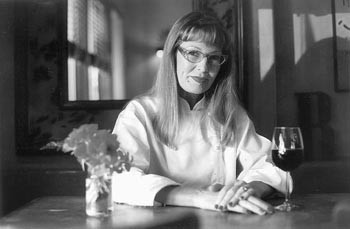
Some like it hot: Dwight Brown, left, samples his award-winning Petaluma Chili Cook-Off entry while Willowbrook Ale House owner Bob Varner looks on.

Chili has hit the big time

By Marina Wolf

JANE AND MICHAEL Stern have what some might consider a dream job: they tool around the country, stop at any eating establishment that catches their fancy, and chow down hard. In the 25 years since the Sterns started trekking around the country, first following the truckers and then just following the food, they’ve had barbecues and pies and crab boils and church potluck dinners up and down both coasts and all points in between.

But when the food-writing duo sat down to write a single-subject cookbook, one dish leapt to mind: chili. “We could not think of another dish that we had eaten everywhere in America,” said Jane Stern in a recent phone interview from the Sterns’ home in Connecticut.

The result of their thorough research is Chili Nation (Broadway/ Random; $12), an easy-to-digest collection of recipes acquired in, or directly inspired by, all 50 states of the union.

In Chili Nation, the Sterns bring the food of the masses to the rest of the masses, combining a definite gourmet sensibility (which has landed them ongoing columns in Gourmet magazine and the online powerhouse Epicurious) with an entrenched predilection for stick-to-the-ribs chow. Jane describes chili in terms that any working person can appreciate: it’s simple, cheap, and gets even better on the second day. Her discriminating palate becomes obvious only when she starts talking about the flavor: “As you eat it, you get all of these different tastes in your mouth. It’s how a professional perfume nose will say a perfume has a top note, a middle ground, and a bass note,” says Jane passionately. “You don’t smell it all at once–you have to let it sit on you.

“It’s the same with chili. What you taste when it’s first in your mouth isn’t what you taste when you swallow it.”

The rich flavor of a well-made chili comes from a sometimes complex mixtures of chilies and spices. These flavors vary enormously from region to region, and even from town to town, as chili has come to rest comfortably in diverse locations throughout the country–including Petaluma and Healdsburg, which both host popular chili cook-offs–each with its own particular flavors and attitude to offer.

Texan chilies tend toward the four-alarm, and the state raises the ceiling of heat with its infamous chili cook-offs. “Without a doubt, Texans are the most berserk about chili,” says Jane, “followed by New Mexico,” Texas’s neighbor, which prides itself on the sheer variety of hot peppers that it produces, and actually boasts the chili as its state vegetable.

Even Ohio has the mind-boggling “Cincinnati five-way,” with a spicy-sweet meat sauce, flavored with layers of cardamom, cinnamon, allspice, turmeric, and even, amazingly, some chili powder. The Sterns got their recipe by sending a dollar to a P.O. box from the back of a women’s magazine, but the medley of seemingly anomalous spices marks it as true to the spirit of Cincinnati chili.

But what about the states that haven’t bought into the chili mystique? Well, in those cases Jane and Michael got creative and developed recipes based on the culinary ambiance: that is, they looked to native ingredients or food combinations for inspiration. Idaho’s chili is thick with potatoes; Hawaii’s chili has macadamia nuts and pork. In a particularly telling interpretation for their home state of Connecticut, the Sterns offer a chili called “Herb Garden Springtime Chili.”

Recipe for RDB’s Willowbrook Wildfire Chili.

It has chicken in it. And chives. And a pinch of green jalapeño powder. And one small can of mild green chilies, the kind that steel-belted Texans would probably decorate cakes with. In other words, the Connecticut chili in Chili Nation is a pretty mellow dish, which has riled up a few of the Sterns’ fellow “Nutmeggers.” “I guess I think we’re a state of wussy wimps. What can I say?” Jane says with an unrepentant giggle. “Well, it’s not that we’re wussy wimps, but that Connecticut has more herb farms than any state in the country. … Jesus, every other thing in the state is an herb farm. So I thought we really had to do something based on herbs.”

About 150 recipes were tested to find the 50 finalists for Chili Nation, and the Sterns had to test ’em all. Often problems emerged less in the testing than in the actual notation of the recipe in the first place. The oral tradition of cooking is alive and well in the American heartland, with cooks passing on to their kids recipes that usually involve handfuls of this and pinches of that. Which is great from an anthropological and culinary point of view, but is hell on cookbook writers.

“In the kind of restaurants that we’re interested in, there often is no recipe. Somebody has just been making the thing out of their heads for 30 years,” says Jane.

SHE RECALLS standing by a stove in the back of a Topeka, Kansas, grocery store watching the Porubsky brothers make their family’s locally famous brew, and taking notes. “They had no idea,” Jane says. “If we had said, write this down, they couldn’t. Because they’re not even conscious of what they’re putting in at this point.”

This is the work that the Sterns do: recording culinary Americana, the dietary dialects of the United States. Jane and Michael are pop food anthropologists, and Chili Nation captures them at their adventuresome best, chasing the endless variations of chili that twist and bend across the country like the back roads on a badly folded, barely readable road map.

Until recently this culinary map of America has been shoved in the glove box of our collective consciousness. We knew the food was there, we ate it when we went to visit our parents, or on our college road trips, but we didn’t really talk about it. Jane remembers when she and Michael started doing their road research in the early ’70s: “It was at the height of what Michael always called America’s culinary inferiority complex,” she says. “If food wasn’t French or ‘continental,’ it was kind of an embarrassment. … You would never serve American food to any sophisticated person, because people thought it was just garbage.”

In the early ’90s, the Sterns wrote about chili for The New Yorker, which, by some standards, means that it’s “arrived.” But really, it’s never left. The food has stayed the same; only the attitude toward it has changed. As Michael says, “People used to be embarrassed by their local food. Now they’re proud of it.

“And they should be.”

From the June 24-30, 1999 issue of the Sonoma County Independent.

© Metro Publishing Inc.
Summer Repertory Theatre

0

Sizzling Stages

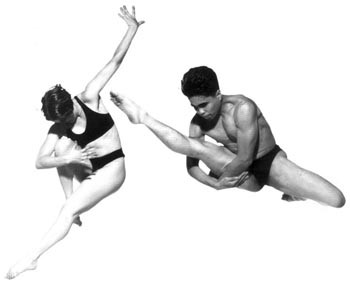
Dark designs: Ailene King and Jeff Mattlin negotiate a devilish deal in The Visit.

Summer Repertory Theatre cooks up five hot plays in seven short weeks

By Daedalus Howell

IT’S SUMMERTIME and the livin’ is easy–unless, course, you’re involved with repertory theater and facing the rigors of five productions over seven brief weeks. Such is the lot of the 21 players from all across the country–said to represent the crème de la crème of college actors–who make up this year’s company at Summer Repertory Theatre.

An annual mainstay of the local summer stage, SRT, in its 28th season, cools down the dog days on two stages with a full bill of musicals, farces, comedies, and absurdist dramas–and occasionally does all at once.

Grease The pre-eminent ’50s-inspired rock ‘n’ roll musical, Grease sets the war of the sexes at Rydell High School, circa 1959, where bobby soxers and pedal pushers clash with leather jackets and DAs (back when the term was a hairstyle and not a legal career).

“We’ve been trying to get Grease for about three years. Until it revived itself, you could get it all the time,” says SRT’s associate artistic director Mollie Boice. “Once it became a such a big revival piece, they weren’t letting out the rights to anybody.”

But SRT’s vigilance has paid off, and the Pink Ladies and T-Birds are at it again in a crowd-pleasing, well-oiled production that has kicked off the action-packed season and continues through Aug. 6 at the Burbank Auditorium at Santa Rosa Junior College.

Charley’s Aunt It’s farce, 19th-century style: Jack loves Kitty and Charley loves Ms. Spettigue; the young men invite the ladies to meet Charley’s millionaire aunt, who at the last minute, postpones her visit. So as not to compromise the young women’s reputations or forgo a chance to profess their love, the duo convince Oxford chum Lord Babberly to masquerade as the dollared dowager. Chaos ensues when the real aunt (who else?) unexpectedly arrives in playwright Brandon Thomas’ timeless door-slammer.

“Thomas wrote Babberly for a particular actor, who in turn trained all of his replacements and all the people who toured the show,” says Boice. “He trained these actors to perform the role exactly like him, and sometimes he would go out and do the first act and have an understudy complete the play.”

Boice gives assurances that no such shenanigans will occur in SRT’s production, which is directed by Squire Fridell, whom she describes as the “king of farce” (he directed last year’s old-time serial parody Bullshot Crummond). Charley’s Aunt opens June 26 and runs through July 31 at the Santa Rosa High School auditorium.

The Visit Swiss avant-garde playwright Friedrich Dürrenmatt pays a call this summer through his stage-borne examination of justice, revenge, and virulent venality in The Visit.

“It’s about a woman who is returning to a town that was once the cradle of culture and is now bankrupt,” says Boice of the award-winning play. “She was railroaded out of town, but now she is the richest woman in the world.”

The hook? The wealthy returnee will finance the town’s fiscal recovery for a price. She requires the murder of the man who disgraced her and forced her to leave. The idea is at first dismissed, but eventually the townsfolk’s tenuous morality becomes eclipsed by avarice in what many critics believe is Dürrenmatt’s finest work. The Visit opens July 2 and runs through July 31 at the SRJC Burbank Auditorium.

Laughter on the 23rd Floor Writers’ alter-egos often turn into altar-egos, ready-made for self-worship. Playwright Neil Simon avoids that pitfall in this work by turning his insightful comic eye not only on himself but also on the gaggle of gag men with whom he spent his salad days penning television comedy.

“It’s Simon’s tribute to Sid Caesar and Your Show of Shows,” says Boice. “He and his brother Danny, Mel Brooks, Carl Reiner, and even Woody Allen were writers on the show.”

Posited as a fictional memoir, this play has Simon riffing on his illustrious cronies, detailing their comic one-up-manship and the Caesar-inspired comedian Max Prince’s attempt to subdue nervous network honchos who think his shtick goes too far for Mr. and Mrs. Middle America. Laughter opens July 8 and runs through Aug. 4 at the Santa Rosa High School auditorium.

The Will Rogers Follies–A Life in Revue Will Rogers once remarked he never met a man he didn’t like, and such bonhomie bodes well for former Sonoma County actor Scott Hayes, who faces the daunting task of resurrecting the homespun humorist in The Will Rogers Follies–A Life in Revue.

The musical uses the open variety format of the Ziegfield Follies to recount the populist philosopher’s life story. Hayes’ homecoming performance–he’s a veteran of stages across the country (and is also a theater professor at Florida State University)–marks his fifth season with the company and the first year SRT has appointed an artist-in-residence. The Will Rogers Follies opens July 14 and runs through Aug. 7 at the SRJC Burbank Auditorium.

Of course, the success of this ambitious season depends on more than the skill of the thespians involved. The audience, too, plays a key role. After all, it takes more than summer heat to warm theater seats.

The Summer Repertory Theatre season runs through Aug. 7. Shows begin at 8 p.m., Tuesdays and Saturdays; and at 2 and 7:30 p.m. on Sundays. Tickets are $6 to $14. Santa Rosa’s Burbank Auditorium is on the SRJC campus, 1501 Mendocino Ave., and the Santa Rosa High School auditorium is at 1235 Mendocino Ave. For details, call 527-4343.

From the June 24-30, 1999 issue of the Sonoma County Independent.

© Metro Publishing Inc.
Spins

0

Global Groove

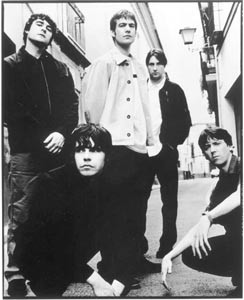
Chip off the old block: Anoushka Shankar, 17, makes an impressive debut.

New CDs offer world of sound

By Greg Cahill

Anoushka Shankar Anoushka Angel

SITAR GREAT Ravi Shankar once said it would take more than one lifetime to master his multistringed instrument. If reincarnation is a reality, Shankar may get his chance to forge ahead with his work. But at least the Shankar family will get a couple of generations to explore that complex artform. The debut recording by Anoushka Shankar, Ravi’s 17-year-old daughter, proves that his progeny has not only talent, but the name and enough good looks to snare a major label recording contract in the United States. That’s something that has eluded most Indian classical players over the years, despite the barriers surmounted by Ravi Shankar, who, as a mentor to George Harrison of the Beatles and a performer in the landmark 1967 concert “Monterey Pop,” introduced Indian music to mainstream U.S. audiences. Anoushka reverently performs only compositions by her famous father, a series of five ragas. And even if she is yet to be blessed by his spellbinding speed, the younger Shankar shows that she’s got the stuff.

Various Artists The Bali Sessions Rykodisc

GRATEFUL DEAD drummer Mickey Hart journeyed to the Indonesian island of Bali last year with his family in search of a little R&R, but the trip turned out to be a busman’s holiday. Recording equipment in tow, Hart took full advantage of his visit to this musically rich region, culminating in what he describes in the liner notes as a “magical” marathon session taping local gamelan players. The result is a three-CD collection of trancelike rhythmic percussion by world-class gamelan orchestras. Mesmerizing metallic and wooden instruments (occasionally accompanied by voices, flute, or two-string fiddle) are played in complex cycles that chime their way into the consciousness–what Hart calls “a rainbow of sound,” alternately peaceful and exhilarating. While most gamelan songs are tightly arranged and allow for little improvisation (the driving, unified force of the music is part of its powerful beauty), Hart includes a disc of experimental music that echoes his own ’70s-era Diga project and his electronic explorations. A fascinating audio travelogue.

Ibrahim Ferrer The Buena Vista Social Club Presents Ibrahim Ferrer World Circuit

THE FOLKSY 1998 recording The Buena Vista Social Club, produced by Ry Cooder, captured some of Cuba’s finest veteran players in a stripped-down backyard setting. That album, featuring players who rarely if ever had been heard by U.S. audiences, helped launch the Cuban music craze. It also was one of the year’s runaway hits. The title of this recording suggests The Buena Vista Social Club II, but it’s a distinctive recording in its own right. Ferrer often is hailed as the last of the great bolero singers, crooning rich romantic ballads in a sort of lo-fi ballroom style that is absolutely seductive. This is the debut recording for the 72-year-old vocalist, who is accompanied by the cream of the Cuban music kingdom, including pianist Ruben Gonzalez, tres guitarist Papi Oviedo (who released a great 1997 album on the Rohnert Park-based Tinder label), and dozens of top Cuban jazz players. Ferrer is a real treasure–wish him a long life and many more chances to charm us.

DJ Cheb i Sabbah Shri Durga Six Degrees

ONE OF the summer’s hottest global beat CDs is a historic collaboration of Indian DJ Cheb i Sabbah and a host of Hindustani classical musicians, weaving traditional ragas and Muslim prayers with contemporary dance beats in a postmodern tour de force. And, yes, avant jazz and rock producer and bassist Bill Laswell has his imprint all over this project. The spiritual and sensual clash is a suitable soundtrack for tantric sex–or maybe just for lounging around on a lazy day.

Amadou et Marian Sou ni Tile Tinder

THEIR STORY is the stuff of legends: Both blind, they meet, fall in love, travel together, write gorgeous melodies together, perform together, raise three children together. Marian Doumbia and Amadou Bagayoko–known throughout West Africa as the Blind Couple of Mali–pen and perform songs that exude a warmth so intense you feel as if you’ve known them all your life, yet the material is so rich that even after repeated listening you are still filled with wonder. Celine Dion should be so lucky–or talented.

Various Artists The Rough Guide to the Music of Eastern European World Music Network

NOW THAT the U.S. government has spent billions of tax dollars bombing the bejeesus out of Yugoslavia, you might want to plunk down 15 bucks to savor the rich cultural diversity of that war-torn region. This is one of the most recent compilations in the Rough Guide series–other recent recordings focus on Cajun and zydeco, and the music of Portugal, Native Americans, and English roots–and, as with other Rough Guide releases, it is an effective primer to the region’s music. Actually, you won’t get to hear any Serbian songs (which are quite beautiful and well worth pursuing), but there is plenty of other music from the Balkans region, which is as Balkanized musically as it is politically. The Turkish-flavored dance tune “Spune, Spune, Mos Batrin,” a contagious folksy number by the Romanian gypsy band Taraf de Haidouks, is worth the price of admission alone. Let’s hope Romania will stay in our good graces and out of our bombsights.

From the June 24-30, 1999 issue of the Sonoma County Independent.

© Metro Publishing Inc.

Martha Honey

Head Trip

Michael Amsler


New book evaluates the power and politics of ecotourism

By Bill Strubbe

VACATIONERS escaping bleak northern winters often know little about who owns the beach on which they’re tanning their hides. Many could care less, of course, but if they did ponder the deeper significance their brief sojourn had for the local reef or the chamber maid who changed their bed linens … well, it just might spoil their holiday.

For the privileged, travel serves as an escape. For much of the Third World, tourism is a vital means of survival that often carries with it the heavy price of environmental and cultural degradation. In Ecotourism and Sustainable Development: Who Owns Paradise? (Island Press; $25), author Martha Honey argues that travel consumers can make choices that help save the world–leaf by leaf, rainforest by rainforest, village by village.

This is no dry armchair dissertation. Martha Honey, an award-winning journalist who worked for 20 years in Central America and Africa, enlivens her research and data with colorful anecdotes from her globetrotting experiences.

Substantiated by extensive footnotes, the first three chapters of Ecotourism and Sustainable Development explore the mechanics of the tourism industry, the evolution of ecotourism, and its appropriation by conventional tours. The later chapters present engaging case studies of seven popular ecotourism destinations, including the Galápagos, Costa Rica, and Kenya.

Tourism, the world’s largest legitimate business, accounts for about 10 percent of global jobs. It was once envisioned as a non-polluting industry that would foster employment, but it soon became clear that mass visitation encouraged environmental decline, cultural invasion, prostitution, and low-paying jobs. In 1980, a conference of religious leaders in Manila went so far as to issue a statement arguing that tourism does more harm than good to people in the Third World.

Partly in response to those concerns, the concept of ecotourism evolved simultaneously in Latin America and Africa, cross-fertilized, and is now utilized as a tool for benefiting fragile ecosystems and local communities. The benefits have been real. For example, in Kenya’s Mara Game Reserve the “preservationist” method of separating the Masai from their native lands was a failure. A new “stakeholders” theory posited that ecosystems would be best protected if indigenous peoples benefited economically from parklands, and the Masai now successfully manage the area.

But soon enough, “eco” became a corporate buzzword, and we were assailed with a green-washed version of the former panacea. When it comes to providing examples of this phenomenon, the book does not shy away from citing names and organizations. Honey details one shameful case of ecotourism exploitation: The president of the World Travel and Tourism Council instigated the “Green Globe” program, whereby a travel company sending a statement of their commitment to environmental improvement–along with a $200 check–received the right to use the Green Globe logo in promotional materials. To test this procedure, a London television station simply sent in an application (and a check) from “Greenman Travel.” Without further fuss, they promptly received a certificate.

To counter this pervasive green-washing, the Ecotourism Society devised a seven-point definition of ecotourism in 1991. These rules included some obvious notions–that ecotourism must involve travel to natural destinations, minimize impact, and build environmental awareness. But the definition also called for such programs to foster respect for local cultures and support democracy.

Honey concludes that it’s not enough to identify “ecotourism lite.” We must also, she says, discover ways in which authentic ecotourism can move from being simply a niche market to becoming a broad set of principles that transform the way we travel and the way the tourism industry functions. For those who love the earth’s natural glories and diverse peoples, one only hopes Honey’s sentiments are not a pipe dream. Indeed, the earth’s well-being may depend it.

From the June 24-30, 1999 issue of the Sonoma County Independent.

© Metro Publishing Inc.

Selling on eBay

Get Rich Quick!By Mariane MateraMY INTERNET FORTUNE is slowly approaching about $50 right now. I am puzzled by this low sum because I keep reading about people making money on the Internet, specifically at auctions. In the last week, I've seen two news segments on people who quit their day jobs and now support themselves from home, selling stuff...

SWAT

SWAT NationBy Christian ParentiFOR A SNEAK PREVIEW of a future American police state, travel south from the comfortable illusions of the San Francisco Bay Area into the dirty air of California's Central Valley on Interstate 99 to Fresno, a sprawling, poorly planned city of 350,000. Pass the forest of pole-perched McDonald's, Best Western, and Motel 6...

Flatbreads

On the Level Making chapatis: These soft-skillet breads are popular in India and Nepal. In praise of flatbreads By Marina Wolf WOULD YOU LIKE to make bread, but fear the consequences? Do even bread machines make you twitch? If so, you might consider starting out with something quicker, easier...

Summer of Sam

Rotten AppleSummer of Sam.David Lee'Summer of Sam' plunges into the dark underbelly of '70s New York CityBy Nicole McEwanIT WAS THE BEST of times; it was the worst of times. New York City, 1977. Inflation was at an all-time high while the disco craze held the nearly bankrupt city in thrall. People danced in the streets even as crime...

Artistry in Wood

Log OnMichael AmslerExhibition shows off Sonoma County's woodworking skillBy Patrick SullivanIT'S BEEN MORE than 12 years, but Jose Caubet still has a vivid memory of the key event that propelled him into the ranks of Sonoma County's professional woodworkers. Ask the Santa Rosa resident why he retired from his job as a mechanical engineer with Bechtel Corp. to...

Santa Rosa Wastewater Pipeline

Steamed! Making a stand: Geri and Tom Todd want to preserve native oaks in the path of a proposed pipeline route. Santa Rosa plans to pipe 4 billion gallons of wastewater a year through everyone's backyard except its own. Think folks are mad? By Janet Wells SHIT HAPPENS, as everyone knows. What to do...

Chili Nation Cookbook

Bowled OverMichael AmslerSome like it hot: Dwight Brown, left, samples his award-winning Petaluma Chili Cook-Off entry while Willowbrook Ale House owner Bob Varner looks on. Chili has hit the big timeBy Marina WolfJANE AND MICHAEL Stern have what some might consider a dream job: they tool around the country, stop at any eating establishment that catches their fancy, and...

Summer Repertory Theatre

Sizzling Stages Dark designs: Ailene King and Jeff Mattlin negotiate a devilish deal in The Visit. Summer Repertory Theatre cooks up five hot plays in seven short weeks By Daedalus Howell IT'S SUMMERTIME and the livin' is easy--unless, course, you're involved with repertory theater and facing the rigors of five productions over seven...

Spins

Global Groove Chip off the old block: Anoushka Shankar, 17, makes an impressive debut. New CDs offer world of sound By Greg Cahill Anoushka Shankar Anoushka Angel SITAR GREAT Ravi Shankar once said it would take more than one lifetime to master his multistringed instrument. If reincarnation is a...

Martha Honey

Head Trip Michael Amsler New book evaluates the power and politics of ecotourism By Bill Strubbe VACATIONERS escaping bleak northern winters often know little about who owns the beach on which they're tanning their hides. Many could care less, of course, but if they did ponder the deeper significance their brief sojourn had...
11,084FansLike
4,606FollowersFollow
6,928FollowersFollow
