
Primus

0

Primus Still Sucks

No formulaic pop: Les Claypool cooks up a new batch of Primus songs.

Les Claypool offers preview to new CD

By Alan Sculley

ASK LES CLAYPOOL, bassist and singer of Primus, about the artists he most and he touches on a long list-from country legend Johnny Cash to filmmaker Stanley Kubrick-blessed with an element of originality. “Seeing somebody who comes up with something and you go, ‘Wow, I would have never thought of that. How did they think of that?,’ that’s what intrigues me,” says Claypool, a west county resident.

Now in his 10th year as the creative sparkplug of the off-beat Primus, Claypool himself continues to intrigue his share of fans and fellow musicians with the utterly original, somewhat skewed sounds he creates with bandmates Larry LaLonde (guitar) and Bryan “Brain” Mantia (drums).

Prior to hitting the concert trail this summer as part of the Ozzfest tour, the band finished most of the recording for their next CD. And based on Claypool’s comments, the as-yet-untitled disc will introduce its share of new wrinkles in the Primus sound- and in doing so, offer at least a measure of the originality Claypool considers important in music. Where recent Primus CDs, such as Pork Soda, (1993) Tales From The Punchbowl (1995) and The Brown Album (1997) were largely self-contained projects, the new CD found Claypool, LaLonde, and Mantia bringing in a host of collaborators.

“Since we’ve been making records there have always been the suggestions that we work with producers,” says Claypool, who contributed to Tom Waits’ recent Mule Variations. “We shied away from that. But last year we worked with a few different producers on various little projects. We worked with the Dust Brothers on a soundtrack thing and Toby Wright (who co-produced and mixed the band’s recent EP of cover tunes, Rhinoplasty), so when it came time to do this record, we wanted to work with a producer, but we couldn’t really figure out who that individual would be. Who is the George Martin or the Brian Eno of-in fact we sent some stuff to Brian Eno-of Primus?

“So then I had this idea of let’s work with some artists that we respect,” Claypool adds. “So we sent some stuff off . . . and we got a pretty amazing response. Stewart Copeland (the former Police Drummer) produced a track. Tom Morello (of Rage Against The Machine) produced and played on a few tracks. Fred Durst (Of Limp Bizkit) produced a track. Tom Waits produced a track. Matt Stone (co-creator of “South Park”) produced a track. And Rob Zombie’s supposed to work on a track for us.

Needless to say the record’s got an interesting twist to it, an interesting element.”

Primus fans will have to wait until the latest disc arrives in record stores to know exactly how the new songs expand on the group’s previous music. But Claypool offers some hints on the overall sound of the new record. “This record is, you know, it’s kind of like nothing we’ve ever done before,” Claypool says. “It’s got very powerful stuff on it. And there are some very sort of spacial elements with some beauty to it, sort of eerie. It has a little bit of an eerie twist to it. It’s almost like old (Peter) Gabriel/Pink Floyd, but with some very aggressive stuff. There’s some stuff that sounds like old Black Sabbath.

“There’s definitely some big, thick, heavy stuff on here, like really aggressive heavy stuff,” he added. “But then there’s also some, we have this one song called ‘The Eclectic Electric,’ which is nine minutes long and it’s got three movements to it. Jim Martin (of Faith No More) and James Hetfield (of Metallica) play on it. It’s like Pink Floyd meets Sabbath or something, this big old spacial thing and then all of a sudden it gets very intense and heavy.”

Given Primus’ track record, it’s a safe bet that regardless of exactly how the songs sound, the new CD will have its share of musical quirks. After all, over the course of six full-legnth CDs (plus two collections of cover tunes-Miscellaneous Debris and Rhinoplasty) Primus have fashioned a unique sound that combines jagged guitar playing with a funky yet thrashy rhythm section. The playing- especially by Claypool on bass- has often been dazzling, while the lyrics have frequently emphasized Claypool’s wicked sense of humor (“Jerry Was A Race Car Driver” and “Wynona’s Big Brown Beaver” being obvious examples of the lyrical wit). All these elements-naturally enough-have placed Primus well outside of the musical mainstream. Some critics-and probably a few fans-have felt by injecting such quirkiness into the band’s music, Claypool and company have sought to be non-conformists for the sake of being non-conformists.

Claypool, even if he recognizes the less-than-conventional aspects of Primus’s music, doesn’t quite embrace that characterization. “Well I don’t know. I’m definitely not your average joe, but to an extent, I am very much the average joe. I’m just not your average joe rock star guy,” he says. “My friends are carpenters and mechanics and fishermen. That’s who I hang out with. That’s what I like to do. But my tastes in the arts, I’m a big film guy and I tend to like eclectic stuff. In music it’s all the same. I tend to like things that push the envelope. I like seeing things I’ve never seen before. And I like that feeling of ‘How the hell did they think of that?’ That’s what inspires me. That’s what makes me go ‘God dammit, I need to think of something. Look at what the Coen brothers did. They did this amazing thing. How did they think of that?’ That’s what I like.

“I mean, I can respect something that (Steven) Spielberg does, but it’s not necessarily going to always be the most cutting edge, original thing. But then again, sometimes he does do things that are very surprising, even though he is a big mainstream guy. And guys like (Stanley) Kubrick and Terry Gilliam, those are the type of people who I find exciting, my heroes.

“Sure, we’d like to make a record that sells five million copies,” Claypool adds, turning his thoughts to Primus’ place within the music mainstream. “But I don’t watch MTV and I have a hard time listening to most radio stations. It’s just such a bunch of crap. I’ve always been like that. Since I was a kid, stuff that appeals to me is generally fairly rare. It’s not that I dislike a lot of the stuff. It’s more the stuff that captivates me and makes me want to go and buy it, it doesn’t necessarily have to fit in with any genre. If it’s music, or the artist is exciting to me, I’ll go get it, whether it’s Johnny Cash or a Rob Zombie. So it’s not so much wanting to be the non-conformist guys as I’m not going to do things that don’t appeal to me. And most pop music just doesn’t appeal to me. To me it’s lifeless. A lot of it’s very pretentious and I’m not like a fashion guy. I could care less about the latest shoe or clothes or any of that crap.

“It’s just not my world.”

From the July 15-21, 1999 issue of the Sonoma County Independent.

© Metro Publishing Inc.
Occidental Arts & Ecology Center

0

The Art of Life

Nature’s way: “Our strategy is to develop an educational research center that will allow us to … make systemic changes in society rather than just responding to the latest crisis,” says OAEC executive director Dave Hanson.

Occidental Arts & Ecology Center celebrates five years of sustainable living

By Paula Harris

RESIDENT GARDENER Kalanete Baruch looks relaxed and tanned as she strides along the grassy pathways in her short flowered dress, yellow straw hat, and black sandals. Taking occasional swigs of water from a large plastic container, she guides the way through the Occidental Arts and Ecology Center’s impressive tangle of wildlands this hot Sunday morning. Baruch, 20-ish, is eager to begin the tour of this west county educational institute and so-called intentional community, which sits on 80 acres. Dreamy birdsong drifts down from the redwoods as we head for the south garden.

The gardens are beautiful in a casual, unkempt sort of way. No uniform rows, just great clumps of organic crops and flowers in shades of red, purple, orange, and white growing side by side like a vivid patchwork quilt. The earth is friable, soft, and lofty. It has been well worked into the beds and is irrigated by rainwater catchments.

There are abundant weeds, and small coppery tree frogs jump out from the undergrowth as Baruch strolls by. At night, she says, they strike up a wild chorus from the shallow ponds on the property.

She says the center harvests a huge variety of organic fruit and vegetable crops, including tomatoes, peppers, 25 varieties of garlic, squash, carrots, fennel, grapes, Asian pears, quince, and mulberries. There’s even a rare medlar tree displaying its mushy, cinnamon-apple-flavored fruits.

We pass a wooden picnic table and a large oval bell suspended from a tree. “When the bell calls us, we come together for communal dinner,” explains Baruch.

The meals are all vegetarian, prepared with the produce from the gardens.

Nestled amid high-forested ridges that once served as hunting grounds for Miwok and Pomo tribes, about 15 members of the center’s community now live on the land and share cooking and chores. “That’s my house,” Baruch says proudly, pausing at a solitary wooden cabin located outside of the main gathering areas. The rustic structure is tiny, about 10 by 10 feet, with a bed-sized loft and two small solar-powered reading lamps. For the past several months, Baruch–who trades gardening tasks for food, board, and use of the center’s facilities–has called it home while she participates in the OAEC’s gardening program.

Since 1994, the center has been developing through the concentrated efforts by activists like Baruch interested in building and sustaining communities. Its programs run the gamut, from the practical (beekeeping and blacksmithing) to the political (rethinking democracy and the corporatization of public schools) to the esoteric (a course in naturalistic sight-size painting).

“We focus on trying to solve some of the root causes of environmental, social, and economic problems of the day,” says OAEC executive director Dave Henson. “So many activists tend to deal with the symptoms. Our strategy is to develop an educational research center that will allow us to do the work to make systemic changes in society rather than just responding to the latest crisis.”

Flower power: In search of a creative outlet, Tiona Gundy was drawn to the center’s acclaimed gardening program.

AT THE HEART of the OAEC are six interlocking programs that define the center’s philosophy of organic farming, ecological literacy, and protecting the healthy rural nature of the county:

* The Mother Garden Biodiversity Program aims to grow as many different plant types as possible, focusing on heirloom varieties and crops that are in danger of becoming extinct. There are three public plant sales each year that showcase biodiversity. “In a culture that’s become so urbanized in the last 50 to 100 years, people have gone from agrarian to urban and lost contact with the earth and food and water cycles,” says Henson. “We want to help our county remember and experience our relationship to earth and to food.” As a backlash against chemical corporations like Monsanto, which purchases, files patents on, and controls much of the world’s seed stock, OAEC is preserving the lost tradition of seed exchanges.

* The School-Garden Teacher Training Program’s goal is to start gardens in all elementary schools in Sonoma County. Teachers can participate in a five-day residential workshop that shows how to create a curriculum based on gardening, including nutrition and ecological principles. “It’s the antidote to an increasingly computer-based curriculum,” says Henson.

* The Corporations and Democracy Program explains how large corporations are able to get the authority to control the world’s food supply, and helps activists develop strategies they can incorporate to regain control. For example, the OAEC is set to launch a campaign in the county against genetically engineered food crops and genetically altered seeds.

* The Horticultural Therapy Program examines an emerging discipline that focuses on the healing and transformational powers of gardening on the body, mind, and spirit. The OAEC is now collaborating with Food for Thought, the local food bank for people with AIDS in Sonoma County, to create an organic, “healing” garden surrounding the food bank’s new facility in Forestville. The goal is to grow a wide variety of fresh vegetables, flowers, herbs, and fruit, and to establish a place for gatherings, respite, celebration, and memorial.

* The Permaculture Program focuses on creating sustainable systems designs–such as natural building, beekeeping, and rain catchment–to create intricately connected and productive communities that are socially just, ecologically sustainable, and economically viable.

* The Arts Program is a fine arts course that emphasizes painting in the garden. “Here at the center, we keep our eyes and hearts rooted in artistic expression,” says Henson.

THE OAEC’S UPCOMING fifth anniversary gala fundraiser also promises to be a work of art. The celebration (like such other pricey OAEC fundraising banquets, including the $100-$500 per plate Lost Crops of the Incas dinner) will boast a gourmet vegetarian feast with exotic seasonal crops from the center’s gardens.

“We’re celebrating that we’ve made it this far, ” says Henson with a laugh.

Indeed, the property has a varied history. After a succession of family owners, the Farallones Institute purchased the land in 1974 for workshops in community development, appropriate technologies, passive-solar architecture, and bio-intensive organic gardening. The institute also ran a Peace Corps volunteer-training program funded by a U.S. government grant. The Farallones Institute ran out of steam in 1990 after the Reagan administration pulled the Peace Corps grant, its main source of income.

Then, the C.S. Fund in Freestone purchased the land and renamed the site Center for Seven Generations, focusing on biodiversity and food crops, and expanding the gardens.

In 1994, the current owners, a collective called the Sowing Circle (a nine-member group of biologists, artists, activists, educators, and horticulturists), purchased the property and founded the current center as a private non-profit organization. Henson, who is a member of the Sowing Circle, lives on the land with the other members.

“Our work as landowners is to steward the property and let the non-profit do its work and research,” he explains.

BACK IN THE gardens, Baruch points out an even smaller cabin under a cluster of trees close to the main pond. It is home to Tiona Gundy, another work-trade gardener at the center. In March, she moved from a regular two-bedroom house in Tucson to this tiny wooden cabin, which actually is a small wagon. “We call it the gypsy wagon,” Gundy says with a laugh. “It has no electricity or water, so I learned to get really simple.”

A love of gardening and search for a creative outlet brought her to the OAEC, where she hopes to meet and network with other farmers and eventually get into the organic farming business and work with local chefs. “It’s more important for me to be living on the land in a good community than to be isolated in a house in the city,” says Gundy, 39. “I don’t have a lot of stuff, but I’m a lot happier.”

In the meantime, she says, she is becoming self-motivated and learning when to push herself and when to take a break in a job that’s anything but 9 to 5. “It’s a little community here: everyone pulls their weight to cultivate the gardens and keep the education center open,” she says. “I feel like this land is being well taken care of.”

The OAEC, at 15290 Coleman Valley Road in Occidental, celebrates its fifth anniversary on Saturday, July 31, with a festive gala. Tickets are $250-$500 (tables are available for $500-$5,000). The center also hosts garden volunteer days from 10 a.m. to 5 p.m. each Wednesday. Bring a vegetarian potluck lunch item to share. For details, call 874-1557.

From the July 15-21, 1999 issue of the Sonoma County Independent.

© Metro Publishing Inc.
Casa Botín

0

Old World Charm

This little piggie …: Chef Juan Maneiro of Casa Botín serves up a suckling pig slow-roasted in the restaurant’s 18th-century woodstove.

A glimpse of Casa Botín: ‘World’s oldest restaurant’

By Paula Harris

WE’RE SPRAWLED in a small hostel room in the center of Madrid, listening to a rhythmic rumba gitana pulsating from the boom box we hauled over along with suitcases crammed with hip-hugging ruffled skirts and nail-embedded dance shoes.

It’s been an arduous journey, but we won’t unpack. This is a stopover. Tomorrow morning my friend Helen and I will catch the high-speed AVE train to Seville, where we’ll study flamenco dance. If we can revive in time.

It’s dark outside. We slowly crank open the balcony shutters in the modest pension room near central Puerta Del Sol and peer out into the sultry night.

Nocturnal Madrid glitters and swirls below.

Calle Marqués Viudo de Pon-tejos–a bustling street filled at 10:30 p.m. with honking traffic, unleashed dogs, and strolling pedestrians–beckons enticingly. We ignore the jet lag that prickles behind our eyes and join the evening throng.

Outside, the warm night air reeks of exhaust fumes, lemon cologne, black tobacco, and frying garlic. It’s intoxicating. We head to Plaza Mayor, the large colonaded cobblestone square in the old part of the city, filled with taverns and handicraft workshops. Our destination is Casa Botín, once a favorite haunt of Ernest Hemingway’s.

“We lunched upstairs at Botín’s. It is one of the best restaurants in the world. We had roast young suckling pig and drank rioja alta,” the author wrote of Jake and Brett’s visit to the venerable landmark, on the second to last page of The Sun Also Rises.

If Hemingway made the restaurant famous, the Guinness Book of Records further cemented its celebrity last year by proclaiming Casa Botín (founded in 1725) the World’s Oldest Restaurant.

Stepping back in time: The brick-lined dining room is steeped in history.

CASA BOTÍN is located on Calle de Cuchilleros (Cutler’s Street) in the heart of Madrid’s old commercial center. We pass through an ancient archway and descend stone steps that are illuminated by an old wrought-iron lantern protrouding from a crumbling wall.

The restaurant was once a small inn where weary muleteers and traders ended their journeys with a sumptuous roast dinner and a bed for the night.

Our first impression when we enter the four-story building with its four distinct dining rooms is of exposed beams, oil paintings, hanging copper pans, and crimson carnations against snowy table linens.

It’s like stepping back in time.

At the heart of it all is an open kitchen boasting the original 18th-century woodfire oven, fueled by aromatic green oak logs. It’s still used to cook the house specialties: traditional Castillian roast lamb and whole suckling pig.

Chef Juan Maneiro, a burly figure in a white toque, tends the flames. The heat burns slowly and constantly builds up layers of flavor. One roast takes 2 1/2 hours, Maneiro tells us, as he removes a shallow earthenware casserole of fragrant pork.

Casa Botín caters to a bustling mixed clientele. The Madrileños are well dressed and poised with their Fortuna cigarettes and sleek leather accessories. The tourists tend to wear thick-soled sneakers and fret about what to order.

Our table is downstairs in a cavernous brick dining room set deep underground and steeped in history. Here also is a an ancient wine cellar resembling a catacomb, where dust-encrusted bottles of rioja are taking an extended siesta.

We eat creamy triangles of tangy queso manchego, sheep’s cheese from La Mancha, with crusty fresh bread and a glass of chilled extra-dry fino sherry. The fino is so pale and ethereal, it’s been dubbed “the wine with a hundred souls.”

We could have dined on baby eels or stewed partridge, but how could we pass up the roasted suckling pig with its crispy bronzed skin and luscious meat? It’s a huge portion–actually enough for two. The slow cooking has rendered the meat sweet and tender and infused with olive oil, herbs, and garlic. Add some perfectly golden roast potatoes and a noble valdepeñas house red wine to wash it all down and we’re in hog heaven.

For dessert, we savor slices of cool fresh pineapple marinated in Dry Sack sherry, and smooth housemade caramel custards with whipped cream. The meal is capped with strong coffee and a small glass of pacharán, a sweet anise-flavored elixir made from sloes.

AT MIDNIGHT, a group of student minstrels, in black cloaks trimmed with colorful ribbons, serenades diners with old regional songs strummed on lute-type instruments. We watch as if in a dream while waiters in their white jackets flutter among the tables like graceful moths.

Antonio González, a gracious man with a courtly manner, tells us his family has owned Casa Botín for three generations. Another family member opened a Casa Botín in Miami last year. One of the partners of the Miami restaurant is from San Francisco, so a future Casa Botín may be slated for the Bay Area, says González.

What’s the recipe for Casa Botín’s impressive longevity? “Of course, the food must be the best we can offer, but there’s something about warm cordiality, even from the youngest waiter, so that you feel a little like you’re in your own home,” explains González.

“It’s not only the taste of the pig, but that you feel fine,” he says with a faraway look in his dark eyes. “Taste alone is not enough to remember–a restaurant is not only a place to have food and drink, it’s a place to collect moments in life.”

Hemingway would have agreed.

From the July 15-21, 1999 issue of the Sonoma County Independent.

© Metro Publishing Inc.

Talking Pictures

0

Free Fall

Out on a limb: How can a real-life acrobat compete with a cartoon Tarzan?

San Francisco acrobat Aden O’Shea takes a swing at Disney’s ‘Tarzan’

By David Templeton

Writer David Templeton takes interesting people to interesting movies in his ongoing quest for the ultimate post-film conversation. This column is not a review, but rather a free-wheeling discussion of popular culture.

ADEN O’SHEA is upside down. Dangling 30 feet above the floor, the 24-year-old acrobat, clad in blue tights and a fitted gray shirt, seems improbably at ease up there, in spite of his being wrapped up thickly in long coils of rope, head down, legs up, arms outstretched, while numerous folk, myself included, stare in disbelief.

Before returning to the earth, O’Shea will repeat this gravity-challenging maneuver several times, wrapping and unwrapping, climbing and swinging and pirouetting about like . . . well, like Tarzan. At last, having pulled the entire length of rope up to where he hangs, and having coiled it around his body like thread on a spool, he allows himself to unwind, slowly downward–all the way to the ground.

O’Shea–a circus performer since the age of 13 and one of the instructors here at the renowned San Francisco School of Circus Arts–stands panting as a class of young acrobats-in-training reward him with applause.

The 14-year-old school, which evolved from the Pickle Family Circus School and has been located, since ’91, in a cavernous old gymnasium across from Kezar Stadium, seemed a fitting place to meet after we’ve both seen Disney’s latest animated blockbuster, Tarzan, itself a marvel of acrobatic derring-do set against a lush jungle rendered in “deep canvas” animation.

O’Shea’s spontaneous demonstration of aerial craftsmanship has come at the end of our discussion, in which he admits being frustrated by the animators’ over-the-top depiction of the physical activities of Tarzan (given voice by Tony Goldwyn in the movie).

“Tarzan does acrobatics,” O’Shea says, sitting on the brightly painted bleachers overlooking the trapeze training area. “I do acrobatics. He works with ropes. I work with ropes. We both fly through the air. So I can identify with Tarzan, the mythic figure.

“But this Tarzan,” he says of the movie, “was less of an acrobat and more of an Extreme Sports type athlete. He was a surfer. A skateboarder. And most of what he did was physically impossible. It was the animator showing off.

“Frankly, I think the things that are possible–even just barely possible–are more exciting to watch that something that is not possible, even in animation. There are real people who can fly through the air, and the way they do it is thrilling.”

“I kind of thought [Tarzan] was thrilling,” I admit. “Sure, it wasn’t entirely realistic, but watching Tarzan zip through the trees made me want to be up there with him.”

“Well, me too,” O’Shea laughs. “And ‘zip’ is right. Tarzan hauls ass in this movie. He never stops. When he goes from limb to limb, from vine to vine, he’s so fast you can almost not get a sense of how he’s moving.

“Actually,” he adds, “I kind of got the sense that Disney was kind of uncomfortable with the idea of having this buff, nearly naked man in their movie, so they made him move so fast he could never be thought of as, you know, sexy.”

“He was still pretty buff,” I point out. “With all that momentum gained from flying so fast, you’d think his loincloth would have flapped up once or twice. What do you bet there’s some Disney animator with an outtake of a naked Tarzan pinned to his cubicle wall?”

But we digress.

“In spite of the fantasy elements,” I say, “the elation and freedom of flight does come through pretty clearly.”

“It does, and that’s good,” O’Shea admits.

ASKED TO DESCRIBE the sensation of learning to fly, trapeze-wise, O’Shea turns to face the elaborate rigging above us. Pointing out the bars from which the flyer and the catcher each hang, he says, “So you’re hanging there, and you’ve been practicing for months, and then finally you let go. You’re in the air, flying to the guy who’s gonna catch you. And just seconds before you were thinking, ‘This is too hard. What am I doing wrong? I’ll never be able to do this.’ And, ‘Shit! What am I doing up here?’

“But then you do it. You may not have done it perfectly, but you did it. This weightlessness has found you, for the first time ever–and time stops. There is no sound. In that moment you know yourself better than you ever have. Because now you know what you are capable of.”

Jeez. Trapeze as self-actualization therapy. Sign me up.

“It’s true,” he laughs. “It’s like therapy. You learn a lot about yourself up there. In fact, I think that’s the underlying reason for the fitness craze going on in America. People are discovering that when you feel yourself pumping iron, you are forcing a relationship with your own body.

“There have been renaissances of art and philosophy and science. There have been cultures of the word, and cultures of the painted picture. Currently, among the affluent of America, we are experiencing the culture of the body. From San Francisco, California to Texarkana, Texas, anyone who can afford a Stairmaster can be part of the culture, they can pursue the ideal of having a perfect body, a powerful body.”

“A Tarzan body?” I add.

“Of course. You know,” O’Shea says, eyeing the dangling ropes across the room, “I was sitting there during the movie, thinking, ‘Hmmm.’ As a performer, this Tarzan thing might be what the market will be asking for now.

“Maybe,” he grins, “it would behoove me to get comfortable working in a loincloth.”

From the July 8-14, 1999 issue of the Sonoma County Independent.

© Metro Publishing Inc.
Food & Wine Showcase

0

Show Off

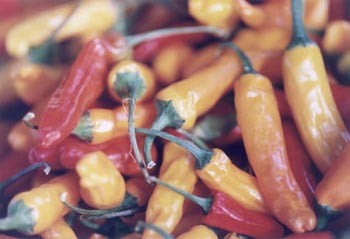
Local flavor: Mary Dee Morrison and Frank Spirarski of Gallo/Sonoma savor the sort of bounty that will be on hand at the upcoming food and wine showcase.


Sonoma County Food & Wine Showcase grows up

By Marina Wolf

YOU TAKE ALL your visiting relatives to the tasting rooms. You dutifully attend every farmers’ market. You eat at restaurants with cloth napkins when you can, except when the call of “Pink Palace” chow mein joins with the gravitational pull of the couch–you even know which Santa Rosa Chinese restaurant “Pink Palace” refers to. In other words, you think you know the food and drink of Sonoma County inside and out.

But you can’t really know it until you’ve tested the scope of your expertise at the 19th annual Sonoma County Showcase of Wine and Food, held July 14 through July 17.

This year, the word auction has been dropped from the title of the event; predictably, as reported in local media, some loose Napa lips are flapping away about how Sonoma County can’t keep up with Napa’s own annual wine auction. Of course, comparisons between the big wine-auction events of the two competing wine country counties are inevitable. Both have been running for 19 years, and represent regions that are widely recognized as producing some of the best wine in the nation. But comparing begs the question: Do we want to keep up, especially with a package price for the Napa auction of $1,800 per couple?

In terms of accessibility, the Sonoma County Food and Wine Showcase more than keeps up. Ticket prices are considerably lower here, and are available for separate events, even at the door in a few instances. It’s true, though, that the Sonoma County event will probably never be as financially lucrative as Napa Valley’s signature event, which this year collected a record $5.5 million. “The Napa auction has such a huge reputation, a whole life of its own, really,” says Bob Hobart, a senior vice president at Clos du Bois and this year’s local auction chairman. “There’s no way that we as a county and a viticultural region can compete with that.”

Sonoma County also has had to deal with the geographic ignorance of other Californians, who for years persisted in blurring together everything north of the Golden Gate Bridge into one big happy region. Michele Anna Jordan, a Sonoma County-based food writer who is organizing the authors’ booth at the Taste of Sonoma County Showcase, says that people used to ask her all the time if Sonoma is in Napa. But no more, she says. “Now I think Sonoma [County] stands on its own as a separate geographic region in the minds of people throughout the country.”

Accordingly, the showcase has been redesigned as a showplace for Sonoma County, with a full program of tours, meals, and meet-the-people-behind-the-wine events. For the first time this year, the word food is included in the title of the event, indicating an increased emphasis on edibles that both organizers and participants are hailing as an almost revolutionary shift. Of particular note is the July 17 showcase in which local food-industry folks will host cooking demos throughout the afternoon, and Select Sonoma County will staff a prominent booth to give some of its 360 members a chance to spread out samples of their products and produce.

THOUGH FOOD HAS stepped into the spotlight, the wine is still a driving force for this event. Terroir tours introduce visitors to the unique interaction between land, climate, and the resulting quality of the wine, while winemaker dinners bring guests into the heart of the action. And then there’s the auction itself. This year, it’s being held at two sites via an electronic bidding system.

The showcase is turning over part of the proceeds to benefit the national anti-hunger programs of Share Our Strength, a connection that is having a profound impact on the event. “Because of the hookup with Share Our Strength, the showcase has become much more national in scope,” says event coordinator Mary Dee Morrison, special events director of the Sonoma County Wineries Association. “We’re getting responses from across the country.”

Ten chefs from the SOS network will be joining local winery chefs to produce the lunches and dinners. Simultaneously, the showcase has attracted national sponsorship and the biggest, fluffiest feather in a food event’s cap: Food & Wine magazine.

Most local participants agree that broadening the national understanding of Sonoma County’s offerings is important, but they also are aiming for shifts on the local level. Hobart hopes that the showcase will be compelling enough to draw the Sonoma Valley auction (a completely separate event that started eight years ago) into the fold for one mega-event that includes the whole county. She believes the showcase also marks a new era of cooperation between the regions in the county. “People see us as separate, bickering appellation groups,” says Hobart. “That’s not really true, but the perception is reinforced by the separate events.”

Others are hoping for increased local awareness of the interconnection between food and wine. This linkage may seem obvious, but strangely has been underemphasized at auctions past. Chef/caterer Barbara Hom, for one, is excited that the food of Sonoma County is finally getting the limelight that it deserves. “We need to learn that the wine doesn’t stand alone anymore,” says Hom, who has been cooking at the auction/showcase for almost a decade. “The wine can’t exist without the food.”

From the July 8-14, 1999 issue of the Sonoma County Independent.

© Metro Publishing Inc.

PBS commercialism

0

Viewers Just Like You?

Surprise, surprise, PBS commercialism trumps public interest

By Tate Hausman

IF YOU’VE BEEN watching your local PBS station over the last five years, you’ve probably noticed the change. You’ve wondered about the increasing frequency of corporate logos flashing across your screen. You’ve noticed more voice-overs extolling the virtues of McDonald’s, IBM, or General Motors. And doesn’t there seem to be less international news, less diversity of perspectives, less investigative journalism?

To no one’s great surprise, a new study has emerged to prove what you already suspected: PBS has become more corporate and less public than ever before.

“The Cost of Survival: Political Discourse and the ‘New PBS,’ conducted by Professor William Hoynes of Vassar College, analyzed 75 public affairs programs over a two-week period in late 1998. The study found that business elites have a much louder voice on PBS than all others, and that the presence of groups such as labor, women, and activists is steadily decreasing. The report’s findings should be troubling for the broadcast service established to “provide a voice for groups that may otherwise be unheard.”

Among the study’s notable nuggets, Hoynes reveals that more than one third of all on-camera sources (36.3 percent) were representatives of corporate America or Wall Street. That’s nearly six times the number of representatives from the general public (5.7 percent) or from citizen activism group (4.5 percent.) In certain topic areas, such as economics, fully 75 percent of the talking heads belonged to the “business elite”– conservative bankers, brokers, and corporate reps.

“Economic coverage,” says the study, “is so narrow that the views and activities of most citizens become irrelevant.”

Other key findings include:

The biggest story of the two-week period (the presidential impeachment hearings), drew 70 percent of its sources from government officials and 21 percent from mainstream journalists. Voices of public activists were entirely neglected, so that public television’s coverage of the impeachment was filtered through the same politically elite lens as commercial coverage.

Women made up only 21.5 percent of news sources. When they did appear, they tended to speak about subjects such as health, sexuality, family, and religion, rather than political or economic news.

International news coverage made up only 5.4 percent of news programming, down from 11.7 percent in a similar study done in 1992. The Middle East was the only international topic that was the subject of more than two stories in the sampled time period.

Like any controversial study, “The Cost of Survival” is not without its critics. Stu Kantor, director of Corporate Communications for PBS, defended PBS with a predictable critique: the study’s methodology was significantly flawed. “The two-week period in question,” says Kantor, “was an unrepresentative time to study. Most PBS stations were involved in fund drives, and that skewed their coverage.” Furthermore, Kantor objects to Hoynes’ exclusion of documentaries from the study, especially since Hoynes himself admits in the study that documentaries are one of PBS’s main strengths.

“I think Professor Hoynes shares PBS’s goal of creating quality shows that treat viewers like citizens in a democracy, rather than consumers,” says Kantor. “We do that by letting well-informed experts have in-depth discussions about issues and letting viewers form their own opinions.”

Sounds reasonable. But from Hoynes’ perspective, the choice of those “well-informed experts” is the crux of the issue. “Journalists are trained to exclude their own opinions from a story, to let the facts and sources speak for themselves,” says Hoynes. “So when PBS relies on a very narrow list of sources–in this case, the corporate elite who completely dominate PBS’s public affairs programming–they show their true bias.”

Hoynes’ study explains why PBS has become increasingly corporate with a simple truism: Follow the money trail. When Congress threatened in the early ’90s to revoke funding for public television, PBS turned toward big business for support. What evolved was the ‘New PBS’–a more marketing-savvy, more corporate-friendly, more commercial version of the old system. Today, approximately 42 percent of PBS’s cash comes from corporations, private foundations, or endowment agencies.

The difference is palpable. For an example, visit www.pbs.org and click into the “Role of Corporate Sponsorship” page. The text makes it abundantly clear that PBS sponsorship is an effective form of advertising: “PBS program sponsorship is recognized by corporate leaders as an effective communications tool … In fact, a 1998 PBS Image Study revealed that a strong majority of PBS viewers feel that companies that fund PBS have a commitment to quality and excellence; believe underwriters are usually industry leaders; would choose to buy a product from a company that supports PBS, all other things being equal.”

This artless appeal to corporations for advertising revenue corroborates what Hoynes’ statistics imply: The “New PBS,” especially its public affairs programming, may not be much different from the commercial networks. What, if anything, still makes PBS a valuable alternative to mainstream TV?

According to Stu Kantor, it’s the depth. “PBS provides an alternative to ‘sound-byte journalism’–journalism that is meant to boost ratings, not to inform the public,” he says. “PBS isn’t restricted by those forces, so our programming is much, much deeper.”

For Professor Hoynes, that’s not good enough. “Public television must engage citizens … by broadening discourse beyond traditional elite voices,” he writes in his study’s final paragraph.

“Public television can be a valuable democratic resource if its leadership takes seriously its founding mission to include fresh perspectives, expand dialogue, welcome controversy and serve all segments of the population.”

From the July 8-14, 1999 issue of the Sonoma County Independent.

© Metro Publishing Inc.
Kalyanji and Anandji Shah

0

Hip-Hop East

By Adam Heimlich

BROTHERS Kalyanji and Anandji Shah were but cogs in the staggeringly productive machinery of the Indian film industry in the ’70s, when “Bollywood,” as the Bombay film center is called, was making a transition from Busby Berkeley-style musical super-extravaganzas to low-budget James Bond-inspired thrillers. Their job was to extrapolate a culture-specific version of the new genre’s music from the Western original.

Apparently, Kalyanji and Anandji spent a lot of time locked in a room with nothing but the scores from Dr. No, Shaft, and S.W.A.T., a Casio keyboard, and a sitar. What they produced, with the help of an orchestra of Bollywood session players, outstrips mere imitation. Like the best Bollywood films, it presents a reinterpretation that is at once shamefully derivative and proudly original.

Folks with a less critical ear might simply call it “bizarre,” and they wouldn’t be wrong.

While Kalyanji and Anandji’s suspended animation of opposing musical values is part of the East’s version of the birth of hip-hop, the tricky part comes in reinterpreting their reinterpretation for young Westerners. Bombay the Hard Way (Motel Records), a selection of Bollywood soundtrack music, set to hip-hop beats and composed by Kalyanji and Anandji, arrives at the very moment when cultural difference itself is becoming a selling point, no reconfiguration required.

New Agers buying Tibetan chant CDs and college kids getting off on Japanese Muzak are, as we speak, replacing the old problem of fashion-focused aesthetics with culture-focused fashion. This doubles the challenge faced by a label trying to put interesting foreign music in discerning domestic hands.

The album is like a needle in a field of exotic haystacks–and the people who like needles have stopped looking.

Bombay the Hard Way has intentionally degraded its exotica pedigree by hiring Dan the Automator–producer of Dr. Octagon and a few tracks on the last Cornershop and Jon Spencer Blues Explosion albums–to re-engineer Kalyanji and Anandji’s tracks. His trademark is a hermetically sealed quality that envelops the music’s many out-of-context samples. The result is closer to that of the neo-lounge projects. The CD doesn’t deserve to be lumped in with the Indian originals, but that’s for the best. Bombay the Hard Way would be no more a purely Indian artifact if left in its ’70s form. It makes more sense to build on the composers’ original project and tweak it, again, to fit another world.

In this spirit, the album tags its “new” Kalyanji and Anandji tracks with names like “Fists of Curry” and “The Good, the Bad and the Chutney.”

To the Automator (aka Dan Nakamura, a Japanese-American from the Bay Area), this process of snowballing recontextualization must be the essence of beat science– he’s pictured in the Bombay the Hard Way booklet wearing a lab coat and safety goggles.

The Automator’s slick seguing makes for the first reasoned, Western response to the jarring anti-narratives of Hindi pop. The Mission Impossible theme collapses into a snippet of raga performed by a staid string quartet on “Fear of a Brown Planet”; a bit of dialogue from a Bollywood movie (“Now let’s walk English style!”) introduces “Satchidananda,” driven by an electric bass mimicking the sound of a finger skipped across the head of a tabla drum. “Ganges a Go-Go” sounds startlingly like something off Nuggets (with English lyrics “I’ve got no time to think/ ‘Cause I need somebody to love,” it could be an outtake from the Wild in the Streets soundtrack), but with a bit of badly dubbed film dialogue, the whole bit comes off no stranger than your everyday Wu-Tang kung-fu/rap juxtaposition. “Theme from Don” introduces a blaxploitation funk theme, then (without warning) a classical Hindu theme, and then bravely merges them, all over a steady beat.

THERE’S SOMEONE ELSE who speaks Kalyanji and Anandji’s language of odd rests and alarming changes. When Bombay the Hard Way‘s dozens of Bombay surf-rock and Parliament-by-way-of-Loony Toons interludes give way to longer, more grandiose cinematic material, they come off a lot like the restless soundscapes of DJ Shadow. The restrained precision of the beats from “Fists of Curry” and “Satchin-dananda,” for instance, boast a vision every bit as three-dimensional and peacefully progressive as Shadow’s “Midnight in a Perfect World.” Those beats make the best argument for the notion that DJ culture can make sense out of the gaps in music history.

This article originally appeared in Salon.

From the July 8-14, 1999 issue of the Sonoma County Independent.

© Metro Publishing Inc.
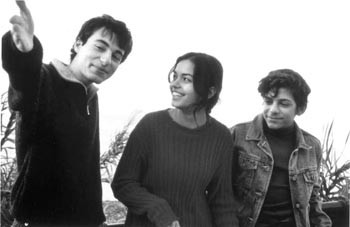
Christian Punk

For Christ’s Sake

CHRISTIAN PUNK hasn’t exactly caught fire with Sonoma County hardcore fans, but there is a handful of local bands aiming a musical message of redemption at the crowds in the mosh pit. Among them is the Santa Rosa punk band Covenant, headed up by 15-year-old bass-player and singer Mike Weatherly.

“We just want to play our music for the Lord,” Weatherly says. “That’s the whole idea, to just play for God. Most of our songs are just about Jesus and how He can be in your personal life.”

The four-member band has been around for about two years now, playing for small crowds at local churches and at Montgomery High School. Their inspirations include Dogwood, a Christian punk band from San Diego. But at the mention of MxPx, the Seattle-area Christian punkers who recently signed on with A&M Records (just before the company merged with Geffen), Weatherly’s tone gets a bit chilly.

“Yeah, I liked them when back when their music was Christian,” he says disdainfully.

As for such non-religious bands as Rancid and NoFx, Weatherly says he and his friends used to listen to them, but not anymore: “We kind of gave up on that stuff because it wasn’t Christian,” he says.

Some might argue that there’s a blatant contradiction between Christian teachings and punk rock’s anarchistic spirit, but Weatherly doesn’t see it that way. After all, he says, punk rock is about being different, and Christian punks are interested in setting themselves apart from the mainstream secular world. He’s also not afraid of being made fun of by punkers contemptuous of religious music.

“It’s never happened to me, but if it did, I’d just tell them ‘Blessed are the persecuted.'” says Weatherly. “I’d kind of like it.”

According to Glenn Rubenstein of the Petaluma band Headboard (which is not a Christian band), Christian music of any kind has yet to make much of an impact in the North Bay.

“But when we go to other areas, like Sacramento and San Jose, it’s huge,” Rubenstein says. “We sometimes end up playing with a lot of Christian rap and hardcore bands. From a band’s perspective, it’s nice. You don’t have to worry about getting hit with a bottle or anything. The scene is really nice . . . Of course, some people in rock and roll would argue that if you’re not pissing someone off, you’re doing something wrong.”

From the July 8-14, 1999 issue of the Sonoma County Independent.

© Metro Publishing Inc.
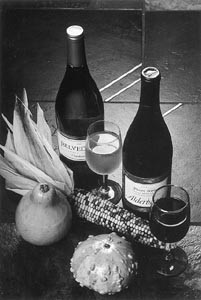
Chenin Blanc

0

Old Gold

Michael Amsler


White wine worthy of respect

By Bob Johnson

IF THE CHENIN BLANC grape were a department store, it would be Kmart. If it were a sport, it would be bowling. If it were a comedian, it would be Rodney Dangerfield, or at least the persona Rodney portrays. When it comes to respect in the modern wine world, dozens of grape varieties garner greater degrees than chenin blanc.

Until chardonnay exploded in popularity during the 1980s, there was more chenin blanc planted in California than any other white wine grape. It remains ubiquitous today, but only a small percentage finds its way into varietal bottlings; most is blended away, often used to “stretch” more expensive white wines, including chardonnay.

Sometimes the most dependable, hardest-working laborers are overlooked by their supervisors, who bestow promotions upon more gregarious, if less productive, workers. And so it is with chenin blanc, which one winemaker has described as having “the personality of a well-behaved child.”

The grape is cooperative in a number of ways. It tends to ripen smack in the middle of harvest season, necessitating neither early call-ups of the troops nor brow-furrowing over sufficient ripening. It is easy to pick, growing in compact clusters. And its tough skin allows it to make the trip from the vineyard to the crusher with minimal damage. It’s a grape that does not require a great deal of thinking on the part of winemakers, so most vintners simply turn the grapes into wine and save their brain cells for the more cerebral pursuits of crafting world-class cabernet sauvignon and similarly flashy varietals.

Those who know of the grape’s heritage are more likely to appreciate its distinct and delicate nuances. In the Loire Valley of France, chenin blanc is the exclusive ingredient of wines labeled Vouvray, Savennieres, and Coteaux du Layon, all highly acclaimed and much sought after.

In California, a handful of knowing vintners have embraced chenin blanc as both a wine of distinction and a viable commercial product. And at least a couple of them practice their craft here in Sonoma County.

Perhaps the most consistent local purveyor of quality chenin blanc is Dry Creek Vineyard, which has been sourcing grapes from the Clarksburg appellation of the Sacramento Delta region for years. The winery’s chenin blanc from the 1981 vintage included Clarksburg grapes, and the recently released 1998 vintage is 100 percent Clarksburg.

Winemaker David Stare–whose vintages of chenin blanc have garnered more than 30 gold medals from esteemed wine competitions–says the reason his bottlings stand out is that he takes them seriously. He handles them with the same attention to detail accorded other wines that command prices three or four times higher.

INDEED, for the consumer, another lure of quality chenin blanc is its price. Dry Creek’s 1998 vintage carries an SRP of $8.75. Another outstanding maker, Alexander Valley Vineyards, asks just two bits more for its 1997 rendition. Purchase by the case, and the customary 15 percent discount offered at the wineries makes either wine a strong candidate for one’s “house white.”

When it comes to California chenin blanc, the names that tend to get the most press are Chappellet, Chalone, and Ventana. Dry Creek unquestionably deserves to be in the same strata, with Alexander Valley perhaps one notch below. Other California wineries that take chenin blanc seriously include Durney, Husch, Pine Ridge, and Mirassou.

While chenin blanc can be made dry, off-dry. or sweet, the most memorable versions are dry, floral, and fruity. They’re also versatile, making palate-pleasing companions to fish and chicken dishes, as well as refreshing aperitifs.

In the early ’70s, David Stare raised the eyebrows but ultimately garnered the respect of old-time county farmers when he decided to buck the trends of the day, uproot a productive and profitable prune orchard, and plant grapevines. Similarly, Alexander Valley Vineyards’ Hank Wetzel has gained a reputation for making wines true to their varietal and geographic character.

Respect can’t be bought; it must be earned. Any Davis or Fresno grad can forge a reputation with the right cabernet grapes, but it takes a true pro, a consummate vintner, to gain acclaim via chenin blanc.

This reality may not be fair, but as Walter Cronkite–a journalist who knows a thing or two about respect–would say, that’s the way it is.

From the July 1-7, 1999 issue of the Sonoma County Independent.

© Metro Publishing Inc.

Living-Wage Movement

0

The Buck Starts Here

By Janet Wells

WHEN AUTHOR and essayist Barbara Ehrenreich left her comfortable Florida home, her career, and her credit cards to become a Key West waitress making $2.13 an hour, plus measly tips, she set out to discover if it really is possible to make a living on the meager jobs available to much of the nation’s unskilled workforce.

One month of low-wage drudgery later, Ehrenreich had her answer: An emphatic no.

“There are no secret economies that nourish the poor,” she writes in the January issue of Harper’s magazine. “This job shows no sign of being financially viable. You might imagine, from a comfortable distance, that people who live, year in and year out, on $6 to $10 an hour have discovered some survival stratagems unknown to the middle class. But no.”

Ehrenreich is the keynote speaker at the second annual Labor and Social Action Summer School at Sonoma State University, from July 9 to 11, a weekend of workshops for youth, labor, and community activists, presented in conjunction with Santa Rosa Junior College.

Sessions on such topics as the living wage, movement, affordable housing, women and the labor movement, and organizing strategies focus on the social needs of Sonoma County, where the working poor face an increasing struggle even in the midst of a booming economy. While the county’s $14 billion economy continues to grow, and unemployment is at an all-time low of 3.1 percent, 20 percent of the county’s working adults cannot support themselves and their families, according to federal census statistics.

In addition to requiring that city or county employees are paid wages that allow them economic self-sufficiency, living-wage legislation–adopted in such communities as Boston and Los Angeles–usually stipulates that businesses contracting with the city or county pay their employees at the same living-wage level.

“We have the working poor, particularly part-time classified jobs like janitors and librarians, and part-time certificated faculty, who are not economically self-sufficient,” says Santa Rosa Junior College history professor Marty Bennett. “I think it’s a human rights issue, just like we have voting rights and rights to privacy.

“There’s a very rich language and precedence for this in American history if you look in the 1930s or in Franklin Delano Roosevelt’s economic bill of rights about the right to a living wage and the right to a job,” adds Bennett, who also is president of the California Federation of Teachers, Local 1946, and a member of the North Bay Central Labor Council.

While the rich are getting richer, Bennett says, the poor are going down even faster. According to a report on the quality of life in Sonoma County released last week by United Way and the Sonoma County Community Foundation, the gap between the rich and the poor is widening, with food stamp use in the county 28 percent higher than before the 1980s recession.

In 1980, Bennett points out, the CEO of a major corporation made 42 times the wage of a factory worker. By 1990, that ratio had almost doubled to 85, and by 1998, the average CEO was making 419 times more than the grunt on the assembly line.

“Why don’t we have a maximum wage?” Bennett wonders. “This is the whole story of what’s called California’s hollow recovery. For the upper 20 percent, they have done extraordinarily well. But when you look at the bottom 80 percent, you see growing income inequality.”

That disparity spells trouble, says Ehrenreich.

“Greed undermines society when you have huge inequality,” she says in a phone interview from her Florida home. “When you have very wealthy people who don’t take much interest in the public sector because they can do everything themselves, fly to their multi-acre ranch in Montana in their own plane, private schools. They withdraw into their own world. The public sector then tends to deteriorate as the upper class withdraws.

“We have a culture that says work hard and you’ll get ahead,” she adds. “When people find out that they can work as hard as they can and still not live indoors, that undermines the entire social contract. It says to those people, ‘You’re not worth anything.'”

And when people feel as if they are going nowhere, the results are “pathological,” Ehrenreich says. “There usually is some kind of social upheaval, revolution, virulent scapegoating of ethnic groups.”

THE SOLUTION? In part, simply pay people enough to live on, say living-wage advocates. Bennett is one of a group of people from academia, labor unions, business, and social groups that has formed a committee to study the idea of introducing living-wage legislation in Sonoma County.

More than 20 communities nationwide have enacted such measures, which have the common goal of ensuring that full-time workers can support themselves. For a typical Sonoma County family, that means making enough money to rent a two-bedroom apartment, own a 6-year-old car, have full-time day care for the kids, and health insurance covered through an employer.

That quality of life requires a family income of $11 to $18 an hour. Yet, about 10 percent of California’s workers earn the minimum wage of $5.75 an hour, and the average hourly wage for 20 percent of Sonoma County’s work force is just $8.09 an hour.

“I think the living-wage approach is very good,” Ehrenreich says. “It uses the leverage people have in the public sector. We can say to our municipality that we don’t like the fact you are contracting with companies that don’t pay people so they can live at any kind of decent level.”

Barbara Ehrenreich will speak Friday, July 9, at 7:30 p.m. at the Warren Auditorium at Sonoma State University. Admission is on a sliding scale of $5 to $8. For more information on Ehrenreich’s lecture or the Labor and Social Action Summer School, call 545-7349, ext. 1.

From the July 1-7, 1999 issue of the Sonoma County Independent.

© Metro Publishing Inc.

Primus

Primus Still Sucks No formulaic pop: Les Claypool cooks up a new batch of Primus songs. Les Claypool offers preview to new CD By Alan Sculley ASK LES CLAYPOOL, bassist and singer of Primus, about the artists he most and he touches on a long list-from country legend Johnny...

Occidental Arts & Ecology Center

The Art of Life Nature's way: "Our strategy is to develop an educational research center that will allow us to ... make systemic changes in society rather than just responding to the latest crisis," says OAEC executive director Dave Hanson. Occidental Arts & Ecology Center celebrates five years of sustainable living By...

Casa Botín

Old World Charm This little piggie ...: Chef Juan Maneiro of Casa Botín serves up a suckling pig slow-roasted in the restaurant's 18th-century woodstove. A glimpse of Casa Botín: 'World's oldest restaurant' By Paula Harris WE'RE SPRAWLED in a small hostel room in the center of Madrid, listening to a...

Talking Pictures

Free Fall Out on a limb: How can a real-life acrobat compete with a cartoon Tarzan? San Francisco acrobat Aden O'Shea takes a swing at Disney's 'Tarzan' By David Templeton Writer David Templeton takes interesting people to interesting movies in his ongoing quest for the ultimate post-film conversation. This column is not...

Food & Wine Showcase

Show OffLocal flavor: Mary Dee Morrison and Frank Spirarski of Gallo/Sonoma savor the sort of bounty that will be on hand at the upcoming food and wine showcase. Sonoma County Food & Wine Showcase grows upBy Marina WolfYOU TAKE ALL your visiting relatives to the tasting rooms. You dutifully attend every farmers' market. You eat at restaurants with cloth...

PBS commercialism

Viewers Just Like You? Surprise, surprise, PBS commercialism trumps public interest By Tate Hausman IF YOU'VE BEEN watching your local PBS station over the last five years, you've probably noticed the change. You've wondered about the increasing frequency of corporate logos flashing across your screen. You've noticed more voice-overs extolling...

Kalyanji and Anandji Shah

Hip-Hop East By Adam Heimlich BROTHERS Kalyanji and Anandji Shah were but cogs in the staggeringly productive machinery of the Indian film industry in the '70s, when "Bollywood," as the Bombay film center is called, was making a transition from Busby Berkeley-style musical super-extravaganzas to low-budget James Bond-inspired thrillers. Their job was to extrapolate...

Christian Punk

For Christ's Sake CHRISTIAN PUNK hasn't exactly caught fire with Sonoma County hardcore fans, but there is a handful of local bands aiming a musical message of redemption at the crowds in the mosh pit. Among them is the Santa Rosa punk band Covenant, headed up by 15-year-old bass-player and singer Mike Weatherly. ...

Chenin Blanc

Old GoldMichael AmslerWhite wine worthy of respectBy Bob JohnsonIF THE CHENIN BLANC grape were a department store, it would be Kmart. If it were a sport, it would be bowling. If it were a comedian, it would be Rodney Dangerfield, or at least the persona Rodney portrays. When it comes to respect in the modern wine world, dozens of...

Living-Wage Movement

The Buck Starts HereBy Janet WellsWHEN AUTHOR and essayist Barbara Ehrenreich left her comfortable Florida home, her career, and her credit cards to become a Key West waitress making $2.13 an hour, plus measly tips, she set out to discover if it really is possible to make a living on the meager jobs available to much of the nation's...
11,084FansLike
4,606FollowersFollow
6,928FollowersFollow
