Muppets from Space, Inspector Gadget

Kids’ Stuff

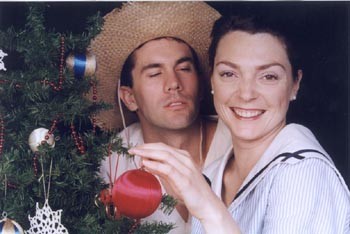
Porcine power: Josh Charles falls prey to Miss Piggy in Muppets from Space.

The Muppets still make magic, but ‘Inspector Gadget’ is charmless

By

MUPPETS FROM SPACE kicks off with something any kid can appreciate: a bad dream. The fretful Gonzo, of the round head and curled proboscis, is racked with nightmares about being the last member of his species. One morning, his alphabet cereal begins spelling out messages from outer space. Miss Piggy, working as a “coffee pig” at a TV station, broadcasts word of Gonzo’s messages, which attracts the attention of a malevolent government agency.

It’s interesting that the Muppets haven’t changed their style in 30 years. These creatures still evince the Old Hippy Dream of communal living in a beat-up Victorian, with a psychedelic school bus in the driveway. (Though the film doesn’t ignore the down side of that life: the long lines to the bathroom or the communal cooking experiments that go bad.) Muppets from Space is laid-back, hippie-style; it’s good to see a children’s movie that isn’t shrieking with hysteria. Plus, the critters still manage to out-express a good third of the Screen Actors Guild.

It is especially funny to see Gonzo pantomime his Spielbergian awe before the majesty of space, Miss Piggy gaping in stage fright before a live television camera, and Kermit the Frog worrying about the upkeep of the house (apparently the lease is in his name).

THE COMPLETELY charmless Inspector Gadget, on the other hand, is merely a kid parody version of RoboCop. John Brown (played by Matthew Broderick) is a security guard blown to pieces in an explosion; he’s reassembled with joke-shop machinery into a half-mechanical crime fighter. The man who exploded him is a Bondian villain named Dr. Claw (Rupert Everett, with an amusing Harvard lockjaw accent), who is planning to use cybernetic technology to build fighting machines.

Brown’s savior is Brenda, the daughter of a scientist killed by the Claw. Joely Fisher, looking like a sleepless version of Sarah Jessica Parker, plays Brenda, a maternal and disinterested love interest. It could be hoped that Broderick’s mild-manneredness would provide a nice contrast to the machinery sprouting out of him, such as the pillar of metal that grows from his neck and the long prosthetic legs that allow him to gallop like a horse. But, actually, Broderick just looks embarrassed.

The locations are one save. The film is set in “Riverton City,” red-brick Pittsburgh, where it previously seemed impossible to make an anxious movie. (In the movie’s most inspired choice, the villain’s headquarters is the imposing PPG building.)

David Kellogg, kicked upstairs after a big career in the advertising racket, directs this movie with the desperate snideness, noise, and franticness of a dozen kids’ cereal commercials slammed together. Watching it is like listening to a cymbal soloist play for an hour and a half.

‘Inspector Gadget’ and ‘Muppets from Space’ play at theaters across the county.

From the July 22-28, 1999 issue of the Sonoma County Independent.

© Metro Publishing Inc.

KPFA

0

Air War

Power to the people: KPFA producer Joan Marler addressed a crowd of KPFA backers last weekend at an Ives Park rally and strategy meeting.

Photograph by Michael Amsler

Local KPFA supporters rally for embattled station

By Greg Cahill

HAROLD SCHULZ nodded approvingly at the 200 listeners and supporters of Berkeley’s KPFA who gathered Sunday at Ives Park in Sebastopol to discuss ways to recapture control of the nation’s oldest listener-sponsored radio station. “It’s fantastic,” he told the crowd, “this number of people in Yuppieville got off their couches to do something today.”

The west county contingent, which often draws comparisons to the liberal denizens of Berkeley, turned out in force to show its backing for one of the few radio stations in the country still committed to airing a radical viewpoint on politics and social issues.

The landmark 59,000-watt station (94.1 on the FM dial)–which recently celebrated its 50th anniversary–is in the throes of a messy dispute between its governing Pacifica Foundation and staffers over labor and programming issues. For the past week, the staff has been locked out–officially, Pacifica executives say KPFA employees are on paid administrative leave, though none has been notified directly. Meanwhile, heavy chains and padlocks bar the doors, and armed police and security guards patrol the facilities day and night. Several people have been arrested at noisy protests in front of the station’s offices and outside of the transmitter in the Berkeley hills.

KPFA supporters are demanding that Pacifica rehire general manager Nicole Sawaya, fired March 30 without reason, and reinstate popular programmers Larry Bensky and Robbie Osman, both fired for violating a Pacifica gag rule against commenting on-air about Sawaya’s dismissal. Backers also are demanding a restoration of normal programming, an agreement that Pacifica accept mediation, and the firing of Pacifica executive director Lynn Chadwick.

“What should have been an employee-employer relationship . . . has turned into a massive civil rights issue with thousands of people in the Bay Area outraged at the [Pacifica] board’s action,” Peter Phillips, director of Sonoma State University’s Project Censored, noted in a prepared statement. “Chadwick . . . has grossly mismanaged the situation and aggravated the staff and the community to a point of outright revolt.”

On Tuesday, several KPFA programmers, including Sonoma County health and fitness expert Layna Berman, conducted live shows on the station’s doorstep. At the Ives Park meeting, local supporters also agreed to hold a Sonoma County Action Day on Saturday, July 24, from noon to 5 p.m., in front of the station.

“Organized labor is very concerned about what is happening at KPFA, including the illegal lockout, which is in violation of KPFA staff contracts . . . ,” says Mike Smith of the North Bay Labor Council. “I am outraged at Pacifica’s callous decision to deprive the community and labor of its voice.”

The firing of Sawaya, who supporters say had led the station to its strongest position ever in the Bay Area radio market, sparked the recent labor dispute at the station. But at the core of the squabble is the suspicion by many that Pacifica plans to sell KPFA’s signal for an estimated $60 million to $90 million to establish a trust for the chain’s four remaining stations. Those suspicions were fueled July 19 when the San Francisco-based Media Alliance circulated a Pacifica memo–from Houston real estate developer and local Pacifica board member Michael Palmer to Pacifica national board chairwoman Mary Frances Berry–noting that Palmer had spoken to a radio broker about the sale of KPFA’s north Berkeley transponder, KPFB, and received an appraisal of $750,000 to $1.25 million for the smaller unit.

“The primary signal [KPFA] would lend itself to a quiet marketing scenario of discreet presentation to logical and qualified buyers,” Palmer noted. “This is the best radio market in history, and while public companies may see a dilutive effect from a sale . . . [they] would still be aggressive for such a signal.”

A Pacifica spokesperson has said the memo was simply speculation and that no serious discussion is under way regarding the sale of the station.

THE CURRENT STRUGGLE for control of KPFA’s airwaves is the latest chapter in a long tradition of free speech and civil liberties. KPFA–the flagship of the Pacifica chain–was founded in 1949 by pacifists. It was the only station in the country openly to defy the red-baiting tactics of Sen. Joe McCarthy, was one of the first to discuss civil rights issues, and provided an outlet for UC Berkeley activist Mario Savio and other free-speech-movement organizers. In the 1960s, the station emerged as a powerful voice in the anti-Vietnam War era, and served as an inspiration for the fledgling underground FM stations and the alternative press.

“Without a doubt, the staff and supporters of KPFA know that this is a battle that has to be fought,” says College of Marin history professor Walter Turner, producer and host of KPFA’s Africa Today. “There’s just no option here in the Bay Area in terms of non-commercial, non-corporate radio–this is pretty much it, especially for a station that has a lot of power. There are a lot of voices–[media critic] Noam Chomksy, the discussions on universal health care, political developments in Africa, or the dissension over the recent NATO air campaign in Yugoslavia–that if you don’t hear them on Pacifica/KPFA, you probably won’t hear them on big, powerful radio stations again. That’s not to belittle small community radio stations, because they are essential, but it is to say that KPFA has a 50-year reputation and contacts all around the world. So, it’s a very important battle.”

Turner adds that recent comments by Pacifica national board members–particularly that the station “caters to 50-year-old white men”–are rife with contradictions. Pacifica officials complain that KPFA has lacked cultural diversity in its programming, but Chadwick fired veteran black journalist Barry Scott. And the station’s apprenticeship program, recruiting young men and women of color, is now on hold owing to the lockout.

“These are people [at Pacifica] who don’t have a track record of diversity,” says Turner, who also serves on the board of directors at Global Exchange, a non-profit agency that sponsors trips by researchers to Africa and the Caribbean.

Bill Patterson, owner of the Powerhouse Brewing Co. in Sebastopol, agrees that the fight for control of KPFA transcends mere programming issues. “When public radio starts answering to the bottom line, then something is terribly wrong,” says Patterson, whose business for the past three years has hosted live KPFA broadcasts by R&B pioneer Johnny Otis, a Sebastopol apple farmer. “You lose your liberties one notch at a time.”

While Otis has declined publicly to comment on the station’s strife, Patterson believes that the three-hour Saturday morning show illustrated everything that’s worth fighting for. “In the case of the Johnny Otis Show, everyone listened to that program, from right-wingers to left-wingers,” says Patterson, who often answered phones at the show. “I remember one morning when Johnny was bitching that he couldn’t find live bait. Within two minutes, the guy from the Healdsburg general store called to let Johnny know that he had live bait in stock. I barely had the phone back in its cradle when another guy called to say that he represented Friends of Live Bait.

“I mean, to me, that’s the definition of public radio–not elitist, not high-brow, but for the man on the street. And that’s what we stand to lose here.”

From the July 22-28, 1999 issue of the Sonoma County Independent.

© Metro Publishing Inc.

Documentary Filmmakers

0

Stranger than Fiction

Point of view: Filmmaker Albert Maysles overcame countless rejections of his provocative work to become a living legend, but the 72-year-old director still wonders whether documentaries will ever get the respect they deserve.

Against all odds, today’s documentary filmmakers are keeping it real

By David Templeton

ALBERT MAYSLES shakes his white-topped head, forces out a gust of bemused laughter, and leans in close to his interviewer. All the while, his sparklingly clear eyes make direct and inescapable contact.

He’s been talking about Salesman, a hard-hitting, near-legendary documentary about door-to-door Bible peddlers that was filmed in the mid-’60s when Maysles, now 72, was 39. Now, sitting “backstage” between films at the Double Take Film Festival, an annual North Carolina event devoted to documentary films, the New York-based filmmaker–surrounded by a respectful crowd of fans–has just been informed that the film in question was once seen on the long-lived and much-lauded PBS documentary showcase called POV.

“So you saw it on POV, did you?” says Maysles, his lips curling into a knowing smile. “Well, it took only 25 years to get it there.”

He then tells of his countless efforts to persuade that venerable program–for years one of the very few such venues that existed for documentary films (and, with the promise of $500 per minute of film, still one of the better-paying gigs)–that Salesman was deserving of the public’s attention.

“Whenever I’d hear there was a new program director, I’d try again,” he says. “On one occasion I called a guy up and he says, ‘Oh, I’ve heard of your films. I’d love to see it.’ So the guy comes over to the studio, and halfway through Salesman, when I come in to change the reel, I see that he’s been crying. He’s been sobbing.

“And I think to myself, ‘Oh my God! At long last I’m gonna get this film shown,'” Maysles says with a grin. “But the guy says, ‘Don’t bother changing the reel. I don’t need to see any more. This is too depressing. My father was a door-to-door salesman.’ So he passed,” Maysles sighs. “Such is the life of a documentary maker.”

IT WOULD SEEM from listening to Maysles’ woeful tales (and he’s got scads of them) that such a life–specifically that of an independent documentary maker–is one of extraordinary uncertainty, a rough existence alternating mainly between days of rejection, days of frustration, and days of disappointment.

What sets it apart from the life of other independent filmmakers–people like Quentin Tarantino and Kevin Smith, dedicated to the making of fictional films–is that the Tarantinos and the Smiths hold at least a slim chance of attaining financial success. There are no independent documentarians in the “rich filmmakers” club, because documentaries, at this point, almost never make it to the mainstream.

This, in spite of the fact that many observers agree that the best films to come out of the independent scene of late are the documentaries, many of them brilliant and dazzling works of art that touch the emotions and jolt the senses–yet still make no money.

“Oh, it’s a crazy life,” Maysles affirms, with an amiable chuckle. “But it’s also a very rich life, a life very much worth living–if you happen to have what it takes.”

This notion of documentary as a noble-yet-underappreciated art form is, understandably, a very hot topic at the Double Take Film Festival, one of the few film fests in the country that is devoted entirely to documentary films. Held annually in the town of Durham–where the towering smokestacks of the tobacco industry rise above the downtown cityscape–this relatively new festival is co-sponsored by Duke University’s Center for Documentary Studies and is quickly gaining a reputation as a kind of documentary-makers’ Sundance.

It’s an unpretentious, quirky event that offers a comfy combination of polished showmanship and aw-shucks affability, the kind of festival at which the town’s beaming mayor shares the stage on opening night with world-class filmmakers.

“Documentary is important,” the mayor explains to the cheering crowd, “because it reminds us that there is real life out there somewhere.” Indeed.

Under the direction of Nancy Buirski, Double Take boasts some serious Hollywood-style star power on its impressive board of directors, including Jonathan Demme, Ken Burns, Barbara Kopple, John Sayles, Lee Grant, Martin Sheen–and even Martin Scorsese, who, unable to attend this year, sent instead a giddy, pre-filmed greeting that was screened during the opening-night festivities.

Like camera-toting pilgrims arriving in documentary Mecca, grateful aficionados swarm each April to Durham’s quaint downtown, which is permeated with occasional wafts of menthol from the surrounding tobacco factories. The hallways and courtyards of the 100-year-old Carolina Theater echo with shop talk as this mingling mass of doc-makers, most of them a bit giddy under the rush of so much mutual appreciation, openly enjoy a rare opportunity to compare battle scars, share success stories–and watch hours and hours of documentaries. These films include offerings from around the world, by relatively new filmmakers such as Jessica Yu (Breathing Lessons, The Living Museum) and Liz Garbus (The Farm: Angola, last year’s Audience Appreciation winner), as well as legends like D. A. Pennebaker, Errol Morris, Lee Grant, and Albert Maysles.

BEYOND DURHAM, however, the art of documentary is still fighting for an audience. As Maysles’ POV story illustrates, the cinematic traits that are counted as strong points in fictional films–namely, realism and strong emotion–are often the very traits that are counted as liabilities when a documentary is called unfit for mass consumption.

It’s nothing new. Over the course of his long professional career, Maysles, who has rubbed shoulders and shouldered cameras with the industry’s most inventive and pioneering practitioners, has made dozens of documentaries, including several that are certified classics, such as Gimme Shelter (the 1970 film of the notorious 1969 Rolling Stones concert that climaxed with the onscreen murder of a concertgoer at Altamont Speedway) and The Beatles: The First U.S. Visit (the day-by-day cinematic chronicle of the Fab Four’s historic 1964 American debut)–both co-directed with his brother David.

But in spite of his status as a living legend, Maysles has fought hard for every penny (and every shred of critical respect) that he has earned. Not that he’s earned many pennies; he long ago took to making commercials on the side, just to stay alive. It’s a tactic most of his peers resort to at one time or another.

“Documentary,” asserts Marina Goldovskaya, director of UCLA’s documentary film department, “is the shortest road to poverty.”

Also a documentarian, originally in her homeland of Russia, Goldovskaya (The House on Arbat Street) often warns her students about the pitfalls that await the committed documentarian. She can recite the life stories of countless documentarians, along with all the grisly details.

“Robert Flaherty,” Goldovskaya illustrates, “had many successes, but even more failures. He made wonderful films that no one ever saw.”

The Big Picture: Critics consider ‘Nanook of the North’ to be the most influential documentary ever made.

Flaherty was the camera-toting adventurer whose groundbreaking 1922 film Nanook of The North–the first full-length documentary–is believed by many to be the greatest documentary ever made.

But in the end, Goldovskaya says, Flaherty died of a broken heart.

Even so, Goldovskaya is as dedicated to documentary as Flaherty was. “I would never, never, never change my orientation,” she insists. “Never. Yes, I could make fiction films instead. I never wanted to, and I still don’t.”

The logical question, of course,is why?

First of all, it’s nearly impossible to find anyone willing to underwrite an independent documentary; it took Leon Gast 23 years to raise the money he needed to complete his 1996 documentary When We Were Kings (about the 1974 heavyweight championship bout in Zaire), which went on to win an Academy Award and a miraculous distribution deal that placed it in mainstream theaters throughout the country.

Which points to another problem. It’s almost unheard of for any multiplex theater to exhibit a documentary film; such box-office successes as Kings and Michael Moore’s Roger and Me are the rarest of exceptions (another being the grueling chronicle Everest–shown only in giant-screened Imax theaters–which currently boasts a domestic box-office take of $68 million and counting).

Some documentarians are lucky enough to see their work distributed to America’s smaller “art house” theaters–where the word “blockbuster” is given to any film bringing in more than a million dollars or two in earnings–yet most documentaries never get beyond a few screenings in film festivals, if that. Many reality-based filmmakers have had to turn to television, a proud sponsor for documentary films in the early days of the medium. Even though premium stations like HBO and Showtime–along with cable channels such as Lifetime, A&E, the Learning Channel, and of course PBS and its POV program–have been actively producing and promoting some first-rate documentaries, they’ve been simultaneously polluting their own waters with such dreck as HBO’s documentary-esque Pimps Up–Hos Down and Cab Driver Confessions (programs that represent the influence of such “reality TV” shows as Cops).

All told, there’s little room at all left for the highly personal, occasionally disturbing subject matter that has inspired some of documentary’s greatest masterpieces.

“It’s brutal,” declares Dean Wetherell, a young documentarian from New York. He and his filmmaking partner, Lisa Gossels, have recently begun the exhausting, time-consuming film festival circuits, accompanying their marvelous film The Children of Chabannes (a popular success at Double Take, by the way).

“Making a documentary film is like running the Iron Man Triathlon blindfolded with no water stations along the way,” Wetherell says. “You’re running a race with absolutely no support. And it might be getting worse.”

IT’S ALREADY GOTTEN so bad, in fact, that many longtime documentarians are quitting the field altogether. Laurel Chiten caused a small sensation with her film The Jew in the Lotus, the tale of a troubled Jewish man whose faith is rekindled after meeting the Dalai Lama; in spite of her critical kudos, Chiten would have starved waiting for any financial rewards. Realizing that good reviews can’t pay for food and rent, she quit making documentaries. Ruth Ozeki, whose work includes numerous documentary series and the award-winning Halving the Bones (the story of Ozeki’s mother and grandmother), has thrown in the non-fiction towel as well.

“I finally realized that the life of the documentarian was not a very sustainable one,” Ozeki says.

After putting $30,000 worth of debt on a credit card to make Bones, and failing to land a distributor (or make that all-important sale to POV), she’s made a much bigger (and more lucrative) splash as a best-selling novelist. My Year of Meats is her first novel; ironically, it’s a comic satire about a beleaguered crew of documentarians traipsing across the American Midwest in search of the next great shot. Ozeki, having finally left the documentarian’s hard-scrabble life behind–and having finally pulled herself out of debt–insists she’s never looked back.

Adding further insult to injury: In recent months, the Academy of Motion Pictures Arts and Sciences–the people who hand out the Oscars–has dealt a blow to the art form by eliminating the distinctions of “documentary short subject” and “feature-length documentary” from its list of categories. In the past, one Academy Award was awarded in each category. But starting in the year 2000, a single award will be presented for Best Documentary, effectively cutting in half the number of documentarians who will get a shot at standing in the Oscars’ career-boosting spotlight.

“Documentary is kind of the poor stepchild of the film world,” agrees Ed Carter, chief archivist at the academy’s 5-year-old documentary film archive in Los Angeles. “It’s a shame that so many of the great documentaries are never even seen anymore.”

And yet, according to Goldovskaya, even in the face of so many obstacles, student interest in documentary is at an all-time high, with record numbers of would-be filmmakers entering her classes with dreams of becoming the next Albert Maysles, Robert Flaherty, or Marina Goldovskaya–in spite of her dire warnings about broken hearts and that “short road to poverty.”

So again, the question is: why? Why flirt with poverty when there’s often better money and more respect to be gained from, say, flipping burgers at McDonald’s?

One answer lies in the fact that, for some filmmakers, critical success is enough. And many critics, including Roger Ebert and Janet Maslin, are fierce champions of documentary.

“Documentary is an extremely creative art form,” explains international film critic David Thomson, “and it makes for some very provocative, stimulating, entertaining films.

“Not to say that documentary is purer or nobler than fiction,” he adds. “There are plenty of dull, bad, pretentious, and prejudiced documentaries, just as there are plenty of bad feature films. But it seems to me that documentary is a form that offers endless artistic choices to a filmmaker.

“It’s a very rich medium.”

IN MY CASE,” says D. A. Pennebaker, “asking why is like asking the guy who carves the Lord’s Prayer on the head of a pin why he does it. There may be more expansive ways of dealing with his art, but it’s all he knows how to do. Documentary,” he says with a shrug, “is all I know how to do.”

At 74, Pennebaker, another living legend among documentarians, is still going strong. In fact, with his close-cropped hair, broad shoulders, and powerfully proportions, Pennebaker looks like someone you wouldn’t want to have to fight. And Pennebaker is a fighter, having carved out an impressive career despite the requisite setbacks.

His films include 1967’s Bob Dylan concert film Don’t Look Back and 1969’s Monterey Pop, as well as the groundbreaking 1960 political romp Primary and 1993’s Oscar-nominated Clinton campaign chronicle The War Room, co-directed by Pennebaker’s wife, Chris Hegedus. Pennebaker was a founding member of the pioneering Filmmakers Collective, which formed in the early ’60s. An energetic gang of idealistic young artists that also included Albert and David Maysles, the collective is widely credited with Americanizing the French notion of cinéma verité, with its live action, hand-held cameras, and mandate of objective observation.

During one of Double Takes’ midmorning panel discussions–this one on the “great documentaries of the 20th century”–Pennebaker gently prods the crowd’s film-festival optimism when he reminds them, “Documentary is a hazardous career. And my advice to those of you who are just starting out is, ‘Go back. Stop, before it’s too late.’

“You won’t, though,” he allows. “You’ll do what you have to do. And if you can do it, and bring it off–and make a career for yourself–you’ll find it’s an amazing way to live your life.”

This warning–which comes across as both a threat and an invitation–is revealing as it demonstrates a bit of the weird love-hate, manic-depressive mindset that seems to operate at the heart of the modern documentary movement.

Reel life: Lee Grant, right, has directed several acclaimed documentaries.

INDEED, for most of the filmmakers here this weekend, documentary is a movement. To those in the rowdy trenches of true-life filmmaking, it’s a Holy Grail-like quest for cinematic purity and truth; a close-up, in-your-face examination of the real world, warts included; a thrilling, terrifying epic adventure in which knights with cameras try valiantly to capture wonderfully magical moments that are, for the most part, entirely outside their control.

“Making a documentary is like escaping from the coal mines and finding yourself skiing out on the slopes,” says actress/director Lee Grant. “With documentary, you’re free, you’re making a journey, you’re going someplace you’ve never been before.”

A two-time Oscar winner (in 1975, for Best Supporting Actress in Shampoo, and then in 1986, as the director of the Best Feature-Length Documentary, Down and out in America), Grant has made numerous non-fiction films over the last two decades, films that have taken her into prisons and hospitals, over picket lines, inside homeless encampments and violent courtrooms, and onto some very mean streets.

“You get to kick open doors that are risky, and you ask people questions and sit there amazed as they let you into their houses and lives, and tell you their most personal stories,” she says. “It’s a very privileged place to be.”

Slawomir Grunberg, a Polish-born cinematographer and award-winning documentarian, sees his vocation as nothing less than a holy war; it’s the battle of truth vs. illusion. “I don’t like fictional films,” Grumberg softly admits, sipping a coffee after a screening of his own film, School Prayer: A Community at War. “I believe that real life is much more interesting.”

Grumberg’s unassuming presence might prove especially inspiring to the colleagues and eavesdroppers who hear him proudly announce that School Prayer has just been accepted by POV, proving, at 500 bucks per minute, that the occasional pot beneath the documentary rainbow truly does exist.

And there are some in the industry who see other signs of hope.

“In spite of everything, this is probably the best time for documentaries in a long, long while,” insists Nancy Buirski, the festival’s tireless director. “In the last 10 years, there’s been a kind of documentary renaissance, mainly because of the cable stations requiring so much documentary ‘product.’ The positive result for a festival like this is that there’s a huge audience watching TV and getting its appetite whetted for documentaries. So I think the anti-documentary stigma will be declining more and more.”

ON THE LAST DAY of the festival, the sky over Durham is overcast and stormy, and the overall temperament of the revelers has down-shifted into a softer, somewhat melancholic mood.

Out in the courtyard, an authentic North Carolina barbecue is served, and a distinctively quirky awards presentation is taking place, with Buirski standing on a chair to shout out the names of the festival winners, while the crowd encircles her, cheering as each recipient steps forward.

Albert Maysles, stopping to chat with friends before trotting back to New York–and the harsh realities of the real world–offers a final piece of wisdom. “This is what Spinoza said,” he says with a smile. “‘All things excellent are difficult and rare.’ Well, that’s documentary. Difficult and rare.

“Maybe someday the rest of the world will see it our way.”

From the July 22-28, 1999 issue of the Sonoma County Independent.

© Metro Publishing Inc.
Pots and Pans

0

Cook’s Nook

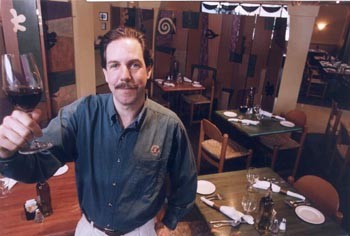
Someone’s in the kitchen: Steve and Emily Bokor’s specialty shop gives classic cookware a new lease on life.

Pots and Pans: A cookware heaven

By Marina Wolf

YOU WANT some coffee?” With those words Steve Bokor transforms the cluttered back office at Pots and Pans from Julia Child’s garage to a place where someone can sit and chat a bit. About this and that, and about how a former insurance and investments broker came to specialize in other people’s cookware.

Steve Bokor and his wife, Emily, started collecting their used stock in Guerneville two or three years ago after they sold the Sweet’s River Grill and opened up North Bay Mercantile, a combination kitchenware store and upscale grocery and wine shop. It was modeled after a store Bokor remembered from his hometown of Monticello in upstate New York. “It was sort of a mishmash store, with furniture and tabletops [the industry lingo for serving ware and linens], gourmet food, penny candies, baskets, stuff like that,” he recalls. “The building there was from the 1840s, and it was still in the same family. . . .

“You want some sugar?” asks Bokor, who has filled up two mugs and now paces around the office as he talks. He doesn’t like to sit, himself. He seems to have lost the habit, after six or seven years in the food-service industry.

Pots and Pans isn’t exactly food service. It’s more like food-service support. The Santa Rosa store–which celebrates its one-year anniversary this month–has become a magnet for local chefs and caterers who don’t care where a utensil comes from or how it looks, as long as it retains the heat or does the job. The rest of the 2,000 names in the Pots and Pans database belong to home cooks who either like a good deal in used cookware and cookbooks or can’t afford anything else.

Pots and Pans sells other items besides used goods. Two thirds of the cookware is new, much of it items such as Frederick Dick cutlery that get marketed only to “the trade.” Emily Bokor, who had worked in restaurants for years, handles the tabletops, the Sonoma County food items, and new and used cookbooks, which draw a steady stream of browsers. But the used cookware is the real kicker for many customers, and Steve Bokor, who buys, assesses, and sells them, is a real kick.

At the drop of a trivet he’ll describe the history, design, and three other alternatives to any device in the store you could pick up.

On incoming goods, he’s more of a tough guy, avoiding charity cases that’ll take a bucketload of elbow grease before they’re presentable. Wandering through the store, you can see right away what made the cut: Pyrex, which takes on a whisper of sepia; knives of steel, sharpened lovingly, handled gently; sturdy pans, from midrange lines and higher, with their triple-play bottoms and still-sturdy handles; cast iron, that miracle metal that just gets better with use.

Bokor pulls out a deep-sided cast-iron chicken fryer resting in a rack over in the antique side of the storefront.

The person who bought it had been on the want-list for almost nine months, ever since his sister snagged the family fryer after his mom died. The 100-year-old piece by Griswold is very collectible, and yet, as Bokor points out, the dull black surface and tight seams are still ready for action.

FROM ANTIQUE SKILLETS to last year’s loaf pans–it’s a lot to keep track of, and Bokor regularly consults with dealers and catalogs to price newer used items. But the rest he’s had to learn “by experience,” a phrase that suggests that a few underpriced treasures slipped by in the beginning.

And some stuff you just don’t know about until you have it in your hands and wonder, “What the hell?” Like a plastic form for cubing eggs, snapped up by a woman who traded weird gifts with her sister at Christmas. Bokor didn’t even know what it was until a customer said, “Oh, yeah, that’s an egg cuber!”

Then there was the 12-piece nickel cookware set from the 1930s. “If you bought that new today, if they made it today,” Bokor adds excitedly, “God knows how much it would cost.”

With its softly glowing finish, art-deco lines, and excellent heat retention, the set was extravagant in both form and function, but one piece–which looked like either a warped champagne bucket or a poacher for a 14-inch-thick fish–remains an enigma even months after the set was sold.

Steve takes a pragmatic attitude toward such mysterious equipment. “My line is, once you pay for it and leave, you can do whatever you want with it.”

This is especially so of the gadgets, whose quirky blades and odd angles beg to be put to a different use than perhaps their designers intended. More than a few sculptors have come in to forage through the garnishing gadgets that line the back wall of the shop.

“I’ve sold a couple of these,” Bokor says, holding out a wide, zigzag blade with a shrug. “Apparently it’s an easy way to put hair on a clay head.”

There isn’t a lot that hasn’t passed through these shelves, or will do so in the future, for some lucky number on the want list. The one item that hardly ever comes up? All-Clad, a top-of-the-line brand that can run close to $500 for a nine-piece set. Pots and Pans had a few used pieces when it first opened, but Bokor hasn’t seen any since.

As with a good pair of jeans, apparently people just don’t like to give it up. If you must get All-Clad, Bokor advises with a wicked grin, go to estate sales.

“Those folks didn’t have a choice to keep it or not!”

From the July 22-28, 1999 issue of the Sonoma County Independent.

© Metro Publishing Inc.
The Meters

0

Mojo Men

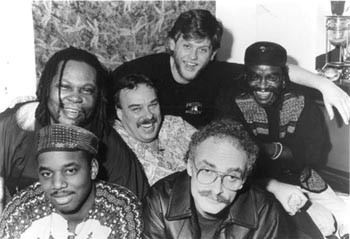
Meter reader: George Porter is a much in-demand session bass player.

Drop-dead drum-and-bass duo reunite

By Greg Cahill

IN THE ANNALS of popular music, the Meters are to R&B what the Beatles were to pop–innovative players who helped to define a magical musical moment. In the case of the Meters, their offering was a spicy brand of sanctified, syncopated New Orleans soul/funk that between the late-’60s and mid-’70s won the admiration of the Rolling Stones and earned recording sessions with such Crescent City royalty as Dr. John.

For fans of New Orleans R&B, news that the Meters rhythm section of Joseph “Zigaboo” Modeliste (drums) and George Porter Jr. (bass)–a tight groove machine so well-oiled that they play with near-telepathic precision–are reuniting for the first tour in nearly two decades understandably is something of a major happening.

A reunion with former bandmates Art Neville (organ) and Leo Nocentelli (guitar) seems unlikely anytime soon, but rest assured that Modeliste and Porter have plenty of Meters mojo to go around. “You knew you’d arrived at Meters music when an off-road detour led you into some murky, backwoods swampland where Zigaboo’s second-line drum rhythms put a hump in your back,” opined writer A. Scott Galloway.

The roots run deep for these two cousins. Porter and Modeliste grew up a few blocks apart on the mean streets of New Orleans and have played music together since age seven. “Zig’s brother was my piano teacher,” Porter recalls, during a phone interview from his New Orleans home. “As teenagers, when I first moved uptown off of Broad Street across from the Nevilles’ home, we had a little garage band. We had like four drummers playing turned-over pots and rubber tubs. I had an acoustic guitar. I remember it happening, but I don’t remember what we played,” he adds with a laugh.

Back in those days, folks seldom ventured into each other’s neighborhoods, though that didn’t keep Porter and Modeliste apart. Their houses were separated by James Alley, a notorious walkway lined with gin joints and jazz clubs. “Then there were the beer-guzzling thugs that controlled that strip,” Porter adds.

“The funniest part about it was that the neighborhood was directly across the street from Parish Prison, the local jail house. But there was more stuff going on at that corner than anywhere else in the city, yet the police rarely did anything about it.”

As for the legendary chemistry between the two, Porter says it was no mystery. “Zig was such a strong in-the-pocket groove player that it was very easy to play with him. There’s a strong drum-and-bass pattern that holds the pocket really well.

“Everything else is balls to the wall.”

Says Modeliste, “I felt blessed to be with some guys that had their own thoughts about the music and could play really good, and who then wrapped all their talent around me. That made it really easy to do what I had to do.”

REMINISCENT of a Southern-fried version of Booker T & the MGs, the Meters made an indelible mark on pop music. James Brown, WAR, the Band of Gypsys, Bob Marley, the Chambers Brothers, Rufus Thomas, Sly & the Family Stone, Santana–many of the greats sipped from the soulful spring supplied by the Meters.

Their influence is still being felt. Since the split up of the original Meters, Modeliste has continued to lead his own Oakland-based band. Porter has released three solo albums, and toured with Art Neville as part of the Funky Meters. He also has become a highly sought-after session player, recording three albums with Tori Amos, one album each with David Byrne and Robbie Robertson, and several more with numerous top blues players. “The last 20 years have been very busy,” says Porter. “But I’ve accomplished a lot of things since the original Meters broke up.”

Any chance Neville and Nocentelli will join up for a full-blown Meters reunion? “There are a lot of elements working against that,” Porter sighs, “but I never say never.”

Zigaboo Modeliste and George Porter perform Thursday, July 29, at 9 p.m., at the Powerhouse Brewing Co., 268 Petaluma Ave., Sebastopol. Tickets are $30 (and include a New Orleans-style BBQ at 6 p.m.). For details, call 829-9171.

From the July 22-28, 1999 issue of the Sonoma County Independent.

© Metro Publishing Inc.
Wine Country Film Festival

0

The Big Picture

Reel to reel: Wine Country Film Festival founder Steven Ashton scours the globe for the quirky little gems of world cinema.

Movies go global at the Wine Country Film Festival

By Patrick Sullivan

AT THIS POINT in history, I think we have to start focusing on our common humanity and turn our attention to redemption and forgiveness,” says Steve Ashton. “And it really seems that many filmmakers around the world are also thinking along these lines.”

Ashton should know. As the founder and director of the 13-year-old Wine Country Film Festival, he trots around the globe every year, exploring the world of film from Sundance to Berlin, skimming the cream of the cinematic crop and bringing it back home to Northern California. This year, he returned bearing a sheaf of international films–from shorts to documentaries to features–that might be said to constitute a heroic global effort at cross-cultural understanding.

Reel Time: A rundown on Wine Country Film Festival flicks.

If the 103 films from 31 countries screened at the sprawling festival–which kicks off on July 22 and continues through Aug. 15–have a common denominator, it is this: They tend to find deep fractures and divisions, whether in human lives or in human societies, and plunge into their depths.

From a dramatic documentary about Serbian nationalism (The Reckoning, showing on Sunday, Aug. 1, at Masonic Hall in St. Helena) to a dark comedy about a beleaguered high school teacher who resorts to highly unorthodox methods of classroom discipline (Detention, showing Thursday, Aug. 12, at 9 p.m. at Sonoma Cinemas), these films are certainly anything but parochial, anything but safe. In the crowded world of the film festival, that “not from around here” quality has become the Wine Country Film Festival’s most distinguishing trademark.

“Part of the purpose of the festival is to open our minds and create a greater understanding among peoples,” Ashton says. “Throughout a lot of the schedule, that’s the theme–multiculturalism and understanding, both in terms of nationality and in issues of gender and race.”

When you call the festival’s offices, there’s a good chance that Ashton himself will answer the phone. It’s one more sign that the 56-year-old Glen Ellen resident, who studied film at New York University, takes the event rather personally.

Indeed, despite the event’s growing reputation and long list of corporate sponsors (Volvo signed on last year), the event is still miles from the slick cinematic extravaganzas to be found elsewhere in the Bay Area.

This year’s opening night gala trots out the star power–with the premiere of The Nephew and an appearance by the movie’s rising young star Hill Harper–but Ashton and his wife, Justine, still run the festival from their rambling old farmhouse, and the eclectic selection of films continues to reflect Ashton’s personal passions.

While one of Ashton’s goals is to feature films that help people understand each other, another aim is to further understanding of cinema itself. The festival is especially focused on educating the next generation about the wonders to be found off the beaten path of the Hollywood blockbuster.

“We’ve got lots of films for kids this year,” Ashton says. “One of the things that we’re trying to do is introduce young people to films they wouldn’t ordinarily see and help them see that the language of cinema can cross national borders. We want to accustom them to the idea that it’s OK to see a film with subtitles.”

Among the festival’s most important components are the short-film showcases, which offer a rare chance to get a look at such works as The Spitball Story and Human Remains.

A record number of entries poured into the festival’s short-film contest this year (the awards will be announced on Aug. 14 at the Valley of the Moon Cinema in Jack London State Park). That surge in participation, Ashton believes, may reflect the fact that the short film is gaining greater respect in the United States.

“The audience can be just as powerfully moved by a well-constructed short film as they can by a feature,” Ashton says. “This is not just a testing ground to see if you can make a longer movie. It’s an art form in itself.”

Then there is the festival’s first poetry slam, the filmmaking seminars, the presentation of a lifetime achievement award to Ernest Borgnine, and much, much more.

It’s the endlessly unpredictable nature of these offerings that makes this quirky festival so distinctive. And it’s clear that the event’s founder wouldn’t have it any other way.

“We try to have something for everyone,” Ashton says.

From the July 15-21, 1999 issue of the Sonoma County Independent.

© Metro Publishing Inc.
‘South Park’

0

Words Worth

Slang-Master Jesse Sheidlower on ‘South Park,’ bad manners, and words that begin with F

By David Templeton

David Templeton takes interesting people to interesting movies in his ongoing quest for the ultimate post-film conversation. This column is not a film review; rather , it’s a freewheeling, tangential discussion of life, alternative ideas, and popular culture.

Jesse Sheidlower is still buzzing. It’s 9 p.m. in New York City, a full two hours after seeing the new 88-minute South Park movie–a film that crams more dirty words (excuse me, more “free speech”) into its slim running time than Kenneth Starr managed to squeeze into all those boxes of Monica evidence. Sheidlower–a senior reference editor at Random House and a noted expert on slang–is still feeling that peculiar, intellectual high that one gets from inhaling so much Lenny Bruce-style artistic expression in one sitting.

He’s not alone, of course. South Park: Bigger, Longer & Uncut–the hilarious big screen version of the audacious animated TV show–has become something of a cause célèbre among the nation’s anti-censorship intelligentsia, and an R-rated Holy Grail for kids too young to get in without reverting to fraud and subterfuge (which they are, and in droves).

“I’d read reviews and articles that said the movie was very vulgar, very obscene,” Sheidlower remarks, “but I thought, ‘Yeah, right. OK, whatever. I have a different standard for what to call ‘very obscene.’ But in the first 10 minutes of South Park, I was sitting there thinking, ‘Wow. This is pretty obscene.’ I mean, how many times was the word fuck used in those first 10 minutes?”

“One hundred and 10 times,” I quickly reply. “I was checking them off on my popcorn box.”

Sheidlower solemnly pauses, savoring the thought of 110 repetitions of that most indelicate of single-syllable epithets. The lion’s share of those epithets were uttered during Asses of Fire, the pivotal, hyper-flatulent film-within-the-film–a foul Canadian comedy that pollutes the minds and mouths of the underage South Park kids, inciting the irate townsfolk to increasingly desperate means, including war against Canada–that includes a giddy little song with the oft-repeated chorus “Shut your fucking face, Uncle Fucker.”

“You just don’t see that level of obscenity too often,” Sheidlower utters, appreciatively.

Well. That’s for darn sure.

Jesse Sheidlower, it must be said, holds a special connection to that robust four-letter noun/verb/adjective that upsets many people and rhymes with “chuck.”

You could say he wrote the book on the subject.

The F Word, second edition (Random House, 1999; $12.50), is an affectionate and shocking compendium of creative and popular uses for that word that Norman Mailer–in the initial 1948 edition of The Naked and the Dead–was forced to render as “fug,” leading Dorothy Parker to remark, on meeting the young novelist, “So you’re the man who can’t spell ‘fuck’?” Exhaustive and alphabetical–there is every phrase from “Zipless Fuck” to “Absofuckinglutely”–The F Word contains a charming forward by Roy Blount Jr. (“If my parents were alive,” he admits, “I would not be writing this”) and plenty of scholarly historical background from Sheidlower.

As for the brouhaha caused by the South Park movie, and the much publicized efforts of Matt Stone and Trey Parker (the filmmakers) to avoid getting an NC-17 rating from the MPAA (according to Entertainment Weekly, Matt and Stone were forced to replace the phrase “Fucked in the ass by God” with the R-rated “God is the biggest bitch of all!”), Sheidlower is mainly just amused.

“The MPAA was apparently OK with kids seeing the gore and violence and death,” he says. “But they couldn’t handle a few hundred ‘fucks.’ I like to think that in the future people will be more offended by violence than by language.

“Thirty years ago,” he points out, “you would get into a fight for using the words ‘goddamn’ or ‘bastard’ in public. Now they aren’t any big deal. Even ‘fuck’ and ‘shit’ are becoming more and more mainstream and commonplace. The New York Times printed ‘fuck’ for the first time ever last year, quoting the Starr Report.”

“There are those,” I submit, “who would say that our increased acceptance of such vocabulary signals a decline in the quality of our manners.”

“Well, people who would say that are wrong and stupid,” Sheidlower patiently counters. “It has nothing to do with manners whatsoever. Standards of what is considered offensive in language change constantly and have for centuries. If you go back to 19th-century America, the word leg was considered so vulgar that if you said it in front of a woman she might faint.”

The accepted word, by the way, was limb.

“Contrary to what you said before about manners,” Sheidlower continues,” I’d point out that it’s the racial words and epithets that are coming to be considered vastly worse. The word nigger has far more of a social stigma on it, is far more forbidden, than the word fuck. There are people who say ‘fuck’ all the time who would never use a racial slur. I think this indicates that good manners are getting better, not worse.”

Sheidlower is not saying that shouting “fuck” in public can’t still start a fight.

“Just that there’s a social difference between saying ‘Fuck you,’ which is still very charged, and saying ‘Ah, fuck!’

“So words don’t necessarily mean what they mean anymore?” I say.

“Exactly. I can’t remember when it was, but somebody wrote about seeing two teenage girls on the street, and one of them looked down and said, ‘Oh shit, I stepped in some doo-doo!'”

“So then,” I can’t help but wonder, “are there any special phrases in South Park that might end up in future editions of The F Word?”

“Sure, if it manages to work its way into the popular vocabulary,” he says, then with a laugh, adds, ” ‘Uncle Fucker’ would obviously be the one to watch.”

From the July 15-21, 1999 issue of the Sonoma County Independent.

© Metro Publishing Inc.
Joan Baez

0

The War Is Over

New & improved: Folk legend Joan Baez returns to LBC.

Folk legend Joan Baez finds inner peace and the joy of fishing

By Greg Cahill

YOU KNOW, there was a lovely young reporter in France who’d heard me a couple of years ago in Yugoslavia,” recalls Joan Baez, during a phone interview from her Woodside home, “and he said, ‘I’ve always loved your music, I’ve always loved the art and your voice, but now I feel like you’re talking to me.’

“That was the nicest thing I’ve heard about this last album–that it feels like I can slow down and talk now.”

Back up for a minute. If you surf the Internet, there are two Joan Baezes. There are a hundred websites devoted to the fiery ’60s folksinger who probed the nation’s conscience and championed civil rights, got arrested at anti-war protests, and dated Bob Dylan. And then there’s …

“I know,” Baez interrupts with a laugh, “this mellow, boring . . .”

OK, let’s talk about that “How I Spent My Summer Vacation” page on her own website. Here’s the new Joan Baez, standing confidently on a mountain trail near Yosemite, hands on hips and clad in a bright red Stetson, sunglasses, blue parka, backpack, hiking boots, and a short girlish skirt. To the right, a second photo shows Baez swirling beside a crystalline alpine lake, beaming brightly in a summer print dress, arms outstretched to illustrate the caption: “Really, you should’ve seen the one that got away–it was this big!!!”

Unabashedly hokey.

“Oh, so you want to hear the fishing stories,” she adds with a chuckle. “What can I say? I like to go to hot springs and play in the mud. It’s my way of returning to the earth. And on tour, we’re all such good friends, that I can say, ‘Hey, guys, let’s cancel the hotel and camp out for the night.’ They’re such great sports–we have cookouts and stuff.

“One night the bus driver caught 25 trout while we were onstage.”

And then there’s that legendary Joan Baez, who’s not known for pan-frying fish on the roadside. After more than 30 years, the singer/songwriter that Rolling Stone once hailed as “the perfect symbol of the ’60s folk revival” still is a committed social activist and popular entertainer, reinventing her performances, garnering a Grammy nomination for 1993’s intimate Play Me Backwards (Guardian), and raking in rave reviews for 1997’s Gone from Danger, an album that found her drawing inspiration from the pens of such bright young songwriters as Dar Williams, Richard Shindell, Sinead Lohan, and Betty Elders.

Coincidentally, that album contained a song titled “Fishing,” a vicious interrogation of an illegal immigrant that is far from serene.

Two years ago, Baez–who performs July 20 at the Luther Burbank Center–recorded three of Williams’ songs and toured the United States and Europe with the rising neo-folk star. But Baez is quick to downplay her role as mentor to a new generation of emerging coffeehouse denizens. “I really see it as co-mentor, because anything else would be silly,” she explains. “Now when they’re coming of age, it’s my turn to learn from them about how they reflect the world. So I enjoy them. I love them. They are people who somehow comfortably, in their own fashion–namely through contemporary folk–keep up the roots of folk music.

“Each does that in their own way. Dar is heavily feminist–and hemp–inclined, and Richard Shindell often addresses immigration issues. And he’s really subtle. The first time I heard ‘Fishing,’ I didn’t even understand it. I mean, this is certainly not a time for blunt protest songs, so there’s a chance for these other things to come out.

“And they are coming out.”

What does that say about the endurance of the genre? “In a way there are two folk musics,” Baez offers. “One is traditional and never changes. Someone like Jean Richie does a brilliant show of antiques performed by an Appalachian folkie–and no one does it better. Then there’s the folk music that changes as the times change, so that what is being reflected is the political, and not so political, atmosphere around us as interpreted by the younger generation. In an odd sort of way, though it’s often hard for me to listen to it, rap may be the most straightforward contribution to folk music at the moment. It comes out of a totally different environment than the one I live in–hungry and frustrated, so the songs come out pissed off.

“And they have every reason to be that way.”

BAEZ KNOWS a thing or two about protest songs. Born in 1941 in New York City, she grew up in a liberal household heavily influenced by her professor father. At age 15, she heard a young Martin Luther King Jr. lecture on non-violence and civil rights. Weeks later, Baez bought her first guitar. The following year, she committed her first act of civil disobedience, refusing to leave her Palo Alto high school during an air-raid drill.

That year, she also met Gandhi scholar Ira Sandperl, who became one of her strongest political influences.

In 1958, she enrolled at Boston University, immersing herself in music and performing at Cambridge folk clubs. By age 20, Baez already had performed at the prestigious Newport Folk Festival, cut her first album, and met a young Bob Dylan at a Greenwich Village night spot. Thus began a long, turbulent–and often very public–relationship that has played out in sometimes cryptic and, in the case of Baez’s 1975 hit “Diamonds and Rust,” often scathing lyrical jabs at each other. The two later reconciled.

Baez became a key figure in the anti-Vietnam War movement, marrying and later divorcing draft resister David Harris, and performing for and personally urging President Lyndon Johnson to withdraw U.S. troops from the Southeast Asian nation. Since then, Baez has continued her social activism, as the founder of Humanitas International Rights Committee–which played a pivotal role in the evacuation of Vietnamese civilians after the war–and more recently as the first major artist to perform in Sarajevo after the five-year civil war.

BUT, WHILE HER songs are still infused with protest, it is a different force that drives her music now. “First of all, it never dawned on me during my lifetime, until these last few years, that I could sing for the sake of singing–it really was about getting something across. So I think it’s only fair to say that this past decade has been the time when I cracked the inner kernel of my problems–something I’d worked around since I was 15 years old, but later took on in therapy. And things changed massively for me. One of the things that has changed is the ability to walk onstage with a light foot and sing for the pleasure of singing and the enjoyment of others.

“That’s a new thing for me, and I’ve loved it.

“At the same time, nothing basically has changed in me. When I walk onstage, I know that I represent 30 years of history. But right now what I’m getting across may be more directed to myself.”

Which brings us back to those vacation photos and that new Joan Baez, so confident and at ease with herself. “Well, I now think that I have a really good idea what people meant when they used to say to me, ‘You look so peaceful.’ Of course, I was in absolute turmoil for years, which served the world well. I did what I did and I’m very, very glad of it.

“But to rid myself of neuroses and panic attacks and insomnia, and God knows what else, produces that smile I have on my face during those summer vacations.”

Joan Baez performs Tuesday, July 20, at 8 p.m. at the Luther Burbank Center, 50 Mark West Springs Road, Santa Rosa. Chris Smither opens the show. Tickets are $21.50 and $26.50. For info, call 546-3600.

From the July 15-21, 1999 issue of the Sonoma County Independent.

© Metro Publishing Inc.

Sonoma County Growth

0

Growing Pains

Outer limits: Rohnert Park City Councilman Jake McKenzie, on the edge of the town’s new urban-growth boundary, is calling for “smart growth.” He will be a panelist at an upcoming workshop that may help define just what that means.

Photograph by Michael Amsler

Exploring the limits of the county’s growth

By Janet Wells

WHEN Ann Hancock thinks back on her stint as a local real estate agent, she remembers clients buying into the Northern California lifestyle of expensive houses and multiple cars sustained by long commutes, longer working hours, and little free time. “I don’t think people realize how much we have given up to sustain this quality of life–people feel really stretched,” she says. “Not having to spend your life on the freeway, not worrying about the mortgage so much, spending time with the children, getting to know your neighbors, that’s the kind of things we will get if we get off the economic treadmill,” she says.

Slowing down the treadmill is part of the focus of Sustainable Sonoma County, a group working to maintain the qualities that have made Sonoma County one of the fastest-growing regions in the state, without continuing to deplete resources like open space and air and water quality. Those issues–the proliferation of urban-growth boundaries, increased agricultural demands on Russian River water, the dilemma of how to dispose of Santa Rosa’s wastewater, the impact of Highway 101’s proposed expansion, the lack of affordable housing–have dominated the headlines in recent years.

On July 23, Sustainable Sonoma County is hosting its first event, “Better Not Bigger: Grappling with Growth in Sonoma County,” a one-day workshop on urban growth.

Eben Fodor, a community planning consultant from Eugene, Ore., and author of Better Not Bigger: How to Take Control of Urban Growth and Improve Your Community, will be the workshop’s keynote speaker.

“We’re trying to change the mind-set, going against the American conventional grain, and bust open the myth that growth is always good,” says Hancock, an administrator at the New College in San Rafael and one of the group’s core.

The average U.S. citizen has an “ecological footprint” of about 25 acres, because of the heavy use of imports of fossil fuels, computers, food, and clothing, adds Hancock. “That’s the world’s largest. Sustainable culture requires that each citizen’s footprint not exceed 4.2 acres,” she says. “What we see as the challenge of our generation is to become sustainable.”

Says Fodor, “Mostly we hear about the benefits of growth, bringing jobs, building tax bases. I find that in many cases the benefits are nonexistent. Tax revenues proclaimed for a particular project are more than offset by costs the project will create for a net fiscal drain on the community.”

The reason? While development generates revenues, it also results in such costs as schools, roads, sewers and parks, and police and fire services, Fodor says, adding that housing has the biggest impact on a community.

“[The added cost] is $20,000 to $30,000 per house, and a large part of that has to do with schools,” he says. “The average house has two thirds of a school-age child. For every 1,000 units developed, you need to build an entire new school, and the cost must be paid by the community or the community will pay in other ways, with declining services, more crowded streets.”

SIGNIFICANT LOCAL sustainability issues include water and air quality, land preservation, transportation, job and housing locations, and energy consumption, says Susan Bryer Starr of Sustainable Sonoma County. “We’re dealing with a citizenry that recognizes that Sonoma County is a truly unique place in the world,” she says. “The health of the resources, the small scale, the landscape, the air quality, and biodiversity, these are not trivial treasures to people who live here.

“People see these landscapes in other parts of the country vanish because of the rampant drive to develop,” she adds. “We have a chance in Sonoma County to preserve these resources before they are gone.”

For Rohnert Park Councilman Jake Mackenzie, the bottom line is population. “We’re facing some huge problems in California and the Bay Area and Sonoma County, and they all center around how we’re going to deal with an increasing population,” says Mackenzie, who is one of the workshop panelists. “We constantly need to be reminding people that this is a very, very real problem.

“The problem is you’re banging right up against more people being born into our society and pressure from all of these people, not to mention people coming up from Santa Clara County and having half a million bucks in their hip pocket,” he adds.

Shutting the gates to Sonoma County isn’t the solution, Mackenzie says. It’s smart growth. “We feel we have to accommodate some growth, but we’re not necessarily wanting to build houses at the rate that people who own land around the city would like us to.”

And population growth is part of a larger, more complicated picture, says Starr. “Is it a population issue or a consumption issue?” she wonders. “Could we have twice as many people if we consumed half as much? Do we have a carrying capacity in Sonoma County? This is what we’re going to be exploring.”

The how of community sustainability requires more than public will, Fodor says. Communities must adopt policies that reflect priorities. “One of the myths that surrounds urban growth is that there is nothing we can do about it,” he says. “The whole idea of determining how much and how a community grows is dismissed as not a legitimate policy question, when things can be done to determine the nature and rate of growth.”

While there is no silver bullet–and no one community has emerged as the model of sustainability–Fodor says the future is in a framework of policies that moderates growth to protect a community’s lifestyle and resources.

“Growth debates and discussions tend to get stalled at the same points,” Fodor says. “You’re either for it and want lots of it, or you’re against it and want to shut it down. It leaves out an entire range of options in between.

“The first step towards moderating growth in a community is to stop subsidizing it,” he adds. “Currently, most communities subsidize growth in at least 10 different ways with public resources.”

Developers aren’t exactly thrilled with Fodor’s advice. “I’ve faced a lot of hostility from developers,” he says. “The developers have had a profound influence on land-use policy in most communities around the country. They dominate in spite of the fact that they are a relative minority in the community.

“Trade associations don’t want citizens in the process; they want subsidies, and no regulations,” he adds. “I’m trying to shift those policies in a public-interest direction that reflects the long-term interests of the broader community.”

The workshop “Bigger Not Better: Grappling with Growth in Sonoma County” will be held Friday, July 23, from 9 a.m. to 5:30 p.m. at the Odd Fellows Temple, 545 Pacific Ave., Santa Rosa. Registration fee is $25. Eben Fodor will also speak at a free event Thursday, July 22, at 7 p.m. at Copperfield’s Books, 650 Fourth St., Santa Rosa. For details, call 763-1532.

From the July 15-21, 1999 issue of the Sonoma County Independent.

© Metro Publishing Inc.
Laughter on the 23rd Floor

0

Going Down

TV nation: Jill Page Collister, William McNeil, and Jeff Mattlin write for the tube in Laughter on the 23rd Floor.

‘Laughter on the 23rd Floor’ stays in the basement

By Daedalus Howell

THE ELEVATOR SEEMS to have jammed en route to the humor in Summer Repertory Theatre’s production of Neil Simon’s comedy Laughter on the 23rd Floor, directed by Michael Harvey.

A stage-borne memoir scrubbed of enough autobiographical data and bite to leave potential litigants claimless, Laughter on the 23rd Floor is Simon’s wan love letter to his early days as a freshman television writer for Sid Caesar’s Your Show of Shows. Simon culled his characters from the battery of funnymen then in Caesar’s employ (Mel Brooks, Carl Reiner, and Simon’s brother Danny among them), and this cast constitutes a promising premise that never delivers.

Throughout, Simon riffs on his cronies and details their virtuosic ability for humiliating each other as the Caesar-esque Max Prince (played here by William McNeil with great gusto as a pill-popping, paranoid booze-hound) battles network honchos more concerned with the bottom line than the erudite comedy churned out weekly by his stable of thoroughbred writers.

At its worst, the humor of Laughter on the 23rd Floor is humorlessly baroque: Some gags choke on themselves, and others simply seem decorative, almost requiring a rimshot to cue the audience when to laugh.

There are some true laugh-out-loud moments, however, as when the fashion foibles of writer Milt Fields (Sean M. Smith) get some ribbing when he is told his white suit makes him “look like a Nazi trying to catch a boat to Argentina.” It’s not hard to imagine that such glib, throwaway lines are an accurate keyhole into the surely cheeky world of television writing.

Other more mechanical jokes also bring on belly laughs, as when Brian Doyle (an emphysemic Irish yuckster played by Daniel H. Reutter) and Brian Rickel’s garrulous hypochondriac Ira Stone (a bombastic facsimile of Mel Brooks) have a pissing match over who can concoct the funniest name. Doyle finally offers Stone’s own name. The bemused Stone queries, “What’s so funny about Ira Stone?” Doyle drolly replies “Nothing–an awesome putdown to a comedy writer.

Most of the play’s shtick, however, seems cribbed from the circular file at Mad Magazine, and though director Harvey keeps the pace brisk, what is intended to be balletic banter often dissolves into cacophonous blather.

A number of fine performances nearly bring the production to the brink of redemption–Joseph Hutcheson’s laconic Kenny Franks, a master of the withering gaze, is crisp and jocose, and Rickel’s Brooks redux is a constant scene-stealer. McNeil’s Prince also offers occasional moments of hilarity with his blustery antics and manic manner.

Other performances, however, are merely distracting. Jeff Mattlin draws an earnest portrait of Russian émigré-gone-gagman Val Skotsky, but his thick Euro-trash stage accent renders his dialogue unintelligible, and Mark Bakalor, whose wooden asides as Simon’s alter-ego Lucas Brickman serve to expedite the play’s lackluster plot, tends to recede into an invisible-man act when not specifically spotlighted.

Unfortunately, Laughter on the 23rd Floor never fully explores the emotional and artistic dynamics underscoring the writers’ relationships to one another. Consequently, its stabs at poignancy come off as hackneyed and maudlin–and Simon’s audiences, who are usually on the edge of their seats, may instead find themselves dangling their toes off a window ledge.

Laughter on the 23rd Floor plays through Aug. 4 at the Santa Rosa High School Auditorium, 1235 Mendocino Ave., Santa Rosa, with performances on Fridays and Saturdays at 8 p.m. and on Sundays at 2 and 7:30 p.m. Tickets are $13. 527-4343.

From the July 15-21, 1999 issue of the Sonoma County Independent.

© Metro Publishing Inc.
Muppets from Space, Inspector Gadget

Kids' Stuff Porcine power: Josh Charles falls prey to Miss Piggy in Muppets from Space. The Muppets still make magic, but 'Inspector Gadget' is charmless By MUPPETS FROM SPACE kicks off with something any kid can appreciate: a bad dream. The fretful Gonzo, of the round head and curled...

KPFA

Air War Power to the people: KPFA producer Joan Marler addressed a crowd of KPFA backers last weekend at an Ives Park rally and strategy meeting. Photograph by Michael Amsler Local KPFA supporters rally for embattled station By Greg Cahill HAROLD SCHULZ nodded approvingly at the 200 listeners and...

Documentary Filmmakers

Stranger than Fiction Point of view: Filmmaker Albert Maysles overcame countless rejections of his provocative work to become a living legend, but the 72-year-old director still wonders whether documentaries will ever get the respect they deserve. Against all odds, today's documentary filmmakers are keeping it real By David Templeton ALBERT MAYSLES shakes...

Pots and Pans

Cook's Nook Someone's in the kitchen: Steve and Emily Bokor's specialty shop gives classic cookware a new lease on life. Pots and Pans: A cookware heaven By Marina Wolf YOU WANT some coffee?" With those words Steve Bokor transforms the cluttered back office at Pots and Pans from Julia...

The Meters

Mojo Men Meter reader: George Porter is a much in-demand session bass player. Drop-dead drum-and-bass duo reunite By Greg Cahill IN THE ANNALS of popular music, the Meters are to R&B what the Beatles were to pop--innovative players who helped to define a magical musical moment. In the case of the...

Wine Country Film Festival

The Big Picture Reel to reel: Wine Country Film Festival founder Steven Ashton scours the globe for the quirky little gems of world cinema. Movies go global at the Wine Country Film Festival By Patrick Sullivan AT THIS POINT in history, I think we have to start focusing on...

‘South Park’

Words Worth Slang-Master Jesse Sheidlower on 'South Park,' bad manners, and words that begin with F By David Templeton David Templeton takes interesting people to interesting movies in his ongoing quest for the ultimate post-film conversation. This column is not a film review; rather , it's a freewheeling, tangential discussion of life, alternative ideas,...

Joan Baez

The War Is Over New & improved: Folk legend Joan Baez returns to LBC. Folk legend Joan Baez finds inner peace and the joy of fishing By Greg Cahill YOU KNOW, there was a lovely young reporter in France who'd heard me a couple of years ago in Yugoslavia,"...

Sonoma County Growth

Growing Pains Outer limits: Rohnert Park City Councilman Jake McKenzie, on the edge of the town's new urban-growth boundary, is calling for "smart growth." He will be a panelist at an upcoming workshop that may help define just what that means. Photograph by Michael Amsler Exploring the limits of the county's growth...

Laughter on the 23rd Floor

Going Down TV nation: Jill Page Collister, William McNeil, and Jeff Mattlin write for the tube in Laughter on the 23rd Floor. 'Laughter on the 23rd Floor' stays in the basement By Daedalus Howell THE ELEVATOR SEEMS to have jammed en route to the humor in Summer Repertory Theatre's...
11,084FansLike
4,606FollowersFollow
6,928FollowersFollow


