

Spins

0

Hicksville

Touched by an angel: New tribute salutes country-rock pioneer Gram Parsons.

A bushel of new alt-country CDs

By Greg Cahill

Various Artists Return of the Grievous Angel: A Tribute to Gram Parsons Almo

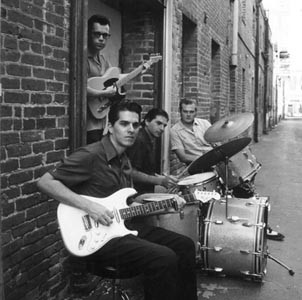
HE WAS A HARVARD-educated hillbilly, the creator of country rock and the godfather of today’s blossoming alt-country craze. As a member of the Byrds and the Flying Burrito Brothers, Gram Parsons built upon the high-powered country he’d crafted in the mid-’60s as leader of the obscure International Submarine Band. His 1973 death by a drug and alcohol overdose at a cheap motel at age 26, and the subsequent theft of his remains and cremation at Joshua Tree National Monument, just added to his legend.

Over the years, a plethora of rock, country, folk, and bluegrass stars have knelt at the Gram Parsons shrine: Tom Petty, Lyle Lovett, Steve Earle, Dwight Yoakam, Vince Gill, Jason and the Scorchers, the Long Ryders, Little Feat.

Now you can add a few more to that list, including such critics’ darlings as Wilco and Whiskeytown.

Produced and compiled by Emmylou Harris (who performed with Parsons shortly before his death as part of the Fallen Angels band, and reportedly was romantically linked to the singer), this 13-song tribute finds Beck, Evan Dando of the Lemonheads, and the Pretenders tackling a classic Americana songbook and furthering the legend that Harris has nurtured for three decades. This is the ragtop Cadillac of alt-country, far outstripping the 1993 Commemorativo: A Tribute to Gram Parsons (Rhino), which featured tracks by the Mekons, Uncle Tupelo (Wilco’s predecessor), Bob Mould, and REM’s Peter Buck. This year’s model is built for comfort, and (as Gillian Welch’s opiated rendering of the signature Parsons’ song “Hickory Wind” shows) in no rush to overwhelm some of the most powerful tunes ever penned by a Nashville renegade.

Harris crops up on three duets–with the Pretenders of “She,” with Beck on the recording industry put-down “Sin City,” and with Sheryl Crow on the spirited “Juanita”–but her stamp is all over this release. And there’s plenty more star power here. Lucinda Williams and David Crosby team up on the title track. The Cowboy Junkies deliver their most energetic recording on “Ooh Las Vegas.” Elvis Costello, who recorded two Parsons songs on 1982’s Almost Blue, tackles “Sleepless Nights.” Steve Earle and ex-Byrds guitarist Chris Hillman collaborate on “High Fashion Queen.” And the Rolling Creekdippers–a one-off project that features Harris’ collaborators Buddy and Julie Miller, and alt-rock diva Victoria Williams–conclude with the Parsons/Harris composition “In My Hour of Darkness,” a fitting eulogy for a troubled soul. This CD should only enhance Parsons’ near-mythic status.

Various Artists Alt.Country: The Best of Exposed Roots K-Tel

THIS INSPIRED two-CD compilation goes a long way toward covering the subgenre’s winding country lanes. There are a couple of touchstones: namely, Johnny Cash’s landmark country pop hit “Folsom Prison Blues” and Gram Parsons’ seminal country-rock song “In My Hour of Darkness.” Grant Alden and Peter Blackstock, editors of the Seattle-based alt-country monthly No Depression, put it all into perspective, more or less. Lucinda Williams stirs the soul on “Passionate Kisses.” And Steve Earle’s 1986 neo-traditional breakthrough “Guitar Town” sounds as fresh (and defiant) as the first time you cranked it up speeding on Highway 101 after sweating to the Blasters at the Stone on Broadway. But the best part–aside from all the garage-rock driven honky-tonk ecstasy–is the irreverent nature of alt-country: it’s Southern Culture on the Skids’ “Too Much Pork for Just One Fork”; BRS-49’s “Bettie Bettie,” their sassy homage to B&D covergirl Bettie Page; the Meat Puppets’ underrated post-punk goof “Lost,” recorded a decade before Kurt Cobain canonized them on MTV Unplugged. This is an essential primer that goes a long way toward setting the record straight. Kick up your heels.

While you’re at it: Spend the rent on these worthy alt-country releases: Johnny Dilks & His Visitacion Valley Boys’ Acres of Heartache (HMG), the red-hot reincarnation of Hank Williams; the Backsliders’ snarling Southern Lines (Mammoth), a twangy junkyard dog of an album; the Hot Club of Cowtown’s Tall Tales (Hightone), slaphappy musical Prozac that sets your heart to flutterin’ and your toes to tappin’; Lyle Lovett’s Live in Texas (Universal), 14 slightly skewed songs from the man who dumped Julia Roberts.

Pick of the Week:

Various Artists Taquachito Nights: Conjunto Music from South Texas Smithsonian Folkways

THESE CONTAGIOUS polka beats compose the ultimate party music–lively Texas-border dance music propelled by rippling accordion, bajo sexto, and stirring vocals. Just try and sit still while Ernesto Guerra fires off a cascade of triplets on the modified three-row button accordion he’s dubbed “The Gurgle.” Recorded live in 1998 at the 16 de Septiembre Conjunto Festival of the Narciso Martinez Cultural Arts Center in San Benito, Texas, the beauty of these 19 tracks is the raw, live feel–you can smell the cold beer and feel the warm Texas night air. The Smithsonian–which is releasing some great roots recordings these days–includes an authoritative 34-page booklet, explaining the evolution of conjunto music and offering lyric translations. Highly recommended–G.C.

From the July 29-August 4, 1999 issue of the Sonoma County Independent.

© Metro Publishing Inc.

Acre Cafe and Lounge

0

Kitchen Garden

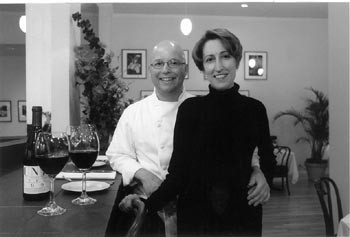
Enjoying the relaxed atmosphere: Acre chef Britt Galler has helped craft one of the region’s finest new restaurants.

Acre covers the organic field

By Paula Harris

WHAT’S HAPPENING to Healdsburg? Every time we visit the historic downtown plaza, it seems we encounter new trendy tasting rooms, art galleries, gourmet delis, antique stores, and upscale boutiques.

Watch out, Sonoma–you may have met your match!

Check out the increasing number of artsy motifs featuring wine bottles, vine leaves, grape clusters, and vineyard photos springing up in every direction, and you’ll see how the place is starting to rival that other touristy plaza in its relentless preoccupation with the almighty grape. A couple of sophisticated new restaurants also have joined Healdsburg’s gourmet ranks. Now rubbing potholders with such established eateries as Ravenous, Bistro Ralph, and the Oakville Grocery, are Zin (there go those grapes again!) and the Acre Cafe and Lounge.

Set in a house off the main plaza, Acre has a relaxed, cozy feel. The restaurant boasts a comfortable stainless-steel and wood bar next to a living room with a fireplace and plump sofa.

It’s a great place to linger with a glass of port.

Self-described as “Sonoma kitchen-garden cuisine,” Acre specializes in dishes using local and organic foods, with many vegetarian selections. The menu routinely changes to reflect whatever’s in season. But boring veggie health food it ain’t.

The restaurant is a soft blend of pale walls, hardwood floors, wooden chairs, copper-top tables, and oil paintings of country scenes. There also is an al fresco dining area called the Back Acre Grill, which has a separate menu, featuring lamb kebabs, barbecue chicken, and burgers. The grill chef turns out these aromatic items right in the rustic garden. Grilled rib-eye with shallot herb butter, baked potato, and corn ($19) is among the classic backyard grill fare. The steak is succulent and has very little excess fat. It comes with fresh grilled sweetcorn, thick rounds of grilled squash, and a perfect golden baked potato, all steaming and fluffy inside, served with a dab of sour cream.

Recent menu items have included romaine salad with fennel, snap peas, dry jack cheese, and mint with a preserved lemon and roasted garlic dressing; portobella stuffed with fennel, apples, and blue cheese over sweet potatoes; and poblano pepper stuffed with queso fresco and squash blossoms. Carniverous diners also will find plenty of exciting meat, poultry, and seafood choices–and lots more.

The French onion soup ($5) has a vegetable-based stock, instead of the classic beef bouillon. It is loaded with sweet onion slices, flecks of parsley, and white wine. After several spoonfuls, though, the soup begins to taste too sweet. Floating atop is a generous slice of French loaf topped with melting Gruyère cheese.

The pizzette ($8) boasts an ultra-thin crisp crust topped with red pepper, caramelized red onions, snipped olives, and shredded cheese. It is sweet, piquant, and salty all at once. The best part is that wafer-thin crust.

Local king salmon with soy glaze ($17) is a light and imaginative Asian-inspired dish. The salmon, moist and tender, is accompanied by citrus salsa and spicy Thai soba noodles.

The savory summer vegetable gratin over polenta ($14) features generous triangles of grilled polenta, a bit crusty on the outside and with a luscious interior. Layers of zucchini, tomatoes, eggplant, onions, shredded cheese, and fronds of fresh dill complete the dish. The gratin has definite possibilities but was served cold, and the cheese wasn’t melting.

Warm apple and local berry crisp for two ($7) is great. Squashy warm fruits blend perfectly beneath a granolalike cover. It brings back comforting memories of homemade fare.

The atmosphere is relaxed, the music tasteful and mellow, and the staff friendly.

Acre Cafe and Lounge 420 Center St., Healdsburg; 431-1302 Hours: Dinner, Wednesday-Sunday, 5:30 to 9 p.m.; till 10 p.m. Fridays and Saturdays Food: Creative cuisine emphasizing seasonal local organic produce Service: Friendly and attentive Ambiance: Relaxed and warm, with a choice of indoor or outdoor dining Price: Moderate to expensive (no credit cards; cash and local checks only) Wine list: Compact selection, including some intriguing offerings; several choices by the glass Overall: *** (out of 4 stars)

From the July 29-August 4, 1999 issue of the Sonoma County Independent.

© Metro Publishing Inc.
‘Muppets from Space’

0

Pigs in Space

By David Templeton

Writer David Templeton takes interesting people to interesting films in his ongoing quest for the ultimate post-film conversation. This column is not a review; rather, it’s a freewheeling, tangential discussion of life, alternative ideas, and popular culture.

Randy Blume, who’s seen the effects of sexual harassment plenty of times before–both on the ground and in the air–wasn’t planning on discussing that particular subject today.

As a former airline pilot and flight instructor, Blume frequently encountered discrimination at the hands of condescending supervisors, flight trainers, and countless non-female fellow pilots. As revealed in her delightful, semi-autobiographical novel, Crazy in the Cockpit (DK Ink; $21.95), Blume, in her travels from the airports of Boston and San Francisco to the runways of Japan and Guam, has seen women demeaned, stereotyped, put down, objectified, humiliated, and ignored.

The last place she expected to encounter such stuff was in a muppet movie.

“That was awful,” Blume gasps, re-entering Earth’s orbit after the noisy, G-rated Muppets from Space. With a disbelieving smile and a shake of her head, she adds, “There’s a lot to be offended by in that movie.”

Bummer.

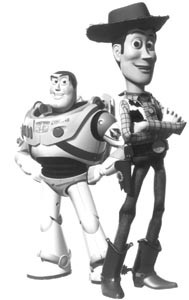
This longtime Muppet enthusiast–I, not she–is forced to agree that the film, while showing plenty of loopy wit and patches of sweetness and charm, is a veritable parade of gender stereotypes and demeaning portrayals of women–when women are present at all. Here’s the story: Gonzo, the weird critter with the beaklike nose and a fondness for chickens, comes to believe he’s a space alien, long ago orphaned on Earth; when he is abducted by a crazed government operative, Kermit the frog and friends set out to save their friend.

Aside from the token female, Miss Piggy–who’s less interested in helping Gonzo than in using him to get a reporter’s job at a UFO-oriented news show–the few non-males that do show up spend their brief time either in engaging in petty one-upmanship and catfights (that’s Andie MacDowell trying to tear Piggy’s eyes out) or in serving as attractive diversions. Piggy does beat the stuffing out of one cocky FBI goon–“And what kind of message is that?” Blume wonders–but her main response to trouble is to dress up in slinky, cleavage-revealing outfits and seduce people. When Kermit and the boys are given cool crime-fighting gadgets like invisibility juice (sprayed from a rubber ducky) and something called Door-in-a-Jar, it’s the magic mind-control perfume–it overpowers all who whiff it–that is issued to Piggy.

Most jarring of all is the sight of Sam the American Eagle shamelessly ogling the bared midriff and bouncing bosom of a buoyant bikinied teenybopper.

“I’m not sure that kind of thing belongs in a Muppet movie,” I confess.

“Well,” shrugs Blume, “it doesn’t belong anywhere. Does it?”

“I remember when Miss Piggy was a big deal,” Blume says over lunch, “but I can’t say I ever understood it. She certainly wasn’t much of a role model in this movie. The Columbia logo, that really pissed me off, too,” she adds. “They recently redesigned her. She used to be more ‘Rubinesque.’ Now she’s skinnier, shapelier. I’m really mad about that.”

Randy Blume, clearly, cares deeply about these issues.

As the daughter of famed children’s author Judy Blume, she was raised with powerful examples of what women could accomplish. When she was hired as a Continental Airlines pilot 10 years ago, she was among the meager 1 percent of airline pilots that were female. That number has grown to 5 percent, in part owing to legal action against airlines, including the successful class-action suit that Blume help fight against United Airlines. She’s since retired from flying to write full-time and raise her son.

“I once wrote a research paper on ‘tokenism,’ ” she muses. “I interviewed women airline pilots and air traffic controllers, and they talked about why there aren’t more women in non-traditional roles and why they don’t make it above the glass ceiling. One of those reasons was that mentoring, among women, doesn’t really exist. Since there are so few women in those non-traditional roles, there are almost no role models for the women that do come along,” she says.

“On the other hand, at least in America there are female pilots around. There aren’t any female pilots on commercial airlines from Japan. When I was flying back and forth from Japan to Guam, all the passengers would come into the cockpit with their cameras, wanting a picture of the woman pilot.

“I was a novelty,” she laughs.

And who knows?

“Maybe,” I suggest, “unknowingly, you were a role model for some young passenger on one of those planes. Spying you at the controls of the plane, some Japanese girl might have taken inspiration. Even now, she could be gearing up to become her country’s first commercial airline pilot.”

“I really hope so,’ Blume replies, brightly. “I hope I’ve been a role model to the women I’ve trained, when I was working as a flight instructor. I hope they see that I did what I wanted to do, without playing games that were beneath me.”

Hmmmm. Maybe Miss Piggy should take a few lessons from Randy Blume.

From the date-date, 1999 issue of the Sonoma County Independent.

© Metro Publishing Inc.
Carlos Santana

0

Soul Fire

Supernatural high: Carlos Santana burns on his latest CD.

On ‘Supernatural,’ Carlos Santana balances sin and redemption

By Nicky Baxter

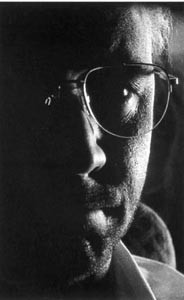
WITHOUT Carlos Santana, there would be no such animal as Latino rock, possibly no wave of Latin-flavored pop à la Ricky Martin, Jennifer Lopez, and Gloria Estefan. Santana’s incendiary melding of African rhythms, blues, and rock essentially altered the sound (and color) of rock when he launched his propulsive polyrhythmic brand of Chicano soul in the late 1960s.

Since those early albums, the Carlos Santana Band has sought to strike a balance between the divine and the bottom line; when it works, it works divinely. On his latest CD, Supernatural, Santana’s inaugural effort for Clive Davis’ Arista label, the soul fire still burns brightly. Flanked by a wealth of guest artists (Dave Matthews, Everlast, Lauryn Hill, and Mexican pop group Mana), Santana and his band churn out an exceptional set of tunes.

“Love of My Life” starts with a funky drum pattern, then slips gracefully into a simmering groove highlighted by Matthews’ sinuous vocal. Matthews, who sounds remarkably like Sting, is a perfect fit for Santana’s leonine lead guitar, which traces Matthews without stepping on the singer’s toes. Midway through, Santana steers the tune into a Latin vein, with Karl Perrazzo’s insurgent congas leading the way.

On “Put Your Lights On,” the irrepressible Everlast turns in a typically arresting performance. His husky voice wraps itself around a lyric about sin and redemption. Santana, who knows something about redemption, uses his guitar as an exclamation point, knifing in with thick slabs of wah-wah and keening sustain. Longtime Santana cohort keyboardist Chester Thompson adds tastefully restrained grace notes to the proceedings.

Of course, Santana doesn’t need a panoply of stars to shine, as tracks like “El Farol,” “Primavera,” and the album-opening “(Da Le) Yaleo” fully illustrate. The last tune, with its jazzy Afro-Latin pulse, bears witness to the fact that the guitarist can still burn with the kind of zeal that is almost, well, supernatural.

LOCAL ANGLE: He’s not as famous as his famous brother, but guitarist Jorge Santana spent several weeks in the Top 15 back in 1972 when the hit single “Suavecito”–from Malo’s self-titled debut–sizzled the charts. The band quickly faded from the airwaves, but not before helping establish a jazzy Latin-inflected pop sound, thanks to the inclusion of band members Richard Kermode and Luis Gasca (who had solid jazz credentials as a sideman for Count Basie and Mongo Santamaria), both of whom had played in Janis Joplin’s Kozmic Blues Band. Jorge re-emerged five years ago on Brothers, a collaboration with Carlos and a nephew. Malo, now a 10-piece band sporting a new live CD, performs Friday, July 30, at the Sonoma County Fair. . . . Other musical artists making the rounds at the fair this year are barroom singer Vonda Shephard, noted for her musings on the Ally McBeal show (July 29); Chicano Elvis impersonator El Vez (July 31); ranchero singer Pablo Montero and Yolanda Tejada, a protégé of famed Mexican singer Juan Gabriel (Aug. 1); blues great Taj Mahal (Aug. 2); Conjunto band Dinastia Nortena, plus Los Aguirre (Aug. 3); swing diva Lavay Smith & Her Red Hot Skillet Lickers (Aug. 5); the Greg Kihn Band (Aug. 6); the Sonoma County Blues Festival, featuring guitarist Ronnie Earl & the Broadcasters (Aug. 7); country stars the Wilkinsons (Aug. 8); and Country Music Association New Artist of the Year Mark Wills (Aug. 9). All shows are included in the cost of admission to the fair. For details, call 545-4200.

Carlos Santana performs Aug. 15 at the Shoreline Amphitheater in Mountain View and Aug. 17 at the Concord Pavilion. For details, call 415/478-BASS.

From the July 29-August 4, 1999 issue of the Sonoma County Independent.

© Metro Publishing Inc.

Paula Poundstone

0

Comic Relief

Gigglin’ gal: Comedian Paula Poundstone performs Aug. 4 at the Sonoma County Fair.

Paula Poundstone keeps the offbeat humor coming

By Paula Harris

HANG ON A MINUTE, could ya?” says comedian Paula Poundstone in her famously husky voice, sounding a mite harried as she commences a morning telephone interview from her Santa Monica home. “Actually, could you call back in five minutes?” Children giggle in the background as she hangs up.

Five minutes later, the humorist is back on the line, sounding a bit more relaxed and munching on a candy bar. She announces that she’s wearing a lot of Butterfinger crumbs, a pair of Gap trousers, a sloppy shirt, and sandals without open toes.

“I hate open-toed sandals,” she says. “I don’t want to know that much about other people.”

Having first become a foster parent in 1993, Poundstone, 39, now lives the hectic life of a single mom in a household filled with her two adopted daughters, one foster son, and a slew of cats.

“I just jumped out of the bathtub with my 1-year-old foster son and he almost drowns both of us, and now I’m sitting in the office of my house and my oldest daughter is behind me playing on the CD-ROM on the computer, and I was just showing her how to use the phone book, but she knows more than I do. My 5-year-old is off at day camp,” Poundstone rattles off, in between quick bites of chocolate.

The comedian–who performs Wednesday, Aug. 4, at the Sonoma County Fair–has built her career on jokes that spring from her off-kilter view of everyday situations. The kids and kitties obviously supply her with a wealth of comedic material.

“My brand of humor is mostly about just existing, I suppose,” Poundstone explains. “My stuff is mostly from the kids and some from my cats. I have nine cats now and they’re really obnoxious. They throw up all the time, there are big masses of cat hair, and I often ask myself, ‘Why do I have all these stupid cats?’

“But on the other hand, I have hours of material about them, so I do feel they’ve paid for themselves,” she adds with a chuckle.

Poundstone rose to prominence doing stand-up in the comedy-crazed ’80s, but the Boston-area native has gone on to build a multifaceted career over the past decade.

As a contributing editor at Mother Jones magazine, she’s penned humorous columns on topics ranging from Spam to Ping-Pong. Her HBO specials have earned her two Cable ACE awards, and she’s also won an American Comedy Award as the nation’s best female stand-up comic. Currently she’s voicing the character of Judge Stone for ABC’s Saturday morning animated TV series Squigglevision.

In addition, she is writing a series of comedic essays for her first book, slated to be published by Crown next year. But that project is slow-going.

“I think I’ve already gone past every deadline I was ever given, but so far they haven’t said, ‘Give us our money back,’ so . . . ,” she explains.

As a stand-up veteran, Poundstone has seen just about every style of humor the world of comedy has to offer. She says that, personally, she enjoys comics who are silly, smart, and honest.

“There was a trend for a while to be the ‘Angry Man,’ and I’ve never particularly enjoyed that,” she says. “It kind of makes my stomach have knots, and I don’t consider that a pleasant evening’s entertainment.”

“Or else,” she adds, “there were a few guys doing supposed characters that were very racist or very sexist or whatever, and their excuse in interviews was ‘Well, it’s just a character.’ Well, the crowd is responding to it on a particular level. We all have demons and dark sides, and I don’t know that, as a group, it’s a good idea to coax them out.”

POUNDSTONE’S own performance style is relaxed and unstructured. Clad in her trademark shirt, tie, jeans, and jacket, the comedian often reclines on the stage floor as she shares her wry slice-of-life observations.

“I do a lot of shows in these nice 1,500-seat theaters where I’m part of a season, and the week before me was some sort of violin quintet,” she says. “I lie down on the floor and think, ‘I’m sure I’m the only performer doing this in here this year–unless some guy’s string went out on him or something.'”

No two of her shows are alike. She interacts with each audience, asking questions and ad-libbing: “I feel pretty relaxed on stage, unless I’m going downhill at a rapid pace, which happens occasionally. I don’t anticipate that’ll happen at the Sonoma County Fair–but it’s a possibility,” she deadpans. “However, as a general rule, people like to laugh, especially if they’ve paid to do so.”

Apparently the comedian has always had the gift. Her kindergarten teacher noted on her report card: “I’ve enjoyed many of Paula’s humorous comments about our activities.” Poundstone still keeps the little card tucked away in her carry-on bag.

“I can certainly remember enjoying getting the response of laughter when I was little,” she recalls. “It’s kind of a neat thing for kids. Even my foster son, who’s a year old, will do something and we laugh and he looks back and tries to repeat whatever it was he thinks we’re laughing at. He doesn’t know what’s funny–he just likes it that we laughed.”

Through all her triumphs, one success continues to elude Poundstone: she can’t seem to break into network television. Her 1993 show on ABC lasted just two weeks, and an animated series called “Home Movies,” which aired on UPN this spring, has already come and gone.

“I have an amazing record for short duration [on TV],” Poundstone says with a quick laugh, but then she grows serious. “I don’t have a big drive about it the way I once did. Certainly, there are some great shows on television with some great performers . . . but I find most of what’s on television just awful, and I don’t long to be a part of that,” she says.

“The odds of being on something and having it be a good project are even slimmer than getting on to begin with,” she continues. “If I never get on television again, which I don’t really think will happen, I don’t think I will lie awake nights crying about it.”

Poundstone says she measures success differently these days and enjoys the immediate rewards afforded by performing stand-up comedy.

“It’s such a great treat spending my life performing to a crowd live and getting paid enough for it so I can pay the rent, and I can come home and be mom,” she explains. “I’m the producer, writer, and director–no one tells me what to do. There are a lot of pluses to it–but the biggest plus is that I’m in a true relationship with the people out there in front of me.”

Paula Poundstone performs Wednesday, Aug. 4, at 6 and 8 p.m. at the Sonoma County Fair, 1350 Bennett Valley Road, Santa Rosa. Admission ot the fair ($5) gets you a free seat; reserved seats are $5. 545-4200.

From the July 29-August 4, 1999 issue of the Sonoma County Independent.

© Metro Publishing Inc.
William Wiley and Mary Webster

0

Artful Critique

Art of the matter: Prominent artist William T. Wiley poses provocative questions about the art world.

William Wiley and Mary Webster take on the art world

By Patrick Sullivan

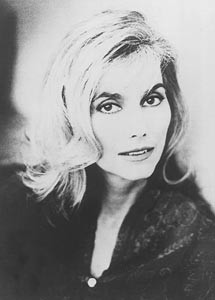
MAKE NO MISTAKE: This is war. Or, at any rate, that’s how Mary Hull Webster sees the situation. Asked to give her views on contemporary culture and the world of art, the 52-year-old Bay Area artist and writer draws repeatedly on the imagery of battle, marshaling her words in a tone of voice as intense as her convictions.

“Almost everyone I know feels that tremendous changes are going on right now,” she says. “Changes in general on the cultural, political, social, and individual level. As I’ve said to many people, how can we make art as though these changes are not happening?”

That’s just one of many provocative questions to be discussed by Webster, who is a contributing editor at ArtWeek magazine, and prominent California artist William T. Wiley in a special presentation on Friday, July 30, at the Sonoma Museum of Visual Art’s ongoing series of Salon Nights.

Don’t be fooled by the innocuous-sounding official title of the evening’s talk (“What Is Art for?”). Webster and Wiley are clearly determined to ask unsettling questions about the contemporary art world–a provocative tendency they’ve already firmly established in an exhibit, also called “What Is Art For?,” that the pair recently organized at the Oakland Museum.

The unconventional exhibit, which continues through July 25, features the work of some 100 Bay Area artists, including pieces by Webster and by Wiley himself, who many believe to be one of the most important contemporary artists to emerge from the Bay Area.

Wiley, 61, hopes the show in Oakland and the upcoming lecture in Santa Rosa address the fragmentation and confusion he now sees in the art world. That splintering, he believes, is the fault of contemporary art itself.

“It became an exclusive object that no one could afford or understand,” Wiley says. “I think there was a big alienation. . . . The food that was being produced at the top just didn’t nurture enough. You go to see the very best and find yourself wanting something more.”

To address that situation, Wiley and Webster organized the exhibit at the Oakland Museum around a series of provocative questions: “What Is Art For?,” “What Are Museums For?,” “What Are You For?” The 7,500-square-foot installation, which has attracted intense media attention, incorporates participatory events, collaborative artistic efforts, and various other unconventional elements.

“It’s about questioning values, questioning how we establish values, questioning the role of the museum and the role of the critic,” Webster says. “It was meant to be a challenge to the art world, and those we challenged responded with their own challenges.”

Indeed, the exhibit has attracted both acclaim and criticism from art critics and museum-goers alike. There have also been what Wiley calls “very heated” discussions about art during the public discussions at the Oakland Museum.

“Not everybody agreed, but there were good lively disagreements, and people thanked each other for being provocative,” Wiley says with a laugh.

And that’s pretty much what the duo hope to see happen during their Salon Night appearance at SMOVA. After all, there seems to be plenty of room for disagreement about the future of the art world.

“Art is going to get more interesting, more homegrown, more organic,” Wiley says. “And, hopefully, it will move back into our lives and cultures in a way that’s more appreciated, more valued, less elevated. We’re rediscovering ways to rediscover ourselves.”

“I hope that what Wiley says is correct,” Webster quickly adds. “I think that’s what we would both like to see. However, I think that the art of the next century depends entirely on who wins the wars in terms of social and cultural and economic issues. Depending on how the culture moves, so will art move. All of those wars are currently very hot, and who knows who will win?”

“What Is Art For?” takes place on Friday, July 30, at 7 p.m. at the Sonoma Museum of Visual Art, Luther Burbank Center, 50 Mark West Springs Road, Santa Rosa. Admission is $2. For details, call 527-0297.

From the July 22-28, 1999 issue of the Sonoma County Independent.

© Metro Publishing Inc.
Umpires

0

Umpty Dumpty

Major league umpires take a great fall

By Bill English

IT’S A FAMILIAR SIGHT–a true baseball tradition. An irate, foaming-at-the-mouth ballplayer gets belly to belly with an umpire as they conduct a screaming match over a child’s game. Recall the joy of watching the late big-league manager Billy Martin going ballistic over what he considered a bad call.

The flashpoint release of all that raw rage fueled a pure and choreographed baseball ballet. You could always count on plenty of kicked dirt and language as salty as peanuts.

It was all part of the baseball soap opera and featured a predictable ending. Because the instant the histrionics reached a climax, the ump would simply turn his back on the discussion and jerk his thumb toward the dugout. “You’re outta here, fella!” he’d snarl.

It was a moment to cherish.

But, until recently, the players always got the short end of the stick. Now all of a sudden the classic heave-ho has taken on a whole new dimension. When major-league umpires returned to work last week after the All-Star Game, they got a standing boovation from fans across America.

Why?

The umps had decided to throw themselves out of the game. In a preposterous and convoluted version of baseball’s suicide squeeze, the boys in blue have announced they plan to resign en masse come September. It seems they have some lingering issues over their strained relations with the players and the altered strike zone. The umps can’t get beyond the fact that Roberto Alomar was only given a slap on his wrist bands two years ago for spitting in the face of one of their own.

Believe it or not, bodily fluids are about to disrupt the National Pastime.

Once again baseball is taking a long lead toward chaos. Personally, I think the umps are nuts. Clearly, these guys have been standing in the sun too long. Who cares if they quit? Certainly not the players or owners. And any fan with a real job isn’t going to feel sorry for a bunch of fat slobs who think going to work means calling close plays at the plate for a few hours in the afternoon.

Hey, ump, try working as a taxi driver if you want abuse.

MAJOR-LEAGUE umpires make up to $250,000 a year for a few hours of watching millionaires play baseball. How tough can it be when you get the whole winter off to spend at the all-you-can-eat buffet? Who the hell walks off a job like that just because a second baseman spits in your face? Hey, spitting is part of baseball. Everybody spits in baseball. OK, so maybe one little arc of infielder drool got a tad out of control and just happened to land in an umpire’s eye. Is that any reason to quit your profession and risk the security of your family. No way.

I, for one, am more than ready to jump into the breach and become a full-time replacement umpire. Sure, I’m going to have to pack on 200 pounds to transform myself into an acceptable human obstruction–but if Robert De Niro was willing to pack on pounds for his Raging Bull role, why not me? And for the kind of cash flow we’re talking about here, I could care less if a few wealthy shortstops spit in my face. Naturally, it doesn’t matter to me if the strike zone has shrunk to the size of a microwave oven and dances on a rubber band.

I’ll get the job done.

SO, SPORTS FANS, look for me out there. With my beaming face turned up toward the baseball sun, enjoying the moment. Because given the opportunity, I plan to become the world’s first totally enlightened umpire: Yoga-Call-‘Em-As-I-See-‘Em.

Infield chatter will become a chant. The long-lost church of baseball will return. Trust me, when I throw you out of the game it will be with a humanistic touch. Like carefully removing a spider from the bottom of the bathroom sink. I’ll truly listen to your pleas before I toss your butt to an early shower.

Whoa, just a bit outside . . .

Kenwood writer Bill English is the author of two books about baseball.

From the July 22-28, 1999 issue of the Sonoma County Independent.

© Metro Publishing Inc.
Leonard Peltier

Bending the Bars

Leonard Peltier’s spirit flies free in his newly published prison memoirs

With the exception of Mumia Abu-Jamal, the former Black Panther on Pennsyl-vania’s death row, Leonard Peltier is probably the best-known prisoner in America today. Convicted of the murder of two FBI agents in South Dakota on June 28, 1975, and currently serving two consecutive life terms at the Federal Penitentiary in Leavenworth, Kan., Peltier has insisted all along on his innocence.

Every scrap of evidence that has turned up in the government’s own documents obtained under the Freedom of Information Act suggests that he is in fact not guilty. As Ramsey Clark–Peltier’s lead attorney–makes clear in the preface to the newly published Prison Writings: My Life Is My Sun Dance (St. Martin’s; $23.95), the case against Peltier is irrevocably tainted by false testimony, false reports, false witnesses, and gross government misconduct.

But when FBI agents are killed by gunfire on an Indian reservation, someone has to pay the penalty, and, as a longtime, high-profile activist in the American Indian Movement, Peltier was the perfect fall guy. Or so the government hoped. Though Peltier has spent the past 24 years behind bars, he hasn’t been silenced or intimidated, and certainly not broken in spirit, as Prison Writings makes abundantly clear.

Peltier is an able jailhouse lawyer, and in his new book–which is a spiritual biography, a political manifesto, and a wild chant–he does an eloquent job of arguing the merits of his own case. Without resorting to slogans or clichéd rhetoric, he describes the violent events that unfolded at Oglala and led to his arrest. He also places “The Incident at Oglala” in a larger historical context and shows that it’s yet another in an ongoing series of attempts to obliterate the indigenous inhabitants of the Americas.

Prison Writings is an effective public relations piece, and at the end of the book, the editor, Harvey Arden, provides the address of the Leonard Peltier Defense Committee for those who want to lend their support to the worldwide campaign for clemency.

BUT HOW MERITORIOUS are Peltier’s writings in the field of prison literature, which has grown immensely ever since the publication of Eldridge Cleaver’s Soul on Ice in 1968? Like many inmates, including Cleaver and Mumia Abu-Jamal, whose prison writings are collected under the title Live from Death Row, Peltier writes powerfully and poetically about time and space, including his own prison cell and solitary confinement in which he feels as though he’s falling through space.

“You don’t do time,” he writes in the first section of the book, called “In My Own Voice.” And he goes on to explain: “You do without it. Or rather, time does you. Time is a cannibal that devours the flesh of your years day by day, bite by bite.” Peltier describes himself as a warrior, not a victim, but he also reveals his wounds and his vulnerability. With breathtaking candor, he says that a part of him died at Oglala a quarter of a century ago, and that he’s been in agony ever since.

WHAT MAKES this book different from other volumes of recent prison writings is, of course, the fact that Peltier is an Indian with a strong sense of Native American spirituality. One of the most vivid descriptions in the book is of a sacred ceremony that takes place inside the walls of the Federal Penitentiary at Leavenworth.

The Indian inmates build a fire, share a pipe, beat a drum, and sit naked together while armed prison guards watch them from a tower.

The purpose of that sweat-lodge ceremony is spiritual healing–a sense of regeneration and rebirth–and while Peltier has written this book in part to promote his own cause, he has also written it to bring about what he calls “The Great Healing.”

Miraculously, Prison Writings does bring about a sense of healing. The book takes you inside the prison, inside the pain. You feel pierced by Peltier’s prose and by his poems, too, which he calls “arrows of meanings.”

But you come away feeling that Peltier is a medicine man, and that his prison writings belong to the literature of redemption for all of humanity.

Jonah Raskin is professor of communications studies at Sonoma State University and the author of The Life and times of Abbie Hoffman, among other books.

From the July 22-28, 1999 issue of the Sonoma County Independent.

© Metro Publishing Inc.

Nanook of the North

0

The Big Picture

‘The Smiling One’: Nyla from the 1922 documentary Nanook of the North.

By David Templeton

THE FIVE distinguished panelists, who have beenarguing for over an hour, have now stopped. The enormous audience, loudly vocal throughout the lively noontime discussion (the title: Documentary as Witness: The Great Films of the Twentieth Century), has suddenly grown still and quiet. All eyes are on the podium, as, in turn, the panelists each lean toward their microphone and reveal the title of the one documentary film they regard as the best, the most influential, the greatest of all time. “Um, Nanook of the North,” states Dale Pollack, dean of filmmaking at the North Carolina School of the Arts.

Nanook of the North,” repeats Oscar-nominated documentarianD. A. Pennebaker.

Nanook of the North,” adds George Stoney, professor of film studies at New York University.

The remaining two panelists–Mary Lea Bandy, chief curator of film and video at the New York Museum of Modern Art, and David Francis, chief of the motion picture division at the Library of Congress–each name other films (Bandy choosing Night Mail, a 1936 British film about the postal service, and Francis opting for an obscure bitof time-lapse film called The Destruction of the Starr Theater).

They quickly admit, however, that Nanook is something to crow about.

It would do Robert Flaherty proud to hear it. The explorer-turned-filmmaker devoted overtwo years to his silent epic of Eskimo life in the early 1920s. In so doing, Flaherty unleashed a one-of-a-kind work of art, a film crammed with unforgettable images: Nanook the hunter, wrestling a seal up from a hole in the ice; Inuit children playing with bows and arrows as theirfathers build an igloo. Upon itstheatrical release, Nanook captured the world’s imagination; when the film’s protagonist died on a hunting trip in 1924, there was widespread mourning. Flaherty went on to make other memorable films (among them Tabu, Man of Aran, and Louisiana Story), but none that brought him the success he found with Nanook of the North.

“It is safe to say,” says a reverent Stoney, “that Flaherty and Nanook were the beginning of the marvelous art form we now call documentary.”

From the July 22-28, 1999 issue of the Sonoma County Independent.

© Metro Publishing Inc.

Eyes Wide Shut

0

Cinema Interruptus

Critic David Thomson is kept waiting for ‘Eyes Wide Shut’

By David Templeton

Writer David Templeton takes interesting people to interesting films in his ongoing quest for the ultimate post-film conversation. This column is not a review; rather, it’s a freewheeling, tangential discussion of life, alternative ideas, and popular culture.

“HMMM,” I am thinking as I stand on the corner of Mission and Sixth in downtown San Francisco, surrounded by 275 anxious people clutching press kits and backpacks. “If a large airplane fell from the sky right now, and crashed right here, it could eliminate every Bay Area movie critic in one incredible instant.”

Such an event would be worse than it sounds.

Partly, that’s because one of those critics is David Thomson (author of A Biographical Dictionary of Film and Beneath Mulholland: Thoughts on Hollywood and Its Ghosts)– whom theIndependent of London has named “the best film critic in the world”–and mainly, because we’ve only seen the first half of Eyes Wide Shut .

“And we were just getting to the ‘orgy’ scene,'” Thomson points out.

True. Talk about coitus interruptus.

It’s been half an hour since our jarring evacuation (something about “fire alarms”) from the new, state-of-the-art Sony Metreon entertainment complex. That was an hour and 15 minutes into a secret press screening of Eyes, the much anticipated last film to be directed by the late, great Stanley Kubrick. Apparently the alarm was a false one–yet here we stand, wearily watching two actors, dressed as funny monsters, attempting to cheer us up.

“So far,” Thomson remarks, “the film’s been dreadfully slow, don’t you think?” Frankly, I’ve been enjoying it–if only for the peculiar Kubrickness of the thing, and for the performance of Nicole Kidman (yes, she gets naked, but she acts too) and the inexplicable, Jerry Maguire-on-downers performance of Tom Cruise, playing a well-to-do, married New York doctor struggling with unexpected sexual conflicts regarding the fidelity of his wife (Kidman).

At last we are let back in, only to be told that we’ve missed several minutes of the orgy (the Metreon folks left the film running awhile after we were chased outside), and that the aforementioned “state-of-the-art” projection equipment is incapable of rewinding to the place we left off. We either watch the film without the missing minutes, we are told, or we start over from the beginning.

No one is eager to do that.

“This never would have happened if Kubrick were still alive,” murmurs Thomson, smiling. “The poor guy dies and efficiency goes right out the window.”

One of the movie’s put-upon publicists appears to crack under the pressure. “Mr. Kubrick, Mr. Kubrick!” he wails. “We’re so sorry!”

“It’s all right,” one woman says, attempting to soothe him. “Kubrick had a sense of humor. Wherever he is, I’m sure he’s loving this.”

She’s probably right. Kubrick never thought much of critics.

“I THINK that lots of people, critics and the general public, will make fun of this film,” predicts Thomson 90 minutes later as we sit down to a late lunch. “For all its packaging as a serious exploration of sexual obsession, Eyes Wide Shut has got a kind of built-in foolishness to it.

“That orgy scene,” he laughs, “was, I think, the orgy of a man who’s never been to an orgy.”

“What? You mean orgies aren’t like that?”

I’m crushed. The erotic gathering in question–a bizarre pageant of masked, nude women being solemnly boffed by masked men in robes and capes (while the disguised and uninvited Dr. Cruise stands around gawking)–is the favorite function of a secret New York “club,” to which only the wealthiest and most powerful men are invited. It’s exactly what we like to think goes on at Bohemian Grove.

“There’s a whole lot of fascinating sex going on in the world,” Thomson says, “sex that Stanley Kubrick, I suspect, did not know a great deal about. This orgy, at best, is wildly implausible, and at worst, is just rather silly.”

“Is it even possible to do all those things without your mask falling off all the time?” I wonder.

“Probably not,” he laughs. “And those ‘sacrificial virgins,’ dropping their clothes on demand before this roomful of mysterious men–there was a bit of old-fashioned candy porn about that.”

“Why is it,” I ask, “that filmmakers–even great ones like Kubrick–can never create on screen sexual encounters that aren’t either silly or tasteless?”

“Well, I think, in real life, sex is what’s going on inside the head,” he replies, considering the question. “For most people, the visual aspects of sex–call it foreplay, and isn’t that mainly what cinematic sex is?–is very different from the actual experience of having sex.

“If you show two people at an orgy,” he continues, “a very cold-blooded orgy scene where they don’t know each other and it’s just raw, heartless sex, and then you show a lovemaking scene between Cruise and Kidman–a married couple who know each other and love each other–those two scenes are going to look very much alike. The camera can’t get at that difference, because the camera can’t get inside the heads of the couples–which is where the true difference lies.

“Kubrick, I think, was a devout ‘watcher.’ Not a ‘doer’ so much as a committed voyeur. And it shows in the way he portrays sexual behavior.” Not that Thomson doesn’t think the film has its merits. “Kidman’s performance was very intriguing,” he agrees, “and the cinematography was quite beautifully done.” He even thinks it could find an audience. But not the audience Kubrick was aiming for.

“I think this would make an excellent midnight movie,” he suggests, laughing.

Like The Rocky Horror Picture Show?

“Yes indeed. I can see scenes where the awful dialogue would be shouted back at the screen. Entire audiences would show up dressed as the people at the orgy. I can see, in years to come, an entire midnight movie audience waiting for the last final line of the movie”–it’s a doozy, by the way, a piece of advice that is filthy and funny at the same–“so they can shout, ‘Yes!’ at the top of their voices.

“Who knows,” Thomson grins, “Kubrick may have made his most popular film ever.”

A web extra to the July 22-28, 1999 issue of the Sonoma County Independent.

© Metro Publishing Inc.

Spins

Hicksville Touched by an angel: New tribute salutes country-rock pioneer Gram Parsons. A bushel of new alt-country CDs By Greg Cahill Various Artists Return of the Grievous Angel: A Tribute to Gram Parsons Almo HE WAS A HARVARD-educated hillbilly, the creator of country rock...

Acre Cafe and Lounge

Kitchen Garden Enjoying the relaxed atmosphere: Acre chef Britt Galler has helped craft one of the region's finest new restaurants. Acre covers the organic field By Paula Harris WHAT'S HAPPENING to Healdsburg? Every time we visit the historic downtown plaza, it seems we encounter new trendy tasting rooms,...

‘Muppets from Space’

Pigs in Space By David Templeton Writer David Templeton takes interesting people to interesting films in his ongoing quest for the ultimate post-film conversation. This column is not a review; rather, it's a freewheeling, tangential discussion of life, alternative ideas, and popular culture. Randy Blume, who's seen the effects of sexual harassment...

Carlos Santana

Soul Fire Supernatural high: Carlos Santana burns on his latest CD. On 'Supernatural,' Carlos Santana balances sin and redemption By Nicky Baxter WITHOUT Carlos Santana, there would be no such animal as Latino rock, possibly no wave of Latin-flavored pop à la Ricky Martin, Jennifer Lopez, and Gloria Estefan....

Paula Poundstone

Comic Relief Gigglin' gal: Comedian Paula Poundstone performs Aug. 4 at the Sonoma County Fair. Paula Poundstone keeps the offbeat humor coming By Paula Harris HANG ON A MINUTE, could ya?" says comedian Paula Poundstone in her famously husky voice, sounding a mite harried as she commences a morning...

William Wiley and Mary Webster

Artful Critique Art of the matter: Prominent artist William T. Wiley poses provocative questions about the art world. William Wiley and Mary Webster take on the art world By Patrick Sullivan MAKE NO MISTAKE: This is war. Or, at any rate, that's how Mary Hull Webster sees the situation....

Umpires

Umpty Dumpty Major league umpires take a great fall By Bill English IT'S A FAMILIAR SIGHT--a true baseball tradition. An irate, foaming-at-the-mouth ballplayer gets belly to belly with an umpire as they conduct a screaming match over a child's game. Recall the joy of watching the late big-league manager Billy Martin going...

Leonard Peltier

Bending the Bars Leonard Peltier's spirit flies free in his newly published prison memoirs With the exception of Mumia Abu-Jamal, the former Black Panther on Pennsyl-vania's death row, Leonard Peltier is probably the best-known prisoner in America today. Convicted of the murder of two FBI agents in South Dakota on June 28, 1975, and currently serving two consecutive life terms at...

Nanook of the North

The Big Picture 'The Smiling One': Nyla from the 1922 documentary Nanook of the North. By David Templeton THE FIVE distinguished panelists, who have beenarguing for over an hour, have now stopped. The enormous audience, loudly vocal throughout the lively noontime discussion (the title: Documentary as Witness: The Great Films of the Twentieth Century),...

Eyes Wide Shut

Cinema InterruptusCritic David Thomson is kept waiting for 'Eyes Wide Shut'By David TempletonWriter David Templeton takes interesting people to interesting films in his ongoing quest for the ultimate post-film conversation. This column is not a review; rather, it's a freewheeling, tangential discussion of life, alternative ideas, and popular culture."HMMM," I am thinking as I stand on the corner of...
11,084FansLike
4,606FollowersFollow
6,928FollowersFollow