Phoenix

0

Photograph by Michael Amsler

What Next?

Fans of the Phoenix ponder the future

By Patrick Sullivan

IT MAY HAVE been the most unusual crowd ever to grace the stage at the Phoenix Theatre. At a hastily called news conference on Dec. 8, well-coifed TV reporters mingled quietly with concerned Petaluma City Council members, besuited business leaders, and roving photographers hauling cameras that would put the cost of most metal bands’ sound equipment to shame.

They were all on the edge of their seats, waiting to meet the mystery investors who stepped in at the last minute to save the all-ages Petaluma alternative-music venue from being turned into an office building at the hands of a Sebastopol developer.

The angels of musical mercy turned out to be a group of unassuming local telecom engineers who made serious bank from the stock market last year when their employer, Cerent Corp., was bought out by Cisco Systems. The four pooled their newfound money to buy the Phoenix from the developer who had it in escrow. Two of the investors–Paul Elliott and Keith Neuendorff–decided to drop their cloak of anonymity last week after the new deal was signed.

But naming names was only half the point of the news conference that brought the pack of news hounds to the Phoenix.

There was another big question confronting both the suits on the stage and the crowd of kids hanging out in front of the theater. Now that the Phoenix is in the hands of those who love the place (Elliott, after all, used to play bass on the stage with his band the Creetones), what happens next?

“We’ve preserved the building for the time being, which allows us some breathing space to figure out what the next steps are,” said Elliott, now a systems architect at Cisco. “I think that will require community involvement. . . . It’s become very apparent that there’s a lot of support, but it’s going to take a while to get this done.”

The building, built in 1904 as an opera house, has served as a mosh pit and teen hangout for the past 15 years under the management of Tom Gaffey, who will stay at the helm under the new owners. It’s been the first gig for many local bands, and some heavy-duty stars of the music scene, including Primus and Green Day, made their name playing the Phoenix.

But many, including Gaffey, believe the building must become more accessible to other segments of the population by, for instance, providing a place for local theater groups to perform.

Moreover, the aging building could use some serious renovation, and the law requires an expensive seismic retrofit that must be completed by 2002. Hours before the deal was signed, the potential buyers received a dauntingly high estimate of the cost to make the building earthquake safe.

“It wasn’t orders of magnitude beyond what we were expecting, but it was definitely on the high side,” Elliott said.

The money for that task will come primarily from the community. The effort to pull together the good will and big bucks to get the work done will apparently be spearheaded by business consultant John Sheehy, a man Tom Gaffey calls the “continuity coordinator” of the organizing attempt.

“I hope that no one goes away thinking ‘This is it, the Phoenix is saved,’ ” Sheehy told the crowd. “This is just the beginning.”

Attempting to raise the retrofit sum (which approaches $800,000) may not be as difficult as it would have been a few years ago. The recent tussle over the theater’s fate has demonstrated that the Phoenix has acquired a surprising new level of support among local politicians and even the once-hostile business community. Among the signs: the Save-the-Phoenix buyout effort received legal help from attorney Thom Knudson, president of the Petaluma Chamber of Commerce.

“I think over the recent years many people in the business community have come to appreciate Tom for the tremendous good that he does for the community,” Knudson explained. “Those who think of the Phoenix and the business community as being at odds are thinking of a few years ago when there was some tension.”

Whatever challenges may lie in the theater’s future, the feeling of relief among Sonoma County teens was palpable. Leslie Crebassa, one of the few kids to brave the stage during the news conference, didn’t try to hide her joy.

“I really want to say thank you,” Crebassa, 14, exclaimed to the new buyers. “We all wanted to save it, but none of us had the money.”

For more information about the Phoenix Theatre organizing committee, call John Sheehy at 664-9993.

From the December 16-22, 1999 issue of the Sonoma County Independent.

© Metro Publishing Inc.

Local Charities

Photograph by Michael Amsler

Holiday Giving

Charity starts at home–nine agencies that need your help

By Shelley Lawrence

AS THE HOLIDAY season enfolds us, the flood of shop-’til-you-drop-then-eat-’til-you’re-sick may still leave you feeling a bit unfulfilled. Lending a hand to those who are less fortunate can leave you feeling far richer, as Ebenezer Scrooge learned the hard way. Here are nine volunteer, charity, and other do-good organizations in Sonoma County that could use your help this season while providing a conduit for your holiday spirit.

Adult Literacy Program

OPERATED through the Sonoma County Library (3rd and E streets, Santa Rosa), the Adult Literacy Program provides one-on-one tutoring to adults who want to learn how to read. The students meet for two hours a week with their tutors. Families for Literacy, designed to break the cycle of illiteracy, works with students who have children under age 6. The program hosts a monthly family night to help non-native speakers with their reading and writing skills. Tutoring volunteers are put through a teaching workshop and asked to volunteer two hours a week. Other volunteers are needed for office work and to staff booths at the Santa Rosa Downtown Market and the Home Show and Fair at the Sonoma County Fairgrounds. Book donations are always welcome–specifically, children’s books, reference books, and simple adult books and novels in good condition. Call Ruth Maloney at 544-2622.

AIDS Food Bank

THE FOOD for Thought AIDS food bank (6550 Railroad Ave, Forestville) is run by four paid staffers and 400 volunteers. Serving AIDS patients from Sea Ranch to Sonoma, the food bank (which is not related to the natural-food store of the same name) provides groceries, vitamins, supplements, and frozen meals to 290 people in Sonoma County. Deliveries are made to those who cannot pick up their own groceries. The Food Bank is working in conjunction with the Occidental Center for Arts and Ecology to expand the center’s organic gardens as a form of “earth therapy” for both clients and volunteers. There are a wide variety of opportunities for volunteers here, from stocking groceries, matching patients with groceries, and making deliveries to staffing food drives held at grocery stores throughout the county. Donations of groceries and personal care items (toothpaste, shaving cream, etc.) are accepted. Call Stewart Scofield at 887-1647.

COTS

THE COMMITTEE on the Shelterless operates a variety of services for the homeless in the Petaluma area, including a family shelter. COTS has opened a holiday donation center at the Petaluma Plaza North Shopping Center (275 N. McDowell Blvd.). For homeless children and their families, the center accepts new wrapped and unwrapped gifts, including toys, warm clothing, books, art supplies, or gift certificates to local department and grocery stores. The center also accepts gifts for single homeless adults. The donation center is open Monday through Wednesday, from 6:30 to 8:39 p.m.; and Saturday, from 10 a.m. to 2 p.m. For information, call Mimi Spencer at 782-9114, ext. 2087.

Family Support Center

CATHOLIC CHARITIES provides this shelter service for homeless families, giving priority to those with children. The shelter (465 A St., Santa Rosa) houses 26 to 30 families at a time, feeding them three meals a day and providing support services, parenting classes, child care, and substance-abuse counseling. Help in the kitchen with the holiday dinner is always welcome, and there are many other opportunities to help out. Volunteers can sort donated gifts and match them to families, deliver gifts to families who’ve previously lived in the shelter, provide child care, or help out with reception work. Call Chrissy Udell at 542-5426.

Hospital Chaplaincy Services

FOR 30 YEARS NOW, Hospital Chaplaincy Services has provided interfaith emotional and spiritual support to patients, families, and workers at skilled-nursing facilities and medical-care centers. The chaplains are given an intense training program that teaches volunteers how to listen from the heart in ways to inspire trust and confidence–how to give the gift of real attention. Although the services are non-sectarian, the chaplaincy is spiritually based, in terms of how chaplains relate to patients. Volunteers go through a 40-hour training period (which costs $50) and are asked for 100 hours of service, at the rate of two to three hours a week. Call Barbara Yungert at 566-9600.

Kid Street Theater

NOW IN ITS eighth year, Kid Street Theater (54 West Sixth St., Santa Rosa) serves youth at risk, kids without homes, and other disregarded children in our community through an innovative and therapeutic arts program. This school year, the organization also began a public charter school with an after-school program. Volunteers are always needed in classrooms to read stories and to help kids with their ABCs and numbers. Volunteers in the after-school program can prepare snacks, work at the art tables, and help kids with their lines for the theater productions. Please call Laurie Kaufman or Melissa Black at 525-9223.

Planting Earth Activation

THIS SEBASTOPOL group of 20-somethings strives to make Sonoma County a better place by planting organic gardens in the yards and available spaces of those willing to share their land. The group keeps only a quarter of the garden’s yield, to share with volunteers and to harvest the seeds. PEA is opposed to all forms of genetic engineering of food crops and uses only heirloom seeds (non-modified seeds saved down through generations of plants). Most of the gardens are located in Sebastopol, but the group is working to expand throughout Sonoma County. A current project sorely in need of volunteers is the transplantation of the largest community garden in Sebastopol to a new site (the old site is being developed). Call Eric Linley at 829-2731.

Southwest Family Planning Center

THIS GOVERNMENT-funded clinic (751 Lombardi Court, Santa Rosa) provides free and low-cost care to women for sexually transmitted disease testing, pregnancy and pre-natal counseling and care, and pelvic and breasts exams. For men, the clinic tests for tuberculosis, lung and heart disease, prostate cancer, and STDs. Although the center is not a non-profit organization, monetary donations and volunteers are needed. If volunteers are interested in a particular area of health care, the clinic can train them in that area. Call Kim Caldaway at 544-7526.

Women Against Rape

THIS SONOMA COUNTY support organization serves anyone who has been a victim of sexual assault. WAR provides counseling, referrals, and “whatever we can do to help [those persons] claim their life again” to women, men, teens, and children. The office is staffed by volunteers who’ve had approximately 50 hours of training. WA. does outreach through public schools with programs such as the Teen Assault Prevention Program and the Child Assault Prevention Program, and operates a 24/7 crisis hotline (545-7273). Interested volunteers can call Lee Mehlman, and “we’ll put them to work where their talents and interests lie.” For details, call 545-7270.

From the December 16-22, 1999 issue of the Sonoma County Independent.

© Metro Publishing Inc.

Bioengineered Foods

0

Photograph by Janet Orsi

Bio Bites

Lawsuit reveals doubts among FDA scientists over biotech food safety

By Ken Roseboro

NEWLY DISCLOSED Internal U.S. Food and Drug Administration documents reveal that the agency’s own scientists expressed doubts about its policy toward bioengineered foods while raising questions about the foods’ safety.

The revelations come at a time when the FDA is under increasing pressure from consumer groups and members of Congress to require labeling of bioengineered foods. In response, the agency is holding public meetings–including one this week in Oakland, where Glen Ellen organic farmer Bob Cannard lobbied for a statewide ballot initiative requiring labeling of bioengineered foods–to ask the American people if its policy should be changed.

The FDA documents were released to the Alliance for Bio-Integrity, a coalition of scientists, religious leaders, health professionals, and consumers that is suing the FDA to demand mandatory safety testing and labeling of bioengineered foods.

A legal brief filed recently by the alliance in U.S. District Court, Washington, D.C., quotes several agency scientists who raised objections in FDA memoranda about the agency’s policy before it was established in 1992.

In particular, they challenge the FDA’s view that foods developed by genetic engineering are “substantially equivalent” to those produced by traditional plant breeding unless they contain additional synthetic ingredients. Under this reasoning, the agency does not require labeling of bioengineered foods, and safety testing is voluntary for the companies that produce them.

FDA policy states, “The agency is not aware of any information showing that foods derived by these new [genetic engineering] methods differ from other foods in any meaningful or uniform way, or that, as a class, foods developed by the new technologies present any different or greater safety concern than foods developed by traditional plant breeding.”

However, in a February 1992 memo, Louis J. Pribyl, Ph.D., a scientist in the FDA’s microbiology group, critiqued a policy draft by writing, “There is a profound difference between the types of unexpected effects from traditional breeding and genetic engineering which is just glanced over in this document.”

Pribyl added that several aspects of gene insertion “may be more hazardous than traditional plant crossbreeding.”

In a January 1992 memo, Linda Kahl, an FDA compliance officer, objected that the agency was “trying to fit a square peg into a round hole [by] trying to force an ultimate conclusion that there is no difference between foods modified by genetic engineering and foods modified by traditional breeding practices.”

She continued, “The processes of genetic engineering and traditional breeding are different, and according to the technical experts in the agency, they lead to different risks.”

E. J. Matthews of the FDA’s toxicology group warned in an October 1991 memo, “genetically modified plants could also contain unexpected high concentrations of plant toxicants.”

In a November 1991 memo to James Maryanski, the FDA’s biotechnology coordinator, the FDA’s Division of Food Chemistry and Technology cautioned, “It would be necessary to demonstrate that edible seeds and oils produced from genetically engineered plants do not contain unintended potentially harmful substances at levels that would cause concern.”

According to Steven M. Druker, executive director of the Alliance for Bio-Integrity and coordinator of the lawsuit against the FDA, “Numerous agency experts protested that drafts of the statement of policy were ignoring the recognized potential for bioengineering to produce unexpected toxins and allergens.”

The Right to Know: The California Right to Know/Genetically Engineered Food Initiative.

IN A RECENT articulation of the FDA position, Maryanski told the U.S. House Subcommittee on Basic Research on Oct. 19: “Substances added through genetic engineering are well-characterized proteins, fats, and carbohydrates and are functionally very similar to other proteins, fats, and carbohydrates that are commonly and safely consumed in the diet, and so will be presumptively generally recognized as safe.”

The Alliance for Bio-Integrity claims the current FDA policy violates the U.S. Food, Drug, and Cosmetic Act, which mandates that new food additives be established as safe through testing before marketing. The FDA claims that bioengineered organisms are exempt from testing because they are “generally recognized as safe” (or GRAS, in FDA shorthand).

According to the U.S. Food, Drug, and Cosmetic Act, foods can be recognized as safe only on the basis of tests that establish their harmlessness. Druker claims no such tests exist for bioengineered foods.

Two FDA scientists emphasized the lack of scientific data to recognize the safety of bioengineered foods. In her response to the draft of the policy statement, Kahl wrote, “Are we asking the scientific experts to generate the basis for this policy statement in the absence of any data?” She continued, “There is no data that could quantify risk.”

In his critique of the draft, Pribyl, wrote, “Without a sound scientific base to rest on, this becomes a broad, general, ‘What do I have to do to avoid trouble?’ type document.”

According to Druker, “The FDA is using the GRAS exemption to circumvent testing and to approve substances based largely on conjecture that is dubious in the eyes of its own and many experts. Consequently, every genetically engineered food in the United States is on the market illegally and should be recalled for vigorous safety testing.”

Citing the lawsuit, the FDA declined to comment to the American News Service about its scientists’ objections.

Philip J. Regal, professor of ecology, evolution, and behavior at the University of Minnesota and a plaintiff in the lawsuit, said he knew several FDA scientists who were “disgusted” with the policy.

During the early 1980s, Regal was asked to help the government establish a system of regulating biotech foods. He said his goal was to develop a system that would protect the American public. Instead, he said policy development favored biotech companies.

“The bureaucrats were under pressure from the White House to help the biotech industry, which was against regulation and thought it would be too expensive,” he said. “The result was no regulatory system, just a sham.”

According to Regal, the FDA knew about the risks of genetically engineered foods before it drafted policy guidelines but decided it was up to the industry to deal with them. He said a common phrase at the time was “If Americans want progress, they’ll have to be the guinea pigs.”

When he saw genetically engineered foods appearing on the market, Regal said, “It was all I could take,” and became a plaintiff in the lawsuit.

Regal and Druker say a bioengineered ingredient may be responsible for the tragedy in Minnesota that resulted after people took an L-tryptophan food supplement in 1988. According to Druker, who studied government reports of the incident, the supplement was genetically engineered by Showa Denko K.K., a manufacturer based in Japan. Shortly after the supplement was put on the market, many people who took it became ill with eosinophilia myalgia syndrome, a potentially fatal and debilitating disease.

Thirty-seven people died, 1,500 were permanently disabled, and another 4,000 became ill.

While no cause was established, in a September 1991 memo from a meeting with representatives of the Government Accounting Office, FDA biotechnology coordinator Maryanski wrote, “We do not yet know the cause of EMS nor can we rule out the engineering of the organism.”

The FDA has imposed severe restrictions on importing or using L-tryptophan because of its suspected association with EMS. Regal said, “This is the kind of accident you expect from genetic engineering.”

He said the process of insert-ing genes into an organism can cause mutations to existing genes of the organism, creating toxins.

Another plaintiff, Richard Stroh-man, emeritus professor of molecular and cell biology at the University of California, said in an interview with the ANS that planting millions of acres of bioengineered crops, as is done in the United States, is “insanity” because the technology can produce unpredictable and possibly negative changes to plants and their environments. “Many, many years of research are needed before we can arrive at any conclusions about how these plants will work,” Strohman said.

According to an FDA official who spoke on the record but asked not to be named, manufacturers of bioengineered foods “have no reason to produce an unsafe product.”

The agency gives guidance to manufacturers about safety testing, using a flowchart. The official told the ANS that to ensure consumer safety, “there are a series of steps we want to see the manufacturer do. When they find a problem, they stop production. Companies have an interest in producing a safe product.”

The official cited the well-publicized example of Pioneer Hi-Bred’s engineering of a soybean using a Brazil nut gene, which was stopped when it was discovered that it would cause allergies in people who are allergic to Brazil nuts. “The system worked,” said the official.

However, in his 1992 memo, Pribyl of the FDA criticized this voluntary testing, “Why should companies conduct tests as described in the flow- charts if there are no differences between traditional foods and those produced by modern technology? If industry does not follow these ‘should’ items, is the FDA going to perform these tests and penalize the companies or does the agency wait for something to go wrong and then act?”

THE FDA faces increasing pressure from consumer groups and, more recently, congressional leaders to change its biotech food policy.

House Minority Whip David Bonior, D-Mich., has urged the FDA to reverse its policy, and Dennis Kucinich, D-Ohio, plans to introduce a bill to require labels on genetically engineered foods.

Last June, a group called Mothers for Natural Law delivered petitions with 500,000 signatures to the FDA demanding safety testing and labeling. Consumers Union, the oldest and largest association of American consumers with 4.7 million member households, called for the same in its September issue of Consumer Reports. In response, the FDA has held a series of three public meetings (including this week’s Oakland forum) to inform the public about its policy for ensuring the safety of bioengineered foods and to ask for input about whether its policy should be changed.

An FDA spokesperson said, “We’re in a listening mode. We want to get information from the American public and want to know if what we’re doing is good enough to make people feel comfortable. We will consider everything we hear.”

The FDA will continue to accept public comment on its bioengineered foods policies for several weeks. You can e-mail the agency at www.FDA.gov.

From the December 16-22, 1999 issue of the Sonoma County Independent.

© Metro Publishing Inc.
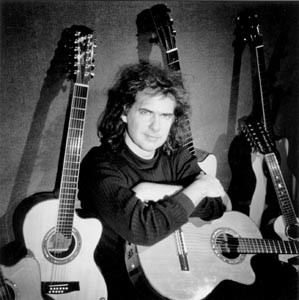
Britt Galler

0

Photograph by Michael Amsler

True Britt

Britt Galler spreads the word, one Acre at a time

By Marina Wolf

LIKE MOST restaurants, Acre Cafe comes alive at night. The fireplace casts its glow across the room and on the couples courting on the green velvet couch, a spot that chef-owner Britt Galler calls “the most romantic seat in town.”

During the day, though, this former bagel shop, one block off the main plaza in Healdsburg, is less inviting. The room is chilly, the fireplace exudes only a smell of stale smoke, and the couch loses its evening glamour to become just another piece of stiff furniture. It creaks slightly as Galler sits down with a sigh. The 30-year-old chef is still getting used to the non-stop pace of her first restaurant. She tugs at the wrists of her wool cardigan, the same color as the couch. But on this cool winter afternoon, the only source of warmth in the room is in Galler’s hazel eyes when she speaks of her home in Healdsburg and her experiments in community.

She lives on some property outside of town with her boyfriend and business partner, Steve DeCosse, and some chickens. Her best friend and other business partner, Marci Ellison, lives next door. While the garden there doesn’t supply all or even most of the produce for the seasonally inspired menus at Acre, just getting out to the farmers’ market and talking to the local farmers is more than enough.

“Even though I don’t have the luxury of stepping outside and harvesting our own produce, I do get to support our local farmers and create community there, which was one of the main reasons I got involved in the restaurant business,” says Galler earnestly.

“Restaurants are integral to community. You’re supporting the community and feeding it at the same time.”

THE ROOT of Galler’s obsession with community and good food is fairly close to the surface. Raised an only child by her divorced mother, she was encouraged to choose her own food at an early age.

“I started off with grilled cheese sandwiches and canned soup, but I was always interested in serving,” recalls Galler. “I invited my girlfriend over and I served that soup.”

The food/feeding motif continued to play out through her years at Reed College in Portland, Ore., where the young Galler cooked in collective households and provided under-the-table baked goods to the student cafe. After ditching the rigid academia at Reed, Galler proceeded to eat her way around Asia, went to cooking school in Portland, and landed a few prime cafe gigs in San Francisco.

But her interest bloomed into full-blown love during an apprenticeship at the Center for Agroecology and Sustainable Food Systems at UC Santa Cruz, where Galler and 34 other residents worked the 20-some-acre farm and lived in tents for six months.

“I really got off on that,” she says, a slight grin quirking the corners of her mouth. “We did everything together, whether cooking or cleaning the bathroom. I found that to be a really gratifying experience.”

After completing the program in 1994, Galler opened an all-vegetarian, all-organic catering business and dinner-delivery service in Santa Cruz. The market there was welcoming of vegetarian offerings, but after three years, Galler found other reasons to get out. For starters, there wasn’t a lot of money among the large student population, which put a ceiling on which menus–and price ranges–would fly.

There were personal factors as well. “I like the fine things. I like good wine and nice clothes, though you can’t tell today,” she says with a rueful glance at her Sunday casual clothes. “Anyway, I have a taste for those things, and it wasn’t a supportive place for that.”

So Galler took to traveling again. She apprenticed at a restaurant in Oaxaca, Mexico, for five months and went farther south–to Chile–to cook for river-rafting expeditions for a while. But something about moving on all the time wore her down. “I got tired of feeling that I wasn’t committed to anything,” she explains.

At that point, Marci, a friend from “the Farm,” invited her to come and check out Healdsburg. “I fell in love with it,” Galler says simply. “It’s just the right size. . . . Living in a small town is much more appealing to me than living in a city, primarily because people are really accountable for their behavior in a small community. You can’t cut someone off when you’re driving, because you’re going to see them at the bakery later.”

Or at the restaurant.

BY GALLER’S figuring, the restaurant is a repository for several communities: the workers, the suppliers, and the customers. The three owners are planning more community-building events, such as dinners with winemakers and farmers, where diners can meet the folks who produced their meal. Galler is particularly looking forward to hosting community dinners this month, when they’ll push all the tables together.

“So many people already know each other, so it should be fun.”

Other equally dramatic innovations will hit Acre in mid-January, when the restaurant will close for a month for a complete remodeling of the bagel-era kitchen, which has two electric burners and two ovens, but no gas burners–“It’s a testament to our abilities that people don’t realize that,” Galler says.

She’s excited about the new culinary possibilities the remodeling will open, but to her the community and ecology of the place are even more important. “For me, the restaurant is a vehicle toward the larger goal of educating people about sustainable food,” says this enthusiastic young woman whose inspiration is, fittingly, seasonal-food guru Alice Waters.

“I don’t think people are having epiphanies here. But if people are having a really good meal and they’re cognizant of the fact that it’s organic, local, seasonal, and they feel good after they eat it, which I think they do, then that’s an accomplishment.”

The first community dinners at Acre Cafe will be held on Monday, Dec. 20, and Monday, Dec. 27, with seatings at 6 and 8 p.m. both nights. The prix fixe menu will cost $20 per person. For reservations, call 431-1302.

From the December 16-22, 1999 issue of the Sonoma County Independent.

© Metro Publishing Inc.

CD Box Sets

0

Photograph by Michael Amsler

Boxing Day

An avalanche of CD sets hits the stores

By Greg Cahill

PRAY FOR CASH–holiday cash, that is. It’s box-set season, and record companies are flooding the market with sometimes silly, usually pricey CD packages that anthologize the deserving (the Grateful Dead) and, well, the forgettable (i.e., Alice in Chains).

This year, there are some worthy entries in the box-set bash, ranging from avant-rocker Captain Beefheart and Top 40 hitmakers the Doobie Brothers to crossover queen Linda Ronstadt and reggae superstar Bob Marley.

So be kind to your favorite rich uncle, pray for cash (you’ll need it, along with a second mortgage, if you plan to buy the 26-disc Soundtrack for a Century at $330), and treat yourself to one of these sensational offerings:

Bob Marley Songs of Freedom Island

THIS FOUR-CD collection of material, from the reggae great who rose to international stardom before succumbing in 1981 to cancer at age 36, is one of the most sought-after sets in recording history. First issued in 1992 as a limited-edition, hardbound book, Songs of Freedom quickly went out of print after a worldwide run of just a million copies–hardly enough to whet the appetite of Marley’s far-flung fans. Copies of the original box set still sell for up to $300 on Internet auction sites–you can now buy this modified version–lacking the hardbound jacket and ambitious packaging–for one sixth that cost. You still get 77 tracks chronicling Marley’s rise from a doo-wop-inspired ska/soul singer to frontman for the Wailers. And Marley’s greatness is underscored by the sheer soul and immense power of his songwriting and singing.

Sammy Davis Jr. Yes I Can: The Sammy Davis Jr. Story Warner Archives

THE COMMENSURATE showman. At the short-lived Rat Pack reunion back in the late ’80s (I was too dazzled by all the rhinestones, blue hair, and mothball-scented furs to now recollect the exact year), Sammy Davis Jr. stole the show from Frank Sinatra and ran rings around an ailing Dean Martin. The king of big finishes, indeed. Here he is on four CDs and in all his bombastic glory–the hard-knock kid who worked harder to make it farther.

Captain Beefheart Grow Fins: Rarities, 1965-82 Revenant

The Dust Blows Forward: An Anthology Warner Archives/Rhino

HE NEVER had a hit record and barely even cracked the Top 100 album chart, but avant rocker Don Van Vliet (aka Captain Beefheart) cast a long shadow over the rock world. His influence can be heard in the work of Tom Waits, the Red Hot Chili Peppers, the Violent Femmes, and a legion of underground rockers. Now retired in Northern California and living the life of a reclusive painter, Beefheart started his musical career in 1963 as a collaborator of longtime friend Frank Zappa (who later produced sides for Beefheart). Working in Los Angeles, he scored a regional hit in 1965 with a garagey cover of Bo Diddley’s “Diddy Wah Diddy” (produced by David Gates, who later went on to fame as the white-bread visionary behind the ’70s pop band Bread). But he’s best known for his avant rock forays grounded in blues-drenched psy-chedelia and plenty of strange antics. The four-CD box set Grow Fins, described by Entertainment Weekly as “a fan’s wet dream,” gathers rarities, outtakes, and demos for Beefheart cultists. The Dust Blows Forward culls the best of Beefheart and his Magic Band (which once featured an 18-year-old Ry Cooder on guitar), and includes some surprisingly accessible blues.

Various Artists Loud, Fast & Out of Control Rhino

OK, THE ’50s and early ’60s have been packaged and repackaged ad nauseam, but this four-CD set–replete with 84-page full-color booklet emblazoned with cheesy pulp fiction artwork–from the reissue kings at Rhino Records manages to capture the raw excitement and timeless teen angst that has earned rock ‘n’ roll a place at the top of the planet’s cultural heap in this century. All the rockabilly and vintage rock greats are here: from Little Richard’s bop-bop-a-lu-boppin’ scat singin’ hits to the twangy instrumental guitar attack of Link Wray & the Wraymen. And so are less well known giants, like Joe Clay, Johnny Burnette, and Screamin’ Jay Hawkins. R&B pioneer, producer, and talent scout–and Sonoma County transplant–Johnny Otis even pops up (and most deservedly so) with his “Crazy Country Hop.” And if that doesn’t get your blood flowin’, don’t bother to check your pulse, buddy, you’re already stone-cold dead. Missing in action: Dale Hawkins of “Susie Q” fame.

Various Artists Central Avenue Sounds: Jazz in Los Angeles, 1921-56 Rhino

THE CITY of the Angels has long been a haven for wayward jazz musicians. Over the years, it hosted everything from a New Orleans jazz revival to a vital West Coast jazz scene. This four-CD companion to jazz writer Clora Bryant’s 1998 book of the same name (published by the University of California Press) bristles with hot jazz and smokin’ R&B heard in and around an often overlooked artistic mecca that attracted the likes of Art Tatum, T-Bone Walker, Lionel Hampton, Benny Carter, Charles Mingus, and Charlie Parker. The set includes rare recordings of New Orleans great Kid Ory, Joe Liggin’s seminal R&B hit “The Honeydripper, Pts. 1 & 2,” and Big Jay McNeely’s electrifying “Nervous Man Nervous.” And it just doesn’t get any better than the frenetic piano duel between Hampton and Nat King Cole on 1940’s “Central Avenue Breakdown.”

Various Artists Testify! The Gospel Box Rhino

WHEN THEY hand out the Grammy Award next year for best CD packaging, this clever item should be on the receiving end–a three-CD and booklet tucked into a red hymnal decorated with stained-glass graphic and dangling a satin-ribbon bookmark. Inside are 50 tracks of heavenly inspiration, ranging from the small-group soul of the Swan Silvertones (featuring vocalist Claude Jeter, who served as a role model for soul singer Al Green) to the dynamic choir Sounds of Blackness. Most of the big names in classic and contemporary gospel are included–Clara Ward & the Ward Singers (featuring Marion Williams, arguably America’s greatest singer of all time), the Edwin Hawkins Singers, Dorothy Love Coates, the Golden Gate Jubilee Quartet, the original Five Blind Boys of Alabama–though the Soul Stirrers with Sam Cook are conspicuously absent. Still, Aretha Franklin’s soaring triumph “Mary Don’t You Weep” alone is worth the price of admission.

The Grateful Dead So Many Roads Arista

WITH SO MANY great live Dick’s Picks series–compiled by the late Dick Latvala of Petaluma–on the market (not to mention a million bootlegs), this could have been anti-climactic. But the tireless efforts of Dead documenters David Gans, Blair Jackson, and Steve Silberman–who jointly compiled these five discs–have resulted in a comprehensive look at a band that spanned four decades. Culled from live concert dates (and, yes, there are plenty of missed notes and off-key vocals), the set includes many of the band’s best-known tunes and a lot of obscure tracks that include sound-check jams and the like. More than just a token to a counterculture icon.

From the December 16-22, 1999 issue of the Sonoma County Independent.

© Metro Publishing Inc.

‘End of Days’

0

End of Days.

Raising Heck

Heaven-and-Hell expert Miriam Van Scott on the ups and downs of ‘End of Days’

Writer David Templeton takes interesting people to interesting movies in his ongoing quest for the ultimate post-film conversation. This is not a review; rather, it’s a freewheeling, tangential discussion of life, alternative ideas, and popular culture.

“I’M BACK from Hell, ” laughs author Miriam Van Scott, grabbing her notes and heading for a quiet corner of her home in Manassas, Va. The “hell” from which she’s so recently returned was in the form of a new film: End of Days, starring a surprisingly seedy-looking Arnold Schwarzenegger as a suicidal, alcoholic ex-cop duking it out with the Devil (nicely played by Gabriel Byrne) in New York City on New Year’s Eve.

The plot involves an unwitting 20-year-old woman marked from birth as the future mother of Satan’s baby, the conception of which must take place between 11 p.m. and midnight, Eastern Standard Time, on the edge of the year 2000, an event that will somehow bring about the end of life on Earth. It’s all ludicrous, to say the least, and gory–see Arnold spraying bullets at an army of devil worshippers! see Arnold crucified to the side of a church! see Lucifer ram a crucifix into a priest’s forehead!–to the point of being offensive. It is, in other words, a bad film.

At least, that’s my opinion.

“I didn’t think it was as bad as everyone said it was,” Van Scott confesses. “And believe me, I’ve watched so many really, really, really bad Devil movies. I can say that this was far from the worst of them.”

Well, if not exactly the highest of praise, it’s certainly authoritative. Miriam Van Scott knows her Devil movies.

As the author of the informative and oddly charming Encyclopedia of Hell (Thomas Dunne Books; $16.95) and the just-released Encyclopedia of Heaven (St. Martin’s Press; $25.95), Van Scott has–in the interest of research, of course–viewed enough movies about Heaven and Hell to last most of us for an eternity. Scholarly and richly entertaining, the encyclopedias are nicely crammed with nifty netherworld info, pulling examples from the worlds of literature, music, theater, art, and film, and from numerous cultures and religions. Imaginatively compiled, each volume contains references to everything from the Hell’s Angels, heavy-metal music, Faust, and the exact acreage of Hell itself to angels, saints, collectible Heaven plates, and of course, the legendary Pearly Gates.

There are also scads of references to plays and films, with mentions of Heaven Can Wait, Ghost, Hellraiser, Our Town, Don Giovanni, and even Monty Python’s the Meaning of Life .

It seems certain that End of Days will one day end up with a mention of future editions of the Encyclopedia of Hell, if only for its imaginative uses of standard religious icons.

“Though if you didn’t already know an awful lot about Christian iconography, you would have missed a lot of those references,” Van Scott remarks. “They kept flashing the omega symbol–the last letter in the Greek alphabet–but never explained what it was. When Arnold goes into the church at the end, there’s this big statue of St. Michael, who, of course, in the Bible is the one who drove the rebel angels into Hell–but they never tell you it’s St. Michael.”

Or why the Devil might be a little bit pissed off at that particular icon.

Speaking of which, “There’s nothing in your encyclopedia about demonic combustible urine, is there?” I ask, referencing the whimsical moment when Gabriel Byrne relieves himself in the street, then lights a match to the voluminous puddle, thereby blowing up a bevy of interfering police cars.

“That was a first,” she laughs. “Even in New York.”

It certainly gives new meaning the phrase “Lake of Fire.”

Van Scott, who admits to a fondness for “strange, creepy things,” points out that Hell–metaphorically hinted at in the movie by numerous scenes in underground lairs and eerie subway tunnels–is a universally accepted concept, showing up in different forms, in most of the world’s religions.

“The Chinese Buddhists believe in a place of suffering,” she says. “Even religions that teach reincarnation hold the idea of a place where you go and are tormented and punished before being reincarnated. It’s most familiar, obviously, in Judeo-Christian beliefs. In Christianity, it’s central. It’s in all the literature.

“But strangely, in a lot of the world’s religions, the idea of what happens to souls in the afterlife is really almost an afterthought. It’s like, ‘Oh, and then when you die this other stuff happens. . . .’ It’s not the main event.

“But in Christianity,” she adds, “Heaven and Hell are really the basis of the religion.”

“So then,” I am compelled to ask, “as the author books about Heaven and Hell, which place is your favorite?”

“Hell was more interesting to write about, that’s for sure,” she says. “Hell is sensual, and fascinating, and packed with forbiddenness. Heaven is fun too, but it’s so . . . I don’t know. In movies, there’s always something annoying about Heaven. I’ve seen dozens of Heaven movies, but I can’t think of one that made it look really appealing, like something that I’d actually like to do for millions of years.

“Let’s just put it this way,” Van Scott concludes. “Not that I ever want to actually go to Hell or anything, but to me, between Heaven and Hell, Hell would definitely make the better ride at Disneyland. Know what I mean?”

From the December 9-15, 1999 issue of the Sonoma County Independent.

© Metro Publishing Inc.

Kitchen Gifts

0

Photograph by Michael Amsler

Haute Stuff

Cruise by the kitchen supply store for your holiday gifts

By Marina Wolf

GETTING A GIFT list for gourmets is almost as difficult as picking the 50 most influential people of the millennium. Stalin or Gandhi? Cuisinart or Calphalon? Who makes the cut? Price and context are also a question. You’re gonna get different lists, depending on whether you’ve got a Visa platinum card and the Williams-Sonoma catalog, or a $10 bill and the local five-and-dime.

Here, we strive for the middle course, just keeping our eyes open to the stream of the universe for things new or refreshingly perennial. Think of us as Santa’s little helpers, checking the shelves and making a list. No, not that list. That one’s out of our hands.

From Santa, Mitt Love. Maybe it’s been a long time since these elves were on the lookout for new potholder technology, but there have been a couple of developments that, frankly, put the old Holly Hobby quilted sets to shame. First up, felted-wool mitts and potholders by Woolwerk. Sturdily stitched, doubled up where it counts, these boldly colored creations are as fun as a Baby Gap store, and at $16 to $19, they’re a lot more practical, too.

If we call Woolwerk’s approach neo-Scandinavian, the leather gauntlets by American are practically Shakespearean. Leather, as a shop person was quick to inform me, is non-flammable–blacksmiths use leather aprons, and anyway, have you ever seen a cow on fire? There are plain squares to use as potholders ($11), but for $21 the long ones look much more elegant. You could almost land a falcon on them at the Ren Faire.

High-Tech Tastes. Up until recently, cooking was often considered an art, perhaps because science hadn’t caught up with the subject matter. Now we have fission-powered convection ovens, and food processors with enough blades to fill a jukebox. These can be a little spendy, but there are other ways to bring high tech to the cook.

Take silicon. The same property that makes it so key to the computer and sex-toy industries–total non-porousness–makes it the ultimate non-stick surface for the kitchen. Look for the remarkable sheet that fits inside your scratched-up “non-stick” model, lifts out to slide the cookies off, and rolls up again until the next baking session ($18.95). Makes those gingerbread people so much less clingy.

Speaking of cookies, scraping the bowl with your finger may be a time-honored part of the process, but that dough is precious, so bakers need good spatulas. The old-style white ones just don’t cut it; they seem to be part of a conspiracy, deteriorating upon exposure to air and any heat above room temperature. Enter a new line of sturdy spatulas and spoonulas, heat resistant up to 600 degrees, in yummy, gummy, iMac-like colors ($2.75 to $5.95). Stylin’!

Plugged. The vertical handmixer is the new appliance this season, combining the whip-to-itiveness of a stationary blender with the mobility and control of your standard metal whisk. Most major lines, from Cuisinart to Krups, have their own version. But the smaller ones are perfectly functional, such as Bonjour’s Coffee Froth Turbo ($19.95). It’s a tiny cordless beater, with enough power to emulsify dressing, whip up sauce, or froth that foam. And at $19.95, it’ll help you save enough to get that expensive espresso maker.

Something to help the health-conscious is a rice cooker. A good rice cooker removes blind faith from the rice-cooking process and gets it right every time. Zojirushi makes a good model, in 6- or 10-cup sizes, for $59.95 and $66.95, respectively, or check out other Asian-made brands in Asian grocery stores. The instructions may be less comprehensible, but the price’ll probably be even lower.

Unplugged. The above-mentioned items notwithstanding, some of the best things in the kitchen don’t require outlets, things like wooden spoons and beautiful flat French rolling pins and simple drip filters for coffee.

Add to that list a mandoline. No, this is not something you pluck with your fingers, unless you want very bloody fingertips. A mandoline is simply a cutting blade on a track that makes short shrift of cutting things evenly and fast. Braun makes a gleaming, Bauhaus-model of a mandoline for $180 (sometimes on sale for as low as $150). But there is a sneaky plastic upstart contender for $35 from Benriner that does everything that the German model does, except crinkle cuts. And who needs crinkle cuts?

Boy Toys. Maybe someday when our society has become fully self-actualized, the X Show is defunct, and women and men are finally cooking on a level stovetop, we’ll stop thinking about kitchen equipment in gendered terms. Until then, we must confess that there are always a few things in kitchen stores that we look at and think immediately: great for a guy.

One is a meat fork that has a timer and thermometer built into it. If Sharper Image doesn’t have this gizmo yet, it soon will. You can set your meat type and preferred doneness on the little screen, and the readout will spit back the necessary temperature and compare it with the actual meat’s temperature. Not that guys need any excuse to poke the meat on a barbecue, but this cements the ritual by adding a digital screen.

Can we expect a scoring system next?

These items are available at one or more of the following stores: Hardisty’s Homewares, 710 Farmers Lane, Santa Rosa (545-0534); McCoy’s Cookware, 2759 Fourth St., Santa Rosa (526-3856); Pots and Pans, 107 Fourth St., Santa Rosa (566-7155); Food for Thought Housewares, 6906 McKinley St., Sebastopol (829-9801).

From the December 9-15, 1999 issue of the Sonoma County Independent.

© Metro Publishing Inc.
‘My Three Angels’

Strange gift: Mark VanDerBeets and Kristen Greer star in My Three Angels.

Fallen Angels

‘My Three Angels’ is bloody but boring

By Daedalus Howell

CHRISTMAS IS the season of giving, but for theatergoers it’s often the season of “take what you can get.” To wit, Pacific Alliance Stage Company offers Bella and Sam Spewack’s retread of French playwright Albert Husson’s La Cuisine des Anges–the hit-and-miss My Three Angels.

Directed by Wendy Wisely, the seasonally themed comedy is set in French Guiana (a small South American country) of 1910, where the hastily transplanted Ducotel family operates a failing general store.

Three convicts on work furlough are dispatched to reroof the family’s crumbling digs while curmudgeonly Uncle Henri is en route from France, set on wresting away control of the business. The uncle is accompanied by his pantywaist nephew Paul (the object of daughter Marie Louise’s affections), who generally makes a nuisance of himself and the plot. Thankfully, the three convicts (qua angels) are on hand to deal out their own brand of justice, poetic and otherwise.

At times, it’s difficult to tell if Angels is a French attempt at the well-made play or was simply pounded into one by the Spewacks. Either way, the material ultimately suffers from director Wisely’s decidedly broad interpretation. A subtler approach would have yielded stronger characterization and consequently more laughs. As it stands, Angels plays as black comedy lite–which is to say, it’s banally gray. It’s gallow’s humor that isn’t well hung.

Veteran local actress Kristen Greer gives a steady performance as agreeable matron Emilie Ducotel, a one-note character out of which Greer manages to squeeze a little melody. Likewise, Rebecca Stow turns in a competent performance as the lovesick Marie Louise, though she too runs up against the part’s limitations.

The trio of convicts, a sort of Frenchified nod to the Marx Brothers, comically perpetrate such antics as cooking their employer’s books, swindling store patrons, and loosing a poisonous snake upon unsuspecting (but arguably deserving) victims.

The convicts move from regret to redemption, finding absolution in the adoring Ducotels, as each ruminates about the nature of their crime while preparing a Yuletide supper.

Joseph (Eliot Fintushel) is the soulful con artist on the make (tee-hee), the philosophical Jules (Steven Patterson) strangled his wife in a jealous rage (ha-ha), and Alfred (Mark VanDerBeets) bludgeoned his stepfather to death (ho, ho, ho, merry Christmas).

After a bumbling first act that drags more often than bored high school hot rodders in the Central Valley, the play offers a hopeful second act and a mysteriously healthy finish. It’s as if the players must wade through two acts of laborious setups before bounding to shore with a triumphant payoff.

Chris Ayles turns in a boo-and hiss-worthy performance with the Scrooge-like Uncle Henri. But what makes Ayles’ hard-nosed financier most joyful to watch is the vicarious thrill of seeing him insult the other characters onstage. Lagging a bit in the toady department is Garth Petal’s Paul. A by-the-book sycophant, Paul, with his romantic dawdling with Marie Louise and other machinations, could be slimier.

Predictably, the play leads to the comeuppance of the avaricious uncle and nephew, barely steering free of a throwuppance with an uncharacteristic turn for holiday fare–they’re murdered. ‘Tis the season, eh?

My Three Angels plays Thursday, Dec. 9, at 7:30 p.m., Friday and Saturday, Dec. 10-11, at 8 p.m., and Sunday, Dec. 12, at 2:30 p.m. at the Spreckels Performing Arts Center, 5409 Snyder Lane, Rohnert Park. $14. 588-3434.

From the December 9-15, 1999 issue of the Sonoma County Independent.

© Metro Publishing Inc.

Wine

0

Photograph by Michael Amsler

Estate grown: The lavender gardens at the Matanzas Creek Winery nurture a variety of fine products, ranging from herbal satchets to handcrafted paper cookbooks.

Wine Lines

Gifts for that wine connoisseur in your life

By Bob Johnson

The stockings were hung by the chimney with care . . . And since it’s your job to play Santa, you likely have a lot of shopping to do. Sonoma County has more than its share of wine lovers among its populace, and these vino aficionados love to receive both wine and wine-related paraphernalia as holiday presents. Since we live so close to the source, it makes good sense to shop locally for such gifts of the grape. Think of the dozens of nearby wineries not merely as tasting rooms, but also as gift shops.

Stow your least-maxed credit card, clear some space in the family jalopy, and let’s go. . . .

Stop and Smell the Lavender

Matanzas Creek Winery has become almost as well known for its lavender gardens as its $95 Estate Merlot (no, we didn’t miss a decimal point in that price). Among the lavender-inspired products it sells is an estate-grown culinary line that includes Lavender Tea ($12), Garam Masala Spice Mix ($9.50-$12.50), and Herbs de Provence ($9.50-$30). Matanzas Creek Winery, 6097 Bennett Valley Road, Santa Rosa. 528-6464.

I Love It When You Speak French

Even as Walter Schug was gaining global acclaim for the cabernet-based blends he was making for Joseph Phelps Vineyards, he longed to work with pinot noir. Now he does at his Schug Carneros Estate Winery, where he also makes a sparkling pinot noir based on the Spatburgunder Sekt his father made in their native Germany. Schug’s 1997 Rouge de Noir ($25) is vivid red (not pink) in hue, very fruity, and as refreshing as a spring shower. Schug also continues to do wonderful things with Bordeaux varietals, and his 1996 Sonoma Valley Heritage Reserve Cabernet Sauvignon ($40) is big, bold, and exotic, boasting aromas and flavors of chocolate, mint, black cherry, toasty oak, and spice. Schug Carneros Estate Winery, 602 Bonneau Road, Sonoma. 939-9363.

Jennifer Aniston Not Included

Ross Carron is Navarro Vineyards’ go-to graphics guy. He’s had a hand in every Navarro design project from the first label to the latest newsletter. Now he has assembled a cloth-bound address and birthday book ($17.50), and sprinkled it with photos of winery personnel and quotes about wine. On the cover, an elegant grape leaf drawing is accompanied by a single word: “Friends.” Navarro Vineyards, 5601 Hwy. 128, Philo. 895-3686.

For the second consecutive year, Windsor Vineyards has produced a limited-edition holiday label, this year depicting a turn-of-the-century (from the 1800s to the 1900s, that is) holiday celebration. Windsor’s 1995 River West Vineyard Cabernet Sauvignon ($18) is one of the bottlings on which this label appears, and this wine offers a floral nose and flavors of cherry, chocolate, coffee, tobacco, and spice. Windsor also has adorned its Signature Series wines with a limited-edition millennium label sporting a bold MM insignia. As with all Windsor labels, both the holiday and millennium labels can be personalized, making each bottle a truly unique gift. Windsor Vineyards Tasting Room, 308-B Center St., Healdsburg. 433-2822.

I Wish I Were an Oscar Meyer Wiener . . .

David Stare has been making world-class sauvignon blanc at Dry Creek Vineyard for eons, and now that savory flavor can also be found in the winery’s Fumé Blanc Mustard ($2.95). Hot dogs never had it so good. The winery’s holiday offerings also include a high-octane (40 percent alcohol) Old Vines Grappa ($45 per 375-ml. bottle). If your previous experience with grappa beverage made from the pulp, skin, stem, and seed residue of wine grapes brings back throat-burning memories, you’re in for a surprise with this bottling. Made from grapes grown on century-old Dry Creek Valley zinfandel vines, it offers a creamy raspberry aroma, good mouth feel, and a smooth finish that doesn’t burn. Dry Creek Vineyard, 3770 Lambert Bridge Road, Healdsburg. 433-1000.

One Man’s Art Is Another’s Coaster

Ever since the Benziger family began putting the family name on their bottlings, the wines have been tremendous. If there’s a Benziger fan on your shopping list, he or she would probably love to receive marble coasters adorned with Benziger labels ($9.99) or perhaps a poster of a past or present label ($15). Limited quantities of posters signed by the artist ($25) also are available. Benziger Family Winery, 1883 London Ranch Road, Glen Ellen. 935-3000.

Etch-a-Sketch for Adults

Cline Cellars has hopped on the millennium express and commissioned special etched bottles for three of its 1997 vintage wines: Los Carneros Syrah, Ancient Vines Mourvedre, and Ancient Vines Zinfandel ($35 each). Cline Cellars, 24737 Arnold Drive, Sonoma. 935-4310.

Hands-on Approach

Speaking of commemorative bottlings, the Meeker Vineyard has released its 1997 Winemaker’s Handprint Collection Merlot ($30). Each bottle is unique, since the color splashes are created by the winemaker grabbing a bottle with his paint-covered hands. Even so, a member of the Wine Lines tasting panel swears he saw a rendering of a holiday turkey on the bottle that the panel sampled. Check it out, and see if you have a similarly weird Rorschach experience. The Meeker Vineyard, 21035 Geyserville Ave., Geyserville. 431-2148.

All Dressed up and Somewhere to Go

Whether you’re dressing a holiday tree or wrapping a special bottle of wine, Pezzi King Vineyards offers attractive solutions. For the tree: colorful holiday ornaments ($4.95-$50). For the bottle: velvet wine totes ($15). Pezzi King Vineyards, 3805 Lambert Bridge Road, Healdsburg. 800/411-4758.

From the December 9-15, 1999 issue of the Sonoma County Independent.

© Metro Publishing Inc.

Cruel Presents

0

Sincerely, Anonymous

Christmas gifts you’d hate to get, but secretly love to give

SANTA’S GOT guts–if nothing else. You’ve got to give him credit for that. Historically speaking, when the jolly large man decides to leave a big old lump of coal in some poor fella’s Christmas stocking, it’s usually pretty obvious that St. Nick was the bold perpetrator of what can only be perceived as a sooty carbonaceous wake-up call.

When Santa Claus gives a gift–even a nasty one–he stands by it.

Fortunately, there’s only one Santa Claus. The rest of us can avail ourselves of a certain oh-so-pragmatic option that Santa Claus would never stoop to.

It’s called anonymity.

In the workplace, potent anonymous gifts are especially useful:

“Dear Joe: Please accept this bar of soap. Now that you have it, you might want to take a shower, say once a week or so. Frankly, I haven’t breathed in months. Sincerely, Anonymous.”

Sure, it’s more virtuous, more ethical–and a whole lot braver–to simply tell a person, right upfront, what you think of him or her. But even card-carrying tough guys occasionally take the option of anonymity. Think of The Godfather. Was there an autographed greeting card accompanying that bloody horse head or that big fish wrapped in Luca Brazzi’s bulletproof vest? Of course not.

Anonymity is practical. Furthermore, you might say that anonymity is the gateway to creativity, since we’re likely to devise a really interesting gift–a one-way bus ticket to Elko, Nev., for instance, or a case of antiperspirant–if we’re sure our identity will remain unknown. Besides, the anonymity makes the message much more powerful: that personalized toothbrush might have been sent by anyone. Or everyone.

It should be pointed out also that the horse head and the fish were delivered only after all the civilized, straightforward methods had failed; anonymous gifts should be used only as a last resort.

With that in mind, a number of creative services have sprouted up over the last few years, tailor-made to the specific needs of the modern frustrated anonymous gift-giver. The brainchildren of insightful–and twisted–Internet entrepreneurs, these services are, in effect, the demented Christmas elves of anonymous correspondence, the tooth fairies of delicious revenge. For your consideration:

The people at DeadRoses.com specialize in exactly that: dead roses, a dozen of them ($28, plus $4 shipping), delivered ceremoniously–with an anonymous note of your devising–via U.S. Postal Priority Mail. It’s a poetic way to end a once-budding relationship or to let someone know his or her reputation has wilted. DeadRoses.com will not send vulgar or threatening messages, so use a little tact and restraint; the roses themselves will pack the required punch. For budget-minded avengers, a half dozen roses cost only $18, plus shipping, and a single dead rose will run you 10 bucks.

If want your unwelcome gift to pack more of a, shall we say, pungent form of poetry, you might want to check out the unique service offered by Dogdoo.com. Based in Sacramento, DogDoo.com will gladly package and deliver a certified canine bowel movement to the recipient of your choice. The unexpected doggie logs are vacuum packed in plastic and sent cradled in a nest of tissue paper. The entertaining website offers a sneak-peek–including stats and photos–of Teddy, Jessie, and Buster, the happy doo-producing canines in question, the last of which is described as “a 110-pound powerhouse,” creating “mountains of the most robust bowel movements you’ve ever had the pleasure to experience.” Prices range from Teddy’s $15 “Econo-poop” package to the aforementioned Buster’s $25 “Poo Poo Grande,” and for $16 more you can even order an attractive T-shirt to accompany your gift.

Want something a little less classy–and not so pricey? Rats2U.com will send full-color, sound-accompanied greeting cards to anyone with an e-mail address. They will receive a note from Rats2U, with an identity number they can use to access their specialized card on the Rats2U website. Upon accessing their card–which might open with a loud “Go to hell!” or other straightforward remark–your recipient will experience a multimedia butt-whipping. Some of the suggested messages are down-right insulting, with none of the poetry suggested in the previously suggested gifts, but they are effective–and free.

BUT HOW effective are any of these gifts at truly getting across your message in a way that might, you know, make a real difference in your recipients’ life? At mysterymessenger.com–with the slogan “Thoughtful gifts for thoughtless people”–the advertised goal is to achieve some positive results after the shock of your decidedly negative bequest wears off. Mysterymessenger will anonymously send an elaborately packaged “trophy”–your choice between two appropriately profane, gender-specific award categories–complete with an eloquent description of all the offender’s shortcomings, with instructions on how to make amends. If sufficiently embarrassed, the recipient can use mysterymessenger to contact you–still entirely anonymous–with a written apology. Mysterymessenger will even encourage the chastised person to include a thoughtful gift! The cost is $29.95, and can be delivered anywhere in the U.S.A.

Though we steadfastly suggest that such gifts are mainly satisfying to simply think about giving, and we do not in anyway encourage this sort of antagonistic gift-giving, we do hope it’s opened your eyes to the vastly inventive alternatives that exist to rival that timeworn lump of coal, which, if you think of it, isn’t that far removed from a gift-wrapped puppy poop.

Though Santa, guts or no guts, would never dream of putting that in a stocking.

From the December 9-15, 1999 issue of the Sonoma County Independent.

© Metro Publishing Inc.

Phoenix

Photograph by Michael Amsler What Next? Fans of the Phoenix ponder the future By Patrick Sullivan IT MAY HAVE been the most unusual crowd ever to grace the stage at the Phoenix Theatre. At a hastily called news conference on Dec. 8, well-coifed TV reporters mingled quietly with...

Local Charities

Photograph by Michael Amsler Holiday Giving Charity starts at home--nine agencies that need your help By Shelley Lawrence AS THE HOLIDAY season enfolds us, the flood of shop-'til-you-drop-then-eat-'til-you're-sick may still leave you feeling a bit unfulfilled. Lending a hand to those who are less fortunate can leave you feeling...

Bioengineered Foods

Photograph by Janet Orsi Bio Bites Lawsuit reveals doubts among FDA scientists over biotech food safety By Ken Roseboro NEWLY DISCLOSED Internal U.S. Food and Drug Administration documents reveal that the agency's own scientists expressed doubts about its policy toward bioengineered foods while raising questions about the foods' safety....

Britt Galler

Photograph by Michael Amsler True Britt Britt Galler spreads the word, one Acre at a time By Marina Wolf LIKE MOST restaurants, Acre Cafe comes alive at night. The fireplace casts its glow across the room and on the couples courting on the green velvet couch, a spot that...

CD Box Sets

Photograph by Michael Amsler Boxing Day An avalanche of CD sets hits the stores By Greg Cahill PRAY FOR CASH--holiday cash, that is. It's box-set season, and record companies are flooding the market with sometimes silly, usually pricey CD packages that anthologize the deserving (the Grateful Dead) and, well,...

‘End of Days’

End of Days. Raising Heck Heaven-and-Hell expert Miriam Van Scott on the ups and downs of 'End of Days' Writer David Templeton takes interesting people to interesting movies in his ongoing quest for the ultimate post-film conversation. This is not a review; rather, it's a freewheeling, tangential discussion...

Kitchen Gifts

Photograph by Michael AmslerHaute StuffCruise by the kitchen supply store for your holiday giftsBy Marina WolfGETTING A GIFT list for gourmets is almost as difficult as picking the 50 most influential people of the millennium. Stalin or Gandhi? Cuisinart or Calphalon? Who makes the cut? Price and context are also a question. You're gonna get different lists, depending on...

‘My Three Angels’

Strange gift: Mark VanDerBeets and Kristen Greer star in My Three Angels. Fallen Angels 'My Three Angels' is bloody but boring By Daedalus Howell CHRISTMAS IS the season of giving, but for theatergoers it's often the season of "take what you can get." To wit, Pacific Alliance Stage...

Wine

Photograph by Michael AmslerEstate grown: The lavender gardens at the Matanzas Creek Winery nurture a variety of fine products, ranging from herbal satchets to handcrafted paper cookbooks. Wine LinesGifts for that wine connoisseur in your lifeBy Bob JohnsonThe stockings were hung by the chimney with care . . . And since it's your job to play...

Cruel Presents

Sincerely, AnonymousChristmas gifts you'd hate to get, but secretly love to give SANTA'S GOT guts--if nothing else. You've got to give him credit for that. Historically speaking, when the jolly large man decides to leave a big old lump of coal in some poor fella's Christmas stocking, it's usually pretty obvious that St. Nick was the bold perpetrator of...
11,084FansLike
4,606FollowersFollow
6,928FollowersFollow