Charles Schulz

0

Last Laugh

Good grief! The comics page loses a unique voice as Charles Schulz retires.

Schulz’s wistful pessimism kept ‘Peanuts’ going strong for decades

By

IT’S SAID that the two most popular subjects for a comic strip are funny animals and demon children. In a sense Peanuts, which on Jan. 3 is ending its almost 50-year-long daily run, follows the usual blueprint. The comic strip contained the adventures of one of the funniest and most fanciful animals in the comics–the great dreamer Snoopy. It starred children who, while not supernatural, were almost unnaturally wise, especially the perennial second-bester, Mr. Failure Face, Charlie Brown.

Until the news of Schulz’s battle with cancer and impending retirement, the strip sat unobtrusively in its corner, a patriarch with a hundred descendants. It’s dizzying to enumerate them all, like all the begats in an Old Testament.

Snoopy begot the fanciful Calvin and Hobbes. Charlie Brown’s zigzag shirt was grafted by Matt Groening onto the twin backs of Akbar and Jeff in Groening’s Life in Hell–and where would Groening’s The Simpsons be without the example of Peanuts? There never would have been a Bart Simpson without Charlie Brown, anymore than there would have been a Lisa Simpson without Linus.

And, on a less wholesome note, would we have had the little round-headed kids in South Park? Where would TV’s Seinfeld have been without the example of this comic strip about, in essence, nothing? Throughout the last 50 years, Schulz’s characters were prototypes of people, too, life copying art, as Wilde predicted.

Lunch with Charles Schulz

Charlie Brown prepared the world for Woody Allen and for the Nurturing Male. Linus was the ultimate Northern California transcendentalist. Lucy van Pelt–a great comic creation, overshadowed by the others–is a prime example of the novice feminist, infuriated at being patronized, but still claiming all the rights and privileges due to a princess (“I believe in me! I’m my own cause!” she once shouted).

Peanuts always was a still, small voice–a conscience–in the midst of much gimcrack, much junk, much market-driven ephemera. What’s happened to the comic page reflects the way that the daily newspaper has changed, from a locally owned part of the community to a division of a communications company.

It’s hard to imagine something like Peanuts starting today. Schulz began his strip when the daily paper was full of terrific draftsmen, such as Milton Caniff and Al Capp, and so it might be embarrassing for him to have his artwork praised. But today, when barely anyone in daily comics can draw, Peanuts is one of the best-looking comics on the page. Who else has such breathtaking cleanness of line, such expressiveness, reduced after years of labor into the divine simplicity of Matisse?

A year ago, I was writing about Schulz because the passing of some movie greats had reminded me that artistic immortality didn’t coincide with the real thing. Also I wrote a letter to Schulz when I was 6, and it was promptly answered. I still have the letter 35 years later. It was a lesson to me that the people whose work I loved were approachable.

Despite what you may have heard, it’s a good idea to express your appreciation to the artists who have meant a great deal to you. I also wanted to write about Schulz because he was a veteran. Much of the World War II nostalgia, rampant after Saving Private Ryan, hadn’t acknowledged the other side of what life had offered the veterans–the disappointment that’s tangible in some of my favorite art forms: film noir, postwar American novels, ’50s jazz, and, of course, Peanuts.

As the old soldiers were passing, we were losing the memory of how the soldier’s glory was tinged with disillusionment. And Peanuts always had an undertone of disappointment that made it a revelation in the midst of so much booster culture.

Most, I think, remember Schulz’s humor and invention–the kite-eating tree! Linus’ blanket, alive and on the prowl, like the Blob! That ineffable look of happiness on Lucy’s face when she’d pull the football away! That canine Xanadu, Snoopy’s doghouse! But the comic invention of Peanuts sometimes eclipsed Schulz’s wistful pessimism. I think it was the sorrow in Peanuts that found an answering chord around the globe.

Now that Schulz is heading into a much-deserved and much-lamented retirement, we can see what the end of his 50-year run means. Charles Schulz made his fortune out of empathy. He made a world-famous name because of a natural sympathy for the underdog.

In short, when Peanuts comes to an end (the last daily strip runs Jan. 3; the last Sunday strip runs Feb. 13), it ought to be remembered that Schulz’s kind of sympathy was once considered a national virtue in America–a virtue that has, I fear, been mislaid somewhere along the line.

From the December 30, 1999-January 5, 2000 issue of the Sonoma County Independent.

© Metro Publishing Inc.

Books

The Book Bind

By Stephen Heuser

BOOKS ARE A PROBLEM. They weigh down your backpack, strain the seams of your briefcase, bulge out of your purse. Books deplete forests. Their bindings collapse. Their pages rip. They’re useless when wet. Books occupy a long-obsolete middle ground–CD-ROMs are smaller and hold more information; TV moves faster and talks to you. Neither grows mildew.

It’s time for somebody just to come out and say it: books suck.

Now, admittedly, this pronouncement comes from someone with a certain number of books in his life. My bedroom, for instance, is teetering with books: unread, partly read, and (a few) finished and saved for re-reading. My office–well, my office looks like the remainder bin at Borders, a home for little paper wanderers. How the Mind Works. The Junk Food Companion. A Byzantine Journey. Life’s Little Deconstruction Book. Rock This!

I am, in short, oppressed by books.

OK, not all of them. I like the Chris Rock book. And I don’t mind having a dictionary around, maybe two. But books have been getting a free ride, and someone has to put a stop to it.

I realized this when the November issue of Harper’s magazine arrived in the mail. “In Defense of the Book,” says the cover; inside, author William Gass delivers several thousand words on “the enduring pleasures of paper, type, page, and ink.”

Does this sound familiar?

It should.

You’ve probably read a dozen other impassioned defenses of the book, all of them by novelists or professors or book critics. Sven Birkerts, an essayist, even wrote–of course–a book about it.

There are a couple of problems here. First, let me point out that normally, in journalism, this sort of interest-group advocacy is not considered OK.

When the president of the longshoremen’s union shows up at Harper’s with a manuscript titled “America’s Crying Need for More Longshoremen,” you can bet the editors ship him right back out the door. When Donald Trump submits “Sixty Great Things about Luxury High Rises,” it’s eviction time.

But one of your book-reviewing buddies bangs out yet another special plea for everyone’s favorite cultural charity case, the Book, and it’s cover-story city. I secretly suspect that the six people in the country who do still read books are so busy writing magazine stories about their pastime that they don’t really have time to hit the bookstores anymore.

If they did find the time, they’d notice something. Books are not going away. Books are taking over. Three hundred years ago, when the book was the main way people exchanged ideas, there were about 100 titles printed every year in Britain, the hotbed of English-language publishing. Last year, there were 2.2 billion books printed in America alone. That’s right, 2.2 billion.

We are drowning ourselves in ink.

IN THE HIGH-TECH BIZ, people keep figuring out ways to put more and more performance in smaller and smaller boxes. No such thing has happened with books. It’s fair to say that, since the invention of movable type, the book has undergone no meaningful technical improvements whatsoever. (Of course, the history of publishing itself is one long downward spiral. Just look at the book cover through the ages: embossed leather; cloth-covered cardboard; Fabio.)

So every one of those 2 billion books takes roughly the same amount of resources to produce as each book did at the turn of the last millennium, when there were only a few thousand books in all of Europe. You do the math. It’s lucky for William Gass and Sven Birkerts that trees can’t vote, or their precious books would have been outlawed decades ago.

So the problem clearly isn’t the death of the book. What we’re mourning here isn’t a lack of actual volumes, but a lack of filtering. In the rush to make money, bookstore shelves are becoming desperately polluted with celebrity memoirs, flaccid thrillers, how-to manuals for the proudly inept.

If the law of averages holds, our culture’s literary legacy will be one novel by Don DeLillo and 1.9 billion copies of Telemarketing for Dummies.

The bookshelves of your average Barnes & Noble are fuller than they could possibly have been a century ago. But with fewer publishing companies, fewer booksellers thinking for themselves, and more editors tripping over each other for the same Rick Pitino motivational opus, those shelves are woefully empty of anything you might actually want to read in, say, 10 years.

Let me use a real-life example. A couple of years ago, the author of several popular books came to a party at my house. I’m sure he was secretly flattered to see I had a copy of his latest novel next to volumes by Hemingway and Gore Vidal. What I didn’t have the heart to tell him was why I was keeping his book: it was so factually bankrupt that I was considering using it as the basis for an entire article on the woeful state of modern book editing. This is a bright guy, and his editor is known as a happening young publishing Turk, and between them they’d managed to generate a suspense thriller in which the hero gets stuck in a Boston traffic jam–at 5 a.m.

This is the trouble with books in 1999. It’s true, as William Gass writes, that each book touches us by creating a world. But increasingly, those worlds are ones we wouldn’t want to live in. Thrillers are fine, but who needs thousands of them every year? Twenty or 30 that make sense–maybe that will even last–are all any of us really need.

The solitary, contemplative pleasures of ink and paper will be with us for years–by the bedside, on the train, at the beach. Sure, you can take a laptop to the beach, but get it sandy and you’re out $3,000.

And when, eventually, someone builds a computer you can read from at the beach–a device you can get sandy, and scribble in the margins of, and fold the pages down on–then guess who will have won? The book.

Think about this. Who’s the threat to books? The infotainment moguls. Jim Clark. Michael Eisner. Bill Gates. And when one of them wants to get his ideas out–spread the word, market himself as an innovative thinker to the maximum number of people, inflict some pointless, underedited, self-aggrandizing vision of the world on the American public–what does he do?

Damn straight. He writes a book.

This story originally appeared in the ‘Boston Phoenix.’

From the December 30, 1999-January 5, 2000 issue of the Sonoma County Independent.

© Metro Publishing Inc.
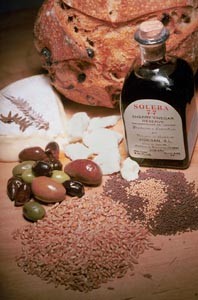
Y2K Cuisine

0

Y2K Cuisine

How I survived the apocalypse

By Marina Wolf

Dear Diary:

WELL, it’s the first day of Y2K, and they were right. Those missing two digits were enough to bring civilization to a screeching halt, or at least shut down the electrical supply, which is essentially the same thing, as far as the United States is concerned.

Fortunately, I’m a prudent sort of person when it comes to emergency preparedness. I always bought more than one can of tomatoes at a time and stacked jugs of water in the garage. After all, I live in earthquake country, riot country–they call it California on the map–and I’ve learned to be ready for any weirdness, natural or man-made. I may not have stocked up on freeze-dried Army rations or learned how to divert my gutters for a water supply, but I think I’ll be OK. After all, I am a food writer, and I know my way around a kitchen. Even in the dark.

The best thing to do at this point is to stick with what I know. What’s to worry? Much of the food we eat on a regular basis already has the staying power of a Twinkie. And I’m not going to get scurvy just because I can’t get fresh oranges until next Monday. I’m way ahead of, say, the typical Leningrad resident during World War II, who had only 250 grams of sawdust-and-maggot bread a day during the 900-day blockade by the German army. Talk about food-delivery interruptions.

Dear Diary:

IT’S BEEN a couple of days now, all the champagne is gone, but all I can say is: finally, an excuse to clean the freezer! I’ve set up my camp stove on the patio and have been cooking nothing but that Depression-era favorite: freezer stew! The recipe is simple: one can of tomatoes (I knew they’d come in handy), one can of broth, one can of water, and one bag of frozen vegetables, doesn’t matter what. That freezer-burn flavor just vanishes with a healthy spoonful of garlic powder or onion flakes–the survivalist’s friend!

Dear Diary:

WALKED DOWN to the grocery store today to see if it was open yet, but I couldn’t find it amid the smoking ruins. Oh, well. The walk was good for me. Got back and spent the last few hours of daylight flipping through my cookbook collection. Lingered over the Y2K cookbooks and survival guides, which I originally picked up for their historical significance. I still can’t say I’m sorry that I didn’t follow their guidelines.

I just don’t have the taste for unbleached, unground, soaked-and-boiled wheat, no matter how much it’s dressed up with honey, powdered milk, or peanut butter.

Don’t know whether to laugh or burn the books for heat. Wake up, people! The average American has never even seen a whole kernel of wheat. We like our grain ground and our cereal from a box with a cartoon character on it, and there’s not enough time in even this new millennium to change that.

Dear Diary:

THOUGHT I was pretty smart, snagging those 100 pounds of spaghetti at BulkMart a few days before New Year’s. But I forgot the sauce, the salad mix has gone bad, and my stash of red wine is almost out (anarchy is hell on a wine cellar). Time to turn to the corners of the kitchen, to the foodstuffs that everyone accumulates but no one knows what do to with: condiment packets, jars of chutney, half-empty bottles of gourmet ketchup. Here lie the makings of an ethnic smorgasbord! Spaghetti with olive oil, chili flakes, and a squirt of ketchup: spaghetti indiavolati (“deviled spaghetti”). Spaghetti with sesame oil and soy sauce: instant chow mein. Spaghetti with Parmesan and bits of anchovy, fried into a thick pancake: spaghetti frittata.

Too bad about the wine, though. I seem to be going through it a lot faster these days. . . .

Dear Diary:

STARTING TO GO through Internet withdrawal. I’ve had to rely on my trained pigeons to communicate with long-distance friends and relatives. It’s easier on my wrists, but it lacks a certain sense of immediacy.

Meanwhile, I am exploring the possibilities of canned food. Nutritionists have bemoaned Americans’ overreliance on canned food products for decades, but when push comes to shove, canned foods will save our bacon. Most food is edible straight out of the can. And the camp stove makes a canned meal positively luxurious: hot soup, a pasta course of Spaghetti-Os, fried Spam with the last eggs.

Of course, I’m running the risk of MSG poisoning, but the stack of water in the garage should help with that. I like to round it off with a dessert of canned-fruit ambrosia: old coconut, marshmallows, and fruit cocktail with that special metallic tang.

Dear Diary:

HAVEN’T HEARD from Mom since I sent the pigeon a week ago. Either she’s taking a long time on the reply or she ate the pigeon. Oh, well. I’m rejoicing that at least I got acquainted with some of my manual kitchen equipment before the power went out. Whatever plugs into the wall is now dead plastic. No blender, no microwave, no toaster oven. Anyway, in the long run manual items are much more versatile. Makes me wonder why we ever gave them up.

A knife, for example, is completely Y2K-compliant. I find the eight-inch chef’s knife to be perfect for most kitchen situations, and when gripped in a fist above your head, it carries just the right edge of confident psychosis to ward off all but the most persistent of looters.

From the December 23-29, 1999 issue of the Sonoma County Independent.

© Metro Publishing Inc.
Oreos

0

Ho! Ho! Oreo!

Sure, the Oreo boasts a lively history, but is it really Santa’s favorite cookie?

By David Templeton

‘TWAS THE NIGHT before Christmas and all through the house, not a creature was stirring . . . except for that large red-cheeked intruder scarfing Oreos at the dining room table. Yes, that would be Santa Claus, the ultimate cookie fan, who, according to millions of Christmas-giddy parents, just wouldn’t feel properly thanked–after sliding down the chimney and slipping toys beneath the tree–if the children of the house did not leave him some sugary baked bribe and a glass of milk.

Historians are uncertain as to the exact inception date and origin of this odd, socially sanctioned Cookies-for-Presents Program–or should we call it a “tradition”?–but it seems to have originated sometime around the late 1930s. And yes, in most households that follow this custom, the cookies are less of a bribe–by Christmas Eve it’s really too late to change Santa’s mind anyway, isn’t it?–than a generous, blissful, heartfelt “Thank You,” a thoughtful offering to a kindly fellow who works awfully hard on Christmas Eve and must surely need a snack somewhere along the way.

But when was it decided that Santa would prefer cookies and milk to, say, a tuna-fish sandwich and strong cup of coffee? And, for that matter, how can we know what kind of cookie Santa would prefer?

To put it more specifically, is Santa a chocolate-chip cookie man or does he go in for those tree-shaped festive sugar cookies? We may never know, but–and this may shock you–there is a body of evidence to support the conclusion that the one cookie that is left for Santa more than any other cookie . . . is the Oreo.

Yes, the Oreo. The bread-and-butter of Nabisco Foods Inc., that renowned little treat made of sweet creamy “filling” stuffed between two chocolate circles. Based on the sheer number of Oreos sold around the world, the folks at Nabisco can rightly claim that the Oreo is the most popular over-the-counter cookie in the world: over 363 billion of the things have been gobbled up since they hit the market in 1912–enough Oreos to reach to the moon and back five and a half times, enough to circumnavigate the globe 382 times!

And since the cupboards of America, statistically speaking, are more likely to hold a box of Oreos than any other cookie, it could be extrapolated that Santa finds a higher percentage of Oreos waiting on the table than any other brand.

“One would definitely think so,” agrees Ann Smith, spokesperson for Nabisco Foods Inc., headquartered in Parsippany, N.J. “We can’t officially claim to be Santa’s favorite cookie, of course. But since we’re America’s favorite cookie, I’m sure Santa gets plenty of Oreos every year.

“If I ever get a chance to speak to Santa, I’ll ask him,” remarks Smith, adding, “I also want to ask him if he’s a twister or a dunker.”

Oh! Surely Santa is a dunker. Isn’t he?

“Most males are,” Smith replies. “Our research shows that women tend to be twisters, and men are dunkers. Men also tend to pop Oreos in their mouth whole, and guzzle milk to wash them down.”

Hmmmm. Since Santa is always on the run, maybe he does that.

THE NOBLE OREO–as illustrious and recognizable a brand name as are Lifesavers and Spam–is consumed at the rate of 9.1 billion cookies per year. Like Spam, the origin of the Oreo’s peculiar name has been the subject of endless speculation. (Spam, in fact, is a conflation of the words spice and ham). According to Nabisco historians, the Oreo was not named after the Greek word oreo, meaning “mountain.” Nabisco’s pride and joy was named by taking the “re” out of cream and squishing it, sandwich-style, between the two “o’s” from the word chocolate.

The original Oreo has, over the last 87 years, produced a number of Oreo cousins, including a popular white fudge-covered Oreo and a bevy of holiday-themed Oreos, spanning the calendar from Christmas to Purim.

In fact, it was just in time for the Jewish holiday of Purim that Nabisco, two and a half years ago, introduced the spring Oreo, made with sky-blue filling, and carrying–for the first time in Nabisco history–a stamp on the package announcing that the contents were 100 percent kosher. Since then, all Oreos–and nearly all Nabisco products–have been certified kosher.

Which leads to the obvious question: What was it about Oreos that wasn’t kosher?

According to Smith, the cookies were once made with lard. As in animal fat. But that’s all changed. In fact, from an ingredient standpoint, Oreos haven’t actually contained lard since the ’70s. But since Oreos were still being produced on the same production lines, the product could not be considered kosher. Systematically, one by one, Nabisco disassembled the machinery, cleansing everything according to the requirements of the faith so it could receive a rabbi’s blessing. The sky-blue color of the spring cookies was chosen to suggest, well, the spring.

As for why the Christmas Oreo carries red cream filling, Smith says it was a choice between red and green. “But in our marketing research, we discovered that a red cream-filled Oreo did not make the people think that the flavor was going to taste like cherry. But the green cream filling made people think it was going to taste like mint.”

Besides, she adds, “Red is Santa’s favorite color.”

So does that suggest that Mr. Claus might prefer those red cookies to the original? Smith does not to presume to say.

“At our house, we leave the white fudge-covered Oreos,” she confesses. “Mainly because those are my favorites.”

From the December 23-29, 1999 issue of the Sonoma County Independent.

© Metro Publishing Inc.
Millennium Events

0

Millennial Madness

These boots are made for walking: Sonoma County singer Jessica Star struts into the next century with a new look and a new attitude at a New Year’s Eve show at Third Street Aleworks in Santa Rosa.

2,000 ways to ring in the new year

By Yovanna Bieberich and Patrick Sullivan

AS WE SEE IT, you have two options. First choice: fearing a nasty nip from the Y2K computer bug or a sound thrashing from the Four Horseman of the Apocalypse, you could spend New Year’s Eve huddled in your basement, clutching your bottled water and your dried apricots. Second choice: you could get out there and party like it’s 1999.

Heedless of the dire predictions, a whole lot of people in the North Bay are apparently ready to see what’s behind Door No. 2. At least, that’s the impression we get after discovering how quickly many local New Year’s Eve celebrations are selling out.

Don’t worry, though: if you call now for reservations, you still have time to get on board at most of the concerts, dinners, and comedy and theater events taking place on the big night. Below you’ll find our selective guide to these local celebrations. As you can see, there’s an endless variety of ways to say adios to the old year (and decade and century and so on) and “Howdy, pardner” to the new one. And let’s face it: all of them are more fun than your basement–even if it is bomb proof.

As you can see, there’s an endless variety of ways to say adios to the old year (and decade and century and so on) and “Howdy, pardner” to the new one. And let’s face it: all of them are more fun than your basement–even if it is bomb proof.

The Artifacts

The Station House Cafe celebrates the end of the world as we know it–or at least the arrival of the new year–at an event featuring musical entertainment provided by the Artifacts, a Petaluma-based acoustic trio. This may be the band’s last show, since the new year will see the Artifacts going on an extended hiatus. The New Year’s bash/goodbye party runs from 9 p.m. to 12:30 a.m. at 11180 State Route No. 1, Point Reyes. You’ll need reservations, so make sure you give them a call. $20. 415/663-1515.

Dining on the eve of the Millennium

Aires of Erin

Forget that nasty computer bug and celebrate the new year Irish style at the Rose with a special party featuring the Aires of Erin, the Healy Irish Dancers, and an excellent selection of Y2K-compliant beer. The fun begins at 9 p.m. at 2074 Armory Drive, Santa Rosa. $10. 546-7673.

Big Bang in Sausalito

Never imagine that the people of Sausalito don’t think big. On Dec. 31, they’re not content to merely ring out the millennium–instead, they’ll celebrate 12 billion years of history with a party modestly titled “The Big Bang.” This bayside bash features two stages with continuous live entertainment, including fire performers, stilt walkers, giant puppets, dancing to Calypso, salsa, and rock and roll, and more. A giant illuminated “Clock of All Time” floating on the bay will ring in the new year with an extravagant midnight light-and-water show. The party runs from 8 p.m. to 2 a.m. on the shore of the bay in Sausalito. $125 (includes buffet and champagne at midnight). 415/332-9454.

Bluerock Country Boys

Who says there’s nothing to do on New Year’s Eve if you’re on a budget? At Tamale Malone’s Year 2000 Millennium Bash, you can get together with a date or a few friends at 245 Healdsburg Ave. in Healdsburg and dance from 9:30 p.m. till dawn to the music of the Bluerock Country Boys. No cover charge–and no dishes to clean after the guests leave. 431-1856.

Bluesburners

Shake off the blues with these local faves when the band plays Party 2000 at the Forestville Club. The party starts at 9 p.m. at 6250 Front St. in Forestville. $10 (includes champagne, prizes, and party favors). 887-2594.

Scott Capurro

Why stay home on New Year’s when you can dance the night away at Club FAB? This party will be hosted by comedian Scott Capurro and will feature San Francisco DJ Steve Fabus. If you get tired of dancing, you can always eat your way into the new millennium at the dessert table. The evening begins at 8 p.m. at 16135 Main St., in Guerneville. $25 in advance; $30 at the door (includes champagne and party favors). 869-5706 or 869-5708.

A Case of the Willy’s

Why sit at home watching some giant ball drop when you can experience a New Year’s bash firsthand? Ring in the next millennium at the Tradewinds’ Happy New Year’s Party 2000, featuring the danceable blues-rock of A Case of the Willy’s. The party starts at 9 p.m. at 8210 Old Redwood Hwy., Cotati. $10 (includes party favors and champagne). 795-7878.

Cavalcade of Comedy

Laugh off your Y2K fears at this event featuring four past finalists from the San Francisco Comedy Competition. The fun–which includes performances by Mark Tita and Steve Kravitz (of Nash Bridges)–begins at 9 p.m. at the Marin Center, Avenue of the Flags, San Rafael. $25 415/472-3500.

First Night

A homegrown tradition of alcohol-free fun hits its stride as the curtain comes down on the millennium. During the fifth annual First Night celebration, the streets of downtown Santa Rosa will be overflowing with musicians, poets, and dancers. Don’t forget to check out the Y2Kazoo band: 2,000 enthusiastic kazoo players will descend on the downtown area between 7 and 8 p.m. Crowd participation is encouraged in the kazoo-fest, so grab one at the corner of Fifth and Orchard at 5:30 p.m. Check out the Millennial Poetry Slam from 10 to 11:30 p.m. at the Cultural Arts Council, 606 Wilson St. Organizers are also planning a “Time Tunnel” on Fifth Street where people can “walk through each decade.” The New Year’s fireworks shows begin at 9 p.m. (for East Coast) and at midnight. First Night festivities begin at 4 p.m. in downtown Santa Rosa from City Hall to Fourth and Fifth streets, through Santa Rosa Plaza, and to Railroad Square. Entry badges (available at Copperfield’s bookstores) are $5 in advance and $10 on the night of the event. 579-ARTS.

Forever Plaid

The end of the millennium doesn’t mean an end to all things plaid–thank God! New Year’s Eve at the Cinnabar Theater will see the return of Forever Plaid, a comic celebration of the pop hits of the ’50s. The musical theater piece features Sean Bernardi, Stan Case, Greg Grabow, and Anthony Martinez as a frolicking foursome whose boyish antics and angelic harmonies persist even in the afterlife. The show starts at 8:30 p.m. at 3333 Petaluma Blvd., Petaluma. $50 (includes dinner, dessert, and champagne). 763-8920.

Groove Juicy

Get into the groove and bust a move to retrofunkygroovin’ sounds of Groove Juicy at Marty’s Top o’ the Hill New Year’s Eve party. The action starts at 9 p.m. at 8050 Bodega Ave., Sebastopol. $5 for general admission and $3 for students. 823-5987.

Handelmann Quest

Are New Year’s Eve events a bit too pricey for your taste? Well, just because you don’t have $100 to blow on the festivities doesn’t mean you and your sweetie have to stay home huddled in front of a TV dinner. Enjoy a no-cover-charge show featuring local rock band Handelmann Quest at Jasper O’Farrell’s. The music starts at 9:30 p.m. at 6957 Sebastopol Ave., Sebastopol. Free. 823-1389.

Hangman’s Daughter

Hangtown

Get your fill of holiday cheer before the millennium is over and life as we know it ends in Y2K chaos–or you have to back to work. Kick it with the country and western sounds of Hangtown starting at 9 p.m. at Twin Oaks Tavern, 5745 Old Redwood Hwy., Penngrove. Free. 795-5118.

Eric Lindell and the Reds

Sonoma County’s prodigal son returns for a show at the Inn of the Beginning. Dance till you drop, grab some party favors, then sip free champagne at midnight. If you’d just rather sit and eat all night, you can do that, too. The show starts at 9 p.m. at 8201 Old Redwood Hwy., Cotati. $25 for the show; $40 for the show and dinner buffet. 664-1100.

Masquerade 2000

Eat, drink, and be merry Renaissance style as the Healdsburg Arts Council rings in the new century with “Masquerade 2000: A Renaissance Feast for the Senses.” The Malatovs’ New Millennium Minstrels will be present to dazzle and amaze guests with feats such as fire-eating and sword-swallowing. Costeaux French Bakery and Cafe will be providing a sumptuous array of hors d’oeuvres, with cocktails and champagne to be served throughout the evening. The event runs from 7 p.m. to 1 a.m. at the Villa Chanticleer, 1248 N. Fitch Mountain Road, Healdsburg. $75. 433-3064.

Blue note: Bonnie Rait headlines at Millennium Party 2000 in San Rafael.

Millennium Party 2000

If big is better, than you could do a lot worse than San Rafael’s Millennium Party 2000, one of the largest New Year’s parties in the North Bay. The city just wasn’t happy confining the event to one building, so it spread the fun out all over downtown San Rafael. The evening will feature musical performances by a slew of big names, including Grammy Award winner Bonnie Raitt, Elvin Bishop, Joe Louis Walker, and Huey Lewis & the News. The event begins with dinner at 8 p.m., continues with performances at 10 p.m., and concludes with a midnight countdown. $300 (includes dinner, dessert, coffee, and more). 415/457-2266.

Johnny Otis and Heather Marie

Poyntlyss Sistars

Forget about Y2K. Grab a date–or search through the personals for one–and head over to Domenic’s for its New Year’s Eve dinner and dance party. You’ll enjoy a hearty five-course dinner, music by the Poyntlyss Sistars, a bottle of champagne, and party favors. Partying starts at 5 p.m., and the Sistars take the stage at 9 p.m. at 3660 Stony Point Road, Santa Rosa. $99. 584-8803.

Power Factory

Get off the couch and head on down to the Flamingo Resort Hotel. It’s time to put on your dancing shoes and get down to the classic rock, R&B and funk of Power Factory. If dancing’s not your thing, then hang out for the free champagne and $500 to be dropped from the ballroom ceiling at midnight. The party starts at 9 a.m. and ends at 1 a.m. at Fourth St. and Farmers Lane, Santa Rosa. $20. 545-8530.

Banding together: Roy Rogers and the Delta Rhythm Kings team up with Zigaboo Modeliste and the New Ahkestra at the Powerhouse Brewing Co. in Sebastopol.

Roy Rogers and Zigaboo Modeliste

New Year’s Eve brings a high-powered double bill at the Powerhouse Brewing Co. First, catch Grammy Award-winning master of the blues slide guitar Roy Rogers and the Delta Rhythm Kings. Then, New Orleans’ funk king Zigaboo Modeliste and the New Ahkestra hit the stage. Both bands come together at midnight for an all-star jam. The gala package includes a gourmet four-course meal, a bottle of Iron Horse Blanc de Blanc, an appetizer buffet, a breakfast buffet, and lots of dancing in a heated revival tent. Dinner begins at 7:30 p.m. and the music starts at 10 p.m. at 268 Petaluma Ave., Sebastopol. $150 gets you in to see the show; $250 gets you the complete package. 829-9171.

7th Day Rototiller

Maybe they’ll dress up like milkmen, or maybe they won’t. But whatever surprises 7th Day Rototiller have in store for their New Year’s Eve show at the Moonlight, you can be sure they’ll deliver their patented combination of eclectic alternative music and wildly unpredictable onstage behavior. The show starts at 8 p.m. at 515 Fourth St., Santa Rosa. $10 (includes champagne). 526-2662.

Solid Air

They’re back! This will be Solid Air’s sixth New Year’s Eve show at Murphy’s Irish Pub. The music starts at 9 p.m. and ends at 1 a.m. at 464 First St. E., Sonoma. $60. 935-0660.

Sonoma

Smooth jazz is the order of the evening at the Valley Ford Hotel and Restaurant. The evening features the band Sonoma and a nine-course dinner created by gourmet chef Berthold Seiffert (who has cooked for such notables as Princess Di and President Carter). Dinner seating is at 8:30 p.m. and the music starts at 9:30 p.m. at 14415 Hwy. 1, Valley Ford. $225 (includes dinner, show, party favors, and champagne). 876-3600.

Spancky’s New Year’s Eve Party

If you have a hard time justifying spending tons of money on a one-night party, then Spancky’s is for you. This is one New Year’s bash that lets you dance carefree into the year 2000 without thinking about how much you just spent, because there is no cover charge. The event begins at 9 p.m. and ends at 2 a.m. at 8201 Old Redwood Hwy., Cotati. 664-0169.

Jessica Starr and the Kind

Party till the cows come home with Jessica Starr at the Third Street Aleworks. The folk-rock guitarist is back with a new look and a new band. Other attractions include a huge buffet, cake, and plenty of party favors and champagne. The action begins at 8 p.m., and you can party on till 2 a.m., at 610 Third St., Santa Rosa. $40. 523-3060.

Angela Strehli Band and the Sundogs

Start the millennium far from the madding crowds at a special party at Marin County’s Rancho Nicasio featuring the inimitable Angela Strehli Band and the Sundogs. The evening includes a five-course meal, a champagne toast, and more. It all begins at 7 p.m. on the town square in Nicasio. $200 (includes meal, champagne, and entertainment). 415/897-7772.

Robin White and the Jazz Inmates

Here’s another New Year’s party that won’t cost your life savings. One of Sonoma County’s premier jazz venues, Main Street Station, is hosting a New Millennium Party featuring the musical talents of Robin White and the Jazz Inmates. The show starts at 7 p.m. at 16280 Main St., downtown Guerneville. Free. 869-0501.

Vinyl

Time to get down, kick up your heels, shake your bootay, and . . . well, you get the idea. Head over to Sweetwater for the club’s New Year’s Eve Mill(Valley)ennium party. The funk masters of Vinyl provide the music, there’ll be hors d’oeuvres and a champagne toast at midnight, and the party continues till 3 a.m. Festivities begin at 9:30 p.m. at 153 Throckmorton Ave., in Mill Valley. $65 (includes hors d’oeuvres, music, party favors, champagne toast, and more). 415/388-2820.

Wiley’s Coyotes

Looking for a reason to get dressed up to the nines? Ring in the millennium at Topolos at Russian River Vineyards. This elegant gala will feature a buffet, award-winning wines, and a giant heated tent with a dance floor where guests can groove to the tunes of local favorites Wiley’s Coyotes. The celebration begins at 9 p.m. and ends at 1:30 a.m. at 5700 Gravenstein Hwy. N., Forestville. $125 (includes food, drink tickets, and souvenirs). 887-1562.

Y2Kodiak?

Are you ready for a Y2Kodiak attack? The honky-tonk home of “Kodiak” the bull is having a New Year’s Eve bash guaranteed to make for a wild ride into the new millennium. If you don’t mind paying $40, you can enjoy an early sit-down dinner at 6 p.m. and reserved seating. If you’d rather pay $30, you can come at 8 p.m. for the late show. No matter what you decide, at midnight there’ll be complimentary champagne and a buffet. The evening will come to a close at 1:30 a.m. at 256 Petaluma Blvd. N., Petaluma. 765-5760.

Napa Events

Abe Battat Quartet

Dance to live music by the foursome and savor an eight-course feast at Brannan’s Grill. The party starts at 8:45 p.m. at 1374 Lincoln Ave., Calistoga. $200. 942-2233.

First lady: Connie Champagne swings into the Culinary Institute of America.

Connie Champagne and the Magnum Brutes

Why settle for merely sipping sparkling wine when you can swing into the new year with the inimitable Connie Champagne at “Greystone 2000: A Celestial Celebration”? The event includes a four-course dinner with seating at 6 p.m. and again at 9 p.m. at the Culinary Institute of America, 2555 Main St., St. Helena. $999 per couple. 967-1010.

Evening in the Wine Country

Trumpeters, a jazz trio, magicians, and a 12-piece band top the bill at this party at the Meadowood Resort. Also included: a festive meal with all five millennium cuvées produced by Napa Valley’s sparkling-wine houses. The fun starts at 5:30 p.m. at 900 Meadowood Lane, St. Helena. $550. 963-3646.

Little Sister

Some things are priceless. Others are just expensive. We leave it to you to decide which description fits Napa’s Embassy Suites Millennium Celebration, a three-night package that includes a New Year’s Eve dinner/dance featuring the blues-to-Motown sound of Little Sister. The party starts at 7 p.m. at 1075 California Blvd., Napa. $1,358 per couple (includes wine, champagne, breakfasts, cocktail parties nightly, and more). 253-9540.*

Napa Valley Wine Train

It’s the Wine Train! You too can spend an evening in elegance cruising the Napa Valley in stylish splendor. Sip champagne while you gaze out the window and laugh at all those folks stuck in their vehicles. This special New Year’s Eve excursion will include a sumptuous dinner and dancing. $250. 253-2111

From the December 23-29, 1999 issue of the Sonoma County Independent.

© Metro Publishing Inc.

‘It’s a Wonderful Life’

0

Christmas king Christopher Radko weighs in on tolerance, the Devil, and ‘It’s a Wonderful Life’

Writer David Templeton takes interesting people to interesting movies in his ongoing quest for the ultimate post-film conversation. This column is not a review; rather, it’s a freewheeling, tangential discussion of life, alternative ideas, and popular culture.

Christopher Radko is surprised. He’s just learned that his favorite Christmas movie–Frank Capra’s It’s a Wonderful Life–has been the subject of some derision over the last several years.

For a while there, it was actually impossible to channel-surf at Christmastime without running across the tortured face of George Bailey (played by Jimmy Stewart, of course) running frantically through the streets of Bedford Falls, or standing on that windy bridge preparing to end what he thinks is his worthless life–just before Clarence the angel arrives to show George just how much he’s really worth. For whatever reason, it’s hard to find more than a small handful of folks who’ll now admit, in public, that IAWL is a film they like.

But Radko is one of them.

“Not only is It’s a Wonderful Life my favorite Christmas movie,” he says, boldly, clearly taken aback that anyone might cast a cynical eye toward what many people believe to be a rich and dark and philosophically satisfying a film. “It’s one of my favorite movies, period.”

Radko is a former New York mailroom clerk turned high-profile designer of mouth-blown, European-made glass Christmas ornaments, so he spends a lot of time thinking about Christmas. Christmas is Radko’s holiday in the same way Halloween is Elvira’s holiday. Since 1986, he’s designed over 500 gorgeously detailed ornaments, selling several million of them throughout the world. His work–averaging about $38 per ornament–is sought after by Hollywood players and the Washington elite. He’s been asked to personally decorate the White House. His new book, Christopher Radko’s Ornaments (Clarkson Potter), is a certified bestseller.

Yet the suddenly wealthy Radko, 39, remains remarkably boyish, shy, and guileless. In person, he seems less like a “Czar of Christmas Present”–as the New York Times has proclaimed him–and more like a New Age philosopher/poet.

One whose expertise is Christmas.

“I like the message of It’s a Wonderful Life,” he says. “First of all, I always like movies with Christmas trees in them.” Laughing, he mentions that the film ends with a shot of an ornament on a Christmas tree. “I like that, of course.

“But gosh . . . I think that the movie helps us see that you don’t have to be a millionaire, or do something world-reaching, in order to make a difference,” he continues. “You can change the world from your own backyard, in your own hometown.

“I also think the movie shows us that it’s not just the things you do on Christmas Day–you know, the gifts you give people, the shopping, the decorating–but it’s the heart-centered things you do all year long that really make difference. That for me is the spirit of Christmas.”

He cites the film’s ending, when the townspeople fill the house to return the favors George has been reluctantly, but freely, distributing his entire life, and his brother raises the toast, “To George. The richest man in town.”

“They don’t mean rich in dollars,” Radko says. “They mean that he has all those friends, he’s got their love. Because of his inherent kindness, he’s captured the hearts of all the people of Bedford Falls.”

It’s a scene that has been known to make grown men cry.

“Being recognized for your heart-connection to people is a very moving experience,” offers Radko, “but it’s something that our society does not promote. We measure people by their looks, by their bank accounts, by their power; we judge them by their religion, or their political affiliation–but we don’t often measure people by their hearts. And that’s a shame.

“I spend a lot of time in Europe, where I see a lot of religious art,” Radko says. “And I’ve always been interested in archangels, and the way they’re depicted in art. Traditionally, in Europe, the archangel Michael is seen holding his fiery sword, dressed in some kind of Roman soldier’s outfit, standing on the head of a dragon.” The dragon, of course, being the Devil. In fact, Michael–according to scripture–is the angel who led the battle against Satan and the rebel angels, and who forced the devil into the pit of Hell. “So these paintings are supposed to symbolize the triumph of good over evil,” Radko continues, “of throwing the Devil into submission. I always thought those images were curious.”

Back home, he commissioned an Arizona artist to create a new painting of Michael.

“What she did was, she had the archangel Michael, with his sword sheathed in his scabbard, actually leaning over and helping Satan up out of the depths of Hell–and back into the light,” Radko says. “I am really touched by the symbolism of that image. I think that’s a strong, important image for us to hold, because as long as we exist in the realm of separateness and division, of good and bad, ‘you’re on that side of the line and I’m on this side of the line,’ we humans are never going to become united as one. We have to stop labeling each other, constantly pushing people away, saying, out of elitism–or because your religion says that’s the way it has to be–‘You are different. You are wrong.’

“Because that idea is in need of a little evolution. So you say, ‘You know what? Maybe we need to try and extend and open hand, and open heart to that which we’ve shut away from us.’ I think that’s when the healing will be in our future as human beings. That’s when the true spirit of Christmas will exist on Earth, every day of the year.”

From the December 23-29, 1999 issue of the Sonoma County Independent.

© Metro Publishing Inc.

Stocking Stuffers

0

Stuffer Stalking

Quick, cheap–but oh-so-thoughtful–last-minute stocking stuffers

By Yosha Bourgea and David Templeton

WORK 12 long months, and what do you get? Another darned Christmas and deeper in debt. As you back the forklift through the living room, depositing another stack of gaily wrapped hibachis and Thighmasters under the towering tree, you can pause for a moment to anticipate the annual blessings of late afternoon, Dec. 25: a blizzard of torn wrapping paper and dry pine needles, an envelope from the credit card company that you’d really rather not open, and–of course–lots and lots of things.

Now where to put them all?

This year, in hopes of a less stressful holiday, maybe you’re sticking to stockings. If you’re not quite ascetic enough to do away with gifts altogether, but, faced with a tighter-than-usual budget and a house already crammed to the rafters, just keep it small and simple.

A stocking is really the best gift-giving medium anyway. For a few weeks, it hangs demurely from the mantel (freeing up floor space). On the big day, it bulges with a cornucopia of surprises, echoing the big sack that a certain Arctic philanthropist is known to carry on his sleigh.

Stocking Stuffer Themes

Environmentally conscious revelers will note that a stocking serves as reusable wrapping paper for its contents.

And a stocking is more likely to contain chocolate and less likely to contain exercise equipment. (Who wants practical gifts anyway?) Stuffers don’t come with instructions or require assembly. They don’t need to be fancy or awe-inspiring, just fun. And after all, isn’t that what the holiday season is supposed to be? As the adage has it, the best things often come in small packages.

Here are few suggestions:

Cuppa Love

IT’S SMALL. It’s cheap. It’s kinda festive looking. That little mesh tea infuser–one that looks like the planet Saturn on a chain–not only makes nifty inexpensive stocking fodder (most of them run for under two bucks, found in most kitchen supply stores or coffee-and-tea shops); with a piece of candy inside, it also makes a dandy ornament for the tree.

Twisted Xmas

SOME TWISTED individual, whom we’ve so far been unable to identify, decided that riding in a New York taxicab was an experience that deserved some kind of sweet commemoration. Thus do various quirky gift shops (and Noah’s Bagels in Petaluma) now offer New York Traffic Treats (Wildwest Products Inc.), little stocking-sized boxes of taxi-shaped cookies. Good for snacking or playtime fun. (You talkin’ to me?!)

Chocolate Alert!

McSTEVEN’S Christmas Cocoas were literally made for stocking duty. Attractively decorated, fist-sized cans contain a variety of whimsical flavored instant cocoas, from Candy Cane to Eggnog. Available at various gourmet food shops (including Petaluma Market), they cost around two bucks a can, and–if you line up all half-dozen varieties side by side–the can covers reveal a magical illustrated panorama.

Brewski

THE AVERAGE stocking stuffer runs around three bucks. The average bottle of really good microbrew beer is slightly less than that. So beer, quite obviously, is a stocking stuffer made in heaven. We suggest a spicy Christmas Brew such as the ever-popular Winterhook Ale, or the Oregon-brewed Bobby Dawzler Christmas Ale (“Perfect for fireside sipping”), or Rogue Ale’s “Santa’s Private Reserve,” with a nice picture of a beer-swiggin’ Santa right on the oversized brown bottle.

String Thing

THE COOL THING about a yo-yo is . . . well, it’s difficult to establish exactly what it is about the gravity-defying gizmo that so enthralls children–and a smattering of enlightened adults, including, but not limited to, Tommy Smothers. Stocking stuffer classics for decades, yo-yos are readily available, and Toyworks (in Santa Rosa, Healdsburg, and Sebastopol) boasts an enormous number of different yo-yos, priced from $2.95 to up in the $40 range.

Dog Days

FORGET BEANIES. Ever since it was decided they’d be worth something someday, those once adorable little critters have grown too big for their don’t-play-with-me-I’m-a-collectible britches. The hot stocking stuffer this year is Olive, the Other “Reindeer,” the canine star of the best-selling children’s book by j. otto seibold & Vivien Walsh, now brought to hand-held life in a charming toy version that runs around $7.95. Commonly available in bookstores.

Smart Idea

QUICK! Who said this? “That it will never come again is what makes life so sweet.” If you said Emily Dickinson, either you’re really smart or someone’s already given you an E. Dickinson Novel-Key. Whimsical and literary, these inventive pewter key chains–perfect for stocking stuffers at $5.25 apiece–are shaped like tiny open books, inscribed on one side with the name of a famous author (Shakespeare, J.R.R. Tolkien, Rudyard Kipling, Agatha Christie, John Steinbeck, etc.), and with a quote from the author in question on the flip side, such as, “Fish and visitors smell in three days.” Now who said that? Available at Copperfield’s bookstores.

Pagan Art

FOR THOUSANDS of years, the image of the spiral has held deep spiritual significance in many pagan cultures, embodying the endless path of life and the spirit. The spiral also makes a structurally perfect paper clip. Clipiola, the clever, cool-looking spiral paper clip from Italy, is now available in round, stocking stuffer-sized metal boxes. Copperfield’s Books and Ideal Stationers sell them for $5.99. Give one to the paper-pushing pagan in your life.

Good ‘n’ Goofy

KITCHEN supplies are perfect stocking stuffers. From spatulas to whisks, to egg timers to potato peelers, the things just have a knack for looking shiny and fitting well in a stocking. For an extra touch of whimsy, try tossing in a giraffe-shaped sink brush. Available at Lechters Housewares in Santa Rosa, these remarkably goofy kitchen helpers, good for scrubbing sinks or dishes, have a bright, plastic giraffe handle and brush that rests in a nifty Savannah-like dish.

Cash Cure

ASSUMING your mantel can handle the weight, a big stocking full of silver dollars would always be appreciated. If you’d rather hand over the cash in a slightly cleverer manner, try this: Buy a little box of empty gelatin pill capsules from your neighborhood pharmacist. Get large ones. Separate the halves. Choose bills of whatever denomination you’re willing to part with, roll them up very tightly, and squeeze them into a capsule, one bill per pill, of course. A pill bottle full of “money medicine” will be a welcome–and weird–stocking stuffer.

From the December 23-29, 1999 issue of the Sonoma County Independent.

© Metro Publishing Inc.

A Christmas Story

0

Fire & Ice

Snowball in Hell: A Christmas Story

At 11:15 on the West Coast of Heaven, just before midnight on a clear Christmas Eve, one tiny angel–with her halo in her pocket and her wings folded down–was silently sneaking from Angel Town.

Snowball (her name) was the semi-youngest but rather the sweetest of all the young angels in Angel School. She was talented too, for an angel so young. Snowball, who with only a flick of her wings, could turn rocks to rhinos, and clouds into string, was really a kind- of-a sort-of-a whiz at miracles and wonders and all that other angel biz.

But, as she’d tell you, with knowledge empirical, in Heaven, you know, everything is a miracle. Wonders are given out free twice a day, as they say. So in spite of her spit-and-polish miracle skill, Snowball’s wonders and marvels were . . . well . . . run-of-the-mill.

“Oh my” and “Oh dear,” the angel thought. “I’ve simply got to get out of here.”

With a smile, she added, “Even just for a little while,” and she sneakily snuck from her five-rung bungalow, choosing late Christmas Eve, a time of sweet celebration, for the date of her little angelic vacation.

The copper-pennied streets were empty. The old Pearly Gates stood optimistically ajar, as most of Heaven’s older host were off on holiday, visiting dusty old Earth in their annual way, with harps and hymns played in the air, and occasional miracles, here and there. For Earth was quite dingy, as everyone knows, and often needs the touch of angel toes.

So nobody noticed as Snowball fluttered right to the buttery edge of Heaven, and, with a clear swan dive that shredded the sky, she leaped, crying, “Heaven, for now, goodbye!”

Setting her course, unsteadily so, toward Earth, where she’d long longed to go, she laughed, 100 percent elated, as down through eternity Snowball skated. “I’ll be back in half a flash,” the little tumbling angel mumbled, earnestly adding, “Though Heaven’s highly rated, I really just want to be appreciated.”

Spinning and spiraling, cartwheeling and careening, through countless uncounted universes, Snowball plummeted. Rocketing past sun after sun, the little angel closed her eyes and–surprise! surprise! Tingling with mirth, Snowball–not noticing–fell right past Earth. Then, slowing, slowing, her eyes finally wide, Snowball saw–as she slowed to a glide, shaking her head–a glimmering world rising up, up ahead.

Not long after, with the grace of a gazelle, she made a perfect three-point landing in the middle of Hell.

“Ha!” Snowball shouted, skipping about. “Wow!” she sang out with an additional shout, as geysers of steam and alkali erupted dramatically, blasting the sky. She heard brass bells clanging from somewhere beneath, and the clear sound of wailing and gnashing of teeth. Frogs, in the thousands, were singing in Greek. Big gray buses zoomed by with a shriek. Overhead, flying horses–looking terribly thin–were ridden by men chasing cows out and in, as nearby a gentleman, looking quite ill, was pushing a boulder, with effort, uphill. Another fellow, not too far away–looking hungry and thirsty, in no mood to play–was perched in warm water, right up to his knees, surrounded by menacing apple trees.

Everywhere someone was sad or dejected, but Snowball stood happily, quite unaffected, sighing, “Earth needs me more than I ever expected.”

Sliding the halo from her pocket, she placed it onto her angel brow. Then, leaping up lightly from her nice landing spot, she thought, “I only wish that it weren’t so hot!”

She eyed the rock-pushing man on the hill. He shoved his stony burden almost to the top, she observed, and made a little “Yip!” as he lost his grip, and wearing a frown, watched the rock slipping back all the way down.

“Oh!” the man muttered, and “Drat!” and “Hey!” and “That must be the 50th time today.” And suddenly, there in front of his nose, an amazing miraculous vision arose. Snowball, all wrapped in a ribbon of light, smiling with a certain non-hellish delight, crying, “Ho! Happy Christmas. Good tidings I bring,” and then, and then, with a flap of her feathers, she pointed out, “Look!” for on top of the rock there had sprouted . . . one wing.

And then another.

Amazed, the man watched, thrilled and empty-handed, as the rock flew up to the top of the hill, where it landed.

“Take a break,” she suggested, quite wisely. “It’s Christmas Day, for goodness sake,” and next, the angel turned her attention to the subject of her next little intervention.

“Happy Christmas,” she sang to the man in the pool. “Is there anything I can do for you?” Baffled and blinking, the poor fellow stammered, “Well, let me think. I wouldn’t mind something to eat and drink. But every time I reach for a snack, the water dries up and the trees all jump back.”

“What a shame!” and “Oh, golly,” did Snowball remark, “that just isn’t right.”

And then, with a spark of remarkable light, Snowball snapped her little fingers. From out of thin air, shimmering with a glimmer of heavenly glint, there appeared in the angel’s hand . . . a mint.

“Open up wide,” cried the angel so young, and placed the sweet upon his tongue.

“Oh my,” the man suggested, and then, and then–as Snowball counted up to 10–as he mouthed the candy, so tiny and small, and felt it melt into nothing at all, he gave a small, “Hmmmmmm,” and then he said, “Hey!,” as all of his hunger and thirst went away. It was gone in a flash, it went out like a light; the sweet had deleted his appetite.

“Merry Christmas,” said Snowball with obvious delight.

The little angel was just warming up. Literally so. “This terrible heat has got to go,” she said. And, blinking two times, crying, “Tallyho!” she caused a heavenly breeze to blow. Then, up from the steaming soil she flew, looking for other good deeds to do, as all across the sulfurous, odoriferous landscape of Hell, the magic breeze touched the brows of all the angel’s clientele.

Now racing as fast as she could fly, she rained down miracles from the sky. A Christmas tree there, and a string of lights here. “Hey, hey!” and ‘Good cheer,” were her welcome refrains, as she flew melting every last one of Hell’s chains.

“Happy Christmas!” she hollered, then, “Yippee ki yi!” as she noticed those ghost riders up in the sky. Like a flash she flew up, and I can’t tell you how, but she helped each cowboy catch his cow.

At last, after all the deeds she could do were done, Snowball smiled. “Gee, that was fun. It’s getting late. It’s time to fly.” Then, up she sailed toward the early dawn sky, as the people of Hell blew her kisses, goodbye.

“Oh!” Snowball shouted, “Before I go, there’s one last thing.”

And it started to snow.

So she blasted to Heaven, where it was still early, and crept past the gates, still open, still pearly. Back at her five-rung bungalow, Snowball took the halo from her head, and crawled into her angel bed.

Then she smiled and sighed, and whispered, “Oh dear. I’ll just have to do that every year.”

From the December 23-29, 1999 issue of the Sonoma County Independent.

© Metro Publishing Inc.
Materialism

0

Teaching Material(ism)

By Mieke H. Bomann

AS CORPORATIONS become ever more sophisticated in their marketing techniques to children, critics are calling for increased vigilance in schools, and government officials are starting to pay attention. Arguing that the classroom should be a marketplace of ideas, not of products, many educators and parents protest that advertising has no place in school. The uproar began several years ago with the emergence of Channel One, a 12-minute newscast that is now fed into a reported 12,000 schools in exchange for free video equipment and more recently re-emerged with soft-drink companies offering to place soda machines on campuses at no charge to the school as long as the company gets exclusivity.

Critics lambasted the highly controversial Channel One program because it contained two minutes of ads that under contract cannot be cut out and urged schools to raise money for desired equipment in other ways. Nevertheless, many districts that were strapped for cash went further and began negotiating multimillion-dollar deals with soft-drink manufacturers for exclusive rights to sell their products on campus.

“You’re using persuasive techniques on kids that may not be in their best interests, but the educational system should be working only in the child’s best interest,” says Brita Butler-Wall, co-founder of the Citizens Campaign for Commercial-Free Schools in Seattle.

Now, there’s a growing trend of market researchers conducting focus groups in classrooms, and instruction time is being used to test new products like cereals. Critics are fuming. According to Gary Ruskin, director of Commercial Alert, marketers are “going to extreme measures to gain access” to children and “entering sanctums that were previously off-limits.”

Ruskin and other critics point to two recent marketing techniques that they say are particularly worrisome. ZapMe!, a year-old California company that sparked protests at Kenilworth Junior High School in Petaluma earlier this year when it announced plans to enter public schools there, has outfitted each of 220 middle and high schools with 15 high-end computers and a printer, a satellite dish for fast Internet access, and a compilation of 10,000 educational sites on the Internet (see sidebar, “Classroom Catwalk”).

“Classroom Catwalk”

To access information, student browsers enter their birth date, sex, and ZIP code. The company collects and delivers the market information to advertisers who can customize their ads for a given student. The ads, including ones for Microsoft, which sponsored the system’s software, run across one corner of the screen.

ACCORDING to a company spokesperson, some 6,000 schools are on a waiting list for the equipment. ZapMe! went public last month, selling shares on the New York Stock Exchange. Ruskin views the trend as a betrayal of children’s best interests.

“School used to be a refuge from exploitative commercial influences,” he writes in a recent article for Mothering magazine. “But, increasingly, school officials are violating this trust and turning the schools into cash-and-carry operations for the advertisers and marketers of America.”

Another sticking point for critics is the work of Education Market Resources. A Kansas company, EMR has gone into multiple schools in 90 cities across the country to help corporations test new foodstuffs, to elicit ideas about how best to market a product, and even to get new product ideas from children in preschool through the 12th grade.

In an interview, company president Bob Reynolds drew a firm line between the market research his company does and the tactics used by companies like ZapMe! “There is too much commercialism going on in schools,” he says. “When we work with companies, those schools have no idea whom we’re working for.”

Where it’s required, EMR gets parental permission for children to participate in a focus group. More than 80 percent of parents sign the slips, Reynolds adds. “It’s a life-learning experience for these children,” he explained of parental compliance. “We’re tapping into their creative problem-solving skills.”

The children receive no compensation for their opinions and ideas, but schools may get up to several thousand dollars a year, he added.

It’s the schools that don’t require parental permission that Rep. George Miller, D-Calif., targets with a bill he introduced in Congress in September that would require written permission from all parents before students participate in any market research on campus. It would also mandate that a broad study be conducted of all commercial activity in schools.

Miller is concerned that market research companies are threatening the privacy of students and delivering messages that parents might not want their children to be taught, according to David Madland, a member of Miller’s staff. “There has been very little research on these topics and its growing so fast,” he adds.

For Ruskin, the issue of consumerism goes way beyond the classroom. “The ads teach kids that buying is good and will make them happy,” he notes. “They teach that the solutions to life’s problems lie not in good values, hard work, or education, but in materialism and the purchasing of more and more things.”

DESPITE EFFORTS to combat the deluge of commercialism in schools (see sidebar), marketing to children appears only to be growing. A daylong seminar in Washington, D.C., last month, titled “Selling to Kids University,” boasted a “faculty” who taught advertisers how to “get into the hearts and minds of kids” and reinforce their message by “adding alternative media, such as in-school, online, and direct marketing.”

Ruskin says parents interested in protecting their children from overexposure to advertising should watch less television, throw away video game machines, and avoid movies that promote values they don’t believe in. Get active in politics, he admonishes, start a parents’ group, and kick advertisers out of schools, he added.

The bottom line for schools is to get their money from a source other than commercial activities, says Suzanne Black of the national Parent-Teacher Association. “We would prefer that they would find other funding mechanisms from the local, state, or federal level, so schools wouldn’t have to go with their hand out.”

Mieke H. Bomann is a staff writer for the American News Service.

From the December 23-29, 1999 issue of the Sonoma County Independent.

© Metro Publishing Inc.
Feast

0

Something special: Feast owners Heidi Scott McQuarrie and Jesse McQuarrie.

Small Banquet

Feastin’ in a new downtown bistro

By Paula Harris

THE PLACE has been open only a few weeks, but already local ladies hailing from downtown banks, plush offices, and departments of the city of Santa Rosa are gravitating toward Feast, a tiny American bistro located on Old Courthouse Square.

One recent lunchtime, the clientele includes four women (at different tables), all sporting identical short blonde coifs, conservative jackets, and power jewelry as they delicately sip oversized glasses of sauvignon blanc (poured one-third full) and rip into the crusty bread.

The regulars have even staked out their “own” tables and can be heard jokingly bickering among themselves about who’s taken who’s prime spot on that certain tapestry chair next to the window.

Santa Rosa City Councilwoman Sharon Wright and Mayor Janet Condron would look perfectly at home in this setting, perhaps nibbling on a couple of caesar salads and shooting the breeze.

The compact restaurant (it has just 11 tables in one room and two in an adjoining nook, where there’s also a small bar area) is graceful and minimalist while retaining a certain intimate and cozy feel. It occupies the small space that used to house Wolf Coffee Co.’s adjoining tea room. Feast’s owners, Jesse McQuarrie and Heidi Scott McQuarrie, have blocked off the restaurant from the java business next door and have totally transformed the small space into something unique.

The walls are pale celery green and adorned simply with a couple of large paintings, a mirror, and a reproduction of an ancient clock.

Twisted, bent forks–à la psychic prankster Uri Geller–serve as attention-grabbing napkin holders, and there are quirky centerpieces composed of containers of water, twigs, dried leaves, and stones on each table.

Although the restaurant is touted as an American bistro serving American regional cuisine, there’s a certain Japanese sensibility to the decor and a couple of Japan-inspired dishes pop up on the menu. Our server cleared up the puzzle–owner Heidi Scott McQuarrie is part Japanese. Indeed, one dish, Tsugiye salmon ($16.95 at dinner), featuring pan-seared salmon with Japanese rice, sesame spinach, daikon purée, and sweet shoyu sauce, is a family recipe named for her grandmother.

MUCH OF THE REST of the menu is traditional, down-home American fare, like Southern fried-chicken salad, North Carolina barbecued-pork sandwich, surf and turf, and oyster po’boy with Uncle Jesse’s tartar sauce.

Dungeness crabcakes ($7.95 at lunch) are warm with a firm-flaky texture, and napped in very fresh-tasting lemon cream sauce. These perfect cakes sit on a bed of shredded romaine lettuce and diced tomato with a touch of serrano chili aioli on the side. Lovely.

The generous and fresh caesar salad ($6.50), featuring a roasted-garlic dressing, asiago cheese, and herb croutons, derives its assertive flavor from the cheese rather than from any detectable anchovies in the dressing.

A plump, juicy, oven-roasted breast of chicken ($12) in a whispery light batter coating comes with silky-‘n’-sloppy cheddar cheese grits, salty braised mustard greens, and “tobacco” sauce (a rich smoky gravy made with onions and a touch of chili spice). The dish is topped with one perfect onion ring.

The lamb meatloaf ($11.50), made with local lamb, has a pleasing intense flavor with a slight cinnamon spice tinge. It comes with garlic mashed potatoes, cremini mushroom gravy, baby carrots, and squash. Comforting yet slightly exotic.

Although the Redwood Hill Farms goat cheese ice cream also sounds interesting, the only dessert we can manage this visit is the sweet potato pie ($5)–a yummy concoction topped with brandy-orange whipped cream.

By night, Feast becomes a quieter, less businesslike and more romantic place, especially now with the view of all those twinkling white lights around Old Courthouse Square. Another plus: the ugly, concrete-bordered, tired plaza itself is less noticeable in the dark.

However, the food is a bit more hit-and-miss this night. A rotating appetizer trio ($12.95) features a single smoked oyster wrapped in spinach with tongue-searing wasabi sauce; a miniature Dungeness crabcake; and one slice of grilled pistachio bread smeared with rich duck paté and port-soaked cherries. The strongly opposing flavors of the oyster and the duck paté do not thrill us. And the price is way too steep for the meager portion.

A vegetarian special of Mexican tempura over polenta ($12.95) sounds like a strange mishmash, and unfortunately it is. The veggies are soggy and flavorless, not as light and crisp as tempura should be, and the black bean sauce clashes with the polenta.

Too much going on here.

The molasses duck ($17.95) is better. It has a dark molasses-basted skin and moist, light meat and comes with a couple of potato-scallion pancakes and a warm spinach salad.

An excellent wine list, with many local offerings, and professional service are other attractions for this new, conveniently local downtown bistro. Try it for lunch and cinch that business deal. If you like it, go back for dinner and celebrate.

Feast Address: 98 Old Courthouse Square, Santa Rosa; 591-9800 Hours: Monday-Friday, 11:30 a.m. to 2 p.m.; Tuesday-Saturday, 5:30 to 9 p.m. (to 9:30 p.m. on Fridays-Saturdays) Food: American regional cuisine Service: Professional Ambiance: Graceful bistro; business-like by day, romantic by night Price: Moderate to expensive (much depends on time of day) Wine list: Good varied selection by the bottle and some by the glass Overall: 2 1/2 stars (out of 4).

From the December 16-22, 1999 issue of the Sonoma County Independent.

© Metro Publishing Inc.

Charles Schulz

Last Laugh Good grief! The comics page loses a unique voice as Charles Schulz retires. Schulz's wistful pessimism kept 'Peanuts' going strong for decades By IT'S SAID that the two most popular subjects for a comic strip are funny animals and demon children. In a sense Peanuts,...

Books

The Book Bind By Stephen Heuser BOOKS ARE A PROBLEM. They weigh down your backpack, strain the seams of your briefcase, bulge out of your purse. Books deplete forests. Their bindings collapse. Their pages rip. They're useless when wet. Books occupy a long-obsolete middle ground--CD-ROMs are smaller and hold more information; TV moves faster...

Y2K Cuisine

Y2K Cuisine How I survived the apocalypse By Marina Wolf Dear Diary: WELL, it's the first day of Y2K, and they were right. Those missing two digits were enough to bring civilization to a screeching halt, or at least shut down the electrical supply, which is essentially the same thing,...

Oreos

Ho! Ho! Oreo! Sure, the Oreo boasts a lively history, but is it really Santa's favorite cookie? By David Templeton 'TWAS THE NIGHT before Christmas and all through the house, not a creature was stirring . . . except for that large red-cheeked intruder scarfing Oreos at the dining...

Millennium Events

Millennial Madness These boots are made for walking: Sonoma County singer Jessica Star struts into the next century with a new look and a new attitude at a New Year's Eve show at Third Street Aleworks in Santa Rosa. 2,000 ways to ring in the new year By Yovanna Bieberich and Patrick Sullivan...

‘It’s a Wonderful Life’

Christmas king Christopher Radko weighs in on tolerance, the Devil, and 'It's a Wonderful Life' Writer David Templeton takes interesting people to interesting movies in his ongoing quest for the ultimate post-film conversation. This column is not a review; rather, it's a freewheeling, tangential discussion of life, alternative ideas, and popular culture. ...

Stocking Stuffers

Stuffer Stalking Quick, cheap--but oh-so-thoughtful--last-minute stocking stuffers By Yosha Bourgea and David Templeton WORK 12 long months, and what do you get? Another darned Christmas and deeper in debt. As you back the forklift through the living room, depositing another stack of gaily wrapped hibachis and Thighmasters under the towering tree, you...

A Christmas Story

Fire & Ice Snowball in Hell: A Christmas Story At 11:15 on the West Coast of Heaven, just before midnight on a clear Christmas Eve, one tiny angel--with her halo in her pocket and her wings folded down--was silently sneaking from Angel Town. Snowball (her name) was the...

Materialism

Teaching Material(ism) By Mieke H. Bomann AS CORPORATIONS become ever more sophisticated in their marketing techniques to children, critics are calling for increased vigilance in schools, and government officials are starting to pay attention. Arguing that the classroom should be a marketplace of ideas, not of products, many educators and parents protest that advertising...

Feast

Something special: Feast owners Heidi Scott McQuarrie and Jesse McQuarrie. Small Banquet Feastin' in a new downtown bistro By Paula Harris THE PLACE has been open only a few weeks, but already local ladies hailing from downtown banks, plush offices, and departments of the city of Santa Rosa...
11,084FansLike
4,606FollowersFollow
6,928FollowersFollow


