
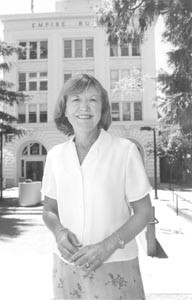
Proposition 13

0

More problems than solutions in state government, says author Peter Schrag

By Yosha Bourgea

PETER SCHRAG knows his politics. Not surprising, since the columnist and former editorial page editor for the Sacramento Bee has been covering the capitol beat for more than 20 years. Last year, he drew upon his experience to write Paradise Lost: California’s Experience, America’s Future (New Press; $25), an examination of California’s decline from the postwar years, when its commitment to public services was a model for the nation, to the present state of affairs 40 years later, when the economy suffers from multiple structural problems and the public sector is no better than mediocre.

What Schrag says in his book, and reiterates over the phone, is that most people don’t even begin to understand the welter of tax limits, special districts, and reform initiatives that clog the state government–and that goes for legislators as well as citizens.

“Nobody can figure out who’s responsible for what, or who’s in charge of anything,” Schrag says. “It makes people frustrated.”

Ironically, the source of much of this complexity may lie with the people themselves. Beginning in the late ’70s with Proposition 13, voters angry with skyrocketing property values passed a series of “tax revolt” laws that reduced local property taxes and drastically limited the fiscal power of local government. The tax revolt burdened the state government with local responsibilities, Schrag says, but left it without the authority to carry them out.

Schrag will discuss the situation next week at a pair of Santa Rosa Junior College lectures. Following the presentation, a panel including Assemblywoman Pat Wiggins, Santa Rosa Mayor Janet Condron, and Santa Rosa School Board President Hugh Futrell will discuss how citizens, the private sector, and government can work together to improve California’s future.

This is the second time that SRJC has sponsored a talk by Schrag on the subject of California’s political malaise. The first presentation, held at Readers’ Books in Sonoma, was sparsely attended.

Assemblywoman Pat Wiggins, D-Santa Rosa, says that Schrag’s book addresses the effects of what voters set in motion with Proposition 13. “It shows that you have to be careful what you ask for,” she says. “The biggest source of income for city governments is now sales tax revenue, and so they go around chasing big boxes, and that sucks the vitality out of the heart of the cities.”


PROP. 13, which essentially froze property taxes for many homeowners at 1 percent, appealed greatly to homeowners at the time. But with the tax, the available revenue for public services was significantly diminished. Moreover, Prop. 13 put the responsibility for dividing that revenue into the hands of the state government.

“In a state of more than 30 million people,” Schrag writes, “the legislature and governor have become the arbiters of local priorities.”

At the same time, Prop. 13 hamstrung the state government by requiring a two-thirds vote in order to raise most taxes. Now every determined political minority group has veto power, particularly the conservative Republicans in the State Assembly (known as the “Proposition 13 babies”) who control more than a third of the votes. And initiatives that attempt to gather revenue for public services by raising taxes are generally given the cold shoulder at the ballot box. A prime example of this process is the recent fate of measures B and C in Sonoma County. Support for Measure B, which outlined improvements for Highway 101, was enthusiastic; at the same time, voters soundly rejected Measure C, which would have paid for the improvements by raising taxes.

Without property tax revenue, Schrag says, the infrastructure of the state has steadily weakened. California’s public schools, once among the best in the country, now rank near the bottom; universities have shrunk their enrollments and raised their fees. Public health services, which lack a powerful constituency and have no lobbyists to speak of, operate on shoestring budgets, often with little or no help from Sacramento.

As a veteran reporter, Schrag is skilled at asking questions. When it comes to finding answers, however, he’s much more cautious. “There are a lot more problems than I’ve got solutions, let me tell you,” he says. As long as property owners constitute a majority of voters, the likelihood of raising property taxes again is slim indeed.

“Is there some way you could get rid of Prop. 13? No,” Schrag says flatly. “But that doesn’t mean that over the long haul, with some good leadership–which this state hasn’t had in a long time–you couldn’t maybe change the public perception of some of these issues.”

Peter Schrag will give a lecture entitled “California at the Millennium” at noon and again at 7:30 p.m. on Monday, Oct. 18, at SRJC’s Newman Auditorium. Admission is free.

From the October 14-20, 1999 issue of the Sonoma County Independent.

© Metro Publishing Inc.
Vegetarians of Sonoma County

0

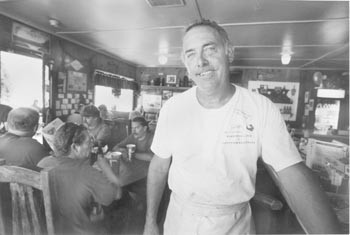
Spreading the word: Laurie Reaume and Barbara Baker pass out pamphlets at the Santa Rosa Farmers Market.

Veggin’ Out

Trouble in Veggieville–vegetarian movement gains followers, loses leaders

By Marina Wolf

ON THE SURFACE, Vegetarians of Sonoma County is doing as well as it ever has. More than 8,000 copies of its free quarterly newsletter, the Vegetarian Grapevine, are distributed at points throughout the county. And the group is getting ready for its annual Vegetarian Fair (see sidebar), which, according to newsletter editor Laurie Reaume, is going to be its biggest event ever. But in a later conversation, Reaume sounds a more subdued note about VSC’s future: the group will cease publication of the newsletter in May and close up shop if they haven’t found more board members by February.

“We need people to participate on more than an occasional basis, otherwise we’re not going to make it,” she says. “We don’t have the consolidated identity and we don’t have the core.”

How can this be happening in Sonoma County, home of the widely popular McDougall healthy-heart diet and great organic vegetables, HempRella cheese, and liberal political ideas? Where have all the vegetarians gone?

Veggie Land

Truly, a problem of this sort seems out of place here, where the culture is extremely supportive of alternative-food lifestyles. Local vegetarians have long been accustomed to having at least one restaurant that caters to their needs. That niche currently is filled by Slice of Life in Sebastopol, which sports a menu that is entirely vegetarian and primarily vegan (completely lacking butter, eggs, and other animal products). After the McDougall diet came out, many mainstream restaurants offered at least a few vegetarian and vegan options. While that crush has faded in recent years, restaurants are still trading briskly in “heart-healthy” eating, and note their McDougall selections.

Meanwhile, a few establishments have developed a primarily vegetarian client base. One manager at California Thai in Santa Rosa estimates that at least 60 percent of its customers ask for the vegetarian menu.

The county has a number of vegetarian groups on tap, from the quiet McDougall potluck group to the politically active Sonoma People for Animal Rights and even a raw-foods potluck and magazine. But organizers of these groups, while more optimistic about the future of their groups than Reaume is about VSC, acknowledge the existence of the “invisible-vegetarian phenomenon.”

SPAR members recently agreed to make the promotion of a vegan diet their No. 1 priority. “SPAR’s mission is to reduce animal suffering,” says activist and newsletter editor Stephen Wells of the shift in focus. “And the number of animals being processed into food far outnumbers those that die in other industries.”

Wells’ partner, Alex Bury, is a trained chef and has poured her energy into the SPAR vegan potlucks, which began meeting regularly after last Thanksgiving’s dinner. The attendance is averaging around 25, which is up from the original 12 or so, but still is a small percentage of the 450-plus subscribers to SPAR’s quarterly newsletter.

“There’s a huge number people that get the SPAR newsletter,” Bury says. “But we never see them at a potluck or a meeting. They keep it to themselves.”

Just Another Diet?

If, as it seems, the vast majority of Sonoma County vegetarians “keep it to themselves,” we may thank science for that. With new dietary recommendations from various health organizations and increasing medical evidence that a plant-based diet may prevent a variety of human ills, more and more people are moving away from meat.

One study, conducted in 1996, concluded that around 66.2 million Americans were eating meatless meals more often than the year before. Of the respondents in this study, 46 percent were trying to reduce their red meat consumption, and 15 percent were considering becoming vegetarian.

Food manufacturers have been quick to hail this rising demand as a window of opportunity for introducing vegetarian and vegan products to a whole new market of consumers. The “meat and dairy alternatives” industry more than doubled its sales from 1989 to 1994, from $138 million to $286 million.

Unfortunately for vegetarian groups, the shift in America’s eating habits doesn’t necessarily translate into new members to plan and participate in social and political activities. For many people, vegetarianism is simply a way of cleaning out the arteries and preventing cancer, rather than a total lifestyle commitment that takes into account ethical and environmental considerations, as well as health issues.

Those who take up vegetarian eating for the sake of health may eventually cross over to an understanding of the larger social and political issues behind their food choices. Barbara Baker, president of VSC, has traveled that path herself since she went vegan three years ago. But she admits to now being a little bemused by the vegetarian-for-health approach, especially when it comes to these vegetarians’ lack of involvement with the same movement that made their diet possible. Baker recalls her recent trip to Costa Rica on a McDougall tour, where most of the 160 people in the tour group were there for health reasons. The difference in their motivation level, she says, was apparent.

“They found it much easier to ‘stray’ from the diet than did those of us who believe in it for other reasons, environmental and ethical reasons.”

Virtually Vegetarian

Jill Nussinow, a nutritionist who teaches vegetarian cooking classes in Sonoma County, says that about a quarter of the people who take her classes identify as being vegetarian. The rest, she guesses, just want to learn for their friends and family, or would like to cook vegetarian some of the time. But she’s not too concerned about the motivations of her students.

“It doesn’t matter to me if you’re a vegetarian or not, if you want to learn about it I want you to learn,” she says. “And if you want to call yourself a vegetarian, I don’t mind.”

A lot of people are calling themselves vegetarians these days. The shelves of vegetarian cookbooks are filled with titles that acknowledge this trend: Almost Vegetarian, The Gradual Vegetarian, The Meat-Lover’s Vegetarian Cookbook, The New Not-Strictly Vegetarian Cookbook, The Occasional Vegetarian.

Two polls commissioned by Vegetarian Times magazine in 1992 and again in 1996 concluded that about 7 percent of Americans self-identify as vegetarians, or about 12.4 million people. But polls that have gotten more specific about vegetarian behaviors place the total number of actual vegetarians much lower, at about 1 percent of the population. The majority of those self-identified vegetarians, then, may eat fish, poultry, or meat from time to time. They want to be vegetarian, but they aren’t quite there yet.

In any case, these “new vegetarians” have helped push vegetarianism to a previously unparalleled level of mainstream acceptance. The food is available as never before, the concepts are reaching wider understanding, and vegetarianism itself has moved from a mark of freakishness to a desirable descriptor (even if you don’t practice it all the time).

So is mainstreaming a problem? It is if you’re trying to maintain a certain level of political involvement. Brian Graff, co-director of the North American Vegetarian Society, remembers the first world vegetarian conference that his New York-based group sponsored in 1975. At that time, an attendance count of 1,500 people was considered a stunning success. The conference has never been as large since, according to Graff; it’s been diffused by all the other options.

“There are so many groups to choose from, so many events like food festivals, conference, potlucks. Even through the media you can get information without having to go to a group,” he says simply. “It’s a different world now.”

Find out how you can get involved in the Sonoma County vegetarian community at the Vegetarian Awareness Fair, sponsored by Vegetarians of Sonoma County in honor of Vegetarian Awareness Month. Sample foods (this ain’t your college-days tofu and brown rice), pick up some cooking hints, and visit community booths. Friday, Oct. 15, from 5:30 to 8:30 p.m. New College, 99 Sixth St., Santa Rosa. The $5 donation benefits the excellent programs of New College. 528-2892.

From the October 14-20, 1999 issue of the Sonoma County Independent.

© Metro Publishing Inc.

Spins

0

Techno Roots

Moby taps into American spirituals

Moby PlayRave New World

Moby may be one of techno’s only acts boasting poster-child recognition, and the pure bravery and openness of his music merits that semi-superstar status. Already considered by techno purists to be a sellout for the genre-inclusive disco of 1995’s Everything Is Wrong and the punk rock of 1997’s Animal Rights, Moby had only his media-touted genius image to lose by expanding even further on Play. The disc vindicates Moby as an artist of great vision, as he’s the first to use electronica’s beat-and-sample palette to create a blues/gospel recording, not a funk/rock or ambient disc. He samples from the early-century field recordings of musicologist Alan Lomax, yet rather than being a collage, the gospel choruses, handclaps, and delta-blues moans build a sustained movement of inner pain and hope. Literally, Play is a post-rave spiritual quest. Karl Byrn

Hank Williams III Risin’ OutlawCurb

Hank Williams Sr. boasted a busted-down life that wrecked his health, fed his hillbilly genius, and made him the pre-eminent country star of the 20th century. His son, Hank Jr., struggled in the shadow of his famous father, reeling to redneck anthems but never coming close to evoking the personal pathos of Hank Sr. It seems that the third generation is the charm. This strong debut from Hank III is rife with promise, twangy hillbilly tomes about heartbreak, honky-tonks, and, well, heartbreak and honky-tonks. Hank III has no problem affecting the look and sound of grandpa, and–thanks to an extended stint as a bassist in a touring punk band–wears shit-kickin’ boots that augment his neo-traditional roots (check out the pair of raw, raunchy live tracks that close the disc). If there’s one problem, you get a sense that Hank III lacks the worldliness needed to sustain his songwriting at a high level–one of the best songs on the disc, “Thunderstorms and Neon Signs,” is a wistful entry from his road diary that rings true. But a few more busted relationships and this guy will be hitting his stride. Greg Cahill

New American Shame New American ShameAtlantic

Among the recent crop of classic-rock influenced wannabe rock stars who are rejecting alt-rock’s anti-heroism and proudly flaunting stadium excess (Buck Cherry being the notable chart-toppers), New American Shame is doing the job justice. Wailing out of (where else but) the Pacific Northwest, NAS’s debut sounds exactly like Bon Scott-era AC/DC. That’s good, because it’s the best AC/DC album since Back in Black, and it shows a new band seeing through the sex-drugs-rock-and-roll image and hitting the mark of grisled working-class anger and flaming twin guitar power. K.B.

Various Artists Red Hot + LisbonBar None

The organizers of the more than a dozen Red Hot + benefit CDs have settled on a tried and true formula that of late has teamed big-name stars like David Byrne with lesser-known world music artists while raising oodles of dough for AIDS/HiV awareness programs. The latest offering, the follow-up to 1997’s Red Hot + Rio, explores similar terrain with Portuguese musicians and Portuguese-speaking nationals from Angola and elsewhere in the vast fallen empire. The ubiquitous Byrne pairs with Brazilian heavyweight Caetano Velosa, African superstar Bonga teams up with Brazilian diva Marisa Monte, and so on. The versatile k. d. lang even pops up, performing a credible fado. Overall, the accent is techno-treated tracks, sometimes at the expense of the more charming ethnic sounds. Conspicuously absent: Cape Verde singer Cesaria Evora, who first made her mark recording in Lisbon. G.C.

From the October 14-20, 1999 issue of the Sonoma County Independent.

© Metro Publishing Inc.

Local Feature Filmmaking

0

In the limelight: Newly appointed county Film Commissioner Catherine De Prima took time out at a recent benefit screening on Mumford to talk to the press. The film, some of which was shot in and around Petaluma, is the only big-budget Hollywood to use Sonoma County settings in the past two years.

Blacklisted?

Has Sonoma County’s Hollywood reputation recovered from the ‘Scream’ debacle?

By David Templeton

IF CATHERINE DE PRIMA ever had stars in her eyes–of the big, glittery, Hollywood variety–those stars are long gone by now. In her role as Sonoma County’s newest film commissioner, on the job since February of last year, the former actress and model admits that now she sees only the warm green glow of dollar signs.

Lots and lots of dollar signs.

Of course, that’s her job. De Prima’s primary mission is to attract as many of those dollar signs as possible by enticing the film and television industry into bringing its big budget productions to the rolling hills and picturesque towns of Sonoma County. Small films are welcome too, of course, as are the bread-and-butter car commercials–a steady business, mainly filmed on the winding roads near the coast–and the random magazine photo shoot.

But according to some observers, the whole Sonoma County film biz is in serious need of a good shot in the arm following a series of high-profile setbacks, including an alleged anti-Santa Rosa blacklist initiated by horror-movie director Wes Craven after the eruption of a local firestorm of controversy over his filming of Scream.

Though exact numbers are hard to come by, one thing seems clear: With no major productions in town since Mumford wrapped 17 months ago, the county is not enjoying the same degree of cinematic popularity it once did. (See sidebar, next page.)

That’s a trend that De Prima, who took over from longtime Commissioner Sheree Green, is working to turn around–though the first thing she’d like to change is the perception that Sonoma is suffering any serious decline.

“We have constant production here,” she says with an easygoing laugh, displaying a stack of location requests, mainly commercials, that she’s been processing in her one-woman office in Santa Rosa. “I’m kept totally busy,” she says. “We have requests from Hollywood all the time.”

Local Feature Filming Declines

THE SONOMA COUNTY film commissioner’s office, first established in 1974, is a subdivision of the Sonoma County Economic Development Board. (Most California counties, and several large cities, maintain such film-friendly offices–which is an indicator of just how important Hollywood can be to a region’s bottom line.) The commission has moved around a bit; until 1998 it operated out of the Sonoma Convention and Visitors Bureau.

Working in loose alliance with the Pete Wilson-appointed California Film Commission, De Prima is responsible for issuing film permits, maintaining a database of available location sites, and acting as a liaison between producers and the community. She prepares brochures and invitation packages for producers, scouts locations, and attends filmmaker expos.

Occasionally she hosts huge public relations events, such as the recent red-carpet Mumford premiere at Healdsburg’s Raven Theater.

Stationed at the door of the Raven, De Prima began the evening by enthusiastically distributing little packages of complimentary mints and invitations to property owners, enticing them to file their homes and barnyards with the movie-site database. Later, De Prima took the stage to thank the community for welcoming Mumford, and its crew, to Sonoma County.

“I know sometimes it’s bothersome to be driving down the street and run into a movie production, holding up traffic,” she exclaimed, working the crowd like a stand-up comic or a seasoned cheerleader. “But if you think about the big picture, you know that it’s good for Sonoma County to have those film crews there in the street.”

The crowd agreed, cheering in approval.

“Generally,” De Prima explains later, in her office, “it’s my job to make things as easy as possible for everyone involved–the producers and the community.”

Things weren’t so easy in the spring of 1996, when Wes Craven, director of the Nightmare of Elm Street films, raised an international stink after a run-in with the Santa Rosa School Board. After accepting a verbal contract made by Santa Rosa High School’s principal, Mike Panas, Craven set up shop in Santa Rosa to film Scary Movie, the semi-comic gore-fest that was later retitled Scream.

In a fiery snafu that immediately became a kind of modern film-industry legend, Craven, who had intended to shoot several days at Santa Rosa High School, was thrown into his own personal “Nightmare on Mendocino Avenue” when permission to film was denied. Shortly before on-campus shooting was to begin, the school district’s governing board took a look at the script–and balked mightily at its gleeful depiction of promiscuous, foul-mouthed teenagers, most of whom are gutted like fish before the closing credits.

It was in those end credits that Craven got his final digs in at the school board, which voted to ban Craven from the school in spite of the director’s threat of a lawsuit and his promise to blacklist Sonoma County when he returned to Hollywood.

In those aforementioned credits, after thanking numerous people–including Sheree Green, who fought hard for Craven and managed to snag the Sonoma Community Center as a replacement site–the final credit reads, “No thanks whatsoever to the Santa Rosa City School District Governing Board.”

The whole incident sparked a massive local debate over free speech and responsible commerce and was widely reported in movie magazines around the world. Another, similar conflict had only just taken place in Petaluma, where the Downtown Association had drawn up stiff, somewhat punitive rules for filmmakers after Lolita shut down Petaluma Boulevard, affecting the revenues of local merchants.

The California Film Commission stepped in, warning Sonoma County that its “film unfriendly” actions might have alienated the industry for good.

“I think it was publicity,” says De Prima now of the Scream incident. “And it wasn’t necessarily negative. Because of the controversy, a lot of people heard about Santa Rosa that never would have otherwise.”

Though she’s admits she hasn’t spoken directly to the school board about Cravens’ big-screen remark, she says she’s heard that some members of the board were quite proud of it.

“It showed they stood up for their beliefs,” she says.

The question is: Did Wes Craven stick up for his beliefs? After stating publicly that he would get some payback for what was done to him, did he really try to pull any strings in Hollywood, blacklisting Santa Rosa for all time? Or did he simply calm down and forget about the whole thing?

Craven himself is not talking. Calls to his office for comment on the issue were not returned.

But by late 1997, almost two years after Craven and company had left town–and shortly after Scream had become the most successful horror film in history–it appeared to many that a backlash had occurred.

“There had been a lot of film activity in Sonoma County,” says Audrey Grace, of Santa Rosa’s Panda Talent Agency, a major provider of extras for movie productions. “Then there was a downswing, and there’s been almost no upswing since.”

Vicki Lima agrees. She’s the owner of Cars for the Stars and Lima’s Relics, which provide “picture cars” and drivers for film production around the Bay Area. She worked on the Scream production and had expected it to develop into more work down the line.

“We all knew that Wes was making a trilogy,” she says, “and that he intended to come back to Sonoma for the other two movies. But when the Board of Education decided to mess around with the First Amendment, it all fell apart.”

Not so, says De Prima.

“There is always fluctuation in this business,” she shrugs, going on to suggest that any downswing might have been on account of big changes at the film commissioner’s office–which first became a part-time position for several months after Green stepped down and then moved from the tourism board to the Economic Development Board.

“Basically,” De Prima says, “a lot of people wanting film permits couldn’t find us for a while.

“This is show business,” she adds, “as in business. If it makes sense to come to Sonoma County, people will come–and no one can make them stay away.”

Some Hollywood insiders agree.

“The idea of there being a blacklist against a particular county is ridiculous,” says Dana Harris, a film journalist on staff at the Hollywood Reporter. “Hollywood is money. If a county or a town has a site that a producer wants at the price the producer wants, then no blacklist or bad-mouthing from Wes Craven is going to stop the producer from filming there.”

Succinctly surmising that for Craven to issue such threats, “he must have been totally pissed off,” Harris adds that such provincial skirmishes are run of the mill in the film world.

“It’s a complex industry, and annoying things happen all the time,” she says. “When a community does something unfriendly, there may be some gossip or something for the short term, and it might stop some people from filming there, but, believe me, there isn’t some master puppeteer distributing blacklists and dictating where people can go to make their films.”

Lima and Grace, while insisting that the Craven experience did turn people off of Sonoma County for a time, also point to other factors that have contributed to the current cinematic dry spell (with Touchstone’s Mumford as the single recent oasis of hope). According to them, the most significant factor is a Hollywood battle–which broke out shortly after Scream wrapped–pitting film workers’ unions, including the Teamsters, against the big Hollywood producers.

“Basically,” says Lima, “the cost of shooting in California has gone sky-high, and the producers tried to get the unions to roll back their salaries.

The unions said no, so the muckamucks in L.A. said, ‘To heck with California! We’re going to Canada.'”

Whatever the reason, as Grace puts it, “We’re losing a lot of revenue in California, and certainly in Sonoma County.”

It’s clear that De Prima has a big job ahead of her, and she knows it.

“We’ve been making changes,” she says, nodding. “We’re seeing changes.” She rifles through her pile of requests once more. “There is a lot of potential film business, and this office is in a strong position to go out and make it happen.

“In just the last several months, I’ve heard over and over what a good reputation this office is building,” De Prima says.

“I believe Hollywood has confidence in Sonoma County,” she concludes with a smile, “because they know that I’m going to help them.”

From the October 14-20, 1999 issue of the Sonoma County Independent.

© Metro Publishing Inc.
Jack Kerouac

0

New CD spotlights Jack Kerouac

By Greg Cahill

HE WAS THE ultimate beat-era figure, a freewheeling hip cat who infused his footloose prose with the soaring scat-sung spirit of bebop jazz. So it’s no surprise to hear Jack Kerouac in a musical setting–the 1990 three-CD box set Poetry for the Beat Generation (Rhino) compiled his three official recordings and dished up lots of Kerouac set to the jazzy sounds of pianist Steve Allen and saxophonists Al Cohn and Zoot Sims. And plenty of contemporary musicians have been inspired to pay homage to this modern literary giant; in 1997, Morphine and a host of other alt-rockers worshipped Kerouac on the adventurous tribute CD Kerouac Kicks Joy Darkness (Rykodisc).

But there’s nothing quite like the melancholy voice of the master. And that’s what you get in spades on Jack Kerouac Reads On the Road (Ryko/Voices), a newly released CD that contains a recently discovered recording of the fallen angel himself reading passages from one of the sacred books of the beat generation. This long-lost recording session has been the stuff of legend. It’s been written about, searched for, and long thought destroyed.

It is, as historian Douglas Brinkley says in the liner notes, a “showcase for the writer as romantic crooner, lonely vagabond, prose stylist, Tin Pan Alley cut-up, hobo poet, and scat innovator.”

Recently discovered in the Kerouac archives on mislabeled acetates, the recording of Kerouac’s 1957 masterwork On the Road has been digitally remastered. It is packaged here with two poems read by Kerouac, “Orizaba 210 Blues” from the Book of Blues, and the previously unpublished “Washington D.C. Blues,” with original music composed by jazz pianist David Aram (who teamed up four years ago with British rocker Graham Parker on a stunning reading of Kerouac’s 1950 opus The Town and the City, which was included on A Jack Kerouac ROMnibus, a CD-ROM overview on the writer).

The new disc also features musical tracks recorded by Kerouac, including a couple of Chet Baker-like renderings of the standards “Ain’t We Got Fun,” “Come Rain or Shine,” “When a Woman Loves a Man,” and “Leavin’ Town,” all sung in a mostly (sometimes excruciatingly) wispy, gin-soaked style.

The choice musical track is “On the Road,” a wistful Kerouac original that gets a garagy reprise by dada crooner Tom Waits backed by the members of Primus.

But the real gem here is Kerouac. As with much of his best writing, the On the Road disc evokes a relaxed comfort, a quiet charm that has endeared the writer to a new generation in search of the quintessential traveling companion.

For restless souls, the king of the road is someone you can always come home to.

Random note: A companion to the new Kerouac release on the Ryko/Voices imprint also is on the market. San Francisco beat icon, celebrated publisher, and City Lights bookstore owner Lawrence Ferlinghetti reads his 1958 classic A Coney Island of the Mind–actually a series of 29 poems–along with four additional works, all set to the accompaniment of Dana Colley of Morphine and others. Recorded earlier this year at Francis Ford Coppola’s Zoetrope Studio, the new CD serves as a reawakening as it warns against the perils of hyperindustrialization, unrestricted capitalism, and Big Brother fascism, often delivered with wry wit.

From the October 14-20, 1999 issue of the Sonoma County Independent.

© Metro Publishing Inc.
Jubilant Sykes

0

Baritone Jubilant Sykes offers a rainbow of talent

By Hanne Blank

THE RUSSIAN COMPOSER Scriabin was a synaesthete, a person whose mental wiring made one sense automatically trigger another. In Scriabin’s case, as with numerous other composers, sounds corresponded to colors: a flute might be robin’s-egg blue, the violin grass-green, a kettledrum’s boom the gray of low-hanging clouds. Each timbre or tone color was associated with an actual color, and as a result, Scriabin literally saw everything he heard or composed.

Had Scriabin lived to hear the voice of rising young baritone Jubilant Sykes, however, he wouldn’t have seen just one color. In the exultant rainbow of Sykes’ broad, generous voice, he would’ve found an entire kaleidoscope within one instrument, a stained-glass window of spinning sound.

A rare vocal find, this versatile voice effortlessly spans the coloristic gamut from the cellolike, woody timbres of Mahler and Brahms to the most elegant and unpretentious of floaty tenor falsetto.

Unlike many of his opera-singing kin, Sykes does not appear to suffer the tendency to become hidebound with a perfectly homogenized sound that varies only slightly from piece to piece. Rather, he knows that the infinite variety of his vocal color is a source of enormous beauty, and he wields his vocal palette with a Monet-like sensitivity to transparency, intensity, and contrast, conjuring Impressionist gestures of feeling and emotion within deftly shaped phrases.

Masterful though it is, Sykes’ singing is anything but intimidating. As a musician, he offers performances that are communicative, charismatic, and inviting. The emotional immediacy of his style owes an obvious but not obtrusive debt to gospel and jazz, combined with classical technique in a resonant American hybrid.

Likewise delightfully American are the clean translucence of Sykes’ tone and his delightfully clear but never prissy diction, which let the listener hear not just the undeniable beauty of his sound, but the full import of every word he sings.

IN HIS RENDITIONS of Aaron Copland’s Old American Songs, which include such gems as the Shaker hymn “Simple Gifts” and the humorous “Bought Me a Cat,” Sykes has won acclaim for his clarity of presentation and his good-humored, deeply felt, approachably human partnership with the composer, the settings, and the melodies themselves. Selections from this group of Copland songs, along with works by Mozart and Mahler, are slated for the program during the October recitals Sykes performs with the Santa Rosa Symphony, promising rewards for the newcomer to the world of concert song as well as for seasoned fans.

Also on the roster for Sykes’ West Coast recitals are spirituals, hearkening not only to Sykes’ own family heritage of song and spirituality but to the 1998 Sony Classical release Jubilant, a collaboration with legendary jazz trumpeter and arranger Terence Blanchard that presents classic spirituals in reverent, New Orleans-tinged arrangements. A quick perusal of Jubilant‘s 14 tracks–“Were You There When They Crucified My Lord?” is stunning–gives ample insight into the reasons Sykes was named Sacred Music USA’s Vocalist of the Year in 1996, as well as the reasons he continues to perform to rave reviews with the world’s leading symphonies and opera companies, including the Metropolitan Opera, the Boston Pops, the Philadelphia Orchestra, and the Deutsche Oper Berlin.

FROM BRILLIANT, easy top notes to a powerful, velvety bottom, Sykes’ first solo recording proves that he is in strong command of his versatile instrument. What is perhaps more impressive about Jubilant, and about Jubilant the singer, is that while one never loses sight of the fact that this is an extraordinary voice, one is always aware that this is an intelligent and insightful musician.

The running joke other musicians make about singers is that they’ve got resonance where their brains should be: not so Jubilant Sykes. When he sings, the words matter. Some of Sykes’ operatic colleagues may use words as mere clotheslines on which to hang sheets of sound, but Sykes uses the words as a way to penetrate the music.

Sykes draws, without apology and with great musical wisdom, on all of the musical influences that are important in his life. The result is stylish but kitsch-free, intimate, virtuosic, richly colorful singing, a musical treat as delectable as they come.

Jubilant Sykes performs Saturday, Sunday, and Monday, Oct. 16-18, at the opening concerts of the Santa Rosa Symphony’s 1999-2000 season at the Luther Burbank Center, 50 Mark West Springs Road, Santa Rosa. Tickets are $12-$36. For details, call 546-8742.

From the October 7-13, 1999 issue of the Sonoma County Independent.

© Metro Publishing Inc.
Bargain Wines

0

The Price Is Right

Local experts select bargain bottlings

By Bob Johnson

WHILE the “laws” of supply and demand play a pivotal role in determining price points on Sonoma County’s most famous product–wine–several other factors also contribute to the ever escalating tariffs.

Among those factors: the increasing value of suitable vineyard land, more stringent controls on hillside vine planting, and competition among out-of-county wineries for Sonoma-grown grapes.

As a result, a growing number of county bottlings are joining their Napa Valley cousins in a price category largely restricted to the affluent.

That’s the bad news. The good news is that it’s still possible to purchase a quality case of wine here for less than a hundred bucks–if you don’t mind that a majority of the dozen bottles are made by out-of-county (and in a couple of instances, out-of-country) wineries.

Finding bargain bottlings can be a time-consuming challenge even for those immersed in winedom. But since daily life consists of numerous activities other than shopping for wine, the assistance of a knowledgeable vino merchant can be tremendously helpful.

Fortunately, Sonoma County has no shortage of in-the-know retailers, among them Dan Noreen of the Wine Exchange of Sonoma, Michael Pinsky of Premier Wine & Spirits in Santa Rosa, Bruce Emmons of Santa Rosa’s Bottle Barn, and Paul Root of Root & Eastwood Wine & Spirits in Healdsburg.

We challenged each of these savvy shopkeepers to suggest a pair of wines, available in their store, that together averaged no more than $8.33 in price. We then tossed in four selections of our own to fill out the case. The result: 12 top-quality bottles of wine that would return $2.26 in change from your $100 bill (not counting the donation made to our friends in Sacramento).

Drum roll, please . . .

Presenting the Independent‘s Under-$100 Case of Wine, No. 1:

Mont. Pellier 1998 Viognier, California. Noreen says this wine has “loads of tropical fruit with lovely floral nuances. It’s lush on the palate, with just the right balancing acidity.”$5.99 at Wine Exchange of Sonoma.

Mont. Pellier 1997 Syrah, California. “There’s ripe blackberry, plum, smoke, and white pepper in the nose,” says Noreen, “and the wine is round, rich, and smoky on the palate.” $5.99 at the Wine Exchange.

Banrock Station 1998 Shiraz. Pinsky describes this Aussie offering as “a surprising wine, with nice, soft, plummy fruit. Hints of violets add a gentle complexity.” $6.99 at Premier Wine & Spirits.

Paraiso Springs 1997 Chardon-nay, Monterey. Enthuses Emmons: “This is a $20 wine for eight bucks.” Or less: $7.99 at the Bottle Barn.

Canyon Road 1998 Merlot, California. This wine has a smoked meat nose, racy acidity, and varietal bell pepper, cherry, and plum flavors. Wine Lines rating: 2.5 corks. Suggested retail price: $8.

Marietta Old Vine Lot #23. Root describes this non-vintage red blend as “incredibly delicious,” and notes that past lots have consistently been rated outstanding values. $8.10 per bottle (by the case) at Root & Eastwood Wine & Spirits.

Taft Street 1998 Sauvignon Blanc. A wine with “vibrant fruitiness and a clean, delicious finish,” according to Root. $8.10 per bottle (by the case) at Root & Eastwood.

Alderbrook 1998 GewŸrztra-miner, Russian River Valley. Winner of the white wine sweepstakes award at the Sonoma County Harvest Fair. $8.59 at the Bottle Barn.

Pope Valley 1993 Zinfandel, Napa Valley. Yes, you read that correctly; here’s a rare opportunity to taste a well-aged zin. The winery’s former owners shut down the operation just as this wine was about to be released, so it sat in storage for a total of five years until new owners reopened the facility. Time has been kind to this bottling, which possesses aromas and flavors of spicy root beer, cherry, assorted berries, and pepper. Wine Lines rating: 3.5 corks. Suggested retail price: $9.

Chateau St. Jean 1998 Fume Blanc, Sonoma County. A wine with aromas and flavors of ripe stone fruit, grapefruit, fig, mild spice, and hints of minerals. Wine Lines rating: 3 corks. Suggested retail price: $9.

Caves des Papes 1996 Cotes du Rhone. “This [French] wine is smooth, with round flavors and a light, peppery finish,” says Pinsky. “It’s perfect for grilled foods.” $8.99 at Premier.

Mark West 1998 Gewurztra-miner, Russian River Valley. Bright and floral, with lychee nut, peach, papaya, mango, and woodspice components. The creamy finish screams “papaya.” Wine Lines rating: 3.5 corks. Suggested retail price: $10.

There you have it: Six red wines, six white wines, a wide spectrum of flavors, and, best of all, tremendous value. The choice is yours: a single bottle of trendy Napa Valley cabernet or 12 bottles of well-selected wines recommended by local experts. As far as we’re concerned, this is the ultimate no-brainer.

Cork ratings: 1, commercially sound; 2, good; 3, very good; 4, outstanding.

From the October 7-13, 1999 issue of the Sonoma County Independent.

© Metro Publishing Inc.
Sculpture Jam

0

Photograph by Michael Amsler

Free Form

Sculpture Jam turns 3-D art loose on Sebastopol

By Patrick Sullivan

THE THIRD DIMENSION is, by definition, vital to the art of sculpture. You can’t hang most of the work produced by Rodin or Calder conveniently up on a wall behind your couch, and The Kiss or Gate of Hell will never seem like discreetly decorative accessories. Sculpture sticks up, bulges out, and thrusts its way forward into the world.

In short, the art form tends to take up space.

Now, thanks to the Sebastopol City Council, it has all the room it could want. Just in time for the Sebastopol Center for the Arts’ second annual Sculpture Jam, the council has approved four city-owned sites to publicly display six works to be produced by 22 local sculptors during the event.

Sculpture Jam, which takes place this year from Oct. 7 to Oct. 9, features six groups of artists, including such luminaries as Ron Rodgers and the event’s founder, Warren Arnold, wielding their hammers,chisels, and PVC pipe in full view of the curious public.

The event, which last year drew some 1,200 people over three days to the old Diamond Lumber Yard on the plaza, is intended to give observers a chance to watch sculptors at work, to give folks a better idea of the how and the who behind the art of sculpture.

But Sculpture Jam also gives normally solitary artists a rare opportunity to collaborate with others–which apparently takes a little adjustment in some cases, according to Linda Galletta, executive director of the Sebastopol Center for the Arts.

“It’s been a challenge for the sculptors because they are such an individual lot,” Galletta says. “They spend a lot of time in the studio by themselves and they normally create by themselves, so to work with other artists is a challenge.”

But it’s apparently a challenge they enjoy: One of the participating sculptors told Galletta that solitary work had left him “feeling like a caveman” and that Sculpture Jam had given him an opportunity to “come out of his cave and work with other people.” Perhaps that’s why, of the 11 artists who participated in last year’s event, nine have returned.

“They’re very energized by it,” Galletta says. “They love having the public watch them work and learn about the process. They have developed wonderful friendships that lasted beyond [last year’s] event, and now many of them are sharing ideas and techniques.”

But this time out, the event will look different in one crucial respect: more women will be participating. Last year, there was only one female artist working among the cavemen. This year, there are two teams of women sculptors on the job.

“We made a real concerted attempt to broaden our horizons and make sure that women sculptors knew that they were invited to participate,” Galletta says. “They were last year, but they seemed to hang back a bit.”

Sites for the placement of the six sculptures–which will range from four to 14 feet in height–include the downtown plaza; a corner in front of Sebastopol Cinemas; the Sebastopol Fire Department; and Spooner Park, the triangular piece of land near Palm Drive Hospital where the four pieces created last year are now on display.

SUPPORT FOR THE EVENT comes from a variety of sources: The sculptors contribute time and materials, Sebastopol Redimix donated concrete for bases, and the Sonoma County Community Foundation helped underwrite the cost of materials and installation.

But it’s the City Council’s commitment to providing public space that may be the most crucial. The idea, Galletta says, is for the Sculpture Jam, which will return next year, to become the city’s major public art program.

“[The council has] encouraged us to continue looking for sites in Sebastopol both public and private to continue this program,” Galletta says. “They are excited about having art in Sebastopol and having it be an interesting place to visit and linger and think about.”

Sculpture Jam takes place Thursday, Oct. 7, from 1 to 7 p.m., and on Friday and Saturday, Oct. 8 and 9, from 10 a.m. to 5 p.m. at the old Diamond Lumber Yard on Sebastopol Plaza. Admission is free. Call 829-4797.

From the October 7-13, 1999 issue of the Sonoma County Independent.

© Metro Publishing Inc.
Missile Intercept Technology

0

More useless missiles. Guess who pays?

By Bob Harris

LAST SATURDAY NIGHT, I was walking to a comedy gig here in L.A. when suddenly I was stopped cold by the sight of something truly out of the ordinary. (Which, in West Hollywood, is saying something.) A whole chunk of the northwestern sky was suddenly filled with what looked like an enormous jet contrail. And as night began to fall, the plume dispersed into bizarre shapes, lit in rainbow colors by the setting sun.

And it was a little disturbing.

Enough so that dozens of people called the police, asking if they were seeing a prelude to war, some weird secret technology, or possibly even the beginning of Armageddon.

What we were all watching was the launch of a refurbished Minuteman II missile (made by Lockheed Martin), outfitted with both a dummy warhead and a decoy. The Pentagon says that 3,000 miles away, a prototype missile defense system eventually destroyed the dummy warhead–meaning that supposedly the world is now a little safer for democracy, and so we taxpayers should pony up another $28 billion to keep the project alive.

Yet over the years, expectations for success in such tests have become so low that the original mission of such weapons has been abandoned entirely, and the Pentagon openly admits that even a failure would have been called a success, if the reason for the failure were merely known.

On March 23, 1983, Ronald Reagan announced the Strategic Defense Initiative, a satellite-based anti-ballistic missile system to shield the United States from nuclear attack.

Fortunately for world peace, much Star Wars technology proved to be remarkably little more than a waste of money. Eventually, even the Pentagon conceded that a comprehensive nuclear umbrella was an impossibility. In other words, even if the SDI had worked, it wouldn’t have worked.

In 1993, the SDI was renamed the Ballistic Missile Defense, but the BMD still sucked up only about $4 billion a year. However, in 1994, the GOP won control of Congress, and Newt Gingrich became Speaker of the House. The largest employer in Newt’s home district? Lockheed.

Unsurprisingly, the budget for Star Wars began again to increase, even as the Office of Technology Assessment was defunded out of existence.

The new Star Wars–now conceived around ground-based missiles–is designed not to shield the U.S. from all-out attack, but merely defend against a mere handful of missiles hypothetically launched by terrorists or by what the media call “rogue states.”

But is this a legitimate rationale for continuing BMD? Not according to our own government.

Quoting from a September 1999 report of the National Intelligence Council: “The Russian threat . . . will continue to be the most robust and lethal, considerably more so than that posed by China, and orders of magnitude more than that potentially posed by other nations.”

Countries or non-state actors could pursue non-missile delivery options. And even if a “rogue state” did decide to go the ICBM route (again, to quote the NIC’s own report), “We assess that countries developing ballistic missiles would also develop various responses to U.S. theater and national defenses. Russia and China each have developed numerous countermeasures and probably are willing to sell the requisite technologies.”

How many times should a system be tested before the taxpayers spend billions of dollars on it? Many relatively simple weapons receive dozens of tests. Before its next review in June, the BMD program is receiving exactly three–only two of which it is required to pass (and remember that an understood failure is considered a success).

So come summer, will it gain approval? Of course. Get real.

June of 2000 will be at the peak of the presidential campaign. No candidate will want to look “weak” on defense. Neither can any candidate resist the soft-money campaign donations that major defense contractors can provide.

A SIMILAR MISSILE intercept technology, Lockheed Martin’s THAAD (Theatre High Altitude Area Defense) system, failed six straight tests over the last four years while going billions of dollars over budget. However, last August, after a mere two successful tests in tightly controlled conditions, the Pentagon announced it would skip further prototype testing and begin final development of the project.

THAAD’s total cost is estimated at only $15.4 billion, with 2007 as the projected implementation date. And BMD is ready to cost us $28 billion more. Since 1983, between $50 billion and $100 billion has been spent. Yet Star Wars turned out to be impossible, and the current scheme of BMD doesn’t even address the most likely scenario for attack.

Will the new Star Wars do the job?

If we’re talking about maintaining the flow of billions of dollars of taxpayer money to high-tech defense corporations, the answer is: yes.

If we’re talking about defending the United States from ballistic missile attack, the answer is: no.

From the October 7-13, 1999 issue of the Sonoma County Independent.

© Metro Publishing Inc.

Vineyard Development Ordinance

0

Sign of the times: Supervisor Mike Reilly sat in front of a protest sign at a recent forum called by activists to oppose encroaching vineyards.

Feeling the Crush

New vineyard-planting ordinance–is it a smart compromise or a sellout?

by Yosha Bourgea

A CONTROVERSIAL new erosion-control ordinance that regulates the planting of vineyards on sloped land has been reworded once again by the Sonoma County Board of Supervisors, but some environmental activists in the community claim that the ordinance still gives far too much leeway to local grape growers.

A much-anticipated public hearing, scheduled for Tuesday, Oct. 12, will provide a forum for citizens to express their concerns to the board on what has become one of the most emotionally charged issues in local politics: the impact of the wine industry on Sonoma County.

The Vineyard Development Ordinance, formerly known as the Vineyard Planting and Replanting Ordinance, grew out of an agreement reached between environmentalists and grape growers after one and a half years of intense negotiation. It was designed to establish riparian setbacksÑor minimum distances from the edge of streams, creeks and riversÑto prevent soil from muddying waterways and degrading fish habitats during winter storms.

The new revisions on the heels of two recent meetings at which hundreds of west county activists and residents gathered to discuss ways to curtail the effects of vineyard developments, including increased pesticide use, damage to native oak forests, the reduction of apple orchards and other farmlands, and the depletion of local aquifers.

The original ordinance, adopted June 15, included references to standards for erosion and sedimentation control, but didn’t specify them. At the time, the board planned to have the county agriculture department develop and adopt those standards separately later in the summer. The ordinance was supposed to go into effect on Oct. 1.

But as that date grew closer, it became clear that the standards would not be in place by the deadline. Sonoma County Conservation Action president Mark Green, who was involved in the negotiation process, says that red tape and inexperience were partly to blame. “Government sometimes takes a while to do things,” Green says.

“I will say that I’m disappointed, but I understand that it’s a new program for the agricultural office. They need to find a staffer to do this job, and that person has not been hired yet.”

On Sept. 21, the board, led by Supervisor Mike Reilly, voted to postpone the ordinance again, this time until Dec. 2. In the interim, a moratorium has been placed on new vineyard development with the exception of Level I vineyards–those planted on land with a predevelopment average slope of less than 10 percent (for erodible soils) or less than 15 percent (for non-erodible soils), though local activists have claimed that there is a rash of planting on steeper slopes in an effort to beat the deadlines.

“Functionally, the odds are good that [growers] won’t plant anyway, because it could rain any day now,” Green says. “Water Control and Fish & Game fines could be considerable if [the soil from] vineyards ends up in creeks.”

Photograph by Michael Amsler

BUT the ordinance continues to draw fire from environmentalists who contend that its wording is biased in favor of the wine industry. Sebastopol activist Ann Maurice says that a loophole in the ordinance allows growers to tweak the average slope percentage in order to qualify their vineyards as Level I.

“The new ordinance is more obscene than the other,” Maurice says. “This thing is so preposterous you want to just tell them to stick it.”

In addition, Maurice says, the ordinance puts too much power in the hands of the county agricultural commissioner, a position held by John Westoby. Under the ordinance, growers are required to notify the commissioner in writing before they begin work on a site, so that he can determine whether the vineyard qualifies as Level I. But if the commissioner has not made that determination within 30 days, the vineyard is automatically classified as Level I and the grower is free to develop the site.

As Maurice points out, the commissioner is not legally obligated to make an official determination. If a grower’s notice sits on his desk for 30 days, for whatever reason, the vineyard is approved by default. What makes this especially repugnant, she says, is that the ordinance makes all the commissioner’s decisions final, and not subject to appeal.

“We want to protect the ag commissioner from having to take bribes,” Maurice says with a blunt laugh.

Reilly, who has worked closely on the shaping of the ordinance, says that the intent of the 30-day limit was not to foster bribery or cronyism, but to protect growers from having to wait indefinitely for government approval. Like any crop, wine grapes are time-sensitive, and Reilly says growers wanted assurance that there would be action within a reasonable time.

“I’m going to ask for the ag commissioner to report back to the board if he can’t make a determination,” Reilly says. “If he doesn’t act within the time frame, that needs to be public knowledge. If there’s a pattern of underevaluation, it can be addressed.”

Of greater concern, Reilly says, is the wording that classifies any replanting as Level I. “Replanting can mean tearing out 100 percent of [an existing] vineyard,” he says. “If the purpose [of the ordinance] is erosion control, replantings could pose as serious a threat as new plantings.”

ALTHOUGH environmental activists are less than satisfied with the provisions of the ordinance, many regard it as a two-steps-forward, one-step-back situation.

“This is an incremental gain,” says Friends of the Russian River representative Joan Vilms, also a member of the committee that negotiated with growers to create the original ordinance. “It puts something on the books for the first time.”

The riparian setbacks and slope limitations may be insufficient, she says, but they’re better than nothing.

Meanwhile, the wine industry continues to thrive. As demand for Sonoma County wines increases, more and more farmers are giving up less profitable crops to take advantage of soaring grape prices. And industry giant Kendall-Jackson’s recent purchase of a 500-acre dairy ranch on the Marin/Sonoma border –once considered unsuitable for grapes–highlights the aggressive expansion of vintners into undeveloped areas of the county–and the potential for new impacts on a marginal industry that may not be able to withstand the onslaught of vineyards.

“This area has been changed more in five years than it has in the last 100,” local activist Kurt Erickson says. “The postcards will soon be out of date.”

From the October 7-13, 1999 issue of the Sonoma County Independent.

© Metro Publishing Inc.

Proposition 13

More problems than solutions in state government, says author Peter Schrag By Yosha Bourgea PETER SCHRAG knows his politics. Not surprising, since the columnist and former editorial page editor for the Sacramento Bee has been covering the capitol beat for more than 20 years. Last year, he drew upon his experience to write Paradise Lost:...

Vegetarians of Sonoma County

Spreading the word: Laurie Reaume and Barbara Baker pass out pamphlets at the Santa Rosa Farmers Market. Veggin' Out Trouble in Veggieville--vegetarian movement gains followers, loses leaders By Marina Wolf ON THE SURFACE, Vegetarians of Sonoma County is doing as well as it ever has. More than 8,000...

Spins

Techno Roots Moby taps into American spirituals Moby PlayRave New World Moby may be one of techno's only acts boasting poster-child recognition, and the pure bravery and openness of his music merits that semi-superstar status. Already considered by techno purists to be a sellout...

Local Feature Filmmaking

In the limelight: Newly appointed county Film Commissioner Catherine De Prima took time out at a recent benefit screening on Mumford to talk to the press. The film, some of which was shot in and around Petaluma, is the only big-budget Hollywood to use Sonoma County settings in the past two years. Blacklisted? ...

Jack Kerouac

New CD spotlights Jack Kerouac By Greg Cahill HE WAS THE ultimate beat-era figure, a freewheeling hip cat who infused his footloose prose with the soaring scat-sung spirit of bebop jazz. So it's no surprise to hear Jack Kerouac in a musical setting--the 1990 three-CD box set Poetry for the Beat Generation (Rhino) compiled his three...

Jubilant Sykes

Baritone Jubilant Sykes offers a rainbow of talent By Hanne Blank THE RUSSIAN COMPOSER Scriabin was a synaesthete, a person whose mental wiring made one sense automatically trigger another. In Scriabin's case, as with numerous other composers, sounds corresponded to colors: a flute might be robin's-egg blue, the violin grass-green, a kettledrum's boom...

Bargain Wines

The Price Is Right Local experts select bargain bottlings By Bob Johnson WHILE the "laws" of supply and demand play a pivotal role in determining price points on Sonoma County's most famous product--wine--several other factors also contribute to the ever escalating tariffs. Among those factors: the increasing value...

Sculpture Jam

Photograph by Michael Amsler Free Form Sculpture Jam turns 3-D art loose on Sebastopol By Patrick Sullivan THE THIRD DIMENSION is, by definition, vital to the art of sculpture. You can't hang most of the work produced by Rodin or Calder conveniently up on a wall behind your couch,...

Missile Intercept Technology

More useless missiles. Guess who pays? By Bob Harris LAST SATURDAY NIGHT, I was walking to a comedy gig here in L.A. when suddenly I was stopped cold by the sight of something truly out of the ordinary. (Which, in West Hollywood, is saying something.) A whole chunk of the northwestern sky was suddenly...

Vineyard Development Ordinance

Sign of the times: Supervisor Mike Reilly sat in front of a protest sign at a recent forum called by activists to oppose encroaching vineyards. Feeling the Crush New vineyard-planting ordinance--is it a smart compromise or a sellout? by Yosha Bourgea A CONTROVERSIAL new...
11,084FansLike
4,446FollowersFollow
6,928FollowersFollow
