

Susan Orlean

Flower Power

Stealing beauty: Susan Orlean makes an appearance on Jan. 12 in Santa Rosa.

Orlean’s talent blossoms in ‘The Orchid Thief’

By Traci Hukill

A FRIEND REMARKED that the photo of Susan Orlean inside The Orchid Thief dust jacket is the most striking author picture he’s ever seen. It is an arresting portrait. Orlean–who appears in Santa Rosa on Wednesday, Jan. 12–is a russet-haired, full-lipped beauty, and in the picture she’s staring dead-on at the camera with her arms folded, looking amused and flinty.

She has an unsentimental face, to say the least, the face of a person who might, seeing someone slip, watch to see how the person reacts–the face of a scientist, an observer, a cataloger, only made more complicated by the flare of vanity.

In The Orchid Thief (Random House; $25), Orlean catalogs a great many things: orchids, the bizarre behavior of people obsessed with orchids, the history of orchid collecting, and, best of all, the astounding personality of an orchid freak named John Laroche, a “tall guy, skinny as a stick, pale-eyed, slouch-shouldered, and sharply handsome, in spite of the fact that he is missing all his front teeth. He has the posture of al dente spaghetti and the nervous intensity of someone who plays a lot of video games.”

Laroche has hatched a scheme to steal prized ghost orchids from the Fakahatchee Strand preserve, a nearly impenetrable mass of swamp, forest, and prairie in the steaming southwestern corner of Florida. His plan to clone the endangered beauties in a Seminole-owned nursery has already gone awry, thanks to an untimely run-in with the local constabulary.

Orlean steps onto the scene just in time for Laroche and his Seminole co-conspirators’ hearing. The rest of the book chronicles her orchid education, her own hunt for the elusive ghost orchid in the slimy Fakahatchee, the history of the Seminoles, and her increasing bafflement with orchid fever and those stricken with it.

Orlean is more than up to the job. A New Yorker staff writer who appears in “Talk of the Town” frequently, she does “fly on the wall” better than almost anyone. Overhearing and witnessing are her specialties, and she reports her findings bluntly and with attention to detail, as if she’s simply cataloging truth, but with wry twists here and there. The result is a silk-spun story line threaded through with humor.

In this case, “there” is a lot of different places. From courtroom to swamp to cocktail gala to gator-wrestling pit at an Indian rodeo, the narrative ranges widely, occasionally dwelling too long in tiresome country, as when it too exhaustively recounts the rapacious ways of orchid collectors of yore.

Generally, though, a parade of colorful characters keeps the tempo lively: there’s Martin Motes, the Yeats-spouting orchid grower; Chief Billie, the Seminole statesman and country singer; Lee, the intrepid plant smuggler and publisher of Lee’s Armchair Adventurer; and many more, all fussing, bragging, joking, and coveting.

But at its heart, The Orchid Thief isn’t about any of these people or even about orchids. It’s about passion. Orlean, setting out to record the events around this trial, finds herself slowly pulled into a world where slight madness prevails, until she is taken hostage too–not by orchids, enchanting as they are, but by an amazed awareness of a different way of living.

“More and more,” she writes, “I felt that I was meeting people . . . who didn’t at all seem part of this modern world and this moment in time–the world of petty aggravations and obligations and boundaries, a time of bored cynicism–because how they lived and what they lived for was so optimistic. They sincerely loved something, trusted in the perfectibility of some living thing, lived for a myth about themselves and the idea of adventure, were convinced that certain things were really worth dying for, believed that they could make their lives into whatever they dreamed.”

Her initial wonder at the epidemic of orchid-love gives way to admiration and at times even envy, and she can’t help but notice that Florida’s otherworldly quality feeds the oddness. Between the unearthly landscape, the eccentric orchid growers, and the objects of their desire, Orlean has forged a fascinating adventure inlaid with an oblique commentary on the sterility of mainstream American life.

The fact that her story is about plants testifies to the book’s greatest truth: that passion is blind, often misguided, and impossible to justify–but always worth the ride.

Susan Orlean reads on Wednesday, Jan. 12, at 7 p.m. at Copperfield’s Books, Montgomery Village, 2316 Montgomery Drive, Santa Rosa. 578-8938.

From the January 6-12, 2000 issue of the Sonoma County Independent.

© Metro Publishing Inc.
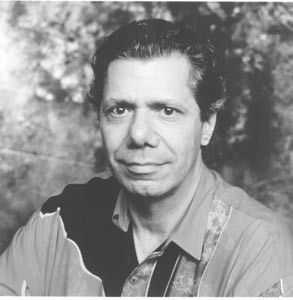
Usual Suspects

0

Shifting Alliances

By Yosha Bourgea

TO WIDEN or not to widen? That is (once again) the question for Sonoma County voters, who on March 7 will decide the fate of a ballot measure that would add a two lanes to the much-traveled Highway 101. If this seems like déjà vu, it should; in 1998, voters approved a similar highway-expanding measure, but rejected the idea of paying for it with a half-cent hike in the sales tax.

The hue and cry over traffic congestion remains as ubiquitous as smog, however, and backers of the new Measure B are hoping that, this time, road rage will outweigh frugality at the ballot box.

The measure is one of two transit sales-tax initiatives facing voters in March. A third, addressing rail improvements, may appear on the November ballot.

This year, the Measure B camp has a brand-new ally in the Sonoma County Taxpayers’ Association, which in 1998 joined with other organizations, including the Environmental Defense Fund and the Russian River Task Force, to denounce that year’s freeway-widening measures as a misuse of taxpayers’ dollars.

Foes of 1998’s measures B and C argued that the proposed sales tax increase was unnecessary because the 1998 Bay Area Regional Transportation Plan, or RTP, which allocated $440 million to widen Highway 101 in Sonoma County, would cover the costs.

“The passage of the regional gas-tax expenditure plan means that Sonoma County can get everything that’s being proposed for Highway 101 . . . without raising the county sales tax,” Jean Marie Foster, then-executive director of the SCTA, said at the time.

Doug Kimsey of the Metropolitan Transportation Commission, a regional planning agency, confirms that the 1998 RTP update, adopted a few months ago, provides for an investment of regional funds to widen Sonoma County’s stretch of the highway over a 20-year period–regardless of any sales tax increase.

BUT FOSTER’S successor, Spencer Flournoy, says the SCTA now “strongly supports” Citizens 4 101, the group formed by ex-Sebastopol Mayor Sam Crump to initiate this year’s Measure B–a campaign heavily financed by highway construction firms. Crump’s measure would raise the local sales tax by a half cent for eight years to pay for two more lanes.

“Our primary problem in the 1998 election was that this group of people [a coalition of environmentalist and business leaders] decided what would be a nice package for us to have in terms of transportation,” Flournoy says. “We thought the voters should have a chance to decide.”

Although the SCTA is against the idea of paying taxes twice for the same thing, Flournoy says, the sticking point is the question of time.

“If we live long enough,” he insists, “I have no doubt the gas tax will add additional lanes on 101. But it’s coming back very slowly. We believe that the situation is getting dire enough that we can’t wait entirely for the state and Caltrans to take care of it themselves.”

NOT EVERYONE has switched sides. Meg Krehbiel, policy analyst for the Environmental Defense Fund in Berkeley, says her organization is “adamantly opposed” to Measure B, as are most environmentalist groups.

“Using sales taxes to fund highway projects is bad transportation policy,” Krehbiel says. “It subsidizes automobiles, which encourages more pollution, more congestion, and more sprawl developments.”

Environmentalists aren’t the only ones opposing Measure B; the list also includes the League of Women Voters and the city of Sebastopol, which recently voted 4-1 against the measure.

“There’s so much intelligent opposition to these measures that even the $500,000 to $750,000 campaign that the road builders intend to wage will be difficult,” says Rick Theis, chairman of the Sonoma County Transportation and Land Use Coalition.

But Crump says recent polls by his Citizens 4 101 indicate that the measure has a very good chance of netting the two-thirds majority of votes necessary for passage. Over the next two months, he says, supporters of Measure B will be campaigning through direct mail, radio, and possibly cable TV ads, and walking door to door.

“We’ll be doing pretty much everything we can financially,” Crump says.

What voters need to know, Crump adds, is that if Measure B passes, the money will be raised and will be spent on highway improvements. In 1998, many voters expressed skepticism that funds would be allocated appropriately.

“This is the simpler plan, the necessary first step to any transportation plan,” Crump says.

But he takes exception to the statement that RTP gas-tax funds are already committed to widening Highway 101. Crump asserts that the RTP is not yet finalized and provides no guarantee of extra lanes.

“If you can prove to me that this [RTP] is a done deal, I’ll be happy to quit the campaign,” Crump says.

Usual Suspects loves tips. Call our hotline at 527-1200 or e-mail us at su******@****dy.com.

From the January 6-12, 2000 issue of the Sonoma County Independent.

© Metro Publishing Inc.

Talking Pictures

0

Special Delivery

Bringing up baby: Charlize Theron struggles with an unexpected pregnancy in The Cider House Rules.

Author Anita Diament on birth, blood, and ‘The Cider House Rules’

Writer David Templeton takes interesting people to interesting movies in his ongoing quest for the ultimate post-film conversation. This is not a review; rather, it’s a freewheeling discussion of life, alternative ideas, and popular culture.

“BLOOD,” declares author Anita Diament, “truly does have a power in it. In the ancient world, it was thought that blood was where life resided. It was sacred. But in modern times, we’ve become too squeamish about blood. We don’t understand the power of it, don’t give blood the respect it deserves. People get uneasy, they’re disgusted, they faint at the sight of blood.”

Diament laughs, softly, almost affectionately.

“It’s not very evolved of us,” she adds.

We’ve been talking about The Cider House Rules, a new film starring Tobey Maguire, Charlize Theron, and Michael Caine, in which blood–that slippery red elixir of life–plays a prominent recurring role. Though the film’s TV ads have shied away from so much of a hint at this, the truth is that Cider House, adapted by John Irving from his novel of the same name, is all about blood–mainly (though not limited to) the blood of women.

Homer Wells (Maguire) is the orphaned apprentice to Wilbur Larch (Caine), a philanthropic obstetrician who, in the pre-Roe vs. Wade 1940s, delivers–or occasionally aborts–the babies of unwed mothers.

When Homer trades the delivery-operating room for the (supposedly) less ethically uncertain world of apple orchards, blood continues to make its presence known, either by its absence–as when Candy (Theron), the already-engaged woman that Homer falls for, realizes she is pregnant by him–or in its double-edged familial bonding power, as in “blood is thicker than water.”

“I liked it. I found the film to be enormously compassionate,” says Diament.

She saw the film last night, in Boston, near the small town of Newtonville, where she lives with her husband and daughter.

The author of numerous non-fiction works, Diament has become something of a book-world phenomenon over the last two years, a response to her lyrical first novel, The Red Tent (Picador, 1997). Minimally promoted by its publisher, Diament’s book–the story of Dinah, the resilient midwife who is the sister of the better-known Old Testament superstar Joseph (yeah, the one with the Technicolor dream coat)–is now in its fifth printing, the result of a strong grassroots, word-of-mouth campaign on behalf of thousands of women’s book groups around the world, who’ve welcomed Diament–and Dinah–into their literary hearts and minds.

The red tent of the title refers to the place where women were quarantined together during their time of the month, or when they birthed their babies–or, every now and then (and without the men’s knowledge), aborted them.

“Women have been trying to control their fertility since the beginning of time,” says Diament. “It’s true all over the world. In premodern cultures, they’ve tried to get pregnant when they couldn’t, they’ve tried to prevent pregnancies, and they have tried also to abort–abortion obviously being the most dangerous. The fact that there is now medical technology to make it relatively safe is a fairly recent phenomenon.

“Some women I’ve spoken to feel a kind of nostalgia for the time of the Red Tent,” she says. “I am personally not nostalgic for any period of history prior to antibiotics.”

HISTORICALLY SPEAKING, it is also only recently that male doctors–Wilbur Larch included–inserted themselves into the world of women’s fertility and the art of delivering babies, with mixed results.

“When men finally entered the ‘birth chamber,’ ” says Diament, “that’s when women were put on their backs to give birth–which is the wrong way to do it. ”

Before this obstetric “improvement,” women crouched or squatted during labor.

“Gravity and crouching opens the pelvis in a way that lying on your back doesn’t,” Diament explains. “Women were put on their backs to make it easier for men to help them deliver.

“What I wanted to document,” she says of her book, “was a time when men wouldn’t go near a woman who was delivering, when a man wouldn’t consider messing with a woman’s reproductive system.”

Of course. Most men, I point out, even New Age sensitive guys, would rather not even hear about such things as menstruation and birth control and long, painful labor and placentas.

“Well, it’s all pretty bloody, isn’t it?” Diament laughs. “The way that men participate now–which is, I think, wonderful–is to be present at the birth of their children. But that was a huge step. Within my memory, that changed. My father wouldn’t have dreamed of going through those double doors–and yet my husband was with me when I gave birth. We’ve come a long way.”

And men are now routinely invited to cut their children’s umbilical cords, an experience that some men–me included–count among the most memorable moments of their lives.

“It’s so fascinating, isn’t it?” Diament exclaims. “One thing about this movie: the beauty of birth–the miracle of birth–is right there on screen, along with the blood, and the pain of all these women having to give up their babies.

“And childbirth is amazing,” she laughs. “Man or woman, if you’re in the room with somebody giving birth, it’s powerful! Labor is the line between being and not-being. It’s as close to the sacred as most of us ever get.”

From the December 30, 1999-January 5, 2000 issue of the Sonoma County Independent.

© Metro Publishing Inc.
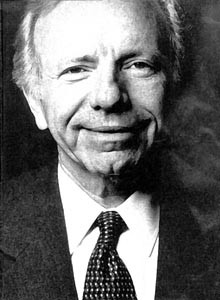
Auditioning

0

My Turn

Acting up: Auditioning for The Complete Works of William Shakespeare (Abridged) is no joke for writer David Templeton and John DiSessa.

The author attempts to win a part in a local show–and learns something along the way

Monday, Dec. 13, 6:59 p.m.

I’M NOT NERVOUS. Really, I’m not. As I push through the old double doors of the venerable Lincoln Arts Center in Santa Rosa, following a series of arrowed signs marked “Audition,” the only sensation I feel is a crushing, throbbing ache on the right side of my head–as if I’d just been whacked in the face, commedia style, with a large wet salami.

In truth, I’m feeling better than earlier today, when I was blindsided by a rare migraine headache. For a while there I thought I’d have to skip tonight’s open-call audition for Santa Rosa Players’ upcoming production of The Complete Works of William Shakespeare (Abridged).

As they say, however, the show must go on. So here I am.

“Fill out an audition form and take a seat,” suggests a helpful woman, pointing to a stack of forms as I step into the theater lobby and blink at the bright lights.

The room is humming with talk and laughter (or is that just my head?) as two dozen of my fellow auditioners mill about, chatting and joking.

As I jot my particulars on the form–thinking, “Jeez! It’s been how many years since I performed on stage?”–I scope out the competition: mostly male (maybe five women); mostly young (at 39, I don’t include myself among those ranks).

“I was thinking I may be a bit old for this,” says Jon Vissman, a late-40-ish gentleman waiting nearby. “I don’t know. I just love the play.”

The Complete Works, based on a famous live show originated by the Reduced Shakespeare Company, follows three hapless actors as they attempt to perform all of the Bard’s plays in a single evening.

Vissman, who’s seen the show performed locally–once with a cast of three women, in a show directed by Carl Hamilton, who’ll also be directing this new production–has been in numerous local productions over the last several years.

As he explains it to me, he had his first taste of Shakespeare back in 1979, playing a few small roles with the Marin Shakespeare Festival, and loved it. But then he got married, other responsibilities followed, and, in his words, “all of that dropped away.”

But recently, taking advantage of Sonoma County’s large and fertile theater scene–which ranges from the prolific Santa Rosa Players and Sonoma County Repertory Theatre to the inventive Cinnabar Theater and Actors’ Theater to various Shakespeare festivals and many small actor-driven theatrical companies–Vissman has had plenty of opportunities to develop his theatrical chops.

“As for tonight,” he says, laughing, “I’m just here for the experience.”

Scene stealers: Jon Vissman ponders his lines (top), Loren Lieberman belts it out (center), and John DiSessa puts on a bold face (bottom).

7:18 p.m.

“THIS IS A BIG, broad physical show,” warns Hamilton, leaning against the stage. “It’s very, very demanding.” We’re inside the theater now, and Hamilton has been going over the rehearsal schedule and a few other details, warming us up for the audition.

“I like to audition people a little bit strangely,” he explains. “Some people don’t like it. Sorry.”

In most auditions, the actors are called to the stage one by one for individual readings. In musicals–a popular staple on the community theater landscape–performers usually come prepared with a short song, which they sing along with a live accompanist.

After an initial round of tryouts, a selected few are called back for further auditioning.

Tonight’s audition will be different. Lined up on the stage are three scripts, one for each of part, each highlighted with that character’s lines. Three volunteers will grab a script randomly and take the stage, running through their lines and stage directions until Carl asks for another three volunteers. We will go through the entire play in this fashion, each of having several opportunities to strut our stuff, or embarrass ourselves, as the case may be.

“Don’t be afraid to be uninhibited,” Hamilton counsels, and the games begin.

Vissman is among the first onstage, along with an energetic, bandanna’d woman with an expressive face, and another woman with a strong voice and a good sense of comic timing.

With scripts in hand, they race through the first few pages.

“Thank you,” Hamilton calls out from the back of the room. “Another three, please.”

As a trio of strapping 20-somethings take the stage, Vissman takes his seat. “I think I sucked,” he murmurs, good-naturedly, to fellow auditioner Sheri DuMay, who seems a bit intimidated as the young men run breathlessly through a wacky minimalist version of Romeo and Juliet, culminating as an exuberant Juliet pretends to throw up on the audience.

“Thank you. Next three, please.”

7:47 p.m.

IT’S MY TURN. Taking my script, and ascending the stage, I realize that we’re about to assault the tale of Macbeth. I’ll be Macbeth. “Stay, ye imperrrfect mac-speaker!” I read aloud, letting loose with my best bad-Scottish accent. Forgetting my migraine, I face off against the fellow playing MacDuff, who reads, “I was from my mother’s womb untimely ripped. What d’ye think about that?”

“It’s bloody disgusting,” I snarl back at him, semi-wickedly, then shout, “Lay on, ye great haggis-face.” We improvise a swift and violent sword fight, after which my head is hacked off, offstage.

Without pausing, we rush on through Julius Caesar and Antony and Cleopatra, reduced comically down to little more than the death scenes. “Thank you,” Hamilton says. “Next three, please.”

9:06 p.m.

WE’VE MADE IT through the entire play. Vissman and I have each been on stage three times, and DuMay–star of last summer’s SRP production of Lend Me a Tenor–with a little encouragement from Vissman, has gone up once. Some of the younger folk were up five or six times.

“Thank you, everyone. Come back tomorrow night,” shouts Hamilton, “and we’ll do the whole thing over again.”

As I head for the parking lot, I’m suddenly aware that my headache has vanished, no doubt chased away by the adrenaline rush of being on a real stage again after nearly 18 years.

Community theater is a difficult entity to define. Some volunteer-based theater groups staunchly resist calling it community theater because of those who view it as being amateur or unprofessional–as being “not real theater.”

And yet, based on the number of community theater groups in Sonoma County–and the popularity of such shows as the Players’ recent sold-out run of Camelot and Sonoma County Rep’s well-attended A Christmas Carol–it’s clear that the hard-to-pin-down phenomenon is serving a vital function.

“Community theater is crucial, absolutely crucial,” says Hamilton, a local director for over 23 years, whose own Odyssey Theater company has performed dozens of challenging plays over the years.

“It keeps the craft of theater alive. There are community theaters around the United States that have been alive 30 and 40 years, and some of them do topnotch work. I’ve worked with plenty of actors here in Sonoma County who are as good as anybody, anywhere.”

“The truth is we live in a 9-to-5 world,” says John Rathjen, an oft-seen local actor who was recently in Camelot. “Obviously, not every actor or director, no matter how talented they are, can afford to quit their 9-to-5 job and run off to be brilliant, but community theater gives them a place to exercise those parts of themselves.

“And it gives them an audience that really wants them to have those opportunities.”

Tuesday, Dec. 14, 8:59 p.m.

ONSTAGE, script in hand, I’m standing beside Vissman and the bandanna woman, the three of us out of breath from having just performed Hamlet–backwards–for the grand finale of the play. The second night of auditions is now officially over.

“Well, at least this was fun,” Vissman says, still certain he hasn’t a chance at a part–as am I. After all, this will be a physically demanding show, and those young people were so much . . . younger.

Then Hamilton approaches us. He lowers his voice and informs Zissman and me that we’ve each won a part. The third opening will go to DuMay. Formal rehearsals start after the holidays. We should have the script memorized by then.

“Congratulations,” he says with a smile.

Indeed. I mean, who’d have guessed?

“Well,” Vissman shrugs. “This is what community theater is all about. It’s never knowing quite what to expect.”

From the December 30, 1999-January 5, 2000 issue of the Sonoma County Independent.

© Metro Publishing Inc.

Moonlight, Top o’ the Hill

0

Two Sonoma County venues go out with the old year

Sun Sets on Moonlight

After three years of live local music, the Moonlight has lost its lease and will be leaving the music biz. According to owner Steve Negoesco, the Santa Rosa club will hold its last show on New Year’s Eve.

Negoesco blames the landlord’s decision not to renew his lease on pressure from city government. The Moonlight has regularly played host to a wide variety of bands, from ska and hardcore to jazz and blues–and that diverse music has drawn a young crowd that Negoesco believes makes city fathers nervous.

“If we were just a blues club or a jazz club and only that, I think that we would not have been perceived as threatening to the people who have decision-making power,” he explains.

To appease critics, the Moonlight has done everything from hiring a security team to dropping hardcore shows.

“We’ve tried everything to placate the people who feel uncomfortable with what we do, but somehow it hasn’t been enough,” Negoesco says. “I don’t harbor any ill will. I just think it’s unfortunate that Santa Rosa isn’t ready to hear its own original music.”

Top o’ the Hill Bottoms Out

The end came suddenly for Sonoma County’s most unusual alternative music venue. After 27 years in business, Marty’s Top o’ The Hill has been sold and will shut its doors for good on the first weekend of January, according to owner Martin Lorenzo.

The Sebastopol club, which opened in 1973, operated as a country and western honky-tonk for decades. But last year, declining attendance compelled Lorenzo to change musical formats. He asked local sound engineer Patrick Warner to begin booking such alternative bands as Third Degree and the Lincolns.

But according to Warner, Top of the Hill’s remote location and reputation as a country bar kept many fans away. “[Attendance] has been a little on the light side,” Warner says. “I couldn’t get the locals to come in.”

Warner hopes to open his own all-ages club in Santa Rosa sometime next year. The 71-year-old Lorenzo, on the other hand, is looking forward to his time off.

“I’m going to enjoy not having to get up every morning,” he says.

From the December 30, 1999-January 5, 2000 issue of the Sonoma County Independent.

© Metro Publishing Inc.

Socially Responsible Businesses

0

Corporate Breakaways

Three progressive companies leading the way to a new century

By Marjorie Kelly

HOW IS BUSINESS likely to evolve ethically in the next century? Or to put the question in a slightly different way, how would we like business to evolve? I went out looking for the answer recently–calling on experts in the field of socially responsible business, to help me find companies on the cutting edge of social awareness, really showing the way to a new century. And I’m happy to report, the future looks good.

If other companies follow the lead of the three companies I found, the world will be in pretty good shape.

“Future possible,” as these three companies exemplify it, has to do with employee ownership that is genuine, making a company a real democracy.

It has to do with fair trade, deliberately paying fair prices to suppliers in underdeveloped countries.

And it has to do with environmental stewardship, not just a recycling bin here or there around the office, but thoroughgoing stewardship from top to bottom.

It has to do, in short, with making social awareness as integral to business as financial awareness.

Herewith, my choice for three companies leading the way, ethically, to a new century:

Fetzer Vineyards

A California vineyard combining across-the-board environmental sustainability with high profits

IMAGINE A FOOTBALL field covered in garbage. It’s a foot deep, so when you walk around in it–slogging through office paper, food pulp, old Bic pens–it reaches up past your ankles. Now imagine someone’s cleaned that field. The waste is the same depth, but now it reaches only from the first to the seventh yard line, and 93 percent of the field is pristine and green again. That’s a major cleanup. And that’s what Fetzer Vineyards in Hopland has accomplished with its own waste since 1991. It’s done it during a time when sales more than doubled.

Not being one to rest on its laurels, the Fetzer winery aims to go further–to zero waste by the year 2009. “We are already recognized as a zero-waste company by the state of California,” says Patrick Healy, environmental coordinator at Fetzer. What they do with all that non-waste is instructive. They recycle everything from cardboard to antifreeze; compost organic waste and turn it into fertilizer; and work to keep materials out of the waste stream–by restoring oak barrels rather than discarding them, for example.

There’s almost no aspect of the winery that escapes this kind of detailed environmental scrutiny. Take the administration building, for example. This 10,000-square-foot facility, completed in 1996, is one of the world’s first large-scale examples of rammed-earth (underground) construction. It was built almost entirely with recycled wood. Carpets are natural fiber. Lights are on motion sensors so they go off as you leave the room. Heat comes from waste heat off chillers used in winemaking. And instead of air conditioning, the building uses night-air cooling.

“Computerized and motorized windows open at night to admit cool air,” Healy explains. Even landscaping is environmentally conscious. It’s “zeroscape,” he says, because the drought-resistant plants take little water.

And then, of course, there’s the photovoltaic array on the roof, which got up and running in June. “It’s the largest photovoltaic display in Northern California not owned by a utility company,” Healy says. It supplies three quarters of the building’s energy needs. All other power used by the winery is from renewable sources, thanks to a unique utility contract signed in May.

Most telling, perhaps, is the vineyard’s approach to grape growing itself: an organic approach that relies on natural pest control and soil management. Techniques include the use of “cover crops” grown between the vines, like crimson clover and purple vetch, which attract beneficial insects.

“They keep the bad guys in check, so to speak,” says president Paul Dolan. Another technique is “canopy management,” in which the leaf-and-cane canopy is opened to bring in sunlight, reduce the chance of mold and rot, and eliminate the need for fungicides.

The process “brings us closer to the vine,” Dolan says. “We don’t have the quick fixes of chemicals, so we’re in the vineyards more. We find our farmers are better farmers as a result.”

And the grapes simply taste better. That’s where the financial payoff lies. There’s some demand for specially labeled “organic” wine, which Fetzer meets with an organic label, Bonterra. But it doesn’t label most of its wine organic. Organic growing “is part of who we are,” Dolan says. “It’s not something the consumer is aware of.”

About 20 to 30 percent of grapes used now are organic, but Fetzer plans to reach 100 percent by 2010. Toward that end, it formed “Club Bonterra” to help share ideas on sustainable farming among its outside farmers, who provide over 90 percent of grapes.

Does all of this environmental focus cost more? Yes and no. Organic methods are a little more expensive to begin with, but not in the long run. The solar array really won’t pay for itself, but it was built with the help of grants. Renewable power is slightly more expensive, but Fetzer is offsetting that by pursuing efficiencies in usage.

And recycling is decidedly less expensive than landfilling. It all does make economic sense. “But it’s not like we’re using it as a competitive edge,” Dolan says. It simply fits with how the company does business. Fetzer’s vision statement is to enhance the quality of life.

What’s remarkable is that Fetzer takes this holistic approach as a publicly held company. This $160 million firm is owned by the $2 billion Brown-Forman Corp. based in Louisville, Ky. “They’ve been great about it,” Dolan says. Fetzer runs its own show, as long as the profit is there. And as Dolan says, Fetzer is “very profitable.”

Over the last six years, profits and revenues have grown at a 15 percent annual compounded rate.

It’s a model worth showcasing for a new century: a thoughtful and deep commitment to the environment, combined with financial excellence. As Dolan says, “it helps other people see it can be done.”

Equal Exchange

A gourmet coffee company in Massachusetts pioneering a new model of fair trade practices

WHEN YOU buy a pound of gourmet coffee for $8 or $9, as little as 40 cents of that may go to the farmers who grew it. Much is siphoned off by middlemen in the export country, known to Latin American farmers as “coyotes,” who offer the lowest possible price–leaving some 20 million coffee farmers trapped in poverty. But some are fortunate. They do business directly with Equal Exchange, a fair trade company in Canton, Mass. By cutting out the middlemen, these farmers reap as much as 50 cents extra per pound. They’re people like Don Miguel Sifontes in El Salvador.

“We used to live in houses made of corn husks,” he told Equal Exchange. “Now we have better work, better schools, homes of adobe, and a greater brotherhood of decision-makers.”

That’s fair trade at work. It’s a way of doing business that defines supplier welfare as part of business success. And its premier practitioner in the United States is Equal Exchange, a gourmet coffee company founded in 1986 with the goal of building a more just system of trade between consumers in the North and producers in the South.

The concept of fair trade itself is 15 years old, and began in Europe as a faith-based movement, says Rob Everts, co-director of Equal Exchange with Rink Dickinson, one of the founders. A few crafts stores and catalogs in the United States also practice fair trade, but Equal Exchange is the only company with mass distribution, and the only company offering a fairly traded commodity like coffee. This uniqueness puts Equal Exchange alone at the pinnacle of fair trade in the United States

“For a long time, Equal Exchange was a very lonely voice in the wilderness,” Everts told Business Ethics. “Virtually no other people were doing fair trade for 11 years.” In 1991, it became the first U.S. company to officially adopt the TransFair internationally recognized standards of fair trade as guiding principles for its business. But since 1998, thanks to its example, over a dozen other coffee importers have adopted fair trade for a portion of their product lines.

Currently, over 95 percent of Equal Exchange’s coffees and teas are purchased using the following standards:

1. Purchase directly from small farmer cooperatives, owned and controlled by farmers themselves. In the last four years, Equal Exchange has widened its community of producers from six to 15 farmer cooperatives.

2. Pay a fair price, including a guaranteed minimum of $1.26 per pound (world price in mid-September was as low as 80 cents per pound).

3. Offer affordable, pre-shipment credit. “When we sign a contract with producers, we pay up to 60 percent of the contract six months in advance,” explains marketing manager Erbin Crowell. “If a hurricane hits, we share the risk.”

4. Encourage ecologically sustainable farming practices. Equal Exchange pays a premium of 15 cents per pound for certified organic and shade-grown coffee, offering an incentive to farm sustainably. All of the company’s teas are organically grown, and 70 percent of its coffee is shade-grown and certified organic. To decaffeinate coffee, it uses the world’s most environmentally progressive, chemical-free facility, in Germany.

5. Build long-term partnershipsbased on trust. When Nicaraguan partners suffered from Hurricane Mitch, for example, Equal Exchange worked with Lutheran World Relief to raise relief funds.

Equal Exchange is a run as a worker-owned cooperative, though it has an unusual hybrid legal form–combining a normal C corporation with a cooperative form–which allows it to bring in outside investors. Employees elect the board, approve important company decisions, and receive 20 percent of profits. No one in the company can be paid more than three times anyone else.

The company has some 200 outside, non-voting shareholders–“blue-chip socially responsible folk,” says capital coordinator Clark Arrington–who have collectively invested over $1 million. They receive annual dividends averaging 5 percent (which take preference over profit payments to workers). “It’s our ownership structure at Equal Exchange that enables us to make farmers and consumers our priorities, rather than profits,” as co-founder Michael Rozyne put it in one company brochure.

“The limits we set on return to investors help make it possible to transfer financial benefits to farmers.”

For 13 consecutive years, the company has grown steadily, with 1998 sales of $5.7 million, up 18 percent from the year prior. It’s been profitable 10 of the last 11 years–and when it suffered a small loss in 1998, it still paid shareholders a dividend.

Equal Exchange is ideal for an end-of-millennium role model, for it is much more than a company with progressive policies. As co-founder Rink Dickinson said in company literature, “We’re setting up a different economic model. That’s why we’re here.” And here’s hoping it’s a model that enters the mainstream in the coming century.

St. Luke’s

A visionary employee-owned ad agency in London changing the DNA of business

TALK ABOUT a dream coming true: St. Luke’s ad agency in London began as a kind of dreaming, abstract exercise in imagining the Advertising Agency of the Future. At the time, in 1992, St. Luke’s was still the London branch of the Chiat/Day agency. London staffers Andy Law and David Abraham had joined the agency’s task force on the future, the Chrysalis Committee, where they conjured a vision of an ad agency as a force for good in the world.

In the coming millennium, they believed, businesses would be judged not by products alone, but by their “Total Role in Society.” The agency would help clients design this TRS. Law and Abraham spent hours musing on a new model for business–where employees would no longer be nobodies, where the focus would be on “stakeholders” rather than stockholders–and they put these visions on paper.

When the group presented its findings to Jay Chiat, he hit the roof. The committee was toast. But the dream was to linger.

Fast forward to 1995: Andy Law has received a call from Jay Chiat, announcing he’s selling Chiat/Day to Omnicon. Law’s task is to discard as many employees as he can. And he wants none of it. Before long his London colleagues are joining him in a mass mutiny: the London office is breaking away. They call clients, finding them happy to follow the mutineers. And Chiat, once again, goes ballistic.

As Law recounts the tale in his new book, Creative Company: How St. Luke’s Became “the Ad Agency to End All Ad Agencies” (Wiley & Sons), what began then was “a fight that would go all 15 rounds and which would take a staggering ten months to complete.” In T-shirt and jeans, Law met with Fred Meyer–the chief financial officer of Omnicon Worldwide–presenting his reasons for spurning the merger “like a soapbox agitator trying to stir a crowd.”

At his home, late at night, Law took countless anguished calls from colleagues urging him to embrace the merger. “I dreamt one night that a large black Mercedes had pulled up outside my son’s school and whisked him off,” he wrote. ” ‘We have Tom,’ a Slavic voice said. ‘Sign the deal and merge, or else!’ ”

But Law and Abraham stood firm–and they remained determined to break away ethically. In the end, both Jay Chiat and Fred Meyer supported them.

As Law said in a recent phone interview, Chiat became “the genie spirit” helping to smooth the deal through. And Meyer designed the generous deal, by which Law and cohorts bought the London branch: for one dollar, plus a percentage of profits for seven years (with an option to buy it outright for $2 million, roughly 1 times revenue).

At last the London office was free to follow its dreams. The mutineers renamed the agency St. Luke’s, the patron saint of creative people. They took as their purpose, in Law’s words, “to elevate the human spirit, to offer the opportunity for personal transformation.”

They set about turning St. Luke’s into a democracy–where ownership is free, a guaranteed right, like the right to vote. Shares are distributed to all employees equally each year. Any employee may run for the six-member governing body, the QUEST (Qualifying Employee Share Ownership Trust). When they run, employees write “manifestos,” Law said. “Some even have campaign managers.”

There are no secretaries at St. Luke’s, but there are “hubsters,” who function like air traffic controllers, keeping track of folks–since there are no desks and no fixed working hours.

The free-form office is arranged around clients, each of which has its own room. And then, of course, there’s the Chill-out Room, where employees might be found getting a massage, or sleeping.

“It’s mad, it’s mess, it’s untidy,” Law said. And it works. In its second year, St. Luke’s was named Agency of the Year by the British trade journal Campaign. Its billings have grown from $35 million in 1995 to nearly $200 million now. Client fees climbed from $2 million to $8 million. And employees went from 32 to 110.

“We have the lowest staff turnover rate in the business, the best client retention, and margins around 23 percent, which is fabulous,” Law said.

And all that is achieved with high salaries and generous benefits (like 10 weeks time off after five years, or six months paid maternity leave).

St. Luke’s is a good choice for an end-of-millennium role model, for one hopes it does represent the agency of the future, and a model of employee ownership for the future: where ownership is not a paternalistic gift from on high, but a right employees themselves claim.

The three companies profiled here were all recipients of 1999 Business Ethics Awards, given by Business Ethics magazine in Minneapolis, of which Marjorie Kelly is co-founder and editor.

From the December 30, 1999-January 5, 2000 issue of the Sonoma County Independent.

© Metro Publishing Inc.

Charles Schulz

0

Last Laugh

Good grief! The comics page loses a unique voice as Charles Schulz retires.

Schulz’s wistful pessimism kept ‘Peanuts’ going strong for decades

By

IT’S SAID that the two most popular subjects for a comic strip are funny animals and demon children. In a sense Peanuts, which on Jan. 3 is ending its almost 50-year-long daily run, follows the usual blueprint. The comic strip contained the adventures of one of the funniest and most fanciful animals in the comics–the great dreamer Snoopy. It starred children who, while not supernatural, were almost unnaturally wise, especially the perennial second-bester, Mr. Failure Face, Charlie Brown.

Until the news of Schulz’s battle with cancer and impending retirement, the strip sat unobtrusively in its corner, a patriarch with a hundred descendants. It’s dizzying to enumerate them all, like all the begats in an Old Testament.

Snoopy begot the fanciful Calvin and Hobbes. Charlie Brown’s zigzag shirt was grafted by Matt Groening onto the twin backs of Akbar and Jeff in Groening’s Life in Hell–and where would Groening’s The Simpsons be without the example of Peanuts? There never would have been a Bart Simpson without Charlie Brown, anymore than there would have been a Lisa Simpson without Linus.

And, on a less wholesome note, would we have had the little round-headed kids in South Park? Where would TV’s Seinfeld have been without the example of this comic strip about, in essence, nothing? Throughout the last 50 years, Schulz’s characters were prototypes of people, too, life copying art, as Wilde predicted.

Lunch with Charles Schulz

Charlie Brown prepared the world for Woody Allen and for the Nurturing Male. Linus was the ultimate Northern California transcendentalist. Lucy van Pelt–a great comic creation, overshadowed by the others–is a prime example of the novice feminist, infuriated at being patronized, but still claiming all the rights and privileges due to a princess (“I believe in me! I’m my own cause!” she once shouted).

Peanuts always was a still, small voice–a conscience–in the midst of much gimcrack, much junk, much market-driven ephemera. What’s happened to the comic page reflects the way that the daily newspaper has changed, from a locally owned part of the community to a division of a communications company.

It’s hard to imagine something like Peanuts starting today. Schulz began his strip when the daily paper was full of terrific draftsmen, such as Milton Caniff and Al Capp, and so it might be embarrassing for him to have his artwork praised. But today, when barely anyone in daily comics can draw, Peanuts is one of the best-looking comics on the page. Who else has such breathtaking cleanness of line, such expressiveness, reduced after years of labor into the divine simplicity of Matisse?

A year ago, I was writing about Schulz because the passing of some movie greats had reminded me that artistic immortality didn’t coincide with the real thing. Also I wrote a letter to Schulz when I was 6, and it was promptly answered. I still have the letter 35 years later. It was a lesson to me that the people whose work I loved were approachable.

Despite what you may have heard, it’s a good idea to express your appreciation to the artists who have meant a great deal to you. I also wanted to write about Schulz because he was a veteran. Much of the World War II nostalgia, rampant after Saving Private Ryan, hadn’t acknowledged the other side of what life had offered the veterans–the disappointment that’s tangible in some of my favorite art forms: film noir, postwar American novels, ’50s jazz, and, of course, Peanuts.

As the old soldiers were passing, we were losing the memory of how the soldier’s glory was tinged with disillusionment. And Peanuts always had an undertone of disappointment that made it a revelation in the midst of so much booster culture.

Most, I think, remember Schulz’s humor and invention–the kite-eating tree! Linus’ blanket, alive and on the prowl, like the Blob! That ineffable look of happiness on Lucy’s face when she’d pull the football away! That canine Xanadu, Snoopy’s doghouse! But the comic invention of Peanuts sometimes eclipsed Schulz’s wistful pessimism. I think it was the sorrow in Peanuts that found an answering chord around the globe.

Now that Schulz is heading into a much-deserved and much-lamented retirement, we can see what the end of his 50-year run means. Charles Schulz made his fortune out of empathy. He made a world-famous name because of a natural sympathy for the underdog.

In short, when Peanuts comes to an end (the last daily strip runs Jan. 3; the last Sunday strip runs Feb. 13), it ought to be remembered that Schulz’s kind of sympathy was once considered a national virtue in America–a virtue that has, I fear, been mislaid somewhere along the line.

From the December 30, 1999-January 5, 2000 issue of the Sonoma County Independent.

© Metro Publishing Inc.
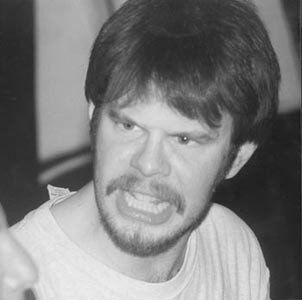
Books

The Book Bind

By Stephen Heuser

BOOKS ARE A PROBLEM. They weigh down your backpack, strain the seams of your briefcase, bulge out of your purse. Books deplete forests. Their bindings collapse. Their pages rip. They’re useless when wet. Books occupy a long-obsolete middle ground–CD-ROMs are smaller and hold more information; TV moves faster and talks to you. Neither grows mildew.

It’s time for somebody just to come out and say it: books suck.

Now, admittedly, this pronouncement comes from someone with a certain number of books in his life. My bedroom, for instance, is teetering with books: unread, partly read, and (a few) finished and saved for re-reading. My office–well, my office looks like the remainder bin at Borders, a home for little paper wanderers. How the Mind Works. The Junk Food Companion. A Byzantine Journey. Life’s Little Deconstruction Book. Rock This!

I am, in short, oppressed by books.

OK, not all of them. I like the Chris Rock book. And I don’t mind having a dictionary around, maybe two. But books have been getting a free ride, and someone has to put a stop to it.

I realized this when the November issue of Harper’s magazine arrived in the mail. “In Defense of the Book,” says the cover; inside, author William Gass delivers several thousand words on “the enduring pleasures of paper, type, page, and ink.”

Does this sound familiar?

It should.

You’ve probably read a dozen other impassioned defenses of the book, all of them by novelists or professors or book critics. Sven Birkerts, an essayist, even wrote–of course–a book about it.

There are a couple of problems here. First, let me point out that normally, in journalism, this sort of interest-group advocacy is not considered OK.

When the president of the longshoremen’s union shows up at Harper’s with a manuscript titled “America’s Crying Need for More Longshoremen,” you can bet the editors ship him right back out the door. When Donald Trump submits “Sixty Great Things about Luxury High Rises,” it’s eviction time.

But one of your book-reviewing buddies bangs out yet another special plea for everyone’s favorite cultural charity case, the Book, and it’s cover-story city. I secretly suspect that the six people in the country who do still read books are so busy writing magazine stories about their pastime that they don’t really have time to hit the bookstores anymore.

If they did find the time, they’d notice something. Books are not going away. Books are taking over. Three hundred years ago, when the book was the main way people exchanged ideas, there were about 100 titles printed every year in Britain, the hotbed of English-language publishing. Last year, there were 2.2 billion books printed in America alone. That’s right, 2.2 billion.

We are drowning ourselves in ink.

IN THE HIGH-TECH BIZ, people keep figuring out ways to put more and more performance in smaller and smaller boxes. No such thing has happened with books. It’s fair to say that, since the invention of movable type, the book has undergone no meaningful technical improvements whatsoever. (Of course, the history of publishing itself is one long downward spiral. Just look at the book cover through the ages: embossed leather; cloth-covered cardboard; Fabio.)

So every one of those 2 billion books takes roughly the same amount of resources to produce as each book did at the turn of the last millennium, when there were only a few thousand books in all of Europe. You do the math. It’s lucky for William Gass and Sven Birkerts that trees can’t vote, or their precious books would have been outlawed decades ago.

So the problem clearly isn’t the death of the book. What we’re mourning here isn’t a lack of actual volumes, but a lack of filtering. In the rush to make money, bookstore shelves are becoming desperately polluted with celebrity memoirs, flaccid thrillers, how-to manuals for the proudly inept.

If the law of averages holds, our culture’s literary legacy will be one novel by Don DeLillo and 1.9 billion copies of Telemarketing for Dummies.

The bookshelves of your average Barnes & Noble are fuller than they could possibly have been a century ago. But with fewer publishing companies, fewer booksellers thinking for themselves, and more editors tripping over each other for the same Rick Pitino motivational opus, those shelves are woefully empty of anything you might actually want to read in, say, 10 years.

Let me use a real-life example. A couple of years ago, the author of several popular books came to a party at my house. I’m sure he was secretly flattered to see I had a copy of his latest novel next to volumes by Hemingway and Gore Vidal. What I didn’t have the heart to tell him was why I was keeping his book: it was so factually bankrupt that I was considering using it as the basis for an entire article on the woeful state of modern book editing. This is a bright guy, and his editor is known as a happening young publishing Turk, and between them they’d managed to generate a suspense thriller in which the hero gets stuck in a Boston traffic jam–at 5 a.m.

This is the trouble with books in 1999. It’s true, as William Gass writes, that each book touches us by creating a world. But increasingly, those worlds are ones we wouldn’t want to live in. Thrillers are fine, but who needs thousands of them every year? Twenty or 30 that make sense–maybe that will even last–are all any of us really need.

The solitary, contemplative pleasures of ink and paper will be with us for years–by the bedside, on the train, at the beach. Sure, you can take a laptop to the beach, but get it sandy and you’re out $3,000.

And when, eventually, someone builds a computer you can read from at the beach–a device you can get sandy, and scribble in the margins of, and fold the pages down on–then guess who will have won? The book.

Think about this. Who’s the threat to books? The infotainment moguls. Jim Clark. Michael Eisner. Bill Gates. And when one of them wants to get his ideas out–spread the word, market himself as an innovative thinker to the maximum number of people, inflict some pointless, underedited, self-aggrandizing vision of the world on the American public–what does he do?

Damn straight. He writes a book.

This story originally appeared in the ‘Boston Phoenix.’

From the December 30, 1999-January 5, 2000 issue of the Sonoma County Independent.

© Metro Publishing Inc.

Stella’s Café

0

Suddenly Stella’s

Reflecting on success: Chef/owner Gregory Michael Hallihan has earned the right to relax.

Culinary comfort in a cozy rustic setting

By Paula Harris

STELLA’S CAFE in Sebastopol is booked solid every night. It’s not a tourist destination (shhh! so far), but the restaurant has been consistently packed with locals in the know since its opening several weeks ago. After three attempts we finally scored a reservation and were eager to discover what all the fuss is about.

Situated in a space reminiscent of an old apple barn that used to be Mom’s Apple Pie (that venerable pie shop is now next door), Stella’s Cafe is a funky, relaxed place. It’s like eating in a warm, upscale farmhouse.

There are several adjoining rooms. The entrance area boasts large, rustic wooden benches, a roaring wood stove, and a friendly open kitchen, where a seemingly permanent throng enjoys wine and supper at the counter.

Many patrons seemed to be foodies of a more casual ilk: local producers, retailers, young winemakers in their Eddie Bauer flannel shirts and sturdy hiking boots, and, yes, other restaurateurs curious about the competition.

We were seated in a small narrow dining room in back. The wooden wall on one side gives almost a log-cabin effect. There are shiny warm wood tables, teal and burgundy curtains swathing the windows, fresh flowers, and tea lights in decorative flat metal holders.

A table of older women–relaxed literary-looking types–were telling each other stories of their trips to Europe. There was much toasting and laughter.

A couple of electric floor heaters glowing bright orange at either end of the small room completed the picture. The only cold effect came from the painted bare floor. Nevertheless, during a dramatic stormy night this would be a great setting, where you could hunker over a bowl of steaming soup as the rain daggers slashed at the windows.

The comfortable level may be gauged as somewhere between our two local “Willow” restaurants; Willow Wood Market Cafe in Graton and Willowside Cafe in Santa Rosa. It’s no surprise to discover that Stella’s chef-owner Greg Hallihan most recently worked at the latter eatery.

The compact menu appears to rotate every two weeks. Out of the six entrée choices, two were vegetarian. There’s a reasonably priced wine list, and a tasty selection of from Village Bakery graces the bread basket.

Half a plump steamed artichoke served warm ($4.75) was a pretty plateful indeed, all shades of green, red, and purple. The half artichoke exposed its layers, revealing a scoop of purple-black niçoise olive tapenade inside. Fresh (actually crunchy) salad greens, chunks of tomato, spears of asparagus, and slices of sweet, earthy beets completed the impressive dish.

The soup of the day ($3.95) was a rich, soulful lentil and carrot combination. Comprised of rose-brown lentils, carrot dice, and a whole bay leaf lurking at the bottom, this soup was as thick and satisfying as a stew.

The forest mushrooms ($12.95) featured decoratively piped mashed potatoes slathered with hearty mixed mushrooms and shallots in a rich wine sauce–a vegetarian’s answer to coq au vin or boeuf bourguignon. The menu touted a basil and garlic potato purée with this dish, but alas, there was no sign of any basil or garlic in the plain mashed spuds.

Perhaps I misinterpreted the menu’s description of my dish: “Pan-roasted chicken with Dijon and truffled mash potatoes” ($13.95), for I expected the mustard to be a flavoring enhancing the potatoes. Once again the spuds appeared to be plain. The Dijon was in the form of a thick yellow sauce coating the chicken with an overpowering flavor. Once I’d scraped that off, the rest of the dish was good.

We were disappointed there was no Mom’s Apple Pie on the dessert menu, but comforted ourselves with a mocha crème brûlée ($5.95), with an intense coffee flavor; and a warm, cinnamon-kissed poached pear served with a pastry puff, caramel, chocolate, and local ice cream from Screamin’ Mimi’s.

As the background music slipped from mellow Frank Sinatra to soothing Windham Hill-type “massage music,” we drained our glasses of Benziger 1997 merlot ($5.75) and pondered who Stella could be. A food muse? A figment of someone’s imagination?

Our jovial waitress came to the rescue. “Stella isn’t fictitious, more like mythical,” she claimed with a mysterious glint in her eye. And she refused to elaborate.

Hmm, we may have to go back soon to find out more.

Stella’s Cafe 4550 Gravenstein Hwy. N., Sebastopol; 823-6637 Hours: Wednesday-Monday, 5:30 to 9:30 p.m. Food: Culinary comfort featuring local produce; very vegetarian friendly Service: Amiable Ambiance: Upscale rustic and quite cozy Price: Moderate Wine list: Moderately priced, good local selection Overall: 3 stars (out of 4)

From the December 30, 1999-January 5, 2000 issue of the Sonoma County Independent.

© Metro Publishing Inc.

Oreos

0

Ho! Ho! Oreo!

Sure, the Oreo boasts a lively history, but is it really Santa’s favorite cookie?

By David Templeton

‘TWAS THE NIGHT before Christmas and all through the house, not a creature was stirring . . . except for that large red-cheeked intruder scarfing Oreos at the dining room table. Yes, that would be Santa Claus, the ultimate cookie fan, who, according to millions of Christmas-giddy parents, just wouldn’t feel properly thanked–after sliding down the chimney and slipping toys beneath the tree–if the children of the house did not leave him some sugary baked bribe and a glass of milk.

Historians are uncertain as to the exact inception date and origin of this odd, socially sanctioned Cookies-for-Presents Program–or should we call it a “tradition”?–but it seems to have originated sometime around the late 1930s. And yes, in most households that follow this custom, the cookies are less of a bribe–by Christmas Eve it’s really too late to change Santa’s mind anyway, isn’t it?–than a generous, blissful, heartfelt “Thank You,” a thoughtful offering to a kindly fellow who works awfully hard on Christmas Eve and must surely need a snack somewhere along the way.

But when was it decided that Santa would prefer cookies and milk to, say, a tuna-fish sandwich and strong cup of coffee? And, for that matter, how can we know what kind of cookie Santa would prefer?

To put it more specifically, is Santa a chocolate-chip cookie man or does he go in for those tree-shaped festive sugar cookies? We may never know, but–and this may shock you–there is a body of evidence to support the conclusion that the one cookie that is left for Santa more than any other cookie . . . is the Oreo.

Yes, the Oreo. The bread-and-butter of Nabisco Foods Inc., that renowned little treat made of sweet creamy “filling” stuffed between two chocolate circles. Based on the sheer number of Oreos sold around the world, the folks at Nabisco can rightly claim that the Oreo is the most popular over-the-counter cookie in the world: over 363 billion of the things have been gobbled up since they hit the market in 1912–enough Oreos to reach to the moon and back five and a half times, enough to circumnavigate the globe 382 times!

And since the cupboards of America, statistically speaking, are more likely to hold a box of Oreos than any other cookie, it could be extrapolated that Santa finds a higher percentage of Oreos waiting on the table than any other brand.

“One would definitely think so,” agrees Ann Smith, spokesperson for Nabisco Foods Inc., headquartered in Parsippany, N.J. “We can’t officially claim to be Santa’s favorite cookie, of course. But since we’re America’s favorite cookie, I’m sure Santa gets plenty of Oreos every year.

“If I ever get a chance to speak to Santa, I’ll ask him,” remarks Smith, adding, “I also want to ask him if he’s a twister or a dunker.”

Oh! Surely Santa is a dunker. Isn’t he?

“Most males are,” Smith replies. “Our research shows that women tend to be twisters, and men are dunkers. Men also tend to pop Oreos in their mouth whole, and guzzle milk to wash them down.”

Hmmmm. Since Santa is always on the run, maybe he does that.

THE NOBLE OREO–as illustrious and recognizable a brand name as are Lifesavers and Spam–is consumed at the rate of 9.1 billion cookies per year. Like Spam, the origin of the Oreo’s peculiar name has been the subject of endless speculation. (Spam, in fact, is a conflation of the words spice and ham). According to Nabisco historians, the Oreo was not named after the Greek word oreo, meaning “mountain.” Nabisco’s pride and joy was named by taking the “re” out of cream and squishing it, sandwich-style, between the two “o’s” from the word chocolate.

The original Oreo has, over the last 87 years, produced a number of Oreo cousins, including a popular white fudge-covered Oreo and a bevy of holiday-themed Oreos, spanning the calendar from Christmas to Purim.

In fact, it was just in time for the Jewish holiday of Purim that Nabisco, two and a half years ago, introduced the spring Oreo, made with sky-blue filling, and carrying–for the first time in Nabisco history–a stamp on the package announcing that the contents were 100 percent kosher. Since then, all Oreos–and nearly all Nabisco products–have been certified kosher.

Which leads to the obvious question: What was it about Oreos that wasn’t kosher?

According to Smith, the cookies were once made with lard. As in animal fat. But that’s all changed. In fact, from an ingredient standpoint, Oreos haven’t actually contained lard since the ’70s. But since Oreos were still being produced on the same production lines, the product could not be considered kosher. Systematically, one by one, Nabisco disassembled the machinery, cleansing everything according to the requirements of the faith so it could receive a rabbi’s blessing. The sky-blue color of the spring cookies was chosen to suggest, well, the spring.

As for why the Christmas Oreo carries red cream filling, Smith says it was a choice between red and green. “But in our marketing research, we discovered that a red cream-filled Oreo did not make the people think that the flavor was going to taste like cherry. But the green cream filling made people think it was going to taste like mint.”

Besides, she adds, “Red is Santa’s favorite color.”

So does that suggest that Mr. Claus might prefer those red cookies to the original? Smith does not to presume to say.

“At our house, we leave the white fudge-covered Oreos,” she confesses. “Mainly because those are my favorites.”

From the December 23-29, 1999 issue of the Sonoma County Independent.

© Metro Publishing Inc.

Susan Orlean

Flower Power Stealing beauty: Susan Orlean makes an appearance on Jan. 12 in Santa Rosa. Orlean's talent blossoms in 'The Orchid Thief' By Traci Hukill A FRIEND REMARKED that the photo of Susan Orlean inside The Orchid Thief dust jacket is the most striking author picture he's ever seen. It is an...

Usual Suspects

Shifting Alliances By Yosha Bourgea TO WIDEN or not to widen? That is (once again) the question for Sonoma County voters, who on March 7 will decide the fate of a ballot measure that would add a two lanes to the much-traveled Highway 101. If this seems like déjà vu, it should; in 1998,...

Talking Pictures

Special Delivery Bringing up baby: Charlize Theron struggles with an unexpected pregnancy in The Cider House Rules. Author Anita Diament on birth, blood, and 'The Cider House Rules' Writer David Templeton takes interesting people to interesting movies in his ongoing quest for the ultimate post-film conversation. This...

Auditioning

My Turn Acting up: Auditioning for The Complete Works of William Shakespeare (Abridged) is no joke for writer David Templeton and John DiSessa. The author attempts to win a part in a local show--and learns something along the way Monday, Dec. 13, 6:59 p.m. I'M...

Moonlight, Top o’ the Hill

Two Sonoma County venues go out with the old year Sun Sets on Moonlight After three years of live local music, the Moonlight has lost its lease and will be leaving the music biz. According to owner Steve Negoesco, the Santa Rosa club will hold its last show on New Year's Eve. ...

Socially Responsible Businesses

Corporate Breakaways Three progressive companies leading the way to a new century By Marjorie Kelly HOW IS BUSINESS likely to evolve ethically in the next century? Or to put the question in a slightly different way, how would we like business to evolve? I went out looking for the answer recently--calling...

Charles Schulz

Last Laugh Good grief! The comics page loses a unique voice as Charles Schulz retires. Schulz's wistful pessimism kept 'Peanuts' going strong for decades By IT'S SAID that the two most popular subjects for a comic strip are funny animals and demon children. In a sense Peanuts,...

Books

The Book Bind By Stephen Heuser BOOKS ARE A PROBLEM. They weigh down your backpack, strain the seams of your briefcase, bulge out of your purse. Books deplete forests. Their bindings collapse. Their pages rip. They're useless when wet. Books occupy a long-obsolete middle ground--CD-ROMs are smaller and hold more information; TV moves faster...

Stella’s Café

Suddenly Stella's Reflecting on success: Chef/owner Gregory Michael Hallihan has earned the right to relax. Culinary comfort in a cozy rustic setting By Paula Harris STELLA'S CAFE in Sebastopol is booked solid every night. It's not a tourist destination (shhh! so far), but the restaurant has been consistently packed...

Oreos

Ho! Ho! Oreo! Sure, the Oreo boasts a lively history, but is it really Santa's favorite cookie? By David Templeton 'TWAS THE NIGHT before Christmas and all through the house, not a creature was stirring . . . except for that large red-cheeked intruder scarfing Oreos at the dining...
11,084FansLike
4,446FollowersFollow
6,928FollowersFollow