
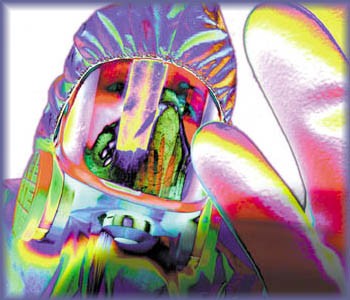
The No Spray Movement

On the Line

Inside the nonviolent direct-action training sessions

By Shepherd Bliss

The early, foggy morning drive from my small organic fruit and chicken farm through the tall redwoods darkening the narrow, winding road to the Occidental Arts and Ecology Center on Coleman Valley Road near the Pacific Ocean is relaxing. At times like this, I recall why I live in west Sonoma County and love it so much.

I first came to the OAEC over 15 years ago, before I lived here, when it was the internationally known Farallones Institute. For years I have enjoyed this land’s healthy, robust, beautiful plants fed by such rich, organic soil. Thousands of people in that time have tended this forested garden with love, care, and wisdom.

Upon arriving at the 80-acre farm and garden center for an all-day nonviolent direct action training, I am immediately asked to join a role-playing session outside to defend a hypothetical farm like the OAEC from forced pesticide spraying against the owner’s will to combat the glassy-winged sharpshooter threat to grape vines. I lock arms with other defenders, sit down, and try to prevent the police and sprayers from destroying over 25 years of patient nonviolent agricultural practices. The mock sprayers make an end run around us and spray the property, ending its organic nature within seconds.

Later we gather inside to debrief our feelings. My good friend Jack Winkle, a computer worker, reports, “I got scared [at the mock force], then indignant. ‘How dare you!’ ”

Christine Walker, a Sebastopol mother and artist, admits, “I did not want to be physically hurt.”

Occidental’s Rich Maurer adds, “I felt helpless in the face of superior force. We need more people.”

Marlena Machol, a grandmother and student at Santa Rosa Junior College, notes, “I was [playing] a policeman and could not look the protesters in the eyes, knowing they were right.”

Laura Goldman of Occidental adds, “I played a cop and felt, ‘You better get your body out of the way, or else.”

Trainer Dave Henson notes, “I was also a cop. When you said, ‘I’m not moving,’ I felt, ‘Oh, yeah!’ When people stood up to me, I felt belligerent. When someone said something normal to me, like ‘Good morning,’ it calmed me down.”

As for myself, I felt mainly sadness, as I imagined 25 years of hard work to build this beautiful organic garden being destroyed by a few minutes of chemical spraying. For what? To protect a few bottles of luxury wine? Some things are worth defending, like one’s family and the home into which years of labor have gone.

Tears came to my eyes, filled with grief.

Our trainer, Henson, directs the OAEC. He is an articulate, patient, caring, competent leader who is one of the growing number of people joining the No Spray Action Network. Henson asks, “What happens when the government is not an ally of the people?” He responds that “we then need to practice direct democracy. We use an ecological model that builds leadership, cultivates people to participate, and is well organized. Social movements need diversity and empowered communities. Direct action has participatory decision-making.”

Henson affirms “active nonviolence that protects. Noncooperation with evil is a form on nonparticipation in the wheel of destruction.”

His experiences with direct action go back to the Diablo Canyon Nuclear Plant protests 20 years ago. He went to Nicaragua and El Salvador in l983 and was “horrified by what the U.S. government was doing there.”

Henson also traveled to Seattle in l999 to demonstrate against the World Trade Organization.

His experiences have led him to conclude that “fighting a police officer is stupid. You will lose.”

Instead, Sierra Spooner, 16, suggests that “singing can be powerful.”

Rosemarie MacDowell, coordinator of No Spray’s research committee, adds that “total silence can be effective.”

A direct-action campaign can do many things. It can build a movement, educate and inform, strengthen voices of reform, point a spotlight on injustice, and delegitimize organizations, institutions, and programs. The two main ways direct action works is to interfere with injustice and to embody alternatives.

Our OAEC training occurs the weekend before the celebration of Martin Luther King Jr.’s birthday. One handout covers his six steps for nonviolent social change: (l) information gathering, including research; (2) education, informing others; (3) personal commitment, even at the risk of sacrifices; (4) negotiations, using grace, humor, and intelligence; (5) direct action, which makes the opponents work with you; and (6) reconciliation, seeking understanding and friendship with one’s adversary, moving toward what King describes as “the Beloved Community.”

The training includes talking about the legal system and what is likely to happen if one is arrested. Henson tells colorful stories of his own experiences of being in jail. Numerous materials are handed out that explain meeting procedures for groups using consensus decision-making, including the role of facilitators, tools for facilitation, and how to resolve stress and conflict.

After a full day with the two dozen participants in this training, I feel quite close to them. We divide into three west county affinity groups–Sebastopol, Forestville, and Occidental. My group includes some people that I have known for over a decade, neighbors, and some new people living in my watershed. I am so inspired by the training that I attend two more the following weekend, facilitated by Cazadero author Starhawk and others at Sonoma State University.

Four trainings are scheduled for February and will continue as long as needed. These trainings create confidence, and group solidarity and encourage people to take direct action.

For more information on No Spray’s direct-action training, visit www.freestone.com/nospray or call 707/874-3119.

From the January 25-31, 2001 issue of the Northern California Bohemian.

© Metro Publishing Inc.

Black Heart Procession

0

Baby’s in Black

Black Heart Procession’s bleak beauty

By Greg Cahill

WHAT CAME FIRST, John Cusack pondered in the opening scene of the romance-and-record store film High Fidelity, the music or the misery? For Pall Jenkins, songwriter and multi-instrumentalist with Black Heart Procession, the heartache definitely preceded his latest musical manifestation.

Just don’t ask the 30-year-old Southern California musician to reminisce about the essence of his personal hell. “I don’t talk about that in interviews,” he says curtly, during a phone interview from his San Diego home.

Pregnant pause. Next question.

Crying about a broken heart is nothing new in pop music, but the Black Heart Procession’s dark, haunting atmospherics have elevated that pastime to high art that is singularly appealing to critics and fans alike mesmerized by the band’s introspective minor-chord melodies, lyrical lamentations, and experimental sounds. Indeed, the brooding soundscapes on the band’s latest CD, Three (Touch and Go), include guitarist/singer Jenkins wailing on a musical saw (that sounds like the scraping of a metal shovel over a tombstone), and Tobias Nathaniel’s funereal pump organ, searing synthesizers, and surreal waterphone. Two tracks feature thunderstorms in the rhythm section.

The result–once described as somewhere between Hank Williams and Twin Peaks–is as dark and deep as Dostoyevsky’s existential abyss, as mesmerizing as a car wreck. It is chilling balladry in the best tradition of Nick Cave and Tom Waits.

It’s also a beautifully bleak depiction of life that prompts critics to wax poetic. “Black Heart Procession capture the utter disillusionment of innocence lost, that piercing, heart-wrenching moment when you first realized that the bright colors of the circus were simply a mask of the patched-together shambles of the circus life,” the Seattle-based music magazine the Rocket once opined, “and all you could do was cry.”

And where does Jenkins–who spends his more upbeat moments touring and recording with the alt-rock band 3-Mile Pilot–get his inspiration for these sad odes? “I’m feeling so uninspired right now,” he says with the barest hint of a laugh. “I wish I knew what inspired me right now. For the most part, the songs just come from everyday life–you know, just looking around at things and being annoyed at them.”

More often than not, those observations lend themselves to arresting tales of bitter regret. But, Jenkins adds, he’s not ready for antidepressants–yet.

“I’m not like suicidal and walking around thinking dark thoughts all the time,” he demurs. “My life isn’t so horrible. Actually, everything’s fine.”

From the January 25-31, 2001 issue of the Northern California Bohemian.

© Metro Publishing Inc.

The Super Bowl

The Super Bowl: American metaphysics in action

By Abou Farman-Farmaian

MANY SPORTS lay claim to a primary spot in the American heart, but TV ratings indicate one sport above all captures the nation’s attention–professional football. On Sunday, Jan. 28, across the land 150 million people will tune in for the Super Bowl.

The event consistently ranks among the most watched programs–last year, with more than 43 million homes tuning in, it was the fifth most popular show ever (but only the third among all Super Bowls). If, as Arthur Miller suggested, the business of America is show business, then the Super Bowl is clearly America’s greatest show.

Baseball and basketball don’t come close. Consider this: Super Bowl Sunday is one of those days with a name, up there with Easter or Thanksgiving. Ever hear of Pennant Friday or Golden Hoop Monday?

But why this pull? Football is a ripped-guts, smash-mouth contest of modern gladiators orchestrated by Pattonesque coaches and their chess-master strategies, culled from playbooks thicker than a Don De Lillo novel. And that has its attractions. But beyond the balleticism of wide receivers, the violence of the front lines, and the surgical precision of quarterbacks lies a deeper appeal. Look closely and you’ll see that football is America’s metaphysics played out under stadium lights.

Football, more than any other sport, gives you control over Time. Time will ultimately run out on all of us; that is everyone’s fate. But America does not abide fate easily–nothing is determined, everything is manageable.

So football turns Time into an element to be managed. One of the game’s prized skills is the ability to “control the clock”–and not just by calling time-outs. Football players can stop the clock by stepping out of bounds, spiking the ball, or throwing an incomplete. Conversely, you can chew up time by running the ball and letting the clock wind down. Bill Parcells, one of the greatest coaches, was America’s God of Time. He rode the winged chariot to two Super Bowl victories with the Giants.

The obsession with Space is another exclusive football trait. No other sport carries the same expansionist goal of pushing forward and occupying space. Down by down, the offense stakes ground on the gridiron, settles new territory, pushes the frontier, and works its way to the promised land, the end zone. That is American history rolled into four quarters, with cheerleaders to boot.

Which gives it the forward-looking, triumphant march of the New World.

Perhaps above all else, football embodies a people’s cosmic struggle to wrench order out of chaos, create a system out of primordial muck. America, more than other places (which have relied on myth, custom, philosophy, and decree), has achieved this through The Law.

JUST AS the United States has more lawyers than all other countries combined, so football has the greatest number of officials of any sport–seven on the field, four in the booth, and eight assistants of various sorts, from clock operators to chain crews. Its rule book can take any presidential candidate’s legal team to task. The original set of 61 rules in 1876 has mutated into almost 800 today, with an average of 20 changes a year.

As with the law, some of football’s rules may appear baroque and absurd. For instance, there is a 10-yard penalty on any player who “uses the top of his helmet unnecessarily.” Another rule states that “offensive linemen are permitted to interlock legs,” and another dictates, in almost mystical tones, that “after a shift or huddle all players on offensive team must come to an absolute stop for at least one second with no movement of hands, feet, head, or swaying of body.”

The NFL’s nit-picking rules are there to uphold a sense of justice by that most American of methods: the hubristic attempt to eliminate ambiguity and reduce the role of chance or fate or just sheer, unforeseen messiness; to level the playing field so that all that matters on the day, on the play, is talent and preparation and will, the holy trinity of the American success ethos.

Now, this is what I predict: While complaining that Super Bowl day is too long and too hyped and too gaudy, you will find yourself in the vicinity of a television set, taking in the pre-game show, a puffed-up rendition of “The Star-Spangled Banner,” and the half-time extravaganza along with a couple of $2 million-per-second ads. Whether you know the score or not, you will become part of America’s ultimate ritual.

This article was provided by Pacific News Service

From the January 25-31, 2001 issue of the Northern California Bohemian.

© Metro Publishing Inc.

The Human Rights Watch Film Festival

0

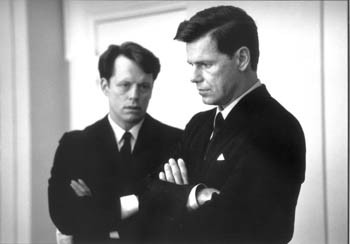
Trade Off examines the World Trade Organization.

Horror Flicks

Human rights film fest opens window on a disturbing world

By Patrick Sullivan

“EVEN IF I discounted half of what my comrades were telling me, the picture was horrifying,” East Timorese Foreign Minister José Ramos-Horta tells the camera in The Diplomat. “Thousands of people were being slaughtered throughout the country. Napalm was being used. Starvation was setting in.”

No one will ever know the exact number, but an estimated 200,000 East Timorese people were killed when the Indonesian army invaded the tiny country back in 1975. Thousands more died over the next 25 years as Indonesia’s brutal dictator, President Suharto, maintained his iron grip on East Timor through merciless use of terror, torture, and massacre.

Horrific, certainly. But perhaps the truly terrible fact is that the body count in East Timor actually looks like small potatoes compared to the death toll on other killing fields of the late, not-so-great 20th century, that strange era that gave us both the Universal Declaration of Human Rights and the homicidal horrors that stained the ground in places like Rwanda, Germany, and Cambodia. What distinguishes East Timor from many other such events is the relatively happy ending.

The Diplomat makes good use of that dramatic journey from tragedy to triumph as it traces both the story of East Timor and the strange career of the exiled Horta, who was awarded the Nobel Peace Prize in 1996. Indeed, this powerful documentary may be the most compelling of the four films screening Friday and Saturday, Jan. 26 and 27, at the Rafael Film Center as part of the upcoming Human Rights Watch International Film Festival.

Of course, it’s hard to know just how much credit should go to Tom Zubrychi, the accomplished documentary filmmaker who directed The Diplomat (which screens Jan. 26 at 6:30 p.m.). After all, it’d be hard to make a boring film about Horta.

Short, plump, frequently unshaven, emotionally intense, and prone to bouts of colorful swearing, Horta doesn’t fit the popular image of a Nobel Peace Prize winner. “Let me tell you one thing,” he fumes in a bad-tempered moment in the back of a taxi as he fumbles with his spectacles. “I hate these fucking glasses. I have to take them off when I read; then I have to put them back on when I finish.”

Departing East Timor just before the Indonesian invasion, Horta spent 25 years traveling the world trying to gather international support to end the brutal occupation. The Diplomat focuses mainly on the whirlwind of events in 1998 and 1999 that unexpectedly forced Indonesia to withdraw. But the film also makes clear that Horta’s previous decades of exile were often lonely and desperate. His marriage to his wife, Ana, who stayed behind, fell apart–though Horta offers his typical honesty in explaining why the relationship ended.

“Distance was a good excuse for me,” he explains. “She was very loyal, dedicated, and serious, while I was having other romantic liaisons going on in New York.”

Despite his very human failings, Horta proved a tireless champion of his beleaguered country. In 1999, his efforts paid off. With the end of the Cold War, the anti-communist Suharto grew less important to the United States, and our government’s previously unwavering support waned. International pressure grew, and Indonesia at last ended its occupation of its tiny neighbor–though not without a final round of bloodshed. Some of The Diplomat’s most horrifying scenes focus on the rampages of the Indonesian-backed militias who rampaged through East Timor just before withdrawal.

“One death is a tragedy, but a million is a statistic,” Joseph Stalin is alleged to have once remarked. The power of The Diplomat lies in its ability to put a very human face on the statistics of mass murder.

LESS SUCCESSFUL yet still interesting are two other festival documentaries screening at the Rafael.

More like an art film than a documentary, Pripyat (which screens Jan. 26 at 9 p.m.) explores the strange world of the small Ukrainian village of the same name that lies near the Chernobyl nuclear power plant, where the No. 3 reactor suffered a famously disastrous accident in 1986.

Despite the dangerous radiation, two kinds of people still remain in the area. One group is composed of soldiers and scientists, who monitor and guard the radioactive ruins, as well as workers who run the other reactor, which was still operating at the time Pripyat was made. Then there are the former residents of the village, who have returned because they can’t bear their exile: “We come from here,” explains one elderly man. “We were born here. And we want to live here a little bit longer.”

The black-and-white film loves these elderly faces and the crumbling ruins they inhabit. From the decay of the area around Chernobyl, Pripyat picks out images of startling beauty. But the film suffers from excessive artiness. There’s too much use of the pregnant pause, which slows progress down to a crawl at times. And the film also leaves us begging for answers about just how much danger the people it profiles are actually in. Concrete answers may have been hard to come by, but surely filmmakers could have done a bit better than this.

Last and least of the documentaries on the Rafael schedule is Trade Off, a film about the 1999 protests against the World Trade Organization in Seattle.

It’s hard to know how anyone could make a tedious film about the dramatic events of that week late last fall, when a coalition of unions and environmental and human rights activists came together to shut down one of the world’s most powerful (and undemocratic) international organizations. But the makers of Trade Off–which screens Jan. 27 at 2 p.m.–found a way.

Too long, too slow, and too full of talking heads, Trade Off does not do justice to the important event it tries to explore. To be fair, viewers will learn interesting facts about both the WTO and the police brutality inflicted on largely peaceful protesters. But Trade Off represents a lost opportunity to make these issues accessible to a mainstream audience.

Finally, on Jan. 27 at 7 p.m., the Rafael screens The Widow of St. Pierre, a feature film about the tension between mercy and capital punishment from French filmmaker Patrice LeConte. A screening tape was not available, but the film stars the highly watchable Juliette Binoche, so it ought to be worth a look.

The Human Rights Watch Film Festival screens films on Friday-Saturday, Jan. 26-27, at the Rafael Film Center, 1118 Fourth St., San Rafael. For details, call 415/454-1222.

From the January 25-31, 2001 issue of the Northern California Bohemian.
© Metro Publishing Inc.

Annapurna

0

Photograph by Rory MacNamara

High Times

Scale the tasty Himalayan heights at Annapurna

By Paula Harris

THE COMFORTING chai tea at Annapurna Nepalese Restaurant is perfumed with cardamom, cloves, and fresh ginger. Just the promise of a fragrant cup of this creamy spice-infused delight is enough to lure me off the cold street and into the cozy dining room.

But then add to this the possibility of some tantalizing piquant curries and a selection of marinated meats and chewy breads brought steaming from the clay oven, and you have the recipe for a satisfying and exotic meal.

Sonoma County seems fated to house at least one Nepalese restaurant. The trend started a few years back with the now defunct Himalayan Sherpa Cuisine restaurant in Glen Ellen. This enterprise was followed by the Katmandu Kitchen and then the Himalayan Chhahari restaurants in Santa Rosa. The last two (both also now defunct) were housed in the same location on Ross Street (unfortunately out of the view of any major traffic– automobile or foot).

Latest in this Himalayan parade (also now in the Ross Street location) is Annapurna, once again featuring the colorful diverse Nepali cuisine, which uses cumin, cardamom, green and red chilies, garlic, ginger, fenugreek, Szechwan peppers, scallions, and more to create mouth-awakening dishes.

Not too much has changed decor-wise inside this venue, but the plain white walls are now warmed by maroon-red trimmings, vibrant color photographs of Tibetan scenes, wood carved masks, and a few Nepalese drums and other hanging musical instruments.

Seating is either at tables or, more traditionally, on floor cushions. Intricate black-tasseled paper lanterns decorated with mysterious inky symbols hang over the tables. And percussion-heavy Tibetan folk songs emanate from the sound system.

The dinner is mid-priced, and there’s an all-you-can-eat buffet lunch offered for the bargain price of $5.95.

Some of the dishes borrow a bit from Indian cuisine. For example, the delicious samosas ($3.50), which are crisp golden puffed pastries, are served hot. At Annapurna they are nongreasy and are crammed with potato, peas, and herb and almond filling. These are great dipped into the sweet and sour tamarind sauce served on the side.

Another good appetizer is a plate of steamed flour-dough dumplings called momos. They are stuffed with either ground lamb and served with a mint sauce ($5.95) or with a selection of minced veggies ($4.95).

Generally, the Nepalese dal soup I have encountered elsewhere (and made at home) has been thick and texturally almost chewy, but here the dal ($4.95) is a much thinner, more refined consistency. It’s light and creamy with a rich tomato taste.

There’s more light creaminess in the Annapurna kukhura special ($10.95), a curry made with boneless chicken chunks cooked in a milky sauce with spices and almonds. Other curries include the very tasty kukhura ko ledo ($9.95), billed on the menu as “a favorite in Nepalese households,” which is the boneless chicken pieces cooked in a fresh garlic, ginger, and onion sauce. Yummy.

However, the chef’s special khasi ko achere ledo ($12.95), pungent lamb chunks cooked in a spicy pickle sauce, was too chewy and the sauce too oily the night we sampled this dish.

A better cut of meat would help.

Other dishes include tiger prawns cooked in garlic, ginger, tomato, and spices ($12.95) and a selection of tandoori-oven specialties, such as marinated lamb or chicken.

In addition, Annapurna offers lots of vegetarian dishes, including fresh-fried potato with whole cumin seeds, “a high-altitude special” ($8.95); and the very flavorful mismas tarkari ($8.95), a mix of peas, mushrooms, zucchini, broccoli, and carrots cooked in a slightly spiced sauce.

The entrées are served in small individual copper bowls and come with either nan bread or basmati rice. My advice is get the rice and order a separate nan. The thin hot fluffy pillows are brushed with garlic and fresh cilantro or basil ($2.25).

Wines are quite limited, so you might prefer to stick to imported Indian beers, like Kingfisher or Taj Majal. Or maybe sip a cool mango lassi ($2.95).

For dessert, try the kheer ($2.95), a mildly sweet rice pudding with dried fruits served hot, or the Everest Kulfi ($3.95) refreshing saffron-flavored ice cream with pistachios.

The staff–whether it be owner Dikendra Massey, his affable American wife (they met in Nepal several years ago when she was in the Peace Corps), their charming young daughters (dressed in traditional garb), or any of the other gentle souls who will serve you–will make dining at Annapurna especially pleasurable.

Namaste!

Annapurna Nepalese Restaurant Address: 535 Ross St., Santa Rosa; 707/579-8471 Hours: Lunch daily, 11:30 a.m. to 2:30 p.m.; dinner daily, 5 to 10 p.m. Food: Classic dishes from Nepal Service: Proficient and friendly Ambiance: Casual, with table or floor seating Price: Inexpensive to moderate, with bargain lunch buffet Wine list: Minimal selection Overall: 3 stars (out of 4)

From the January 25-31, 2001 issue of the Northern California Bohemian.

© Metro Publishing Inc.

Usual Suspects

0

Petaluma council reverses key policy

By Greg Cahill

CALLING the Jan. 29 special meeting “a sham,” former Petaluma City Councilman David Keller blasted the council’s new conservative majority after their unexpected decision to reverse the city’s opposition to a controversial regional water-expansion contract. The 4-3 decision leaves in doubt the future of Petaluma’s role in the planned expansion, which could cost the city tens of millions of dollars.

The decision came at the end of a contentious meeting–called just six days ago by Mayor Clark Thompson–as opponents charged foul play, alleging that the council failed to provide adequate advance notice that they planned to act this week to switch policy on a key issue.

“We have a process with no end in sight,” said City Councilman Mike Healy. “We have to make it clear that Petaluma is a team player.”

Last year, in a bid to coerce the then progressive council majority, county and city of Santa Rosa officials threatened to cut water supplies to Petaluma unless the city agreed to sign on to the project known as Amendment 11. If completed, the $175 million project would increase the diversion of water from the Russian and Eel rivers by 40 percent for water utility users in Sonoma and Marin counties.

Petaluma officials had opposed the project from the start, saying that the county had failed to implement conservation measures or recognize that unchecked growth eventually would outpace water supplies.

The Petaluma City Council had won a moral victory of sorts last year when the county capitulated, announcing that Amendment 11 was dead in the water. A county consultant recently began drawing up a new plan. This spring, federal regulatory agencies are expected to announce a cut in water diversions from the Eel River, because increased residential, commercial, and agricultural demands are endangering fisheries on the waterway.

It’s unclear how Monday’s decision by the newly elected conservative City Council will affect that process.

Thompson, Healy, and newly elected councilmembers Mike O’Brien and Bryant Moynihan voted in favor of the expansion. Councilmembers Matt Maguire, Pam Torliatt, and Janice Cader-Thompson opposed it.

Keller, a strong environmental advocate who chose for personal reasons not to run for re-election in November, until recently had been a member of the former environmental majority.

Lock Down

LESS THAN A WEEK after the Sonoma County Law Enforcement Association complained that faulty cell locks contributed to the Jan. 14 attempted escape of six inmates from Juvenile Hall in an incident that sparked a riot and led to injuries of several guards, jail officials disclosed that repairs will be made within the month.

“The breakout and assault on Juvenile Hall employees and injuries to police is merely the latest manifestation of a problem that the Probation Department has been aware of for the last 10 years,” noted SCLEA spokesperson Shaun Du Fosee in a press release. “The problem lies not only with an outdated facility, but [with] the refusal of top management to do something about repeatedly identified problems.”

“Why is it probation officials admit that cell-locking mechanisms were less than secure and have done nothing about it?”

Evidently the squeaky wheel, er, cell door, does get greased.

From the January 25-31, 2001 issue of the Northern California Bohemian.

© Metro Publishing Inc.

Open Mic: California’s Energy Crisis

Outage Outrage

By Patrick Sullivan

“Maybe you should ask some of those old Eastern Bloc countries how they keep the lights on,” taunted my little brother, calling from Texas to gloat over the blackouts rolling across California. “Maybe Iraq could help. Or there’s always North Korea.”

Then he hung up–but not before kindly offering to mail candles and batteries.

It might be tough to admit, but we deserve all those jibes, all those unfavorable comparisons to poverty-stricken Third World countries. Here we are, citizens of the wealthiest state in the most powerful nation in the world, sitting around in the dark.

Who’s to blame? We could point the finger at the money-hungry energy suppliers that seem to have conspired to limit power supplies and send company profits through the roof. Or we could cast a cold eye on the politicians who pushed the state headfirst into the murky waters of energy deregulation–low-watt Wilson, who signed the bill, and dim-bulb Davis, who never saw this crisis coming.

Or we could blame PG&E and Southern California Edison, whose lobbyists pretty much wrote the deregulation rules that have put out the lights in the Golden State.

Or we could blame all of the above and still have room for one other culprit. Grab a candle, go into your bathroom, and–to paraphrase the ineffable wisdom of Michael Jackson–take a look at the man or woman in the mirror.

No, don’t worry–this isn’t another lecture about personal energy conservation, though God knows we could probably use one.

For far too long, ordinary citizens have assumed we can go about our busy lives and leave important matters like the power supply to folks at the top. Sure, the politicians and the lobbyists and the big corporations pick our wallets every chance they get, but at least they know what they’re doing. At least the trains run on time, at least the economy keeps humming along, at least the power stays on. What’s good for PG&E is good for the state.

Unfortunately, we forgot about greed, we forgot about shortsightedness, we forgot about stupidity. Now we get to pay the price.

Of course, there is one good thing about sitting around in the dark. Maybe we can’t use the computer, or read, or watch TV. But it does give us plenty of time to think.

And that ought to have some folks up in Sacramento sweating bullets.

Patrick Sullivan is the Bohemian‘s associate editor.

From the January 25-31, 2001 issue of the Northern California Bohemian.

© Metro Publishing Inc.

Open Mic

0

Blame Game

By Greg Cahill

SUFFER THE CHILDREN, indeed. When I was a kid, summer vacation was sacrosanct. Those long, hot New England months were the perfect setting for endless hours at the seashore, gorging on cheap pizza, and even cheaper milkshakes. By mid-July, the salty air cleansed our souls, and the sand collected in most of our body cavities. At night, the kids in my neighborhood played kickball, rode bikes through the toxic cloud wafting from behind the mosquito-abatement truck (OK–stupid, right?), or just gathered on door stoops in a rite of passage that usually involved fumbling adolescent sex.

For the most part, summer vacation was 12 weeks of unfettered bliss, with a bit of intermittent hell thrown in for good measure by our older siblings.

Now, Gov. Gray Davis has proposed an end to summer vacation as we know it for middle-school kids in California. He said the little buggers are lagging in their studies. Of course, that may be because California spends less on public education than most states we smugly think of as backwater havens for inbred cousins. But, the governor says, the kids are going to have to pay the piper. What do you expect from a guy named Gray?

The notion that kids are to blame for society’s shortcomings is nothing new. Until the mid-’50s, public schools assigned very little homework. Then the Russians launched Sputnik and the grownups got scared. They heaped on the homework. Things eventually cooled a bit. But when the economy tanked in the ’70s, educators cranked up the volume once again. And when the Japanese began to dominate the hi-tech markets in the ’80s, the schools knew just what to do.

Now kids barely have time to be kids.

Twenty years of neglect has nearly bankrupted the public school system, and Gov. Davis and an army of gray-suited bureaucrats want our kids to spend summer vacation in a stuffy schoolroom atoning for the sins of the state’s tightwad taxpayers.

Those toxic clouds of bug spray didn’t stink half as bad as this sort of pusillanimous public policy.

‘Bohemian’ editor Greg Cahill is still coughing up chalk dust from beating the erasers in front of Whipple School’s coal-fired furnace.

From the January 18-24, 2001 issue of the Northern California Bohemian.

© Metro Publishing Inc.

‘Thirteen Days’

0

Thirteen Days.

Nuclear Reaction

Atom-savvy trio talks nuclear porn and ’13 Days’

Writer David Templeton takes interesting people to interesting movies in his ongoing quest for the ultimate post-film conversation. This is not a review; rather, it’s a freewheeling, tangential discussion of art, alternative ideas, and popular culture.

“FOR YEARS and years, we lived under this constant threat of nuclear annihilation, a threat so enormous and so devastating, it made it hard to seriously bank on ever having a future. It made it hard to plan for long-term goals. Then the Cold War ended.”

Ken Sitz–clutching a steaming hotdog in one hand, all but bouncing in his wooden chair–delivers these verbal bon mots in a wistful tone of voice that just barely conceals a sharp, nostalgic longing. “When you walk around believing the world might end tomorrow, it makes life interesting. Everything becomes precious, if a little futile. I really don’t think we should easily give that up. I think we should try to hold on to a little bit of that.”

Facing Sitz across his cozy Los Angeles Hills living room are Bill Geerhart and Curtis Samson, similarly armed with frankfurters, similarly nostalgic for those bad old, scary-ass Cold War days. This mood has been heightened by the new film Thirteen Days, which we’ve all just returned from seeing.

An impressive though critically nuked Kevin Costner drama, 13 Days relives the 1962 Cuban Missile Crisis, that special moment in American history when the Kennedy administration came about a hair’s handshake from a bomb-chucking contest with the Soviet Union. Costner plays Special Adviser Kenneth O’Donnell to Bruce Greenwood’s JFK.

The movie’s posters all show Soviet missiles sailing over American landmarks–Mount Rushmore, the Seattle space needle, the famous Hollywood sign–and tease with the words “You’ll Never Believe How Close We Came.”

Sitz, Geerhart, and Samson all liked the posters–but they loved the movie.

“It’s right up our alley,” Samson says laughingly.

It’s true. Since April of 1999, these three gentlemen have calmly and quietly built Conelrad.com, a very cool, very eerie website that is keenly devoted to “all things atomic.” The site takes its name from the old national Emergency Broadcasting System outlet that operated during the early parts of the Cold War and would have spread the word should our corner of the planet have come under nuclear attack.

The website is as packed with kitschy facts and images as a well-stocked fallout shelter, with reviews of the top bomb-themed movies–the Conelrad 100–and Cold War record albums. Then there are the eye-opening reports on the proper way to “duck and cover” and the effects of radiation on real-life witnesses of U.S. nuclear tests.

Sitz, a Web producer for Lazerfish.com, is a pop-music historian whose collection was explored in RE/Search Publications’ Incredibly Strange Music, Vol. 2. Geerhart is an L.A.-based documentarian, and Samson–a retired Air Force captain and the trio’s only actual Cold War military veteran–is an avid collector of nuclear-pulp novels.

For the record, Sitz and Samson were in elementary school during the actual Cuban Missile Crisis. Geerhart wasn’t born yet.

“I remember it pretty well,” says Samson. “I was at school, and they sent us home. It was like the world’s spookiest holiday.”

“I remember going outside to the playground,” adds Sitz, “trying to imagine the playground gone, wiped out by a bomb. I was overwhelmed at the thought that something as big as the playground could be wiped away.”

“During the credits of 13 Days,” I say to Sitz, “you seemed to recognize the person credited with nuclear effects.”

“Peter Kuran!” intone all three.

“The nuclear-porn guy. He’s famous for his footage of nuclear tests,” explains Sitz. “Years ago, he somehow cornered the market on all this footage that was being kept in a secret bunker in the Hollywood Hills. Now whenever a producer needs an atomic bomb explosion, they go to Kuran. He’s built quite a market for it.”

“The guy has archived and processed all this footage,” adds Samson. “He’s even released a few compilation tapes of random atomic tests.”

“But none of them are ever done in any meaningful contexts,” says Sitz, “so it’s a lot like nuclear pornography. Just a bunch of big bombs going off.”

“Some of the images are pretty striking, though,” remarks Geerhart. “Remember that bizarre Chinese test, where they have gas masks on all the horses?” Everyone nods. “Now, there’s an image that sticks with you.”

In regard to the movie’s description of events during the Cuban Missile Crisis, the Conelrad boys admit they were, literally, on the edge of their seats at times.

“I liked that the crisis was told entirely from the U.S. point of view,” Sitz tells us. “It never showed what the Russians were doing or thinking, which is precisely the way to tell this story, since the whole crisis escalated, in part, because we were operating under a severe lack of information. It was almost catastrophic.”

“Over 10 years ago,” he continues, “after the Berlin Wall came down, there was a big summit with a lot of the U.S. and Russian people who’d been directly involved in the Cuban crisis. They got together in Washington and talked about what had happened, comparing notes, putting the pieces together, realizing how paranoia and misinformation fueled the escalation. At one point they were all sitting there going, ‘Shit! It was even closer than we’d thought.’ ”

“The world really had been on the brink of destruction.

A long pause follows. Everyone sits silently, reveling in the tasty terror of that last thought.

“People ask us why we’re so into atomic culture,” says Geerhart at last. “I think the appeal is, everyone likes a secret, and the Cold War era was chock full of really bizarre secrets that are only now coming to light.”

“I thinks it’s deeper,” concludes Sitz. “I think we know we’re too complacent, that our security is illusory. So when we dig into this stuff, or see a movie like 13 Days, we can look up at the sky and say, ‘Wow. We are so lucky to be alive.’ ”

From the January 18-24, 2001 issue of the Northern California Bohemian.

© Metro Publishing Inc.

Usual Suspects

Grape growers mount p.r. campaign

By Greg Cahill

CAN’T WE ALL just get along? In an effort to improve feelings between Sonoma County grape growers and the burgeoning cadre of environmental activists now holding civil disobedience training sessions in preparation for a standoff over proposed forced spraying of pesticides to combat a potentially damaging vineyard bug, the Sonoma County Grape Growers Association has published a brochure designed to improve community relations.

According to a Jan. 10 press release, the Common Courtesy, Common Sense guide “signals the intentions of growers to farm responsibly by respecting neighbors, workers, the environment, and our water supply.” It also notes that growers “can no longer assume our rural neighbors [i.e., new suburbanites] have an ag heritage or understanding. Many will have very different expectations.”

Like not being subjected to unhealthy pesticide drift?

Indeed, SCGGA doesn’t mention the steadily rising use of pesticides in Sonoma County, which always ranks high in state pesticide-use figures. But the SCGGA press release does acknowledge that the county is moving ever closer to a monoculture dominated by the almighty grape, which feeds a sea of political campaign contributions. “Grape revenues will likely account for over 60 percent of the county’s farm gates revenues in 2000, up from 54 percent in 1999,” SCGGA president John Clendenen noted. “Strong prices, plus increased yield levels over 1998 and 1999 and expanded acreage, have increased grape revenues. Other major county agricultural products likely decreased in value in 2000 due to lower prices and shrinking production . . . These trends reinforce the importance of grape production, if Sonoma County is to retain its agricultural heritage in the 21st century.”

The Town Hall Coalition, Occidental Arts and Ecology Center, and other organizations are mounting an orchestrated campaign to reverse that trend. But increased reliance on grape production makes forced spraying almost a certainty, since the growers argue that the crop is vital to the county’s economic growth.

Meanwhile, state Assembly-woman Pat Wiggins, D-Santa Rosa, announced last week that she is “encouraged” by Gov. Gray Davis’ willingness to spend $19.6 million this year to fight the glassy winged sharpshooter and the bacterial Pierce’s disease that it spreads to grape vines.

Money talks.

Desolation Row

PROGRESSIVE point man Jim Hightower and an army of Naderistas couldn’t wait for George Dubya to seize the reins of power so the conservative administration would rile up liberals and set the stage for battles over abortion, civil rights, the environment, and other hot-button issues. They didn’t even have to wait for the big guy to put his cowboy boots up on the Oval Office desk–when it comes to the great outdoors, at least. Bush’s nominee for Secretary of the Interior, Colorado Attorney General Gale Norton, and an Interior Department transition team that reads like a Who’s Who of Timber, Mining, and Big Oil Interests has sent shivers down the spines of staffers at the Point Reyes National Seashore and beyond.

And for good reason.

Norton, who was vilified last week by critics for her apparent sympathetic statements about the Confederacy, once opposed the construction of a handicap-access ramp on the Colorado state house because the ramp would diminish the historic architecture. Imagine how she’ll feel about bringing national landmarks and parklands up to code?

Of course, George Dubya isn’t exactly known for cozying up to parklands. During his tenure as governor, Texas ranked 49th among states in the amount of money it devoted to parks. In addition, Bush supported a 1995 law permitting landowners to sue the government for the cost of obeying environmental regulations. And Bush already has made it clear he’ll exploit the sensitive Arctic Wildlife Refuge for its vast oil reserves. But first, Dubya has a bevy of transition-team attorneys looking for ways to overturn President Clinton’s last-minute executive order closing thousands of miles of roads in national parklands to loggers. Bush promised this week to bring “a Western perspective” to parkland management.

Thanks, Ralph.

Usual Suspects likes tips.

JavaScript must be enabled to display this email address.

From the January 18-24, 2001 issue of the Northern California Bohemian.

© Metro Publishing Inc.

The No Spray Movement

On the Line Inside the nonviolent direct-action training sessions By Shepherd Bliss The early, foggy morning drive from my small organic fruit and chicken farm through the tall redwoods darkening the narrow, winding road to the Occidental Arts and Ecology Center on Coleman Valley Road near the Pacific Ocean is relaxing....

Black Heart Procession

Baby's in Black Black Heart Procession's bleak beauty By Greg Cahill WHAT CAME FIRST, John Cusack pondered in the opening scene of the romance-and-record store film High Fidelity, the music or the misery? For Pall Jenkins, songwriter and multi-instrumentalist with Black Heart Procession, the heartache definitely preceded his latest musical manifestation. ...

The Super Bowl

The Super Bowl: American metaphysics in action By Abou Farman-Farmaian MANY SPORTS lay claim to a primary spot in the American heart, but TV ratings indicate one sport above all captures the nation's attention--professional football. On Sunday, Jan. 28, across the land 150 million people will tune in for the Super Bowl. ...

The Human Rights Watch Film Festival

Trade Off examines the World Trade Organization. Horror Flicks Human rights film fest opens window on a disturbing world By Patrick Sullivan "EVEN IF I discounted half of what my comrades were telling me, the picture was horrifying," East Timorese Foreign Minister José Ramos-Horta tells the camera in The Diplomat....

Annapurna

Photograph by Rory MacNamara High Times Scale the tasty Himalayan heights at Annapurna By Paula Harris THE COMFORTING chai tea at Annapurna Nepalese Restaurant is perfumed with cardamom, cloves, and fresh ginger. Just the promise of a fragrant cup of this creamy spice-infused delight is enough to lure me...

Usual Suspects

Petaluma council reverses key policy By Greg Cahill CALLING the Jan. 29 special meeting "a sham," former Petaluma City Councilman David Keller blasted the council's new conservative majority after their unexpected decision to reverse the city's opposition to a controversial regional water-expansion contract. The 4-3 decision leaves in doubt the future of Petaluma's role in...

Open Mic: California’s Energy Crisis

Outage Outrage By Patrick Sullivan "Maybe you should ask some of those old Eastern Bloc countries how they keep the lights on," taunted my little brother, calling from Texas to gloat over the blackouts rolling across California. "Maybe Iraq could help. Or there's always North Korea." Then he hung up--but not before...

Open Mic

Blame Game By Greg Cahill SUFFER THE CHILDREN, indeed. When I was a kid, summer vacation was sacrosanct. Those long, hot New England months were the perfect setting for endless hours at the seashore, gorging on cheap pizza, and even cheaper milkshakes. By mid-July, the salty air cleansed our souls, and the sand...

‘Thirteen Days’

Thirteen Days. Nuclear Reaction Atom-savvy trio talks nuclear porn and '13 Days' Writer David Templeton takes interesting people to interesting movies in his ongoing quest for the ultimate post-film conversation. This is not a review; rather, it's a freewheeling, tangential discussion of art, alternative ideas, and popular culture....

Usual Suspects

Grape growers mount p.r. campaign By Greg Cahill CAN'T WE ALL just get along? In an effort to improve feelings between Sonoma County grape growers and the burgeoning cadre of environmental activists now holding civil disobedience training sessions in preparation for a standoff over proposed forced spraying of pesticides to combat a potentially damaging vineyard...
11,084FansLike
4,606FollowersFollow
6,928FollowersFollow