‘Art’

‘Art’ Smart

Provocative play delivers thoughtful good time

By Patrick Sullivan

EVER NOTICE how contemporary art really pisses people off? Of course you have. But I’m not talking about the way every third painting that rolls into a Big Apple museum causes Mayor Rudy Giuliani to fall to the floor and start foaming at the mouth as if he were auditioning for Exorcist II: Mephistopheles Takes Manhattan.

Nope. I’m more interested in the folks who don’t bat an eyelash at a photo taken by Robert “crack buttocks, insert whip” Mapplethorpe or a performance piece by Karen “it’s my body and I’ll smear it with menstrual blood if I want to” Finley.

Because even some of these urbane types develop a Guiliani-type froth when confronted with–gasp!–a monochromatic painting. For them, it’s like a red flag in front of a bull to see a painting featuring white stripes on a white background, a painting like the one in Art, now onstage in a cracklingly good production directed by Jim dePriest at Sonoma County Repertory Theatre in Sebastopol.

“You’ve eliminated form and color, those old chestnuts,” exclaims the pugnacious Marc (played with formidable presence by Craig Mason) in ferocious mock admiration of his friend Serge’s newly acquired painting. That “piece of white shit” is how a third friend, Yvan (Jonathan Graham), describes the work–once he breaks out of his habitual ass-kissing to express his true feelings.

Art is about friendship. But the play’s interpersonal dynamics revolve around that “piece of white shit.” Is Serge (the understated John Shillington) an idiot to spend 200,000 francs on a one-color painting? Or is Marc just resentful of Serge’s new friendships in the art world? And why do Yvan’s attempts to make peace only make matters worse?

The three friends, once close, have been gradually pulling apart anyway. But the monochrome may be the last straw. For Serge, it’s a symbol of his participation in the great dialogue of modern art. For Marc, it’s a sign that his friend is either a pretentious snob or stupid enough to fall for an obvious scam. For Yvan, the painting is an unwarranted distraction from his angst over his impending wedding.

In Marc’s view, the trouble started when Serge started seriously employing terms like deconstruction: “I should have punched him right in the mouth,” Marc recalls with a growl. He despises “the rule of novelty, the rule of surprise” that dominate contemporary art.

Such debates take center stage in the play. But don’t let that scare you. The dialogue in Art is wonderful stuff–full of snappy, bitchy humor, poignant personal revelations, and thoughtful questions about art and friendship. And this production’s three actors carry off even the most elaborate wordplay with adroit skill.

If Art seems a bit retro, if it seems to be revisiting the art wars of decades past, well, so we are in real life. Yasmina Reza’s play scored a Tony Award back in 1998, but irksome artwork has continued to plague us into a whole new millennium. Art doesn’t offer any easy way out of these debates. But it deliver a thoughtful, provocative good time.

‘Art’ continues through June 30 at Sonoma County Repertory Theatre, 104 N. Main St., Sebastopol. Tickets are $15 for adults and $12 for seniors and students. 707/823-0177.

From the June 7-13, 2001 issue of the Northern California Bohemian.

© Metro Publishing Inc.

Acid Initiation

The Initiate

A first-time acid trip leads to jail, madness, and a career

By Stephen Kessler

In 1969, Gualala author, poet, and journalist Stephen Kessler–then a 22-year-old grad student in literature at the University of California, Santa Cruz–dropped acid for the first time at the notorious Rolling Stones concert at Altamont raceway. The trip sparked a six-month psychosis that landed Kessler in jail and several mental hospitals, and ultimately led to a career as a poet and what he concludes is a better life. The following, an excerpt from Kessler’s own account of that transition, is reprinted with permission from the recently published Tripping: An Anthology of True-Life Psychedelic Adventures (Penguin/ Compass; $18) by Charles Hayes.

THE NOTION that I was a poet with some positive role to play didn’t come out of nowhere. I was a poet, though it was unclear to me how I was going to make a life of that. I only knew that I wanted to make a contribution to the culture at large. But it wasn’t by merely being a poet that I would make a difference. It was by being poetry, moving in the world in a way that would poeticize not only my experience but everyone else’s.

After several months on heavy doses of Thorazine, I was emotionally exhausted. I’d lived an incredible amount in that time and I felt completely emptied. I was never quite climbing the walls, but I was worried at times. I had paranoid fantasies that I’d be assassinated, that I was never going to be let out, that I was being prepared as a sacrificial martyr. My family got involved when they saw how little progress I’d made in abandoning my delusions, and got really worried that I’d be permanently crazy.

During this time I’d been in and out of a series of hospitals and one of the things that sobered me up was seeing people who really seemed destroyed, way further gone than I was. Who knows when they’d come back? When things were clearly not going my way, when I was subject to the rigors and rules of the psychiatric ward and thought I might wind up like these other zombies, I wanted to get out. The whole thing had gone far enough. So I conceived a plan. Instead of acting on every fantasy I had or saying everything that came into my head, I just played it straight, hoping they’d let me out.

It worked. I was eventually released and, for lack of anywhere else to go, I went back to grad school. But I hated being there. The Thorazine had drained and depressed me and made me sexually impotent. It was the closest I ever came to contemplating suicide. Fortunately, I wrote my shrink in L.A. about that and he contacted me in Santa Cruz and encouraged me to come down to see him. That began a yearlong period of intensive psychotherapy during which I began to explore my personal history for the sources of my psychosis and subsequent depression.

It seems so facile to say, “I was mad at my parents.” I came from a privileged background, growing up in Beverly Hills. I harbored a rage for having been neglected by my parents when I was little, and for being so privileged. I was really outraged that I’d grown up so protected and then discovered as I went out in the world that not everyone had such comfort to back them up. To me this was just an unbelievable injustice. Instead of going out and blowing up buildings or organizing antiwar rallies, I decided to be an artist, and then it was somehow decided for me that I would go crazy as a way of shedding my former identity. San Francisco City Prison was my unconscious alternative to professional school and social respectability.

Even during the worst of it, I felt it was a price I was willing to pay to come out at the other end as the person I was hoping to be. In fact, that’s what happened. When I became a professional writer, I actually created the life I was looking for, even to the point of playing a prominent role in the Santa Cruz community as a kind of cultural agitator–organizing events, doing radio shows, starting magazines and newspapers, writing columns. I tried to integrate my somewhat eccentric skills and diverse interests into a way of life where I could do journalism, poetry, literary writing, and translating in a way that would contribute in some small way to the local community and the larger world. I don’t know if I can credit psychedelics with having pushed me over that edge, to dare to do that, but they were certainly a contributing factor to the madness that brought me there. My psychosis was a crash course in the revolutionary aesthetic consciousness I sought in order to become an artist. If I hadn’t had poetic instincts, who knows what would have become of me? Literature was the real safety net, I suppose.

I feel very lucky that I was able to live through this psychotic episode and emerge from it without being destroyed. My circuits had been fried and so profoundly modified that people around me didn’t know whether I’d ever rejoin the ranks of the normal. But I came out of it actually treasuring the experience. Somehow I got through this extended strangeness relatively unscathed. I didn’t get killed or maimed or go permanently insane. Instead of the devastating breakdown it could have been, the psychosis became a breakthrough into the life I wanted to live.

My aspirations for an angelic mission were in the tradition of Joseph Campbell’s Hero with a Thousand Faces, which shows a consistent pattern through various hero myths in several cultures: The initiate goes to the wilderness, is completely cut off from society, goes through illness or other physical ordeals, has visions, and then rejoins the community as a wiser person with special knowledge and powers. He may become a leader, priest, or healer.

Although I can’t make any grandiose claims for subsequent shamanic accomplishments, I do feel that I underwent a similar odyssey over those six months. My sojourns to the depths of the unconscious were analogous to a wilderness initiation rite in which you wander in the desert for a while. All I really lost in the process was the desire to have a respectable occupation, to fit in and conform, and to do something my mother could be proud to tell her friends about.

I still believe I was participating in a mythic initiation. I’m not a bit less convinced of this now than I was then. It wasn’t exactly what I thought it was at the time, a transformation of the whole society, which changed a lot less than we hoped it would. But in many ways I still haven’t shed those delusions. I still subscribe to that vision of the artist’s job.

From the June 7-13, 2001 issue of the Northern California Bohemian.

© Metro Publishing Inc.
Lost at Last

0

Lost and Found

Trance-techno collective Lost at Last hits the major league

By Rob Pratt and Patrick Sullivan

LOST AT LAST is a hard band to pin down. It’s not just that its sound–a vibrant pairing of techno-trance with tribal chanting and drumming–defies easy categorization. “We’re ancient meets future, a mix of old and new,” explains Om, the group’s programming and synthesizer wizard. No, perhaps the most striking thing about these musicians is the dramatically different impression they make when performing live.

On CD, Lost at Last delivers a classic goa trance sound, a hypnotic mix of Om’s filigreed synthesizer bleeps, Priyo’s textural strings, and Lakshmi’s ethereal, otherworldly chanting. Like most trance, this music has a simple rhythmic undercarriage and little boom factor in the bass.

The band’s live show, however, is a different thing altogether. With set and hand drummers, Lost at Last plays for ritualistic effect, heavy on beats and building tension and cooling down the way a rave DJ spins records to keep up with the ebb and flow of the crowd.

“We want to create music that speaks to all the different levels of one’s being simultaneously, the mind, the spirit, and the body,” Om says. “We want it to be a transformative experience for the listener.”

Part of the genius of Lost at Last is that the group makes computer-driven techno sequences work within the context of a dynamic live band with a penchant for improvisation. Most techno bands playing live treat their set lists and song arrangements as fixed phenomena, having live instruments play along with computer-driven synthesizers or dispensing with performers altogether and simply taking the stage to make tweaks to the gear as songs play out.

With a laptop wired to his keyboards, drum machines and samplers, Om leads live shows in much the same way as early swing-band leaders handled arrangements on the fly. He uses prearranged riffs and loops running on his sequencer, cuing the band part by part.

Lost at Last held its first performance five years ago on the slopes of a volcano in Hawaii. Since then, the band members have bounced back and forth between the islands and Northern California, performing, recording, and searching for enlightenment through music.

The band’s mix of techno music and a jam-band sensibility made them a hit almost from the moment they left Maui for the mainland. With a long-standing hippie-raver underground, the Bay Area was a natural second home for the group.

Lost at Last released a self-produced CD not too long after forming. But this August will see the release of the band’s first major label effort, a self-titled CD from RCA produced by David Tickle, the legendary talent who has worked with Prince and U2.

North Bay fans will get a preview of this new work when Lost at Last takes the stage June 9 at the Health and Harmony Festival’s Techno-Tribal Dance Party, which also sports performances by the likes of Medicine Drum and the Oddvillian Sideshow. This will be the third year the band has performed at Health and Harmony, and Om says the audience gets bigger every time.

“Our show [at Health and Harmony] last year was one of the best shows we’ve ever done,” Om says. “I’m hoping that same energy continues this year.”

Lost at Last performs at the Techno-Tribal Dance Party on Saturday, June 9, at 7 p.m. at the Sonoma County Fairgrounds, Grace Pavilion, 1350 Bennett Valley Road, Santa Rosa. Tickets are $15 in advance or $20 at the door. 707/547-9355.

From the June 7-13, 2001 issue of the Northern California Bohemian.

© Metro Publishing Inc.
Girl and the Gaucho

0

Counter insurgency: Service is fast and friendly at the Girl and the Gaucho, and the food is an exotic, flavor-crammed blend of Spanish and Latin influences.

¡Ay Caramba!

Girl and the Gaucho dishes up luscious Latino fare

By Paula Harris

WHEN GIRL and the Fig proprietor Sondra Bernstein schlepped her entire Glen Ellen-based restaurant up Highway 12 to expand and reopen in Sonoma, she knew the original space was a winner and vowed not to give it up.

The artsy proprietor had her crew paint and deck out the space pumpkin orange, black, and watermelon. She unearthed her collection, amassed over several years, of Spanish knickknacks. Little treasures like bullfighters painted on black velvet, and ceramic flamenco dancers.

Bernstein trolled Ebay for decorative colored-glass lanterns, which she bought and strung at different levels throughout the dining room. She stuck rows of lighted religious candles along the windows. And finally, she dressed a Barbie doll as a matador and nailed her to the women’s restroom door.

And olé! the Girl and the Gaucho was born.

From the street at night, the restaurant looks warm and inviting, all glowing lights and shady corners. On this warm spring night, the black-clad waitstaff rush to install us at a cozy table. Someone brings a complimentary dish of fried spiced almonds and a taste of amontillado sherry. Someone else sets down a basket of Mexican soft rolls made with anise and molasses.

The cuisine is an exotic, flavor-crammed blend of Spanish, Mexican, Chilean, Argentinean, and Brazilian dishes. John Toulze, chef at the Girl and the Fig, also oversees the kitchen here. The tapa-style “small plates” include paprika potatoes and sherry onions ($5), rabbit confit with quinoa slaw ($10), and paprika prawns with tequila lime mojo ($10).

The tomatillo guacamole and fried yucca ($8) has a bright zing from the tomatillos, which liven up the creamy avocado. Another winning combo is the cod and corn cakes ($10). This dish features two separate crisp savory cakes. The corn version is bursting with whole kernels. The cod cake, made with fish cured on-site, has a pleasing saline bite.

One of the best dishes is a refreshing but simple salad made with hearts of palm, jicama, and avocado ($10). The coolly pleasing mix also features sweet bites of fresh papaya and a pumpkin seed vinaigrette.

But the Girl and the Gaucho’s real forte comes with the ingenious design of main courses.

The “large plates” consist of grilled rib-eye ($24), whole roasted snapper ($24), grilled swordfish ($21), pan-roasted pork loin ($19), or pan-roasted half chicken ($18). Just select a protein source, then decide which country you’d like represented in its preparation (choices are Spain, Mexico, Chile, Argentina, and Brazil).

A grilled swordfish done Spanish style boasts moist char-grilled fish heaped with fire-roasted peppers and piquant olive tapenade, and is accompanied by saffron rice and bathed in aged sherry reduction sauce.

A pan-roasted half chicken gone Argentinean is a generous portion of garlic-scented chicken with roasted potatoes, sherry onions, braised greens, and chimichurri (a thick fresh herb and onion sauce).

Also offered is a paella with saffron, peppers, onions, clams, mussels, rock shrimp, braised rabbit, roasted chicken, and chorizo ($26 for two).

For dessert, a trio of miniature custards ($6) really hits the sweet spot. The dish features two tiny pots of custard–one flavored with lush mango, the other with Spanish chocolate brushed with cinnamon–and a tiny flan with a caramel glazed top.

The wine list is terrific, with loads of little-known Spanish, Chilean, and Argentinean offerings along with the California choices. Several good selections are a bargain at $18 a bottle. Wine flights are also offered.

A slight gripe: the choice of music played on the sound system. On two occasions typical bar-scene rock pounded forth–and how I pined for a little Brazilian samba or Spanish guitar to heighten the Latin mood.

Still, whatever Bernstein does, she does con arte.

The Girl and the Gaucho Address: 13690 Arnold Drive, Glen Ellen; 707/938-2130 Hours: Dinner, 5:50 to 9:30 p.m., Thursday-Monday. Food: Spanish and Latin American Service: Competent and friendly Ambiance: Warm, sexy, and fun Price: Moderate to expensive. Wine list: Excellent and unusual selection Overall: 3 stars (out of 4)

From the June 7-13, 2001 issue of the Northern California Bohemian.

© Metro Publishing Inc.
‘The Claim’

0

All Mine

‘The Claim’ delivers an emotionally stillborn morality tale

By Nicole McEwan

“EVERYTHING has a price.” So goes the tag line for Michael Winterbottom’s The Claim. An emotionally stillborn morality tale set in a remote snowbound California mining town, this disappointing adaptation delivers stunning visuals. Sadly, the characters just can’t compete with the scenery.

With a series of meat puppets standing in for fully fleshed-out characters, whatever energy Rocky Mountain High cinematographer Alwin H. Kuchler (Ratcatcher) delivers dissipates long before the credits roll.

Ostensibly based on Thomas Hardy’s The Mayor of Casterbridge, the story has been sloppily transplanted from provincial 19th-century Dorchester to the gold rush-era Rocky Mountains on the eve of the construction of the transcontinental railroad. In Hardy’s novel, a drunk man seeking freedom sells his wife and infant daughter to a lonely sailor. It’s a Faustian bargain, and the fortune that eventually results buys only cold comfort.

In The Claim, the premise is similar, but greed becomes the singular motivation for the fateful transaction, undermining the story’s innate complexity. The result is a movie easily summed up with one trite adage: “All that glitters is not gold.”

Winterbottom, who directed 1995’s Jude–a masterful and tragically underappreciated retelling of Hardy’s Jude the Obscure–certainly has the pedigree for such weighty material, which makes The Claim’s failure to ignite all the more surprising.

Fans of Robert Altman’s McCabe and Mrs. Miller will feel perfectly at home in the bawdy environs of Kingdom Come, the insular town run by the filthy-rich gold miner Daniel Dillon (Peter Mullen). As empires go, it’s fairly basic: a few ramshackle dwellings, a general store, a lively bordello/casino run by Dillon’s fetching mistress, Lucia (Milla Jovovich), and a bank to hold Dillon’s stash of gold bars.

The town’s most ornate structure by far is the gold baron’s Victorian abode, a clapboard and gingerbread construction stuffed to the gables with antiques, china, and all manner of finery from around the globe. Somehow, it’s a house without being a home. It doesn’t take long to figure out why.

The film opens with the arrival of three strangers. Dalglish (American Beauty’s Wes Bentley) is the railroad surveyor who holds the town’s fate in his grasp. Dillon, a shrewd businessman, recognizes the importance of the occasion and immediately sets about bribing the young man with wine, women, and song.

In reality, it’s the sickly Elena (Nastassja Kinski) and her daughter, Hope (Sarah Polley), who will bring about Dillon’s downfall by uncovering the secret that defines him.

The flashbacks that explain Elena and Hope’s identity are so elliptical and ill-timed that they confuse more than they inform. Frank Cottrell Boyce’s stilted dialogue adds little to a series of terminally understated performances composed almost exclusively of longing stares.

Kinski’s presence is particularly confounding. Made famous by her ingenue performance in Tess (Roman Polanski’s Hardy adaptation), she gets little more to do here than cough. Only Mullen commands the screen in any visceral way–only to be cursed with an overtly baroque final scene that tilts wildly toward caricature.

Seen purely as an experiment, The Claim does proves a couple of things. Yes, you can take a Thomas Hardy novel out of England. You can even make it into a Western. But given the meager results, one can only wonder: Why bother?

‘The Claim’ opens Friday, June 8, at Rialto Cinemas Lakeside, 551 Summerfield Road, Santa Rosa. For details, see , or call 707/525-4840.

From the June 7-13, 2001 issue of the Northern California Bohemian.

© Metro Publishing Inc.
American Pornography

0

One Nation Oversexed

What’s happening to a nation bent on titillation?

By Lara Riscol

Read about love, I got you on the test-bed. So why, don’t you moan and sigh? And why do you sit there and cry? I do everything I’m supposed to do. If something’s wrong, then it must be you. I know the ways of a woman, I’ve read about love. Well, well, well, when I touch you there it’s supposed to feel nice. That’s what it said in Reader’s Advice.

–“Moan and Sigh”

IN THIS 1991 SONG, British folk-rocker Richard Thompson recalls a teenager who, after getting his sex query slammed by an ashamed Mom and Dad, “read about love in the back of a Hustler” and figured out “what makes a woman and what makes a man.”

In today’s “sexually open society,” most parents remain uncomfortable talking to their children about sex. Teachers aren’t allowed to educate their students, and boys and girls are left to learn the ways of love through the onslaught of commercial sex. Getting spanked at 11 after my parents caught me with a Playboy didn’t stop me from rummaging through their sock drawers for more forbidden images. One pictorial that continues to slip into my fantasies is of a glowing naked woman caught in a spider web as the leathered and spiked “Black Widow” advances to devour.

Only pornography–America’s closet sex educator–has gotten more technologically sophisticated, explicit, and accessible. I didn’t grow up with a VCR, let alone a computer or a DVD player. And, yeah, I’m glad that I didn’t stumble earlier across a lot of the boom-bam-wham that’s circulating now to trigger my turn-ons.

Even the “softer” porn glossies zoom in on double, triple penetration. Videos have responded to the Internet’s market with more fetishes, while websites vie for the 60 million daily porn consumers by pushing the outer limits of taboo.

Lessons learned often lack intimate exchange. One 27-year-old software engineer, who boasts knowing the names of a hundred porn stars, mostly ejaculates on his girlfriend’s face to draw attention away from her small breasts, which he says make her feel inadequate.

A young wife I interviewed has never had an orgasm, but mimics the porn stars she grew up watching; she makes all the right faces and moans in all the right places for her honey. She says, “I never thought that pleasure had anything to do with me.”

And one 30-year-old hottie I spoke to can’t lure her boyfriend from his computer to their bed, as he racks up tens of thousands of dollars a month in Internet porn bills. “After hours online of bigger, harder, faster–a slow, soft kiss just doesn’t cut it anymore,” she shrugs.

I SAY PORN SUCKS, and not in a good way, once the aficionado starts getting off more behind his computer than he does with his sweetie and, when he does do her, it has to be up the ass while she’s wearing stilettos and sporting a shaved pussy.

“I see how pornography always played into domestic cases, often men whose passion for it had eaten away at the family’s core,” says Utah porn czar Paula Houston, a single Mormon and presumed 41-year-old virgin. She has promised to crack down on Internet porn, which, among other evils, is thought to be the force behind a growing number of evangelical and Pentecostal sexual recovery ministries, such as RSA–Renewal from Sexual Addiction.

One “Pure Desire” seminar last fall attracted 400 straying pastors. A rural church recently burned the book Defending Pornography: Free Speech, Sex, and the Fight for Women’s Rights by ACLU President Nadine Strossen.

Various local, state, and federal obscenity laws strive to keep porn out of the hands and away from the eyes of children and “perverts.” But banning pornography to cure “cybersex compulsives” or other sexual addicts is as silly as banning food to shrink America’s obesity epidemic. Like food, even junk food, porn serves its purpose.

Today’s hyper-porn reflects America’s supersized culture.

Bigger, harder, faster is the name of every game.

Extreme is gold.

I agree that a lot of porn can be more alienating than enhancing for lovers. But so is much of our consumer culture that spends billions of dollars each year to urge you to find your sexiness in a new pair of boobs or your power in the latest Lexus.

Government can’t restore moral order to society and reignite romance between husbands and wives by taking away sexual candy. Its consumption may or may not be good for you, but it’s not what makes you gluttonous.

For those concerned with the crass vacuity of today’s mass sexuality, lasting change happens with greater diversity of thought, information, and images. As is the case with ex-porn star Candida Royale, who creates erotic flicks from a woman’s perspective for her Femme Productions.

Or David Steinberg, who photographs couples in long-term, loving relationships, capturing their sexual connection, mystery, and play.

His black-and-whites, including those of a man with cerebral palsy and others of a woman with polio, are by far the sexiest porn I’ve ever seen.

Porn reflecting humanity–the most radical taboo.

From the June 7-13, 2001 issue of the Northern California Bohemian.

© Metro Publishing Inc.
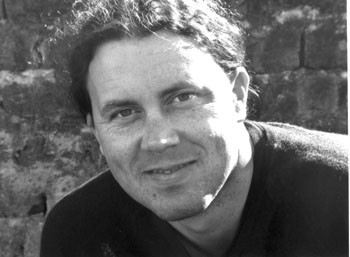
‘Poona the Fuckdog’

0

Poona.

Dog Daze

‘Poona the Fuckdog’ opens big pink box of weirdness

ALTERNATELY offensive, baffling, disgusting, and delightful, Poona the Fuckdog is a warped experimental oddity that almost defies description. Playwright Jeff Goode’s vigorously low-brow farce seems more like a series of Saturday Night Live-style sketches than a traditional play.

Like the mutant bastard offspring of Lenny Bruce and Alfred P. Newman, this very loosely structured comedy–currently being staged by Actors Theatre–boasts a weird blend of in-your-face political exhibitionism and potty-mouthed social satire, laced with giddy repetitions of the show’s title and main character: Poona the Fuckdog.

Played with admirable enthusiasm by Ariana Kaiser (she’ll be succeeded in mid-June by Jorja Dwyer), Poona is a pajama-and-negligee-clad puppy-dog who lives in the magical kingdom of Do. Or is that Doo?

In the first of several stories, read from an oversized book by a rotating roster of narrators, Poona tries to find someone to play with her. Alas, because she is a “fuckdog” (a label that initially hints at Poona’s sexual drives but quickly evolves into a euphemism for “working class”), Poona’s only friend is a co-dependent rabbit (the versatile Sallie Romer, who, in subsequent tales, plays a maniacal television set, and a precocious girl seduced by a bloodthirsty computer).

Poona is visited by Fairy God Phallus (Tim Earls, with a large condom on his head), who shows her how to win friends with her big pink box–literally, a big pink box, which a parade of fairy-tale creatures are eager to jump into for instant noncommittal fun.

One of these partners is the Handsome Prince (Eric O’Brien, whom discerning theatergoers may recognize as Nick Twisp in Odyssey Theater’s recent production of that other notable potty-mouthed farce, Youth in Revolt). The Prince, handsome or not, treats Poona badly, using her and forgetting her, repeatedly, until she gets over him and becomes a Heisman Trophy-winning sports hero with heavenly dispensation to kill people.

The Prince, meanwhile, goes mad and detonates a nuclear bomb in the Kingdom of Do, killing everyone except the two lost aliens Jasper and Cunt and sending himself to Hell, along with one randomly selected member of the audience.

If any of this makes sense, I’m not describing it properly.

If, however, it sounds like good, unorthodox fun, I’m doing better. The ensemble cast is uniformly excellent, and the direction by Dwayne Stincelli is wisely fast-paced, peppered with interactive elements such as the second-act distribution of cookies and condoms.

Though not nearly as smart as it wants to be, the script (by Goode, a smarty-pants theater cult-god) is frequently funny, laced with interesting philosophical pronouncements. God, for example, allows Evil to exist because Evil, it turns out, is cheaper than air conditioning. Speaking of God (Peter Downey), one of the play’s best revelations is that in Heaven, if you can stump God with a question he can’t answer, you win 500 dollars.

The hint that Poona might actually be a metaphor for O. J. Simpson is certainly strange, but no stranger than anything that precedes it.

One final note: An Internet search reveals that on May 19, the day Nicole Simpson was murdered, six people were poisoned by a “magic pill” they were promised would make them invisible. This true story took place in the town of Poona, India.

Coincidence? You decide.

‘Poona the Fuckdog’ continues through June 30 at Actors Theatre, Luther Burbank Center, 50 Mark West Springs Road, Santa Rosa. No one under 18 admitted. Tickets are $12 for general admission, $10 for seniors and youth 18 to 21. For details, call 707/523-4185, ext 1.

From the June 7-13, 2001 issue of the Northern California Bohemian.

© Metro Publishing Inc.

Kenneth Cleaver

Consumer Correspondent

September 6, 1999

J. Crew Customer Relations One Ivy Crescent Lynchburg, VA 24513-1001

Dear J. Crew:

I’m under a lot of pressure. It seems that no matter how many barn jackets and roll-neck sweaters I purchase, I can never enjoy myself as much as the people featured in your catalogs. Who are these people anyway? They look like participants of the Nuremberg rally, yet there’s always one stunning mulatto thrown in for good measure. Few family events I’ve been to look anything like this, but I’d be the last to complain. Anything beats three Irish geriatrics cursing Queen Victoria for letting their ancestors starve. My family is so dull it can’t even express hostility toward events occurring in its own lifetime. My grandchildren will undoubtedly listen to me lambaste Carnegie and his Pinkertons.

I understand that beautiful people sell more clothes than my grandmother. I don’t mean to seem unduly hard; there are much uglier people than my family. Ever go to the Binghampton crafts fair? My suggestion is only that you produce a catalog for the rest of us. No one in it should be more beautiful than Betty White of Golden Girls fame, and certainly no one uglier than former New York state Senator Al D’Amato. Photogenic scenes might include returning appliances to Wal-Mart, paying tolls on the Garden State Parkway, and the clipping of toenails and coupons. This could be a catalog people could relate to. How about it?

Sincerely, Kenneth Cleaver

September 16, 1999

Kenneth H. Cleaver 33 Upland Road South Bedford, NY 10506

Dear Mr. Cleaver:

Thank you for contacting J. Crew with your comments about our catalog. We appreciate you taking the time to tell us what is on your mind and have forwarded your suggestions to our Editorial Department for further consideration.

Complete satisfaction with all your J. Crew purchases is our primary concern. If you have any questions or need further assistance, please contact our Customer Relations Department toll-free, at 1-800-932-0043, or via the Internet at http://jcrew.com. We look forward to serving you again in the future.

Sincerely, J. Crew Customer Relations

From the June 7-13, 2001 issue of the Northern California Bohemian.

© Metro Publishing Inc.
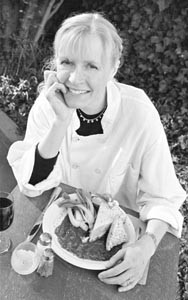
Junior Brown

0

Hot Licks

Junior Brown kicks up a storm

By Alan Sculley

JUNIOR BROWN was thawing out a chicken when he called for this interview. The acclaimed guitarist and songwriter says he doesn’t fancy himself as much of a cook. But when he described how his music falls outside of well-defined categories, the word that came to his mind also had a culinary slant. “That’s just the way it came out, like goulash or something,” Brown says.

Now some 25 years into his career, Brown does cook up one of the most unconventional mixtures in music. His sound is rooted in ’50s and ’60s classic country and early western swing, with dashes of rock, blues, and other styles adding spice to his songs. His lyrics are witty and sometimes droll. He’s done tributes to truck drivers and janitors (“Semi-Crazy” and “Joe the Singing Janitor,” respectively), a tale of a man coping with the late-night habits of his hard-partying wife on “Gotta Get Up Every Morning,” blistering surf instrumentals, and a saga about the untimely return of an old flame on his breakthrough single “My Wife Thinks You’re Dead.”

He plays a unique instrument in country music, a contraption he calls the “guit-steel,” which includes a conventional electric guitar and a steel guitar housed on the same body. The instrument–which came to Brown in a dream–allows the country virtuoso to shift from electric to steel without disrupting his songs. Brown’s visual style is also his own, as he is always sharply dressed in suits and his taco-shaped high-brimmed cowboy hat. His rise to fame over the past several years has been as unique as his music and appearance.

Though largely ignored by mainstream country radio, Brown has found an eager audience in fans of alternative country, as well as alternative rock. He’s earned three Grammy nominations and won best video awards from the Country Music Association and Academy of Country Music for “My Wife Thinks You’re Dead.”

Brown recognizes the idiosyncracies that surround him, and he suspects some people don’t know what to make of him. “I think different people see me in different ways,” he says. “Some of them see me as a comedian. Some of them see me as a guitar guy. And I’m none of the above and all of the above. I certainly don’t see myself as a comedian, but there’s definitely a comedic part to some of those songs. Sometimes they see the comedic side and interpret everything as comedic when it’s not. So sometimes they get that door slammed in their face when they get a nice hot guitar lick.

“They go, ‘Wait a minute, this is really not that funny. It’s funny and more.’ ”

FOR BROWN, his road to country music stardom began in 1969 when he relocated to Albuquerque, N.M., and began playing the country music bar circuit. A few years later, he moved to Austin, Texas–a city that had always interested him–and began carving out a successful niche as a sideman on recording sessions and live dates.

He made a few ripples with his first two records, the 1990 debut 12 Shades of Brown and the 1993 release Guit with It. But the 1995 EP Junior High really put Brown on the map. The acclaimed CD Semi Crazy followed in 1996, cementing Brown’s place as one of country’s most distinctive new artists.

“I’ve got sort of an excitement,” he says. “As for technicality, I’m not all that great. But I pull it through with that sort of excitement that I’ve always been able to [generate], a lot of energy. The energy is what people, I think, pick up on, and that’s what’s pulled me through.”

Junior Brown performs Thursday, May 31, at 8 p.m. at the Mystic Theatre, 23 Petaluma Blvd. N., Petaluma. $18. 707/765-2121.

From the May 31-June 6, 2001 issue of the Northern California Bohemian.

© Metro Publishing Inc.

Pete Escovedo

0

After 50 years, Pete Escovedo has left the Bay Area. His legacy remains.

By Chuy Varela

“Never in my mind did I think I was going to move away from Oakland,” says percussionist-bandleader Pete Escovedo, a few days prior to moving from Alameda to a Southern California suburb called Valley Glen. “My wife Juanita was born here. We went to school and grew up together here, the whole bit. It’s really hard for me to make this move but the fact is that there is nothing really tying us here anymore.”

The Escovedos leaving Oakland is like the Fillmore leaving San Francisco. They’re regional icons that are intimately linked with this little corner of the world, long producing a quality product that, in the case of Pete and his family, is a unique musical hybridization of jazz, Latin, funk, and rock. The Escovedos are heroes to generations who saw them come up as part of a largely immigrant Mexican and Latino community that flourished in West Oakland during the war years.

For the last two years, the one-time side-musician with the Santana band has been running a nightclub, Mr.E’s. He relocated last summer from downtown Berkeley to Spotlight on the Square in Alameda, a spacious, well-designed space with plenty of parking and potential. But the refurbishing of the Posey Tube and Alameda’s relatively remote location didn’t click with the public and Escovedo, who is known lovingly as “pops” by his kids and close friends, sold-off his portion of the club late last year.

“We let that go,” he says. “It was a bad marriage and I had to get divorced. Life has been wonderful life here, but in L.A. we’ll be able to do some different things, hopefully get into some television stuff with the kids. Sheila and Peter Michael are there and eventually my son Juan is going relocate, too.”

The move hasn’t completely deprived the Bay Area of escovedo’s talent–next week, Escovedo will bring his Latin orchestra to the 3rd annual Healdsburg Jazz Festival.

From their early days in the late 1940s and 1950s, when Oakland dance halls were bursting at the seams, to their climb to national prominence in the early 1970s with their band Azteca, which built on the Latin rock movement spearheaded by the Santana band, the Escovedo brothers (Pete, Coke, and Phil) developed a deep affection for Afro-Cuban music. The music coming out of New York City, innovated by such mambo kings as Machito, Tito Rodriguez, and their biggest influence, Tito Puente, drove the brothers to play.

“Tito was young back then and watching him play was a thrill,” Escovedo says. “He was so on fire! This was just before he made the Dancemania album [1958]. It was top notch and he brought out people like Ray Barretto and Santos Colon. To see that as well as the Machito Band, Tito Rodriguez, Joe Loco, and so many others in Oakland was incredible. We just kept filling our ears and the sponge kept soaking it up.”

In the late 1950s, after leaving the Chico Ochoa Orchestra at Sands Ballroom, Escovedo decided to form his own dance band. The Escovedo Brothers Band patterned themselves after Puente but gravitated to the ensemble-size groups of Barretto and Eddie Palmieri. He recruited pianist-arranger Carlos Federico, congero Willie Colon, trombonist Al Bent, and his brothers Coke (timbales) and Phil (bass) and with himself on lead vocals they swung hard, playing throughout the West Coast but primarily in the Bay Area.

“Believe me,” he says, “We played in every club ever built in the area. And we closed a lot of them too. We were kids just trying to sound better. Later on we got more interested in jazz and formed the Escovedo Brothers Latin Sextet with Al Bent and Mel Martin [reeds]. It was a small group and we played at Basin St., El Matador, Jazz Workshop, and Keystone Korner with Todd Barken.”

Pete Escovedo glows talking about those early days. Memories shine forward of a largely Mexican-American post-WWII teen generation that embraced jazz and Afro-Caribbean music. The Escovedos felt the vibe of the West Oakland blues scene and the tremendously hip San Francisco jazz scene. They heard vibraphonist Cal Tjader’s first Latin jazz experiments in the mid-1950s and whenever somebody new came through town they introduced themselves and got taken under the wing of greats like Armando Peraza and Mongo Santamaria.

“I felt very fortunate that an early age I started listening to music. The scene was incredible–Sweet’s Ballroom, Sands, the Ali Baba–great places. The bands would also play the Sunday afternoon tardeadas like the Mambo Sessions with Carlos Federico, Benny Velarde, and Willie Vargas at the California Hotel. The caliber of the music was so high in those days!”

The heyday may not be over there, but settling down with family becomes of greater importance as time passes. “It was my son Peter Michael who convinced me to move,” says Escovedo. “He said: ‘Pops, you’ve had three nightclubs, you’ve played everywhere, you’ve done everything, the only thing you haven’t done is run for mayor and you don’t want to do that ’cause they’ll dog you everyday. The next thing they’ll do is make a statue of you in downtown Oakland and the pigeons will come and doo-doo all over you.

“You don’t want that, so you better move!” he adds with a laugh.

Escovedo is upbeat talking about his move, strategizing about the future. He’s not disbanding his local group and hopes to have two bands: one in the Bay Area and another in L.A. He wants to reopen a nightclub someday, but a bitter taste remains from his last experience. From the countless benefits for a multitude of worthy causes to his presence at every major Latino event in the Bay Area, Pete and his family have been woven into the cultural fabric of the Bay Area.

“I always felt I would accomplish something. It’s not every kid that dreams that has those dreams come true. For me they’ve all come true. I’ve been very blessed. I look back on the life I had here and the people I’ve met over the years–friends, musicians–and it’s been wonderful. Our fans have been so supportive all these years. They come to see us play, buy our CDs, and listen to us. When me and my brothers got started playing we had no idea how it was all going to turn out. The lord blessed us with some talent and we used it to help the community.”

The Healdsburg Jazz Festival presents Latin on the Lawn, Saturday, June 2, at 1pm, outdoors at Rodney Strong Vineyards with the Pete Escovedo Orchestra, and Jerry Gonzalez and the Fort Apache Band with Larry Willis, Andy Gonzalez, Joe Ford, and Steve Berrios. Tickets are $25. 707/431-7984.

From the May 31-June 6, 2001 issue of the Northern California Bohemian.

© Metro Publishing Inc.

‘Art’

'Art' Smart Provocative play delivers thoughtful good time By Patrick Sullivan EVER NOTICE how contemporary art really pisses people off? Of course you have. But I'm not talking about the way every third painting that rolls into a Big Apple museum causes Mayor Rudy Giuliani to fall to the floor and...

Acid Initiation

The Initiate A first-time acid trip leads to jail, madness, and a career By Stephen Kessler In 1969, Gualala author, poet, and journalist Stephen Kessler--then a 22-year-old grad student in literature at the University of California, Santa Cruz--dropped acid for the first time at the notorious Rolling Stones concert at Altamont...

Lost at Last

Lost and Found Trance-techno collective Lost at Last hits the major league By Rob Pratt and Patrick Sullivan LOST AT LAST is a hard band to pin down. It's not just that its sound--a vibrant pairing of techno-trance with tribal chanting and drumming--defies easy categorization. "We're ancient meets future,...

Girl and the Gaucho

Counter insurgency: Service is fast and friendly at the Girl and the Gaucho, and the food is an exotic, flavor-crammed blend of Spanish and Latin influences. ¡Ay Caramba! Girl and the Gaucho dishes up luscious Latino fare By Paula Harris WHEN GIRL and the Fig...

‘The Claim’

All Mine 'The Claim' delivers an emotionally stillborn morality tale By Nicole McEwan "EVERYTHING has a price." So goes the tag line for Michael Winterbottom's The Claim. An emotionally stillborn morality tale set in a remote snowbound California mining town, this disappointing adaptation delivers stunning visuals. Sadly, the characters just can't...

American Pornography

One Nation Oversexed What's happening to a nation bent on titillation? By Lara Riscol Read about love, I got you on the test-bed. So why, don't you moan and sigh? And why do you sit there and cry? I do everything...

‘Poona the Fuckdog’

Poona. Dog Daze 'Poona the Fuckdog' opens big pink box of weirdness ALTERNATELY offensive, baffling, disgusting, and delightful, Poona the Fuckdog is a warped experimental oddity that almost defies description. Playwright Jeff Goode's vigorously low-brow farce seems more like a series of Saturday Night Live-style sketches than a traditional...

Kenneth Cleaver

Consumer Correspondent September 6, 1999 J. Crew Customer Relations One Ivy Crescent Lynchburg, VA 24513-1001 Dear J. Crew: I'm under a lot of pressure. It seems that no matter how many barn jackets and roll-neck sweaters I purchase, I can never enjoy myself as much...

Junior Brown

Hot Licks Junior Brown kicks up a storm By Alan Sculley JUNIOR BROWN was thawing out a chicken when he called for this interview. The acclaimed guitarist and songwriter says he doesn't fancy himself as much of a cook. But when he described how his music falls outside of well-defined...

Pete Escovedo

After 50 years, Pete Escovedo has left the Bay Area. His legacy remains. By Chuy Varela "Never in my mind did I think I was going to move away from Oakland," says percussionist-bandleader Pete Escovedo, a few days prior to moving from Alameda to a Southern California suburb called Valley Glen. "My wife Juanita...
11,084FansLike
4,606FollowersFollow
6,928FollowersFollow
