Sour Note

0

Calling the tune: Philanthropist Don Green has contributed his name and money to a proposed state-of-the-art concert hall at SSU that critics say is too ambitious.

“AIM HIGH & Reach Wide” commands the slogan scrawled across the promotional materials for the much-anticipated Donald and Maureen Green Music Center, an acoustically advanced music facility planned for the Sonoma State University campus and slated to house the Santa Rosa Symphony.

But it now seems that the project’s promoters may have aimed too high and reached too wide. As cost estimates rise and the economy plummets, criticism of the ambitious facility is increasing.

New calculations put the cost of building the Green Music Center, which is modeled on the famous Tanglewood Music Center in Massachusetts, at $48 million rather than the earlier estimate of approximately $40 million. The latest news is that the opening of the facility will be delayed at least another year, until 2004.

A groundbreaking ceremony for the center took place last October in an atmosphere of great optimism. But the concert hall site, a 53-acre field at the intersection of Rohnert Park Expressway and Petaluma Hill Road, still remains empty apart from a “Future Home of” sign.

“We can’t start work on the actual building until all the funds are committed,” says Jim Meyer, Sonoma State University’s vice president of development. “We still need another $19 million to begin construction.”

The ambitious plans call for a high-tech main concert hall that seats 1,400 (with additional lawn seating for 7,000), a 300-seat recital hall, numerous lobbies, practice rooms, offices, a music library, concession areas, and perhaps even a full restaurant.

After factoring in contractor and engineering costs, Meyer says, the price of building the center has actually increased by $12 million from the architect’s original estimate.

Center boosters have approximately $27 million committed to the project by donors, but they are scrambling to find the money needed to complete the project as the once red-hot telecom industry-fueled economy continues to slide.

“While the cost [of building the center] went up, the economy went in the other direction,” Meyer laments. “It’s difficult for people to give. A lot of our gifts were stock gifts, and stock is down from a year or two ago. The economy is not as bright or encouraging as it was.”

The initial $10 million seed money for the project was donated by Telecom Valley tycoon and philanthropist Don Green and his wife, Maureen–hence the acoustically advanced facility’s name.

Ever since that donation, both SSU and the Santa Rosa Symphony have been involved in energetically raising funds. In more prosperous times, the campaign included trips to Tanglewood for Sonoma County arts patrons and receptions held at homes around the North Bay for potential donors. Many of those who have kicked down money so far have been involved in the telecom and wine industries. But those donations came before the economic slowdown.

Meyer says that Santa Rosa Symphony conductor Jeffrey Kahane and its conductor laureate Corrick Brown will soon kick off a new fundraising “Conduct-or’s Campaign” and are looking for donors for a challenge gift scenario.

“[The economic climate] has made us look at the possibility of phasing the building in two pieces,” Meyer says. He adds that construction on a 1,100-car parking lot, roads, and a bridge way (funded by parking bond monies) will begin in a month or so. Even so, the music hall won’t be opening its doors any time soon.

“We’re now looking at 2004,” says Meyer. “There’s a two-year construction period.”

Meanwhile, the Festival on the Green, three outdoor summer music events on campus featuring the Santa Rosa Symphony and jazz, is offering trial runs aimed at building an audience and laying the groundwork for a major summer festival when the music center opens. While the July 4 concert attracted 3,500 people, not everyone is caught up in the festival frenzy.

“The festival is held on the commencement lawn near lots of buildings, and it’s all very pretty with lots of activity, and it generates the impression that this [center] is going places, but I don’t know for how long,” says Rick Luttmann, an SSU professor of mathematics since 1970 and chair of faculty for the upcoming academic year. “The longer [the project] gets postponed, the more skeptical the community is going to be on whether it will happen.”

And Luttmann adds he has even more reason for concern if the center comes to fruition. “I’m a music lover and I’d like to see this happen, but my concern is we may not be able to afford it and we may do serious and irreparable harm to the rest of the university,” he explains.

Luttman adds that he speaks for many members of the faculty who have also voiced concerns about the Green Music Center’s operating expenses to administrators.

“The goal is for the hall to eventually be self-supporting, but from estimates I’ve heard, it may take 10 years to get to that point,” Luttmann says. “The staffing and other costs to run the center have to be met by our current budget. And we already have problems making ends meet.”

When asked about opposition to the center, Meyer says the main concerns he’s heard are from individuals worried about additional traffic flow in Cotati.

Even with a tough fundraising time ahead, Meyer says the project won’t be downsized or downgraded in any way.

“A music hall without perfect acoustics is a waste of money,” he scoffs. “It costs more to do things first class, and this is a first-class hall. We’re going first class, and yes, it may take a bit longer. But Sonoma County has survived without this for many years, and a year more won’t make a difference.”

Festival on the Green presents a pair of concerts. On Saturday, Aug. 11, the Santa Rosa Symphony presents violinist Nurit Pacht in a special program of Tchaikovsky, at 6:30 p.m. Tickets are $28 for adults, $7 for youths. SSU campus, 1801 E. Cotati Blvd., Rohnert Park. On Sunday, Aug. 12, at 5 p.m. (gates open at 3 p.m.), the Joe Lovano Nonet performs selections from ’52nd Street Themes.’ Tickets are $22-$35 (free for youths). 707/546-8742.

From the August 9-15, 2001 issue of the Northern California Bohemian.

© Metro Publishing Inc.

Nutrition Reforms

0

Eatin’ Right

One American responds to food reforms

By Marina Wolf

HEY, ALL YOU dieticians and researchers and activists. Listen up. I’m the one you’re not reaching. I’m the one in the middle of the bell curve that gets your information and doesn’t do anything with it.

I’m a pretty average American, perhaps even more than I care to admit. The strongest influence in my nutritional development was the food pyramid, with its cartoon pictures of bread and cheese and veggies. In the face of the nutritional neuroses of the week–sodium, fat, cholesterol, fiber, essential fatty acids–I remain fairly indifferent. And when it comes to postmodern food issues, things like ethics, environmental conservation, global economy, social responsibility, well, there are some things you should know.

You Say Compelling, I Say Compartmentalize. “Our theory is, if you put the information into people’s hands, most people will switch over, or at least consider it,” says Sean Gifford, vegan campaign coordinator for PETA, or People for the Ethical Treatment of Animals. PETA has traditionally relied on up-close pity pictures of half-dead animals to make its points about animal rights. That graphic sensibility remains a strong component in PETA’s Vegetarian Starter Kit, a 23-page booklet that the group began distributing about a year and a half ago. “We really try to paint the picture for people,” Gifford says. “We want to be a window into the world of animal suffering.”

Personally, animal suffering wasn’t the reason I had eaten vegetarian for two years a while back. I was just going along with my best friend, and the regimen actually lasted, until an unexpected encounter with some leftover sweet-and-sour pork in the staff room. Since then, I’ve had a twitchy subliminal sensibility about eating animal products, a heightened awareness paired with an unrepressed appetite. We humans have an infinite capacity for separating what we know from what we want.

Keep It Simple, Stupid. I don’t want to do a lot of research. This is a weak spot in the American psyche that the National Audubon Society addresses with its Fish Scale, a bar graph with gradations of color from green to yellow to red that tells you how endangered that filleted fish is. The scale fits on a wallet-sized card, which can accommodate about 25 popular seafood items. “All this seafood is available in the market, sold legally, and seemingly abundant, so people think the fish must be doing OK,” says Mercedes Lee, assistant director of Audubon’s Living Oceans Program.

“But some are doing better than others. The key is to know the difference.”

The back of the card has a ton of background information, gathered by the Living Oceans Program and published more fully in its 120-page Seafood Lover’s Almanac. Each fish species is evaluated by its management record (how is it being caught?), habitat (how is the health of its home environment?), and level of by-kill (are other kinds of fish being caught up in the process?). By these criteria, red on the fish scale equals poorly managed, lots of by-kill, and depleted environments, while green signifies a well-managed fishing program has a low by-kill and is easy on the environment–eat up!

THE MAIN POINT here: I want to retain my right to make the choice, but I want someone else to do the research and color-code it for maximum efficiency. Red means stop, green means go!

It’s a Sea of Information, and I’m Drowning. Some food issues will never boil down to a card. There’s just too much information, and at the same time not enough. Greenpeace’s True Food Now shopping list is a great example, a real masterpiece of paranoia-inducing overload: the list of food products containing genetically modified ingredients prints out at over 40 pages.

The one thing that might simplify the issue–mandatory labeling of GMO-containing products–is nowhere near happening in the United States. The FDA has a proposal for language to be used about GMO ingredients or products, but Charles Margulis, genetic engineering specialist with Greenpeace, says it’s just going to be another hurdle for organic producers. “The labeling guidelines are nonbinding, so food companies are still on their own,” says Margulis. “They’re not going to set label requirements, and they make it difficult to use non-GMO labels.”

The True Food Now list reveals one additional fact about eating “responsibly”: it can be expensive. Non-GMO foods are for the most part organic, making them more costly per ounce than their nonorganic counterparts. “Primarily [organic food] is an upper- and middle-class phenomenon,” agrees Margulis, “but that points back to government policies. The USDA spends $2 billion a year on research, and less than 2 percent of that research is relevant to organic farmers.”

Fine. It’s the government’s fault that organic milk is almost twice as expensive as conventional milk. I definitely buy that, even if I rarely buy the milk. Government conspiracy, environmental impact, think-globally-act-locally. Yes, yes, I know about this stuff. But let me tell you, as an average American, when everything else is too much to deal with, I eat based on flavor, cost, and the amount of energy I have to expend in getting the max of one and minimum of the other. It’s a complicated formula that’ll give you a different answer not only from person to person, but also from day to day for the same person.

Me? I buy organic produce–locally grown, when possible–but for soup I’ll buy a national brand with GMO soy filler and not even blink twice. I’ll ask whether the catch of the day was really caught that day, but I usually forget to ask where and how it was caught. Sometimes I’ll eat vegetarian dishes, but I like the taste of meat, preferably from free-range animals, but I can’t always afford it, and I don’t even bother to pressure my favorite barbecue joint about it.

That last run-on sentence pretty much says it all. And to top it all off, I have a rebellious streak a mile wide. So, food reformers of America, go easy on me. Make your suggestions, send me your booklets, but leave it at that.

Or you’ll lose all the progress you’ve made, and I’ll just go back to the food pyramid.

Getting the Facts

So you say you want to know more about your food supply? OK, but start small. You could end up an activist, or you could just burn out.

www.truefoodnow.org Greenpeace’s exceptionally well-organized entry point into the debate around genetically modified foods. More FAQs and research papers than you thought possible; read ’em and weep.

www.goveg.com All the information from PETA’s Vegetarian Starter Kit is here, from photos of penned pigs to recipes for cheeseless pizza. If you’re addicted to hard copy or don’t have Internet access, call 888/VEG-FOOD.

National Audubon Society’s seafood wallet card and seafood guide can be downloaded here in Acrobat format. Or call the toll-free number to receive the materials by mail: 888/397-6649.

From the August 9-15, 2001 issue of the Northern California Bohemian.

© Metro Publishing Inc.

Jack Kerouac

New version of “Book of Dreams” offers wild ride

By Patrick Sullivan

FOUR LONG DECADES of strange dreams and stranger realities have passed since Jack Kerouac took readers on a whirlwind tour of the vast, bizarre landscape roamed by his sleeping mind. First published in excerpted form in 1961, Book of Dreams (City Lights; $17.95) is now out in a new, uncut version that opens a wide window onto the inner life of one of 20th-century American literature’s most extraordinary personalities.

But for Christ’s sake, don’t listen to anyone who tells you to read this book because, like oat bran, it’s good for you.

Of course, Book of Dreams can be read for insights biographical, psychological, and literary. The author of On the Road reveals much about himself in these brutally honest accounts of his dreams, which were jotted down almost immediately after he woke. Sometimes the results were too revealing for his own comfort, as Kerouac explains in his preface: “But an hour later, over coffee, what shame I’d feel sometimes to see such naked revelations so insouciantly stated.”

Readers will meet Kerouac’s withdrawn and disapproving father and ponder the author’s insight that fellow Beat Neal Cassady reminds him of his dad.

Amateur psychologists will enjoy exploring the links between the author’s misogyny (revealed often here) and his anxious relationship with his mother. Beat fanatics will scramble frantically to decode the dreamworld pseudonyms given by Kerouac to such famous friends as William Burroughs and Allen Ginsberg.

But you’ll get more insight into such matters from picking up a good biography of Kerouac–like Memory Babe by Marin County’s own Gerald Nicosia.

No, Book of Dreams is best enjoyed like a fast flight above the clouds, a headspinning trip over a sprawling, shifting mental world of towers and mountains drifting in a great blue emptiness or suddenly darkening into a nightmare of black thunderheads and killer lightning.

Most of Kerouac’s dreams are only a few paragraphs long, usually starting with a sentence like this: “My mother is pregnant and she’ll have to go to Chicago for an abortion.” They go on to offer vivid images of horror, humor, and delight, with events proceeding in the peculiar logic of the dreamworld, which Kerouac captures perfectly. The author becomes unstuck in time and space as places and people real and imagined jumble together in fantastic forms.

See Jack smoke weed. See Jack run from the cops, or hang out with President Eisenhower, or hitch rides on freight trains with his elderly mother. Watch as he finds himself in the dreamworld version of boot camp in the Navy–which he was kicked out of in real life after being labeled a “schizoid personality.”

Sex pops up with the regularity of a stroke book, from fairly explicit passages to encounters like this one: “Then I asked Bertha for a sandwich, considered sex with her, thought of her big figure on the couch.”

There is also plenty of fragmented poetry here: “warm April night–mystery of the West End Bar, the corpse in the Hudson, Edna in a Russian darkness over the campus–I’m almost afraid of marauders in this gloom, look around–Timeless the world waits–I wake up–wondering.”

Particularly poignant are Kerouac’s dreams of ending up a failed writer, a dismally washed-up “beat brother” living back at home. Indeed, nightmares of longing, bitterness, fear, and regret are common in Book of Dreams–and yet this was before the King of the Beats had turned into the movement’s version of an aging Elvis Presley.

But even knowing the end of Kerouac’s saga, the sad death of the dreamer, doesn’t spoil the peculiar beauty and raw excitement of these nocturnal adventures.

From the August 9-15, 2001 issue of the Northern California Bohemian.

© Metro Publishing Inc.
‘Hedwig and the Angry Inch’

0

Hed over Heels

Audiences wig out over ‘Hedwig’

AT FIRST, his voice is so quiet I can barely hear him speak. “Thank you for coming,” he says warmly. “I very much appreciate your interest in my film.” Every word is uttered so softly I have to move closer just to catch them all. As the conversation picks up, he does raise his voice a bit to laugh and make jokes. But one would never think of him as loud or extroverted–or the least bit dangerous. In short, he’s not at all what I expected.

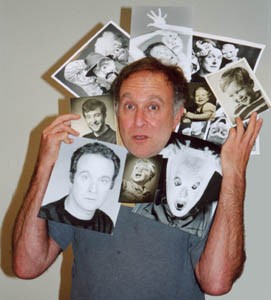
In person, John Cameron Mitchell is unnervingly nice, so self-effacing that it’s hard to believe he’s the same actor who plays Hedwig, the hard-hitting, hard-rocking transsexual fireball from the new movie musical Hedwig and the Angry Inch.

Based on the hit off-Broadway show of the same name, which Mitchell also wrote, directed, and starred in, the energetic new film version–also directed by Mitchell–was the must-see event of this year’s Sundance Film festival.

An outrageously edgy achievement, Hedwig and the Angry Inch tells the story of an East German boy named Hansel, who suffers a grotesquely failed sex-change operation that leaves him with the titular “angry inch.”

Renamed Hedwig, she ends up in Kansas, abandoned by the American GI who married her. Bitterly hurt and addicted to shocking behavior–and big wigs–Hedwig forms a rock band called the Angry Inch and launches a quest for fame, fortune, and self-respect.

The stage show, which spawned a popular soundtrack album, has already won a legion of fans–affectionately dubbed “Hed Heads” by Mitchell. But Mitchell, 38, wasn’t sure how audiences would react to the film, which was independently financed and filmed on a shoestring budget.

Based on the Sundance reaction, the film looks like a potential hit of culture-bending proportions. “I’m excited. I’d love to see Hedwig in every little strip mall in the country,” Mitchell says. “I know I would have liked to have seen it when I was a kid.”

Asked if he’s grown weary yet of comparisons to The Rocky Horror Picture Show, a rock-and-roll flick that also began as an off-Broadway hit, Mitchell shrugs.

“Well, it’s hard to describe this film,” he says, diplomatically. “So if it’s useful to compare Hedwig to Rocky Horror, that’s fine. We certainly share a kind of glam rock history, though Hedwig is not the camp playground that Rocky Horror was. I think there’s a lot more going on in Hedwig, actually.”

Though Hedwig, clearly, is a much different entity than John Cameron Mitchell, he admits that she and he have a lot in common.

“Hedwig, I think, is emotionally autobiographical,” he says. “I certainly felt like an outsider, growing up, moving around the country a lot with my family. And later, realizing that I was gay, it’s a natural separator from the mainstream.”

Mitchell, however, seems on the verge of mainstream success. Recently, Entertainment Weekly put him on its list of up-and-coming It people. And long before Hedwig, the multitalented Mitchell was already a well-established stage actor, having appeared in the original Broadway production of Six Degrees of Separation, among other roles. Now, after more than seven years with Hedwig, Mitchell is ready to move on to other challenges.

“I’ve loved this, but I’m actually very tired of it,” he admits with a weary smile. “I’m quite anxious to let go of Hedwig. But I wanted to send her off in a good way, make sure she’s taken care of.”

The Hed Heads, old and new, will see to that. And Hedwig will see that audiences take something away with them as well–a lesson that John Cameron Mitchell learned long ago.

“You’re given an inch,” he says, quietly, “and you do with it what you will. The facts of your life are boring and neutral. It’s what you do with them that counts.”

‘Hedwig and the Angry Inch’ screens at the Sequoia theater in Mill Valley (for details, see ). The film opens at Rialto Cinemas Lakeside in Santa Rosa on Aug. 17.

From the August 9-15, 2001 issue of the Northern California Bohemian.

© Metro Publishing Inc.

Kenneth Cleaver

Consumer Correspondent

Intel Corporation, Jones Farm 2111 NE 25th Street Hillsboro, OR 97124

Dear Intel:

While most management consultants model their techniques after history’s great purges and inquisitions, I employ a subtler approach for greater effectiveness. Utilizing Stanislavskyian method-acting technique, I do not simply assess the structure of a company, but labor clandestinely to alleviate its imperfections. What follows is an overview of two stock characters I portray for strategic results.

Kenneth Cleaver: The Serial Novel

In every company there exists a department whose essential work is brutal monotony. Within the employees’ hallowed cubicles can be heard the slurping sounds as the very marrow of life is sucked from their numbed souls. It also happens to be the stage for my most inspired work! Exploiting my ambiguous boyish sexuality, I function as a one-man pulp novel for the various pleasures of my colleagues. Even those who profess their disdain never fail to miss the latest installment of my scandalous life. By permitting me to rage against the machine on behalf of your workforce, management provides a punching bag for employees who would otherwise spontaneously combust. Decrease in absenteeism and increases in morale and productivity are what you can expect from this role.

Kenneth Cleaver: Hate Object

The role of hate object is guaranteed to cleanse the air within fiercely competitive departments laden with young workers who still believe they are “going somewhere.” From font choice to policies to workspace cleanliness, I have a comment for everything, which I deliver with the pomposity of a Sotheby’s auctioneer. Initially I’m pegged as a brown nose, but my shameless kowtowing soon earns me such monikers as “suck ass” and “scumbag.” Discordant individuals and cliques quickly shed their long-standing grudges to unite against a common foe: me! By working together, the group exposes my whorish and deceitful ways, and when I resign in a frenzy its sense of collective power and unity transcends the emotional gerrymandering of New Age corporate retreats.

My fee varies with the role and scope of assignment. I hope you will contact me at your earliest convenience for a strategy session.

Sincerely, Kenneth Cleaver

Dear Kenneth:

Enclosed is part of my brain, some pocket lint, scrapings from my left shoe, fungus I found growing on a bowling pin, and my last remaining baby tooth. After reading your letter, I no longer have a use for them.

Forgot my name Mark Gorman Department of Nothing Else to Do

From the August 9-15, 2001 issue of the Northern California Bohemian.

© Metro Publishing Inc.

Arts Etc.

0

By Paula Harris

Winning Words

THE MANHATTAN-based Fund for Poetry has surprised Sebastopol poet David Bromige with a hefty check in his mailbox–a $10,000 grant in recognition of his contribution to poetry. Bromige, 67, a former Sonoma State University English professor, has authored more than 30 tomes and is associated with Avec Books (a Penngrove publishing house run by Cydney Chadwick). The Fund for Poetry Foundation is an anonymous group of funders who award grants to poets whose writing makes a significant contribution to poetry and the literary arts. “No one really knows how the Fund for Poetry Foundation selects authors nationally; there’s no application process,” says Chadwick, who is also one of Bromige’s former students. “I’m just pleased he’s getting the recognition he deserves.”

Fish Tale

IT MAY LOOK like something from the sushi menu, but the big grinning fish decorating a wall at Santa Rosa’s Railroad Street and Prince Greenway depicts a giant rainbow trout returning to Santa Rosa Creek. The mural, titled “Breakthrough,” was painted during a four-week project that teamed professional artist Mario Uribe with six teenage artists from Sonoma County. Check it out!

From the August 9-15, 2001 issue of the Northern California Bohemian.

© Metro Publishing Inc.

Petaluma Summer Music Festival

0

Triple Time

Petaluma Summer Music Festival ups the tempo

“EVOLUTION is such an imperceptible thing,” says Elly Lichenstein enthusiastically. “Things evolve so naturally, you don’t even notice it’s happening until you stop and look back at where you started.

“Then you think, ‘When did this happen? How in the world have we come so far?’ ”

Sitting at a patio table in the cozy courtyard of the Cinnabar Theater, Lichenstein is talking this morning about the Petaluma Summer Music Festival, a three-week-long annual event that has been evolving for 14 unpredictable years.

Cinnabar Theater, where Lichenstein serves as both artistic and executive director, is the sponsor of the ever-evolving festival. What started as a cheeky plot to slip classical music under the unsuspecting noses of folks who’d never paid it much attention has now become a world-class endeavor.

This expectation-challenging collage of interwoven musical events, performances, operas, and recitals now boasts a small army of visiting musicians from around the globe and our own backyard.

The first Petaluma Music Festival was launched with the best of intentions, recalls Lichenstein, a longtime member of Cinnabar who took the reins at the theater in 1999 when founder Marvin Klebe passed away.

“Our goal was to open people’s minds to our kind of music,” Lichenstein says with a mock-painful grimace. “By which I mean classical, opera, world music. So we brought classical musicians into Petaluma’s bars and drinking spots, hoping to hit a brand-new audience unawares.

“It was a noble failure,” she admits, laughing.

Though the barroom concerts were unceremoniously dropped from the schedule, every festival since has maintained the missionary fervor of that initial impulse. By using various performance venues around the city, the festival continued to pursue its goal of bringing music to unusual places. The Music in the Mansions series, in which local homeowners allowed their houses to be used for recitals, was the evolutionary offspring of the Concerts in the Bars idea.

The evolution continues.

This year’s festival, running Aug. 4-25, is significantly different from festivals past. For the first time ever, all events will take place at Cinnabar’s headquarters, the renovated schoolhouse that has been the theatrical company’s home base since 1974. While some may mourn the end of the multiple-venue approach, Lichenstein says the move was necessary.

“The Music in the Mansions was very well loved,” she says, “but over the years, fewer and fewer people were willing to open up their houses to us, and festival-goers made it clear that they no longer wanted to attend concerts in the same few mansions, year after year.”

Lichenstein affirms that future audiences will likely see a return to the mansions–or some new version of it.

For now, though, she’s confident that bringing the festival home to Cinnabar is the best move.

“From a musical point of view,” she says, “most of those venues weren’t acoustically to our advantage. We’re working on plans to create new venues in the future, but for now, music sounds best in our space.”

A PEEK at the list of the acts lined up to perform in that space–a charming old place that has evolved quite a bit itself, architecturally speaking, over the last 27 years–reveals a singularly ambitious summer season.

Opera is well represented, starting on Sunday, Aug. 5, with Seymour Barab’s lively children’s opera Chanticleer, based on Chaucer’s tales of the famous rooster and his troubles with foxes.

The festival’s highlight, which Lichenstein rises from her seat to animatedly describe, is a pairing of two operas by Igor Stravinsky: Mavra–which Lichenstein calls “a satiric curtain-raiser”–and The Nightingale, based on Hans Christian Andersen’s classic fable.

“It’s Stravinsky at his lushest,” Lichenstein says. “And this production takes song and dance to a level not before seen here.”

The Nightingale, she adds, speaks to what she regards as a serious social problem.

“Technology is expanding so rapidly, so seductively, that we are losing our connection to what is real,” Lichenstein says. “Like the emperor who could choose to listen to the music of this gorgeous nightingale, but opts for the synthetic music of a mechanical bird, we are losing something vital and beautiful and necessary.”

The two Stravinsky operas are performed together and can be seen on three consecutive Fridays and Saturdays: Aug. 10 and 11, 17 and 18, and 24 and 25.

The rest of the festival is populated by artists representing musical styles from around the planet and across the ages: local soprano Eileen Morris (Aug. 7), classical pianist Christopher Weldon (Aug. 14), Baroque ensemble the Jefferson Chamber Players (Aug. 21), Celtic duo the Men of Worth (Aug. 22), East-West music-dance group MusicAeterna (Aug. 9), cellist Jill Rachny Brindel and pianist Marilyn Thompson (Aug. 16), Second Avenue Klezmer Ensemble (Aug. 12), and a repeat performance by last year’s thunderously well-received Melody of China ensemble (Aug. 8).

Lichenstein glows with excitement as she describes each performer, taking special delight in admitting that last year’s appearance by Melody of China exploded her expectations of what Chinese music could sound like.

“This music,” she says, “is so lush and enchanting, I’ll never think of China’s music in the same limited way again. Which, of course, is what the Summer Music Festival is all about to begin with.”

Lichenstein is similarly elated about bringing jazz singer Shane Kelly to the Cinnabar stage on the festival’s opening night. A recent transplant to Sonoma County from Atlanta, Ga., Kelly has been a vital part of the Chicago and Atlanta cabaret scenes. Since moving to California, she has been making a name for herself in San Francisco and the Bay Area.

“She breezed in here one day and blew us away,” Lichenstein recalls. “Before we heard a second of her music we were already in love, thinking, ‘Who is this amazing human being, with this rich head of long red hair and sparkling blue eyes, and this smile from here to Poughkeepsie, New York?'”

Kelly’s music is laid-back jazz blues, with a taste of gospel and a dash of Southern spice that will be appropriately highlighted on opening night by a Southern-style summer dinner inspired by Kelly’s own Southern family recipes.

“I can’t wait [for the concert],” Kelly says, pointing out that a percentage of her CD sales that evening will go to providing scholarships for Cinnabar’s successful youth arts programs.

Asked to describe her music, Kelly laughs.

“Honey, I guess you’d have to call me a traditional jazz singer,” she says, “but with a certain showy flavor all my own. I like really getting inside the lyric of a song, interpreting it as if it was its own story–which, of course, every song is.”

The Petaluma Summer Music Festival runs Aug. 4-25 at the Cinnabar Theater, 3333 Petaluma Blvd. N., Petaluma. Times and ticket prices vary. For details, call 707/763-8920.

From the August 2-8, 2001 issue of the Northern California Bohemian.

© Metro Publishing Inc.

Old Vic

0

Authetic pub grub: Old Vic co-owner Maude Stokeld pampers lunch patrons.

Spuds ‘n’ Suds

Old Vic keeps tummies full and throats lubricated

By Paula Harris

“I WAS A GUEST on the Jerry Springer Show today,” boasts this guy in a battered denim hat, a Love Sucks T-shirt, and a gold hoop through his nose, leaning tipsily across the old wooden and etched-glass bar in Santa Rosa’s Ma Stokeld’s Old Vic pub. “I swear to God I was on Jerry Springer!”

Whether his revelation is true makes no difference–a customer buys him a pint.

Meanwhile, a jazz quintet blares from the adjoining room. The live music, which features some mean trombone playing, is like the atmosphere here, a little jumpy, a little raw, and little unkempt.

We’re attempting to stay upright on what has to be the most uncomfortable restaurant seat in the North Bay. A leather sofa that looks like the ultimate cushy people-watching nook, until you sit down and the beast sends waves of broken springs painfully under your backside.

The well-worn pub is a longtime community hangout and watering hole. On a Wednesday night after the downtown Santa Rosa farmers’ market, the place is hopping with a mostly young, jeans-clad crowd, as a couple of admirable servers rush back and forth across the scuffed yellow floor. On Saturdays there’s a dinner theater, costing $24 for a three-course meal and a good giggle.

The pub has two areas: one a sort of narrow walkway with a few wooden chairs and tables flanked by the big old bar where a row of beer drinkers sit cradled on their barstools; the other a darkened dining room with the stage, a green carpet, and carnations on the tables. The decor runs to such curiosities as an old poster of Winston Churchill declaring, “We shall go forward together!”

I soothe a dry throat with a half pint of cool Bass Ale ($2 a half-pint, $3.50 a pint), selected from an impressive list of 17 lagers, ales, stouts, and cider that includes Boddington’s Pub Ale, Fuller’s London Pride, Murphy’s Irish Stout, and Newcastle Brown Ale. There’s also a small, but varied and inexpensive wine list.

The food is British pub-grub style, with fish and chips, steak pie (where are the kidneys?), and bangers and mash. A daily soup ($3.35 a cup, $4.45 a bowl) is thick and lusty with puréed tomatoes and basil.

The garlic fries ($4) make great beer buddies: a plateful of these crisp spuds–unskinned, cut medium thick, and bathed in pungent garlic butter, with a couple of fat garlic cloves visible–is heavy on the stomach and downright sinful.

The Ploughman’s Lunch ($6) seems to have a Sonoma County spin rather than being the traditional British standby. The Huntman’s Cheese mentioned on the menu is a hefty slice of Cheddar interspersed with Stilton. It comes with Sonoma greens, a pickle from a jar (rather than the pickled onions mentioned on the menu), bread, and (horrors!) two big strawberries. In the England I grew up in, no self-respecting ploughman would replace his tart green apple with sweet strawberries.

The roast chicken pastry ($7.50) is a disappointment. Although the pastry (which is heavy rather then puffy) contains large moist pieces of roast chicken, plus peas and carrots, it is really overseasoned, the sweet taste of fresh tarragon in the dish being almost overpowering.

The shepherd’s pie ($8), with sautéed spicy ground beef topped with fluffy mashed potatoes, which in turn are topped with melted Cheddar cheese and fresh green beans, is very good. Great British comfort food. But I would hold the shiny orange cheese and pop the dish under the grill to make the potatoes golden and crunchy on the top instead. The dish comes with a choice of chips, cole slaw, green salad, or that British delicacy–mushy peas.

Today’s dessert is strawberry-blueberry crisp ($4.25) with whole blueberries, thick slices of strawberries, and not much crisp. It comes with vanilla ice cream.

Entertaining and inexpensive is how we sum up the evening, although not perhaps as inexpensive as for the Jerry Springer guy–as we leave, someone is handing him a package containing a free pie.

Ma Stokeld’s The Old Vic 731 Fourth St., Santa Rosa; 707/571-7555 Hours: Daily, 11:30 a.m. until around 2 a.m. Food: Pub grub Service: Informal and rushed but attentive Ambiance: Loud and intense, crowded during weekends Price: Inexpensive to moderate Wine list: Inexpensive selection; go for the beers Overall: 2 stars (out of 4)

From the August 2-8, 2001 issue of the Northern California Bohemian.

© Metro Publishing Inc.

‘The Closet’

Gay Ride

‘The Closet’ is a French sex comedy that’s actually funny

By

IT SOUNDS like the plot you never wanted to see again. The Closet concerns a reticent straight man posing as a homosexual to save his job. One can laugh at just about any kind of movie, but there’s no substitute for the satisfaction delivered by a brisk, well-built farce, and The Closet, for a change, is one.

Daniel Auteuil, that outstanding emoter of existential despair, plays François Pignon, a despised little accountant so boring that his wife and his son both abandoned him. He’s learned that he’s going to be fired from the condom company where he works.

Terminating Pignon is a pleasure to the human-resources manager, Santini (Gérard Depardieu), who has never forgiven the man for his poor performance on the company’s lunchtime rugby team. Facing suicide, the accountant is rescued by a grumpy but benign next-door neighbor (Michel Aumont), a gay retired psychologist. He decides to mail Pignon’s boss Photoshop-fabricated pictures of Pignon in leathers, kissing another man. Since the condom company has a number of gay clients, it is terrified that firing Pignon will look like sexual discrimination.

Being seen as a gay man makes the meek Pignon a kind of star. Those who previously ignored him now feel there’s something sinfully fascinating about him. In an American movie, Pignon would overreach himself, but this French import makes Pignon’s special privileges a clear case of retroactive justice.

Director Francis Veber (the original La Cage aux Folles) passes up some good opportunities for Jacques Tati-style wit at the company’s garish modern headquarters. Still, Veber keeps the tale crisp enough that there’s room for the occasional discursion, as in a scene of a couple of lummoxes discussing the plot (uncredited) of the 1991 Volker Schlöndorff movie Voyager. (What really moved them to tears was Julie Delpy’s cleavage.) Auteuil’s hangdog defeatism works as well for comedy as it has many times for drama; seeing this actor, born to demonstrate the bitter side of life, trying to smile ingratiatingly at his boss is funny in itself.

Depardieu, apparently neckless, and stuffed into a business suit as tight as the skin on a sausage, gives the best caricature this year of a burly pédé-[fag-]hating macho bastard. Michele Garcia has just the right amount of time onscreen as the jealous Mrs. Santini, a martyr’s martyr.

But best of all–because the tradition of elegant comediennes is nearly dead–is Michele Laroque as Pignon’s boss Mlle. Bernard. She’s the first to see through Pignon’s pose and the first to act on the knowledge. Laroque, who has the swank of Simone Signoret and the weary slyness of Chico Marx, is one eloquent argument for heterosexuality.

‘The Closet’ opens Friday, Aug. 3, at Rialto Cinemas Lakeside in Santa Rosa and at Sebastopol Cinemas in Sebastopol. For details, see .

From the August 2-8, 2001 issue of the Northern California Bohemian.

© Metro Publishing Inc.

‘Legally Blonde’

0

Blonde on Blonde

Law-school nerds, serious shaving, and ‘Legally Blonde’

Writer David Templeton takes interesting people to interesting movies in his ongoing quest for the ultimate post-film conversation. This is not a review; rather, it’s a freewheeling, tangential discussion of art, alternative ideas, and popular culture.

“I WAS HOPING my newborn would wake up in time to breastfeed,” announces Ayelet Waldman, warmly shaking my hand as we meet in front of a large theater in downtown Berkeley. “But of course, she didn’t wake up until three minutes before I had to leave, and all she got was a snack, so if I start leaking all over the place during the movie, we’ll both just pretend we don’t notice it. Deal?”

“Um. Deal,” I reply, somehow maintaining my poker-faced professional composure while inwardly chanting to myself, “Yes! Yes! It appears that the rumors are true.”

Indeed. Ayelet Waldman–her first name is pronounced I-yell-it–really is the refreshingly unembarrassable person she is reputed to be.

A former lawyer, former law professor (at Loyola Law School in L.A.), and former public defender, this power-packed redhead, this outspoken mother of three, is also the author of a popular mystery series.

Published by Berkeley Prime Crime, the Mommy Track books–Nursery Crimes, The Big Nap–are an entertaining series of whodunits. The third, A Play Date with Death, is due out next year. Each book revolves around Juliet Applebaum, a sleep-deprived stay-at-home mom and former public defender who solves crimes between naps and afternoon feedings.

Like Juliet, whose husband is a Hollywood screenwriter, Waldman is also wed to a man of letters. He’s Pulitzer-winning author Michael Chabon (Wonder Boys, The Amazing Adventures of Kavalier and Clay), and he’ll be looking after the kids this afternoon while his wife takes a much-deserved break to go see the law-school comedy Legally Blonde.

Starring Reese Witherspoon, the film is a charming little froth-fest about Elle, a bouncy, blonde, pink-obsessed sorority queen–even her job résumés are pink–who enrolls at Harvard Law School in hopes of impressing her snob-job of an ex-boyfriend.

Waldman liked the movie, although she admits that it took her a while to get used to seeing a pink-clad sorority girl in the role of the heroine.

“Growing up as the girl who would never, ever have been allowed into the sorority,” Waldman confesses after the show, “I must admit that I have a slightly jaundiced view of that whole sorority world. College and law school were definitely the place where nerds like me were snubbed by girls like that.”

“So, what exactly was a nerd like you like?” I ask.

“I wore a lot of black,” she begins, spinning a list of law-school-nerd identity markers that include the tendency to take oneself very seriously and a fierce eschewing of superficial social events in lieu of political protests and picketing parties.

Furthermore, according to Waldman, she found herself adopting numerous political causes while at Harvard, the varying importance of each symbolized by whether or not she was shaving under her arms at that moment.

“You can gauge my whole political arc,” she says, “by the length of my underarm hair.”

As much as I enjoy talking about underarm hair, I decide to lob a hair question of another kind.

“Elle isn’t taken seriously at first,” I say, “partly because she’s always surrounded in pink, but mainly because she’s a blonde. Is it true that blondes have trouble in law school?”

“Depends on the blonde,” Waldman replies. When I ask if she knew many blondes at Harvard, she grins.

I was a blonde in law school,” she says with a smile. “A big old blonde. And while I did get more dates as a blonde, I can’t say that people took me less seriously. I was too serious for that. And later, when I had a whole lot of blonde law students at Loyola–lots of them–people seemed to take them pretty seriously.

“Of course,” Waldman adds, “none of them wore that much pink.”

From the August 2-8, 2001 issue of the Northern California Bohemian.

© Metro Publishing Inc.

Sour Note

Calling the tune: Philanthropist Don Green has contributed his name and money to a proposed state-of-the-art concert hall at SSU that critics say is too ambitious. "AIM HIGH & Reach Wide" commands the slogan scrawled across the promotional materials for the much-anticipated Donald and Maureen Green Music Center, an acoustically advanced music facility planned...

Nutrition Reforms

Eatin' Right One American responds to food reforms By Marina Wolf HEY, ALL YOU dieticians and researchers and activists. Listen up. I'm the one you're not reaching. I'm the one in the middle of the bell curve that gets your information and doesn't do anything with it. I'm...

Jack Kerouac

New version of "Book of Dreams" offers wild ride By Patrick Sullivan FOUR LONG DECADES of strange dreams and stranger realities have passed since Jack Kerouac took readers on a whirlwind tour of the vast, bizarre landscape roamed by his sleeping mind. First published in excerpted form in 1961, Book of Dreams (City...

‘Hedwig and the Angry Inch’

Hed over Heels Audiences wig out over 'Hedwig' AT FIRST, his voice is so quiet I can barely hear him speak. "Thank you for coming," he says warmly. "I very much appreciate your interest in my film." Every word is uttered so softly I have to move closer just to...

Kenneth Cleaver

Consumer Correspondent Intel Corporation, Jones Farm 2111 NE 25th Street Hillsboro, OR 97124 Dear Intel: While most management consultants model their techniques after history's great purges and inquisitions, I employ a subtler approach for greater effectiveness. Utilizing Stanislavskyian method-acting technique, I do not simply assess the structure of a...

Arts Etc.

By Paula Harris Winning Words THE MANHATTAN-based Fund for Poetry has surprised Sebastopol poet David Bromige with a hefty check in his mailbox--a $10,000 grant in recognition of his contribution to poetry. Bromige, 67, a former Sonoma State University English professor, has authored more than 30 tomes and is associated with Avec Books (a Penngrove...

Petaluma Summer Music Festival

Triple Time Petaluma Summer Music Festival ups the tempo "EVOLUTION is such an imperceptible thing," says Elly Lichenstein enthusiastically. "Things evolve so naturally, you don't even notice it's happening until you stop and look back at where you started. "Then you think, 'When did this happen? How...

Old Vic

Authetic pub grub: Old Vic co-owner Maude Stokeld pampers lunch patrons. Spuds 'n' Suds Old Vic keeps tummies full and throats lubricated By Paula Harris "I WAS A GUEST on the Jerry Springer Show today," boasts this guy in a battered denim hat, a Love Sucks T-shirt,...

‘The Closet’

Gay Ride 'The Closet' is a French sex comedy that's actually funny By IT SOUNDS like the plot you never wanted to see again. The Closet concerns a reticent straight man posing as a homosexual to save his job. One can laugh at just about any kind of movie, but there's...

‘Legally Blonde’

Blonde on Blonde Law-school nerds, serious shaving, and 'Legally Blonde' Writer David Templeton takes interesting people to interesting movies in his ongoing quest for the ultimate post-film conversation. This is not a review; rather, it's a freewheeling, tangential discussion of art, alternative ideas, and popular culture. ...
11,084FansLike
4,606FollowersFollow
6,928FollowersFollow


