Open Mic

0

The Aftermath

By Greg Cahill

“THIS IS THE DAY that America’s luck ran out,” CNN commentator Jeff Greenfield told a saddened colleague while contemplating the carnage and chaos unfolding in the streets of New York and Washington, D.C., in the wake of Tuesday’s terrorist attacks. Greenfield, recalling the 1993 car bombing of the World Trade Center, noted the uncanny resemblance between Tuesday’s events and the plot of the 1996 Tom Clancy novel Executive Orders, in which a Japanese terrorist crashes a hijacked jetliner into the U.S. Capitol. Greenfield also reminded viewers that other, similar plots had been uncovered by law enforcement officials.

“The warnings were there,” Greenfield concluded.

At press time, the extent of the death toll, the impact of this horrendous tragedy on the national psyche, and the implications of these despicable acts on the international stage are uncertain. Yet, clearly the attacks were well planned in their rich symbolism. In the coming weeks, the TV news programs will replay over and again the almost unfathomable images of the lofty twin towers of the World Trade Center–an emblem of American financial might–crumbling into dust and debris.

Already the airwaves are filled with politicians and pundits comparing the attacks this week to the 1941 assault on the U.S. Pacific fleet anchored at Pearl Harbor: a sneak attack aimed at a mighty symbol of American power. Indeed, the attacks this week do recall Pearl Harbor, but not for the reason most pundits think. In the years before the United States entered World War II, isolationist fervor gripped the nation. High-profile figures, including aviator Charles Lindbergh, pushed a strong America First movement, arguing that the United States should not enter the war in Europe. Similarly, the Bush administration has taken a huge step back from America’s previously intense diplomatic efforts to seek a peaceful solution to the Israeli-Palestinian conflict. The president has alienated world leaders by rejecting the global-warming treaty and continues to promote his controversial missile defense system, despite warnings from the world community that the system will weaken international treaties. And last week, the United States failed even to send a high-level delegation to the U.N. Conference on Racism in Durban, South Africa, missing the opportunity to win credibility with African nations.

But America can’t be a player if it stands against the world.

After all, half of life is just showing up, as the old adage goes. In the aftermath of this week’s attacks, we must ask ourselves: Can the United States afford to squander its influence as the world’s only superpower instead of using its position to defuse political tensions that foster further acts of terrorism?

From the September 13-19, 2001 issue of the Northern California Bohemian.

© Metro Publishing Inc.
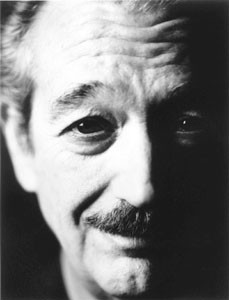
Inya Laskowski

0

‘Nother Tongue

Printmaker Inya Laskowski strives for new language

By Gretchen Giles

IF THERE’S one thing to be learned from years of posing dumb questions to visual artists, it’s that they generally like to talk. Words, big words, multisyllabic words with obscure Latin roots that some reporters couldn’t begin to spell well enough to even look up in the dictionary come spilling out. After all, an artist’s work is solitary and meditative, and the mind is deep and willing.

Yet by any definition, Guerneville printmaker Inya Laskowski is a master. Explaining the genesis and thought of the 10 works contained in “Songs of Munnin and Hudinn,” her exhibit of encaustic monotypes opening Sept. 14 at Gallery Route One in Pt. Reyes Station, the Austrian-born Laskowski is by turns lyrical, philosophical, and almost frighteningly well-read.

One can only nervously sip a ginger beer in the two-room Russian River studio that serves as her live/work space, nod with a false sagacity, and take furious notes. And one can still probably fail to get it right.

“I am interested in a visceral philosophy,” Laskowski says, pulling almost-finished works off the studio floor and into her living area. “The thoughts and experiences that have come out in my art are something that can be perceived viscerally rather than by the mind. I want them to hit you at a gut level.”

The creamy, thick paper with which Laskowski works is first imprinted with paint worked onto her press. Then she adds collage elements drawn from discarded previous prints–a rusty bit of tin or pieces of string. Finally, she covers each work with a luscious, muting flow of encaustic wax.

Her prints marry abstract concerns to the shocking refreshment of a recognizable form, the ghostly overall color scheme reminding one of painter Agnes Martin’s ability to wring a prism of hues from the color white. The resulting art is secretive, quiet, and minimal–yet manages to strike the gut as hard as a depiction of screaming orange warheads.

But if you’re not up on your biblical or Norse lore, you may not see what Laskowski does. For example, the “Munnin and Hudinn” from the exhibit’s title are ravens drawn to the god Odin’s side as advisers. Munnin is memory; Hudinn, thought. How do memory and thought drift up through the beeswax filter of one’s consciousness? How can such ineffables be known?

“I don’t know how I feel about attempting to make a representation of such things,” Laskowski admits. “I’m striving toward another language, one of form and color–stutterings in the dark, like the ‘Om’ in the temple.”

The temple in this instance is Gallery Route One. Stringent in its membership admissions, this 16-year-old cooperative gallery is run by and for artists and serves the tourist-bulge of Pt. Reyes, drawing visitors from around the Bay Area and the world. Laskowski was admitted as a member a year ago and now curates the small “annex” room off the main galleries.

“In this modern world, people have lost the knowledge that creativity is a birthright,” she says, explaining not only her gallery work, but also her devotion to teaching children’s art classes in Santa Rosa schools.

“We as human beings need to go into gentleness,” she continues. “We’ve been so cruel for so many hundreds of thousands of years, and our brains are better than that.”

‘Songs of Munnin and Hudinn’ exhibits Sept. 14-Oct. 21 at Gallery Route One. A reception takes place Sunday, Sept. 16, from 3 to 5 p.m. at 11101 Hwy. 1, Pt. Reyes Station. 415/663-1347.

From the September 13-19, 2001 issue of the Northern California Bohemian.

© Metro Publishing Inc.

‘Our Lady of the Assassins’

Under the Gun

‘Our Lady of the Assassins’ explores a city ruled by the pistol

By

IMAGINE a city where you could strike anyone who displeased you stone dead. As portrayed in Barbet Schroeder’s harrowing Our Lady of the Assassins, Medellin, Colombia, is just that: a city ruled by the pistol.

A gay, middle-aged, burned-out writer named Fernando (German Jaramillo) has come back to his Colombian hometown to enjoy his decline. In the first scene, a group of men throw him a party in a handsomely decorated flat. They’ve brought Fernando a welcome-home present; his name is Alexis (Anderson Balusteros), and the older man is invited by his host to show the lad “to the butterfly room.” When they get there, the hustler says, “Where’s the butterflies?” Reaching for him, Fernando says, “We’re the butterflies.”

This tryst with Alexis turns into true love. Like an older Virgil and young Dante, they tour what Medellin has become.

Strife between the coke barons has turned this thriving mountain city into a murder capital. And Alexis, though a sweet, affectionate, and unflappable kid, is an assassin for one of the many local gangs and currently under sentence of death from a rival group. He can’t imagine another world, so he’s basically cheerful. Fernando can, and that deepens his melancholy. Though he’s an atheist, Fernando is drawn to churches, the only places in Medellin where traffic, music, and gunfire won’t deafen a man seeking peace.

In making a film about hopelessness, the director deals with nihilism nihilistically, which makes the film almost unwatchable. Schroeder, shooting on high-res digital video, celebrates what beauty there is in the people and surroundings.

Much of the setting here is a luxury apartment, above the town. Fernando has some inherited money he proposes to burn through; so for besieged people, Alexis and Fernando are quite comfortable. In Medellin, apparently smugglers like to fire off rockets to celebrate the successful arrival of a new shipment–the two take in the fireworks as a celebration of their love.

Our Lady of the Assassins has the problem of a very talkative hero whose naïveté is astounding. Moreover, Schroeder doesn’t seem to critique the man’s occasional dithering silliness. Blame Jaramillo’s minorness as an actor; he can never make his own middle-aged, middle-class angst match the terrors of the street. For an educated man, Fernando seems blind to the law of cause and effect. He’s deceived himself, never understanding that killing is a reflex for Alexis (if the kid is angelic, he’s a destroying angel.)

Still, this film with a somber subject is laced with romance and fatalistic humor. Schroeder, who survived the company of Idi Amin (he directed a documentary about the lethal dictator of Uganda), is not one to overstate a danger or to trip out on squalor. Nor is he one to romanticize–as so many yellow-bellied directors will–the cult of the gun. His images of churches haunted by starving addicts and of streets where children not old enough to vote have the power of life and death will haunt you.

Watching Our Lady of the Assassins you’re certain of one thing: this is a view of the city of the future.

‘Our Lady of the Assassins’ opens Friday, Sept. 14, at the Rafael Film Center, 1118 Fourth St., San Rafael. For details, see , or call 415/454-1222.

From the September 13-19, 2001 issue of the Northern California Bohemian.

© Metro Publishing Inc.
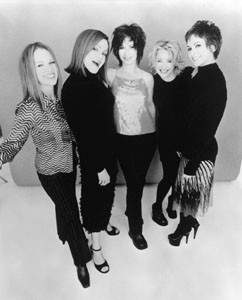
Ray Brown, Jim Hall

0

A Two Bass Hit

The bottom line on jazz-string greats

By Greg Cahill

TRADITIONALLY, the jazz bass player is relegated to a supporting role, with guitarists, or even more likely, horn players, getting all the goodies. Even jazz legend Milt Hinton–the grandfather of the jazz bass–accepted that his booming tempos and fat buoyant sound were meant as a foundation for the likes of such stars as Louis Armstrong, Dizzy Gillespie, and Count Basie. Hinton took his supporting role as an accompanist in full stride, National Public Radio once noted, saying, “It’s necessary that you have enough humility to make somebody else sound good.”

Still, every once in a while, you have to give the bass player some. And a pair of new CDs on the Telarc label do just that. The result: both recordings are serious contenders as jazz album of the year.

Super Bass 2 reunites seasoned veteran Ray Brown (a bebop icon who literally wrote the book on jazz bass; his erstwhile instruction manual is a primer for many students) with relative newcomers John Clayton and Christian McBride on a dozen tracks that spotlight solo, duo, and trio settings on standards that range from Monk’s deeply soulful “Mysterioso” to the Temptations’ funky “Papa Was a Rolling Stone.” It is the follow-up to 1989’s Super Bass Live, which evolved from what at the time was considered a one-off bass troika on a McBride album. While George Fludas and Larry Fuller provide spot percussion on a pair of tracks, the bulk of this sensational disc–recorded live at the Blue Note nightclub in New York City–is pure, unadulterated bass.

While jazz solo albums are a rarity–Marin bassist Rob Wasserman’s 1982 outing Solo (Rounder) was one of the first to explore that realm–this sets the new standard, thanks to the amazing musicianship, panache, humor, soul, and respect these players show for one another. In fact, their interplay is uncanny at times–alternately melodic and propulsively rhythmic and never overbearing. The sound is, as Dr. Herb Wong mentions in his liner notes, “lustrous,” with the trio trading off stellar bowing and almost magically stitched bass lines.

Perfect for the heart and soul.

On the other hand, the more cerebral Jim Hall & Basses (scheduled for a Sept. 25 release) pairs jazz guitarist Jim Hall with bassists McBride, Charlie Haden, Dave Holland, the woefully underrated George Mraz, and Scott Colley in both duo and trio settings. As the reigning king of jazz guitar (Pat Metheny has borrowed heavily from the Hall style sheet), Hall displays his always tasteful and uniquely textured approach to space and sound. Jim Hall & Basses is rife with sparse arrangements that, while as intimate as Super Bass 2 in their own way, express a wholly different vocabulary: less groove-laden than the bass troika, there is a far cooler, abstract quality to Hall’s playing that lends itself to broader musical exploration.

Good for the mind.

From the September 6-12, 2001 issue of the Northern California Bohemian.

© Metro Publishing Inc.

Open Mic

0

Pot Shot

By Sal Hepatica

PETALUMA IS FALLING APART–literally. The North Bay’s third largest city has the worst streets in the San Francisco region, according to a recently released Metropolitan Transportation Commission report dutifully titled “The Pothole Report: An Update on Bay Area Pavement Conditions.” Sad but true–remember that the next time someone complains that you don’t need that gas-guzzling global-warming-inducing SUV to get around town.

Any Petaluma resident who has veered wildly through the obstacle course of potholes and buckled pavement on Water Street while trying to catch a quick cup of cappuccino at the Petaluma Coffee Co. knows firsthand that the city is on the road to ruin. In fact, you have to wonder why Petalumans don’t hold their elected officials up to closer scrutiny when it comes to fixing potholes–after all, former Petaluma vice mayor Lynn Woolsey is their U.S. congressional representative, and what are our state reps doing to stem this urban decay?

The report–filled with such nifty items as a chart depicting the life cycle of pavement–points out that potholes don’t just drive people crazy, they can kill, since 30 percent of fatal traffic accidents involve bad road conditions. They also drive up car repair costs and contribute to low gas mileage.

The report offers a comparison of Bay Area roads, the so-called pavement condition index. It gauges average pavement expenditure per mile, and right there at the bottom of the list is Petaluma. The River City rates a PCI of just 40. How bad is that? Suffice to say that most Bay Area communities spend two to five times more per mile keeping their streets in fair to very good shape, while Petaluma alone qualifies as “poor.”

Pathetic? You bet.

Oh, there is some federal money to help fix the roads (city officials didn’t respond to phone calls last week), but the MTC figures that it will take a sales- or gas-tax hike to raise enough money to fill all the ruts.

I doubt that the harried drivers of those gas-guzzling, global-warming-inducing SUVs are going to approve a 10-cent-a-gallon gas tax hike to fix ruinous roads that have been allowed to get out of control (it’s far cheaper to keep roads in good repair than to let them go to hell, says the MTC).

Woolsey will be at Sonoma State University on Sept. 22 speaking at a rally against the proposed missile defense system (hey, nuclear war can ruin your whole day and would make those potholes seem pretty small by comparison). Cruise by and ask her why the Petaluma roads suck so bad.

Sal Hepatica of Petaluma drives an ancient Toyota with bad shocks and knows the personal cost of the pothole pandemic. He feels your pain.

From the September 6-12, 2001 issue of the Northern California Bohemian.

© Metro Publishing Inc.
‘Rhyme, Rhythm and Song’

Mover and shaker: Beat-poetry luminary Lawrence Ferlinghetti will make a Sept. 9 appearance at a Petaluma fundraiser to stump for a pair of local literary events.

Beat This

A poet praises lit. icon Lawrence Ferlinghetti

LAWRENCE FERLINGHETTI is an icon. But you know that. A motivated mover and shaker since the early days of the Beat movement, Ferlinghetti, 82, has been a legendary figure longer than you’ve been alive (I’m guessing).

His role in founding San Francisco’s City Lights Bookstore–a beatnik mecca that still draws pilgrims from around the world–has elevated him in literary circles to quasi-sainthood, a reputation heightened by the fact that he was also the publisher of Allen Ginsberg’s landmark poem Howl.

That Ferlinghetti fought, and won, a famous court battle to keep Howl from the paper-shredding claws of the government censors who labeled it pornographic casts a superhero glow onto his already immortal image.

His relationship to Ginsberg is almost enough to blind one’s eyes to the fact that Lawrence Ferlinghetti, savior of the Beat poets, is a damn fine poet himself. After all, he did write Pictures of the Gone World and A Coney Island of the Mind, poem collections that have sold over a million copies since appearing in the 1950s.

It’s obvious that without Ferlinghetti’s bookselling, Howl-publishing, First Amendment-defending efforts, the literary world would be a different place. But what about Ferlinghetti the poet?

What would the world be like had he never put pen to paper?

“Oh, there’d be an enormous gap if [Ferlinghetti] had never written and published,” says Sebastopol poet David Bromige, a Sonoma State University professor who drew early inspiration from Ferlinghetti’s work. “He moved things forward, pushing toward a poetry of the vernacular, a poetry that reflected the attitudes that went with that vernacular.”

Eschewing the accepted structures and polite formalities of poetry, Ferlinghetti gracefully embraced hipster language–his early poems frequently dropped words and phrases like “far out,” “cool, “real gone”–bringing something new to American poetry: informality.

HIS POEMS felt casual and free, injected with a playful irreverence that was both intellectual and mainstream, breaking ground and leading the way for successive generations of Bob Dylans and Snoop Doggy Dogs.

“With Pictures of a Gone World,” recalls Bromige, “Ferlinghetti wrote with a graceful vernacular that we weren’t accustomed to seeing previous to that. His first books made a big impression on me. I soaked them up. Each one broke new territory.”

The good news is, Ferlinghetti is still breaking new territory.

On Sept. 9, the poet/icon will take the stage at the Phoenix Theatre in Petaluma for “Rhyme, Rhythm and Song,” a fundraiser for two upcoming Sonoma County literary events–the Sonoma County Book Fair and the Petaluma Poetry Walk (see “Word Up“).

“Rhyme, Rhythm, and Song” features live readings by an assortment of Bay Area poets, including Gene Ruggles, Geri Digiorno, Jonah Raskin, Joyce Jenkins, Patti Trimble, and Sharon Doubiago. Each reading will be backed up by a live local musician. Blues mistress Sarah Baker, on keyboard, will perform with Ferlinghetti.

Bromige, who will likely be in the front row of the audience, is looking forward to seeing Ferlinghetti.

“He has an amusing style of reading,” Bromige notes. “Or did the last time I saw him. His voice can sometimes take on the inflection of an old-time comedian, like W.C. Fields.”

Ferlinghetti’s style, suggests Bromige, highlights the irreverence and humor–and subtle intelligence–of the writing.

“What I’ve admired most about Ferlinghetti from the very first poems I ever read,” Bromige says, “was that his concepts were not simple concepts. His work was never intended for simpletons. And yet there’s so much pleasure and playfulness in the words, you don’t have to be a genius to enjoy them.”

‘Rhyme, Rhythm and Song’ hits the stage Sunday, Sept. 9, at 4 p.m. at the Phoenix Theatre, 201 Washington St., Petaluma. Tickets are $15 (available at most local bookstores). 707/544-5913.

From the September 6-12, 2001 issue of the Northern California Bohemian.

© Metro Publishing Inc.

Genetically Modified Grapes

Glow with the flow

GMO grapes: the ‘new frontier’ for pesticide foes?

By Tara Treasurefield

WOULD YOU LIKE the wine you drink to glow in the dark? Then go to Florida, where genetic engineers have inserted a fluorescent jellyfish gene into grape plants. The gene lights up the plants and allows researchers to see the results of their experiments. The real purpose of the research is to develop a cure for Pierce’s disease, a vine-withering disease spread by the glassy-winged sharpshooter and other insects and by diseased rootstock. Researchers plan to remove the jellyfish marker gene from the grape plants before they’re marketed. But if some enterprising soul thinks that consumers will buy fluorescent wine, before long it could be available in stores near you.

Novel? Yes. Good idea? Probably not, says biodynamic farmer Bob Cannard Jr., who views genetic engineering as a greater threat than pesticides. Organic agriculture is gaining ground (literally) at the rate of 20 percent per year.

“If the genetic codes are not scrambled by the current biotech thrust,” says Cannard, who spearheaded an unsuccessful bid last year to create an initiative on the state ballot that would have required consumer labeling of all genetically modified foods, “within a 20-year period of time we could easily see a 50 percent reduction in agricultural toxins used.”

But the genetic engineering train left the station long ago, and leaders in the wine industry are squarely on board. They view genetic engineering as the “final solution” to Pierce’s disease, which limits potential profits in California, Florida, Texas, and other southeastern states, and in Mexico and Central America.

A lot of money is at stake–and that’s always a strong incentive to act first, and ask questions never.

Dennis Gray is a professor and developmental biologist at the University of Florida. He has been searching for a cure to Pierce’s disease since 1984, when he joined forces with researchers from the U.S. Department of Agriculture. Gray says that if Florida could produce more popular varieties of wine, there would be a strong local market for it.

“In the United States, Florida is the third biggest consumer of wine, but we have a tiny grape industry because of diseases. Pierce’s disease absolutely prevents us from growing cabernet sauvignon, chardonnay, and other varieties.”

Gray’s research involves inserting a modified silkworm larvae gene into grape plants. In laboratory conditions, the modified gene kills the Pierce’s disease bacterium. Problem is, it may kill beneficial bacteria, too, warns Doreen Stabinsky of Greenpeace.

“I’d also be concerned about what other types of organisms it can affect, including humans,” she says. “The silkworm protein is closely related to the protein found in bee venom, which we know causes severe allergic reactions in some humans.”

Stabinsky will be relieved to learn that genetically modified grape plants may not be available for another 10 years. There’s still time to warn connoisseurs of the possible hazards of wine laced with silkworm genes. And Pierce’s disease aside, Gray says, “We know that many popular wine grapes do not produce color-stable, quality wines in our climate, probably due to hot nighttime temperatures. Also, there may be problems with uneven ripening of fruit and fungal diseases over time.”

Could it be that cabernet sauvignon and chardonnay don’t belong in hot, humid climates?

In any case, Florida vintners and growers support Gray’s work, and expect to have no problem marketing wine made from genetically engineered grape plants. But wine interests in California do expect problems. The California wine industry relies heavily on the European market, and Europeans have a well-deserved reputation for burning genetically engineered crops.

“If you were to ask growers in Napa and Sonoma [counties] and on up and down the coast if they were willing to write off the European continent as a customer, they’d say no,” says Jay Van Rein of the California Department of Food and Agriculture.

But that doesn’t mean the CDFA has given up on genetic engineering. John J. Peloquin, assistant research entomologist at the University of California-Riverside, is working on a project funded by the CDFA. Peloquin and other researchers plan to dose sharpshooters with an “antibiotic” in the form of genetically engineered bacteria that interrupt or kill the Pierce’s disease bacterium. Researchers are testing methods of getting the engineered bacteria into the sharpshooters.

One possible scenario, unconfirmed by researchers, is that regulators in areas infested with the sharpshooter could apply the engineered bacteria to plants that the sharpshooter feeds on.

STABINSKY wants to know how researchers will prevent engineered bacteria from damaging or killing beneficial bacteria, such as those that are essential to breaking down the soil. Peloquin says, “The technology exists that theoretically these substances may be made to be very specific and affect only” the Pierce’s disease bacterium, “through the power of molecular biology, immunology, combinatorial chemistry, and rational ‘drug’ design.”

Cloning the Buddha author Richard Heinberg is skeptical. “Before the bacteria are actually released, I think it would be essential to have extensive studies conducted by ecologists, not molecular biologists,” he says.

“My guess is that there are other solutions that are less exotic, more mundane, but that in the long run are less risky and perhaps less costly as well.

For these, we need a thorough knowledge of the ecology, not just the genetics, of the sharpshooter and the Pierce’s disease bacterium.”

But Peloquin and Gray are convinced that they’re taking every possible precaution and that their work won’t harm the ecosystem. Gray, who describes himself as a public servant, says, “I’m here to help the people. If I were working on something I thought was dangerous, I wouldn’t do it.

“I know why people get scared,” he says, then adding in reference to GMO activists, “There are nuts out there burning things.”

From the September 6-12, 2001 issue of the Northern California Bohemian.

© Metro Publishing Inc.

News Bites

0

Just Say No to Offshore Oil

State Assemblywoman Pat Wiggins, D-Santa Rosa, last week called on the state Legislature to urge President Bush to abandon plans to encourage oil drilling and natural gas exploration off the California coastline. Wiggins wants a permanent ban on such drilling, especially in 36 offshore tracts already under lease off the central coast. Wiggins’ amended resolution, first introduced in February, came at the behest of U.S. Sen. Barbara Boxer, D-Marin. It also asks that the Bush administration not appeal a recent federal court ruling that upheld California’s right to review federal offshore oil proposals off its coastline.

High-Tech High

Petaluma’s dynamic superintendent of public schools, Carl Wong, has pulled off yet another coup–snaring a $375,000 grant from Microsoft founder Bill Gates’ educational foundation to fund a small, technology-based high school. The facility, modeled after a similar nationally acclaimed school in Napa, will be located in the heart of the city’s Telecom Valley district. It is scheduled to open in September 2002. Petaluma school officials hope to land a $2 million state grant to open the school. Gov. Gray Davis has authorized $20 million in the state budget to establish 10 similar schools throughout the state. Those appropriations are pending state Senate approval.

Land Swap Deal

Environmentalists are hot under the collar over a land swap that will give one of the largest landowners in Sonoma County 143 acres at Lake Sonoma in exchange for a 38-acre patch. The deal with rancher Crawford Cooley was brokered by the U.S. Army Corps of Engineers, which built the 17,000-acre reservoir and popular playland behind Warm Springs Dam in 1983. Since the construction of the dam, Cooley–whose family owns nearly 21,000 acres of ranchland north of the lake–has disputed the boundaries of the reservoir. The Madrone Audubon Society, Sierra Club, California Native Plant Society, and Fish and Wildlife Service all criticized the deal as being bad for local fauna and flora. Rep. Mike Thompson, D-St. Helena, criticized the swap as being bad for taxpayers. The Sonoma County Water Agency joined the chorus of critics, saying that the deal will allow Cooley to graze cattle near the lake and lead to polluting runoff.

Shelter Update

Stung by complaints from residents and criticism from housing advocates, Santa Rosa and Sonoma County officials now say they will consider opening a pair of homeless shelters within the next year. Santa Rosa Mayor Mike Martini announced that city officials are studying two downtown sites for a possible shelter. County officials claim they are considering a similar move. In 1996, the county Board of Supervisors nixed a widely supported plan to convert a then vacant Santa Rosa Avenue hotel into a 175-bed homeless service center. The past five years have seen no movement toward finding permanent shelter for the county’s sizable homeless population.

Ballot Bonds

Are you ready for a property-tax hike? Voters in eight Marin County communities will face a variety of bond measures on the November ballot that ask residents to tax themselves for everything from school repairs to water-system upgrades. Voters in Novato, Lagunitas, and the Reed Union School District will find school-bond measures on the Nov. 6 ballot–in Novato, Measure A would raise $107 million to repair 14 local schools at a cost to taxpayers of $60 per $100,000 of assessed property value for 25 years. Under Prop. 39 guidelines, adopted last year, 55 percent of Novato voters must approve the bond measure. In addition, measures D, E, and F would tax homeowners in Novato’s Bel Marin Keys Community Services District to improve the lagoon there.

From the September 6-12, 2001 issue of the Northern California Bohemian.

© Metro Publishing Inc.

Organic Wines

0

Fruit of the Vine

Organic wines fight for respect in the marketplace

By Nathan Hill and Nicole M. DiDomenico

PICTURE THIS: On a moonlit night after a hard day, you pour yourself some wine, swirl it around the glass. Raising it slowly to your lips, you notice the crisp redolence of fruit and accents of oak-spice. The wine’s fresh acidity coats the tongue, followed by an aggressively ripe fruit bouquet and dry finish. You polish it off, but instead of finding yourself lulled into a pleasant state of relaxation and calm, you are instead assaulted by a pounding headache.

Unbeknownst to you, it wasn’t your workday beating you senseless, it was the wine. For many people, this is an all-too-common occurrence. Headaches or other ailments that arise after wine consumption usually have less to do with the alcohol and more to do with the unseen chemicals floating in the glass.

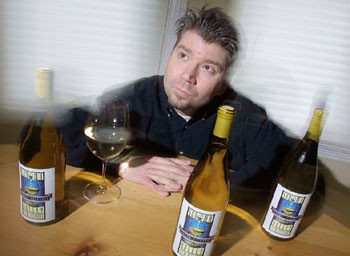
On The Shelf: A sampling of North Bay organic wines.

Grapes of Wrath

Studies show that wine grapes are bombarded with a medley of poisons. In fact, 17 different insecticides, herbicides, and fumigants are used in wine production, many containing possible carcinogens. In California, where 90 percent of domestic wines are produced, grapes receive more pesticides than any other crop: 59 million pounds in 1995 alone, according to Californians for Pesticide Reform. In Sonoma County, grape growers applied chemicals to their crops at twice the state average, and anecdotal evidence indicates that the amount is rising in the North Bay in the wake of a possible infestation by the glassy-winged sharpshooter, a pest that carries the vine-withering Pierce’s disease.

So it’s no surprise that grape production accounts for a full third of all pesticide-associated illness in the state, most more serious than headaches. Since tending to the vines involves considerable contact with foliage, most illnesses are suffered by workers exposed to pesticide residue. Typically, grape laborers experience dermatitis, an inflammation of the skin, at a rate 10 times higher than other agricultural workers. But farm hands aren’t the only people suffering: according to a Californians for Pesticide Reform study, there is also a link between pesticide use and increased birth defects among both farmers and nonfarmers residing in these agricultural regions.

The problems aren’t unique to California, either. Pesticide use here is typical of most conventional vineyards worldwide, says Michel Ginoulhac, vice president and winemaker for the Organic Wine Co. What’s more–and here’s where your headache comes in–minute traces of these toxins often find their way into your glass.

“The levels aren’t dangerous in the bottle,” says Ginoulhac, who is also a medical doctor. “The problem is their cumulative effect.” Many pesticides are stored in the body’s tissues and accumulate over time, thereby magnifying the danger. Ginoulhac says this may explain why many people, especially older individuals, experience headaches or other maladies after drinking wine.

“This doesn’t happen with organic wines,” Ginoulhac says, and with good reason. In most organic vineyards, compost has replaced fertilizers, biological control has replaced pesticides, and the use of any synthetic chemical is strictly prohibited. In addition, cover crops, which are commonly used to sustain populations of beneficial predatory insects, promote biological diversity and prevent soil erosion.

For many organic vineyards, this ecological philosophy extends to more than the wine itself. Fetzer Vineyards’ Bonterra wines are bottled in 50 percent recycled glass, and its labels are printed with a soy-based ink on tree-free papers. The Bonterra wines have found a receptive market in Great Britain, where consumers have faced repeated scares over the safety of their food stuff–50 percent of Bonterra wines are sold in England, according to Fetzer spokeswoman Sarah Cummings. To ward off pests, Gallo of Sonoma coats its roads with a natural wood-based resin that deters mites and dust, and develops only half its acreage, leaving the rest untouched to promote biological diversity. And neither Four Chimneys Farm Winery in Himrod, N.Y., nor Fetzer uses any animal products in its wines, including bull’s blood, gelatin, or egg whites, although these are all FDA-approved additives.

Vines of the Times

Veronique Raskin, founder of the Organic Wine Co., can recall a time when the very mention of organic wine would induce either shock or laughter. “Organic was a dirty word,” she says of the early 1980s, when she walked from store to store trying to persuade buyers to carry the stuff. “It was associated with hippies, grass, LSD. Very few people knew what it was.”

Not anymore–well, sort of.

Although organic wine makes up only 1 percent of the total domestic wine market, the industry is experiencing a steady annual growth of 20 percent. Organic winemakers and enthusiasts alike expect, with the recent upswing in environmentally conscious consumers, that organic wines will make up half of the total wine market within the next two decades.

Grape growers throughout California have moved in that direction, industry sources say. Now many grape growers have shifted toward sustainable and, in some cases, complete organic growing. For Raskin, it’s a lot easier than it was a decade ago: “The organic wine industry is expanding in all directions,” she says, “in quality, variety, and countries represented.”

Still, even Raskin admits that some organic winemakers keep their organic bottlings “in the closet” because they fear that consumers perceive commercial wines as a superior product. “It’s really shocking and heartbreaking,” Raskin says of that type of marketing. “These wines stand on their own–they get medals in competitions. It would please me if they were appreciated for being organic.”

White, Blush, or Red . . . Tape

The growth of the industry, however, hasn’t been without its bumps. In a shining example of government bureaucracy, standards for organic wines are controlled by many overlapping departments and inconsistent regulations. The Bureau of Alcohol, Tobacco, and Firearms, the Food and Drug Administration, the U.S. Department of Agriculture, the Federal Trade Commission, and all the states in the country have stepped into the organic fray. Organic growers can suffer roadblock after roadblock attempting to label their wine, while consumers are left in the dark as to what “organic” really means.

But help has arrived. After a seven-year debate in Washington that included considerable acrimony over whether chemical additives, sewage sludge, and bioengineering could be allowed in products certified “organic,” the USDA in 2000 released a set of organic standards. These guidelines–requiring that only organically grown grapes may be used in the bottlings–for the first time provide a consistent process for certifying organic products.

The sulfite issue was a major stumbling bloc in the debate. Conventional winemakers have added sulfites to wine for centuries to prolong shelf life by preventing oxidation and bacterial spoilage. Most wines have sulfite concentrations between 50 and 350 parts per million. Paul Chartrand of Chartrand Imports–a retailer of French, Italian, and some domestic organic wines–says that while most organic wineries use sulfites, there are many who believe the term “organic” should be synonymous with “nothing added.” Under federal regulations, a wine that contains less than 10 parts per million of sulfites is not required to carry a sulfite warning on the label.

Sulfites are also an issue for the estimated 5 percent of the population who are allergic to them–headaches, hives, cramps, or flushing of the skin after drinking wine is a tell-tale sign of an allergy. Unfortunately, a sulfite-free wine does not exist, since sulfites are a natural byproduct of fermentation and are present in wines without having been added. However, organic wineries strive to limit the concentration of sulfites to 40 parts per million or less, making them safer alternatives for people with allergies.

“Making wine without added sulfites is one of the hardest things you can do,” says Tony Marti, owner of the Sebastopol Fine Wine Co. Marti has high praise for companies like the Mendocino-based Frey Vineyard of Redwood Valley, the grandfather of organic wines. “I find many of their organic wines to be bold and innovative,” Marti says. “I have no problem recommending them at all.”

But How Does It Taste?

The organic wine industry has for some time now been cursed with the stigma of producing lower-quality wines, partly owing to short shelf life. But as organic techniques improve and buyers become more accepting, it’s slowly shedding the stereotype. “The wine industry is like fashion because it’s subjective and conscious of trends,” Chartrand says. “There’s still an image problem, but it’s getting better.”

One way to overcome the stigma is to produce a better-tasting wine, and many organic vintners say they’re doing just that. “The quality of wine is getting better every day, and we want to demonstrate that organic wines can compete on a world level,” says Fetzer winemaker Robert Blue. Most growers say organic grapes offer pure flavor, superior aromas, and better fruit intensity than their chemically altered counterparts.

Not only are organic wines competitive on the palette, they’re also competitive in the wallet. Their price ranges from $7 to $30, depending on quality and vintage.

“I think it’s the wave of the future,” says Tony Marti. “People are turned off by the science-knows-everything attitude, since it’s resulted in degradation of the environment and pollution of our bodies. To be honest, I wish there were even more organic wines on the market.”

‘Bohemian’ editor Greg Cahill contributed to this story.

From the September 6-12, 2001 issue of the Northern California Bohemian.

© Metro Publishing Inc.

Arts Etc.

0

The New Boss

AFTER A SEEMINGLY endless revolving door of executive directors and interim directors (four have come and gone in the last three years), the Sonoma County Museum has appointed 36-year-old Natasha Boas to fill the facility’s top spot.

Boas is currently the public programs curator at the Yerba Buena Center for the Arts in San Francisco. She has also worked at the Jewish Museum in San Francisco and the Centre Georges Pompidou in Paris.

“We wanted someone who has a background in museums, and [Boas] has an excellent background in experience and education,” explains Jim Benefield, vice president of the museum’s board of directors.

“We felt [Boas] has the leadership qualities needed to carry out the museum’s expansion while keeping the museum operating and at a higher level.”

The history and art museum plans an ambitious $28 million expansion project. Of that, $8 million has been raised. Boas’ starting salary of $100,000 is about $60,000 more than that of the last executive director.

“We felt we needed a top-quality person, and it appeared we’d have to take a deep breath and meet the market,” Benefield explains.

–Paula Harris

Sonoma County Book Fair

Poets, novelists, and short-story writers from the Bay Area and beyond come together for a slew of readings, panel discussions, and book signings at year two of this event. Featured authors include poet Diane di Prima, talented NorCal short-story writer Roy Parvin, Indian-American novelist Chitra Divakaruni, and plenty of Sonoma County luminaries like Gerald Haslam, Cydney Chadwick, Don Emblen, and Jonah Raskin. Moreover, dozens of Bay Area book publishers, literary magazines, and writing groups offer their wares. Plunge into the literary action on Saturday, Sept. 15, from 10 a.m. to 6 p.m. at various downtown Santa Rosa locations, including Old Courthouse Square, the Old Vic, and Copperfield’s Books. 707/544-5913.

Petaluma Poetry Walk

Poets seize the high ground in downtown Petaluma for the sixth straight year in this annual outpouring of free verse. Beat notable Diane di Prima and Petaluma poet Terry Ehret are among this year’s many readers. It all goes down on Sunday, Sept. 16, from noon to 7 p.m. at various downtown venues, including Copperfield’s Books and the Phoenix Theatre. Admission is free. 707/763-4271.

From the September 6-12, 2001 issue of the Northern California Bohemian.

© Metro Publishing Inc.

Open Mic

The Aftermath By Greg Cahill "THIS IS THE DAY that America's luck ran out," CNN commentator Jeff Greenfield told a saddened colleague while contemplating the carnage and chaos unfolding in the streets of New York and Washington, D.C., in the wake of Tuesday's terrorist attacks. Greenfield, recalling the 1993 car bombing of the World...

Inya Laskowski

'Nother Tongue Printmaker Inya Laskowski strives for new language By Gretchen Giles IF THERE'S one thing to be learned from years of posing dumb questions to visual artists, it's that they generally like to talk. Words, big words, multisyllabic words with obscure Latin roots that some reporters couldn't begin to spell...

‘Our Lady of the Assassins’

Under the Gun 'Our Lady of the Assassins' explores a city ruled by the pistol By IMAGINE a city where you could strike anyone who displeased you stone dead. As portrayed in Barbet Schroeder's harrowing Our Lady of the Assassins, Medellin, Colombia, is just that: a city ruled by the pistol....

Ray Brown, Jim Hall

A Two Bass Hit The bottom line on jazz-string greats By Greg Cahill TRADITIONALLY, the jazz bass player is relegated to a supporting role, with guitarists, or even more likely, horn players, getting all the goodies. Even jazz legend Milt Hinton--the grandfather of the jazz bass--accepted that his booming tempos and fat...

Open Mic

Pot Shot By Sal Hepatica PETALUMA IS FALLING APART--literally. The North Bay's third largest city has the worst streets in the San Francisco region, according to a recently released Metropolitan Transportation Commission report dutifully titled "The Pothole Report: An Update on Bay Area Pavement Conditions." Sad but true--remember that the next time someone complains that...

‘Rhyme, Rhythm and Song’

Mover and shaker: Beat-poetry luminary Lawrence Ferlinghetti will make a Sept. 9 appearance at a Petaluma fundraiser to stump for a pair of local literary events. Beat This A poet praises lit. icon Lawrence Ferlinghetti LAWRENCE FERLINGHETTI is an icon. But you know that. A...

Genetically Modified Grapes

Glow with the flow GMO grapes: the 'new frontier' for pesticide foes? By Tara Treasurefield WOULD YOU LIKE the wine you drink to glow in the dark? Then go to Florida, where genetic engineers have inserted a fluorescent jellyfish gene into grape plants. The gene lights up the plants and...

News Bites

Just Say No to Offshore Oil State Assemblywoman Pat Wiggins, D-Santa Rosa, last week called on the state Legislature to urge President Bush to abandon plans to encourage oil drilling and natural gas exploration off the California coastline. Wiggins wants a permanent ban on such drilling, especially in 36 offshore tracts already under lease off the central...

Organic Wines

Fruit of the Vine Organic wines fight for respect in the marketplace By Nathan Hill and Nicole M. DiDomenico PICTURE THIS: On a moonlit night after a hard day, you pour yourself some wine, swirl it around the glass. Raising it slowly to your lips, you notice the crisp redolence of...

Arts Etc.

The New Boss AFTER A SEEMINGLY endless revolving door of executive directors and interim directors (four have come and gone in the last three years), the Sonoma County Museum has appointed 36-year-old Natasha Boas to fill the facility's top spot. Boas is currently the public programs curator at the Yerba Buena Center for the...
11,084FansLike
4,446FollowersFollow
6,928FollowersFollow