‘A Home on the Range’

0

Shalom on the Range

‘A Home on the Range’ explores Petaluma’s Jewish chicken-ranching community

By Sara Bir

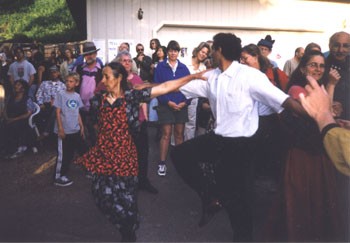
In a word association game, the most common response after “Jewish” and “chicken” would probably be “matzo ball soup,” not “Petaluma.” But, as Bonnie Burt and Judith Montell’s documentary A Home on the Range: The Jewish Chicken Ranchers of Petaluma demonstrates, there was once a vibrant, close-knit, and hard-working group of Jews who came to Petaluma to build new lives–and raise chickens.

In the 1920s, Petaluma’s hospitable climate drew a group of progressive Jews to learn agriculture before leaving for a kibbutz in what is presently Israel. Some, however, never left California, and this group planted the seeds of the Jewish community there.

Word began to spread back East, and, coupled with the lure of Jack London’s writings and a new life, families came. “Jews couldn’t own land in the old country,” says Burt, “so it was an honor and something miraculous that they could own land here. They were very tied to the land. I think it symbolized a freedom that they had never known.”

Most of the ranchers had no agricultural background at all, and making a living raising chickens was labor-intensive. Besides simply trying to make ends meet, they also faced prejudice. Part of the film tells a little-known, dark blip on Sonoma County history, when a group of Jews who were trying to unionize apple pickers were kidnapped from their homes by a prominent Sonoma County businessman and tarred and feathered.

The community stuck together, for a while at least. “They were immigrants, the first generation, and a lot of them didn’t speak English well. They needed each other in a way that current generations do not,” says Burt.

“What was so beautiful about the community is that they were so helpful to newcomers,” continues Montell. “They would loan them money to rent a ranch, they would collect furniture. It was a very loving group, but at the same time it was very critical of everything and everybody.”

Chicken ranching began to decline in the early ’60s when agribusiness took over, and the identity of the community likewise began to fade. “You have to recognize that these were immigrants, and as they got older, their children were interested in becoming more Americanized,” Montell says. “That’s what I think is so interesting about this story–that it parallels many immigrant communities’ experiences, that the first generation is there and very tied together . . . and then the second, third, and fourth generations start to dissipate as they become Americanized.”

A Home on the Range screens with Burt’s short video Song of a Jewish Cowboy, which profiles Scott Gerber, a descendant of left-wing chicken ranchers. An introspective rancher with the swagger of a genuine cowpoke, Gerber sings cowboy and Yiddish songs. “I met Scott, and I thought that he was so intriguing and charming, and what he was doing by carrying on the culture was admirable and unique,” says Burt.

‘A Home on the Range’ screens Friday, Sept. 27, at 7pm and Sunday, Sept. 29, at 4pm at the Sonoma Film Institute, Darwin 108, 1801 E. Cotati Ave., Rohnert Park. Filmmakers Bonnie Burt and Judith Montell will appear at the Sunday screening. $4.50 general admission. 707.664.2606.

From the September 26-October 2, 2002 issue of the North Bay Bohemian.

© Metro Publishing Inc.

Fork

0

Lighten Up: Scott Howard (left) and Charles Low, proprietors of San Anselmo’s Fork, take their business very seriously.

Small Plates, Big Tastes

Fork’s jewel box of a menu offers gems (and a few clunkers)

By Sara Bir

The whole point behind going out to eat at a fine restaurant is to enjoy things that you would normally not find at home. Artfully planned surroundings and smoothly choreographed front-of-the-house pageantry are all an elaborate background for a comparatively tiny stage: the plate of food on the table in front of you. The sensual pleasure of tasting exotic, intense flavor combinations always peaks with the first few bites, and after that it’s just tasty food. The more you eat, the less of its nuances you register.

But it’s those nuances–the mystery and the recognition–that make a well-executed dish an elating experience, so it makes sense to maximize this sensation of initial discovery with many small, carefully composed courses. It’s that philosophy that’s driven the proliferation of tapas bars and tasting menus the past few years. San Anselmo’s Fork is hardly breaking ground with their “small plates” focus, but their appealingly well-rounded and thought-out menu excuses them from pandering to fancy food fads.

It’s a small space, intimate yet uncluttered and open, with minimal decorative touches–abstract photographs register deep green against lightly colored walls. On a humdrum Tuesday night, the dining room was impressively half-full.

Our waitress explained the Fork ordering strategy to us–not that ordering at Fork is challenging enough to require a strategy. Courses tend to be 25 percent to 50 percent smaller than those of other restaurants, so it takes three or four to add up to a full dinner. Chef Scott Howard’s prix fixe “Signature Menu” ($46), which changes daily and offers a vegetarian option, has six courses, not counting the amuse-bouche. There’s also an à la carte tasting menu, divided into “Raw-Smoked-Cured,” “Next,” “Seafood,” “Meats,” and “Sides.”

The 50-bottle wine list offers plenty of food-friendly varietals and blends, and is dominated by French and California wines. Wines by the glass are limited but well-chosen. The sprightly and acidic 2001 Spy Valley Sauvignon Blanc from New Zealand ($6.50) sidled up nicely to many of the “Raw-Smoked-Cured” items on the menu, and the 2000 Clos du Caillou Vieilles Vignes “Cuvée Unique” Côtes du Rhône ($9) paired well with the meatier dishes without overpowering them.

The preliminary courses were promising. Striking to look at, the seafood tartare trio ($8) arrived with small mounds of tartare in three ceramic spoons arranged in a triangle on a plate speckled with fennel seeds and peppercorns. The tuna-artichoke and salmon-shiitake tartares were curiously bland and indistinguishable, but the luscious scallop-hazelnut tartare was a standout, the tender scallops and the crunchy toasted hazelnuts creating playfully dueling textures and nuttiness mingling with the scallops’ umami.

The simple presentation of the seared foie gras with black mission figs and aged balsamic ($12) allowed the quality of its ingredients to shine unencumbered. A salad of butter lettuce, orange imperials, sliced almonds, and blue cheese ($7) was light and refreshing, though not anything that couldn’t be ordered from any caliber of restaurant with decent salads.

Sometimes Fork’s tines hit the mark and sometimes they missed, but those hits and misses usually end up sharing the same plate. The star anise-crusted tuna with red curry sauce ($14), for instance, had meaty little cross-sections of tuna whose flavors were totally bludgeoned by the clumsy and overpoweringly one-dimensional curry sauce, which resonated of the stuff from a generic Madras Curry Powder can.

Fork’s signature soup–carrot broth with chervil sabayon and truffle oil ($6.50)–also suffered the fate of over-curry. The sabayon was moderately foamy–more of an airy mayonnaise–and its delicate essence of chervil and pungent truffle aroma all but collapsed under the dominating weight of the curry. A light purée rather than a broth, the soup itself carried little pure carrot flavor but was still pleasing.

Likewise, the truffled egg salad with smoked trout and a chiffonade of baby spinach on a crostade ($3.75) had its own self-contained highs and lows. The pedestrian egg salad would have been delectable on a deli sandwich, but with its discernible lack of truffling, it too quickly faded into the background under the salty, dense, and divine smoked trout crowning it. If ever a tiny slab of smoked trout was worth $3.75, this was it.

As the courses progressed, the kitchen seemed more sure of itself, and the dishes were overall more harmonious. The duck confit with shiitakes, roasted peaches, and baby turnips ($14) was amazingly satisfying. The skin on the duck confit was crisp, the duck was meltingly savory, and the peaches–whose bite had been mellowed in roasting–perfectly complemented it. The goat cheese and potato flan ($3.75) was like an entire savory flan reduced to a single ramekin, dense with richness and redolent of goat cheese.

Sure, the amount of food per course may be smaller, but flavorwise they are not small at all. The meat and seafood dishes are more like scaled-down entrées than “small plates.” For the amount of food on the plate, it seems fairly reasonable to pay $13 for the lamb chop (singular, mind you) with spinach, pine nuts, and apricot and green peppercorn sauce, when at another restaurant a similar full-sized entrée with two lamb chops would go for around $26. We came out spending about as much as we would have for dinner at most other fine-dining restaurants.

Both of the desserts we tried were good in theory but didn’t follow through in reality. The brioche French toast with crème anglaise and bananas ($6.50) was generous enough to compose an actual breakfast, which is far too big for a dessert. The slices of underripe bananas would have been more flavorful had they been roasted or sautéed, while the French toast itself was similar to what you might whip up yourself casually on a Saturday morning, not the custardy delight a decadent French toast can be.

The cardamom crème brûlée ($6) flaunted a faultless texture, rich and smooth, but the pastry chef had been too heavy-handed with the cardamom, imparting an astringent, medicinal taste that spoiled the whole affair.

Fork’s service was uninterruptive and courteous, but not spot-on timely. Courses arrived and hovered in expectant server’s hands while others scurried in to clear finished plates, and waiters bearing clean forks did so just after the new courses were in front of us, rather than before. (I should note that this is a fairly common problem, and that after sitting helpless with no utensils in sight at more than one restaurant, Fork’s wait staff is comparatively doing a smash-up job of utensil management.)

Our salt and pepper were also gracefully whisked away before the dessert menus were presented, another elegant touch I have not seen in quite some time. Little things like that, even if you don’t consciously notice them, add up to a big impression.

It was that overall impression that made eating at Fork what it was, illuminating the kitchen’s strokes of perfection and muting the less-inspired ones. Fork’s culinary approach is perhaps too ambitious for its own good, which is a bit frustrating, because the potential for it to be a standout establishment is palpable.

With so many diminutive courses to flirt with, you can easily focus on the stronger components and wait until the next plate arrives. It’s almost like a flavor scavenger hunt in every course–which sounds fun, until you stop to think that, ideally, for an average of $8 per pint-sized plate, everything should be stupendous.

As it is now, Fork is a charming, if uneven, delight that’s worth a visit. Which may be too finicky a statement in the long run, because what is OK at Fork is pretty good, and what is good there is excellent. I am still thinking about that smoked trout. A diner there can expect many more miniature flavor explosions than they can overpriced clunkers.

Fork is open for dinner Tuesday-Saturday. 198 Sir Francis Drake Blvd., San Anselmo. 415.453.9898.

From the September 19-25, 2002 issue of the North Bay Bohemian.

© Metro Publishing Inc.
Sonoma County Book Fair

Poets and Writers

Lit comes to light at the Sonoma County Book Fair

From 10am to 6pm on Sept. 21, the Sonoma County Book Fair brings a veritable treasure trove of literary lights to Santa Rosa. In addition to Justin Chin and Daniel Coshnear, readers include Susan Hagen and Mary Carouba, Dorothy Allison, Joelle Fraser, Robert Mailer Anderson, David Bromige, and Dana Gioia.

Strong Dose

From the first, Justin Chin defines himself as an outsider. From the quote that opens the first section of poems in his newest collection, 2001’s Harmless Medicine (Manic D Press; $13.95), Chin defines his role as subjective observer thrown from paradise: “And at the ninth hour, Jesus cried with a loud voice saying, ‘Eloi Eloi, lama sabachtani?‘ which is interpreted, ‘My God, my God, why hast thou forsaken me?'”

In lucid, often brutal language herded into the loose strictures of free verse, Chin continues to barrage the reader with impressions from his world–from our world. Illness, homophobia, and xenophobia are frequent visitors, from the first poem in the collection, which imagines “a battle in my body” where “Everyday, a small bit / of myself dies / in that chemical battle,” to the last, which details the plight of animals in a zoo, whose one false move could lead to tiger’s penis “served / in a bamboo steamer, bones brewed for aphrodisiac / strength elixir, brand-name medicine sold / under counters while World Wildlife Fund monitors / shop for chinky souvenirs.”

When asked if he considers himself an outsider, Chin delves into semantics, saying, “I guess the question would be ‘outsider’ to whom? How did the mainstream decide it was the mainstream and who were the outsiders?”

Chin speaks of his “affiliations and identities,” noting that “some [are] more contested than others, and the way I look at things, how I write, is filtered through them and more. Do I feel bound by them? Not at all. Having said all that, how others choose to read my work is another thing altogether.”

Choosing to read his work is the first step. His work is sprinkled liberally with a sly humor: “Neo Testament” imagines a world in which Jesus is a great break dancer but his twin brother Ted Christ outshines him in all matters of miracle making: “[Ted] taught his mother how to appear on sides of buildings, in tortillas, bearclaws and other breakfast pastries. He learned how to multiply fishes and loaves of bread . . . and he invented nouvelle cuisine.”

Prose poems like this one beg to be spoken aloud, and Chin is known for his slam credentials. He has toured with Beth Lisick and Thea Hillman, both high priestesses of the San Francisco slam scene. Chin, a priest in his own right, sings the clear gospel.

–Davina Baum

Literary Labor

It’s every undiscovered writer’s fantasy. You spy an ad for a literary contest in the back pages of Poets and Writers. You submit your manuscript. You score top honors, get your book published, and garner glowing reviews.

For most writers, it remains a daydream. But it all went down for Sonoma County author Dan Coshnear, whose short-story collection Jobs & Other Preoccupations ($12.95), won the Willa Cather Fiction Prize and was then published to favorable reviews by Helicon Nine Editions in 2001.

The funny thing is, though, a year after Coshnear’s book hit the shelves, his life looks pretty much the same. He still has his day job, or rather, his night job: Coshnear works the graveyard shift as a counselor in a mental-health group home in Guerneville.

Is he disappointed? Is he disillusioned? Is he jealous of Jackie Collins? He is not. “I was very happy when it was published, and I’m still very happy,” says 41-year-old Coshnear. “It’s a very nice thing to have a book and get attention for it.”

Jobs has only sold a few hundred copies to date, in part because of distribution problems. But readers who do discover the book seldom walk away unscathed from the compelling stories within. As the collection’s title implies, many of Coshnear’s tales offer thoughtful, vivid explorations of the tragicomic world of modern work.

The publication of Jobs has had at least one lasting effect: it has lent new urgency to Coshnear’s literary efforts. He’s hard at work on new stories, and he’s determined to complete another book.

And he’s returning to his favorite theme. “You’re paid by someone, but you’re in service to someone else,” Coshnear says. “That contradiction is interesting and dramatic to me.”

–Patrick Sullivan

Chin’s reading is at 4pm at the Old Vic, 751 Fourth St., Santa Rosa. Coshnear reads at 4:30pm at Copperfield’s Books, 650 Fourth St., Santa Rosa. For the complete schedule, see www.sonomacountybookfair.org or call 707.544.5913.

From the September 19-25, 2002 issue of the North Bay Bohemian.

© Metro Publishing Inc.
The Carter Family

The Legend Unbroken

Carter Family bio assures that influential trio is gone but not forgotten

By Sara Bir

The Carter Family influenced country music to the extent that Maybelle Carter is acknowledged as “the Queen Mother of Country Music,” and Bob Dylan, upon meeting Johnny Cash for the first time, immediately asked him, “Did you ever meet A. P. Carter?” Their music may have been honest and simple, but, as Mark Zwonitzer and Charles Hirshberg tell us in Will You Miss Me When I’m Gone? The Carter Family & Their Legacy in American Music (Simon & Schuster; $25), the Carters’ lives were far from uncomplicated.

Sara Dougherty was just 16 when she married Alvin P. Carter, an agitated, enterprising man from southern Virginia. A. P. had gained a wife, but also a project; he saw great potential in Sara’s rich, powerful voice. Eck Carter, A. P.’s brother, later married Sara’s cousin Maybelle, whose virtuosity at playing the guitar was such that she developed her own style, the “Carter scratch,” which allowed her to play lead notes and accompaniment at the same time.

Always a man with a plan, A. P. formed the three into a group: Maybelle on guitar, Sara playing autoharp and singing lead, and A. P. pitching in bass vocals now and then. More than anything else, though, A. P. was the Carter Family’s visionary, booking shows and going on long trips through the Southeast to dig up gospel standards and long-forgotten Victorian parlor songs to add to the Carter’s repertoire.

In the late 1920s, when “hillbilly music” was taking off with the public, the Carters recorded some songs in Bristol, Va., for roots-music impresario Ralph Peer. By the early ’30s, they were the most successful country music group in America.

The Depression led to dwindling sales for the Carters, but their fortunes changed once they got a contract to perform “The Good Neighbor Get-Together” twice daily on the Mexican border radio station XERA, just south of Del Rio, Texas. XERA’s broadcasting range was so mighty that it blanketed America, and the Carter’s immensely popular show drew in thousands of listeners, many of whom grew up to be country music greats: Tom T. Hall, Waylon Jennings, and Chet Atkins.

Maybelle’s daughters, Helen, June, and Anita, began appearing on the show every now and then, and when Sara left the group, Maybelle and her brood started a new and equally fruitful Carter Family. The tireless Maybelle continued performing until her arthritis made it impossible to do so.

Rather than spouting lofty ramblings that testify to how influential the Carters were, Zwonitzer and Hirshberg simply let their story tell itself. Culled from hundreds of interviews with neighbors, descendants, and colleagues, the result is an intimate account that’s both immensely evocative and completely engrossing.

While there are some dishy details to cover, all is recounted with dignity and nonchalance, just as the Carters themselves dealt with the tribulations in their lives. (Still, it’s fun to discover crazy tales, like the time Hank Williams almost shot June Carter.)

The one drawback to Will You Miss Me When I’m Gone? is its lack of auxiliary information. With multiple generations in tiny towns in southern Virginia and beyond, it gets difficult to keep ancestors straight without a family tree. Likewise, a discography, even if it only listed key recordings, might help guide those new to the Carter Family’s catalogue.

The renewed interest in roots music spawned by the popularity of the O Brother, Where Art Thou? soundtrack has brought on a second coming of hunger for “old-timey” bands, and the first half of Will You Miss Me When I’m Gone? will doubtlessly draw in readers for this reason. But the Carter’s legacy stretches on into the highly commercial glory days of Nashville in the ’50s and the folk revival of the ’60s–which just goes to show how timeless their appeal is.

Even though they made such an indelible imprint on the shape of country music, the Carter Family’s songs transcend genres in the most enduring and groundbreaking way, taking folk, gospel, and blues to help create something totally new.

From the September 19-25, 2002 issue of the North Bay Bohemian.

© Metro Publishing Inc.

Petaluma Poetry Walk

All Tomorrow’s Poets: Pranzal Tiwari, third-place winner in the Jaffe Memorial Poetry Contest, is encouraged by the honor.

Dead Letters

Can Sonoma County’s young poets rekindle a flickering art form?

By Patrick Sullivan

Remember how it was? For a while there, poetry was sizzling like an egg dropped on Georgia asphalt. Never mind the quiet classroom, the secluded garret, or the dusty bookshelf. Sick of being scorned or ignored, the maiden aunt of literature kicked off her sensible shoes, put on her red dress, and ran down to join the party. All of a sudden, poetry was cool, poetry made money, poetry could change your life.

And it wasn’t just middle-aged intellectuals like Bill Moyers fooling with words. Everybody from hip-hop kids and poetry slam scenesters to indie filmmakers and pop musicians got in on the act.

Cultural moods are a tricky thing to gauge, but that moment of poetic euphoria seems over now, gone the way of the Clinton economy. “A day! Help! Help! Another day!” Emily Dickinson once wrote, and in these darker days, poetry slams are disappearing faster than 401K plans, while poor Bill Moyers is more concerned with avoiding DUI charges than freeing verse from the bony clutches of the ivory tower.

But poetry’s revolutionary impulse lives on. After all, poets and their supporters are a famously tenacious lot, particularly on the local level. Case in point: the Dan Jaffe Memorial Poetry Contest, an ambitious attempt by friends of the recently deceased co-owner of Copperfield’s Books to entice the next wave of talented local poets into stepping forward and unveiling their work.

Hefty cash prizes were handed out to three winners in the contest, which was open to all Sonoma County poets under the age of 35. “The idea was not to give money to a great poet, but to encourage beginners to make poetry,” explains organizer Laura Reichek, a longtime friend of Jaffe, who died of heart problems in March.

The results of the contest are in and the winning poems have been up in the window of the Petaluma Copperfield’s store for several weeks now. But the real climax of the affair comes on Sept. 22, when the winning poets give the first public reading of their work during the Petaluma Poetry Walk, a seven-year-old event that offers a day’s worth of readings by dozens of poets at a host of downtown venues.

The contest’s age limit sprang in part from Jaffe’s deep interest in seeing beginners get involved in the arts and social issues. “He was very interested in young people,” Reichek explains. “He really thought that if there was any hope of creating a humane society, the focus had to be on the young.”

Younger poets need every drop of encouragement they can get, according to former Sonoma County Poet Laureate Don Emblen, who teamed up with local poet Terry Ehret and Petaluma Poetry Walk organizer Geri Digiorno to judge the contest. Poetry, Emblen says, is the last thing many young people are thinking about.

“For a kid looking at our society and watching TV, he sees dollar signs all over the place,” says the 83-year-old Emblen. “And poetry isn’t a money-making proposition. Why should they fool around with poetry or music or art or anything else that doesn’t make a lot of cash?”

The desire may be lacking, but the basic tools for making poetry are more common than ever. Robert Hass, the former U.S. poet laureate, has noted that there are more literate people in Kansas City today than there were in Shakespeare’s London. “There’s no reason every American city should not produce a writer of great interest to the rest of us,” Hass wrote in the introduction to The Best American Poetry 2001.

That makes the number of valid entries to the Jaffe contest seem disappointingly low: a mere 36 poems competed for $1,000 in prize money. But Emblen is heartened by the fact that the winners demonstrate a promising degree of talent.

The contest attracted work in a wide range of styles, skill levels, and subjects. There are plenty of good poems that didn’t win, and a few others that make a casual reader pity the judges. There is a three-page poem about racism. There is a four-line ode to curly fries. There is an excellent poem about a poet biking across town to buy a burrito with his last two dollars.

“The quality of the entries ranged from zero to 10, as is usually the case in contests,” Emblen says. “But all three of the winners had something interesting to say, and they all exhibited a real skill in handling the language and making what they had to say come forward without holding up a sign.”

First place winner Brent Hagen of Santa Rosa chose domestic discontent in fairy-tale land for the subject of “A Few Things.” Humor is the guiding principle here: “Snow White sighed at the stack / of stew-stained dishes. / ‘The little bastards,’ she muttered.”

“Industrial laundry/dahlia”–which won third place in the contest–was composed by 22-year-old Petaluma writer Pranzal Tiwari while he was in the midst of working with United Students Against Sweatshops to support workers striking against a laundry in Philadelphia.

“The only person I’ve really told about winning the contest is my girlfriend, because I’m really shy about this stuff,” Tiwari explains. “But I’m definitely motivated to write more poetry now that I see that people will actually read it.”

Santa Rosa poet Cynthia McCabe, who scored second place with “Coming Home,” says the experience has been a big ego boast. “It gave me a little more hope,” she says. “I write poetry for myself, and I hadn’t really thought that anyone would appreciate it other than myself and my select audience.”

The 31-year-old McCabe regularly attended the monthly poetry slam at the Luther Burbank Center. That event is now defunct, and McCabe says she has noticed what she calls “a bit of a recession” in poetry circles. That downturn, she says, is only natural in a society that habitually relegates poetry to the margins.

As a child, McCabe often fell asleep to the clacking sounds of her mother writing poetry on the typewriter. She regrets that not everyone gets that kind of early exposure to the art form. “I think that maybe poetry is somewhat daunting to people,” McCabe says. “It’s not taught as something that’s fun in school. People don’t read pulp poetry the same way they read pulp fiction. It’s not usually up at the supermarket counter along with the thrillers.”

What does the contest reveal about young Sonoma County poets? Among other things, Emblen says it confirms something that he’s seen before when working with younger poets–and noticed in looking back over his own work from younger days.

“I’d say younger poets tend to rely more on their enthusiasm and emotions than do the older ones,” Emblen says. “The older ones rely more on their skill with language. . . . It’s like the difference between Walt Whitman with all of his wild enthusiasm and someone like Emily Dickinson.”

This contest is far from the only chance Emblen has to work with younger poets. He has become famous in local literary circles for running the Clamshell Press, which prints attractive broadsides featuring work by talented poets of all ages, including many young poets who have never before been in print.

But those broadsides are no substitute for a significant poetry journal, and Emblen argues that’s what Sonoma County needs if it really wants to encourage young poets. “I think the biggest obstacle they face is lack of recognition,” Emblen says. “Young poets find it hard to be recognized in any way. Yet some of the best ones I know just go on writing anyhow.”

History underscores that point. Whitman was first published at the age of 36. Robert Frost had to wait until he was nearly 40. And Sylvia Plath bitterly lamented the long delay in finding any outlet for her work.

Ultimately, that may be the most important lesson for young poets laboring in a society that only sporadically gives a damn about their work. Don Emblen puts it this way: “They look around and they don’t see a lot of people very excited about poetry,” he says. “And neither do I.

“But I could care less,” he continues. “I go on doing it anyway. That’s what they have to do–keep doing it anyway.”

The seventh annual Petaluma Poetry Walk takes place on Sunday, Sept. 22, at various venues in downtown Petaluma, including Copperfield’s Books and the Apple Box. The winners of the Dan Jaffe Memorial Poetry Contest will read at 4pm at Copperfield’s Book, 140 Kentucky St., Petaluma. For details, call 707.763.4271.

From the September 19-25, 2002 issue of the North Bay Bohemian.

© Metro Publishing Inc.
Michael Chabon

Switch Hitter

Michael Chabon takes a swing at fantasy in ‘Summerland’

By Patrick Sullivan

Chaos is gnawing at the roots of the universe. A malign presence is rampaging across whole worlds, leaving disorder and death in its wake. And on tiny Clam Island, just off the coast of Washington State, 11-year-old Ethan Feld is making the unpleasant discovery that he can’t play baseball worth a damn.

Ethan can’t field and he can’t throw. He can’t hit because he doesn’t usually bother to swing. His teammates on the Ruth’s Fluff ‘n’ Fold Roosters call him Dog Boy because he just rests the bat on his shoulder and prays for enough wild pitches to win him a walk. The coach puts the boy in right field to minimize the damage, but Ethan still racks up enough errors to give away games. “There’s no other sport where they put the errors on the freaking scoreboard for everybody to look at,” Ethan complains to his dad.

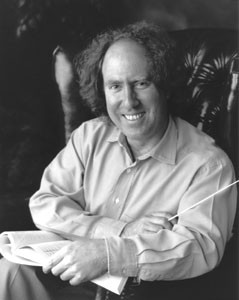
In short, he seems an unlikely person to be recruited by a transdimensional talent scout looking for a champion ballplayer to save the universe. But that’s exactly what happens in Summerland (Miramax Books; $22.95), a new fantasy epic from Pulitzer Prize-winning novelist Michael Chabon.

Fantasy always plays a major role in Chabon’s work, whether he’s writing about a confused kid with an identity crisis in Werewolves in Their Youth or a pair of comic-book creators trying to alter the cruel course of history in The Amazing Adventures of Kavalier and Clay. But Summerland marks the first time that Chabon, who lives with his wife and three kids in Berkeley, has taken aim at a young-adult audience, setting aside so-called serious fiction to try his hand at the sort of fantasy novel written by J. K. Rowling or Philip Pullman.

Summerland‘s villain is a dude called Coyote, an avatar of chaos so in love with destruction that he’s trying to poison the metaphysical tree that holds up all of existence. He tricks Ethan’s father, a lonely inventor mourning the recent death of Ethan’s mom, into lending a hand.

To foil this plot, Ethan and his two human friends–a tough tomboy named Jennifer Rideout and an alienated kid who thinks he’s a robot named Thor Wignutt–take a flying car to the fairylands, where they recruit a baseball team that includes a morose Sasquatch, a light-fingered wererat, a miniature giant, and a washed-up major league ballplayer named Rodrigo Buendia. With every game they play, this team of misfits gets closer to the nine innings that will decide the fate of the universe.

An astonishing number of influences and source materials come into play here. Chabon draws on Norse mythology, Native American legends, Mexican ghost stories, the folklore of the Wild West, and the strange history of baseball itself.

All this may sound a tad complicated. Indeed, Summerland sometimes seems like the sort of chaotic mishmash that Coyote himself would dearly love. The book has so many exotic characters, so many elaborate settings, so many intricate sub-plots that the narrative occasionally slows down enough to make readers beg for a seventh-inning stretch.

For the most part, though, Chabon holds his audience’s attention with an inventive story and his astonishing gift for wordplay. The book also has about the right mix of light-hearted wonder, comedy, and painfully serious issues like Ethan’s grief over the death of his mom.

Above all, Summerland brings the unexpected vividly to life with astonishing frequency. At times, that chaos seems like a weakness. More often, it offers richly unpredictable rewards to readers of any age hungry for new adventures.

Michael Chabon reads from ‘Summerland’ on Monday, Sept. 23, at 7pm, at Copperfield’s Books, Montgomery Village, Santa Rosa. For tickets and details, call 707.823.8991.

From the September 19-25, 2002 issue of the North Bay Bohemian.

© Metro Publishing Inc.
Fairfax World Music Festival

0

Going Global

Fairfax hosts an ambitious world music fest

By Greg Cahill

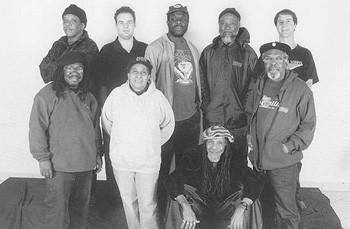
Led by a pair of virtuosic, classically trained violin-playing brothers, Eric and Olivier Slabiak, the Paris-based sextet Les Yeux Noirs could be the perfect poster children for the world-music explosion that has swept Europe over the past decade and found a receptive ear among U.S. audiences. Their infectious songs are an amalgamation of feel-good modern pop, electronica, and Eastern European styles, especially gypsy music and Jewish klezmer with a splash of Manouche (or French gypsy) jazz thrown in for good measure. The band’s name–which means the Black Eyes–is derived from the Russian gypsy tune made famous in the 1930s by legendary jazz guitarist Django Reinhardt.

They are, the Bangkok Post once opined, “the boy band of a lost era.”

Ya gotta love that quote, and ya gotta love a band that has a quote from the Bangkok Post in its press kit.

Hot on the heels of a widely acclaimed new album, Balamouk (loosely translated as “House of the Insane” in Romanian), distributed by the World Village/Harmonia Mundi label, Les Yeux Noirs make their North Bay debut when the band co-headlines an impressive lineup Sept. 21 and 22 at the Fairfax World Music Festival. The festival is the brainchild of a local booking agent who has turned the tiny 19 Broadway nightclub in Fairfax into a mecca for local reggae and world music fans. The ambitious world music fest will feature 43 acts performing throughout the downtown area on four stages, and will offer international food and crafts booths.

In addition to Les Yeux Noirs (who perform both days and alone are worth the price of admission), the lineup of featured artists includes reggae greats the Abyssinians, electronica heavyweight Karsh Kale, DJ Cheb I Sebbah, ska legend Ken Booth, Moroccan lutist Hassan Hakmoun (who has recorded with Peter Gabriel and others), groove merchants Sound Tribe Sector 9, the jam band Vinyl, ex-Meters drummer and New Orleans funk pioneer Zigaboo Modeliste, and many others.

The event, coinciding with the full moon and autumn equinox, is a benefit for the Rex Foundation (a charity founded by the Grateful Dead) and the Fairfax Beautification Project.

The Fairfax World Music Festival runs Saturday, Sept. 21 and Sunday, Sept. 22, from 10am to 8pm. The event will be staged in Fairfax Park in downtown Fairfax. Tickets are $35 each day; a two-day pass is available for $60. For more information, visit www.fairfaxworldmusicfestival.org.

Nightclubbing

Time will tell if Petalumans are ready to embrace a jazz club that forbids T-shirts, baseball caps, or sweatshirts (hey, that would eighty-six guitar god Carlos Santana on his more casual days), but that hasn’t swayed Zebulon’s Lounge from limiting its clientele to finer fashion.

This stylish new venue, which offers mostly local jazz acts set in an artsy backdrop reminiscent of an intimate cosmopolitan New York nightspot, is offering a Tuesday-night special. No, those trendy sake-based cocktails aren’t half priced, but you can get more bang for your bucks every other Tuesday, from 7pm to 9pm, when the Livewire Literary Salon gets the evening’s entertainment rolling with readings by top North Bay authors. The next salon on Oct. 1 features Guerneville writer Dan Coshnear, winner of the 2000 Willa Cather Fiction Prize, headlining a program dubbed “Blurred Edges: Where Truth and Fiction Meet.”

Also on tap that night, Larkspur psychologist-turned-novelist Suzanne Gold, award-winning author of Daddy’s Girls (and a singer who once performed the National Anthem at a San Francisco Giants game). Afterward, music will be provided by the Emmanuel Vaughan-Lee Trio, led by the London-born bassist who has drawn acclaim for his new CD, Previous Misconceptions.

Zebulon’s Lounge is located at 21 Fourth St. in Petaluma (behind the Mystic Theatre). For information, call 707.769.7948. Uh, suitable attire is required.

From the September 19-25, 2002 issue of the North Bay Bohemian.

© Metro Publishing Inc.

‘The Lady and the Duke’

Upper Crust

In 1792, a British aristocrat survives the Reign of Terror in Eric Rohmer’s ‘The Lady and the Duke’

By

In Paris, visitors to the Conciergerie–the medieval fortress and army barracks on the Seine–can see the cell where Marie Antoinette was supposedly imprisoned shortly before her appointment with the National Razor. To interfere with any natural sympathies you might have about the guillotined queen, the management has installed a wax statue of her majesty brooding over some needlework.

This sight thickened the already thick callous I’ve grown against feeling the plight of aristos taken to the scaffold (especially when so few have tears to spare for the nameless thousands killed by the French monarchy over the centuries). However, the new Eric Rohmer film, The Lady and the Duke, awakened in me more sympathy for the ruling class under siege than had been roused before–though maybe I had experienced a few restless twitches during the better film versions of A Tale of Two Cities and The Scarlet Pimpernel.

This gripping tale in five acts is based on a memoir by Lady Grace Elliott (Lucy Russell), a Scottish divorcée who briefly became a mistress of Philippe, the Duke of Orléans (Jean-Claude Dreyfus), a Republican sympathizer who notoriously voted for the execution of his cousin, Louis XVI. Elliott’s friendship with this left-winger is strained by time, betrayal, and illness. Although she’s a charming woman without many prejudices, Grace, like almost every royalist, has a false conviction in the essential order of things.

Through Rohmer’s customarily intelligent script, we see how her faith in the old regime is exposed to the beginnings of the modern world–and how, despite the threat of death, she holds on to the old-fashioned ideas that a gentleman’s private correspondence shouldn’t be opened and a lady’s chamber ought not to be invaded by the secret police.

Rohmer has achieved his simulation of the past without the usual ostentatious trappings of historical drama, shooting on digital Beta and then transferring it to 35 mm stock. The film’s sensuously composed backdrops, derived from engravings of the time and painted by Jean-Baptiste Marot, make suspension of disbelief a pleasure.

Rohmer avoids calculated melodrama: in the most shocking scene, Grace sees a mob carrying the head of a friend on a pike. Like the one on the statue of Marie Antoinette, the head is plainly wax. Only one thing can animate such a tableau, and that is acting–and the acting here is faultless and unsentimental.

Sometimes the film reveals a slight staginess, as in some chitchat about the duke’s friend Laclos and his scandalous novel (yeah, we get it: Dangerous Liaisons). Still, without anachronism, Rohmer has interjected the 20th century into the French Revolution. In this luminous distant mirror, we see our own sad, familiar experiences with tin-pot militiamen, hostile bureaucrats, informers, and all the erstwhile freedom fighters who seek blood not justice.

‘The Lady and the Duke’ opens Friday, Sept. 20, at Rialto Cinemas Lakeside.

From the September 19-25, 2002 issue of the North Bay Bohemian.

© Metro Publishing Inc.

Marketing Art Online

0

Oil(paints) and Water(colors)

A few brave, bold artists are taking on that enemy of the muse: marketing

By Patricia Cambron

Six months after van Gogh sold his first painting, he shot himself. The gifted if disturbed artist couldn’t live with his belief that selling his art would eventually rob him of his gift.

Three centuries later, society still romanticizes the starving artist with the same blind eye to reality as it views the prostitute with the heart of gold. Indeed, conventional wisdom expects the artist to follow the muse, not the money. That the muse doesn’t pay the rent, buy supplies, or send the kids to college may be unfortunate, but it is the price one pays for the gift of talent.

It is also unfortunate, believes Sebastopol artist Warren Bellows, that many artists are as tied to the myth that an artist must remain unsullied by the marketplace as the public is.

“Marketing is about figuring out how I get people to see and understand my art,” says Bellows. “As an artist, I spend my time caring about if I have the right color shade. As a marketer, on the other hand, I have to care if other people value what I am doing. That’s a whole different question–and a frightening one for most artists.”

Bellows lives in an idyllic setting in the hills of Sebastopol. The gardens that surround his home reflect his love of beauty as do his Nature Meditations–small, oil-painted ruminations on North Bay locales that have struck his soul.

Bellows is particularly attuned to the conflict between marketing and art. Long before he committed himself to painting full time, he was vice president of marketing for Celestial Seasonings.

“The problem with marketing art is that it requires an artist to see his paintings as products. This is incredibly difficult for most artists to do. A typical conversation may go something like, ‘My art is an expression of my soul; if I let it become a commercial product, then I am selling off my soul, or at least bastardizing it.'”

And in some cases, Bellows allows, that may happen. “Though galleries are a great avenue to show your work, one drawback is that there is a tendency for the seller to want to ‘brand’ the work. No artist who is artistically ready to try something new enjoys being told ‘Keep doing florals–they sell really well’ or ‘Don’t change the color scheme.’ You get put into a creative box, and your art can start dying in order to maintain commercial acceptability.”

On the other hand, Bellows says, the objection to marketing may be based on a less lofty principle than preserving one’s artistic standards. Just like the rest of us mortals, artists don’t like criticism. “I think a lot of artists are just afraid of putting themselves out there and having to deal with a lot of criticism. So one of the ways you make sure you never get criticized is to never put your art out there.”

That kind of attitude drives publicist Pam Hamilton crazy. Her public relations firm promotes many of the North Bay’s major art events, including Marinscapes and the Mill Valley Art Festival. She spends a good amount of her time trying to convince artists they don’t have to abandon their muse to make some money.

“I tell them over and over, if you want to continue to put your work under the bed with a ‘Not for sale’ sign, fine. If you want to make a living with your art, learn to market it, not just create it.” For as little as $50, she says, artists can put together a press kit that will attract enough attention to get them a mention in the local newspaper. It’s not much, but it’s a start.

Hamilton’s pragmatic approach is markedly different from that of Susan Cummins, former board member on both the California and Marin art councils. As owner of the Susan Cummins Gallery in Mill Valley, she ran interference for artists whose talent far exceeded their business sense. Cummins believes an artist’s urge to create calls as strongly as that of the doctor, scientist, or priest–none of whom, she points out, are expected to be marketing mavens. At her gallery, if there was marketing to be done, she did it.

Cummins’ gallery was known for featuring some of the most provocative art in the North Bay over the gallery’s 17 years of life. She is still contemplating her next move since closing the gallery early this summer but knows it will be supportive of improving the status of the arts in our society.

“Artists are the seekers in our society,” Cummins says. “They spend days and hours and months and years by themselves in their studios trying to make a visual image for us of where we are. They are extremely important parts of our society.

“The term ‘marketing’ is so misleading,” she continues, “so about the greed of the customer and the creating of psychological need for something you don’t actually need. I just think that marketing is somewhat of an over-exercised part of the American psyche. Art is about a unique vision, not something that can be reproduced over and over like a Mercedes.”

Abstracting Values

In any event Cummins says, artists can conjure up marketing plans until Picasso’s bulls come home, but until America starts attributing the same value to art that it does to Monday Night Football, artists will always be selling to a bear market.

“In order for people to respond to any marketing of art, they have to have some kind of interest or education about art. I don’t think a lot of people in this country even really look at art as something you should pay attention to. It’s hard to market to someone who’s not even interested,” she says.

There are reasons art appreciation has never been a quick study in America, Cummins says. Government subsidies for the National Endowment for the Arts are actually less than they were when the NEA was first formed 60 years ago. Art education is often the first item to be cut from the school curriculum. The undervaluing of art in our major institutions has produced a population that if not ignorant of, is at least sadly intimidated by the world of art.

Photographer and mixed-media artist Susan Homes Schwartzbach came to the United States over 30 years ago from England. She is still surprised by the difference in the attitude toward artists here compared to that in Europe. She’s heard “Anybody can take a picture, you just point the camera” more times than she cares to remember.

A graduate of the California College of Arts and Crafts, she is currently a student in the master’s program in art history at Dominican College. She has shown her photographs and mixed-media collages at a variety of Bay Area galleries and just recently completed designing her first website. In between, she has raised a son and supported her husband in his business.

“It’s hard to make a nonartist understand that one’s art is very much a part of oneself, almost an extension of yourself. Nonartists are often unaware of how connected serious artists are to the work they produce. This doesn’t mean they wouldn’t like to sell their work, but [they] hope that they are able to do so without compromising their vision. It’s really hard to draw that line between being commercially successful and still maintaining your integrity.”

Her bottom line, she says, is that marketability doesn’t dictate whether she works as an artist. “I will always be driven to create. It’s just part of who I am.”

The Art Superhighway

The advent of the web and the increasing ease with which artists can build galleries online is making it easier for them to come to terms with selling. It’s not a move all are comfortable with, but, as witnessed by the number of new artists’ websites appearing on the web daily, many are at least experimenting with the process.

One of the first artists to reach out via the web was East Bay artist John Jacobsen (www.johnj.com). Jacobsen says he guesses a few hundred thousand people have at least glanced at his site since he opened it in 1994. “Most of these viewers sail away immediately, but every few days someone far away will spend a nice, long chunk of time looking at my work.”

Both Bellows and Homes Schwartzbach have recently launched websites featuring their artwork (www.wbellows.com and www.shsartworks.com, respectively). Both see the web as a valuable tool for getting exposure for their work. For Bellows, the web employs what he considers the best form of marketing: word of mouth.

With the push of a button and a well-developed electronic address book, Bellows has been able to announce his newest projects to friends, family, acquaintances, and business contacts. With a request that they pass on the web address if they like what they see, the outreach is impressive.

A website provides a platform where artists can talk about their vision, brag about their awards, tell the story of their lives, share a favorite piece of poetry, announce gallery openings, and even invite discussion via e-mail on the meaning of their work.

Bellows has sold paintings, primarily large landscapes, through traditional shows. But he likes the variety of ways the web offers to showcase his art. Presently, his website includes a show of his Nature Meditations, a discussion of the technique he uses to create the paintings, and a section called “Animated Journeys” that uses animation to draw a viewer into a changing landscape. The “journeys” featured will change over time, Bellows says, and hopefully keep people coming back to the site.

Both artists acknowledge that there are drawbacks to publishing art online. Bellows says it’s painful to see a color he has worked to bring to its purest form lose some of its power on the computer screen. Homes Schwartzbach says her web designer suggested that she put her photographs and mixed-media collages on the web, but for now she’s limiting the online gallery to her art cards.

“I question whether the characteristics which make a piece unique would be adequately depicted on the web,” Homes Schwartzbach says. “The ability to fully appreciate those qualities is obviously more of a factor for someone interested in buying an original piece of art as opposed to someone who is spending a few dollars on a card.”

Hyperlinkage

Bellows doesn’t think established artists should be wary of the web. “It gives a way for the public to keep in touch with the artist’s work in between shows and fairs. Clients can keep in touch with new works even if they can’t make it to a gallery opening that is 10 states away. The web is a glue, a link from artist to customer or admirer.”

Homes Schwartzbach has had shows through the Marin Arts Council and at the San Francisco Women Artist Gallery. She is presently showing her art at the American Crafts Cooperative Inc. in Berkeley, and recently contracted with Sur le Table for a series of art cards featuring her photographs.

She agrees with gallery owner Cummins that the best conversation about art occurs in real time–in the museum, studio, or gallery–but she also knows that most people don’t have the time or inclination to visit galleries or may be too intimidated to approach an artist once there. She likes the idea of a website because it offers a chance to have a dialogue (via e-mail) about her art with someone who is entirely new to her audience.

Sales aside, it is the possibility of sharing their art with an audience as vast as that provided by the web that has proved irresistible to both artists.

With his Nature Meditations, Bellows is able to engage in very personal conversations with viewers about the emotions evoked by the beauty of Sonoma County–shared memories of a landscape breaking through an early morning fog, the strong shape of the dark trees on the gold hills, the rosy light of late afternoon, the undulation of the land, the relationship of the water against the rocks. When one of his Meditations strikes a chord with a viewer, he knows the two are sharing a moment heretofore experienced only individually.

“There’s nothing quite like the feeling of gratification you get when you know a piece of your work has become part of someone’s life,” says Homes Schwartzbach. “I get calls from people who tell me that the photograph I took of their child many years ago has become a treasured possession. That kind of reward is really priceless.”

While she doesn’t discount the power of the web, Cummins believes it still lacks the intimacy required to bring artists and patrons together successfully. Patronage requires “establishing a very intimate rapport between the sensibility of an artist and the viewer. . . . The only way you do that is by very personal, very educationally oriented conversation–literal conversation.”

Cummins doesn’t actually say she is afraid the web will play into the hands of the “pretty picture” folks–such as nostalgia artist Thomas Kincaid–but she does sound a warning: “The really great and puzzling artworks were often problematic in their time, but in retrospect we look at them and we ‘get it’ long after the work was done.

“The only thing I can hope is that the people who are buying the Thomas Kincaid school of art today will eventually figure out that they only have an appeal for a certain time, like the big-eyed Keene paintings. If the buyer has the intention of educating themselves, then the Thomas Kincaid will become insipid, like a sugar high: you get a rush, but it doesn’t last.”

And, she grants, perhaps the web will introduce people to a wider variety of art in a less intimidating venue than a gallery or museum.

In the end, Bellows says the web is simply another way to make art more universally available. It is one more medium by which artists can pursue their muse. But it will not resolve the conflict between the very private act of creating and the public act of marketing. “The really big question for me now is how can my art and my marketing efforts have integrity, i.e., be a truthful expression of myself. I am currently very engaged with that question.

“I am not sure I have the answer, but I hope to never forget the importance of that question.”

From the September 19-25, 2002 issue of the North Bay Bohemian.

© Metro Publishing Inc.

Sonoma County Museum

0

See Change

The Sonoma County Museum dares to dream

By Gretchen Giles

Here’s a dream to start the North Bay cultural community drooling: It’s 2005, and the Sonoma County Museum is revamped and renamed. Maverick architect Michael Maltzan, having successfully shepherded his renovation of the New York Museum of Modern Art’s temporary quarters in Queens way back in 2002, has finished building a 44,000-square-foot multidisciplinary museum space on Santa Rosa’s Seventh Street.

Entering through the refurbished Federalist post office that used to entirely house this formerly forgettable institution, one finds a plethora of exciting choices in fabulous new galleries. Should it first be historian Gaye LeBaron’s permanent “Seven States of Sonoma” exhibit? Look, there’s the Christo and Jeanne-Claude room, where the largest collection of their work in the United States is found.

How about the extensive children’s gallery space, the lecture just commencing in the conference room, a film screening in the theater, or a leisurely chèvre-and-foie-gras-on-spring-greens kind of lunch at the outdoor cafe? Afterwards let’s stroll through Yoko Ono’s conceptual work or gawk at more of Chris Ofili’s elephant dung Madonnas than you could shake an angry Rudy Giuliani at.

James Turrell’s permanent sky space installation lets the blue firmament in magnificently, doesn’t it? And did you hear that Andy Goldsworthy is in residence in Freestone, busily sticking yellow leaves onto green with spit?

San Francisco is suddenly obsolete. Heck, it’s a dream: New York is suddenly obsolete.

While museum directors on either coast are hardly shaking in their Manolo Blahnik’s, much of this dream is actually going to be stone-cold reality in just three short years.

Breathtakingly ambitious, the Sonoma County Museum plans to raise and spend more than $25 million to erect a new block-long building that will shelter a renewed focus on local history, stress the importance of the surrounding environment to our sophisticated rural culture, and showcase traveling shows from the Smithsonian, the Brooklyn Museum, and the MOMA, among others–even perhaps competing with SFMOMA for eyes and feet, hearts and wallets. Aiming to be the most important–nay, the only–art institution of its kind from San Francisco to Portland, the SCM will dramatically ratchet up the level of the North Bay cultural scene.

Factor in the Green Music Center’s exciting musical programs, the new Charles M. Schulz Museum and Research Center, the continuing innovation of the Sonoma Museum of Visual Art, the far-ranging exhibitions showcased at the Sonoma Valley Museum of Art, and SSU’s stellar University Art Gallery, and you can plan on staggering around for most of 2005 in an art-soaked stupor while the children argue heatedly about the relevancy of Jackson Pollock’s Autumn Rhythm to a post-postmodern society.

Because if SCM executive director Dr. Natasha Boas has her way, Pollock’s dribble and flick will just be another downtown show for the kids to swing by on their way home from school.

Seated in the cheerful chaos of her upstairs office in the museum’s current headquarters, Boas, a slender 30-ish brunette, is elegantly attired in a dark pantsuit and heavy turquoise choker. Meditatively patting a Smithsonian prospectus for available exhibitions she might one day choose to bring here, she explains in part just why it is that Sonoma County even deserves such a giddy project.

“We’re far enough away from San Francisco so that inner-city kids–kids who don’t have money–cannot go to see an original work of art, say, a Jackson Pollock,” she says. “It’s my hope that we’ll have Jackson Pollocks here. It’s my hope that you will get an Ingres show or to see Picasso’s erotic drawings, and that kids will be able to have access to it. To me, that’s the major reason: the education of the next generation.”

High Art

The building blocks for the next generation have already been firmly laid by Boas’ hiring last September and by the actual-indeed securing of architect Michael Maltzan to revamp the old building and design the new. Boas, who describes herself as a semiotician among “the generation of deconstructionists” who studied under master Jacques Derrida himself (she eventually earned a Ph.D. from Yale University) is, to put it mildly, no academic slouch. She grew up playing with the innovative designers Ray and Charles Eames’ kids in an environment that she describes as a “thoroughly Modernist childhood.”

Raised in San Francisco and France by biliterate parents, Boas maintains that she’s a “Bay Area girl at heart” who visited Geyserville during summer vacations and married in Kenwood. And then of course there’s that “funky ’70s high school” she attended in Rome run by three Harvard professor expatriates, during which time she won art awards and helped to restore the first-century statue of Roman emperor Marcus Aurelius. This while others of us were learning to canoe.

The hiring of Los Angeles-based Maltzan is so dizzying that it’s almost comical, like one of those tourist T-shirts that lists international cultural capitals and ends with . . . Santa Rosa? A senior architect with Frank O. Gehry’s firm for eight years, Maltzan is on the Hot List of young architects bound to reshape public buildings in the United States. And we will have one of them. But will it be a big-city-type building plopped down in a small-city-type place?

“Absolutely not,” Boas says, shaking her head. “What’s wonderful about Michael is precisely that his work is not L.A. We had a very serious, rigorous selection committee process, and it took six months. We went through New York architects, local architects–we cast a very wide net.

“[Maltzan] worked for Frank Gehry, but he’s not Frank Gehry; he doesn’t create projects that land in a place. He responds to the place. If you look at his architecture, it’s the specific neighborhood or the specific place. It’s about the use of the old buildings, the existing buildings. The Queens MOMA is specifically first a stapler factory and then a response to what the MOMA is.”

What further causes hand-rubbing delight is that if Maltzan builds it, they will come–the “they” in this instance being all the creamy art goodness shown at other institutions that we’ve always had to cross a bridge or hop a plane to see. But have Maltzan design the floor to ceilings, track the lighting, and plant the grass, and before you know it, Ingres’ nudes, Picasso’s erotics, Ofili’s dung, Yoko’s grapefruit, and Pollock’s Rhythms are knocking down the doors, begging to be shown.

“When I was back in New York for the opening of the Queens MOMA,” Boas says in evident delight, “several of the directors said that since we’re hiring Michael, they’ll send us their shows because our galleries will be so perfect. The architecture is actually going to allow us to get high-level shows because we’ll have the best materials, the best spaces, the best lighting–all of those things. Right now,” she sighs, “we can get very little.”

The Nexus of Multitransparency

Significant changes in any institution rarely happen without someone’s knickers getting into a twist, and Boas has to navigate the concerns of other institutions as well as those who worry that the new SCM will focus less on history, its original mandate.

“We’ve got wonderful art venues here, there’s no doubt about it, but what the county really needs is a nexus,” she says, “an institution that’s large enough and taken seriously enough to collaborate with the smaller institutions to bring about a significant cultural change.”

Gay Dawson, executive director of the Sonoma Museum of Visual Art located at the Luther Burbank Center, is warm but guarded. “It’s exciting to have a more serious program at the SCM and one which will, to some extent, help us all raise the bar of the arts in the county. We collaborated on the Christo show [last fall], which I curated. It remains to be seen how we can effectively work together.

“The interesting thing about SMOVA is that it’s within a 50-acre arts campus,” Dawson stresses, referring to the LBC’s extensive grounds, “and our plans are to develop that campus. The context of the SCM is that it’s downtown and will be redeveloping downtown conditions. I think that we’re far enough away that it’s not redundant.”

The real fear of redundancy may be in finding the funding. With so many area arts organizations scrambling for the same gaggle of checkbooks, a $25 million goal looks to have an awful lot of zeroes.

“We’re cultivating the higher-end donors, introducing the community to our program plan and to our architect,” Boas says crisply. “We have enough money to go through the design stage and to really flesh out that program plan and come up with a master plan and sketches. We’ll start the capital campaign in spring of next year.

“You have to have a major lead gift,” she continues. “We’ve got a state grant of $250,000, and we still have $100,000 of that left. It’s a 36-month plan, and we’re right on target. We do have a lot of money to raise, certainly, but I’m confident that we’ll reach our goal.”

Still in the “silent” phase of funding, which means that Boas won’t comment on who’s been contributing, surely the SCM is begging at the same wallets as those being opened for the Green Music Center, ongoing gifts to SMOVA, the Sebastopol Center for the Arts’ renovation, the new ‘n’ needy Sonoma Valley Museum of Art, and even the egregiously managed Sonoma County Cultural Arts Council. “We need the Green [Music] Center, but we also need a museum,” she stresses shortly.

Thinking back to the beginning of her tenure, Boas says, “When I got a phone call from a headhunter a year ago I thought, ‘Could there be anything more exciting and perfect for me at this time in my career than to try to build a museum that will represent an icon for Northern California–not just Sonoma County, not just the North Bay?’ There will be no museum of this stature to Portland.

“We really are a culture. We’re a subculture in the United States, and we have something to say, we have something to preserve, we have something to perpetuate, and no one has really explored that.”

As for keeping a historical context, Boas is emphatic. “There’s been a lot of conversation in the history community here that this is becoming an art museum, and I keep saying that it’s a comprehensive museum. Like the Oakland Museum, you can see art, but you can also see history. The multitransparency between disciplines is my thing. We’ll always create forums. We’ll have a show and then we’ll have a discussion. We’ll always be linking it to the place, linking it to the history.

“Right now, even with Jack Stuppin’s paintings [see sidebar], we have the apple-blossom vitrine that starts to tell a story, and in the new museum, we’ll be able to tell more stories and flesh it out in those ways. It’s tricky, but those of us who have gone to major museums in the world have seen all of these disciplines coexisting. It’s a normal marriage, and we can do it in many exciting ways. Just [remaining] a history museum will not attract a large enough audience in the next generation. It’s just pragmatics. We don’t have enough content to do it.”

Frankly, the SCM’s never had enough content to do it, which is among the reasons that the sea change at SCM is so amazing to interested onlookers. Frequented mostly by school children and tourists, the SCM is generally ignored by the resident community, just an old building filled with poorly preserved artifacts blurring by on the right while a left turn takes one into the Santa Rosa Plaza parking lot.

Rethinking Regionalism

Boas intends that the blur will now be inside the museum. “We don’t want to be another cookie-cutter kunsthalle [exhibition space] or a museum that you can plop down in Nebraska or Boston or Berlin, because that’s what happened in the ’90s,” she says. “The phenomenon of showing the same art everywhere without regard to where you are is something that I want to resist, especially here in Sonoma [County], because the county has resisted the temptation to become Napa, resisted the urge to lose its identity. I want to start rethinking regionalism.”

Embracing an overarching “Sense of Place” theme to gird the museum’s mission, the SCM plans to salute Sonoma County’s erudite regionalism through an ongoing exploration of the notion “Where Land Meets Art.” Grounded in their permanent ownership of Christo and Jeanne-Claude’s Running Fence memorabilia, as well as other of the couples’ land-art artifacts, the SCM intends to show in every conceivable way how art and earth comingle.

“It is a laboratory right now,” Boas admits. “We’re working it out. It’s also a niche, as no other museum is focusing on that topic, but it’s also broad enough to remain exciting.”

Drawing from the county’s protohippie origins as a catalyst for communes and other intentional communities, the museum kicked off its thematic mission last February with the “Utopia Now! (And Then)” exhibit.

Next up is this fall’s miniretrospective of renowned Bay Area painter Hassel Smith, now in his late 80s and residing in England. Focusing on Smith’s work while living a bucolic life in Sebastopol in the 1950s, these paintings, both abstract and representational, reflect his reaction to the apple-orchard life he led when not teaching at what is now the San Francisco Art Institute, or arguing amicably with Richard Diebenkorn. And perhaps most exciting, internationally respected conceptual artist James Turrell comes to town March 4, 2003.

Turrell may not strike a chord until you cast back to that mysterious guy who purchased an Arizona volcano called the Roden Crater, only to spend all his time and money grading its rim to better contain the shifting light and color of the 24-hour sky from inside its natural vault.

The result is nothing short of stunning; Turrell has literally changed the face of the earth and how the sky is viewed from such a face. The Roden Crater will open to the public next year, and SCM visitors will be able to witness its swathe of firmament via a video feed to be supplied by San Francisco’s Exploratorium.

There is also some discussion that Turrell will be commissioned to permanently produce one of his “sky space” installations for the remodeled museum, a prospect of enormously exciting proportions. “Upstairs,” Boas says, ever ready to rethink regionalism, “we’ll do a show about mapping Sonoma County and start to talk about mapping space and doing a series of workshops for teachers so that we can talk about Turrell in that context.”

As for Andy Goldsworthy, well, this hopeful wisp may not actualize. Goldsworthy may never indeed put saliva to leaf on Tom Golden’s Freestone grounds. But when this property reverts to the SCM, as Golden has promised it will, someone will inevitably lick land as part of an ambitious in-residence project for land artists, the first of its kind in the county.

Boas maintains a measured enthusiasm. She does, after all, have to wait three long years to realize her vision. “We have to build program and staff as we build the museum,” she cautions. “The laboratory is what excites me, bringing in new constituencies. The Jack Stuppin show will bring in one constituency; the “Utopia Now!” show brought in another.

“Hassel is going to put us on the map,” she adds, “connecting the dots with the San Jose Museum and the De Young. James Turrell is going to connect us to many other things. Who comes in the door for each show? Who are we influencing? What educational things can we do for each one? It’s exciting.”

Pinch yourself, because not only is this dream exciting, it’s actually going to come true.

From the September 12-18, 2002 issue of the North Bay Bohemian.

© Metro Publishing Inc.
‘A Home on the Range’

Shalom on the Range 'A Home on the Range' explores Petaluma's Jewish chicken-ranching community By Sara Bir In a word association game, the most common response after "Jewish" and "chicken" would probably be "matzo ball soup," not "Petaluma." But, as Bonnie Burt and Judith Montell's documentary A Home on the Range:...

Fork

Lighten Up: Scott Howard (left) and Charles Low, proprietors of San Anselmo's Fork, take their business very seriously. Small Plates, Big Tastes Fork's jewel box of a menu offers gems (and a few clunkers) By Sara Bir The whole point behind going out to eat at a fine...

Sonoma County Book Fair

Poets and Writers Lit comes to light at the Sonoma County Book Fair From 10am to 6pm on Sept. 21, the Sonoma County Book Fair brings a veritable treasure trove of literary lights to Santa Rosa. In addition to Justin Chin and Daniel Coshnear, readers include Susan Hagen and Mary Carouba, Dorothy Allison,...

The Carter Family

The Legend Unbroken Carter Family bio assures that influential trio is gone but not forgotten By Sara Bir The Carter Family influenced country music to the extent that Maybelle Carter is acknowledged as "the Queen Mother of Country Music," and Bob Dylan, upon meeting Johnny Cash for the first time, immediately...

Petaluma Poetry Walk

All Tomorrow's Poets: Pranzal Tiwari, third-place winner in the Jaffe Memorial Poetry Contest, is encouraged by the honor. Dead Letters Can Sonoma County's young poets rekindle a flickering art form? By Patrick Sullivan Remember how it was? For a while there, poetry was...

Michael Chabon

Switch Hitter Michael Chabon takes a swing at fantasy in 'Summerland' By Patrick Sullivan Chaos is gnawing at the roots of the universe. A malign presence is rampaging across whole worlds, leaving disorder and death in its wake. And on tiny Clam Island, just off the coast of Washington State, 11-year-old...

Fairfax World Music Festival

Going Global Fairfax hosts an ambitious world music fest By Greg Cahill Led by a pair of virtuosic, classically trained violin-playing brothers, Eric and Olivier Slabiak, the Paris-based sextet Les Yeux Noirs could be the perfect poster children for the world-music explosion that has swept Europe over the past decade and...

‘The Lady and the Duke’

Upper Crust In 1792, a British aristocrat survives the Reign of Terror in Eric Rohmer's 'The Lady and the Duke' By In Paris, visitors to the Conciergerie--the medieval fortress and army barracks on the Seine--can see the cell where Marie Antoinette was supposedly imprisoned shortly before her...

Marketing Art Online

Oil(paints) and Water(colors) A few brave, bold artists are taking on that enemy of the muse: marketing By Patricia Cambron Six months after van Gogh sold his first painting, he shot himself. The gifted if disturbed artist couldn't live with his belief that selling his art would eventually rob him...

Sonoma County Museum

See Change The Sonoma County Museum dares to dream By Gretchen Giles Here's a dream to start the North Bay cultural community drooling: It's 2005, and the Sonoma County Museum is revamped and renamed. Maverick architect Michael Maltzan, having successfully shepherded his renovation of the New York Museum of Modern Art's...
11,084FansLike
4,446FollowersFollow
6,928FollowersFollow


