Wally Hedrick

0


War Games: ‘Automatic Revolver’ (detail) combines old marketing with new warmongering.

Funk Daddy

Painter Wally Hedrick goes on strike

By Gretchen Giles

When Secretary of State Colin Powell stood in the United Nations Security Council on Feb. 5, where hangs a tapestry reproduction of Guernica, and urged the world’s approval for the United States’ rabid bid to wage war on Iraq, staffers thought it prudent to stage a cover-up. Asserting that throwing a blue cloth over Pablo Picasso’s searing indictment of the horrors of war was simply better for the TV cameras, they shrouded the screaming horse, the keening woman, the dead soldier, and the other wreckage so that Powell could urge sanctioned murder without any disturbing renderings of its facts peeking distastefully out.

A week later, Laura Bush canceled a symposium titled “Poetry and the American Voice” as it became apparent that her invited voices might mouth a torrent of that terrible weapon known as iambic pentameter in opposition to her husband’s plans.

Why are paintings and poetry–surely pleasing to the eye and ear as practiced by innocents the world over–suddenly hidden or forsworn by intimates of the White House? Because art, crudely put, is very fucking powerful.

Dreading the rumbles of yet another war, Bodega painter Wally Hedrick hides and forswears right back. A nationally acclaimed artist, he’s chosen to go on strike, denying society new services while boldly forcing forward the efforts of the past.

Re-re-recycling paintings as well as showing a crop of newer representational works, he offers “Wally Hedrick: Preemptive Peace” at the Sonoma State University Art Gallery.

Now hovering somewhere around 73 years of age, Hedrick was forcibly conscripted off the street by military police for service in the Korean war, a savage grab that didn’t even allow him time to notify his parents of his whereabouts, and which cemented his hatred of war. A founder of the influential 6 Gallery, a collective of artists and poets that formed the nucleus of the Bay Area Beat movement and hosted Allen Ginsberg’s first public reading of Howl, Hedrick evolved into a progenitor of the California Funk movement, recycling boomtime America’s trash into art and modestly supporting himself by running a West Marin fix-it shop.

This short encapsulation of 73 vibrant years neglects many details and may sound somewhat grim, but grimness is emphatically not a Hedrick trait. Anger, yes. Puns and wordplay, always.

“Preemptive Peace” is largely given over to his mammoth black paintings, their surfaces stippled and rocky, viscous as foul oil, under which lurk protests to two previous wars and original, presumably jollier, images created before our troops settled in for the long haul in Southeast Asia. Back then, Hedrick took extant paintings and obscured their viewing by covering them in mournful black. During what we all now seem to be calling the “first” Gulf War, he inscribed in white paint such characteristic slogans as “So damn, whose sane?” across the paintings’ negative surfaces.

For what is poised to become the second Gulf War, these same canvases have returned to the scarred void of denial, with the addition of one new piece, clearly titled It’$ 4 Oil and SUV’s. Most significant in this group of work is The Black Room, a set of eight 11-foot high canvases that are conjoined, replete with a door, into an awful meditation room that one can hunker uncomfortably within.

Hedrick has long been projecting original pages from Sears Roebuck catalogs and bygone advertising onto his canvases, and faithfully tracing them, old ink spots and all, in tribute to Marcel Duchamp’s idea of the readymade.

The oversized bold and colorful works of the gallery’s other rooms initially delight until the reading eye focuses on such pieces as Automatic Revolver and sees that the ad copy has been altered to a near pornographic rumination on the titillating phallic furor of the firearm.

As Hedrick has spent a career reinforcing: Subversive, smart, and wise–art is that powerful.

‘Wally Hedrick: Preemptive Peace,’ exhibits through March 16 at the Sonoma State University Art Gallery, 1801 E. Cotati Ave., Rohnert Park. Gallery hours are Tuesday-Friday, 11am-4pm; Saturday-Sunday, noon-4pm. Free. 707.664.2295.

From the March 6-12, 2003 issue of the North Bay Bohemian.

© Metro Publishing Inc.

The Pasta King

0


Photograph by Michael Amsler

Master of His Domain: Art Ibleto, otherwise known as the Pasta King, surveys his kingdom.

Long Live the King

The Pasta King, the Spaghetti Palace, and his pasta kingdom

By Sara Bir

The plate in front of me is red on one side and green on the other, cradling cheese ravioli dressed in pesto and meat ravioli dressed in marinara sauce. Another plate of sliced polenta topped with pesto, marinara, and melted mozzarella cheese sits steaming to the side, its red, white, and green colors looking like an edible Italian flag. I’m not even done with half of the ravioli before Arturo Ibleto slides two polenta slices onto my plate, along with a piece of buttery garlic bread.

We’re in one of the huge kitchens on Ibleto’s ranch off Stony Point Road in Cotati that serves as the production center for his catering operation, where the smell of garlic and basil hangs in the air. Almost immediately after I finish the garlic bread, Ibleto sets another piece on my plate. I can tell that I’ll be going home very, very full.

Arturo “Art” Ibleto has been a field worker, truck driver, mechanic, butcher, farmer, and freedom fighter, but he’s best known as the Pasta King. If you were at this very moment to ask everyone in Northern California who has ever had Pasta King pasta to raise their hands, you’d see a sea of arms shoot up from Fairfield to Oakland to Arcata. At weddings, funerals, school fundraisers, county fairs, and political rallies, Ibleto’s wholesome, hearty, and simple pasta keeps constituents gladly coming back for more.

At 22, Ibleto came to the United States from the town of Sesta Godano, in the Liguria region of northern Italy. “Over there, of course it is not California,” he says, reflecting on his youth. “You live off of the land. Some years are pretty good and some years are not good at all. It’s tough, very tough. We were not the poorest in town–we owned a house, we owned land–so my family, we never went hungry. But there was a lot of sharecropping in those days. You had to make your own wooden shoes, you had to keep and patch your own clothes.”

Ibleto came of age during Mussolini’s regime. “If you didn’t do what they wanted to do, you don’t survive very long. I was 16 years old when they got me to go in the army. That was hell. I didn’t like it–I don’t like war–so I deserted the army. After you desert the army, you have two choices: It’s either you hide well or you die. So then I joined the underground.”

Specializing in demolition, Ibleto planted explosives under bridges, railroads, and in tunnels to thwart the Germans. “I fought for two years on the mountains and tried to stay alive, and tried to achieve what we are after: some liberty. And we made it, and I’m proud.”

The memories of that time spurred Ibleto to seek out a new life. “I saw too much. I thought, ‘If I come out of this alive, I’m leaving.’ I didn’t care where I was going.”

Ibleto’s grandfather, who had worked in San Mateo, used to talk about California, and Ibleto grew up hearing about places like Oakland and Colma. “We’d gather round behind the stove to stay warm in the wintertime and listen to the stories.”

So Ibleto moved to California, where he worked at a farm in Cotati. Then he delivered wholesale produce all over Sonoma County. In 1951 Ibleto married Vicki Ghiradelli. Eventually, they purchased acreage off Stony Point Road, and Ibleto became a butcher. As the demand for butchering declined, Ibleto decided to plant Christmas trees as a side business.

“In Italy, I grew up in the mountains, and I was missing the trees more than anything else,” he says. “So I planted 20,000. Many people remember me from the Christmas trees, because by the office we had a huge coffee pot and brandy, and people loved that.” Though business went well, eventually the trees succumbed to disease, so Ibleto, who had always been passionate about cooking and sharing food, moved on to the next thing: pasta.

In 1974, Ibleto took over the concessions at the Sonoma County Fairground’s Spaghetti Palace; since then, his presence at the Sonoma County Fair has evolved into an institution. “We became No. 1 in a matter of a few years. And we’re still No. 1, the oldest concession guy around, and the most popular. The first year, I think I cooked 300 pounds of pasta in two weeks. Now we cook that in half a day,” Ibleto says.

The runaway response Ibleto received from the Spaghetti Palace prompted him to start the retail and catering business Pasta King, which caters events, often as much as seven days a week, at locations throughout the Bay Area. “You’ll tell me I’m crazy if I tell you where we go,” Ibleto says. “I go all the way up to the Oregon border. I do pretty much all of the politics–congressman, senators, all them.”

Recently, Ibleto served 600 people at the Central Committee for the Republican Party, though political affiliation does not influence Ibleto’s bookings of Pasta King. “When it comes to food, it don’t matter. Talk is easy, but when you come to eat, you pretty much unify.”

Pasta King’s offerings stand as shining examples of the best of Italian-American cuisine. Sauces are made fresh daily, as well as lasagna, polenta dishes, minestrone, and ravioli–all with high-quality ingredients and no preservatives.

Pasta King’s pesto is a bright kelly green, the green of a cartoon Christmas tree, and its fresh and bright flavor sings, piney and floral all at once. Ibleto’s native Liguria is the home of pesto, and he’s happy to have exposed many Pasta King customers to their first taste of the stuff.

“Since I got started, people found out what good pasta means,” Ibleto says. “I don’t invent the pasta, but I kind of helped to teach people how to cook. Before, families ate pasta out of a can. They never used to eat pasta al dente–they used mush!” It’s not just Ibleto’s pronounced Italian accent that makes the way he says “pasta” such a dear word; it’s the love and respect that’s inextricable from his intonation. “Paz-tah,” he says, verbally giving the glorious foodstuff a hug.

Soon, Ibleto will be able to add wine production to his long list of occupations. Seventy-five acres of grapevines now grow in the fields where his Christmas trees once stood, and their fruit will soon make its way into Ibleto’s Sonoma Bella wine (or Bella Sonoma–Ibleto keeps changing his mind). Currently, Ibleto sells his grapes to other wine producers, but Sonoma Bella’s first wines–Pinot Noir and Merlot–are due out before the end of the year. “I want normal people to be able to drink a good glass of wine without paying a fortune.”

The majority of Ibleto’s vines are across the street from the Pasta King headquarters, on a hill with an amazing view of much of Sonoma County–Santa Rosa, Cotati, Sebastopol. “On a nice day or clear evening, we see the world. This is why we call it Sonoma Bella because I think, ‘Look at what you see.'”

Looking out at the vineyards, a love for his land and life dances in Ibleto’s eyes. “That’s why I enjoy it so much here, and I tell people they don’t know how lucky they are. Freedom, I think, is the most important thing in life. This is a country that if you like to work, there’s plenty of work, and you can go any place you’d like to go.” Ibleto would like to write a book about his life, but does not really have time. He’s had quite a life to write about, and he’s not anywhere near finished.

Before I left the ranch, Ibleto loaded me down with pounds of pasta, pesto, and minestrone to take home, and when I told him of my fondness for eating cold polenta straight from the refrigerator, he gave me a brick of that too. But giving food away is, for Ibleto, not part of a day’s work, it’s just his nature. When you make pasta, people are bound to love you, and that’s probably why people see Ibleto, the Pasta King, as their grandfather.

Which is pretty cool, to have a king for a grandfather–especially one who makes you pasta.

Pasta King products are available at Whole Foods, G&G Market, Food 4 Less, and at the retail store at his ranch, 1492 Lowell Ave., Cotati. Call first. 707.792.2712.

From the March 6-12, 2003 issue of the North Bay Bohemian.

© Metro Publishing Inc.

Mark O’Connor

0

‘In Full Swing’ (2003)

The ‘Gods and Generals’ soundtrack (2003), which features O’Connor.

The soundtrack to the PBS documentary series ‘Liberty!’ (1997)

Wynton Marsalis’ ‘Reeltime’ (1999), which features a guest appearance by O’Connor.

‘Appalachia Waltz’ (1996), a collaboration between O’Connor, Yo-Yo Ma and Edgar Meyer.

‘Appalachian Journey’ (2000), the second Ma/Meyer/O’Connor collaboration.

‘The American Seasons’ (2001)


Class Act: Mark O’Connor, ever fiddle-ready, is at the top of his game.

Marking Time

Violin virtuoso O’Connor has the world on a string

By Greg Cahill

Not many musicians have to worry about pulling off two New York premieres in a single night, but then Mark O’Connor isn’t just any musician. On Feb. 4, O’Connor found himself in the awkward, if enviable, position of being in two places at once–figuratively speaking. The Grammy-winning composer, violinist, and fiddler had two world premiere concerts taking place just moments apart in New York City.

First, O’Connor and his Hot Swing Trio–featuring guitarist Frank Vignola and bassist Jon Burr–were to be joined at Lincoln Center by jazz trumpeter Wynton Marsalis and jazz vocalist Jane Monheit, performing selections from their latest release, In Full Swing (Sony Classical), O’Connor’s tribute to legendary jazz violinist Stephan Grappelli. Over at the St. Thomas Cathedral, the 40-member choir Gloriae Dei Cantores was set to premiere O’Connor’s Folk Mass, an hour-long a cappella piece based on Biblical texts and commemorating victims of the 9-11 terrorist attacks.

Neither premiere performance could be rescheduled, so O’Connor decided to skip the Folk Mass debut, reasoning that it was out of his hands, and head for Lincoln Center.

The episode is just the latest chapter in a career filled with Herculean feats. After all, while O’Connor–who brings his acclaimed jazz trio to Santa Rosa this week–was preparing to launch his spring tour, he also saw his contribution to the Gods and Generals soundtrack go on sale, and he was the featured violin soloist at the official NYC memorial service for the fallen Columbia astronauts.

And In Full Swing, with guests Marsalis and Monheit, debuted on Billboard‘s Traditional Jazz Chart at No. 5, garnering rave reviews. “That’s a rhythm section like no other,” says O’Connor during a phone interview. “This trio really created some kind of groove and depth that I’ve never heard before.”

Little wonder. Burr played bass with Grappelli for 12 years; Vignola, an accomplished player, can push O’Connor to new heights; and O’Connor was chief guitarist with Grappelli in 1979.

“Stephan really put a human voice on jazz, and that was to my liking,” O’Connor explains. “I was moved by his personal musical experiences that shone through his jazz, especially his gypsy, classical, and even tango influences. I found him very eclectic, and my approach to jazz was destined to be eclectic, because of my own experiences and training.”

As for Marsalis, O’Connor had met the jazz trumpeter in the mid ’90s and they “became pretty fast friends.” In 1997 Marsalis performed a duet on O’Connor’s Liberty album and the fiddler returned the favor by performing an elegant folk ballad on Marsalis’ 1999 release Reeltime (Sony Classical).

In Full Swing is their first collaboration in a swing-jazz setting, however. “It just worked like magic, really,” O’Connor marvels. “When you think about the combination of trumpet and violin–it could only have been born out of friendship and the desire to make it happen. Wynton’s unbelievable ability to meld into the situation was instrumental in having this come off.”

The album is one more notch in O’Connor’s spectacular 30-year career. In that time, he has composed music that cellist Yo-Yo Ma has recorded and Twyla Tharp’s troupe has danced to, played at the White House and the Olympics, won two Grammys, and played on more than 450 albums with everyone from Bob Dylan to Dolly Parton.

For more than a decade, O’Connor also has worked as a performer and composer in the classical arena. His collaborations with Ma and bassist Edgar Meyer resulted in two bestselling CDs: Appalachian Waltz and the Grammy-winning Appalachian Journey. In 2001, The American Seasons led the New York Times to applaud O’Connor’s “unstoppable melodic gift.”

And what satisfaction does O’Connor get from these diverse projects? “First and foremost, I’ve really concentrated on developing a style of playing the violin from an American school of thought, and it’s that approach that allows me to traverse genres and to be at home in different settings–it all sounds like Mark O’Connor violin music.

“It’s still unique and new to people, but it’s something I’ve been working on for 30 years.”

Mark O’Connor’s Hot Swing Trio perform ‘A Tribute to Stephan Grappelli,’ on Friday, March 7, at 8pm at the Luther Burbank Center for the Performing Arts, 50 Mark West Springs Road, Santa Rosa. Tickets are $22, $32, and $45. 707.546.3600.

From the March 6-12, 2003 issue of the North Bay Bohemian.

© Metro Publishing Inc.

Generation Rx


Photo by Rory Mcnamara

Child Welfare: Dr. John Leipsic, who specializes in pediatric psychopharmacology,uses medication in conjunction with psychotherapy and behavioral therapy.

Generation Rx

Can troubled kids find mental health at the local pharmacy?

By Patrick Sullivan

Once upon a time, Morgan was a boy in a box. Back in fourth grade, this gregarious child became so talkative and disruptive at school that his teacher finally took a desperate measure. “I didn’t know anything about it at the time,” explains Zoe, Morgan’s mom, who lives in a small town in Marin County. “But the teacher told me later that he had arranged a three-sided cardboard box around [Morgan’s] desk so he wouldn’t turn around and talk to the kids behind him.”

That wasn’t Morgan’s only problem. He couldn’t finish his homework, and he was getting into big arguments on the playground. “His thought process was odd,” recalls Zoe, who prefers not to give her last name. “He saw everything in black and white. There was no gray. He knew all the rules to baseball, and if someone wasn’t playing exactly right, he’d want to kick him out of the game. So he’d get into trouble.”

Morgan, now 13, is out of the box. The family’s pediatrician believed the boy had attention deficit hyperactivity disorder, a mental health condition usually marked by hyperactivity, impulsiveness, and an inability to focus. A specialist agreed, and Morgan began taking Ritalin, an amphetamine-derived stimulant widely used to treat ADHD. Later, Morgan was switched to a new ADHD drug called Adderall.

His mother says the medication has reduced Morgan’s discipline problems at school, improved his social life, and helped him get his homework done.

But Zoe says the medication created new challenges for her son. He has trouble sleeping. His appetite is poor. He has experienced uncomfortable tics such as constant eye blinking.

Is the cure worse than the disease? Zoe doesn’t think so, but she worries about side effects, struggles with guilt about her parenting, and tries to find time to help her son manage his condition and his medication.

Her dilemma is faced by a growing number of parents across the country as modern medicine increasingly turns to drugs to treat childhood mental disorders and behavioral problems. A flood of recent studies has demonstrated that children’s use of stimulants like Ritalin, antidepressants like Prozac, and other psychiatric drugs has soared over the past two decades.

Among the most dramatic findings shows that about 6 percent of American kids 19 and younger are now taking some form of psychiatric medication, according to a high-profile study published in a recent issue of Archives of Pediatric & Adolescent Medicine. Another widely reported study found that the use of psychiatric drugs in kids two to four years old has increased sharply. And regulators don’t seem to be hitting the brakes. In January, the Food and Drug Administration formally approved the use of Prozac for children eight and older, though doctors have long prescribed it off-label for young patients.

California, curiously, appears to be at the back end of this trend. The state that so enthusiastically embraced medical marijuana has one of the lowest per capita rates of prescriptions for psychostimulants like Ritalin, according to the Drug Enforcement Administration.

Still, some mental health professionals in Northern California say they’ve seen a steep increase in the use of psychiatric drugs in kids over the past decade. And there’s no question that the North Bay is prime Ritalin country: The white, middle-class suburbs of Marin, Sonoma, and Napa counties are chock-full of the demographic that in other communities across the country has leapt into the comforting arms of the drug.

What this trend means is a matter of deep dispute. Nationally, the discussion about kids and psychiatric drugs has been a tangled mess. One side points an accusing finger at profiteering drug companies and irresponsible parents. The other complains of media sensationalism and discrimination against the mentally ill.

In the North Bay, the debate seems more polite, more focused on discovering the best way to help children in trouble. But there are still sharp disagreements and strong emotions on both sides of the issue.

Meeting in the Middle

It’s a rainy February night in Corte Madera, and some 35 adults have gathered in a windowless conference room. A more typical Marin County crowd would be hard to imagine. Nearly everyone is white, and the average age is about 40. Clothing ranges from slacks and sports jackets to an animal-rights T-shirt and tinted glasses. Somebody forgets to turn off her cell phone and has to leave the room when it starts to warble.

They’re here for a meeting of Children and Adults with Attention Deficit Hyperactivity Disorder, a national support group with hundreds of chapters around the country. The main attraction at tonight’s meeting is a speech by Dr. Michael Freeman, a Marin County psychiatrist. Freeman offers a broad overview of ADD, ADHD, and bipolar disorder, and then takes questions from the audience.

At the national level, CHADD suffered a major blow to its reputation back in 1995 when a television documentary revealed that the pharmaceutical company that makes Ritalin had donated nearly $900,000 to the organization–and that CHADD had not come clean about that funding to most of its members.

But no drug-company-financed campaign to push Ritalin seems evident at this Marin County meeting, which features a frank discussion of both nondrug alternatives and the side effects of psychostimulants. “Medication is just a piece of the answer,” Dr. Freeman tells the crowd. “A lot of it is acquiring life-management skills.”

In the audience is Randy, a middle-aged man with a slightly manic manner who hails from nearby Larkspur. Randy, who has ADHD himself, has a son who was diagnosed with the same condition at age eight.

“The kid was really suffering,” Randy says. “He couldn’t sit still. He couldn’t do his homework. He was going nuts. Then he knocked a little girl down at school and the teachers freaked.”

Now 11, Jeremy is taking both Adderall and the antianxiety drug Paxil. Randy says he and his now ex-wife thought long and hard before deciding to go with medication. They tried nondrug treatments like counseling first but didn’t see many results. These days Randy calls medication a magic bullet. “It has made a huge difference,” he says.

Randy isn’t the only firm believer in medication in the audience. Connie De Propris, 50, is an Oakland resident who attends Marin CHADD meetings and works as a career coach in the county. She says she has suffered from ADHD since childhood but only began taking medication two and a half years ago. It changed her life. “The barriers were gone,” she says. “I was, like, wow, I can do the dishes, I can do my homework, I can do all these tedious tasks around the house.”

Growing up as an untreated ADHD child, says De Propris, is extraordinarily painful. When she was in high school, De Propris had poor social skills, few friends, often couldn’t do her homework, and accumulated a stack of failing grades. She felt lonely and incompetent.

Leaving such psychiatric conditions untreated is profoundly dangerous, De Propris argues. “If we trained psychiatrists to recognize mental problems and weren’t afraid to medicate, we probably wouldn’t have half the drug problems that we have in this country,” she says. “I’m sure there are a lot of people in prison who wouldn’t be there if they had been diagnosed correctly and medicated correctly.”

Body Count

Untreated psychiatric conditions do have a social cost–and, in their cruelest manifestations, even a body count. Depression, for instance, is a cold-blooded killer. Suicide claims the lives of approximately 3,000 people a year in California, and kids are not immune. Nationwide, suicide is the third leading cause of death for young people aged 15 to 24, according to the Centers for Disease Control.

In the United States, one in five children and adolescents suffers from mental health problems at any given time, according to the American Psychiatric Association. The APA says that psychiatric disorders in children remain underrecognized, underdiagnosed, and undertreated–and the results are often tragic.

Even young children can suffer dangerous despair, as Dr. John Leipsic can attest. A child and adolescent psychiatrist who practices in Santa Rosa, Leipsic specializes in pediatric psychopharmacology. In an e-mail, he recalls one eight-year-old girl named Sarah who became so upset after the death of the family dog that she missed a week of school because she couldn’t stop crying.

“Her mother found writings in her diary about not wanting to be alive anymore,” Leipsic explains. Sarah was diagnosed with depression, began taking a low dose of antidepressants, and, Leipsic says, “three months later, she was well on the road
to recovery.”

But if untreated mental illness can wreak havoc, so can medicating an illness that isn’t there. Leipsic puts it this way: “Take ADHD for example,” he says. “Estimates are that it occurs in 6 to 8 percent of kids. Thus, if 6 to 8 percent of kids are on medication treatment for ADHD, it is an appropriate rate. The key is getting the right 6 to 8 percent.”

Leipsic sees medication as a valuable tool, but he uses it in conjunction with psychotherapy and behavioral therapy. And he sees some disturbing trends in diagnosis and prescription writing for children.

Other psychiatrists take their criticism a few steps further. For Dr. Lawrence Diller, the rising pediatric use of psychiatric drugs reveals painful problems in the way contemporary society looks at kids. “It raises a big question,” says Diller, speaking by phone from his office in Walnut Creek. “Is children’s behavior becoming worse, or has our view of children’s behavior changed? Do we simply have less tolerance for personality diversity?”

Diller is a behavioral pediatrician and author who has become one of the country’s best-known critics of society’s move to medication. In his most famous book, Running on Ritalin, Diller explained why he’s concerned: “Valium, Prozac, Ritalin–all these are drugs that smooth the edges off human diversity, making our culture less rich and interesting, and perhaps affecting, in ways we cannot predict, the time-honored eco-evolution of personality and society.”

Diller acknowledges that some kids do need pharmacological help; he writes prescriptions for psychiatric drugs in his own practice. But he argues that only about 10 percent of the children who are given drugs like Ritalin really need them.

“We have a much larger group of Huck Finns and Pippi Longstockings and Tom Sawyers out there who for a variety of personality and talent reasons have difficulty in school or at home,” Dr. Diller says. “These children do not have mental disorder in the sense that I think of mental disorders. We have drugs that take these round kids and make them fit into square holes.”

Diller, who has two sons of his own, is especially well-known for making the case against the boom in Ritalin and other psychostimulants. One major reason he believes that the drug is overprescribed is the tremendous regional variation in its rate of use around the country and across the world. Above all, a child is most likely to be on Ritalin if he or she is American; the United States consumes around 80 percent of the world’s supply of the drug.

But it’s not just Ritalin that’s getting the hard sell. For proof of that, Diller points to a survey of child psychiatry practices by the Yale Child Study Center, published in the Journal of the American Academy of Child and Adolescent Psychiatry. According to the survey, only one in 10 children who visit a child psychiatrist’s office leaves without some kind of psychiatric drug prescription.

What are the long-term physical and psychological effects of such medications on children? The answer to that question, says Diller, is that no one really knows. That’s because most of these drugs have not been tested in large groups of children for more than a few months. Even Ritalin, which has been in use for decades, has been studied no more than 18 months for safety. As more and more kids use psychiatric drugs, Diller says there’s a corresponding expansion in the potential for dramatic disaster or subtle but damaging side effects.

Substitute Parents

Diller offers many reasons behind this booming new trade in psychiatric medications for kids. He cites poor parenting skills, increasingly rigid school curriculums, aggressive marketing by drug companies, and the strong preference of HMOs to pay for a quick pharmacological fix instead of months of family therapy.

“This is a money-driven phenomenon,” Diller says. “It’s not that I believe that Ritalin doesn’t work. The problem is that it works too well. It becomes a substitute for helping parents parent better or teachers teach better.”

That kind of talk frustrates a parent like Zoe. “People tell me that I should not be giving my son medication, that it’s just a parenting issue, that he just needs more structure, that he needs more hugs.”

But the drugs have improved her son’s life, Zoe says. And though she wonders whether Morgan will ever outgrow ADHD and be able to stop taking his pills, she’s not holding her breath.

“I don’t see it happening anytime real soon.”

Ritalin Underground

“The high was incredible, better than anything you can get on the street,” says Amber with a sigh. Now in her 30s, Amber (not her real name), is a recovering Ritalin addict. In her teens and 20s, this Santa Rosa resident got her kicks close to home: She stole medication that was prescribed to her little brother, who had been diagnosed with attention deficit disorder. Ritalin wasn’t the only drug Amber abused, but it’s the one she seems to have the fondest memories of.

She has plenty of company. The federal government classifies Ritalin and other trademarked versions of methylphenidate as a Class II controlled substance. That puts these drugs in the same category as cocaine and opium, and the Drug Enforcement Administration emphasizes that the potential for abuse is serious.

The DEA’s website says that Ritalin abuse is limited but has increased along with the availability of the drug. Some areas of the country where Ritalin and other psychostimulants are widely prescribed also display disturbing levels of recreational abuse of the drugs. Among the related studies the DEA lists on its website is a 1998 Indiana University survey of 44,232 high school students in which nearly 7 percent reported using Ritalin illicitly at least once, and 2.5 percent reported using it monthly or more often.

Zoe and her son Morgan know about the problem firsthand. When a boy approached Morgan in his Marin County school about buying some Ritalin, Morgan told him no. Then he told his mother what had happened. “I said that he could get into a huge amount of trouble, and so could the other child,” Zoe recalls. “He assured me that he would never do that. But I was a little concerned because he does like money.”

On the hand, some recent research may relieve another of Zoe’s concerns about Ritalin. She worries that the drug might predispose her son to addiction, but new studies appear to show that kids with ADHD who are medicated with psychostimulants are actually less likely to become addicted to illegal drugs later in life.

–P.S.

From the March 6-12, 2003 issue of the North Bay Bohemian.

© Metro Publishing Inc.

The Underwood

0


Photograph by Michael Amsler

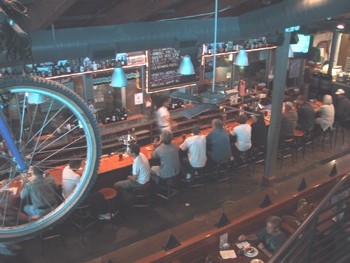
Restaurateur in Paradise: Matthew Greenbaum, executive chef at the Underwood, has gone to great lengths to get the place opened with partner Sally Spittle.

Into the Underwood

How the bistro business, bobos, feng shui, and George Segal got to Graton

By Jonah Raskin

Call Graton the Sonoma County restaurant graveyard. Kitchen, Cafe Dahlia, Cape Fear, Passion Fish, and the Downtown Bakery and Cafe, all of which once served hearty meals here, are all history. But Graton is also home to the Willow Wood Market Cafe, which opened in 1995 and is still dishing out polenta, its trademark.

Now the Willow Wood has genuine gastronomical competition for the first time ever from a rival across the street–the Underwood Bar and Bistro, which opened Dec. 30, 2002. If the faces look uncannily familiar, that’s because the Underwood’s proprietors–executive chef Matthew Greenbaum general manager and Sally Spittles–are also the Willow Wood’s proprietors.

On first glance, it might seem foolhardy to operate not one but two restaurants in a town where restaurants seem doomed to extinction. And to open a bistro and serve European-style comfort food, like so many other North Bay restaurants, could appear to be a bad business venture, but not to Greenbaum and Spittles.

“Running a restaurant is definitely a risky business,” Greenbaum says at the Underwood’s bar, where he’s sipping an Iron Horse Pinot Noir and eating a steak with pomme frites–quintessential bistro food. “We’ve sunk a lot of money into this place, and I suppose people could stop coming here. But after the first six weeks, we’re doing far better than anyone expected.”

For restaurants everywhere, tonight–Valentine’s Day–is the busiest night of the year, except for Mother’s Day. At the Underwood at 9pm, the bar is crowded and there isn’t a free table in the dining room. Three hours later, at midnight, when Greenbaum is busy counting the night’s receipts, the place has thinned out, but the party isn’t over yet. Customers are still drinking and eating. Some of them will stay until 2am. That late-night closing time on Fridays and Saturdays adds to the mystique of the place and has already made it a destination on the restaurant circuit in the North Bay.

Jack Stuppin, the venture capitalist and landscape painter, lives close by, and he’s been to the Underwood half a dozen times since it first opened. “New restaurants have very high failure rates,” he says. “Restaurants that make it have one of the highest rates of return on invested capital of any business. So when you make it, you make it very big.”

From Stuppin’s point of view, the Underwood seems likely to succeed despite the downturn in the economy. “Everything about the place is artistic,” he says. “It’s pleasing to the visual palette and to the countercultural sensibility of the West County. It also appeals to establishment types.” With folks like Jack Stuppin talking up the Underwood, it’s not surprising that the proprietors haven’t yet advertised.

The menu has elements of both a California-tinged bistro (ahi tuna, oysters, lamb stew) and a tapas bar (anchovy crostini, Spanish tortilla)–probably the two biggest food crazes of the past few years. The Underwood is about as hip as a restaurant can get, though Greenbaum and Spittles insist that they don’t give a hoot about trends and fads.

“I dislike pretentious talk about food and wine,” Greenbaum says. “And I dislike pretentious places like the French Laundry, where I feel I’m supposed to applaud every dish and every move the waiters make.”

David Brooks, author of Bobos in Paradise: The New Upper Class and How they Got There and a regular commentator on News Hour with Jim Lehrer, would probably describe the Underwood as a paradise for bourgeois bohemians–bobos for short–the folks who drive Volvos, drink lattes, and listen to National Public Radio. Folks like me, in fact, and maybe folks like you.

Many of the people who come to the Underwood to see and be seen fit Brooks’ bobo profile. They’re artists like Claude Smith, real estate agents like Carey Fargo, and artist/capitalists/philanthropists like Jack Stuppin. The top chefs from all the big-name restaurants in the county–Stella’s to Lolo’s–have been here to eat too.

The Underwood boasts bohemian ambiance and bourgeois prices. A martini is $6.50. Oysters on the half shell are $22 a dozen. A grilled hamburger is $10.50–$4 more if you add cheese and bacon–and it’s a better burger, too, than the burgers that were served in this very spot when it was Skip’s Bar a decade ago. People who have avoided the Willow Wood for years because they’ve thought of it as déclassé plunk down big bucks at the Underwood bar. “The wine crowd loves it here,” Greenbaum says.

The bar, the list of wines, and the expensive bottles of imported Cognac, Armagnac, and Calvados are impressive. What’s impressive about the whole place is the attention to detail–from the elegantly designed menus by Bee Urquhart to the nickel-plated bar itself, and from the tile work in the state-of-the-art kitchen to the copper tabletops in the dining room.

The Underwood was an expensive work-in-progress for almost two years–a lot longer than anyone expected, largely because Spittles and Greenbaum wanted perfection every step of the way. Spittles insisted on holding a series of New Age and feng shui rituals to bless the place, and Greenbaum insisted on becoming the general contractor and learning the construction business from the bottom up.

“At first we were just going to remodel, but we decided to gut the place,” Greenbaum says. “The county slowed us down with rigmarole and we had to raise more money than we expected.” Spittles and Greenbaum took out loans and appealed to family for financial help. Greenbaum’s parents invested. So did his stepfather, George Segal, the Hollywood actor who starred in Who’s Afraid of Virginia Woolf? (as well as Who Is Killing the Great Chefs of Europe?), and who has become a familiar face at the Underwood.

For Spittles and Greenbaum, there are dozens of details to attend to everyday. “I’m an errand boy and a general fix-it guy,” he says. “Today I had to buy extra bread, negotiate with AWOL employees, and wash dishes because the dishwasher hadn’t done them right.”

The proprietors also get enormous help from the staff. Mark Miller, the sous chef and kitchen manager at the Underwood, turned out gourmet meals for years at the Willow Wood. Bill Roberts, Underwood’s executive manager, put in 14 years at Stars in San Francisco. And Frank Dice, the bartender with a tattoo of John Coltrane on his shoulder, served his apprenticeship as a manager and waiter at the Bohemian Cafe in Occidental until it went under.

“I love this place,” Dice says. “It’s everything I wanted the Bohemian to be, and more. It has a 1950s feel to it. Six nights a week I get to dress up in black like I’m in the Mafia.”

Yes, the Underwood is a paradise for bobos. It’s also a magical space where no matter how much money you have, or how much money you’re prepared to spend, you can play whatever part you want in your own movie. You can make believe that the Underwood is almost anywhere, anytime: a New York Mafia hangout in the 1950s, a Paris Bistro from the 1940s–or the pub of a hotel in Ireland in the 1920s.

“An Irish woman walked in here and was knocked over with nostalgia,” Skittles says. “The Underwood reminded her of an old hotel in Belfast. If we conjure up memories like that in our customers, I’ll be very happy, and they will be too.”

The Underwood is open Tuesday-Thursday, 4pm-midnight, and Friday-Saturday, 4pm-2am. 9113 Graton Road, Graton. 707.823.7023.

From the February 27-March 5, 2003 issue of the North Bay Bohemian.

© Metro Publishing Inc.
‘Gods and Generals’

0

‘Civil War Trilogy,’ which compiles ‘Gods and Generals,’ ‘The Killer Angels’ (the source material for the ‘Gettysburg’ movie/TV miniseries) and ‘The Last Full Measure.’

‘Gods and Generals: The Paintings of Mort Kunstler’ is an illustrated companion piece to Jeff Shaara’s novel.

Buy the ‘Gods and Generals’ score album by John Frizzell and Randy Edelman.

Buy the original ‘Gettysburg’ score album by Randy Edelman.

Buy the ‘Gettysburg’ DVD.


Photograph by Van Redin

Stay Civil: Robert Duvall as General Robert E. Lee, leader of the Confederate Army.

Lee Way

A faux Confederate–and a few of his friends–looks at ‘Gods and Generals’

Writer David Templeton takes interesting people to interesting movies in his ongoing quest for the ultimate postfilm conversation. This is not a review; rather, it’s a freewheeling, tangential discussion of art, alternative ideas, and popular culture.

We are standing in the lobby of a sprawling Cadillac dealership turned theater complex in chilly San Francisco, when an elderly man, face alight with disbelief and wonder, approaches to ask, “Excuse me, are you the Three Musketeers?”

It’s a fairly funny question, given that there are about 25 of us standing around, and that the entire group–except for myself–is garbed in the conspicuous fashion of Confederate soldiers of the American Civil War.

“Not the Three Musketeers,” answers faux gunnery sergeant Walter Masten amiably, “we’re gods and generals.”

“Ho, ho–Three Musketeers,” the man replies and ambles away, unconvinced that he’s been visited by either gods or generals–a reference, of course, to the movie Gods and Generals, the sprawling 229-minute Civil War epic that we’ve just limped away from after hours and hours in the theater. Based on Jeff Shaara’s bestselling novel of the same name, the film follows General Robert E. Lee (Robert Duvall), Colonel Joshua Lawrence Chamberlain (Jeff Daniels), and Thomas “Stonewall” Jackson (Stephen Lang) through various battles leading up to, but not including, the big one at Gettysburg.

My fellow movie watchers are made up of members from the American Civil War Association, the National Civil War Association, and the California Historical Artillery Society, just a few of the numerous spirited Civil War reenactment groups that take turns staging nonlethal reruns of actual historical battles. Though it is now almost midnight, it is clear that for most of the costumed confederates chattering happily all around me, seeing Gods and Generals tonight was akin to having a religious experience.

“It actually gave me chills,” admits a gray-jacketed, jaunty-hatted Jeff Rawlinson. “And that’s really something, because I’m wearing two layers of wool over a heavy cotton shirt.”

Lucky man. While he was enjoying his chills, I was merely suffering tingles of pain from having my derriere parked too long in the same place. Clearly, I was alone in my anguish.

“It’s a movie a reenactor will love every minute of,” affirms Jim Marsh. Otherwise known as General Robert E. Lee, and looking every inch the part–“I only started portraying Lee because my hair turned white,” he confesses with a laugh–Marsh has now seen the film twice (Jesus, that’s 458 minutes!) and liked it even more tonight than he did the first time. Seated at a table in a nearby cocktail lounge, Marsh sits surrounded by his troops, most of whom can recite–at the slightest provocation–the names of every skirmish and battle in the entire Civil War, and a whole encyclopedia of arcane facts.

“Do you realize,” asks Marsh, “that after Gettysburg, the wagon train carrying wounded soldiers from the battleground was 17 miles long?”

Any criticisms he has for Gods and Generals are admittedly of the nitpicky, only-a-reenactor-would-care variety.

“Not as much importance was placed on the battle at Chancellorsville,” Marsh points out. “Chancellorsville was probably the South’s greatest victory, and it was certainly Lee and Stonewall Jackson’s greatest victory, though it was made bittersweet by the fact that he died right afterwards. In the movie, they didn’t play up Chancellorsville enough. After the battle of Chancellorsville, Lee, normally a sedate man, stood up in his stirrups, waving his hat, as the men cheered his name over and over: ‘Lee! Lee! Lee!’

“By the way, General Lee did not drink,” Marsh mentions, sipping a scotch.

After a pause, another quibble is mentioned.

“Did you know that over 65,000 black soldiers served in the Confederate Army?” states Texas-born Paul Toland, looking sharp in the uniform of a Confederate colonel. “Sixty-five thousand blacks, and in this movie we didn’t see a-one of ’em in uniform.” While he’s at it, Toland adds his opinion that, contrary to popular opinion, Lincoln was a certifiable maniac.

“The so called Honest Abe,” he says, “once tried to lock up the chief justice of the Supreme Court for stating that his policies were unconstitutional. No ifs, ands, or buts about it, the man was a tyrant!”

Ironically, Marsh–General Lee himself, who you’d think would still be holding a grudge–doesn’t agree with his fiery colonel.

“Lincoln,” he says, “was an absolutely brilliant human being, probably one of the most brilliant men who’s ever walked this earth. Just read his speeches. This man was a genius.” Fortunately, the debate about Lincoln’s various qualities is cut short by the clock. It’s time to go, and not a moment too soon.

After all, wars have been known to start this way.

From the February 27-March 5, 2003 issue of the North Bay Bohemian.

© Metro Publishing Inc.
A Picture’s Worth


Photograph by Nita Winter

Community Building: Nita Winter’s ‘Faces of the Canal’ series includes Angel and his son Benjy.

A Picture’s Worth

Nita Winter’s banners celebrate Marin’s diverse communities

By Stephanie Hiller

When people come here, they fall in love.” Jeannette Sotomajor has set aside her lunch to talk with me at the front desk in the Pickleweed Community Center in San Rafael, where she works as an administrative assistant. “Sometimes people ask me if it is safe here. But once they’re here, they fall in love.”

It’s true. The Canal District of San Rafael, on the spit of land north of Interstate 580 near the Richmond Bridge (known better for San Quentin than for park space), captivated me immediately as I drove past square, green lawns and tidy buildings on the way to Pickleweed Park.

Inside the typical block-style community center, the atmosphere is welcoming and the building hums with life. In one classroom, a group of Latinos study citizenship. Down the hall, Vietnamese adults practice their English. Bridge players from all over the Bay Area gather around a buffet before their tournament. Mothers come through with their children on the way to the playground.

And then there are the banners. In jaunty, varicolored letters, “Faces of the Canal” adorn the light posts in the parking lot, inviting us to look into the smiling faces of the people who live in San Rafael’s poorest neighborhood. Down the hall, a huge display case teems with more pictures. Many are children.

“I have friends from everywhere, and it’s the same thing with everybody here,” says Sotomajor, a woman bringing up her two small children on her own in a foreign country. Sotomajor came here in 1985 from Nicaragua. This year she was named Woman of the Year by assemblyman Joe Nation.

“We have no problem communicating with everybody,” Sotomajor says. “If the Vietnamese have a big celebration, we’re all invited. At the Dia de los Muertos, thousands come. You see Latinos, African Americans, Vietnamese–all kinds. Teens organize parties for the Kids Club.

“When we make a memorial celebration,” she adds, “we try to make it very general. If we’re going to pray, we try to do it in a way that God is recognized in every religion. Jewish, Christian, Indian–no problem at all.”

Documenting the Faces

Bay Area photographer Nita Winter–the woman responsible for the “Faces of the Canal” project–moved from Corte Madera to Marin City with her partner, Rob Badger, over five years ago. Friends wondered why. But despite the picture others retained, Winter and Badger liked living there.

Marin City is a pocket of poverty in otherwise affluent Marin County. To change the negative image of the community she loved, Winter decided to photograph the faces she saw around her and display them to public view. “Faces of Marin City” was her first project, in 2000; “Faces of Novato” came next. “Faces of the Canal” is her most recent, and she’s working on “Faces of Vallejo.”

Communities of color acquire bad reputations. White Americans share a fear of the dark. A little crime in a black neighborhood goes a long way to convince whites that the place is dangerous, and they stay away. While the neighborhood changes unseen, the negative image sticks like a tarnished decal on an old car window.

Turning her camera’s eye on misrepresented neighborhoods was not new to Winter. When she lived in San Francisco’s Mission District, she photographed people at the Bay Area Women’s Resource Center for the Women’s Foundation’s annual report.

“They really liked the work, so they asked me to do the ‘Children of the Tenderloin,’ which included two major exhibits and a book. It was the first to educate people, decision makers, about what a community is really like, rather than what they thought it was like.” The second exhibit was called “Children, Children Everywhere, and Not a Place to Play.” At the time, there were no schools in the neighborhood. The exhibit inspired the creation of a playground and an elementary school.

Later, in San Rafael, Winter did a photographic display at St. Vincent’s Dining Hall, which, under Sue Brown’s direction, was serving 300 free meals a day downtown. The city was trying to move St. Vincent’s out–there was that image problem about the hungry. “Where there’s an image problem, call in Nita,” Winter smiles.

The exhibit included 60 images up to 40 inches by 60 inches. As with the “Faces” series, they were captioned with first names only. Portraits of staff and volunteers were intermingled with those of the clients who frequent the dining hall. Viewers didn’t know who was who. “It made people really think about what their image of the hungry is,” Winter says. “One 82-year-old woman went there because it got her out of the house and among people she knew. She was afraid without that, she might end up in a nursing home.”

Winter says the display changed peoples’ images of those who needed the dining hall’s services and created community pressure to put the brakes on what the city was up to. “The exhibit confirmed my belief in the power of the photograph as a powerful tool for change–changing self-image, the image of the community, and creating a sense of community.”

That sense of community is so important. “Wherever I have lived–in the Mission, in the Castro–I always knew my neighbors,” says Winter. “It’s something we have lost. Now with automatic garage-door openers, people never have to get out of their cars to see their neighbors.

“If you have strong communities, you don’t have many of the problems we are faced with now.”

Winter originally got the idea for creating photographic banners from an article about a New York City photographer who had enhanced a construction site with poster photos of people passing through Times Square. Using a storefront at the new Marin City shopping center for her studio, she took thousands of photos. The 7-by-3-foot banners were hung throughout the shopping center, and large prints were displayed in empty storefronts. Eight 4-foot square light boxes with photos still stand outside Long’s.

“There was a great deal of appreciation,” Winter says. “One person told me she was afraid to shop there, but when she saw the photos, she felt welcomed. A vocal few felt I was trying to turn it into a white community. For me it was a celebration of the people who had been there, as well as a welcome mat for new people.”

Soon, Marin City was in the papers again, but this time the news was quite different. The San Francisco Chronicle did a front page story in its Metro section on the banner project. The Marin Independent Journal also covered it, and Wayne Friedman did a two-minute spot on the 6 o’clock news.

With her banner project in Marin City, Winter shed light on the murky picture outsiders hold of what goes on in diverse communities, a living reality often obscured by rumors and fears.

Mr. Man’s Celebrity

The truth is, communities of color are all about kids.

“Two little kids, a small Latino kid and his American friend, they saw my picture,” says Man Phan, who is depicted in the “Canal” series. “They came running, ‘Mr. Man! Mr. Man! I see your picture.’ That made me so happy.”

Phan, a Vietnamese language instructor and respected community activist, moved from Saigon with his wife 12 years ago to a house across the street from the Pickleweed Community Center, where he lives still. “In Vietnam, I worked with the U.S. Army from 1965 to 1972. American soldiers helped me to speak English.”

Phan was in the army for 21 years. He then spent six years in a communist prison. “That was terrible,” Phan recalls. “But God loved me and God got me here, so that’s why I have to share with everyone.

“I love the language,” Phan continues. “The language is the most important for the people. That’s why I have ESL classes. It helps.” Language is the ticket to jobs. But the Pickleweed Center also offers Vietnamese language for the kids, in order to help them remember their native culture. Mr. Man, as he is known to all, is now on the center’s advisory board.

The Pickleweed Center has grown so busy that it is getting ready to embark on a remodel that will expand its facilities. Dr. Tom Peters, director of the Marin Community Foundation, which has contributed generously to all of Winter’s banner projects, said the center used to be a tomb. “If you had come down five years ago, people in the community would say [they] don’t know who runs it or what it is for.” He credits the community and the involvement of city officials with the area’s transformation. “It does illustrate what can happen when a city is mobilized and supported.”

Nancy Rosa of the Canal Ministry, an interfaith ministry in the neighborhood, has lived in the Canal for 34 years. “A lot of us really like the Canal. We want to live here.” The Canal Ministry runs a leadership program, Canal Healthy Neighborhood, now in its third year. The program did all the recruitment and organizing for Winter’s photo shoot.

“It’s really been a source of community pride,” says Rosa. “Residents spend 10 to 15 minutes looking at the pictures. People come to see them and start talking. Perceptions change about what this neighborhood is.”

Picturing Novato

Annan Paterson, school psychologist for the Novato Unified School District, saw “Faces of Marin City” at a Martin Luther King celebration in 2000. “I thought, ‘Oh my gosh, this is such a powerful visual message.'” A volunteer with the city of Novato’s Multicultural Commission, she suggested a banner project for Novato.

“I moved to Novato in 1995, the same year a hate crime occurred against an Asian-American man,” says Paterson. Then there was an incident at the high school when a student yelled “nigger.” “It was a huge incident. Initially, people couldn’t believe that could actually happen here. It was painful for our community to realize that, yes, it did.” The city responded with sensitivity and diversity trainings.

“I saw the banners as a way of showing that Novato is not just a white community,” Paterson says. “It is about 80 percent white with a mix of Asians, blacks, and Hispanics. I’m a mom, and as a school psychologist–and as a person–I think it’s just vital that we recognize the diversity in our community.”

With funding from Marin Community Foundation and the Institute of Noetic Sciences, and a budget of $45,000, Winter set up studios in schools and the city council chamber for one afternoon. There are at least 500 photos on the two-sided banners that line the downtown street of Grant Avenue. Since the banners are taken down for holidays and then rehung, they show up in different locations. “Kids will say, ‘My banner used to be by the bakery and now it’s by the bank!'” says Winter. The whole project engenders a spirit of civic pride.

But there’s a down side to all this. “The saddest part,” says Rosa, “is that those who are able to buy a home . . . have to go to Richmond or Vallejo. So you’re losing your leadership people all the time.”

“In the Canal,” says Peters, “we have participated in the effort to stem the tide by supporting the city and its redevelopment agency by purchasing some building to hold rents lower than they would be. But the hand of the market is a strong one,” he adds, describing “a dilemma that is faced time and again.” When a neighborhood improves, it becomes unaffordable to the people whose spirit and dedicated effort improved it. Redevelopment projects in Marin City and San Rafael have contributed to the improvement, and, Peters admits, the “unintended consequence” is rising rents.

“Marin City has got all the potentially developable features,” Peters says, with its proximity to the big city, its views of the bay, and county median house prices at $700,000. Though the Marin Community Foundation, a coalition of 300 families, 98 percent of them local, draws from $1 billion in assets to support neighborhood projects, it is not enough to hold back what Peters sees as the “significant upward pressure” that south Marin faces.

Eastern Expansion

It’s logical to assume that when Vallejo is “discovered,” the same process of rising rents will occur. But for now, the diversity and vitality of that Solano County city is still a secret.

Gail Manning wants to let the world know that Vallejo is a “wonderful community” with old heritage homes and a widely mixed population in which “whites are the minority.” She saw the banners in Marin and invited Nita Winter to set up her studio at Vallejo’s Unity Day last year, an annual cultural event on the waterfront, with music, ethnic food, and performing artists in celebration of diversity.

Manning and her family moved to Vallejo from the city. She owns a pilates studio downtown, the Vallejo Movement Center. “People just buzz by on the freeway,” she says. Outsiders seem to view it as “the armpit of the Bay Area. People kind of got a complex about living here. But there’s lots to be proud of.”

Manning’s plan is to pay for the banners through fundraising, but unlike the other cities, she expects most of the funding to come from downtown businesses, and to that end she will display the name of each sponsoring firm. The banners cost $600 each; she is asking $750 so the extra money can go back into the fund. Her focus is the downtown area, but the city also wants to put them along Highways 37 and 29 to improve the highway corridor.

Some of the people moving to Vallejo are seasoned community activists from places like Marin City, the Canal, and Novato. They bring with them their positive experience in their previous communities.

But when Vallejo’s prices go up too, will there be one more unknown Bay Area city to receive the immigrants? Or will the market drive out all but the lucky few who benefit from its relentless expansion favoring the hardy and the well-to-do?

From the February 27-March 5, 2003 issue of the North Bay Bohemian.

© Metro Publishing Inc.

‘Dark Side of the Moon’

0

‘Dark Side of the Moon’ is being reissued in a surround-sound SACD version.

‘Dub Side of the Moon’ is the Easy Star All Stars’ reggae version of Pink Floyd’s most famous album.

Cue up ‘Dark Side of the Moon’ to the ‘Wizard of Oz’ DVD.


Lunar Eclipse: Michael Goldwasser (Michael G) and Victor Axelrod (Ticklah), otherwise known as the Easy Star All Stars, have reinvented Pink Floyd’s masterpiece.

‘Moon’ Struck

Classic Pink Floyd LP turns 30

By Greg Cahill

As a junior high school student, Lem Oppenheimer started each day for six months listening to side two of Dark Side of the Moon, Pink Floyd’s classic 1973 concept album. “Like millions of people, I have strong connections to Dark Side,” he recalls. Now vice president of the New York-based Easy Star Records, Oppenheimer last week realized a longtime dream of releasing a reggae version of the Pink Floyd masterpiece, which arrives in conjunction with the 30th anniversary of Dark Side of the Moon.

Three years in the making, Dub Side of the Moon features such reggae and soul music stalwarts as Corey Harris, Frankie Paul, the Meditations, Sluggy Ranks, Dr. Israel, Gary “Nesta” Pine, Ranking Joe, and others. It is a refreshing reinvention of the Pink Floyd masterpiece, replete with Nyabinghi drumming, reggae rhythms, and trip-hop sounds.

It also is but one new release that will commemorate what is arguably the greatest rock concept album of all time. Look for a string quartet tribute to Dark Side from violinist Eric Gorfain and the Section, and a much anticipated, multichannel surround-sound SACD version, both due next week.

Prior to the March 3, 1973, release of Dark Side of the Moon, Pink Floyd was regarded as a cult band in the United States, best known for such meandering psychedelia as “Interstellar Overdrive” and “Careful with that Axe, Eugene.” But propelled by the Top 40 single “Money” and the rise of album-oriented FM rock, Dark Side became the band’s first No. 1 hit.

The album remained on the Billboard charts for an unprecedented 741 weeks before finally exiting on July 23, 1988. It has sold more than 24 million copies worldwide, half of those in the United States alone.

That’s quite an achievement for an album that champions alienation, insanity, and paranoia.

Over the years, fans have speculated all sorts of things about the album. Some believe it is an underground soundtrack to The Wizard of Oz; played in tandem with the movie (sans volume), the coupling of film and CD elicit some trippy synchronicity. Most assume it is an homage to Syd Barrett, Pink Floyd’s brilliant and troubled founder, who was edged out of the band in 1968 after succumbing to drugs and mental illness.

“The songs are about being in a rock and roll band,” guitarist David Gilmour told Melody Maker magazine in a 1973 interview. “The heartbeat [that opens and closes the album] alludes to the human condition and sets the mood for the music, which describes the emotions experienced during a lifetime. Amidst the chaos, there is beauty and hope for mankind. The effects are purely to help listeners understand what the whole thing is about.”

Like many great works of art, Dark Side of the Moon (which carried the working title Eclipse) was a pastiche of ides. The piano piece that forms the basis of the song “Us and Them” was written by keyboardist Rick Wright and had its genesis in a pale country and western song intended for Michelangelo Antonioni’s 1970 experimental film Zabriskie Point.

The lyrics of “Breathe,” which decry industry’s abuse of the environment but are often interpreted as a paean to pot smoking, were first set to different music in bassist Roger Waters’ 1970 film score to the adaptation of Anthony Smith’s 1968 book The Body.

In his 1992 book Saucerful of Secrets: The Pink Floyd Odyssey, author Nicholas Schaffner points out that the song “Brain Damage” was an outtake from the earlier Meddle sessions. The song contained the pivotal line “And if the band you’re in starts playing different tunes / I’ll see you on the dark side of the moon,” which referred to Barrett and served as the creative jumping off point for the Dark Side project.

So it’s not surprising that the album has no narrative thread. Rather, it embraces a wide range of themes that include work, fame, the passage from adolescence to adulthood, and conflict. The band–with help from engineer Alan Parsons–brilliantly stitched these disparate themes together through special effects, sound montages, and unusual rock meters (“Money” is played in 7/8 time). Interspersed throughout are barely audible taped interviews with people encountered at the recording studio (including Abbey Road doorman Jerry Driscoll) offering spontaneous comments about madness, violence, and death.

Ultimately, it is the universality–and the band’s ability to weave those lofty themes into a simple everyday context–that has made the album an enduring work of art. “These universal matters suffer little in our musical translation,” reggae producer Oppenheimer notes. “Reggae has long tackled humanist themes, especially those that document human suffering and endless hope.”

From the February 27-March 5, 2003 issue of the North Bay Bohemian.

© Metro Publishing Inc.

In Too Deep

0


Money Trap: The burden of paying back college debt can last a lifetime–or at least seem that way.

In Too Deep

Debt from college loans is bigger than ever

By Joy Lanzendorfer

Nowadays, students graduating college face more than just a tight job market. Six months out of school, their student loans suddenly descend on them like a yoke. Though the four years the students reveled in free money flew by, the next 15 to 20 years they spend paying those loans off are likely to move at a snail’s pace.

In the last 10 years, student debt has tripled in the United States, according to a study by student-loan company Nellie Mae. The average student has $27,900 in student loans and $2,740 in credit card debt. Such a large burden makes starting out harder. Student loans even cause some borrowers to put off buying a house and others to think twice before going on to higher education and accruing more debt.

But the oddest part about it is that students seem resigned to their fate as debtors.

“The study shows a comfort level with the culture of credit that arose in the 1990s,” says Marie O’Malley, vice president of marketing at Nellie Mae. “People are OK with the fact of borrowing now.”

The average American holds multiple credit cards and owes thousands. It has become a way of life, and young people who grew up in this environment are more comfortable with debt, according to Sonoma State University economics professor Robert Eyler.

“To a certain extent, when you grow up seeing credit cards used left and right, it makes it easier to borrow when you grow up,” he says. “And the U.S. bankruptcy laws make it easy to get bailed out of bad decision making.”

According to the study, the total average student debt is $27,900, but the average undergrad is carrying $18,900 and the average grad student is carrying $31,700. On top of that, approximately 27 percent of students use credit cards to help pay for their education, if only for incidentals like books or copying fees.

Credit cards, with their higher interest rates, penalty charges, and lack of flexibility, often lead students into more debt.

“Credit cards are not the smartest way to go,” says O’Malley. “Student loans are cheaper and allow more flexibility in repayment.”

Loan companies have become more aggressive, so the the default rate on student loans is low. Some companies will send student accounts to credit agencies as soon as the first payment is late.

Of the students surveyed by Nellie Mae, 60 percent say their student loans are well worth the education they received. But at the same time, 55 percent of borrowers feel burdened by their loans and 60 percent found paying back loans harder than they originally thought. The average person pays $261 a month in student loan payments.

Students are borrowing more for several reasons. For one thing, the cost of education has risen faster than income levels. Even if parents put aside a college fund, they probably didn’t anticipate the increase in college fees, which leads to borrowing.

On top of that, there are more loans available and fewer grants and scholarships.

“As the cost of education continues to rise, students will have to borrow more and more,” says Kristin Shear, director of Student Financial Services at Santa Rosa Junior College. “The national trend is that the loan slice of the college-fund pie chart is getting larger and the grant and scholarship slice is getting smaller.”

At SRJC the number of student borrowers has dropped. In 1998, 867 students took out loans compared to 613 last year. The decrease is because SRJC has a generous scholarship program that is accessible to the majority
of students.

Sonoma State, on the other hand, has seen an increase in borrowing in the last few years, according to financial aid director Susan Gutierrez.

“There are more loans available and fewer grants,” she says. “Those factors, combined with the high cost of living, means fewer Sonoma County students are getting by without borrowing these days.”

Sonoma State presents ‘Big Money,’ a multimedia game show designed to assist students in understanding debt, on March 28 at 9pm in the Cooperage, SSU, 1801 E. Cotati Ave., Rohnert Park. 707.664.2382.

From the February 27-March 5, 2003 issue of the North Bay Bohemian.

© Metro Publishing Inc.
‘Company’

the reissue of the ‘Company’ cast album, which was first released in 1970.

Buy the libretto to ‘Company.’


Photograph by Jeff Thomas

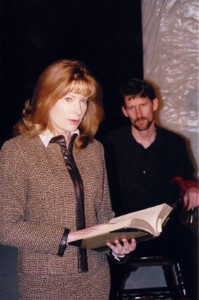
Love Is Everywhere: The cast of ‘Company,’ ably directed by Sheri Lee Miller and Argo Thompson, do the song-and-dance thing with style.

Singles Scenes

One is the loneliest number in ‘Company’

By Patrick Sullivan

Before Broadway played slumlord to a bunch of shivering addicts confronting death in an unheated apartment, it hosted Robert and his swinging stewardesses. Before an outraged transsexual named Hedwig rocked a restaurant full of Shriners, an actress named Elaine Stritch withered a whole town with a little ditty called “The Ladies Who Lunch.”

Is it going too far to say that neither Rent nor Hedwig and the Angry Inch would exist without Company? Maybe. Cause and effect, chicken and egg, cart and horse–who can really say which goes where or what came first?

But we do know that when this Stephen Sondheim-Harold Prince collaboration opened on Broadway back in 1970, it meant revolution. With its nonlinear narrative and relatively provocative subject matter, Company–now onstage at Actors Theatre in Santa Rosa–blew a big, fat hole in the ironclad conventions of the Great White Way. Every weird, wonderful musical that followed owes a nod of thanks to this graceful pioneer.

The story itself is simple stuff. Robert (played here by Steven Abbott) is 35, handsome and heterosexual, sweet and successful. But he remains stubbornly single. After we meet his married friends, we start to understand why. “It’s not so hard to be married,” one female friend tells him. “I’ve done it three or four times.” A husband has this to say: “I have everything but freedom, which is everything.”

There’s also a perfect couple who are getting a divorce and an engaged couple who are going insane contemplating actual marriage. Still, the single life ain’t all gravy either, and Robert longs for a soul mate.

Sheri Lee Miller and Argo Thompson direct this AT production, which opened on the Luther Burbank Center’s main stage. It must have been a challenge to retrofit the show for the rest of the run, which takes place in AT’s smaller in-house theater. In one number, when most cast members are on their backs and kicking the air, the audience can’t help worrying that someone might roll off the stage.

But on the whole, Company works surprisingly well in this intimate setting, thanks to adroit choreography by Miller and Kimberly Kalember. They deploy their cast atop and around a set of mobile mini platforms that put AT’s minimal space to maximum use.

The performances range from good to remarkable. Abbott makes Robert both sympathetic and engagingly sly. The statuesque Jessica Powell, who plays the cynical JoAnne of “The Ladies Who Lunch” fame, is as eye-opening as a cold cup of coffee.

Some of the funniest scenes come courtesy of a couple played by the delightfully deadpan Denis O’Brien and the delightfully feral Dyan McBride, who give Robert a karate demonstration that goes terribly wrong. The cast sport a number of strong voices, including that of Sheila Groves, who put her singing talent to excellent use in “Another Hundred People.”

Most costume designers presented with a ’70s musical would take the same liberties as a hungry jackal stalking a wounded baby antelope. But AT’s Mark Novac shows remarkable restraint: polyester claims its victims, but we see nothing truly painful.

Of course, the story’s slightly maudlin exploration of the bittersweet nature of marriage may seem a little dated in the cold light of the 21st century. But no one comes to a musical for the theme. Song, dance, and maybe a little skin are the goals, and in these areas, Sondheim’s lyrical genius and AT’s high production values make Company something more than a mere history lesson.

‘Company’ continues through March 16 at Actors Theatre in Santa Rosa. 50 Mark West Springs Road, Santa Rosa. For tickets, call 707.523.4123.

From the February 27-March 5, 2003 issue of the North Bay Bohemian.

© Metro Publishing Inc.

Wally Hedrick

War Games: 'Automatic Revolver' (detail) combines old marketing with new warmongering.Funk DaddyPainter Wally Hedrick goes on strikeBy Gretchen GilesWhen Secretary of State Colin Powell stood in the United Nations Security Council on Feb. 5, where hangs a tapestry reproduction of Guernica, and urged the world's approval for the United States' rabid bid to wage war on Iraq, staffers thought...

The Pasta King

Photograph by Michael AmslerMaster of His Domain: Art Ibleto, otherwise known as the Pasta King, surveys his kingdom.Long Live the KingThe Pasta King, the Spaghetti Palace, and his pasta kingdomBy Sara BirThe plate in front of me is red on one side and green on the other, cradling cheese ravioli dressed in pesto and meat ravioli dressed in marinara...

Mark O’Connor

'In Full Swing' (2003)The 'Gods and Generals' soundtrack (2003), which features O'Connor.The soundtrack to the PBS documentary series 'Liberty!' (1997)Wynton Marsalis' 'Reeltime' (1999), which features a guest appearance by O'Connor.'Appalachia Waltz' (1996), a collaboration between O'Connor, Yo-Yo Ma and Edgar Meyer.'Appalachian Journey' (2000), the second Ma/Meyer/O'Connor collaboration.'The American Seasons' (2001)Class Act: Mark O'Connor, ever fiddle-ready, is at the top...

Generation Rx

Photo by Rory McnamaraChild Welfare: Dr. John Leipsic, who specializes in pediatric psychopharmacology,uses medication in conjunction with psychotherapy and behavioral therapy.Generation RxCan troubled kids find mental health at the local pharmacy?By Patrick SullivanOnce upon a time, Morgan was a boy in a box. Back in fourth grade, this gregarious child became so talkative and disruptive at school that...

The Underwood

Photograph by Michael AmslerRestaurateur in Paradise: Matthew Greenbaum, executive chef at the Underwood, has gone to great lengths to get the place opened with partner Sally Spittle.Into the UnderwoodHow the bistro business, bobos, feng shui, and George Segal got to GratonBy Jonah RaskinCall Graton the Sonoma County restaurant graveyard. Kitchen, Cafe Dahlia, Cape Fear, Passion Fish, and the Downtown...

‘Gods and Generals’

'Civil War Trilogy,' which compiles 'Gods and Generals,' 'The Killer Angels' (the source material for the 'Gettysburg' movie/TV miniseries) and 'The Last Full Measure.''Gods and Generals: The Paintings of Mort Kunstler' is an illustrated companion piece to Jeff Shaara's novel.Buy the 'Gods and Generals' score album by John Frizzell and Randy Edelman.Buy the original 'Gettysburg' score album by Randy...

A Picture’s Worth

Photograph by Nita WinterCommunity Building: Nita Winter's 'Faces of the Canal' series includes Angel and his son Benjy. A Picture's WorthNita Winter's banners celebrate Marin's diverse communitiesBy Stephanie HillerWhen people come here, they fall in love." Jeannette Sotomajor has set aside her lunch to talk with me at the front desk in the Pickleweed Community Center in San Rafael,...

‘Dark Side of the Moon’

'Dark Side of the Moon' is being reissued in a surround-sound SACD version.'Dub Side of the Moon' is the Easy Star All Stars' reggae version of Pink Floyd's most famous album.Cue up 'Dark Side of the Moon' to the 'Wizard of Oz' DVD.Lunar Eclipse: Michael Goldwasser (Michael G) and Victor Axelrod (Ticklah), otherwise known as the Easy Star All...

In Too Deep

Money Trap: The burden of paying back college debt can last a lifetime--or at least seem that way.In Too DeepDebt from college loans is bigger than everBy Joy LanzendorferNowadays, students graduating college face more than just a tight job market. Six months out of school, their student loans suddenly descend on them like a yoke. Though the four years...

‘Company’

the reissue of the 'Company' cast album, which was first released in 1970.Buy the libretto to 'Company.'Photograph by Jeff ThomasLove Is Everywhere: The cast of 'Company,' ably directed by Sheri Lee Miller and Argo Thompson, do the song-and-dance thing with style.Singles ScenesOne is the loneliest number in 'Company'By Patrick SullivanBefore Broadway played slumlord to a bunch of shivering...
11,084FansLike
4,446FollowersFollow
6,928FollowersFollow

