
North Bay Hip Hop Theater Festival

0

Sole Man: Former U. S. National Dance champion Hypno performs his dance/theater work ‘Astro-N-Matter’ at the first-ever North Bay Hip Hop Festival.

Coming of Age

Hip-hop theater fest legitimizes the art form

By Christine Lee

Wherever hip-hop lurks nowadays, it’s often quickly followed by the same tired critics expounding and complaining about the same tired issue: what is hip-hop? And what the hell is wrong with it nowadays? However, when you see former rap stars who shall remain nameless hawking cheesy leather interiors and chromed-out rims to the rhythm of their own soundtracks and videos rolling in the background, the question seems reasonable. If Lil’ Jon and the East Side Boyz are what we’ve got as an answer, no wonder the general public thinks hip-hop is a reflection of everything that’s wrong with the youth of today, while true hip-hop heads are left wringing their hands.

Nancy Prebilich offers up another answer to that question, one that glitters in gold, but without the bling: the North Bay Hip Hop Theater Festival, making its first annual splash Feb. 2-5 at the Cinnabar Theater.

That’s right. Hip-hop and theater, all in one breath. Classically trained in theater, Prebilich headed off into the thespian world with all the high hopes and dreams that aspiring actresses have. But when she didn’t find the roles she was looking for, she realized that she would have to create her own opportunities. After putting together various productions that combined spoken word, dance and theater, she returned to her hometown of Petaluma and got involved with the Cinnabar Theater, culminating in the first-ever hip-hop theater festival to happen in the North Bay. No gold chains, no million-dollar boat chases, no pimps and ho’s. Just spoken word, DJs, breakdancing and beatboxing. Now if only they had some graff . . .

Hip-hop theater as a genre is still fairly new (maybe five to six years old) and as with any experimental art form, is still undergoing changes and definitions. “Just by calling hip-hop theater a genre, and kind of throwing these things in there as we go along, is defining it,” explains Prebilich. “Hip-hop has such a negative legacy and connotation if you don’t understand it. People tend to think of the stuff they see on MTV or what corporations would have you think is hip-hop. When I think of hip-hop, I think of the conscious hip-hop that you can find on the street, in clubs, in basements, in the scene. And when you put [the genre] in a new environment such as theater, it starts taking on a unique form of its own.”

Combining evening performance with daytime workshops taught by the performers, audiences can choose from learning how to “pop” like a real breakdancer to beatboxing, sampling, writing poetry and performing drama. The artists come from all over the world and all ends of the hip-hop spectrum, including award-winning poetry-slam champions the Suicide Kings and the strange human synthesizer known as Kid Beyond. Repping New York, L.A., the East Bay, Germany, Chinese Americans and African Americans, among others, this medley of performers provide no simple catch-all identity, and dismantle the bottled caricature of the hip-hop movement as a homogenous, materialistic, “black gangsta” culture.

But can today’s MTV generation, spoon-fed on flashy, one-minute video clips and Paris Hilton, really be appreciative of experimental theater, even with the candy-coated sell of hip-hop as a draw?

Not always. Covering the recent Third Annual New York Hip-Hop Theater Fest, reviewer Steve Boone noted that “baffled teens” booed the Rennie Harris Puremovement troupe (slated to appear at the LBC on Feb. 7) during their artsy, avant-garde dance number. Sad, but unsurprising, since many younger people don’t understand the connection of spoken word to jazz and rhythm, and how they relate to what’s categorized as hip-hop.

And then there’s the problem of the “theater” crowd, those who pride themselves on being connoisseurs and turn their noses up at the invasion of their art form by Gen-Xers. Try selling them theater with a hip-hop edge and see who doesn’t end up crying foul.

“We actually got phone calls from some of our regular patrons asking us what this ‘hip-hop’ thing on the schedule was,” laughs Prebilich. “There’s been a lot of skepticism about who’s going to come watch. But think of it like this: what is the essence of theater? A story. People come to the theater for a story. And performers come to tell their stories. If you understand that and then start thinking about who the next generation of theater goers is going to be and what they’re influenced by, maybe it’s not such a crazy idea after all.”

The Petaluma festival is an independent endeavor and focuses on the basic elements of hip-hop in its purest forms: rhythm, content, music, dance and poetry. While the opening-day act of breakdancer Hypno is undoubtedly hip-hop, what makes Shantell Herndon’s Eden hip-hop theater? Reading its synopsis about “a young girl’s journey into adulthood,” it seems like the premise you’d find for almost any other movie or theater piece. But there are common threads.

“I look for pieces that reflect the individual in relation to this crazy society and world, and how it speaks on historical, political and social issues,” Prebilich says. “But outside of that, I look at rhythm, rhyme, the performer’s relationship with the musician, and consciousness–part of hip-hop is awareness, an active movement.

“I want skeptics of both the festival and hip-hop culture to come away with a greater awareness of what hip-hop culture is,” she continues. “And I want for young people or performers or those who are just new to theater to see that there is a place where they belong.”

The North Bay Hip Hop Theater Festival runs Wednesday-Saturday, Feb. 2-5 at the Cinnabar Theater. Featured performers include Hypno, Paradise Freejalove, Azeem, Shantell Herndon (Feb. 2); Kid Beyond (Feb. 3); Felonious: onelovehiphop (Feb. 4); and the Suicide Kings (Feb. 5). The Fierce Dance Company perform all four days. Workshops daily, mostly beginning at 4pm. Cinnabar Theater, 3333 Petaluma Blvd. N., Petaluma. $12-$50. 707.763.8920. www.cinnabartheater.org.

From the January 26-February 1, 2005 issue of the North Bay Bohemian.

© Metro Publishing Inc.

‘Smart Solutions’

0

Still Life With Green Meat: The author, captured here in one of two separate photos, each taken on two separate occasions, when she had enigmatically smeared perfectly good roasts with green stuff.

Boob Tube

Fighting willful nipples, Shrinky Dinks and computerized sewing machines, Sara Bir descends to semi-celebrity status on ‘Smart Solutions’

By Sara Bir

I don’t watch television. This isn’t so much because I’m a culture snob as it is circumstantial; for budgetary reasons, I haven’t had cable since I graduated from high school. I get my TV fixes through worn-out VHS episodes of Northern Exposure that I taped over 10 years ago, complete with vintage local commercials (“Hi, this is Becky from Meinekie Mufflers–serving the mid-Ohio Valley since 1974!”); hence, I’m stuck in a pop-culture time warp eternally affixed in the early ’90s. Reality shows, Six Feet Under, the Janet nipple thing–all of these are meaningless to me.

Considering that I have utterly no interest in television, I nonetheless accepted an offer to appear on it. About a year ago, I got an e-mail from the producers of Smart Solutions, a do-it-yourself show on HGTV, one of those home-improvement cable channels. They’d spotted an article of mine in a craft magazine demonstrating how to sew pieces of paper together to make stationery. The producers said they’d love to tape a six-minute segment of me demonstrating my paper-sewing technique for the show. I wouldn’t be paid, but they could help me find lodgings when I came down for the taping. And what a great way to advance my blossoming career in . . . paper sewing!

“Sure, I’ll do it,” I said without hesitation. Even those who don’t watch TV know it’s foolish to deny its awesome power. Of course, I had not actually seen Smart Solutions, but how bad could it be? The main point was that I’d be on TV, right there in the belly of the beast. I’d suffer the company of a few dozen Hollywood types for a day and have some good stories to tell at the bar when I got back. Anyway, I had nothing to lose; if the show was bad, why should I care? I’d never see it.


I called my mom. Of all the good news I’ve ever broken to her over the phone (“I got the job”; “My writing is going to be published in a book”; “I’m engaged”), she was the most audibly ecstatic over this. “I can’t wait to tell my garden club!” she gushed.

I told Mr. Bir Toujour. He sounded skeptical. “They won’t pay you?” he asked.

“Well, no. But it’ll be worth it for the experience–you know, just to see what it’s like. Plus, I think it’s funny.”

“Funny? How?”

“Well, I don’t watch TV. And now I’m going to be on TV!”

He shook his head. “How many days are you taking off work for this?”

Three. I planned to take off three days for the show, one for the actual taping and two for driving.

The producers of the show asked me to send some sewn paper samples and project instructions. So on my day off, instead of completing the article I had on deadline, I spent the afternoon unearthing wallpaper samples and heavy card stock from a junk store. I then hunkered down at the home office cum workshop clipping, sewing, taking notes. By the time Mr. Toujour got home, the room was a mess, full of twisted thread snippets and paper shavings.

“Did you finish your article?”

“Nooo. But look at this! I found a bunch of old maps and made them into envelopes. Cool, huh?”

“When’s that article due, anyway?”

“Oh, I’ll get it done. But I need to send out something to the show’s producers first thing tomorrow.”


The producers–Doug and Lauren, whom I mainly corresponded with via e-mail–also requested that I send a photo of myself. “I don’t have any head shots,” I told them. “You know, no fancy professional pictures.”

“That’s OK,” Lauren responded. “Just as long as we can tell what you look like.”In every photo taken of me from the past five years, I’m either drunk or wearing something floppy on my head–sometimes both. While tearing apart photo albums in search of a suitable snapshot, I stumbled across three pictures of myself with a red do-rag on, smiling brightly, clutching a huge chunk of raw meat smeared with brilliant green herb paste–each taken on three separate occasions. Finally, I found a photo of me holding up a groom’s cake decorated to look like the label from a Pabst Blue Ribbon bottle. I’m still wearing a do-rag, but at least I’m not sharing the spotlight with a piece of dead animal. The picture went into the envelope.

I figured that Doug and Lauren would see it and decide that, no, this unkempt girl with her ghetto hair coverings has no rightful place on a cable channel whose viewership is made primarily of middle-aged housewives of middle income in middle America. I–young, single, living in the bohemia of Northern California–have absolutely nothing of interest to offer such people.

Weeks passed before I heard from Doug or Lauren again. My mother continued to inquire about my TV spot.

“Have you seen the show yet?” I asked her. “What’s it like?”

“You mean you haven’t seen the show?”

“No. But I’ve seen Martha’s show before,” I assured her. “This show is probably like Martha’s, right? Only without Martha.”

Oh, and a smaller budget. “Can’t you get them to pay you?” Mom said. “No. It’s just some dinky little show. Plus, they say they’ll pay for my lodgings.”

I imagined living it up in the Hilton’s business suite, lounging in the hot tub, enjoying a hearty continental breakfast in the morning. Mints on the pillow and thick terry-cloth bathrobes.

“Good news!” read the next e-mail from Lauren. “The production company liked your sewn paper so much that they’d be interested in you doing another segment. Do you have any other ideas to pitch to us?”

Hmm. Either they were very hard up for guests, or they pegged me for a sucker and wanted to wring me for all I was worth.

But what the heck. I sent them a few cooking ideas for demonstrating the wonderfulness of miso and textured vegetable protein, imagining how I’d work this TV appearance into a sweet-ass cookbook deal.

“These are great ideas,” Lauren e-mailed back, “but once we have a guest on for one thing, we like to continue presenting them as an expert in that arena, so as not to confuse our viewers. Do you have any other craft ideas?”

I’m no craft expert. I thought about the last thing I’d made: “Here’s how to take an old bridesmaid’s dress and a Jane’s Addiction T-shirt and turn them into a pillow in only 14 hours!” or “Today I’ll be showing you how to insert tiny plastic skeletons into a clear liquid soap dispenser to create satanic soap!”

For lack of a better concept, I blurted the first one that came to mind. “I make stuff out of Shrinky Dinks.” There’s no way they’d go for that. How could anyone talk about Shrinky Dinks for six minutes?

“We loved the Shrinky Dink idea!” Lauren wrote. “Could you send us an envelope of samples, along with some instructions?” I drove out to the craft store and bought Shrinky Dink sheets.

“We got your photo, thanks,” Lauren said a few weeks later, “but we’re desperate for the Shrinky Dink samples.”

They were not ready. It was not like I hadn’t been working on them, but all of the best ones I traced from old Andy Warhol illustrations or Dan Clowes comics of girls with guns. Gags, guns–I figured they wouldn’t go over so well with the network.

I wound up making some basic heart shapes. “You can, uh, tie ribbons to these and make a Valentine tree out of an old tree branch.” I finally sent out the samples, and Doug and Lauren gave me a date to show up for taping in Burbank.

Please Don’t Try This At Home: Sara Bir craftily stitches paper, as seen on HGTV.

The hotel room was available at a reduced rate, not free, which ran $115 a night. Au revoir, pillow mints. I arranged to crash at a friend’s house in Silver Lake.

Doug called me at home one day, sounding impatient. “Spend a few mornings watching the show, and you can see how we set up the shots, as well as how the host interacts with the guests,” he insisted. “You have seen the show, haven’t you?”

“Oh sure, yeah,” I lied. “Just not in a while. I’m not an early riser.””Why don’t you set your VCR and record some shows? It’ll make it a lot easier for you.”

I didn’t tell them that I couldn’t.

I asked a co-worker to tape Smart Solutions for me. Suddenly, everyone at work knew about my imminent television stardom. “You’re going to be on TV to show people how to sew paper?” they asked incredulously. “That’s it? Lots of people have sewn paper before–you’re not the first person with that idea.”

Who were they to talk like that? It’s not like they’d been on TV before. Jerks.

I finally watched a taped episode of Smart Solutions. The show consists of a host named Maty hovering enthusiastically over her guests. On this particular episode, Maty nodded vehemently as a woman wove dollar bills together to make a “fun presentation of a money gift.” “This is so neat!” Maty exclaimed.

“I never thought of doing that!” Well, Maty, me neither. I was about to be on a television show that featured people braiding money together. As Maty would say, “Great!”


The drive south went without a glitch, and I arrived in L.A. with plenty of time to spare. That’s good, because I was in no way ready to be on the show. I had to buy more Shrinky Dinks (by then catchily dubbed “shrinking craft material” to avoid directly endorsing a specific brand)–plus, I still needed to, uh, make stuff out of them. Always prepared, I packed our toaster oven.Even more distressing, I had nothing to wear. The producers informed me that black, stripes and bold patterns don’t look good on TV. They also cautioned against wearing holiday-themed clothing like Christmas-tree sweatshirts. I made a desperate pit-stop at Old Navy to purchase a ribbed turtleneck sweater in a flattering shade of pink and a long-sleeved fitted red crewneck shirt. Around 7 that night, I pulled into my friend’s driveway. He was out of town, leaving me his whole bedroom and the TV in it. With the purest of intentions, I retired to my temporary boudoir early to rest for the big day. What I wound up doing was watching the exotic television until 2am, transfixed.

I woke up at 5. My studio call time was 7am. As they shot three episodes a day–and as my segments, somehow, managed to be the very first and very last segments scheduled for taping–I got to hang out at the studio all day long! The studio was small. The production company rented it out for the duration of the season’s taping, which, in this case, was two weeks. Mine was the 12th day of taping, and it showed. Everyone on the set who was not a special guest exhibited extreme levels of disinterest.

I wandered around a bit before stumbling through the correct door, which led to an area abuzz with a small group of guests sticking Teddy Grahams onto birthday cakes decorated with blue butter cream. The concept, I think, was that by purchasing a blue cake, you could personalize it with Teddy Grahams to replicate a clan of little bears lounging poolside. The women labored frantically over a dozen bikini-bear cakes all gummed up with pretzel-rod cabanas and Fruit Roll-Up palm trees. As I regarded my own pathetic props, the cakes started to look really brilliant. “We were up until 2 this morning working on these,” one of the women told me. “I was up until 2 as well,” I replied, though I failed to mention that I was watching South Park at the time.

Doug found me and introduced himself. I was struck by how young and normal he was. I had imagined someone tall and authoritative, but the actual and diminutive Doug seemed unassuming. He showed me where to find coffee, and then he took me to a table where I could set up. I brought out my pathetic envelope of projects, and we discussed how to set them up. Next, I met Lauren, who I was surprised to discover is much younger then I’d imagined–younger than me, in fact, as her Converse All-Stars and gently ripped jeans hinted. She looked like she’d never, ever watch this show on her own accord.

We were told to arrive “camera ready,” which means having your hair and makeup all set to go. I don’t wear makeup, so I arrived wearing none; this, to me, is camera ready, but apparently to the rest of the world it is not.

A makeup artist briskly applied herself to my face in what felt like a truncated Glamour Shots session. Right as she started encrusting my forehead with foundation, Maty came to have her face fixed, too. Maty is eerily like her on-camera persona. “Hello,” she said, looking over my way. “Are you going to be on the show today? Oh, I love your hairstyle! It’s very French.”

If Maty’s quite generous statement referred to the rarity with which I brush my hair, then, yes, I had to admit that my coiffeur was very French. But for the camera’s sake, a hairstylist whisked into the room and ran an emergency curling iron through my Gallic-chic hair, shellacking the whole mess with industrial-strength Aqua Net.

I was still not costumed. Anxious, I scouted out Doug and showed him the selection of shirts I’d brought. “Will any of these be OK?” I asked.

“That pink turtleneck–it’s ribbed. I don’t think it will work. The rest are OK.” I put on the red top–bold, simple, figure-flattering–and slipped onto the set.

Mimicking a middle-American house that’s taken a trip through the pages of Better Homes and Gardens, the set consisted of a kitchen area, a garage area and a living-room area. My domain was to be the garage (clearly the only appropriate place to both sew and make shrinking crafts). There was a waist-high table where I was to spread out my bounty of stitched paper creations, and to the side, the sewing machine I’d use.

At home I use a Singer, circa 1964, and I had offered to bring it down with me. “No,” Doug said, “we’ll have a machine for you.” When standing face to face with said machine, I was baffled by its digital readout. Imagine riding horses all your life, asking someone to borrow theirs and getting loaned a car. Now imagine having to demonstrate to a television audience how to sew little pieces of paper together with that car.

While Maty chatted with the stage manager, I grappled with the machine, trying to keep my cool. All I had to do was make it look like I could use the machine–maybe the camera would linger over the envelopes and cards I’d brought with me, which were spread fan-style across the table. Each segment was done in one take, so if I screwed up we’d have to start all over again. And despite the Teddy Graham cakes and the illegible sewing machine and my general feelings about how silly television is, I wanted to be poised and professional, to exude authority and charisma.

“That Sara Bir,” they’d say when taping wrapped up, “is a delight to work with.” This would open up major avenues for me. Maybe Sofia Coppola would catch my Smart Solutions segment and cast me in a minor yet meaty role in her next film. That would go nicely with my book deal, too, because as I demonstrated how to sew paper together to make stationery, some powerful literary agent would sense that I had a revolutionary novel inside of me, and all that was needed to coax it out was ample financial backing.

A quick rehearsal snapped me out of my reverie. At every show’s opening, Maty walks though the set and greets all three of her guests as they cheerfully yet industriously work away, creating the air of Maty’s Happy Workshop. “Turn old paper into something new. Sara Bir’s stitching her way to cool stationery and more,” Maty announced perkily as she breezed through the garage. “Hi, Sara!”

“Hi, Maty!” I said in my best office-telephone voice as I glanced up from the intense concentration required to run the foreign sewing machine without piercing my fingers with the needle. We taped this intro four or five times, affording me valuable moments of practice with the machine before we moved on to my segment.

Nervous, I had to go to the bathroom. Women from another craft show being taped in the same building stood there preening, and after I squeezed between them to get a look at myself in the mirror, a shocking sight spit itself back at me. My nipples!

In their agitated state, they were clearly visible through my shirt. I’d thought of this while packing and made certain to bring one of my more nipple-shielding bras, but apparently it was not up to the task.

I had to be back on the set as soon as possible, so I did the only thing I could think of: I stuck protective wads of toilet paper down my bra. My boobs might look lumpy, but I would not, by God, expose my nipples!

Emergency averted, I sneaked back onto the set to tape the stitched-paper segment. There was a loose script to follow, though only Maty’s lines appeared on the TelePrompTer. She would mainly ask the silliest questions possible, which I was to answer as succinctly as possible. “Can you use any kind of paper?”

“Yes, but heavier stock is best.” “How many sheets can you stitch though?” “Up to 24, if you’re making a journal.” And then, of course: “I never thought of doing that!”

Aside from a few false starts and the blotted appearance of my bosom, the shoot went smoothly and my sewing segment was done in under a half-hour. How I managed to use the machine I had no idea, but it wasn’t on my mind at all: I needed to prepare for the shrinking crafts.

The next five hours passed by in a tense blur. In the dim privacy of the dressing room–which resembled a Best Western suite without the bed–I set up my toaster oven and churned out little hearts, deathly afraid that someone, Doug or Lauren, would come into the room, witness my fierce flurry and bust me (“You’re not ready to shoot the shrinking crafts segment at all, are you?”).

At one point, I took a walk around the neighborhood to procure a small branch to decorate with shrunken-craft hearts for the Valentine tree. Back in the dressing room, as I fumbled trying to tie tiny satin ribbons around the stick, the segments taped that morning were displayed over the TV monitor. Suddenly there I was, in my red shirt with my mask of makeup, a renegade shock of hair flopping over my eyes as I explained to Maty the finer points of sewing paper. The footage fast-forwarded and rewound in a death loop showing Maty scrutinizing a stitched CD case while I slouched with my arms violently pointed akimbo.

“Oh, bloody hell!” I thought, “I’m a total dork!” I’d forgotten how angular and birdlike my face was, how my tousled hairstyle only accentuated it, how long and Roman my nose was, how my habit of folding my hands together came across so goofy and prissy. I had no star quality whatsoever.

Maty did. I wondered if Maty ever got recognized at the grocery store, if there were hardcore Smart Solutions fans. There had to be. The other guests–a woman who ran a low-fat-foods company and made “a delicious sauce from peanut butter, cocoa powder and applesauce”; a muscular personal trainer to the stars; and a woman who had written a book about framing pictures–all had some kind of credentials, or at least a career reflecting their field of expertise. I worked retail, and that’s exactly where I needed to stay.

After emerging from my dressing room/workshop with enough emergency shrinking crafts to squeak by, I noticed a postlunch slump on the set; the pace was slower, the crew chattier. All told, I had much more in common with the crew than any of my fellow guest experts, with whom I hardly spoke. All of the production team and crew were freelancers, many of them scrappy indie-rocker types in their 20s and 30s, and after this taping of Smart Solutions wrapped up, they’d be out looking for another crummy cable TV show. Lack of direction was our common ground.

Somehow, we limped through the shrinking-crafts segment. Even with the heart-decorated Valentine stick, my table in the garage area was painfully barren. My nipples, at least, were safely obscured by the looser shirt I’d changed into.

I said goodbye to Lauren, who was sweet and hugged me. An intern gave me a card to fill out with my address. “We’ll send this to you telling you when the segments air. It could be a month, it could be half a year from now.”It’s been over half a year. I never heard back. That’s OK, but people, especially Mom, keep on asking me when the show will be on. “It’s not on,” I say. “As far as I know.” I have a theory that, in our post-Janet cultural climate, my renegade nipples were the guilty party. Maybe no one noticed until postproduction, when they saw the videotaped twin peaks poking out horrifically, and were forced to scrap my segments to preserve the network’s standards of decency.

It’s a relief, actually, because I don’t think the camera loves my face, or my nipples. I made it home alive back to the real Sara–unstyled hair, striped shirts, poorly padded bras and all–and don’t have to touch shrinking-craft material again for as long as I live, which is plenty satisfying enough.

Not so fast, Sara. Celebrity awaits, as HGTV screens our “craft enthusiast” stitching personalized stationery on Tuesday, Feb. 22, at 7:30am. And on Thursday, March 3, at 7:30am, Sara demonstrates “how to shrink photos into custom-made trinkets.” Must-see TV, indeed!

Send a letter to the editor about this story to le*****@*******ws.com.

From the January 26-February 1, 2005 issue of the North Bay Bohemian.

© Metro Publishing Inc.

Social Insecurity

0

Women and Children Last: This poster, created in support of the burgeoning Social Security movement in the 1930s, touts the importance of caring for others.

Without a Net

The Bush administration wants to save Social Security by killing it

By R. V. Scheide

At the dawn of George W. Bush’s second administration, everything seems to be up for grabs, including freedom itself. “The survival of liberty in our land increasingly depends on the success of liberty in other lands,” the president warned the world in his inaugural address last week. But what is this universal liberty that Bush now claims is the United States’ duty to enforce, both at home and abroad? Bush himself seems to imagine it as a sort of Promethean flame that burns “in the minds of men,” “warms those who feel its power” and “burns those who fight its progress.”

In his address, Bush spent the first 10 minutes scaring the bejesus out of the world with such brimstone and treacle; the reaction was mixed. In socialist Venezuela–like Iraq, a small relatively defenseless country sitting atop a large nationalized oil reserve–the populace quite properly shivered. A few of our pundits accused the president of overreaching with his foreign policy. But Bush didn’t really reach out and touch the third rail until he turned to domestic policy.

“In America’s ideal of freedom, citizens find the dignity and security of economic independence, instead of laboring on the edge of subsistence,” he intoned. “This is the broader definition of liberty that motivated the Homestead Act, the Social Security Act and the G.I. Bill of Rights.”

It was no coincidence that Bush situated Social Security between the twin tombstones of the G.I. Bill (a shadow of its former self) and the Homestead Act (hello, 19th century). With his next sentence, he consigned Social Security and the philosophy behind it to the dustbin of history. “And now we will extend this vision by reforming great institutions to serve the needs of our time.”

In neoconservative parlance, this is what Bush means: As with the oil fields in Iraq and Venezuela, Social Security–the largest and most successful social insurance system in the world–is a natural resource ripe for privatization. But they don’t call Social Security the third rail of national politics for nothing. There’s an invisible current running through it that goes straight to the core of American Democracy. Just because Bush and company can’t see it doesn’t mean they won’t get fried.

The magnetic core that binds us all to Social Security is known as the “solidarity principle,” reminds Sonoma State University economics professor Carlos Benito. That’s the notion that all working people and their families–rich, middle class and poor alike–deserve at least some sort of minimum income when they retire, are too sick to work or if the family breadwinner passes away. It’s something we all agreed upon a long, long time ago.

When President Franklin D. Roosevelt signed the Social Security Act into law in 1935, the nation was still mired in the Great Depression. The 1929 stock market crash had wiped out private retirement nest eggs. Unemployment was at a chronic 25 percent, and more than 60 percent of seniors subsisted below poverty level. The free market had failed miserably. Social Security was the stopgap. The program’s original aim, says Benito, was “to humanize capitalism,” and by most accounts, it’s been a tremendous success.

In 2003 Social Security collected $632 billion in payroll taxes and provided $471 billion in benefits to more than 47 million people. The excess, $161 billion, was stored in the so-called Social Security trust fund. Locally, the money was well-spent. According to the Sonoma County Council on Aging, which provides aid such as Meals on Wheels to local retirees, 61,500 seniors age 65 and older in the county receive Social Security benefits. “Social Security is often the primary income for the 1,400 clients we see on any given day,” says director Shirlee Zane. “Probably 80 percent are females over the age of 80.”

The funding for the system is provided by the payroll tax, a levy on the total wages paid to workers during their lifetimes. Half comes out of a worker’s paycheck; half is paid by the employer. The amount of benefit received is based on the money paid into the program over a 35-year span. The more an individual pays in, the more he or she receives in retirement. The poor get slightly more benefits as a percentage of income than the rich. The trade-off for the rich is that no payroll taxes are collected on income after a certain threshold has been crossed. Called the “payroll tax cap,” it currently sits at $80,4000 per year.

Conservative think tanks such as the Cato Institute have railed against the program for decades, seeing it as just another extension of the socialistic nanny state brought into being by Roosevelt’s New Deal. But because it continues to enjoy a high level of public support, Social Security has so far remained bulletproof to such attacks. That’s why, beginning with the presidential campaign last year, Bush and his minions have engaged in a well-orchestrated attempt to convince the public that Social Security is going bankrupt, and the only thing that can save it is to allow workers to invest their payroll taxes in the stock market.

On Jan. 11, Bush was on message at a carefully scripted discussion panel on the topic held in Washington, D.C. Using Josh Wright, a twenty-something Utah dairy farmer attending the panel as an example, he warned, “If nothing happens, and we don’t start moving on it now, by the time Josh gets to retirement age, the system will be flat broke.”

When Bush talks about the system going broke, he’s referring to Social Security’s trust fund. Because Social Security is a pay-as-you-go system, surpluses develop when there are more workers paying into the system than retirees drawing benefits. Such surpluses are forecast to continue through the year 2018. After that year, as more baby boomers retire, more money will be required for benefits than is being paid into the system. The difference will be made up with money from the trust fund, which contains enough savings to provide fully scheduled benefits through 2042.

From then until 2078, the program will begin incurring deficits, and benefits will have to be cut as the trust fund is gradually exhausted. Nevertheless, because payroll taxes will still be coming in, Social Security will be able to continue paying benefits at the 75 percent level. The system can’t really go “bankrupt.”

In short, when Bush talks about Social Security going bankrupt, he’s referring to the exhaustion of the trust fund 73 years in the future. In his pitch to sell private retirement accounts, he’s counting on the fact that most Americans, particularly those Josh’s age and younger, know little about the history of the Social Security system or how it works.

“This is a fabricated crisis,” says Rep. Mike Thompson, D-Napa, who was recently appointed to the House Ways and Means Committee, which oversees Social Security. “A more accurate description would be that there is a challenge [to Social Security].”

Politicians already have the tools to meet this challenge, according to Benito. “There are specific formulas to adjust the contribution according to demographic changes and changes in wages and the rate of inflation,” he says. For instance, small adjustments in the retirement age or payroll taxes can be made to balance the system’s accounts. “You increase or reduce, you make adjustments. If we had done these changes, we wouldn’t be talking about this at all.”

But rather than turn to these time-trusted tools, Bush instead wants to allow up to 2 percent of payroll taxes to be invested in the stock market in private accounts that individuals will “own,” even though they won’t be able to access the money until retirement. The president’s logic is fairly simple.

Historically, Social Security’s return on investment is 2 percent; the stock market rate of return is more than triple that, averaging 7 percent over the long term. Doesn’t it make sense to give workers an opportunity to get the most out of their money?

It would if the president’s comparison was valid, but comparing Social Security to a private retirement portfolio is like comparing apples to oranges. Besides providing retirement benefits, Social Security provides disability insurance and benefits to families of workers killed on the job–factors that aren’t considered in Bush’s privatization proposal and add considerable value to the program. In fact, in order to continue such benefits under Bush’s plan, the system will have to borrow as much as $3 trillion (that’s “trillion with a t,” as the president likes to say) in the next decade to meet so-called transition costs.

“They’re selling public debt to privatize Social Security,” says Benito. The implications could be fatal for a system that’s been built on the public’s trust. “The Bush administration will eliminate the Å’crisis’ not by increasing the contribution to Social Security, but by eliminating the system.”

Thompson scoffs at Bush’s privatization proposal. “Not only is there no need to do it, there’s no need to even talk about it. They’re really talking about going back in time.”

Thompson is referring to 1929 stock market crash, but one needn’t travel that far back to recall the risks inherent in the stock market.

“Can we trust Wall Street?” Shirlee Zane chides. “Let’s just look back the last three or four years.” That of course is when the tech bubble burst and trillions were lost in the stock market. With the recent crash still fresh in many people’s minds, the timing of the Bush administration’s privatization proposal seems all the more absurd. That is, until other factors are taken into account. “It’s the largest pension system in the world,” says Benito. “If a private company could run it, can you imagine the profits that are there?”

Remarkably, Social Security’s administrative costs total less than 1 percent of the revenue taken in. If Bush’s privatization proposal passes, 2 percent of that revenue will be diverted to the stock market, where administrative costs average 15 percent to 20 percent and higher. Additionally, new infrastructure will have to be put in place to keep track of millions of new private accounts. These costs are rarely mentioned in Bush’s proposals, and companies in the financial services sector (as a group, one of the Bush administration’s largest campaign donors) are licking their lips in anticipation of the windfall headed their way.

“It’s incredible the number of organizations in the financial sector that have websites supporting Social Security reform,” says Benito. “Hundreds of organizations are excited about this new business they’re going to create.”

If Thompson has his way, they’ll never get the chance.

“If there is someone other than members of the Bush administration or the corporations who would benefit from a $3 trillion injection into their coffers who thinks this is a good idea, they ought to consider a couple of things,” he says. “It’s not a voluntary program. If you don’t want to do it, you still experience a benefit deduction.”

In other words, privatizing Social Security–instead of saving the system–will create more debt that will gradually erode all benefits. In turn, that could lead to the dissolution of the solidarity principle that’s held the program together for 70 years.

No member of Congress wants to be remembered in the next election as the person who killed Social Security, and privatization will be a tough sell. For seniors and baby boomers nearing retirement, the issue is a nonstarter. Perhaps that’s why Republicans have been targeting young voters with their privatization proposals.

“Younger voters, that’s just a lay-up,” Rep. Paul Ryan, R-Wis., recently explained to CBS news. “When they see the Democratic Party trying to oppose giving them access to their own Social Security [investment] account, that’s a political winner for us and a loser for them.”

Ryan may be correct. It’s much easier to steal candy from a baby who’s never tasted it before. But it also seems likely that once voters become fully informed on the issue, George W. Bush may be in for the shock of his political life. They don’t call Social Security the third rail of national politics for nothing.

From the January 26-February 1, 2005 issue of the North Bay Bohemian.

© Metro Publishing Inc.

Word for Word

One Big Mind: The Word for Word troupe take literature literally.

Copy Cast

Word for Word breathe new life into lit

By Peter Koht

The hardest thing for me, working with this company, is to describe to people what we do,” says Word for Word cofounder Susan Harloe. “Until people see it, they have no idea what¹s coming.”

For nine years now, Harloe and Word for Word have been performing literary theater in a completely revolutionary fashion: down to the very letter, completely raw and totally uncut.

Rather than editing the dialogue and adapting the stage directions from the plot of a well-thumbed work, the narrative structure of a Word for Word production is based precisely on the text. Each word of the author’s original version is cleverly broken up among Word for Word’s virtuosic company of actors. While actual quotes remain firmly in the mouths of their assigned characters, the rest of the text flows between performers in surprising sonic and dramatic patterns. “You really have to have your chops,” says Harloe. “We are literally finishing each other’s sentences onstage. We are kind of one big mind.”

Where did the genesis for this radical form of literary presentation come from? While other companies in Seattle and New York have experimented with literal adaptation, the art form has truly found its home in San Francisco with Harloe’s group, which perform short stories by Tobias Wolff on Jan. 29 at the Dance Palace in Pt. Reyes Station and Feb. 22 at Sonoma State University. “I am a purist,” admits Harloe unabashedly. “I was also a librarian for many years. This was an interesting way to combine my dual careers.”

While not shying away from presenting portions of larger works like Upton Sinclair’s Oil or John Steinbeck’s Cannery Row, Word for Word have found their niche performing short stories. By preserving the short story intact, Harloe believes that the beauty of the form is revealed. “The thing about a short story is that it is very satisfying,” she says. “It has a revolution. It completes, and the audience gets a sense of completion from it.”

Short stories are also the repository of some particularly fine literary phrasing. “A short story is a very particular form of literature,” says Harloe. “I believe that authors craft it very carefully. The choice of words on a page is very specific. Someone like Tobias Wolff is a good example of this process. He will write a single sentence five or six times.”

The languid and slightly melancholy literary world of Wolff is indeed a perfect place for Word for Word to explore the beauty of the printed word. A modern master of the short story, the author of This Boy’s Life seems to specialize in detailing the burden of choices unmade. Especially in his short stories, even the smallest of events might profoundly alter the lives of the protagonists. The two selections that Word for Word present, “In the Garden of the North American Martyrs” and “Bullet in the Brain,” follow this theme.

By preserving the delicate emotions and words of Wolff’s stories and bringing them to the stage unadulterated and unabridged, Word for Word have retained the facet of literature so often discarded through adaptation: the author’s voice. It’s all part of fulfilling its stated goal: “to tell good stories with simple and elegant theatricality and amaze audiences with language.”

Enough said.

Word for Word enacts work by author Tobias Wolff on Saturday, Jan. 29, at the Dance Palace Community Center. Fifth and B streets, Pt. Reyes Station. 8pm. $22­$25. 415.663.1075. They return on Tuesday, Feb. 22, at 8pm to perform at SSU’s Evert B. Person Theatre, 1801 E. Cotati Ave., Rohnert Park. $15. 707.664.2382.

From the January 26-February 1, 2005 issue of the North Bay Bohemian.

© Metro Publishing Inc.

Wanda Jackson

0

Rockabilly Royalty: Just a teen when her career started, Wanda Jackson has made music for half a century.

Hard-Headed Woman

The gospel according to Wanda Jackson

By Greg Cahill

My dad always told me, ‘If you¹re going to do something, be different at it,'” says Wanda Jackson, ‘stand out in some way, do a little bit more.'”Jackson took her dad’s advice. In the mid-1950s, at the dawn of the rock ‘n’ roll era, she became one of the fledgling genre’s first female stars, an energetic 18-year-old rockabilly queen who dated Elvis, made frequent stabs at the Top 40 and tore through the music industry like a Midwestern tornado.

These days, Jackson–who performs Jan. 28 in Fairfax–is a legend. In 2003, an all-star lineup that included Elvis Costello, Dave Alvin and Rosie Flores joined her on the critically acclaimed comeback album Heart Trouble (CMH). More recently, a motley crew of insurgent country and renegade cowpunk artists (Neko Case and Wayne Hancock, among others) contributed cover songs to Hard-Headed Woman: A Celebration of Wanda Jackson (Bloodshot).

“Wanda helped stake out a direct route from the feral origins of rock to the punks, riot grrrls and psychobilly boundary-busters 50 years later,” the Bloodshot website extols. “She kicked down the door to the good ol’ boys club that told us women couldn’t (or shouldn’t) bring the ferocity and attitude necessary for a truly liberating brand of music.”

Says Jackson, who also was country music’s first teen star, “I remember thinking, ‘Man, this is great. This is a field that nobody has even tapped, and I’m in on the ground floor.'” What does Jackson think of an underground rock band like Trailer Bride paying tribute to her by giving her 1959 hit “Fujiyama Mama” a neo-psychedelic twist? “Oh, I think it’s just darling,” says the 67-year-old grandmother during a phone interview from her home in Oklahoma City.

Jackson was just 16 when country star Hank Thompson took her under his wing after hearing her on an Oklahoma radio station. Her single “You Can’t Have My Love,” a duet with bandleader Billy Gray, became a national hit while Jackson was still in high school. In 1955 Jackson hit the road as the opening act for Elvis Presley, just months before Elvis’ career exploded. The two hit it off, dating for nearly a year. Elvis gave Jackson his ring. He also encouraged her to stretch out beyond country by singing rockabilly.

“We were both just kids doing what we knew we were born to do and having a great time,” Jackson recalls. “He thought that I should be doing the type of music he was doing–we didn’t really have a name for it then. My argument was that the audience was all girls and wouldn’t take to me. Ultimately, he was right.” Capitol Records, then the world’s largest record company, saw the potential in a female rock singer with the ability to cross over to country fans, and signed Jackson to a contract that would last 18 years, until Jackson herself asked to be dropped from the label.

By that time, 1971, she had found Jesus and wanted to record more gospel music than Capitol was comfortable with. She moved on. Her career went into low gear. But a 1985 tour of Scandinavia reignited Jackson’s career. Ten years later, Tex-Mex rocker Rosie Flores gave her a real kick-start in the States. “I have more celebrity now than I ever did,” says Jackson. “Strangely enough, it all just kind of happened without me pursuing it. It just came to me.”

This year, for the first time, she made the final ballot for induction into the Rock and Roll Hall of Fame, a sure sign that Jackson may get the widespread recognition she deserves.

In many ways, Jackson already has it all, serving the Lord and living out her rock ‘n’ roll fantasy. “It’s real interesting because I can sing whatever I want, not just country or just rockabilly,” she says. “Now Wanda Jackson is a mixture of all these songs, with a little bit of gospel thrown in. I always tell my fans that I received Christ in ’71, and most of the time you can hear a pin drop because they reverence that. In my heart, I think perhaps they’re thinking, ‘Maybe she’s got something there.’ That’s how God is choosing to use my testimony these days–not in a preachy form but in a way that tells young people, ‘Hey, I had it all, but I didn’t have Christ,’ and that’s all that’s gonna count in the end.

“It’s very rewarding. Most of my fans are young adults, and at my age, that makes you feel real good,” she chuckles.

Wanda Jackson performs on Friday, Jan. 28, at the 19 Broadway Nightclub in Fairfax. The Cadillac Angels open. 9:30pm. $20. 415.459.1091.

From the January 26-February 1, 2005 issue of the North Bay Bohemian.
© Metro Publishing Inc.

‘Fortune’

0

Photograph by Ed Smith

Dates With Destiny: Darren Bridgett and Julia Brothers tempt fate in ‘Fortune.’

High Hopes

MTC’s sweet ‘Fortune’ tempts fate

By David Templeton

The undisputed hit of Marin Theatre Company’s 2003-2004 season was The Last Schwartz, by New York playwright Deborah Zoe Laufer. A dark comedy about astronomy, furniture and family dysfunction, the play struck a deep chord with Bay Area audiences, and instantly established Laufer as a new “best favorite” at MTC.

The Marin Theatre Company is currently staging Fortune, Laufer’s new two-person romantic comedy, in its world premiere. A far different play than Schwartz, this one is lighter and sillier, deliriously contrived in its set-up and plot.

Nevertheless, Fortune, energetically directed by MTC executive director Lee Sankowich, carries all of the elements that Laufer’s expanding corps of devotees love her for: blunt, beautiful, funny dialogue; an empathic insight into the aches, conflicts and dreams that make us human; a knack for revealing the hidden significance of our most trivial and foolhardy impulses; and a bold, death-defying willingness to face the awful truth and still wrap things up on a note of sweetness and hope.

Hope, it seems, has abandoned the melancholy Maude (Julia Brothers in a remarkable and agile performance), a lonely storefront psychic who hides her emotional fragility, literally and figuratively, behind a veil. Her clients never see her face, and she adopts a Russian-accented, Garbo-toned voice whenever conducting business in her gauze-draped parlor. The last in a long line of female fortunetellers, all with a reputation for never being wrong, Maude has reluctantly accepted that love is not in the cards for her. Such is her destiny, as foretold by her long-absent mother, who must have been in a bad mood the day she saddled her daughter with that one.

Having given up on love, Maude has grown surly, fed up with looking into other people’s futures, impatient that those with more promising fates have wasted their time worrying about petty details instead of living the fullness of their lives. Fate is something that the cynical Maude very much believes in.

“This is America!” she exclaims at one point. “You are free to live whatever life you choose–within your socioeconomic limits and predetermined destiny.” Her life changes when she takes a new client, Jeremy (Darren Bridgett), a despondent accountant who is hungry for evidence that somewhere in the world there is a woman who could love him. An awkward, geeky sort of guy, Jeremy is not the type to attract a lot of attention from the opposite sex, and his visit to Maude is clearly the poor fellow’s last grab at hope, a desperate attempt to find a reason not to kill himself.

Maude sees that he will kill himself, however, and soon.

Against character, she lies. Attempting, perhaps, to change Jeremy’s destiny, with no hope of achieving anything, she tells him he’s about to meet his red-headed soul mate, and thus sets up the course of the play, in which she is pulled deeper and deeper into her deception, ultimately disguising herself as a series of red-wigged modern archetypes–a nervous secretary, a flirtatious bombshell, a pushy biker chick–to “accidentally” meet and interact with the gradually blossoming Jeremy.

Where all of this is going is obvious, of course. By attempting to change this lonely man’s future, the fortuneteller will end up changing her own, after a number of false turns and one or two legitimate surprises.

The real magic here is in the performances of Brothers and Bridgett. As their downbeaten losers begin to see glimmers of hope, gradually believing that love and happiness might really be possible after all, it’s impossible not to believe it right along with them.

‘Fortune’ runs Tuesday-Sunday through Feb. 13. Tuesday and Thursday-Saturday at 8pm; Wednesday at 7:30pm; Sunday at 2pm and 7pm. Special performances Jan. 26 and Feb. 3 at 1pm, and Feb. 12 at 2pm. Also, on Wednesday, Jan. 26, at 6pm, psychic Isabelle Choiniere offers free readings. Marin Theatre Company, 397 Miller Ave., Mill Valley. $14-$26; pay what you can on Tuesday. 415.388.5208.

From the January 26-February 1, 2005 issue of the North Bay Bohemian.
© Metro Publishing Inc.

News of the Food

0

News of the Food

Oh! The Olio!

By Gretchen Giles

The “In” basket runneth over as we rush to deliver just about everything we haven’t of late. Beginning in the glorious raptor-filled skies of our western climes, the Station House Cafe in Pt. Reyes announces that during the winter, its goosing business with the new “Happy Hour and a Half,” from 5pm to 6:30pm, Monday-Tuesday and Thursday-Friday. Free food in the bar, where the fireplace resides, followed on Fridays by free acoustic music. The Station House, a West Marin institution and home of the best chiplike fries in the universe, is a cozy spot to warm up after a wet day on the dunes (11180 State Route 1, Pt. Reyes Station, 415.663.1515). . . .

Speaking of which, former Station House executive chef Denis Bold has talents away from the stove, appearing on Sunday, Feb. 6, at Pt. Reyes Books to read his poetry with St. Louis poet Mary Jo Bang, whose latest work is The Eye Like a Strange Balloon, and local author Albert Flynn DeSilver at 3pm (also State Route One, Pt. Reyes Station. 415.663.1542). . . .

Quivira Vineyards–long hailed for its Zinfandels, commitment to the environment and owner’s Henry and Holly Wendt’s ancient map collection–announces that the winery’s operations are now almost wholly solar. Devoted to biodynamic farming, in which the rhythms of nature dictate the crop, and currently in the midst of the certification process that will allow them to eventually label their wines as organic, Quivira has also just completed restoration of its stretch of Wine Creek, ensuring that the area remains a safe spawning environment for salmon. With its move off the electrical grid, Quivira continues its innovative farming practices, putting the green back in the land. For more details, go to www.quivirawine.com. . . .

Organized people like us don’t need any help preparing thoughtful and loving surprises for Valentine’s Day, uh-huh, no way. All sewn up: got the candy, the flowers, the naughty in-joke card, the special plans–dang! The special plans! For those who have yet to pick up the phone, cagily note that now is the time to make restaurant reservations for Saturday, Feb. 12, the early bird night most people will choose so they can rest up on Monday, Feb. 14.

Charlie Palmer’s Dry Creek Kitchen in Healdsburg plans to tempt and delight with aphrodisiacal oysters, phallic asparagus, a virile truffled “pot pie” and a yummy garlicky rib-eye with an arousing chocolate finish. This tasting menu is $150 per couple. For reservations, call 707.522.5399. Before such a smashing dinner, warm up the taste buds at the Benziger Family Winery’s Pinot Passion tasting Feb. 12 from 11am to 4pm ($10-$15; 888.490.2739), or spend the weekend in Hopland at Fetzer’s 20th Annual Red Wine and Chocolate weekend, featuring live jazz, sweet candy and good dead grape Saturday-Sunday, Feb. 12-13, from 11am to 4pm. Some 1,000 people are expected, so plan to arrive early ($20; 800.846.8637). And finally, those who are really prepared will start the lovefest a week early at Rodney Strong’s Wine and Chocolate Fantasy on Sunday, Feb. 6, from 1pm to 4pm ($15-$20; 707.431.1533). That New Year’s diet never had a chance. . . .

From the January 26-February 1, 2005 issue of the North Bay Bohemian.

© Metro Publishing Inc.

Global Lens

0

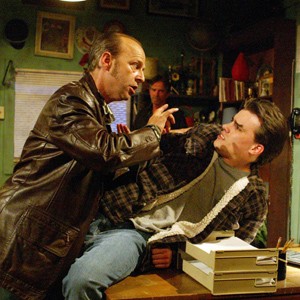
Scene From a Marriage: Andres Pazos and Mirella Pascual pretend to be married in ‘Whisky.’

A Different Lens

Global Lens takes the North Bay on a cinematic journey

By Jeff Latta

Bringing important or overlooked films to the North Bay is the first priority of the Smith Rafael Film Center. Sometimes the theater is lucky enough to book a series full of these types of films. One such extravaganza is Global Lens 2005, beginning its exclusive Northern California run at the Rafael on Friday, Jan. 21. The series, now in its second year, spotlights 10 foreign films that have been consistently overlooked for American distribution.

For those with a taste for black comedy, Global Lens brings the Bosnian film Fuse (2003), winner of the Silver Leopard Award at the Locarno Film Festival. This satire tells the story of a small Bosnian town soon after “peace” has broken out. Then-U.S. president Bill Clinton is coming for a visit, and comedy ensues as the townsfolk try to beautify and Americanize their town for their important visitor, right down to turning the local brothel into a “cultural center.” Darker, more dramatic fare includes the Argentinean dramas Today and Tomorrow (2003), about a first time prostitute and the emotional toll it takes on her, and Lili’s Apron (2004), about the dissolution of a marriage during Argentina’s financial meltdown.

Among the series’ other offerings are What’s a Human Anyway? (2004), a Turkish film about a taxi driver who reverts to a childlike state after being struck with amnesia; the 2004 Vietnamese coming-of-age film Buffalo Boy (winner of the top prize in the New Director’s Competition at last year’s Chicago International Film Festival), which uses the life cycle of water to reflect on the stages of human life; Daughter of Keltoum (2001), from Algeria, about a woman’s search for her mother among the Berbers, a people almost untouched by Western society; the heartbreaking Hollow City (2004), which follows a young boy in the aftermath of the Angolan revolution; Kabala (2002), a film contrasting ancient spirituality with modern pragmatism in the villages of Mali; and the Chinese film Uniform (2003), in which a young man’s fortune changes after he begins wearing a policeman’s unclaimed uniform.

The most hyped and award-winning film at Global Lens is Whisky (2004), a recent release from Uruguay and the official foreign language entry for this year’s Academy Awards. The story of Whisky is simple and entirely familiar. Jacobo (Andres Pazos), a sock-factory owner leading a humdrum life, asks his longtime assistant, Marta (Mirella Pascual), to pose as his wife when his successful “family man” brother (Jorge Bolani) comes to visit. This is the kind of plot we expect to find in a feature starring Julia Roberts or that adorable Meg Ryan. But this is not your typical romantic comedy.

Several clear differences in both story and style become obvious as the film progresses. The slow pacing, for example, is decidedly unlike American films. Filmmakers Juan Pablo Rebella and Pablo Stoll seem to simply enjoy using the camera. Long takes are plentiful throughout the 94-minute running time. Knowing that this is the duo’s second feature film only makes the confidence they display in this glacial filmmaking style more impressive, as they shoot drawn-out scenes of characters relaxing through a long cigarette break or leisurely employing a hot-air hand dryer.

In emphasizing their examination of the particular, Rebella and Stoll repeatedly use identical shots of the daily routine that dominates Jacobo’s life: opening his factory door, greeting his employees, fiddling with the mini-blinds. These show–in a way that could only be done by devoting precious running time to the mundane details–just how ordinary and simplistic his life truly is. A film from another culture might try to depict this more hastily, through metaphor or a hurriedly delivered monologue. But Whisky moves along naturally, at its own pace.

The choice of what to show and for how long to show it makes this film unlike anything that could come out of Hollywood. The ending is a final shock to those who have been suckled on the whiz-bang appeal of mainstream U.S. cinema. Don’t go into Whisky looking for the predictable ending; in fact, don’t hope for much of an ending at all. This is a film whose story and characters are allowed to come to their own conclusion, as simple and simultaneously unexpected as it may be.

Whisky is part of Global Lens for good reason: it shows American audiences what truly “foreign” films are like. This series doesn’t fill its space with crossover successes like Hero or countless other recent “flavor of the month” foreign art-house films. Culturally, aesthetically and artistically, these films demand to be taken on their own terms. Whisky exemplifies how different cultures can turn a familiar, even pedestrian, story into something entirely original.

All people try to work within their own environment and their own system of beliefs and ideals; filmmakers are no exception. Whisky shows us what Uruguay’s values are, both in filmmaking and life in general. To say that Whisky works as a movie–which it does–is not enough. To be worthy of Global Lens, a film must, as the series’ goals state, “promote cross-cultural understanding through cinema.” And Whisky certainly shows American audiences a culture different from our own.

Global Lens 2005 screens at the Rafael Film Center Friday-Wednesday, Jan. 21-Feb. 2. For more information on the Rafael Film Center and the Global Lens Film Festival, as well as a complete list of screening dates and times, visit www.cafilm.org.

From the January 19-25, 2005 issue of the North Bay Bohemian.

© Metro Publishing Inc.

Gym Tips

0

Remote, Control: Getting off the couch may be the biggest hurdle.

Mojo Rising

Local personal trainers offer tips on staying motivated in the gym

By R. V. Scheide

Five minutes into the first StairMaster routine I’ve done in months, my calves, thighs and buttocks scream bloody murder. My lungs rasp and wheeze trying to catch a breath. Cramps in both arches agonizingly contort my feet. A voice in the back of my head whispers that I cannot go on. Failure appears imminent.

It wasn’t always like this. For the past decade or so, I’ve been somewhat of a gym rat, working out at least three days a week on a continual basis. I’ve pumped iron, ridden stationary bikes and paid close attention to my diet. The effort paid off, slimming my waist to a Seinfeldian 32 inches. Then it all went to hell.

Ironically, the same thing that brought me to the gym 10 years ago–a severe lower-back injury–took me out of action some four months ago. Wisely, I stayed out of the gym while recovering from the injury.

Normally, I’d be eager to return as soon as possible. But as one week rolled by and then another, the urge to work out that I’ve cultivated for years never returned. I’d lost my motivation.

The results were disastrous. By New Year’s Day, I’d gained 25 pounds and my waist had ballooned to a pregnant 37 inches. Healthy eating habits fell by the wayside, replaced by my new favorite snack: sweet-and-sour gummy worms. Seemingly overnight, I’d morphed into the sort of pathetic, fat fool I’d always hoped to avoid becoming. Even worse, I could have cared less. My mojo was gone, totally kaput.

Which of course puts me in the same boat with just about everybody else who made a New Year’s resolution to get fit and healthy in 2005. Sure, it sounds like a good idea, but figures for the health-and-fitness industry show that up to 80 percent of those who make such resolutions fail to follow through on them. The primary cause for this massive failure rate? Lack of motivation. The question is, with so many people failing in their attempts to get in shape, how can such motivation be obtained and sustained? With my own lack of mo’ heavily in mind, I called personal trainers throughout the North Bay to discover how the experts keep their clients going.

Love Thyself

The first bridge anyone wishing to save his miserable fat ass must cross is to accept that his miserable fat ass is worth saving in the first place.

“Motivation is about learning to love yourself enough to take care of yourself,” says Diana Stowe, personal trainer and co-owner of Fem Sport Private Fitness and Weight Training in Santa Rosa, which caters exclusively to female clients. “The number one drawback is low self-esteem. People don’t believe they’re worth taking the time out to care for.”

Scott King, a personal trainer who works out of Sebastopol’s Coach’s Corner and Life Force Fitness in Healdsburg, states the same concept differently. “The common denominator for success is making fitness a priority,” he says. “Saying that you don’t have enough time to go to the gym is another way of saying you haven’t made it a priority yet.” Or saying that you don’t love yourself.

Those who continue to insist they just don’t have enough time to work out may be surprised to learn that high intensity weight training techniques such as “super slow” can produce significant results with just three 20-minute workouts per week.

“My clients show up every single week, because they know it’s only for 20 minutes,” claims Wes Hardy, a personal trainer and owner of Executive Fitness in Santa Rosa. Of course, considering that a single repetition of a super-slow exercise can take as long as 30 seconds–both the positive and negative movement are exaggerated, putting extreme stress on muscle fibers–those 20 minutes can be fairly excruciating. Afterwards, Hardy says, some clients have to “lie down and throw up.”

Often, says Clark Marchwordt, trainer and owner of the Fairfax Gym in Fairfax, it takes a health scare such as a heart attack to bring individuals into the gym. “Motivation comes from when you’ve reached that point where enough is enough,” he says. “I’ve got a lot of clients who are basically having a midlife crisis.”

It’s worth pointing out that if one can learn to love one’s self early on, before the aging process sets in, such health problems can be avoided, or at least postponed–a significant motivator in and of itself.

Going for the Goal

Once the decision to get in shape has been made, realistic goals must be set.

“A lot of people enter this process with a vague goal,” says King. “A vague goal will get you vague results.”

When personal trainers talk about setting goals, they have two time frames in mind, short-term and long-term. Most people start fitness programs because they’re interested in the long-term goal of looking and feeling better. Because it can take as long as six months before significant results manifest themselves, short-term goals such as the number and type of exercises to be performed on a daily and weekly basis must be clearly drawn out to keep an exerciser motivated.

In order to set these goals, a base measure of a person’s current physical state must be established. This is where the realism comes in.

“If a client who is 5’11” and 130 pounds comes in and says he wants to look like Arnold Schwarzenegger, I’m going to tell him to get real,” says Hardy.

Technology has greatly simplified setting realistic baselines. Nowadays, anyone can purchase a scale capable of measuring not only weight but body fat percentage. Computers are used to create workout schedules as well as nutrition charts. At Expertec Health and Fitness Center in Napa, clients use a computer program called a Visual Fitness Planner that generates virtual 3-D images of their before and after bodies.

However, for old-school trainers such as Marchwordt, the eyes still have it. “Standing stark naked in front of the mirror,” he says. “That’s a reality check!”

Whatever method is used, it’s important to believe that movement toward a goal is possible.

“It doesn’t matter how bad the picture is, it can get better,” says Stowe. “Once they have a taste of that, their whole lives turn around. It doesn’t matter what the picture looked like before, they can do this.”

Easy Does It

“One of the most common mistakes people make is that they try to go from zero days of exercise per week to working out six days per week, all at once,” says King. The problem seems to be particularly acute in men, who are often driven by their egos rather than common sense.

Such advice also applies to nutrition. Too often, we follow unrealistic models, whether it be exercises that are too strenuous or diets that are simply too rigid to tolerate for any length of time. It’s important that an individual’s short-term goals be doable, lest the long-term goal of health and fitness be abandoned out of frustration. Knowing when to reward yourself for accomplishing a short-term goal is key.

“I work out so I can eat,” Marchwordt says. “And I’m not gonna buy some diet steak–I’m gonna get the most beautiful marbled rib eye you’ve ever seen!”

Reward yourself. Easy does it. Sound advice, even though it’s not necessarily the easiest to follow. That’s why there’s a demand for personal trainers–to provide motivation to those who can’t find it within themselves.

Five minutes into my first StairMaster routine in months, gasping for air like a beached fish, I wonder where my motivation’s gone. “Easy does it!” I think, and reach over to turn the speed down from 10 to five. Breathing easier, I complete my 15-minute workout, one small step closer to finding my mojo again.

From the January 19-25, 2005 issue of the North Bay Bohemian.

© Metro Publishing Inc.

Jay Farrar

0

Prodigal Son: Jay Farrar ain’t no founding father.

High Voltage

Jay Farrar makes his peace with the past

By Greg Cahill

At 38, singer, songwriter and guitarist Jay Farrar isn’t completely comfortable with his status as a founding father of the alt-country movement. “Well, I am a father–I have two kids–but I don’t know about being a founding father,” he says, by phone from his home outside of St. Louis.

“That makes me sound like an old dude.”

He still lives just a few miles from his hometown of Belleville, Ill., the St. Louis suburb that fed the restless spirits of Farrar and his cohorts in the three-piece Uncle Tupelo, a band that, after splitting in 1994, spawned two more revered underground bands: Farrar and drummer Mike Heidorn spun off the tradition-bound Son Volt; guitarist Jeff Tweedy created the more experimental Wilco.

It’s easy to see why Farrar–who performs a solo acoustic set on Jan. 22 in Petaluma–gained a reputation as a reluctant icon of the movement he helped create. In concert, he has sometimes shied away from his Uncle Tupelo material, whether it’s playing a hillbilly gospel cover, an Ozark-inflected ballad or a bluegrass rendition of Iggy Pop’s “I Wanna Be Your Dog.” His first three solo albums were a mixed bag that ignored his strengths and tested the temperament of fans; 2003’s Terroir Blues even dished up experimental tape loops.

The critics weren’t kind. “Most fans would have guessed that Jay Farrar was a cinch for a brilliant solo career,” Mark Deming mused in the All Music Guide. “That hasn’t quite been the case.”

Ask Farrar about the Primitives–his and Tweedy’s first high school band–and their subsequent success with Uncle Tupelo and beyond, and the musician heaves a heavy sigh. “Oh,” he says. “You want to go way back there.”

Sure.

At a time when Nashville was romancing pop and rock, Farrar and his pals could be found huddled late into the night in Farrar’s parents’ cold, musty basement or in a cramped rehearsal studio in an industrial district littered with wood shops and batting cages, listening to scratchy records by the ’60s folk-revival group the New Lost City Ramblers and learning ’60s garage-rock covers.

Eventually, the trio fused the simple heartfelt sentiments of traditional music with the fire of punk. The twangy angst-ridden result was heard on the band’s 1990 debut No Depression, which took its title from an old Appalachian spiritual and subsequently lent its name to the rootsy sound that characterized the alt-country movement as well as the Seattle magazine that still chronicles its biggest stars.

The band recorded four albums, all reissued in the past couple of years with extra tracks, including their masterwork, March 16-20, 1992, produced by Peter Buck of R.E.M. But shortly after finishing the 1994 major-label debut Anodyne, Farrar and Tweedy parted ways. “There’s some truth to the notion that we both needed to chase our own visions and to allow us to mature as songwriters and people,” Farrar says.

Despite his reluctance to embrace his own past, “way back there” for the most part is where you’ll find Farrar these days. He recently released Stone, Steel & Bright Lights, a live album that resonates with the spirit of Uncle Tupelo and his best solo work. The album includes a cover of Pink Floyd’s “Lucifer Sam” by Floyd founder Syd Barrett, who was fired from his own band after melting down on psychedelics and mental illness, which was part of Uncle Tupelo’s concert repertoire for several years.

“I decided to resurrect it,” Farrar says.

He also resurrected Son Volt. Earlier this year, the original lineup reunited to record Alejandro Escovedo’s “Sometimes” for Por Vida, an all-star benefit album for the ailing Texas singer and songwriter. A legal spat has since led Farrar to hire replacement members for the upcoming Son Volt album. That new lineup will appear this spring at the annual South by Southwest music-industry bash in Austin, Texas.

“Son Volt has always represented a certain type of songwriting, a certain spirit, for me and I wanted to continue that,” Farrar says.

And where does the band fit in, long-term?

“Guess that remains to be seen,” he says. “I’ve got a few years left in me and expect to be around for a while. The best part of this is being able to do what I always wanted to do: play music as a professional. I feel fortunate to be doing that.

“Lucky, in a way,” he adds with a laugh, “because, at this point, I can’t do anything else.”

Jay Farrar appears on Saturday, Jan. 22, at the Mystic Theatre. 21 Petaluma Blvd. N., Petaluma. Anders Parker of Varnaline opens. 8pm. $15. 707.765.2121.

From the January 19-25, 2005 issue of the North Bay Bohemian.

© Metro Publishing Inc.

North Bay Hip Hop Theater Festival

Sole Man: Former U. S. National Dance champion Hypno performs his dance/theater work 'Astro-N-Matter' at the first-ever North Bay Hip Hop Festival.Coming of AgeHip-hop theater fest legitimizes the art formBy Christine LeeWherever hip-hop lurks nowadays, it's often quickly followed by the same tired critics expounding and complaining about the same tired issue: what is hip-hop? And what the hell...

‘Smart Solutions’

Still Life With Green Meat: The author, captured here in one of two separate photos, each taken on two separate occasions, when she had enigmatically smeared perfectly good roasts with green stuff.Boob TubeFighting willful nipples, Shrinky Dinks and computerized sewing machines, Sara Bir descends to semi-celebrity status on 'Smart Solutions'By Sara BirI don't watch television. This isn't so much...

Social Insecurity

Women and Children Last: This poster, created in support of the burgeoning Social Security movement in the 1930s, touts the importance of caring for others.Without a NetThe Bush administration wants to save Social Security by killing itBy R. V. ScheideAt the dawn of George W. Bush's second administration, everything seems to be up for grabs, including freedom itself. "The...

Word for Word

One Big Mind: The Word for Word troupe take literature literally.Copy CastWord for Word breathe new life into litBy Peter Koht"The hardest thing for me, working with this company, is to describe to people what we do," says Word for Word cofounder Susan Harloe. "Until people see it, they have no idea what¹s coming." For nine years now, Harloe...

Wanda Jackson

Rockabilly Royalty: Just a teen when her career started, Wanda Jackson has made music for half a century.Hard-Headed WomanThe gospel according to Wanda JacksonBy Greg Cahill"My dad always told me, 'If you¹re going to do something, be different at it,'" says Wanda Jackson, 'stand out in some way, do a little bit more.'"Jackson took her dad's advice. In the...

‘Fortune’

Photograph by Ed SmithDates With Destiny: Darren Bridgett and Julia Brothers tempt fate in 'Fortune.'High HopesMTC's sweet 'Fortune' tempts fateBy David TempletonThe undisputed hit of Marin Theatre Company's 2003-2004 season was The Last Schwartz, by New York playwright Deborah Zoe Laufer. A dark comedy about astronomy, furniture and family dysfunction, the play struck a deep chord with Bay Area...

News of the Food

News of the FoodOh! The Olio!By Gretchen GilesThe "In" basket runneth over as we rush to deliver just about everything we haven't of late. Beginning in the glorious raptor-filled skies of our western climes, the Station House Cafe in Pt. Reyes announces that during the winter, its goosing business with the new "Happy Hour and a Half," from 5pm...

Global Lens

Scene From a Marriage: Andres Pazos and Mirella Pascual pretend to be married in 'Whisky.'A Different LensGlobal Lens takes the North Bay on a cinematic journeyBy Jeff LattaBringing important or overlooked films to the North Bay is the first priority of the Smith Rafael Film Center. Sometimes the theater is lucky enough to book a series full of these...

Gym Tips

Remote, Control: Getting off the couch may be the biggest hurdle.Mojo RisingLocal personal trainers offer tips on staying motivated in the gymBy R. V. ScheideFive minutes into the first StairMaster routine I've done in months, my calves, thighs and buttocks scream bloody murder. My lungs rasp and wheeze trying to catch a breath. Cramps in both arches agonizingly contort...

Jay Farrar

Prodigal Son: Jay Farrar ain't no founding father.High VoltageJay Farrar makes his peace with the pastBy Greg CahillAt 38, singer, songwriter and guitarist Jay Farrar isn't completely comfortable with his status as a founding father of the alt-country movement. "Well, I am a father--I have two kids--but I don't know about being a founding father," he says, by phone...
11,084FansLike
4,446FollowersFollow
6,928FollowersFollow