Borders

04.08.09

We who write about film in the Bay Area like to think we keep a good eye on upcoming talents. And then a phenomenon like Cary Fukunaga comes along, and we’re caught with our pants down. Fukunaga lived around the Bay, growing up in the hills of East Oakland before moving to Sonoma County and then Albany.

Over the phone, Fukunaga says that he was a UC Santa Cruz grad in American history. He wrote his thesis on the politics of history-telling, which he illuminated with the story of two controversial exhibits at the Smithsonian. “It was great,” Fukunaga says of his five years at UC, adding that he didn’t become a film major there, because he thought the film professors were “pretentious.”

Instead, Fukunaga moved on to NYU film school. With the help of the Sundance Institute, he created a feature film as his thesis. His much-lauded debut, Sin Nombre, invites comparisons to Nicholas Ray’s They Live by Night and Terrence Malick’s Badlands. Yet Sin Nombre (“Without Name”), a tale of immigrants fighting their way north from Guatemala and Mexico, isn’t consciously modeled on any of these films.

I asked if he had been thinking of great film noirs in the movie’s closing scenes: Casper (Edgar Flores), a young lieutenant of the southern Mexico Mara Salvatrucha gang, hides in a shipment of cars to the U.S. border with his Guatemalan friend Sayra (Paulina Gaitan). She has been crossing Mexico by land in order to join her family in New Jersey. It is the exact moment where they go from fellow travelers to people in love. Casper knows he’s a goner; the graffiti he sees lets him know that his gang has pronounced him dead—the writing is literally on the wall.

Fukunaga does not mention crime-story movies when recalling this particular scene; what he was after, he says, was the magic-hour twilight shots of Iceland in Bradley Rust Gray’s 2003 Salt. “The theme of men on the run could be found in Westerns as well as film noir,” he says. It seems Fukunaga, 31, is an intuitive filmmaker, not all that comfortable spelling out the deeper themes or motives. In Sin Nombre, it’s what’s up front that counts.

For a young, first-time feature filmmaker, Fukunaga has succeeded at reconciling the tragedy and beauty of life on the run. The movie contains multitudes: pearlescent dawn shots of smoking volcanoes, barrios seen from the crowded top of a freight train, sleeper who loops his belt on a railing so he won’t fall off when he sleeps.

We’re in the company of immigrants who carry cell phones but are still reduced to drinking ditchwater. There are lyrical interludes of refuge at stops along the rail yards where the travelers bathe and are fed. On the railroad trackside, there are locals with offerings of fruit; sometimes they carry rocks to throw.

This passionately told and moody film includes the horrific side of urban Mexican life, of gangsters with home-made iron shotguns, whose faces are blue with demonic tattoos. In their lost-boys clubhouse, they butcher their rivals and feed them to their pit bulls.

But the film’s great moment of alienation actually takes place in the States. It’s a shot, high up and wheeling, of a vast and vacant shopping-center parking lot at dawn, as inhospitable as the surface of Mars. It’s rare we’ve seen the contrast of two separate worlds—the different sides of the border—made so clear and sharp. 

Explaining how he came up with the film’s title, Fukunaga says, “During my research, when I was at the Mexican side of the Rio Grande, I saw these crosses without names, dedicated to those who didn’t make it. I thought this was a very touching detail, about those who died trying to reach the American dream. The title refers to them—not only to the members of the gang who lose their real names when they go in.”

It’s interesting that this week there are two excellent movies about the immigrants’ tale, Sin Nombre and Sugar. Both films counter the sometimes hysterical rhetoric of nativist politicians with the stories of decent people caught between a hard place and a border.

‘Sin Nombre’ opens on Friday, April 10, at the Rialto Cinemas Lakeside, 551 Summerfield Road, Santa Rosa. 707.525.4840.


New and upcoming film releases.

Browse all movie reviews.

One Big Holiday

0

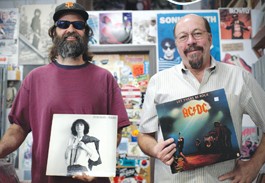
Neal Schneider stands behind the counter, arms covered in tattoos, harboring the same obsessions that just about everyone who works at a record store eventually develops. He memorizes the minutiae of catalogue numbers, develops alliances to long-forgotten bands and avidly loves what older people assess as irritating noise. One could never guess the extent of Schneider’s work, nor the important service he provides to the community, just by watching him cue up the next album on the in-store stereo.

Schneider, 28, is the manager of Bedrock Music in San Rafael, one of the few remaining independent record stores in the North Bay, all of which will celebrate Record Store Day on April 18. Developed largely online last year with a huge cadre of high-profile supporters, Record Store Day aims to remind the public about the important roles of the independent store: as community meeting place, local archive, encyclopedic resource, haven of opinion and, of course, still the best way to purchase music, human-to-human.

Artists like Bob Dylan, Modest Mouse, Bruce Springsteen, Tom Waits, Sonic Youth, Leonard Cohen, Wilco and the Flaming Lips are offering exclusive Record Store Day releases, and many stores are having in-store performances and sales. It might be a fake holiday, but it’s one that just about everyone can get behind.

Bedrock is unique in that it is owned by Four Winds West, a nonprofit residential treatment program in Fairfax for young adults aged 18 to 28 who have difficulties functioning in the world due to bipolar disorder, social phobias, ADD, addiction recovery or other issues. Over a three-month internship at the store, clients accumulate the job experience and self-esteem to transition into the work world.

As manager, Schneider not only sells the latest albums by Bruce Springsteen and Of Montreal, he advises interns on manners, dress, skills and responsibility. “Each one will have different specific needs,” he says. “Someone has trouble with personal interaction, for example. We can really focus on that. Or someone might have trouble with numbers—we can focus on the cash register.”

Schneider’s reward comes when he hears from former interns who have succeeded. He spent months training a worker who had a problem with authority, and once she moved on to another job, she called to say thank you. Other former workers have moved into their own apartments, gone to college or gotten jobs at grocery stores based on their experience at Bedrock.

In a half-hour span, Schneider addresses almost every customer who comes through the door by name. He spends a very patient 12 minutes dealing with a group-home customer who deliberates on his choices and eventually buys a $1 cassette tape. Schneider drops the change in the bag; he knows that’s the way this customer likes it. “What’s sad is that probably our kids’ generation will never have that High Fidelity experience of growing up wanting to work at a record store,” he says. “It’s an experience that might not be around for much longer.”

Toni Brown, of the Bay Area band Joy of Cooking, started Four Winds West in 1991 and saw a unique opportunity to buy Bedrock Music in 2005. “It was very hard to find jobs for these kids,” she explains. “It’s difficult enough when you have a recession and nobody can find work, but tougher if you don’t have any job skills and you’re looking for entry-level work, and you’ve got issues, you’ve got challenges, you’ve had a rough go.”

Schneider once worked at the Wherehouse, and then Cargo Records, a label in San Diego, where he saw firsthand the industry downsize. These days, he sells a lot of classic rock to Marin baby boomers. “So are there a lot of young people in Santa Rosa?” he asks at one point. “‘Cause that’s the one thing Marin is really missing.”

Bedrock Music & Video, 2226 Fourth St., San Rafael. 415.258.9745. On April 18, 10 percent off storewide, 15 percent for students; free coffee and cookies.

A Santa Rosa Institution

The amps are cranked, the store is full and young people have turned out in droves. In the corner of the store, Classics of Love, featuring Operation Ivy’s Jesse Michaels, finish their last song, reminding people to support independent record stores. A few days later, Tom Waits makes a routine visit to buy records. So does Jello Biafra. Then Charlie Musselwhite. It’s just another week at the Last Record Store.

Founded in 1982 by co-owners Doug Jayne and Hoyt Wilhelm, the Last Record Store became the largest independent record store between San Francisco and Portland by doing things the “wrong” way. From the beginning, they stocked unknown underground bands, wrote down the store’s sales by hand and continued to carry vinyl when other stores abandoned the format. Even weirder: they actually let me work there for 14 years.

Theirs is a good example of how a record store can remain vital in a post-iPod world. Weekly movie nights and a constant schedule of in-stores are announced via weekly email newsletters, MySpace bulletins and Facebook notes. But the real wealth here is in the endless stock and combined knowledge of the staff on all manner of genres—popular and obscure, local and foreign. When Waits, in a quote for Record Store Day, says “Folks who work here are professors / Don’t replace the knowers with guessers / Keep ’em open, they’re the ears of the town,” it’s hard not to think of the store he frequents most.

Last Record Store, 1899-A Mendocino Ave., Santa Rosa. 707.525.1963. On April 18, exclusive giveaways, $2 off all used, $1 off all new and a free performance by Volker Strifler Band and Bob Livingston at 1pm.

Rarities Galore

I’m in the back of Red Devil Records when I overhear the request for Coldplay from a customer who’s strolled into Barry Lazarus’ San Rafael shop. Coldplay is the biggest band in the world, with a huge hit topping the charts. But the answer is no. Red Devil doesn’t have the Coldplay CD.

What it does have, much to my amazement, is an original copy of Alan Silva and the Celestrial Communication Orchestra’s Seasons, a triple-LP set of the most outrageous and majestic avant-garde jazz I’ve ever heard. I last saw a copy 13 years ago, and I’ve never forgiven myself for passing on it. It’s here. It’s expensive. I hold it in my hands and gape.

Red Devil Records is all about finding the records that you wish you could own and then justifying their price tag. Punk and jazz are specialties, with plenty of Dead and Dylan to satisfy the ex-hippie Marin crowd. Flyers adorn the walls for shows you’d either kill to see or bands you’ve never heard of, and Lazarus’ beautiful black dog sits near the counter, greeting new customers that walk through the door while Lazarus prices rare LPs.

I cave. I buy the Alan Silva. On my way out, some guy with no teeth and a raspy voice is standing in the doorway, bragging to Lazarus about how much his Beatles albums are worth. I shoot a sympathetic look. He laughs. It’s the business.

Red Devil Records, 894 Fourth St., San Rafael. 415.457.8999. On April 18, storewide discounts and exclusive releases.

Museum of Lipsin

Don’t bother Googling “Incredible Records” —all you’ll get is a webpage complaining about high prices. The true way to experience this Sebastopol-by-way-of-Montreal shop is in person. A documentary on the store begins shooting this week, no doubt covering Lipsin’s own illustrious past as a rabble-rousing underground paper staffer and countercultural denizen who once snuck in to see Led Zeppelin because he couldn’t afford the $2.50 admission.

Randy Bachman’s signed Fender Jaguar from “American Woman”; a Bruce Springsteen tour jacket; a signed photo of Gordon Lightfoot; drawings made by a 14-year-old Jim Morrison—all of these and much, much more are collected in cluttered glory, looking down on the “500 CDs to Listen to Before You Die” display, the infamous “Pagan / Goddess” section and, as always, Lipsin’s knowledgeable recommendations.

Incredible Records, 112 N Main St., Sebastopol. 707.824.8099. On April 25 (“Because we’re rebels,” Lipsin explains), inventory sale and in-store appearances by the Analy High cast of Beauty and the Beast and Music for Animals at 1pm.

Novato’s Niche

Celebrating its 30-year anniversary this year, Watts Music has a sure-fire way of staying in business amid a rocky music industry. “We don’t stock Top 40. That’s crap,” says manager Darren Chase. “Go to Target for that, and good luck, because that stuff doesn’t last. You’re gonna look back on the Top 40 artists of today next year and say, ‘Who?'”

Of course, that didn’t stop Top 40 mainstay and American Idol winner Jordin Sparks from stopping by to buy some Michael Jackson and Crosby, Stills & Nash records just two weeks ago; Watts also sees its share of Metallica, Huey Lewis and the Doobie Brothers members returning to its racks, which are heavy on rock, punk and blues. “Loyalty is our biggest reason why we’re still here,” Chase says. “And customer service is such a thing of the past. We still provide it.”

After 18 years at Watts, Chase remains authentic. “Christ, when you think of Novato,” he says, “it’s all hair salons and boutiques, Costco and Target. That’s what Novato’s known for! We’re the old-school Novato.”

Watts Music, 1211 Grant Ave., Novato. 415.897.2892. On April 18, exclusive releases and discounts on records.

Pills & Bargain Thrills

In a rare admission among record store owners, Phil Lieb at Vinyl Planet tells me he doesn’t know that much about country music. The longtime Petaluman, who once played in the ’80s punk band Trap-a-Poodle, is pricing out rare records by the Louvin Brothers at 25 cents each. I descend.

In 2004, Lieb expanded the inventory at his vitamin shop to include vinyl, filling a void on Petaluma’s record-store map. Lieb’s happy to charge modest prices on everything from John Zorn to Tones on Tail. His is probably the only store that can sell you antioxidants and Anti-seen in the same transaction, or, as he’s done in the past, traded record collections for vitamins.

Vitamins still account for 80 percent of Lieb’s sales, but vinyl sales continue to rise. Does anyone think the combined inventory is strange? “People walk into Costco and get their plastic gallon of vodka and get their Lipitor at the pharmacy, and pass by the new tires, and think nothing of it,” Lieb says. “This isn’t much different.”

Vinyl Planet, 112 Washington St., Petaluma. 707.765.0975. On April 18, 25 percent off vinyl and free in-store concert by Erstwhile Medicine Show at 4pm.

Maintaining Village’s Legacy

After working at Village Music for 25 years, Mill Valley Music owner Gary Scheuenstuhl couldn’t imagine any other life for himself when the iconic Mill Valley shop owned by John Goddard closed last year to make room for a salon, a pet-pampering store and a cupcakery. “It’s a labor of love,” he says, standing behind the counter of his new store on Miller Avenue, wearing a Ray Davies T-shirt, listening to Henry Cow and rifling through a 1,500-LP collection to purchase. “This isn’t a way to get rich, believe it or not.”

In a two-story building of mostly vinyl but also CDs, DVDs and scattered racks of T-shirts, one finds plenty of rarities around Scheuenstuhl’s shop. He’s dabbled in internet sales, but “then you become a computer guy who enters data and goes to the post office,” he explains, as he rings up a Grateful Dead set on Village Music’s old crank-operated cash register. “That’s not why I got into this! I got into this because I love music.”

Mill Valley Music, 320 Miller Ave., Mill Valley. 415.389.9090. On April 18, 30 percent off used and 20 percent off new, except consignment. On April 25, Dan Hicks plays a free in-store concert at 3pm.

Ch-Ch-Changes

Backdoor Disc changed dramatically in 2005 when Cotati’s long-running hometown record store was sold to a national chain, Value Music Concepts Inc., based in Georgia. More toys, more video games, more sunglasses and apparel suddenly filled the aisles. Some of the staff remained—for a time. Most people now hardly recognize their old haunt, and even recently, corporate headquarters replaced Backdoor’s manager with a transplant from Alabama to run things.

In spirit if not in proper definition, Backdoor remains a signpost on the local record store roundup. The staff is friendly and qualified, the selection includes local bands, the racks are home to KRSH’s “CD Pick of the Week” and, in an ironic twist, they’ve started selling vinyl again, years after changing their name from Backdoor Records to Backdoor Disc.

Backdoor Disc, 7665 Old Redwood Hwy., Cotati. 707.795.9597. On April 17, an in-store appearance by Electric Funeral at 7pm. April 18, live in-stores by East Coast Kids at 2pm, Sonicbloom at 6pm, and special sales, exclusives and sidewalk clearance throughout the day.

Folk Yeah

0

04.15.09

In 2004, Los Angeles&–based music magazine Arthur produced a compilation of songs called Golden Apples of the Sun, a title borrowed from the last line of the W. B. Yeats poem “The Song of Wandering Aengus.” Curated, illustrated and hand-lettered by hirsute folk revivalist Devendra Banhart, the CD featured tracks by winsome harpist Joanna Newsom, Antony (of Antony and the Johnsons), sister-act CocoRosie, psychedelic rockers Six Organs of Admittance and underground legend Vashti Bunyan, and acted as an early rough guide to a burgeoning movement soon to be crowned “new weird America,” or, with increasing regularity, “freak folk.”

Many of the artists on the prescient collection shared an affinity for dramatic singing styles—influenced equally by the ghosts of Billie Holiday, Elizabeth Cotton, Tiny Tim and even occasionally, dare it be said, Alfalfa from The Little Rascals. Banhart was crowned ringleader of this motley group by the music press. It was easy to imagine him frolicking through a light-mottled green wood, spreading fairy dust and leading his community of fellow strange ones toward the misty mountain hop, a pied piper of the ghost of ’60s past.

When asked in a recent interview to describe the sound of his own records, Banhart responded with a Melvillean-extended metaphor that emphasized a vision of himself as only one component in a community of musicians: “Ben Chasny [from Six Organs of Admittance] is the garden, and I’m the snail eating the lettuce in the garden. Antony is a big palm tree with suns instead of coconuts, CocoRosie is the water, and Vetiver is sunbeams. Joanna Newsom is roots that grow upwards, and Espers are your soil covering,” Banhart said, in a loungey West Coast drawl punctuated by liberal doses of you knows.

But when Banhart appears on April 17 at the Mystic Theatre, two days before a scheduled appearance at Coachella, be sure not to mention the term “freak folk” within 50 feet of his flowing beard. “I would be embarrassed to have invented such a tacky term,” Banhart said in a 2007 interview with Rolling Stone magazine. “I have my own definition of folk,” he continued, “the way I look at it is shattered. Folk really is music played for the people, by the people.”

Born in Texas and raised by his mother in Venezuela, where he learned the Spanish language in which he often sings, Banhart later attended the San Francisco Art Institute. While in San Francisco, the budding guitar player lived in the Castro with a gay couple he called “Bob the Crippled Comic and Jerry Elvis.” His first official gig was singing the gospel hymn “How Great Thou Art” and Elvis Presley’s “Love Me Tender” at their wedding, and life has been uphill for Banhart since. His albums have been well-received by the independent press and audiences alike, garnering Banhart a fame that he parlayed into a cameo role in the indie teen film Nick and Norah’s Infinite Playlist—not to mention a short stint as actress Natalie Portman’s boyfriend.

A period of time spent living and recording in Topanga Canyon, where Neil Young, the Doors and Joni Mitchell spent their formative years creating new sounds inspired by the bent mysticism of ’60s Southern California led to the recording of the 2007 XL Recordings release Smokey Rolls Down Thunder Canyon, Banhart’s most critically acclaimed record to date.


Banhart’s music has continually evolved over the years, transforming from goaty-throated folk tunes like “Little Yellow Spider,” which pays homage to squid, crows and pigs; the catchy, Os Mutantes tropicalia of “Carmensita”; the soulful “Seahorse” from Smoky Rolls (“I’m high, I’m happy and I’m free”); to the recently released cover of “Forget About Him,” a lovely, simple tune written by obscure folk-blues singer Kath Bloom in which Banhart channels a bit of Mick Jagger doing a vowel-laden jig over an organ-heavy jam.

These days, it appears Banhart has strayed further from the folk-yeah energy of his early recordings for his newest material. He claims that a certain recording on his to-be-released new album has the “weird vibe of cowboy songs” while another rests on an ’80s-style electro-pop beat reminiscent of Hall and Oates’ “I Can’t Go for That.” Eclectic sounds from Devendra Banhart? We should expect nothing less. 

Devendra Banhart brings his songs and his beard to the Mystic Theatre on Friday, April 17. 23 Petaluma Blvd, Petaluma. 8pm. $20&–$23. 707.765.2121.


Organic Idol

04.15.09

Are you an organic-food true believer? As sales of organic products slow, the organic industry is searching for its first-ever representative, and it could be you. The Organic Trade Association (OTA) and Organic Agriculture and Products Education Institute are conducting a national American Idol&–type search for a regular guy or gal to be their public face. Celebrities need not apply.

As part of its new promotional campaign, the association is soliciting audition videos through May 8 from fans of organics who can state why they think organic food is worth it. The new campaign, surprisingly enough, is called “Organic. It’s worth it.” The OTA is a membership-based business association for the organic industry in North America. The organic institute is the nonprofit arm of the OTA.

To submit an entry, go to the Organic Institute’s YouTube group at www.youtube.com/group/organicidol and upload a 30-second video explaining “the moment you realized organic was worth it.” The organic institute says that it is looking for “heartfelt, creative and quirky videos.” The OTA will consider the top 12 videos with the most views by May 8 as the contest finalists. Then representatives from OTA’s member organizations will select the winning spokesperson whom they will unveil at the All Things Organic show in Chicago, June 17&–18.

While they won’t say it, I believe part of the motivation for the campaign is an effort to shore up the flagging market for organic products in the tough economic climate. Sales of organic products were growing at a steady, 20 percent clip for years, but fell off sharply at the end of last year as the severity of the recession hit home.

According to the Nielsen Company, a market research firm, in the four-week period that ended Oct. 4, the volume of organic products sold rose just 4 percent compared with the same period a year earlier. In 2007, organics saw 27 percent sales growth during the same four-week period ending Oct. 6, 2007. However, the data does not represent organic sales at farmers markets and farms, because these locally made and produced products don’t carry bar codes and aren’t tracked by Nielsen, so the actual sales figure is probably slightly higher.

According to a report in the New York Times last year, the economic crisis has put the organic industry at a crossroads. Although there is a group of core customers who consider organic products a top priority, the sales growth of recent years was driven by a much larger group of less committed customers. The article says the weak economy has prompted many of them to choose which marketing claim, if any, is really important to them. And when push comes to shove, many consumers regard organics as a luxury they can no longer afford.

As a sign of the times, Whole Foods market, the nation’s largest purveyor of organic products, is no longer the Wall Street dynamo it once was. The Austin-based store has seen its stock fall off a cliff from a high of more than $77 in January 2006 to just under $19 last week. The store has long endured “whole paycheck” jabs and a reputation as a luxury market.

That’s just the kind of attitude the OTA is hoping to change with its new spokesperson and campaign. My guess is a fresh-faced (Latina?) woman with young children who gets across a message that organic food and products are not luxuries but part of a healthy, happy life will take the prize. Stay tuned.

Quick dining snapshots by Bohemian staffers.

Winery news and reviews.

Food-related comings and goings, openings and closings, and other essays for those who love the kitchen and what it produces.

Recipes for food that you can actually make.

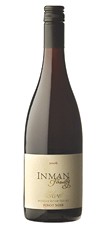
Inman Family Wines

0

Spring has sprung in the vineyard, when the downy-covered buds wake from their slumber, bursting forth with the promise of a new vintage, their tiny tendrils reaching for the April sun—but we can take only so much of that kind of purple prattle before we lose our steamed asparagus. Instead, let’s visit another warehouse winery. Inman Family Wine’s tasting room and warehouse suite is in an industrial park carved out of weedy rangeland south of Windsor. Over the fence at SRJC’s police academy, blue-capped students practice barking orders, and I’m sure I heard the crackle of small arms fire in the background.

Kathleen Inman is a Napa native and one-time harvest intern who took a roundabout route back to the business. While studying in England, she met up with a Brit and the couple spent 15 years overseas; as a member of the Royal Horticultural Society, Inman maintained gardens and a love of wine (her unconscious, half-accent was confounding until I heard the backstory). Back in the States, she tackled what she calls her “industrial garden,” seven-plus acres of estate grown Pinot Noir on Olivet Lane in Santa Rosa.

Tasting starts with the 2007 Russian River Valley Pinot Gris ($25). Perfumed with white citrus blossoms and powdered sugar, the sweet-bodied wine sneaks upon the finish with a kicker of acidity that makes pairing with light cream-based entrées a must. Inman purposefully makes her 2008 Rosé of Pinot Noir ($25); it’s not a saignée de cuvée. Delicate and pale brick-pink, suggesting fresh split redwood and baked strawberry, it’s got a sensation of light sweetness.

Much Pinot debate of late has juxtaposed dark, fruit-forward Pinot against lighter, “restrained” styles. These seemed to fall outside of the stereotypes. The 2006 Russian River Valley Pinot Noir ($45) has anise and cocoa, chocolate-cherry liqueur aromas, with forest notes and an even, dry finish. The 2006 Thorn Road Ranch Pinot Noir ($52), from an unusual Russian River Valley location that’s above the fog line, could be accused of being un-Pinot-like; more like a Rhône Grenache, it’s woodsy, with big black cherries and brambleberries. Big, but again, not heavy or sweet.

From Inman’s own vineyard, the 2006 Olivet Grange Vineyard Pinot Noir ($52) has a minty herbal nose, plum-cherry with just a warm hint of barnyard, with an even, mineral finish. Describing the ironlike center palate, Inman beat me to the punch—but as concerns iron character in wine, this is the good kind.

Refreshingly, Inman says that not all wines designated “single vineyard” are necessarily distinct from one another. I think these, especially the latter two, are making for a good reason to visit this industrial outpost. Or wait a while, because the Inmans are breaking ground on a new tasting room. It will be nestled, of course, in the vineyard, down where erstwhile buds greet the morning sun, the dew glistens on lazily ripening grapes, and little birds land upon one’s shoulder.

Inman Family Wines, 5793 Skylane Blvd., Ste. C, Windsor. Open for tasting Fridays and Saturdays 11am–4pm, and by appointment. 707.395.0689.


View All

Old(ish) Growth

0

04.15.09

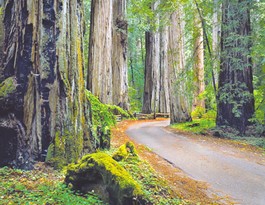
Attending a party among a forest of senior residents may not sound like a wild time. But at this celebration you really can take a walk on the wild side as the Armstrong Woods State Natural Reserve, the only old growth redwood forest open to the public in Sonoma County, celebrates its 75th birthday. This state preserve comprises 805 acres of magnificent Coast Redwoods, and was originally designated a natural park in the 1870s by its owner, Colonel James B. Armstrong.

The celebration is all the sweeter after Gov. Schwarzenegger’s near hack job on the place in January 2008, when he proposed closure (read: termination) of 48 state parks as a way to help balance California’s budget. Under the spearhead of the Stewards of the Coast and Redwoods, thousands of petitions, postcards and letters implored the governor to rethink his plan and keep the park open. And unlike so many economic tales these days, this story has a happy ending. Schwarzenegger reversed his proposal, and the state parks remain open for all to enjoy.

On April 18, a slate of birthday events starts off with a redwood ecology seminar, familiarizing participants with this unique ecosystem (registration required). State Parks environmental scientist Brendan O’Neil discusses the coast redwoods from tip to toe, canopy to roots. After a short break, revelers can take part in a ceremony with guests Congresswoman Lynn Woolsey, Fifth District Supervisor Efren Carillo, and Gaye and John LeBaron, among others. The LeBarons are descendants of a local, prominent family that, together with Luther Burbank and park founder’s daughter Lizzie Armstrong, successfully campaigned to preserve the grove for public use. Known for their vast knowledge of local history, the LeBarons and park staff will share tales of their experiences among these living giants.

The ceremony is followed by a cultural history walk, led by park docent and local author Doris Dickenson. Dickenson’s new book about the park’s founder offers an insider’s perspective on the creation of the preserve. Space is limited to 20 participants to decrease the impact on the woods, and registration is essential.

A silent auction, free and open to the public, wraps up the day. The reception culminates with Champagne and birthday cake (though candles pose a challenge) and no doubt a familiar song. And the birthday wish? For at least 75 more years.

Armstrong Woods State Natural Reserve, 17000 Armstrong Woods Road, Guerneville. April 18, 9:30am until close. For more info, visit www.stewardsofthecoastandredwoods.org.


Museums and gallery notes.

Reviews of new book releases.

Reviews and previews of new plays, operas and symphony performances.

Reviews and previews of new dance performances and events.

A War on Bees?

0

04.15.09

DOING WHAT COMES NATURALLY: Bee cross-pollination can result in seedless oranges with seeds. Farmers and apiarists are at odds over the solution.

In the San Joaquin Valley’s citrus belt, seedless mandarin growers and beekeepers have been deadlocked since 2007. It was just two years ago that citrus farmers began finding seeds in their supposedly seedless fruit. It’s the bees’ fault, they have since argued, for cross-pollinating their seedless trees with other nearby citrus varieties.

Citrus farmers and industry reps have demanded that beekeepers leave or at least stay away while trees bloom in March and April, but many beekeepers have refused. They argue that not only have they been welcomed in the citrus belt for decades, but also that citrus pollen and nectar provide nutrition crucial to their colonies. Now, as some mandarin farmers protect their trees with fine-mesh netting while others anticipate another ruined crop, the outcome of the matter remains in the air.

Serge Labesque says the farmers themselves are at fault. Labesque, a teacher of beekeeping at Santa Rosa Junior College, believes farmers had this all coming from the moment, about 10 years ago, when they first planted seedless murcott mandarins, a variety then new to the state, in close proximity to their seedless clementine mandarins. When the pollen of these two varieties mingles, seeds appear in the fruits of each, which often reduces the crops to fruit juice status.

“The farmers just needed to do a little basic homework before the planting of the trees,” Labesque says.

Murcotts, he adds, have been grown for many years through much of Europe, and the techniques for keeping the fruit seedless are well-known: farmers must give consideration to the existing bee population, the types of citrus already planted and the availability of other possible bee forage during the seedless citrus bloom, because if there is nothing else to eat, the bees will come from miles around for the citrus blossoms. California’s farmers failed, however, to appropriately distance their murcott plantings from the varieties that produce compatible pollen at the same time, and today roughly 25,000 controversial acres of mature seedless mandarin trees grow in the citrus belt. Another 7,000 acres will come into production in the next three years, and the situation is almost certain to intensify.

The problem stems from 1998, when a freeze destroyed most of California’s citrus crop. During that season, Spain edged its way into California’s market with its seedless mandarins.

“Then, in ’99 and 2000, when the next crop of navels and Valencias came around, all of a sudden no one wanted them,” explains Joel Nelson, president of California Citrus Mutual, a citrus growers trade organization. “Everyone wanted seedless fruit.”

So out came the oranges and in went the seedless mandarins. According to Nelson and other industry captains, they planted the trees in what they believed were sufficiently isolated locations. In other cases, they ringed their seedless groves with navel orange trees, whose pollen is sterile when mingled with murcott blossoms. The hope was that the navels would serve as buffer and keep the bees from the murcotts.

But the bee population has proven too intense, says Nelson.

“We knew this could be a problem. We just didn’t expect it to happen to the extent that it has.”

But Los Banos beekeeper Gene Brandi, also the legislative chairman for the California State Beekeepers Association, says he knows of some farmers that took no avoidance strategies whatsoever. The citrus-growing giant Sun Pacific, for one, planted some of its murcott trees adjacent to its clementines, according to the company’s vice-president of sales Barney Evans, and Labesque and others suspect that at least some citrus farmers assumed that, when the time came, they could easily boot the bees from the area.

In fact, farmers tried in 2007 to implement radial “no-fly zones” of two miles surrounding all murcott plantings, which would have eliminated bees from most of Kern County, says Labesque. Beekeepers relented. Later that year, Assembly Bill 771 mandated that beekeepers and farmers come to a reasonable solution. This year, the state Department of Food and Agriculture entered the fight with a set of proposed regulations, currently undergoing a public comment period.

If they become law, the regulations will require that beekeepers pre-register their hives in specific locations before the late-March murcott bloom. Farmers who dislike certain placement plans would then have the opportunity to object and suggest suitable alternative locations where the bees could still find ample flower forage. According to the proposed regulations, persisting disputes would eventually go to the hands of the county agricultural commissioner, who Labesque fears will side with the farmers more often than not.

He warns that if farmers win this fight and succeed in bumping bees not only from their own land but from nearby properties as well, the ramifications could be devastating for honeybees everywhere.

“It’s more than just citrus versus bees. It’s a civil rights issue. This could set a very dangerous precedent, and if citrus farmers can force bees off their lands, other farmers might want to do the same.”

Owners of genetically modified plant patents, for example, might ask for removal of nearby bees to eliminate the risk of their crops’ DNA spreading outward into the hands of competitors. Organic farmers, too, might want bee-free buffer zones between themselves and genetically modified plants to keep the latter from infecting their products, says Labesque.

Partners for Sustainable Pollination, based in Santa Rosa, was officially founded in July 2008 in answer to what executive director Kathy Kellison sees as an increasingly bee-hostile environment of rural and urban America. Kellison believes that consumers must understand the issues facing bees and, given a choice, place their dollars in the hands of those farmers who provide ground cover forage for bees and otherwise strive for coexistence pollinators.

“People need to realize how hard it is for beekeepers to properly nourish their bees,” says Kellison. Honeybees depend upon access to a multitude of plants for a nutritionally complete diet, she explains, and the heavily monocropped farmlands of California provide a challenge for beekeepers trying feed their colonies. As a result, they must move their bees regularly through the year while staying alert to pesticide spray schedules.

Partners for Sustainable Pollination is now in the midst of developing a “bee-friendly farming” certification program which, like the familiar USDA organic program, would award a product stamp to farmers whose practices meet a strict code of ethics. But for the stamp to carry any significance, it must be recognized and understood by consumers, and while colony collapse disorder has been widely covered by major media, says Kellison, bees and politics is a new yet urgent issue. Though some wineries and other local landowners have taken efforts to turn their properties into bee havens, much of the rest of the world is going the opposite direction, she says.

Now, in Kern, Tulare, Madera and Fresno counties, a small proportion of the mandarin groves are being netted to keep the bees out as the flowers bloom. For beekeeper Steve Godlin, who has placed his hives in local orange groves for more than 30 years, the effort comes as a great relief.

“I realize that we can work together. It means they can still have a seedless product and I can still go to the orchards and make honey.”

But Nelson says that there isn’t enough nylon to go around. There is only sufficient netting currently available to cover roughly a fourth of the seedless mandarin trees in the citrus belt. Plus, the nets are expensive; only large corporations can afford them, says Nelson, and small family farms will likely be left exposed.

“The netting is not a solution. All it does is put more pressure on the balance of the industry and leaves the guy with a hundred acres that much more vulnerable to cross-pollination issues.”

California’s Right to Farm Law (Civil Code section 3482.5) protects established farming operations, including beekeepers, from nuisance claims. Citrus growers and beekeepers have both argued that they fall under the law’s protection. If farmers win this battle, it could mean war on bees.


Lost and Found

04.15.09

Just six years old when his village was blown apart by northern Sudanese government militia, Valentino Achak Deng one afternoon became an unwilling member of the Lost Boys. So called because for the 20-plus years that they fled southern Sudan, these 27,000 children were largely unattended by adults as they walked hundreds of miles to what they hoped would be safety in Kenya and Ethiopia. There they were housed in massive refugee camps where they attempted education, thousands of them eventually emigrating to the United States, Deng among them. He settled in Atlanta, Ga., and tried American normalcy, working at a health club and attending community college.

One night, Deng heard a knock on his door. Standing in the hall was a man who asked to use his cell phone. Deng let him in. In novelist Dave Eggers’ hands, Deng’s subsequent mugging in his own apartment—he was bound and tied and left on the floor under the indifferent watch of a 10-year-old boy—offers the here-and-now framework that allows the telling of his then-and-there story.

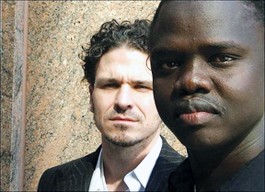
Eggers’ skillful weaving of Deng’s life became What Is the What? , first published in 2006. Now out in paperback, the book has been embraced by Marin County’s One Book One Read program. Eggers and Deng appear with moderator Michael Krasny on April 23.

Eggers was alerted to Deng by Sudan activist Mary Williams, who contacted him in 2003 and essentially ordered him to drop all else and fly to Atlanta. There he met Deng, with whom he felt an immediate connection. The two men holed up and Deng told his story over the course of 12 hours. Eggers promised to craft the tapes into a book with all proceeds going to Deng. Three years later, the difficult narrative was done and the Valentino Achak Deng Foundation began its work to rebuild Deng’s own village and to provide essential humanitarian services to Southern Sudan.

But my own earnest retelling gives not a whit of the beauty of this miraculous book. Fictionalizing that which couldn’t be accurately reconstructed, Eggers uses the plain words of Deng’s own hard-won English to describe how he and other Dinka boys walked, died and survived during decades in the desert. That life in the States would also be overwhelmingly tough is only one more difficult truth in this stunning book.

In addition to appearing on Thursday, April 23, at Dominican University of California (500 Acacia Ave., San Rafael. 7pm. Free. 415.485.3202), Eggers also meets with teens on Wednesday, April 22, at the St. Andrew Presbyterian Church (101 Donahue, Marin City. 7pm. Free. 415.332.3790).


Museums and gallery notes.

Reviews of new book releases.

Reviews and previews of new plays, operas and symphony performances.

Reviews and previews of new dance performances and events.

Soul Food

0

04.15.09

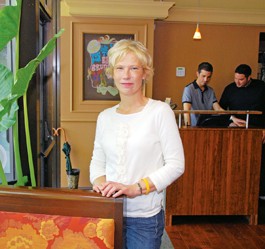
You create everything in your life” is painted in handwritten scrawl just above the kitchen window. Faded blue wood panels collected from old boats are tacked to the walls. Small tables are scattered about. Two C-shaped booths are pushed up against large windows giving full view out onto Third Street. Passersby look in. Diners look out. Meet GG’s Earth and Surf, the first green-certified restaurant in Santa Rosa.

Suzan Fleissner, the owner of the recently opened vegetarian/pescetarian restaurant says that the quote on the wall was her mom’s. Formerly, it lived on a scrap piece of paper beneath a magnet on her fridge for years before she found the perfect place to put it, right on her restaurant wall. Fleissner named her restaurant GG’s in memory of her mom, Gudrun, whom her own children called Grandma Gudrun. “I found myself searching for a name that would make me happy to hear over and over again,” Fleissner says. And the space itself is not without Grandma Gudrun’s influence.

Aside from her quote on the wall, Fleissner kept in mind her mom’s favorite saying, “If it isn’t used, it isn’t loved,” while shopping for the restaurant’s décor, purchasing most of it second-hand and refurbishing it herself. The tables are from the Flamingo in Santa Rosa, the booths from Roy’s in San Francisco, and the blue wood on the walls from a scrap lumber yard in Berkeley. Over the last 10 years, Fleissner said that she ate out a great deal with Grandma Gudrun, who enjoyed trying new restaurants in the area. As a result, Fleissner became increasingly interested in restaurants offering local and sustainable foods, an interest that would inspire her to open GG’s.

During a recent Wednesday lunch, Fleissner is hard to pin down. Informally clad in jeans, a white collared shirt and a gray sweater, she doesn’t stand out as the owner. The restaurant has hardly been open a month, and already the press has been in two or three times, and the buzz about the restaurant that finally occupies “that empty space” on Third Street has caught up. Patrons come in talking among themselves about the inexpensive fare and the already famous Sunday brunch.

When she sits for a moment, Fleissner is warm but distracted, her eyes constantly scanning the restaurant while she talks. She answers questions quickly, leaving expounding detail at the door, seeming eager to get back to work. Having started her hospitality career 30 years ago at Rosie’s Cantina (which is now the Third Street Aleworks, coincidentally GG’s next door neighbor) and being part owner in Hemenway and Fleissner’s in the ’80s, she is not new to the hospitality industry. 

At the core, it is the personal elements of GG’s that shine. After selling her interest in Hemenway and Fleissner in the ’80s, Fleissner owned and operated Simply Savory catering while raising her two children. She also contributed to local restaurants and catering businesses like John Ash and Co., Mixx and Elaine Bell Catering. Fleissner furthered her skills at the California Culinary Academy in San Francisco, earning a degree in hospitality and restaurant management that included an externship at Nick’s Cove during Pat Kuleto’s renovation of the famous coastal eatery. After all that collaboration, Fleissner was ready to do things her way.

The California-based nonprofit Thimmakka educates restaurant owners on greening processes. To be certified green by Thimmakka, a restaurant must implement 60 environmental measures; GG’s implements 453 environmental measures, exceeding the minimum by a sizable amount. What has becoming “green” meant for GG’s? Installing all Energy Star equipment, using environmentally friendly cleaning products, putting “to go” food in recyclable containers (no styrofoam), reducing waste by composting, not serving meat and remaining true to the “locavore challenge,” which means that almost everything on the plate has come from within a 150-mile radius. Naturally, exotics like pepper and cinnamon are still obtained by the old colonial model.

That the food at GG’s is both vegetarian and locally grown has very tangible environmental benefits. Buying food from within 150-mile radius means that less actual gas has been used in transporting the ingredients to the Third Street location. In turn, this challenge means that Fleissner and head chef Trevor Anderson devote a great deal of energy to buying produce from local farmers, fish from local, sustainable clean fish programs and bread from local bakeries like Penngrove’s Full Circle. The elimination of meat from the menu ensures that GG’s does not contribute to the pollution or land and water wastes that come with raising livestock.

These efforts, however, are not always easily achieved. For example, Fleissner admits that finding organic or sustainable local wines for her “everyday” wine list, which features 20 wines under $25, posed a challenge. The goal was certainly attainable, thanks to the wine country in the backyard. But Santa Rosa’s position of latitude 38 means no tropical fruit, a geographical reality that cannot be sidestepped. “Staying true to the locavore idea means leaving certain luxuries, like grilled pineapple, which is one of my favorites with fish, off the menu,” Fleissner says.

Other challenges to Fleissner’s vision include the expensive start-up cost of being green, like buying all Energy Star products. The expense seems reasonable to Fleissner, though. Not appearing bothered by it, she says, “Eventually it will pay off. PG&E bills will be smaller a few months down the road.” Call it intuition to assume that economic benefits are not why Fleissner went green with GG’s.

When asked what her favorite part about opening her own restaurant is, Fleissner says, “I’m just glad to offer a menu where people never have to ask, ‘Was this made with chicken stock?’ or ‘Does that have animal fat in it?'” She adds, “I’m glad my customers don’t feel they have to take precautions before digging in.”

The success of the idea is in part due to the fact that reading GG’s menu is not like reading a “substitute for meat” menu, using tofu where meat is usually featured. Instead, it is clear that GG’s has a new way of approaching meals based in earth-grown materials. For Fleissner, it was an easy menu to make, saying, “You just don’t need to cook with meat. Like with our soups, we don’t lose anything by not using meat stock. The full flavor is still there. I don’t think it’s necessary to use meat in a good minestrone.”

Somewhat surprising for a green, sustainable vegetarian restaurant, the menu is reasonably priced. Six oysters are $10; mushroom walnut pâte is $6; vegetable stew, $8; and an array of fish dishes range from $10 to $13. Fleissner is just happy to offer her inspiration. “Through all the jobs and time in between, my vision was to have my own restaurant,” she says. “I know I talked about it, dreamed and schemed out loud about it, and now I am living it.” Of that beautiful scrawl from Grandma Gudrun that is written above the kitchen window, Fleissner says, “What you feel about what you create is what counts most.”


Bean Fritters

This is a favorite recipe that Fleissner frequently made when toiling away in cubicle America. Recipe adapted from Mark Bittman’s How to Cook Everything Vegetarian.

 2 c. cooked beans
1 c. minced onion
1 c. minced parsley
1 egg (or egg substitute)
1 c. coarse cornmeal or fresh bread crumbs
salt and fresh ground pepper to taste

Mash or process beans, adding a bit of liquid if dry. Don’t purée; you want some chunks in mix. Combine all other ingredients. (Here you can play with heat, taste or texture by adding pepper flakes, chopped veggies or herbs.) You should be able to shape with hands without much sticking. Form into 2- to 3-inch patties.

Heat skillet, cover bottom of pan with oil. Brown on both sides; total cook time 7&–8 minutes.

Serve with salsa, salad dressing, lemon wedges or avocado cream. 

 GG’s Earth and Turf, 630 Third St., Santa Rosa. 707.528.1445.


Quick dining snapshots by Bohemian staffers.

Winery news and reviews.

Food-related comings and goings, openings and closings, and other essays for those who love the kitchen and what it produces.

Recipes for food that you can actually make.

Off Walden Pond

04.15.09

If a man does not keep pace with his companions, perhaps it is because he hears a different drummer. Let him step to the music which he hears, however measured or far away.

—Henry David Thoreau

For Earth Day next week, you can sit back in front of a radio, TV or computer to watch Walden: The Ballad of Thoreau, a play about Henry David Thoreau’s cushy retreat in the woods. Any reader who blanches at that “cushy” adjective may be laboring under a misconception about just how far into the woods this earth-loving legend actually ventured before sitting down to write. It was a breezy mile and a half from his mom’s house. He suffered no deprivations by the pond, being close enough for parties, drop-in visitors, food baskets and frequent walks into the town of Concord, Mass.

Popular myth holds that Thoreau roughed it, that his dwelling was crude. Not so. It wasn’t even rustic for the times. It was merely simple, a one-room house he built using conventional materials and construction. All his references to cabin, hermitage and hut were tongue-in-cheek. Thoreau’s place on Walden Pond was merely a 27-year-old writer’s site for a tryst with deliberate living.

What he wrote during his two years in comfort on the geographical and intellectual fringe of Concord society became sacred writ to environmentalists who followed him. Though individuals have gone much farther into the woods physically, few have gone further into reflective reverie about the human portion of nature than old Henry David, who inspired misunderstanding both during his life and after.

Even E. B. White’s favorable review of Walden a century after its publication implies that Thoreau’s brilliance was a kind of blundering, that he entered the territory of original thought “very likely without quite knowing what he was up to.” I would argue that all artists blunder into brilliance. Thoreau knew this much at least; that he was a seeker of truth and advocate of justice. That he would wish to defend the sanctity of nature was no different than his abolitionist stance on slavery, and the work he did to care for night passengers on Concord’s underground railroad.

I’ve watched a review copy of Walden: A Ballad of Thoreau, and though I won’t spoil it by a detailed review, I will warn you not to judge the play by the introduction or the afterward, in which the folk-singing playwright Michael Johnathon appears in a crumpled plaid shirt to give folksy speeches. There was just a bit of the gag factor there for me when it became unclear whether the play was actually going to be about Thoreau or about Johnathon himself.

But when the introduction ended and the play began, I was much relieved and entertained. The major dialogue is (thankfully) taken from writings by Emerson and Thoreau, and the simple, staged play employs G-rated, easy-target levity with almost all the laughs at Thoreau’s expense. Watch the play, but keep in mind that Thoreau was not quite the eccentric and socially challenged doofus depicted. He was actually a funny, musical and brilliant guy, as well as the country’s first socio-environmental justice advocate.

Among Thoreau’s most radical proclamations, founded on simple observation, is that humans and nature are inextricably bound, that nature is not just stuff lying around for us to use. After more than a century, this basic concept—like the one about each human life having dignity and deserving freedom—is still difficult for many people to grasp.


But not everyone. The environmental movement is inextricably bound with the social-justice movement. The Rev. Martin Luther King Jr. found in Thoreau’s writings the theory of nonviolent resistance. “No other person,” King wrote in his autobiography, “has been more eloquent and passionate about getting his ideas across than Henry David Thoreau. As a result of his writings and personal witness, we are the heirs of a legacy of creative protest.” The socio-environmental movement is rooted in just such “creative protest.”

“I went to the woods because I wished to live deliberately,” Thoreau wrote in Walden. In any location, living so deliberately remains today an act of civil disobedience.

  ‘Walden: A Ballad of Thoreau’ will be streamed into schools across North America through Earth Day TV, on Wednesday, April 22, www.earthdaytv.net. Check local listings for TV screenings.


Borders

04.08.09 We who write about film in the Bay Area like to think we keep a good eye on upcoming talents. And then a phenomenon like Cary Fukunaga comes along, and we're caught with our pants down. Fukunaga lived around the Bay, growing up in the hills of East Oakland before moving to Sonoma County and then Albany....

One Big Holiday

Neal Schneider stands behind the counter, arms covered in tattoos, harboring the same obsessions that just about everyone who works at a record store eventually develops. He memorizes the minutiae of catalogue numbers, develops alliances to long-forgotten bands and avidly loves what older people assess as irritating noise. One could never guess the extent of Schneider's work, nor the...

Folk Yeah

04.15.09In 2004, Los Angeles&–based music magazine Arthur produced a compilation of songs called Golden Apples of the Sun, a title borrowed from the last line of the W. B. Yeats poem "The Song of Wandering Aengus." Curated, illustrated and hand-lettered by hirsute folk revivalist Devendra Banhart, the CD featured tracks by winsome harpist Joanna Newsom, Antony (of Antony and...

Organic Idol

04.15.09Are you an organic-food true believer? As sales of organic products slow, the organic industry is searching for its first-ever representative, and it could be you. The Organic Trade Association (OTA) and Organic Agriculture and Products Education Institute are conducting a national American Idol&–type search for a regular guy or gal to be their public face. Celebrities need not...

Old(ish) Growth

04.15.09Attending a party among a forest of senior residents may not sound like a wild time. But at this celebration you really can take a walk on the wild side as the Armstrong Woods State Natural Reserve, the only old growth redwood forest open to the public in Sonoma County, celebrates its 75th birthday. This state preserve comprises 805...

A War on Bees?

04.15.09 DOING WHAT COMES NATURALLY: Bee cross-pollination can result in seedless oranges with seeds. Farmers and apiarists are at odds over the solution. In the San Joaquin Valley's citrus belt, seedless mandarin growers and beekeepers have been deadlocked since 2007. It was just two years ago that citrus farmers began finding seeds in their supposedly seedless fruit. It's the bees'...

Lost and Found

04.15.09Just six years old when his village was blown apart by northern Sudanese government militia, Valentino Achak Deng one afternoon became an unwilling member of the Lost Boys. So called because for the 20-plus years that they fled southern Sudan, these 27,000 children were largely unattended by adults as they walked hundreds of miles to what they hoped would...

Soul Food

04.15.09You create everything in your life" is painted in handwritten scrawl just above the kitchen window. Faded blue wood panels collected from old boats are tacked to the walls. Small tables are scattered about. Two C-shaped booths are pushed up against large windows giving full view out onto Third Street. Passersby look in. Diners look out. Meet GG's Earth...

Off Walden Pond

04.15.09If a man does not keep pace with his companions, perhaps it is because he hears a different drummer. Let him step to the music which he hears, however measured or far away.—Henry David ThoreauFor Earth Day next week, you can sit back in front of a radio, TV or computer to watch Walden: The Ballad of Thoreau, a...
11,084FansLike
4,446FollowersFollow
6,928FollowersFollow