Roots Rave-Up

0

Any musician doling out advice on how to get press coverage will, at one point, roll his eyes and sigh. “You could always make it a benefit for something,” the ever-broke musician will say, cognizant of the power of charity to attract do-gooder media outlets.

Though we believe in pure, honest charity that edifieth and does not puffeth up, it takes more than giving “a portion of the proceeds” (read: $10, possibly) to a good cause to perk up our ears. Which is why you’re reading about Winter Roots here; in addition to being serious about charity (the last event contributed $3,500 to bird rescue), the evening promises damn fine music.

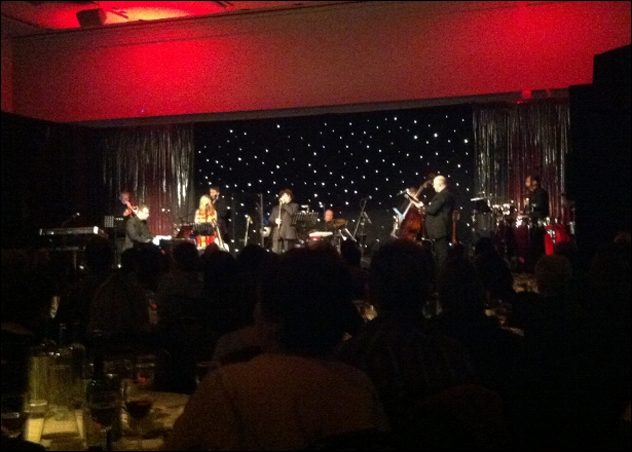
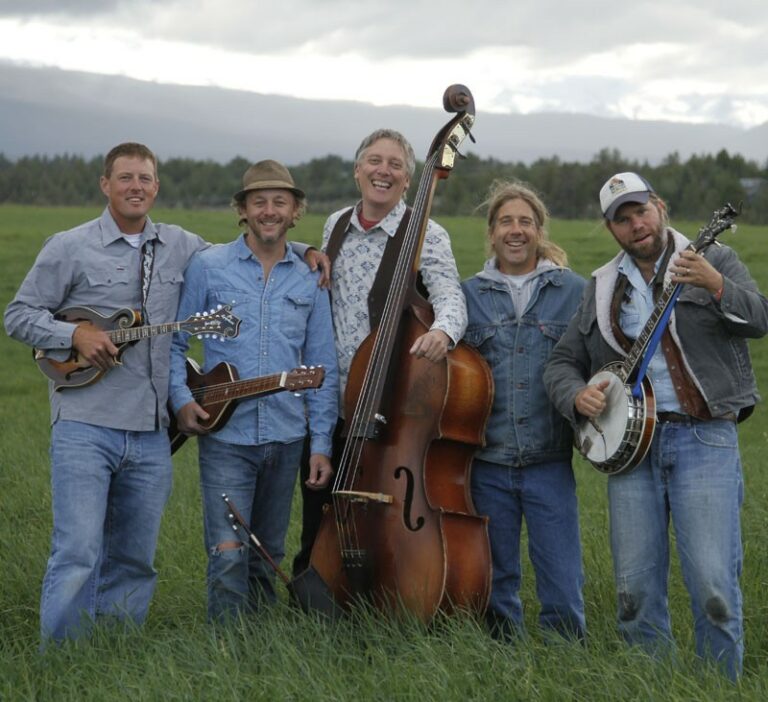
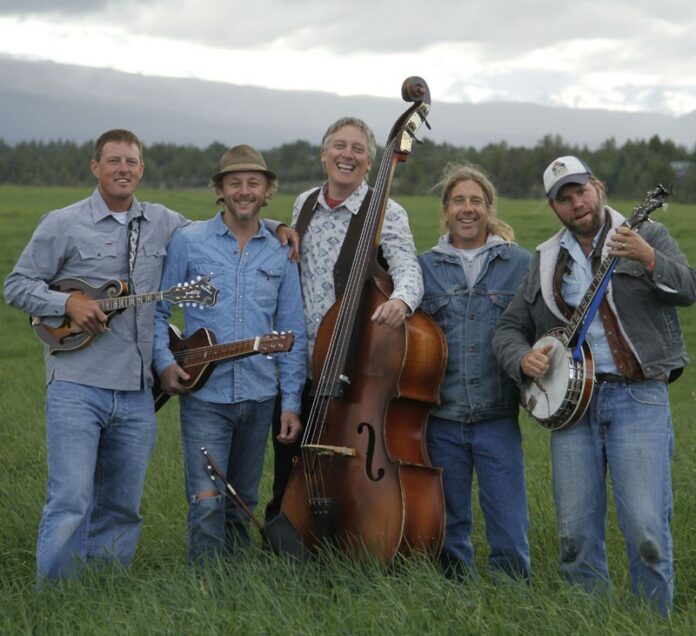
Feel like dancing? Look no further: Arann Harris and the Farm Band raise the barn roof with odes to chickens and country doctors; the Church Marching Band birth a raucous lovechild of Sousa and klezmer; Tiny Television (pictured) inject absolute rave-up to “Swing Low, Sweet Chariot,” and the Dixie Giants have sousaphone solos. Serious.

Food for Thought, the Sonoma County AIDS food bank, benefits, while Lagunitas beer and homemade tamales fuel the fleet-footed. Be there on Saturday, Jan. 19, at the Sebastopol Community Center. 390 Morris St., Sebastopol. 7pm. $15–$20. 707.823.1511.

They’re ba-a-a-ck!

0

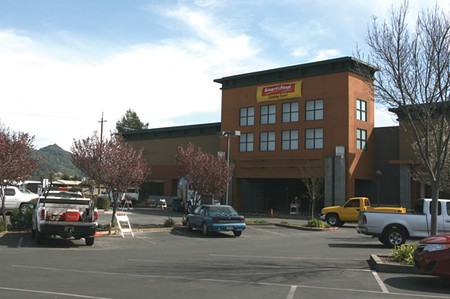
Walmart is returning to the Rohnert Park Planning Commission on Thursday, Jan. 24, to ask once again for permission to expand its Rohnert Park store into a Walmart Supercenter. Despite overwhelming opposition in 2010 to Walmart’s proposal, and despite having lost a lawsuit over the proposal in June 2011, Walmart just won’t take no for an answer.

A number of labor, environmental and community organizations have joined together to oppose Walmart’s plans. There are many reasons why a Walmart Supercenter is a bad idea, not only for Rohnert Park but for the entire county.

1. Job loss and wage decline in the retail and grocery industry across the county.

2. Working poverty: Walmart workers make significantly less than a living wage for Sonoma County and less than other local grocers pay.

3. Gender inequity: Walmart is being sued for gender discrimination in California.

4. Healthcare and public subsidies: Fewer than half of Walmart workers have employer-provided healthcare insurance, and many must rely on healthcare services provided by local and state government.

5. Increased traffic congestion and reliance on the automobile, which undermines transit-oriented development on the 101 corridor.

6. A significant increase of greenhouse gas emissions.

7. Extra burden on law-enforcement services.

8. Unethical business practices such as the massive bribery scandal in Mexico.

United States Sen. Bernie Sanders, I-Vt., has reported that one family, the Walton family of Walmart, owns more wealth than the bottom 40 percent of Americans combined. The two main factors that resulted in such a fabulous accumulation of wealth are the low wages paid to employees, and the intense pressure put on suppliers to keep cutting wholesale prices to them.

How much is enough?

The meeting on Walmart’s expansion is on Thursday, Jan. 24, at Rohnert Park City Hall (130 Avram St., Rohnert Park) at 6pm.

Rick Luttmann is a resident of Rohnert Park, a professor at Sonoma State University, and a member of the Living Wage Coalition.

Open Mic is a weekly op/ed feature in the Bohemian. To have your essay of 350 words considered for publication, write op*****@******an.com.

Elder States

I know an indigenous elder in Napa. He’s got olive-colored skin, salt-and-pepper hair, drives a Prius and has no idea I’m applying such a sacred term to him.

He would disagree, because he yearly spends uncounted hours with the real deal—indigenous holy men in remote outposts of the Southern Hemisphere—absorbing their wisdom. It might not occur to my friend that in my urban neighborhood, he is to us what those men are to him, out in kivas and caves far away. He ponders deeply, speaks from his heart and inadvertently spreads hope and conviction in his words and actions every day.

But if I make him the “wise one” and go no further, I miss the point; all cultures have indigenous roots. Therefore, each of us can dig down inside for the so-called blood memory that reminds us what is right and who we are. (Of course it requires a time of disconnection from stimulation, including electronic devices.) According to a revered Peruvian elder, we need only “remember what we already know.”

Amazing but true: we already know how to live in balance and teach others by example. The indigenous tribes that lived in North America had an earth-centered spirituality. They looked at trees and saw “our standing brothers and sisters.” But most of the conquering Europeans came from indigenous Celtic tribes that once took tree respect even further. For the Celtic tribes, before they began to forget, divine worship took place in groves. Trees were sacred individuals that inspired awe and reverence. At times, that awe awakes in us.

It is convenient to make American Indians or indigenous people (misnomers notwithstanding) responsible for deep wisdom and connection to nature. Then we can pretend it does not belong to us. The speech attributed to Chief Seattle resonates:

“This we know—that Earth does not belong to man. . . . All things are connected like the blood that unites one family. All things are connected. What befalls the earth befalls the sons of earth.”

But Chief Seattle said no such thing. The speech came from screenwriter Ted Perry in 1971, and four decades later we still can’t believe it. Nobody wants heart-wrenching wisdom from a screenwriter named Ted; we want it from a distant romantic figure, a holy man or woman, an indigenous elder.

That would be all of us. The words resonate because they make us “remember what we already know.” Chief Seattle and the “nobody” Ted Perry both reside in us, along with the responsibility to wake up and remember our indigenous roots, that we’re part of nature—siblings of those awe-inspiring trees.

End of the Affair

Those familiar with Michael Haneke’s films realized that when he made a movie called Amour, it wouldn’t be an ordinary love story. What we see, in all of its horror, is the final stage of a successful love story, the end of the line. The film opens with doors thrown open on an apartment where an elderly woman’s flower-bedecked corpse is discovered in a gas-filled room by paramedics.

We flash back to the events leading up to this moment. Anne (Emmanuelle Riva) and Georges (Jean-Louis Trintignant, in his first film in nine years) are an elderly couple with a great love of classical music, relaxing in an apartment furnished with books, paintings and a grand piano. They discuss some of the usual pressures—familiar unhappiness, mainly, since their daughter (Isabelle Huppert) is involved with a two-timing British husband.

One morning during coffee, Anne stops in her tracks, dumbstruck. She’s lost a minute of her life to a stroke; this incident is followed by complications from surgery to relieve the damage. Then comes another stroke, paralysis and irreversible decline.

Amour‘s perfection lies in its clinical refusal to euphemize. That’s visible in the way the camera is positioned right at the foot of Anne’s bed, as if standing in the place of someone who didn’t know the sick woman all that well, who can neither politely leave the room nor sit down close to her pillow like a daughter.

The film has the 3am clarity of a fantasy of downfall, unredeemed by false uplift and spiritual afflatus about the satisfaction of dying in your own bed. (They take your bed, anyway, and replace it with one of those hospital models.) The beauty that’s said to be waiting at the end of life may just be something else that keeps people pliable—all of it just mystification, which Haneke proposes to strip away.

‘Amour’ opens Friday, Jan. 18 at the Rafael Film Center.

Trione Vineyards & Winery

0

Despite being the one-time owners of Geyser Peak Winery, and well-connected in business generally, the Trione family had no leg up when they opened this shop in the inauspicious year of 2008, says sales director Denise Trione. For one thing, the mighty Trione name didn’t travel too far outside Sonoma County. She and winemaker Scot Covington have had to hand-sell their wine across the country, while wearing all the different hats that a small winery requires. “It’s a different kind of animal,” Covington explains.

It’s surely a different beast from the old Canyon Road Winery, this site’s former occupant, a sort of country cousin brand to Geyser Peak that has since been sent to pasture in Modesto. In a brand-new production facility that Covington designed to incorporate his experience at Pellegrini Family Vineyards and others, Trione operates on a “cream of the crop” model, in which Covington gets his pick from more than 600-plus acres of grapes that the Triones farm to make just 6,000 cases of wine.

Located along a well-liked cycling route, Trione is a popular stop. You’re likely to be greeted by Denise Trione with a free welcome glass of crisp, elegant 2010 Russian River Valley Sauvignon Blanc ($23), or, more likely, first by Bubba, a friendly American bulldog, and Scout, a Jack Russell terrier who’s given to worrying a well-chewed doorstop before placing it expectantly at one’s feet.

Midway through the wine list, here’s a little mystery solved. What happened to Geyser Peak’s once-celebrated, post-Aussie winemaker invasion Shiraz? The new owners quietly dropped it. But one wine’s still coded Shiraz in Trione’s SKU system. With savory, rural aromas of olives, leather and horse blanket—all in a good way—the 2008 RRV Syrah ($32) won’t be mistaken for your more typical Shiraz. This vineyard was planted in French, not Australian clones, after all. A core of stony, cherry and plum fruit becomes more fleshy with time, blueberry syrup entering the scene late.

Not for everyone, but more sensuous than the technically polished Bordeaux blend. There’s a good Primitivo on hand, too, and a juicy, cranberry-and-cola flavored 2009 RRV Pinot Noir ($35), jazzy with Christmas spices of cinnamon and clove, like a mulled wine that’s been left out to cool. And how satisfactory when a tasting ends not with the thud of an overwrought Cab, but the engaging, lively and refined 2008 Alexander Valley Cabernet Sauvignon ($65), as irresistible as a soggy doorstop to a terrier.

Trione Vineyards & Winery, 19550 Geyserville Ave., Geyserville. Thursday–Sunday, 10am–5pm. Tasting fee, $5–$15. 707.814.8100.

Heart Trails

0

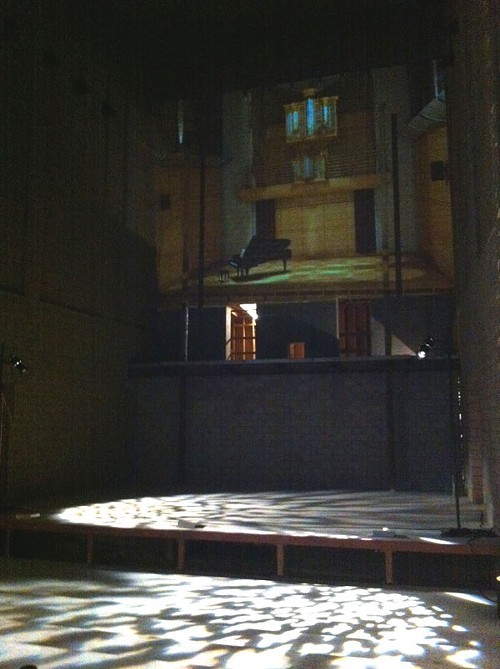
Now a 29-year-old tradition, this year’s see-and-be-seen Art from the Heart auction at SSU takes place on Jan. 19.

Previous auctions have featured goodies donated from local inns and wineries, but this year, attendees will bid strictly on the artworks themselves, generously donated from over a hundred notable sculptors, painters and conceptual creators.

Among those is San Francisco’s Ray Beldner, whose 101 Portraits are blurry, low-res amalgamations of exactly that many celebrity Google searches. The misty, nearly faceless results comment on fame-worship in the digital age by silently staring back at viewers with the vapid blankness of someone who’s just looked through 101 pictures of, well, anything.

Closer to home, SRJC faculty member Kristine Branscomb will also be featured. Her paintings likewise examine the intersection of media and reality, creating impressionistic, faceless scenes that play on the notion of that two-dimensional, airbrushed reality so often used to sell.

If you don’t feel like donning a tie, brushing your hair or whatever dressing up for a fancy gala means to you, a free preview exhibit is held Jan. 16–18, starting at 11am. Art from the Heart is on Saturday, Jan. 19, at University Art Gallery. 1801 E. Cotati Ave., Rohnert Park. 6pm. $25 donation. 707.664.2295.

Road to Wellville

0

When was the last time you went to the hospital for yoga?

Though the hospital setting tends to go hand in hand more with illness, surgery and trauma care, recent developments in the healthcare industry signal a dramatic shift in the way that hospitals and healthcare clinics approach the treatment of chronic disease. Namely, moving increasingly toward prevention and wellness—including programs for acupuncture, dance classes, tai chi and, yes, yoga.

Such a shift couldn’t come at a better time for the United States. According to new report by the National Research Council and the Institute of Medicine, Americans live shorter lives and experience more injuries and illnesses than those in comparable high-income nations. In terms of life expectancy, the United States ranks at or near the bottom of a list of 17 countries.

“If we’re able to educate people and the public, we’re going to have a healthier community, and that’s best for everyone,” explains Dr. Marko Bodor, medical director at the Synergy Medical-Fitness Center in Napa. Located on the campus of the Queen of the Valley Medical Center, Synergy opened its doors in 2006. Utilized by both patients and fee-paying members of the public, the facility emphasizes the five aspects of wellness: exercise, nutrition, sleep, psycho-social and spiritual well-being and, of course, prevention, says Bodor.

With its pool, dance classes, nutritionists, cardio and strength-training equipment, Synergy may look like a gym, but it goes beyond your standard 24 Hour Fitness, offering a breast and mammography center, a cardiac rehab facility, public talks on health and nutrition and an integrative health center.

“Medicine for centuries was pretty much acute or terminal care. When you absolutely needed to see a doctor, you saw one,” says Bodor. “We’re definitely seeing a transformation in the way we treat things.” Because of healthcare reform, organizations will be more accountable for their outcomes, and prevention will become much more essential, he adds.

By 2015, Santa Rosa may get its own medical-fitness center. A zoning amendment approved on Dec. 4 by the Santa Rosa City Council has opened the doors for the construction of a facility to be integrated with Santa Rosa Memorial Hospital. It’s part of an overarching goal of promoting wellness, preventative care and physical activity, says Katy Hillenmeyer, a spokesperson for the St. Joseph Health System.

“Healthcare reform has provisions in it to minimize readmissions to the hospital for people with chronic illness,” she adds. “Anything we can do for the health of our neighbors outside of the hospital helps in combating chronic disease, and helps keep people healthy so that they don’t necessarily end up in an acute care hospital.”

The shift toward a preventative model can be traced to two sources. The first is a change in public health needs. Infectious diseases, a cause for concern a hundred years ago, have been replaced with chronic disease from poor lifestyle choices. The second is the passing of the Affordable Care Act in 2010, which allows for the creation of a prevention and public health fund, along with the issuance of community transformation grants to help promote healthy lifestyle choices in every community.

[page]

A switch in focus to outcome-based reimbursement, something that’s already in place at for-profit Kaiser Permanente—a company that, according to Bodor, stays profitable by keeping people out of the intensive care unit—is another Affordable Care Act goal. According to a report by Trust in America’s Health, for every dollar spent on prevention, approximately $6 are saved in healthcare costs.

“The reality is that every time we keep someone out of the emergency room, it saves the public a lot of money,” says Michael DiRosario, clinic manager at the Forestville Wellness Center, which was opened in 2011 by West County Health Centers.

Geared specifically toward the uninsured and low-income populations that don’t normally have access to alternative medical services and preventative health education, the wellness center offers acupuncture, nutrition for diabetes and smoking cessation group meetings, cooking demos, and Zumba and yoga classes.

“What lots of places are starting to focus on is how we can get people to think about wellness and lifestyle changes,” says doctor of osteopathy Connie Earl, who’s practiced integrative medicine at the Forestville Wellness Center since November 2011. Though most people dread entering clinical settings, creating community by focusing on healthy lifestyles has made a marked difference.

“People love coming here,” says Earl. “They say they love the feel of the place. It shifts the feel since they’re actually getting treatment for chronic medical conditions, and feel more empowered in their own healthcare.”

The Petaluma Health Center is a federally qualified health center that serves approximately 18,000 patients. After moving to a 6,000-square-foot building in November 2011, the facility was able to expand the services in its Center of Good Health. Now, the primary care clinic—which serves low-income individuals along with those with private insurance—is taking prevention to a level not often seen in healthcare settings. The center sees on average 200 wellness group visits a month, for sessions on smoking cessation, child obesity (an issue of serious concern in the United States) and chronic pain. The facility offers medical acupuncture (getting an average of 100 visits a month), yoga, Zumba, tai chi, meditation and hour-long integrative medicine consultations with Dr. Fasih Hameed, a doctor who recently spearheaded a conference in Santa Rosa focusing on “Integrative Medicine for the Underserved.”

The crux is getting out of chronic-disease cycle, says Luke Entrop, wellness program manager.

“Tobacco use, poor diet and lack of exercise lead to heart disease, type 2 diabetes, lung disease and cancer, which account for 50 percent of U.S. deaths per year,” he adds. “If we can get on the prevention end of things, we’re getting to the heart of these chronic conditions of our time.”

Entrop sees the Center of Good Health and the preventative approach as a way to promote healthy living for people of all backgrounds.

“With more affordable healthcare coverage, we’re able to reduce the cost of acute emergent health conditions by working on some basic behavior change and nutrition education,” he says. “These are some of the driving factors of more expensive healthcare costs. By investing in prevention, we’re able to reduce costs in the long run.”

Drone Speak

0

Last November, the Bohemian reported on Sebastopol resident Barbara Briggs-Letson’s participation in a delegation to Pakistan, where over 176 children and hundreds of other innocent civilians have been killed by U.S.-led drone strikes. This month, Briggs-Letson, along with Toby Blome, an organizer of anti-drone vigils at Beale Air Force Base, and Dianne Budd, a physician who volunteers with Doctors Without Borders, report on their experiences and shed light on the problem with drones on Wednesday, Jan. 23, at the Peace and Justice Center. 467 Sebastopol Ave., Santa Rosa. 7pm. 707.865.8902.

GUNS AWAY

California already has among the strictest gun control laws in the United States, and North Bay communities are taking extra steps to ensure that guns don’t fall into the wrong hands. On Jan. 21, the Marin County District Attorney sponsors a gun buyback program honoring the nonviolent ethos of Dr. Martin Luther King Jr. to reduce the total number of weapons in neighborhoods and on the streets. Those who turn in guns receive $200 for each operable semi-automatic handgun and/or long gun. Any other category of firearm will receive $100. The person surrendering the weapon must provide documentation of residency in the county of Marin, San Francisco, Contra Costa or Sonoma. No questions will be asked, and no police investigative reports will be generated. The buyback date is Monday, Jan. 21, at the San Rafael Police Department. 1400 Fifth Ave., San Rafael. 11am–8pm. A second buyback location receives firearms at the Mill Valley Police Department. 1 Hamilton Drive, Mill Valley. 11am-8pm. 415.747.2241.

Letters to the Editor: January 16, 2013

Visualize Whirled Peas

Thank you, Brian Gallagher, for your delicious counterpoint to the positive thinking (really nonthinking) crowd (“Visualize This,” Jan. 9). I might add that, in my experience, these blissed-out folks decline to engage in the frightening and important political, social and environmental issues of our times because they are too “negative” to think about. Like their religious and “spiritual” compadres, they cling to the notion that God (or Goddess) will handle the unpleasant business for us if we just smile, drop our quarters in the collection plate, visualize whirled peas or speak in pleasant platitudes. In abdicating the responsibilities of good citizens to participate in a meaningful way, they let the religious right, the gun-toters, big business, polluters, parasite, and bloated government hijack the public debate and have their way with the majority. They are not simply benign self-delusionals. They are a big smiley player in the demise of democracy in America.

Sebastopol

In a culture in which negativity reaches epic heights, the Bohemian and Brian Thomas Gallagher pile it on in “Visualize This.” Being negative is not realistic. Cynicism is not realism either, though a lot of people falsely think that they are wise to be cynics. Pragmatism, though, and even skepticism can be useful. Unfortunately, Gallagher did not appear to be skeptical enough in his review of a book that is sloppy, unfocused and inadequately researched. It seems he swallowed Oliver Berkeman’s negativity whole, and persuaded Bohemian editors to feature it on the cover.

Much of our TV encourages viewers to be fearful, judgmental smart alecs. News media are mostly negative, too, following the motto “If it bleeds, it leads.” One can be in denial at either end of the optimism-pessimism continuum. Realism occupies the middle. My opinion of the Bohemian staff suffers after this issue. You folks can do better than this, and have in the past. Moving back to the middle could very well make readers, including this one, happier.

Petaluma

You, too, can bestow with kisses and/or throw tomatoes at ‘Antidote’ author Oliver Burkeman when he appears at Book Passage in Corte Madera on Wednesday, Jan. 23, at 7pm.—The Ed.

Don’t ‘Mis’ It

Last weekend, having exhausted the local holiday film fare, I was dragged, still protesting, to Tom Hooper’s Les Misérables. I had read Richard von Busack’s review of the film (“Nip It in the Bud,” Dec. 26) and was anticipating two-plus hours of tedious, overblown hooey. In the first minutes of the film, however, I was relieved by a spectacle that was obviously well-produced, and soon I found myself absorbed in the lives of Fantine, Jean Valjean, Cosette and Javert, pleased to be once again immersed in the dramatic and inspiring world of Victor Hugo’s great novel. (I confess, Les Misérables, required eighth grade reading, was my first favorite long read.)

I found the casting surprising excellent, the acting consistently convincing (despite singing parts, verse and close-ups, which von Busack derided), and the director, Tom Hooper, to be congratulated, hopefully awarded, for bringing Hugo’s behemoth, via the stage production, successfully to the screen. The music, verse and, yes, even the close-ups heightened effects, telescoping complexity and condensing into codas Hugo’s major themes—which remained, despite the complications of the tale, in the forefront. There were not many people in the theater that evening, but those few, as the credits rolled, applauded. Hopefully, they found the film, as I did, fresh and full of heart. Sorry you missed it, von Busack!

Santa Cruz

Dept. of Napa

Last week’s news story (“Where’s the Money?,” Jan. 9) contained an erroneous reference to the “city of Napa” and its checking accounts. As consistent with the rest of the story, it is the county of Napa that uses Wells Fargo and Bank of America for checking accounts.

Write to us at le*****@******an.com.

Heavy Lifting

I‘m looking for the white lights to know I’m still alive. My trainer whispers into the stat keeper’s ear, “One hundred kilograms.” As the attempt is announced to the crowd, the loaders put more round weights on each end of the barbell.

I don’t think, “Oh, shit, this is 220 pounds,” even though it’s more than I’ve ever tried to lift before. I don’t think anything at all, really. I am focused on nothing but the white lights, the signal that will show if my lift was successful. I slam the wooden heels of my lifting shoes into each other, right on left—clack!—then left on right—clack! Now the crowd noise has died, and the silence mirrors my own intensity. I shrug my shoulders. Deep breath. Bend over, hook-grip the bar. Roll it out, roll it back into my barbell-scarred shins. Squat into position, staring straight ahead. Muscles tense up, the lift begins . . .

CLEANING UP MISCONCEPTIONS

Olympic lifting is my sport, but it’s not apparent by my looks. I’m not one of those tall dudes with bulging neck veins and biceps the size of semi trucks, grunting and yelling with my eyes popping out of my head while maxing-out weights at the gym. I’m a big guy, but not like a football player. I run a 10-minute mile on a good day. With a tight shirt, I look three months pregnant.

Despite all this, I’m more representative of your average weightlifter than the locker-room meathead stereotype.

Take Santa Rosan Beth Steinmann, 29, whose main source of fitness was yoga before discovering Olympic weightlifting. Steinmann still looks like a yoga enthusiast, nimble and flexible. The snatch and clean and jerk were “strange and alien” lifts when she started about two years ago, but she became stronger than ever through training. “It is empowering for me to get behind the barbell as a tiny person and lift a lot of weight,” she says.

Maya Uemura might agree with that. Now 12, she won the USA weightlifting national competition for her age group and weight class last year. “It’s fun to compete at weightlifting meets, and it’s fun to tell people at school that I’m a weightlifter, because it’s unique and they’re surprised,” says the Santa Rosa resident. “I also want to keep weightlifting so that I don’t end up being an old lady with a cane whose back hurts, and I can compete in weightlifting longer than I’ll be able to compete in gymnastics.”

Flexibility is key in this sport, says Sonoma State University student Juliana Flynn, 18. In high school, her sports were track, cross country and soccer, but she’ll compete next month in the Olympic weightlifting Junior Nationals, the top echelon of competition at her age in this country. After trying Olympic lifting a year and a half ago at the urging of her sister Sara (a former gymnast who has several Olympic weightlifting awards in her six years in the sport), Flynn became hooked. “I can be having a really crappy day and just go and lift heavy weights,” she says. “It lifts my spirits.” And there’s the feeling of setting a new personal record, which Flynn calls “the best feeling ever.”

Freddie Myles, owner of Myles Ahead Fitness in Petaluma, specializes in Olympic weightlifting. “It’s more like gymnastics,” he says of the movements. The attitude is also different. “It’s positive, mellow, not the stereotypical yelling and stuff. It’s not who is lifting the biggest weight; it’s about cheering each other on.”

At age 70, Penngrove resident Paul Marini isn’t trying to set records anymore. He started lifting while in college, and has been at it off and on for the past 35 years, still training four times a week with Myles. Though he looks good for his age, “weightlifter” is not the first term that comes to mind to describe him. “There are not many lifters my age,” he says, pointing out that only 4 percent of the 8,000 records in the sport are held by lifters over age 60. His hobby, in addition to lifting, is analyzing data in the sport. He still lifts because it keeps him healthy and flexible, but even after lifting most of his life, “It’s a huge challenge to do it correctly,” he says.

[page]

TECHNIQUE WITH STRENGTH

This sport only uses two lifts: the snatch, and the clean and jerk. Both involve a loaded barbell lifted from the ground over one’s head. The snatch uses one movement to accomplish this and the clean and jerk, as its name implies, uses two. This also means more weight can be lifted in this lift, but champions are determined by the total of the best of both lifts out of three attempts for each.

The world record is held by Hossein Rezazadeh, an Iranian whose body looks more like a walrus than an Olympic athelete. His 263 kilogram (580 pound) clean and jerk at the 2004 Olympics remains unbeaten, as does his 472 kilogram (1,041 pound) total at the 2000 Olympics. The snatch record is also held by a gigantic Iranian, Behdad Salimi, at 214 kilograms (472 pounds).

Raising 580 pounds above one’s head might seem a job for Hercules alone. But Olympic lifting is less about being the strongest or the most fit, and more about speed and mental toughness. The technique for both lifts begins with a deadlift, and the transfer of energy into the hips bumps the bar just high enough to allow a lifter to push himself under the bar for the split second that it defies gravity, catching it in a squat so low his butt nearly touches the ground. Then it’s a simple matter of standing up from this hyperextended position—with, you know, 500 extra pounds.

Weights for the snatch are significantly lower than for the clean and jerk because the catch must be overhead, with elbows locked out, before standing. The clean only requires a catch at chest level before standing, and the lift is completed with the jerk, tossing the weight up from chest position and pushing onself under, locking out the elbows in a low lunge position before standing up and bringing both feet together. These lifts are among the most explosive movements in the Olympics.

“Every athlete that comes in, that’s what they’re looking for,” says John Cortese, 26, owner of Olympic-lifting-focused Cortese Training Systems in Napa. He specializes in using the Olympic lifts to improve performance in other sports. “If you really break it down, agility is basically ability to absorb force.”

In that case, throwing hundreds of pounds from the ground over one’s head is probably a good way to build agility.

INNER COMPETITION

“My friends have watched me lift,” says Kaylie Clark, 17, of Santa Rosa. “They’re surprised. They think it’s like bodybuilding. But it’s not; it’s about technique with strength.” Wearing a hoodie with the word “Love” printed across the front, Clark completes a 50 kilogram snatch lift with no problem, despite never having lifted that much before.

She was in gymnastics before being concinved to try Olympic lifting a few months ago. “As of now, I’d like to go far in the sport,” she says. Already on her way, she’ll be competing in the Junior Nationals with Flynn, who trains in the same studio. “We’re not competing against each other—more against ourselves,” Clark says with a smile. Her movitation isn’t in being better than her peers, she says, but in the feeling of accomplishment after a successful lift.

The same goes for John-Logan Coots, wearing a shirt that reads “Till I Collapse.” He was analyzing his lifts with coach Freddie Myles last week using a laptop camera and barbell tracking system. The big screen on the wall showed a slight flaw at the top of his lift, causing a bit of instability. Coots, who trains four times a week with Myles, owns Powerfit Personal Training in Rohnert Park and trains Olympic lifters (including myself). He trains in the same class as those he might face in competition as well as other trainers, including Cortese. As Marini points out, “Freddie is well regarded as a trainer of trainers.”

Joanna Sapir, 38, wears a “Find Your Inner Badass” shirt while stretching after working on the clean and jerk at Myles Ahead. She owns CrossFit Santa Rosa, and started training over four years ago to learn the lifts she would be teaching before opening Santa Rosa’s first CrossFit location (there are now three). “It’s a clear metaphor for life,” she says of Olympic lifting. “You can’t predict it, but if you put the work in, it will pay off. It’s a long journey.”

She started working out, she says, because she was looking to lose weight after having two kids. The former soccer star found Olympic lifting to her liking. “When I don’t do it, I dream of doing it,” she says. The sense of personal accomplishment is what keeps her coming back. “It’s one on one, just you and the bar.”

[page]

GAINING MOMENTUM

CrossFit has exploded in popularity in the past couple years, due in large part to the CrossFit Games. The international fitness competition will likely have over 100,000 participants this year, up from 70,000 last year. After picking up sponsorship from Reebok the games were televised nationally on ESPN last year, and top CrossFit Games athletes will appear on the upcoming season of The Biggest Loser.

Cortese says CrossFit has really brought the “secret” of Olympic lifting out of the gym and into the limelight. “A huge part of CrossFit is the Olympic lifts. Before that, you’d never see bumper plates in commerical gyms.” In the past four years, USA Weightlifting, the governing body of the sport in this country, has seen an increase in members, some estimates putting the boost as high as 30 percent (a spokesperson at the organization did not have exact figures).

CrossFit is one of the few franchise gyms that focuses on the sport as part of overall fitness, and Sapir has doubled the number of Olympic lifting classes she offers. Competitors in the CrossFit Games focus on Olympic lifting, she says, since “that’s the weak link in their performance, because it’s the hardest thing they do.”

MENTAL MUSCLE

So it’s not necessarily about strength, and it’s not entirely about flexibility. But it’s more than just technique. It’s about mental toughness. “The more you think, it kind of backfires on you a bit,” says Cortese. “The best lifters are the ones who just go up to the bar and do it.”

Flynn agrees. “This is really a mental sport,” she says. “You push yourself to keep going. You tell yourself you can do it.”

Woodacre resident Tamara Holland, 51, has been lifting for a year. Olympic lifting is “very humbling,” she says. But the strength and confidence she gains from the sport is worth it. Like most lifters, she doesn’t look like someone to be afraid of in a dark alley, but make no mistake: she’s sizing up everyone around her.

“It’s really fun looking around, knowing I can deadlift people,” she says.

WHITE LIGHT, WHITE HEAT

With every muscle pulled tight, I deadlift nearly my own weight and bump the bar against my thighs, propelling it straight up with enough force to give myself time to get underneath and catch it on my collarbone. Balancing for a second, I stand to complete the front squat and a successful clean of 100 kilograms. Air is a precious commodity now, and I should wait to catch my breath. But adrenaline is fading fast. I gasp and toss the weight above my head with all remaining strength. Simultaneously throwing my legs into a lunge while pushing myself under the bar to lock out my arms, my feet land with the loud thwack of my wood-heeled shoes on the platform. My arms lock enough to ensure the weight doesn’t fall, and I stand up, feet together, to see white lights staring me in the face.

Two hundred and twenty pounds. Just like that, I am still alive in this competition.

Roots Rave-Up

Good causes, sure, but come for the nonstop dancing

They’re ba-a-a-ck!

Walmart's Supercenter idea for Rohnert Park just won't go away

Elder States

Feeling awe, remembering what we already know

End of the Affair

Michael Haneke's 'Amour' faces death head-on

Trione Vineyards & Winery

Family winery ascends a smaller peak

Heart Trails

Art from the Heart a massive benefit auction with over 100 artists

Road to Wellville

Hospitals and clinics move toward a preventative model of wellness

Drone Speak

Last November, the Bohemian reported on Sebastopol resident Barbara Briggs-Letson's participation in a delegation to Pakistan, where over 176 children and hundreds of other innocent civilians have been killed by U.S.-led drone strikes. This month, Briggs-Letson, along with Toby Blome, an organizer of anti-drone vigils at Beale Air Force Base, and Dianne Budd, a physician who volunteers with Doctors...

Letters to the Editor: January 16, 2013

Letters to the Editor: January 16, 2013

Heavy Lifting

Olympic weightlifting: not just for muscled-up meatheads anymore
11,084FansLike
4,606FollowersFollow
6,928FollowersFollow