Dec. 20: Windham Hill Winter Solstice Concert at the Napa Valley Opera House

0

Windham1985logo.jpg

It’s not all hippie-dippie beams of light and cosmic messages, but much of the music Windham Hill Records has produced in its 36 years does lean toward the sensitive side of the universe. This week, three-time Grammy-nominee Barbara Higbie leads a trio of women songwriters with her world-influenced jazz featuring the Celtic harp. Jazz pianist Liz Story found Windham Hill Records after owner Will Ackerman heard a tape of her improvisations from a piano gig at a restaurant; he signed her right away. Finally, multi-instrumentalist Lisa Lynne is mostly known for her recordings on Celtic harp, but also composes original songs using traditional folk instruments. All three women are supported in this show by guitarist Sean Harkness and flutist George Tortorelli. The Windham Hill Winter Solstice concert is on Thursday, Dec. 20, at the Napa Valley Opera House. 1030 Main St., Napa. 8pm. $15—$20. 707.226.7372.

25 Days Project: Corrick’s

0

corricks.jpg

Dear Lord, please do not ever let Corrick’s close. My house is redolent with its inventory: Pilot G2 pens, envelopes, Sharpies, legal forms, a stuffed Snuffleupagus puppet, maps, cards, Little Golden books, paper clips, tape, padded manila envelopes, picture hangers. I still remember the first thing I ever bought there—a ribbon for my Olympia typewriter. (I still buy the same ribbon there for my Royal.) I pine for the days of buying rub-on lettering there. I will never forget the saleslady’s sympathetic look one Christmas when she told me they were sold out of sweater lint shavers. One night, I got to talking with a fellow customer about this ‘n’ that, and soon we were talking about Santa Rosa, and next thing I knew it turned out she went to high school with my dad; it’s that type of place. I love that no one ever quits, and that their back room has one of those great old bank safe doors, and that they’re coming up on their 100th anniversary. And like a lot of other Santa Rosans, I always walk in and think to myself, “Maybe someday I’ll buy something from the front half of the store.” 637 Fourth St., Santa Rosa, 707.546.2424.

The 25 Days Project is an online series through the month of December spotlighting some of our favorite local businesses. Read more about the project here, and about our commitment to shopping locally here.

25 Days Project: Brotherhood Board Shop

0

Brotherhoodphoto.jpg

When my husband wanted to buy my two-year old, board-obsessed nephew his first skateboard, he didn’t go to Walmart or Costco or Toys R’ Us to pick up a cheaply made knock-off version of the real thing. Instead, he headed over to Brotherhood Board Shop in Santa Rosa, where he bought a sweet deck—all set up with Bones wheels and high-quality trucks—for under $100. Owned by Jon Lohne, a longtime Santa Rosa skateboarder who can be seen at backyard skate ramps and underground ledge spots (or riding around on his refurbished mopeds) as often as he can be seen in the actual store, Brotherhood is everything that a skateboard shop should be. Stop in to pick up decks—by Krooked, Antihero, Plan B, Girl and more—flatbars, trucks, wheels, shoes, hats, cruisers, grip tape, clothing, backpacks, skate DVDs and pretty much anything else that the skateboarder or snowboarder in your life wants and needs. The store also hosts video premieres—most recently of the rad Girl- and Chocolate Skateboards-produced video “Pretty Sweet,” which features one of the best opening shots ever. In the summer, the shop brims with kids, young and old, busting out tricks in the parking lot at regularly hosted skate contests. And what’s better than awesome service from people who leave, breathe and eat skateboarding? 1240 Mendocino Ave., Santa Rosa. 707.546.0660.

The 25 Days Project is an online series through the month of December spotlighting some of our favorite local businesses. Read more about the project here, and about our commitment to shopping locally here.

Up in Smoke

0

A measure intended to alter Sonoma County’s guidelines for medical marijuana cultivation and possession failed to pass through the board of supervisors on Tuesday, Dec. 11. Spearheaded by Supervisors Valerie Brown (pictured) and Shirlee Zane, the agenda item would have strengthened regulation of medical marijuana growing and dispensary operations by lowering possession limits, establishing an ordinance that prohibits the use of unoccupied buildings for pot growing, and creating a marijuana task force.

The task force would be modeled on an already existing methamphetamine task force set up to strengthen enforcement and education efforts. According to the agenda item summary report, the proposal was created for concern about public safety, including a supposed rise in violent crime associated with marijuana, and environmental reasons.

Loud critiques of the measure and the hearing arose from diverse sources, including medical marijuana advocates like Sebastopol vice mayor Robert Jacobs, as well as Supervisor Efren Carrillo, who said that he was “livid” at the lack of public engagement (medical marijuana advocates did not learn of the proposal until just before the hearing).

As reported in the Bohemian last May, there has been a drastic increase in prosecutions against local medical marijuana growers, most notably since 2010. These prosecutions have clogged an already overwhelmed public defender’s office, an issue that has not yet been resolved. According to the Press Democrat, one definitive outcome of the failed proposal is an agreement to establish a group of patients, law enforcement members and others with an investment in the issue of medical marijuana who would help the county shape and develop its medical marijuana policies.

Korbel Champagne Cellars

0

Picture this: Sweeping vineyards. Towering redwoods. This is how the movie starts. It starts with pretty pictures. And then—boom—there’s a revolution. Bang. Prison. Escape. And then, Gold Rush San Francisco: fat cigars, empire-building, tree-felling, booze-mongering. I’m on the edge of my seat here. But I’ll tell you how the movie ends. It ends with a nice, bubbly glass of America’s favorite Champagne.

Korbel, the movie, is just one of the rainy-day entertainments highlighting a tour of these historic “California champagne” cellars, founded in 1882. Yes, the old Korbel tour must be the most timeworn if beloved winetasting activity in the whole of our North Bay Bohemia—not exactly high on my list. Here’s what happens to items not placed high on my list: I don’t get around to them. But the season being what it is, many of us with family visiting and eager to be shown the sights, there’s no better time for residents to finally visit.

There’s precious little more God-love-it touristy than the company history film genre. Screened in an oak pew-furnished theater, this one’s brand-new, and has been given the full Ken Burns treatment: baritone narration, handlebar moustaches, old photographs popping with the latest documentary effects, and Korbel’s own historian providing context in a sweater vest.

Who knew that F. Korbel and brothers were vintners of last resort, having run out of big trees for their sawmill; that before grapes, they gave tobacco a go; that it all started with cigar boxes; that there was such drama to the story—in the 19th century? Lots of people know this, because they bundled up for a winter’s day drive down River Road—originally a railroad for hauling out the redwood forest that rises again around the vineyard, almost as if it nothing had happened—to take the old tour.

Untold dusty bottles and antique wine vats later, free beverages are served. I wouldn’t have bothered you about the history lesson, if it wasn’t for this part: Korbel’s Anniversary Sec ($14) celebrates 130 years with a handsome historical label, floral-spicy aroma and refreshing finish (the anniversary being 2012, not the—pop, swoosh, clink—new year).

More trivia arrives with a pour of lower-dosage Korbel Natural ($14), nevertheless rich with golden apple aroma and creamy mousse. The story goes that Adolph Heck, who purchased the concern in 1954, created this drier style using natural grape juice instead of sugar for his diabetic wife. The top shelf isn’t out of reach at Korbel; the 2005 Russian River Valley Le Premier ($25) has a fine, faint reminiscence of the good dead yeast. And that’s the end of the tour. Exit through the wine shop.

Korbel Champagne Cellars, 13250 River Road, Guerneville. Tasting Room open daily, 10am–4:30pm; tours, 11am–3pm. No fee. 707.824.7000.

Played Out

0

With nearly 18 years experience as an arts journalist, I am a critic who is not that hard to please. I merely require the pleasurable moments of a particular production to outnumber the painful ones, and in the theatrically rich North Bay, that’s what happens in the majority of the work I see.

But even I am disappointed from time to time, often by those productions from which I anticipated more than I got. Here is a list of the four shows in 2012 that left me feeling there wasn’t as much there as there might have been.

The Elephant Man, presented by Scott van der Horst’s What a Show Productions, was billed as a literal adaptation of the legendary David Lynch film. A rather brilliant marketing campaign promised to deliver the same emotional jolt as the film, with makeup effects mirroring those employed by John Hurt as the severely deformed Victorian dreamer John Merrick. Be careful what you promise.

Though played beautifully by Peter Warden, supported by a game cast making the most of a difficult situation, the impact of Merrick’s story—as told in the three-week production that ran in the studio theater at Spreckels Performing Arts Center—was pitted against some supremely clunky staging. Scenes (some of which lasted a mere 80 seconds, as in the film) were separated by set changes that sometimes took three or four noisy minutes to accomplish, with no sense of rhythm or pacing to make it up. What could have been marvelous ended up looking laughably amateur, and given what might have been, The Elephant Man ends up as my biggest disappointment of 2012.

Mel Brooks’ The Producers, at Sixth Street Playhouse, suffered a similar, though less painful, fate. Energetically performed by a solid, funny cast, the tentative pacing of the show ultimately bogged the enterprise down, deflating what might have been a fast-paced romp into a turtle-speed slog.

Of all the shows that played in the North Bay this year, the one I wanted to like the most was Silver Spoon, a world premiere musical at Main Stage West, written by playwright Amy Merrill, with songs by activist-songwriter Si Kahn, whom I have long considered an American treasure. But the final result was wobbly and unfocused, and seemed more like a first-draft workshop than a polished world premiere. Thankfully, I did enjoy some of the songs.

Finally, Yasmina Reza’s social satire God of Carnage won all kinds of awards on Broadway, but the uncomfortably unfunny Marin Theatre Company production was bafflingly free of laughs, making me wonder, for nearly 90 minutes, what all the fuss was about.

Next week: the best productions of 2012!

Local Food, Inc.

0

Sonoma County has a rich history of agricultural prosperity, and a resilient and thriving local food system might seem like a given. But the landscape that Luther Burbank once called the earth’s “chosen spot” still has quite a way to go toward food security for all of its residents, both in access to healthy local food for low-income residents and larger scale protection against potentially devastating disruptions brought on by natural disasters.

Plenty of food is grown within Sonoma County, yielding a problem that’s largely in distribution. Currently, much of the “local food” in area markets and restaurants is grown or made locally, shipped to distribution warehouses in the Central Valley and then shipped back.

The Healthy and Sustainable Food Action Plan, created by the Sonoma County Food System Alliance and the Department of Health Services, is designed to change that, but its larger goals are far-reaching—namely, to “build a food system that creates health and prosperity for both our people and our environment,” via policy, institutional and individual changes.

Approved by the board of supervisors in October—with big support from outgoing supervisor Valerie Brown—the plan calls for Sonoma County to become the healthiest county in California by 2020. It also follows on the heels of State Sen. Noreen Evans’ April 2012 announcement of the creation of a senate committee set up expressly for studying local, organic and sustainable food systems throughout California—systems which encompass a complex quilt of relationships that include farming, processing, distribution and consumption.

The Food Action plan is based on a model that’s proved successful in Oregon’s Multnomah County, where Portland is the county seat. The plan is divided into four areas: Agriculture and Natural Resources, Economic Vitality, Healthy Eating and Social Equity, and a Declaration of Support that local governments, businesses, organizations and individuals will be asked to sign.

It’s a commitment that could make all the difference in terms of health and economics, says Jana Hill, Sonoma County Department of Health Services program planning analyst. “If you enhance the food system, if more food is produced locally, you can better have the capacity to adapt to short-term disaster or long-term climate change,” says Hill. “The question is, how do we build a more resilient food system that will help us in the long-term?”

The intention wasn’t to write an action plan that just sits on the shelf, Hill adds.

“We’ve done the initial work to get people together with the Food Forum in 2011 and now the action plan, but this stuff just takes a while with a big group,” she says. “We’ll start getting legs, but it takes a while to move the mountain.”

A November 2011 study by the U.S. Department of Agriculture showed that the local-food industry in the United States generates around $4.8 billion a year, four times larger than previous counts. Glenda Humiston, California state director for rural development at the USDA, says that Sonoma County has always been on the cutting edge of the local-food trend. The Food Action Plan is a natural evolution, she says, and one that resonates.

“We are totally committed to it,” says Humiston. “A large focus is on the value chain between farm and the fork—that’s the missing link, that’s what is creating our biggest challenge in enabling regional food systems.”

[page]

The county may have reams of fertile land (often at prohibitively high cost to beginning farmers) for growing a diverse assortment of food, but the challenges lie in making the land available to farmers, in addition to getting that food from the farms to restaurants and markets in a streamlined way.

The USDA has helped fund projects like the Farm To School Lunch Sales, a program that assists institutional buyers such as school districts, hospitals and jails in utilizing local foods. Humiston says that challenges remain. “A school district can’t have a hundred farmers show up at the door,” she says. “They need an aggregation hub to do the initial processing service for the food.”

For this reason, the USDA gave grants to the North Coast Regional Food System Network (NCRFSN), which is working with Community Alliance for Farmers to create a regional food processing center, where produce from small, local farmers would be processed, packed, sorted and then made available for purchase by large buyers. Eventually, instead of relying on trucks to bring fresh produce in from large warehouses in Sacramento and other parts of the state, Sonoma County could actually process and distribute fresh foods directly from an aggregated food hub.

“Establishing local aggregation hubs is one of the biggest challenges,” says Humiston.

A group called People’s Harvest had worked to bridge this gap between small family farms and local institutions—leasing a 10,000-square-foot facility in Petaluma to be turned into a distribution and aggregation hub this summer—until Buckelew Programs, its funder, backed out due to high costs.

Cliff Paulin, NCRFSN project coordinator, says that his organization’s main thrust is to support producers in Marin, Sonoma, Lake, Napa and Mendocino counties and to connect efforts across the five regions. They’re also working to make it easier for small-scale producers to create sellable products without using commercial kitchens. In addition, the organization has worked closely with CAFF to create a functioning food hub for distribution of locally grown food, which might ensure that in the event an earthquake knocks out access to Highway 101, say, county residents would still have food.

“Food security comes down to actively utilizing our agricultural land to produce food,” says Paulin. “We need to support existing producers and to bring in more new producers.”

Unfortunately, the high cost and topography of land in Sonoma County can make it difficult to produce large quantities of food, unlike, say, the Central Valley. This is another component of the puzzle the Food Action Plan attempts to address.

Others are working on smaller-scale distribution. Tim Page is the co-owner of F.E.E.D Sonoma. In 2011, he and Michelle Dubin took over the 23-year-old business, formerly called Terra Sonoma. The company acts as a wholesale distributor/aggregator, or middleman, between more than 30 Sonoma County farms and restaurants, markets and caterers spanning the Bay Area. They move to the Barlow in Sebastopol sometime in late winter 2013.

Page says the overarching goal is to promote the microregional distribution of food, a model that, if successful, could be replicated in other places.

A former institutional stockbroker, Page decided to put into action his passion for working within and strengthening the local food system.

“It’s our responsibility as a county and a community to do this as vitally as possible,” he says. “There are a lot of best places to grow food on the planet and Sonoma County is definitely one of them. If we can’t do it as a community, then who will?”

Preoccupied

Years from now, a Ph.D. student writing about the culture of the Occupy Movement will point to Occupy & Other Love Stories (Kelly’s Cove; $20) as an example of the fiction that emerged from the demonstrations against Wall Street banksters. But Sonoma County author Daniel Coshnear’s book stands on its own merits, without explicit connections to any social protest movement.

The characters in Coshnear’s strange love stories read Stephen King and Raymond Carver. They smoke marijuana, drive Nissans and work at Safeway. They could be your neighbors or your next of kin, and they’d like to celebrate Christmas. Preoccupied and in denial, they survive trauma and suffer from post-traumatic stress disorder and a host of other social and psychological ills. As new as the newest kids on any block, Coshnear’s gritty men, wild women and precocious children cry out for the lost soul of America itself.

Most of the stories in Occupy take place in Santa Rosa and along the Russian River. One story is set in New York, and the very last conjures up Berkeley during the Occupy Movement of last spring. It’s an overtly polemical tale, and might well be called revolutionary romanticism. Coshnear’s heart is with the citizens who won’t be silenced or sit still, though his characters don’t give speeches or march in the streets. They’re part of the 99% and too involved with divorce, depression and suicide to write leaflets, hang posters and shout slogans.

In “Early Onset,” the first story in the volume, the characters whisper in public and lie for their very own survival. The narrator and main character, in a T-shirt, goatee and ponytail, sees what can’t exactly be described, though he knows it to be the “symptoms of an illness” that’s contagious and spells the “end of empire.” In “Man on Fire,” an unnamed father reads about prisons on the internet and feels “helpless and cynical.” He’d like to be courageous, but when he goes to bed at night he’s a kind of kid afraid of the dark.

Parents and children inhabit “Attention!” and “Custodian,” in which a father and his son disconnect and reconnect. Love, sex and anxious relationships animate “Avulsion,” “Borscht on the Ceiling”—the New York story—and “Occupy,” the title story, in which a professor finds romance with a student.

The closer to home, the more convincing the characters, and while they play their own parts and speak their own minds independent of the author, they’re psychoanalyzed and their medications enumerated, as in “You Can Put Your Name on It, If You Want to.” Pills help the characters, though they long for more than drugs.

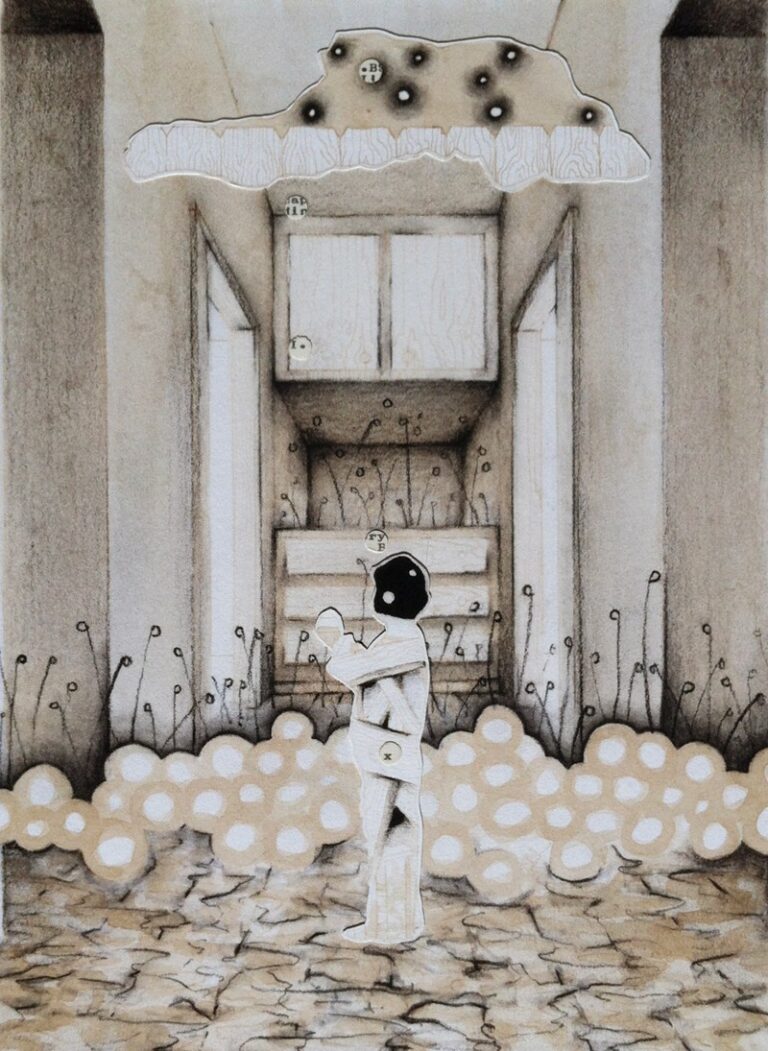
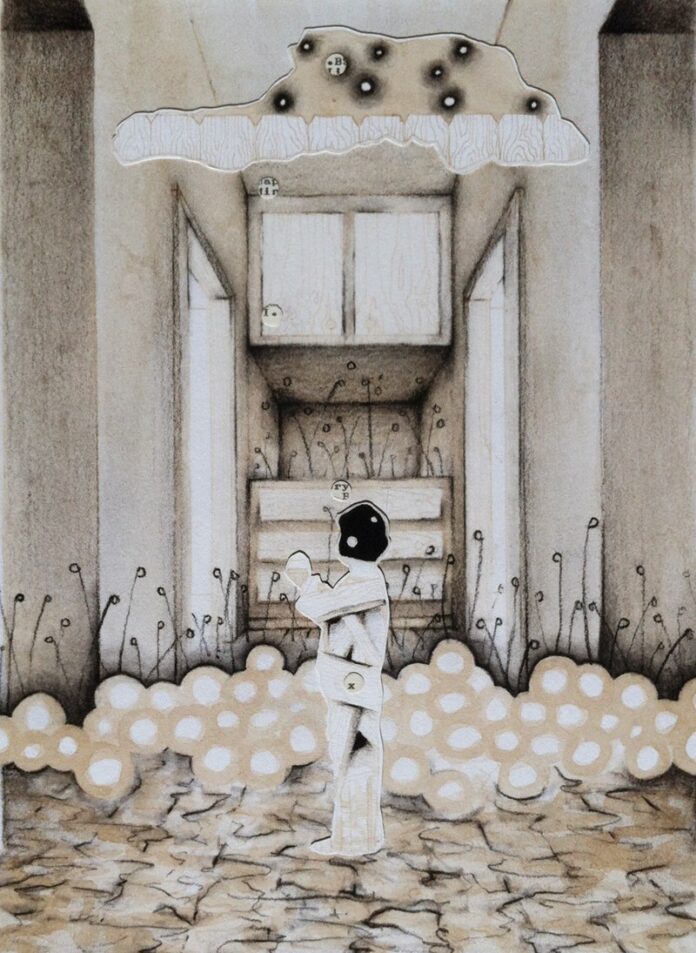
The cover art, titled Eating and Sleeping, and the illustrations by Squeak Carnwath, which are both realistic and abstract, highlight the tangible and the symbolic qualities in this weirdly beautiful collection of stories that make the local global and the global local.

Following Her Own Star

Smartly dressed and looking younger than a woman enjoying her seventies, Eleanor Coppola is a portrait of poise. When it’s suggested that she’s the de facto grand dame of Sonoma County’s wine scene—given the epic, family-friendly winery and resort that bears her husband’s name in Geyserville—she doesn’t take the bait.

Eleanor Coppola is far too grounded and earnest to be susceptible to such platitudes. A few moments with her and one realizes she’s not someone interested in the limelight so much as, say, the use of quicklime lighting in 19th-century theater. As an artist, she has more practical concerns. Chiefly, what’s next?

“I’m going into my studio everyday, and it’s really great to have a time of transition, where you can look in your books and make sketches and think about all things you might want to be doing in the future,” says Coppola. “Right now, I’m making a series of watercolors. I don’t know where that’s leading, but part of it is going down the unseen path.”

That “unseen path” has led Coppola through a dizzying array of life experiences. Despite being the wife of film phenom Francis Ford Coppola and the mother of filmmakers Roman and Sofia Coppola, Mrs. Coppola has always followed her own star.

In some ways, she may be best known as the person with the camera behind the person with the camera, as she was with Hearts of Darkness. Sometimes heralded as the ultimate “making of” documentary, Coppola’s film followed the on-set tumult and triumphs behind the scenes of Apocalypse Now.

But even before Hearts of Darkness, Coppola enjoyed a varied career in visual arts. In the early 1960s, she was creating commissioned decor for restaurants and hotels, working closely with architects and generally applying her eye to an array of creative projects, including a mural for the airport in Las Vegas. When she was offered a gig working with the art director on the set of Dementia 13, a gothic horror picture helmed by a new unknown director in Ireland, the gig appealed to her innate spirit of adventure.

“A lot of things in life are very ‘happenstance,'” she says. “It was a chance thing that I went to Ireland, I thought it was a lark . . . And then I met Francis.” She wed the director in 1963.

Nearly a dozen documentaries to her credit later, the question looms—would she have continued to work in film had she not met Francis?

“No, I don’t think it would have been film,” admits Coppola. “I would be doing something in the visual arts, but I don’t think it would be film. That happened because of Francis.” Her decision to pick up a camera was in some ways an act of personal survival that began in the Philippines on the Apocalypse Now set.

“When I got there, I started getting homesick and really missing my life at home. Francis was in this wonderful creative ferment, and it was very exciting for him, but I was just starting to fade,” she explains.

The film’s distributor had intended to send a crew to the Philippines to shoot a short promotional documentary about the film, but the director elected to handle the promo in-house to keep them away from an already beleaguered production.

“Everybody had a job but me. I had made these little art films in the early ’70s. He said, ‘It’s five minutes, you can get it, Ellie,'” Coppola recounts. “It grew organically, and I really got into it. Again, it was a visual expression.

[page]

“My nature is to try things I don’t know how to do—one after the other. Dance costumes? I’ve never done that, but let me try!” she says, referring to her work with the Oberlin Dance Collective. “Write a book? I’m not a writer, but I’ll give it a try!” Notes on a Life, an autobiography, was published in 2009.

“The Eleanor Coppola that I know is a celebrated filmmaker, author, photographer, designer and artist. She is collaborator and confidant to one of the world’s great directors, managing to hold his interest through 50 years of matrimony,” says Jay Shoemaker, CEO of the Coppola Companies, who has known Coppola for many years. “A creative force in her own right, she has now added a complex and delicious wine to her portfolio.”

Indeed, Coppola has literally put her signature on the other family business—wine. A blend of Syrah and Cabernet Sauvignon (“I like Syrah, especially when it’s used in blends,” says Coppola), the fruit is sourced from both the Sonoma vineyard and their historic Inglenook property in Napa. Award-winning winemaker Corey Beck, who has worked for the family for more than 15 years and knows Eleanor well, was able to craft a wine that reflects her personal tastes. She designed the label featuring her own autograph, which serves as the wine’s brand and personal endorsement.

“I’m totally delighted. It turned out better than I expected. I didn’t know it would be so good. I’m very appreciative of Corey’s work. The whole thing was fun,” she said. “I think that you should be doing work that’s fun.”

Besides working with the winemaker, Coppola works with other winery talent to put her signature touch on the entire visitor’s total experience.

“We’re very fortunate to have Ellie readily available to lend her artistic and critical eye to our work. She always goes beyond a simple ‘yes’ or ‘no,’ taking the time to explain where she’s coming from,” says Janiene Ullrich, director of shared services for Francis Ford Coppola Presents. Ullrich is tasked with sourcing the myriad merchandise sold at the winery. When traveling, Coppola often contacts Ullrich with the details of an item that has caught her eye, and Ullrich endeavors to bring it to the winery.

The merchandise then serves as both a keepsake for winery visitors as well as a mnemonic for Coppola. “It often unravels into a great memory or story, and it’s a treat to hear her tell it,” says Ullrich of the various textiles and scarves, jewelry and plates that find their way to Geyserville.

Recently, while her husband was on business in China, Coppola ensconced herself in her rural, creative space and let her muse lead her where it would.

“I literally moved into my studio for four days and three nights,” she recalls. “It’s a little bit like camping. It doesn’t have a shower, there’s a hotplate, the basics. I just stayed in there and hiked around nearby. It’s been really interesting,” she reflects. “I’ve never been alone. All my life, I’ve had kids, I’ve had a husband and family around me. Sometimes, I’ve been to a hotel for a couple of days or something, but there’s still interaction. I had no phone, no email, no interaction with the outside world. Just me in my space and nature surrounding was a very deep experience.”

One of Coppola’s guiding principles could be summed up simply: “Find what you’re meant to do, and do that.”

“If you’re really doing what you’re meant to do, there are a lot of wonderful highs. In the creative process, there are also a lot of discouraging moments when you can never reach your internal vision, and the frustration that you can’t get things exactly right,” she says. “I think life should be a process of doing what you do well and enjoying it.”

Cheers to that.

Wood-Fired Up

A decade ago, there was nowhere Michael and Christina Gyetvan wanted to eat in their hometown of Napa. Tired of driving to nearby St. Helena for good food, the chef and his wife decided to do something about it. So they borrowed money from their parents, ran up their credit cards, found an abandoned building in downtown Napa’s West End and opened Pizza Azzurro just one week after Sept. 11 in 2001.

“It was more of a necessity than a dream,” Michael tells me on a recent afternoon. “I was out of work at the time, not having any luck, and I needed a job.”

Despite the inauspicious timing of their opening, the Gyetvans so dazzled the local palate that when they closed for a week seven years later, to move to a bigger space, people talked of being lost without their beloved rigatoni. Michael and Christina had helped to spark Napa’s downtown revival, which led, finally, to dozens of new restaurants, but their pizza place, renamed the grammatically correct Azzurro Pizzeria e Enoteca in 2008, has remained a local favorite.

Driven by a similar desire—to wit, “Napa needs a place to get a really great burger”—the Gyetvans opened the Norman Rose Tavern, a cozy Cheers-like pub, in late 2009. For those who want more than just beef between their buns, the tavern serves burgers made of lamb, bean and barley, and sometimes even venison, buffalo or duck ($11.95–$15.95).

Michael began working in restaurants right out of high school, on the advice of his father, who told him, “At least you’ll get fed every day.” He met Christina in the early ’90s at St. Helena’s Tra Vigne Restaurant, where he cooked and she hosted. “It was a typical restaurant romance,” they tell me, which eventually led them to blend their families (both had children from previous marriages) and walk down the aisle.

Azzurro reflects Michael’s commitment to being “as politically correct as is affordable,” with a seasonally inspired menu of antipasti, salad, pasta and pizza. Limited refrigeration in the original location led him to create what he calls “the lazy man’s lasagna,” a baked rigatoni with hot Italian sausage and mushrooms that has become a perennial favorite ($15.95). “People would revolt if we took it off the menu,” Christina says.

Another Azzurro staple, the manciata, was created by accident by the busy (and hungry) chefs at Tra Vigne, who needed something “simple to make and easy to eat on the run, like a giant taco.” “Manciata” is Italian for “handful,” which refers to a fistful of flattened dough that’s baked and topped with a salad of caesar, spinach or arugula, with skirt steak and blue cheese ($12.50–$16.95).

Despite their two highly successful restaurants and a mobile catering service, Michael and Christina resemble nothing of the typical harried restaurateurs. They have the relaxed and cheerful energy of people who spend plenty of time on their bikes and skis, whose eyes light up when they talk about their son, Kobe, who saved up money from bussing tables to buy and build his own bike, and their giant cat, whom they’ve dubbed “the polar bear,” thanks to his 16-pound frame and refusal to come inside.

And thanks in large part to the enterprising Gyetvans, whose restaurants bookend either side of downtown, Napa locals now have a wealth of gastronomic possibilities in between. As Michael says with wonderment, “I can’t even remember the last time we went to St. Helena to eat.”

Pizzeria Azzurro e Enoteca, 1260 Main St., Napa, 707.255.5552. Norman Rose Tavern, 1401 First St., Napa, 707.258.1516.

Dec. 20: Windham Hill Winter Solstice Concert at the Napa Valley Opera House

It’s not all hippie-dippie beams of light and cosmic messages, but much of the music Windham Hill Records has produced in its 36 years does lean toward the sensitive side of the universe. This week, three-time Grammy-nominee Barbara Higbie leads a trio of women songwriters with her world-influenced jazz featuring the Celtic harp. Jazz pianist Liz Story found Windham...

25 Days Project: Corrick’s

Dear Lord, please do not ever let Corrick’s close. My house is redolent with its inventory: Pilot G2 pens, envelopes, Sharpies, legal forms, a stuffed Snuffleupagus puppet, maps, cards, Little Golden books, paper clips, tape, padded manila envelopes, picture hangers. I still remember the first thing I ever bought there—a ribbon for my Olympia typewriter. (I still buy the...

25 Days Project: Brotherhood Board Shop

When my husband wanted to buy my two-year old, board-obsessed nephew his first skateboard, he didn’t go to Walmart or Costco or Toys R’ Us to pick up a cheaply made knock-off version of the real thing. Instead, he headed over to Brotherhood Board Shop in Santa Rosa, where he bought a sweet deck—all set up with Bones wheels...

Up in Smoke

A measure intended to alter Sonoma County's guidelines for medical marijuana cultivation and possession failed to pass through the board of supervisors on Tuesday, Dec. 11. Spearheaded by Supervisors Valerie Brown (pictured) and Shirlee Zane, the agenda item would have strengthened regulation of medical marijuana growing and dispensary operations by lowering possession limits, establishing an ordinance that prohibits the...

Korbel Champagne Cellars

Picture this: Sweeping vineyards. Towering redwoods. This is how the movie starts. It starts with pretty pictures. And then—boom—there's a revolution. Bang. Prison. Escape. And then, Gold Rush San Francisco: fat cigars, empire-building, tree-felling, booze-mongering. I'm on the edge of my seat here. But I'll tell you how the movie ends. It ends with a nice, bubbly glass of...

Played Out

Productions that didn't work in 2012

Local Food, Inc.

Sonoma County's Food Action Plan could entirely rethink the ways we produce, distribute and consume

Preoccupied

Daniel Coshnear's 'Occupy & Other Love Stories'

Following Her Own Star

Eleanor Coppola on the importance of the unseen path

Wood-Fired Up

Azzurro's seer-like transformation of downtown Napa
11,084FansLike
4,446FollowersFollow
6,928FollowersFollow