Strangers in New York

The film Love Is Strange is undone by Manhattan chauvinism—the idea that leaving the island is a fate worse than death.

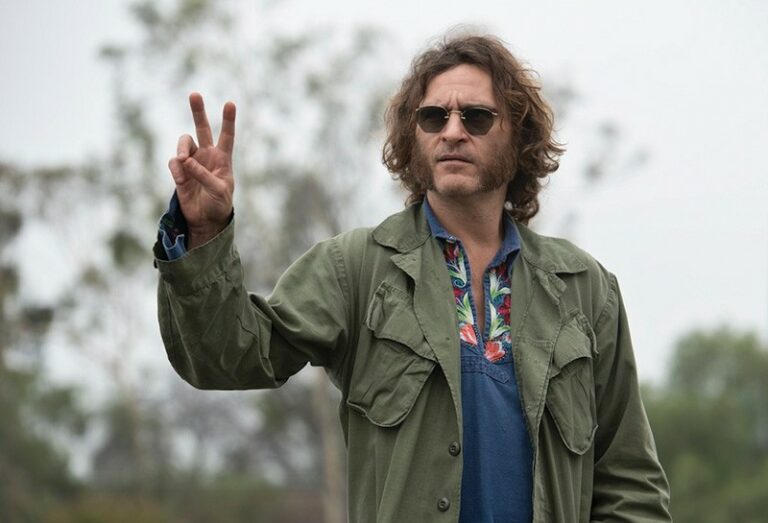
But we do get the second best thing in Love Is Strange, seeing John Lithgow, like Lear, shirtless, landless and surrounded by ungrateful relatives. Two great films, Leo McCarey’s Make Way for Tomorrow (1937) and Yasujiro Ozu’s Tokyo Story (1952) have done justice to this story of an old couple separated by homelessness—proof once again that the great movie is the enemy of the pretty good one.

Benjamin (Lithgow) and his partner of some 40 years, George (Alfred Molina), have married at long last. George loses his job teaching at a Catholic high school when the news gets out. The couple have to sell their co-op apartment and couch-surf while they look for a new home. George ends up with neighbors, a pair of hard-partying gay cops. Benjamin descends into the flat of his nephew Elliot (the unduly sinister Darren E. Burrows), his wife, (Marisa Tomei), and their troubled teenage son (Charlie Tahan).

No city-dweller over 50 is immune to the chill of these circumstances. Lithgow and Molina easily have the chops to play lovers in winter, cuddling like bears in a tiny bunk bed. But we’re expected to believe that the two lived through four titanic decades of gay history—civil disobedience, legal and social discrimination, a terrible epidemic and then Sept. 11 on top of it all. How did these old gents end up as such babes in the woods?

We’re expected to weep at their gentleness and good breeding, and to feel there’s no other place they could possibly exist than New York. But director Ira Sachs’ very average cityscaping isn’t irresistible, either in the standard rooftop view with that same lone fluttering pigeon soaring past the wooden water tanks that’s in every Manhattan movie, or in the end scenes, when the city is enveloped in a sunlike glare of its own golden awesomeness.

‘Love Is Strange’ opens Sept. 19 at Summerfield Cinemas, 551 Summerfield Road, Santa Rosa. 707.522.0719.

Against the Grain

0

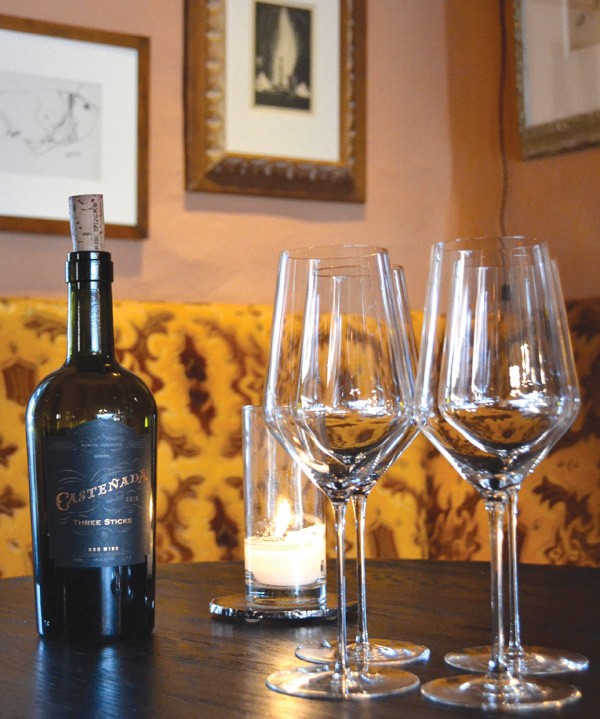
There’s more to terroir than the dirt that grapevines grow in, even if that dirt is a particularly dramatic dirt, like the dirt in the picture on Arpad Molnar’s cell phone.

Molnar points to a foot-wide fissure that the South Napa Earthquake opened up in his family’s Poseidon Vineyard, which is situated directly above the quake’s epicenter. That’s crazy dirt, but in the Carneros, it’s the cool breeze from nearby San Pablo Bay that keeps the Poseidon Vineyard 2013 Estate Chardonnay ($26) bright with acidity. And where do those intriguing, spiced orange tea notes come from?

Molnar hands me a chunk of obsidian—weathered but sparkling blackly—from the family’s Lake County vineyard. Volcanic soils and high elevation intensify the juicy cassis flavors of the Obsidian Ridge 2010 “The Slope” Cabernet Sauvignon ($45), and contribute to the cool aromas of mint, fragrant eucalyptus and chewy, blueberry and blackberry fruit of the Obsidian Ridge 2011 Lake County Syrah ($30). But that’s not the last word in terroir at Tricycle Wine Partners.

On the tasting room’s tree-shaded deck, Peter Molnar plunks a slab of light-colored rock on a table. It’s andesitic tuff, formed millions of years ago in what is now Hungary. Specifically, it underlies the forests of Tokaj, the source of all oak barrels that Poseidon and Obsidian Ridge wines are aged in.

Brothers Arpad and Peter Molnar, whose father escaped Hungary after the failed revolution of 1956, returned to their ancestral land in the early 1990s. “It was a really exciting time,” says Arpad, with a gleam in his eye. They soon developed a business venture with a co-op cooperage, one of the few employee-owned businesses that was not totally privatized. With capital from the Molnars, Kádár Hungary grew and is now partnered with French barrel biggie Taransaud.

Peter is unfazed when asked if Hungarian oak, which is less expensive than French oak, might be seen as second-best by consumers. After all, they’ve got 150 winery clients in the United States, and French and Hungarian oak barrels are made from the same species of tree, Quercus robur and Quercus petraea. Moreover, the slow-growing Tokaj forests—sustainably managed since a 1769 decree by the Holy Roman Empress—produce a tight-grained, spicy oak that was used centuries ago in Bordeaux, and is prized for its mid-palate characteristics.

“Let’s put it this way,” Arpad interjects. “Winemakers are more adventurous than most consumers.” Indeed, there’s that orange spice again, cropping up in the Poseidon Vineyard 2013 Carneros Pinot Noir ($32). Light and lively, it’s a nice enough Pinot—and one with a whole world of terroir.

Tricycle Wine Partners, 23568 Arnold Drive, Sonoma. In Cornerstone Sonoma. Open daily, 11am–5pm (weekends to 6pm). Tasting fee, $10. 707.255.4929.

Making a Splash

0

Last year was a
good one for
whales and whale watchers.

That’s when the Monterey Bay and Northern California in general began to see an unprecedented amount of whale activity, particularly from humpbacks. The trend hasn’t shown signs of slowing.

“Over the last couple of weeks there’s been a definite increase in whales, especially blue whales,” says Ashley Englehart, naturalist with SF Bay Whale Watching in Sausalito. “There are more protections in place than ever before, including ships slowing down. The water has also been warmer, which increases the food in the water, so more whales have been coming up to eat.”

It’s not just the humpbacks that have been active. There have been reports about flocks of pelicans in the tens of thousands. All of this activity has led ocean watchers to wonder what the heck is going on. Is this normal? And is it going to continue? Unfortunately, as is often the case with science, there are no easy answers, but scientists do have some intriguing leads.

One of the reasons we are seeing more whales is simply that there are more whales in general. “When I started doing this in the late ’80s, there were only 400 humpbacks,” says Nancy Black, a marine biologist and owner of the whale-watching company Monterey Bay Whale Watch. “But since they’ve been protected, their numbers have increased over the years by 6 percent a year. There are about 2,500 [now].”

But what has been remarkable about this year is that the humpbacks have been sticking around for so long. Typically, they come into shallow waters, eat up what is here, then move on to other feeding spots. These past 12 months, the whales have been more concentrated and slower to move on.

That leads us to the next reason we have seen so many humpbacks: anchovies.

The last year has seen huge numbers of anchovies. The spawn of anchovies is likely related to a 25-year oscillation between anchovies and sardines, a phenomenon that has been catalogued by Francisco Chavez of the Monterey Bay Aquarium Research Institute. Every 25 years, the California coast fluxes between a “sardine regime” and an “anchovy regime.” During a “sardine regime,” there are historically tons of sardines, warmer ocean temperatures off the coast of California and fewer nutrients in the water. An anchovy regime, which we entered at the beginning of the new millennium, is typified by the opposite: cooler water, more nutrients and tons of anchovies.

But in fact, the ocean hasn’t been cold. It’s actually been warmer than average. The warmer waters may be related to a strange wind pattern. Starting in the spring, the winds usually blow from the northwest, causing an upwelling of deeper, colder waters. We had a windy spring, like normal, which likely began the upwelling of these colder waters. These northwest winds usually continue, but not this summer. Instead, we saw lots of south winds, which bring warmer water.

It’s hard to get a clear answer on why the southern winds blew during the summer, because no one really seems to know. “It’s incredibly complex,” said Santa Cruz–based researcher Jodi Frediani. “What I do know is the scientists don’t fully understand it.”

The theory about wind patterns is speculation, and we are likely years away from really understanding what has been going on in the atmosphere. Some scientists are even critical of Chavez’s theory about sardines and anchovies. His data goes back only a hundred years, and older records of marine sediments tracing back thousands of years suggest that there were times when both groups were in high populations.

It’s hard to say if any of this can really be considered “normal,” especially because populations of many marine animals are still recovering from being heavily hunted and fished.

Rainbows of Tomatoes

0

Red ones, orange ones, yellow ones, green ones, blue ones, purple ones, even black and white ones—a complete rainbow of tomatoes are coming into season right now, and we are quite lucky for it.

The heirloom tomato is perhaps the most versatile fruit on the planet. Some are sweet enough to be eaten right off the vine like candy; others are sour and do well fermenting in jars with peppers. There are ones bigger than a fist, and some the size of a fingernail. And don’t even get started on the multicolored zebra-striped ones—those are a different animal all together.

What to do with the abundance of tomatoes, though? Aside from putting them on every sandwich, every pasta, every pizza and every salad, there are plenty of ways to keep the magic of tomato season going beyond the month of September. How about drying them in the oven at 170 degrees? Ferment them in a jar with vinegar and chiles for a killer hot sauce? Blend them with Worcestershire and spices for bloody Mary mix? Or with chiles and cilantro for salsa? Tomato jam is a sweet treat from the cupboard. Or get inspired at the Kendall-Jackson Heirloom Tomato Festival Sept. 27 in Fulton—almost 200 kinds of tomato are available to sample, and top-tier chefs will prepare special dishes featuring the most versatile of fruits.

Music for the Mind

0

Nineteen ninety-one was a year that changed everything for Garen and Shari Staglin.

That was when the couple, who worked in the financial and healthcare industries, respectively, and owned Rutherfiord’s Staglin Family Vineyards, watched their son suffer his first psychotic break due to schizophrenia. Medications and therapy were able to help get him back on track, but the family knew they were facing a lifelong struggle.

“We realized that not everyone was that fortunate, and he was certainly a long way from being really cured,” says Garen Staglin in a phone interview. “So we decided to run toward the problem, instead of running away.”

In 1994, the Staglins founded One Mind, a nonprofit dedicated to funding mental-health research and raising awareness of brain illnesses. They also began their first Music Festival for Brain Health. This weekend the festival celebrates its 20th year with live music, fine wine and food, and engaging discussions centered on the issues of mental health.

The Staglin Family Vineyard is once again the location for the first day of the festival. The day begins with a symposium featuring the brightest minds in brain research, including a keynote address from Eric S. Lander, one of the principal leaders of the Human Genome Project.

A winetasting featuring more than 80 wineries held in Staglin’s wine caves follows. Then the sounds of Vintage Trouble rock the vineyard. Hailing from Los Angeles, the funky, roots-rock outfit is perfect accompaniment for dancing and grooving. Capping off the day is a VIP dinner created by six local chefs, including One Market’s Mark Dommen, Perbacco’s Stephen Terje and Farallon’s Terri Wu.

Sunday is another packed day that takes place at Lincoln Theater, in Yountville. The “fStop Warrior Project Exhibit” will showcase photography from military veterans suffering from PTSD or having other mental issues, and a food truck outside will cater to the crowds before festival headliner Jewel performs. Jewel has maintained a steady output of critically acclaimed folk and pop for more than 20 years, and she brings her powerful voice to the intimate space of the theater.

One Mind brings a focus on stigmatized conditions such as schizophrenia, bipolar disorders and depression. “I think we are seeing growing awareness that these are not diseases of character; they’re diseases of chemicals, and more people are willing to talk about it,” says Staglin.

“The festival,” Staglin adds, “is a way to get the science out there and get people to be hopeful about the fact that speaking out and getting treatment can improve conditions in the lives of people today, and ultimately cure their illnesses tomorrow.”

Debriefer: September 10, 2014

0

FORECLOSURE FALLOUT

“Racial disparities exist” is the troubling conclusion of a just-released housing study that Fair Housing of Marin took part in, with the National Fair Housing Alliance.

Their findings? Banks and property preservation companies don’t keep up their foreclosed properties in black and Latino communities—and in these parts, that means Vallejo.

The report, released last week, details racial disparities in the maintenance of houses owned by banks after the financial crash. The study spanned 30 metro regions in the country and found that they don’t cut the grass or secure the windows or doors or remove the trash in black or Latino neighborhoods the way they do in the white ones.

The Marin County group studied shuttered and foreclosed homes in Vallejo and Richmond, and found a mess. “Neighbors are alternately furious and discouraged about the poor maintenance,” said Fair Housing of Marin executive director Caroline Peattie in a statement. “They found it peculiar that the same bank that foreclosed on the home next door was now dragging property values down on the entire block because the bank was not maintaining the property.”—Tom Gogola

A LIVING WAGE

A coalition of labor, faith, environmental and other Sonoma County community groups presented a “living wage” ordinance at a Monday press conference that it plans to deliver to the county board of supervisors this fall. The groups also presented economic analysis of the wage hike.

Led by North Bay Jobs with Justice, the proposed ordinance calls for boosting the pay of all workers employed by the county, county contractors and private employers receiving public funds to $15 an hour. If adopted, the ordinance would cover about 5,000 low-wage workers in the county.

“This has been coming for some time now,” says Marty Bennett, co-chair of North Bay Jobs With Justice. “We feel there are three votes on the board of supervisors, but we hope to get everyone.”

Three cities in the county—Petaluma, Sebastopol and Sonoma—have already adopted similar ordinances and, according to a study conducted by Political Economy Research Institute economist Jeannette Wicks-Lim, the increased wage would have a significant impact on the lives on county workers but a minimal one on county coffers and local businesses.

“The living wage ordinance will impose a relatively modest cost increase for covered businesses, typically in the range 0.2 percent to 4.5 percent of their total revenue, depending on their industry,” says the fiscal impact report. “Costs transmitted to the county will be smaller still, equal to less than 0.03 percent of the county’s total budget of $1.4 billion or 0.1 percent of
the county’s general fund of $390 million for (fiscal year) 2014–15.”

The state’s current minimum wage is $9 an hour. At that rate, a full-time worker earns $18,720 annually. According to Wicks-Lim’s analysis, this leaves a gap of nearly $50,000 between what the worker earns and the $66,800 that the average three-person family living in Sonoma County would need to cover its basic expenses. Increasing the hourly wage to $15 would come close to closing that gap, the report says.

Nationally, 140 cities and
counties have implemented similar living wage ordinances.
—Stett Holbrook

Stranger Than Fiction

0

One is a group of musical superstars from Birmingham, England; the other is a Boy Scout from Missoula, Mont., turned surrealist auteur.

For the last 30 years, rock band Duran Duran and filmmaker David Lynch have both excelled in their arts, though the two couldn’t be more different.

It was a surprise, then, when news came that the British rockers had brought in the cult hero to direct their latest concert documentary. Recorded in 2011 at Los Angeles’ Mayan Theatre, Duran Duran: Unstaged is a one-of-a-kind film experience, as the band’s live show is mixed with abstract images, done in Lynch’s interpretive style, superimposed over the footage; the film is being shown in theaters across the country for one night only.

This film is part of the “American Express Unstaged” series, which pairs up other seemingly unrelated powerhouses, such as rock band the Killers and German director Werner Herzog. For Lynch, this is his first full-length film since his 2006 ultra-weird epic Inland Empire. For Duran Duran, the concert coincides with their 2011 album, All You Need Is Now. For fans of both Lynch and Duran Duran, this film is a radically original and unexpected work that needs to be seen to be believed.

Duran Duran: Unstaged screens on Wednesday, Sept. 10, at Summerfield Cinemas, 551 Summerfield Road, Santa Rosa. 7pm. $10. 707.522.0719.

Fiddler Forever

0

Few American musicals inspire deeper sighs of love, affection, nostalgia and bliss than Jerry Bock, Sheldon Harnick and Joseph Stein’s 1964 masterpiece Fiddler on the Roof. Based on the writings of Sholem Aleichem, Fiddler is arguably the greatest American musical of all time.

Fiddler, the story of a Jewish father holding on to his faith and traditions in a rapidly changing world, stands apart form other shows through the sheer emotional power of its sweeping yet intimate story, and for the number of songs in the score that went on to stand alone as instantly recognizable American pop classics: “Matchmaker, Matchmaker,” “Sunrise, Sunset,” “If I Were a Rich Man,” “Miracle of Miracles,” “Far from the Home I Love” and “Tradition,” quite possibly the best show-starter of any musical.

In the joyously overstuffed production now playing at Cinnabar Theater—an already extended run designed to overlap with Fiddler‘s official 50th anniversary on Sept. 22—director John Shillington has put the tiny Ukrainian village of Anatevka on Cinnabar’s compact stage, with a cast of 40 actors that give the town, and the show, a pleasantly bursting-at-the-seams quality.

In the opening song, as poor milkman Tevye (a wonderful Stephen Walsh) sings of the traditions that hold his community together, the stage rapidly fills with singing, dancing villagers, backed up by a first-rate orchestra under the direction of Mary Chun, and a fiddler (Tyler Lewis, alternating with Claire-Jeanne Martin) who is perched on a stylized rooftop at the edge of the stage, nearly stealing the show as the story plays on.

As Tevye, Walsh gives our amiable narrator and hero a charmingly cozy, intimate affability. Elly Lichenstein is perfect as Tevye’s vibrantly longsuffering wife, Golda, Dwayne Stincelli is a hoot as the lonely butcher Lazar Wolf, and as Yente, the village matchmaker, Madeleine Ashe is hilarious. As Tevye’s marriageable daughters Tzeitel, Hodel and Chava, Jennifer Mitchell, Molly Mahoney and Erin Ashe all deliver the goods with beautifully sung, heartfelt performances.

There are rough patches here and there, a not-unexpected by-product of cramming a lot of action onto so small a stage, but Shillington dazzles the eye with so many clever moments and images—including a towering ghost puppet—that few in the happy, tune-humming audience are likely to notice the rough spots.

Rating (out of 5): ★★★★

Word to the Water-Wise

0

Our state is drying up. We are currently experiencing one of the worst droughts in California’s history. Everywhere I go, there are street signs reminding people not to waste water. There are programs to assist residents with replacing lawns with drought-resistant plants. There are daily newspaper articles and news clips on TV showing the effects of the drought in many areas.

The drought is likely to inflict $2.2 billion in losses on the agricultural industry, according to a July study from the UC Davis. We will absorb the loss of this not only in our state economy but in the cost of our groceries.

Yet some people, who are aware of our current situation, seem to act with a sense of entitlement—washing cars that aren’t visibly dirty, daily watering of lawns to keep them green, etc. There seems to be an attitude among some that if you can pay for it, it’s yours to use. Unfortunately, rain does not come simply because you pad your water bill.

The reality is that we need to treat water as we do money—money on a budget. People would do well to develop a wider worldview in thinking about our water situation. The water we have is the water budget allotted to all of us in the state. We need to spend it carefully. The water you waste washing your car could be the water your neighbors need to wash their dishes. Yes, we all have water coming out of our taps when we turn them on, but for how long?

Budget your water now. You won’t regret it later.

Bianca May is a graduate of Sonoma State University and a self-described feather-ruffler living in Rohnert Park.

Open Mic is a weekly feature in the ‘Bohemian.’ We welcome your contribution. To have your topical essay of 350 words considered for publication, write op*****@******an.com.

Letters to the Editor: September 10, 2014

Promoting Health

Thank you for publishing such an inspiring and thorough article (“Community in Transition,” Sept. 3). As the Center for Well-Being’s Promotoras de Salud/Health Promoters coordinator, I would like to acknowledge the invaluable work that this group of volunteers does for our community. Promotores and promotoras are peer health educators; that is, people who have come forward voluntarily and received nutrition education training under the guidance of dietitian Nora Bulloch at our center with the goal of going back to their communities and sharing what they’ve learned.

Alejandrina Sarmiento was one of our 127 graduates from the five-session nutrition education series done at 10 different sites countywide (Santa Rosa, Petaluma and Sonoma). This work was a partnership between the AVANCE Parent-Child programs and the Center for Well-Being under the SNAP-Ed Champions for Change (nutrition education and obesity prevention). The curricula included topics such as “Re Think Your Drink,” “Eating More Fruits and Vegetables,” “Eating less Sugar, Salt and Fat,” “Preparing Meals with MyPlate” and “Eating Well on a Budget”.

As a presenter myself, I remember Alejandrina as one of the most interested and engaging participants, asking great questions and absorbing every bit of the information we brought. It fills me with pleasure to see her featured in an article that brings hope to places where there isn’t much of it; it shows that we can change for the better, that a basic change in attitude can lead to more knowledge and, in turn, to behavior change in people and utlimately an empowered community.

Anyone interested in becoming a certified promotor(a) de salud/health promoter call 707.575.6043, ext. 18.

Santa Rosa

School Lunch

With the new school year, parents’ attention is turning to school lunches. Traditionally, the USDA had used the National School Lunch Program as a dumping ground for surplus meat and dairy commodities. Children consumed animal fat and sugary drinks to the point where one-third have become overweight or obese. Their early dietary flaws became lifelong addictions, raising their risk of diabetes, heart disease and stroke.

In recent years, several State Legislatures asked their schools to offer daily vegetarian options, and 64 percent of U.S. school districts now do. Moreover, hundreds of schools and school districts, including Baltimore, Buffalo, Detroit, Houston, Los Angeles, Miami-Dade, Oakland, Philadelphia and San Diego have implemented “Meatless Mondays.” A New York City school went all vegetarian last year. Current USDA school lunch guidelines, mandated by the Healthy, Hunger-Free Kids Act, require doubling the servings of fruits and vegetables, more whole grains, less sodium and fat, and a meat-free breakfast. The challenge is to get students to eat the healthier foods.

Parents should work with school cafeteria managers to encourage consumption of healthy foods.
Detailed guidance is available at
www.schoolnutrition.org/schoolmeals, www.fns.usda.gov/cnd, www.pcrm.org/health/healthy-school-lunches and www.vrg.org/family.

Santa Rosa

Missing Tanks

Unfortunately, you seem to have missed Napa’s acquisition of an MRAP valued at $733,000 (“Spoils of War,” Aug. 27). I hope the rest of the math is right, because this throws serious doubt on the article at face value. Also, a vet who specialized in the aquisition and upkeep of these vehicles in Afghanistan called into a talk show on NPR and said that in his experience these vehicles have no purpose outside of a theater of war—they are designed not for active shooter operations, but for IEDs and mines. He also had experience in the acquisition and upkeep of standard law enforcement vehicles.

Via online

Tom Gogola responds: Thanks for your note and concerns about the piece. The spreadsheet database I was working from, which was dated May 2014, did not include any mention of the mine-resistant vehicle in Napa. 

Since our story came out, I’ve gotten a response to a public records request from the California State Office of Emergency Services that has a more updated list of acquirements under the Department of Defense 1033 plan. The updated, June 2014 list includes the MRAP vehicle as a standalone item that the city of Napa requested and received from the Department of Defense in March. The item is the only one listed on the OES database acquired by the Napa.

The state OES database comes with a cautionary note about the spreadsheets that should have been further amplified in my original piece. These databases are snapshots of what is in a municipalities’ possession at a given point of time. As such, notes OES, the spreadsheet “may not reflect more recent transactions within the . . . dynamically changing database.”  

We regret the omission of the Napa MRAP from the original story.

Write to us at le*****@******an.com.

Strangers in New York

The film Love Is Strange is undone by Manhattan chauvinism—the idea that leaving the island is a fate worse than death. But we do get the second best thing in Love Is Strange, seeing John Lithgow, like Lear, shirtless, landless and surrounded by ungrateful relatives. Two great films, Leo McCarey's Make Way for Tomorrow (1937) and Yasujiro Ozu's Tokyo Story...

Against the Grain

There's more to terroir than the dirt that grapevines grow in, even if that dirt is a particularly dramatic dirt, like the dirt in the picture on Arpad Molnar's cell phone. Molnar points to a foot-wide fissure that the South Napa Earthquake opened up in his family's Poseidon Vineyard, which is situated directly above the quake's epicenter. That's crazy...

Making a Splash

Last year was a good one for whales and whale watchers. That's when the Monterey Bay and Northern California in general began to see an unprecedented amount of whale activity, particularly from humpbacks. The trend hasn't shown signs of slowing. "Over the last couple of weeks there's been a definite increase in whales, especially blue whales," says Ashley Englehart, naturalist with...

Rainbows of Tomatoes

Red ones, orange ones, yellow ones, green ones, blue ones, purple ones, even black and white ones—a complete rainbow of tomatoes are coming into season right now, and we are quite lucky for it. The heirloom tomato is perhaps the most versatile fruit on the planet. Some are sweet enough to be eaten right off the vine like candy; others...

Music for the Mind

Nineteen ninety-one was a year that changed everything for Garen and Shari Staglin. That was when the couple, who worked in the financial and healthcare industries, respectively, and owned Rutherfiord's Staglin Family Vineyards, watched their son suffer his first psychotic break due to schizophrenia. Medications and therapy were able to help get him back on track, but the family knew...

Debriefer: September 10, 2014

FORECLOSURE FALLOUT "Racial disparities exist" is the troubling conclusion of a just-released housing study that Fair Housing of Marin took part in, with the National Fair Housing Alliance. Their findings? Banks and property preservation companies don't keep up their foreclosed properties in black and Latino communities—and in these parts, that means Vallejo. The report, released last week, details racial disparities in the...

Stranger Than Fiction

One is a group of musical superstars from Birmingham, England; the other is a Boy Scout from Missoula, Mont., turned surrealist auteur. For the last 30 years, rock band Duran Duran and filmmaker David Lynch have both excelled in their arts, though the two couldn't be more different. It was a surprise, then, when news came that the British rockers had...

Fiddler Forever

Few American musicals inspire deeper sighs of love, affection, nostalgia and bliss than Jerry Bock, Sheldon Harnick and Joseph Stein's 1964 masterpiece Fiddler on the Roof. Based on the writings of Sholem Aleichem, Fiddler is arguably the greatest American musical of all time. Fiddler, the story of a Jewish father holding on to his faith and traditions in a rapidly...

Word to the Water-Wise

Our state is drying up. We are currently experiencing one of the worst droughts in California's history. Everywhere I go, there are street signs reminding people not to waste water. There are programs to assist residents with replacing lawns with drought-resistant plants. There are daily newspaper articles and news clips on TV showing the effects of the drought in...

Letters to the Editor: September 10, 2014

Promoting Health Thank you for publishing such an inspiring and thorough article ("Community in Transition," Sept. 3). As the Center for Well-Being's Promotoras de Salud/Health Promoters coordinator, I would like to acknowledge the invaluable work that this group of volunteers does for our community. Promotores and promotoras are peer health educators; that is, people who have come forward voluntarily and...
11,084FansLike
4,606FollowersFollow
6,928FollowersFollow