Jan. 6: Mixed-Media Marvels in Sebastopol

0

The art of collage and assemblage is a worldwide phenomenon, and this week, Sebastopol Center for the Arts brings an international collection of artists together for its ‘Marvelous!’ exhibit. The roster of artists whose work will be on display includes Koji Nagai (Japan), Jacques Muller (France), Mongobi Bibiana Mele (Italy), Deborah Oropallo (U.S.) and Deborah Wildenboer (South Africa). The juried show, running through Feb. 12, will also feature collage workshops later in January and opens with a reception and award ceremony on Friday, Jan. 6, at Sebastopol Center for the Arts, 282 S. High St., Sebastopol. 6pm. 707.829.4797.

Jan. 7: Outside the Bubble in Mill Valley

0

New York City playwright and performer Dan Hoyle knows the best way to escape the “liberal bubble” is to get boots on the ground and see the Midwest, small-town America for yourself. That’s why he spent a hundred days driving through the Rust Belt, living out of a van, meeting locals and hearing their stories. Hoyle turns those honest encounters into his funny and poignant one-man show, ‘The Real Americans,’ which gets an updated telling in the wake of the presidential election. America gets real on Saturday, Jan. 7, at Throckmorton Theatre, 142 Throckmorton Ave., Mill Valley. 8pm. $25–$40. 415.383.9600.

Jan. 9: Stitched Together in Cotati

0

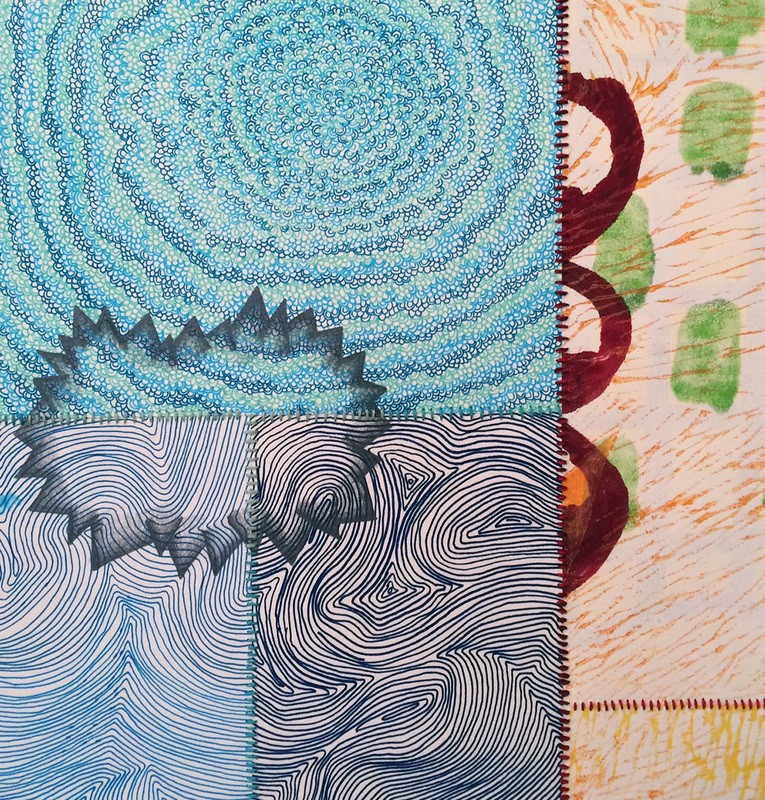
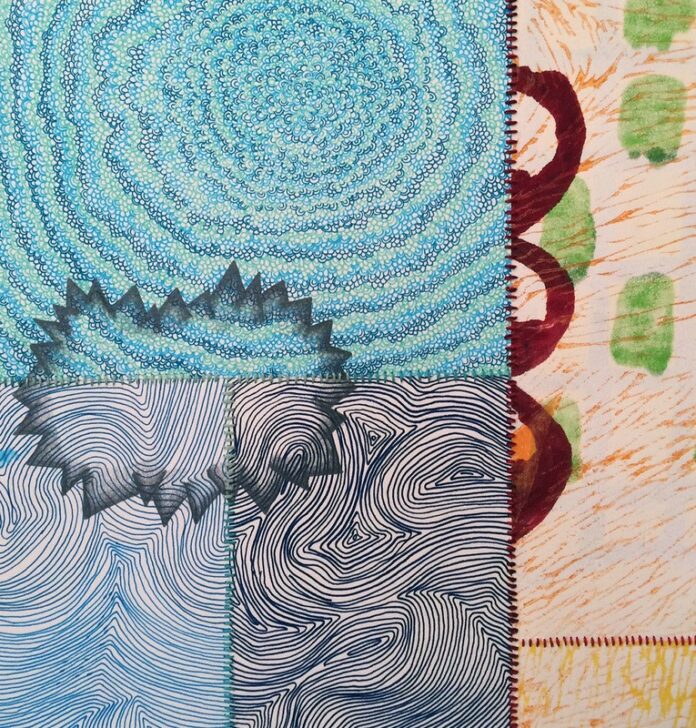
North Bay artist and printmaker Sami Lange has spent 15 years developing her artistic vision: she sews small, detailed drawings together for a larger work that has the appearance of a paper quilt. On display in a new solo show, Lange’s drawings are inspired by everyday details of the world around her, as well as her personal relationships and memories, assembling works that reflect life’s balance between chaos and control. Lange’s display of colorful and intricate work opens with a reception on Monday, Jan. 9, at Shige Sushi, 8235 Old Redwood Hwy., Cotati. 5pm. Free. 707.795.9753.

Jan. 11: World’s Finest in Santa Rosa

0

Everyone knows the Harlem Globetrotters as the preeminent basketball entertainers of the world, but did you know that among their antics and action the team also holds over a dozen Guinness World Records? This past year alone, the Globetrotters claimed—or reclaimed—nine records, including longest basketball hook shot, longest basketball shot blindfolded and most basketball three-pointers made by a pair in one minute. See these crazy shots and more when the Globetrotters return to the North Bay for a family-friendly exhibition game on Wednesday, Jan. 11, at the Santa Rosa Junior College, 1501 Mendocino Ave., Santa Rosa. 7pm. $32 and up. 866.777.8932.

Red Hot

0

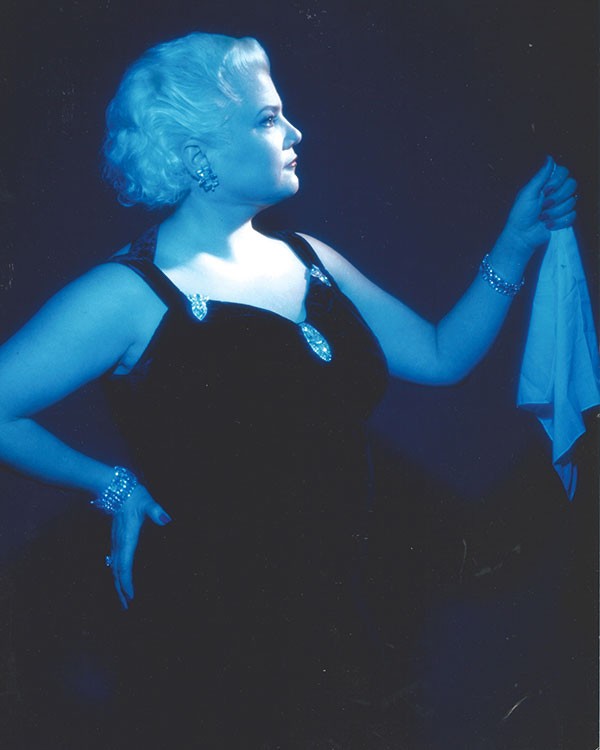
‘It started as a dream—literally,” says Sharon McNight, describing how her affection for the music of late vaudeville legend Sophie Tucker became the one-woman-show Red Hot Mama.

A Tony-award nominee for her lead performance in the 1989 fantasy-musical Starmites, McNight will be bringing her acclaimed solo show to the Cinnabar Theater for a three-weekend run beginning Jan. 6. The run will mark McNight’s first appearance in Sonoma County.

It began with that dream—but it wasn’t McNight’s dream. “It was the guy who signed me to my first record contract,” she recalls. “He said that he saw me playing Sophie Tucker on a Broadway stage. This was 1981, and I was in performing in Provincetown, Mass., at the time.

“The guy woke up, called my manager, and he said, ‘I had this dream about Sharon and Sophie Tucker, and I think it’s a really good idea. Tell Sharon to get Sophie Tucker’s biography and start putting together a show. It’s important that this happen. I think it could be really big for her.'”

It was, it turns out, a dream come true, though it took a few years for the Sophie Tucker project to get rolling. Eventually, Red Hot Mama hit the stage, and has since become a source of constant discovery and opportunity for the Modesto-born McNight. She’s won critical acclaim for the show, and for several others she’s written and performed over the years.

“She was really something,” McNight says of Tucker, whom the Los Angeles Times once called “one of the great wonders of the musical stage.”

“At a time when women were not all that independent,” McNight says, Tucker “was totally in control of her own life. She decided early on that her best hope of earning money to take care of her kid was to hit the road, so she did.

“She carried her own suitcases, negotiated her own contracts, chose her own path. She was amazing, though her life was never easy, largely because of those choices.”

In the show, McNight sings dozens of Tucker’s songs, from lesser known gems to some of the tunes she’s most associated with, including “Red Hot Mama,” “Some of These Days,” “My Yiddishe Mama” and “I Don’t Want to Get Thin.”

“It’s those songs that I first fell in love with,” says McNight. “Sophie could beautifully sell a song. She really knew how to tell a story.”

And so, clearly, does Sharon McNight.

Short and Stout

0

For a company that celebrates its mistakes, missteps and bloopers with such success, Lagunitas Brewing Company sure makes an aromatically consistent product.

To my nose, almost every Lagunitas beer, from Belgian-inspired Stoopid Wit to a sort of Scotch-style brown ale whose name cannot be printed, shows, well, a chronic similarity to the Dogtown pale ale. That’s great—big, resinous and dry, it’s a winning profile. But if in the chill of a winter’s gloaming, a sweeter, maltier brew is better cheer, here’s a sampling of seasonal beers and one-hitters from the unlikely mega-microbrewery (or as mega as it gets in North Bay craft beervana) that step it up all the way over the top.

Lagunitas 2016 Born Yesterday Fresh Hop Pale Ale A warm-up to the winter warmers, this proves the unnecessary point that wetter hops don’t make a drier beer. Reminiscent of the trademark pale ale, it’s earthier and more richly flavored, finishing on a sweetly malty note that’s positively English. Likely hard to find now—the next release is scheduled for October 2017 following the hop harvest.
(7 percent alcohol by volume.)

Lagunitas Sucks Brown Shugga’ itself was a barley wine–style ale that went wrong; Sucks is a “Brown Shugga’ substitute ale.” This apologetic ale goes down like a hopped-up, better tasting version of ye olde malt liquor of some of our misspent younger days. (8 percent ABV.)

Lagunitas Brown Shugga’ Brown Shugga is, indeed, brown sugary sweet, not so much malty grain sweet, but reminds me of the slightly heavier profile of the Fresh Hop. With hops out of a similar bag as many other Lagunitas products, it is sneakily strong at 9.8 percent ABV.

Lagunitas 2016 High West-ified Imperial Coffee Stout It takes a bruiser of a beer to overwhelm those hops, and this is it. Unabashedly boozy, warming and pouring as dark and thick as a 20,000-mile oil change, this monster stout, which was aged in whiskey barrels from High West Distillery of Park City, Utah, smells like burnt molasses but tastes like a creamy root beer float. Don’t bother about a designated driver; leave this beer at home, where you may just need to designate a sofa—unless you find it on tap at several locations.

Last year, a few remaining 22-ounce bottles of 2015 High West-ified were generously retrieved from the Lagunitas beer library and hand-delivered for the Bohemian‘s whiskey barrel brew tasting (January 13, 2016). The new 12-ouncers at least give your
better angels a fighting chance
at responsibly consuming this toothsome brew. (12.2 percent ABV.)

Bitter Pill

0

‘This bill is being shoved down the throats of the American public” was a well-traveled Republican refrain around the Affordable Care Act as it wended its way through the legislative process back in 2009, and a favorite rhetorical talking point of former House Speaker John Boehner.

Now the Republican majority promises to repeal Obamacare as the first order of business for the 115th Congress. And it appears that they aren’t proposing any sort of replacement for it, a move that will likely cause pain in California and across the country.

The Republican plan is to “repeal and delay,” but nobody knows if a GOP omnibus health bill is in the offing that would replace some of the popular aspects of Obamacare, which include a ban on denying coverage based on pre-existing conditions and a ban on annual caps on coverage.

“What we don’t know yet is, when will it take effect?” says U.S. Rep. Jared Huffman. “Will there be a two-year cliff or a four-year cliff?”

The GOP plan also includes a promise of extortion if Democrats don’t go along. House majority leader Kevin McCarthy says that if Democrats don’t participate in post-Obamacare, then they’re responsible for whatever consequences ensue.

The Sonoma County chapter of Organizing for Action, the post-Obama, activist-outreach organization, has been busy protesting McCarthy’s office and that of fellow California GOP Rep. Darrell Issa, neither of whom support the idea of healthcare as a basic human right, but who represent districts with significant buy-in to the ACA.

“When they know that their district is going to push back on them, it might give them pause,” says Sonoma-based OFA organizer Linda Hemenway. “We’re trying to educate the public about what’s going on, and our basic premise is that you can’t repeal it without a replacement that has been presented to Congress and explained to the American public, instead of this fantasy replacement that the American public supposedly supports. We’re on the defensive, we’re under attack and we’re going to say, ‘Do you really want these rights and benefits taken away from you?’”

Obamacare has generally been a benefit to California and to the North Bay. The state embraced the Medicaid expansion that went along with the healthcare overhaul, and was one of the first states out of the gate to set up a state-run exchange, Covered California. Thanks to Obamacare, the state halved its uninsured population, and the reforms have trickled down to hospitals, which are seeing fewer people in their emergency rooms—amid a greater, holistic appreciation for the benefits of preventative care. The Sutter Health system has experienced big savings in its hospitals located throughout California, including one in Sonoma County. The company reported that it spent $52 million in uncompensated “charity care” in 2015, compared to $91 million in 2014.

The North Bay has embraced the Obamacare benefits and mandates, and stands to lose if the ACA is repealed. The Sonoma County Economic Development Board published a report in 2016 that highlighted benefits brought to Sonoma County citizens under the law, especially given the county’s aging population and composition of its labor force. Many lower-income immigrants qualified for the Medi-Cal expansion.

“Healthcare is contributing to the economy’s vitality,” the report noted.

The potential post-ACA risk for a place like California, which enthusiastically embraced Obamacare and a Medicaid expansion, is that it has the most to lose under a Republican repeal-and-delay plan.

The Urban Institute estimates that up to 30 million Americans will lose insurance if the Affordable Care Act is repealed, and even if the Republican Party decides that the politics are against them and starts cherry-picking popular aspects of the law, it’s unclear how they’ll keep the ban on denying coverage based on pre-existing conditions without, as Huffman says, “wading into risk pools and market forces.”

Previous GOP repeal bills haven’t addressed those issues. The Republican position on Obamacare has also helped to drive down enthusiasm among younger people to sign up, a key piece of the bill’s success in driving down the cost curve over time.

The previous GOP push to undo Obamacare has been pretty simple: repeal it and send the bill to Obama who dutifully vetoes it. Now that the GOP has total power to eliminate it without a replacement, there are signs that there are limits to “shove it down your throat” politics. Even as the Republicans vow to disable the law, Americans continue to flock to the ACA-created health exchanges to buy an insurance product suitable to their budget. “Will [Republicans] be smarter,” says Huffman, “or just set up some distant cliff and count on everyone to come together before the cliff takes effect? We’ll see.”

[page]

Whatever happens, Huffman says, congressional Dems will try to hold the line. “Obviously, we will fight that,” he says. “We will focus our efforts on the effects it will have on Medicaid and on Medicare, because the ACA actually stabilizes [Medicare] and provides funding to seniors.”

The latest plan from House Speaker Paul Ryan is to reform Medicare, a legacy of the LBJ-era Great Society programs.

One of the strangest things about Obamacare, as it has been received by Americans, is that, while there is wide support for many of its benefits, the law itself remains unpopular, and one of the reasons has to do with a basic question of nomenclature. A 2014 CNBC poll found that while 46 percent of Americans were opposed to “Obamacare,” only 37 percent opposed the Affordable Care Act. Part of the explanation for this disconnect is the rhetorical violence that has met the bill since its inception in 2009. Democrats have not adequately addressed the rhetorical divide.

“The sales pitch by the Republicans was much more effective than the sales pitch on our side,” Hemenway says.

And yet nobody seems to remember that, as part of his sales pitch for the bill, President Obama put the ACA framework into the hands of pragmatic Maine Republican Susan Collins and said, “You write it.”

But Collins joined every Republican in voting against the bill, even as liberals screamed betrayal that Obama hadn’t implemented a single-payer system that would have destroyed the employer-based healthcare system. “It was a step forward, even if it wasn’t a big enough step forward,” Hemenway says.

And so now it’s time for a big step backward, and the latest news from Collins is she isn’t so sure it’s such a great idea to dismantle the ACA.

The other infamous line from the ACA’s inception was minority leader Nancy Pelosi’s observation that Congress had to pass the bill to know what was in it. That comment takes on a new urgency in light of the pledge to repeal and maybe replace some of it.

The Affordable Care Act is more than 2,000 pages long and part of the reason for that is lawmakers from around the country were able to include health reforms targeted at the particulars of their district, even when they opposed the bill as a whole. As they did with the first Obama economic stimulus package, Republicans rejected the bill, but not before making sure their constituents were appeased in some way.

That fact leapt into the media last week in a well-traveled news story on CNN from the heart of coal country, where residents who had, in the main, voted for Donald Trump now wondered about those parts of Obamacare that dealt with the effects of black lung disease on coal workers and their families.

A standard Republican talking point on the ACA at the time was that it was too much, too fast and that a better legislative strategy would have been—and will be—to pass each of its component parts as a separate bill.

If the Republicans make good on their plan to repeal and delay replacement, that will give lawmakers like the Kentucky senator Mitch McConnell time to write up a targeted bill for his constituents.

In California, repeal means that the state would have to pick up the slack and account for a Medicaid expansion that has helped the state halve its uninsured population from
6.8 million pre-ACA to under 3 million now. There’s been buy-in across the state and the region. Marin County recently reported that about one-fifth of its 250,000 residents have in some way been touched by Obamacare, either through the Medi-Cal expansion or through Covered California.

Napa State Sen. Bill Dodd says Sacramento Democrats are ready to take up the fight in the likely event of repeal-and-delay.

“I’m an ardent supporter of Covered California,” he says. “The idea of people not getting insurance at all, forcing families into poverty or, worse yet, forcing them to suffer, is not my idea of a prudent 2016 or 2017 health policy.”

Dodd is a former Republican who readily admits that while the ACA is not perfect, the needed reform is not repeal. “While I’d be the first to admit that the cost of Obamacare is not what we’d all have liked to have seen the markets move to, they are what they are and I’m hoping that the next presidential administration will be a little more pragmatic and look at Obamacare through a lens of not political but practical,” Dodd says as he promises a forceful pushback to the Republican’s push to repeal and delay the ACA.

“You are going to see the Democratic Party in the Legislature defending the people who are on Obamacare,” he adds. “The Republicans could have gotten involved in this system instead of trying to kill it.”


Family Ties

0

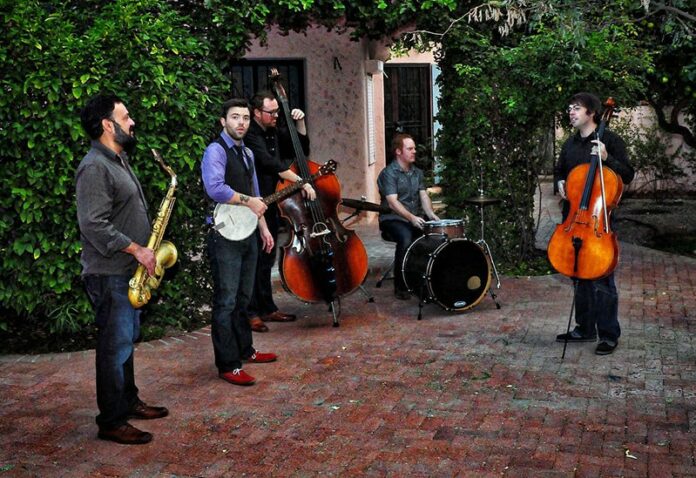
The Ronstadt clan traces their roots in Tucson back five generations, and each one of them has been a musical family. Everyone of a certain generation knows the name Linda Ronstadt, but she’s not the only singer and songwriter carrying on the family tradition.

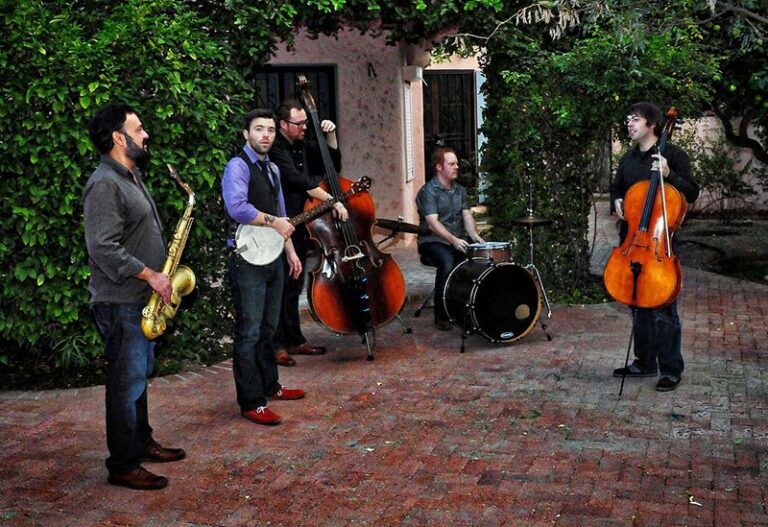
Formed in 2009 by Linda’s brother, Michael J., and now fronted by his sons Michael G. and Petie, Ronstadt Generations blend almost 200 years of Southwestern musical folk heritage to create a lush, sun-drenched and multi-genre repertoire. The band performs twice in the North Bay this week, hitting up the HopMonk taverns in Sebastopol and Novato on Jan. 6 and 7 respectively.

Only 13 months apart, Michael G. and Petie grew up with music ingrained in family activities and gatherings, though they also got to see the professional side of that life early on.

“When we were young, my aunt [Linda] was doing mariachi records,” Petie says, “and my dad was singing with her, so we got to travel to studios and be a part of that. Looking back on it, it was impactful in how we came up as musicians—it really left a big imprint on my life.”

The brothers formally got into music through school bands. Michael G. chose the cello, “because he could sit down to play it,” jokes Petie. “And he’s taken the cello to other levels. In my opinion, he plays the cello like no one else. He’s a great improvisational player, a great folk player and a great classical player.”

Petie started on violin before moving to upright bass and guitar. “I just try to expand my musical library of instruments,” he says, noting that he also dabbles with the banjo and tuba.

“Whatever palette of colors we can paint with,” he says, “the broader the palette makes for a more interesting band.”

After a few years of playing as a trio on the road, Michael J. and sons evolved the band into a six-piece ensemble by recruiting fellow Tucson musicians Alex Flores (tenor sax and vocals), Sam Eagon (upright and electric bass) and Aaron Emery (drums and percussion), and expanding the band’s moniker to Ronstadt Generations y los Tucsonenses.

Michael J. Ronstadt died last year, but his sons are committed to keeping the family tradition going. “We all put a lot of heart into it,” Petie says. “I think he would want to see it live on.”

Top 10 Films of 2016

The problem of looking back at the year in film is that it involves looking at the year 2016, and who wants to do that?

Captain America: Civil War is an unnecessary sequel with one fight scene too many. But the directors, the Russo brothers, caught the national sense of division and of blowback begetting blowback. If liberal snowflakes are threatening to get out of the U.S. now, what does it say that even the Cap decided to head for the hills?

Strange that with all the efforts to retrieve the magic of the studio-era film—La La Land, Rules Don’t Apply, Café Society and Hail, Caesar!—the most original pastiche, The Witch, channeled a silent film from 1922, the Swedish classic Häxan, aka Witchcraft Throughout the Ages. The Witch‘s Georges de la Tour lighting and the ingenious payoff worked its magic.

While it was made for TV, the eight-hour O.J.: Made in America took a long look at this hero’s plummet and the way he allowed himself to be used as a palliative against America’s racism during the white backlash of the 1960s.

Zootopia, Loving and, perhaps the best film of the year, Moonlight did justice to our reeling times in three different approaches to the subject of dangerous liaisons. Fences was a haunting film that showed how post-traumatic slave syndrome destroys a tough, ingenious man.

Hunt for the Wilderpeople seems like a movie that will find its niche during repeated viewings; it’s the one film you can recommend to anyone, even during times of schism.

The kinky and beautifully framed Handmaiden describes the cost of snobbery. And Hell and High Water‘s splashy, sagebrush-rebellion populism is less key to its quality than the way it treats—with wit and fierce excitement—the lives of outlaws.

As for the worst of the year, why search for a more dispiriting movie than Alice Through the Looking Glass? It cost a fortune, it rubbished a great book, and it had the last of Alan Rickman in it, as if to remind us of one more loss in a year of heavy losses.

Missing Link?

Terpenes are the essential oils in cannabis, and are responsible for its unique aromatics, as well as some psychoactive effects. Strains like Cherry AK, Sour Diesel and Pineapple aren’t just names; they also refer to the smells of the strain emitted by the terpene content.

There are over 120 identified cannabis terpenes. One in particular, myrcene, is reputedly responsible for the effects normally associated with indica vs. sativa strains. The more myrcene in your strain, the more likely you will experience the “couch-lock” effect associated with indica-dominant strains. The absence of myrcene will give you a soaring or sativa-like effect. These effects, including medical efficacy, are influenced not only by the cannabinoid profile (THC, CBD, etc.), but by the combination of the cannabinoids and terpenes.

Science hasn’t focused enought on terpenes. A Google Scholar search of “THC” produces more than 1,000,000 articles; a search of “THC” and “terpenes” produces 15,000 articles. So only 1.5 percent of the scientific articles concerning THC mention terpenes, and presumably even fewer of them have looked at the role of terpenes in the individual studies. Given that scientists pride themselves on doing experiments that can be reproduced, the failure to mention terpene content casts a massive shadow over past cannabis research.

Another look at Google Scholar yields the following: “THC” and “cancer” shows 78,000 results, while “THC,” “cancer” and “terpenes” comes up with only 3,000 results. Why is this important? There is a small body of research out there that says the addition of a certain class of terpenes known as sesquiterpene lactones combined with THC/CBD has greater efficacy in fighting cancer than THC alone. (Note to breeders and cultivators: look for strains that have a CBD to THC ratio of one to one, with a strong sesquiterpene lactone profile. One mother plant could make the world a better place.)

The role of terpene content in treating epilepsy shows the same research pattern. Less than 4 percent of the scientific articles mention terpenes. Does the terpene profile make a big difference in treating epilepsy with cannabis-based therapies? Maybe, maybe not. The fact that the science is largely silent on the subject is troubling for parents trying to figure out how to help children suffering from seizures.

Is the addition of sesquiterpenes really better at fighting cancer? It’s possible, but some classes of sesquiterpenes have produced toxic side effects. We need more research. Terpenes matter. Go back to the lab, scientists, and get busy.

Michael Hayes works for CBD-Guild. Contact him at mh*******@*****st.net.

Jan. 6: Mixed-Media Marvels in Sebastopol

The art of collage and assemblage is a worldwide phenomenon, and this week, Sebastopol Center for the Arts brings an international collection of artists together for its ‘Marvelous!’ exhibit. The roster of artists whose work will be on display includes Koji Nagai (Japan), Jacques Muller (France), Mongobi Bibiana Mele (Italy), Deborah Oropallo (U.S.) and Deborah Wildenboer (South Africa). The...

Jan. 7: Outside the Bubble in Mill Valley

New York City playwright and performer Dan Hoyle knows the best way to escape the “liberal bubble” is to get boots on the ground and see the Midwest, small-town America for yourself. That’s why he spent a hundred days driving through the Rust Belt, living out of a van, meeting locals and hearing their stories. Hoyle turns those honest...

Jan. 9: Stitched Together in Cotati

North Bay artist and printmaker Sami Lange has spent 15 years developing her artistic vision: she sews small, detailed drawings together for a larger work that has the appearance of a paper quilt. On display in a new solo show, Lange’s drawings are inspired by everyday details of the world around her, as well as her personal relationships and...

Jan. 11: World’s Finest in Santa Rosa

Everyone knows the Harlem Globetrotters as the preeminent basketball entertainers of the world, but did you know that among their antics and action the team also holds over a dozen Guinness World Records? This past year alone, the Globetrotters claimed—or reclaimed—nine records, including longest basketball hook shot, longest basketball shot blindfolded and most basketball three-pointers made by a pair...

Red Hot

'It started as a dream—literally," says Sharon McNight, describing how her affection for the music of late vaudeville legend Sophie Tucker became the one-woman-show Red Hot Mama. A Tony-award nominee for her lead performance in the 1989 fantasy-musical Starmites, McNight will be bringing her acclaimed solo show to the Cinnabar Theater for a three-weekend run beginning Jan. 6. The run...

Short and Stout

For a company that celebrates its mistakes, missteps and bloopers with such success, Lagunitas Brewing Company sure makes an aromatically consistent product. To my nose, almost every Lagunitas beer, from Belgian-inspired Stoopid Wit to a sort of Scotch-style brown ale whose name cannot be printed, shows, well, a chronic similarity to the Dogtown pale ale. That's great—big, resinous and dry,...

Bitter Pill

'This bill is being shoved down the throats of the American public" was a well-traveled Republican refrain around the Affordable Care Act as it wended its way through the legislative process back in 2009, and a favorite rhetorical talking point of former House Speaker John Boehner. Now the Republican majority promises to repeal Obamacare as the first order of business...

Family Ties

The Ronstadt clan traces their roots in Tucson back five generations, and each one of them has been a musical family. Everyone of a certain generation knows the name Linda Ronstadt, but she's not the only singer and songwriter carrying on the family tradition. Formed in 2009 by Linda's brother, Michael J., and now fronted by his sons Michael G....

Top 10 Films of 2016

The problem of looking back at the year in film is that it involves looking at the year 2016, and who wants to do that? Captain America: Civil War is an unnecessary sequel with one fight scene too many. But the directors, the Russo brothers, caught the national sense of division and of blowback begetting blowback. If liberal snowflakes are...

Missing Link?

Terpenes are the essential oils in cannabis, and are responsible for its unique aromatics, as well as some psychoactive effects. Strains like Cherry AK, Sour Diesel and Pineapple aren't just names; they also refer to the smells of the strain emitted by the terpene content. There are over 120 identified cannabis terpenes. One in particular, myrcene, is reputedly responsible for...
11,084FansLike
4,606FollowersFollow
6,928FollowersFollow