Amadeus

0

Mostly Mozart

By Gretchen Giles

THE GREEKS examined the human being in relationship to the gods, and the Elizabethans examined man’s relationship to God. [Playwright] Peter Shaffer is examining man’s relationship to a much-diminished God. On some level, this puts the power of man to create on the same level as God’s ability to create, and this is the central challenge that comes across.”

Finishing his thought, Paul Draper leans back in an upholstered seat in the empty Evert Person Theatre at Sonoma State University and smiles. A freelance director who donates his time to San Francisco’s Magic Theater as reader of original scripts, Draper is obviously pleased to meet the challenges raised by the mighty psychological drama Amadeus, opening Feb. 28 at SSU.

Set amid the ending shambles of composer Antonio Salieri’s life, Amadeus–made into an Academy Award­winning film in 1984 by director Milos Forman–is far more about Wolfgang Amadeus Mozart’s rival than it is about the envied genius himself. A court composer of much renown, Salieri lived with the anguished knowledge that while he could hear and appreciate the full mastery of accomplished composition, he himself could never achieve it. Does this torment lead him to fill Mozart’s cup with a venom powerful enough to kill the man in his prime? Ah, there’s the rub. In fact, there’s the play.

“This is a modern play,” stresses Draper of this intensely 20th-century work, which marries notions of the divine from our era with passions of 200 years ago. Noting that Shaffer is a Mozart aficionado who owns thousands of Wolfie’s recordings, Draper–a deeply intelligent and quiet man in sweater and loafers–nonetheless devoted hours of library time delving into the 18th century and into the particular intricacies of Mozart’s and Salieri’s lives.

“I found out in my research that there are a number of anecdotal pieces of evidence about Salieri and the question of whether he did murder Mozart,” says Draper. “There was a piece published in the Vienna newspaper just days after Mozart died suggesting that he had been poisoned, suggesting that another rival composer had been hired by the Freemasons to kill Mozart because he wrote The Magic Flute and brought the Freemasons into it.”

Laughing over the enduring nature of conspiracy theories, he continues. “But in a kind of interesting twist, there is the suggestion that when Salieri was on his deathbed, he said to people, ‘I had nothing to do with the murder, I did not kill Mozart.’ But then he attempted suicide, so you’re left with this notion of, well, like O.J. Simpson: ‘If I didn’t kill my wife, why am I driving two miles an hour, eluding the police, down the freeway?'”

Of the 30 performers onstage, only one is a professional actor. Tahmus Rounds, an SSU graduate, plays Salieri. Fearing that all his rehearsal time would be spent with the actor portraying this complex character, Draper decided on a professional in order not to leave the other actors neglected.

“Working with student actors is enormously exciting,” he says, as members of a stage management class bustle into the auditorium, instantly changing the air in the room from that of quiet reflection to a charged atmosphere of whoops and yells and compliments on Draper’s new haircut. “You go out into the professional world and it’s easy to forget that there’s a reason why you do theater.

“The reason I do theater is because I want to tell a story and deal with great literature and to communicate with an audience ideas that are important,” he says, leaning forward. “You get out into the commercial world, you can forget that those are the reasons why you are doing it; and working with the students, you can just see this fire in their eyes.”

Amadeus runs Friday-Sunday, Feb. 28 through March 9, at 8 p.m. with matinees each Sunday at 2 p.m. Evert Person Theatre, Sonoma State University, 1801 E. Cotati Ave., Rohnert Park. Tickets are $6-$15. 664-2353.

From the February 20-26, 1997 issue of the Sonoma County Independent

This page was designed and created by the Boulevards team.
© 1997 Metrosa, Inc.

Talking Pictures

0

Star Struck


Feeling the Force: Darth Vader meets Carlos Altamirano, 11, Mario Altamirano, 9, and Brenda Ochoa, 10.

Photo by Janet Orsi


3 kids get first taste of the big screen

By David Templeton

Writer David Templeton takes interesting people to interesting movies in his ongoing quest for the ultimate post-film conversation. In this–his 100th such movie-house colloquy–he takes a trio of young first-time theatergoers to see the remastered edition of Star Wars.

LIKE MOST other American kids, Mario Altamirano, Brenda Ochoa, and Carlos Altamirano, (ages 9, 10, and 11, respectively) have watched plenty of television. They have seen countless videos, can name all the films of Arnold Schwarzenegger, and know the plots of classic Disney cartoons.

Asked if they like movies, each one exclaims, “I love movies!”

But until today, at this matinee screening of the newly re-released (compliments of Healdsburg’s Raven Theater), neither Brenda nor Carlos nor Mario has ever experienced a movie in a real movie theater.

Born in Mexico, each of my guests this afternoon immigrated to the United States when they were much younger, and have grown up speaking both English and Spanish. Their lack of movie-house experience is due mainly to the economic priorities of their parents.

“Can we sit in the front row?” Carlos asks, after we’ve been ceremoniously welcomed and ushered in by the theater’s manager. The front row it is.

Clutching popcorn and sodas, Brenda giggles in anticipation of Star Wars (arguably the ultimate big-screen film) while Carlos tries to locate the projector room and Mario theorizes about which way the velvet curtains will open and what color the screen will be.

The curtains part from the middle, the screen is a shimmering silver, and the show begins.

“I stopped breathing,” Brenda whispers as the end credits roll to the thunderous John Williams score. “I kept forgetting it was a movie. It was so big I thought it was happening to me!”

“Is it always so loud?” Carlos asks. “If the TV at home was that loud, I think the furniture would be jumping all over the place.”

On the drive to a nearby restaurant for lunch, the car is full of high-decibel, well-imitated sounds of lasers, droids, wookies, and Darth Vader’s ominous breathing noise.

“I like Darth,” Carlos says a few moments later, as we all take a seat at the table, “because he can get into people’s minds from far away. He was like the dark side of Superman.”

“I liked when they blew up the Death Star,” Mario chimes in.

“Whenever something blew up it made my stomach feel funny.” Brenda adds. “It kind of tickled.”

“Was this movie on TV a few weeks ago?” Carlos asks. Yes, I reply, I think that it was.

“I can’t believe this,” he groans. “I was going through the channels and I saw the part where Darth and Obi Wan were fighting. But I didn’t know what it was. I thought it was Star Trek or something. I thought it looked boring, so I turned it off.” He slaps his forehead, as everyone else grimaces in sympathy.

When Brenda remarks that she liked Princess Leia, Carlos says, “She was cool. Her hair looked like horns.”

“Buffalo horns,” Mario nods. “Or breakfast rolls.”

“She was pretty,” Brenda continues. “And she had talent.”

“It surprised me that she was wearing lipstick,” Mario grins. “I didn’t know they had that in space!”

Having learned that Carlos likes Darth and Brenda likes Leia, I ask Mario to name his favorite character.

“Probably Luke, because he trusted people,” he says. “But I liked C3PO because he would translate for the other robots.”

“That robot can speak 1,000 languages,” adds Carlos, noticeably impressed. “I don’t think there even are a thousand languages. Not on Earth.”

“Spanish, English, French,” Mario lists out loud, counting them off on his fingers.

“Indian, German, Japanese, Chinese,” continues Brenda.

“And all the American Indian languages,” Carlos says. “That robot probably knows all of them.”

He suddenly laughs, holding his stomach, and says, “When the movie was over, I felt really dizzy. Does that happen all the time?”

I suggest that perhaps his dizziness came from sitting so close to the screen.

“Really?” Brenda asks. “Then I want to sit in the front row every time!”

Join David Templeton and West Coast Live host Sedge Thomson, San Francisco monologuist Josh Kornbluth, men’s mythmaker Sam Keen, and dream-y author Naomi Eppel for “Talking Pictures Live,” a benefit screening of Orson Welles’ 1941 classic, Citizen Kane. The event marks Templeton’s 100th Talking Pictures column. You are invited to a pre-screening reception, the film, and a post-film chat. Friday, Feb. 21, at 6:30 p.m. Sebastiani Theater, on the Plaza, Sonoma. Tickets are $8. 996-9576.

From the February 20-26, 1997 issue of the Sonoma County Independent

This page was designed and created by the Boulevards team.
© 1997 Metrosa, Inc.

Barf-O-Rama

Snips & Snails


From roach burritos to diaper gravy, Barf-O-Rama delivers

By Warren St. John


FIRST THERE WAS Mad magazine and later came Pee Wee’s Playhouse and The Simpsons. Now, naughtiest of all, there is Barf-O-Rama–a series of books that will surely delight kids and make their parents shudder. With its emphasis on scatology for scatology’s sake, this series won’t be winning any Caldecott awards.

So far, 10 Barf-O-Rama books have appeared in print, with titles like The Great Puke-Off, Pig Breath, Dog Doo Afternoon, and The Legend of Bigfart. Seven more are due out in coming months. The books deal with “a helmet full of hurl,” “fettuccine al farto,” and “buttwurst.” If these books have any redeeming value, it is that they will keep little Timmy turning the pages of an actual book, rather than zoning out in front of the VCR.

The series is the brainchild of Ann Brashares, a very mild 29-year-old editor at the Daniel Weiss Associates literary agency. When Brashares talks about Barf-O-Rama, what she is really talking about is boogers, “scab pie,” and even “balloons filled with diaper gravy.” This may not be the high-minded stuff that nudged this soft-spoken Barnard College graduate toward a career in publishing. But still, for Brashares, Barf-O-Rama represents the fulfillment of a dream.

“For a long time,” she says, “I’d been thinking about doing something gross.”

There are no whoopie cushions or plastic puddles of fake vomit lying around Brashares’ office; on the walls are photographs of her husband and baby. So how did someone so professional conceive of something as unapologetically disgusting as Barf-O-Rama? “I grew up with three brothers,” she explains. “They find gross things funnier than anything else.”

But as a businesswoman, Brashares has gotten into the gross-out game with a real purpose. Barf-O-Rama, she says, is all about marketing–trying to target that elusive group of boys on the verge of adolescence. The books, with their lurid covers–of a baby whose diaper is about to explode, a kid gagging on a roach-filled burrito–look like things that no parent would approve of, and therein lies the allure.

“It’s a famous problem that you can’t sell books to boys,” Brashares observes.

The Scholastic company’s insanely popular Goosebumps series of light horror has certainly won over this readership in recent years; Brashares thought she’d go Goosebumps one better. “I thought, ‘What if I do something about food? Or gross food?'” She developed a proposal for a book about a group of kids who get into a “gross-out war,” which she called The Great Puke-Off. She ran her idea by executives at Bantam Doubleday Dell. (Her company, Daniel Weiss, comes up with book ideas, packages them with writers, and then sells them to publishers, much as Hollywood producers sell to studios.)

Bantam Doubleday Dell was “reluctantly interested,” she says. Then Brashares called on an old friend, Katherine Applegate. Applegate is the Thomas Pynchon of juvenile fiction; her publisher claims to have never laid eyes on her, and she shuns interviews. She writes out of Minnesota under the pseudonym of Pat Pollari, a gender and ethnic neutral name conceived, ironically enough, so as not to offend. She gets paid a few thousand dollars per manuscript. Applegate, who is “somewhere in her 30s,” according to Brashares, agreed to give The Great Puke-Off a try. Bantam was skeptical, but Applegate turned in something so disgusting that the publishers had to take note.

Here’s an excerpt: “‘Aaargh! There are roaches in the food!’ Zoner shouted. “Allie was the first to blow. Her eyes changed from blue to green behind her glasses. Her throat started doing the gack dance. Then she emitted. She extruded.”

And in case you don’t know what a “gack dance” is, Barf-O-Rama books come with glossaries: “The spasms observable in the throat of a person preparing to gack, blow, heave, hurl, or emit.”

Bantam Doubleday Dell was disgusted enough to order 16 more books just like it, and the Barf-o-Rama series was born.

Getting in on the disgusting trend is Addison Wesley, with its Grossology series. And then there are the gross toys: The Archie McPhee Co. in Seattle is selling lots of brain-shaped gelatin molds these days, and a company called Brainstorms is moving tons of “Gurglin’ Guts Eye Balls,” which produce “oozing and sloshing noises” when shaken. These are all noble efforts, but in both scope and degree of grossness, Barf-O-Rama takes the cake, and gacks it up right back in your lap.

“It delivers,” Brashares says.

But won’t this stuff damage a child’s mind? Dr. Norma Doft, a child psychologist at New York University Medical Center, says, “Everything has to be taken within the framework of who the kid is. For some kids, it’s too stimulating; for others, it meets their needs.”

Even Brashares herself says, “Parents aren’t going to want their kids to have 48 Barf-O-Rama books on their shelves.” Dan Trace, manager of Copperfield’s Books’ Sebastopol store, doesn’t see this as a problem. “It’s a moderate seller,” he says. “We’ve only moved three to five of each number so far, and it came out in July of ’96. And,” he adds with a laugh, “my son will be 13 in April, and he picked one up and just said, ‘Yuck.'”

Dear old mom is probably the biggest hurdle standing between Barf-O-Rama and Goosebumps-style success. A survey last year in Publisher’s Weekly determined that mothers buy nearly half of all children’s books, with teachers buying the next 20 percent; kids themselves buy between 5 and 15 percent of the books they read, and fathers, even fewer than that.

Brashares argues that the books are an alternative to violent or scary stories. “Nobody gets hurt or killed,” she says. “It’s just that they’re pretty gross.” And how. To quote from that potential classic of underground prepubescent literature, The Great Puke-Off: “The two vomit streams hit Mr. Chapman like a fire hose.

“I stood on the seat as the tidal wave of heave rolled by.”

From the February 13-19, 1997 issue of the Sonoma County Independent

This page was designed and created by the Boulevards team.
© 1997 Metrosa, Inc.

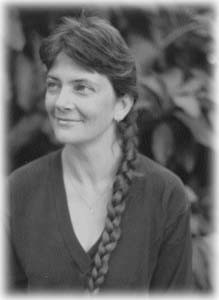
Jean Hegland

Tree for Two


Into the Woods: Jean Hegland sees the forest for the trees in her new novel.

Photo by UPI/Bettman


Author Jean Hegland goes wild

By Zack Stentz

ONE OF THE YEAR’S most fascinating science fiction novels has nary a starship or extraterrestrial in any of its 193 pages. Instead, novelist Jean Hegland’s Into the Forest (Calyx, 1996) takes as its subjects Nell and Eva, two intelligent teenage girls trying to survive in an isolated house in the heart of a redwood forest, while outside society gradually falls apart and reverts to chaos. Nell and Eva’s priorities aren’t to seek out new life forms and new civilizations; they’re to figure out how to grow their own food, keep healthy, and defend themselves in a world suddenly gone low-tech and savage.

Interestingly, the actual details of society’s collapse are left vague, and form an indistinct backdrop to the realities of the girls’ day-to-day existence. “I think that I was much more interested in how a disaster would/will affect individuals than how it will come about,” says Hegland, sitting at a table on the 55 acres of second-growth forest property she shares with her husband and three children near Healdsburg. “Individuals won’t know what’s happening in the wider world. You don’t know what’s going on and you’re left to your own devices.”

DRIVING OUT to meet Hegland at her remote home, it isn’t difficult to guess what inspired her to tell the tale of two teenage girls living far from the nearest town. To reach her house, one must navigate several miles of axle-shattering dirt road and cross a one-lane bridge rickety enough to make Indiana Jones wish he’d majored in mathematics instead of archaeology. “We’re not quite as isolated as Nell and Eva,” she says.

Still, Hegland is familiar enough with the often unglamorous realities of rural life to have not succumbed to Rousseau-like fantasies and romanticized the glories of living close to nature. “I don’t have any illusions about what Nell and Eva are up against,” she says. “They’re going to have hard lives, to lose teeth and break bones, and their baby could choke on something or die of any number of things.

“And yet, we place this enormous value on living a long time and avoiding discomfort, and I wonder sometimes if that value is misplaced.”

Hegland’s two minds on the subject of civilization and its discontents are manifested in the novel’s big-wow finish. Without giving away too much, suffice it to say the two girls make an irrevocable break with society. “Some people find the ending really heartbreaking, while others say ‘Yeah!’ and are really excited by the girls’ decision.”

Mixed reaction to the finale aside, Into the Forest has garnered plenty of praise since its debut in July, with Hegland garnering positive reviews and touring independent bookstores up and down the West Coast in support of the novel. “Since it was published by a feminist company, a lot of the interest has been coming from those quarters,” she says, of the book which has just been picked up by Bantam. “But I’ve also had people tell me things like ‘My 19-year-old son saw my copy and then read the book and loved it.'”

Stranger still to Hegland has been the desire of some readers to draw one-to-one correspondences between events in the book and the author’s own life and personality. “I’ve been surprised at how much people who know me want to read my life into the book,” she says. “I suppose that has to do with people’s interest in that mysterious thing that happens when stories get written. But none of my characters corresponds exactly to me or anyone else. There’s some of me in all of them, but their lives are not my own.

“And,” she adds, laughing, “they had a much nicer house than we do.”

HAVING LIVED and studied for a time in eastern Washington state, Hegland got to see a societal breakdown up close when Mount St. Helens blew its top in 1980. “That was the funny thing about the disaster,” she recalls. “The people closest to it knew the least about what was going on.”

But even a cursory read of Into the Forest reveals that Hegland’s primary source of inspiration was not her life but her imagination. And like many fiction writers, she felt the disorienting twinge of having her own characters become more real to her than the actual people in her life. “It was very strange,” she says. “I’d be writing, and then I’d get up and actually be surprised to see my own face looking back at me in the mirror, and not Nell’s. I even had Nell’s dreams sometimes.”

Though already at work on her next novel, Hegland makes it clear that she hasn’t entirely left Nell and Eva behind. “I’m definitely finished with this book,” she says, “and I’ll never write a sequel, but I do find myself thinking about the characters, and what became of them, and how they’re doing now.”

From the February 13-19, 1997 issue of the Sonoma County Independent

This page was designed and created by the Boulevards team.
© 1997 Metrosa, Inc.
Bernie Krause

Warning Signs


Nature’s Way: Naturalist Bernie Krause has released a collection of journal notes and field recordings.

Photo by Eric Luse/San Francisco Chronicle


New book captures Bernie Krause’s life in the wild

By Greg Cahill

THE BITTER TASTE of mortality hung in his throat. Bernie Krause huddled in the cabin of a New Zealand coast guard cutter, sailing to Antarctica through stormy South Pacific seas. The small cabin, perched at the stern near the engine room, lurched violently as huge waves buffeted the ship. He couldn’t eat. He couldn’t sleep. And using the toilet was like peeing into a coffee can while riding a roller coaster. The acrid smell of vomit and diesel exhaust wafted through the cabin, contributing to the roiling in the pit of his stomach.

Nature wasn’t giving up its secrets easily as Krause ventured back to the southern continent to record the sounds of whales, seals, and penguins.

In search of relief, Krause staggered from the cabin, only to be greeted by daunting 40-foot walls of dark gray water that came one after another, crashing on deck and threatening to break apart the ship. “It was the most terrifying experience of my life,” recalls Krause, who now lives in the green hills above Sonoma. “It took me two weeks to stop shaking.”

But Krause’s tribulations had just started. Shortly after recovering from the sea voyage, he learned firsthand about Antarctica’s legendary cold during a brief jaunt outside the research station where he was staying. Five seconds after he stepped out of the station’s airlock, against the advice of the resident scientists, the subfreezing air–174 degrees below zero–crystallized the viscous fluid of his eyes, lacerating the corneas and sending Krause to sick bay for several more weeks.

“You learn real quick,” says the soft-spoken naturalist and sound recordist of life in the wild. “Real quick.”

SOME OF THOSE LESSONS are included in Notes from the Wild: The Nature Recording Expeditions of Bernie Krause (Ellipsis Arts, 1996), a fascinating collection of words and sounds. The new 95-page book offers lively, insightful accounts of his exploits through entries from field journals and–thanks to a companion compact disc–excerpts from field recordings he has made of wild animals and their habitats.

“I wanted to give the reader a sense of what it’s like to record and to experience the world from an aural texture rather than from a visual texture,” he says of the decision to release a book/CD project. “We are very much a graphic culture, but in ancient cultures, the aural cues are much more balanced with the graphic. Because my eyesight isn’t particularly great, I hear the world, I don’t really see the world as other people do.

“That’s created an experience in my life that is absolutely powerful to the extent that I almost don’t want to do anything else except listen to that voice of natural environments, it gives me so much pleasure.”

Krause, 57, is probably best known as the studio wizard who in 1985 lured Humphrey the wayward humpback whale out of the brackish Delta water and back to the open sea. He did it by serenading the languid leviathan with a tape recording of humpback whale sounds. The episode brought him worldwide recognition.

But Krause–a slightly built, reserved man who harbors a real passion for the natural sciences–spends most of his time far from the limelight, recording the grunts, growls, hoots, and howls of wildlife in their natural surroundings. He captures the ambiance of rain forest and desert, meadow and marshland, by taping animal sounds uncorrupted by human ones–or trying to. In the past decade, he has released a series of nature recordings for the Nature Company and on his own Wild Sanctuary label. His fanciful 1989 recording Gorillas in the Mix (Rykodisc) used digitally sampled animal noises to create a jungle of jazzy beats. Krause is now creating complex soundscapes for a new Disney theme park in Florida and a Native American museum in Massachusetts.

But capturing the sound of the wild is a challenge these days: the pounding beat of oil drills travels 70 miles in Alaska’s thin Arctic air; the shrill buzz of chain saws ravaging the Brazilian jungles drifts 20 miles; and the auditory wake of airplanes and helicopters is everywhere. In 1987, Krause spent two months in Africa recording the sounds of Dian Fossey’s endangered mountain gorillas. “I got 15 minutes of usable tape out of 500 hours in the field,” he says, explaining that within earshot of gorillas feeding in the small Rwandan nature preserve are ghetto blasters pumping out rap, the shouts of nearby villagers, and the sounds of domestic animals.

Krause has been likened to a botanist collecting the auditory seeds of species destined for extinction. That’s an accurate description; he notes that of the 3,300 hours of natural sound he has recorded since 1968, 20 percent of his tape library comes from now-extinct habitats. In his new book, Krause poignantly illustrates that point by pairing two journal entries: the first, from June 1989, describes the serene beauty of Lincoln Meadow in the Yuba Pass in the High Sierras; the second, from April 1996, chronicles his return to find the nearby woods clear cut, the stream muddied, and the songs of the birds and frogs all but silenced.

“It’s like missing an old friend,” Krause says of the personal toll exacted by such grim discoveries. “You find something that gives you some sense of a spiritual place–some sense of solace in the world–but then you almost feel violated when you return to find that as human beings–as a tribe, as a race–we’ve become so desensitized to the extraordinary beauty in these places, which really speaks to us in a spiritual and a psychic way. As a result, we find ourselves with a void in our lives because we’ve allowed this to be taken away from us.

“We’re all part of that process.”

For Krause, that loss is powerful motivation to get the word out. “I’m hopeful that we may stop being so destructive in our living and our lifestyles–I mean, America is 5 percent of the world’s population and uses 60 percent of the resources–but until we’re prepared to stop that, I don’t think much is going to change,” he says. “I think that it’s going to get a lot sadder and a lot more stressful to live because there won’t be any place left to go for a respite.

“So while I am hopeful, I am not optimistic.”

Bernie Krause will give a reading and play excerpts from his field recordings at 7:30 p.m. on Tuesday, Feb. 25, at Copperfield’s Books, 650 Fourth St., Santa Rosa. Admission is free. To learn more about his work, visit his website.

From the February 13-19, 1997 issue of the Sonoma County Independent

This page was designed and created by the Boulevards team.
© 1997 Metrosa, Inc.

Jonah Raskin

Free Radical


Arrested Development: Yippie founder Abbie Hoffman usually got what he wanted from the police–which was attention from the media.

Photo by UPI/Bettman


Jonah Raskin recalls activist Abbie Hoffman and the theater of the soul

By Sara Peyton

IN THE MONTHS before Yippie founder Abbie Hoffman surfaced in September 1980, after six and a half years of running from the law on a drug charge, he sometimes hung out at the rustic Union Hotel in remote Occidental. Hoffman–a counterculture Pied Piper whose no-holds-barred theatrics helped to entice stoned-out Vietnam-era flower children into antiwar activism–passed the hours drinking red wine in the hotel’s saloon with his longtime comrade and future biographer, Jonah Raskin.

During the visits, Raskin–who chronicles those times in his acclaimed biography For the Hell of It: The Life and Times of Abbie Hoffman (University of California Press, 1996)–put his life on hold. Hoffman–who suffered from clinical manic depression–talked non-stop, racked up huge phone bills while staying at Raskin’s home, paced, drank up his host’s booze, and put the finishing touches on his 1980 autobiography, Soon to Be a Major Motion Picture. “Abbie was busy organizing his surrender,” Raskin recalls. Those plans culminated successfully in a brilliant pre-surrender public relations coup–a friendly interview with ABC-TV correspondent Barbara Walters.

To mask Hoffman’s identity, Raskin introduced his fast-talking friend as Barry Freed, Hoffman’s underground alias. As Freed, the then-fugitive worked to protect New York’s St. Lawrence River from dredging and even met with Sen. Daniel Moynihan. “When he was here, Abbie talked to several people about how to keep the Russian River clean,” says Raskin. No one recognized the heavily bearded man.

The two men had become pals at the height of Hoffman’s fame in 1970 after the Yippie leader’s conspiracy trial for inciting riots at the 1968 Democratic National Convention and before he was nabbed five years later for selling cocaine. During that period, Raskin, an academic-socialist­turned­counterculture activist, unwittingly delivered an envelope to Hoffman from someone named “Molly,” who turned out to be radical Weather Underground leader Bernadine Dohrn, wanted on rioting charges.

On such radical wings, the friendship flew.

Before long, Raskin was the minister of education for the Yippies, an anarchistic band of publicity-seeking political activists who used the media to stage their rebel acts. Whether he turned up on the Merv Griffin TV show toting a marijuana joint or delivered a speech dressed like a Keystone Cop and shooting his cap gun into a crowd, Hoffman’s in-your-face theatrics got him the media attention he thrived on.

Cultural revolution is what Abbie did best, says Raskin. “But it wasn’t all show. The show was for a serious purpose and something that was really heartfelt,” he says. “The Yippies were genuine radicals.”

They were also more fun. “I can remember spending a day with Abbie and encountering a folksinger. We started singing and dancing in the street. We’d go to the Law Commune and meet with radical lawyers. We’d meet with Black Panthers, hang out on the street corner, or play basketball. We’d go back to Abbie’s place on East 13th Street and go up on the roof and climb into his hammock.

“It was just great to be on the roof of his apartment building and look out on the New York skyline.”

AS WE TALK at his Occidental home, the 55-year-old Raskin–a Sonoma State University communications instructor since 1981–pours tea. For him, it has been a difficult year of extreme highs and lows. Last summer, he faced brain surgery for a benign tumor. Though the surgery was successful, it left one eye weeping (recently corrected by plastic surgery). Two weeks later his mother, Mildred Raskin, died.

Last fall, For the Hell of It was published. It was praised as both a vivid chronicle of the liberation movements of the ’60s and a biography of their self-appointed publicist. Feminist Vivian Gornick opined in The Nation: “In the ’60s, the revolution pressed on Abbie’s heart as it did on the hearts of a few million others, and he put his manic-depression where it belonged: on the line for the glory of a liberated life.”

Others have condemned the era as silly and misguided. Calling Hoffman–who committed suicide in 1989 at the age of 52–“a “Groucho Marxist,” Jonathan Rieder wrote in the New York Times Book Review: “The violent anxieties [Hoffman] and the others were churning up in Middle America–to what end?–helped fuel the backlash and Agnew and Nixon.”

For Raskin, the book project reaffirmed his commitment to his old friend. When first starting the research, “I was angry at Abbie because he committed suicide,” observes Raskin. “But I’d forgotten the more positive things about him and his role as a protester-comic-genius,” he adds. “One of the things I’ve seen in the reviews is how much ’60s bashing is going on. But people came forward then. There was a generation of people who wanted to end segregation in this country. They were in rebellion politically, culturally, and spiritually. Relationships between men and women changed. We have much more freedom in the ’90s then we did in the ’60s.

“I don’t want to idealize Abbie. He was an egomaniac, he wanted to be famous, and he was excessive. He had plenty of flaws. But he joined with people who were trying to change the world and remake themselves. So they stumbled and fell and took wrong turns–so what?”

During the book project, Raskin drew on his own recollections, interviews with some 250 people–including LSD guru Timothy Leary, activist-turned legislator Tom Hayden, and black radical Angela Davis–FBI files, court records, TV and radio broadcasts, press clippings, and Hoffman’s own books and articles. It wasn’t easy to find the truth about the Yippie leader, Raskin says, since Hoffman deliberately changed his personal history and left a trail of false stories and documents, creating a nightmare for biographers.

“Looking back at Abbie Hoffman from the vantage point of the ’90s, it seems to me that he was the first American cultural revolutionary in the age of television,” says Raskin. Objective reality didn’t exist for Hoffman, who advised followers “to turn your life into an art form, a theater of the soul.”

Yet, for Hoffman–who affected what Raskin calls a “Jewish drugstore cowboy persona” as a teen, gambling, drinking, and hot-wiring cars before being drawn to radical causes in college–close, lasting relationships remained out of reach. “It was hard for Hoffman to look inside,” Raskin continues. Hoffman married three times and had numerous lovers; he neglected his children, sometimes bullied his friends. The Yippie male elite was sexist, and fellow female founders, including writer Robin Morgan, eventually denounced the male members and moved on to the women’s movement.

“The part of Abbie’s life I like the best was between 1967 to 1973,” says Raskin, about the years of massive antiwar protests, student strikes, free love, and LSD. “You can almost see Oliver Stone doing a movie on this time period.”

Indeed, Hoffman had a knack for the outrageous. On Aug. 24, 1967, Hoffman and fellow protesters dropped dollar bills at the New York Stock Exchange as “startled capitalists,” according to the Daily News, scrambled for the cash. A few months later, he announced plans to make the Pentagon “rise in the air.” He received a permit to raise the seat of military power, but no more than 10 feet. In a letter written to the East Village Other, Hoffman declared: “We will dye the Potomac red . . . and try to kidnap LBJ while wrestling him to the ground and pulling his pants off.” At the protest, the irreverent Hoffman and his second wife, Anita (who today lives in Petaluma), dropped LSD.

As the tumultuous years of antiwar protest stilled, the once-youthful hustler, who loved to get high, turned to dealing drugs. Arrested in 1973 for selling three pounds of cocaine to undercover narcotics agents in Manhattan and facing 15 years to life on felony charges, Hoffman turned to Raskin for help.

“One day at the Bronx Zoo he asked me to contact a lawyer in midtown Manhattan and pick up an envelope containing $10,000 cash,” Raskin writes. “I remember when I handed it over, I said goodbye, thinking I’d never see him again.” For most, that’s how the story of Abbie Hoffman ends, with the one-time radical leader slipping underground and out of the spotlight. Though he surfaced in 1980, Hoffman never successfully inserted himself again into public life. Unable to cope with the demons of his mental illness, he sabotaged efforts at recovery.

But his biographer remembers those underground years fondly. “When Abbie was underground, lots of people helped him, even though it could have gotten them in trouble for harboring a fugitive. There was the romance of helping the outlaw,” says Raskin.

“I had some of that romance too.”

From the February 13-19, 1997 issue of the Sonoma County Independent

This page was designed and created by the Boulevards team.
© 1997 Metrosa, Inc.

Sonoma County Books

Printed Matters


UPI/Bettman

Land of Dreamy Dreams: Sebastopol author Megan McDonald’s ‘My House Has Stars,’ illustrated by Peter Catalanotto, is among the favorite children’s books collected above.

Girls, God, galaxies, garbage–they’re all grist for our local authors

By Gretchen Giles

WHEN THE SUN peeks a few timid rays down our backs and into our gardens at this time of year, there’s no question: we’re out on our backs and in our gardens. But there has not been a reasonable share of that lately, and the second-best choice is obviously to be on our backs with a view of the garden–surrounded by a few good books. Adhering to our tradition of synopsizing books produced by area writers and illustrators, we find ourselves this winter comfortably awash in a bounty of new children’s books, as well as tomes on wide-ranging topics. Below, we offer just a sampling of the local crop.

Stephen S. and Jeanette K. Berger
A Tooth Fairy Tale
Illustrated by Camille Czech
Dragonbreath Productions, 1996

SANTA ROSA DENTIST Stephen Berger and his wife, Jeanette, have written a sweet ‘n’ silly tale that sugarcoats its message of dental health in the story of Vesta, a wise tooth fairy sent down to Earth to save the world’s children from tooth decay. Yeah, go ahead and laugh, but kids lick this stuff up, and the conceit that children’s teeth are as precious as stars is a good one. Complete with back-of-the-book charts, stickers, a poster, and other incentives, as well as a step-by-step description of the proper way to brush one’s teeth, this is an excellent tool to coax sulky brushers into better habits, produced by a couple so dedicated to the state of children’s mouths that they buy back tons of Halloween candy from kids each year.

Kay Drikey
Positive Aging A to Z
Vision Books, 1996

WHEN PETALUMAN Kay Drikey was a young 68 years old, she went back to college. With a full career as a mother and a business person, as well as a stint in the Peace Corps behind her, Drikey’s studies in gerontology led her to write this collection of 26 profiles of outstandingly vital seniors, ending with her musings and tips on the glories of the aging process, underlying her assertion that getting old has nothing to do with feeling old.

Robert Funk
Honest to Jesus
HarperSanFrancisco, 1996

SANTA ROSA’S Dr. Robert Funk is founder of the Westar Institute and the Jesus Seminar think-tank of religious scholars and lay people who meet regularly to hash out the historical and philosophical relevancies of the gospels and of Jesus’ life. A former ordained minister, Funk does not always find himself welcome in religious circles, as he is a Christian who doesn’t believe in God. At least, not the traditional notion of an omniscient, sentient being who presides over the heavens and can be called upon to grant a child’s prayer or stay a murderer’s hand. What he does believe is that Jesus was a living, breathing, fallible man who had the gift of occasionally being able to see through God’s eyes. That is, his spiritual powers were acute enough to be able to peer through small breaks in the firmament of reality to the glorious wonder of the cosmos that enrapture us all. With a constant feel for his readers, Funk cogently leads us through the plausibilities and implausibilities of traditional Christian teachings, taking the fundaments of faith back to the rigors of their historical roots.

Matthew Gollub
Uncle Snake
Illustrated by Leovigildo Martinez
Tambourine Books, 1996

A YOUNG OAXACAN BOY becomes insatiably curious about a forbidding black cave near his home. “Don’t go in there or you may never come out,” warn his parents. What happens next? Well, a baby could tell you. But the transformation that the boy undergoes from his time in the cave and the sentence he must bear thereafter draw on the power of myth and redemption, themes far elevated above the playpen. Sebastopol author Matthew Gollub has successfully teamed again with gifted illustrator Leovigildo Martinez (The Moon Was at a Fiesta, The Twenty-Five Mixtec Cats) to create a compelling piece of folklore. Based on traditional Mexican myths, Uncle Snake posits a distinctly unscientific notion of where lightning comes from, and does so in a poetic and challenging text, with drawings so beautiful that they were recently honored by the Society of Illustrators in New York. Highly recommended.

Andrea Johnston
Girls Speak Out: Finding Your True Self
Introduction by Gloria Steinem
Scholastic Press, 1997

GIRLS TALK. Girls listen. Girls think for themselves. The positive exploration of girlhood through former Independent writer Andrea Johnston’s eyes is designed to both resonate with and empower young girls, ages 9 to 15, who often internalize feelings of being “undervalued” by society. Based on the nationwide Girls Speak Out program (conscious-raising meetings for diverse groups of girls held by program co-founders Johnston and Gloria Steinem), the book uses the stories, poetry, and experiences of the young participants, as well as noted writers’ works to explore sexism, racism, patriarchy, and sexual abuse. Illustrations of female artifacts from “pre-history,” and their interpretations by girls and by the author, show how these ancient goddess symbols, unearthed in various continents, can be today’s role models. The book can be a practical guide on how to organize a “Girls Speak Out” program, or it can simply be a supportive connection with the powerful expressions of young girls who’ve learned that each voice matters–Paula Harris

Cynthia Lamb
Brigid’s Charge
Bay Island Books, 1997

RELYING ON FACT and legend, Cynthia Lamb of Cotati traces back her ancestor, healer Deborah Leeds, and examines the legend that Leeds birthed a devil that haunts us still today. Traveling from England to New Jersey in 1704 to marry a man she had never met, Leeds integrated herself into the burgeoning Quaker community, established herself as a healer of extraordinary powers, and comfortably bore and raised 12 children. But it was babe number 13, an unexpected change-of-life pregnancy, that garners the attention, as shocked midwives reported the transformation of the infant to a winged devil. Meticulously researched, Brigid’s Charge follows the wiccan path along its rocky road.

Verna Larson
The Bearables of Bernie Bear
Illustrated by René Torres
Vision Books, 1996

BERNIE BEAR lives in the woods with his ma and pa. Drawn away from home one day following the flight of a honeybee, Bernie becomes lost and stung, is found and comforted. That is all that happens in Santa Rosan Verna Larson’s story, and there are read-aloud times, when a child is drowsy and pajama’d, leaning with a head damp from a hot bath next to one, that not much more needs to happen.

Jonathan London
Jackrabbit
Illustrated by Deborah Kogan Ray
Crown Publishers, 1996

PROLIFIC Graton author Jonathan London turned out some nine volumes of children’s literature last year, earning himself both awards for outstanding work and a facetious honorable mention as the most overpublished juvenile author (R. L. Stine of the Goosebumps horror factory tiptoed away with first prize in that line). Deceptively simple yet pleasingly lyrical, London’s stories are usually grounded in a deep love and respect for the natural world. Jackrabbit is no exception. Based on a neighbor’s true rescue of a baby jackrabbit from a plowed-down orchard, Jackrabbit traces the brief stay the bunny has in a human home before she is returned to the wild to mate and have babies of her own. Plumped with smells and tastes, Jackrabbit leaves the animal content in the wild, dreaming sweetly of the exotic scent of bananas.

Megan McDonald
My House Has Stars
Illustrated by Peter Catalanotto
Orchard Books, 1996

MEGAN MCDONALD, the Sebastopol author who introduced thousands of children to the joys of a smaller order with her Insects Are My Life, is surely one of the only children’s authors to begin a read-aloud book with a quote from Dante: “And so we came forth and once again beheld the stars.” But it is exactly this deep-reaching sensibility that makes My House Has Stars so complete. Using the childlike wonder inherent in the notion that the stars we gaze upon at night are in the same sky that shelters people in Nepal, Japan, Brazil, and Alaska (to name a few of the places McDonald puts her characters), this poetic read-aloud book is chock-a-block with everyday facts about things like yurt-building and Japanese mythology, all the while stressing the commonality of the human experience.

Douglas Pittman
Principles for Living on the Edge
Quantum House Publishing, 1997

DOUGLAS PITTMAN of Sebastopol exhorts us to lead a “bold and daring life–expansive and creative,” in this extended essay on the positive. Taking the stand that we are our own worst enemies, Pittman offers affirmations and cues to loosening the restrictions of individual paradigms and of finding a way to stand whole and golden in this world, achieving personal and professional goals heretofore thought impossible by minds that have restrictions created only by themselves.

Vicki Sebastiani
Cucina Viansa
Viansa Winery, 1996

SONOMAN Vicki Sebastiani’s evocation of the good life tempts one to throw over all duties for a glass of rough red (served in a tumbler, peasant-style), a crust of good bread, and anything with olive oil, tomatoes, basil, and olives in it. Based on an ethos of living exemplified by the Viansa Winery Sebastiani owns with her husband, winemaker Sam Sebastiani, this book is elegantly laid out, full of tips and wine pairings, and gorgeously illustrated with photos and doodles. There’s nothing fussy or even expensive about the food here. Rather, this working cook’s manual is based on the garden, the seasons, and the simple restrictions of time.

Ann H. Sutherland
My Grandpa Has No Garbage
Illustrated by Kathryn Graham-Wilson
Vision Books, 1996

CHILDREN ARE NOT particularly the ones who need a good sit-down with My Grandpa Has No Garbage. They’re natural environmentalists. It’s the older crowd, the purchasers, who already have set patterns of discarding that need to be discarded. In a straightforward singsong, Ann H. Sutherland of Petaluma tells the American tale of an older man who grew up giving discards to the rag picker of his city streets, moved to the country, composted, recycled, or burned his trash–and confounded the garbage company.

From the February 13-19, 1997 issue of the Sonoma County Independent

This page was designed and created by the Boulevards team.
© 1997 Metrosa, Inc.
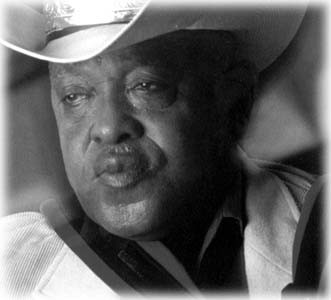
Boozoo Chavis

0

That’s Who


Carol Friedman

All Bark and Plenty of Bite: Boozoo knows.

Boozoo fires up the Powerhouse

By Greg Cahill

LET’S GET something straight. Boozoo Chavis, 66, is the undisputed King of Zydeco–no ifs, ands, or buts. Second, talking to the colorful, immensely likable performer on the phone from his home on Dog Hill in Lake Charles, La., is a surreal experience, to say the least. For instance, there’s that thing about the racehorses. He’s got a few–NRBQ sang about them in the 1989 tribute “Boozoo, That’s Who”–but Chavis is reluctant to talk about them because he doesn’t want people to think he’s rich.

Of course, he’ll spend a solid five minutes talking about the fact that he doesn’t want to talk about his steeds.

And then there are the dogs, the four-legged kind–or maybe he’s talking about ugly women, it’s so hard to tell. “We have so many dogs on Dog Hill, that’s where it got its name,” he explains in a molasses-thick Louisiana accent. “They used to have all the pretty women there on Dog Hill. But they don’t got no more now. There’s just one, that’s all they’ve got here. There ain’t no more dogs and there ain’t no more women on that hill. They’re all married and the dogs are all scattered away. The dog man came and picked ’em up. But I’ve got one here.

“So, you see, I’ve got an answer for all of that.”

Indeed, he does. Chavis is an American original. He started playing local barn dances at age 16, blending the blues and Creole music to fashion a red-hot zydeco hybrid. He later ventured on to the Louisiana/East Texas “Crawfish Circuit,” rivaling the reigning King of Zydeco, Clifton Chenier, for recognition as the first to popularize the genre. Back in 1954, Chavis even recorded the first commercial zydeco single, “Paper in My Shoes,” a hit record that sold 100,000 copies and featured his high-octane button accordion and growling vocals driven by a pumping, bass-heavy beat.

“There’s a tradition there,” he says. “But it’s automatic. People ask how I do this or how I do that. It comes automatically. The music comes straight from me–it’s got a beat with it,” he adds.

“If you’ve got that beat, you’ve got that music.”

In 1984, Chavis came storming back on the then-burgeoning Cajun/zydeco scene, which was rapidly diffusing into progressive and traditional camps. He released a successively fervent series of recordings on the Maison de Soul and Rounder labels. The 1987 death of Chenier served to renew interest in Chavis, a staunch zydeco traditionalist. In 1994, acclaimed music documentarian Robert Mugge (best known for 1991’s Deep Blues) went behind the scenes and captured the competitive spirit of the supposedly laid-back southwest Louisiana music scene with The Kingdom of Zydeco. It chronicled a zydeco shootout for the crown vacated by Chenier. It also used the rivalry between Chavis and upstart Beau Jacques to underscore the musical rift between old-timers, like Chavis, and those young lions who infused their spirited sound with rock, pop, and even rap.

Of course, there never really was any serious doubt about Chavis’ status. “We all know who the King of Zydeco is,” he says. “I don’t need no crown–it’s all in my fingers and in my head. You know, I’ve got some knowledge in that old gray head. I’ve got some stuff up there that you’d never realize.”

Believe it. His 1991 eponymous major label release on Elektra Records’ short-lived American Explorer series drew rave reviews. And Chavis’ most recent outing, Hey Do Right (Discovery), reveals just how deep his bag of tricks really is. These days, he’s at his creative peak, playing and writing better than ever. “Some people think that because I got old, I can’t play no more,” he sniffs. “Shit. Old ain’t got nothing to do with that.”

On that note, we’re back to talking about his travels, his hometown, and those damned dogs. “Lake Charles is a nice place to live, though it could be better,” he concedes. “But I really like Baltimore and Iowa, where you don’t have nothing but corn on every side of the road. I love that. I can’t stay in town. Don’t pen me up!–because if you do, I’ll bite you. Don’t jam me. But Lake Charles is all right–it’s just like everywhere else.

“And it’s real nice in [neighboring] Lafayette–it’s holy. Those people have holy land. Crawfish got soul over there. Crawfish is over here, too. But they got some dogs around the crawfish, you know. Two-legged dogs . . . “

Boozoo Chavis performs Thursday, Feb. 13, at 7:30 p.m. at the Powerhouse Brewing Co., 268 Petaluma Ave., Sebastopol. Tickets are $12.50. 829-9171.

From the February 13-19, 1997 issue of the Sonoma County Independent

This page was designed and created by the Boulevards team.
© 1997 Metrosa, Inc.
Mexico

0

Mexico Barbaro

By John Ross

The noisy appearance of hundreds of soldiers at 8 a.m. on the quiet streets of Santa Fe, in the west of the capital, startled the neighbors–but the troops had come in peace. The soldiers formed long lines outside voter registration modules and waited patiently; Jan. 15 was the last day to receive a photo-credential that would allow citizens to cast a ballot in critical July mid-term elections, which will select a new Congress and, for the first time ever, a mayor of Mexico City chosen by the people.

Approached by reporters who could not recall such a military display at the modules before, the soldiers refused to identify themselves and turned away from the cameras, tersely explaining that they were merely “following orders from our superiors” to pick up their voting credential. By regulation, military personnel are forbidden to talk to the press without the permission of the Secretary of Defense.

The soldiers’ silence was a typically close-mouthed performance by a military that is considered one of the most insular and Sphinx-like in Latin America. Nonetheless, the appearance of the troops outside the walls of Military Camp No. 1, the sprawling base on the city’s western borders, was a rare peek at how electoral politics function inside the Mexican Army, reflecting the surprising political visibility the Mexican military establishment has drawn to itself lately.

Just two days before, 11 high-ranking retired military officers (including three brigadier generals, an admiral, and three vice-admirals) had announced their affiliation with the left-center opposition Party of the Democratic Revolution (PRD)– a deviation of allegiances that caused the Institutional Revolutionary Party (PRI), which has ruled for 68 years, to fulminate ominously. The Mexican military has generally “shown unconditional support for the State and the authoritarian structure of which the PRI is at the center,” writes historian Lorenzo Meyer.

Sympathy for the PRD within the military has been incubating since the 1988 presidential election, when party founder Cuauhtemoc Cardenas won precincts around Military Camp No. 1 and the Naval Secretariat from the PRI’s candidate, Carlos Salinas de Gortari. Unlike most modern Mexican politicians, Cardenas, who is a possible PRD nominee for Mexico City mayor, has strong family ties to the military–his father, Lazaro, president of Mexico in the 1930s, was the youngest of the generals who won the revolution from which the Army was born.

The defection of the retired high brass drew a feisty response from General Ramon Mota Sanchez, a former PRI federal deputy (there are three generals serving as PRI deputies) and director of the party’s old guard “Revolutionary Unity” section, who questioned the officers’ motives and accused them of being “delinquents” and “dentists” [sic].

“I am not a traitor to the military,” responded retired Brigadier General Gustavo Antonio Landeros, “I’m a traitor to intimidation and abuse. The military is tired of being used to cover up the inadequacies of the government” to resolve social problems. Brigadier General Samuel Lara decried the “entreguismo” of the government–the privatization and sale of once-nationalized enterprises to transnational corporations–and the constant loss of sovereignty inflicted upon the nation in the name of neoliberal economic policies.

As a “popular” Army and a “revolutionary” institution, the Armed Forces are sworn to uphold a constitution the last three neoliberal presidents have altered constantly to suit their ideological commitments. Clearly, some officers continue to support the PRI-run state no matter how contrary its policies are to the spirit of the Mexican Revolution. Others have been forced by personal conviction to draw a line and openly declare their opposition to the technocrats in power.

What is most surprising about this debate is that it has unfolded in public.

After dominating Mexican politics for more than a decade following the Revolution, the military was prodded back to its barracks by Lazaro Cardenas and eased out of the corporate directorship of the state party by his successor, Manuel Avila Camacho, the last general to rule Mexico. Avila’s successor, Miguel Aleman, sealed the deal, offering the military complete autonomy over its own affairs in return for unswerving loyalty. After a failed attempted to win the presidency back in 1952 and “restore the Revolution,” the generals retreated behind the walls of Military Camp No. 1 and similar installations.

Now in 1997, the Army is once again asserting its presence in public life in a manner that observers like Reforma editor Raymundo Riva Palacios think reflects “the failure of civilian authority” to resolve the nation’s most pressing social and economic quandaries.

Under President Ernesto Zedillo, military leaders have taken command of Mexico’s drug war and civilian law enforcement. General Jesus Gutierrez Robello sits opposite his US counterpart, General Barry McCaffrey, as director of antidrug forces–rampant police corruption forced Mexico to go to its military to tackle the narcotraffickers. The military’s antidrug mission has beefed up its equipment inventories by about a half billion dollars of US drug-war-generated weaponry.

In the past year, generals have come to occupy command positions in 19 state civilian police agencies and the federal district. In Mexico City, General Tomas Salgado, a hard-nosed military man whose last command was in guerrilla-ridden Guerrero state, has replaced 35 civilian police commanders with Army officers. Supersecret police units, under military direction, are reportedly being assembled and the newly militarized police now squares off against dissidents: A general commanded the riot squad that recently evicted two garbage workers from a traffic island, on the 97th day of a prolonged hunger strike, stimulating protest by many independent human rights groups.

David Fernandez, who directs the Jesuit-run Padre Miguel A. Pro Juarez Human Rights Center, is fearful of the militarization of public security: “The military is an authoritarian institution used to responding with violence. It has shown little regard for individual guarantees.” Fernandez also bemoans the civilian space lost to the takeover of the Mexico City police by the military. “It makes the transition to a democratic system that much harder,” he says. But Lorenzo Meyer finds a silver lining in this grim prospect–involvement in public security exposes the military to public pressures as their positions become more conspicuous and controversial.

The military’s surge into public life here was charged by the reappearance of the Mexican guerrilla after 20 years in hibernation. The 1994 uprising of the Zapatista Army of National Liberation (EZLN) and the 1996 emergence of the Popular Revolutionary Army (EPR) has mobilized half the Mexican Army and militarized a broad swath of the central and southern areas of the nation. Exerting considerable influence on Zedillo, a president with no deep political support within his own party, the military’s flattery and continual professions of loyalty have borne fruit in a budget that was upped by 44 percent in 1997. Off-budget bonuses controlled by the President may add as much as a billion US dollars to the military’s coffers.

Fueled by drug war hardware (20 U.S. Huey helicopters have just arrived), the military is expanding its ranks from 170,000 to 210,000 early in the next century–3,000 troops were added in 1996. But the military’s new visibility has its downside for the generals–allegations of human rights abuses have escalated, particularly since troops launched a no-holds-barred counteroffensive in Guerrero and Oaxaca states following the synchronized attacks by the EPR last Aug. 28.

Typical of the charges is a report filed by the Mexican League for the Defense of Human Rights, from the Mixtec Indian municipality of Alcozauca, on the Guerrero border with Oaxaca. On Jan. 13, Army troops reportedly rounded up all the men in an outlying village, forced them to lie down on the hamlet’s basketball court, and took 20 men captive–they have yet to be located.

The allegations are reminiscent of abuses charged to the Mexican Army during the first weeks of the 1994 campaign against the Zapatistas, when the military used the same technique on the Morelia ejido. Three men were singled out and executed several miles away, in a case that has been long ventilated by human rights groups with little success–the military has refused to recognize its responsibility in the killings and take action against the soldiers involved.

Similarly, the military has failed to prosecute troops involved in mass executions of civilians in the southeastern Chiapas county seat of Ocosingo. In one case, the Army announced that a lieutenant deemed responsible for killing five young men in the town marketplace in January 1994 had himself committed suicide. Case closed.

A web exclusive to the February 13-19, 1997 issue of the Sonoma County Independent

This page was designed and created by the Boulevards team.
© 1997 Metrosa, Inc.
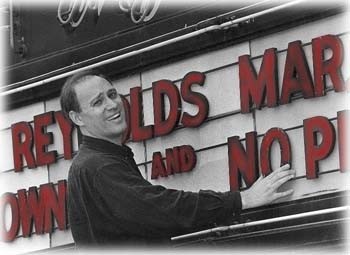
Rick Reynolds

0

Ready for Re-entry


Janet Orsi

Riding High: After several years out of the national limelight, Rick Reynolds is preparing for a new network TV sitcom.

Seven years ago, comedian Rick Reynolds was a star on the rise. Now, after hiding out in Egg City, he’s preparing for a network TV spot

By Greg Cahill

ASK RICK REYNOLDS about the appeal of quiet, small-town Petaluma in the North Bay, and this fast-talking Emmy-nominated comic launches into a rapid-fire spiel that sounds as though it was scripted by the local Chamber of Commerce. “The biggest allure for me, I think, is being around ordinary people–real people–because this second show is from the dramatic events of my life,” says Reynolds, whose 1990 one-man comedy show “Only the Truth is Funny” was hailed for blurring the lines between traditional lowbrow stand-up and the allegedly more exalted realm of art.

“That’s why it’s taken me so long to do the follow-up–I’ve been waiting for shit to happen.”

Two years ago year, Reynolds, 42, debuted his new one-man comedy show, “All Grown Up–And No Place to Go,” at the Mystic Theatre in Petaluma. The show, which opened last spring in San Francisco and once again put reynolds in the limelight, picks up where the first one left off, with Reynolds in a mid-life crisis and ruminating on parenthood, his brush with success, and the difficulties of being an adult.

This week, Rhino Records is set to release a two-CD version of the performance (it also includes a 25-minute bonus track called “Life, Kids, Marriage, and Stuff”), setting the stage for Reynolds’ return in March to network TV and a new sitcom, “Life . . . and Stuff,” co-starring Pam Dawbar. It airs on CBS.

“In ‘All Grown Up . . .’, it just dawned on me that most people are unhappy,” says Reynolds, leaning back in a comfortable leather desk chair at his Victorian office overlooking downtown Petaluma. As he speaks, Reynolds is perched in front of a flickering computer screen and surrounded by a vast collection of vintage pulp-fiction books, Beatles dolls, and other memorabilia.

“We live with this emotional pain that we never talk about,” he continues. “In my case it comes from the pressures of a relationship and kids, and the irony not only of the huge love and satisfaction that brings you, but also the amount of work and frustration. I’m unhappy a lot. And I talk to my friends, and they’re unhappy. And I go, ‘Is my circle of friends so different from the world?’

“I say in the show, we all dress up, we put on our happy faces, and we fool everybody into believing that we’re happy together. And everybody else fools us. So everybody is left isolated, thinking, ‘Something is wrong with me; I’m the one whose life sucks.” I think it helps just knowing that everybody’s life sucks.

“I’m here to tell you. “

In his first show, this insightful monologist–whose pathos-ridden, highly confessional work has put him in the same league as Spalding Gray, Lily Tomlin, and Eric Bogasian–struck a nerve with every comedy fan who ever fretted over growing up in a dysfunctional family. “Only the Truth Is Funny,” a humorous sentimental journey into his world, opened in San Francisco in 1990 to rave reviews before moving to New York and catching the eye of Rollins & Joffe, the high-powered management team behind Woody Allen, David Letterman, and Robin Williams.

In 1991, the show played a successful six-week run in Los Angeles. Hollywood’s elite flocked to the shows. Bette Midler came to see it. Steven Spielberg sent Reynolds 20 pounds of fudge after the comic mentioned onstage his passion for the gooey confection.

The show’s huge success led to a book deal, Only the Truth Is Funny: My Family and How I Survived It (Hyperion, 1991), and a Showtime cable special. NBC-TV signed him to a $750,000 development deal, which resulted in an unaired sitcom pilot and an offer to stick around to create other new shows.

But Reynolds ended his association with Rollins & Joffe, packed his bags, and returned to Petaluma, where he had relocated about seven years ago and now lives in a spotless old Victorian with his wife, Lisa Ludwigsen, and their two young children. “This was a period that a lot of people who are struggling would kill for,” he reflects. “I mention in the show how ironic it was that my marriage started to fall apart right as this happened. Every night in L.A., I would say, ‘Who’s here tonight?’ And somebody would say that Jack Nicholson was the first one to shoot to his feet and give me a standing ovation. And then backstage one night, Carl Reiner, Mel Brooks, and Anne Bancroft in tears giving me hugs. Mary Tyler Moore, Lily Tomlin. Just tons of things. Unforgettable.”

But the strain of maintaining that pace nearly destroyed his marriage. “You know, I fell out of love with my wife, it got very sad, it got very ugly,” he says candidly. “We’re in therapy; I’ve learned things. I did the new show one week in a stand-up club in Seattle, just to kind of get it on its legs And I was amazed, especially when I did the therapy stuff: couples looking at each other, laughing at the setups. Laughing at me–or laughing with me–or clapping for me.

“I just felt: I’m not alone.”

Yet Reynolds now must contend with the additional worry of no longer being the freshest face in show biz. “I want to talk about this issue,” he says. “I mentioned that in the first show. What will people say? Will they say, ‘He’s repeating himself’? I worry about the reviews, only because the reviews are very important to having a successful run. I remember all these people loving this new voice. You’re going to discover that it’s the same voice. It’s the new voice you loved before, but it’s the same voice.

“Hopefully, [the new sitcom] will be a success. You hate to have a big success and then failure,” he adds. “And that’s the problem with the higher you go. Who in show business is just like this? Everybody. Marlon Brando. He came back up, sort of. But, you know, everybody falls. Where’s Kevin Costner now? Three failures in a row. Biggest thing in the world. Then boom! Every time I see ‘the new blond bombshell,’ I think, “She’s going to be so depressed for most of her life.

“So I worry because I just don’t want it to be compared that much to the first show. I want it to stand on its own.”

A web exclusive to the February 13-19, 1997 issue of the Sonoma County Independent

This page was designed and created by the Boulevards team.
© 1997 Metrosa, Inc.

Amadeus

Mostly Mozart By Gretchen GilesTHE GREEKS examined the human being in relationship to the gods, and the Elizabethans examined man's relationship to God. Peter Shaffer is examining man's relationship to a much-diminished God. On some level, this puts the power of man to create on the same level as God's ability to create, and this is the central...

Talking Pictures

Star StruckFeeling the Force: Darth Vader meets Carlos Altamirano, 11, Mario Altamirano, 9, and Brenda Ochoa, 10.Photo by Janet Orsi3 kids get first taste of the big screenBy David TempletonWriter David Templeton takes interesting people to interesting movies in his ongoing quest for the ultimate post-film conversation. In this--his 100th such movie-house colloquy--he takes a trio of young...

Barf-O-Rama

Snips & SnailsFrom roach burritos to diaper gravy, Barf-O-Rama deliversBy Warren St. JohnFIRST THERE WAS Mad magazine and later came Pee Wee's Playhouse and The Simpsons. Now, naughtiest of all, there is Barf-O-Rama--a series of books that will surely delight kids and make their parents shudder. With its emphasis on scatology for scatology's sake, this series won't be winning...

Jean Hegland

Tree for TwoInto the Woods: Jean Hegland sees the forest for the trees in her new novel. Photo by UPI/BettmanAuthor Jean Hegland goes wild By Zack StentzONE OF THE YEAR'S most fascinating science fiction novels has nary a starship or extraterrestrial in any of its 193 pages. Instead, novelist Jean Hegland's Into the Forest (Calyx, 1996) takes as...

Bernie Krause

Warning SignsNature's Way: Naturalist Bernie Krause has released a collection of journal notes and field recordings.Photo by Eric Luse/San Francisco ChronicleNew book captures Bernie Krause's life in the wildBy Greg CahillTHE BITTER TASTE of mortality hung in his throat. Bernie Krause huddled in the cabin of a New Zealand coast guard cutter, sailing to Antarctica through stormy South...

Jonah Raskin

Free Radical Arrested Development: Yippie founder Abbie Hoffman usually got what he wanted from the police--which was attention from the media.Photo by UPI/BettmanJonah Raskin recalls activist Abbie Hoffman and the theater of the soulBy Sara PeytonIN THE MONTHS before Yippie founder Abbie Hoffman surfaced in September 1980, after six and a half years of running from the law...

Sonoma County Books

Printed MattersUPI/BettmanLand of Dreamy Dreams: Sebastopol author Megan McDonald's 'My House Has Stars,' illustrated by Peter Catalanotto, is among the favorite children's books collected above.Girls, God, galaxies, garbage--they're all grist for our local authorsBy Gretchen GilesWHEN THE SUN peeks a few timid rays down our backs and into our gardens at this time of year, there's no question:...

Boozoo Chavis

That's WhoCarol FriedmanAll Bark and Plenty of Bite: Boozoo knows.Boozoo fires up the PowerhouseBy Greg CahillLET'S GET something straight. Boozoo Chavis, 66, is the undisputed King of Zydeco--no ifs, ands, or buts. Second, talking to the colorful, immensely likable performer on the phone from his home on Dog Hill in Lake Charles, La., is a surreal experience, to...

Mexico

Mexico Barbaro By John RossThe noisy appearance of hundreds of soldiers at 8 a.m. on the quiet streets of Santa Fe, in the west of the capital, startled the neighbors--but the troops had come in peace. The soldiers formed long lines outside voter registration modules and waited patiently; Jan. 15 was the last day to receive a photo-credential that...

Rick Reynolds

Ready for Re-entry Janet OrsiRiding High: After several years out of the national limelight, Rick Reynolds is preparing for a new network TV sitcom.Seven years ago, comedian Rick Reynolds was a star on the rise. Now, after hiding out in Egg City, he's preparing for a network TV spotBy Greg CahillASK RICK REYNOLDS about the appeal of quiet,...
11,084FansLike
4,606FollowersFollow
6,928FollowersFollow

