Sonoma County Public Library

0

Virtual Stacks


Janet Orsi

Digital Data: The library system’s Website is getting 10,000 hits a month, growing 10 to 15 percent a year.

Public Library’s Internet branch comes of age

By Bruce Robinson

SURE, SURFING THE WEB is great entertainment. But when you positively need to find out something absolutely, specific right now, plodding through lists of links in hopes of stumbling onto the facts you seek is not such an appealing enterprise.

Who ya gonna call?

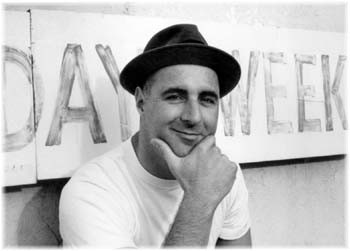
How about Bo Simons? “After you get tired of clicking around and you really want to get somewhere, that’s when some kind of expertise and knowledge of how knowledge works is useful,” offers Simons, the Internet librarian at the Sonoma County Public Library.

“The one thing librarians offer to the world of the Web is experience in dealing with people finding information for millennia,” he elaborates. “What I bring to it is a feel for the way information travels, an instinct for what constitutes a good reliable source, being able to check currency and accuracy pretty quickly.

“It’s easy to click from here to there–finding things is what’s tough.”

In order to facilitate such searches, Simons has developed a home page for the Sonoma County library. The site has been in operation for nearly three years, but it is now getting expanded just in time for National Libraries Week. The service offers immediate access to many of the library’s reference works, as well as connections to other sources elsewhere on the Internet.

The local resources include the entire Sonoma County Public Library catalog, an index of periodicals and their contents (with links to the full text of many of the articles), the full community resource library, an index of local groups and organizations that the library has developed, and the archives of the Wine Library in Healdsburg, plus data about local employers and other useful information for job-seekers.

You can also find the locations and hours of operation of all county library branches. The access to the library’s catalog allows library patrons to reserve books and to see if those books placed on hold are awaiting pick-up–two heavily used services. These services can also be reached without going through the Internet; computer users can “dial up” the library directly via their modems and local phone lines. Internet users need a “telnet” utility in order to connect to the catalog files.

“Our goal is to make the library more usable to more people,” explains Roger Pearson, director of Library Services for Sonoma County. “With more people buying computers every day, we also want to make as much of the library as possible available 24 hours a day. The computer is tireless, and its capacity is just phenomenal. Even if we get 20,000 people dialing in, we don’t have to hire more staff.”

“I really see this as an answer to our problems of providing more access.”

Pearson says that the library’s Website registers 10,000 to 11,000 “hits” a month, “so we know that a lot of people do use it.” But he adds, “We don’t know what their success rate is in finding what they’re looking for.” Still, use of the digital data services is growing 10 to 15 percent annually, which he considers “good and healthy, considering our check-outs are going down 2 percent.”

Right now, computer users can make more use of the library’s online resources from home than is possible from within the library itself, although the library is working hard to change that situation. “We offer text-based Internet access through our public access, but our current cabling is not adequate for graphics,” Pearson says. “Even at the Central Library [at the corner of Third and E streets in downtown Santa Rosa], we only have one terminal that’s offering Netscape access.”

Upgrading the electronic infrastructure costs about $12,000 at each branch, money that is not available in the library’s operating budget. Instead, local Friends of the Library groups have been working to raise funds for that work, through such innovative efforts as the “Virtual Auction” held at the Sebastopol branch last month, which raised nearly $30,000. Rohnert Park obtained a grant from Longs Drugs to support the upgrading of two branches, while O’Reilly & Associates, a computer publishing and software firm in Sebastopol, has “been helping us with some of the cabling, and even doing some of the work,” Pearson says.

As a result of all these interlocking efforts, he adds, “Sebastopol will probably be up and running with four or five Netscape PCs in the next three or four months, and Petaluma is just about ready to go.”

Meanwhile, there are grand plans for the unseen technical side of the Internet site, too. “We would like to put in a CD-ROM server that has subscriptions to major reference works,” such as Consumer Reports, says Pearson, “so that at 10 at night you can do some research on buying a washing machine or a new car.”

Online access to investment information via the library is another goal.

However, says Jim Rosachi, manager of the library’s technical services, adding these types of services “can be $20,000 to $30,000 just for the equipment, and who knows how much more for the license for the information,” money that is not in the library budget.

“We don’t have a timeline for that,” he adds. “It’s just something we know would be useful information.”

From the April 17-23, 1997 issue of the Sonoma County Independent

This page was designed and created by the Boulevards team.
© 1997 Metrosa, Inc.

Talking Pictures

0

Grace Notes


How Sweet the Sound: Folksinger Joan Baez is on the road to paradise.

Photo by Dan Borris


Joan Baez on the power of music

By David Templeton

Writer David Templeton takes interesting people to interesting movies in his ongoing quest for the ultimate post-film conversation. This time out, he sees the hard-hitting POW drama Paradise Road, along with the legendary folksinger Joan Baez.

I AM SINGING “Amazing Grace” with Joan Baez. We’re seated at a back table of an almost-empty coffeehouse, sharing a plate of poppyseed cake, and I’m doing most of the singing. (Baez joins in, I suspect, mainly to cover the sound of my voice.) Other patrons are either staring or pretending not to notice, and we are singing the well-known hymn to the tune of the “Happy Wanderer.” Baez, it turns out, never knew you could do that.

“If you’d have tried to sing it that way to me 10 years ago,” she laughs, “I’d have shot you.” I understand. “Amazing Grace” is as almost as much of a Joan Baez theme song as “Diamonds and Rust.”

“You can also sing it to the tune of the theme song from Gilligan’s Island,” I mention, at which we both sing, “Amazing Grace, how sweet the sound, that saved a wretch like me,” to Gilligan’s bouncy melody. “You can sing it to almost anything,” I point out, as she tests the lyrics on the melody of “Jingle Bells.” Another perfect fit. More laughter. And to think this began as a serious conversation.

We’d been discussing the film Paradise Road, a powerful drama based on the true accounts of female POWs in World War II who formed a vocal orchestra to keep their spirits alive while captives of the Japanese on the island of Sumatra. The cast (including Glenn Close, Frances McDormand, and Julianna Margulies) is uniformly excellent, the story avoids maudlin sentimentality, and the music–re-created from the actual scores written down by the captives–is magnificent.

Remarkably, we almost saw another film–The Saint (Joan’s choice)–until Paradise rolled along. “A friend of mine went and saw The Saint,” Baez informed me, with a what-can-I-do grin, as we met at the theater. “She understands how I feel about Val Kilmer. I think I’m still going to have to see it.”

Baez, who is just wrapping up a new album–as yet untitled, it will be released this September–has tried in recent years to shake some of the protest-queen image she’s been saddled with since the 1969 Woodstock festival, placing increased emphasis on her voice (she’s been working with a vocal coach for the last 15 years) and the music itself. The new album will feature several songs from new writers, as well as a few from rising folksinger Dar Williams.

Tonight’s film, in which music becomes a convincing symbol of strength and humanity (one Japanese soldier has a more difficult time seeing his prisoners as inhuman after he’s heard them sing), elicited repeated sighs and gasps from Baez, as she became caught in the music’s spell.

“It was incredibly powerful,” she agrees, liberating a forkful of cake from the plate. “As soon as you do something in the form of resistance–something that brings out the humanity in people–that’s when your own spirit grows, as opposed to, you know, wanting to get one of the Japanese and stick his head on a pole.”

There is a famous moment during Baez’s controversial, border-crossing tour of Vietnam during the height of the war, when Baez and her companions were forced into a bomb shelter for 11 days. Under a constant barrage of artillery, Baez found that only by singing was she able to stave off panic–her own and that of the shelter’s other occupants.

“Later,” she relates, “as we were getting ready to leave Hanoi, there was another raid, another bomb shelter. It was full of wounded Polish and Cuban military, all these languages, and I started sing, ‘Hush little baby, don’t say a word.’ I know they couldn’t have understood a word of it, but I could sense the mood shift. In that moment we were all unified.”

I tell Baez about singing nonsense songs with my daughters the night their mother died of cancer. She nods appreciatively. “It becomes almost a grace, to be able to sing at moments like that,” she says.

“What song or piece of music would have the most sustaining effect on you,” I ask, “if you were in a situation like the one in Paradise Road?”

“I would want to sing something that everybody could sing,” she replies after a moment’s thought. “The first thing that comes to mind, believe it or not, is ‘Kumbiya,’ which I don’t sing anymore–unless I’m in a place like Romania. Like with ‘We Shall Overcome.’ I won’t sing it in a country that isn’t involved in that kind of a battle, because then it’s just nostalgia.

“But if we were in that kind of situation, either of those songs would do just fine, because they would ring every bell in the conscious and unconscious bell-ringing chamber of people’s heads.”

It is now that I mention “Amazing Grace,” offering my demonstration of its versatile nature.

“See?” Baez laughs delightedly. “Music crosses all boundaries.”

From the April 17-23, 1997 issue of the Sonoma County Independent

This page was designed and created by the Boulevards team.
© 1997 Metrosa, Inc.

The Godfather

0

Little Deaths

By

The Godfather presents the rise, the fall, and the absorption into the American master class of a family named Corleone. Their family fortune, like so many other fortunes, has been made from graft and gambling. We see the terrible Sicilian village they came from, a pile of bones guarded by men with guns. And we see them exiting into another desert, as they go to tend the newborn Las Vegas. Along the way, the family is whittled down by murders which leave behind both the weak and the unbending, who are just as bad as the weak. The warning of their patriarch goes unheard: “A man without a family is not a man.”

At the opening of The Godfather, Don Vito Correleone (Marlon Brando) is receiving friends and associates at his daughters’ wedding day; and in this opening scene, Don Vito is dispensing favors and asking for fealty. He’s a lord in his new country; and his sons are groomed for the succession–he gives them the rules of an aristocrat’s life: To keep your friends close and your enemies closer, to never let anyone outside your family know what you’re thinking.

But Vito hasn’t been able to pass on his best qualities to his sons: Sonny (James Caan) is spoiled, and he doesn’t have Vito’s life-preserving coolness of temper; Fredo (the ill-fated actor John Cazale) is a weakling, and Michael (Al Pacino) is trying to remove himself from the influence of the family, through his status as a war hero, and through his marriage to a good American woman named Kay (Diane Keaton). No doubt Kay’s innocence about the way the world works is part of Michael’s attraction to her. The Godfather‘s real tragedy is how despite his efforts, Michael is sucked back into the way of the Coreleones. By inheriting the family business, Michael Coreleone paradoxically loses his own family and is destroyed.

Michael’s damnation–his insistence on revenge after an insult, and his subsequent exile–is presented as a slow slide, and it’s contrasted with a wealth of details. Coppola could have made a name for himself on any of the passages here, from the wedding scene, to the reception in the shadows of his study–Gordon Willis’s tenebrous photography changed the notion of how a movie should look from that point on. But Michael’s exile in Sicily is an especially exciting chapter in the film.

The passage is rich, without lushness–Coppola doesn’t swoon over Italian countryside like everyone else who brings a camera there. Coppola shows you the bald hills, the stones, the sun, the anxiousness of the people to get out of Sicily. Seemingly everyone Michael meets during his exile is trying to learn English in hope of immigrating. Michael visits the village of Coreleone, and instead of being a haven of hearty peasants, it’s a war zone, an eerie white-washed town, with widows in black, and plaques memorializing the dead men who picked each other off.

Coppola presents to us a Sicily wracked with vendettas–you don’t leave the house without your rifle. The basic story in the Sicilian sequence in The Godfather is of Michael’s courtship and loss of a heartbreaking village girl named Appollonia (the rose-breasted Simonetta Stefanelli). So much else is going on in the sequence, especially Michael asserting himself, essentially demanding a courtship from the girl’s father. It’s the first moment, when we see him sitting in the presence of a frightened but proud old man, where we see how ruthless Michael is becoming.

The tension in The Godfather takes place between an America where you can too easily lose your soul, and a home country where you can too easily lose your life. It’s matched with another tug of war between the pull of the family’s love, and the bloodiness that you endure to stay inside one. One of the key performances in the history of film is Marlon Brando’s hoarse, paunchy, regal Don Vito Corleone, the “lionheart”–no wonder you keep thinking of dying chivalry when you watch him. “Gravitas” was the Roman word for the most manly of virtues; it means the sense of being weighted by one’s own sincerity. Hence the word ‘gravity.’ Brando has this here, radiating a bottomless sense of authority.

Brando’s fatherliness is so compelling that it was the text of an entire other movie (a comedy, The Freshman, 1990); those of us who have had uneasy relations with our own fathers watch Brando with a pang of longing: if only we could have been sheltered, nourished, advised, loved, by a father like that! The burst of daylight when you leave the theater brings you back to your senses. Having a father like that costs more than most of us are willing to pay. (Thus conscience doth make Fredos out of us all.)

It’s surprising to remember that Brando was generally considered too young for the part at the time The Godfather was released in 1972. You see Brando here, padded, made up artfully with liver spots, cheeks padded with cotton, his voice lowered to an almost inaudible rumble–Don Coreleone is not a man who has to raise his voice. Just hopelessly calling Brando’s Don Vito what it is–one of the key performances in American film–doesn’t give credit to Brando’s humor here, his subtlty, the irony of the Don when, as close to choler as he gets, he confronts a whining movie star who is also a Friend of the Family (Al Martino). And Brando’s final moment in a garden in deep summer–the soundtrack silent except for the babbling of a toddler, and the hum of cicadas–is a death scene no one will ever forget.

Coppola is a musician’s son, and his intelligent selection of the fine Italian composer Nino Rota is appropriate to the weight of the tragedy. The two main themes are sparse but tremendously moving: a lamenting waltz for the dying of the old order, a love theme that’s a reminder of bittersweetness of duty to the family. There’s about a half-dozen deathless performances here. Some favorites, among the smaller lives devoured to make the Corleones great: Lenny Montana’s punch-drunk, pathetically loyal Luca Brazzi, who dies staring straight at us, and Robert Duvall’s Tom Hagen, who, by an accident of birth, will never really be in the inner circle of the Corleones, even though he gives his life for the family. (And of course, Brando’s near unmatched aura of paternalism makes Tom Hagen’s exclusion all the more sad.)

I’d want to remember the hatefulness of Sterling Hayden as police Capt. McCluskey–onscreen but a few minutes but as vivid a performance of cop gone wrong as Harvey Keitel’s Bad Lieutenant or Orson Welles’s Hank Quinlan. The obese Richard Castellano, a kind of mirthless clown, is often the viewer’s tour guide, explaining the customs of the mob–it’s his tips that explains what it means if you recieve a parcel containing a coat wrapping a dead fish, his lonely bulk on a folding cot that shows you where the expression “to go on the mattress” comes from. You could have made a whole movie out of any one of the characters. In a sense, director Francis Ford Coppola did.

Of all of the phenomenal things about this film, the performances, music, and photography, its range of moods and sub-plots–what amazes you the most is how of a piece The Godfather is. Three dozen characters are here, and none of them are stinted, none of them are clichés. Nothing-special actors like Abe Vigoda show a dignity that’s ennobled them ever since. The acts of violence that part the members of the cast from their lives are “nothing personal–just business,” as a black running joke has it.

The Godfather has its resonance because it reflects on all business, all the little deaths a person has to endure just to stay alive. A nation of great wealth and great spirituality is bound to rest uneasy. Everyone knows how much money there is in America. As George Bush once said, and presumably he’d know, America is the most religious country in the world. That’s why the probably the finest American novel, The Great Gatsby, and the finest American films–Greed, Citizen Kane, and The Godfather–are haunted by the biblical warning from Mark 8:36: “What shall it profit a man, if he shall gain the whole world and lose his own soul?” The death of the soul in The Godfather is presented with such conviction that even an atheist can feel the loss of something intangible, when watching the final shot of the doors closing on Michael Corleone.

Web exclusive to the April 17-23, 1997 issue of the Sonoma County Independent

This page was designed and created by the Boulevards team.
© 1997 Metrosa, Inc.

Hawaiian Music

0

Island Style


In Tune: Ledward Kaapana appears with other masters of the style on April 23.

Photo by Paul Schraub


Three Hawaiian slack-key guitar greats play at LBC

By Traci Hukill

HAWAIIAN CHEESE is legendary. Screaming aloha shirts and matching muumuus, tins of macadamia nuts sold for their weight in gold, the same syrupy-sweet strains of steel guitar dripping from the Muzak system in every airport, restaurant, and store–all bespeak the tourist industry’s unswerving devotion to schlock.

But they’re not fooling the Hawaiians. From Ka’u in the south of the Big Island to Haena in the north of Kauai, folks still come home from work, plop down on the couch with their guitars, tune them ki ho’alu style–Hawaiian for “slack the key”–and settle in for an evening of playing music and talking story. A lilting, relaxing style that fuses elements from folk, country, ukulele, and good ol’ campfire music, slack key has been around for 150 years and just keeps gaining popularity.

Slack key–which can now be heard stateside, thanks to an ambitious series on pianist George Winston’s eclectic Dancing Cat label–owes its existence to a few quirky circumstances. In 1832, King Kamehameha III hired Spanish and Mexican cowboys to control a cattle population run amok on the Big Island. The paniolos, as the Hawaiians called them (from español), brought guitars and played them around campfires at night. After they’d taught the Hawaiians the best of their cowboyish arts in the way of cattle damage control, they returned home, some generous souls leaving their guitars behind with the Hawaiians.

The official word is that the islanders adapted the tunings to their own music. In the un-PC and more entertaining version, however, no one remembered to show the Hawaiians how to tune their new instruments, and so sprang up a number of creative region-specific tunings that eventually assumed such whimsical names as “Wahine,” “Taro Patch,” and “Mauna Loa.”

Until the ’70s ushered in a resurgence in cultural pride and encouraged slack-key masters like Gabby Pahinui and Atta Isaacs to go public with their considerable knowledge, slack key was steeped in secrecy. Families so jealously guarded tunings and techniques that performers used to turn their backs to tune their guitars. Today, the tunings for each song are listed in the CD jewel case jacket, and would-be slack-key players can take university classes or learn from how-to videos and books.

Keola Beamer, Ledward Kaapana (with Bob Brozman), and George Kahumoku Jr. will perform the sounds of Hawaii next week at the Luther Burbank Center in Santa Rosa.

They are nurturing a style steeped in rich tradition. George Kuo–who has been playing slack key since the ’70s, the height of the so-called Hawaiian Renaissance–picked up tips from buddies and later from masters like Ray Kane and Pahinui. Kuo developed a silvery, precise, almost cerebral style of playing that nods to the old school of the ’30s and ’40s even as it flirts with jazz and improv, especially when he’s playing with his part-time band, the Sons of Hawaii.

“But we don’t go overboard,” insists the soft-spoken Kuo. “We try to keep it the old style.”

The Rev. Dennis Kamakahi–who really is an ordained Episcopalian minister, although he presides only “when they need the help”–enjoys the distinction of being one of Hawaii’s most popular songwriters. His song “Wahine ‘Ilikea” splashed across the islands when the now-defunct Hawaiian Style Band recorded a pop version of the song in the early ’90s. Like Kuo, Kamakahi started young, practicing his first chops on a ukulele as a tyke of 3 and moving on to slack key in high school. Kamakahi’s style of playing is warm and vibrant, each song a soulful consideration.

Indeed, most slack-key guitarists take their art to heart. “In my family, music was taken very seriously,” says Beamer, who wrote “Honolulu City Lights,” one of the most popular Hawaiian songs of all time. His most recent album, Mos’uhone Kika: Tales from the Dream Guitar, appeared on Billboard’s chart of top world music. “Music was an integral part of our lives, almost like religion,” he adds. “But Hawaiians are up against a shallow stereotype, often demeaning to our native culture.”

Keola Beamer, Ledward Kaapana (with Bob Brozman), and George Kahumoku Jr. perform Wednesday, April 23, at 7:30 p.m. at the Luther Burbank Center, 50 Mark West Springs Road, Santa Rosa. Tickets are $17.50 for adults; $15 for juniors and seniors. Call 546-3600 for details.

From the April 17-23, 1997 issue of the Sonoma County Independent

This page was designed and created by the Boulevards team.
© 1997 Metrosa, Inc.

Latin Rock

0

Raza Rock


Rock as Salvation: Punk singer Roco of the Mexican band Maldita Vecindad.

Photo by Maria Madrigal


New CD showcases Latin rock explosion

By Greg Cahill

I THINK THAT ROCK CAN SERVE as a tool for social change,” says guerrilla artist and rock documentarian Ruben Guevara, who once collaborated with Frank Zappa on the doo-wop parody group Ruben and the Jets. “I mean, I’ve been a rocker all my life. Aesthetically, rock is to me a form to communicate confrontation and challenge the status quo.

“I’ve held to that credo all my life.”

For Guevara, that perspective provided the driving force behind his latest project, Reconquista! The Latin Rock Invasion (Zyanya/Rhino), a vibrant compilation of defiant Spanish-language anthems designed to ignite, shake, and rattle the psychic core of society.

“Many of the songs in this collection are simply blues in a different and broader context,” explains Guevara, during a phone interview from his East L.A. home. “Rock and the blues have evolved in Latin America as a way of purging the horrors of history.

“Latin rock has become a raw sensory channel, airing wounds of terror, anger, and sorrow. Rock as exorcism. Rock as salvation. Rock as grace.”

It’s a real eye-opener for gringos. After all, you can count on one hand the number of Latin musicians who have broken through to the mainstream: Richie Valens, Julio Iglesias, Los Lobos, Gloria Estefan. Indeed, the death of Tejano singing star Selena–the subject of a new major motion picture–stunned the mass media, in part,because few knew about the enormous extent of her popularity within the Latin community.

“That’s a real good commentary on U.S. society in general,” Guevara reflects. “It just shows how departmentalized we are and how afraid we are to listen to stuff that’s in our own backyard. We’re just not very open to other cultures.

“I think it’s time to be a little more adventurous, a little more courageous.”

Visceral and passionate, the 17-track Reconquista! is a good place to start. Stylistically diverse, the criteria for inclusion required, not hits, but bands that are “saying something and saying it with power and passion,” Guevara says, specifically Latin rock bands that focus on social and political commentary.

“One of the first bands that I heard that totally knocked me out was Mano Negra, who were originally from Spain before getting kicked out of the country and moving to Paris,” he adds. “The first song I heard them perform was ‘Viva Zapata,’ an homage to the Zapatista rebels fighting Mexican government forces in the Chiapis region. I was blown away that they were politically aware and well informed and that they were actually doing a piece dedicated to that struggle.

“That set the tone for the compilation.”

One of the most chilling songs on the compilation is “El Matador,” in which Los Fabulosos Cadillacs of Argentina memorialize a Chilean poet–nicknamed El Matador–who had his hands amputated by police before thousands of horrified onlookers at a packed soccer stadium. His crime: writing seditious poetry.

“It was a brutal act and one that should be remembered,” Guevara says. “I mean, here was a man who did nothing more than tell the truth and he had his hands amputated in modern times!”

THE SPANISH BAND Seguridad Social deliver a bold condemnation of the conquest of Central and South America by Spanish conquistadors in the 15th and 16th centuries. “I think it offers incredible unity for Latins because even the Chicanos hold animosity toward Spain for the colonization and the repression,” Guevara says.

“We are the result of that–after all, our parents and grandparents moved up here because of economic oppression directly connected to the colonization and the conquest.

“History lives and bad memories are hard to put aside.”

On “JFK,” Nagu Gorriak–from the Basque region of Spain–debunk the Camelot myth that paints President John Kennedy as the superfriend of the world, even contending that Kennedy once conspired with dictator Gen. Francisco Franco to back an invasion of the countryside with American B-52s and U.S. Marines.

“In my estimation, not even the Clash are as strong as them,” Guevara says. “They can switch from punk-metal to salsa so fast that you can’t even imagine that they’re the same band.”

“Un Gran Circo” by Maldita Vecindad y Los Hijos del 5 Patio (The Children of the Fifth Caste of the Damned Neighborhood) is an eclectic mix of ska, rai, and carnaval drumming that centers around the main square in Mexico City, the original site of the Aztec temples long since demolished and replaced by a Catholic cathedral. Today, the square hosts a circuslike parade of beggars, protesters, and firebreathers.

The band, one of the top rock acts in Mexico, is now being courted by major labels in the United States.

“I hope that it sparks some interest in the non-Latin community as well,” Guevara says of the compilation. “Musically speaking, I think that it’s very interesting and fresh.

“I’d like it to connect with the world-beat audience.”

Unfortunately, Rhino Records has decided to issue the liner notes only in Spanish, though an English translation is available by mail or on the label’s Website.

IN MANY WAYS, Reconquista!–the first in a series of compilations focusing on domestic and worldwide Latin music–is the culmination of more than 30 years’ work. Born and raised in Los Angeles, Guevara recorded in the early ’60s with the Apollo Brothers doo-wop group. In 1971, he met Frank Zappa. “Our interests in music were similar, from doo wop to Bartok. And I was interested in rock theater,” Guevara explains.

Zappa, who three years earlier had created the doo-wop parody band Ruben and the Jets for a recording, suggested that Guevara put together a stage version of the band. “At the time, it seemed like a good opportunity, but I was burned out on rock: the flaky musicians and the low-paying gigs,” he recalls.

“I told Frank, ‘It sounds good, but there are just too many detours in rock.’

“He told me, ‘You know, man, you’ve got to build your own roads.’

“So I said, ‘Let’s go for it.’ “

GUEVARA RECORDED two albums with the band on the Mercury label, the first produced by Zappa. “That lasted three or four years,” he says. “We split up and I started writing material that focused on more social and political issues.

A few years later, Guevara became one of the first artists on Rhino when label president Richard Foos in 1976 asked him to record a doo-wop version of the “Star Spangled Banner.” In 1983, Guevara returned to compile the two-volume Los Angelenos: The East Side Renaissance, featuring his band Con Safos and chronicling the then-emerging East L.A. roots rock scene (Los Lobos bowed out because of contractual problems), and a third album spotlighting the best of the Midnighters, the pioneering Latin rock band.

“Those proved informative to the rock press, which at that point didn’t really know about the body of work we had contributed as a community,” Guevara says. “But they didn’t do well commercially.”

He later worked as a performance artist, but in 1990 approached Foos about reactivating the label’s Latin music subsidiary.

“The vision then was to cover the whole U.S. Latin music scene, from the 1940s to the present.”

Foos agreed. In 1993, Guevara started planning a Raza music series, spanning 50 years of Latin rock. When he realized that there were no compilations focusing on the broad global Latin rock scene, Guevara went back to Foos and suggested that they start there and work their way backwards.

The result is Reconquista!

“My whole thing as an artist has been to confront the status quo and to make people look at our humanity with a new perspective and then to celebrate it,” he says.

“We all need to be revitalized by rock ‘n’ roll. The material on Reconquista! is meant to make us reflect and dance at the same time.

“With that combination, how can you lose?”

From the April 17-23, 1997 issue of the Sonoma County Independent

This page was designed and created by the Boulevards team.
© 1997 Metrosa, Inc.

The Scoop

#*@$%!!!

By Bob Harris

THE NATIONAL Archives is about to (a) remove Richard Nixon’s White House papers from the annex where they’re kept, (b) reduce our access to newly released Watergate tapes, and (c) pay Nixon’s estate $26 million for the privilege. Dead or alive, he’s still Tricky Dick.

The Presidential Records Act of 1978 made White House documents public property. However, a federal appeals court recently ruled that Nixon had “a compensable property interest” in his documents, and last week a federal judge ordered the Archives to return “all personal and private conversations” in the materials to Nixon’s estate. Which means a bunch of unreleased Watergate tapes will be deep-sixed unless the Archives buys them back.

Under the agreement, everything will go to a new Archives facility at the Nixon Library in Yorba Linda, which, like all such libraries, exists less to maintain the historical record than to distort it favorably. The only thing holding up the deal is that Nixon’s spawn don’t want to pay taxes on their multimillion dollar windfall. The conservatives opposed to government spending are holding their tongues on this one.

Nixon was disgraced before today’s college grads were even born, so this might seem like old news. It isn’t. Less than 2 percent of the Watergate tapes were public when Nixon resigned. Historians are still finding important new stuff on the tapes all the time:

April 1971: Nixon and White House Chief of Staff H. R. Haldeman discussed Sen. Edmund Muskie’s campaign–having placed a spy in the Muskie camp. Nixon directed Haldeman to make “more use of wiretapping” against Democrats. A few weeks later, Nixon ordered “permanent tails” on Sens. Muskie, Ted Kennedy, and Hubert Humphrey. Haldeman assured him the operations were under way.

So the wiretaps placed in the Watergate were nothing unusual for these guys.

June 30, 1971: The very day the U.S. Supreme Court rejected his request to block continued publication of the Pentagon Papers, which exposed America’s shady involvement in Vietnam–and a year [before] the Watergate break-in–Nixon ordered Haldeman to break into the Brookings Institution, a liberal think tank, to steal their files on Vietnam. The Brookings heist didn’t occur, so the next morning Nixon boomed to Haldeman and Secretary of State Henry Kissinger: “We are going to use any means, is that clear? Did they get the Brookings Institute raided last night? Get it done! I want it done! I want the Brookings safe cleared out.”

Nixon never got the papers he wanted, and so in September 1971 he ordered a burglary of the National Archives itself. Finally, here’s direct proof Nixon personally authorized political burglaries. (A quarter-century too late, but what the hell.)

July 1972: Only weeks after the break-in at the Democratic National Committee headquarters at the Watergate Hotel, Nixon was plotting with his staff to cover up their link to the crime. Bottom line: Nixon knew.

Incidentally, while Republicans deny political motivations to their Clinton investigations, a 1970 Pat Buchanan memo describes an interesting talk with Nixon and Bob Dole on the subject of spin control: “Dole recommended that Republicans initiate politically inspired investigations of past mis-doings by the Democratic administration. The idea was a good one. RN [Nixon] backed it.”

I’ll say it again: Those who forget the past are condemned to listen to Rush Limbaugh.

Is Whitewater as serious as Watergate? Sure, and Booty Call has a chance at Best Picture. Beyond Nixon, Watergate and related scandals produced 41 other officials indicted or jailed, including Nixon’s vice president, attorney general, and chief of staff. Clinton’s fundraising is indefensibly, even laughably corrupt, but his wrongdoing pales next to Nixon’s laundry list: illegal use of the CIA, FBI, and IRS; solicitation of illegal contributions, extortion, and bribery; and lying to federal courts and the Congress.

And that doesn’t include Nixon’s larger crimes against humanity, such as authorizing coups d’états, prolonging the Vietnam War for political gain, and carpet-bombing Cambodia.

That Clinton and Dole could eulogize this criminal sociopath as a great American leader says only how far we have fallen. And diminishing access to Nixon’s actual record only ensures our fall isn’t over.

Once the Watergate tapes and the secrets within are sent off to be buried like a pumpkin in Nixon’s backyard, how are we supposed to see and hear the rest of our history? I guess we’ll just have to break in.

From the April 10-16, 1997 issue of the Sonoma County Independent

This page was designed and created by the Boulevards team.
© 1997 Metrosa, Inc.

Willie Dixon

0

Solid Gold


Ken Shung

Blues Master: New Bluesville releases feature rare Willie Dixon tracks.

Prestige plumbs folk and blues vaults

By Greg Cahill

WHAT GOES around, comes around–at least in a perfect world. When Saul Zaentz (The English Patient, Amadeus) picked up the coveted Irving G. Thalberg Lifetime Achievement Award last month at the Oscars, the Academy of Motion Picture Arts and Sciences gave an approving nod to the Berkeley-based film producer’s well-established commitment to quality filmmaking.

Now it’s time that the National Academy of Recording Arts and Sciences–the folks behind the Grammy Awards–recognize Zaentz’s longtime business partner Ralph Kaffel. As the co-owner and president of Fantasy Records, Kaffel has acquired a treasure trove of important catalog material over the years and ushered through a staggering list of ambitious reissues, notably lush jazz box sets featuring the complete Prestige Records sessions of Miles Davis, John Coltrane, and Thelonious Monk; numerous volumes of Specialty Records gospel and R&B artists; and a pair of hefty multidisc Stax label compilations that dig deeply into that breakthrough label’s vast soul catalog.

“We’ve been mining deep catalog for years,” says Fantasy Records spokesperson Terri Hinte. “Ralph, who’s been in the industry for four decades, knows the value of this material, especially at a time when there aren’t a lot of hits to draw people into the record stores.”

As the steward of one of the music industry’s richest vaults of vintage jazz, folk, and blues recordings, Fantasy Records recently released two new series that underscore Kappel’s continued commitment to the rich repository of historic recorded music in his care.

The Prestige/Folklore Years series, four individual volumes of classic folk songs–Vol. 1: All Kinds of Folks; Vol. 2: The New City Blues; Vol. 3: Roots and Branches; and Vol. 4: Singing out Loud/The Philadelphia Folk Festival, 1962–captures many of that movement’s key figures, all recorded at the tail end of the ’60s folk revival.

The label’s roster reads like a Who’s Who of the era’s folk club circuit: the Rev. Gary Davis, Tracy Nelson, Dave Van Ronk, Geoff Muldaur, Tom Rush, Eric Von Schmidt, the Folk Stringers with guitarist Danny Kalb (who later helped popularize electric folk-rock as a member of the Blues Project before disappearing as an acid casualty), and the quirky Holy Modal Rounders, among others.

Until 1963, Prestige had been known for its stellar jazz roster. The label had barely jumped on the folk bandwagon when the winds of change roared in from England. In the extensive liner notes to the series, author Samuel Charters–then the folk music producer at Prestige–recalls driving down the street in 1964 when the Beatles started blaring on his car radio: “I pulled the car over to the curb a few blocks from the office and sat listening to the sound that I realized would, in a very short time, make my job obsolete.”

Still, as these vital volumes attest, Prestige founder Bob Weinstock had compiled in a short time an impressive catalog of urban folk balladeers, jaunty jug bands, and drop-dead bluegrass pickers. Many of them were recorded by wunderkind Paul Rothchild, who later turned the rock world on its ear as producer of the Doors, Love, and the Paul Butterfield Blues Band.

The Bluesville Years, a glorious eight-volume series, is even more impressive. Weinstock created the subsidiary to cater to the growing interest in blues among white, middle-class college kids weaned on the folksy Delta blues of John Lee Hooker, the Rev. Gary Davis, and other African-American artists who had crossed the color line. The series is a vivid snapshot of the mid-’60s American blues scene–from the rustic country stylings of Sonny Terry and Brownie McGhee, to the gin-soaked Chicago sound of Billy Boy Arnold and Homesick James, to the derivative blues of such white artists as Geoff Muldaur and Dave Van Ronk.

No hits–just great music.

Arranged in regional variations and stylistic themes, the series includes Vol. 1: Big Blues, Honks and Wails; Vol. 2: Feelin’ down on the South Side; Vol. 3: Beale Street Get-Down; Vol. 4: In the Key of Blues; Vol. 5: Mr. Brownie & Mr. Terry; Vol. 6: Blues Sweet Carolina Blues; Vol. 7: Blues Blue, Blues White; and Vol. 8: Roll over, Ms. Beethoven.

Rare tracks by songwriter and bassist Willie Dixon, vocalist Jimmy Witherspoon, Sunnyland Slim’s barrelhouse blues piano, harp master James Cotton, pianist Otis Spann, guitarist Pink Anderson all are here, reborn in pristine digital clarity and steeped in the blues. The supporting cast, including many Prestige jazz artists, is world class: pianoman Lafayette Leakes; harmonica man Charlie Musselwhite; tenor saxophonists King Curtis and Eddie “Lockjaw” Davis; and guitarists T-Bone Walker and Kenny Burrell, to name a few.

All of these volumes belong in the library of any serious collector. For the casual blues fan, Roll over, Ms. Beethoven–spotlighting blues divas Alberta Hunter, Victoria Spivey, Lonnie Johnson, and Lucille Hegamin–will make you forget about such pop pretenders as Joan Osbourne. Feelin’ down on the South Side is a righteous rumble through the Chicago blues scene–the subject of many compilations, though few as engaging as this.

And then there are all those bad-ass 88s tinkling In the Key of the Blues …

From the April 10-16, 1997 issue of the Sonoma County Independent

This page was designed and created by the Boulevards team.
© 1997 Metrosa, Inc.

Jeny’s Deli

Buried Treasure


Janet Orsi

Just Dessert: The honey-drenched pleasure of baklava is a specialty item offered by Victor Dada at Jeny’s Deli.

Jeny’s Deli will make your belly dance

By Michael Hirschberg

ONE WEAK POINT of dining in Sonoma County is the scarcity of truly ethnic restaurants. Pizzas, burritos, and egg rolls may abound but they hardly qualify as international cuisine. Thankfully, a few good Thai and Indian restaurants have opened up over the past few years, but there are still gaps. Where do you go when you’re seeking a Moroccan feast or a platter of Middle Eastern appetizers? The answer usually is: San Francisco.

Happily, I have recently discovered Jeny’s Middle Eastern & International Foods Deli-Market, or Jeny’s Deli for short (2300-B Mendocino Ave., Santa Rosa; 523-3501), a little “mom and pop” eatery that prepares and sells a splendid assortment of Middle Eastern delicacies.

The mom and pop here are Jeny and Victor Dada, immigrants from Romania and Palestine respectively, who have brought with them a wonderful collection of family recipes. They are both “hands-on” chefs–Jeny in the prep kitchen creating the house specialties, Victor working behind the counter preparing customer orders.

The thing about uncovering buried treasure is that you often have to look past the shell to find the gem hiding inside. At first glance, Jeny’s is just another everyday deli. The menu board offers the usual selection of turkey, ham, and roast beef sandwiches, as well as burgers and omelets. The candy rack and soda refrigerators are stocked with all-American standards; there’s even chewing tobacco.

But look closer. Grape leaves and cabbage rolls stuffed with rice and onions share space in the deli case with a heaping platter of tabouli brimming with cracked wheat, parsley, and tomatoes. Behind the counter pressed lamb spins on its grill, waiting to be sliced for gyro sandwiches, and the lilt of Arabic music plays in the background.

Mediterranean and Middle Eastern foodstuffs like pita bread, rose water, halvah, tahini, curry powders, sumac, and other exotic spices line the grocery shelves. This is the place to shop the next time your recipe calls for mango gelatin dessert from Lebanon.

Because of the exotic variety, dining at Jeny’s Deli for the first time can be a bit intimidating. My recommendation for first-time visitors is to order the Combination Platter, a hefty sample of house specialties. Circling the rim of an oversized plate are tasting portions of warm dolmas (stuffed grape leaves), baba ghanouj (a smoky roast eggplant purée), falafel (deep-fried garbanzo patties that are made from scratch), hummus (a garbanzo dip flavored with lemon and garlic), refreshing tabouli salad, and pita bread that you can either use to scoop up the dips or employ as a pocket for the falafel and condiments.

Topping my list are the kebabs, especially the Doner (lamb) Kebab. A large pita pocket is filled with slices of spiced lamb, tahini salad, and a flavorful mix of chopped cucumber, tomato, and onion that makes the sandwich especially fresh-tasting. Beef kebabs are also recommended; the chicken kebabs, while tasty, would be greatly improved by slicing the chicken into smaller bites.

Clearly, Victor and Jeny are restaurateurs at heart. Recently introducing sit-down dinner service at their six small tables on Friday and Saturday nights, they have a group of eight belly dancers to perform twice on these evenings.

Why did Victor open the market-deli? “I first asked myself, ‘What does Santa Rosa want?'” he replies (and as a Santa Rosa restaurateur for the past 24 years, it is a question I often ask myself!). “I could see that people were going to San Francisco for Middle Eastern foods,” he says simply, “so we started Jeny’s.”

It’s a market; it’s a deli; it’s a welcome purveyor of true ethnic food. Now if someone would only open a Moroccan restaurant…


Michael Hirschberg is owner and operator of Mistral Restaurant in Santa Rosa.


From the April 10-16, 1997 issue of the Sonoma County Independent

This page was designed and created by the team.
© 1997 Metrosa, Inc.

Ted Castle

2

Eye to Eye


Janet Orsi

Shutter to Think: Photojournalist Ted Castle captured the panoply of human experience in his photos.

Photographer Ted Castle records the human condition

By Gretchen Giles

THE ONLY PHOTOGRAPH on the walls of Ted Castle’s Santa Rosa living room is a colorfully pretty shot of a golf course. Of course, this isn’t remarkable by itself–particularly in a room otherwise crowded with African masks and sculpture, oil paintings signed by friends, and one unmistakably perfect piece by the late assemblage artist Raymond Barnhart.

But the photo, hung high and not visible from the couch for a lampshade, seems inexplicably lonely because Castle is, after all, a highly acclaimed professional photographer. A former Time-Life and freelance photographer mentored by the great photographic artist Edward Steichen, Castle has literally traveled the world with his lens, documenting postwar Europe in 1952, shooting the faces of Africans for Pepsi-Cola in 1956, following the antics of the crew members and actors on the movie sets of Oklahoma and Man on a Tightrope, spending 10 days with grimy Ohio coal miners above and below ground, and capturing the visage of First Lady Eleanor Roosevelt in an unaware moment.

In a profession that demands that he put his subjects so at ease that they remain unconcerned while he attempts to capture their souls in silver gelatin, Castle’s simple charm once led then-neophyte actress Julie Andrews to allow the man and his camera to follow her and a friend off the street and into a pet store. There, the young Broadway star purchased a puppy and returned to her New York apartment’s couch–with Castle, whom she had never before met, in tow–where her beautiful face is seen in profile as she lies down, wrinkling in a decidedly inelegant smile, gently wrestling the dog.

Though he’s now in his mid-70s, it’s still easy to see why a gamine starlet would willingly assent to let that strange fellow follow her home. Castle’s is an easy manner, and when he looks at one, there is an odd feeling of being seen.

A small slice of Castle’s work is featured in the Foyer Gallery of the California Museum of Art. Titled “Nomadic Eye” and running through April 27, this slight outcropping of photos shows Castle’s uncanny ability to snap at just the right moment.

Getting Castle to snap in person is easy. Just ask him about his status as an artist.

“What are you talking about, ‘fine art photography?'” he snorts. “It’s the recording of people and their bodies and their hearts and their souls. What do you call fine art in photography? Ansel Adams? That’s just like going out and seeing a person over there–and bingo. That’s just what Ansel did. He used to drive around in his car, with all of his equipment in the back of the car, jump out, and set up his tripod.”

OK. So one backs away from accusing Castle–with the creamy quality of his greys, the unconcerned and meditative air of his subjects, his eye for placement and on-the-spot cropping–of being an artist. Rather, he’s a photojournalist, with a mandate to record humanity.

Trained as an engineer, Castle fought in World War II and returned home to his desk job. One day he looked up from his drafting table and realized that he couldn’t see a single face. Everyone had their back to him. As evinced by the hundreds of human eyes one sees on looking through Castle’s work, backs are unacceptable. “I thought, ‘What the heck am I doing here?'” Castle remembers. “So I walked up to the boss, and I quit.”

Castle studied photography for two years at Santa Barbara’s Brooks Institute and then packed up three portfolios of work, pocketed a thousand dollars, and hitchhiked to New York to make his fortune. Upon arriving, he went to the Museum of Modern Art, determined to have an interview with the museum’s director of photography, Edward Steichen.

“I showed him my stuff,” Castle chuckles, “and he said, ‘Well, I think you ought to go back to engineering.’

“I walked out of there and said to myself, ‘I’m not ever going to give up until I get some of my pictures into the Museum of Modern Art. That was in the end of 1948,” Castle says with satisfaction. “In 1951, he took one.” And in 1955, Steichen included two of Castle’s shots in his famous traveling exhibit, “The Family of Man,” which later became a popular coffee-table book.

“I don’t plan it,” Castle says of his work. “Before I went off to Europe, I went to thank [Steichen] and he said, ‘Now don’t forget, you get close in on your subject and don’t do any cropping when you get back to develop them.’

“The point is, you’ve got to reach out to get them,” he says, leaning forward. “I have to reach out to kiss you, to make love to you. You’ve got to reach out to someone, and that’s what a photojournalist does with his camera to get that feeling that’s out there–whether it’s anger or whether it’s remorse.”

Castle gradually stopped traversing the world as a photojournalist. He gained a reputation for his ad photos and ran a lucrative business documenting for attorneys the travails of daily life for accident victims. These days he takes photographs for pleasure, is maniacal about golf, and refrains from doing any portraiture. Reaching out has become too difficult; remaining a humanist has not.

He is particularly proud of his inclusion in the “Family of Man” exhibit. “That book shows what we all have,” Castle says earnestly. “We all have hope, we all have desire, we all have agony, we all have despair. When I went to Africa in 1956, I brought the book with me to remind myself to get close.

“That to me is what human beings should be, and what we all should be doing, rather than going out and shooting everybody. I don’t care whether you’re green, black, blue, or white–when you get scratched, you bleed red.”

“Nomadic Eye” is displayed through April 27 in the Foyer Gallery. Collector Barry S. Ramer’s “Faces in Focus” photographic collection hangs in the main gallery. California Museum of Art, Luther Burbank Center, 50 Mark West Springs Road, Santa Rosa. Admission is $1-$2. 527-0297.

From the April 10-16, 1997 issue of the Sonoma County Independent

This page was designed and created by the Boulevards team.
© 1997 Metrosa, Inc.

Sexual Harassment

0

Foul Play


Janet Orsi

Making a Stand: Public Works employee Scott Santiago says he became the subject of derision at work.

Local lawsuit tests the boundaries of sexual harassment

By Janet Wells

IT’S A GOOD THING that Douglas Gow, Sonoma County claims assessment manager, is proud of the county’s record on sexual harassment. Gow–along with the county Public Works Department, county Risk Management, and several county employees–once again is in the glare of public scrutiny over yet another high-profile sexual harassment case. This time, however, it involves a complaint about gutter language brought by a heterosexual man and is working its way toward a legal showdown.

It’s a strange road to the courthouse.

The way Public Works Department employee and plaintiff Scott Santiago, 45, tells it, one of his co-workers stepped over–way over–the line with “boys will be boys” behavior. And county management did little to remedy the situation.

Hamo Sega, a truck driver for the county, was transferred in 1993 to the Cotati road maintenance yard, where he met Santiago, also a truck driver in the yard. According to Santiago’s wife, Susan, “Almost instantly [Sega] started picking on Scott,” first making comments about Santiago’s “manhood” in reference to fertility problems he and his wife were having.

The situation progressed to daily name calling, according to court documents. Sega allegedly called Santiago “fag,” “faggot,” and “butt-doctor.” Sega, who is married and declared himself a heterosexual in court documents, allegedly threatened to “butt-fuck” Santiago, and reportedly slammed a shovel against the driver’s side window of a county truck Santiago was driving, yelling, “I will kill you, you son of a bitch. I will fuck you up.”

The list of allegations goes on throughout 1993 and 1994: Sega announcing in front of numerous co-workers that he had “butt-fucked” Santiago during the previous weekend night shift; Sega slapping Santiago in the face; Sega grabbing Santiago in a headlock in front of yard supervisors.

Santiago continually asked Sega to knock it off, and talked several times to his crew boss, Gary Caselli, as well as to his area manger, Ron Rowton, he says. His supervisors tackled the problem by meeting with him weekly and pressuring him to sign a statement that everything was A-OK at work, he adds.

“My immediate supervisors were ineffective,” Santiago says. “They didn’t have any plan on how to deal with this. They wanted to keep it within the yard, be good ol’ boys, rather than go to their supervisors and get help with the problem.”

Santiago, a county employee for more than 10 years, wanted Sega transferred, but the two continued on the same seven-person crew for almost two years. Sega eventually was penalized for his behavior toward Santiago–seven days off without pay–and moved to the Refuse Disposal department in 1995.

Santiago, who has remained on the job full time, suffered severe nightmares during his interactions with Sega, and was prescribed antidepressant medication. Yard supervisor Rowton advised Santiago that “all hell would break loose” if he took his complaints outside the road yard, but Santiago and his wife hired an attorney, who filed a claim against the county in 1995, Susan says. The claim was denied by the county, and the couple filed suit in Superior Court in March 1996.

“We went into this to get Scott some therapy. My husband is a normal guy, kind of on the sensitive side. … He’s been trying to do what’s right, rather than act like that bunch of animals,” says Susan. “The county is not dealing with the problem they have, the caveman attitude: that these guys can be totally gross; as long as it’s all guys, then there’s nothing wrong.”

AT A SETTLEMENT hearing on April 2, the two sides were no closer. The Santiagos want better mandatory training against sexual harassment and workplace violence for all county employees, as well as an unspecified amount for damages.

“For the county to recognize its failures and force change in the manner of operation–the only way to make them concur is to make them pay,” says Hugh Helm, the Santiagos’ attorney. “The posture of the county is quite inflexible. The most they would suggest is what would give [Scott] Santiago a pat on the back for bringing this to the county’s attention. That might have been appropriate two years ago. But this has been horrendous.

“They have made it as difficult as possible to bring this to resolution.”

The county continued to play hardball this week, trying to get Santiago’s claim of sexual harassment dismissed on the basis that the plaintiff and defendant are of the same gender and proclivity.

“There is no evidence that Scott Santiago was harassed because he was a male,” court documents by the county’s attorneys at the Santa Rosa firm of Senneff, Kelly, Kimelman & Miller argued. “Both Scott Santiago and Sega are heterosexual males. This was an all-male work atmosphere. Scott Santiago was annoyed and embarrassed because he was called a ‘fag.’ ‘butt-doctor,’ and ‘homo.’ He was not sexually harassed.”

In a tentative ruling on Friday, April 4, Sonoma County Superior Court Judge Lloyd Von Der Mehden nixed that argument. “The cause … of sexual harassment may be stated by a member of the same sex as the alleged harasser on the hostile environment theory,” the judge ruled.

On Monday, April 7, however, Von Der Mehden seemed to have second thoughts, saying he would take the matter under advisement and issue a written ruling.

The county’s argument is a recycled legal tactic in same-gender sexual harassment cases, says Barbara Kelley, who conducts trainings in dealing with sexual harassment and investigates complaints at Sonoma State University. The tactic to dismiss has been successful in some cases and not in others. Same-gender harassment cases have far more uncharted legal territory than the well-recognized male-female version, and several conflicting court rulings. But workplace environment, not gender, is the key issue in sexual harassment cases, Kelley explains.

Is it acceptable for shipyard workers to call each other four-letter words or use sexual innuendo? Do members of a high school football team think it’s fun, or intimidating, to slap each other on the butt? It’s up to management to set standards for employee interactions, Kelley says.

“When you have people in a work environment where it is hostile based on race or sex, or it interferes with employees’ ability to perform work, then the courts do not look favorably on that work environment,” she says. “If the county knows [of alleged sexual harassment], they are required to take action, and it must be timely and appropriate.

“If [the plaintiffs] can show that the county did not respond in a timely fashion, that’s what matters.”

In a recent letter to the Independent responding to a story about a sexual harassment claim against the Sheriff’s Department, county claims manager Gow stated that he would be “proud to compare Sonoma County’s record with that of any other county in this state.” But Gow’s contention that there have been 20 to 25 sexual harassment and gender discrimination claims against the county in the last decade was contradicted in a deposition filed in the Santiago case by the county’s own affirmative action coordinator, Yvonne Henderson, who pegged the number at around 30 claims between 1994 and 1996.

In the letter, Gow further stated his belief that “county management is fully aware of employees’ rights to be free of any type of discriminatory conduct, takes immediate and appropriate steps to investigate any allegations of misconduct, and disciplines the wrongdoers when necessary.”

Scott Santiago counters that training for Public Works Department employees was inadequate to start with and hasn’t been conducted since 1992. According to Susan Santiago, Ed Walker, director of the department, said at a meeting with the Santiagos and attorneys from both sides that his managers are “in the 1940s and ’50s, and you can send them to all the sexual harassment trainings you want and it won’t do any good.”

Getting the county’s side of the story directly is nigh impossible since attorney Clay Christianson, the outside counsel hired for the case, won’t comment, and everyone related to the case has been instructed to zip their lips.

Hamo Sega? Didn’t return calls. Douglas Gow? Ditto.

What’s the work environment like in the Cotati yard? “I can’t talk about it,” says Ron Rowton. “I have instructions from county counsel that I’m not to discuss it.”

Does Gary Caselli have the same instructions? “Yes, absolutely,” Rowton adds.

Looks like they’ll be doing their talking in court. Santiago vs. County of Sonoma is scheduled to go to trial on Sept. 5.

From the April 10-16, 1997 issue of the Sonoma County Independent

This page was designed and created by the Boulevards team.
© 1997 Metrosa, Inc.

Sonoma County Public Library

Virtual Stacks Janet OrsiDigital Data: The library system's Website is getting 10,000 hits a month, growing 10 to 15 percent a year.Public Library's Internet branch comes of ageBy Bruce RobinsonSURE, SURFING THE WEB is great entertainment. But when you positively need to find out something absolutely, specific right now, plodding through lists of links in hopes of stumbling...

Talking Pictures

Grace NotesHow Sweet the Sound: Folksinger Joan Baez is on the road to paradise.Photo by Dan BorrisJoan Baez on the power of musicBy David TempletonWriter David Templeton takes interesting people to interesting movies in his ongoing quest for the ultimate post-film conversation. This time out, he sees the hard-hitting POW drama Paradise Road, along with the legendary folksinger...

The Godfather

Little DeathsBy The Godfather presents the rise, the fall, and the absorption into the American master class of a family named Corleone. Their family fortune, like so many other fortunes, has been made from graft and gambling. We see the terrible Sicilian village they came from, a pile of bones guarded by men with guns. And we see them...

Hawaiian Music

Island StyleIn Tune: Ledward Kaapana appears with other masters of the style on April 23.Photo by Paul SchraubThree Hawaiian slack-key guitar greats play at LBCBy Traci HukillHAWAIIAN CHEESE is legendary. Screaming aloha shirts and matching muumuus, tins of macadamia nuts sold for their weight in gold, the same syrupy-sweet strains of steel guitar dripping from the Muzak...

Latin Rock

Raza Rock Rock as Salvation: Punk singer Roco of the Mexican band Maldita Vecindad.Photo by Maria MadrigalNew CD showcases Latin rock explosionBy Greg CahillI THINK THAT ROCK CAN SERVE as a tool for social change," says guerrilla artist and rock documentarian Ruben Guevara, who once collaborated with Frank Zappa on the doo-wop parody group Ruben and the Jets....

The Scoop

#*@$%!!! By Bob HarrisTHE NATIONAL Archives is about to (a) remove Richard Nixon's White House papers from the annex where they're kept, (b) reduce our access to newly released Watergate tapes, and (c) pay Nixon's estate $26 million for the privilege. Dead or alive, he's still Tricky Dick.The Presidential Records Act of 1978 made White House documents public property....

Willie Dixon

Solid GoldKen ShungBlues Master: New Bluesville releases feature rare Willie Dixon tracks.Prestige plumbs folk and blues vaultsBy Greg CahillWHAT GOES around, comes around--at least in a perfect world. When Saul Zaentz (The English Patient, Amadeus) picked up the coveted Irving G. Thalberg Lifetime Achievement Award last month at the Oscars, the Academy of Motion Picture Arts and Sciences...

Jeny’s Deli

Buried Treasure Janet OrsiJust Dessert: The honey-drenched pleasure of baklava is a specialty item offered by Victor Dada at Jeny's Deli.Jeny's Deli will make your belly dance By Michael HirschbergONE WEAK POINT of dining in Sonoma County is the scarcity of truly ethnic restaurants. Pizzas, burritos, and egg rolls may abound but they hardly qualify as international...

Ted Castle

Eye to Eye Janet OrsiShutter to Think: Photojournalist Ted Castle captured the panoply of human experience in his photos.Photographer Ted Castle records the human conditionBy Gretchen GilesTHE ONLY PHOTOGRAPH on the walls of Ted Castle's Santa Rosa living room is a colorfully pretty shot of a golf course. Of course, this isn't remarkable by itself--particularly in a room...

Sexual Harassment

Foul Play Janet OrsiMaking a Stand: Public Works employee Scott Santiago says he became the subject of derision at work.Local lawsuit tests the boundaries of sexual harassment By Janet WellsIT'S A GOOD THING that Douglas Gow, Sonoma County claims assessment manager, is proud of the county's record on sexual harassment. Gow--along with the county Public Works Department, county...
11,084FansLike
4,606FollowersFollow
6,928FollowersFollow