

Military Recruiting

0

Hire Power

Congressional hardball trumps SSU policy on military recruiting

By Bruce Robinson

THE BIBLICAL Solomon is revered as a wise and judicial leader, but his congressional namesake is being denounced as the opposite by some outspoken members of the campus community at Sonoma State University. Gerald Solomon, R-N.Y., is the author of the “Solomon Amendment,” a federal law stipulating that any college campus that bars military recruiters will lose all federal funds for programs and students at that campus.

“The U.S. government is forcing us to accept recruiters or lose all U.S. government aid to the school, including student aid,” objected Rick Luttman, a mathematics professor at SSU, who likens the congressional strong-arming to terrorism.

“A terrorist takes hostages–innocent third parties–and threatens them in hopes that some other party will care more about them than the terrorist does. Isn’t that the principle?” he explained. “That’s what Congress did here. It’s the institution that has the policy, but it was the students who were threatened.”

The local university has a long-standing anti-discrimination policy for businesses that come on campus to recruit potential employees. The U.S. armed services have thus been blocked from recruiting on campus, owing to their discriminatory policies regarding homosexuals. But that changed abruptly with the passage of the Solomon Amendment early last year.

The law states that “no funds” of the federal government, specifically including funds for student aid, will be disbursed to any institution of higher education that has “a policy of denying entry to campuses or access to students for purposes of military recruiting.” Schools with “a long-standing policy of pacifism based on historical religious affiliation” are exempted.

“Because the $8 million that the university receives was threatened, we felt we had no choice but to reverse our policy and allow the military to recruit here,” said Luttman. “Personally, I think that the tactics that the government has used here are deplorable.”

He’s not alone. A resolution condemning the Solomon Amendment was passed unanimously March 12 by the SSU Academic Senate. It served notice to military recruiters that “notwithstanding the legal right which they have by these unethical means obtained to secure access to Sonoma State students, they should have no illusions that they are welcome on this campus.”

The vote on the resolution was timed in anticipation of a recruiting team’s March 16 visit. Additional recruiting dates are set for April 7 and 21.

LUTTMAN’S fervent opposition to the amendment and the recruiters “really raised awareness of the situation that Sonoma’s been put in,” says Aaron Pava, president of the Associated Students of SSU and a leader of the Non-Violent Civil Disobedience Organization on campus. The latter group set up a table of their own just a few feet away from the trio of uniformed Army officers, circulating copies of the faculty resolution and anti-enlistment materials, and “basically counteracting the measures of the Solomon Act,” Pava added.

But during the lunch hour on March 16, when the grassy central area outside the student union was most populous, the biggest crowd arced around the three recruiters, who faced reactions that ranged from hostile rants to pointed debates. “We knew this was going to happen, so we brought some extra people,” admitted Staff Sgt. Ricky Snow, who said the recruiters did not get any special training for the situation.

“My job here is to get the army exposure,” Snow noted, “and I got more exposure here today than I’ve gotten in the whole year that I’ve been out here.” Snow said he had been making twice-a-month visits to the campus during the fall semester, but Luttman and others said they were unaware of those prior recruiting trips.

A FEW OF THE students who passed by were adamantly anti-military, but others showed more tolerance. One even suggested that excluding the recruiters was also a form of discrimination. “If it was just a free-speech issue, I’d agree with you,” replied sociology Professor Peter Phillips. “But this is an employment issue. They employ 2 million people, and in doing so they do not employ openly gay and lesbian people. We’re making it very clear the Faculty Senate does not welcome them here because they are a discriminatory employer. But in fact they can be here because they blackmailed all the students. You’ll be cut off on your financial aid if they can’t have this table here.”

Capt. Jessica Smith, commander of the North Bay Recruiting Company, did her best to sidestep questions about the army’s “Don’t ask, don’t tell, don’t pursue” policy. “Ladies and gentlemen, I hire gays and lesbians in the U.S. Army,” she stated. “That is my mission, to hire young men and women who are qualified for service in the army. Their sexual preference is irrelevant to me.”

When pressed, Smith conceded that anyone identifying oneself as homosexual could be accepted and enlisted only if a waiver was approved by officers “three echelons above me.” But she insisted that not all gays are automatically rejected. “My experience with homosexuals in the army is, they have not all been discharged if they came forward and said they were gay.”

Luttman, however, remained skeptical. “It’s true, technically, that you can be gay and stay in the army. It’s just that if you engage in any gay activity, you’ll be thrown out.” Despite the official policy, which Luttman charged “is erratically administered,” hundreds of gays are discharged from the military every year “despite their honorable records of service, despite their desire to continue to serve, simply because someone suspects they are gay.

“This is particularly serious for women,” he added, “because if a woman refuses sexual advances from male colleagues, the first thing that happens is she is accused of being lesbian.”

The debate is expected to intensify April 7, when the Sonoma County Peace and Justice Center plans to join in the anti-recruiting campaign.

From the March 19-25, 1998 issue of the Sonoma County Independent.

© Metro Publishing Inc.

River House

0

River Rollin’


Michael Amsler

Watery save: In a location whose businesses have foundered in the past, Petaluma’s new River House combines the best of the Petaluma River with the best of wine country cuisine.

Petaluma’s River House flows with fine food

By Paula Harris

WHO CARES that the murky Petaluma River is actually a slough and one of the most contaminated waterways in the Bay Area, containing dense concentrations of copper, nickel, lead, and other scary metals? Like a trip to venomous Venice… if the evening air is temperate enough and there’s the reflection of the fat full moon shimmering upon the still water, all environmental concerns seem to evaporate into a romantic haze.

And so it was one recent midweek night as we headed toward the lighted Victorian mansion at the water’s edge–with out-of-town guests in tow–in anticipation of dinner at Petaluma’s River House Restaurant.

The gracious turreted building–built in 1888, and a popular fixture at the Petaluma Turning Basin–is radiant in its latest eatery incarnation.

Owners Boyd Jackman and Sharon Borne are former software developers who are bent on making their first foray into the food business a success: They have retained consultant James Soulé (former general manager of the renowned Masa’s restaurant in San Francisco) to develop the restaurant; the dining room manager is Richard Caggiano (a 15-year manager at Domaine Chandon); and chef Paul Irving (formerly the executive chef at the Coconut Grove supper club in San Francisco) rounds out the team.

Completely refurbished for its opening last December, the River House boasts a comfy, well-stocked bar, a cheery fireplace replete with rocking chairs for those blustery Petaluma evenings, and a spacious outdoor patio for those occasional warm ones.

Great riverside views from the Victorian bay windows, soft pastel walls, muted lighting, and recorded mellow jazz create a sophisticated yet relaxed ambiance. We were escorted to one of the intimate upstairs dining rooms and provided with menus and a selection of three rustic breads. Amid all of this comfortable, antique-y Americana, we were surprised that the tables were each covered with a thick, brown vinyl cloth, like that which protects card tables. The service, though a bit hesitant at the start, improved vastly as the evening wore on.

We began with soup of the day ($4.50)–a potato-leek that was ultra thick and silky but had an overly bland flavor. We would have preferred to taste more of a bite of leek amid all the creaminess.

But the black tiger prawn spring rolls with sweet chili sauce ($6.95) were a hit. Served on a rectangular plate and cut to resemble small pyramids, these were utterly dry and crisp outside, with a subtle chunky prawn and herb filling. No grease in sight here.

The crispy Dungeness crab cakes with spicy remoulade ($8.50)–two small cakes with flaked crab interior–delighted our out-of-towners, who pronounced them “marvelous” and polished them off in a trice.

Grilled green garlic with walnut-sherry vinaigrette ($4.50) is usually served as a side dish, but we selected it as a starter. This is infant garlic before it grows up and gets its pungent bite, and is, instead, like a breath of spring. The tender green garlic shoots looked like scallions with little garlic bulbs attached and were mild-tasting, sweet, and very fresh.

THE RIVER HOUSE has an extensive wine list (mainly Sonoma County offerings). There are also beers on tap and a selection of ciders. The wines are split into various listings such as “delicate whites,” and “softer-style reds.” Our choice, a concentrated, blackened-garnet-hued 1994 Foppiano Vineyards Petite Sirah Russian River ($21) from the “big, powerful reds” category lived up to its promise and stood up gamely to the hearty entrées from the River House’s winter menu that followed.

Short ribs braised with wine, carrots, and onions ($15.95) were meltingly tender and served in a big white bowl. Flecked with peas and pieces of root veggies and served with wine sauce and mashed potato, the dish crooned comfort, comfort, comfort.

Half a roast garlic chicken with pan gravy ($13.95) was crowned with a generous cache of roasted garlic cloves. The chicken was golden and tasty outside and moist within and was served with more of those smooth Yukon gold mashed potatoes.

The dry-aged New York steak with Sonoma cabernet roast shallot sauce ($21.95) was a standout. The generous slab of grilled steak, about an inch thick, was tender inside and slightly crisp on the outside, with a buttery rich flavor. Accompanying it were expert au gratin potatoes, which were dense and creamy and contained a hint of nutmeg.

The vegetarian entrée of grilled portobello mushroom with cilantro risotto and red curry broth ($14.95) was an unusual presentation, with the risotto heaped atop a huge mushroom cap that was surrounded by a spicy, creamy coconut sauce reminiscent of Thai curry.

The desserts are all made in-house by pastry chef Wallace Vazquez. The bittersweet chocolate torte with chantilly cream ($4.95) had adult appeal–definitely not sugary, but lingering and intense, with a dark pool of chocolate sauce.

Warm pear-cranberry crisp with vanilla ice cream ($4.95) was a rich and fruity delight. And the Meyer lemon tart ($4.95) was a luscious concoction. Cool and lemony with a delicate pastry base, it was served with twin splotches of fresh cream and puréed blackberry sauce.

By then, we were in a state fit to do nothing more than waddle down the stairs and out into the fresh evening air. With a final glance back at the beautiful Petaluma River gleaming softly in the darkness, we headed home.

River House Restaurant
222 Weller St., Petaluma; 769-0123
Hours: Open daily; lunch, 11:30 a.m. to 2:30 p.m.; Sunday brunch, 11 a.m. to 2 p.m.; dinner, 5:30 p.m. to 9 p.m. (10 p.m. on weekends); bar menu between lunch and dinner hours
Food: Contemporary American with occasional offshore influences
Service: Good
Ambiance: Relaxed, intimate upstairs; bistrolike downstairs; needs to lose those vinyl tablecloths
Price: Moderate to expensive; appetizers tend to be pricy
Wine list: Large selection; 90 percent Sonoma County offerings
Overall: ****(out of four stars)

From the March 19-25, 1998 issue of the Sonoma County Independent.

© Metro Publishing Inc.
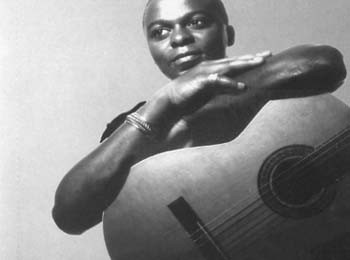
That Championship Season

0

Winning the Championship

By Daedalus Howell

EARLY THEATERGOING audiences knew that there was nothing finer than talking back to the stage–specifically in the form of boos and hisses at black-clad evildoers. Audiences will probably experience a similar compulsion with Main Street Theatre’s marvelous production of playwright Jason Miller’s That Championship Season–a Pulitzer Prize-winning indictment of irascibly bigoted, white, suburban males circa 1972. However, to their progressive chagrin, Sonoma County audiences may find that their hissing is actually laughter stifled behind clenched teeth.

An expeditious trek into the claustrophobically narrow minds of five men in a small Pennsylvania town, That Championship Season explores and condemns their sexism, racism, anti-Semitism, and ecological irresponsibility in three outrageously comic acts expertly drawn by Miller and conveyed to the stage by adroit director Scott Phillips.

Coach, a retired high school basketball drillmaster (poignantly deployed by MST artistic director Jim dePriest) is the pivotal character in a reunion comprised of former championship team members 20 years after graduation. In attendance are George Sikowski, now the incompetent town mayor on a re-election bid (a well-hewn and devilish portrayal by Tim Hayes); Tom Daley, a cheeky and irreverent alcoholic (played to the hilt by the hilarious Xavier Lavoipierre); his ambitious turncoat older brother James Daley, a junior high school principal (an impressive Gerald Haston); and strip-mining magnate Phil Romano (a casting windfall in Jonathan Kesser).

The party begins with benign backslapping and nostalgic riffs on days past, but soon degenerates into a morass of backbiting and backstabbing in equal turns as the characters get more and more intoxicated. (Coach commands, “Get him a drink!” whenever one of his flock falls down the stairs, or is afflicted by either death threats or conscience amid the gun rack, overstuffed chairs, and trophies of the set.) In tandem with Miller’s script, Phillips palpably ups the ante with each successive act, activating his players with a verve seldom seen on local stages.

But beware: the number of ethnic slurs and four-letter words in this play make Quentin Tarantino look like a blushing baby, Lenny Bruce an embryo. The expletives are necessary, however, as they are the broad strokes of Miller’s damning portrait–though sitting on tacks may be more comfortable.

DePriest’s Coach is an indefatigable crank, wholly unaware of his social impropriety and the poisonous aftereffect it has yielded in his cadre of protégés. This role, both gross and hilarious, is as challenging as they come, and dePriest’s craft, faculty, and grace as a performer prevail.

Though Lavoipierre’s younger Daley is essentially a brazen jerk-off, the actor invests him with a peculiar humanity and comic nuance that renders him likable (forgivable?) despite his idiocy. Lavoipierre’s displays consummate subtlety when his character derisively intones, “Whoop, whoop,” referring to whooping cranes, a species as threatened with extinction as is this contemptible breed of man.

Haston’s Daley, the school principal, is a skillfully devised concoction of timidity and raw enterprise; both acrid and pitiable, he displays a feat of emotional control, the perfect Judas kiss-ass to Hayes’ spiritually decrepit mayor. As the mayor sustains increasing amounts of psychological wounding, Hayes deftly shows the man’s plight with increasing layers of sadness.

Kesser’s jocose Romano is a comic highlight of the play, if not only for the actor’s ample talent, then for his ample collar (costumer Julia Hunstein Kwitchoff superbly garbs the players in fashions endemic in the ’70s). Clad in a polyester leisure suit, bragging toxically, and displaying an oily libido, Kesser gives a performance that far exceeds its visual comedy as he creates a three-dimensional personality both engaging and alarming. You will remember this man; he is your uncle.

Main Street’s That Champion Season is combustible, must-see seriocomic fare that clearly draws the boundaries, then blindly hopscotches all over them. If audiences did bite their tongues every time they laughed at an off-color gag, they would exit bloodied and necessarily speechless. Just remember you are to laugh at the characters, not with them.

That Championship Season plays Thursdays-Sundays through April 11 at Main Street Theatre. Thursdays-Saturdays at 8 p.m.; March 22 at 2 p.m., and other Sundays at 7 p.m. 104 N. Main St., Sebastopol. Tickets are $12. 823-0177.

From the March 19-25, 1998 issue of the Sonoma County Independent.

© Metro Publishing Inc.

Riders in the Sky

0

Happy Trails


Jim Hagans

Yee haw: Riders in the Sky bring their irreverent down-home wit to the LBC on Friday, March 27.

Like tumblin’ tumbleweeds, Nashville’s offbeat singing cowboys keep rollin’ along

By David Templeton

IT SOUNDS LIKE the beginning of a joke. Three guys meet in a bar, one of them an expert in wildlife management, another a brilliant writer and historian, and the last a scientist with a Ph.D. in plasma physics from MIT. Suddenly the first guy turns to the others and says, “Hey! Wouldn’t it be fun to dress up like cowboys and sing old Roy Rogers songs and yodel and stuff?”

And before they know it, 20 years have gone by, and some writer is describing their origin by saying that it sounds like the beginning of a joke.

Take it from Fred LaBour–otherwise known as Too Slim, one of the founding members of the Riders in the Sky–the only joke was the one on any shortsighted skeptics who might have suggested that this talented trio’s distinctly offbeat novelty act might never stand the test of time. On Nov. 11, on the stage of Nashville’s Grand Old Opry, the Riders–composed of Too Slim (the wildlife expert, whose earlier claim to fame was as the college journalist who started the “Paul McCartney is dead” rumor), Ranger Doug (historian Doug Green), and physicist-turned-fiddler Woody Paul (Woodrow Paul)–laughed their way through a night-long celebration marking exactly 7,300 days, dozens of albums, and over 3,000 performances since the band first got together to sing such fare as “Tumbling Tumbleweeds” and “Happy Trails.”

With a veritable parade of tributes from some of country music’s brightest lights–Garth Brooks, Kathy Mattea, and Reba McEntire–the evening was capped off with the emotional reading of letters from Gene Autry, Dale Evans, and the King of the Cowboys himself, Roy Rogers.

“That was so cool,” exclaims Too Slim, speaking by phone from the front porch of his “bunkhouse” in Tennessee. “We got on the bus the next day and Ranger Doug said, ‘Well, that was about the coolest thing that ever happened to us.’ And I totally agree. There were people there from around the country, people we’ve known throughout our career, and then those letters from Gene and Dale and Roy. It just gave us all a tremendous feeling.

“And we owe it all to sheer orneriness,” he laughs. “Choosing, in 1977, to make a living out of doing cowboy music–in the face of all reason and logic.”

The Riders, who are fond of calling themselves “the most overeducated act in the business,” will be stopping by Santa Rosa’s Luther Burbank Center next week as part of the 20th Anniversary Tour that is shaping up to be one of the team’s biggest years yet. The tour follows, more or less, the release of the group’s latest CD, Public Cowboy, No. 1: The Music of Gene Autry (Rounder), and Ranger Doug’s solo debut Songs of the Sage (Warner).

Those unfamiliar with the Riders–or who might have missed their delightfully bizarre Saturday morning network TV series a few years back when they stepped in to fill the spot vacated by Pee Wee’s Playhouse (after the star of that outlandish show, Paul Rubens, got caught with his pants down in a Florida porn theater)–should prepare themselves for a high-energy performance. Part comedy (puns and palindromes galore), part cowboy shtick–and most important, beautifully harmonized renditions of both new and classic songs, the Riders extol the many perks and pleasures of cowboy life.

Asked if all this talk about 20 years in the business makes him feel old–or just proud–Too Slim lets loose with a loud, long laugh. “I commit the sin of pride, I guess, when I think of stickin’ it out all this time,” he ultimately says. “But on the other hand, it’s such a natural thing for us to do. I wouldn’t want to do anything else.

“I have been lookin’ back at old pictures from when we started out,” he admits. “We had hair back then! It was brown and lustrous. Now we’re a little balder, a little grayer, and a little more paunched out. But the music never gets old. It’s as heartwarming and exciting as when we first heard those songs growing up.”

If he has not grown tired of playing cowboy all these years, is he at all surprised that the Riders’ respectfully tongue-in-cheek style has taken them this far?

“Well, Ranger Doug says he’s continually surprised that people will pay to see what we do,” he replies. “But I never have been. I knew from the first day we were onstage together. We laughed so hard and had so much fun that three days later I was still laughing. I called up Ranger Doug and I said, ‘America will pay to see this. I don’t know what it is we did exactly, but I know people will want to see it.'”

THOUGH THEIR PATH has so far just skirted mainstream success, Too Slim says they’ve enjoyed plenty of high points along the way: playing for the president at a White House barbecue two years ago, performing at the opening of the Olympic Village for the Atlanta games, becoming members of the Grand Old Opry, doing the TV show, and doing their ongoing Riders Radio Theater program on National Public Radio.

There’s more, too.

“We’re doing the Barney show next week,” he laughs. “No kidding. We’re all looking forward to trying out our Barney impressions on the real guy.

“I’ve said before, though,” he continues, “that the personal high point of my career was walking into a room where Roy Rogers was standing, and having him know who I was. Roy Rogers looked up and said, ‘Hey! It’s Too Slim.’ I lit right up and haven’t dimmed down yet.

“I mean to tell you, you can’t beat that,” he audibly beams. “Getting to meet your heroes, gettin’ to work with them sometimes. No doubt about it, our dreams just keep on comin’ true.”

And that’s no joke.

The Riders in the Sky perform on Friday, March 27, at 7:30 p.m. at the Luther Burbank Center, 50 Mark West Springs Road, Santa Rosa. Tickets are $10-$17.50. 546-3600.

From the March 19-25, 1998 issue of the Sonoma County Independent.

© Metro Publishing Inc.
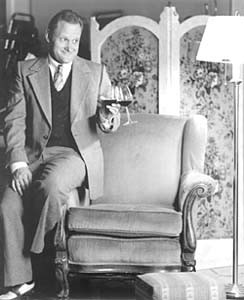
Talking Pictures

0

Big Good Woolf


‘Mrs. Dalloway’ comes as close to the novel as modernly possible

By David Templeton

In his ongoing quest for the ultimate post-film conversation, David Templeton invites English professor and Virginia Woolf scholar J. J. Wilson to see the charming new screen adaptation of Woolf’s stream-of-consciousness novel Mrs. Dalloway.

ON THE INSIDE of the box office window, pasted below the list of times and prices, is a small sign describing the various films that are playing at the theater this evening.

“Look at this,” I say to my guest J. J. Wilson, pointing to the short description of Mrs. Dalloway, the film we are here to see: “Romantic drama–based on the famous novel by Virginia Wolff.”

“How awful!” exclaims Wilson, noting the misspelling of Woolf’s name. “It’s shameful.” She turns to the ticket taker. “I don’t think you deserve any of our money,” she announces, flamboyantly piqued and half-serious.

“Um, I didn’t write it,” he stammers. “But I’ll take it down.”

Satisfied, we pay and make our way to our seats.

“How embarrassing for the theater,” Wilson smiles and whispers, her amazement having given way to obvious amusement, “to not know how to spell Virginia Woolf!” Indeed.

This, it so happens, is Wilson’s second viewing of Mrs. Dalloway, which stars Vanessa Redgrave as the eponymous upper-class heroine preparing to give a grand party, and Rupert Everett as Septimus, the tortured, suicidal World War I veteran whose path crosses that of the poised–but similarly distraught–Clarissa Dalloway. Wilson’s first peek at the film was a test screening held last summer at the annual gathering of the International Virginia Woolf Society–the organization of literary scholars and enthusiasts that Wilson helped found over 20 years ago, and for which she has served three terms as president.

Since 1973 she has edited and published The Virginia Woolf Miscellany, a tri-annual newsletter devoted to all things Woolf. Once convinced she was the only living aficionado of Virginia Woolf’s modernist, stream-of-consciousness writings, Wilson–who teaches literature at Sonoma State University–is now revered as a leading voice among 500 or so Woolf experts in 18 different countries around the world.

“I’m very interested to see if the flickers have changed anything since we saw it last summer,” she reveals as we wait for the movie to begin. “As I recall, there was much discussion the next day, and the general feeling was that the ending wasn’t quite right. Then again, modernist endings are always a problem for Hollywood, because they never end happily ever after. That particular script went out with the Victorian optimism.”

Throughout the film, Wilson glances occasionally around the darkened theater, attempting to read the reactions of the audience; afterwards, she quizzes me on my own responses to various plot points, coaxing and cajoling, explaining and expounding–ever the canny educator.

THEY DID ALTER a few things,” she says later, over coffee. “Primarily, they made the ending more hopeful, more dramatic.” She sighs, going on to explain that the film is based not only on the novel, but also on several of Woolf’s early short stories.

“The first short story was called ‘Mrs. Dalloway and the Prime Minister,'” Wilson explains. “It’s all about her party–and it seems, from other evidence, that Virginia Woolf was going to have Mrs. Dalloway commit suicide at the end of her party. In fact, Virginia had had a very bad breakdown herself–had heard the birds in the park speaking Greek to her.

“Does that ring a bell?” she tests me.

“Um, Septimus?” I reply. “He said he could hear the birds speaking Greek.”

“Very good. Of course, when Woolf was writing this, she had already tried to commit suicide,” Wilson continues. “She’d taken a hell of a lot of pills and came very close to doing it. And once previous to that, she’d thrown herself out of the window. It doesn’t seem to have been a very sincere attempt; it wasn’t a very high window. The next try–with the pills–was more serious. When she came to write this book, she had to invent Septimus to take on the suicidal nature she’d intended for Mrs. Dalloway. He was a shell-shocked soldier, with a sociological reason to commit suicide. Because, of course, there was no way of explaining at that time why a woman who had everything would ever think of throwing it away.

“She said in her diaries, ‘My brain feels like it’s burning in flames,’ when she finished the Septimus parts. Had she not invented that character, I’m sure the book would never have been written. It would have remained an embryo trapped in those few short stories.”

Woolf, of course, eventually did commit suicide in 1941, at the age of 59.

“Virginia Woolf, by the way, wrote several drafts of her suicide note, a writer to the end,” Wilson says. “[Her husband, publisher Leonard Woolf,] thought she’d tried to drown herself the day before she actually succeeded, because she’d come in wet from a walk. The next day she did go out walking again, put rocks in her pockets, and drowned herself in a miserable little irrigation ditch they called a river.

“But meanwhile, she’d done more work than most of us could do if we lived to be 100.

“I must tell you,” she continues, “that I don’t spend much time in my classes on Woolf’s suicide. For a while I never taught Mrs. Dalloway, because, aside from carping about it as a novel about the upper classes–and who gives a shit–they would think of it as a book about Woolf’s suicide, and would talk about nothing else.

“The amazing thing is how well the damn novels hold up after all these years,” Wilson concludes. “Aside from all the drama of her life, Virginia was one superb writer.”

Playfully scowling in the direction of the theater, she adds, “Yet some people can’t even spell her name. It’s just shocking!”

From the March 19-25, 1998 issue of the Sonoma County Independent.

© Metro Publishing Inc.

Guinness

0

Slaínte!

Michael Amsler


Toasting the perfect pint:
Is Guinness God in America?

By Gretchen Giles

THIS IS A TERRIBLE Irish joke, but the Irish tell it with a kind of terrible pride: An Irishman, when given three wishes, asks first for a never-ending pint of Guinness; asks second for a never-ending pint of Guinness; and makes his third and final wish for a never-ending pint of Guinness. Without thinking to regret the wasted opportunities of the first two wishes, he lives on in a remote happy haze of never-ending pints.

Alicia Shiel can probably understand this. At least, Shiel could if the wisher were supping from what the Guinness corporation terms “the perfect pint.” Because for Shiel, a product controller for Guinness, the mother’s-milk quality of this national brew has been a part of her life ever since she was a little girl growing up in Dublin.

“You never share a glass of beer,” avers Shiel, standing in Sonoma’s Murphy’s Irish Pub, where she arrived to test proprietor Larry Murphy’s dispensing system in preparation for last month’s Guinness-sponsored bid to break the world’s record for the most people toasting at one time. Guinness paid for notaries to be posted at pubs throughout the world for this Feb. 27 event. Last year, some 50,304 people raised glasses of the black stuff and shouted “Slaínte!” in unison. The numbers for this year have not yet been finally tabulated.

“People are very fussy about their beer,” Shiel continues serenely, “and kids at home will dip their fingers into the foam at the top of the glass–my father used to kill me about that one. And it is like, ‘Don’t touch–get your hands off my pint.'”

Created in 1759 at St. James Gate, Dublin, by Sir Alfred Guinness, this beer came to America with the first wave of immigrants channeling through Ellis Island. “They couldn’t live without [Guinness],” states Shiel. “The Irish immigrants came out and brought the stuff with them and their families. Or,” she laughs, “brought the Guinness with them and then sent the money home to their families.”

Creamy, frothy, black, and with a corporeal heaviness that dictates pouring the stuff in two parts and letting it settle like an exotic coffee, Guinness is actually a light beer, according to Shiel. Light in calories and in texture (its easy touch on carbonation makes quaffing Budweiser seem like drinking a steak), it is also the perfect accompaniment to cakes, cookies, tarts, pies, trifles: desserts. “It’s excellent with desserts,” Shiel says sweetly, “and seafood. Oysters and Guinness. You can drink it with anything.”

Cereal?

“If you like,” she grimaces.

But all is not rosy. We have brought along a shill, an Irishman named O’Keeffe who contends that no matter how strictly American barkeeps attend to the particulars–carbon dioxide, temperature (the perfect pint pours out at between 39 and 45 degrees Fahrenheit), glass shape and height (tulip-shaped and 20 ounces), and freshness–the Guinness here just doesn’t taste the same as at home. “It doesn’t travel,” he avers. “It doesn’t even travel to the Arans [Western Ireland islands].”

“I hear this all day long,” Shiel sighs good-naturedly. “And all I can say is that if you take a can of Coke today and put it in your back pocket and get on a plane and go to Ireland, and open that can in Shannon airport–it’s the exact same can of Coke.”

“It tastes more like Murphy’s,” O’Keeffe returns with an evil grin, referring to another brand of Irish beer. “And you don’t want to hear that.”

“I disagree,” Shiel says flatly, “and it’s not just because of my job. Honestly.”

Larry Murphy explains that Guinness is his No. 1 seller and that his pub may be the biggest seller of Guinness in the county, ensuring that his brew is fresh. Shiel passes him on his inspection with a whispered reminder that his glasses aren’t all regulation size. And then she turns back with a smile.

“The Irish,” she says, “are very proud of their Guinness.”

O’Keeffe raises his glass. “Actually,” he says in a low voice. “This is pretty good.”

From the March 12-18, 1998 issue of the Sonoma County Independent.

© Metro Publishing Inc.

The Scoop

In the Know

By Bob Harris

GIVEN THE FREQUENCY with which America’s news organizations have recently abandoned the traditional standards of responsible reporting, there’s no reason left to limit these commentaries to things that have actually happened. Hey, as long as we’re just repeating anonymous allegations leaked for political gain, why not just eliminate the middleman and write whatever amuses us?

In that spirit, The Scoop proudly presents the first in an occasional series of Tomorrow’s Headlines Today!

Washington: The Olympic champion U.S. women’s hockey team is invited to the White House to pose for photographs with President Bill Clinton. On their way out, all 25 players and coaches are issued subpoenas from special prosecutor Kenneth Starr.

Capitol Hill: Software magnate Bill Gates tells Congress that Microsoft does not have a monopoly. Gates also warns legislators that if they continue to bother his friends and call him names, he’ll just pick up his Internet and go home.

Also on Capitol Hill: The Congressional Budget Office predicts that the federal government will finish this year with a surprising $8 billion budget surplus. The extra money is the direct result of lower interest rates, an increase in tax revenues, and a sudden drop in gifts to White House interns.

The United Nations: Clinton again talks tough with Iraq, threatening Saddam Hussein with “extra-heavy-duty severest double-dare consequences, with home base called and no givebacks.” Republicans deride this language as lacking any deterrent threat of credible noogies.

New York: AOL gossip columnist and online reporter Matt Drudge accepts a job with a major TV network, stating he was “seeking a position consistent with the Drudge Report‘s high standards of objectivity.” Reportedly, his other job offer was work as an Olympic ice-dancing judge.

Also in New York: At a gala to honor Time magazine’s 75th anniversary, Clinton invokes the legacy of Franklin Delano Roosevelt, who is immediately subpoenaed by Kenneth Starr. In other toasts to important leaders from earlier parts of the century, Bill Gates salutes the Wright Brothers, Toni Morrison hails Dr. Martin Luther King, and Sen. Strom Thurmond pays tribute to himself.

Alexandria, Va.: In the wake of disclosures that the billion-dollar stealth bomber can be disabled by flying through a light rain, a new Government Accounting Office report states that the only thing in the entire Pentagon absolutely certain to survive a nuclear war is the paperwork.

Moscow: More troubles for the Mir spacecraft, after cosmonauts discover their emergency escape capsule is a 1974 AMC Gremlin and prone to flaming rear-end collisions.

Houston: The NASA Galileo space probe has discovered the presence of water on Europa, one of Jupiter’s largest moons; scientists speculate that simple life forms may exist several hundred feet beneath Europa’s surface. Those life forms will now receive subpoenas from the office of Kenneth Starr.

Atlanta: Human rights agencies report a 20 percent increase in militia activity nationwide. The rise is attributed to millennial paranoia, the circulation of false information over the Internet, and society’s continued inability to stop performances by New Age music phenom Yanni.

Hollywood: Two New Zealand playwrights have filed a lawsuit claiming that the movie The Full Monty was plagiarized from their ideas. As the plaintiffs begin presenting their evidence, the judge tells them just to put on their clothes and go home.

Also in Hollywood: Titanic has now become the first film to gross over a billion dollars worldwide. In a related story, Paramount green-lights Speed 3, in which Sandra Bullock is forced to race the Edmund Fitzgerald through a snowstorm on Lake Erie. Joe Eszterhas (Burn Hollywood Burn) will write and direct, and plans are already under way to burn the negative and assign blame.

And finally, in Boston: Scientists have isolated the specific brain-wave patterns characteristic of dyslexia. Details of the study can be found in the latest issue of the prestigious journal New Jingled Dirndl of Cinnamon.

From the March 12-18, 1998 issue of the Sonoma County Independent.

© Metro Publishing Inc.
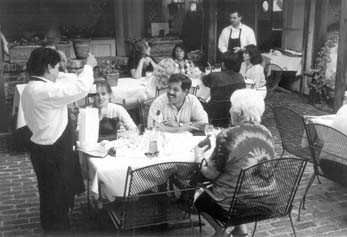
Talking Pictures

0

Flow Master

Dark City.‘ “I use water in cities as a living force, on some level like plants. It moves, it sparkles, it sounds good, you can touch it, you can play in it.”

Michael Amsler


Architect Lawrence Halprin looks darkly at new sci-fi film

By David Templeton

In his ongoing quest for the ultimate post-film conversation, David Templeton invites renowned architect Lawrence Halprin, designer of the Franklin Delano Roosevelt Memorial in Washington, D.C., to discuss the nightmarish thriller Dark City.

LATE LAST NIGHT, exactly halfway through the film Dark City, world-famous architect and visionary Lawrence Halprin got up and walked out.

Many filmgoers and critics have found this odd science-fiction thriller –about a race of murderous, shape-shifting aliens who study human behavior within a vast, sunless city in which people’s memories are all artificial and where every street and building is magically, disconcertingly rearranged each night as the citizens sleep–to be a visually and mentally challenging experience. The whole thing left Halprin feeling impatient, irritated, and bored.

“To be perfectly honest with you,” he says strongly the next afternoon, “I thought it was a bunch of bullshit. I found it assaulting, and I didn’t know why I was being assaulted. I didn’t do anything wrong,” he adds with a laugh. “All I did was go to a movie!”

Perhaps it is not so surprising that Halprin would view such a vision of the future with displeasure; the alien city’s bleak, unyielding collisions of architecture and its oppressive, entirely natureless urban sprawl are the mirror opposite of the spacious, psychologically liberating environments that Halprin, who lives in Kentfield, has spent his professional life imagining, designing, and bringing into being.

Among his better-known accomplishments are the neighborhood-spanning Freeway Park in Seattle, the breathtaking Sea Ranch community in northern Sonoma County, and the one-and-a-half mile Israeli stretch of the Walter and Elise Haas Promenade in Jerusalem’s Old City. Most recently, Halprin saw 20 years of his work culminate in the opening of the Franklin Delano Roosevelt Memorial in Washington, D.C. A deliberately meandering, emotionally charged blending of granite walls, waterfalls, sculpture, and engraved quotations of FDR’s most thought-provoking ideas, the memorial alternates vast views of D.C.’s dense urban landscape with smaller, more intimate spaces that encourage meditative thought and heighten each visitor’s uniquely personal experience of the space.

Certainly, therefore, Halprin is no stranger to Dark City‘s notion that any environment can deeply affect and transform those who dwell in it; that human nature can be revealed by observing how people respond to their surroundings. In the warm, softly lit meeting room at his semi-bustling offices in San Francisco, Halprin takes a seat and considers this assertion.

“I wouldn’t be in this work if I didn’t think it would–well, I don’t know how much it transforms people–but it can go a long way toward making their lives more meaningful and enhancing their lives,” he remarks. “And if it’s done right, [architecture] can promote healing. A lot of healing can be done in a wonderful environment.”

“So if some outside entity or alien were observing people walking through the FDR Memorial,” I hypothetically suggest, “would they learn something vital about human behavior?”

“Of course,” he replies gently. “Otherwise there wouldn’t be anything wonderful about it. But I don’t know that standing aside would gain them anything. They’d have to walk through it alongside the people they’re observing. Then they’d learn a lot.

“Many people write to me about how it has brought back important memories about that period of time,” Halprin says. “People cry about their lost ones, they’re very emotive about how they feel, and about the lessons that Mr. Roosevelt’s era produced in them; how important it is for them to be able to interact with the sculptures, to touch them, to feel them, walk among them, stand by them; how important it was for them to hear their children read aloud the quotations carved into the walls.”

I ASSUME,” I SAY, “that one can predict how people will respond as a group to any given environment. Yet for every 100 people who walk through a place, aren’t there also 100 unique reactions to it?”

“Certainly, and that’s nothing but good,” Halprin replies. “I think that, on the whole, if you look at basic human values of people–love, affection, family, our reactions to nature, and so forth–you can assume that a lot of the responses are going to be almost biological. Emotional, certainly, but biological as well.

“Just as you can assume that birds are going to fly in a particular way, or that butterflies are going to flutter around and live for just two weeks, we have our own internal mechanisms that are predictable in a biological sense–the running of animals and the running of human beings, and our interest in the visual characteristics of what we like or don’t like about touching things. To some extent all of those things are predictable.”

“And what is more telling about us as humans,” I wonder, “those predictable ways we behave as a species, or the individual behaviors that are unique to each person?”

“I don’t differentiate,” he says. “They’re both equally important. Every shared reaction is also changed somewhat by each individual’s reaction. So I don’t force people to do any one thing in the environments I design. I let people flow and meander. I give them choices.

“I couldn’t possibly design anything that would make everybody equal,” he says. “Because people’s reactions are not equal. The way they react to things is different. And the way they exercise their potential seems to be different.

“And that’s actually quite a wonderful thing,” Halprin points out. “That’s one of the things that differentiates humans and animals, after all. Animals can’t go beyond their potential,” observes this architect of many marvels. “But we can.”

From the March 12-18, 1998 issue of the Sonoma County Independent.

© Metro Publishing Inc.

Fiddler on the Roof

0

Roof Raiser

Fiddler on the Roof.


SR Players’ ‘Fiddler’ is community theater at its best

By Daedalus Howell

OPTIMALLY, COMMUNITY theater should be like little-league baseball–everybody gets a chance at bat. In such companies, many actors, particularly young ones, are given their first glimpses of the bright side of the footlights, mentored by veterans and dilettantes alike. In keeping with this dictum, the Santa Rosa Players have crammed every willing actor (35 of them or so) into director Bob Rom’s ebullient production of Fiddler on the Roof, and in so doing are a model community theater.

Going on 40, Fiddler on the Roof (book by Joseph Stein, music by Jerry Bock, and lyrics by Sheldon Harnick) is one from a stable of diligent workhorses plodding the American musical theater landscape. Gleaned from the stories penned by a pseudonymous Yiddish writer during the first years of this century, Stein’s musical is the seriocomic tale of Tevye, a milkman, father of five–and, significantly, a Jew living in a pre-revolutionary Russia rife with anti-Semitism. Tevye and the members of his small village endure the ever-present threat of pogroms at the hands of czar-appointed local law enforcement, as well as the systematic decay of their traditions with the sequential marriages of Tevye’s three socially progressive and eldest daughters. Despite all this, Fiddler is a comedy, and director Rom draws many fine and diverting performances from his cast.

The spry Sonoma-based actor Eliot Fintushel is absorbing as the jocose and classic Tevye, his performance prudently nuanced with the crinkly-eyed whimsicality and wise-in-disguise schlemielness such characters often feature (stock personalities, as in Italian commedia dell’arte, also populate the shtetl). Indeed, Tevye is the ideal of a sitcom dad–he is stern but melts when his children kindle his paternal concern; think Father Knows Best for the turn-of-the-century Borscht Belt. Fintushel, however, supersedes Tevye’s known qualities and burnishes his interpretation with an intriguing vigor–his Tevye is a self-conscious entity, not a haughty cartoon. Indeed, Fintushel’s gestures approach puppetry (watch his hands during the musical’s ode to avarice, “If I Were a Rich Man”–it is as though they individually received skilled choreographer Nina Raggio’s attention). Fintushel also plays Tevye’s asides to God with a fervor that is at once humorous and stirring as he bemoans the collapse of his traditions.

Mika Gustafson, Denise Lane, and Alyssa Zainer (playing Tzeitel, Chava, and Hodel, respectively) each offer a confidently hewn performance as Tevye’s triad of marriage-minded daughters. Gustafson’s Tzeital is particularly convincing as she rallies against an arranged marriage so that she may wed her true love, Motel, played by a slightly green Jake Waldinger.

Local color is a commodity in excess at Tevye’s quaint village, including Evelyn McFadden’s hilariously well-meaning but meddling Yenta the Matchmaker and Katy Willens’ ghostly Grandma Tzeitel, a spirit who forewarns the perils of her namesake’s arranged marriage in a rousing dream sequence. Jeff Zainer is the title character, a fiddler that director Rom uses as a sort of mute–though musical–chorus. (Zainer synchronizes his violin pantomime to real violinist Siena S’Zell’s gifted playing–raising the question: Why not put S’Zell onstage as the fiddler?)

Musical director and pianist Jenny Jones leads a proficient orchestra of six–cordoned behind a rustic stick fence flanking scenic designer Sean Lux’s cleverly devised Russian village made of actual weathered and mossy boards–a setting that deftly meets the challenges of Jerry Bock’s score.

The Players’ Fiddler on the Roof is an economy-sized entertainment for the whole family. Although it’s not Broadway, it is Davis Street, and that’s certainly enough.

Fiddler on the Roof plays Friday-Sunday, March 13-22. Santa Rosa Players, 709 Davis St., Santa Rosa. Friday-Saturday at 8 p.m.; Sunday at 2 p.m. Tickets are $10-$12. 544-7827.

From the March 12-18, 1998 issue of the Sonoma County Independent.

© Metro Publishing Inc.

Kids on Ritalin

0

A Quick Fix


Lee Ballard

The United States leads the world in Ritalin consumption. Is the potent drug just an easy way out for adults who can’t cope with boys behaving badly?

By John Gaver

JULIA GREEN ELEMENTARY SCHOOL is one of Nashville’s most respected public schools. Test results consistently indicate that students there receive a superior education. What’s more, Julia Green has a reputation as a school that takes a particular interest in the individual needs of its students. From time to time, for example, a student may have difficulty focusing on his schoolwork or concentrating on tasks assigned to him. When a child demonstrates such “off-task” behavior, the principal, Imogene Brown, usually arranges a conference with the child’s parents. “We sometimes suggest to the parents that they talk to their pediatrician about their child’s condition,” Brown says.

But sometimes, she says, the child comes back with a prescription for methylphenidate, the drug popularly known as Ritalin, in hopes that his ability to concentrate on his schoolwork will improve.

He will not be alone. Every day after lunchtime at Julia Green, 12 of the school’s 507 students walk to the principal’s office. There, the school secretary gives each student his midday dose of Ritalin. Usually, it will be his second dosage of the day, the first having been administered at home earlier in the morning. As is the case at all other schools in the area, each child’s Ritalin is kept in an envelope with his name on it, and school officials stress that distribution of the drug is carefully monitored. Parents must sign release forms before their children can take the drug at school.

School officials do not relish the idea of school secretaries administering Ritalin. A decade ago, school nurses were available to perform such tasks. But, ever since the school system suffered severe financial cutbacks, school nurses have virtually disappeared. “We would feel more comfortable if school nurses were distributing” the Ritalin, says Craig Owensby, spokesperson for Metro schools. “We would like to relieve teachers and secretaries of that responsibility, but without school nurses, how are you going to do it?”

To make the best of a difficult situation, Owensby says, the secretaries are “very careful to make sure the medicine gets matched up with the child.”

Julia Green’s Imogene Brown says she is “not one for medication,” but she admits that she has seen “wonderful changes among children who are now on Ritalin. It does help them focus and be a regular part of the classroom. There have been some dramatic improvements among children, and I think it helps a lot of kids.”

This year, Brown says, the number of Julia Green students taking Ritalin has dropped slightly from last year, but only because a number of the children taking the medication have moved on to other schools. In local schools overall, as in the rest of the nation, however, the use of Ritalin has risen astonishingly in the 1990s, educators say.

“I have observed a marked increase in the use of Ritalin that schools are asked to dispense,” says Barbara Gay, a social worker.

Ritalin is most commonly used to treat conditions such as attention deficit disorder (ADD) and atten-tion deficit/hyperactive disorder (ADHD). According to Children and Adults with Attention Deficit Disorder, or CHADD, a Florida-based not-for-profit organization, some 3 to 5 percent of all American children–or up to 3.5 million children–suffer from ADD. Ninety percent of those diagnosed with the condition are white boys.

As a nation, the United States leads the world in prescribing Ritalin to treat various behavioral problems. According to a March 1996 story on Ritalin in Newsweek, the drug is consumed in the United States at a rate at least five times higher than in the rest of the world. The use of Ritalin to curb behavioral problems among children is controversial. Many professionals believe that the drug helps children with ADD or ADHD to become more focused and to pay better attention in class. In a number of cases, medical doctors, psychiatrists, and counselors have seen dramatic improvements, especially among children with serious behavioral problems.

Others, however, believe that ADD is an overdiagnosed condition. Ritalin’s critics contend that parents and doctors often opt to prescribe the drug when the problem may simply be one of bad conduct. Rather than taking tough measures to discipline a child, critics say, parents often just take the easy way out. Critics also point out that the drug is so often prescribed for boys, who are more prone to demonstrate bad conduct than girls. That fact, the critics say, indicates that society prefers to dope up its children rather than set tough limits for them.

“I think this is about drugs instead of parenting,” says Julia Landstreet, a mother and former PTA president who has been active in education issues. “I absolutely believe some kids need [Ritalin]. But the nature of our culture is to take a pill to fix things. This seems in keeping with everything else that is going on.”

Enormous advances have taken place in the medical community over the last decade with the introduction of “mood-settling” drugs. Millions of Americans take a variety of medications to combat depression, anxiety, fatigue, and other psychologically related illnesses. But because Ritalin is administered to children, and because schools are often ill-equipped to handle the rise in its usage, the debate over Ritalin has taken center stage. Is Ritalin simply a drug that medicates problems rather than solves them? Or is it a valuable tool that helps children behave better and learn more in the classroom? The answer is not a simple one.

RITALIN IS ONLY one of a number of drugs prescribed to treat ADD and ADHD. The stimulants Adderall and Dexedrine, as well as antidepressants such as Norpramin, Prozac, and Ludiomil, are also administered to treat the conditions. But Ritalin appears to be the drug of choice. According to one report, Ritalin accounts for approximately 60 percent of all prescriptions in the country written by doctors for individuals suffering from ADD/ADHD.

Ritalin can be prescribed only by a doctor. It is not addictive for children, but Dr. Mark Wolraich, a professor of pediatrics and director of the Child Development Center at Vanderbilt University Medical Center, notes that it is addictive for adults. He also cautions that “its prescriptive use needs to be closely regulated.” Wolraich points to a recent study conducted between normal 14-year-old boys with hyperactivity and 21-year-old hyperactive males. In that study, he says, “None of the group of 14-year-olds reported feeling they wanted to take the medication, while some of the 21-year-olds did.” Wolraich says children do not report “pleasurable” feelings from the drug. Thus, the risk of children abusing the drug is minimal.

Ritalin’s effect seems paradoxical: It is a stimulant, and yet it helps hyperactive kids settle down. Because it stimulates the central nervous system, however, it creates a calming, mood-leveling effect. So the person taking Ritalin is less easily distracted from a particular activity. That benefit “has been documented in hundreds of studies with control,” Wolraich says.

There are side effects, however. The most common, which can be controlled by adjusting the dosage, are suppressed appetite and sleep loss. Other side effects can include nausea, headaches at the outset of therapy, and a letdown, or mood change, when the medication wears off. Ritalin may also cause users to be jittery or nervous, but these effects can be minimized by an additional medication, such as a beta-blocker that takes the edge off of the Ritalin. Because the typical dose of Ritalin lasts for about four hours, it is usually administered several times a day.

It is common for children to take “drug holidays” from their Ritalin on weekends or in the summertime, when they do not have to be as focused. “You use it in the situations where children need it,” Wolraich says. “For some of the children with ADHD, their problems are primarily in the school setting and not at home. In that case, they don’t necessarily need Ritalin on the weekends and in the summertime.”

Ritalin’s public image has been far from favorable. Because it is associated, in some people’s minds, with Dexedrine, also a stimulant, and an “upper,” or cocaine, Ritalin is sometimes described as “kiddie speed,” or “crack for children.” There have been reports of parents abusing their children’s Ritalin, as well as instances of children selling their pills to friends who don’t have prescriptions.

THE MEDIA HAVE contributed their share of erroneous reports about the drug, embellishing its side effects and risks. “I think Ritalin has an image problem,” Wolraich says matter-of-factly. “Particularly, there was a large media campaign by Scientologists to try to discredit the use of Ritalin in the late ’80s. The campaign exaggerated the side effects and potential risks,” he says, adding that its potential side effects are less severe than those of aspirin.

What is important to understand about Ritalin is that it does not cure a child’s hyperactivity or distractibility. Rather, it treats only the symptoms of the disorder. And that disorder may be hard to define. Some refer to it simply as ADD, while others prefer to throw hyperactivity into the mix, calling it ADHD.

Doctors say ADD and ADHD are neurological syndromes with symptoms that can include impulsiveness, distractibility, hyperactivity, and excess energy. No scientific evidence exists to show that ADD is a disease. Rather, it is an incurable, complex disorder. “Unfortu-nately, we can’t draw blood or look at an X-ray and say, ‘Yeah, they have ADD,'” says Dr. Cynthia Briggs, a child psychiatrist at Vanderbilt. “Kids have symptoms to an extreme, more on the exaggerated end.”

Briggs, whose own daughter has been diagnosed with ADD, points out that other conditions may actually be at the root of the problem. “I think it’s easy to miss other things,” says Briggs. “There are other reasons that kids are restless. It’s tough to attribute it all to ADHD. I have had kids come in and say they have been diagnosed with ADHD; then I do a little digging to see if something else may be going on. Depression in kids and post-traumatic stress disorder can sometimes get misdiagnosed as ADHD.”

Barbara Gay, a social worker, agrees that diagnosing the condition is not easy. “It’s a very complex disorder,” she says. “There may be so many other factors involved, like neglect, abuse, and broken families, that can cause the same symptoms.” But Gay says that, for 3 to 5 percent of the school-age population, “there’s a biochemical imbalance that means that they can’t sit still in school.”

For those children, she says, Ritalin may be an appropriate drug. But Gay maintains that parents must be involved in the decision-making process when it comes to deciding whether their child should be taking the drug. “Some parents are willing to let their kids take drugs at the drop of a hat,” she notes. “Others say, ‘No way.'”

One school of thought holds that ADD/ADHD is actually a smoke screen, dreamed up to explain unacceptable personality traits. According to this line of thinking, ADD/ADHD is simply a cop-out, a way of telling people that their behavior is not their fault. When people have a “disorder,” after all, they are not responsible for their actions.

One child neurologist, Fred A. Baughman Jr., recently posted on the Internet an article entitled “What Every Parent Needs to Know About ADD,” in which he raised questions about the disorder. Baughman charges that it may be diagnosed simply by a “teacher checking any eight of 14 behaviors on a pencil-and-paper checklist,” that it needs “no physician, laboratory, X-ray, or brain-scan confirmation,” and that the root problem with the diagnosis is that “there is no confirmation.”

He mocks the tendency of medical professionals to refer to ADD/ADHD as “a brain disease” owing to a “chemical imbalance of the brain,” when science does not support those statements. He advises that everyone approach the subject of ADD/ADHD with “skepticism.”

To diagnose the disorder, doctors and counselors do administer a variety of tests to children. One is the Achenbach Childhood Behavior Checklist, which asks parents to rate, in terms of severity, whether the child bites his fingernails, is secretive, sleeps more or less than others, threatens people, sucks his thumb, wishes to be the opposite sex, or worries excessively. Vanderbilt’s Wolraich says the diagnosis of the disease is usually based on reports from parents and teachers, not from a doctor’s firsthand observation of the child. He says that observing only small samples of the child’s behavior in an office setting does not provide “good enough examples to go on in terms of their behavior.”

THE KEY QUESTION, of course, is whether ADD/ADHD is simply overdiagnosed, leading Ritalin to be overprescribed. Experts differ on that question. “The core issue with ADD is that it is far too easily and quickly diagnosed,” says Howard Morris, president of the National Attention Deficit Disorder Association in Mentor, Ohio. “Lay materials, support groups, articles in the press, and all manner of other media attention have created an environment where parents are on high alert with respect to ADD. And ignorance and insurance issues have created a situation where professionals diagnose far too easily and where medication is too often used as the total solution.”

Wolraich, however, has a different opinion. “I don’t think, in most cases, too many children are being treated with Ritalin,” he says. “I think some children are being treated inappropriately–in both directions. Some children who might well benefit from Ritalin are not receiving medication. But there are also children who don’t have the diagnosis who are put on medication.”

The key issue, Wolraich says, is that ADD/ADHD is a legitimate condition that may require medication. “It has the same criteria and is as well established as any other psychiatric diagnosis, like depression or conduct disorder,” he insists.

Jessica Golden, a second-year law student, speaks frankly, and rapidly, when she talks on the telephone. When she was a fourth-grader, Golden demonstrated symptoms of behavioral problems and was subsequently tested and diagnosed with ADD. She recalls being hyperactive and unable to concentrate or focus her attention on a specific task. She was prescribed Ritalin to control her inattention and restlessness.

She recalls, however, that contrary to the success stories often noted by psychiatrists and pediatricians, she did not like the drug. “I took myself off Ritalin in the sixth grade,” Golden says. “I didn’t think it helped me. In fact, it gave me really bad headaches and made me very nauseous. When I took it, it made me focus too much; I could only concentrate on one thing at a time. There were things happening around me that I wasn’t aware of.”

Golden has not taken Ritalin since the sixth grade, and she still has ADD. “I taught myself to get through the day,” she says. “I may not be doing as well as I could be, but I think I’m doing just fine.”

Golden, whose brother has also been diagnosed as having ADD, faults her therapist for not supporting her when she balked at taking the medication. “He thought it was a very bad idea,” she says. “When I did get off Ritalin, that was it–he didn’t try to help me get through it without drugs. It was pointless; he couldn’t do anything for me.”

Now Golden argues that doctors “need to teach coping skills rather than prescribe the drug.”

Most medical professionals would agree that medication shouldn’t be the sole treatment for ADD/ADHD. Medication lays the foundation for change but does not, by itself, eradicate the symptoms of the disorder. If positive change is to occur, the medication must be accompanied by exercises that improve self-esteem and reinforce good behavior.

As the Ritalin issue moves to the forefront of the public consciousness, the conflict between the drug’s critics and its advocates seems only to be growing louder. Those who discredit the drug highlight its potentially dangerous side effects but sometimes ignore the fact that it does have potential. Meanwhile, professionals in the medical field also say that use of the drug alone won’t cure ADD/ADHD, and that it needs to be used in conjunction with other therapies.

The Regional Intervention Program provides training and support for parents who want to learn positive behavioral management skills. Families are referred to the center by pediatricians, day-care providers, and preschool teachers, among others. “It’s really a situation where the parents are needing some training and support in interacting with their child’s behaviors,” says RIP’s national coordinator Danny Wheeler.

RIP began in 1969 as a model and demonstration project at the John F. Kennedy Center at George Peabody College for Teachers. Eleven RIP programs now exist in Tennessee, and it has expanded to Connecticut, Washington, Ohio, and Brazil.

Wheeler’s program has observed a number of children who have been diagnosed with ADD, and he is concerned that he is seeing more. “It’s kind of scary, to me, for the diagnosing of children to be going lower and lower, as far as age is concerned, and it’s kind of difficult to understand. This is a difficult diagnosis to make; it’s pretty wide open.”

Wheeler believes that many parents are inclined to go for the quick fix, whether it is “Ritalin or any other kind of medication.” But he adds that Ritalin alone “is not going to do what needs to be done. The parent, the teacher, the providers, anyone who is in daily contact with the child needs to become more consistent in knowing and understanding what needs to be done and doing those things so that the child can succeed.”

Bruce Dobie contributed to this article.

This is the last of a two-part series on the growing use of mind-control drugs on children.

From the March 12-18, 1998 issue of the Sonoma County Independent.

© Metro Publishing Inc.

Military Recruiting

Hire PowerCongressional hardball trumps SSU policy on military recruitingBy Bruce RobinsonTHE BIBLICAL Solomon is revered as a wise and judicial leader, but his congressional namesake is being denounced as the opposite by some outspoken members of the campus community at Sonoma State University. Gerald Solomon, R-N.Y., is the author of the "Solomon Amendment," a federal law stipulating that any...

River House

River Rollin' Michael AmslerWatery save: In a location whose businesses have foundered in the past, Petaluma's new River House combines the best of the Petaluma River with the best of wine country cuisine. Petaluma's River House flows with fine foodBy Paula HarrisWHO CARES that the murky Petaluma River is actually a slough and one of the most contaminated...

That Championship Season

Winning the ChampionshipBy Daedalus HowellEARLY THEATERGOING audiences knew that there was nothing finer than talking back to the stage--specifically in the form of boos and hisses at black-clad evildoers. Audiences will probably experience a similar compulsion with Main Street Theatre's marvelous production of playwright Jason Miller's That Championship Season--a Pulitzer Prize-winning indictment of irascibly bigoted, white, suburban males circa...

Riders in the Sky

Happy TrailsJim HagansYee haw: Riders in the Sky bring their irreverent down-home wit to the LBC on Friday, March 27. Like tumblin' tumbleweeds, Nashville's offbeat singing cowboys keep rollin' alongBy David TempletonIT SOUNDS LIKE the beginning of a joke. Three guys meet in a bar, one of them an expert in wildlife management, another a brilliant writer and historian,...

Talking Pictures

Big Good Woolf'Mrs. Dalloway' comes as close to the novel as modernly possibleBy David TempletonIn his ongoing quest for the ultimate post-film conversation, David Templeton invites English professor and Virginia Woolf scholar J. J. Wilson to see the charming new screen adaptation of Woolf's stream-of-consciousness novel Mrs. Dalloway. ON THE INSIDE of the box office window, pasted below the...

Guinness

Slaínte!Michael AmslerToasting the perfect pint: Is Guinness God in America?By Gretchen GilesTHIS IS A TERRIBLE Irish joke, but the Irish tell it with a kind of terrible pride: An Irishman, when given three wishes, asks first for a never-ending pint of Guinness; asks second for a never-ending pint of Guinness; and makes his third and final wish for a...

The Scoop

In the KnowBy Bob HarrisGIVEN THE FREQUENCY with which America's news organizations have recently abandoned the traditional standards of responsible reporting, there's no reason left to limit these commentaries to things that have actually happened. Hey, as long as we're just repeating anonymous allegations leaked for political gain, why not just eliminate the middleman and write whatever amuses us?...

Talking Pictures

Flow MasterDark City.' "I use water in cities as a living force, on some level like plants. It moves, it sparkles, it sounds good, you can touch it, you can play in it."Michael AmslerArchitect Lawrence Halprin looks darkly at new sci-fi filmBy David TempletonIn his ongoing quest for the ultimate post-film conversation, David Templeton invites renowned...

Fiddler on the Roof

Roof RaiserFiddler on the Roof.SR Players' 'Fiddler' is community theater at its bestBy Daedalus HowellOPTIMALLY, COMMUNITY theater should be like little-league baseball--everybody gets a chance at bat. In such companies, many actors, particularly young ones, are given their first glimpses of the bright side of the footlights, mentored by veterans and dilettantes alike. In keeping with this dictum, the...

Kids on Ritalin

A Quick FixLee BallardThe United States leads the world in Ritalin consumption. Is the potent drug just an easy way out for adults who can't cope with boys behaving badly?By John GaverJULIA GREEN ELEMENTARY SCHOOL is one of Nashville's most respected public schools. Test results consistently indicate that students there receive a superior education. What's more, Julia Green has...
11,084FansLike
4,606FollowersFollow
6,928FollowersFollow