The Scoop

Cuban Menace

And other stuff we’ll never know

By Bob Harris

I HAVE A BUDDY in Ohio who is one of the most conservative guys I know. The Berlin Wall came down almost a decade ago, and he’s still a vigilant anti-Communist. Thank goodness, because the international conspiracy really has its sights set on Ohio. So he calls me up last week, because he and another old friend are planning on a trip and they want me to come along. I ask where they’re going, and he says … Cuba.

Cuba? Whoa, hold on here. Uh … Castro, missile crisis, travel ban, all that? So I ask what the hell he’s been smoking, and his response is just two words: Cohiba Esplendido.

That’s a cigar.

So great. Mr. Morality suddenly wants to defy the State Department and become an international smuggler. I guess an addiction really can impair your judgment.

Speaking of which, cigar use has doubled in the last few years–among young people the number has tripled–which isn’t good if you have any interest at all in breathing. According to the California Department of Health Services, one cigar can pack the punch of about three and a half packs of cigarettes. A recent study concurs, concluding that if you’re a cigar smoker, boom–you double your risk of dying of cancer or heart disease. And another new study says that as the wrapper gets moist in your mouth, it passes along the same jolt to your tissues as a good dollop of chewing tobacco.

At this rate, they’re gonna figure out that just looking at cigars gives you eye cancer.

Yet some people still actually think cigars are glamorous. Truth be told, when I see some famous Hollywood action star who knows kids idolize him trying to look butch by sucking on a big fat stogie, all I think is: cool. Anything that cuts that guy’s career short is OK by me.

You want irony? According to the Washington Post, the Pentagon has just concluded that Cuba now poses essentially zero military threat. Do the math. Cuban cigars will harm more Americans in the next seven days than the Cuban military will in the next seven years. You really want to fight the Cuban menace?

Slap Arnold Schwarzenegger.

HEY, I HATE to distract everybody from all the important stuff going on in Washington–all the titillating stuff that Sam and Cokie and the two Georges consider so important to a functional democracy–but there’s a tiny item on the news wire that might be worth mentioning just this once.

(Do these beltway reporters ever have any sex of their own? I’m beginning to think not. Which isn’t to belittle how goofy Clinton looks in trying to duck the whole deal by citing executive privilege. You’re supposed to invoke executive privilege only to protect sensitive foreign-policy discussions. Granted, what Clinton’s protecting is probably sensitive enough, but I just don’t see the connection. Maybe the CIA has developed some weapon of mass destruction you can make out of kneepads.)

Speaking of which, and returning to our subject, did you know that Monica Lewinsky apparently received a Top Secret security clearance? No kidding. It was part of that Pentagon gig they gave her. Let’s get this straight: John Lennon was a threat to national security, but the White House Spice Girls can Armor-All the cockpit of a stealth bomber. Makes sense to me.

Here’s my point: Do you have any idea how many people are able to classify documents in this country? Sen. Daniel Moynihan had a whole commission do reports and hearings and stuff last year. They came up with a total of … 3 million.

(Which seems like a lot, but when you think about the size of giant weapons-manufacturing corporations, many of whose personnel receive clearances, the number starts making more sense.)

So how much stuff is still classified that is old enough so we should probably have it already? Nobody even knows, but it’s believed to be roughly 400 million pages of documents. And that’s just the stuff that never got put through a shredder after use.

The CIA, which has about 40 million pages backlogged all by itself, has just announced that it will review over 13 million pages for declassification before the year 2000. Too bad that still leaves twice that many pages fully classified. Besides, a “declassified” CIA document is often just a big black rectangle with a page number.

On CNN right this minute they’re showing footage of a guy in a plane hanging from a wire. For the 30th time today. Over on the Fox News Channel a bald guy and an guy with a combover are debating White House nookie.

And still 400 million pages of our history remain secret.

A democracy is supposed to function based on the informed decisions of the citizens. As philosopher George Santayana once wrote: “Those who cannot remember the past are condemned to repeat it.”

So how are we supposed to learn from the past when we aren’t even allowed to see it?

From the April 16-22, 1998 issue of the Sonoma County Independent.

© Metro Publishing Inc.

Usual Suspects

0

Porno Probe

County jail guards targeted for downloading sexually explicit Internet material while on duty

By Greg Cahill

IN A SEX SCANDAL that has shaken the beleaguered Sonoma County Sheriff’s Department, more than two dozen county jail guards have been investigated for accessing pornographic websites and sexually explicit chat lines while on duty, the Independent has learned. At least one correctional officer already has been fired for his conduct in connection with the probe.

While a county jail official on Tuesday downplayed the scope of the activity, sources say the department is covering up the extent of the problem, adding that the six-month investigation has involved 29 correctional officers at the Main Adult Detention Facility (the county jail) and the North County Detention Facility (the honor farm), both in Santa Rosa.

The internal affairs division is investigating the male staffers for allegedly spending up to several hours a night downloading pornographic images into personal files on the department’s new computer system and using county phone lines to participate in sexually explicit Internet chat lines.

According to knowledgeable sources who asked for anonymity out of fear of retaliation, the investigation has targeted members of the county jail’s elite Special Emergency Response Team and facility training officers, as well as rank-and-file guards.

Last month, a correctional officer was fired after investigators determined that on at least one occasion he allegedly had spent five hours straight surfing sex sites on the Internet during his shift, sources said. That same officer was on duty Feb. 24 when inmate Drue Harris, 37, hanged himself in his jail cell.

Harris’ mother has claimed that her son was crying and distraught in the hour before his death and might still be alive if correction’s personnel had intervened. It is unclear whether the fired officer had accessed Internet porn sites that night.

Most of the officers under investigation worked on the night shift. As many as 50, sources say, could be drawn into the probe, either as suspects or as witnesses.

The unauthorized use of the Internet reportedly came to light last fall when a supervisor walked in on a county jail guard who was viewing sexually explicit material on a computer screen and hadn’t had time to close the file.

The Internet leaves an unerasable trail that will trace the activity, including the exact times certain computers were accessed.

“Everybody’s doing the wait-and-see,” said one Sheriff’s Department staffer, “waiting for the hammer to fall.”

Under Sheriff’s Department internal affairs policies, officers are required to answer questions about the probe unless their response would be self-incriminatory. If caught protecting fellow officers or lying to investigators, suspects and witnesses can be found guilty of insubordination and face possible termination.

Those guards who have been called before investigators have been ordered not to talk about their testimony, but word has gotten around. “They’re all scared,” one source said. “They don’t know who’s ratting or lying.”

While only administrative computers at the jail facilities have Netscape software, line officers apparently have found a way to “backdoor” into those networked computers from other workstations at the jail, using modems and a sharing setup to access Internet software on the administrative computers.

“Everyone is talking about [the internal affairs investigation],” said a county jail staffer. “Everyone is scared to death because their activity could be traced through the computer records.”

Assistant Sheriff Sean McDer-mott, who heads the county jail, confirmed on Tuesday that the department is “putting the finishing touches on an investigation,” and acknowledged that “we have disciplined one correctional officer.”

He declined to elaborate on the disciplinary action, but insisted that the number of officers under suspicion is “less than 10.”

Sources place the actual number far higher, noting that the department has beefed up the number of investigators in its internal affairs division to handle the increased case load.

“If discipline is warranted, depending on the level of inappropriate access [to the Internet], punishment could range from a letter of reprimand to suspension to termination,” he said.

McDermott believes that the unauthorized use of county computers to access cyberporn has stopped. “Just the fact that we are looking into it should send a clear message that we don’t condone it,” he said. “It’s not appropriate.”

THE INTERNET porn activity is the latest blight on the Sheriff’s Department. At the county jail in recent months there have been three suicides, at least two attempted suicides, two other in-custody deaths, and an embarrassing daylight escape from a supposedly secure lobby area by two male inmates who cut their way through a closet ceiling and strolled out of the jail complex.

Both were later apprehended.

Last week the county Board of Supervisors agreed to spend $35,000 to fund a state Board of Corrections review of the county jail’s policies and procedures, including its contracted medical services.

It is unclear whether state officials are aware of the Internet porn use or if that activity has contributed to lax security or played any direct role in the recent suicides and escapes.

Yet one source said the widespread nature of the Internet porn scandal reflects a pervasive “boys will be boys” mentality that has condoned bad conduct at the Sheriff’s Department in the past and helped encourage incidents of sexual harassment and worse.

The latest allegations are particularly significant because during the past two years the department has been criticized by the state Attorney General’s Office for its mishandling of domestic violence cases, accused by some sexual assault victims of downplaying rape cases, and censured by local women’s groups for its recruitment and hiring policies and its treatment of female staff.

IN ADDITION, the Sheriff’s Department–both in the patrol division and in the county jail–has been the subject of several sexual-harassment claims by female employees. Two weeks ago, Sheriff’s Deputy Ann Duckett–a highly respected sex-crimes investigator who had won a $100,000 settlement in a sexual harassment claim–quit the force and moved out of the state. Duckett–whom the Sheriff’s Department often held up as a shining example of how well treated women are on the force–startled observers when she charged that male officers displayed “abusive attitudes and language to female deputies.”

She claimed to have reported the incidents to supervisors and that no internal actions were taken.

“What we’ve been hearing again and again and again out of the Sheriff’s Department is what a hostile environment it is for women, not only the level of sexual harassment but the total environment, and that it’s a pressure cooker that’s getting ready to blow,” said Tanya Brannan, leader of the Purple Berets women’s advocacy group, when told of the Internet porn probe. “This situation kind of explains both things. Certainly the porn feeds into the hostile environment, but also … all of the pressure of keeping that secret must add to the pressure-cooker environment.

“I sure think that Sean McDermott has some answering to do for this. And so does Sheriff Jim Piccinini,” Brannan added. “If this is another one of those scandals that just goes away, it’s going to be pretty disgusting.

“We’d like to see some higher-level people take responsibility for a change.”

From the April 16-22, 1998 issue of the Sonoma County Independent.

© Metro Publishing Inc.
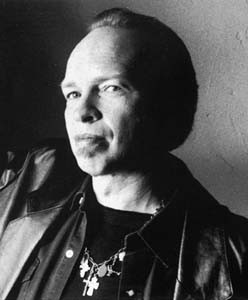
Scott Weiland

0

One Man’s Band


Scott Weiland–still thinking, and singing, about drugs.


Stone Temple Pilot Scott Weiland’s solo debut beats the odds

By Gina Arnold

WHO COULD have imagined that , singer for the Stone Temple Pilots, would put out a decent solo record? The odds were certainly against it. After all, better men than he have failed at the task of transforming themselves into solo artists. Paul McCartney has produced nothing that compares with his work with the Beatles. Robert Plant’s deficiencies are apparent without Led Zeppelin behind him. That Weiland has succeeded where others have failed is astonishing.

Then again, Weiland may be benefiting from lowered expectations. Not only was he in a crappy, derivative band, but what talent he had–a resonant voice and a certain ability to mimic other popular idioms–was squandered in untimely drug busts, various rehabs, and several aborted tours.

Nevertheless, 12 Bar Blues (Atlantic) is a fairly good record, better even than STP’s last album, Tiny Music. Ironically, this may be because STP–first of the Nirvanabes to plague the early ’90s–lacked its own artistic voice. Back then (you know, in 1995, when dinosaurs ruled the earth), Weiland’s personal style was merely a pastiche of other sources–notably Eddie Vedder, from whom he was nearly indistinguishable. 12 Bar Blues, however, is an interesting collage of weird production tricks topped by Weiland’s sinuous and booming voice.

Solo, Weiland’s main influences seem to be Big Beat techno and the Beatles’ Revolver, which turn out to be an inspired mix. Much buzz and scratch is built into these songs, which renders them a less-hackneyed listen, and the inclusion of a theremin adds an extra spooky jolt to this moody album. Weiland’s new sound actually borders on trip-hop; he’s gradually turning into the Beth Gibbons of grunge (Gibbons being the passionate but cold voice of Portishead).

Lyrically, Weiland now comes across as far more sincere than he ever did before. Unfortunately, most of his songs are about drugs–using them, missing them, coming off them, or waiting for them to arrive–and it’s positively frightening how much more passionate he is on the topic than he was on the subject of rape in “Sex Type Thing.”

Weirdly, some of these songs are reminiscent of the ’60s band Moby Grape, though more often Weiland’s vocal style strangely echoes Alice in Chains’ Layne Staley. On the jazzy lounge number “Lady, Your Roof Brings Me Down,” Weiland sings with a depth of skill that’s surprisingly effective.

“Barbarella” is a cool song, as is “Cool Kiss,” despite a chorus lifted in part from a U2 song. Incidentally, all these songs are produced to within an inch of their lives. The production is credited to Weiland and Blair Lamb, but famed U2 sideman Daniel Lanois plays on the album and is credited with “extra recording.”

In short, despite its charmlessness of intent, 12 Bar Blues is a fascinating, textured record that’s easy to admire and easy to listen to. But the fact that Weiland has pulled a good record out of a hat, so to speak, points up an inescapable moral about rock.

And that is the endless tolerance the music industry has for addicts. Although he is apparently now clean, Weiland has a career of infidelities and failures that does not really merit the amount of rope given him–and no other business would have given it to him.

A man who lost his company millions in investments through carelessness and drugs would hardly be issued another blank check. But the music biz has a deep-seated belief that drug use enhances people’s creativity, and, alas, Weiland’s success almost bears out the theory. He’s certainly willing to take more chances than one would expect.

From the April 16-22, 1998 issue of the Sonoma County Independent.

© Metro Publishing Inc.
The Scoop

Sex & Death

By Bob Harris

THERE’S AN OBSCURE religious group whose beliefs are so extreme you may have trouble believing they’re real. (The story came to my attention courtesy of The Progressive and Church & State magazines and the investigative newsletter The Consortium, all of which rule.)

The group wants to replace the U.S. Constitution with a theocratic government not unlike Iran’s under the ayatollah: all laws would descend from their leader’s version of God’s law. The penalty for adultery? Death. Fornication? Death. Homosexuality? Death. Heresy? Death. Apostasy? Death. Red wine with white meat? Death. Bogarting the TV remote? Death. White shoes after Labor Day? Death.

OK, I’m obviously kidding about the last three, but from the first five you pretty much get the idea.

They call themselves “Christian Reconstructionists,” although I don’t remember anything in the Gospels about Jesus running around sentencing people to death. Maybe I should check again. There seem to be more versions of Christ these days than there were when I was a kid.

The main guy who came up with this stuff, R. J. Rushdoony, has every right to do so under the Bill of Rights he so dislikes, and so far no one has declared his house a “compound,” which is a good thing if you dig free speech.

(Still, if Rushdoony advocated replacing the government with, say, a communist dictatorship instead of a religious one, the FBI would probably react with slightly greater interest. Evidently some forms of repression are preferable to others.)

In 1982, Rushdoony was on the founding board of a certain legal group created, in Rushdoony’s later words, to pursue “our plans.” This legal group’s founder had earlier done research in Rushdoony’s library and published a book called The Separation Illusion, describing religious coexistence as “blasphemy,” deriding public schools as “satanic,” and portraying Jews, atheists, and other people who believe in the separation of church and state as “sons of darkness.” Which presumably would include Thomas Jefferson, if he were still around.

And here’s the punch line: The author of The Separation Illusion is none other than John Whitehead–the wrinkly guy who shows up representing Paula Jones several times a week on Nightline or CNN. (Paula’s new slogan: “Actionable tortsnever had ’em, never will.”)

And the legal group that Whitehead founded, with support from R. J. Rushdoony, is the Rutherford Institute–the very folks who, according to the Los Angeles Times, have provided the quarter of a million dollars’ worth of legal work recently driving the Paula Jones case.

Whoa. Now, to be fair, Whitehead says he’s not now a Reconstructionist himself and Rushdoony is no longer on the Rutherford board.

OK. But even so, Whitehead has reportedly flat-out asserted that democracy is “heresy” (which Rushdoony might therefore in turn consider a capital offense), that “Christians are a spiritual race chosen to serve as the sons of God,” and that, for those who don’t care for that arrangement, “doom happens to be their lot.”

Yikes.

It ain’t easy to make Bill Clinton look like the lesser of two evils, but shazam …

I DRIVE a 10-year old car with 100,000 miles on it and only one headlight. It’s teaching me a lot about race relations in this country.

(OK, that probably doesn’t make any sense yet, but if you’re a longtime reader you know I don’t let that stop me. Come on along for the ride.)

And by the way, if you don’t already know, I’m about as white as a Tic-Tac factory owned by the Promise Keepers: blond hair, blue eyes, pale skin, born in Ohio, rugby shirts from the Gap. Any whiter, I’m an Osmond. You need to know that to understand what follows.

See, my old car with only the one headlight is technically violating some safety law or another, which means I could get pulled over and hassled at any time. Y’know what? That thing blew more than six months ago, and the police haven’t batted an eye at me. I’ve driven past hundreds of cops in a dozen states, and I’ve never had a problem.

Most of my friends are white, and none of them ever say anything, either. It doesn’t even cross anyone’s mind. No big deal.

But darn if almost every black person I drive with–friend or new acquaintance, here in L.A. or on the road–doesn’t immediately point out the blown headlight, since it must have just happened, or else I would have gotten it fixed already. In their world, driving around with one headlight is just asking for trouble.

Is it possible that their experiences with police just are a little different from mine?

Yup. A recent study looked at a random stretch of I-95 in Maryland, and black Americans were pulled over five times more often than their numbers would indicate. Last week, the House Judiciary Committee recommended the Congress should ask the Justice Department to follow up with a broader study.

Personally, I don’t need to wait for the Justice results. The difference is so obvious you only need one light to see it.

From the April 9-15, 1998 issue of the Sonoma County Independent.

© Metro Publishing Inc.
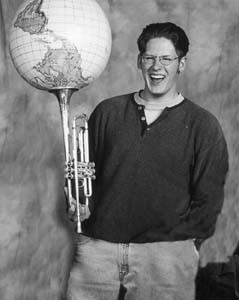
Johnny Steele

0

Steeling Laughs

Michael Amsler


Johnny Steele breaks into radio–
and breaks out onstage

By David Templeton

WHILE listening to Johnny Steele’s Friday morning “party” show, on San Francisco’s Live 105 FM radio station–with its rowdy, raucous, in-studio audience and the coffee-fueled antics of numerous guest comics–one can’t help but paint a certain mental picture of what all this wildness must look like in person. A big, spacious seating area–like the one on David Letterman’s show, probably–looking down on Steele and his cohorts reclining in comfy chairs all in a row. People would leap up and run around on a regular basis; snack-food projectiles would be a common event.

It is a testament, therefore, to Steele–and in part to the legendary Alex Bennett, who pioneered the immensely popular drive-time comedy show and whose recent departure opened the door for Steele’s 4-month-old show–that so much giddy enthusiasm and high-decibel mayhem could blast off from what turns out to be a very tiny launching pad.

The audience–about 25 people crammed into folding chairs in and around the station’s multicubicled office area–in fact observes Steele and guests through a sliding-glass window that looks into the cramped and cluttered studio, where everyone clusters tightly together around a microphone-studded desk. The very unlikeliness of this jerry-rigged arrangement only adds to the sense of celebration everyone apparently feels.

All this energetic hullabaloo seems partly to be the small group’s attempt to compensate for its size, and to express its delight at being an arm’s length away from Steele, one of the Bay Area’s strongest and freshest young comedians.

“It was hard at first,” Steele admits after the show, referring to his switch from the late-night comedy clubs where he started out to these early-morning radio gigs in so strict and claustrophobic a setting. “Then I sort of realized that the reason you become a comic to begin with is that you’re out with your buddies in a car somewhere and you’re the one who’s always cracking the jokes.

“It wasn’t always 100 or 200 people in a club. It was me, a foot away from you, making you laugh.”

Only today the jokes are broadcast to a potential audience in the tens of thousands, many of whom–at least at first–were hostile to this perceived interloper coming onto Alex Bennett’s hallowed turf.

“It was weird coming in after Alex,” concedes Steele, who was a regular guest on the old show. “He is a legend. I mean, there are several bios where it’s noted that Howard Stern was at least partly inspired by Bennett. I was accused, by some people, of stealing his show,” he adds, wide-eyed and shrugging. “How do you steal a radio show?”

For the record, Bennett–whose ratings had been slipping, in part owing to his increasingly long, unfunny rants about high-tech computer modems and the like–departed Live 105 some time before Steele was asked to develop his own morning program. Though Steele is still tinkering with the details of the show, it appears that his fledgling effort is paying off; ratings are up for the first time in years.

“My goal,” he grins, “is to make the show both smart and zoolike. It’s a tricky balance to maintain, but it seems to be working out pretty darn well.”

SONOMA COUNTY will get a taste of Steele’s genre-busting showmanship this weekend when the Luther Burbank Center plays host to his variety-style Comedy Breakout show, featuring fellow comedians Scott Capuro, Sue Murphy, Robert Hawkins, and whatever tomfoolery Steele thinks up by showtime.

“It’s still being fleshed out,” he laughs. “But basically it’s gonna be a comedy show with a live band and a couple of off-the-wall side things. I’d like to do a stage version of the 10-second rant we do on the morning show. I’ll line up 20 people from the audience and give them each 10 seconds to rant about anything they want. I’ll throw in a few other surreal surprises.

“Actually, I have no idea what will happen, and I can’t wait to see.”

Since entering the Bay Area comedy scene in the late ’80s, the Pittsburgh-born (East Bay version) Steele has built a reputation as a comic at odds with the somewhat staid stand-up formula that comedy clubs have employed for years–three comics performing in succession on an otherwise empty stage in front of a lone mike. Early on, he began playing with the genre, incorporating live music into the act, allowing his routines to be interrupted by such bizarre sights as a gibberish-spewing woman pushing a shopping cart across the stage.

“I get bored with straight stand-up. I call what I do ‘New Age vaudeville,'” he says. “It shakes up the old formats we expect from comedy shows.” It is possible that Steele’s lifelong urge to combine elements that seem incompatible is the fuel that powers his peculiar brand of comedic genius.

“I come from a blue-collar town and I played football in high school,” he laughs, “but now I’m a vegetarian leftist with gay friends. I don’t fall into any preconceived, marketable niche. So I’ve had to make my own.

“That’s the way I like it.”

Johnny Steele hosts the Comedy Breakout on Saturday, April 11, at 8 p.m. at the Luther Burbank Center, 50 Mark West Springs Road, Santa Rosa. Tickets are $15. 707-546-3600.

From the April 9-15, 1998 issue of the Sonoma County Independent.

© Metro Publishing Inc.

Talking Pictures

0

Wondering Souls


Afterdeath expert Sukie Miller on life’s big questions, and the new film ‘Wide Awake’

By David Templeton

In his ongoing quest for the ultimate post-film conversation, David Templeton invites best-selling author and after-death counselor Sukie Miller, Ph.D., to see the new movie Wide Awake, in which a young boy mourns the passing of his beloved grandfather and seeks the answers to a couple of basic questions.

“I want you to see the duck,” Sukie Miller asserts, when I arrive at her hillside home to escort her to the movies. “I think it will tie in well with the theme of the film.” She leads me along the driveway to an adjoining house and a sliding-glass door. There on the gravel is a duck, bright white and disheveled, standing close to the glass, staring forlornly at his own reflection.

“His mate was killed yesterday,” Miller explains, her face displaying a compassionate understanding of the web-footed mourner’s grief. “He won’t stop looking for her. Every time he sees his reflection, he goes up to see if it’s her. It’s so sad, it’s breaking my heart.”

As we drive away a few minutes later, I glance in my rear view mirror.

“Is he still there?” Miller asks.

“He’s still there,” I reply as he tentatively presses his bill against his reflection.

She’s right. It kind of breaks your heart.

It’s a subject Miller is more than acquainted with. An expert on the multicultural beliefs surrounding the mystery of death and whatever lies beyond it, Miller is a psychotherapist who regularly counsels people searching for assurances about loved ones they’ve recently lost. Once the director of education at Big Sur’s legendary Esalen Institute, she is now the founder and director of the Institute for the Study of the Afterdeath, and is the author, with recently deceased Sonoma County writer Suzanne Lipsett, of the best-selling After Death: Mapping the Journey (Simon & Schuster, 1997). An admitted agnostic, Miller will not say what she believes might wait for us after we shuffle off our mortal long johns; it is the possibilities that interest her.

Wide Awake–the film we are about to see–follows the endearing spiritual search of a 10-year-old boy (Joseph Cross) whose grandfather has recently died. Wanting to know where the devoutly religious old man (Robert Loggia) has gone–and whether or not he is all right–the boy begins an earnest interrogation of his parents, his friends, and all the priests and nuns (including Rosie O’Donnell as a well-meaning science teacher) at his parochial school. Ultimately, after attempting to master all the great religions of the world, he finds his answer, though it’s not the answer that anyone, the filmgoing audience included, is expecting.

“God! I’m a wreck!” Miller exclaims, as the credits roll. Smudging tears from her eyes, she adds, “I’ve tried to stay away from sad movies ever since seeing The Bear.” In that 1989 film, a baby bear watches as his mother is buried in an avalanche. “I was a wreck then, too,” she adds.

A few minutes later, hands wrapped around a warm cup of coffee, Miller has more or less composed herself.

“If I could, I would have this movie shown in every third-grade classroom in the country,” she says. “I’ve actually proposed a curriculum, for the third-grade level, that deals with death and various cultural notions of where people go when they die.

“Every classroom has a gerbil in it, right?” she continues. “Or a hamster or a turtle or a fish or something. And every year one of these classroom pets dies. It’s the perfect time to explore the mystery of death with kids, because sooner or later they’re going to have to deal with it when a family member, a grandparent possibly, passes away. Kids deserve to have their questions answered.”

“And those questions are … ” I wonder.

“The same questions as in the movie,” she replies. “He wanted to know, ‘Where is my Grandpa?’ And then he wanted to know, ‘Is he OK?’ Those are the basic questions. They are the first questions I am ever asked when I work with a new client, and when it’s the parents of a child who’s just died, these questions are very important.

“Of course, I can’t answer those questions. I’m not a psychic. But I can help them incorporate their own beliefs of the afterdeath until they are able to answer the question for themselves.”

“Some film critics have said that this kid is too sophisticated to be a believable 10-year-old,” I mention.

“Not true,” she insists. “First of all, there’s nothing sophisticated about the questions he asks. And kids are smart. They don’t like it when someone is giving them an unsatisfying answer, and they will keep asking more and more complex questions until someone tells them something that makes sense.” She pauses.

“I loved that scene in the toy store,” she goes on. “Surrounded by all those toys. ‘They used to seem magic to me,’ he says. ‘But now they just seem like pieces of plastic.’ With nothing to believe in, his world had lost its magic.

“That’s what it’s all about, really. Its believing in magic. Magic is a child’s word for what we adults might call … what would we call it? It’s the mystical. That which cannot be explained by science or by physics, but which might actually exist anyway. And for the boy in the movie, that magic was gone.” With a slowly building smile that turns into a giggle, she adds.

“But he gets the magic back in the end, doesn’t he? That’s my kind of people.”

Web extra to the April 9-15, 1998 issue of the Sonoma County Independent.

© Metro Publishing Inc.
Spins

0

Sonic Circus

Post-rock phenoms and a ramblin’ man

Izzy Stradlin
117 Degrees
(Geffen)

Tortoise
TNT
(Thrill Jockey)

The Who
Odds & Sods
(MCA)

IT’S STRANGE that hip theory periodically proclaims the “death of rock” despite popular proof otherwise. The rise of a DJ-oriented underground of electro-dance soundscapes supposedly signals a remission for songwriters and old-school bands; however, scores of guitar-based and song-focused rockers like Marcy Playground, Third Eye Blind, Matchbox 20, and Sugar Ray are enjoying the kind of platinum sales and mass airplay that has eluded post-rock artists. The most visible acts in electronica–Prodigy, the Chemical Brothers, and Moby–come on like rock stars and sound like driving rock ‘n’ roll. And much of the spiritual core of classic rock is the same sense driving the post-rock/DJ underground to free itself from rock structures by reveling in pure sounds.

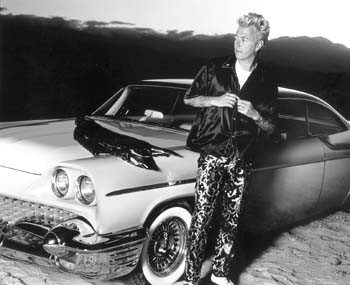
This isn’t about techno replacing alt-grunge; it’s about how fluently pop acts speak an old language or how clearly they create new ones. On his second solo venture from his rhythm guitar role in Guns n’ Roses, Izzy Stradlin speaks plain English in the form of a Stones-based groove featuring country-blues slide guitar. Stradlin lacks the vocal firepower of Axl Rose, but ironically, like the post-rock acts, his disc isn’t about his songs; it’s about sonic pleasure. Stradlin’s achievement isn’t that’s he’s cutting-edge, but that he uses a vocabulary where rednecks, punks, and hippies can find common ground.

Tortoise is more tangible than usual on TNT, but the post-rock icons still sound like a tree falling in the forest: If they speak in obtuse tongues, can we hear anything? TNT is definitive post-rock–formless compositions, odd arrangements, abstract quirks rather than hooks or momentum. Tortoise’s idea is that a loose, kitchen-sink approach will yield sonic adventure. But by rejecting reference points, they’ve made themselves not only unintelligible, but worse–uneventful.

So, if the new boss is dysfunctional, why not meet the old boss? The Who’s 1973 disc Odds & Sods was one of rock’s first rarities packages, and this reissue adds 12 more tracks to the original 11. From their R&B roots to their glory-era anthems, the Who blazed through any tension between tradition and experiment. Their insistent in-your-face inspiration is a value held by classic rock, yet their sonic circus and Pete Townshend’s conceptual compositions opened doors for post-rock values. The FM-staple “Long Live Rock” offers a clear translation: For one moment in the abruptly somber bridge, Roger Daltry cries “Look ahead–rock is dead.” What comes next? Keith Moon’s pounding drum cascades, Townshend’s slashing power chords, and a honky-tonk piano: the sounds of rock very much alive.
KARL BYRN

Ramblin’ Jack Elliott
Friends Of Mine
(Hightone)

THE “GREATEST living folk singer” tag is mighty heavy baggage to haul around. But Elliott has responded by recording some of his best work in decades, having earned a Grammy for 1995’s South Coast. This time out, he’s joined by some of the folks whom he’s influenced during his five-decade career. Arlo Guthrie, John Prine, Guy Clark, Emmylou Harris, Peter Rowan, Nanci Griffith, Rosalie Sorrels, Jerry Jeff Walker, Tom Waits, and Bob Weir (“Friend of The Devil”) duet on 11 cuts, with instrumental backing from Norton Buffalo, Tom Rigney, and Roy Rogers (who also produced the album). Jack steps up for a solo rendition of Tim Hardin’s “Reason to Believe” and on “Bleeker St. Blues,” which he dedicated to his early protégé, Bob Dylan. Though it may seem contrary for a folk legend, it should be Grammy time again.
TERRY HANSEN

From the April 9-15, 1998 issue of the Sonoma County Independent.

© Metro Publishing Inc.

Frank Riggs

0

Rig(gs)marole


Janet Orsi

Rep. Frank Riggs, R-Windsor, doesn’t exactly fit the standard portrait of a dark horse. True, his chances for garnering the Republican nomination for U.S. Senate–not to mention winning in November–seem slim. But he’s no unknown quantity, at least locally.

He’s Sonoma County’s dark horse with a bright red blanket, having benefited early in his career from another dark horse: he ascended to Congress in 1990 after third-party candidate Darlene Comingore siphoned 15 percent of the liberal votes from Democratic incumbent Doug Bosco.

Why is Riggs running for Marin Democrat Barbara Boxer’s U.S. Senate seat? After all, he’s in a plum position in the House of Representatives, a Newt Gingrich cozy who has been on powerful committees like Economic and Educational Opportunities, Appropriations, and Transportation and Infrastructure.

The official party line for Riggs’ bid to unseat Boxer isn’t forthcoming, since neither his Capitol Hill p.r. flak Beau Phillips nor his Napa campaign headquarters media rep Pam Simpson returned phone calls (evidently, the Riggs camp is still sore about the May 1995 Independent article “Second Time Around: Has Rep. Frank Riggs Cut a Deal with the Devil?”).

“He’s going to tell you he thinks he can win, that it’s time to move up, that he’s the most experienced, blah, blah, blah,” says Andy Merrifield, professor of political science at Sonoma State University. “[But] he’s in big, big trouble.”

The truth is that Riggs is saving face: He’d probably lose if he ran for re-election in the 1st Congressional District.

“In [state Sen.] Mike Thompson he [would have faced] far and away the toughest candidate since he first ran [in 1990],” Merrifield says. “Thompson can raise a ton of money, he’s a very respected member of the Legislature, has great name familiarity, is a mainstream Democrat. Thompson is a great candidate for the district.”

For Riggs, running for the U.S. Senate may be politically strategic, even if he doesn’t win. “There’s no shame in trying to move up and losing,” Merrifield says. “It’s not as humiliating to shoot for the Senate as to say, ‘I can’t run for re-election because I might lose in my own district.'”

Riggs’ reach may very well exceed his grasp as early as the June primary. Two candidates for the Republican nomination already have a jump on him: Darrell Issa, a car-alarm businessman with millions to back him; and Matt Fong, state treasurer and Republican insider.

“The Republican Party nationally would love to beat Barbara Boxer, and is disappointed that no Republican has emerged that is a shoo-in,” Merrifield says. “I’m not privy to any insider information, but if the Republicans are looking for someone to groom for ’98, Frank Riggs wouldn’t be the first choice. He’s too obscure.”

Riggs has very little statewide name recognition– except for the pepper-spray incident. His position that zealous demonstrators holed up in his Eureka office deserved to have liquified pepper spray dabbed into their eyes by local law enforcement officers did get him some state and national publicity–but not the kind that necessarily helped him in public opinion polls.

Riggs may have yet another agenda, one that lies in between winning and waning: Perhaps he’s running for Senate simply to network and make contacts at a level of increased visibility.

“Every election [Riggs] has had, he barely won … and he lost in ’92,” Merrifield says. “Perhaps he’s tired of elected office.

“That doesn’t mean he’s tired of politics,” Merrifield adds. “If the Republicans capture the White House in the year 2000, perhaps he could get some appointment in the Interior Department. He’s been loyal.”
J.W.

From the April 9-15, 1998 issue of the Sonoma County Independent.

© Metro Publishing Inc.

Australian Wine

0

Balancing Act

Michael Amsler


Sonoma County says g’day to Aussie wines

By Bob Johnson

THE FIRST SONG my then-infant daughter ever learned wasn’t “Mary Had a Little Lamb” or “It’s a Small World” or even “Jingle Bells.” Nope, the first song my daughter was able to sing, word for word, from start to finish, was “Physical,” the somewhat provocative tune performed with breathless yearning by a previously lily-white singer named Olivia Newton-John. Hearing my little 3-year-old sing, in perfect harmony, “Let’s get physical, physical, I want to get physical” is a memory to which few fathers can lay claim.

The re-release of Grease, the campy musical in which Newton-John starred with John Travolta, takes me back to my younger days, and reminds me that there’s a lot more to Australia than kangaroos and boomerangs. There’s Olivia. . . and fine wine.

Yes, Australia now is the world’s 11th largest producer of vino, and a growing number of its bottlings are truly world-class in quality. Australians are known for being fiercely independent people, and that characteristic has led to pioneering techniques in winemaking and quantum leaps in quality. Even here in Sonoma County the Australian influence is felt on a daily basis.

It was back in May of 1986 that John Gay, a veteran of the wine business after working years for the Sebastiani family, transformed a room of his home into an office and began marketing the wines of Australia’s Rosemount Estate in the United States. It was no easy task. Californians had developed a taste for California wines, New Yorkers preferred Bourdeaux, and hardly anyone knew that grapes were grown in Australia.

So how did Gay approach the monumental task of educating the wine-drinking public?

“I began pulling corks,” he says simply. “I’d call upon distributors or wine merchants that I knew and offer to let them taste what I was selling. Some simply turned me away; they wouldn’t even try the wines. Others were more cordial, liked what they tasted, and soon were carrying our line.”

From a mere 1,800 cases sold in the United States that first year, Rosemount’s shipments to the States this year have swelled to 700,000 cases. That’s significant, not to mention satisfying, growth for Gay, who now operates out of offices just off the square in downtown Sonoma.

Gay located Rosemount’s U.S. headquarters in Sonoma for two reasons: It’s where he wanted to live, and most U.S. distributors come through town at least once a year, giving Gay an opportunity to meet with them and build long-lasting relationships.

FROM THE GET-GO, Gay believed the two Rosemount wine varietals that had the best chance of selling in the States were shiraz and Semillon. This surprised members of the Oatley family, the owners of Rosemont, who figured U.S. consumers would more likely prefer varietals with which they were familiar, such as cabernet sauvignon and chardonnay. “They probably were wondering, ‘What have we done hiring this guy?'” Gay reflects with a grin. “Especially considering a great deal of quality shiraz in Australia was just left hanging on the vines to rot each year.”

What was it about shiraz that caught the attention of Gay’s palate?

“It’s an easy-drinking, full-flavored red wine, and it’s balanced,” Gay explains. “I can’t overemphasize that last quality: balance. It’s the hallmark of Australian wines, and it’s why they’re so versatile; they can be enjoyed either with food or by themselves.”

It took some time and some favorable press, but today shiraz has become well known among wine lovers–a fact not lost on a growing number of California vintners. Here, the shiraz grape is known as syrah–not to be confused with petite sirah, which is an entirely different animal–and the number of acres planted with syrah has been growing enormously.

At one time, Gay eschewed taking credit for syrah’s blossoming popularity. “I used to be modest about it,” he says, “but what’s the point? If it hadn’t been Rosemount, it would have been some other Australian winery. We just happened to be first in and best-dressed.”

Still, California syrah plantings remained nearly nonexistent until 1989, when Geyser Peak Winery in Geyserville hired Aussie Daryl Groom, the former Penfolds winemaker responsible for the most revered wine Down Under, Grange Hermitage.

“When Daryl showed up, everything changed,” Gay recalls. “Daryl wrote the book on shiraz. He understands it. And by his example, he lifted the quality of all California wines, not just syrah, by producing wines with wonderful flavor and balance–wines very similar in style and quality to Australian wines.”

At Geyser Peak, the syrah bottlings are known as shiraz, a tip of the hat to Groom’s heritage. And even as Groom’s winemaking duties have been supplanted by management concerns, his style remains intact thanks to the hiring of Mick Schroeter.

“When our growth and the demand for our wines made it obvious that I needed some help, I didn’t want to have to spend hour upon hour training somebody,” Groom says. “I told our board that I knew the finest young winemaker in Australia, and they let me go out and get him. Mick is the person who has really put the icing on the cake for us, and I expect that our wines will just keep getting better and better, as long as Mother Nature cooperates with the weather.”

Is there a style of Australian winemaking that is distinct from American techniques?

“Absolutely,” asserts Schroeter. “We tend not to do extended skin maceration. This helps emphasize the fruit flavors in the wine. And especially with shiraz, we use American oak barrels as opposed to French, because the American oak provides a certain richness that complements the wine. It’s all about balance.”

There’s that word again. And Groom picks right up on it.

“‘Balance’ is part of our vocabulary every time we make wine,” he says. “It comes from starting out in Australia, where, before Australian wines became popular in the States, most wines were consumed at the point of purchase–in restaurants, or at home a few hours after they were bought at a store. The wines had to be good as soon as they were released, and you attain that kind of quality only one way–with balance.”

There’s something else which sets Australian winemakers apart: open-mindedness. “One of the reasons we’ve been successful is we’re not afraid to try different things,” Groom says. “That goes for blending different varietals, like Semillon with chardonnay, shiraz with grenache, or shiraz with cabernet. Our experiments may not always be successful, but there is nothing in winemaking that I would not try to do at least once.”

That goes for food-and-wine pairings as well. What do Geyser Peak’s winemakers like to eat with shiraz?

“I like it with barbecued food, a great piece of steak, or more gamey dishes like kangaroo or emu,” Groom says. “I love it with slightly seared medallions of kangaroo and a red-wine or Port sauce.”

As for Schroeter, he prefers a dish that is a bit more common here in the States: lamb. “It’s also good with spicy Asian food,” he adds.

And what about Rosemount’s Gay? “This may surprise you,” he says, “but the best food pairing I’ve had with shiraz is sushi. Fresh, raw tuna and shiraz is a marriage made in heaven. They work magically together. And it all goes back to the wine being in perfect balance.”

So while we may be hearing Olivia Newton-John singing, “Grease is the word . . . is the word . . . is the word …” over the airwaves for the next few weeks, Messrs. Groom, Schroeter, and Gay likely will be humming a slightly different tune:

“Balance makes the wine … makes the wine … makes the wine. …”

From the April 9-15, 1998 issue of the Sonoma County Independent.

© Metro Publishing Inc.

Adding Machine

In the Black


Charlie Dotti

Cogs: Michele Olmstead and Eric Thompson spin out in The Adding Machine.

SCRT’s ‘The Adding Machine’ tots up

By Daedalus Howell

THE MATH IS SIMPLE enough to do in your head: a good script plus a tight cast equals an impressive play. Sonoma County Repertory Theatre’s splendid production of playwright Elmer Rice’s The Adding Machine (directed by Jennifer King) definitely adds up.

Meet Mr. Zero, a hapless cog spinning aimlessly amid the broad strokes of Rice’s expressionistically drawn corporate world. Zero’s career as an accountant at a behemoth firm has languished at the bottom rung for 20 years, his marriage is a charade, and his witless neighbors are pressed from the same middle-class mold as he.

Originally staged in 1923, The Adding Machine is timeless testimony that, when unchecked, corporate culture can degrade the soul. Director King successfully underscores the imperishable core of Rice’s work and presents an impressive cautionary tale that will speak to all those clamoring over the walls of their cubicles.

Eric Thompson (a character actor par excellence) turns in an electric performance as Zero, a heartening and nimble motor-mouth who murders his overbearing employer (The Boss, robustly portrayed by Bill Harrison) with a bill spike when he is fired for requesting a raise.

Thompson’s Zero (duly punished and launched on a netherworld jaunt to salvation) is a hilariously endearing chump whose sad-sack antics speak of the spiritual costs incurred running the rat race. But despite his metaphysical infirmity, Zero manages to beam a dogged humanity. During a chilling comic sequence in the purgatorial quarters of a midlevel dispatcher of reincarnated souls (Harrison again), Zero discovers that he has been some order of slave in all his past lives. Having been subjugated by The Boss, pharaohs, and even primate alpha-males when in his original incarnation as a monkey, Zero is profoundly exasperated, and Thompson conveys this with unnerving credulity. Indeed, Thompson’s acting is so persuasive, it’s a marvel that talent scouts haven’t shanghaied him to Broadway.

Michele Olmstead plays Zero’s irascibly adorable co-worker Daisy Diana Dorothea Devore, whose secret love for Zero is enough for her to gas herself at the prospect of finding the executed accountant in the afterlife.

Olmstead, a fairly recent arrival to the Sonoma County stage (this is only her second show here), is an adept performer with keen comic ability. Her features contort elastically, her voice bounces in musical cadences, and, like Thompson, she can inspire empathy–upping the ante of Rice’s dialogue from punchy to poignant while never losing a laugh.

Also excellent is John Moran as Shrdlu, a matricidal denizen of the afterlife with an English brogue so thick that shoes could be made from it. Moran proves a superior comic talent as his Shrdlu gallivants throughout the Elysian Fields looking for retribution and being a preening nuisance to post-life paramours Zero and Daisy. Moran has a gift for infusing even the most banal utterance with comic verve and is truly a joy to watch.

Kudos to set designer Michael Mingoia’s economically inventive dressing of SCRT’s studio space–a spare rectangular box serves as a coffin, a dinner table, and, when appended with a crank-handle, a monolithic adding machine. The stage floor is strewn with large, painted numbers, the detritus of Zero’s crammed mind.

Jerrie Patterson superbly costumes the cast in duds that look as if they were culled from The Cabinet of Dr. Caligari. Drab and colorless, the ill-cut suits and listless skirts deftly underscore the characters’ psychic fatigue. White pancake makeup and heavy dollops of black exhume the players’ cheekbones and hollow their eye sockets so that they look like the citizenry of an Edward Gorey cartoon.

Though the cast may look like the well-coifed undead, SCRT’s The Adding Machine teams with vitality and is equal to the cardinal number of 9 plus 1.

The Adding Machine plays Thursday-Sunday through April 18. Thursday-Saturday at 8 p.m.; Sunday at 7 p.m. Sonoma County Repertory Theatre, 415 Humboldt St., Santa Rosa. Tickets are $12. 544-7278.

From the April 9-15, 1998 issue of the Sonoma County Independent.

© Metro Publishing Inc.

The Scoop

Cuban MenaceAnd other stuff we'll never knowBy Bob HarrisI HAVE A BUDDY in Ohio who is one of the most conservative guys I know. The Berlin Wall came down almost a decade ago, and he's still a vigilant anti-Communist. Thank goodness, because the international conspiracy really has its sights set on Ohio. So he calls me up last week,...

Usual Suspects

Porno ProbeCounty jail guards targeted for downloading sexually explicit Internet material while on dutyBy Greg CahillIN A SEX SCANDAL that has shaken the beleaguered Sonoma County Sheriff's Department, more than two dozen county jail guards have been investigated for accessing pornographic websites and sexually explicit chat lines while on duty, the Independent has learned. At least one correctional...

Scott Weiland

One Man's BandScott Weiland--still thinking, and singing, about drugs.Stone Temple Pilot Scott Weiland's solo debut beats the oddsBy Gina ArnoldWHO COULD have imagined that , singer for the Stone Temple Pilots, would put out a decent solo record? The odds were certainly against it. After all, better men than he have failed at the task of transforming themselves into...

The Scoop

Sex & Death By Bob Harris THERE'S AN OBSCURE religious group whose beliefs are so extreme you may have trouble believing they're real. (The story came to my attention courtesy of The Progressive and Church & State magazines and the investigative newsletter The Consortium, all of which rule.)The group wants to replace the U.S. Constitution with a...

Johnny Steele

Steeling LaughsMichael AmslerJohnny Steele breaks into radio--and breaks out onstage By David TempletonWHILE listening to Johnny Steele's Friday morning "party" show, on San Francisco's Live 105 FM radio station--with its rowdy, raucous, in-studio audience and the coffee-fueled antics of numerous guest comics--one can't help but paint a certain mental picture of what all this wildness must look like...

Talking Pictures

Wondering SoulsAfterdeath expert Sukie Miller on life's big questions, and the new film 'Wide Awake'By David TempletonIn his ongoing quest for the ultimate post-film conversation, David Templeton invites best-selling author and after-death counselor Sukie Miller, Ph.D., to see the new movie Wide Awake, in which a young boy mourns the passing of his beloved grandfather and seeks the answers...

Spins

Sonic CircusPost-rock phenoms and a ramblin' manIzzy Stradlin117 Degrees(Geffen)TortoiseTNT(Thrill Jockey)The WhoOdds & Sods(MCA)IT'S STRANGE that hip theory periodically proclaims the "death of rock" despite popular proof otherwise. The rise of a DJ-oriented underground of electro-dance soundscapes supposedly signals a remission for songwriters and old-school bands; however, scores of guitar-based and song-focused rockers like Marcy Playground, Third Eye Blind, Matchbox...

Frank Riggs

Rig(gs)maroleJanet OrsiRep. Frank Riggs, R-Windsor, doesn't exactly fit the standard portrait of a dark horse. True, his chances for garnering the Republican nomination for U.S. Senate--not to mention winning in November--seem slim. But he's no unknown quantity, at least locally. He's Sonoma County's dark horse with a bright red blanket, having benefited early in his career from another dark...

Australian Wine

Balancing ActMichael AmslerSonoma County says g'day to Aussie winesBy Bob JohnsonTHE FIRST SONG my then-infant daughter ever learned wasn't "Mary Had a Little Lamb" or "It's a Small World" or even "Jingle Bells." Nope, the first song my daughter was able to sing, word for word, from start to finish, was "Physical," the somewhat provocative tune performed with breathless...

Adding Machine

In the BlackCharlie DottiCogs: Michele Olmstead and Eric Thompson spin out in The Adding Machine.SCRT's 'The Adding Machine' tots upBy Daedalus HowellTHE MATH IS SIMPLE enough to do in your head: a good script plus a tight cast equals an impressive play. Sonoma County Repertory Theatre's splendid production of playwright Elmer Rice's The Adding Machine (directed by Jennifer King)...
11,084FansLike
4,606FollowersFollow
6,928FollowersFollow