
Talking Pictures

0

Wild Girl-Child


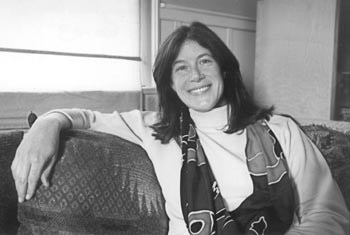
Feminist theologian Patricia Lynn Reilly cheers for Disney’s Mulan

By David Templeton

David Templeton takes interesting people to interesting movies in his ongoing quest for the ultimate post-film conversation. This time out, he turns to e-mail for an online discussion–with author Patricia Lynn Reilly–of Disney’s wonderful new animated adventure, Mulan.

“You have mail,” announces my computer.

“Hmmmmm. I imagined I might,” I woefully murmur, catching my breath and taking a seat before the softly glowing screen. indeed, I’ve received an e-mail from author Patricia Lynn Reilly, the best-selling author and esteemed feminist theologian with whom I had hoped to witness Disney’s latest animated miracle, Mulan. Unfortunately, owing to a series of last-minute changes and a volley of mutually unreceived messages, we each ended up arriving on time, but at different theaters. (Fortunately, Reilly had seen Mulan once already, in Berkeley)

Lacking any better plan, I decided to see the film without Reilly and pray that I hadn’t, you know, alienated one of my favorite authors.

Happily, Reilly is fairly philosophical about the mix-up.

“Dear David,” she writes. “We missed each other all the way around. Too bad.”

As for the film–an artfully crafted retelling of the ancient Chinese legend of Mulan, a daring and inventive young woman who, disguised as a man, became a national hero as a soldier in her country’s all-male imperial army–Reilly is pleased. “It was a fantastic movie,” she says. “I love Mulan! Women of all ages were cheering and laughing and clapping all the way through … at least in Berkeley they were.

“Let’s continue by e-mail,” she finishes, signing off with her initials, PLR.

After gaining world-wide prominence with A God Who Looks Like Me (Ballantine, 1996)–an insightful, icon-dissolving exploration of female-centered spirituality–Patricia Lynn Reilly found herself battling against forces within the publishing industry, forces that sought to push her next book to even greater heights of financial success by limiting its central themes and concepts to mass market standards. Reilly ended up returning the majority of a five-figure advance, choosing to publish and market the new book–Be Full of Yourself : the Journey from Self-Criticism to Self-Celebration (Open Windows Press, 1998)–on her own, rather than submit to further compromises.

A guide for women locked into feelings of inadequacy and fear, Be Full of Yourself includes dozens of stories told by some extraordinary women, women who overcame years of insecurity and self-criticism by learning to trust their own innate inner wisdom and strength. Like Mulan, Reilly and friends have answered the statement, “You can’t do that. You’re a woman,” with, “I can do it because I’m a woman. Just watch me.”

It is somewhat surprising that Disney–the same people who’ve traipsed out one formula-female character after another since Snow White and the Seven Dwarves–have ended up with a heroine as strikingly non-Disneyish as Mulan, a woman who–though she does fall in love with a handsome soldier–never sacrifices her own dreams and ideas in order to earn the protection of the man.

“Mulan represents the girl-child we all were in the very beginning of our lives,” Reilly writes in her next e-mail. “She tells the truth. She is creative. She is in her body. She feels her feelings. She is presented as a whole human being.

“She is full of herself.

“The audience is supporting her, cheering her on as she rebels against traditional socialization. For those of us who rebelled, she reminds us of our courage. For those of us who capitulated, she is our daughter, granddaughter and niece. In cheering her on, we are cheering them on. We hope with all our hearts that Mulan is able to hold on to her fullness, truth, intellect, originality, and strength. So many of us lost it … the fight was too hard. We capitulated and became formula females.”

An early scene shows Mulan enduring a humiliating session at the house of the village matchmaker; her face, per tradition for wives-to-be, is painted white with bright red lips, her hair ratcheted into a motionless knot atop her head. Later, when she secretly dons her father’s armor and sword, she gazes in pleasant recognition at what she sees in the mirror.

“Mulan refused to be twisted out of shape to marry, to become the quintessential female,” Reilly continues. “She longed for her true reflection. When Mulan looked at herself in the mirror after preparing as warrior, she was satisfied with her reflection … an androgynous, strong face peered back at her. This felt closer to her essence than the clown-like face she saw reflected upon returning from disastrous wife-training session in town.”

At one point in the film–after her secret is revealed and her bravery firmly established–Mulan turns down the offer of a seat on the Emperor’s council.

“Do you wish she’d have taken the position?” I send to Reilly.

“We were not told the rest of her story,” she replies. “Mulan matures into a wise old crone whose wisdom is sought after by emperors and generals. She and her husband join the council together as partners. They are committed to the peaceful resolution of political and personal conflicts. They teach/model for their country a new way of being … woman and man side by side as partners and allies.”

“So is Mulan an acceptable role model for modern girls?”

Reilly is enthusiastic in her response. “Mulan is a wonderful role model,” she sends back. “It is my prayer that the image of Mulan will linger within every girl-child’s heart and support her to hold onto herself, to descend into herself, to discover and explore the richness of her capacities, to vow faithfulness to herself.”

Reilly goes one further.

“I imagine Mulan whispering these words into the ears of every girl-child who sees the movie:

‘Your body is your own. Do not allow society to twist it out of shape.
Your body is strong. Move in it with courage.
Your thoughts are your own. Do not allow others to mold them.
Your thoughts are strong. They create an impact on others. Speak them with courage.
Your feelings are your own. Do not allow others to express them.
Your feelings are strong. They are to be shared. Express them with courage.
Your life is your own. Do not allow it to be shaped by the expectations of others.
Your life is strong. It will not fall apart. Live it with courage.
Exert, initiate, and move on your own behalf without guilt or shame.
Hold onto your power. Don’t let others squash it.
Hold onto your courage. Don’t let others preach it out of you.
Hold onto your independence. Don’t let others scare it out of you.
You were not created to please others.
Refuse to surrender except to your truest self and wisest voice.'”

From the July 2-8, 1998 issue of the Sonoma County Independent.

© Metro Publishing Inc.

Hair

Hairy Issues


Michael Amsler

High times: Hair director Michael Fontaine takes a smoke break (it’s just a prop, honest!) in the SRT costume shop.

What does SRT’s new staging of an aging ’60s musical say about ’90s morality?

By Patrick Sullivan

THERE, THAT’S ME,” says Michael Fontaine, a funny smile playing around the corners of his mouth. He’s pointing to one blonde head in a picture full of shaggy young men and women, hair down around their shoulders, covered with peace signs and headbands. They look like residents of some ’60s commune, natives of the era of peace, love, and understanding, but it’s not so. The picture was actually shot during a Summer Repertory Theatre production of the musical Hair in 1983, during that grand old period of Reaganomics, nuclear nightmares, and unemployed air-traffic controllers.

Don’t trust anyone over 30, went the popular saying. But now, Hair itself has reached that critical mark. It’s been three long decades since this countercultural creation of two unemployed actors first appeared onstage to provoke both acclaim and outrage. In 1968, the musical’s profanity, drug use, nudity, and general disrespect for authority sent Nixon’s silent majority into shivering fits. But surely that’s well behind us: Today’s TV and movies seldom pause in their high-velocity delivery of profanity, naked bodies, and drug use (even if the last is most often featured on commercials for Partnership for a Drug Free America). Is there anyone in the country who might still bother to be offended by the likes of Hair?

The Summer Repertory Theatre isn’t taking any chances. “Warning: ’60s morals and profanity” reads the promotional materials advertising this summer’s production of the musical, which opens July 8 under the direction of Michael Fontaine, who played the role of Claude in SRT’s 1983 production. What exactly does “’60s morality” mean, you may ask?

“I thought it was a succinct way of warning people that if they didn’t like the ’60s, they probably won’t like the play,” says SRT promotions director Mollie Boice, who was also a Hair cast member back in ’83. “It was a time when anything went, and we’re kind of at the other end of that spectrum today.”

SRT may have good reason to be concerned. If the ’60s were an era of social conflict, and the ’80s one of material excess, then the ’90s are surely the decade of “Let’s cut arts funding to the bone.” Indeed, the artistic community has watched with growing horror as cultural conservatives have mounted a relentless (and highly successful) assault on alleged indecency, along with, some say, artistic creativity itself.

An embattled National Endowment for the Arts clings to life by the fingernails. Theater companies mount thoughtful plays with gay characters to critical acclaim, only to face the prospect of losing public funding faster than you can say, “No special privileges for homosexuals.” So, what on earth would today’s conservative firebrands have to say about Hair‘s “Sodomy” song, a charming little ditty about … well, sodomy, among other things?

“I think conservatives would run shrieking from the building if they thought their money was going to fund something like this,” says Fontaine. “Everything that they are objecting to–nudity, challenging authority, the use of marijuana–Hair celebrates all those things.”

Still, Fontaine also acknowledges that others might find the musical a bit tame by today’s standards. Sure, fake joints–“No, they really are fake,” Fontaine insists–and draft cards get lit up with merry abandon, and a few swear words are tossed around Burbank Auditorium. Meanwhile, plays on San Francisco stages casually include simulated fellatio. If Hair isn’t pushing the envelope, isn’t the musical just an exercise in nostalgia?

Hair.

T. Chown


FONTAINE DOESN’T deny the appeal of “remember when.” Indeed, he embraces it. There is value in remembering the countercultural spirit of that time, he insists, even for younger members of the audience who might think that the Chicago 7 probably had Michael Jordan playing shooting guard. For proof of that value, he points to his young cast, who were generally overjoyed to be dealt a part in Hair.

“I was really, really excited,” says Joseph Hutcheson, who plays Berger. “That was the one show that I wanted to do out of the whole season. I love the music and I love the period, for some reason. I’ve listened to the soundtrack about a million times.”

Hutcheson, 23, hails from American River College in Sacramento. Like other SRT actors, he has parts in several shows this season, including Harvey. But his green eyes light up as he explains the unique appeal of Hair.

“It’s more like a rock concert,” Hutcheson says with a laugh. “You get to be in a musical and be an actor and be a rock star, all at the same time.”

Hutcheson also says the show’s message of love and freedom has deep resonance for him. That’s why he doesn’t have any problem with the musical’s nude scene, which by the way, may or may not happen, depending on how the actors feel each night. Fontaine has decided to leave the decision to disrobe up to each individual cast member.

“I’m happy to say that there are a number of actors in the show who seem incredibly uninhibited,” Fontaine says. “I had one actor who didn’t seem too sure about the nudity at first. But when I mentioned that everyone had a choice, he said, ‘Darn, we were hoping we’d be nude the whole show.'”

As for censorship, the director says that no authority at the college or anywhere else has tried to water down the content of the musical. Still, even such a fervent free-speech advocate as Fontaine gets a bit guarded when talking about public reaction to controversial theater.

“An organization like SRT, which is affiliated with the college, has a responsibility to its audiences, and a responsibility to present the junior college in a favorable light,” Fontaine says. “At the same time, we need to present ideas that are challenging and stimulating for the audience members, without overtly offending them.”

Controversy over content is also a very real issue to Hutcheson. When the young actor is asked whether censorship will be a problem in his career, he doesn’t hesitate an instant before predicting that it will. In fact, he’s already crossed that bridge: “I’ve encountered situations in theater at the college level where things have had to be … ,” he pauses, “… trimmed. It certainly bothered me as an actor. The audience should be responsible for their own minds.”

Both Fontaine and Hutcheson predict that SRT ticket holders will be in easy agreement with that relaxed philosophy. In any case, ready or not, audiences will soon get their first whiff of fake marijuana smoke. The only question is, What if Jesse Helms is in the front row?

“It just depends on what he came to see,” Hutcheson says, grinning. “If he came to see some good rock and roll, he’s going to have a great time.”

SRT’s production of Hair plays July 8-9, 11, 15, 18-19, 22, 23-24, 26, 28, and 30, and Aug. 4. Showtime is at 8 p.m. most days and 7:30 on Sunday, with 2 p.m. matinees on July 11, 18-19, and 26 and Aug. 4. Tickets are $14/adult, $11/youth and senior; discounts available at Sunday and matinee shows. Santa Rosa Junior College, Burbank Auditorium, 1501 Mendocino Ave., Santa Rosa. 527-4343.

From the July 2-8, 1998 issue of the Sonoma County Independent.

© Metro Publishing Inc.
Hello, Dolly!

Lookin’ Swell

Hello, Dolly!


Mountain Play’s ‘Dolly!’ long on fun

By Patrick Sullivan

CYNICAL HEARTS sometimes find Hello, Dolly! tough to take. Even for a musical, this is light-hearted stuff, full of sappy songs and extended dance numbers. Without a solid peg to nail down the fluff, this play could float right off the stage.

It’s a lucky thing, then, that this year’s Mountain Play production has the best sort of anchor imaginable: The riveting talent of Meg Mackay in the title role brings this ’60s musical to vibrant, solid life. With her 1,000-kilowatt smile, charming stage presence, and incredible voice, Mackay has no problem catching the collective eye of the audience. What’s more, this diva knows exactly what to do with that attention once she has it: She simply entertains the hell out of us.

The story itself is almost besides the point. Dolly is a cunning but kindhearted professional matchmaker who, it turns out, has herself been lonely since the death of her husband. “Some people paint, some sew, I meddle,” Dolly explains. But living through other people’s romances is not enough. She decides to get married again and sets her sights on the unlikely figure of the curmudgeonly “half-millionaire” Horace Vandergelder.

Forget Bill Gates or Ebenezer Scrooge. Vandergelder could eat those guys for breakfast and still have room for a Howard Hughes or two. A sexist tightwad who treats his employees like plantation field hands, Vandergelder is played with cheerful, convincing nastiness by Norman Hall. It’s hard not to like a man who goes around shouting such gems as “99 percent of the people in the world are fools, and the rest of us are in great danger of contamination.”

Why Dolly is so set on this lovable fellow is a bit unclear, but who cares? The chemistry achieved between Mackay and Hall is wonderful: The funniest moments in the play occur during their verbal sparring. Stir into this volatile mix Vandergelder’s romantically inclined employees (played by Michael Temlin and Eric Carrillo) and the stage is set for comedy.

There are some wonderful singing voices in the cast. Mackay’s powerful, agile vocals sometimes blows the ensemble off the boards. Michael Temlin, as the amorous shop clerk, also brings real life and power to his songs.

For those who prefer movement to harmony, Hello, Dolly! offers plenty of lively dance and slapstick fun. Featured dancer Lawrence Pech wasn’t there on opening night, but his partner Wendy Van Dyck still kicked up a storm during the hilarious restaurant waiter scene. Also, Eric Carrillo revealed some intriguing talent during his short dance numbers.

There is one uncredited cast member who also makes a serious contribution to this whole experience: The rolling vineyards of Jack London State Park provide the perfect frame for musical fun. If the audience was pining for any of the elements of the traditional indoor musical experience, you wouldn’t have known it on opening night at the Mountain Play.

People sat in the bleachers or on the lawn, rocked and clapped to the music, and occasionally remarked on Mackay’s sometimes startling resemblance to Carol Channing. If pure entertainment was the goal, Hello, Dolly! clearly hit the mark.

The Mountain Play’s production of Hello, Dolly! plays July 4, 5, 11, and 12 at the Vineyard Theatre in Jack London State Park, Glen Ellen. All shows begin at 5:45 p.m. Tickets are $22/general, $17/seniors and those under 18; children under 3 admitted free. 415/383-1100.

From the July 2-8, 1998 issue of the Sonoma County Independent.

© Metro Publishing Inc.
Reynolds Price

0

The Vision Thing

Author Reynolds Price finds redemption

By David Templeton

AT THE OUTSET of Reynolds Price’s lyrical new novel, Roxanna Slade–his 30th published work in 35 years–the story’s feisty, eponymous 94-year-old narrator playfully writes, “Every time somebody calls me a saint, I repeat my name and tell them no saint was ever named Roxy.”

It can also be said that no saint was ever named Reynolds, yet the noted author’s sterling literary reputation–coupled with public awareness of his long battle with a debilitating spinal cancer that led to his confinement to a wheelchair–has left the native North Carolinian with a certain unbidden aura of saintliness. In the eyes of numerous readers, the prolific author has more than met the requirements for canonization.

There’s even been a miracle or two along the way, though he’ll take none of the credit for that.

Price has written several plays and numerous volumes of short stories, poetry, and essays, but he’s best known as a novelist. His first novel, A Long and Happy Life, won the William Faulkner Award for notable first fiction in 1962, and his 1986 novel Kate Vaiden captured the National Book Critics Circle Award for fiction. Price, identifying himself as an “outlaw Christian,” has intimately questioned his own spirituality in a number of books, including his 1994 “cancer memoir,” A Whole New Life. In the breathtaking Roxanna Slade (Scribner’s; $25), Price gives voice to one of his most fascinating characters yet, as Roxanna–suspicious of the Church, yet deeply religious–reflects on the highs and lows of a long and more-or-less happy life.

Like Roxanna, Price admits to feeling uncomfortable inside a church–yet firmly believes he’s been touched by God. “Like most people who are getting along in their daily life, I hadn’t spent a whole lot of time paying attention to the spiritual aspects of my life,” Price smiles, positioning his wheelchair to face his guest within the sunlit San Francisco hotel room he’s occupying during his local stop in a cross-country book-signing tour. “And certainly since I’d dropped any regular connection with a religious institution since the age of 16, there wasn’t anything that resembled steady worshiping on my part.”

That changed when Price discovered in the spring of 1984 that he had a highly malignant tumor in the middle of his spinal cord. Suddenly, spiritual matters became pretty urgent. “All the medical opinion was that, at best, I had about 18 months to live,” he says. “Fourteen years later, here I sit.”

Ultimately, it was the experimental use of a newly developed laser scalpel that successfully removed the tumor from Price’s spine, after traditional surgery and radiation had failed. It was the intensity of the radiation treatments, in fact, that led to his paraplegia. That the pioneering technology came along when it did is, in Price’s view, no coincidence. “I believe God healed me,” he nods, his words coated with a honeyed drawl. “The laser surgery was the method he used.”

Price’s illness and recovery are eloquently recounted in A Whole New Life, a story that includes–and this foreshadows Roxanna Slade and her startling visions–a pair of miraculous mystical experiences of his own.

“The first was at a time in-between my having had surgery–where they were not able to remove the spinal tumor–and my beginning radiation,” Price recalls. “I’d been lying in bed, and then this alternate reality took hold: I had this vision that Jesus was pouring water down this huge incision in my spine, and he said, ‘Your sins are forgiven.’ And I thought, ‘That’s not what I want to hear,’ and I said, ‘Am I also cured?’ and he said, ‘That too.’

“My only other vision was later when I really got bad, and it appeared I was dying fast,” he continues. “I certainly was going paraplegic fast. I was lying there in the dark, and I just said, ‘How much more of this is there going to be?’

“And this voice very clearly said, ‘More.'”

Not long after, the laser surgery was proposed, and the tumor was gone at last.

Price, an educated, worldly-wise fellow by anyone’s standards, believes that these visions were from God, not from some recess of his subconscious.

“Why on earth, if my subconscious was inventing this to comfort me, didn’t it send me some more of these wonderful things? I remember as a teenage kid, sort of willing myself to have wet dreams,” he laughs. “But I couldn’t make myself have any more Jesus dreams.”

Price has received mountains of mail from strangers recounting similar uncanny experiences with illness.

“There’s a wonderful woman,” he recalls. “I think she’s 89. She lives in a Quaker home in Pennsylvania. She wrote me, not long ago, to say that she’d reread my cancer memoir. She said, ‘I’ve had a similar experience.’ She’d been undergoing some frightening medical tests. She was in the hospital, lying there one night … and all of a sudden she saw all these people gathered around listening to a man. She understood that the man was Jesus. And he looked up over the others, just looked at her, and said, ‘Yes.’ And she said, ‘Could you send someone to help me with the tests? They are very demanding.’

“And Jesus said, ‘How would it be if I came?'” Price pauses, surprised at the sudden emotion that’s arrived in his voice, briefly choking him up. “Isn’t that beautiful?” he finally asks. “I think I have to believe that these things have come from God. That’s what I want to believe.”

From the June 25-July 1, 1998 issue of the Sonoma County Independent.

© Metro Publishing Inc.
Comfort Food

0

Food Roots


Michael Amsler

Burrito supreme: The starchy filler of my youth is the comfort food of today.

Confessions of a Burrito Queen

By Marina Wolf

While chatting with a fellow writer recently about professional goals, I confessed a desire to write for a certain glossy food magazine. “Well, you better take some classes,” said this person of nodding acquaintance, “because you need to know about more than burritos to write for them.”

I froze, paralyzed by almost primal shame. There in front of God and my peers–well, one peer–my food roots were showing.

After hearing the story, a sympathetic friend crowned me the Burrito Queen. But underneath the defiant laughter, I remained hurt and bewildered. Weren’t they enough, the mango-jicama quesadillas I made, the home-baked bread, the intricate Indonesian salads? And why was I so upset by an offhand remark from this guy, who had never sat at my table (and never would after a thoughtless crack like that). The truth is, he managed to hit uncomfortably close to the mark. I’ve learned a lot about the upper crust of gastronomy–enough to want it, enough to do it well–but just apply a bit of pressure and all the filling comes out.

Individual foodways show where we come from as clearly as a map. I grew up in a family of seven children and frequently underemployed parents. We always had food on the table, but it was usually bland stuff with starchy filler–ketchup-based spaghetti, oatmeal- heavy meatloaf, and, yes, burritos–and there was never much in the cupboards.

Meanwhile I began to covet the sugary cold cereal and potato chips that lay about lewdly in other people’s kitchens, and learned how to wangle a share of the generous dinners served in the comfortable dining rooms of strangers. After the loud, tense meals at home, at which everyone was hyperconscious of exactly how much was on each plate and how much was left in the pot, take-out eaten absentmindedly in front of the TV at a friend’s house was a positive luxury. And the ignominy of my 12th-year birthday party, organized around ragged scoops hacked from a freezer-burned, half-eaten, five-gallon bucket of generic ice cream, stung even more when contrasted with one acquaintance’s gathering, complete with pizza and two Baskin Robbins ice cream cakes.

No questions here about where my comfort-food choices come from.

If private preferences reveal where you’ve been, public practice shows where you want to go. Anyone who wants to blend and move up in the dominant food culture/economy can do it, with enough cash and energy. Fancy restaurants are a good place to start, offering a nicely literal context for the concept of conspicuous consumption: all it takes is a clean pair of slacks and a careful wad of greenbacks (or an overused credit card) and you’re in the door, puttin’ on the ritz, at least for one night.

GROCERY STORES are trickier; though you’re buying food for private use, you can bet that other people are noticing what’s going in that cart. Here a thoughtfully planned shopping list conceals a multitude of proletarian sins. Those who lack money can still spend their food stamps on high-quality goods; save for the scrutinizing eyes of the people behind them in the checkout line and the checkout clerk, no one will be the wiser.

But even the food products themselves tend to be arrayed on opposite sides of the tracks. For example, brand names are essential pillars in the system of grocery-store snobbery, though most producers will now admit that the tomatoes or peaches or whatever are often picked from the same field and processed at the same plant as their generic counterparts. Lean hamburger is generally more expensive than fatty meat, presumably to compensate for the extra labor involved in removing the fat that used to represent richness and well-being. And in an odd reversal, “peasant bread” made from plain materials costs double or triple what the heavily processed and scorned bread does for today’s workaday “peasants.”

WHAT DEFINES cuisine de hoi polloi changes from year to year, or even from season to season. When something becomes plentiful, the cost usually goes down, more people can afford it, and it loses its sheen of exclusivity. With each new development in food technology, or expansion in the means of production, or successful promotion of an obscure fruit (think kiwi!), the swells have to find some other foodstuff.

Appropriating a regional or era-specific specialty and presenting it with an ironic tweak is a time-honored culinary approach to this dilemma. Barbecue, meatloaf, and cream pies, once looked down on as hopelessly déclassé, are now receiving regular space in Gourmet and other big players in the food world.

Such magazines are great guides for motivated plebes like myself who want to keep up with the Joneses. The glistening color photos and ritualistic recipes promise Eleusian experiences beyond my wildest childhood dreams. But I’ve learned to eff the ineffable pretty well. Newspaper food sections, the World Wide Web, junk mail from Time-Life cookbooks: all are gleaned for my mental pantry.

I will probably never prepare a goose liver from France or own a wood-fired outdoor oven, but I sure can tell you what to do with them.

“Shabby genteel” is probably the most accurate description of the food habits that have emerged at my own particular junction of background and ambition. My cookware consists almost completely of thrift-store pans, supplemented by a Cost Plus wok with the non-stick coating flaking off and a Calphalon roasting pan (one thing at a time, right?).

I experiment with one new dish a week, but it’s as likely to be a ring of gooey pull-apart rolls as an East Indian stew.

And for Thanksgiving last year, our turkey was stuffed with figs, bacon, and homemade cornbread, which concoction I then happily ate during the middle two hours of a 12-hour X-Files marathon.

I call it “Revenge of the Burrito Queen,” living well–on my own terms–being the best revenge.

From the June 25-July 1, 1998 issue of the Sonoma County Independent.

© Metro Publishing Inc.

Sonoma County Jail Health Care

0

Trail of Sorrow


Investigation reveals health-care provider at Sonoma County Jail has an ugly past

By Greg Cahill and Paula Harris

LAST YEAR, nearly 800 inmates nationwide filed lawsuits alleging negligence by the St. Louis-based firm that provides private health care to Sonoma County Jail inmates, the Independent has learned. Correctional Medical Services–named in the wrongful death of Joanne Holmes, a Santa Rosa woman who died at the jail last year from complications of heroin withdrawal–was also the subject of a 1993 federal probe in Virginia that concluded the firm violated inmates’ rights and that some of its past services were grossly deficient.

In March, the Sonoma County Board of Supervisors approved a $35,000 review of conditions and operations at the Sonoma County Jail, including medical practices. That decision followed six in-custody deaths, three suicide attempts, two escapes, and one attempted escape, all in the course of 18 months. The state evaluation of policies and procedures at the jail, delayed until the end of the month, is being conducted by the state Board of Corrections.

Meanwhile, the firm’s track record raises serious questions about the performance of CMS, which is contracted for nearly $3 million a year to provide health services at the county jail. The firm won the contract in 1992.

The Independent has learned that a 1993 investigation by the U.S. Justice Dept. concluded that CMS’ medical services in Norfolk, Va., were “grossly deficient” and “violated inmates’ constitutional rights.” Federal investigators also found that CMS’ method of screening incoming inmates for health problems at the jail was “woefully inadequate” and that the company failed to evaluate and monitor inmates with tuberculosis, asthma, seizure disorders, high blood pressure, diabetes, and AIDS.

In addition, the federal probe found that CMS staff were “not appropriately trained”; that medications were haphazardly administered and often expired; that records “fail[ed] to meet any known professional standard”; and that its doctor diagnosed inmates without examining them.

At the Sonoma County Jail, inmates and former medical personnel have described similar problems. In March, Lynn Berry O’Connor, the director of nursing, quit after complaining that she felt her professional standards were being compromised by CMS. “I was trying to make a statement,” she says of her departure. [The statement] was made to the company in regard to staffing difficulties. The staff must have extensive background clearance, and it’s hard to get [qualified] staff if people leave. I was tired of dealing with staffing hassles.

“It’s hard trying to do medicine in a jail environment.”

The position of director of nursing has not yet been filled.

Other county jail sources agree that the facility is understaffed, and medical employees spend so long on admission and administration that inmates’ regular medical needs are not being met. One source, speaking on condition of anonymity, reports that staff members are dispensing megadoses of medications (such as antibiotics) once a day instead of the prescribed three or four times a day, and that some inmates are not getting their specific medications, such as insulin.

IN THE PAST, experts in the field of prison health care have strongly criticized CMS for a variety of alleged systemic deficiencies, and a string of lawsuits has linked the company to numerous inmate deaths nationwide. In the last few years, allegations of the firm’s medical neglect leading to inmate deaths and injuries have surfaced in Arkansas, Alabama, Georgia, New Mexico, and Virginia.

The cases echo similar incidents at the Sonoma County Jail. Sonoma County Deputy Public Defender Mike Perry says his client Joshua Voss, 23, charged in a murder case, was not placed on antidepressants at the jail even though he had attempted suicide prior to being arrested in May. “I met with him in jail and he seemed suicidal, so I called the jail medical staff because I was concerned that he wasn’t on some kind of antidepression medication,” recalls Perry.

“Two doctors decided it wasn’t called for, and a couple of weeks later he tried to kill himself in jail.

“He’s now on medication.”

Perry also recalls a case two years ago in which another client, a woman in custody, had lymphoma “the size of a grapefruit” near her spinal cord, and who couldn’t sleep and had numbing of the legs. “I nearly fell over when I saw [the growth],” Perry says. “The medical staff had shined her on. I called the doctor immediately and they finally took her into surgery, but I was shocked that they’d allow something like this to go on.”

He adds: “We’re seeing more and more people in jail with assorted psychiatric problems who are not given medications their own doctor has prescribed. They are usually given a previous generation of less expensive drugs.”

On Feb. 24, inmate Drue Harris, 30, hanged himself in the jail’s infirmary. Authorities claim Harris left a crude note scrawled in soap on the door of his cell indicating that he was severely depressed. But family members contend that Harris was in great pain following a head injury suffered shortly before his arrest and that, despite his requests, he was not X-rayed or examined by medical jail personnel.

Harris’ death was followed 13 days later by the suicide of Carolyn Telzrow, 47, who hanged herself March 9 after jail staff apparently failed to arrange for a local agency to administer methadone that her family doctor had prescribed for pain management after Telzrow had broken her back in a horse-riding accident.

Inmates report Telzrow cried in pain and begged for help for two hours before her suicide.

Mary Hickerson, Telzrow’s sister, has filed a complaint with the California Medical Association against CMS physician John Hibbard, and has filed an additional complaint with the Sonoma County grand jury, asking them to review the circumstances surrounding Telz-row’s death.

On June 4, 1997, Joanne Holmes died in custody after suffering a seizure and other complications of heroin withdrawal. According to a wrongful death suit filed by her estranged husband, Robert Holmes, and her children, county jail medical staff “failed to evaluate and treat her true condition.”

Holmes, a longtime heroin user, had special medical needs related to her addiction. “[Medical staff] failed to provide immediate medical attention after [Holmes] became visibly ill,” the complaint alleges, “and failed to provide medical assistance even after the decedent pleaded for such … assistance due to her declining condition.”

Former inmate Jean McMillan, 44, says that, six months pregnant, she was kicked and harangued by jail medical staff and correctional officers while incarcerated last April. A Sonoma County judge eventually ordered McMillan, who had a high-risk pregnancy, released, saying she “could not thrive” in the facility.

A record of jailhouse deaths and other problems.

PRESS ACCOUNTS SHOW that in some cases in-custody deaths have soared at facilities in which CMS provides care. From 1983 to 1993, according to Virginia and New Jersey newspaper reports, 17 sick inmates died in custody at the Norfolk City Jail in Norfolk, Va. Most of those deaths occurred after 1989, when CMS took over the jail’s medical services.

Six inmates died there in 1993 alone.

The jail canceled its contract with CMS in 1994, following the death of inmate Jerome J. Walton Jr., 28. According to an internal jail memo, Walton died because CMS personnel simply “forgot” to schedule him for crucial dialysis treatment.

Susan Adams, a CMS spokes-woman, responds that the Norfolk City Jail contract was terminated for several reasons and that the company was not at fault. “CMS was unfairly blamed for a lot of problems in the Norfolk jail,” she says. “There was inadequate funding, it was an antiquated facility, and there was extreme overcrowding.

“The sheriffs controlled those issues, not CMS.”

Adams would not comment on the U.S. Justice Department finding, or on any of the other cases chronicled in this story. She would not provide information about current complaints or lawsuits, and would not confirm a 1997 published report that more than 800 prisoners around the country had claims against CMS.

“Over 96 percent of cases are dismissed” was all she would say.

Still, news reports in recent years have disclosed a number of cases in which CMS has been accused of providing shoddy services. In 1992, three inmates under the care of CMS died in New Mexico’s State Penitentiary. One inmate, Roy Hilton, 46, had twice requested heart surgery–in writing, as required by prison protocols. His requests were denied and he filed a grievance.

In a letter he wrote the same day, Hilton sadly noted, “If I don’t get medical attention very soon, I will surely die.”

Ten days later he suffered a heart attack, fulfilling his own tragic prophecy.

A court-ordered review blamed CMS’ health-care standards for the deaths of the three New Mexico inmates. The court’s consultant, Dr. Lambert King, medical director of St. Vincent’s Hospital and Medical Center in New York City, wrote: “The failure to provide adequate medical care for this patient was not simply an isolated error in medical judgment, but rather prolonged medical mismanagement and lack of responsiveness on the part of physicians employed by CMS, including CMS’ regional director.

“There was a systemic failure to meet numerous standards of care.”

King also found “serious deficiencies” in the care CMS gave to another unnamed New Mexico inmate, known as Case No. 41616, who eventually hanged himself because he was depressed over recurring head pain.

King said there was no evidence of a thorough neurologic examination by any on-site physician.

He notes: “Although it cannot be stated with absolute certainty the degree to which chronic pain contributed to this patient’s psychiatric problems, it is highly probable that this patient’s psychiatric deterioration was exacerbated due to continuing pain and needless delays in obtaining an expert neurological examination.”

In 1993, the care provided by CMS at the Greensville jail in Virginia was criticized in a report by the state Joint Legislative Audit and Review Commission. It called CMS’ performance “a failure” and denounced the state Department of Corrections for failing to adequately monitor the contract.

The report also stated that CMS was not complying with the terms of the contract and was depriving inmates of sufficient access to medical care.

In 1995, jail officials in Arkansas ordered an outside evaluation of the Pulanski County Jail after Marvin Glenn Johnson, a 28-year-old diabetic who had reportedly begged for insulin during 30 hours of incarceration, died under the care of CMS. According to the Gloucester County Times, in Woodbury, N.J., Johnson coughed up blood, leading guards to alert CMS staff that the inmate needed emergency care. Their pleas went unheeded.

The county later hired B. Jaye Anno, of Consultants in Correctional Health Care, to review the case. Anno, a Santa Fe, N.M.-based expert on prison health care, cited many of the same problems in Arkansas that the U.S. Justice Department found in Virginia. Specifically, CMS had shortcomings in medical training, record keeping, and monitoring of inmate status.

According to a Garden State News Service report, Anno’s review concluded: ” At a cost of $100,000 per month, we believe that inmates are receiving only limited health care.”

Anno could not be reached for comment this week.

DESPITE CMS’ poor track record, Sonoma County officials defend CMS and have continued to retain the firm. Sonoma County’s contract with CMS was amended March 1 and continues through Feb. 28 of next year.

Under the terms of the contract, the county will pay CMS $2,904,108 a year ($242,009 per month) to provide an on-duty physician, dentist, nurses, administrators, and clerical staff.

“My assessment of [CMS’ service] is very good,” says Assistant Sheriff Sean McDermott. “We’re very pleased with the service they provide here. [The company] has been open with communications with us and is very responsive to our needs.”

He says that a doctor is routinely on-site and on call and that medical staff are on-site 24 hours a day. However, McDermott did not know how many medical staff members are on-site compared to the jail’s increased inmate population of between 1,010 and 1,040 inmates.

Sonoma County Supervisor Mike Reilly, who served last year as liaison between the Board of Supervisors and the Sheriff’s Department, says he was unaware of any serious problems in CMS’ background, adding that supervisors have been routinely approving the contract as a simple renewal. “Obviously, we have a lot of contracts and depend on other departments to do research on anyone they contract with,” he says.

ACCORDING to McDermott, CMS underbid several providers of jail medical services who vied for the contract in 1992. “We evaluated the proposals,” he says. “I was not involved in the evaluation or selection, but [the selection] was not taken lightly. It was a complete evaluation.”

Reilly says he knows there has been “some turnover” in jail medical staff in the past months, and hopes the state evaluation will shed light on the problems. “I don’t know if it’s a situation where people are working short simply because of turnover or whether there’s some kind of congenital shortage of medical personnel to be able to provide the coverage that’s needed,” he says.

“Hopefully, the study will give some kind of indication of that.”

At press time, Jack Pederson, head of the Board of Corrections review team, says the panel is running two weeks behind its schedule. He thinks the report will be complete by the end of June. The team, which inspected the county jail for two days in May, included a physician and two psychiatrists who reviewed the circumstances of the jail deaths, medical records, and policies and procedures relating to medical and mental health at the jail.

However, the Independent has learned that the panel has not contacted key family members of those involved in the in-custody deaths, and has not considered the impact of actions by more than two dozen correctional officers under investigation by the Sheriff’s Department’s internal affairs division for downloading pornographic material from the Internet while on duty.

One guard has been fired in connection with that scandal. That officer was on duty the night Drue Harris committed suicide, though it is unclear whether he was engaged in the Internet activity at the time.

For some, the CMS track record and events at the Sonoma County Jail raise serious questions about the viability of private health-care services at public facilities like the county jail. Dr. Terry Kupers, an Oakland-based physician and psychiatrist who testifies in class-action lawsuits filed in connection with inadequate inmate health care and who testified in a 1982 settlement about conditions in the Sonoma County Jail (before the $41 million new facility was built), says he “has concerns” about the trend to privatize health services at jails.

“People want to make a profit so they thin out staff… . The ante gets very high for what is considered an emergency,” he says. “In other health-care facilities, there are checks and balances and people sue.

“But that’s not true in jail.”

This is the first of a two-part series investigating conditions at the Sonoma County Jail.

From the June 25-July 1, 1998 issue of the Sonoma County Independent.

© Metro Publishing Inc.

The Indy Awards

0

The Indies


Janet Orsi

Master of her own universe: California Museum of Art director Gay Shelton has created a world of wonder in our own backyard, with offerings that range from experimental film to Tibetan sand paintings.

Celebrating the independent spirit of Sonoma County’s arts and entertainment community

Edited by Greg Cahill

ONLY THROUGH ART can we get outside of ourselves and know another’s view of the universe that is not the same as ours,” said writer Marcel Proust, “and see landscapes that would otherwise have remained unknown to us like the landscapes of the moon. Thanks to art, instead of seeing a single world, our own, we see it multiply until we have before us as many worlds as there are original artists.”

In Sonoma County, we are blessed with an array of artists who unselfishly welcome us into their creative worlds. Yet most of them receive little or no material reward, their labor of love often known to but a small circle of friends.

This year, the Sonoma County Independent has chosen to celebrate the independent spirit of those artists. The first annual Indy Awards pays homage to outstanding contributions in the local arts and entertainment community. The recipients–selected by the newspaper’s editorial board, including editors, staff writers, and contributors–range from the mainstream to the underground, from acclaimed painter Jack Stuppin and his philanthropic work to impresario Tom Gaffey, whose Petaluma punk emporium the Phoenix Theatre offers a safe haven for local teens while showcasing alternative music.

So, savor this guide to these masters of their own universes.


Michael Amsler

The man behind the curtain: Tom Gaffey of the Phoenix Theatre

Booking by Anarchy
Tom Gaffey
Manager, Phoenix Theatre

THERE IS A CERTAIN undeniable magic that exists, pounding and churning away within the 90-year-old brick walls of Petaluma’s enigmatic Phoenix Theatre. It’s not so much the power of the music that emanates from the bare bones stage, though the many big-name bands that have played early gigs there–Green Day, Lungbutter, Mr. Bungle, and Primus, to name a few–have certainly benefited from the Phoenix’s peculiar charm. It’s not the building’s history, first as a traditional theater, then as a vaudeville house, and for many years as a single-screen movie theater.

The true magic of the Phoenix can be summed up in two words: Tom Gaffey.

As the dynamic manager of the vital downtown hangout–he’s run the show there for 15 years–Gaffey has developed and defended his vision of the Phoenix as a rare all-ages performance house, one of the few such venues in the state. There is no bar at Gaffey’s establishment (though you can buy cold apple juice), the liquor license being the one element that bans under-21 patrons from most other clubs. Not only that, but Gaffey–who makes ends meet by driving a cab–has fought to establish the Phoenix as a safe, friendly hangout during daytime hours as well: During those times when no bands are performing, the cavernous theater houses a number of skateboard ramps; artistic visitors are invited to practice their craft in various art projects; kids are allowed to just, you know, sit around listening to CDs and talk.

Which hasn’t always made Gaffey popular with certain nearby merchants and the like, fearful of so many pierced and tattooed young people hanging around; he’s gone to the mat more than once to keep the doors open.

So why does Gaffey go to such effort? “I don’t know why,” he laughs. “No, I do know why. There’s more to my history with the Phoenix than just the last 15 years. I grew up in this building. I had my first job here (when it was a movie house), I learned the theater business here. I hear fond stories about the Phoenix all the time, some from people who used to hang out years ago when the place was called the Showcase.

“I think it’s been a beloved hangout as long as its been a building.”

As for the music, the Phoenix has played a pivotal role in the lives of countless local musicians who might not have started playing were it not for the Phoenix, with its reputation for encouraging new bands.

“Not only is our audience generally kids,” Gaffey says, “but on any given night you’ll find that most of the bands are made up of 17- and 18-year-olds. I call it ‘booking by anarchy.’ If you’ve got an idea and it will fit in the Phoenix, we’ll give it a shot.”

“Here’s how I look at it. This is Everyman’s Building. The first performance in this building, on December 5, 1904, was of the play Everyman. That set the tone, I think, for what would come. I love that the place is used by so many kids,” he adds. “The Phoenix belongs to everyone.”
David Templeton


Michael Amsler


The World’s a Stage
Marvin Kleb
Founder, Cinnabar Theater

IT’S TOUGH TO TALK of local theater without the name Marvin Klebe coming up early in the conversation. In fact, he’s often featured in the very first sentence. As the visionary founding father of the Cinnabar Theater in Petaluma, Klebe has shaped the direction of drama in Sonoma County for almost three decades. Musical theater and opera in particular have grown into a proud tradition at the Cinnabar–a rustic, converted schoolhouse on the outskirts of Petaluma–under the guiding hand of Klebe, who is himself a classically trained baritone.

Not a bad list of accomplishments for a man who got his start as a farm boy singing on the back of a tractor. One of Klebe’s greatest strengths, say those who know him best, is the relentless work ethic he developed during his childhood on the family farm in North Dakota. Memories of those days bring out a special warmth in Klebe’s voice as he recalls practicing while he worked.

“In the summertime, you’d go around and around the field on the tractor,” Klebe says with a deep chuckle. “So there I was, with the muffler blazing, just singing away.”

Fame found Klebe soon enough. He went off to study in Germany and then became a successful opera singer. He was featured at the Spoleto Festival of Two Worlds and sang with both the San Francisco Opera and the San Diego Opera. But the rigid routine and traveling lifestyle began to wear thin.

So, in 1970, Klebe moved to Petaluma with his wife, Jan, and sons and purchased an old schoolhouse. The building didn’t look like much, but Klebe thought it would be the perfect place to bring his ideas about musical theater to life. The singer had become enchanted with chamber opera, intrigued by the intimacy and popular appeal of opera on a human scale.

First, however, Klebe put his formidable carpentry skills to work, and with the help of his sons turned the old building into a working performance space. Before long, the Cinnabar Opera Theater was born, along with the experimental Quicksilver Theater Company. Tale for a Deaf Ear, by American composer Mark Buchie, was the first opera on the new stage.

“It went very well,” Klebe says. “Of course, we’ve had to develop an audience: There were few people here back then who had been to operas. When we first started, we thought, god, if we got 20 people we had a good-sized audience.”

Those days are long gone. Cinnabar Theater now is a flourishing concern, in the middle of a critically acclaimed presentation of the works of Beaumarchais. Klebe’s interest in new projects has grown along with his audiences. The Cinnabar Arts Corp. now has a hefty list of programs, including the Petaluma Summer Music Festival and Cinnabar Young Rep.

So what are the rewards of all this hard work? Klebe is modest to the point of shyness, but it’s clear that he derives satisfaction from his social contributions. “Music and art and theater are the quality of life,” Klebe says. “We’re in a place in our civilization where we have far too much stuff. I think the performing arts are a little more biodegradable.”
Patrick Sullivan


Michael Amsler

Now showing: Sonoma Film Institute director Eleanor Nichols

Reel Life
Eleanor Nichols
Director, Sonoma Film Institute

WHEN ELEANOR NICHOLS graduated from Sonoma State University in the early 1970s–a degree in anthropology under her belt and a fresh, gradually blossoming passion for films–no one could have predicted the importance that movies would take in her future, that movies would, in fact, one day be at the center of Nichols’ life and career.

In those days, Peter Scarlett–then an SSU faculty member and now the artistic director of the San Francisco Film Festival–had just launched a little operation called the Sonoma Film Institute, an on-campus showcase for foreign, classic, and little-seen films. Shortly after attending her first screening at the institute’s tiny theater in Darwin Hall, Nichols became hooked.

“All of a sudden I started seeing more foreign films than I ever had,” she recalls. “I must have spent three quarters of the ’70s either in San Francisco watching movies or at the Pacific Film Archive down in Berkeley, and regularly at the shows on campus. I saw all kinds of unusual, esoteric stuff, and really became fascinated with non-Hollywood, independent films.”

When Scarlett resigned from the institute in the fall of 1981, Nichols–who’d faithfully continued volunteering in various capacities since the beginning–was the logical choice to replace him.

“It was never anything I’d thought of in terms of a career path,” she laughs. “It was more of a passion.”

For nearly 17 years now, that passion has been the driving force that has made the Sonoma Film Institute one of the state’s leading grassroots presenters of extraordinary cinematic art–and, as Sonoma County’s longest-running venue for independent films, a haven for local film buffs. Tirelessly seeking out quality films that have escaped the notice of mainstream audiences, Nichols has masterminded numerous North Bay movie premieres, championing the work of then-unknown indie talents such as John Sayles, Mike Leigh, Wim Wenders, and Krzysztof Kieslowski, singing the praises of each new film–in 100 words or less–in SFI’s monthly newsletter.

Under Nichols’ care, the once-Lilliputian operation has expanded in scope and ambition, with a mailing list of over 3,200 film fans in several counties and a reputation for excellence that is so unshakable that patrons routinely arrive at Darwin Hall on Friday or Saturday nights–the only two days per week that the institute exhibits Nichols’ cinematic finds–without having bothered to check and see what’s playing. They know it will be something good.

“It’s a very brave and adventurous audience here,” Nichols affirms. “It takes a lot of faith to be willing to come out and try something you know almost nothing about.”

And since Nichols does all the booking herself, patrons have come to expect that what they see on the screen is reflective, not of some arbitrary demographic chart suggesting what films would appeal to the widest array of viewers, but of Nichols’ own tastes and predilections. “True,” she laughs. “Like it or not, what you see on screen here is the stuff I like. But if you come up to me after the show, at least I can always say why I showed it, or why I liked it, or what it was that excited me about it.

“There aren’t too many theaters around where the movie booker hangs out afterwards to talk with the audience.”

As for the oft-heard complaint that, unlike much of Hollywood’s glittery, mind-numbing fluff, most art films are difficult, obscure, complicated, and sometimes depressing, Nichols will have none of it.

“It does seem that independent cinema has a little bit more substance to it than a lot of Hollywood product, has a little bit more to say about what we’re sometimes dealing with in our real life,” she says. “Cinema is emotion. One of the things it does best is to create or demonstrate some kind of emotional reality that an audience can connect with. That’s the driving force, that’s why we go see films in the first place–to experience some sort of vicarious connection with something that touches us.

“The film institute is here for people who want films they can connect with and relate to,” she adds. “Some films offer an escape from reality. Most of the work we show offers a way to understand and appreciate reality. That, more than anything, is what a good film should do.”
D. T.

Join us as we celebrate these unsung heroes.

Museum Quality
Gay Shelton
Director, California Museum of Art

“IT’S A WHOLE LOT OF FUN to makes things happen,” Gay Shelton admits happily, “especially when you’re an artist. It feels really good to be a decision-maker.”

Having decided to have world-renowned artists display in pairings with local artists; having decided to up the revenues and visibility of the California Museum of Art (located at the Luther Burbank Center), where she is the director; having decided to begin an outdoor film cafe series this summer; having decided to utilize the foyer space as a gallery; having decided to host Salon nights (with discussions on all topics germane to the arts, from paying the rent to wooing dealers to the latest urban exhibitions); and having decided that the CMA is not destined to languish in any way–Shelton knows when to enunciate the words yes and no.

Armed with a professional mandate as a painter to work only on those hodgepodge jobs that make parents sigh sadly over college tuition bills–but that give real-life training and allow enough time to mark the canvas–Shelton, 37, came to the museum in 1993 as the assistant to then-director Duane Jones. When Jones retired, Shelton stepped up. “Duane had brought the museum to where it was,” she says, “which was no small task. I was just at the right place at the right time.”

While the CMA was previously one of the best places to see the work of local artists, it has evolved into one of the best places in the North Bay–other than the University Gallery at Sonoma State–to see work by internationally known artists. “I’m trying to create interesting contexts,” says Shelton of her inspiration to exhibit such nationally known names as Sol Le Witt with the locally known.

When asked about her vision for the future, Shelton doesn’t hesitate. “I want the museum to grow. Period. I want it to be a lively venue. I want it to be of interest to those who live here and of interest to the world at large.

“I want,” says the sweet-spoken Shelton intently, “for us to get bigger and better.”
Gretchen Giles


Michael Amsler

Sonoma One: Acclaimed landscape artist Jack Stuppin

Air Time
Jack Stuppin
Artist and philanthropist

IN 1966, artist Jack Stuppin–then a young banker who specialized in science and technology commodities–was smart enough to recognize that a small, odd- looking piece of workmanship called the microchip might make quite a good future for a young banker. He couldn’t have foreseen all the post-adolescent millionaires who would later lord over an area known as Silicon Valley.

The microchip has been very good to Jack Stuppin. And in turn, Stuppin has striven to be very good to everyone. Living with his wife, Jane, and their children for the past 13 years on Charles Schulz’s former Sebastopol estate, the Coffee Grounds, he has done what few other successful businessmen before him have done: fold up the tie and paint.

“Art is what separates man from the other animals; it’s very humanizing,” he says, wearing a paint-smeared shirt in his airy living room. “Anyone who engages in art has to feel humble because it’s such a challenge.”

A devotee of the great outdoor pastime of plein-air painting–in which the world is one’s studio–Stuppin documents the Sonoma County landscape and beyond. With colleagues William Wheeler, Tony King, and the late William Morehouse–known familiarly as the Sonoma Four–Stuppin traveled the West, documenting views from a camp stool, views that are now known to collectors all over the country.

“We live in an area of great natural beauty,” he acknowledges, “and most of my life has been that of an urban person. I think of the urban environment as being a facade that artificially separates man from where we all live, but we’re part of nature. I think that painting the landscape is an individual way of relating back to nature. Sonoma County is a great place to do that, and I paint a unique landscape for a unique audience.”

But it is for his investment in the community that Stuppin is honored with an Indy Award. “I’ve been very fortunate in life, and I feel that my good fortune is something that carries with it a responsibility. I have to give of myself to my community,” says Stuppin, who serves on the board of the Cultural Arts Council of Sonoma County and of the San Francisco Conservatory of Music, and whose past commitments include serving on the board of the San Francisco Art Institute and devoting himself to the work of the Sonoma Community Foundation (where he maintains a trust for local artists), the Sebastopol Center for the Arts, and the California Museum of Art.

Another recent project involved painting the avian life of the Farallon Islands in a benefit exhibit for the Point Reyes Bird Observatory held at San Francisco’s Academy of Sciences.

“I don’t think of myself as being a terribly unique person; I’ve just been an extremely fortunate person, and I have a great sense of human responsibility,” he says. “I try to engage with other people and bring my education and my resources to a community good.”
G.G.


Orderly Conduct
Nan Washburn
Conductor and music director, Orchestra Sonoma

ASK NAN WASHBURN if she’s a woman on a mission, and the conductor and music director of the newly named Orchestra Sonoma (formerly the Rohnert Park Chamber Orchestra) makes a strong case for blending the old and the new, the familiar and the unfamiliar. “I love the standard repertoire and believe that anything sounds better when it’s put into a new context,” says Washburn, 42.

“So it is out of a love of that repertoire and a sense of wanting even more that I always make it a point to program works by contemporary women and minority composers. I’m just not content to listen to the same Beethoven year after year, no matter how much I love it.

“If it’s put into a new context and perhaps alternated with a lot of other different kinds of things, I think that’s a fresher approach.”

But it hasn’t been an easy task. During the past two years, the orchestra has struggled to make ends meet, and in recent weeks Washburn has taken hits from critics who say that her penchant for performing works by obscure modern composers is just too demanding on the ears of local classical music buffs.

It’s a complaint that has dogged the orchestra almost since its inception. In 1995, board members selected Washburn from a field of 29 applicants to replace conductor and founder J. Karla Lemon, also the target of complaints about her eclectic tastes. As the conductor and music director of the Camellia Orchestra in Sacramento and co-founder in 1980 of the Women’s Philharmonic in San Francisco, Washburn was hired to conduct the RPCO primarily because board members felt she was a good match.

True to form, her tenure as permanent musical director and conductor began with a flourish at a weekend of concerts appropriately entitled “New Beginnings,” featuring work by Haydn, Gershwin, Stravinsky, and local contemporary composer Lou Harrison, whose “Suite for Violin, Piano, and Small Orchestra” was highlighted.

“Everybody has different musical tastes,” Washburn says, “and I do stress a multicultural presentation. Lou Harrison is a very fine example of that. Here is this California composer whose piece is heavily influenced by Balinese gamelan music.”

Washburn’s commitment to contemporary composers, and especially women composers, came “out of necessity,” she explains, when the then-budding flutist found herself running out of repertoire as a junior in college.

Meanwhile, she is committed to providing local audiences with a good sense of what she likes about music and performance. “Oh, it’s not only that you have artistic challenges,” she says, “but it’s the emotional impact and the shared experience with the orchestra and the audience as you surmount those challenges.

“It’s a wonderful feeling.”
Greg Cahill


Michael Amsler

The poet’s game: Andrew and Lilla Weinberger

The Write Stuff
Andrew and Lilla Weinberger
Co-founders, Sonoma Valley Poetry Festival

POETRY IS POLITE. It gets scribbled in secret journals, analyzed in quiet classrooms, recited shyly in the back of dark coffeehouses. Except on the nights when it seizes Main Street.

Of course, that kind of assertiveness is rare. Indeed, the Sonoma Valley Poetry Festival may well be a unique event. For three years now, the festival has shattered the chains and set verse free to roam the streets of Sonoma. This annual display of verbal fireworks owes much to the work of two of the festival’s founders, husband-and-wife team Andrew and Lilla Weinberger.

Begun as the winning entry in a contest to bring PBS journalist Bill Moyers to town, the festival quickly blossomed beyond the expectations of its creators. Andrew still sounds a bit surprised when he describes the events of the first year. “There were people reading poetry at the intermissions in movie theaters, and grocery clerks stuffing poems into bags,” Andrew Weinberger recalls. “It all culminated in this Writers’ Block Party, for which we sealed off the street and set up stages for people to read their poems. People were performing Shakespeare off the balcony.”

Unfortunately, the festival will not be happening this summer. That is owing in part to big changes at the Weinbergers’ other going concern, Readers’ Books, a bookstore in downtown Sonoma. The couple is opening another store–featuring used and remaindered books–across the street from their current establishment. They say it just didn’t make sense to try to run a poetry festival in the middle of that hefty project.

The good news is that the poetry festival will return next year with a new format. The Weinbergers are working with the Sonoma Community Center to bring in greater financial resources and some fresh faces to make next year’s event a success.

Andrew is quick to credit Lilla and former collaborator Susanne de Rosa as the driving force behind previous years of the festival. He concentrates his own efforts on Readers’ Books, which is a cultural project in its own right and the fruit of the couple’s long-held ambition to be in the independent book-selling business.

From behind the counter of their store, Weinberger has noticed a growing interest in poetry, which he credits in part to the festival. Free-range poetry seems to be catching on. That’s no mean accomplishment in a world that is accustomed to keeping such things locked in the closet.

“What’s surprising to me is that everybody has written this stuff–maybe when they were in the sixth grade or the first time they fall in love,” Weinberger says. “I think poetry is a way for people to stay sensitive, and in a world that’s increasingly coarse, it’s interesting to see how that works.”
P.S.


A Rich Life
Ann Woodhead
dancer, choreographer, educator

ASK ANN WOODHEAD why she does what she does and the acclaimed dancer, choreographer, and educator doesn’t miss a beat. “The reason I do what I do is because I can’t imagine doing anything else,” she says with a laugh. “What I tell students is, if you can do something else and like it, then you should go do that.

“But I just didn’t like anything else as well as I liked dance.”

As a ballroom dancer in high school and later as a mother with two children, Woodhead put practicality aside and pursued her passion with a single-minded intensity. “I just never quit,” she says.

For the past 37 years, Woodhead has danced “seriously,” working as a dance instructor at Sonoma State University, where she imparts her love for the art in a job that has provided the time to nurture her own creativity as well.

Over the years, Woodhead has reshaped the dances to match her changing physical condition. “I used to be interested in very elaborate choreography, highly specified choreography, though I always did improvisation onstage as well. Now I find it tedious to spend hours in the studio working out steps,” she says. “That used to entertain me. I’m 58 years old–very old for a performing dancer–so I need to adapt.

“There is a whole generation of dancers who aren’t quitting. We haven’t been quite as hard on our bodies, unlike earlier generations of dancers, and thanks to all the developments in sports medicine we’re a lot smarter. So we’re able to go on dancing longer.

“I’m interested in exploring what I can do better than I used to do, what I need to let go of.”

Known as an adventurous dancer and choreographer who often has blended the classical and the modern, Woodhead has never been afraid to test her limitations while reaching for her dreams. A few years ago, for example, Woodhead created an as-yet-unfinished trilogy

These days, Woodhead performs with LVP–a collective of dancers and musicians whose work is based in contact improvisation, a very athletic form of dancing–and she continues to choreograph for SSU students. However, she no longer likes producing her own shows, which had won critical acclaim for their innovative qualities.

“The main reward is the process itself–I happen to really love performing and have been grateful that I’ve been able to do that. It’s only in performance that the work comes fully alive. I’ve had a rich life of association with other artists as well–even if you dance solo it involves designers and musicians and other people.

“As for my role as an educator,” she adds, “I’ve had access to an endless parade of talented young students and had a chance to influence people, even though most of the dance students won’t end up as professional dancers. So I treat dance truly as an art form, but also as a means of exploring what kind of person you are. And I hope people get to take something away from that experience that has implications for more than just dancing.”
G.C.

From the June 25-July 1, 1998 issue of the Sonoma County Independent.

© Metro Publishing Inc.

Sonoma County Jail

0

Rocky Record

Dec. 21, 1996
Edgar Avila, 27, a Boyes Hot Springs man who was housed in the mental health unit, commits suicide. According to autopsy reports, Avila had tied a plastic bag around his head.

June 4, 1997
Joanne Marie Holmes, 35, dies in the jail. According to autopsy reports, Holmes suffered a seizure and other complications of heroin withdrawal.

Oct. 28, 1997
John Leroy Banks Sr., 45, a San Francisco heroin addict, dies within hours of being released from the jail. Jail Officials say he was monitored during the five days he was in custody. But his son says Banks was sick and received no medication while in custody.

Nov. 3, 1997
Kenneth Allen Stra, 46, in custody three days, is found dead in his cell. He died from unknown causes.

Feb. 24, 1998
Drue Harris, of Santa Rosa, 30, hangs himself in an infirmary jail cell after being in custody for 17 hours. He was crying and distraught an hour before his death and would still be alive, say his family, if correctional personnel had intervened.

March 9, 1998
Carolyn Telzrow of Santa Rosa, 47, commits suicide by hanging herself in one of the jail infirmary cells. Her family says Telzrow was in pain because she was not administered methadone.

March 14, 1998
Inmates Donnie Ray King, 22, and Mark Hagen, 38, escape from the jail by brazenly walking out of the facility’s front door. They are later captured.

March 28, 1998
Theresa Mary Ramirez, 46, tries to kill herself in the jail. She is found hanging in the shower area of the jail’s infirmary. She reportedly used a sheet from her bedding. Ramirez was not on suicide watch although she had attempted suicide prior to being arrested.

April 15, 1998
At least 29 jail guards are under investigation for downloading Internet pornography while on duty.

April 20, 1998
Inmate Leonel Garcia Betancourt, 28, an inmate awaiting trial for attempted murder, walks away from a public defender investigator who is escorting him back to the jail after a medical procedure. Betancourt is still at large; also inmate Michael James Carter, 21, tries to escape from the jail and is found trapped in the ceiling two hours after he was reported missing.

May 19, 1998
Joshua Voss, 23, attempts suicide by slashing his throat with a piece of his shaving razor. He is found by a correctional officer. He reportedly had attempted suicide prior to being arrested.

From the June 25-July 1, 1998 issue of the Sonoma County Independent.

© Metro Publishing Inc.

Bad English

0

Lingo Lag

Why Johnny can’t talk good

By Mad Dog

THEY SAY English is the hardest language to learn, and I suspect they’re right, since so few people you run into speak it worth a damn. It has the pronunciation problem (rough, dough, and through), the spelling problem (to, two, and too), and the learning problem (duh, duh, and duh).

Here in the United States, you can pronounce a word any way you want, which includes adding a spare syllable or two between vowels, dropping the ending to any word longer than three letters, or combining words at random because, well, it saves a breath and we only have so many in our life so why waste them?

A couple of years ago the Hyundai Motor Co. (motto: “Our name doesn’t mean anything, we just like to hear you try to pronounce it”) took a survey that revealed a lot about how we perceive accents.

Southerners, it turns out, have the most liked, most recognized, and sexiest regional accent in the United States. As for the rest of the country, the survey says Bostonians sound the smartest, the Valley Girls of Los Angeles sound the dumbest (fer sure!), and New Yorkers have both the most intimidating and the least-liked accent in the country.

In the past, spelling was a particularly thorny problem in the English language, but not anymore, thanks to the advent of the spell checker. The first spell checker I used made me run each file through a separate program that then checked it against a massive dictionary of 251 entries, putting its vocabulary on a par with Sylvester Stallone’s. As the software progressed, so did spell checkers. Unfortunately, Sylvester Stallone didn’t.

Now, thanks to my buying so many software upgrades that Bill Gates sends me a Christmas card each December asking for another $109, all I have to do is hit a button marked ABC and the computer instantly tells me that “McDonald’s” is guilty of incorrect capitalization, which is in no way related to the fact that you can find their restaurants in every capital in the world. Then again, maybe it is.

If we Americans find English to be the hardest language to learn, that’s probably because we don’t go to school enough. Children go to school here a measly 180 days a year, minus a few days for snow, threat of snow, or the fact that someone heard the weatherman say, “That’s no,” and misunderstood him.

Japanese children, on the other hand, go to school 218 days a year and they manage to learn a language that has a lot more than 26 letters. In England, students go to class 192 days a year, which means they’ve had 144 more days over the course of their school career in which to learn the difference between the past tense, the future perfect tense, and when Mums is PMS tense.

But like the cast of Melrose Place, our language is always changing, and not always for the better. It used to be enough that you learned the difference between the passive voice and the active voice; now you have to contend with the grammatical construction of the ’90s: the passive-aggressive voice. But that’s not all that needs further updating. Take collective nouns. Go ahead, take them. Then collect the whole set.

Actually, “collective noun” is just a fancy term for a specific group of animals. You know, like a herd of elephants, a pack of wolves, and a bevy of quail. Or a murder of crows, a shrewdness of apes, and a crash of rhinos. No, I’m not making these up, they really exist. So do a sleuth of bears, an exaltation of larks, and a bale of turtles. Good thing folksingers didn’t know this or the old song would have gone, “Gonna jump down, turn around, pick a bale of turtles,” and that would have gotten the animal activists’ organically grown all-cotton nuclear test-free panties in a knot.

I think it’s time we added some new collective nouns to our language. How about a sorority of coeds, a bubba of rednecks, a palette of artists, a file of computer programmers, and a bubble of blondes? Wouldn’t it make sense if you said, “Hey! Look at that round of drinkers, that corral of cowboys, that lot of real estate agents, that loaf of bakers, and that rejection of writers”?

On second thought, maybe that should be a success of writers. Yes, that’s better.

From the June 25-July 1, 1998 issue of the Sonoma County Independent.

© Metro Publishing Inc.

Talking Pictures

0

Da Beav!

The Truman Show.


Jerry Mathers discusses ‘The Truman Show’

By David Templeton

David Templeton takes interesting people to interesting movies. This week, he takes a call from Jerry Mathers, star of TV’s legendary Leave It to Beaver series, who grew up in the public eye on the then-fledgling television medium, to discuss the eerie trapped-in-a-sitcom fantasy The Truman Show.

OH, GO AHEAD–guess,” urges Jerry Mathers, playfully goading me on over the phone. “Try and guess what my favorite recent movie is.” “Um, how recent?” I need to know. “Last year or so,” he estimates. “Just came out on video, I think. Lemme give you a clue: It’s a Bruce Willis movie.”

Bruce Willis?” I exclaim. “Um, The Fifth Element?” I guess, naming Willis’ loony space-fantasy adventure that tanked at the box office last year.

“Yep! That’s the one,” Mathers crows happily. “I loved that movie! I’d put it right up there with The Wizard of Oz. I can’t believe it didn’t do better than it did.

“It’s a perfect example,” he further explains, “of the kind of movie I like, as opposed to, you know, this thing I saw yesterday–The Truman Show.”

Jerry Mathers–better known as “The Beav” from the legendary TV show Leave It to Beaver–is killing time this afternoon, waiting for the arrival of a crew from Extra. They will be doing a segment on Mathers’ just published autobiography … And Jerry Mathers as “The Beaver, a remarkably laid-back account of his life as one of the world’s best-known child stars–and his self-described “love/hate relationship” with the character he played for so many years. We also hear about his post-Beaver exploits: the rumors that he had been killed in Vietnam, his battle with obesity, and his marital breakup a few years ago.

Yesterday, Mathers went to see the The Truman Show, starring Jim Carrey as an insurance salesman who discovers he’s trapped inside a massive Hollywood sound stage and that his entire life is a live, 24-hour TV show, watched by millions from the day he was born. Critics–the same ones that scoffed at the interplanetary antics of The Fifth Element–have been fairly unanimous in calling Truman one of the best films of the decade.

“I didn’t buy it,” laughs Mathers. “It was a hard stretch for me to believe that people would be that interested in just one person. I sat there, thinking, ‘I’ve done situation comedies. I’ve pitched new ideas for sitcoms.’ If you’ve ever worked in TV and had to pitch an idea to some studio head who’s looking at a million bucks just to shoot a pilot, you’d know that they wouldn’t be interested in a show about a guy getting up and brushing his teeth in the morning and then going to work selling insurance.”

“I wonder what kind of a round-the-clock TV show your life would make.” I say.

“It wouldn’t be very interesting either,” he laughs. “Really. I’m not the most exciting person. I get up at 4:30 in the morning, in time for sunrise, and I run for an hour and a half. After my run, I come back home and usually play guitar a while; then I write letters and do business things, and then I just do stuff. I like to work with my hands. I work on cars. My day is not filled with meeting models and hanging out with movie stars.

“On my best days, when I’m working on a film project or something, it might be a little bit more interesting–probably more interesting than watching an insurance guy out making cold calls–but not by much.”

A TV SHOW OF MY LIFE would probably appeal to the people who buy those videos of fish swimming around in an aquarium,” he remarks.

“Wasn’t it a little eerie,” I ask, “seeing poor Truman attempt to break away from his fake world–to try to experience life apart from the show he was trapped in?”

“You know what? Not really,” Mathers returns. “I never saw myself as trapped into anything. I honestly could have divorced myself from Beaver long ago if I’d wanted to, but I took the tack that, you know, it’s a great show. I’m proud to be associated with it. But I’m my own person. I don’t feel trapped into living my life the way Beaver would live it.

“Sometimes I’ll be out on a date, though,” he reveals. “And all of a sudden they’re trying to relate to me as the Beaver. They’ll say, ‘Oh remember the time you and Wally did such and such?’ and I’ll have to say, ‘Um, I never did that. That was in a script I performed, but I never really did that.’

“That’s always kind of weird,” he laughs. “The best thing about the movie, I guess, is the message of Truman having the courage and everything to try to escape from the mundane role he was forced into,” Mathers observes.

“A lot of people just vegetate through their lives, making plans and having ideas, but always putting it off till tomorrow. In my case, having retired from acting and not doing anything at all but getting fat, it took a doctor telling me, ‘Hey, shape up or there won’t be any more tomorrows.’

“As good as my life has been,” concludes the one-time Beav, “I realized, like Truman, that I had a lot of things I still wanted to do. I think the next episodes of my life will be even better.”

From the June 25-July 1, 1998 issue of the Sonoma County Independent.

© Metro Publishing Inc.

Talking Pictures

Wild Girl-ChildFeminist theologian Patricia Lynn Reilly cheers for Disney's MulanBy David TempletonDavid Templeton takes interesting people to interesting movies in his ongoing quest for the ultimate post-film conversation. This time out, he turns to e-mail for an online discussion--with author Patricia Lynn Reilly--of Disney's wonderful new animated adventure, Mulan."You have mail," announces my computer."Hmmmmm. I imagined I might," I...

Hair

Hairy IssuesMichael AmslerHigh times: Hair director Michael Fontaine takes a smoke break (it's just a prop, honest!) in the SRT costume shop. What does SRT's new staging of an aging '60s musical say about '90s morality?By Patrick SullivanTHERE, THAT'S ME," says Michael Fontaine, a funny smile playing around the corners of his mouth. He's pointing to one blonde head...

Hello, Dolly!

Lookin' SwellHello, Dolly!Mountain Play's 'Dolly!' long on funBy Patrick SullivanCYNICAL HEARTS sometimes find Hello, Dolly! tough to take. Even for a musical, this is light-hearted stuff, full of sappy songs and extended dance numbers. Without a solid peg to nail down the fluff, this play could float right off the stage.It's a lucky thing, then, that this year's Mountain...

Reynolds Price

The Vision ThingAuthor Reynolds Price finds redemptionBy David TempletonAT THE OUTSET of Reynolds Price's lyrical new novel, Roxanna Slade--his 30th published work in 35 years--the story's feisty, eponymous 94-year-old narrator playfully writes, "Every time somebody calls me a saint, I repeat my name and tell them no saint was ever named Roxy." It can also be said that no...

Comfort Food

Food RootsMichael AmslerBurrito supreme: The starchy filler of my youth is the comfort food of today. Confessions of a Burrito QueenBy Marina WolfWhile chatting with a fellow writer recently about professional goals, I confessed a desire to write for a certain glossy food magazine. "Well, you better take some classes," said this person of nodding acquaintance, "because you need...

Sonoma County Jail Health Care

Trail of SorrowInvestigation reveals health-care provider at Sonoma County Jail has an ugly pastBy Greg Cahill and Paula HarrisLAST YEAR, nearly 800 inmates nationwide filed lawsuits alleging negligence by the St. Louis-based firm that provides private health care to Sonoma County Jail inmates, the Independent has learned. Correctional Medical Services--named in the wrongful death of Joanne Holmes, a...

The Indy Awards

The IndiesJanet OrsiMaster of her own universe: California Museum of Art director Gay Shelton has created a world of wonder in our own backyard, with offerings that range from experimental film to Tibetan sand paintings.Celebrating the independent spirit of Sonoma County's arts and entertainment communityEdited by Greg CahillONLY THROUGH ART can we get outside of ourselves and know another's...

Sonoma County Jail

Rocky RecordDec. 21, 1996Edgar Avila, 27, a Boyes Hot Springs man who was housed in the mental health unit, commits suicide. According to autopsy reports, Avila had tied a plastic bag around his head.June 4, 1997Joanne Marie Holmes, 35, dies in the jail. According to autopsy reports, Holmes suffered a seizure and other complications of heroin withdrawal.Oct. 28, 1997John...

Bad English

Lingo LagWhy Johnny can't talk good By Mad DogTHEY SAY English is the hardest language to learn, and I suspect they're right, since so few people you run into speak it worth a damn. It has the pronunciation problem (rough, dough, and through), the spelling problem (to, two, and too), and the learning problem (duh, duh, and duh). ...

Talking Pictures

Da Beav!The Truman Show.Jerry Mathers discusses 'The Truman Show'By David TempletonDavid Templeton takes interesting people to interesting movies. This week, he takes a call from Jerry Mathers, star of TV's legendary Leave It to Beaver series, who grew up in the public eye on the then-fledgling television medium, to discuss the eerie trapped-in-a-sitcom fantasy The Truman Show.OH, GO AHEAD--guess,"...
11,084FansLike
4,606FollowersFollow
6,928FollowersFollow