
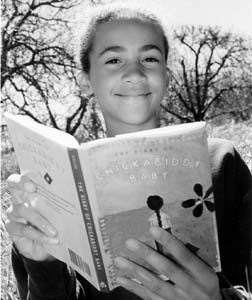
Dave Alvin

0

Master Blaster

Stephen W. Smith


Dave Alvin digs those Americana roots

By Tom Vasich

ALTHOUGH HE HAS no chart-topping CDs and doesn’t sell out arenas, Dave Alvin is responsible for some of the most enduring American music of the past 20 years. Fans of the roots-rock movement of the early ’80s recognize Alvin as the wild lead guitarist and songwriter for the Blasters, the legendary band from Southern California that continues to influence artists today like Big Sandy and His Fly-Rite Boys.

In the fertile L.A. music scene of that time, Alvin played a leading role. He helped Los Lobos secure their early Hollywood gigs; he played with X after leaving the Blasters. Along with Los Lobos’ David Hildago, Alvin wrote some of the most enduring music of that time. His songs are featured in the films Bull Durham and From Dusk ’til Dawn, and one of his songs, “Border Radio,” inspired the Allison Anders film of the same name.

In 1987, Alvin went solo. While his late ’80s works revealed his discomfort as a lead singer, it was also marked by a growing maturity in his songwriting. This artistic growth reached a new level with 1994’s King of California (Hightone), an exceptional work that helped build a new musical format, Americana, which eschews contemporary commercial styles and incorporates different modes of American sounds. Alvin’s distinctive blending of blues, folk, and rock places him with Lucinda Williams and Steve Earle as the leading proponents of roots-revival music.

Alvin’s latest release, Blackjack David, continues in the tradition of King of California. Its songs tell a story of love, death, and isolation. The themes are often bleak, revealing the blue-collar underbelly of the American dream. A lifelong Angeleno, Alvin writes of a desperate, tarnished Golden State full of dank bars and broken hearts. He’s been called the poet of the lonely highway, and although they sell in the thousands instead of millions, the past two albums are American classics that will be referred to for generations.

Alvin is also noted for his poetry, which he’s been writing longer than he has been playing music. A compilation of his poetry, Any Rough Times Are Now behind You, shows a definite Bukowski influence and the emotional depth that drives his music.

A contemporary troubadour, Alvin tours seven to eight months a year–sometimes solo, sometimes with a band. I caught up with him at home during a rare three-day break from performing.

Vasich: Although your songs are very personal, I don’t get a sense that they’re autobiographical. You seem to take archetypal themes of folk, country, and blues music and give it a different look.

Alvin: That’s true, but there are also biographical things lying around in there. I wouldn’t say I’m a highly confessional songwriter. But it’s there. In my song “From a Kitchen Table,” if you’re going to write a song about a man who’s living at home with his mom, which is based on a guy I know in Downey [Calif., his hometown], you have to you use your experience and regrets to make it personal.

Vasich: What is the source of your songwriting inspiration?

Alvin: I really don’t know, and I don’t mean to be vague about it. I just get an idea and try it out. And if it works, it works. In a way, talking about songwriting is a little bit like those people who say, “Don’t take a picture of me, you’ll steal my soul.” I don’t like to talk too much about where my inspiration is, because if I talk too much about it, it might go away.

Vasich: How do you address writing music vs. writing poetry?

Alvin: I try to keep them separate. The lyrics for the music gotta rhyme, for one thing. And the older I get, I feel totally uncomfortable doing poetry readings. I really don’t like doing them anymore. I still enjoy writing the poetry, but reading it is not fun. Still, you can take an image in your brain and write it both as a poem and as a song.

Vasich: How has your outlook on music changed since your Blasters days?

Alvin: I still listen to the same stuff that I listened to as a kid. The nuts and bolts are still Lightning Hopkins, Hank Williams, or Big Joe Turner. What’s changed is that I’m now able to use an entire palate [of musical styles]. In the Blasters, we could mix up a lot stuff–we were basically a blues, R&B band–and we mixed in elements of hillbilly music and Cajun stuff. But now I can do blues songs, like I do on the new album, but it comes from a different perspective. And then there’s stuff that sounds like the Carter family, stuff that’s pretty hillbillyish. As a solo writer, I can avail myself to all those styles–hillbilly or Chicago blues, whatever.

Vasich: I’ve noticed on NPR and college stations that artists like you, Lucinda Williams, and Steve Earle are getting more play. Have these become good times for artists such as yourself, who really don’t fit into commercial radio formats?

Alvin: Part of it has to do with that those people you mentioned, and lots of others have been making good records. When we started the Blasters, we knew there were people out there that liked this kind of music; it’s how you access them that counts. There’s a lot of different ways to access them now, between radio and the Internet. I mean, the Internet’s made a major change, just because it’s an alternative way–people go to a show in St. Louis and post a review of it themselves. And some guy in Pittsburgh reads it and comes to your show that night. Little things like that, they all help create a groundswell.

Vasich: Have you a grand design for your career?

Alvin: I wish I did. I just want to pay the rent. The trick is I want to play music I want to play.

The Dave Alvin Band performs Wednesday, Dec. 9, at 8:30 p.m., at the Powerhouse Brewing Co., 268 Petaluma Ave., Sebastopol. Tickets are $10. Call 829-9171.

From the December 3-9, 1998 issue of the Sonoma County Independent.

© Metro Publishing Inc.
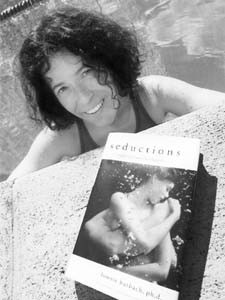
Sonoma County Authors

Local Lit

By Patrick Sullivan


Let Ocean Seethe and Terra Slide
By Rex Grady
Lilburne Press; $15

SOME MISTAKES are easy to make. For instance, you probably imagine being bored spitless by a volume chronicling the history of the Sonoma coastline–especially if the book tells its story in a breathless 267 pages without chapter breaks. But fear not: Let Ocean Seethe and Terra Slide has its faults, but boredom is never a danger.

To develop this detailed account of the interactions of humans and the nature along the dangerous edge of the mighty Pacific, Sonoma County author and state park lifeguard Rex Grady drew largely on park log books and newspaper accounts. But his own style is anything but dry: In colorful (sometimes purple) prose, Grady chronicles the history of the Sonoma Coast, beginning with the first settlers and moving up through the creation of the Sonoma Coast State Park, with a special focus on the last 40 years.

Mayhem is the order of the day here. Drownings,boating accidents, suicides, switchblade duels, octopus sightings, dramatic rescues, political dogfights–the action just never stops in Let Ocean Seethe. We get accounts of a great white shark attack in Bodega Bay (the victim survived, but required some 200 stitches), the first recorded surfing attempt in Sonoma County history (wipeout!), and the protracted squabble over a proposed nuclear power plant at Bodega Head.

Grady has a strong point of view, especially when he recounts the activities of the hippies, juvenile delinquents, and biker gangs that have apparently marauded with unrelenting fury across the coast’s pristine beauty. Imagine a mix of goons from Reefer Madness and a Charles Bronson movie, and you pretty much have the picture. The author is not always fair, but he never fails to entertain.

The book ends when Sonoma Coast State Park finally gets state-mandated lifeguards in 1990, after 40 years and 100 ocean-related deaths. But, in his foreword to the book, park ranger Michael Martino still offers words of caution: Enjoy the beauty of the coast, he writes, “But for God’s sake be careful.” No kidding.

The Light Inside the Dark
By John Tarrant
Harper Collins; $25

SANTA ROSA author John Tarrant has many remarkable talents: He’s a trained psychotherapist, a student of Buddhism, a teacher of meditation, and a director of Zen training. As a writer, however, he has come up a bit short in this ambitious attempt to bring his knowledge to bear on the task of charting our inner spiritual landscape.

It’s no small thing to criticize a book that sports an approving quote on its dust jacket from Robert Haas, former poet laureate of the United States. Indeed, The Light Inside the Dark sometimes reads like a prose poem, albeit a book-length one. But an intolerable shapelessness and a relentless vagueness haunt the work, dragging it down despite some vivid imagery and compelling wordplay.

The author illustrates his thoughts on spirituality with anecdotes from both classical literature and the lives of nameless contemporary people. But in the latter case, it is very seldom clear just who these folks are: Are they friends, or clients in therapy, or fellow spiritual seekers? Most of the time, the reader has no idea, and so the stories assume a numbing wispiness. Couple that with the book’s lack of anything approaching a narrative arch, and you’ve got big trouble.

“For us, a good spiritual life is permeable and robust. It faces things squarely, knowing the smallest moments are all we have, and that even the smallest moment is full of happiness,” writes Tarrant in his conclusion. Surely the same can be said of a good book, but unfortunately, The Light Inside the Dark is anything but robust.

From the December 3-9, 1998 issue of the Sonoma County Independent.

© Metro Publishing Inc.
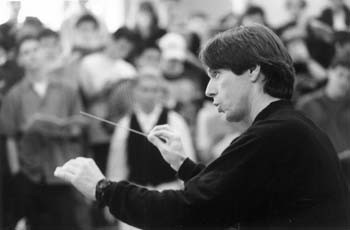
Greg Brown

1

Heart and Soul

Folkie Greg Brown on the simple life

By Alan Sculley

ASK GREG BROWN what he likes best about good music and the singer/songwriter homes right in on the ability of some artists to convey a sense of place in their music. “Muddy Waters, now when you hear Muddy sing, you can close your eyes and see the Mississippi Delta,” Brown says.

“It’s just right in there. Hank Williams Sr., you could see little towns, you could see a whole chain of them all down through the South. Jimmie Rogers, you can see him on the railroad train. It’s just in a lot of American music. And I think even into contemporary times, I mean when I listen to Bruce Springsteen, I can see New Jersey, that whole deal in New Jersey. I can see where he’s coming from. I can hear it. and I think that’s a beautiful thing about America.

“We have such a big country, and there are so many landscapes and different feelings all around the country, and music expresses all that.”

In Brown’s case, his music reflects his roots in southeastern Iowa and the Ozarks of southern Missouri. This makes sense when Brown discusses his musical influences, because as much as he grew up loving everything from classical music to gospel, from the rockabilly of Jerry Lee Lewis to the soul of Ray Charles, from jazz to the country songs of Hank Williams, his biggest influences were much closer to home.

“I think one reason I feel so tapped into American music is just the nature of my growing up,” says Brown, the son of a Pentecostal minister from the Ozarks and a mother who grew up in rural Iowa. “With my father being a preacher, there are so many American musicians who started in the church, it’s just endless. People, you ask them, ‘Where did you first sing? Where did you play first?’ It was the church, and that was the case for me. It was gospel music. That, and then my mother’s people–everybody played. It was really more like Appalachian or Southern folk music than it was anything. I just grew up with everybody playing and singing church music from the time I was little.

“I think another big influence was my mother’s mother,” Brown adds. “She sang old Irish ballads she had learned from her Irish mother. That whole ballad tradition of storytelling through songs, those beautiful melodies … it was just in my heart from the beginning.”

ALL OF THE STYLES Brown mentions are present in his spare, rough-hewn music. Although he is generally considered a folk artist, his music defies easy categorization. For example, on his latest CD, Slant 6 Mind (Red House), there’s a danger-filled grittiness to “Dusty Woods” and “Wild Like Sonny Boy” that seems more based in blues. The scatting rhythms in the percussion and guitars of “Mose Allison Played Here” bring a jazz sense to the song. His sound takes a gentler, more folkish country turn on “Vivid” and “Spring & All.”

In fact, Brown says, the sonic role model for the new CD wasn’t folk or country at all. It was blues great Muddy Waters’ classic 1963 acoustic album Folk Singer (Chess).

“It wasn’t so much the songs, because Muddy’s work, of course, is blues and Delta,” Brown says. “It was just the sound of that record. It had a real presence to it. You could hear every little thing. He was playing acoustic guitar, which I thought was cool. That was a different thing for him. But you felt like you were right there in that room. And it was really that sound and the kind of presence I was after.”

Slant 6 Mind (Red House), released last fall, is Brown’s 13th album over the course of a career that began 20 years ago. It’s a career that by his own admission has been spent on the fringes of the musical mainstream. Most of the time, he has received only minimal radio play or attention in the press. Perhaps his highest profile forum came during the 1980s as a regular on National Public Radio’s Prairie Home Companion.

In recent years, though, Brown’s star has risen. In particular, his three most recent CDs–The Poet Game, Further In, and Slant 6 Mind–have grabbed sparkling reviews in major magazines, and his songs have begun filtering onto Americana format radio playlists. Brown credits his producer, Bo Ramsey (who has played electric guitar on Brown’s recent albums), with helping him discover how to create albums that sound better, more fully realized. Consequently, his work is more accessible. “I think what separates them is having Bo Ramsey and learning how to make records,” Brown says, comparing his recent work to his early records.

“When I look back on my earlier songs, I feel just as good about them as I do of my songs now. I don’t think of songwriting as being necessarily a progressive thing where you get better and better. It’s more like circles. But making an album was a skill I had to learn.”

IF SUCCESS is gradually finding Brown rather late in the game, he isn’t complaining. “My career has always really moved by word of mouth. I haven’t had any kind of a hype machine behind me at all,” says Brown, 48. “So it’s just happened the way it’s happened. It suits me the way it’s gone. I’ve been able to make a living playing music, which is all I ever really wanted to do.

“And things have gone well and at a good pace, I think.”

In fact, in some ways Brown’s approach to career mirrors a theme that frequently finds its way into his music–shallow materialism and the need to live life based on something deeper, something closer to the heart, something that provides a sense of community and belonging. “My own father, who was doing quite well in the world after he got out of the Army in World War II, he had studied electronics and he had his own radio and TV repair shop going,” Brown recalls. “He was building those big, high broadcasting towers. Things were going good for him. But then when he felt a call to the ministry, he left that behind. He made a choice based on what he felt in his heart and not his wallet. So he was my role model.

“And also, I think having all these memories of what it was like to be with my extended family in a little farmhouse playing music, cooking supper, all contribute to this sense of belonging. I mean, to me, things don’t get any better than that. I don’t care how many swimming pools you’ve got.

“Those simple things are the things, I think, that really sustain us,” he adds. “If I was walking through an airport and I looked at all these Americans, all rushing around trying to make more money to buy more stuff, if they looked happy and engaged, I would say ‘Great.’ But they don’t. They look sad, they looked stressed, they look empty a lot of times. They look like people on a treadmill. I just don’t think it works.

“I don’t think my vision of life is really romantic. There isn’t some beautiful, perfect way to live. But there are ways that are better than others. I really think the thing about rampant consumerism is it’s destroying the planet and it’s not filling up people’s hearts and souls.”

Greg Brown performs Friday, Dec. 4, at 8 p.m. at the Sebastopol Community Center, 390 Morris St., Sebastopol. Cheryl Wheeler and karen Savoca also perform. Tickets are $21/advance, $23/ at the door. For details, call 823-1511.

From the November 25-December 2, 1998 issue of the Sonoma County Independent.

© Metro Publishing Inc.
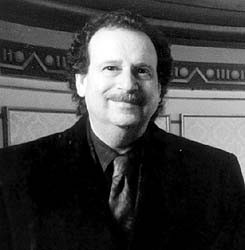
Pasta Recipe

0

John McReynolds Recipe

1/2 butternut squash 1 lb. whole-wheat taglierini or fettuccine 1 tbsp. butter 8 slices prosciutto, sliced julienne 2 cloves garlic, finely chopped 1 cup chicken stock 1 cup whipping cream 3/4 cup freshly grated Parmesan 1/4 cup lightly toasted pine nuts Italian parsley, several sprigs, chopped Black pepper, freshly ground

Cut squash in half and scoop out seeds. Lightly oil cut side of squash and place cut side down on backing sheet. Bake at 375 degrees until soft (25 to 45 minutes). Allow to cool. Peel and mash with fork. Cook pasta. While it cooks, melt butter in large, heavy sauté pan over medium heat. Turn down to low, add prosciutto and garlic, and cook slowly 5 minutes. Add squash and cook 2 minutes. Stir in stock and cream and cook 1 minute on high. Remove from heat. Add cooked pasta to squash mixture and toss well. Mix in cheese and toss again. Divide into 4 servings. Top each with pine nuts, parsley, and pepper.

From the November 25-December 2, 1998 issue of the Sonoma County Independent.

© Metro Publishing Inc.
Talking Pictures

0

Whizzing on the Wiz

Dr. Joy Brown takes on the ‘Wizard of Oz’

By David Templeton

Writer David Templeton takes interesting people to interesting movies in his ongoing quest for the ultimate post-film conversation. This time out, he schedules a session with Dr. Joy Browne, renowned radio psychologist and author, to discuss the imbedded messages in the classic film The Wizard of Oz.

Dr. Joy Browne–while admitting that The Wizard of Oz is a wonderful movie–boldly confesses that it gave her nightmares the first time she saw it. She was three years old at the time.

“It scared me to death,” she allows. To this day, that cackling, green-skinned Wicked Witch still makes the occasional appearance in her dreams.

But that’s not what bugs her about The Wizard of Oz.

The renowned New York-based author and syndicated radio psychologist–heard locally on KSRO–feels professionally obligated to point out a certain downside to the classic tale of Dorothy and her misfit friends on the way to the Emerald city.

“It’s such an odd combination of fantasy and reality,” Browne says. “And some of those fantasies–and the beliefs and ideas at the core of those fantasies–can be dangerous if swallowed whole. And with The Wizard of Oz, we do swallow it whole. We open up and let it dazzle us, and then we take its secret messages deep inside us–and then wonder later on why our lives are so messed up.”

“In fact,” she adds, “in some ways, it’s this kind of movie that made me write this kind of book.”

The tome to which she refers is her brand new Nine Fantasies That Will Destroy Your Life–and The Nine Realities That Will Save You (Crown, 1998, $23). Part self-help book, part comedy-routine, this is an immensely readable, reasnoably insightful, occasionally quite challenging look at a number of core beliefs that many of us have based our lives upon; these fantasies include ‘Winning the Lottery Will Free Me, Men and Women are From Different Planets, Good Always Triumphs, Somewhere I Have a Soulmate”–and “There’s No Place Like Home.”

Browne’s debunking of these fantasies is given a practical spin as she makes sympathetic examples of actual phone calls and letters she’s received over the years. Her radio program, now broadcast on over 300 stations around the country, has gained Browne an ardent following–not so ardent, perhaps, as the routine listeners of that other female radio shrink–and has motivated the National Association of Talk Show Hosts to pronounce her the “Best Female Talk Show Host” for the last two years. In person, she is straight-forward and playful; she seems, in fact, to thrive on a certain level of friendly theoretical debate.

As for The Wizard of Oz–currently enjoying a national re-lease, with a spiffy new print and a gussied-up soundtrack–it seems, in Browne’s view, to be laden with unhealthy messages. That No Place Like Home bit is only the jumping off point.

” I suppose,” she laughs, “that instead of calling my book what I did, I could have called it The Wizard of Oz, and How Not To Live It. Look at Dorothy. She’s a lonely orphan who’s best friend is a dog. She can’t get along with the neighbors. She sits around wishing for a place over the rainbow instead of improving her people skills. Think about it, when she’s taken to Oz and her house lands on the witch, she says, ‘It’s not my fault, It’s not my fault.’ She won’t take any responsibility for it. It may not have been intentional, but that doesn’t mean it wasn’t her responsibility. She did, in fact, kill the witch.”

“Well, gee,” I respond, thinking this all seem a wee bit harsh (and perhaps becoming a bit defensive of Wizard, a movie that still moves me to tears after nearly 40 years of faithful viewing), “Why was it Dorothy’s responsibility?”

“Because it was her house,” Browne replies gently, sensing my dismay. “She could have said, ‘Yes I did it. It wasn’t my intent, but she is dead because of my house, and I recognize that I was indirectly involved.’ But Dorothy shows no remorse at all. She just starts yelping, “Hey. It wasn’t me,’ and immediately starts blaming the tornado and everything else–and then she takes the witch’s magic ruby slippers! What was that about?”

“Oh, Dorothy didn’t take the slippers,” I protest. “They were forced on her. They magically appeared on Dorothy’s feet after vanishing from from the shrivelling legs of the dead witch.”

“Yeah right. That’s what we all say,” Browne laughs. “The point is, David, she could have said no, and she didn’t.”

Hmmmn. Well, okay. I can see how–on a very subconscious level–Dorothy’s casual theft of the slippers might set a bad example. But what could possibly be wrong with, say, the Munchkins?

“Aren’t the munchkins a symbol of being in touch with your inner child?” I ask.

“The munchkins are adults who refuse to grow up,” Browne replies. “They were all very cheerful and grotesquely baby-ish. They have that ‘Ignorance is Bliss’ thing going, and let me tell you–ignorance ain’t bliss.” Ignorance is Bliss, by the way, is another of the nine fantasies Browne explores in her book.

“I don’t want to give the impression that The Wizard of Oz is all bad,” she kindly mentions. “There are some great realities in the film, too; the cowardly lion learns that if you face your fears you’re less frightened. The tin man without a heart learns that he doesn’t have to be afraid of crying. The wizard teaches them that everything they’ve been seeking already exists inside themselves. That’s great stuff.

“We are always looking for external solutions to our internal problems,” she continues. “The book is full of these kind of things: ‘Do I have a soul mate?’ or ‘The truth will set me free, or ‘Other people’s families are functional,’ or ‘Everybody else is perfect …’ “

“Or ,’If I only had a brain,’ ” I add to the list.

“Exactly,” Browne nods. “So I get to play the wizard here and say, ‘No no no. Use your fantasy, but use it to learn what you feel your lacking, and then go get it. But know that you won’t get it by winning the lottery or by meeting the magical right person for you. You’ll get it through self knowledge. By knowing what you want, you can turn your fantasies into realities. You can, in fact, find the courage you want, you can find the ability to cry, or you can get yourself home.

“But we all still think that there’s something out there, that–once we find it and take it–will make us happy,” she goes on. “And it’s always something outside of us. It’s the magic chalice. The ruby red slippers.”

“It’s going to see the wizard,” I contribute.

“It’s following the Yellow Brick Road,” she concludes.

“Even so,” I mumble, still feeling that the movie meeds a bit of defending, “Maybe The Wizard of Oz does have a lot of negative messages, unhealthy fantasies that run rampant through the story–but I still treasure it. I love The Wizard of Oz.”

“I have no problem with that,” Dr. Browne replies with a smile. “I’m not against fantasy. I’m against believing in fantasies, when believing in them will hurt us. That’s what I’m saying.

Go see The Wizard of Oz. See it thirty times. Enjoy it. But don’t make the mistake of thinking you’re life should work that way. Don’t spend your life longing for something ‘over the rainbow.’ Figure out what you want, figure out what you need–and then, go get it. “

Web extra to the November 25-December 2, 1998 issue of the Sonoma County Independent.

© Metro Publishing Inc.

Chef John McReynolds

0

The Art of Cooking

Magic moment: Cafe LaHaye chef/owner John McReynolds realized during a serendipitous moment that he was fated to have a career in food.

For John McReynolds, the kitchen is his canvas

By Marina Wolf

JOHN MCREYNOLDS is a tall man. His diminutive kitchen, a triangular space opening out onto the proportionately small dining room of Cafe LaHaye in Sonoma, seems like a My-First-Kitchen toy when he’s inside it. As he sprawls down into a chair, McReynolds looks like an overgrown boy, his casual corduroy jacket and jeans contrasting pleasantly with the graying hair and the San Francisco Chronicle review taped up in the front window, touting McReynolds and his young restaurant as one of the best new restaurants in the county since the Willowside Cafe.

McReynolds’ embarrassment about such attention from high places seems boyish, too; he says repeatedly, as if still somewhat stunned, that he really was not expecting the success.

“Beyond a local neighborhood restaurant,” he says, “which is what I intended it to be, [the response] surprises me.”

But anyone stepping into the light-filled space at the front of the La Haye building wouldn’t be surprised at the draw. Brigitte McReynolds, John’s wife, has filled the walls of the cafe with her art: canvases of smoky, mysterious figures laid against softly angular backdrops.

And the menu showcases John’s art: simple, hearty European preparations of the Sonoma Valley’s best foodstuffs. “It’s the same process that happens for artists when they get involved in doing their art,” he says, gazing thoughtfully at the play of the afternoon light on the floor. “You lose track of time, you lose track of everything else except what you’re doing.

“For me, it’s the same kind of feeling that I had when I was a child in the sandbox, playing with my tractor and making mud pies,” he continues, blinking out of his reverie. “It’s intensely gratifying and fun.”

McReynolds’ hands-on cooking experiences didn’t stop with mud pies, thankfully. His mother, tired, perhaps, of cooking for five children, let them cook Saturday dinner, so that all the children–four boys and a girl–got their turn at the stove. McReynolds particularly remembers his first cookbook performance at age 10, featuring Potatoes Volcano from The Joy of Cooking, a mound of mashed potatoes filled with a cheddar béchamel sauce. “I was famous for that,” recalls McReynolds with a wry grin. “I wasn’t asked to do any repeat performances, but everybody was impressed with the way it looked.”

The young McReynolds continued his love of food through his years at San Jose State University, where he studied to become a psychiatric technician while working in a county alcohol and drug rehab center. He then took a six-month tour of Europe before coming back to work for five more years in the family construction business, putting in roads for the military in the Monterey area. “We had a contract with the Army and Navy for doing all of their streets,” McReynolds says, “so we lived down there in a motel, and we’d go out every night to dinner somewhere on the Peninsula, and we always ate well.”

He might still be pushing asphalt were it not for a friend with foresight. At dinner with McReynolds, who was talking on and on as usual about food in general and the dinner in particular, the friend suddenly said, “John, you should be a chef.”

McReynolds had never considered being a chef until that fateful utterance, but he knew it was right. “It was one of those serendipitous moments, when you’ve been waiting your whole life to figure out what you wanted to do. …”

The very next day, McReynolds went to the California Culinary Academy in San Francisco, picked up an application, and two months later started the program.

The same casual serendipity continued after his graduation from the CCA: the right jobs just seemed to drop in his lap, out of nowhere, like that yacht gig in Mallorca, Spain. McReynolds was in the south of France on vacation when an acquaintance suggested that he see a yacht broker about getting a job. He was hired on the spot and flown the next day to Mallorca, where he boarded a private yacht and spent the next year cooking Italian food, using the food they picked up at various Mediterranean ports.

Then there was the dude ranch in Colorado that opened up right when McReynolds was working full-time and going to school in San Francisco. “The idea of being … in the middle of nowhere sounded like a perfect job,” he says.

Later, when he found himself again on the verge of burnout with three years at regular restaurants, McReynolds got tapped to establish the food service at Skywalker Ranch, the new LucasFilm complex in Marin County.

McReynolds’ recipe for whole-wheat pasta withbutternut squash, prosciutto, and garlic cream.

NOW MCREYNOLDS seems to be settling down. He has a 5-year-old daughter to take care of, and new teaching duties next spring at Ramekins Sonoma Valley Culinary School. And, above all, he owns his own restaurant. “It’s harder than I expected,” he admits about being the owner. “When you’re just the chef of a restaurant, no matter how committed you are, no matter how responsible and involved in the process you are, you can still get up and walk away.

“But when it’s your own business, you can’t do that. You’re stuck. … I think that there’s a lot more motivation to make it work.”

But for all the drudgery of a small restaurant–cleaning the oven, peeling potatoes–there’s still room for art, for total immersion in the experience, the Potatoes Volcano, the mud pie. Sometimes the artistic abandon gets McReynolds in trouble with the clock, he says. But that doesn’t stress him out, not anymore.

“We open at 5:30 p.m., but at 5:15 I’m often still figuring out what the specials are going to be,” he says. “I couldn’t have done that five years ago, or even three years ago, but now I feel like I’ve been doing this long enough and I feel comfortable enough that I know that something is going to come out, and it’s going to be good.”

From the November 25-December 2, 1998 issue of the Sonoma County Independent.

© Metro Publishing Inc.
Self-Publishing

Fine Print

Bootstrap books: Sebsastopol writer and self-publisher Barbara Baer has enjoyed success with Saltwater, Sweetwater, an anthology of local female writers.

Writers do it for themselves in the world of self-publishing

By Marina Wolf

THERE’S A CERTAIN stigma attached to the self-published book in the minds of the masses. “Poor sap,” a bookstore browser might think, should her eyes slip from the glossy cover of the latest New York Times bestseller down to the plain cover of a political sci-fi novel written by a guy from the next town over and spiral-bound at Kinko’s. “Couldn’t make it in the big time.”

But are such snap judgments really fair or accurate? What if the writer waited three years to sign a contract, and then got tired of hoping that the lawyers would finally agree about royalties? Perhaps he was asked to pull the alien sex scene from Chapter 4, upon which the rest of the plot hinges. Maybe he’s the next Kurt Vonnegut, but the world isn’t ready for him.

Or maybe it’s bigger than just one author. After all, the world of publishing has never been kind to the little person, but contemporary trends make getting published harder than ever. The big time is now breathtakingly huge, with advances running into the low millions. But the entities that have made that kind of money possible–the media giants conglomerating at record rates–keep the purse strings pulled tight for all but the biggest blockbusters. As the field constricts from the top down, authors are struggling harder than ever to get their work over the transom. In this environment, self-publishing seems an increasingly rational response.

The point is, there are many reasons–having nothing to do with the objective quality of a given manuscript–an author would choose to go it alone. And as a region thickly populated with literary types, Sonoma County has a writer for every reason.

Dr. Marty Griffin, author, environmentalist, and publisher of Saving the Marin-Sonoma Coast, actually did find editors who wanted to take on his book. But the honest ones told him, “You’ll hate me if I publish it because you’ll have to promote it and you won’t get very much of the returns.”

Griffin self-published because he wanted the book to have a lot of photographs and maps: “Most book publishers wouldn’t put all that in because it would cost them too much,” he says. The end result, a beautiful, thickly illustrated book, has gotten amazing media response in the nine months since its release. It’s sold well, too, considering that Griffin and his one-woman publicity crew weren’t able to place the book in the chain stores until three months ago, when it was picked up by a national distributor.

“They refused to carry it before then,” says Griffin with just a smidgen of satisfaction in his voice. “They said I was just too small a press. And then they started getting requests from Borders and Dalton and Barnes & Noble, so they wrote and said they were excited to get the book.”

Like most authors, self-published or traditional, Griffin does his own publicity at bookstores and benefits all over the North Bay. He calls it “a work of love, not money,” which is a good thing, because Griffin isn’t even close to breaking even on his investment of over $100,000.

Few self-publishers have to spend that kind of dough–the more common outlay is between $5,000 and $10,000. But forget the money: Publicity is the big problem, as Barbara Baer, one of the prime movers behind the anthologies Cartwheels on the Faultline and Saltwater, Sweetwater, is discovering.

“I’m doing publicity that I never thought I’d do,” she says with a rueful laugh, mentioning real estate welcome baskets and review copies to Working Assets, a long-distance company.

Cartwheels on the Faultline, the first anthology put out by Baer’s Floreant Press in 1997, was written by members of the writing group she belonged to, and the work that emerged was so specifically local that self-publishing seemed the natural next step.

“I was surprised that it did so well,” confesses Baer. “I thought of it as a homegrown product that would be lovely for us and for our friends and families.”

Cartwheels enjoyed a very successful run; Saltwater, too, has broken even. However, the problems of publicity and distribution have snowballed, and after two books Baer is ready to step away from samizdat, at least for a while. She’s got her own work to publish, and it won’t be through Floreant Press.

“I don’t want to try to sell myself,” she says firmly. “I’m quite happy doing it with these collections because there’s a purpose there and lots of help and it’s really communal, but I don’t want to do it for myself.”

Sonoma writer Kathleen Hill also found distribution to be the hardest part of self-published success with her guidebooks to Sonoma Valley and Victoria and Vancouver, B.C.

“I set up nice relationships with several distributors, but we had no distribution east of the western states, so when we got national publicity, the book wasn’t in stores when people wanted them,” she says.

The two books were recently picked up, and more titles were requested, by Globe Pequot, a travel book publisher on the East Coast that started out as a self-publishing venture 20 years ago. Still, Hill is ready to return to self-publishing at any time.

“My personal position is that if Globe Pequot doesn’t want to do a book that I want to do, I’m gonna do it myself,” she says.

WHATEVER their reasons for self-publishing, a lot of authors are doing it. The Small Publishers Association of North America–born just two and a half years ago–already claims over 1,100 members. Last year more than 7,000 new publishers started up, according to SPAN statistics, and most of them were self-publishers.

On the local level, Jim Colvin gets to meet many of these literary optimists. As consignment buyer for all six Copperfield’s Books stores, Colvin is responsible for the 300 or so titles–mostly cookbooks, children’s books, and novels–sitting on the local authors’ shelves. Some authors object to that placement, says Colvin: “They don’t really want to be in that section. They want to be wherever their subject is. They want to be over with the rest of the books.”

“Most of the people I work with really have big dreams of being successful,” he continues. “They don’t want to appeal just to the small subgroup that they might be a part of. They really want to be national bestsellers.”

Take Linda Ward, a Santa Rosa author who received over 30 rejections of her book Choosing before deciding to self-publish; even now, she still sends the book to publishers in hopes of getting it picked up. A modest paperback, Choosing is an interactive, “choose-your-own-adventure” novel about a young woman’s sexual choices. According to Copperfield’s figures, the book is selling moderately well. But Ward wants more.

“I want national exposure, because as far as I’m concerned this is a book that should be used in the schools,” says Ward, who even sent her book to Oprah–“Everyone sends their book to Oprah, probably.”

Ironically, Ward has just taken a job teaching pregnant teenagers and teenage mothers: “I love these young women, but I wish they’d have read my book!” she says. Butshe hesitates only for a second when asked why she went the self-publishing route.

“I doubt I would have got it into print if I hadn’t self-published, not without a whole lot more work on my part. And I just frankly couldn’t afford to do any more than I did,” she says. “But it’s thrilling to finally see something come to completion.”

From the November 25-December 2, 1998 issue of the Sonoma County Independent.

© Metro Publishing Inc.

The Scoop

Who Shot JFK?

By Bob Harris

I had no idea what to write this week. Then tonight I’m onstage for two hours doing my odd little comedy/research JFK assassination piece for about 300 people in Indiana, ranting and joking about the CIA the whole time, when this weird old guy in a turquoise bolo tie and false teeth too large for his head stands up and announces that he has the Truth about the whole thing. Cool. I guess I can just go home then.

Poligrip Man then hands out a xerox of his homemade flier identifying the [21] shots fired in Dealey Plaza–apparently it was both a murder and a military salute–all by a lone gunman: not Oswald, but George DeMohrenschildt, a CIA informant and spooky dude for sure, but plainly not the assassin, although he was a personal friend of George Bush. But I digress.

And since “my” version (which is simply a recounting of cool declassified documents, not a claimed solution for the shooting itself) doesn’t match his, Poligrip Man angrily concludes that I must be working for the CIA as part of the plot.

My God, how I [love] being denounced as a spy. You should try it. It is [so] cool. So now, here’s this week’s column, since the 35th anniversary is Sunday. Enjoy. Assuming I’m not a government disinformation agent.

Will history record Lee Harvey Oswald as the lone assassin of JFK? One word: Scoreboard. A new Roper survey done in cooperation with the History Channel cable TV network says that 73 percent of Americans think JFK was definitely or probably killed by a conspiracy.

Which is the same thing as saying three-quarters of the U.S. believes that for 35 years, the FBI, our Congress, and the Justice Departments of six presidential administrations have failed to do their jobs. And it means that we agree 3-to-1 that the mainstream media, which has clung to a Lone Nut longer than Eva Braun, is completely full of it.

In Washington, the Assassination Records Review Board is disbanding as this goes to press. Convened to expedite the release of government documents in the wake of Oliver Stone’s film on the murder, the AARB has pried loose over 60,000 classified documents, comprising hundreds of thousands of pages, from the CIA, the FBI, and other agencies.

The AARB’s final report scolds all of the above for “needlessly and wastefully” withholding records for decades. Even so, some remaining blacked-out passages in some pages will not be released until as late as 2017.

If you believe the national press, there’s nothing significant in any of those documents.

So is there anything new in the JFK assassination? Yup.

Thanks to declassified documents new and old, here’s just a smidge of the real and jumbled history that honest researchers are trying to understand:

Oswald’s “defection” to the Soviet Union

Oswald received training in the Russian language while in the military. Oswald’s superior officer in the Marines clearly knew that Oswald was going to the Soviet Union immediately after his discharge. Instead of the usual ID card, Oswald was given a DD 1173, issued to U.S. employees about to work overseas.

While in the Soviet Union, Oswald told a writer named Priscilla Johnson that someone had prepared him for two years before his defection. He wouldn’t say whom, although he later slipped in a radio debate and said he was under the protection of the U.S. government, a slip he quickly caught and recanted.

(For her part, Priscilla Johnson, a reporter whose role in constructing the Oswald story has led many researchers to speculate she was somehow a CIA asset — which she denies strongly — worked for the OSS during World War II, applied to work for the CIA in 1952, and was described by the CIA in 1956 as of “operational interest.”)

Throughout, CIA counterintelligence officers intentionally created false and conflicting reports about Oswald, in all likelihood as part of a “barium meal,” the planting of phony records to trace a leak, whether to the KGB, the press, or another intelligence agency. Meanwhile, Oswald was placed on the CIA Security Office’s “Watch List” of people whose mail the CIA opened illegally in a highly classified program code-named HT/LINGUAL.

The mail-opening is very likely related to the barium meal, but the exact operational relationship isn’t fully clear.

In New Orleans, summer 1963

Oswald claimed (falsely) to be a member of the pro-Castro activist group the Fair Play for Cuba Committee (FPCC) precisely as both the CIA and FBI undertook counterintelligence operations against the group, in an effort to smear the FPCC as being under KGB or Cuban control.

According to statements from numerous witnesses, Oswald was paid to pose as a member of the FPCC by Guy Banister, a former FBI field office chief currently surviving as an anti-communist private detective and gunrunner. Many of Oswald’s leaflets had Banister’s office address stamped right on them. In addition, the handouts were not the current FPCC leaflets, but an earlier edition, much of the print run of which had been purchased in bulk by the CIA.

Oswald made contact with members of the DRE, an extreme anti-Castro group supervised by David Atlee Phillips of the CIA. The DRE members suspected Oswald of being an FBI infiltrator. A confrontation with DRE members led to Oswald’s arrest, generating publicity and a paper trail for Oswald as a pro-Castro activist. The arresting officer believed that the incident was staged.

Oswald also tried to infiltrate a peace group at Tulane University.

The DRE member with whom Oswald scuffled, Tulane’s President, and the owners of the radio and TV stations that publicized Oswald were all involved in an anti-Castro propaganda operation called the Information Council of the Americas, or INCA, which received funds and support from the CIA.

Before the shooting

Six weeks before the murder, CIA Counterintelligence officials in Mexico City doctored and falsified documents concerning Oswald, linking him to an alleged KGB assassination specialist, but in a fashion that would not alert the FBI’s security.

Congressional investigators concluded over 20 years ago that Oswald was impersonated at the Cuban and Soviet embassies in Mexico City before the assassination.

After the shooting

Numerous false but well-informed stories linking Oswald (and later, entire assassination teams) to Castro were circulated by individuals who worked for the CIA in trying to overthrow Castro.

A researcher for the House Select Committee on Assassinations examined the stories originating in Mexico City and Miami, and virtually every single source had worked for the CIA’s David Atlee Phillips, a propaganda specialist and advisor to the DRE, who was, coincidentally, cross-posted to both Mexico City and Miami.

After the shooting, the CIA’s E. Howard Hunt (a close friend of Phillips) helped circulate the tapes of Oswald put together by INCA and the DRE, working to create a public image of Oswald as a Castro agent, and thereby justifying a renewed invasion of Cuba.

The CIA officers responsible for falsifying the Oswald record prior to the assassination were not disciplined; instead, they were assigned by CIA Deputy Director of Plans Richard Helms to key roles in the CIA’s “investigation” of the murder.

The Dallas investigation

The “magic bullet” now in the National Archives is not the one found in Parkland Hospital. The testimony of the first three men to handle the actual bullet agrees: the real one was long and pointed, instead of the rounded Mannlicher-Carcano bullet known as Commission Exhibit 399.

The rifle found in the Book Depository was clearly and immediately identified by several on the scene as a 7.65 mm Mauser rifle, a very different gun from the Mannlicher-Carcano that could be linked to Oswald and which became the official weapon. We now know that the FBI received a 7.65 mm shell found in Dealey Plaza, the existence of which was suppressed for 32 years.

Oswald was seen entering the Book Depository on the morning of the assassination carrying a package. Officially, it contained a rifle, although it wasn’t large enough for any such thing, and Oswald insisted it merely contained curtain rods, although officially no such item was ever discovered. In recently released Dallas police files is an unreleased photograph of… curtain rods, dusted for fingerprints.

The autopsy

No explanation yet exists for the fact that the official version of JFK’s wounds is at utter variance with the near-unanimous version of JFK’s wounds witnessed by no less than 46 individuals in Dallas, many of them trained medical personnel.

However, the technicians who took JFK’s X-rays and autopsy photographs have denied to investigators that the official photos are the ones they took.

Several witnesses to the Bethesda autopsy indicate that another whole bullet was found.

The Warren Commission

In a phone call one day after the assassination, FBI Director J. Edgar Hoover told Lyndon Johnson: “The case against Oswald, as it now stands, isn’t strong enough to be able to get a conviction.” However, the next day, the FBI memoed the White House: “The thing I’m most concerned about is having something issued so we can convince the public that Oswald is the real assassin.”

And the White House responded: “A high-level committee is the only way to silence debate.”

Transcripts of Warren Commission interviews with witnesses were submitted to the FBI for “editing and corrections.” Often, the resulting changes distorted or even contradicted the original testimony.

Robert Kennedy had sufficient doubts about the Mexico City episode that he investigated it personally (if secretly), even visiting Mexico City himself following the release of the Warren Report.

Since the founding of the AARB

The Secret Service has admitted to shredding two boxes of records on their protective operations during the JFK administration.

Make of all this what you will. There’s plenty more, but you get the idea. The comforting idea that Oswald acted alone, that the FBI and CIA did their jobs, and that the media reported the truth, is now only slightly more plausible than Poligrip Man’s 21-gun salute. But what do I know? I’m just a CIA disinformation agent.

You just gotta get publicly denounced sometime. Really. It’s cool.

Web extra to the November 25-December 2, 1998 issue of the Sonoma County Independent.

© Metro Publishing Inc.

Windsor INS Raids

0

Coyotes & Campesinos

United they stand: Kim Caldeway and Alicia Sanchez of Pueblos Unidos object to Windsor police involvement in raids.

Immigrants protest Windsor INS raids

By Dylan Bennett

ON THE HUNT for coyotes, a team of federal agents from the Immigration and Naturalization Service, accompanied by Windsor police, entered three Windsor residences, pistols drawn, late at night in early September.

Instead of “coyotes”–the term for those who smuggle illegal immigrants from Mexico to the United States–the agents reportedly found only illegal farm workers, 17 of whom were arrested, and 10 deported to Mexico.

The families affected by the raid quickly contacted Pueblos Unidos, the local immigrants’ rights group, which arranged for a community meeting with Windsor Police Chief David Cedarholm last month to protest the involvement of local police, the lack of an arrest warrant and Miranda warnings, the fear produced by unholstered weapons, and the INS’ discouraging detainees from seeking legal counsel.

Two weeks ago Pueblos Unidos organizers Alicia Sanchez and Kim Caldeway accompanied two Mexican women from the raided home to the monthly meeting of the Sonoma County Commission on Human Rights at the county administration center, where immigrants told of confronting the INS and local police. “The police came and knocked on my door. They told me to open it. I asked them for a warrant, but they said no, it wasn’t necessary,” a teenage woman explained in Spanish. “I asked them again. They said ‘We don’t need one. If you don’t open the door, we will knock it down.’

“They took us outside and asked us a lot of questions, and then they said they were INS. They asked us to raise our hands. I asked them why. We are not criminals. They took my father and brother. I felt angry and sad.”

The young woman with dramatic, long, shiny black hair, dressed in a T-shirt and jeans, spoke softly without interruption. Two weeks before, in front of a packed school auditorium at the community meeting with Cedarholm, she had choked on her own emotions, her face contorting in an odd grin that suppressed her tears as she attempted to tell her story.

That evening, about 100 angry members of the local Mexican community, along with representatives from Pueblos Unidos, the ACLU, and Amnesty International, told Cedarholm what they considered the worst part about the INS raid: the participation of two Windsor cops. “Pueblos Unidos wants no cooperation between the INS and Windsor police,” Sanchez told the approving audience.

Such cooperation, she argues, poisons the trust between citizens and police by involving local officers with INS operations said to be lacking in due process.

“The INS has a reputation of abusive conduct and disregard for equal treatment,” says Judith Volkart, head of the local ACLU.

INS enforcement official James Christensen says administrative law, not criminal law, covers the arrest of illegal immigrants, so that constitutionally mandated warrants, Miranda warnings, and legal defense at public defense are not required.

The local INS raids coincided with the October release of a major report on immigration enforcement by the National Network for Immigrant and Refugee Rights that presents five key findings that may apply in the Windsor case. The report concluded that INS raids: violate constitutional and civil rights; destabilize families; undermine fair wages and safe working conditions; and do not significantly affect migration patterns.

And, the report concludes, INS collaboration with local cops seriously undermines community trust. At the community meeting, Cedarholm conceded this was true to some degree.

The report–Portrait of Injustice: the Impact of Immigration Raids on Families, Workers, and Communities–is the collaboration of 150 groups nationwide, including Pueblos Unidos, and is based on documentation from 235 raids in 31 states.

Although the report calls for the total elimination of INS raids, it also documents a growing trend of increased INS enforcement funding and recent jumps in the number of deportations. Since the start of the Clinton administration, the report says, the total INS funding has doubled. In 1993, the INS deported over 42,000 people. By last year that number had jumped to nearly 113,000, with deportation goals increasing each year.

INS officials say there was a total of nearly 2,410 deported illegal immigrants and 530 voluntary returns in fiscal year 1998 in the San Francisco District, which stretches from Bakersfield to the Oregon border, or about four-fifths of the state.

Assistant District Director of Enforcement Mark Reardon reacted strongly when asked about the findings of the immigration report. “These are just baseless, groundless allegations they throw up now and then just to see how you react. Quite frankly, after you see it so many times you tend to overlook it altogether.”

PROTESTERS claim INS raids generate a climate of fear in which kids are afraid to go to school, the elderly don’t venture from their home, and crimes against immigrants are not reported. “Just as I cannot teach a hungry child, I cannot teach a child who is afraid,” says public school teacher Fernando Nugent.

“The first question of Latino victims of violence is, ‘Will I be deported?'” says women’s rights activist Tanya Brannan. “But Latinos are not only victims of crime, they are witnesses to crime. These raids undermine the security of the community.”

INS spokesperson Sharon Rummery says the Windsor police provided merely a “courtesy” escort to protect the INS agents. Local cops commonly help find addresses for INS agents working in unfamiliar territory, she adds, claiming the Windsor police did not provide intelligence for the September raid.

Rummery also says those arrested in Windsor were probably “removed” rather than “deported.” She notes that returning to the United States illegally after being officially deported is a federal crime punishable by up to 20 years in prison.

Although Cedarholm would not agree to keeping his officers out of future INS operations, the September raids remain an important case for Pueblos Unidos, mainly because so few INS raids come under public scrutiny. “We always hear a lot of anecdotal information, but we very rarely have been able to make contact with the people involved, get their testimonies, go to a lawyer, go to the Human Rights Commission, really kind of follow through, and then do some grassroots organizing with them,” says Kim Caldeway of Pueblos Unidos.

After the dust from the election has settled, Caldeway says her group will assist local families with asking the Windsor Town Council for a resolution against future INS raids.

Cedarholm has asked the INS to provide him with a clear mission statement for future raids, to bring a warrant, and to follow up with a written or verbal report. “I still maintain that we need to be there,” says Cedarholm. “I wouldn’t want a function taking place without our presence if something bad did happen. Or if we had a situation where people were running from a house or being pursued. I want our guys there to know what’s up so I can anticipate the calls we could get, the miscommunication, misinformation. And we have a serious officer safety concern.”

And there are legitimate complaints about immigrants in the area, he adds. Some Windsor residents have identified certain residences that create a public disturbance, Cedarholm says, by having too many people living in one house during the harvest season.

“The law says that if you are here illegally, you can and will be removed,” says INS spokesperson Rummery. “I know there are a lot of people who don’t like that law, but the way to change it is legislatively. We have no choice but to enforce the law.”

Not lost on critics of the raids is the contradiction of local police helping deport undocumented Mexican farmworkers who are hired in large numbers, especially at harvest time, to fuel the agricultural economy of Sonoma County.

“Police should protect us. We are here to work,” said a middle-aged Mexican woman during the meeting with Cedarholm. “Get the drug dealers, don’t get the workers.”

From the November 19-24, 1998 issue of the Sonoma County Independent.

© Metro Publishing Inc.

The Inn of the Beginning

0

The Inn Crowd

Inn of the Beginning turns 30

By Charles McDermid

IN THE BEGINNING, Greg Cochrane simply needed some rest. It was 1968 and Cochrane was holding what his close friend and fellow Sonoma State University student David McNair recalls as “a permanent party going on all summer. He said that if he was ever going to get some sleep he had to move the party.”

Simple enough. Cochrane, 22, rented the space of a defunct Italian restaurant in downtown Cotati, and on Sept. 28, 1968, his summertime bash became the original incarnation of the Sonoma County entertainment institution The Inn of the Beginning.

“I gave it the name because it was a new beginning for a lot of people who really had nothing else going for them,” says Cochrane, who does say he thought of the club’s title while on LSD. “We wanted to keep things friendly and localized and play really soulful music.”

Thirty years later, those goals remain intact. Cochrane’s core philosophy has been retained and refreshed by a string of owners leading to the current trio of Miranda Fredrick, Scott Wagner, and Scott Goree, former owner of Magnolias in Santa Rosa. “[The Inn] has always been the heart of the Cotati scene for music and art. And for its youthfulness and exploration and optimism. It’s also the social gathering place and the heart of the North Bay musical community,” remarks Frank Hayhurst, former co-operator of the Inn, member of the Bronze Hog (the first band to grace the stage at the Inn), and owner of Zone Music in Cotati. “Cotati’s personality is defined by the club.”

Cultural landmark status aside, the Inn’s most impressive feature is its past and present commitment to live music–all of which will be celebrated this weekend when the Inn marks its anniversary with a celebration that will feature, among others, the Legendary Bronze Hog.

“We all enjoyed music and we wanted a venue for ourselves,” says Cochrane.

Citing “burnout,” Cochrane sold the club in 1970 to Ward Maillard (son of a U.S. congressman and Sonoma County artist Elizabeth Quandt). Maillard, who once spent months building a gigantic rock and fiberglass urinal, lost interest after several years and in 1974 sold the Inn to his manager, Mark Braunstein, a former roadie for Janis Joplin. “I had a lot of pride in the club, and what I really liked was presenting new music and exposing the audience to music they would’ve not normally heard,” says Braunstein, whose connections in the music industry and knowledge of production attracted many big-name acts to the local club scene.

“It’s remarkable the people that were coming through the doors in those early days,” remembers Cotati Mayor Richard Cullinen, who tended bar at the Inn in the mid-70s. “Van Morrison popped in frequently and Neil Young was there. I used to sit down and talk to Jerry Garcia when he played there with Merl Saunders.”

Considering the size of the venue, the list of acts that have taken the stage in Cotati is staggering. For instance, the Grateful Dead played every Tuesday for a while, trying out new material on a live audience. Neil Young played unannounced one night for a case of beer and some pizza. A fledgling Jackson Browne was denied an audition after he admitted he was from Orange County. Ramblin’ Jack Elliott introduced a young Arlo Guthrie, who then graced listeners with the first-ever stage performance of his classic “Driving into Los Angeles.” According to Cochrane, Janis Joplin reunited for a short set with Big Brother and the Holding Company just months before her passing.

Waylon Jennings played the Inn. So did New Age pianist George Winston, the psychobilly Cramps, Jefferson Airplane, country artists Ricky Skaggs and Hank Williams Jr., the legendary New Orleans band the Meters, zydeco king Clifton Chenier, bluegrass giant Doc Watson, R&B diva Etta James, and folk queen Joan Baez. The list of bluesmen who made the scene is remarkable in itself: Lightnin’ Hopkins, Bukka White, Clarence “Gatemouth” Brown, Brownie McGhee, Sonny Terry, Junior Wells, Buddy Guy, Taj Mahal, and John Lee Hooker.

Braunstein ran the Inn until 1982, when he merged with downtown rival the Cotati Cabaret to form the lengthy-titled but short-lived Inn of the Beginning at the Cotati Cabaret. He left the old building at 8201 Redwood Highway amid a leasing dispute, and the Inn lay silent for years.

AFTER FAILED STINTS earlier in the decade as an antique store, a bookstore, and a beer-vending coffehouse, the Inn is back as a fixture of downtown Cotati. A year ago, Fredrick and Goree gained managerial control of the Inn and, together with longtime sound technician Randy Teaford, have since infused the club with the same creative energy that once fueled founders Cochrane and Braunstein.

While the Inn may no longer have access to the big names it once did, it has become a vital steppingstone for local acts. Virtually no homegrown band can emerge from Sonoma County without having played the Inn.

“If people are playing in garages, it doesn’t help anyone. The main thing is providing a place for people to play [in public],” says co-owner Goree, who began coming to the Inn in 1968 as an SSU student.

Co-owner Fredrick, formerly known as DJ Lili Pond on KFGY (92.9FM), adds, “We have great nights here with local talent. The Inn is a great launching pad and it’s home to a lot of bands.”

Goree and Fredrick’s booking philosophy presents a different musical style nearly every night of the week. “Around here you simply can’t concentrate on one type of music or demographic,” adds Goree. “You have to mix it up with different shows. Places that exist as solely blues clubs or punk clubs are very short-lived.”

Indeed, the Inn is a smaller act’s dream.

“The vibe is what really makes this place work. It’s in rooms like ours where music really happens. You realize that you’re lucky to be so close you can check out a performer’s dental work,” says Teaford. “Our history and the casual yet efficient way of producing shows have made our reputation.”

The Inn of the Beginning celebrates its 30th anniversary with a local band showcase Saturday, Nov. 21, at 7 p.m. 8201 Old Redwood Hwy., Cotati. Admission is $5. 662-1100.

From the November 19-24, 1998 issue of the Sonoma County Independent.

© Metro Publishing Inc.

Dave Alvin

Master Blaster Stephen W. Smith Dave Alvin digs those Americana roots By Tom Vasich ALTHOUGH HE HAS no chart-topping CDs and doesn't sell out arenas, Dave Alvin is responsible for some of the most enduring American music of the past 20 years. Fans of the roots-rock movement of the early '80s recognize...

Sonoma County Authors

Local Lit By Patrick Sullivan Let Ocean Seethe and Terra Slide By Rex Grady Lilburne Press; $15 SOME MISTAKES are easy to make. For instance, you probably imagine being bored spitless by a volume chronicling the history of the Sonoma coastline--especially if the book tells its story in a breathless 267 pages without...

Greg Brown

Heart and Soul Folkie Greg Brown on the simple life By Alan Sculley ASK GREG BROWN what he likes best about good music and the singer/songwriter homes right in on the ability of some artists to convey a sense of place in their music. "Muddy Waters, now when you hear Muddy sing, you can close...

Pasta Recipe

John McReynolds Recipe 1/2 butternut squash 1 lb. whole-wheat taglierini or fettuccine 1 tbsp. butter 8 slices prosciutto, sliced julienne 2 cloves garlic, finely chopped 1 cup chicken stock 1 cup whipping cream 3/4 cup freshly grated Parmesan 1/4 cup lightly toasted pine nuts Italian parsley, several sprigs, chopped Black pepper, freshly ground Cut...

Talking Pictures

Whizzing on the Wiz Dr. Joy Brown takes on the 'Wizard of Oz' By David Templeton Writer David Templeton takes interesting people to interesting movies in his ongoing quest for the ultimate post-film conversation. This time out, he schedules a session with Dr. Joy Browne, renowned radio psychologist and author, to discuss the imbedded messages in...

Chef John McReynolds

The Art of Cooking Magic moment: Cafe LaHaye chef/owner John McReynolds realized during a serendipitous moment that he was fated to have a career in food. For John McReynolds, the kitchen is his canvas By Marina Wolf JOHN MCREYNOLDS is a tall man. His diminutive kitchen, a triangular space opening out onto the...

Self-Publishing

Fine Print Bootstrap books: Sebsastopol writer and self-publisher Barbara Baer has enjoyed success with Saltwater, Sweetwater, an anthology of local female writers. Writers do it for themselves in the world of self-publishing By Marina Wolf THERE'S A CERTAIN stigma attached to the self-published book in the minds of the masses. "Poor sap," a...

The Scoop

Who Shot JFK? By Bob Harris I had no idea what to write this week. Then tonight I'm onstage for two hours doing my odd little comedy/research JFK assassination piece for about 300 people in Indiana, ranting and joking about the CIA the whole time, when this weird old guy in a turquoise bolo tie and false...

Windsor INS Raids

Coyotes & Campesinos United they stand: Kim Caldeway and Alicia Sanchez of Pueblos Unidos object to Windsor police involvement in raids. Immigrants protest Windsor INS raids By Dylan Bennett ON THE HUNT for coyotes, a team of federal agents from the Immigration and Naturalization Service, accompanied by Windsor police, entered three Windsor residences, pistols...

The Inn of the Beginning

The Inn Crowd Inn of the Beginning turns 30 By Charles McDermid IN THE BEGINNING, Greg Cochrane simply needed some rest. It was 1968 and Cochrane was holding what his close friend and fellow Sonoma State University student David McNair recalls as "a permanent party going on all summer. He said that if he was...
11,084FansLike
4,606FollowersFollow
6,928FollowersFollow