Credit Cards

0

House of Cards

By Abby Scher

TELL YOUR FRIENDS and relatives you’re writing an article on credit cards and see what happens. Everybody has a horror story. Here are only two I’ve heard recently.

A friend who pays off her credit card balance every month received a letter over the summer from her credit card company, Providian Financial, saying it was closing her account “primarily because you have not been using it.” Of course, she has been using her card. She, like a third of all card holders, merely avoids generating any interest charges by paying her balance in full every month. Providian, a California-based specialist in “high-risk” customers, doesn’t like that. It, like all credit card companies, makes most of its revenue on interest charges and penalties. Having my thrifty friend as a customer just wasn’t worth Providian’s while.

Another friend’s story is a bit more painful. He’s a graduate student who used his student loan to clear all of his credit card debts earlier this year. Within eight months, he’d racked up another $18,000 on his credit cards. You might call him a nut, or just an underpaid adjunct professor trying to get by, but what about the credit card companies? They fall all over themselves to keep him as a customer, upping his credit limits, plying him with cards. … The credit card industry hopes he’ll overspend –and because they delay the pain, credit cards make that easy to do.

Somehow money becomes even more unreal when it’s plastic. Since the early 1990s, banks have gone wild, upping credit limits on their customers’ credit cards by more than a third, blanketing the country with 3 billion offers in 1997 alone, reaching further and further beyond their core customers in the middle class.

Among the beneficiaries of banks’ desperate search for credit card profits are men at a Waltham, Mass., homeless shelter who, though unable to afford rent, regularly find credit card offers in their mailbox with come-ons like “Receive the Credit You Deserve.”

In an era of fraying safety nets and increasing inequality, banks shamelessly peddle plastic as the way for those left behind to live the good life, even if that means using credit to buy groceries. More poor families have credit cards, and it should come as no surprise that their credit card debt is growing as the welfare net is eroding. While only 20 percent of poor families had a credit card in 1983, 40 percent did in 1995. Their balances are higher than ever, exceeding $1,300 on average in 1995, up from $700 in ’83 (calculated in ’95 dollars). Deeper in debt compared to their overall income than wealthier cardholders, they are left with no cushion if crisis strikes.

Because there are no sober-faced bankers dissecting our credit histories before approving our loans, it is hard to remember that’s exactly what we are doing when we toss that shiny plastic to the shoe saleswoman–taking out an instant loan from a bank. At least, that’s what we’re doing if we don’t pay off the balance right away. But some low-income newcomers to the world of credit cards, like the students in an adult literacy program I know in Brooklyn, treat their card as if it were an old-fashioned installment plan. Until a class discussion set them right, they proudly sent in a check each month for the minimum payment, not realizing it was possible–let alone beneficial–to pay off the whole balance in one lump sum.

These new customers, plus the middle class who are going further into credit card debt, are giving the pinstriped pushers just what they want. Credit card debt rose 23.5 percent in just over a year, from January 1997 to March 1998, and more of it is owed by lower-income cardholders. Sixty-three percent of all U.S. households now owe money on their credit cards, and last year they spent $70 billion in interest charges and fees. Credit card debt now accounts for 43 percent of all consumer loans and is growing far faster than all other types of household borrowing, including home mortgages and auto loans.

The average household now owes an amount equal to more than 100 percent of their yearly income. That’s up from 60 percent in 1960 and 75 percent in 1980. And the more borrowers owe on all types of loans, the greater their risk of bankruptcy if they suffer even a minor financial setback or lose their job.

With the Providians and Citibanks alike going after more lower-income customers, the credit card companies also may be exposing themselves to greater risk. “The new card holders are different and potentially riskier,” wrote two economists with the New York Federal Reserve Bank in a recent study. People denied a card in 1989 qualified for one in 1995. They typically carry more debt from auto loans and the like on top of their credit card balances.

Furthermore, they are more likely to be unskilled laborers working in on-again, off-again jobs with erratic income. They are more in debt relative to their income than wealthier cardholders and more likely to miss a payment.

But ballooning consumer debt threatens not just desperate lower-income cardholders or a bank’s bottom line but the whole economy.

Bank on It

HOW CAN BANKS afford their drive into the lower-income market, making riskier and riskier loans? With credit cards’ declining profit margins, perhaps the banks are asking how they can afford not to. Credit card operations are still lucrative, especially compared to other parts of the banking business right now, but cost a lot to keep going.

During the 1970s, when credit cards still were relatively new, banks sank a lot of money into upgrading already high-tech processing operations, and made their money back only in the 1980s, according to a history of the industry by Joseph Nocera. Even before that, the credit card business walked a slow and volatile road toward profitability.

Visa began as BankAmericard in 1958 (changing its name in 1976), the first charge card ever that aimed to be accepted not just by a single department store, like a Sears card, or by restaurants, like Diners Club. The postwar consumer boom was built on an explosion of buying on credit; but at first customers were paying for their new refrigerators and sofas through store installment plans, paying retailers directly, month by month. BankAmerica wanted those customers for itself, so it invested in BankAmericard’s expensive start-up. Bank salesmen blanketed California, recruiting businesses one by one to accept the card, and recruiting cardholders with mass mailings. Then BankAmerica developed a network of banks to do the same nationwide, building a customer base and a retail base at the same time. (This same process is now being pushed globally. Until the recent crisis, the world’s largest credit card issuer, Citibank, was busily exporting the consumer dream of buying on plastic to Asia’s new monied classes.)

In the United States today, Mastercard and Visa operate as networks of banks–and increasingly since the early 1990s of non-banks like Providian–that issue cards under their imprint. They pool expenses to keep the system going. And the costs are high. While most of the cost of a home mortgage is the money a bank lends, much of the cost of a credit card loan is the paperwork. Credit card companies have all the expenses of sending a zillion piece mailings for new customers, processing the credit card receipts, reimbursing the local merchants’ bank, and maintaining the powerful computers that approve or reject your credit card within seconds of being swiped through by a salesperson.

That high overhead exerts pressure on banks to really put that expensive infrastructure to use once it’s in place, and try to suck more and more interest-paying customers into the system.

Banks and freestanding credit card companies like Providian cover the risk by keeping their interest rates high even while interest rates are dropping elsewhere in the economy. The flood of non-bank players into the business in the 1990s was supposed to heighten competition and put a damper on those interest rates. That didn’t happen.

Instead 3,000-plus credit card pushers all trying to steal one another’s customers just cut into all of their profits, saturating the “market,” forcing small players out of the game, and making it harder to charge annual fees. Fees in 1991 provided as much as 24 percent of their revenue.

Now, only 10 percent of their revenue comes from annual fees and the small charge to the retail store or other business accepting your card for a purchase. Interest charges of 16 percent–or even 24 percent for the unlucky customers who’ve missed a few payments–bring in all the bucks these days, along with shortened grace periods, and new and improved penalties of $25 a pop for everything from exceeding your credit limit to paying late.

Some cards have eliminated the grace period entirely, charging interest from the day you make a purchase. Rates are so steep that even on the average card, as Doug Henwood points out in a recent Left Business Observer, it would take 34 years to pay off a $2,500 balance if you paid only the bank’s suggested minimum.

While credit card loans were always risky–banks “wrote off” five times more credit card than commercial loans as uncollectible–they are writing off even more today. Last year, banks wrote off $20 billion in credit card loans–5.5 percent of the total debt outstanding. The norm was 3 percent until the mid-’90s. The banks’ exposure is serious enough that the federal government’s comptroller of the currency warned credit card banks to improve their credit standards.

Banks claim new and improved computer programs now allow them to isolate out risky prospects from sound ones. But they really seem to be containing their risk by changing the rules of the game. For instance, they are not “writing off” the customers who defaulted on their credit card debt. Instead, they’ve invented a new credit card for them. “Secured” credit cards are one of the fastest-growing products in the business, designed for people like yet another friend of mine who defaulted on his student loans and is now eager to return to the fold of creditworthy Americans.

For an annual fee, a hefty initial processing charge, and a $90 deposit paid to Providian, one of the largest issuers of secured cards, my friend won the right to charge his card up to a whopping $400 credit limit.

Banks are also trying to contain their risk, not by scrutinizing who deserves higher credit lines, but by campaigning for bankruptcy reform that will restrict consumers’ access to more favorable bankruptcy laws (see box). Once enacted, (and the two houses of Congress are negotiating a final plan), the banks could become even worse pushers, argues Stephen Brobeck, executive director of the Consumer Federation of America:

“By allowing creditors to collect more debt, bankruptcy reforms would encourage credit card banks to market and extend credit more aggressively.”

Bankruptcy and credit cards.

Debt For Sale

WITH CREDIT CARD DEBT riskier and at a new high, how can banks carry so many loans on their balance sheets? After all, by law they must keep on hand capital amounting to about 6 percent of their outstanding loans, and there’s $500 billion in credit card debt out there.

The quick answer is they don’t. Since 1987, when First Boston invented the practice, the big players have removed some of their credit card debt from their balance sheets by selling it off to investors, much as they sell off home mortgages. Together the major credit card banks–Citibank, First Chicago, NationsBank (which just merged with BankAmerica)–and other credit card issuers sell off the right to collect on about $40 billion worth of their credit card debt to investors.

This maneuver gives them more money on hand to loan out, pumping up their desire to find new, perhaps riskier, customers, while removing the loans from their balance sheets and ultimately increasing the bubble of debts left unpaid.

Who’s the Victim?

AS WITH MOST capitalist enterprises, banks’ desperate pursuit of credit card profits is not a victimless crime. There are plenty of victims littered along the road, and many are low-income. “Jesse” is in Debtor’s Anonymous now after racking up $93,000 in credit card debt after losing her job at a warehouse and failing to apply for unemployment benefits. Her sister almost lost her home after paying for the birth of her son on a credit card–her husband was working temp jobs at the time, and they had no health insurance.

Like Jesse and her sister, the new lower-income customers tend to use credit cards when their income drops, not just for convenience like many middle-class customers, according to a study published by the Institute for Research on Poverty at the University of Wisconsin. For instance, while the better-off tend to cut their credit card use during a recession, the poor and near poor use them even more.

With stagnating middle-class incomes, however, the middle class also might be caught in more credit card debt than they expected. Unlike lower- and upper-income Americans, they are the only group whose incomes have not yet returned to their pre-recession, 1989 level, and some may have charged up their credit cards expecting more of a rebound to help them pay off their bills. Brobeck of the Consumer Federation even blames credit cards (as opposed to stagnating incomes, steep housing prices, lost health insurance, or erratic job markets) for the skyrocketing bankruptcy rates: “Mounting credit card debt was the most important reason for the rise in personal bankruptcies (1.3 million in 1997),” he says.

Unstable Economy

THE OTHER VICTIM of credit card companies’ desperate strategies is the economy as a whole. In good Keynesian fashion, consumers have been driving economic growth. But in a period of income stagnation, and with greater access to credit, consumers have been doing their spending more and more with debt.

This creates a “consumer debt-driven business cycle” that creates new dynamics–and long-term problems–for the economy.

“The great fear is, if we go into recession, we’ll be saddled with record levels of debt,” says Tom Pally, an economist with the AFL-CIO. In 1997, consumer debt peaked to record levels, created not just by credit cards but by home-equity and other loans.

In this new sort of business cycle, Pally argues, people borrow and spend, kicking off economic growth. But over time, as their debt burden grows, they have to spend more and more just on interest charges, thus dampening their ability to generate growth through more purchases. Then the economy slows down again. During any recession, more people lose their jobs and wages shrink, cutting into their spending power. But high levels of debt leave consumers even less able to borrow, and the economy will constrict even more than usual.

Deflation–falling prices and wages–is another threat on the economic horizon made worse with high levels of debt. One fear is that the downward pressure on prices already apparent in Asia could turn the United States’ low inflation rate into negative inflation, or deflation. Falling prices and wages make it even harder for people to pay back the loans they borrowed when prices and wages were higher.

This makes their debt payments even more expensive.

The economy skids to a stop, and as in the Great Depression, people become afraid to borrow and invest because of the ballooning cost of the money down the road.

Debtor Beware

EVEN THOSE like Brobeck of the Consumer Federation who are critical of the banking industry’s greedy pursuit of lower-income credit card holders hesitate to call for a halt to the practice.

The New York Federal Reserve Bank economists say that as long as banks “cover any extra risks they are taking, and as long as borrowers understand the price they are paying,” both sides can benefit. The problem is that credit card companies do everything they can to ensure customers don’t know the price they are paying.

At the very least, bank regulators must force credit card companies to reveal right on our monthly bills how much it will cost us in interest charges by the next month and by the end of the year if we don’t pay the bill in full right away (the Senate approved a mild version of this in its recent bankruptcy bill).

Congress must also stop credit card companies from offering ridiculously high lines of credit that delude us into thinking we can carry heavy amounts of debt. Credit limits tap into our deep sense of power as consumers and distort our sense of our wealth. Jesse from Debtor’s Anonymous reveals, “I used to see credit cards as an asset. If they give you a credit line, it increases your sense of importance.”

Credit card companies should enforce reasonable credit limits instead of using them as yet another opportunity to profit from those who exceed them.

If they actually do this, the credit card companies need not cover their risk by charging high interest rates and hidden penalties. Such usury is another form of “fringe banking,” almost as bad as those rent-to-own stores targeting low-income folks for double the usual price of a television set in “easy” monthly installments.

Congress might also cap the interest rates the companies can charge, a move Rep. Joseph Kennedy pondered a few years back. A cap need not force the companies to dump their new, high-risk, customers, as they direly warned when faced with the prospect. They need only do their jobs as bankers and enforce reasonable credit limits.

If nothing else, this quandary of how best to stop credit card companies from feeding off the economic insecurity of lower-income Americans reveals how urgently we need to develop less exploitative ways of raising people’s incomes and easing their credit crunch. America’s economic health must be built on more than easy credit so those slipping through the safety net don’t end up desperately trying to charge their way back to financial stability.

From the December 10-16, 1998 issue of the Sonoma County Independent.

© Metro Publishing Inc.

Brenda Knight

Other Voices

Women of the Beat Generation.

Author Brenda Knight talks about ‘Women of the Beat Generation’

By Patrick Sullivan

ONCE UPON A TIME, not so very long ago, the phrase “Women of the Beat Generation” would have elicited either honest bewilderment or frank derision. Millions of readers have, at one time or another, howled along with Allen or gone on the road with Jack. But women in the Beats? There really weren’t any of note.

Or so said many people when San Francisco scholar Brenda Knight began asking what role female writers and artists played in the 1950s movement that blew the dust of formalism off American culture. But after extensive research and scores of interviews with women Beats and their associates, Knight assembled a unique volume that uncovered a hidden history and revolutionized the way we look at an entire era.

Women of the Beat Generation (Conari; $14.95) was first published in 1996 to critical acclaim. The unique collection of writing, profiles, and rare photos went on to win the American Book Award in 1997 and is now out in a new paperback edition. In short order, the book has brought recognition or renewed attention to such female Beats as Diane Di Prima, Hetti Jones, and Ruth Weiss.

“They were always there,” says Knight over the phone from her job with a San Francisco publishing company. “It was just like they were sitting in a dark room and needed the light turned on. That’s been the most gratifying thing about writing this book.”

Decades after their heyday, the Beats are still with us. On the Road has consistently sold some 40,000 copies annually, and recent years have seen a steep rise in popular interest in the era. Knight’s book fed that growing hunger by providing readers with Beat writing that was hard to find or, in some cases, totally unpublished. Moreover, the work of these women was formed and cultivated far from the mainstream success and media attention that many believe helped kill the rest of the movement. That relative obscurity, Knight argues, means that the work of these women is still raw, immediate, and shocking–the very essence of Beat.

“The women were never overexposed, so they didn’t become sick of their status.” says Knight. “They were never transformed into icons or clichés. They remained, in a sense, pure.”

If the art of female Beats is fascinating, their lives are certainly no less so, as Knight amply demonstrates in 40 profiles of these deeply individualistic women. Among the most compelling are the story of Mary Norbert Korte, a Catholic nun who left the convent for life as a poet and an environmental activist in Willits, and the tragic tale of Jan Kerouac–Jack’s only offspring–who struggled to figure out what it meant to be Kerouac’s daughter, but died before she could finish the third in a series of books about herself and her father.

So what drew Knight to the Beats in the first place? Several experiences inspired her, including a class on modern poetry she took from Michael Krasny. But she vividly recalls another important inspiration. As a graduate student instructor in Ohio, Knight used Allen Ginsberg’s poem America in a course she taught. A student complained because of the poem’s homosexual content, and in a disturbing echo of the 1957 attempt to censor Ginsberg’s Howl, university administrators tried to force Knight to remove the poem from the curriculum. She stuck to her guns and eventually prevailed, at the cost of becoming, in her words, “a pariah” in the community.

“That experience made me feel I was really bonded to the Beats,” Knight says. “I thought, ‘Now I know what it’s like to have poetry be a cause that can change your life.’ “

The continuing popularity of Women of the Beat Generation continues to amaze Knight. She thinks one explanation may be that our current age of hype and commercialism makes people appreciate the raw authenticity of the Beats now more than ever.

“I think young people especially are so unrelentingly battered by advertising, and the media itself is so corrupt,” Knight says. “They’re so tired of all the crap, and they’re looking for something real. You still find that in the Beats, men or women.”

Brenda Knight speaks Dec. 10 at 7 p.m. at Copperfield’s Cafe, 144 Kentucky St., Petaluma. For more information, call 762-8798.

From the December 10-16, 1998 issue of the Sonoma County Independent.

© Metro Publishing Inc.
Wine Gifts

0

Grape Gifts

Holiday items for that wine enthusiast in your life

By Bob Johnson

I COULDN’T tell you the names or the vintages of the most enjoyable wines ever to moisten the lips of this grape juice-stained wretch. The best wines, yes. The most enjoyable wines, no. That’s because the most enjoyable wines always are consumed with family or friends, when the focus of the occasion is on the latest adventures of those gathered around the table, rather than on debating whether malolactic fermentation harmed or improved the quality of the liquid in the glasses.

Good company can make a ho-hum wine enjoyable and a good wine exciting. Combine good company with a great wine, and you begin to understand what life really is all about. Having friends can be a double-edged sword, however–especially around the holidays.

The gift list grows longer with each passing year, and when a friendship is based largely upon a shared passion for wine, selecting the “perfect present” can be a perplexing task.

Because tastes and preferences in wine are so personal, I’ve made it a policy never to give wine as a holiday gift to a wine-loving friend. Instead, I opt for wine-related presents.

This policy may not thrill Sonoma County’s vintners, but those who have gift shops adjacent to their tasting rooms shouldn’t mind too much. A winery tasting room/gift shop can be a great place to shop for non-bottled wine presents.

With the spirit of giving in mind, and with only a handful of shopping days left until Christmas, we present our second annual list of holiday gift ideas for the wine lover(s) in your life.

Setting a Mood: Your new relationship is on the fast track, and the time has come to move in for the kill, er, take “the next step.” So you plan a romantic rendezvous with your significant other-elect. You prepare a gourmet meal (or bring home a reheatable one from the market), pop the cork from a bottle of fine Sonoma County wine, dust off (literally) your Kenny G CD, and, of course, light candles.

But something’s missing. What could it be? Then it hits you: “Of course! Grape cluster candle rings!” Corrie Glass makes these attractive, clear, gold-accented rings that slip over candles to add a touch of flair and elegance. $25. Available at various winery tasting rooms.

Screen Dreams: Sutter Home Winery has created four humorous wine-themed computer-screen savers and is offering them free to anyone with a machine capable of downloading them. Three are animated. The one that isn’t shows two men wearing antlers, about to square off over a glass of red wine. The caption reads: “Under two bucks, a glass.” For downloading info, check out the Sutter Home website. Windows NT, or 3.11 operating software is required.

Drink Plenty of Fluids: Alcohol and caffeine are two leading causes of dehydration. So when one consumes a lot of wine, and then attempts to sober up by drinking a lot of coffee, dry mouth is the common result. The cure: water. And what better way to haul around your personal supply of H20 than in a Kendall-Jackson logo water bottle. The white bottle features gold lettering and a black top, and looks mighty snazzy attached to a belt buckle or swinging from a bicycle handlebar. $4.99. Kendall-Jackson California Wine Center, 5007 Fulton Road, Fulton; 571-8100.

A Cap-ital Idea: Speaking of Kendall-Jackson, that company’s signature wine, known as Cardinale, is one of the best bottlings produced in California each year. Only one problem: It fetches upwards of $100. That’s per bottle, not per case. If you can’t afford this exquisite wine but wants friends to think you can, give the official Cardinale baseball cap. It’s black with a brown bill and attractive lettering. As a marketing pro might put it: Buy the cap and save $84! $16. Kendall-Jackson California Wine Center, 5007 Fulton Road, Fulton; 571-8100.

Put a Cork in It: Once a cork has been removed from a wine bottle, it’s sometimes difficult to force back in.

This conundrum is solved with marble and stone stoppers, featuring natural variegated marble, fossil stone, and onyx in a variety of colors and patterns. 3 for $14.95 or 6 for $24.95. International Wine Accessories, 10246 Miller Road, Dallas, TX 75238-1206; 800/527-4072.

Timely Advice: A friend or family member can wake up each day of the new year to a picture of dense winter air hovering over a vineyard … clusters of zinfandel grapes clinging to their vines … or one of 10 other wine country shots featured in Fetzer Vineyards’ 1999 calendar. It measures 10 by 14 inches and spotlights the photography skills of George Rose, who since has moved from the P.R. department at Fetzer to Sonoma County’s Clos du Bois Winery. $9.95, tax included, plus $2 postage. Fetzer Vineyards, P.O. Box 611, Hopland 95449; 800/846-8637.

Local photographer Robert Janover also offers a spectacular wine country calendar through his True Images production company.

The Perfect Holiday and Get-Well Gift for Joe DiMaggio: “Joltin’ Joe” is best known for two accomplishments: getting at least one hit in each of 56 consecutive baseball games, and hitting on Marilyn Monroe to the point that she agreed to marry him. Some years ago, a true marketing pro hit upon the idea of bottling some merlot wine, placing a picture of Marilyn Monroe on the label, and calling the product “Marilyn Merlot.” Bottlings in future years featured other poses, some on the provocative side, always glamorous.

For the person who has everything … or to help a convalescing Joe DiMaggio feel better … one now can obtain a vertical collection of Marilyn Merlots from 1985 through 1994. Individual bottles also are available, just in case you find the collection a bit difficult to budget. Vertical collection: $4,200. Individual bottles: $20 to $2,000. Napa Wine Co., 7830-40 St. Helena Hwy., Oakville; 944-8669. (Things are always more expensive in that other valley.)

From the December 10-16, 1998 issue of the Sonoma County Independent.

© Metro Publishing Inc.

The Scoop

Sex on the Brain

By Bob Harris

A NEW STUDY SHOWS that if you watch Jerry Springer, you’re actually more likely to wind up on his show. Consider: In an effort to prevent the spread of AIDS, some labcoats at Emory University just examined the TV habits of teenage girls between the ages of 14 and 18 to see how what they watch might correlate with risky behavior. I don’t know what they’re expecting to find that we don’t already know. Like, what?–Home Improvement guru Bob Vila is a major turn-on, or there’s something really subtle about Dan Rather’s smile that spurs a hormone rush in young babes watching the CBS Evening News?

Nope.

Guess what? What they found was that teenage girls who watch TV shows portraying women as sex objects are more likely to engage in risky sex. Apparently people who watch 90210 think that’s how many sex partners they’re supposed to have.

Surprisingly, how much TV they watch isn’t a factor at all. So there’s nothing intrinsically dangerous about sitting in front of a vacuum tube all day, except possibly choking on flying insects hunting for food along your permanently slackened jaw. A little butterscotch on your uvula and suddenly you’re a human No-Pest Strip.

But at least we now know for sure there’s a direct relationship between what you watch and what you do. Which advertisers have known for years. Duh.

Unfortunately, the study failed to determine cause and effect. So for now, the only thing TV definitely causes is an empty skull. There’s a reason they call it a vacuum tube.

ABSTINENCE as a realistic approach to adult sexuality is often about as practical as using dry tinder to put out a fire. But if a civil case filed last week is resolved in the plaintiff’s favor, saying no next time you want to varnish the shillelagh means not only that you can forget about disease and pregnancy, but that you can also avoid a lawsuit.

As you may know, people actually pay me to say all this stuff. Real money. Just for slapping words together until some of them stick.

What a scam.

Most people in talk radio think abstinence is a brilliant idea. It’s especially cool to get advice on trouser etiquette from somebody like Dr. Laura, whose daily presence exudes all the sparkle and charm of Catholic grade school and then suddenly shows up on the Internet displaying more pink than Owens-Corning.

As my comedian buddy Mike Irwin points out, Dr. Laura’s sexual prescriptions, taken together, aren’t exactly realistic. Like, you’re supposed to (a) remain a virgin until marriage, and (b) avoid marriage until you’re mature, which (c) takes until you’re at least 30. So, no one should have sex until they’re 30.

Not just with her. With anybody.

I’m not saying you should drop the puck for a game of hip hockey with just anybody who owns a stick and gloves. I’m saying the reproductive drive is one of the three primal urges that preserve the species, the other two being (a) hunger and (b) wanting to pelt the Rolling Stones with chicken bones for charging $200 a pop for their No (Social) Security tour.

Excuse me, but that’s a stronger argument for euthanasia than Dr. Kevorkian’s games of Pin the Tail on the Forearm will ever make.

But I digress.

ANYHOW. Self-righteousness and hypocrisy only get you so far. Unless you’ve got a good attorney, that is. Case in point: Last week, a guy named Peter Wallis sued his girlfriend for getting pregnant without his consent. With him, he means. To be exact, he charges Kellie Smith with “intentionally acquiring and misusing” his DNA. Uh, unless I’m missing something, seems like the dude is fairly complicit here. I mean, what did he think was going on? Donkey Kong? Still, the case is worth watching.

If the lawsuit succeeds, you’ll need a signed letter of intent to play more than just college football. If it fails, P.W. is stuck having to pay to raise the kid he fathered.

And with reasoning skills this poor, I think there’s only one way a Peter this big is gonna make enough money for that: national syndication.

From the December 10-16, 1998 issue of the Sonoma County Independent.

© Metro Publishing Inc.
Spins

0

Fave Raves

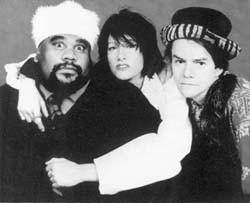
Bragging rights: British agit-pop rocker Billy Bragg–an American hero.

Editor’s choice: Spins that spun well

By Greg Cahill

EACH YEAR, the recording industry cranks out 26,000 new releases, a veritable tide of often overhyped aluminum. That’s roughly equivalent to the number of CDs in a well-stocked music store. And when you consider that a really well-stocked music store offers a large selection of catalog items as well–like all the Stones, Replacements, and Shadowy Men from a Shadowy Planet titles your heart could desire–there’s precious little space left for those new releases.

Thus, the time-honored tradition of best-of-the-year reviews.

Do music critics have time to listen to all 26,000 releases? Hardly. We’re too busy hiding from the torrent of dreck the major labels send us by vegging out on VH-1’s “Pop-Up Video.” Of course, it’s pretentious to present these lists as the year’s best. Still, they provide a chance to flag some noteworthy releases that might otherwise slip under the radar. So here are a few spins that spun, if not endlessly, then damned well on the old Onkyo this year:

Oscar Aleman Swing Guitar Masterpieces, 1938-1957 Acoustic Disc

HE IS HAILED as the Argentine Django Rheinhart. But some jazz buffs feel that guitarist Oscar Aleman actually had better chops than his more famous Gypsy counterpart. Marin mandolinist and label chief David Grisman sets the record straight on this two-CD set culled from four out-of-print classic LPs. Lots of American standards. Lots of Latin heat.

Beck Mutations DGC

THE SWEETHEART of the postmodern hip-hop scene lets his inner Ray Davies emerge while settling into a flower-pop groove that has more in common with the folksy psychedelia of Pink Floyd (circa Meddle) than current beatsters. This stripped-down, acoustic-based set is Beck’s most consistent work to date.

Billy Bragg & Wilco Mermaid Avenue Elektra

YOU CAN BET Springsteen would have given his impeccably capped eye teeth for this project. But British agit-pop star Billy Bragg (backed by Americana stalwarts Wilco) got the nod to record 15 lost songs from the archive of folk legend Woody Guthrie. The result is a glorious set of visceral folk rock that ranges from the intensely personal to the incisively satiric.

Eddy “The Chief” Clearwater Cool Blues Walk Bullseye

AFTER A LENGTHY hiatus, blues guitarist Eddy Clearwater comes roaring back on this rollicking barnburner produced by ex-Roomful of Blues guitarist Duke Robillard (who also provides some tasteful licks). The songs run the gamut from blues stomps to rockabilly to South Side strut. The key word: cool.

Ramblin’ Jack Elliot Friends of Mine Hightone

IT’S EASY to take Ramblin’ Jack for granted–after all, this Grammy-winning folk great plies his wares at the tiny Blue Heron in Duncans Mills and the colorful Western Saloon in Point Reyes Station. But a host of famous friends–including Tom Waits, Emmylou Harris, John Prine, Bob Weir, and Guy Clark–shine a light on this crusty troubadour on 11 duets.

Joe Ely Twistin in the Wind MCA Nashville

LYLE LOVETT got all the attention for his lukewarm collection of cover tunes, but fellow Texan Joe Ely shows that the Lone Star State still hosts some of the most dangerous music around, filled with jagged beats and Western bravado. Tex-Mex country rock as ornery as a Panhandle rattler.

Lisa Gerrad and Pieter Bourke Duality 4AD/Warner

ALPHA WAVE ALERT! Lisa Gerrard of Dead Can Dance and percussionist Pieter Bourke deliver a transcendent sound inspired by gothic-folk songs, Sufi chants, and early Christian music, all cloaked in Middle Eastern instrumentation and sparse, haunting arrangements. You might not end up speaking in tongues, but when Gerrard does, you can’t help marveling.

Bill Laswell Panthalassa: The Music of Miles Davis, 1969-1974 Columbia

Shirley Horn I Remember Miles Verve

THERE WAS NO shortage of tributes this year to the late, great jazz trumpet master Miles Davis, including a flood of reissues from Davis’ fusion period. These are two of the best. Bill Laswell tapped Davis’ innovative fusion material for a postmodern translation that reconstructs newly restored performances and previously unreleased themes from the landmark recordings In a Silent Way, On the Corner, and Get up with It. Some great grooves. Meanwhile, Washington, D.C., area pianist and vocalist Shirley Horn, whose work inspired some of Davis’ best ballads, reclaims three tunes from Davis’ Seven Steps to Heaven, as well as three from Porgy and Bess and a trio of others. Sultry. Sassy. Stunning.

Nick Lowe Dig My Mood Upstart/Rounder

BRITISH pub rocker dresses mostly melancholy love songs in blue hues. One reviewer likened these songs to the glowing embers of a dying romance. And one listen to “Cold Grey Light of Dawn” will show you why. Hard to beat.

Ernest Ranglin In Search of the Lost Riddim Palm

HE IS BEST KNOWN in reggae circles as the man who taught Bob Marley to play guitar, but Ernest Ranglin’s contributions to music include a stint with the pioneering Skatalites. Here Ranglin journeys to Senegal in search of the percolating beats that inform that upbeat, Jamaican dance music. In the process, he lays down some of the most ebullient jazz-inflected riffs of his distinguished career and taps into the soul of the African continent.

Lucinda Williams Car Wheels on a Gravel Road Mercury

HER SONGS HAVE been covered by everyone from Emmylou Harris to Tom Petty. Mary Chapin-Carpenter’s rendition of Williams’ “Passionate Kisses” earned them both Grammys in 1994. This year, this talented Texas singer-songwriter came into her own. Featuring achingly sweet vocals and chillingly honest lyrics, Car Wheels on a Gravel Road is rife with mostly autobiographical songs that compose a stark travelogue of the human heart.

From the December 3-9, 1998 issue of the Sonoma County Independent.

© Metro Publishing Inc.
A Christmas Carol & Inspecting Carol

Holiday Humbug

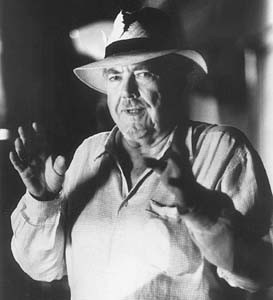
Tightwad: Eric Thompson plays the thrifty Scrooge in SCR’s A Christmas Carol.

Two ‘Carols’ moralize with mixed results

By Daedalus Howell

ALONG WITH expanding waistlines, credit card debt, and seasonal affective disorder, the holidays bring a spate of Yule-themed theatrical programming to provide a respite from rampant Christmas consumerism. This year’s helping includes Sonoma County Repertory’s lean and mean rendition of Charles Dickens’ A Christmas Carol, as well as the classic tale’s antidote, Pacific Alliance Stage Company’s Inspecting Carol, a convoluted riff on the Dickens chestnut.

A Christmas Carol

SCR DIRECTOR Jim DePriest offers a taut, nearly minimalist production of Dickens’ holiday classic, driven by the estimable talents of Eric Thompson and his marvelously persnickety Ebenezer Scrooge.

Thompson takes Dickens’ blueprints for Scrooge’s shantylike soul and builds a formidable edifice around the avaricious bean counter. Despite the one-dimensional nature of the original writing, Thompson draws Scrooge as a complex of defense mechanisms obscuring a humanity all but whittled away by anguish. His Scrooge is an eminently sympathetic character, albeit one spiced up with a delectable self-consciousness–he knows he’s nasty and clearly relishes it nearly as much as his redemption.

Thompson steers clear, however, of turning A Christmas Carol into a one-man Scrooge-fest. Plenty of room is left for the other players (many of whom are younger actors), who fill their roles with grace and aplomb.

Actor Tim Hayes’ ample talents seem channeled into his sonorous baritone as he plays in turns the ghosts of Christmas Past, Present, and Future. Hayes’ booming pipes recall Darth Vader’s resonant intonations, so much so that one half expects him to entreat Scrooge to “rule the universe together as father and son.”

Providing Scrooge’s back story is 13-year-old thespian Michael Spector, who offers a portrait of the capitalist as a young man. Spector, a striking and lucid performer, deftly shows the young Scrooge growing incrementally cooler and more distant throughout the production and is a fine and credible complement to Thompson’s characterization.

Bright young talents abound in this production (including the requisite plucky Tiny Tim played by Michael Cullen), which accounts, in part, for the show’s accessibility to children. On opening night, one rapt little boy chimed from the audience, “Is he nice now?” referring to Scrooge’s change of heart. The ability to inspire such engagement in young kids is one of the show’s finer attributes. Well done.

SCR’s A Christmas Carol plays through Dec. 19; Thursdays-Saturdays at 8 p.m. 415 Humboldt St., Santa Rosa. $12. 544-7278.

Inspecting Carol.

Inspecting Carol

DIRECTED BY Wendy McGothlin Wisely, playwright Daniel Sullivan’s Inspecting Carol depicts the backstage shenanigans of a community theater company’s annual production of A Christmas Carol. Theater about theater is an oft-played but still workable premise (Noises Off, Travesties) that might have worked here were it not for this play’s pesky insistence that it is a comedy despite the production’s copious evidence to the contrary.

Likable Paul Silverman plays Wayne (an aspiring but indubitably terrible actor) seeking placement at an ailing repertory company whose National Endowment for the Arts funding has been frozen pending proof of artistic merit (PASCO is playing with fire). The theater’s business manager (Michael Ray Wisely) and director (an on-the-mark Jessica Powell) mistake the neophyte actor for an undercover NEA agent whose stage ambitions must be heeded lest it mean curtains for the theater.

Idiocy almost prevails over predictability as Wayne stands in for the show-within-the-show’s Tiny Tim (replacing sharp sixth-grader Barry Brownstein’s phlegmatic, candy-mad Luther), and everything that can go wrong … well, you know.

Director Wisely’s real mistake was saying “Why not?” to Sullivan’s enfeebled material when she should have left it at “Why?” By far the most upsetting thing about Inspecting Carol is watching good actors (Robert Parnell’s Scrooge is brilliant) plod through the clotted plot en route to a snap-on catharsis instead of marching it back to the workshop.

PASCO’s Inspecting Carol plays through Dec. 13. Thursdays at 7:30 p.m., Fridays-Saturdays at 8 p.m.; Sunday matinees at 2:30 p.m. Spreckels Performing Arts Center, 5409 Snyder Lane, Rohnert Park. $12-$14. 588-3400.

From the December 3-9, 1998 issue of the Sonoma County Independent.

© Metro Publishing Inc.
Quicksilver Mine Co.

0

Diggin’ It

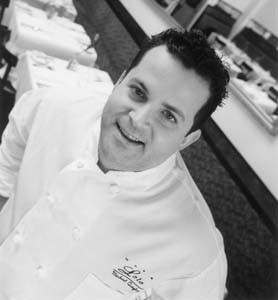
Local showcase: Quicksilver Mine Co. owner Khysie Horn and store manager Ron Higgins specialize in locally made handcrafted gift items.

QUICKSILVER MINE CO. would certainly be the anchor member in our Made-in-Sonoma Hall of Fame, if we had one. In a county quick and constant in its commitment to indigenous products, this Sebastopol store distinguishes itself with particularly strong civic zeal: all the items in the Quicksilver Mine Co. are made, grown, or otherwise created in Sonoma County. Quicksilver is a perfect place to buy gifts that show out-of-area friends and relations what a gorgeous, fertile, creative patch of earth we’ve got here.

And even if you forgot your list, you’ll find something even better on these crowded shelves.

While owner Khysie Horn gets many submissions from local artists, craftspeople, and manufacturers, she still ends up following folks around to get their goods for them. “Sometimes it takes a long time to hook up with people,” says Horn. While she’s out stalking potential consignments, longtime employee Ron Higgins minds the store from behind the counter, where he can sit and knit his sweaters, socks, and stiffly stuffed animals (which he sells at the store) and still keep an eye on things. Ask him a question and he won’t drop a stitch.

He’s been here for 10 years; he knows the merchandise.

New this year to Quicksilver are L. O’Neill tapestry garments. Made in Santa Rosa, these vests ($129) and handbags ($46-$77) feature tug-resistant buttons crafted with semi-precious beads as a perfect accent for the rich jewel-tone colors of these sturdy and beautiful pieces of wearable art.

Hanging on a rack near the corner, the linens made by Mana Textiles of Sebastopol are easy to miss. But once you get up close enough to touch these beautiful handwoven linens in simple colors and luxurious fabrics–ranging in price from $16.50 for creamy soft guest towels, to $90 for a chenille runner and $180 for a supple, heavy throw–you won’t want to put them down.

Amid the multitude of jewelry, pens, and other little gadgets in the showcase, a simple wooden kaleidoscope from Greg Stevenson of Santa Rosa caught our eye. This has no little bits of plastic confetti, just a mysterious crystal embedded in one end of a smooth wooden tube. What you see when you look through depends on what you’re looking at: the patterns are your view, refracted into dozens of swirling images. Low-flash toy for a high-flash era, at just $28.

There’s more here, of course: food and drink (with a focus on hard-to-find wines), ceramics, books, and a rotating art exhibit in the back half of the store. But the bounty that’s presently bulging from the shelves has taken 15 years to build up. The Sebastopol storefront is significantly smaller than the former Russian River location, but Horn is happier with the year-round population. And she also loves the community support for their goal, which is simple:

“We want to help keep money in local circles,” she says, “and keep the artists alive and well.” –Marina Wolf

Quicksilver Mine Co., 154 N. Main St., Sebastopol, is open daily from 10 a.m. to 5:30 p.m.; special hours, 10 a.m. to 8 p.m, Thursdays and Fridays only, till Christmas.

From the December 3-9, 1998 issue of the Sonoma County Independent.

© Metro Publishing Inc.
Sonoma County Gifts

0

Made in Sonoma


Michael Amsler

Mining local treasures: Quicksilver Mine Co. owner Khysie Horn and store manager Ron Higgins showcase works by Sonoma County artists.

Our annual guide to great gifts made close to home

HANDS ON. Handcrafted. Homegrown. There’s something special about great gift items made right here in the heart of wine country. Bumper sticker sentimentality aside, there are a lot of good reasons to think globally and shop locally. From the simple elegance of locally made Pomo baskets sold at Tribal Beginnings to the colorful photography of Robert Janover’s Sonoma County showcase calendars (marketed by True Images; $10.99), here are a few ideas to start you on your way.

Polish That Bod

IN HER SODDEN five-year pursuit to find the ultimate body treatment, Sebastopol entrepreneur Karen Ciesar, 32, literally took hundreds of baths laced with all manner of experimental additives that may have been natural but weren’t always aesthetic.

“Some were great, and some were gross,” she recalls with a laugh. “Grit, grunge, weird floating matter that felt like soup–I’ve soaked in it all.”

One day, after becoming sufficiently prunelike, Ciesar finally hit on an age-old combination that could be adapted for modern use in the tub or shower. She rapidly toweled off and began to blend aromatic concoctions of essential oils, organic oils infused with herbs, and sea salt–all in one jar to be scooped out by the handful, blended in the palm and slathered onto moist skin.

“Before soap, people used sand to exfoliate and clean their skin, and then they anointed themselves with oil,” explains Ciesar. “Now, add our modern showers, and we can do it all-in-one with this mixture.”

Voilà! Ciesar’s Trillium Herbal Co. was born and her cornerstone Body Polish was launched about a year ago. According to Ciesar, the Body Polish benefits go beyond cleansing and moisturizing. “When you polish the body, you come out of the shower and feel completely different–clean and renewed from stress and intensity,” she says. “We live in a toxic world; the sea salt pulls chemical toxins from the body. Furthermore, we live in an electromagnetically polluted environment [from computers, cars, even wiring in the house]; the sea salt and organic oils together cleanse and balance the body.

“It’s a healing product.”

The sensual goop, which also boasts intoxicating ingredients, such as eucalyptus, rose geranium, ginger, lavender, and tangerine (depending on the blend), is getting some major strokes. “People recognize that this product is something different and not of the normal, everyday world,” says Ciesar. “When people use soap they don’t apply it with a healing touch. With Body Polish, you work it in and it feels satisfying to scrub with.”

According to its inventor, Body Polish has inspired some sublime gatherings where partygoers roll up their jeans, slide their legs into a baby pool, sip cocktails, and polish each others’ feet. And, at certain baby showers, Body Polish fans perform a special ritual in which they anoint and smooth mama-to-be’s tootsies with the fragrant preparation.

“People love it,” enthuses Ciesar, a former Wisconsin attorney who recently moved to Sonoma County to work more closely with local herb growers and oil producers. “I’ve been buying herbs from Sonoma County growers for year, and I came here to connect with the herbal community. I found organic ingredients here that have transformed the product.”

Body Polish is blended and packaged at Trillium Herbal Co. in Sebastopol. “Glass jars are filled with herbs and oils and left to bake in the sun for 45 days [to process the ingredients],” says Ciesar. “It’s the old way.”

Body Polish is available in three ayurvedic blends: Zephyr Wind for calming; Virgin Forest for cooling; and Aphrodite’s Allure for enhancing circulation. Individual 8-oz. jars cost $16, or $45 for a three-pack, including one of each blend.
–Paula Harris

Body Polish is available at Milk and Honey in Sebastopol, Food for Thought in Petaluma and Sebastopol, Community Market in Santa Rosa, Oliver’s Market in Cotati, Petaluma Natural Foods, and Petaluma Market. 829-9402.


Quicksilver Mine Co. would be the anchor in our Made-in-Sonoma Hall of Fame.

Say Cheese

WHY DID YOU DO IT? Alien implant, split-second epileptic episode, a dragging magnetism to be everybody’s yes-person? What made you say that you’d host the family holiday dinner this year? Too late now: The damage is done and the invitations sent. But after you scrape the rust from the roasting pan and count the napkins (lip-chafing linen being one of the signs of a truly quality spread), give yourself a gift of love: Call J.M. Rosen’s in Petaluma and put your name on the list for a box or two of their famous cheesecake.

Jan and Michele Rosen’s work has a big following locally, but they’re even more famous down in Southern California, where the sisters’ handiwork has pride of place on dessert menus at the Regent Beverly Wilshire, the Beverly Hills Hotel, and other feeding grounds of the rich and famous. The cheesecakes come in regular, several varieties of chocolate, and, for the holidays, pumpkin, but none of the options are ordinary. The cake embodies the ineffable cheesecake paradox–creamy, yet firm–while the crust avoids the whole crumbly graham-cracker issue entirely and moves into a zone of caramely, flaky grace.

A medium cake serves eight for a mere $23, while a larger cake serves 12 to 16 for $35. If one thing can make up for soggy stuffing, a rapidly draining liquor cabinet, and the kids’ table holding the gathering hostage for a simple pan of Spaghetti-Os, this is it.
–Marina Wolf

J.M. Rosen’s is located in the Golden Eagle Shopping Center, 54 E. Washington St., Petaluma. 773-3200.


A-mazing Puzzles

IT WOULD BE MORE than accurate to call Larry Evans and Nancie Swanberg “multitalented” or “multidimensional,” since these long-associated Petaluma artists have their fingers in multiple metaphorical paint pots–and in multiple dimensions as well. Swanberg–an accomplished painter and portrait artist, mastering the use of oil paints in her much sought-after creations–has worked variably as a picture book illustrator, a designer of dolls, and a magazine developer; that last job, as designer of the pilot issue of the renowned kiddie lit mag Cricket, was the beginning of a long association with that publication.

“Illustrating was fun,” she admits, “But my real love is oils. I like a big canvas. I like creating something more, uh, difficult. I’m fortunate that I’ve been able to do a little of everything.”

As for Evans, the award-winning architectural artist is also something of a legend as a creator of mazes. He’s crafted more than three dozen books over the last 20 years, fashioning eye-boggling mazes that are far beyond the usual two-dimensional boundaries of most similar books. His work is often compared to that of the optically eccentric M. C. Escher, though Evans began drawing his labyrinthine visions long before the Escher craze hit America. His newest is appropriately named The Super-Sneaky, Double-Crossing, Up, Down, Round & Round Maze Book (Klutz, $12.95). It’s a great gift idea (for people of any age, truly, though the announced target age for the book is 9-12) that will appeal to anyone that enjoys having his or her mind bent around backwards and twisted like a balloon animal.

“They start out in my brain,” says Evans of his enigmatic architectural tangles. “I see them forming.” With a chuckle, he adds, “I have to put them on paper just to get them out of my head.”

His maze-making career began while on vacation in Hawaii. His children, less than stimulated by the tropical surroundings, required a little extra diversion. So Evans sketched out a maze on a paper bath mat from the hotel room. The kids liked it, so he found more bath mats and drew more mazes. By the time he returned home, Evans knew he had a book in the works.

The publishing world agreed; his puzzle books are hits around the world.

Taking this brain-teaser thing to an even higher level, both Evans and Swanberg have published jigsaw puzzles–dozens of them–featuring their own painted designs. It’s hard enough to find your way out of one of Evans’ mazes, or to locate all the hidden mermaids or unicorns in one of Swanberg’s fantastical landscapes, but just try to do it when the puzzle is in 1,000 pieces. Once assembled, the result is pretty darn stunning: Evans’ moody watercolors have a way of drawing you deep inside them, and Swanberg’s complicated, evocative netherworlds are hard to look away from, once you’ve been hooked in.

Available at many major retail stores, the puzzles–along with framed paintings by both artists–are easily obtained at the oh-so-eclectic art shop Gallery One, 209 Western Ave., Petaluma. 778-8277.
–David Templeton.


Michael Amsler


Crane Ceramics

ETHEREAL FLOWERPOTS, oddly flattened-out, and two-dimensional. Curvaceous vases mysteriously painted in dreamlike pastel colors. Short, stout teapots seemingly floating in midair, bumping disarmingly against the wall. Petaluma ceramicist Diana Crane has made a name for herself with these striking creations that seem to have been imported from some whimsical netherworld where flowerpots and kettles–but not the real, dried flowers that push up and out, three-dimensionally from within–all have been squeezed as flat as pancakes.

The pieces work as actual vases–each carries a small open-ended compartment in which a sheaf of dried wheat or flowers can be placed, adding to the otherworldly look: a kicky blending of different dimensions.

Crane’s work ranges in price from the low $20 range–simple terra-cotta flower pots–on up to several hundred dollars for larger pieces, such as an enormous bell-jar vase, elaborately decorated with swirls and studded with pointed little doodads, hovering inches above a two-legged table improbably standing by itself.
–D.T.

The work of Diana Crane is available in fine art stores around the country; locally, try Gallery One, 209 Western Ave., Petaluma. 778-8277.


Over the Rainbow

THERE ARE SO MANY creative cooks in our county, releasing cases of swoony toast toppings, that it’s hard to call out just one for your holiday attention. But the little jars with handwritten labels that Nan Solomon of Rainbow’s End Farm stacked out at the Santa Rosa Thursday Night Market were just too cute to ignore. The variety list is irresistible, too, containing such gems as strawberry rhubarb, raspberry peach, and blackberry flavored with rose geranium. The standard single-fruit offerings are myriad, and there are even some sugar-free jams to be had.

Solomon has been cooking up sticky serendipity on the edge of Sebastopol for 10 years now. Many ingredients are foraged from the 46 non-cultivated acres of old Italian farmland, and all are organic to boot. You can’t find this stuff next to the peanut butter at Safeway, which is just as well: a bit of searching adds to the value. Half pints of Rainbow’s End jams and jellies cost about $4.50, and worth every last cent.
–M.W.

Solomon sells at the Quicksilver Mine Co., 154 N. Main St., Sebastopol, and will be putting her entire inventory out at the Occidental Crafts Fair on Dec. 13-14. 874-2315.


Set in Stone

JIM AND VIVIAN Strand practice the enviable art of carving stone, accomplishing in minutes what takes a stream of water centuries to accomplish. But water was never so accurate: The Strands’ carvings, made from sandblasting through stencils, are as sharp and clear as a line drawing.

Jim Strand learned the techniques of sandblasting at an East Bay shipyard. By narrowing the blaster’s focus and pitting it against the surprisingly non-resistant surface of salvaged scraps of granite, marble, and slate–says Vivian, “We’re into basic recycling here”–Jim has achieved a delicate precision that is eminently suitable for meditative objects or decorations. The Strands have created a few of their own designs, but most of the carvings are based on Celtic knot art, Oriental calligraphy, and Native American art.

“We prefer to work with sacred symbols or what we feel is heartful artwork from different cultures,” says Vivian. A small portion of their stock can be seen at Options, 126 Matheson St., in Healdsburg and at Stepping Stones Bookstore at Luther Burbank Center, 50 Mark West Road, in Santa Rosa. But the Strands also will work with any designs brought to them.
–M.W.

Make an appointment now and avoid the Christmas custom-order rush by calling the Strands at their Kenwood studio. 833-6674.


Michael Amsler


Living out Loud

THE WINTER HOLIDAYS bring certain essential sounds: piping carols, sing-song prayers, oral traditions that get handed down from generation to generation. If you’re too shy to do your own storytelling, you can at least make a nod to the tradition with a gift from the Pacific Storytellers collection of tapes, videocassettes, and storytelling materials for young and old alike.

Sandra MacLees, a storyteller out of Healdsburg, has been coordinating the clearinghouse since 1990, back when it was just 12 professional storytellers from California looking for an outlet for their merchandise. The organization has expanded to include works from 25 storytellers from the Pacific Northwest and Hawaii as well, but Sonoma County still has a solid representation. Among the local participants in the venture are Kendall Haven, with cartoony tales and happily moral endings for very young children (a $12.95 book and cassette, Killer Brussels Sprouts, is his bestseller), and Celtic storyteller and musician Patrick Ball, who produces primarily traditional brass-string Celtic harp music and also offers The Storyteller, a tape of Irish stories and music, for $9.95. MacLees is offering her own recordings, too: Sweet and Bittersweet, a multicultural folktale collection about all the wonderful and crazy things that love makes us do, and the autobiographical Pieces of My Life. Both are available for $9.95.
–M.W.

For more information about these and other good storytelling gifts, see the Pacific Storytellers’ website or call 433-8728.


Word Up

WRITING IS LIKE getting rich: Most of us want to do it, but the trick is getting started. (Not that the printed word will leave you rolling in the dough, but writing has other rewards.) So how the heck do you get the ballpoint rolling? One place to start is with two books from Tannery Creek Press that invite you to scribble in their pages. Writing Your Life Story Has Never Been Easier is filled more than 250 prompts, 12 subject categories, and quotes from the likes of Maya Angelou to get the ink flowing. For the aspiring travel writer, there is From Here and There & Back Again, a sturdy tome packed with travel quotes, prompting sentences, and handy storage pockets.
–Patrick Sullivan

Both books are printed on recycled paper and are available at the Quicksilver Mine Co., 154 N. Main St., Sebastopol, or directly from Tannery Creek, P.O. Box 221, Graton, CA 95444-0221. 829-1966.


Angelo’s World

THE COUNTRYSIDE surrounding Angelo’s Meat Market in Petaluma takes on a certain pungency as you approach the ramshackle outbuilding on rural Adobe Road. The air is heavy with spices, brine, smoke, and grease–all the smells of a busy smokehouse, where Angelo Ibleto and his family have been making jerky, sausages, and deli items to go with them, for over 30 years.

Angelo’s–famous for his famous salsas as well–also has a deli in downtown Sonoma, but the big word for the holidays is shipability, with orders easily taken over the phone or by fax, e-mail, or the Web. One of the simplest things to ship is a bag of zesty jerky, which Angelo’s sells in eight varieties–including teriyaki, plain, Cajun, hot peppered, and garlic–for $24 per pound, and will ship anywhere for just $3.75 per pound. Angela Dellinger, Angelo’s daughter, also can custom-pack a gift box with your choice of mustards, sauces, olives, and sausages.

Hey, nothing says love and holiday cheer like a garlicky box of Italian delicatezze.
–M.W.

Angelo’s Meats is located at 2700 Adobe Road, Petaluma. For info, call 763-9586 or 800/631-4796. Send e-mail to mo********@*ol.com, or check out the website.


On the Rack

EVERY YEAR we joyfully give gallons and gallons of good Sonoma County wine, never thinking about how the people on the other end are going to store the stuff. So the bottles inevitably wind up standing on end in a cupboard next to the tequila, with the corks drying out and the labels peeling from the stovetop heat.

Stop the insanity! Go to the Wine Rack Shop in Sonoma, where all kinds of wine-storage systems can be had, ranging from low-budget modular to high-end cellar installations, as well as vats and vats of wine paraphernalia. Many of the items in the shop are made locally, such as a line of finished pine racks of varying sizes made in Petaluma (beginning at $24) and a glass-topped wine-rack table made of elegant whorls of steel ($595). The Wine Rack Shop also features a beautiful line of wrought-iron wine stands by Roger Collins of Collins Welding. The trailing vines cradle bottles and glasses in gravity-defying positions, and the varying hues of metal make shimmering vitisculpture that would grace any wine-lover’s abode, at prices from $125 to $395 and up.
–M.W.

The Wine Rack Shop is located at 536 Broadway, Sonoma, and can be reached at wi******@*****es.com or by calling 888/526-RACK.


Making It Big

KATE MOSS and Callista Flockheart notwithstanding, around 50 percent of American women are size 14 or over. As a present to yourself or the larger woman on your shopping list, why not treat that statistic not as a rebuke, but as a rallying cry for more and better clothing, made to fit and feel comfortable and look fabulous on all sizes of big?

Making It Big has been doing exactly that for 15 years now, first out of a Main Street showroom in Penngrove, now in a larger store space in Rohnert Park, where the racks and racks of seasonally colored clothing have enough room to show off their full lines. MIB’s elegant designs in natural fibers, ranging from sweeping rayon dresses for evening to playful, sturdy cotton activewear and clean-cut office linens, draw shoppers from all over the Bay Area to the store, and also have an extremely loyal mail-order following. Gift certificates are available if you’re just not sure. Not only are the price and product right–shirts from $35, dresses from $55, all extremely well made–but the manufacturing is refreshingly ethical in this age of Third World sweatshops: MIB produces nearly all of its own label in the county, at a fair wage to the workers.
–M.W.

Drop by the store at 135 Southwest Blvd., Rohnert Park. The catalog, which uses real-sized women for models, can be ordered by calling 795-1995, or viewed in its entirety on the Web.


From the December 3-9, 1998 issue of the Sonoma County Independent.

© Metro Publishing Inc.

Lolita

0

‘Lolita’ Lingers

New film version of Nabokov’s taboo tale of obsession still has the reek of scandal

By

HOW DID THEY ever make a movie out of Lolita?” was the irresistible tagline in the ad campaign for the 1962 film version of Vladimir Nabo- kov’s scandalous novel about a middle-aged man’s obsession with a nymphet. That question isn’t any easier to answer in 1998.

Director Adrian Lyne’s controversial new adaptation of Lolita, starring 15-year-old Dominique Swain, was filmed in part in Petaluma. But it has only just returned to Sonoma County via a torturously winding path. The $58 million film was released in Europe in 1997, but ended up a virtual pariah in America. It had a one-week Oscar-qualifying run in July of ’98 in Beverly Hills, and then played on Showtime. Only recently has Lolita hit U.S. movie theaters in a limited release.

Lyne’s previous films, including Flashdance, Indecent Proposal, 9 1/2 Weeks, and Fatal Attraction, are fired up by technology, coarse shocks, and misogyny. He is, in fact, the archetypal director who graduated from TV commercials to feature films. In an Esquire interview about the movie, Lyne complained that his reputation as a maker of commercials “gets endlessly thrown at you … though I haven’t done a commercial in 10 years.”

It’s an astonishing statement when you consider the array of merchandise his films have sold: everything from CD players to sweatshirts torn at the neck. Indeed, many critics expected that Lyne’s Lolita would be soft-core pornography: Saddle Shoes Diaries.

As it turns out, that is not the case. The rumor that Lolita was not good enough to be released to theaters seems to have been a face-saving excuse invented by the various studios that passed on the film. (Worse than 9 1/2 Weeks, Flashdance, and Indecent Proposal? Yet all of these Lyne films were released, more’s the pity.)

Lolita is set in the United States shortly after World War II. A European professor named Humbert Humbert encounters a nubile, underaged American girl named Dolores Haze, nicknamed Lolita, and ends up both lover and in loco parentis. Lolita, no one’s idea (except Humbert’s) of a pliable nymph, is wily enough to hold her own ground. Humbert eventually loses Lolita to a shadowy figure who pursues him across the country.

Screenplay writer Stephen Schiff’s sharp, faithful adaptation of the book complements the casting. Dominique Swain makes a clever, provocative Lolita, strongly resembling Carrie Fisher in her Lolita part in Shampoo. The reliable Jeremy Irons is Humbert. And Frank Langella’s Quilty the mysterious is so well cast it’s impossible to think of an improvement; this paunchy poltroon is a weird cross between Tennessee Williams and Gore Vidal. The locations are western United States, rather than the English landscapes Stanley Kubrick tried to pass off as American in his version.

Yes, Lolita is easily Lyne’s best work, thanks to the film’s fidelity to a great novel, but it’s not much fun. If you see it without reading the book, you’ll think Lolita is a dusty classic that time has passed by. You know what you’re up against when you see an early shot of a glossy steam engine puffing through the mist–the Merchant-Ivory Express. Lyne tantalizes us with glimpses of Swain’s quite postpubescent body and then hits us with the sermon afterward. It’s an anti-sex sex movie, an approach that ties in with the sexual listlessness of most of Lyne’s films. Though there’s a lot of sex in Lyne’s work, when was it very joyous? Lust is always tangled with power or money in his movies. Even the comic kinkiness of 9 1/2 Weeks was a power exchange: Mickey Rourke feeding his blindfolded lover, Kim Basinger, mystery foods, as if he were initiating her into a fraternity.

By zeroing in on the power struggle between Humbert and Lolita, Lyne has rephrased an extremely funny book as plain tragedy. He identified the film noir elements in the book, but then pursued them single-mindedly. The locations avoid ’50s exuberance in favor of Lyne’s typical clinical blue-white lighting and clammy mist.

NABOKOV once wrote of Lolita that he was advised by an editor to change his novel to a Gothic, with “gaunt, arid surroundings, all this set forth in short, strong, ‘realistic’ sentences (‘He acts crazy. We all act crazy, I guess. I guess God acts crazy. Etc.’).”

Aridness and gauntness mark this new Lolita, fattened with some juicy bits by Swain, Irons, and Langella. Lyne’s Lolita is a brave film, yes, but a glum one, badly missing the sophistication of Kubrick’s 1962 version, and falling far shy of the original novel.

Nabokov’s book was written in 1953 and published by a small French press, like its only rival as the masterpiece of 20th-century English literature: James Joyce’s Ulysses. Also like Ulysses, Lolita was banned, even in Paris. The book was brought to America in 19 at children must try to fight their way through every day.

The novel does not lack a moral dimension. Decades before incest victims by the legions trouped into the studios of Jenny Jone, Nabokov understood what sex with an adult usually does to a child. It’s not the sex itself, not the robbery of some sort of vague innocence. In a soaring passage in which he remembers watching children play, Humbert laments as his final, bitterest regret that he took Lolita’s childhood away. Through the misuse of his power over her, Humbert really is a monster who has to live with his shame until the day he dies. Moral enough for William Bennett, really.

Still, by taking on Lolita, Lyne should have known there is no surer path to censorship than to discuss the sexual relations of children and adults. His detractors are worried about his subject matter, not his aesthetics.

In fact, there are those who point to a new film of Lolita as further evidence of our moral decline. Of course, legislating against pigtailed nude models on the Internet is easier than dealing with deeply underfunded schools and the lack of medical care or nutrition. It’s easier to attack the symbolic degradation of children than it is to do something about the real world–a world that children must try to fight their way through every day.

Lolita plays Thursday, Dec. 3, at 6:40 and 9:25 p.m. at Sebastopol Cinemas (6868 McKinley St., Sebastopol; 829-3456) and again on Wednesday and Thursday, Dec. 9 and 10, at 6:50 and 9:35 at Washington Square (219 S. McDowell Blvd., Petaluma; 762-0006).

From the December 3-9, 1998 issue of the Sonoma County Independent.

© Metro Publishing Inc.
The Dog Pound

0

Last Words

By Mad Dog

PEOPLE HAVE uttered some very interesting last words. Right before he died, Douglas Fairbanks declared, “I’ve never felt better.” H. G. Wells said, “Go away … I’m all right.” Obviously they were both wrong.

They might have been delirious. Then again, they might have been optimistic. Chances are they were really just trying to make their family and friends feel better, much like Bill Clinton when he said, “I did not have sexual relations with that woman” or Bill Gates when he claims not to remember any of the e-mails he wrote threatening to take over the world unless everyone started using his Web browser. Apparently honesty on the deathbed is no more important than it is during life.

There’s little question that we’d all like to say something truly memorable before we go, but few of us get the opportunity. Even if we did utter something wonderful, what are the chances anyone other than the dog who looked at us like we were nuts when we told him to “go get help, Lassie!” would ever hear it?

One way to make sure people hear what you say is to become a condemned murderer, since they always get the opportunity to speak some last words. And there’s invariably at least one reporter on hand to write them down. This, along with the obligatory movie of the week deal, marriage proposals that come in the mail, and free last meal of your choice, makes it a career choice worth considering for those who aren’t ready for community college or have flunked out of nail technician’s school.

Right before being executed, Gary Gilmore simply said, “Let’s do it.” James Rodges, when asked if he wanted anything as he was facing a firing squad, replied, “Why yes–a bulletproof vest.” And George Appel had the right attitude as he was about to get strapped in the electric chair, declaring, “Well, gentlemen, you are about to see a baked Appel.” Last words are like comedy: timing is everything.

There are a number of considerations to make when formulating your last words. For one, ultimatums aren’t a good idea. Oscar Wilde tried this when he said, “Either that wallpaper goes, or I do” and since there wasn’t a Home Depot in Paris at the time, well, Oscar went.

You should try not to sound bitter when you utter your last words. Neither should you be a smart aleck. Remember, this is your final stab at immortality, and that old saying is true: You never get a second chance to speak your last words. Another about-to-be-executed killer, Thomas J. Grasso, followed both of these rules when he matter-of-factly set the record straight about his last meal by saying, “I did not get my Spaghetti-O’s, I got spaghetti. I want the press to know this.”

There’s another type of famous last words–those which we wish we hadn’t said. These are especially problematic because we continue to live, meaning we’re saddled with them forever. In 1927, Harry Warner, one of the famous Warner Brothers, asked, “Who the hell wants to hear actors talk?” That’s something every Senate subcommittee chairman asks to this day when Hollywood stars parade in front of them pretending to be experts on foreign affairs because they slept with the French co-star of their last movie or claiming to know everything about atomic energy because they auditioned for a part in The China Syndrome.

People utter these foot-in-mouth last words all the time. I suspect Minnesota’s Hubert “Skip” Humphrey said something like “But the guy’s a wrestler, fer Christ’s sake,” when he heard that Jess “The Body” Ventura was going to run against him in the recent governor’s race. Sure Ventura is a wrestler. He’s also going to be the state’s new governor, proving once again that a good nickname is important if you want to win an election.

Then there’s Dr. Laura Schlessinger, whose ratings and obnoxiousness have unseated Rush Limbaugh in the syndicated radio circuit. I can envision her years ago saying, “Sure, you can take some photographs of me naked. Who would want to see them anyway?” How fateful those words would have been now that a judge ruled that Internet Entertainment, the same people who posted Tommy and Pamela Anderson Lee’s honeymoon video online, can put Dr. Laura’s photos there, too. Of course, this still doesn’t answer her question: Who does want to see her naked?

What these people’s last words will be on their deathbed remains to be heard. Perhaps they’ll think of something beforehand to make sure they’re prepared. This is the last rule of famous last words, one that Pancho Villa forgot about when he was clutching onto a comrade and said, “Don’t let it end like this. Tell them I said something.” Isn’t that the same thing Harpo Marx said?

From the December 3-9, 1998 issue of the Sonoma County Independent.

© Metro Publishing Inc.

Credit Cards

House of Cards By Abby Scher TELL YOUR FRIENDS and relatives you're writing an article on credit cards and see what happens. Everybody has a horror story. Here are only two I've heard recently. A friend who pays off her credit card balance every month received a letter over the summer from her...

Brenda Knight

Other Voices Women of the Beat Generation. Author Brenda Knight talks about 'Women of the Beat Generation' By Patrick Sullivan ONCE UPON A TIME, not so very long ago, the phrase "Women of the Beat Generation" would have elicited either honest bewilderment or frank derision. Millions of readers have, at one time or another, howled along...

Wine Gifts

Grape Gifts Holiday items for that wine enthusiast in your life By Bob Johnson I COULDN'T tell you the names or the vintages of the most enjoyable wines ever to moisten the lips of this grape juice-stained wretch. The best wines, yes. The most enjoyable wines, no. That's because the most enjoyable wines always are...

The Scoop

Sex on the Brain By Bob Harris A NEW STUDY SHOWS that if you watch Jerry Springer, you're actually more likely to wind up on his show. Consider: In an effort to prevent the spread of AIDS, some labcoats at Emory University just examined the TV habits of teenage girls between the ages of 14 and...

Spins

Fave Raves Bragging rights: British agit-pop rocker Billy Bragg--an American hero. Editor's choice: Spins that spun well By Greg Cahill EACH YEAR, the recording industry cranks out 26,000 new releases, a veritable tide of often overhyped aluminum. That's roughly equivalent to the number of CDs in a well-stocked music store. And when you consider...

A Christmas Carol & Inspecting Carol

Holiday Humbug Tightwad: Eric Thompson plays the thrifty Scrooge in SCR's A Christmas Carol. Two 'Carols' moralize with mixed results By Daedalus Howell ALONG WITH expanding waistlines, credit card debt, and seasonal affective disorder, the holidays bring a spate of Yule-themed theatrical programming to provide a respite from rampant Christmas consumerism. This year's...

Quicksilver Mine Co.

Diggin' It Local showcase: Quicksilver Mine Co. owner Khysie Horn and store manager Ron Higgins specialize in locally made handcrafted gift items. QUICKSILVER MINE CO. would certainly be the anchor member in our Made-in-Sonoma Hall of Fame, if we had one. In a county quick and constant in its commitment to indigenous products,...

Sonoma County Gifts

Made in Sonoma Michael Amsler Mining local treasures: Quicksilver Mine Co. owner Khysie Horn and store manager Ron Higgins showcase works by Sonoma County artists. Our annual guide to great gifts made close to home HANDS ON. Handcrafted. Homegrown. There's something special about great gift items made right here in the heart...

Lolita

'Lolita' Lingers New film version of Nabokov's taboo tale of obsession still has the reek of scandal By HOW DID THEY ever make a movie out of Lolita?" was the irresistible tagline in the ad campaign for the 1962 film version of Vladimir Nabo- kov's scandalous novel about a middle-aged man's obsession with a nymphet....

The Dog Pound

Last Words By Mad Dog PEOPLE HAVE uttered some very interesting last words. Right before he died, Douglas Fairbanks declared, "I've never felt better." H. G. Wells said, "Go away ... I'm all right." Obviously they were both wrong. They might have been delirious. Then again, they might have been optimistic. Chances are they were really...
11,084FansLike
4,606FollowersFollow
6,928FollowersFollow

