
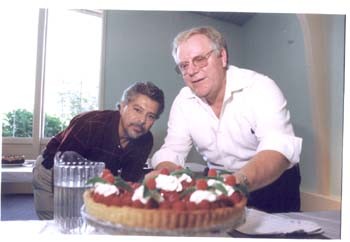
Talking Pictures

0

Dream King

Author Terry Brooks on ‘Star Wars,’ fairy tales, and the modern decline of imagination

By David Templeton

Writer David Templeton takes interesting people to interesting movies in his ongoing quest for the ultimate post-film conversation. This column is not a film review; rather, its a freewheeling, tangential forum on life, alternative ideas, and popular culture.

1977 WAS A very good year for Terry Brooks. The young attorney watched his very first novel–the colorful fantasy epic The Sword of Shannara–make its way up the bestseller charts, then stay there for a remarkable five months. That would have been enough to make anyone’s year. But there was more: within weeks of Shannara‘s release, Brooks experienced a second life-changing event that he’d had no way of anticipating.

It was called Star Wars.

“I was living in a small town in Illinois,” he recalls. “I saw Star Wars right away, and was, to say the very least, amazed.”

1977 also turned out to have been a good year for the fantasy genre. Coupled with the resurgent popularity of J.R.R. Tolkien’s Lord of the Rings and the noisy emergence of the Dungeons and Dragons role-playing movement, Star Wars and Sword of Shannara arrived just in time to bask in a kind of fantasy renaissance.

“As far as publishers and studios were concerned,” Brooks explains, “until Star Wars and Shannara, there were no expectations for fantasy. At all. There was only Tolkien, and nobody could do Tolkien but Tolkien. The Lord of the Rings was a fluke, publishers thought, and it would never be repeated again.”

Brooks, who now lives in Seattle, went on to write seven Shannara sequels–he has over 12 million books in print–and has set a record as the first author to write 14 consecutive bestsellers. In a sense, is newest work brings him full circle back to where he began; it’s the novelization of Star Wars: Episode 1–The Phantom Menace (Del Rey; $25), a fitting match for Brooks, whose skillful exploration of outrageous otherworlds is perfectly suited to George Lucas’ mind-boggling visions.

Ironically though, Brooks has only recently seen the movie on which his novel is based.

“I had to whine a lot before anyone at Lucasfilm would let me see the movie,” he admits with a warm guff of laughter. “So I saw the film at an advance screening–and let me tell you, it takes something away from the film when you’ve just written the novelization of the screenplay. I spent my entire time critiquing what I’d done, comparing it to the movie. It was more like editing a book than the typical movie-going experience.

“So now that that’s out of my system, I’ll have to go see it again.

“What was interesting to me,” he relates, “was to see the reactions of the people. They varied considerably. The young kids in the audience, they loved it. They got very excited. They clapped and they cheered. And the older people who looked like they’d come directly from truck driving or something, they got into it pretty well, too.

“The ones who seemed more standoffish and reserved were the ones in suits, the more sophisticated people, the lawyers and the doctors and what-have-you–of course I’m generalizing here–but those were the ones that seemed to stand back and go, ‘Hmmmm.’ ²

“Was that a reaction they were having to The Phantom Menace,” I wonder, “or was it a response to fantasy in general?”

“Well, that’s a very interesting question,” Brooks replies. “And I don’t know the answer. There’s certainly a large group of people out there who trivialize fantasy, whether it’s fantasy as literature or fantasy in the movies. I’ve been fighting that war for years. A lot of people still view fantasy as a lowbrow form of art, not worthy of a lot of time and effort. Which is another one of those grand stereotypes that is, you know, a lot of bull.”

“Yet Tolkien is still considered great literature,” I counter.

“Yes, but people have it pounded into their heads that Tolkien was an English don working with history and language,” Brooks suggests. “So his scholarly background thereby legitimizes, to some extent, what he was doing in the fantasy genre. And we’ve all heard the rumors that The Lord of the Rings is actually an allegorical study of everything from World War II to the evolution of mankind. That’s lofty enough to raise anything above the slums of standard fantasy fiction.”

“Are you saying,” I ask, “that we’re becoming too sophisticated for fantasy?”

“No, I don’t think so,” Brooks replies slowly, mentally chewing this idea over before committing to an answer. “I think that fairy tales and myths are so much a part of our growing-up process that we can never get away from it completely. But I think maybe we spend too much time trying to convince people that what we are reading is worthwhile.

“I have a theory that I picked up–well, I stole it, actually, from John Edgar Wideman–that as a populus we have devalued fiction in general, and that now we think that the only thing that is really worth reading is non-fiction, or at the very least fiction that is ‘based on a true story.’

“Somehow, if we can’t tie it to the real world, in concrete terms, it doesn’t have value.

“So here we are, having seriously devalued the imagination,” Brooks concludes. “And that’s bad. We’ve forgotten, or are in the midst of forgetting, that nothing happens without the imagination. Nothing happens without our being able to dream it up first.

“Good things don’t just come about. They come about because someone dreamed it. I think we all need a dose of Star Wars right now, to remind us that, as long as we can continue to imagine, we can continue to grow, to advance, to evolve. Because to stop imagining is to stop, altogether.”

From the May 20-26, 1999 issue of the Sonoma County Independent.

© Metro Publishing Inc.
Talking Pictures

0

Ballot Boxed

By David Templeton

Writer David Templeton takes interesting people to interesting movies in his ongoing quest for the ultimate post-film conversation. This column is not a review; rather, it’s a freewheeling discussion of life and popular culture.

I DON’T KNOW if I should even mention this,” mentions Erik Tarloff, as the doors of our elevator bump shut and we plunge down to the E level parking lot of this massive San Francisco movie theater.

Somewhere above us, we just saw a matinee of Matthew Broderick and Reese Witherspoon’s Election, a sly and funny, seriously wicked satire about self-obsessed, power-hungry high schoolers boldly battling for the title of student body president.

“Um, I was student body president of my high school,” Tarloff finally confesses, displaying a slightly sheepish grin. “In fact, I won two years in a row.”

But in spite of those early political successes, the young Tarloff soon abandoned politics. Instead, he chose television for a career, specifically sitcoms, going on to script nearly a hundred episodes for some of TV’s most popular programs, including M*A*S*H, All in the Family, and The Bob Newhart Show.

These days, however, Tarloff is making a new name for himself as a novelist. And what is the subject of his brilliant, buzz-making first effort?

Politics.

Face Time (Crown; $23) is the tragicomic tale of a presidential speechwriter who discovers that his girlfriend, a staff member in the White House office of social affairs, has been gleefully boinking the boss, who just happens to be the president of the United States. Ironically, this sleeping arrangement turns out to be good for the careers of both the straying girlfriend and our protagonist, for in the upside-down world of Washington, success is not measured in how much good the players can accomplish, but in how close to the power they can get.

In this case, it’s pretty darn close.

Tarloff was granted a close-up peek at such power plays while living in D.C. in the early ’90s (his wife, Laura, held a position in the first Clinton administration) and serving as a pro-bono “script doctor” on several of the more humorous speeches of President Clinton, the first lady, and others.

Speaking of speeches (and back to the movie), “How do you rate the campaign speeches delivered by the candidates?” I ask, after settling in at Tarloff’s home in the Berkeley hills.

“I laughed at the sort of fatuous substancelessness, the quasi-eloquence of the campaign speeches,” he replies. “It was a pretty good send-up of what most of these student council speeches are.”

Though he enjoyed Election, Tarloff found the movie to be gratuitously cruel–“Everybody in it was like a butterfly impotently beating its wings while pinned to a page,” he says–even as it accurately portrayed the blind ambition that fuels the political engine.

“Whether you’re in high school, in college, or out in the great big world,” he remarks, “the people who reach the top are those who are absolutely fixated on reaching the top. Without that hunger it’s unlikely that you’d get anywhere. Unfortunately, I think that level of ambition tends to put all human relationships on the back burner.

“And yet, in another sense, in politics, relationships are everything,” Tarloff says. “It’s all about who you know. In the town of Washington, if the president knows your name, it’s a big, big deal. An invitation to the White House is coin of the realm.

“I think that every president I’ve ever read about, even including Abraham Lincoln, was motivated primarily by ambition. On the surface, that sounds bad. But the question then is ‘What did they do next?’ Maybe you’re an ambitious power-seeker, but if you then free the slaves or keep the Union together, as Lincoln did, isn’t that a better use of your power than perpetrating the Watergate breakdown, as Nixon did, or bankrupting the country, as Reagan did?”

“So the moral of this story,” I suggest, “is that you can be a power-hungry weasel and still do good things?”

“Of course. You can accomplish good deeds and yet still have feet of clay,” he replies. “Who cares, right? On the other hand, at what point does one care? At what point does the personal become as important as the political?

“I could make the case, though I don’t like to, that Clinton is probably our best president since Truman. Yet his flaws are so great that they’ve probably done such damage to the dignity of the office that his technical accomplishments are almost meaningless.

“As they say, only history will tell.”

From the May 13-19, 1999 issue of the Sonoma County Independent.

© Metro Publishing Inc.

Jimi Hendrix

0

Jimi Jam

American original: Guitar wiz Jimi Hendrix–still at the top of the heap.

Hendrix video, CD tribute a mixed bag

By Greg Cahill

BRITISH POP star Eric Burdon once told Jimi Hendrix biographer David Henderson, in the 1978 book ‘Scuse Me While I Kiss the Sky, “Everyone likes Jimi because they think his cock is bigger than theirs.” That observation may have held up then, or it may have been sour grapes, but 28 years after his accidental death from barbiturates, a lot of folks are still grooving to Hendrix because the pyrotechnic rock guitarist left behind an impressive body of recorded work that is as challenging today as it was during his lifetime.

Want proof? Check out Searching for Jimi Hendrix, the EMI/Right Stuff video documentary by D. A. Pennebaker (Bob Dylan: Don’t Look Back, Monterey Pop, The War Room) and soundtrack album featuring some of the cream of today’s pop, blues, gospel, country, rap, and jazz worlds–many of whom seem stymied by Hendrix’s material, though a few manage inspired interpretations.

For his part, Pennebaker chronicles the sessions in cinema verité style, shadowing artists so we get to see in alternating fashion all their fumbling first efforts progressing into the finished product. Which is to say that there’s not a lot of filmmaking here–mostly edited recording sessions interspersed with artist interviews that shed little insight on Hendrix’s influences.

You won’t see Hendrix’s legendary appendage (immortalized by the equally legendary Plaster Caster groupies). In fact, if you don’t know anything about Hendrix, you won’t learn much about the greatest rock guitarist of the ’60s from this video, which never reveals his image, discusses his history, or shows his performances.

However, you will get to hear Sheena Staples of the Specials comment lamely that she never listened to Hendrix because he was “too weird.” And while electronic experimentalist Laurie Anderson confesses that she “missed Hendrix the first time around” (just what the hell were you listening to at art school, Laurie?), she does manage a nicely deconstructed version of the ambitious sound painting “1983 (A Merman I Would Be).”

The rest is a mixed bag. Los Lobos look very serious as they churn out a workmanlike psychedelic bar-band version of “Are You Experienced.” Los Illegals–who actually do have insightful things to say on the video–rise to the challenge and transform “Little Wing” into an L.A. flower-pop-meets-flamenco-metal tour de force reminiscent of Arthur Lee’s “Love.”

Film composer and trumpeter Mark Isham delivers a powerful, percussion-driven Miles Davis­inspired rendering of “Stone Free” that hints at the often fantasized Hendrix/ Davis collaboration that never happened; Miles brought his trumpet to Hendrix’s funeral but didn’t play, though his fusion years were influenced by Hendrix.

Rapper Chuck D samples “Freedom” as the backdrop for his own “Free at the Edge of an Answer,” an angry meditation on free speech. Roseanne Cash kicks some serious country rock butt on “Manic Depression.” Barroom belter Taylor Dane gets breezy with “The Wind Cries Mary.”

Jazz diva Cassandra Wilson (with sax great Pharaoh Saunders) gives “Angel” the kind of soul Hendrix surely would appreciate. Bluesman Charlie Musselwhite reclaims the Delta roots of “Here My Train a’ Comin’.”

And the Five Blind Boys of Alabama put their patented gospel sound on “Drifting,” transforming the tune into an old-timey spiritual that may be the best Hendrix cover ever.

A mixed bag. All of which proves that Jimi’s real prowess was as an inspired and inspirational impressionist–peerless then, peerless now.

From the May 13-19, 1999 issue of the Sonoma County Independent.

© Metro Publishing Inc.

Proposed International Jetport Could Equal Environmental Disaster

0

Terminal Voracity

Point of departure: Harvey Goldberg wants to transform local wetlands into an international jetport. Critics say he’s on a collision course with environmental disaster.

If Harvey Goldberg gets his way, Sonoma County soon will be sprouting jumbo jets full of well-heeled tourists

By Janet Wells

THE SIGN IS SCRAWLED in black ink on plain white fax paper. It reads: “North Bay International Airport: Welcome to the Wine Country.” But Petaluma farmer Harvey Goldberg is convinced that it should be larger than life, the gateway marquee to the Bay Area’s fourth major jet airport, located smack in the middle of the marshy San Pablo baylands north of Highway 37.

Goldberg’s idea isn’t out of left field, exactly. One of a group of North Bay farmers wrestling with increased government regulation of some of San Francisco Bay Area’s last large tracts of open land, Goldberg is looking to protect the economic potential of farmlands in southern Sonoma and northern Marin counties.

Goldberg and other members of the North Bay Agricultural Alliance are chafing against recommendations made recently by the Bay Conservation and Development Commission to protect as much wetland habitat as possible, in part by locking farmers into growing low-impact crops such as oat hay.

“Many members have been growing hay because they have been doing it for generations,” says alliance vice president Tito Sasaki. “There have been increasing regulations imposed upon their operations, which is making their practice more expensive and cumbersome, while profitability is going down.”

Goldberg, clearly the alliance’s renegade, is less diplomatic.

“The government regulatory agencies want to steal our land,” he says. “They’ve come to us and spit in our face, they’ve lied to us, trying to devalue and steal our private property.

“There is a hidden agenda,” he adds. “Once they get all this land, they will build on it. Do you think they want some stupid fat ugly farmer, someone who mowed hay all his life to get any money? No.”

Goldberg doesn’t discriminate when pointing the figure: “Everybody wants jurisdiction,” he says. “the EPA, the BCDC, Sonoma County, Parks and Recreation, the state Water Quality Control Board, the Association of Bay Area Governments, the Coastal Conservancy, the Corps of Engineers.

“Why not let [farmers] enjoy the fruit of their labor in making the North Bay what it is?” he adds. “We came up with these ideas because we’re being pushed into it by the government. We’re not going to bend over.”

Goldberg’s vision for a better North Bay includes a state-of-the-art multibillion-dollar international airport, with high-speed ferry service through the bay and delta. While he doesn’t quite have a handle on the details, Goldberg is more than willing to paint the big picture.

“From the international airport, you’ll go through the international terminal and go to the monorail to transport you directly to the ferry station.,” he says, his voice revving up in speed and excitement. “You could have a port authority there. We have a railroad. We have water. There are 15 counties we can get to by ferry or boat.

“We could do a world-class, next-generation, wonderful airport in the North Bay that would not change the quality of life for the people in Sonoma and the surrounding community,” he adds. “With an approach coming in over the bay and going out over the bay, there wouldn’t be anyone bothered.”

THE INFRASTRUCTURE he envisions to handle airport traffic–widening Highway 37 to 10 lanes–might, however, rattle a few cages. “I don’t mean build it all at once. Leave enough room for growth, so we don’t end up with another Highway 101,” he says, referring to the nearly constant congestion on the freeway.

The Federal Aviation Administration is considering putting Goldberg’s proposal out for public comment, one of the first steps in a gargantuan approval process for a new international airport. “It’s potentially a massive undertaking. I want to emphasize potentially,” says FAA spokesman William Shumann.

Shumann cites a litany of considerations in building a new airport, including environmental and public approvals, appointment of an airport authority or government agency to oversee construction and management, air traffic systems and air space, and the difficulty in getting airlines to use the facility, since there is nothing that requires airlines to use a particular airport.

And, Shumann adds, there’s the part about raising billions of dollars.

“There are two proposals to expand the runways at San Francisco airport,” he says. “Each of those is over a billion dollars in estimated costs, and that’s just building runways.”

Then there’s the issue of whether or not the Bay Area actually needs another major airport in addition to San Francisco, Oakland, and San Jose.

San Francisco International Airport is the fifth busiest in the United States, with 18.9 million passengers traveling through annually, and competing with successful passenger and cargo jet operations in Oakland and San Jose. Even with more than 1,200 landings and takeoffs daily, San Francisco wouldn’t welcome another international airport in its backyard.

“Spreading three international facilities in such a small area is not a reasonable approach to international air travel,” says San Francisco airport spokesman Ron Wilson. “If you put them on a map you can cover them with a quarter. I could see a reliever airport for domestic services in Marin County, but you don’t need more than one major international airport in an area.”

The North Bay, says Wilson, would have to buck a name-recognition issue: “You mention San Francisco and worldwide it’s a place to travel to for business and tourism,” he says. “Much as they want to publicize their airports, people don’t recognize Oakland and San Jose as someplace they want to travel to. [The North Bay] would face that same problem.”

GOLDBERG ISN’T daunted by all the potential stumbling blocks. “I heard a story about people in San Francisco talking about building the Golden Gate Bridge 70 years ago,” he recounts, “and people said, ‘Are you crazy? Who wants to go up there anyway?’ Now everyone wants to come to Marin and Sonoma.”

Still, his zeal hasn’t exactly resulted in an avalanche of official enthusiasm for his airport proposal. “I don’t think much of it,” says Sonoma County Supervisor Mike Kerns, whose Petaluma constituents may have strong views about the proposal. “I don’t think it really fits into the area, not to mention that the infrastructure just isn’t there for such an endeavor.”

Kerns thinks the proposed bayside area is best suited for restoration of wetlands habitat. The state BCDC, which works with local governments to protect farms and wetlands, agrees in its report “Agriculture in the North Bay.”

“The local governments have [the San Pablo baylands] zoned for ag and wetlands protection. Our work is to provide them with technical information to assist them in achieving that,” says Will Travis, executive director of the BCDC.

The North Bay Agricultural Alliance received a $50,000 grant from the Environmental Protection Agency to study alternative uses of their farmland, ranging from more lucrative crops to Goldberg’s airport scenario. But the BCDC’s report, members say, has “undermined” their study.

“We were going to examine other land uses for this area and how that will affect us and our community and the environment,” Sasaki says. “If the BCDC recommends and asks other government bodies to adopt recommendations to lock us into the current mode of operation, then it becomes a moot issue to talk about different types of agriculture or some other uses.”

Alliance members will meet this week to discuss whether or not to reject the EPA grant, since their study would then be regulated by a government agency that also funded the BCDC’s study of the area.

While the BCDC does not have regulatory control over the San Pablo baylands, alliance members are wary of the group’s power and motives,

“They might not shoot us,” Sasaki says of the BCDC, paraphrasing another member of the farmers’ group, “but they are certainly making the bullets.”

From the May 13-19, 1999 issue of the Sonoma County Independent.

© Metro Publishing Inc.
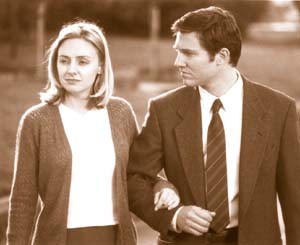
‘Arboresence’ Exhibit

0

Into the Woods

Rural experience: Kristina Lucas and Michael Hayden are two of the artists whose work is shown in the “Arboresence” exhibit at the Paradise Ridge Winery.

Artists branch out in conceptual exhibition

By Gretchen Giles

SUMMER SEEMS to have already visited this five-acre grove at the Paradise Ridge Winery. The tree frogs are in full rhythmic croak, the still air occasionally stirs with hot, grassy gusts of wind, and the soap root is poised to begin its mysterious afternoon bloom.

But such obvious beauties are only what is easily visible on this Fountaingrove hillside. When a visitor takes a moment to stand quietly and really look at the grove’s features, surprises arise. Paradise Ridge co-owner Walter Byck is familiar with these surprises.

“It’s contemporary art!” he exclaims with a smile.

While it’s certainly contemporary, the question of whether it is art must be answered by each viewer’s interaction with the site. Brooklyn sculptor Lars Chellberg has glued miniature forms onto a group of rocks, placed with the intent that the summer-long grasses will obscure them. Moss-covered rocks have been engineered by Oakland artist John Roloff to stay green even during the withering afternoons of August. A granite outcrop whose very head has been sawed off by Roloff allows a viewer to peek directly into its geological innards. At just the right spot in one copse, a giant cone shape is articulated only by Dixon conceptualist Chris Daubert’s colored banding of selected trees. On the FM dial, San Francisco sound artist Lewis deSoto’s recording of the surrounding earth drifts in with the dust and the sunlight. Santa Cruz resident Nobuho Nagasawa’s wine and sand clock checks the time; Santa Rosa artist Kristina Lucas has literally stretched the idea of falling sky; and Santa Rosan Michael Hayden invites entrance through a portal of light.

Titled “Arborescence,” meaning to branch like a tree, this exhibit of conceptual artwork is curated by Gay Shelton, director of the Sonoma Museum of Visual Art.

“These aren’t great big pieces of pop art,” Shelton warns. “You’re going to have to look for them. People will be scratching their heads and sometimes they’ll exactly find it. It’s an epiphany.”

“Arborescence” opens May 16 and will remain in place for almost a year. The luxury of such a long exhibition attracted Kristina Lucas almost as much as the very nature of nature itself, which has begun tenaciously attaching itself as spiders and vines creep onto the 400 weighted lines she has girded down to the ground from a hanging sapling frame. Securing sky-blue balsa wood rectangles onto half of her lines, Lucas attempts the impossible: to enclose the firmament.

“The intention of the lines is to really define the piece, like a frame would define a painting,” she says. “They’re very architectural and rigid and straight, but there’s something very organic about them, too. It’s also really fun, because I haven’t done too many outdoor pieces, but wherever lines are, especially in nature, there is change.”

CHANGE OFTEN requires a map. Walter Byck provides it. Sort of. “The idea of the show is that the entrance will have a field guides with pages on every piece with clues on how to find the piece,” explains Byck, who opened his land to artists four years ago. But with the exception of Hayden’s, Lucas’, and Roloff’s work, most of the art will be found only by the artful eye.

While discovering the small sculptures and the illusory cone may require some work, all that one needs do to appreciate light sculptor Michael Hayden’s art is to step through it.

Interested in turning sculpture “inside out,” Hayden creates prismatic peepshows that encourage a viewer to move through, rather than around, the work. Remembering an early installation that required the gallery owner to completely traverse it in order to reach her office, Hayden smiles.

“It was an exploration of mischief,” he recalls. “I just enjoy making people have to rethink what painting and sculpture are.”

Creating an glimmering archway of holograph-laden glass that marks the entrance to the “Arborescence” exhibit has allowed Hayden to complement another of his works permanently on-site at Paradise Ridge. Turn toward the “roots” of the exhibit–that is, away from the grove–and a distant hillside winks and glows with a holographic “sail” that Hayden has established there. The glass sheets billow with rainbows as the air gussets them about.

HAYDEN IS an internationally acclaimed artist whose work, among other placements, is experienced by some 18 million people a year at Chicago’s O’Hare airport. Wearing a T-shirt advertising his Thinking Lightly business, inscribed with the tasteful motto “I’m a friend of Jack Shit,” Hayden, 56, is a hearty man who discusses pizza dough recipes as easily as the refined techniques inherent in his work. Not incidentally, he is married to colleague Lucas.

But he probably wouldn’t be standing next to his glowing outdoor archway if he hadn’t had the good sense to get kicked out of art college. When a fascination for Day-Glo paints led him to begin making frescoes with them, he was forcefully invited to leave. A little notoriety goes a long way, and when Hayden created a glow-in-the-dark sculptural installation for his native Canada’s 100th anniversary, his work brought such notice as to catapult him into the artistic ether.

Hayden’s name is on some 12 patents, and all of them explore the different methods of light refraction. But for all of his varied methods, it simply comes down to the pretty colors of the rainbow.

“It starts there and ends there,” he says. “The things that make me curious and make me explore further are the iridescence that happens on mahi-mahi fish or on butterfly wings or on the throats of hummingbirds. How come they iridesce and we can’t?

“I just can’t help myself,” he says. “I have to find out how to do it, how to control it, and how to have it so that it can live outdoors in the real world. Holograms go away if you expose them to ultraviolet light or moisture. For me to develop systems so that these can survive out there has been a challenge.”

Hayden’s portal contains the holograms between two sheets of tempered glass in a hermetically sealed environment that is breached by neither UV rays nor rain. And it just doesn’t seem to matter how many times or how many ways he’s explored this subject. The man is hooked.

“I’m beguiled by transmission phenomena,” he admits with a shrug. “I’m just really interested in what happens when sunlight penetrates these panels.”

That’s one sight that “Arborescence” visitors surely won’t miss.

“Arborescence” opens with a reception for the artists on Sunday, May 16, from 2 to 5 p.m. The exhibit continues through Feb. 15, 2000, at Paradise Ridge Winery, 4545 Thomas Lake Harris Drive, Santa Rosa. Hours are daily from 11 a.m. to 6 p.m. Admission is free. 528-9463.

From the May 13-19, 1999 issue of the Sonoma County Independent.

© Metro Publishing Inc.

Star Wars: Episode One–The Phantom Menace

0

Space Case

Trio: Liam Neeson, Jake Lloyd, and Ewan McGregor star in The Phantom Menace.

‘The Phantom Menace’ will both please and disappoint ‘Star Wars’ fans

By David Templeton

THERE IS a great disturbance in the Force. Yesterday one of my daughter’s preteen companions overheard my mention of Star Wars: Episode 1–The Phantom Menace. Contorting her bright, multifreckled face, Amy–at 12 years a pure representative of Star Wars’ main demographic target audience–casually dissed the as-yet-unseen film. “Oh, that,” she knowingly remarked. “I hear it’s not too good.”

Hmmmmm.

Clearly, Amy has heard about the critical drubbing that George Lucas’ space-opera prequel has been receiving in advance of its release. The movie has been called “flat, “lifeless,” “dreary,” and “redundant.” (So far in advance, in fact–reviews are traditionally held to the day of a film’s release–that Lucas, provoked to fits of uncharacteristic pique, has attacked such early warnings, stopping just short of calling the media “a wretched hive of scum and villainy.”)

Surely, for a film so highly anticipated–and recklessly hyped–a certain amount of backlash is to be expected. And unforgiving critics, sorry to say, do seem to gleefully wield their sharpest knives when reviewing the big, commercial “event films.” However, a film is usually in release a few weeks before its own audience starts knocking it; The Phantom Menace won’t officially open for another whole week. Perhaps the unprecedented Star-hype has grown so enormous that it’s now caving in on itself, like a big black hole.

But as Lucas has somewhat disingenuously repeated of late, “It’s only a movie.” And he’s right. In the end, Menace should be judged, not as part of a cultural phenomenon, but as a piece of fluffy, popcorn-chomping entertainment.

So then, how good is The Phantom Menace?

Well, it’s pretty good.

No, it’s not as good as the original Star Wars. Yes, it is flawed: The human characters are decidedly less charming and engaging than were Luke and Leia and Han Solo, and the alien characters–especially the nearly unintelligible, pratfalling Jar Jar Binks–are frequently annoying and disruptive of the action. Furthermore, the plot is disjointed and confusing, and the actors seldom appear to be having any fun (and wasn’t part of Star Wars’ charm that Mark Hamill, Carrie Fisher, and Harrison Ford all seemed to be having a great time?). Worst of all, the mythic elements of the Star Wars world–including an odd, microbiological explanation of the all-powerful Force, that makes it seem less like cool, Zen-esque spirituality and more like a parasitic disease–are hard to warm up to and frequently kind of murky. Does the mother of boyish Anakin Skywalker (the future Darth Vader) really say that her son is the product of a virgin birth? Or was she just being coy and poetic?

That said, the film remains a thoroughly enjoyable diversion, on a par with Jurassic Park and Twister: a little thin in the character department, but unmistakably cool for its unique vision and eye-popping special effects. The story deals mainly with the political machinations that will lead to the Empire’s domination of the Republic, and the discovery of Anakin’s potential future as a Jedi. The beloved droids C3PO and R2-D2 are involved in the action, and there are a few unexpected revelations and even some nifty major plot twists.

IF THAT’S NOT enough to justify the price of admission, the movie features numerous moments of true visual greatness, and a couple of standout sequences that rank among the best action scenes ever filmed.

In fact, I’ll say it right now, The Phantom Menace may be the best animated film since Toy Story.

And that brings us to the one thing that is most problematic, but also the most exciting, about this film: the overwhelming use of truly amazing computer animation. Whether in showing Obi Wan Kenobi (a dead-serious Ewan McGregor) and Jedi master Qui-Gon Jinn (Liam Neeson) believably interacting with fully animated characters like Jar-Jar and a grotesque flying junk-beetle named Watto, or in fully animated battle scenes with amphibious Gungan warriors facing off against legions of deadly “battle droids,” the computer effects are the star of the show. Some critics have made this their primary criticism of the film, decrying the sublimation of human character that seems to promote Lucas’ driving technical agenda.

But as I recall it, Star Wars has always been about its special effects. The first time I saw the first movie in a noisy theater in Downey, Calif., the audience responded by giving the special-effects credits a standing ovation. That night, I went home and dreamed of Jedi knights, light sabers, and magical cities in the stars. I woke up with a new sense of wonder at what could be achieved on the big silver screen.

So yes, as a Star Wars fan, I’m disappointed that the new installment isn’t the best film ever made, and as a critic, I’m bothered that more attention wasn’t given to the human characters that allow an audience to enter a film’s world. But as a believer in the limitless potential of film, I’m cautiously hopeful, truly looking forward to the marvels that remain to be seen.

One more thing. Last night, I dreamed about light sabers.

From the May 13-19, 1999 issue of the Sonoma County Independent.

© Metro Publishing Inc.
The Bukowski Poetry Contest

0

The Bukowski Poetry Contest

First Prize “No Relief in Sight from Western Civilization”

By Anne Kolarich

Today was a huge fourteen hour effort with really no good parts at all except for the thirty minute acupuncture mellow melt down with sixteen needles sticking out of my body while lying on a cot in a round white room with skylights open and warm breezes flowing and a big blue sky overhead with clouds shimmering white against the suns hot flash making the view very ethereal and Greek Island like while the music tape played the sounds of evening woods full of crickets and frogs.

And as I was lying on that beautiful Greek Island, I closed my eyes and like a junky sixteen times over the silent needle energy kicked in and streamed through my body until it melted my brain into a relaxed puddle of gentle peace–and I tried to push the stress out of my aching skin and bones.

And then it was over–needles out–tape shuts off. I crawled off the table dazed and disoriented. Out came the check book–“sixteen needles plus acupuncture expertise is $67 dollars total.” I wrote the check and staggered down the stairs to the bright glare of reality.

Somewhere on the street I’d parked the car–now looking– I had places to go, things to do–why?–I don’t know why but the push of necessity knows no reason other than it was a must do and I began to feel some panic because I’d forgotten where I’d parked

I continued to search through this neighborhood in decline where people were sleeping on discarded furniture with rubbish piled all around, garbage stinking, piss, shit, vomit and flies everywhere. A man sitting on the curb drinking a beer told me he liked my shirt. I nodded at him as the smell of marijuana poured out of a window mixing with the afternoon lunch smells from a nearby cafe.

I finally merged onto the freeway. Traffic was a mass of chaos and no one knew how to drive. All lanes were long flowing metal snakes whipping by at ninety miles per hour. There I was driving in a slow motion trance while cars were flying by me at twice the speed of sound.

Anger began building on top of my rapidly dissolving mellowness. Acid thoughts formed into solid insults that I shouted out loud, but they just bounced off the windshield and circled around inside the car. I began driving like a maniac too and just grabbed hold of the wheel and maintained all the way to work. Oh yes, work. The direction I was heading.

The heavy metal jet engine maintenance factory. Toxic air with the psychotic co-worker. The institution of corporate slavery. My paycheck. My next destination…

The nightshift crawled by. I busted my ass. The air was thick, toxic, killer. The psychotic co-worker went berserk in my face, just before break.

Why the company would pick this jerk to be a temp-supervisor I’ll never know. He should have been carried out in a straight jacket a long time ago, but to them, he’s management material so they keep him around. They had this lunatic judging my

work performance. It was his decision whether or not I made probation. I knew if I didn’t bow down and lick his boot, the asshole wasn’t going to pass me.

He was a brown noser, a spy and a squealer. That son of a bitch. He was management material all right.

At 9:00 P.M. I went outside and sat on some wooden boxes. I put a fresh stick of gum in my mouth to cut the taste of the chemicals and hydrocarbons that had been accumulating on my tongue and throat. My lungs were tight and coated with some kind of crap. My head was killing me.

I stretched my tense, aching muscles. The aspirin hadn’t worked yet even though I had taken it over two hours ago. I decided to take a few more, when I looked off into the night– and then I remembered– I paid $67 dollars for something today– but I couldn’t remember what it was for…

Second Prize “Closing Time (or, Deja Buk)”

By Steve Heilig

Crunching down the soggy North Beach alley 2 am Frisco fog overhead drunken old bum pissing on the grimy wall. I was going to walk on but the sound of his stream triggered my own beer-filled bladder What the hell, I thought and joined him at the wall, as if at an old Paris pissoir. So two drunks, one old, one getting there fast My feet spread wide so as not to get splashed, I blurt: “Did you know this alley is named for a famous writer?” He looked over at me as if this was an everyday setting for small talk “Oh yeah?” Who that?” “Jack Kerouac,” I answer. “The ‘King of the Beats.'” “Hunh,” he grunted, shaking himself off. “Never heard of the shithead.” “Good for you,” I said. “He never heard of you either.” “Maybe so, who gives a damn,” he belched. “How about this,” I continued, “This wall we’re pissing on belongs to a famous bookstore, owned by a famous poet.” “And who’s that?” He didn’t sound interested. “Lawrence Ferlinghetti,” I replied. “The Poet Laureate of San Francisco.” “Hmmph,” he mumbled, zipping. “Never heard of him either. But you know what?” “What?” I said, finishing too. “Great poets die in steaming pots of shit.” I had no reply to that. He grunted again and walked towards Chinatown. I went the other way The bookstore was still open Nothing else to do, I went in. Forty years too late, beatniks sat scribbling in the dim light too cheap to buy anything. Drunk young professionals, losers in the nightly meat market, kicked out of the bars at closing time but afraid to go home alone nodded off against bookshelves. All surrounded by a million words going unmolested. On a strange unbidden whim, I went looking: Auden, Bowles, Brautigan… Bukowski: “Tales of Ordinary Madness.” Sounds familiar, I thought, and sat down to read, too cheap to buy and there on the Contents page: “Great Poets Die In Steaming Pots of Shit.” “Aha,” I said aloud “Fooled me, old bastard.”

From the May 13-19, 1999 issue of the Sonoma County Independent.

© Metro Publishing Inc.
Condra Easley Of Renaissance Pastry

0

Choc-A-Bloc

Bean there: In just four years, Condra Easley of Renaissance Pastry in Santa Rosa has become a chocoholic’s best friend.

Chef Condra Easley has a passion for chocolate

By Gretchen Giles

PITY THE POOR reporter. The thousands of bittersweet, semi-sweet, and white chocolate calories placed with seeming innocence on clean paper doilies must somehow be womanfully consumed and bravely documented. Alas, it’s just that kind of a job.

Fortunately, pastry chef Condra Easley is there to lead the charge. “Try this one,” she instructs. Oh, one sighs, mustering all strength and courage, all right.

“Can you taste the arc?” she asks.

Ummmmmmmm.

As foodie culture itself explodes in an arc raised by the flushed economy, some waxy chocolate bar from Pennsylvania no longer satisfies the educated palate, even if it tries to insinuate itself with a Kiss. However, a delicate little wafer with a 59 percent cocoa mass that has been flown over from Belgium, coddled into a ganache, folded into a mousse, or coaxed into a butter-cream casing may be exactly what you never knew you were looking for. A little knowledge is a powerful thing.

It might change your life.

It has certainly changed Easley’s and emphatically for the better. Co-owner of the award-winning Renaissance Pastry in Santa Rosa with sister Deborah Morris, she will confess to a mild fondness for Reese’s Peanut Butter Cups, but her passion is reserved for excellence.

Trained in part at the Cocoa Barry School in France, Easley has developed a culinary sense so acute as to discern whether cows in Petaluma are eating grass or corn. She doesn’t sniff it in the air–as Petaluma residents undoubtedly do when the wind changes–but rather, she can see it in the butter, feel it in the whip, and taste it in the cream.

“They think I’m nuts,” Easley says with a laugh, relating that the Clover-Stornetta dairy finally had to send a chemist to her kitchen to confirm the difference.

But while Renaissance Pastry–opened in September 1995 after Easley and Morris moved from Colorado, and a perennial winner at the Harvest Fair ever since–is renowned for its butter-cream frosting and elegant cakes, the only cream we’re seeing today is in the coffee. Arrayed on a silver baking pan are the aforesaid doilies, each piled with a different cocoa mouth-swoon.

Easley, who has just finished her quarterly stint teaching wedding cake production to professionals at the Culinary Institute of America and on May 27 teaches a “Chocolate, Chocolate, and More Chocolate!” workshop at Food for Thought in Santa Rosa, is on a mission.

“I feel that it’s our job to introduce [excellent chocolate]. People often comment that it’s not too sweet, because people are used to having things that are very sweet. If you look at the ingredient list, often the main ingredient is sugar, and it shouldn’t be.

“We tout the fact that we use European chocolate,” she continues. “It’s like winemaking. There is a direct parallel, because there are styles of chocolate-making, just as there are styles of winemaking. It’s the same with coffee–there are styles of roasting. It’s all in the manufacturer’s technique, the approach to the beans, and how it ultimately tastes.”

EXPLAINING THAT cocoa beans are experiencing the same boutique-styling craze as coffee beans–with individual plantations producing signature products–Easley returns to the vintner’s theme. “When we talk about chocolate, we use the same kind of terminology used in wine,” she says, selecting a piece of Scharfeenberger domestic bittersweet and popping it in her mouth.

Are we talking a sassy piquant piece of chocolate with great legs?

“Well, I’ve never had one with great legs,” she laughs, “but as far as fruity, acidic, vanilla notes, smoky, cherry–it’s very similar. And there’s that arcing flavor, just like with wine. When you drink wine, it hits in your mouth in different places–well, it’s the same with chocolate. As you’re eating the chocolate, it develops in your mouth.”

Bittersweet develops more slowly, but as with a piece of Scharfeenberger, when it does hit, it packs a wallop. Pineapple, cherry, and raspberry flavors all come swarming out of heretofore unknown areas of the palate. The winemaking context is furthered as this chocolate is produced by the winery of the same name, which Easley terms “the only non-industrial chocolate manufacturer in the United States.”

Using vintage equipment that allows the spice of human error to flavor the product, Scharfeenberger chocolates have only one drawback, in her estimation. They sell too quickly. “It needs to sit and mellow,” she says. “But this stuff is out the door the minute it’s made; it doesn’t have a second. Consequently, it’s really iffy and not consistent–each batch tastes different.”

WHITE CHOCOLATE is offered next. The Guittard brand, which is commonly used in bakeries and restaurants, is pale and reveals a musty, packaged flavor that is instantly recognizable.

“People get used to that bland, conforming kind of white taste, and they think that that’s what white chocolate is supposed to be all about,” Easley says.

The more elite Callebaut brand, however, has a rich ivory sheen and tastes, well, if not exactly sassy and piquant, really darn good in an ineffably melting kind of way.

Tender Callebaut 811 semi-sweet rounds are served. Like the Platonic ideal of tollhouse chips, this Belgian company’s offerings are so extensive that they number rather than name them, like astronomers finally giving up and numbering the stars.

Easley’s staff is now firmly gathered around the tasting tray. The Callebaut 811s are popped and each employee wears a thoughtful, inward expression as the small discs seduce the tongue. “What do you think?” Easley asks.

The chorus is singular. “Ummmmmmm.”

Condra Easley teaches a “Chocolate, Chocolate and More Chocolate” cooking class at Food for Thought on Thursday, May 27, from 6:30 to 8:30 p.m. 1181 Yulupa Ave., Santa Rosa. Enrollment is $35. 575-7915.

From the May 13-19, 1999 issue of the Sonoma County Independent.

© Metro Publishing Inc.
The Barber Of Seville

0

A Cut Above

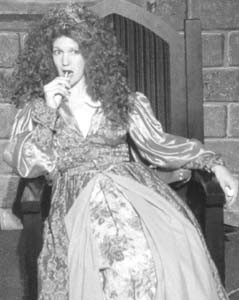
Scheme team: Jenni Samuelson and Lee Gregory star in The Barber of Seville.

‘The Barber of Seville’ is sharp as a razor

By Daedalus Howell

WHEN A BARBER nicks your ear, you yowl and shave a little from his tip. When Cinnabar Opera Theater’s production of Gioacchino Rossini’s The Barber of Seville nears your ears, they prick up and are so filled with delight that it’s hard to resist paying twice.

Four-time Bay Area Critics Circle Award-winner Barbara Heroux and musical director Nina Shuman ignite a firecracker cast and send the actors rocketing through Donald Pippin’s spry and slightly irreverent English reworking of the 19th-century opera.

The plot is deceptively simple: Young lovers Rosine (Jenni Samuelson) and Count Almaviva (Lee Gregory) have the kibosh put on their fledgling romance when Rosine’s decrepit guardian, Dr. Bartolo (William Neely), decides to marry her instead. To scuttle Bartolo’s plans, Almaviva enlists the services of hoodwinking blade-man Figaro (Todd Donovan). Disguises, misplaced mail, and midnight rendezvous abound as the rapscallion barber guides the couple’s romance through a maze of subplots.

Baritone Donovan’s Figaro is a wonderful combination of effete hairdresser and peseta-pocketing artful-dodger. His adroit singing and acting are marvelously tuned to his swaggering portrayal of the barber-of-fortune.

Donovan’s ability to pair onstage with the other performers proves priceless as in an early scene when he and Gregory’s Almaviva scheme like old school chums, then praise their comic subterfuge with nonchalant choruses of “Bravo, bravo, bravo.”

Tenor Gregory is well cast as the simultaneously lovesick and comically cocksure young count. Throughout, the dynamic Gregory poses as other characters, revealing a broad acting range and an expansive vocal ability.

Samuelson’s fetching Rosine (who can barely conceal her own machinations–they’re written all over her gesticulating eyebrows) is a paean to feminine wiles. In Samuelson’s performance, Rosine is nearly as conniving as her male counterparts. Although she remains demure, she’s a sporting participant in Figaro and Almaviva’s often ludicrous plots.

As the lecherous Bartolo, baritone Neely is point-perfect testament to Spanish author Baltasar Gracián’s adage that “at 60 man is a dog.” Neely’s randy dandy Dr. Bartolo kvetches, counterplots, and ultimately sows the seeds of his own undoing, all with panache and vigor.

Director Heroux gets kudos for massaging the opera’s native comedy to the fore with a number of subtle sight gags. At one point, gastronome Basilio (bass Stan Case as Bartolo’s de facto sergeant at arms) unconsciously mauls a chicken while describing a plan to scandalize Almaviva, then takes a dainty bite out of a carrot. Later soprano Elly Lichenstein’s crone Berta, Bartolo’s ancient domestic, in a moment of romantic reflection dabs herself with a chicken leg as though it were perfume.

Complementing and underscoring the onstage performances is musical director Schuman’s eight-piece orchestra, the “Filarmonico Figaretto.”

The Barber of Seville is sharper than a razor and cleaner than a tight taper–make your appointments pronto. This show’s a cut above.

The Barber of Seville plays at 8 p.m. on May 7-8, 15, 21-22, and 28-29; and at 3 p.m. on May 16. Cinnabar Theater, 3333 Petaluma Blvd. N., Petaluma. $12-$18. 763-8920.

From the May 13-19, 1999 issue of the Sonoma County Independent.

© Metro Publishing Inc.

Pacific Rim Wine Competition

0

Top Honors

Michael Amsler


Local wines win best of class at recent international tasting

By Bob Johnson

THE CLOCK STRIKES 8 a.m. It’s showtime at the Pacific Rim International Competition held at the National Orange Fairgrounds in San Bernardino. More than two dozen wine judges from around the globe–a diverse group of vintners, restaurateurs, and educators–have gathered to assess the quality of more than 2,100 wines submitted by wineries from throughout North America, South America, Australia, and New Zealand. These judges are tasked with separating the best from the rest, and awarding gold, silver, and bronze medals to deserving bottlings.

Sonoma County wines traditionally have fared well in these types of competitions, particularly the Pacific Rim event, generally recognized as one of the most important. In fact, surveys have shown that Sonoma County wines annually earn more hardware than wines from any other region in the country–Napa Valley included.

The judges are divided into panels of three, and each panel is seated at its own table. Adorning each table is a plate filled with crackers, cheese, and grapes. Each place setting includes an entry guide book, a finely sharpened No. 2 pencil, a plastic bottle filled with Arrowhead drinking water, and a large plastic cup (about the size used for a giant 7-Eleven Slurpee container), otherwise known as a spit bucket. There will be little swallowing of wine by these judges over the next two days; 99 percent of the beverages will be swirled around the mouth and then spit out. With each panel assigned some 250 wines to evaluate, spitting assures that the judges can walk out at the end of the day, rather than having to be carried out.

Different panels are assigned different types of wine. Panel 1, for instance, may be sampling pinot noirs at the same time Panel 7 is evaluating rieslings. Particularly large classes–such as chardonnay, cabernet sauvignon, and merlot–may be divided between two panels.

Volunteer stewards–most of whom have taken wine education classes from the competition’s director, Dr. James Crum–uncork the bottles in another section of the room, separated from the judging area by dark drapes, then pour the elixirs into glasses and place the glasses on serving carts. Attached to the stem of each glass is a card that shows an entry number and other coded information.

This is a “blind” competition; the judges do not know the brands of the wines they’re sampling.

ONCE ALL of a panel’s judges have swirled and spit all of the wines in a given flight, the group leader surveys the panel for award recommendations. If two judges say a wine deserves a gold medal and the third judge says it deserves a silver, the golds have it. If two judges believe a wine deserves a silver and the third judge opines it merits no award, the panel will typically retaste the wine, discuss its merits (or lack thereof), and then come to a consensus on the award.

Depending on the number, gold-medal winners within a specific category often are retasted at the end of the day to determine a “Best of Class” winner. All “Best of Class” wines then advance to what is referred to as the medal round, during which all 27 judges taste all of the honored wines. It is during this round–the climax to the competition–that the best white, best red, best sparkling, and overall best wine of the show are determined.

Occasionally a certain degree of intrigue accompanies this round. This year, for instance, just before the final vote, a handful of stewards kept a watchful eye on Geyser Peak winemaker Daryl Groom, since his 1998 sauvignon blanc had earned the Best White award and was one of only three wines still in the running for “Best of Show.”

The other two wines up for top honors were the Gloria Ferrer 1990 Carneros cuvée brut–another Sonoma County entry–and the Zingaro 1997 zinfandel from Mendocino County.

The questions on the minds of the stewards: Would Groom recognize his wine and vote for it? Would he recognize it but vote for the wine he truly felt was best? Would he not recognize it but vote for it anyway? Would he not recognize it and not vote for it?

Questions, questions . . .

During the “Best of Show” voting, conducted classroom-style via a simple raising of hands, it was noted that one sparkling-wine vintner voted for the sparkling wine–no doubt a case of protecting his turf and perhaps a certain anatomical location as well. Alas, the sparkling wine received only a sprinkling of votes.

That left only the Geyser Peak sauvignon blanc and the Zingaro zinfandel in the running. When judges opting for the sauvignon blanc were asked to raise their hands, Groom sat silent. When it came time to vote for the zinfandel, Groom’s right hand went up.

Fortunately for Groom, he was in the minority. A majority of judges voted for Geyser Peak’s sauvignon blanc. When the identity of the “Best of Show” sauvignon blanc was revealed, all eyes turned toward Groom. He did not appear shocked, nor did he look surprised; he simply smiled broadly and graciously accepted the accolades of the group.

Did Groom know that was his wine? And if he did know, when did he know it?

Questions, questions . . .

From the May 6-12, 1999 issue of the Sonoma County Independent.

© Metro Publishing Inc.

Talking Pictures

Dream King Author Terry Brooks on 'Star Wars,' fairy tales, and the modern decline of imagination By David Templeton Writer David Templeton takes interesting people to interesting movies in his ongoing quest for the ultimate post-film conversation. This column is not a film review; rather, its a freewheeling, tangential forum on life,...

Talking Pictures

Ballot Boxed By David Templeton Writer David Templeton takes interesting people to interesting movies in his ongoing quest for the ultimate post-film conversation. This column is not a review; rather, it's a freewheeling discussion of life and popular culture. I DON'T KNOW if I should even mention this," mentions Erik...

Jimi Hendrix

Jimi Jam American original: Guitar wiz Jimi Hendrix--still at the top of the heap. Hendrix video, CD tribute a mixed bag By Greg Cahill BRITISH POP star Eric Burdon once told Jimi Hendrix biographer David Henderson, in the 1978 book 'Scuse Me While I Kiss the Sky, "Everyone likes...

Proposed International Jetport Could Equal Environmental Disaster

Terminal Voracity Point of departure: Harvey Goldberg wants to transform local wetlands into an international jetport. Critics say he's on a collision course with environmental disaster. If Harvey Goldberg gets his way, Sonoma County soon will be sprouting jumbo jets full of well-heeled tourists By Janet Wells THE SIGN...

‘Arboresence’ Exhibit

Into the Woods Rural experience: Kristina Lucas and Michael Hayden are two of the artists whose work is shown in the "Arboresence" exhibit at the Paradise Ridge Winery. Artists branch out in conceptual exhibition By Gretchen Giles SUMMER SEEMS to have already visited this five-acre grove at the Paradise...

Star Wars: Episode One–The Phantom Menace

Space Case Trio: Liam Neeson, Jake Lloyd, and Ewan McGregor star in The Phantom Menace. 'The Phantom Menace' will both please and disappoint 'Star Wars' fans By David Templeton THERE IS a great disturbance in the Force. Yesterday one of my daughter's preteen companions overheard my mention of Star Wars:...

The Bukowski Poetry Contest

The Bukowski Poetry Contest First Prize "No Relief in Sight from Western Civilization" By Anne Kolarich Today was a huge fourteen hour effort with really no good parts at all except for the thirty minute acupuncture mellow melt down with sixteen needles sticking out of my body while lying on a cot in a round...

Condra Easley Of Renaissance Pastry

Choc-A-Bloc Bean there: In just four years, Condra Easley of Renaissance Pastry in Santa Rosa has become a chocoholic's best friend. Chef Condra Easley has a passion for chocolate By Gretchen Giles PITY THE POOR reporter. The thousands of bittersweet, semi-sweet, and white chocolate calories placed with seeming...

The Barber Of Seville

A Cut Above Scheme team: Jenni Samuelson and Lee Gregory star in The Barber of Seville. 'The Barber of Seville' is sharp as a razor By Daedalus Howell WHEN A BARBER nicks your ear, you yowl and shave a little from his tip. When Cinnabar Opera Theater's production of...

Pacific Rim Wine Competition

Top Honors Michael Amsler Local wines win best of class at recent international tasting By Bob Johnson THE CLOCK STRIKES 8 a.m. It's showtime at the Pacific Rim International Competition held at the National Orange Fairgrounds in San Bernardino. More than two dozen wine judges from around the globe--a diverse group...
11,084FansLike
4,606FollowersFollow
6,928FollowersFollow

