Elena Lappin

Pride of Brides

By Sarah Coleman

AS FANTASIES GO, the idea of shacking up with an exotic foreigner ranks high in the imaginations of many people. There’s always something alluring about a different culture, and the idea that love is strong enough to cross international borders is a powerfully romantic one. Just ask Cleopatra, or Ivana Trump.

In her debut collection of short stories, Foreign Brides (Farrar, Straus & Giroux; $22), author Elena Lappin takes the fantasy and runs with it. The 12 stories feature women who have made marriages across cultures, often leaving their native countries in the process. Some are seduced by a lover’s difference from them; others are merely attempting to escape drab lives. And–perhaps inevitably–none of them gets quite what she envisaged.

One of the problems, for Lappin, is the hidden cost of exile: “All émigrés have the same basic story to tell,” says a character in one story. “There is that small death when they leave their home country . . . that short-lived euphoria when it looks like they’ve been blessed with a chance to rewrite their script in a free society, and then comes the life-long sadness once they realize that they have made an irreversible choice to cut themselves off from their roots.”

For most of Lappin’s women, the transition to “life-long sadness” comes all too quickly, as a promising-seeming marriage burns out or a loved one’s death alters an already unfamiliar landscape. But these women are fighters. Instead of giving up, they wrestle with their disillusionment and adopt creative ways of coping.

In the sparkling first story, “Noa and Noah,” Israeli Noa is two years into her marriage to British Noah before her English improves enough to realize that he’s not a glamorous businessman–rather, he’s a debt collector whose “sexy” mutterings in bed are actually bits of soccer trivia. Noa regroups, then gets her revenge by serving orthodox Noah meat that’s treyf (non-kosher) and by getting herself a piece of the hunky butcher.

Likewise, Russian mail-order bride Vera finds herself in hot water when she goes to London to meet English Charles in “Peacocks.” Having been seduced by his posh Kensington Gate address (“the first word reminded her of Diana’s funeral”), Vera is devastated to learn that Charles is only the butler at the mansion where he lives. She stays with him anyway, and when Charles gets fired, it’s Vera who turns the tables and takes charge of the couple’s future.

Lappin, who was born in Moscow and has lived in places as far afield as Israel, England, Germany, and Canada, is alive to the humorous aspects of cross-cultural unions. She’s also particularly good at analyzing the power imbalances that determine how a relationship is run–and by whom.

THAT ANALYSIS APPEARS in “Peacocks,” when Charles meets Vera at the airport. He sees her as “a kinky dream come true,” whereas Vera notes only that Charles is “shorter than she had imagined, and rounder too.”

In “Framed,” a German woman reluctantly accepts her Hebrew teacher’s obsessive love, and we’re told that her feelings for him are those of “a tender friendship,” while his love for her is “a life’s passion let loose, like a tulip breaking into height and colour after a long winter in frozen ground.”

You don’t have to be Dr. Ruth to predict the trajectories of these relationships.

Although she is a skillful humorist, Lappin doesn’t always go for easy laughs. A darker tone inflects several of the stories. In “Michael Farmer’s Baby,” the distressed feelings of an abandoned woman surface as a phantom pregnancy. None of Lappin’s characters stay gloom-ridden long, though; most of the stories end on an appealingly upbeat note. Nor are the stories repetitive, even though they all riff on the same basic theme. Lappin has come up with that rare thing: a concept-driven collection that also works on a story-by-story level.

But not every story is a gem–both “Bad Writing” and the very short “Unguarded” feel thin, and many stories end with a too-neat twist–but Lappin’s snappy prose is a pleasure to read, and her lively heroines are memorable.

They may lose out in big ways, but these globetrotting women prove that there is life after disappointment.

From the September 2-8, 1999 issue of the Sonoma County Independent.

© Metro Publishing Inc.

The Distraction

0

Bad Bad Thing

The other woman: Jennifer Pruitt and Dean Bukowski star in The Distraction.

‘The Distraction’ offers a tepid tale of sexual misbehavior

By David Templeton

OK. There’s this young married couple, and everything seems to be going fine with their marriage. Then the husband learns that, once upon a time, baby did a bad, bad thing. Suddenly the husband can’t stop imagining his wife flopping around naked with some other guy. Unable to deal with it, he begins a long journey into a weird world of temptation, obsession, and seduction. Ultimately, he comes home and cries.

Sounds like Eyes Wide Shut, right?

It’s not. The Distraction, by South Bay filmmaker Greg Tennant, is a low-budget 16mm drama starring a cast of unknowns, filmed in 29 days last year. The story of newlyweds Paul and Ally (played by Dean Bukowski and Elora Hayes), the film follows Paul through his workplace infatuation with an unstable woman named Leslie (Jennifer Pruitt), an infatuation that grows into love and obsession, threatening his marriage and his sanity. It’s a small film, a well-intentioned effort made by people who care about the way real people interact with each other.

And it’s awful.

It actually made me pine to go back and see Eyes Wide Shut again, a movie that was among the worst films of the year but was at least intermittently entertaining. Painful as it was to sit through Kubrick’s bloated final work, that two-hour-and-40-minute torture session was a walk through an orgy compared to The Distraction‘s 87 minutes of clumsy discomfort.

If I sound a bit like a bully, I confess that I feel like one. Small independent films should be cut some slack, if for no other reason than that they grant us a view of the world that mainstream Hollywood seldom allows us to see. They let us to take in new ideas–and there are a few good ideas in The Distraction, which places it ahead of many mainstream Hollywood films.

But even small films have a responsibility to do more than give us one or two things to think about; they still need to make sense, and they should be at least moderately entertaining.

What ideas Tennant does have are obliterated by his cast’s strained and unsure performances. The bizarre script tries so hard to reflect realistic speech patterns and behaviors that it frequently comes off as simply absurd.

We know Paul and Ally are newlyweds because they do silly things like roll around playfully feigning cannibalism: “No eating people,” Ally scolds as Paul tries to consume her forehead. “But that’s the only way you’ll be any closer to me,” he murmurs.

Later, unable to handle Ally’s long-ago affair with his best friend, Paul makes friends with Leslie: “She makes me feel nice,” Paul explains to his wife. “The fact that someone makes you feel nice is nice.”

Yes, it is, Paul, and yes, real people are seldom very eloquent. The problem with basing a script on such stuff is that realistically stupid dialogue eventually begins to be just plain stupid. Just ask Stanley Kubrick.

The Distraction screens Friday and Saturday, Sept. 3-4, at the Sonoma Film Institute. The film begins at 7 p.m. at Darwin Hall, Sonoma State University, 1801 E. Cotati Ave., Rohnert Park. $4. 664-2606.

From the September 2-8, 1999 issue of the Sonoma County Independent.

© Metro Publishing Inc.

Vintage Apple Orchards

0

Core Values

Bitter harvest: A steam shovel destroys vintage apple orchards at the Dutton Ranch to make way for vintage wine grapes, a trend that apple growers say is endangering a way of life.

Livelihoods wither for local apple growers in the wake of Vacu-dry plant closing

By Janet Wells

TAKE A DRIVE down Graton Road in Sebastopol, open the car windows, and take a nice deep whiff. The sweet fragrant smell lingering in the balmy evening air is unmistakable: apples. The trees, leafy and full, are laden with pale green and rosy-skinned fruit. It’s a scene that, for decades, has defined the west county, with its signature apple products, apple blossom fairs, and apple harvest celebrations.

But focus on the scenery in between the orchards, and apples start to look like an endangered species.

Rows and rows of wine grapes, stately green and elegant, seem to be marching right over the apple trees. Why? Wine grapes take less water and bring in more than 10 times the money per ton. And, say local apple growers who gathered at a recent meeting, the future of their time-honored tradition is looking even bleaker.

The local apple industry was thrown a curve in addition to changing economics this summer with apple processor Vacu-dry’s abrupt decision to close after more than 25 years as a mainstay of the Sonoma County industry. While there are market opportunities for varieties such as Gravenstein, Red Delicious, and Macintosh, almost all of the county’s Rome apples–totaling about 13,000 tons last year–were processed at the Sebastopol plant. Another 6,000 tons of apples of different varieties were bought and processed by Vacu-dry as well.

The apple harvest is in full swing now, and many local growers still have no home for the apples they expected to sell to Vacu-dry.

“I think there will be some apples rotting this year,” says 77-year-old Bill Braga, who farms 125 acres of apples in Sebastopol. “What Vacu-dry did to us, it wasn’t quitting that was so bad. We could have dealt with that. But to do it so late in the season. They caught us at the time that we were about to harvest.”

Vacu-dry was the main outlet for grower Warren Dutton’s 50 acres of Rome apples. “We have a big crop this year. We need to sell somebody a lot of fruit,” says Dutton, whose orchards produce about 30 tons of apples per acre. “It’s definitely possible that we’ll have trouble selling Romes.”

Dutton is one of many local growers feeling the pinch, and several thousand tons of apples could end up with no buyer this year. “They’ll just rot away on the ground,” Dutton says. “In California there really is no processor that can absorb as much as Vacu-dry was taking.”

At a recent meeting at Dutton’s Sebastopol ranch, worried growers crowded around folding tables set up in the tractor shed. Industry buyers and advisers joined in the discussion of finding an outlet for this year’s crop, as well as the future of apples in Sonoma County.

The prevailing mood is not optimistic.

TOM MELLOW from Amy’s Kitchen, a growing Santa Rosa company that packages frozen organic meals, is straightforward. “We’re not big on apples, unfortunately.”

Jeff Haus, owner of the new Sebastopol cider pub, Ace in the Hole, tells the group that he could use more organic Gravensteins. But his business–the first hard-cider pub in the United States–has just opened, and, while he hopes to become a major buyer of apples, he won’t make a dent in this year’s harvest.

Mark Fitzgerald of the Barlow Co., which makes apple juice and sauce, says they are going to use twice as many apples as last year. But at 1,500 tons, it isn’t enough to take care of this year’s Vacu-dry orphans.

“Good luck to everybody,” Fitzgerald tells the crowd. “Every time I think about this, my heart bleeds. You really got screwed.”

Most of Sonoma County’s 40,000 tons of apples are sold for juice, with less than 10 percent ending up in the produce section of the supermarket.

“People tend to buy apples by how they look, and our apples don’t look as good,” says Sonoma County horticulture adviser Paul Vossen.

IN THE PAST several years, cheap apple concentrate from China has severely undercut the county’s juice market. Washington state apple processor Tree Top, which bought out competitor Vacu-dry, offers about $20 a ton for juice, which isn’t enough to cover costs for Sonoma County growers.

There is a savior of sorts for local apple farmers, says Vossen–wine grapes.

“Anyplace that has potential for wine grapes . . . it’s crazy not to think about it,” he says. “There are a few very select places with 55- to 60-degree temperatures at night, nice warm sunny days. The same thing that gives wonderful taste in berries and apples, that’s in grapes.

“There’s only one commodity that pays a premium based on that taste,” Vossen continues.

“That’s wine grapes. Thank god there’s an alternative.”

Wine grapes, according to the county’s 1998 Agriculture Crop Report, fetched about $1,740 a ton, up from $1,589 in 1997. Apples, by comparison, sold for $156 a ton, down from $179 the year before. Even though apple orchards produce more than twice the tonnage of fruit than vineyards, wine grapes clearly net the big bucks.

Dutton has pulled out more than 100 acres of apples to plant grapes in the past four years. His ranch now has 900 acres of grapes and 250 acres of apples. Sonoma County’s apple orchard acreage has dropped more than 20 percent since 1995, while vineyard acreage has blossomed.

“I have orchards I never want to take out. They are beautiful orchards,” Dutton says. “But the very best wines are being made from grapes from Sonoma County. I sell to 37 different wineries.

“If you can’t sell the fruit and make money, you have to take the orchards out,” he adds. “Grapes are one of the things you should think about.”

At a cost of about $20,000 an acre to plant grapes, replacing apple orchards with vineyards doesn’t come cheap.

And for some growers, apples are a way of life that goes beyond economics.

“This apple business is like a yo-yo,” says grower Braga, tanned and feisty, the picture of a hard-working farmer in worn pants and baseball-style cap. “You’ll have good years and bad. The secret is to survive.

“Let’s get buyers in here,” he tells the crowd of growers. “If we can’t do that, I say pull ’em out and plant grapes. It’s a tough deal, we’re up against the wall.”

But Braga himself is not one to take his own advice–which just may provide a glimmer of hope for apples in Sonoma County.

“I’ve been in the apple business all my life. It’s in my blood,” he says. “Those of us that can survive, we’ll never get rich, but we’ll be glad.

“I enjoy watching the trees bloom, pruning them, taking care of them,” he adds.

“I’ve never had knowledge of grape growing, and I’m not going to start now.”

From the September 2-8, 1999 issue of the Sonoma County Independent.

© Metro Publishing Inc.
‘The Blair Witch Project’

0

“Unknown Curator” Mickey McGowan on movie-addiction, the ‘Blair Witch’ craze, and the growing trend toward really bad camera work

By David Templeton

Writer David Templeton takes interesting people to interesting movies in his ongoing quest for the ultimate post-film conversation. This column is not a film review; rather, it’s a freewheeling, tangential discussion of life, ideas, and popular culture.

Mickey McGowan is a movie addict. Hard-core. So am I. That’s why we’re friends. We understand each other’s addictions, having shared countless cinematic trips, abandoning our responsibilities on sunny weekday afternoons to sneak into matinee screenings of films most other intelligent adults over 40 wouldn’t even bother with. We start with the good films, but when the celluloid worm is crawling in our psyches, we will settle for almost anything.

“I’ve tried to swear off of bad movies before, of course,” McGowan is saying today, “but it never lasts very long. I’ll say, ‘That’s it. No more crap. I’m going to be more selective from now on.’ But after a few days, If no decent films are out, I get to missing the dark theater and the smell of popcorn. Today’s a good example. It’s Wednesday. I haven’t seen a movie since Bowfinger on Friday, and I’m beginning to feeling edgy. But there’s nothing good out that I haven’t seen two or three times. It’s terrible.”

Tell me about it.

Fortunately for us, McGowan and I each have a socially acceptable defense for our behavior: while I write about popular culture, he observes, organizes and catalogues it. McGowan is the curator of the phenomenally curious Unknown Museum, a mysterious repository of “artifacts” from ’50s, ’60s, and ’70s. Currently, the UM’s vast collection of Gumby’s, Lincoln Logs, and Bozo-the-Clown lunch boxes, long located in Northern California, is being warehoused right here in McGowan’s secret Marin County bunker, pending his upcoming move to a new, as yet undisclosed location.

A wall of rare records–Pee Wee King and the West Coast Swing Band, Eartha Kitt, the Banana Splits–stands floor to ceiling around us. Scattered around the record room are cases bulging with Babe Ruth model kits and other oddments. Overhead, an enormous sign–acquired from an old book store–proclaims the words SCIENCE FICTION.

“Have a seat,” McGowan offers, moving a stack of old Frank Sinatra LPs.

“The worst thing,” he says, taking a seat himself in front of a table scattered with old magazines in plastic slip covers, “is that movies seem to be getting worse. I’m no snob, but in a year where the best film might be The Blair Witch Project, you know that quality is slipping.”

Yikes. He’s mentioned the B-word. Blair Witch, if you a scrape away the hype and the hyperventilating praise, may in fact be the worst good movie to come along in years. The ultra-spare “mockumentary”–three amateur filmmakers get lost in the woods, something’s out to get them, and they won’t stop filming–has now reached Titanic levels of hype, and a backlash is now brewing.

I’ve seen it once. McGowan’s seen it three times.

“The primary importance of Blair Witch lies in the inspiration it’s given to young filmmakers and wannabes,” he points out. “Kids all over are out buying digital cameras right this moment, even as we speak, because of this film.”

“Yeah, and most of them will make lousy films,” I remark.

“Well, sure,” he laughs. “We’ll see a lot more shaky camera work at film festivals. There will be more people throwing up from motion sickness.”

“What? You didn’t like the wobbly camera work in Blair?” I ask.

McGowan rolls his eyes. “Even if you’ve never held a camcorder before in your life,” he says, “you’d be hard pressed to pick one up and shots as bad as some of the shots in The Blair Witch Project. Those kids could have gotten hold of a Steadycam, couldn’t they? There’s no real reason for all that shaky stuff on the screen, all that bobbing and weaving and sudden drops of the camera. I couldn’t stand it in Breaking the Waves and Husbands and Wives–and I can’t stand it in NYPD Blue.

“There’s no excuse for the camera to be aimed at Jimmy Smits or Dennis Franz, and then have the shot drop for no reason whatsoever–to aim at some ashtray or a corner of the desk or out the window, whatever–and then back up. It’s always disturbed me greatly. I don’t like it.”

“I like it,” I confess, “because it simulates what my eye does optically.”

McGowan just stares at me, so I continue: “Right now, my eyes are pointed at you as we speak back and forth, but every so often, something will catch my eye in the room–over there, down on the floor, up on the shelf–and my gaze will shift up there for a second, my brain will register that thing, and then my focus will shift back to you. It’s the way people see and interact. It puts me in the room with Jimmy Smits. I like it.”

“Okay,’ he says, raising his hands in surrender. “Your point is well made. In NYPD Blue, there might be a reason for it. But would you want to see it all the time?”

“Um, no,” I agree.

“But you’re going to,” he nods, “because of this one movie.”

Fortunately, The Blair Witch Project is significant for more than just the trend-setting sea-sickness of its visual style. According to McGowan, who just yesterday saw INV-BS–that’s Invasion of the Body Snatchers–for his thirty-sixth time, Blair Witch may signal a return to a simpler form of storytelling.

“Today, we’d never be scared by anything as subtle as an overgrown bean pod bubbling away in a greenhouse,” he says of INV-BS’ once shocking imagery. “Or by something as simple and innocent as a big blob of Jell-o rolling down the street in The Blob. Blair Witch is a throwback to the days when we were easily frightened, when the merest suggestion of a threat was enough to have us on the edge of our seats.

“It’s a primal need,” he continues. “It’s ghost-stories-around-the-campfire, it’s spooky-faces-made-with-our-flashlights. It’s a wonderful thing to be scared by so little.”

“That’s the real reason Blair Witch is so important., in spite of its flaws,” he says. “It’s a much needed flashback to a kinder, gentler time. On the other hand, 20 years from now people will be laughing at themselves for having been scared by this. You watch.”

We stand up. The matinees will be starting soon. McGowan checks the listings, mumbling that we might have to sink to seeing Mystery Men.

“Gee,” I mention as we head for the door, “maybe we should try to just kick the movie habit altogether. Cold turkey.”

“Of course not,” McGowan shrugs away the thought. “I’ll put up with a few bad movies, but I’d never quit movies altogether. And either will you.

“Really,” he laughs, “why would we punish ourselves like that?”


From the date-date, 1999 issue of the Sonoma County Independent.

© Metro Publishing Inc.
Flameco Arts

0

Passion Afoot

Dance fever: FlamecoArts’ Elena Marlowe pounds the boards.

Flamenco dance unleashes the Gypsy soul

By Paula Harris

A GHOSTLY CLOUD of white dust and rosin rises from the well-worn dance floor around my ankles, as my feet, encased in black suede flamenco shoes embedded with tiny nails on the heels and toes, pound out a driving beat that shakes the building.

The FlamencoArts dance studio in Santa Rosa’s Lincoln Arts Center is backdrop to today’s advanced dance class, but the sounds of flowing guitar music, emotionally charged singing, and rhythmic hand clapping transports me to Andalusia. I can almost smell the orange trees and taste the sherry.

Legendary dancer Carmen Amaya, a fiery vision with her flowing Gypsy curls and amused dark lips, gazes down benignly from a black-and-white poster on the studio wall, like a sacred flamenco deity. We dance students silently pray to her whenever the we lose our beat or when the footwork gets too complicated.

Photographs of José Galván, our imperious maestro from Seville, who annually visits Santa Rosa to perform and teach flamenco dance workshops, decorate another wall. He seems to be urging me to stomp “Más fuerte!”

The guitar music builds and other dance students join the punishing exercise, spellbound by the intense driving compýs (rhythm) of a siguiriya. A wall of open windows and a feeble electric fan on the floor do little to dispel the heat. A dozen sweat-soaked bodies clad in stretchy leotards and full flouncy skirts execute a dance sequence in front of the wall mirror, which masquerades as the audience.

“I think our students are so absorbed by flamenco because it challenges them physically, intellectually, and emotionally,” explains Flamenco-Arts teacher and artistic director Elena Marlowe, adding that the art form permits creativity while demanding conformity to its structures and rhythms. “It’s a life study that one can never master,” she concludes.

The true origins of flamenco have been lost over time, but there are indications that it’s a folk form that grew up in Andalusia, thanks to the influences of the various cultures that settled there throughout the centuries–including Moors, Hebrews, and Gypsies.

“Flamenco is a compelling art form with an appeal far beyond its home in southern Spain,” says Marlowe. “It speaks to the universal human condition–the themes of its songs are love, loss, death, and exile. Its statement is direct, open, and personal.”

The passionate songs and dances can be dramatic, flirty, tragic, jaunty, graceful, powerful, or jokey, or they may be simply festive regional styles often performed with castanets.

Although you can never fully master flamenco, you can certainly become addicted to the rhythms, music, and various aires (“flavors”). One dance student boasts of wearing her sexy flamenco shoes around the house, “mostly for drinking coffee or light dusting,” she says. Another is compelled to rap out the different beats as she types or as she chops zucchini. Still another practices dance steps whenever she waits for the green light to cross the street.

Practice pays off. I am surprised by the steely strength in my toned legs and by how I can now, after some years of study, painlessly strike the floor–sans blisters, bunions, or black toenails. Used to dancing en pointe, willowy ballet dancers who take up flamenco are often horrified by the pounding footwork. If ballet was born of the air, then flamenco was surely conceived of the earth. The feet become percussive instruments. Clear, sharp, and delicate like manicured fingernails tapping on fine crystal, or loud and violent like explosives.

For female dancers, the legs are strong and the feet fly, but the upper body is often proud, cool, and composed, with curved arms stretched out while hands and fingers trace the air with elaborate curlicues, accomplished by rotating the wrists and slowly working the hand muscles.

The extra-full skirt is swathed tightly around the hips and flares out in a frothy cascade of tiered ruffles–“Use [your skirt] like a weapon!” instructs one teacher. The flounces can be grabbed savagely in bunched fistfuls, pinched delicately between two fingertips, or elaborately drawn across the body like a bullfighter’s cape.

TECHNICAL SKILL is only part of the equation. Flamenco also demands the ability to transmit emotion and surrender to the elusive duende (or demon spirit) of the art form–the readiness to spill your guts.

“It’s a way of going back to what is primitive,” explains Lola Cascales, a Seville high school teacher and anthropologist, who’s currently checking out the Bay Area flamenco scene as fieldwork for her doctorate on this art form. “Modern-day activities are too isolating, but flamenco is a communal effort that requires a guitarist, singer, dancer, and other participants to clap their hands and give shouts of encouragement.”

Cascales finds it encouraging that other parts of Europe, the United States, and Japan are currently experiencing a surge of interest in Spain’s hot-blooded art form.

“Flamenco will spread out and be further enriched and will develop connotations of each new place,” she observes. “[Flamenco] has come out of a mixture, so why shouldn’t this continue into the future?”

José Galván & FlamencoArts Co. will perform three shows in the North Bay: Sunday, Aug. 29, at 3 p.m. at the Marin Center, Avenue of the Flags, San Rafael (415/472-3500); Sunday, Sept. 5, at 2:30 p.m. at the Sebastiani Theatre, 476 First St. E., Sonoma (996-9756); and Friday, Sept. 10, at 8 p.m. at the Sebastopol Community Center, 390 Morris St. (823-1511). Tickets for all shows are $20 in advance, $25 at the door. 544-0909.

On Nov. 13, the musicians and dancers of Sangre Brava return for the third annual “Night of Flamenco” (which also features Mediterranean cuisine) at 6 p.m. at the Sebastopol Community Center. Tickets are $16 in advance (from Copperfield’s Music) or $18 at the door. 823-1511 or 823-ROSE.

From the August 26-September 1, 1999 issue of the Sonoma County Independent.

© Metro Publishing Inc.
Fall Films

Fall into Film

Eye spy: Johnny Depp plays an 18th-century cop chasing a killer in Sleepy Hollow.

The new season offers everything from big bombs to cinematic shooting stars

By

LOOKS LIKE Halloween came early this year. It’s no secret that the one independent movie that earned studio respect this year was The Blair Witch Project. So, naturally, the upcoming season features many excursions into the October Country, to use Ray Bradbury’s phrase.

Gabriel Byrne works the muscles of his weary puss as a Vatican troubleshooter investigating a case of demonic possession in Stigmata (Sept. 10). Byrne also plays the devil to Arnold Schwarzenegger’s Satan-hunting cop in End of Days (Nov. 24). Dogma–if it is ever released–is Kevin (Clerks) Smith’s cosmology, which has angered Catholics enough to persuade Miramax films to sell it off to another studio. The casting of Alanis Morissette as God has especially piqued Catholic groups.

In more Satan-related cinema: Lost Souls (Oct. 8) with Winona Ryder and Ben Chaplin as a couple hunted by the devil, and Ride with the Devil (Nov. 12), a Civil War drama starring the best-selling American poet alive, Jewel. (But I cheated putting this here: Jewel doesn’t play Satan.) Stir of Echoes (Sept. 10) is a supernatural thriller set in Chicago, based on Richard Matheson’s 1958 novel, in which a blue-collar guy (Kevin Bacon) finds himself with unwanted psychic powers.

Tim Burton’s elegant horror film Sleepy Hollow (Nov. 19) features Johnny Depp as Ichabod Crane, an investigator hunting decapitation murders in New York’s Hudson Valley during the 1700s. The film has only a casual relation to Washington Irving’s humorous sketch about a scrawny schoolmaster, a country bully, and a creamy-skinned heiress named Katrina–played here by Christina Ricci.

Horror of a different sort lurks in the season’s most exciting offering: Bringing out the Dead (Oct. 22), the new Martin Scorsese/Paul Schrader effort, starring the husband and wife team of Nicolas Cage and Patricia Arquette. Cage works too-long night shifts as a New York ambulance driver, losing his mind as the hours go by. A vintage punk-rock soundtrack overlays Cage’s odyssey.

The Fight Club (Oct. 15) is the new film from David Fincher (Seven, The Game). Fincher is one of the few directors today whose morbid mood and strength of composition can transcend an uneven script. The story sounds repellently faux-macho. It’s about a city club where bare-knuckle amateur fighters meet to slug it out. Also, The Fight Club stars Brad Pitt, who has proved himself over the years as the worst kind of screen blight–the pretty-boy deluded into thinking of himself as a cutting-edge artist. Thus, a long career of miscasting. But Fincher’s deadly visions of rotting downtown splendor have been compelling in the past. And The Fight Club might be the film in which Fincher has found a story as good as his imagery.

For comedy, two promising efforts are Man on the Moon (Nov. 5), with Jim Carrey playing the ’70s comedy-of-cruelty comedian–or was he a performance artist?–Andy Kaufman. And Tom Hanks and Tim Allen return in Toy Story 2 (Nov. 24). Ace comedienne Joan Cusack does the voice of Cowboy Woody’s gal-pal from his ’50s cowboy TV show.

Mumford (Sept. 24), shot in Sonoma County, concerns a psychiatrist who weasels his way into the lives of a small town. It’s directed by Lawrence Kasdan, the co-scriptwriter of the only good Star Wars movie, The Empire Strikes Back.

Eric Rohmer’s Autumn Tale (September) wasn’t shot in our own wine country  . . . but only the subtitles really make the difference. Rohmer’s effort could easily be set in any of the less-wealthy pockets of Sonoma or Napa. Autumn Tale is the story of a handsome, hippie-ish middle-aged single woman (Beatrice Romand) in charge of an unpopular Côte du Rhône vineyard. This droll, delicate, but tough-minded romance touches on more than just love: it also studies the ugly development of farmland, and a young girl’s determination to never let her heart rule her head. How French, you’d say. But really, how Northern Californian. Autumn Tale makes the recent Hollywood versions of the search for older love (such as You’ve Got Mail) look even more puerile.

THE SEASON offers two other big-budget vintage-lovers romances: The Story of Us (Oct. 15), starring Michelle Pfeiffer and Bruce Willis, directed by Rob Reiner (When Harry Met Sally); and Random Hearts (Oct. 8), with Kristin Scott-Thomas and Harrison Ford. Too mainstream? Try Patricia Rozema’s adaptation of Jane Austen’s Mansfield Park (Nov. 5).

This fall also includes some disturbingly underbuzzed efforts from filmmakers who provide some of the best works of the last 10 years: Atom (The Sweet Hereafter) Egoyan’s Felicia’s Journey (Nov. 12) is a harrowing tale starring Bob Hoskins as a “befriender” of homeless girls in grim Birmingham, England. David Lynch’s eccentric The Straight Story (October) is the uncharacteristically wholesome (!) story of an elderly man crossing Iowa on a rider-mower. Director Steven Soderbergh, whose Out of Sight was one of the best of ’98, returns with The Limey (Oct. 8), a gangster revenge story with Terence Stamp as a British ex-con outsmarting L.A. thugs. Lastly, there’s Holy Smoke (Oct. 22), Jane (The Piano) Campion’s tale of the affair between an older man (Harvey Keitel) and a younger woman (Kate Winslet), to be released sometime this fall.

Next we’ve got James Bond blowing up the Bohemian Club to foil a Republican madman’s plot to hoard the world’s supply of Viagra  . . . and then I woke up. Actually, the soap-opera title The World Is Not Enough (Nov. 19) is an inside reference–it’s the Bond family motto. In the newest episode, an injured 007 (Pierce Brosnan) travels from Bilbao to Central Asia to Istanbul, tracked by an assassin (Robert Carlyle, the dangerous Begbie from Trainspotting). There’s also a bigger role for Judi Dench as M, and John Cleese turns up for a cameo as Q’s successor, R.

Naturally, the Bondian madness is also grounded with fall-season horror–the threat of the usual nuke in the usual worst place possible. And that certainly won’t be the only bomb we’ll see in the next few months.

From the August 26-September 1, 1999 issue of the Sonoma County Independent.

© Metro Publishing Inc.
Rosewood Hotel

0

Last Resort

Fighting for the high ground: Sonoma City Councilman Ken Brown, left, and Dave Williams of Citizens for Measure A perch on land where developers want to build a large luxury hotel. On Sept. 21, voters decide the fate of the project.

Luxury hotel plan raises hackles in Sonoma

By Yosha Bourgea

SONOMA’S downtown plaza is an oasis of shade. On an early August afternoon, tourists and residents alike gather beneath the leafy, spreading oaks to escape the heat that withers the rest of Sonoma Valley. A toddler chases a well-fed rooster across the grass. Across the sidewalk, battered pickup trucks rub shoulders with glossy Miatas and Eclipses. And in the distance, rising behind city hall, are the Mayacamas Mountains.

Against this backdrop, 60 acres of city-owned land overlooking the town have become the focus of a struggle between those who want to see a luxury resort built there and those who prefer the hillside as it is. The matter comes to a head on Sept. 21, when the citizens of Sonoma will decide whether or not to approve Measure A.

If approved, Measure A would prevent the building of any hotel or resort on the land. If it doesn’t pass, Rosewood Hotels will be allowed to submit a proposal to the city for construction of a $62 million, 105-room resort.

In the interim, the issue has become a hot topic in Sonoma. In a town that many residents say is being loved to death–where tourists fuel the local economy but increasingly are blamed for high rental prices, traffic congestion, wear and tear on the plaza, and related issues–the proposed luxury hotel is the last resort. Supporters of the proposed project, equipped with deep pockets, have paid for numerous advertisements in the Sonoma Index-Tribune. In a statement released last Friday, the Sonoma Police Professionals Association has expressed support for the “No on A” campaign, calling the measure “shortsighted.”

But Sonoma County Conservation Action, the county’s largest environmental organization, has endorsed the ballot measure. In the window of Sage Marketing, just off the plaza on First Street, is a bumper sticker that reads NO ROOM FOR RO$EWOOD.

“We feel that this is just another example of how large economic interests will move in on a small city and dangle tax revenues in front of them,” says Mark Green, executive director of Conservation Action. “It’s unfortunate that the City Council wasted taxpayers’ money by putting this to a vote.”

Rosewood supporters agree that an election should not have been necessary. Nick Tibbetts, a Santa Rosa political consultant hired by the hotelier, believes that Measure A is a bad idea regardless of whether the city chooses to accept Rosewood’s offer.

“The problem with Measure A,” Tibbetts says, “is that it doesn’t allow the city and citizens to look at a proposal down the line that has merit.”

THE MONEY behind the Rosewood project comes from Javier Burillo Azcarraga, a member of one of the richest and most powerful families in Mexico. Burillo owns another Rosewood resort, Las Ventanas, in Cabo San Lucas; from his grandfather, he inherited the Ritz Hotel in Acapulco. In addition, Burillo owns 18 restaurants throughout Mexico.

It is not without irony that the land Burillo wishes to purchase from Sonoma was originally given to the city by another prominent Mexican, General Mariano Guadalupe Vallejo. Today, more than a hundred years later, the general’s grave is among those on the hillside in Mountain Cemetery, California’s first “official” graveyard. But the graveyard takes up only a small part of the land, and because of the rocky soil, expansion of the cemetery is not cost-effective.

For now, more than 55 acres of the property remain undeveloped open space, occupied only by local flora and fauna. City Councilman Ken Brown says there is evidence of an extremely diverse wildlife population on the hillside. Though the area is now closed to the public and marked with “No Trespassing” signs, hikers still make the trek up through the oaks to the summit, where, on a clear day, they can see San Francisco.

Brown, a self-described “strong proponent” of Measure A, wants to protect the last significant open space within city limits from falling into the hands of private ownership. There’s nothing wrong with making use of the land, he says, as long as it remains public property.

“[Measure A] in no way precludes anything but a hotel and a resort from being built there,” Brown says.

One alternative, which community volunteer organizations have been planning for the last three years, would be to incorporate the site into a 400-mile network of hiking trails throughout the Bay Area. The price tag is $10,000 per mile, and 2.2 miles of trail have been proposed for the site.

“We have enough volunteers and money to build this trail and maintain it,” Brown says.

But concerns about the safety of the site persist. In the recent past, the Sonoma Ecology Center had sponsored nature walks in the area. Despite being guided by experts, one woman slipped on the trail and broke an arm. At that point, says City Manager Pam Gibson, the area was declared off-limits. “Until an expert tells me it’s safe again, the area will remain closed,” she says.

There is also the matter of the waste dump. In the first half of the century, a site on the land was used as a transfer station for hazardous waste. Although the dump has not been in use since the 1950s, the county continues to inspect it on an annual basis. So far, according to Gibson, officials have not declared the site hazardous.

But not everyone agrees. “We like to say that it’s a great concern,” Tibbetts says. “The dump is dangerous because of scavengers who might be injured and because of the possibility of toxic waste.” And Michael Hove, a Sonoma resident who backs the proposed resort, calls the dump a ticking bomb.

“Right now it’s very dangerous,” Hove says. “It’s a 60-acre plot of land which is inaccessible.”

IF THE HOTEL is built on the property, cleaning up the dump would be Rosewood’s responsibility. According to Hove, the management would be more than happy to do it. Not only that, he says, but the hotel’s backers have offered to create and maintain a trail system in the area, as well as a public park.

The No on A campaign maintains that the resort would have a minimal visual impact on the hillside, and that the year-round revenue generated by the hotel would more than offset the impact of traffic on the city.

“One of the things the opposition doesn’t mention much is that the resort would create about 250 staff jobs,” Hove says. “For every person that finds a job at Rosewood, it means that much less traffic leaving town.”

And if Rosewood builds within city limits, Sonoma will reap the benefits of the 10 percent Transit Occupancy Tax that applies to hotels. If Measure A passes, says Hove, Rosewood won’t disappear; it will simply move to a more favorable location in the area. That could leave Sonoma burdened with more traffic, but little to no financial gain.

“There will be a Rosewood hotel in the Sonoma Valley,” Hove says emphatically.

The only question, it seems, is where.

From the August 26-September 1, 1999 issue of the Sonoma County Independent.

© Metro Publishing Inc.

A’Roma Roasters

0

Smell the Coffee

By Janet Wells

A’ROMA ROASTERS cafe in Santa Rosa no longer serves food or drink on its front sidewalk after 8 p.m. A small thing, perhaps, in a city where zealous development, church scandals, and nightmare traffic rule the headlines. But for a city that seems desperate to revitalize its near-desolate downtown, it’s a significant–and demoralizing–sign.

When the sun is still barely going down, A’Roma Roasters’ little tables and chairs are stacked inside, and the usually teeming front sidewalk, like everywhere else in downtown Santa Rosa, just seems to roll up.

In June, owners Kay and Dayna Irvine clamped down on the crush of people hanging around outside their doors in the evening. Patrons of the Hotel La Rose across the street, where room rates top $200 a night, were complaining, as were patrons of the cafe, who had to wade through the throng for a latte. City police nagged the owners to do something about the unruly-seeming crowd.

“It’s not just 70 or 80 people, and it’s not our customers,” says Kay Irvine. “It’s hundreds and hundreds of kids. It’s all the kids who got kicked out of every other coffee shop.”

Irvine clearly is pained by the decision. Most of the kids are “wonderful, darling,” she says. It’s not the kids who “dress in black and look scary,” she says. It’s not the transients who have adopted Railroad Square as home. It’s not those who take up table space playing chess by the hour, or even the 75 people a day who use the bathroom and buy nothing. The last straw came from people who asked for a glass of water, grabbed a spoon, and headed for the bathroom.

“We found a needle in the bathrooms. They were shooting up,” says Irvine.

CITY POLICE advised a mandatory dress code to keep out the “undesirables.” But Irvine, a very-out lesbian whose motto is “A’Roma’s is for everyone,” is loathe to discriminate. So she and partner Dayna decided on a blanket rule.

“We so much wanted to not resort to this,” she says. “But we’re not a teen center or a homeless shelter or a public bathroom or a public phone. We’re a business, and we’re trying to make money. We have 33 employees trying to support their families.”

The draconian measure doesn’t seem to be working, however, as the party continues a few feet away, in the adjacent parking lot located, ironically, next to the Santa Rosa Visitors Bureau.

“It’s so heartbreaking. Kids need a place to go,” Irvine says. “These kids have no options.”

Why should A’Roma Roasters–one of the only lively evening attractions remaining downtown–bear the brunt of Santa Rosa’s social ills?

“We don’t get good help from the city,” Irvine allows.

Public bathrooms and pay phones would be a good first step, says Irvine, who also hopes that the long-awaited youth center at the renovated Lena’s across the way will give teenagers a place of their own.

As for the transients who contribute to the Railroad Square image problem, Gov. Gray Davis’ extension of the use of armories during the winter has given the city a reprieve from negotiating with NIMBYs who abhor the idea of a homeless shelter in their neighborhood. But the city needs to do more to effectively tackle the issue locally. The new panhandling ordinance may lead a few souls to social services, but it does nothing to replace the grassy plots of Railroad Square as a convenient place to lay a bedroll.

So A’Roma Roasters, trying to walk the fine line between serving the community and being a community service, has to take the life out of its front stoop.

“If anyone can come up with a solution,” Irvine pleads, “tell them to come down and talk to us.”

From the August 26-September 1, 1999 issue of the Sonoma County Independent.

© Metro Publishing Inc.
Sonoma County Theater Companies

0

High Drama

Face the fall: Jereme Anglin stars in La Bête at the Cinnabar in September.

Sonoma County theater companies pile on the productions

By Daedalus Howell

ACTRESS Tallulah Bankhead once remarked, “It’s one of the tragic ironies of the theater that only one man in it can count on steady work–the night watchman.” Ha! If Bankhead had only seen the bounty of theater work to be had in Sonoma County, she might have reconsidered her words.

Scores of local productions are afoot this fall–not to mention the ancillary staged-reading series and other theater-related programs that will fill local stages this season.

Playwright Ken Ludwig’s Moon over Buffalo, a comic riff on a theater company’s foibles, marked a rousing opener last month for Actors’ Theatre’s 1999-2000 season. A string of sold-out performances has led to an extended run that ends on Sept. 4.

The company has also just completed installation of a new lighting system on its main stage, as well as new seats in its ancillary “Bare Stage,” which will play host to the five finalists in AT’s New Theater Works Festival, beginning Sept. 4 with Scott Munson’s The Order of Key West.

Upcoming fall productions include Shakespeare’s portrait of Scottish mayhem, Macbeth (opening Sept. 17), and Tony Kushner’s Angels in America: Part One: Millennium Approaches (opening Nov. 12).

“We were really lucky to get Angels in America–it was a real coup. We didn’t have to fight for the rights to Macbeth, which is kind of nice,” says AT publicist Sherri Lee Miller with a laugh.

Petaluma’s Cinnabar Theater opens its 26th season with David Hirson’s verse comedy La Bête, a period piece set among a 17th-century French acting troupe whose patron insists that a young street performer be admitted into their stodgy ranks. Rivalry leads to ribaldry with numerous comic turns.

“Theater about theater can sometimes be dangerous–it can become too self-referential, too inside,” says artistic director Elly Lichenstein. “What I like about La Bête is that the bottom line asks, ‘Why do we do life?,’ not ‘Why do we do art?’

“The play has won a million awards, but it’s relatively unknown. It’s a crazy gem–it’s over-the-top wacky,” says Lichenstein.

The Cinnabar celebrates its 26th birthday with La Fête pour la Bête, a dinner and theater extravaganza on Sept. 24.

Subsequent Cinnabar productions include the return of both solo theater artist Fred Curchack and the Eclectic Theatre Festival (opening Nov. 4). The Cinnabar will also stage ’50s comic musical Forever Plaid in December.

Coming up on the latter half of its January-to-January season, Sonoma County Repertory Theatre (boasting houses in both Santa Rosa and Sebastopol) continues its run of Shakespeare’s A Midsummer’s Night Dream in Santa Rosa’s Courthouse Square at 7 p.m., Aug. 27-29.

Upcoming productions include seasonal family favorites You’re a Good Man, Charlie Brown (opening Oct. 15) and A Christmas Carol (opening Nov. 19) and a smattering of original works, including playwright-in-residence John Moran’s Jimmy Waits and his Elizabethan farce Repertory, as part of Sonoma County Repertory’s New Drama Works festival (which runs Sept. 16-18 and 22-25).

Santa Rosa-based theater impresario Lennie Dean has resurrected Studio B, her briefly defunct theater and performing arts learning center, in the Romantic Tea Room (formerly the House of Atreus).

To inaugurate the venture, Dean is producing a “modern vaudeville” dubbed ELIXIR: A Curious Mixture of Word, Music, Dance and Theatricality on Aug. 28 at 7:30 and 10 p.m. at the new location, 208 Davis St. Featured performers include spoken-word artists Karen Penuelos and Patti Trimble. Other Elixir events are set for Sept. 25, Oct. 23, Nov. 20, and Dec. 18.

Pacific Alliance Stage Company (the resident company at Rohnert Park’s Spreckels Performing Arts Center) begins its season at 7:30 p.m., Sept. 23, with the West Coast premiere of O’Carolan’s Farewell to Music, a one-person musical theater piece starring performer Patrick Ball as Tulough O’Carolan, purportedly Ireland’s most beloved musician. Next on the PASCO playbill is November’s production of Sam and Bella Spewack’s My Three Angels, a play about a triad of ex-convict gone-good who help a family put the kibosh on meddlesome relatives.

Also making a West Coast premiere is the Santa Rosa Players’ production of Big: The Musical, which continues through Sept. 12.

Inspired by the Tom Hanks movie about a young boy trapped in a man’s body, the production kicks off a fall season that also features the backstage comedy Noises Off and Arthurian musical Camelot.

FALL WILL ALSO offer some unusually daring college theater. Santa Rosa Junior College will present the world premiere of a staged version of Watermelon Nights, author Greg Sarris’ epic tale of Indian life in Sonoma County. Actors will perform one chapter from the book word for word. Sarris will appear at the gala opening on Oct. 8.

Sonoma State University offers two fall productions: a children’s play about prairie dogs titled Peril on the Prairie (opening Oct. 16) and another local production of the controversial Angels in America (opening Nov. 12).

The Bodega Theater Company is both an undiscovered theatrical gem and diamond in the rough. Since moving to its new home in the rear of the Casino, a honky-tonk in Bodega, the company has seen a rapid escalation in both popularity and beer revenue.

“We’ve been doing this about six years, but since we’ve moved in the Casino the word has started getting around,” says director Lee Rhoads.

Though the Bodega Theatre Company has yet to finalize its fall schedule, Rhoads says the company plans a reprise of Remain Seated, Lois Meltzer’s farcical romp through a corrupt hospital, Jean Giradoux’s The Apollo of Bellac, and a return of its ever-evolving variety and sketch comedy show Bodega, Saturday Night.

Not to harp on ye olde “quality versus quantity” debate, but let’s hope Sonoma County’s full theater calendar fulfills the promise of its fall season rather than turning into the winter of our discontent.

From the August 26-September 1, 1999 issue of the Sonoma County Independent.

© Metro Publishing Inc.
Melting Pot

0

Melting Pot

There’s room at the table for everyone

By Marina Wolf

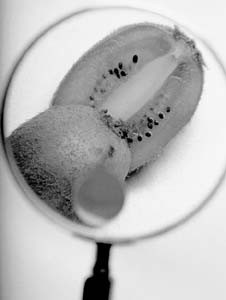
MY SISTER Monika is one of the millions of Americans who think “gourmet” is an insult. She can’t help it. She married a good Mormon boy from Idaho, where “meat and potatoes” is the unofficial state motto.

Anyway, she’s been flinging the G-word at my brother Marty with serious intent to scorn, and why? Because he married a good Mormon girl from Japan, and learned to make a killer sukiyaki. Of course, sukiyaki isn’t gourmet to Marty and his family, anymore than the miso soup that they sometimes have for breakfast, but there’s something that Monika, along with the rest of middle America, finds threatening about it.

She should have seen it coming at a Sunday dinner 15 years ago, when he proudly presented a new salad dressing, made primarily of soy sauce and orange juice. And in the later context of a college degree in Japanese and a church mission to Japan, Marty’s earlier attempts at fusion cuisine made perfect sense.

Now two of my three other brothers have followed suit–with both the missions and the wives, talk about sibling rivalry!–which means that my parents have more Japanese in-laws than they do Anglo ones.

It’s kind of cool, actually. Our family gatherings have developed a certain Pacific Rim-meets-Betty Crocker flavor. If you count my father and his Dutch eccentricities, we have become a tricultural family, with menus to match. We are as likely to have cooked salmon sushi, set and stirred with lemon zest in a bamboo basket, as we are to have deli sandwiches or some stick-to-the-ribs Dutch pea soup.

In this we are yet another family that finds itself dipping its toes into America’s melting pot. History shows that immigrants to these United States hold on to their home cultures’ foodways long after everything else has faded, even while picking up other traditions when convenient or necessary.

For example, my dad immigrated from the Netherlands when he was a teenager; one of the first jobs he took in the New World was as a line cook in Las Vegas, frying up the foods of his new homeland for tables full of compulsive gamblers. But somehow he held on to the food of his youth. We children never picked up a word of Dutch, except for a few of the choicer swear words, and of the culture we only knew Delft-blue tile paintings of windmills and girls in flappy hats.

But the food, sent over in CARE packages from our aunts in the Netherlands or picked up on rare occasions from a Dutch store near the city, remained a vivid part of our childhood table: good cheese, strange cookies, pickled herring, salt licorice.

My brothers’ children are getting an equally vivid spread, with miso soup and Campbell’s soup duking it out for primacy. Even their linguistic fate is up in the air: for now they’re bilingual–their toddler conversations are a lively blend of Japanese baby talk and the occasional random English utterance–but the oldest nephew, not even 6 years old, is already losing his interest in his mother’s native tongue. Marty tells me of fourth- or fifth-generation Japanese Americans in the central Californian town where he lives who know exactly the names of dishes they need to make for a holiday, but they can’t read the packages at the Asian food store.

I can’t tell how he feels about this fate for his own children, but it seems to be what they’re headed for.

THERE ARE OTHER casualties of the meeting of various generations and cultures in our family. Marty is losing the Dutch New Year tradition of sweet fritters in favor of the complex Japanese preparation of packed meals for the week following New Year’s Day. And even I, the open-minded wine country gourmet, flinched at my first encounter with okonomiyaki (pancakes with meat and vegetables). It would have gone better if the traditional topping of bonito flakes hadn’t seemed quite so animated as they fluttered in the hot air of the grill.

But some interesting juxtapositions have also emerged. For example, the high incidence of lactose intolerance among people of Japanese descent has not deterred Marty’s wife, Nanae, from competing with our dad for the title of maker of the best hot chocolate. The two have heated conversations about whether to buy ground or powdered, whether or not to stir the chocolate with the milk all at once or temper it bit by bit. The two agree on one thing only: Dröste–a Dutch brand.

After that, it’s all up to the inevitable taste test.

For the most part, though, the merger is going smoothly. I remember a day last winter when we made o-nigiri, or rice balls, and decorated them with seaweed. My newest sister-in-law, Yuko, shyly instructed me in sprinkling salt on my moistened palms and patting a ball of rice into the traditional form. My results were lumpy and too tightly pressed, compared to Yuko’s clean elegant triangles, and the seams stuck out in sharp corners where my palms didn’t quite meet, because I picked up too much rice.

But we forged ahead and made a plateful of o-nigiri, wrapping some in nori and sprinkling the others with furikake, a salt/seaweed blend.

Five-year-old Erikun (even my mother uses the Japanized form of his name, Elliott) had been watching the operation intently, even patting his own miniature o-nigiri, with Yuko giving him cute little baby directions in Japanese. But when the cartoon came on in the next room, he could have just as well been rolling a Ho-Ho. Like any kid who wants the TV, he blindly grabbed a piece and was off like a shot.

Frankly, if this is a “gourmet” kid, I don’t think middle America has much to worry about.

From the August 26-September 1, 1999 issue of the Sonoma County Independent.

© Metro Publishing Inc.

Elena Lappin

Pride of Brides By Sarah Coleman AS FANTASIES GO, the idea of shacking up with an exotic foreigner ranks high in the imaginations of many people. There's always something alluring about a different culture, and the idea that love is strong enough to cross international borders is a powerfully romantic one. Just ask Cleopatra,...

The Distraction

Bad Bad Thing The other woman: Jennifer Pruitt and Dean Bukowski star in The Distraction. 'The Distraction' offers a tepid tale of sexual misbehavior By David Templeton OK. There's this young married couple, and everything seems to be going fine with their marriage. Then the husband learns that, once upon a time, baby...

Vintage Apple Orchards

Core Values Bitter harvest: A steam shovel destroys vintage apple orchards at the Dutton Ranch to make way for vintage wine grapes, a trend that apple growers say is endangering a way of life. Livelihoods wither for local apple growers in the wake of Vacu-dry plant closing By Janet Wells ...

‘The Blair Witch Project’

"Unknown Curator" Mickey McGowan on movie-addiction, the 'Blair Witch' craze, and the growing trend toward really bad camera work By David Templeton Writer David Templeton takes interesting people to interesting movies in his ongoing quest for the ultimate post-film conversation. This column is not a film review; rather, it's a freewheeling, tangential discussion of life,...

Flameco Arts

Passion Afoot Dance fever: FlamecoArts' Elena Marlowe pounds the boards. Flamenco dance unleashes the Gypsy soul By Paula Harris A GHOSTLY CLOUD of white dust and rosin rises from the well-worn dance floor around my ankles, as my feet, encased in black suede flamenco shoes embedded with tiny nails...

Fall Films

Fall into Film Eye spy: Johnny Depp plays an 18th-century cop chasing a killer in Sleepy Hollow. The new season offers everything from big bombs to cinematic shooting stars By LOOKS LIKE Halloween came early this year. It's no secret that the one independent movie that earned studio respect this year was...

Rosewood Hotel

Last Resort Fighting for the high ground: Sonoma City Councilman Ken Brown, left, and Dave Williams of Citizens for Measure A perch on land where developers want to build a large luxury hotel. On Sept. 21, voters decide the fate of the project. Luxury hotel plan raises hackles in Sonoma By...

A’Roma Roasters

Smell the Coffee By Janet Wells A'ROMA ROASTERS cafe in Santa Rosa no longer serves food or drink on its front sidewalk after 8 p.m. A small thing, perhaps, in a city where zealous development, church scandals, and nightmare traffic rule the headlines. But for a city that seems desperate to revitalize its near-desolate...

Sonoma County Theater Companies

High Drama Face the fall: Jereme Anglin stars in La Bête at the Cinnabar in September. Sonoma County theater companies pile on the productions By Daedalus Howell ACTRESS Tallulah Bankhead once remarked, "It's one of the tragic ironies of the theater that only one man in it can count...

Melting Pot

Melting Pot There's room at the table for everyone By Marina Wolf MY SISTER Monika is one of the millions of Americans who think "gourmet" is an insult. She can't help it. She married a good Mormon boy from Idaho, where "meat and potatoes" is the unofficial state motto. ...
11,084FansLike
4,606FollowersFollow
6,928FollowersFollow

