Spins

0

Music Box

New jazz, rock, Asian fusion CDs

Bill Frisell Ghost Town (Nonesuch)

REGARDED as one of the top three contemporary jazz guitarists, Bill Frisell has been on an Americana kick of late. But unlike 1993’s widely acclaimed Have a Little Faith (Elektra), in which Frisell’s quintet dished up radically altered versions of compositions by American heavyweights Charles Ives, Aaron Copland, and Bob Dylan (to name a few), this solo outing is a subdued acoustic-oriented trip through a countrified landscape that finds Frisell on the artistic fringes of Nashville while applying guitars and a five-string banjo to originals and a handful of covers by Hank Williams, George Gershwin, and John McLaughlin. It doesn’t get any better than this. Greg Cahill

DJ Cheb i Sabbah Maha Maya (Six Degrees)

Various Artists Asian Travels (Six Degrees)

ONE OF LAST YEAR’S most exciting world music excursions was Shri Durga, a rich sampling of classical Indian ragas, bagra, mantras, and hip-hop beats fashioned by Algerian-born magic man DJ Cheb i Sabbah, a San Fran-cisco­based artist. He’s back with a remix CD that completely reinvents those tracks on a more pop-oriented vehicle that is well worth the ride. Saturated in the Asian fusion of the London underground, the CD features guest remixes by Transglobal Underground, the State of Bengal, and Bally Sagoo. If that whets your appetite, then the Asian Travels sampler is a feast in itself. Cheb contributes the contagious “Kese Kese,” but it is Transglobal’s remix of Fun Da Mental’s “Ja Sha Taan” that steals the show–an instant rave in a box. G.C.

Pantera Reinventing the Steel (East/West)

PANTERA’S second album, 1992’s Vulgar Display of Power, is widely regarded as a heavy-metal classic. During the ’90s, Pantera proved to be one of the more popular practitioners of thrash, a dominant form of metal that sprang from the late ’80s and has outlasted grunge. Pantera has stood out from the pack with a bluesier bent, but Reinventing the Steel restates the thrash virtues of fierce thunder, righteousness, guts, and tortured glory without reinventing anything. Heavy rock has mutated wonderfully of late, and thrash-metal champions like Metallica, Megadeth, and Anthrax have grown. Pantera knows the past–the cut “Goddamn Electric” name-drops Black Sabbath and Slayer–but holds ground only in the present. Karl Byrn

Miriam Makeba Homeland (Putumayo)

TEN YEARS AFTER her return to her home, former exile Miriam Makeba pays tribute to her native South Africa on Homeland. While Makeba’s artistry is often overshadowed by her political conviction–she delivered an impassioned anti-apartheid speech before the United Nations General Assembly in 1963–this dynamic singer/songwriter (whose 1967 hit “Pata Pata” became the first African song to reach America’s Top 10) still can blow you away. Her pipes may not be what they once were, but Makeba’s soulfulness and empowering lyrics ring true on every track. G.C.

Spin du Jour

Various Artists As Long as You’re Living Yours: The Music of Keith Jarrett (BMG/RCA Victor)

PIANIST and composer Keith Jarrett is the poster boy for solitary, introspective jazz, so this collection of bold reinter-pretations by an all-star cast–including John Scofield, Joe Lovano, Tom Harrel, Bob James, Cucho Valdes, and Don Byron–is as startling as it is striking. Pianist Bruce Hornsby kicks off with a sousaphone-driven New Orleans­flavored take on “Backhand” (featuring Mardi Gras Indian Theodore “Bo” Dollis on vocals), and producer Milan Simich never looks back. You’ll never think of Jarrett in that same Schroeder-hunched-over-the-piano way again. Highly recommended. G.C.

From the May 4-10, 2000 issue of the Sonoma County Independent.

© Metro Publishing Inc.

Healdsburg Growth Limit

0

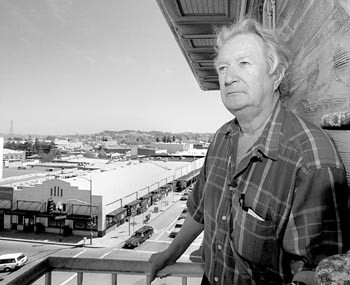
Hammering out a deal: Healdsburg activist Jim Winston has gathered enough signatures to place a growth-management ordinance on the November ballot. Now the City Council has authorized a dueling initiative.

GMOx2

Healdsburg struggles to preserve the integrity of its growth limit

By Jeremy A. Hay

FOR CLOSE to a year, the Healdsburg City Council has argued that too strictly limiting the city’s growth would drive up housing prices and make it harder to provide the parks and public services partially funded by developer fees. On Monday, the council voted unanimously to place on November’s ballot a growth-management ordinance that would be among the strictest in the county.

Its action comes barely a month after Jim Winston, a tenacious land-use activist whose tactics alienated even some of his allies, surprised the council by making doubly good on a threat to take the issue of managing Healdsburg’s growth to the voters.

“I think he has single-handedly gotten the council to say, ‘OK, we’re willing to do growth management,’ ” says Healdsburg Planning Director Richard Spitler.

Over eight days in March, Winston led a petition drive that collected nearly 900 signatures–almost twice as many as needed–qualifying his version of a growth-management ordinance, or GMO, for the November ballot.

Winston’s decision in February to pursue an initiative divided his allies. Among those who parted ways with him were several prominent Healdsburg slow-growth advocates, including Leah Gold, who chaired the 1996 campaign that established Healdsburg’s 20-year urban-growth boundary, one of five similar measures passed in the county that year.

“Initiatives are a heavy mallet to save for when you really need them,” says Gold.

She calls using the initiative to negotiate with the city “a kind of hardball politics that’s his style, not mine.”

Winston argues that the initiative forced the council to act. He downplays his differences with fellow activists, saying, “In the end, when they’re in the polling booth with the curtains closed, they’re going to vote for my initiative.”

The Winston Initiative would limit to 30 the number of new homes allowed in the city each year, with an exemption for affordable and low-income housing.

Issued a clear signal by voters in favor of slower growth, but convinced the Winston Initiative would put too tight a clamp on local development, the council had little choice but to push for its own GMO.

“There’s no doubt in my mind we have to get something on the ballot to defeat [Winston’s] ordinance,” says Councilwoman Cathy Harvey.

The council’s proposal has the same cap of 30 new homes, but includes seven categories of exemptions, including affordable housing, in-fill projects, granny and live/work units, and subdivisions of four lots or less.

So determined were councilmembers to defeat the Winston Initiative that on Monday Councilman Mark Gleason, initially the most resistant to the idea of a GMO, actually suggested setting the limit below the 30 proposed by Winston.

The competing initiatives are now similar enough that Winston, who has shown himself unafraid of offending the council, was moved to announce: “I’d be happy with the passage of either measure, as long as you include my recommendations in your initiative.”

The city’s proposal won the support of Gold and Bruce Abramson, another leader in the 1996 UGB campaign. In the days before Monday’s meeting, Gold, Abramson, and Councilman Jason Liles worked the telephones with both Winston and councilmembers, trying to fashion an alternative that would be acceptable to a majority of voters.

“As a local environmentalist, I’ll say this is a good approach,” Abramson says of the council version.

IN FACT, the city’s proposed GMO is almost identical to an earlier compromise plan brokered by Liles, a plan that both sides agreed to on April 17. Following that agreement, amid congratulations all around, Winston promised to withdraw his initiative, but found that doing so was next to impossible under state election law. The compromise died and with it the short-lived amity.

“This initiative no longer belongs to us; it belongs to the 900 people who signed the petition to get it onto the ballot,” Winston declares.

Several councilmembers wasted no time criticizing the Winston Initiative.

Councilman Kent Mitchell called it “bad legislation that’s bad for Healdsburg,” saying that Winston’s proposal “does not allow enough opportunity for in-fill development and affordable housing.”

Over Liles’ objections, the council proposed that the compromise GMO “with one significant difference” be put on the ballot to compete with Winston’s. The difference: reducing from a fourth-fifths supermajority to a simple majority the number of council votes needed to change any aspect of the GMO.

Winston denounced the council’s proposal as a “sham.”

A week later, on Monday, the dead April 17 compromise was revived–complete with a fourth-fifths vote required to alter the ordinance–to face off with the Winston Initiative in November. “It’s a very interesting case,” says Dane Waters, president of the Washington, D.C.­based Initiative & Referendum Institute. “I don’t know of a single case where someone goes out, collects the signatures, spends the money, gets something on the ballot, then reaches a compromise.”

In the end, the two most significant remaining differences between the initiatives boil down to minor subdivisions and the issue of altering the adopted ordinance.

* The Winston Initiative could be altered only by a vote of the people; the council’s version by a four-fifths council vote.

* The council’s ordinance would make minor subdivisions of four lots or less exempt from the 30-home limit. Winston says this exemption might be a loophole, allowing developers to develop large projects in smaller increments.

Winston says the minor subdivision exemption “is still a major sticking point with us.” But the differences seem slight enough that even some of his staunchest supporters are reconsidering.

“I think we’re real close. . . . I don’t know whether that’s worth going to battle over,” Rex Wilson, who collected signatures for the Winston Initiative, said after the meeting.

THE INITIATIVE battle is just the latest twist in a tug-of-war commenced a year ago, when Winston appeared at a council meeting warning that if the city wasn’t careful it was going to outgrow the UGB well before its 2016 expiration date. He and a hastily formed citizens group led with a proposal that the city limit new housing units to 40 a year.

The group’s concern was fueled by the building boom at the city’s north end, where nowadays street after street of large single-family homes march over 230 hilly acres annexed by the city in 1995. Healdsburg experienced incremental growth through the early ’90s. But a surging economy ignited residential construction, mostly in the annexed area, where dozens of roads were carved and nearly 200 new homes built from 1997 to 1999.

Neither of the initiatives on November’s ballot will affect the close to 400 new homes already approved for eventual construction in the annexed area.

But GMO advocates say the goal is to slow the rate at which Healdsburg develops in the future and preserve the integrity of the UGB. Through much of the past year, GMO advocates and the city remained far apart on the number of new units to be permitted a year. The Planning Commission proposed 60, with a generous bundle of exemptions. Winston called the number “absurd,” saying that at that rate the city would use up the room within its boundary by 2008.

Under public pressure, the council lowered that number first to 50, then 45, but balked when Winston, citing revised figures from the city’s planning department, proposed a new limit of 30 units a year. The council dug in, and Winston decided to go after an initiative.

Now, Winston says, the decision is in the right hands. “Who better to decide than the people?” he says.

Says Gold: “It’s a win-win. We need strong growth management, and it looks like we’re going to get it one way or another.”

From the May 4-10, 2000 issue of the Sonoma County Independent.

© Metro Publishing Inc.

Chicano Secret Service

Fear of a Brown Planet

Satire is the weapon of choice for the Chicano Secret Service

By Daedalus Howell

“A SATIRIC PIECE in the Times is one thing, but bricks and baseball bats really get to the point,” Woody Allen observed when discussing neo-Nazis during a cocktail conversation in his film Manhattan.

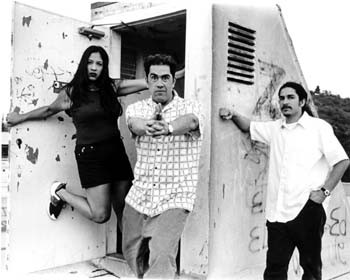
The members of the Chicano Secret Service would disagree with the kvetching auteur. Satire is the weapon of choice for this three-person sketch comedy troupe, and it’s one they plan to use with devastating effect when they bring their sociopolitical comedy Fear of a Brown Planet to Sonoma State University on Cinco de Mayo.

“Satire is able to put out issues that, if they were addressed pointblank, would just shut people off. Satire puts a twist on everything and opens up people’s minds,” says the group’s co-founder Tomas Carrasco, 37, who is quick to add that his troupe doesn’t sugar-coat the issues, but rather let’s them in the backdoor with a hearty guffaw.

“It’s more of a sneak attack,” he says. “It’s funny to make fun of serious things.”

Founded 12 years ago when Carrasco and collaborator Elias Serna were students at UC in Berkeley, the Chicano Secret Service was born as a pointed response to President Reagan’s “Decade of the Docile Hispanic.”

With the addition of Carrasco’s sister Susan in the mid-1990s, the group has continued delivering comedy to venues as farflung as Tijuana’s Festival Internacional de la Raza, New York City’s HBO Comedy Festival, and colleges such as Yale and Notre Dame.

The group honed its skills with the guidance of noted playwright and activist Luis Valdez and his El Teatro Campesino. Other influences include the San Francisco Mime Troupe and “Chicano art godfather” Rene Yanez, whom they credit in their promotional literature with showing them “the ropes on how not to get ripped off in the low-paying, high-profile, back-stabbing, Eurocentric, classist world of American Theatre.” (“But it’s all gooood,” they say, winking.)

“People have said we are like a combination of Teatro Campesino, Monty Python, and Saturday Night Live, which I take as a compliment,” says Carrasco. “I think sketch comedy is a natural outlet for us. The bottom line is that we’re acting out jokes.”

Carrasco also credits the conservative climate of the Reagan era with shaping the Chicano Secret Service’s stylized theatrical revolt.

“With the political atmosphere at the time, there was lots of craziness and big changes going on, which was a very satirical situation,” he says. “It was so funny in and of itself that sketch comedy and satire were just a very natural way to comment on the times.”

But the current political milieu also provides Carrasco and company with plenty of targets. Among the hot-button issues they tackle are California’s recent slate of voter-approved propositions, including Prop. 187 (which denies illegal immigrants medical care, schooling, and other government services) and the controversial Three Strikes law.

“In the ’60s our youth were being sent to Vietnam. In the year 2000, all of our youth are going to jail,” Carrasco says. “There’s a large population of the Latino community in jail, and that’s a harsh reality. It’s really weird to deal with it because it seems like it’s being done so underhandedly.

“Extreme laws such as the Three Strikes law are affecting a lot of communities,” he continues. “People are just disappearing. It’s serious and sad, but you’ve just got to laugh and ask, ‘What’s going to come next?’ ”

THE MEMBERS of the Chicano Secret Service have long labored to put Mexican-Americans and Latino culture as a whole onto the map of the American media landscape.

Both Carrasco and Serna are currently producing their own films. Serna occasionally accepts commercial acting jobs, though he refuses to play stereotypical Chicano characters. Upon returning to Los Angeles after college, the Chicano Secret Service fielded interest from television producers intent on packaging their talents in a sitcom, but the project floundered.

“Hollywood really wasn’t receptive to our political humor and us as Mexican-Americans, or Chicanos,” says Carrasco, who has since worked with stage and film sensation John Leguizamo.

“It’s hard for them to deal with ‘smart’ Mexicans. What we were presenting must have been a radical image of Chicanos to them,” he says laughing, then asks rhetorically, “Where are the regular Chicanos, the regular Mexicans that have jobs and go to school and have good lives? If we’re acknowledged in the [entertainment industry] at all, it’s always an extreme. We’re always cholos.”

Apart from misrepresentation by Hollywood, Mexican-Americans also face the sometimes more insidious phenomenon of nonrepresentation, says Carrasco.

“The are 4 million Mexicans in Los Angeles, and you would think there were none if you looked at what Hollywood produces,” he suggests. “We make fun of all that kind of stuff in various sketches.”

PAIRING LIVE action and video sequences, Fear of a Brown Planet is a series of sketches chronicling the exploits of a superhero named Zeta, whose mission is to “liberate all oppressed people in the City of Hate,” a thinly veiled Los Angeles.

The futuristic character tackles California’s politics with Chicano-inspired riffs on such icons of American culture as the Wizard of Oz, Judge Judy, and CNN (reimagined by the troupe as the Chicano News Network). He also battles the president of the Caucasian Alpha Caucasian Association, or CACA, an elitist Hispanic “who believes she has effectively pulled herself up by her huarache straps.”

“I hate to call it intellectual comedy,” says Carrasco, who lists “an audience with a mind” as part of the troupe’s technical requirements.

Among the group’s other requirements: baseball bats to ward off “right-wing, Nazi Republicans,” who occasionally take umbrage at their show.

Fortunately, the Chicano Secret Service gigs mainly at universities and museums–venues its members prefer over traditional comedy clubs–where they generally encounter enthusiastic and interested audiences.

“At clubs, everybody is drunk and wants caca-peepee jokes,” observes Carrasco, who is confident that local audiences will relate to his company’s offbeat comedy, which the group customizes to match the local political environment.

“Every town,” says Carrasco, “has a totally liberal cool politician and an asshole right-winger.”

The Chicano Secret Service performs on Friday, May 5, at 8 p.m. in SSU’s Warren Auditorium, 1801 E. Cotati Ave., Rohnert Park. Tickets are $5. For details, call 664-2382.

From the May 4-10, 2000 issue of the Sonoma County Independent.

© Metro Publishing Inc.

‘The Virgin Suicides’

Pining Away

Five lovely sisters mope through their teenaged angst in ‘The Virgin Suicides’

By

SOPHIA COPPOLA’S debut as a director, The Virgin Suicides, is mannered and occasionally pretty, noteworthy for some tantalizing glimpses of Kirsten Dunst, who plays the second oldest of a tribe of five girls in an upper-middle-class suburb circa 1975.

The narrator (Giovanni Ribisi) explains that these Lisbon sisters–Cecilia, Lux, Bonnie, Mary, and Therese–are the golden hearts of the neighborhood. They are the unaccountably beautiful daughters of the Lisbons–a dull math teacher (James Woods) and his highly overprotective wife (Kathleen Turner). All five girls are, we’re told, doomed, especially the one whom the camera shows the most interest in, she with the tony name of Lux (Dunst), which means “light” in Latin.

The first of these episodes in the life of the Lisbon sisters begins with the suicide of Therese (Leslie Hayman). When a doctor confronts her as someone too young to feel depressed, Therese squelches him: “Obviously, you’ve never been a 13-year-old girl.”

According to Coppola, this logic is unanswerable, and yet you’d love to have it answered. The narrator sums it up: “We knew that they knew everything about us, and that we could not fathom them at all.”

As Coppola presents this quintet of misses, they aren’t fathomed. Coppola takes their yearning with an adolescent’s own sense of drama and just hopes we’ll identify. But the girls are as unknowable to us as they are to the boys. And yet we see so much more of them than their young male suitors do. We see the insides of their house, we hear their private conversations–and note that mostly what they do is lie on the floor and pine.

The turning point of The Virgin Suicides is a prom night during which Lux gets in trouble through a combo of peach schnapps, pot, the music of 10cc’s “I’m Not in Love,” and the attentions of the most charismatic boy in school (Josh Hartnett).

After this night, Lux and the rest of the girls are pulled from school and kept walled up in their house by their furious mother. Lux is the only one who rebels–even in a self-wounding way–by becoming promiscuous.

The clue to the sisters’ ethereal behavior should be in the parents, but Coppola doesn’t find it. There’s redder dirt in Turner’s Southern accent than usual–which could be evidence that she construed this part as a bitter-comic role. Certainly Mrs. Lisbon is the heavy in the film, even if the narrator tries (vainly) to get the mother off the hook for the religious hysteria that undoes her family.

The narrator tells us of the confusing “estrogen haze” in which the father lives. It’s a witty description, and Woods’ lonely father is amusingly underplayed. Yet The Virgin Suicides has such a thick estrogen haze that it almost fogs the lens, a drugged quality that reflects the narrator’s perhaps untrustworthy claims that these girls are unknown and unknowable and, by implication, too good for this world.

From the May 4-10, 2000 issue of the Sonoma County Independent.

© Metro Publishing Inc.

Jerry Garcia

0

High on Bluegrass

Jerry Garcia’s bluegrass roots are showing on legendary ‘lost’ tapes

By Greg Cahill

IT’S ONE of the most celebrated bootleg recordings in pop history. In 1993, mandolinist David Grisman invited his old pal Jerry Garcia–then enjoying some of his most commercially successful days as the Grateful Dead guitarist–to join him and bluegrass picker Tony Rice for a laid-back afternoon session at Grisman’s home studio in Mill Valley. The result was an intimate gathering that evoked a friendly front-porch feeling.

Some months later, Grisman heard that the jam session had found its way onto KBAI radio in New York, and deadheads were swapping the tapes at shows. The recording even popped up in a shipment of bootleg CDs that the Dead confiscated.

Perplexing.

But then Grisman discovered that a pizza delivery boy had lifted a cassette version of the sessions from Garcia’s kitchen counter.

That episode is immortalized in The Pizza Tapes (Acoustic Disc), newly released on Grisman’s CD label. It’s a real gem, sometimes brilliant, sometimes not, but filled with warmth. The recording retains the banter–and false starts–that took place during the session. The trio tries its collective hand on Lefty Frizzell’s “Always Late” (a hit a few years earlier for country star Dwight Yoakam), jams on George Gershwin’s “Summertime,” and noodles its way through Bob Dylan’s “Knockin’ on Heaven’s Door.” There’s even a rare Garcia vocal rendering of a tentative “Amazing Grace,” sung at the request of Grisman’s wife.

The closing track, on which Garcia sings “The House of the Rising Sun,” is worth the price of admission alone.

For Garcia, the bluegrass sessions were a return to his country roots.

In 1992, I had a chance to sip tea with Garcia on a rainy morning at the Dead’s San Rafael office, located in a big Victorian a couple blocks from the downtown, and talk about his renewed interest in bluegrass.

“My grandmother was a big Grand Ole Opry fan,” Garcia recalled. “Yeah, I grew up in San Francisco listening to the Opry every Saturday night on the radio without knowing what I was hearing. In fact, my first 45 was a Hank Williams record, a song called ‘The Love Bug Itch.’ It was a really stupid song,” he added with a laugh, “but, hey, it was Hank Williams.”

At the time, Garcia–long regarded as one of rock’s most innovative electric guitarists–had begun nurturing his affinity for bluegrass breakdowns and hillbilly spirituals, playing occasional concerts with Grisman and some of the hottest country pickers this side of Kentucky. Grisman had just released Bluegrass Reunion (the first of six Acoustic Disc recordings featuring the duo), to which Garcia contributed two tracks. That CD was a traditional outing with bluegrass great Red Allen and featured banjo player Herb Pedersen, fiddler Jim Buchanan, and bassist James Kerwin.

In 1992, Grisman and Garcia had teamed up for a gorgeous self-titled CD featuring bluegrass-inflected renderings of B. B. King’s trademark “The Thrill Is Gone,” the Dead’s “Friend of the Devil,” and Irving Berlin’s “Russian Lullaby.”

“For me, that was a rich experience,” Garcia said of the recording while puffing a low-tar cigarette and showing satisfaction at being “one of the guys” during the no-frills sessions.

THE GRISMAN/GARCIA projects underscore a long-standing relationship between the two musicians. “He’s a real livewire and kind of a perfectionist,” Garcia said of the notoriously finicky Grisman. “We fire each other up in a way that I think is very interesting–and it’s interesting for the audience. But it’s one of those things that doesn’t bear too much analysis.

“After all, musical chemistry doesn’t yield to a rational yardstick.”

Ironically, the pair had first met by chance in 1964, when Garcia was on a pilgrimage to the East Coast in search of authentic bluegrass music. At the time, Grisman was leading a group of upstart bluegrass players called the New York City Ramblers, still fresh from their upset victory at the prestigious Union Grove fiddle competition in North Carolina.

“I had my banjo, he had his mandolin,” Garcia explained. “We cranked a little bit and he kind of tested me. I guess he wanted to see if these guys from the West Coast could play.”

Returning to San Francisco, Garcia fretted over the lack of good bluegrass players in the Bay Area and found himself regretting what he perceived as his own lack of virtuosity. “I wanted the bluegrass stuff to be perfect, and I wasn’t happy if it wasn’t,” he said.

Instead, he passed his time in Mother McCree’s Uptown Jug Champions, a local jug band that included guitarist Bob Weir–then a rebellious 15-year-old kid who’d been expelled from high school–and blues harmonica enthusiast Ron “Pig Pen” McKernan. In 1965, that band went electric, changed its name to the Warlocks, and added drummer Bill Kreutzmann and bassist Phil Lesh. By August of 1966, they had changed their name again, this time to the Grateful Dead, moved to the Haight-Ashbury district, and begun playing at Bill Graham’s psychedelic emporium the Fillmore Auditorium and other local venues.

Yet bluegrass continued to influence Garcia. With their acoustic instrumentation, three-part vocal harmonies, and narrative lyrics, Working Man’s Dead and American Beauty, both recorded in 1970, marked a momentary shift from the band’s signature freewheeling jazz-rock jams. “For me, it was one of those things where I didn’t want to spend the rest of my life in a studio making records that are too fucking weird for anybody to listen to,” Garcia said. “Besides, we recorded [Working Man’s Dead] around the same time as Live/Dead, which gave us a chance to scratch our itch for the weird shit.”

Coincidentally, American Beauty features Grisman playing mandolin on two tracks: “Ripple” and “Friend of the Devil.” The sessions were recorded on the day Grisman moved to the Bay Area, an auspicious event that compelled him to settle in Stinson Beach, near Garcia and fellow musician Peter Rowan. In 1973, Grisman and Rowan persuaded a moonlighting Garcia to pick up his five-string banjo for the first time in a decade for the short-lived Old & in the Way. That band–including fiddler Vassar Clements and bassist John Kahn–recorded one live album at the old Boarding House in San Francisco. The Grateful Dead’s Round label issued an album of those live sessions, also called Old & in the Way. In 1996, Grisman released the stellar Old & in the Way: That High, Lonesome Sound, also culled from the Boarding House dates.

Despite the long break between projects with Grisman, Garcia maintained that bluegrass remained “a vast reservoir” to which he returned time and again. “I think of this as an ongoing thing in my life,” he said. “And as long as it’s comfortable for both of us, I’d be happy to keep doing it part of every year.”

Fittingly, Garcia’s last known recording, made just two weeks before his death in 1995, was with Grisman in the small basement studio in which he had found so much peace and contentment.

From the May 4-10, 2000 issue of the Sonoma County Independent.

© Metro Publishing Inc.

Rebecca Solnit

Happy Trails

‘Wanderlust’ takes a fascinating tour of the history of walking

By Patrick Sullivan

“EXPLORING the world is one of the best ways of exploring the mind, and walking travels both terrains,” writes Rebecca Solnit, explaining the impetus behind her new book, Wanderlust: A History of Walking (Viking; $24.95).

To which your uneasy responses might well be, “A whole book?” and “On walking?” But relax, fellow pilgrim, because this is one journey well worth taking.

In postmodern America, we’ve just about given walking the bum’s rush. Travel by car is faster, surfing the Internet is more fun, and, frankly, the whole concept is so 20th century, isn’t it? But Solnit finds this trend ominous. Walking, she believes, is an irreplaceable way of engaging with the natural world, the human community, and our own mind. In Wanderlust, she explains why.

In her opening chapter, Solnit argues that the human mind moves best at the speed of human feet. But that belief doesn’t keep her book from ranging far and wide across a broad field of human knowledge and experiences, examining two-footed travel from a hundred different perspectives, drawing on an extensive range of sources to give us the history, the literature, the philosophy, the sexual politics, and the anthropology of walking.

Humanity is the only animal species that walks comfortably on two legs. But anthropologists, Solnit explains, can’t agree on why we became bipedal. The most entertaining theory is R. D. Guthrei’s 1974 proposal that hominids got up on two legs so that males could use their exposed penises as a “threat display organ” to intimidate rivals, a notion that leads Solnit to speculate on the origins of human laughter.

But however we became upright, we’ve been walking ever since, with dramatic consequences. Walking changes the world, as Solnit explains. Wordsworth wanders around England, writing poetry that changes the way society views nature. John Muir strides across America and helps create the ecological mindset that gave rise to America’s park system. Novelist George Sand replaces her dainty petticoats with men’s trousers and finds that women can take pleasure in walking the city streets.

Wanderlust strides alongside a host of intriguing walkers of all types, from poets to activists to nature lovers to prostitutes. Along the way, the author uncovers spiritual insights, fascinating personalities, and delicious ironies of history.

Poet Gary Snyder climbs Marin’s Mount Tamalpais with Jack Kerouac and Allen Ginsberg. An elderly woman calling herself Peace Pilgrim walks across the United States on a quest for world disarmament.

Then there’s the pilgrimage of German filmmaker Werner Herzog, who makes an extravagantly passionate gesture worthy of a character from his films. Upon learning that his friend film historian Lotte Eisner was dying, Herzog decided to make the trip to her hospital in Paris on foot, a journey of hundreds of miles. Plagued by bad weather and leg pains, Herzog wrote in his diary, “Why is walking so full of woe?” But when he arrived at his friend’s bedside, he experienced the sublime peace of a quest fulfilled.

Solnit quotes from novels, people’s diaries, and her own journals at least as often as she references scientific papers. Indeed, Wanderlust has a deeply literary tone–a fact enhanced by the author’s formidable way with words. Walking in the Marin Headlands, she sees some wildflowers and describes them as “small magenta cones with their sharp black points that seem aerodynamically shaped for a flight that never comes, as though they had evolved forgetful of the fact that flowers have stems and stems have roots.”

In the end, the author returns to her starting point. Walking, she concludes, should be viewed in ecological terms as an indicator species, the decline of which is an early warning sign of systemic trouble. In other words, when our feet leave the ground, we end up just spinning our wheels.

Rebecca Solnit reads from Wanderlust on Thursday, May 11, at 7:30 p.m. at Readers’ Books, 130 E. Napa St., Sonoma. For details, call 939-1779.

From the May 4-10, 2000 issue of the Sonoma County Independent.

© Metro Publishing Inc.

Farmers’ Markets

0

Farmers’ markets spring to life

By Paula Harris

IF YOU GROW IT they will come, especially if it’s fresh, juicy, crunchy, fragrant, or ripe. Growers are once again beginning to showcase their flourishing yields of locally grown fruits and veggies and setting up stalls at farmers’ markets in parks and parking lots around the North Bay.

It’s a movable feast of greens, squash, berries, peaches, herbs, and much more that signifies the arrival of warm weather, frosty drinks, sizzling barbecued veggies, and cool salads.

Each local farmers’ market has its own particular character. In some instances, the markets are more akin to community meeting places, with the addition of live music and arts and crafts exhibitions. Some markets hold cooking demonstrations and samplings. And many farmers are becoming savvy about the value of the personal touch and are offering customers recipes, information, and the occasional story about their produce.

What occurs is an old-fashioned social exchange that’s rarely achieved (with any real sincerity) in the big-box supermarket down the street. So, for a change, forsake that squeaky warped-wheeled wire cart and instead select a woven basket and troll the stalls at the nearest farmers’ market.

Here’s what’s going on locally, according to the latest information from the California Federation of Certified Farmers’ Markets.

Sonoma County

Cloverdale: Downtown Plaza; Saturdays, 7 a.m. to noon, June-October; 894-4470.

Healdsburg: West Plaza parking lot at North and Vine streets; Saturdays, 9 a.m. to noon, May-December; and the Plaza; Tuesdays, 4 to 6 p.m., June-October; 431-1956.

Petaluma: Walnut Park, Fourth and D streets; Saturdays, 2 to 5 p.m., May-October; 762-0344.

Santa Rosa: Oakmont, bank parking lot, White Oak and Oakmont drives; Saturdays, 9 a.m. to noon, year-round; 538-7023.

Original Farmers’ Market, Santa Rosa Veterans Bldg., 1351 Maple Ave., Santa Rosa; Saturdays and Wednesdays, 8:30 a.m. to noon, year-round; 522-8629.

Wednesday Night Market, Fourth and B streets; Wednesdays, 5 to 8:30 p.m., May 31­Sept. 6; 524-2123.

Sebastopol: New Town Plaza, Petaluma Avenue at McKinley Street; Sundays, 10 a.m. to 1:30 p.m., May-November; 522-9305.

Sonoma Valley: Depot Museum parking lot, First and Spain streets; Fridays, 9 a.m. to noon, year-round; and Sonoma Plaza at Napa Street; Tuesdays, 5 to 8:30 p.m., April-October; 538-7023.

Napa County

Calistoga: In front of the Sharpsteen Museum, 1311 Washington St.; Saturdays, 8 to 11 a.m., summer months; 942-4769.

Napa: First and Main streets; Thursdays, 4 to 8 p.m., May-September; and West and Pearl streets; Tuesdays, 7:30 to noon, May-October; 252-7142.

St. Helena: Hwy. 29 and Grayson-Crane Park; Fridays, 7:30 to 11:30 a.m., May-October; 265-8602.

Yountville: Compadres Bar & Grill parking lot, 6538 Washington St.; Wednesdays, 4 to 8 p.m.; year-round; 257-8481.

Marin County

Novato: Sherman and Grant streets; Tuesdays, 4 to 8 p.m., May-November; 800/897-FARM.

Pt. Reyes Station: Toby’s Feed Barn, 15479 State Route 1; Saturdays, 9 a.m. to 1 p.m., May-October; 415/633-9153.

San Rafael: Civic Center, Hwy. 101 and San Pedro Road; Sundays and Thursdays, 8 a.m. to 1 p.m., year-round; 800/897-FARM.

Shopping Hints

Forget the shopping list–just get to the market and see what looks good, then go from there.

Look, smell, touch, and try to sample and compare produce at different stalls before you purchase anything.

Be adventurous. Ask the grower for advice on how to select and prepare unusual items if you need to.

Tote your own bags or baskets–keep the squashable items in their own bag.

Take the kids–it’s more fun and entertaining than the supermarket. Buy them fresh-baked breads and honey sticks (and encourage them to chat with a local beekeeper, so they appreciate the work that goes into food production).

Shop early for optimum variety and freshness. Or shop late in the day while growers are packing up and haggle for a cheaper price.

Get to know the farmers. Quiz them on selection and cooking procedures. Become a “regular.”

On warm days, plan to go home immediately afterward or bring a cooler to stash delicate items like ripe strawberries or tender spinach. Be careful about leaving the fresh produce in a stifling car. Try to eat the goodies on the same day.

From the May 4-10, 2000 issue of the Sonoma County Independent.

© Metro Publishing Inc.

Usual Suspects

0

Activists respond to police-abuse report

By Greg Cahill

LOCAL SOCIAL JUSTICE advocates say they are encouraged by the results of a long overdue report on police misconduct and excessive use of force, but agree it will be difficult to get public officials to act on the recommendations.

The federal report, approved last week by the U.S. Commission on Civil Rights and leaked April 21 to the local daily (weeks before its scheduled release), notes that panel members are “appalled” by the police-involved deaths of eight people over a 25-month period leading up to the commission’s February 1998 public hearing.

“The Advisory Committee agrees with community spokespersons who said that the number of events should be cause for alarm for all citizens of the county,” the report states.

The civil rights panel recommends that the Sonoma County Board of Supervisors and the Santa Rosa and Rohnert Park city councils create independent civilian-review boards with the power to, among other things, investigate police-involved shootings or alleged misconduct; promote improved procedures for filing a citizen complaint; enccourage increased ethnic, gender, and language diversity in law enforcement ranks; and support better training in cultural diversity and handling of domestic violence cases and of suspects experiencing psychiatric and drug- or alcohol-induced episodes.

“This report is important,” says Judith Volkart, attorney and former chair of the Sonoma County chapter of the American Civil Liberties Union. “It’s the first time an outside group not affiliated with local law enforcement has focused on the pattern of police behavior and the pattern of mistrust in the community, and listened to everyone. These are the recommendations and we need to pay attention–it’s everyone’s responsibility.

“I think the report has to be accessible to the community and people have to get together and educate themselves on what review boards are. The community has to take this into its own hands in these three locations and create public forums in other towns.

“I can see a couple of organizations maybe taking a leading role in organizing these public forums.”

However, the lengthy delay in issuing the final report, which commission members expected would require only three months, has taken a lot of the steam out of drives to establish support for independent civilian-review boards, and allowed the Santa Rosa Police Department to create a civilian advisory panel that has no investigative powers and is little more than a vehicle for public relations.

“As far as momentum continuing and accelerating [goes], I think community interest [in civilian review boards has dissipated,” Volkart says. “At the moment there are no efforts I’m aware of. People were waiting for the report. There were local hearings in Santa Rosa after the civil rights hearing and a lot of interest, but the mayor at the time said we don’t need a review board.”

Meanwhile, Santa Rosa Mayor Janet Condron, local law enforcement, and the editorial board of the Press-Democrat have been quick to denounce the report. At an April 21 press conference, Condron asked, “Is [independent civilian review] really what’s needed in this community? We don’t think so.”

In a scathing April 22 editorial, the Press-Democrat opined that the 61-page report is nothing more than “reams of boilerplate, anti-police rhetoric [with] few specifics and even fewer helpful recommendations. . . . It didn’t help that the commission chose to pretend that the police agencies’ most harsh critics represented the opinions of all Sonoma County residents. Then the commission accuses police of ‘marginalizing’ its critics. Funny, we thought people who carried signs that say all police officers are killers do a pretty good job of marginalizing themselves.”

SUCH PUBLIC ridicule isn’t deterring social justice advocates. “It’s not over, it’s just beginning,” says Suzanne Regalado, executive director for the Sonoma County Peace and Justice Center. “Some of us were waiting for the report to come out to see what the next step would be, certainly with regard to an independent civilian-review board.

“There is a whole move to create open and free dialogue in our community that’s being tackled in lots of different areas. It’s time for our city councils, Board of Supervisors, and law enforcement agencies to be a part of that in a real way.”

Indeed, the civil rights panel seemed to anticipate the vacuous insights of its critics: “[I]t is the right and responsibility of citizens to protest police practices they view as unwarranted, unnecessary, or a gross abuse of discretionary authority. We provide police officers with the responsibility to enforce the laws and protect individuals and property. We do not grant them authority to be arrogant or to abuse this trust.

“For a law enforcement department to view citizen concerns about police practices as a threat makes a mockery of this trust, and the consequences are community fear, ineffective policing, and deteriorating police-community relations.”

Staff writer Paula Harris contributed to this article.

From the April 27-May 3, 2000 issue of the Sonoma County Independent.

© Metro Publishing Inc.

Russian River Mercury Contamination

0

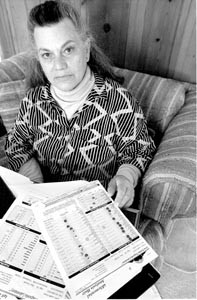
Photograph by Michael Amsler

Heavy Mettle

State regulators ponder mercury contamination in the Russian River. Is Judith Eisen its first victim?

By Janet Wells

THREE YEARS AGO, Guerneville artist Judith Eisen was following her bliss, living in an idyllic beach hamlet in Thailand, using canvas and paint to capture stunning limestone cliffs and coral-studded azure water. She lived in a thatched-roof house, did yoga on the sand, crafted a book of postcard prints of her paintings. She introduced the beauty of Asia to her two grown daughters when they came to visit.

Then, one day in 1997, she got sick. Paradise became a whirl of fatigue, nausea, dizziness, stomach cramps, bowel problems, weakness, and muscle pain, forcing Eisen to embark on a nightmarish journey to unravel the mystery of her illness.

After almost two years of tests, special diets, and utter exhaustion, Eisen was astounded to find out that she has high levels of mercury, a toxic substance that is indelibly interwoven with northern California geology, history, and health.

Used during the gold rush, and once considered a strategically important material by the U.S. military, mercury mines dotted the hills all over Northern California. The bottom dropped out of the mercury market in the 1970s, and the mines have long been abandoned. But mercury is not a thing of the past: the Central Valley pumps about 460 pounds of the material a year into San Francisco Bay, and Bay Area industry is allowed to discharge another 70 pounds a year. Because of mercury, along with dioxins, pesticides, and PCBs, fish from San Francisco Bay is off limits for pregnant women and children.

In a January 1999 article, the Independent revealed that 200,000 cubic yards of mercury mine waste, containing 590,832 pounds of the heavy metal, have been eroding from an abandoned mine site into creeks that drain to Tomales Bay, a once pristine estuary nestled among the coastal hills on the Sonoma-Marin border. A recently completed $3 million cleanup effort has stemmed the flow of contamination, but Tomales Bay ducks show dangerously high levels of mercury, and ongoing fish studies may well show elevated mercury levels in Tomales Bay sharks and clams.

In Sonoma County, tailings from the Mt. Jackson mercury mine–located a few miles upstream from Eisen’s home–were used more than 15 years ago for road base during construction of the sewage treatment plant in Guerneville. While county health officials found no contamination from the mine waste, North Coast Regional Water Quality Control Board senior engineer Bob Tancreto has conceded that, after almost two decades, the wells and creeks in the mine area may “deserve another look.”

Eisen doesn’t know whether living near an abandoned mercury mine site for 20 years contributed to the elevated levels of mercury in her system. The source of Eisen’s mercury exposure will perhaps never be ascertained, and it’s not even certain that mercury is at the root of her illness. But in a world that is increasingly polluted by industrial waste, pesticides, chemicals, car exhaust, rampant viruses, and bacteria, Eisen wonders if she is the proverbial canary in the coal mine–and a harbinger of a health crisis on the horizon.

THIRTY YEARS AGO, a person complaining of acute fatigue, dizziness, nausea, and pain without any obvious source was as likely to be referred to a psychiatrist as a doctor. Now Western medicine must cope with an increasing number of patients presenting complex, often vague and seemingly inexplicable symptoms. Remember the rash of chronic fatigue syndrome in the ’80s and ’90s–a controversial diagnosis used to cover a puzzling array of complaints.

In short: the doctor may have little idea what’s really going on.

In Eisen’s case, the initial diagnosis was fibromyalgia, the current popular catchall for elusive muscle pain and fatigue.

Dressed in a plaid flannel jacket, she tells her story over a decaf cappuccino laced with honey. With her square face, shoulder-length gray hair, and strong thick hands, Eisen, 57, looks as much like a rancher as an artist. But her energy level is in striking contrast to her solid build. Her blue eyes fade with fatigue as the conversation stretches into an hour. “[The doctors] told me there was nothing they could do for me, and that I should go home and learn to live with it,” she says. “I was in such a torment of pain all the time. There was no relief from it.”

While Eisen suspects that the poisioning started while living near the Russian River, she first noticed something wrong in Thailand in early 1997, when a minor leg injury didn’t heal after weeks of rest. “I thought I’d sprained a ligament from doing yoga,” she says. “Until that point in time I had been a really healthy person in my life and very strong physically. I’d never had an illness that I didn’t get over.”

Soon she was hit with bouts of dizziness and nausea. Eisen thought she had the flu or a cold. After two months, she realized she wasn’t improving and sought advice from doctors in Singapore and Malaysia. In May, she called Talia, her oldest of two daughters, who was alarmed enough to arrange for her mother’s immediate departure from Thailand. Eisen had to use a wheelchair to get to and from the airplane.

Back in Sonoma County, broke and sick, Eisen got on the county medical plan and started a battery of tests at Sutter Medical Center in Santa Rosa. Doctors diagnosed her leg problem as an arthritic condition and treated it with arthroscopic surgery. Then came the fibromyalgia diagnosis, which Eisen feels was a brushoff. “They couldn’t be bothered. That’s what happens to most people who have weird things,” she says. “I’ve talked to people who have immune deficiency problems who get treated as if they were crazy.”

Nursed by her daughter, Eisen spent several months bedridden, in a haze of pain. In early fall, she went to see a naturopath who works as a local physician’s assistant. “He likes these kinds of diseases,” Eisen says. “It’s kind of like a puzzle and a challenge to unwrap it and figure it out.”

First came an elimination diet–rice and vegetables only, which gave Eisen her first taste of improving health: after six months on the diet, she was able to once again sleep regularly.

A new battery of tests, tracking allergies and bowel function, showed that Eisen’s immune system was working overtime, treating almost everything as an invader. The naturopath put Eisen on a rotational diet, a decades-old nutritional program to minimize the effects of food allergies. Meal planning came in the form of a spreadsheet, with grains, fruits, and dairy rotated into her diet on a very selective basis. After several months, Eisen started to notice less muscle and joint pain.

Then the naturopath asked if Eisen had ever been tested for heavy-metal poisoning. She hadn’t, so she carefully clipped several strands from the back of her scalp and sent them to the Great Smokies Diagnostic Laboratory in North Carolina. Rarely ordered by hospitals, the hair test is one of the methods recommended by the U.S. Department of Health and Human Services to evaluate mercury exposure.

Eisen’s test results came back in January 1999: on the laboratory’s zero-to-1 scale, Eisen’s mercury level was 3.2. She also showed elevated levels of lead, another known toxin. “My doctor said, ‘Oh my, this could be causing all your problems,’ ” she says.

Eisen used the Internet to research mercury poisoning, and says that, indeed, her symptoms fit the profile.

MERCURY, linked to myriad health problems, including nausea, vomiting, skin rashes, seizures, and brain damage–even death–is a nasty substance in several forms. Liquid mercury can be absorbed through the skin. Mercury vapors can be inhaled from spills and incinerator waste.

Cinnabar, the reddish-brown ore form of mercury that was mined in California and processed using high temperatures, is not apparently hazardous to humans. But the waste from ore processing becomes a threat when it comes up through the food chain, turning into an organic substance that bioaccumulates, causing long-term health problems for animals and people. Exposure to the organic form of mercury is often attributed to eating too much tainted fish and shellfish.

Eisen has eaten a mostly vegetarian diet for years, although she ate fish locally, and in Thailand indulged in one particular dish–pla rad prik–fish cooked in hot red chile paste. Eisen can’t pinpoint any specific mercury exposure, but she theorizes that living for two decades in mercury-rich Sonoma County could have seeded her system, which was then spiked by the Thai fish to levels high enough to make her sick.

“It was like getting hit by a sledgehammer,” she says of her illness. “I never felt well after that. I can tell you now that my immune system was collapsing. But then I certainly didn’t think of mercury poisoning.”

John Risher, senior toxicologist for the Agency for Toxic Substances and Disease Registry in Atlanta, Ga., is skeptical. “A 3.2 [mercury level] indicates that you have been exposed more than the typical American,” he says. “But it is absolutely not a level that would produce health effects.”

Bob Smith, vice president of elemental analysis at the Great Smokies Laboratory disagrees. “The level of mercury [regulators] react to is when mercury is coming out of their mouth and they are ready to be mined,” he says.

Eisen’s mercury level–especially in combination with her elevated levels of lead, since the two have dramatic synergistic effects–could definitely be causing her problems, Smith contends. “People with mercury have much higher allergy levels because it affects the pathways by which the body detoxifies.”

Risher acknowledges that the acceptable levels established by government agencies may be off base for some individuals who are far more sensitive to environmental toxins. “There is a great variability in the human population,” he says. But Risher maintains that Eisen’s case doesn’t “make sense. Mercury is a naturally occurring element. We’re all exposed to it all the time.”

MERCURY POISONING is comparatively rare. Last year, 90 people called a national emergency response line reporting mercury exposure, Risher says. All of those were accidental cases–kids finding the silvery liquid in a warehouse, someone breaking an old thermometer. Risher has had only one case of mercury exposure via food, in a woman who ate fish two to three times a day.

“She did have some symptoms that could be attributed to mercury,” he says. “She had a hair [mercury] level of 69 parts per million.”

Eisen’s lab test results translate into a mercury level of about just over three parts per million. The Food and Drug Administration has set the acceptable level of mercury in seafood at one part per million. Eisen knows she may be on a wild-goose chase in pursuing mercury as the cause of her illness. But it’s worth a try, she says. “Nobody in traditional medicine has anything to say about what to do about mercury poisoning, or immune deficiency syndromes for that matter,” she says. “I’m taking a chance that this is going to help me.”

On the advice of her naturopath and doctor, Eisen has started intravenous chelation treatments, a three-hour ordeal during which salts are pumped through her bloodstream to eliminate heavy metals from her system. The $100 treatments are not covered by insurance, and Eisen relies on her daughters to foot the bill. Once she completes 10 treatments, she will wait four months for new hair growth, then get another hair test to see if the levels of heavy metals in her body have decreased.

Eisen continues to carefully monitor her food intake, and she remains on permanent disability, unable to get back to her painting.

“I live with a constant level of pain and fatigue. Chronic fatigue is nothing like being exhausted,” she says. “It’s a total absence of energy, like your system is folding in on itself. You can’t move.”

“I raised two girls alone,” she adds. “I worked two to three jobs, put myself through school at Sonoma State, got a bachelor’s [degree] and a teaching credential, and I painted. That’s what my energy level was like. Today I have maybe four hours of energy a day. Then I have to head for bed.”

But, she says, that is a vast improvement over her state two years ago, when she needed a wheelchair to return to Guerneville. “I don’t know if what happened to me could be helpful to anyone else,” Eisen says. “But people who think they have other things, they might have mercury or heavy-metal poisoning.”

Eisen’s fear is that she represents the beginning of a marked and rapid decline in human health stemming from environmental pollution. Instead of painting, doing yoga, and traveling in Asia, she spends her time reading and researching. She rattles off statistics about increasing air pollution, dioxins, and viruses. She quotes works by doctors, scientists, and environmentalists. She has become an ardent critic of a corporate and regulatory culture that fosters the continued use of chemicals and toxins.

“There are all these agencies that say, ‘This is an acceptable level of toxin.’ When I was growing up, it probably was an acceptable level of toxin. Maybe we had one or two or three areas where toxins were a factor in our lives. Now we have 15 or 20 areas.

“When Rachel Carson wrote Silent Spring [in 1962], she said we’ve got to watch out for poisons and toxins in the water and the air,” Eisen adds. “It wasn’t visible then. But it’s [decades] down the line and every single thing she predicted came to pass.”

Eisen hopes that cases like hers bring focus to the issue before the data become irreparably doomsday. “Most people still don’t want to hear anything about the high level of pollution. Who wants to know about pesticide residue in food?” she says. “There’s no place on the planet that’s poison free.

“Who wants to know that?

“We’ve had to live with the slogan ‘Progress is our most important product’ for years. We’ve had to take a lot from corporations because of that attitude,” she adds. “It isn’t helpful to criticize the past, but now we just don’t have that much slack left in our environment. Unless we start giving a high priority to our environment and our health, and stop letting corporations make decisions about what the human environment is going to be like we’re going to see illnesses like mine in epidemic proportions.”

From the April 27-May 3, 2000 issue of the Sonoma County Independent.

© Metro Publishing Inc.

Poetry Renaissance

0

Rising above: Petaluma poet Eugene Ruggles, co-organizer of a poetry festival to benefit the Phoenix Theatre, says poetry will always survive, whatever the challenges presented by a new age. Others aren’t so sure.

Poetry in Motion

Is the art form enjoying a renaissance, or is its new popularity just a lot of hype?

By Paula Harris

WHEN JANICE Mirikitani was 8 years old and growing up on a chicken ranch in Petaluma, she’d often curl up on her grandmother’s old rocking chair under a tree in the backyard and scribble down verses. In those days, back in 1958, Mirikitani never dreamed that in the year 2000 she’d be named San Francisco’s poet laureate.

To the young Japanese-American girl, poetry was just an empowering tool.

“I needed a vehicle to make myself more visible,” she recalls. “And writing poetry on a page made me feel visible.”

These days Mirikitani’s poems often include rural images of nature–a testament to the riverfront town where she grew up. On Sunday, April 30, the celebrated poet is slated to return to Petaluma to join some of Northern California’s best-known poets in a benefit performance for the Phoenix Theatre, the venerable alt-music venue and youth hangout.

Lawrence Ferlinghetti, San Francisco’s 1999 poet laureate, is easily the most famous name on the list of those taking the stage. But the festival, which caps off National Poetry Month, will also feature a host of local talent, including Don Emblen, Sonoma County’s own poet laureate.

All told, it’s one of the biggest poetry events the North Bay will see this year. But is it a sign of bigger things to come? Are young people embracing the art form? Is poetry breaking out of the coffeehouse ghetto and marching into the mainstream?

It turns out even the poets slated to read at the festival don’t agree on the answers to those questions.

Mirikitani sees nothing short of a renaissance at work in the art form. In the 1960s and 1970s, poetry provided a rebellious outlet for outrage and self-expression, she says. But the art form languished in the more materialistic and complacent 1980s and early 1990s.

THESE DAYS writing, reading, and sharing poetry–whether in coffeehouses, on the Internet, or in bookstores–is gaining popularity again, particularly among the Generation Y set.

“There’s a resurgence,” says Mirikitani. “Now there’s rap, there are poetry slams that are more crowded than rock concerts, and young people are arming themselves with words. Alcohol, drugs, and violence are ways to escape our pain. Words are the way in which we find true reality and affirm it.”

Mirikitani says that teens’ attraction to poetry often begins with an interest in song lyrics and music rhythms. “It starts with what speaks to them,” she says. “Poetry used to be thought of as inaccessible and square –now it’s a cool way to communicate.”

The genre’s newfound popularity doesn’t end there. In 1996, the Academy of American Poets’ campaign officially designated April as National Poetry Month. Volunteers gave away copies of poetry books on subways and placed anthologies in hotel rooms next to the Gideon Bibles.

And the word has spread. There are Internet sites, such as Poetry.com, which offers $100 a day to the winner of a contest in which people drag words from a box to create a poem on the screen. Films such as Il Postino, Shakespeare in Love, and Slam have helped popularize the art form. And some poetry books–such as pop singer Jewel’s A Night without Armor–have made the bestseller lists.

Dan Jaffe, CEO of Copperfield’s Books and Music, which has stores in Santa Rosa, Petaluma, and Sebastopol, agrees that the genre is enjoying a resurgence. “We’ve given [poetry books] more space in the stores,” he says. “So we’ve seen an increase in sales.”

In addition, poetry readings and the raucous rituals known as poetry slams–verbal boxing matches that are noisy enough to drown out the hissing cappuccino machines–are regular events at bookstores and coffeehouses.

But not everyone is enthusiastic about the proliferation of poets and poetry. Some critics bemoan the multitudes of bad poets and bad poems produced by all the hype–pointing a finger at folks like Jewel. Others believe the art form’s newfound popularity is just so much hype.

“There’s a good deal of talk about poetry these days,” muses current Sonoma County Poet Laureate Don Emblen. “I was asked to read at the Sebastopol Apple Blossom Festival recently, but only 20 people showed up. I makes me wonder what all the happy talk about poetry is about. There’s a sort of myth in this country. People say they value poetry, but they don’t really read it.”

According to Emblen, sometimes audiences will turn out for highly publicized readings featuring “big names.” But, he adds, “most people writing poetry aren’t big names. They’re just people trying to figure out a way to say what they see, feel, and hope for.”

However, Geri Digiorno, organizer of the Petaluma Poetry Walk event for the past five years, says the local poetry scene is thriving.

“It’s very active–I can’t believe the turnout for some of the readings, ” she says. “There’s a real interest.”

But Emblen says most regular readings are just vehicles for poets to entertain one another.

“It ends up being an incestuous arrangement where we just read to each other,” he says. “The chief value of readings is getting people to become enthusiastic about poetry–but it’s often like preaching to the converted.”

Longtime Petaluma poet Eugene Ruggles, whose goal is to start a poetry and fiction magazine for local teens and who is helping to organize the upcoming festival, sees a more positive side.

“Poetry is one of our oldest arts–it’s as old as religion, perhaps even older. It will never die out,” he says. “It’s part of the human psyche experience, and it’s a testament and a witness to all the tragedy and all the triumphs that surround us.”

Meanwhile, San Francisco’s newest poet laureate remembers those long-ago days rocking on her grandmother’s chair and learning how to find her voice in words–and she agrees.

“I think poetry is so powerful that it will survive any twist or turn,” says Mirikitani. “It’s the distilled expression of truth. The poet will always call the souls back to where they ought to be.”

The Poetry Celebration Benefit takes place on Sunday, April 30, at 7 p.m. at the Phoenix Theatre, 201 Washington St., Petaluma. The suggested donation is $5 to $7. For details, call 762-8009.

From the April 27-May 3, 2000 issue of the Sonoma County Independent.

© Metro Publishing Inc.
Spins

Music Box New jazz, rock, Asian fusion CDs Bill Frisell Ghost Town (Nonesuch) REGARDED as one of the top three contemporary jazz guitarists, Bill Frisell has been on an Americana kick of late. But unlike 1993's widely acclaimed Have a Little Faith (Elektra), in which Frisell's quintet dished up...

Healdsburg Growth Limit

Hammering out a deal: Healdsburg activist Jim Winston has gathered enough signatures to place a growth-management ordinance on the November ballot. Now the City Council has authorized a dueling initiative. GMOx2 Healdsburg struggles to preserve the integrity of its growth limit By Jeremy A. Hay FOR CLOSE to...

Chicano Secret Service

Fear of a Brown Planet Satire is the weapon of choice for the Chicano Secret Service By Daedalus Howell "A SATIRIC PIECE in the Times is one thing, but bricks and baseball bats really get to the point," Woody Allen observed when discussing neo-Nazis during a cocktail conversation in his film...

‘The Virgin Suicides’

Pining Away Five lovely sisters mope through their teenaged angst in 'The Virgin Suicides' By SOPHIA COPPOLA'S debut as a director, The Virgin Suicides, is mannered and occasionally pretty, noteworthy for some tantalizing glimpses of Kirsten Dunst, who plays the second oldest of a tribe of five girls in an upper-middle-class...

Jerry Garcia

High on Bluegrass Jerry Garcia's bluegrass roots are showing on legendary 'lost' tapes By Greg Cahill IT'S ONE of the most celebrated bootleg recordings in pop history. In 1993, mandolinist David Grisman invited his old pal Jerry Garcia--then enjoying some of his most commercially successful days as the Grateful Dead...

Rebecca Solnit

Happy Trails 'Wanderlust' takes a fascinating tour of the history of walking By Patrick Sullivan "EXPLORING the world is one of the best ways of exploring the mind, and walking travels both terrains," writes Rebecca Solnit, explaining the impetus behind her new book, Wanderlust: A History of Walking (Viking; $24.95). ...

Farmers’ Markets

Farmers' markets spring to life By Paula Harris IF YOU GROW IT they will come, especially if it's fresh, juicy, crunchy, fragrant, or ripe. Growers are once again beginning to showcase their flourishing yields of locally grown fruits and veggies and setting up stalls at farmers' markets in parks and parking lots around the North...

Usual Suspects

Activists respond to police-abuse report By Greg Cahill LOCAL SOCIAL JUSTICE advocates say they are encouraged by the results of a long overdue report on police misconduct and excessive use of force, but agree it will be difficult to get public officials to act on the recommendations. The federal report, approved last...

Russian River Mercury Contamination

Photograph by Michael Amsler Heavy Mettle State regulators ponder mercury contamination in the Russian River. Is Judith Eisen its first victim? By Janet Wells THREE YEARS AGO, Guerneville artist Judith Eisen was following her bliss, living in an idyllic beach hamlet in Thailand, using canvas and paint to...

Poetry Renaissance

Rising above: Petaluma poet Eugene Ruggles, co-organizer of a poetry festival to benefit the Phoenix Theatre, says poetry will always survive, whatever the challenges presented by a new age. Others aren't so sure. Poetry in Motion Is the art form enjoying a renaissance, or is its new popularity...
11,084FansLike
4,606FollowersFollow
6,928FollowersFollow