Usual Suspects

0

Petaluma Fever

County gives Payran area residents a clean bill of health, despite charges of an official coverup

By Dawn Pillsbury

RESIDENTS of the flood-plagued Payran area are not ill because of any discernible environmental cause, the Sonoma County Department of Health Services has found. Still a handful of residents reportedly are charging that the county is covering up the truth. J. J. Krug, director of environmental health for Sonoma County, says that though the department looked carefully for any commonality or pattern in the illnesses reported by Payran residents to the department hotline, it did not find any.

“It’s not unusual for people to notice something unusual,” he explains. “The classic example is a cancer cluster. Then you go in and you might find something that was giving people cancer. But we didn’t find anything.”

Krug says the department could not run its own tests of the area because the reported symptoms did not point to any probable environmental cause. “It would be like trying to hit a piñata blindfolded,” he says. “You have to know what to test for before you go in.”

Daymon Doss, CEO of the Petaluma Health Care District, says the cases came to the district’s attention about a month ago, when a woman phoned a district triage nurse to report symptoms and said others in her area had similar problems. The district nurse informed a Health Services nurse, and the department authorized testing of any Payran resident who had similar complaints.

Reported symptoms include gastrointestinal problems, various coldlike and flulike symptoms, upper respiratory distress, shortness of breath, skin rashes, polyps, burning eyes, migraines, and anxiety.

“The county was looking for a commonality of symptoms,” Doss says. “As far as I know, they didn’t find any.”

He adds that several of the residents who complained of symptoms are district patients, and their cases will be followed up individually.

But some local residents–already distrustful of public officials after repeated mishandling of flood relief in the flood-prone neighborhood–have complained to the press that they believe the county is covering up the truth.

AS FOR PAYRAN residents’ criticism of official handling of the symptoms, Doss says: “The department was very straightforward with us.”

The project under way in the Payran neighborhood that has some residents concerned is the U.S. Army Corps of Engineers’ and the city of Petaluma’s flood-control project between Lynch Creek and the railroad bridge south of Lakeville Street.

The Petaluma River has flooded the neighborhood five times in the past 20 years in a neighborhood in which about 1,000 people live.

Some 600 residential and commercial buildings are built on the 100-year floodplain. The project is scheduled to be completed next year. Tom Hargis, director of water resources and conservation for Petaluma, says that the Army Corps of Engineers did extensive testing of the Payran basin soil in conjunction with the project.

The only toxin discovered was from two abandoned diesel tanks, which he says were removed along with the contaminated soil around them.

“We do know the workers who have been in constant contact with the soil have not had those illnesses–none of our workers and none of the Army Corps of Engineers’,” Hargis says.

Mike Osborn, whose house backs on the river, says he has not had any problems because of the river. “Nobody around here has had any illness because of it,” he says. “And I know almost everyone on the block.” But, he says, he does not allow his 3-year-old daughter to play in the river, or even go near it.

The hotline for Payran residents who are suffering possibly related symptoms is 575-4747.

From the June 29-July 5, 2000 issue of the Sonoma County Independent.

© Metro Publishing Inc.

Spins

0

Do-right woman: Candye Kane solidifies her career change.

Ear Candye

Gut-bucket blues from ex-porn star

Candye Kane The Toughest Girl Alive (Bullseye)

HERE’S AN antidote to all those squeaky-clean, teeny-voiced teen divas polluting the airwaves. Blues belter Candye Kane–a former topless model and onetime blue-movie queen–returns with her third album of sassy swing, gut-bucket blues, rollicking rockabilly, and fun-loving shtick from a stacked singer who has gone from teen mom to welfare mother to battered wife to fat girl to bisexual recording artist. Often naughty and bawdy, Kane strikes with a lot of charm. It would be a real mistake to write her off as a novelty act, though that might be the impression if you’ve ever seen her play piano with her breasts. Guests include Dave Alvin and Marcia Ball. Greg Cahill

Marah Kids in Philly (E-Squared/Artemis)

LATELY, traditional rock ‘n’ roll on indie labels has been an alternative to “alternative” mainstream major-label acts like Matchbox 20. On Kids in Philly, Marah do what the big pop-rock boys don’t do: they concentrate on human- interest detail, they don’t ham-fistedly overstate their seriousness, and they sound as though they’re enjoying themselves. It’s a busy, crowded sound, where elements like banjo and xylophone work as propulsion rather than accent–often scruffy, always exuberant. Imagine the Counting Crows as a Jersey bar band, or Bruce Springsteen’s early “E-Street Shuffle” era as part of the current neo-folk Americana scene. Classic rock? How about classically yearning rock idealism? Karl Byrn

doubleDrive 1000 Yard Stare (MCA)

THERE’S MUCH more to the “nu-metal” of Korn and Limp Bizkit than mere rap-fusion. A separate musical identity lurks beneath the surface of their popular rap-metal angst, and doubleDrive crystallizes it. 1000 Yard Stare is as crisply focused and doggedly consuming as its title implies, mixing the speed of punk with the big bluesy riffs of Black Sabbath–and if that sounds like a formula for ’80s thrash, the fresh magic spark is the reflective questioning of ’90s alternative. Musically, they’re a missing link between Pearl Jam and Iron Maiden–a link Metallica is still trying to find. K.B.

From the June 29-July 5, 2000 issue of the Sonoma County Independent.

© Metro Publishing Inc.

Sonoma Valley Poetry Fest

0

Word play : Kyrie Dawson is helping with promotion for this annual event.

Valley of Verse

Poetry seizes high ground at Sonoma Valley Poetry Fest

By Daedalus Howell

THE MONTH of July is generally reserved for fireworks, fond remembrances of the Revolution, and domestic beer. But in Sonoma Valley, the fireworks come in the form of words, the revolution is part of the rediscovery of poetry sweeping the nation, and the beer is most likely ale from Murphy’s Irish Pub.

Now in its fifth year, the Sonoma Valley Poetry Festival presents a slate of 15 poetry events during July at a dozen venues throughout the valley. The festival features the verse of local and nationally acclaimed poets. The diverse offerings include work by poets young and old and even dead.

“When Bill Moyers came, he said, ‘Poetry is the heart of democracy,’ ” recalls local writer and educator Arthur Dawson, speaking of the venerated journalist and author whose appearance at the first poetry festival continues to galvanize the community.

“[Moyers] explained that democracy is partly about government, but it’s also about people being willing to listen to each other,” Dawson continues. “I think that poetry is a way we can listen to each other and create community.”

Dawson, a member of California Poets in the Schools, admits that poetry was once relegated to the ass-end of the body politic, or shoved off into the fringe world of greeting cards. But as early as the mid-’80s, Dawson began to recognize a shift in the form’s popularity, which was buoyed by the advent of the Apple Macintosh and the subsequent maelstrom of desktop and small-press publishing that brought the work of many poets to the public eye.

“I think poetry gives people a chance to express who they are and what they’re thinking, but it’s also the last stronghold of noncommercial messages. Nobody writes poetry to make money. There are those of us who write poetry–and teach–who may make part of a living from that, but there are very few poets who can make a living just by writing poetry. The payoff is more of a spiritual and psychological payoff,” says Dawson, whose publication credits include his poem “Why I Might Have a Problem with Human Cloning,” published in Mothering Magazine.

“There’s no Nike poet, and God forbid if there ever was,” he adds. “I think poetry is riding a really strong wave right now, and it seems like it’s still building, but it’s hard to imagine it becoming trendy.”

Though it may not be trendy, the Sonoma Valley Poetry Festival, which operates under the aegis of the Sonoma Valley Educational Fund, has been known to turn a buck. All profits go to the California Poets in the Schools program, which brings working Golden State poets to students. This year, all contributions received by the festival will be matched by the Morris Foundation, an adjunct organization of the festival.

“We’ve been involved with the Poetry Festival off and on for about five years. We think it’s a wonderful experience to have poetry in the community. It brings everything to life,” says Readers’ Books proprietor Andy Weinberger, who with his spouse, Lilla, is putting together a slate of nationally recognized poets on Saturday, July 22, that will include Oakland’s Forrest Hamer, author of Call & Response: Poems, who is a recent recipient of the Beatrice Hawley Award.

At the General’s Daughter restaurant, poetry has been added to the dessert menu on Sunday, July 9, so diners may order up a live poetry reading as the “Nonfat Special,” “The Gourmand’s Delight,” or “The Works.”

Murphy’s Irish Pub, the popular watering hole that held the recent Bloomsday celebration in honor of James Joyce’s Ulysses, shifts to the works of another Irish son on Tuesday, July 11, when actors will recite from the work of William Butler Yeats.

A “Dead Poets” event on Wednesday, July 12, at Gundlach Bundschu Winery offers the fans a chance to read poems by their favorite deceased versifiers.

Other events include a double bill of “Soap Box Poetry and Multimedia” on Saturday, July 22, when poets are invited to rant and rave ˆ la the political barkers of London’s Hyde Park, presumably in the medium of their choosing.

ANOTHER PROGRAM that may pique the interest of local troubadours is the “Song Line Sonoma,” which encourages poets to cavort and bestow bon mots at selected pit stops throughout the city of Sonoma.

“Some aboriginal cultures don’t have a written language so what they do is sing songs and recite poems about all the places they’ve beenÑnot only in their lives but [in the lives of] generations preceding them as well. ‘Song Line Sonoma’ is our small version of that,” says Russ Bedford, one of this year’s festival organizers, who adds, “Poetry is entertainment.”

“Almost any poem, no matter how trivial or light it may be, whether it’s a limerick or an ode, is really a sincere expression on the part of the poet,” he says. “My own definition is that poetry is probably the most honest kind of expression there is because you know it’s the poet’s view and his mood and attitude toward a given subject at that moment. As a poet, you sweat.

“It’s difficult.”

Bedford sees the poetry festival as part of a movement of poetry-related events springing up in small towns across the country–a phenomenon he hopes continues.

“I think that poetry is becoming more accessible. Sonoma County is so active, with so many poets, from professionals to amateurs,” says Bedford. “You look around and you see that there are a lot of other towns that have active poetry readings and events.”

Dawson, who will helm readings of his students’ work as part of the Trinity Poetry Series at Trinity Episcopal Church, attributes much of success of such events to the fact that many of those in poetry audiences are often poets themselves.

“It may surprise you, but there are more poets than you would ever expect. I meet many people and later find out that they write,” he avers. “That’s one thing that the poetry festival doesÑit allows people to sort of come out of the closet and try out reading some of their poems and sharing what may be a hidden passion.”

The Sonoma Valley Poetry Festival 2000 runs July 2-30 at various venues throughout Sonoma Valley For maps, a schedule, and more information, call 935-POET.

From the June 29-July 5, 2000 issue of the Sonoma County Independent.

© Metro Publishing Inc.

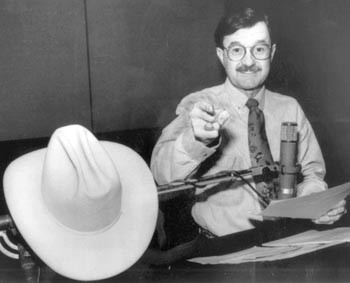
Jim Hightower

Texas Twister

Lefty-at-large Jim Hightower blows into town

By Patrick Sullivan

A SEA OF SOFT MONEY swirls like sewage around our ankles as the American public watches a pair of empty-headed presidential candidates twitch feebly at the end of their corporate strings. Our nation’s media conglomerates grow fatter on a daily basis, sucking up smaller rivals and spitting out a growing array of business-friendly pabulum. Like Darth Vader turning the keys on the Death Star, megacorporations rev up the World Trade Organization, determined to extend Social Darwinist-style capitalism around the globe.

From a progressive point of view, politics these days are no laughing matter.

Unless, that is, you’re a lefty from the Lone Star State. In a strange geographic irony, the conservative state of Texas, home of red-meat-Republican Sen. Phil Gramm and the deadliest death row in the union, offers a parade of political activists and writers (like, say, Molly Ivins) with a virtue progressives are often accused of lacking–a good sense of humor.

Why Texas? It makes perfect sense to author, columnist, and political commentator Jim Hightower, the state’s former agricultural commissioner and current lefty-at-large who matches Ivins in his populist politics and his unshakable sense of humor.

“I guess we have a pretty well-refined sense of outrage here, as progressives generally do,” explains Hightower, speaking from his office in Austin. “But in Texas, there’s so much outrage around that you’ll either learn to laugh about it or it’ll drive you crazy.”

North Bay progressives will get a chance to laugh along with Hightower on Friday, July 7, when he gives a speech to kick off the third annual Labor and Social Action Summer School at Sonoma State University (see “Social Activist Summer School,” next page).

If anyone can offer advice on the riddles posed by progressive politics in a conservative age, it ought to be the 57-year-old Hightower. Born in the little town of Denison, the Texas native was immersed in the populist tradition from an early age, listening to political discussions around the Coke machine outside his father’s main-street newsstand. In high school, weighing in at a mere 111 pounds, he was an undersized but extremely scrappy linebacker. “My coach was so embarrassed, he listed me at 150 in the program,” he explains with a laugh.

The determined young ball player grew up to be an even scrappier political activist. After college, Hightower led citizens’ groups, ran campaigns for populist candidates, edited the legendary Texas Observer, and served two terms as the state’s ag commissioner, where he ignited furious opposition from agribusiness and the chemical industry by promoting organic farming and environmental safeguards.

These days, Hightower concentrates on spreading the populist word through his bestselling books, his newsletter (The Hightower Lowdown), and his syndicated radio show (Hightower Radio, which reaches more than a million listeners every week).

Fresh off the publication of his second book, If the Gods Had Meant Us to Vote, They Would Have Given Us Candidates (HarperCollins; $25), Hightower will speak to his Sonoma County audience on a topic that’s near and dear to his populist heart: the struggle for economic justice in the era of globalization.

“I’ll be talking about the failure of either of the two major political parties to address what I call globaloney,” he says in his distinctive Texas twang. “In the name of globalization, we’re essentially resorting back to trickle-down economics writ large, saying that if only our global corporations can be unleashed from any concerns about wages or workers’ rights or human rights or environmental contamination, then somehow or other magically this will result in prosperity for all and the bluebird of happiness will sing and peace will break out everywhere.

“We’ve had a long history of experience with this theory,” he adds. “And it hasn’t worked, in this country or anywhere else it’s been tried.”

You’ll find that argument made in greater detail in Hightower’s new book. But, as the title suggests, If the Gods also offers some acerbic commentary on the upcoming presidential race, which pits a millionaire member of a powerful national political dynasty against, well, another millionaire member of another political dynasty.

But Gore and Bush have something else in common besides their cushy backgrounds, says Hightower. Simply put, it’s easier to laugh at both men than with them.

“Both of those guys, and particularly Bush, are creatures of the political system,” he says. “They’re creatures of their consultants and their pollsters and their focus group coordinators and their speechwriters and their money interests. So they don’t seem to have any genuine humor beyond some sort of crude fraternity-boy sort of humor in Bush’s case, and a sort of stiff, scripted kind of humor by Gore.”

Take Action: Sonoma State University plays host to the Labor and Social Action School.

BACK WHEN he was in state government, Hightower was a Democrat. He says he still supports progressive Demos, but he displays a growing disgust with the party’s increasingly conservative tendencies. “Some say we need a third party,” he writes in his new book. “I wish we had a second one.”

It’s that sentiment that’s led Hightower to champion a bevy of alternative political organizations, from the Labor Party to the New Party. Just last week, he gave the nominating speech that put Ralph Nader at the top of the Green Party ticket, telling his audience at the convention in Denver, “Campaign 2000 just got hotter than high school love.”

Some might think that an oddly passionate sentiment to voice about Ralph Nader, who, whatever his strengths, doesn’t radiate much more excitement on the stump than Al Gore.

Indeed, some critics believe the growing support for Nader’s insurgent campaign will simply mean that the nation will end up with a Republican president in the White House.

“I think that’s a legitimate concern, but everybody’s got to decide on this issue for themselves,” Hightower replies. “Are we going to continue to back up and just fight defensive battles, or are we finally going to go on the offensive? Are we going to keep taking the lesser of two evils, or are we actually going to create candidates we can be for?

“As a farmer friend of mine once said, ‘Hightower, the status quo is Latin for the mess we’re in,’ ” he adds. “More and more people recognize that.”

BUT IF THE GODS doesn’t simply dis the carefully scripted candidates of the two mainstream parties. Among the most compelling parts of the book are tales of ordinary people taking progressive stands against corporate power. Those stories speak to what Hightower believes is a growing trend.

“I think that people are more ready now than they were five years ago or 10 years ago to go right at the issue of corporate power in our country,” he says. “The mainstream media don’t cover these things, these positive examples that I cited and many, many more that are out there. So I thought it would be useful in the book to highlight some of these so folks don’t feel they’re alone. People in Portland, Oregon, are fighting the same bastards that the people in Portland, Maine, are fighting. They just don’t know about it.”

Of course, the splashiest example of that stiffening popular resistance to corporate power is last November’s Battle in Seattle.

The huge street protests by environmentalists and union activists against the World Trade Organization’s meeting did more than shake the city’s image as a quiet haven for latte drinkers. Suddenly Americans who had previously imagined WTO to be, perhaps, a brand of motor oil were debating the ins and outs of world trade, discussions ignited by the dramatic scenes captured by television cameras of civil disobedience and police brutality.

Hightower was in the middle of that whirlwind, broadcasting his radio show from the streets and getting a good look at this budding social movement.

“It was very inspirational,” he says. “These were 50,000 uninvited guests to this obscure meeting of an arcane trade organization, and the people who came knew why they were there, knew what the issues were, and they were focused on the central issue, which is ‘Who the hell’s in charge these days? Who elected this bunch of corporate trade bureaucrats to rule the world?’

“Particularly I was inspired by the young people, who were knowledgeable, fearless, and organized,” he adds.

Many of those same protesters will be demonstrating outside the Democratic and Republican conventions this summer. In August, Hightower will join them at the Democratic Convention in Los Angeles.

He’s also rewriting If the Gods for an updated paperback version due out in January. With the radio show and the newspaper column and the newsletter, he certainly has enough to keep him busy.

But some of his most fervent supporters think there’s one more thing he could do: run for political office.

Don’t hold your breath, Hightower says.

“No, I’ve been cured of that,” he says with a laugh. “Basically I’ve found a way to run my mouth rather than running for office. And it’s a lot more satisfying, and I reach a whole lot more people.

“We try to give people strength, give people information, give people organizational encouragement,” he continues. “So that’s why I think this role of messenger that I’m engaged in right now is the best use of me.”

From the June 29-July 5, 2000 issue of the Sonoma County Independent.

© Metro Publishing Inc.

Tunes For a Hot Summer

0

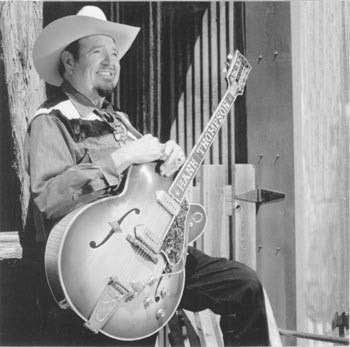
He’s got those honky-tonk blues: Country music pioneer Hank Thompson is still swingin’!

Honky-Tonkin’

Cowpie-kickin’ tunes for a hot summer

Joe Ely Live at Antone’s Rounder

TEXAS SINGER, songwriter, and guitarist Joe Ely’s brash self-will and decidedly regional sound locked him out of the Nashville mainstream long before “alt-country” became a commercial option. His late-’70s albums, such as Honky Tonk Masquerade, were the strongest country-rock works since the 1973 death of musical pioneer Gram Parsons, as Ely wrapped Tex-Mex, folk, flamenco, honky-tonk, and hard-blues boogie around his muscular and exuberant voice, braying stellar songs by fellow Texas outlaws (and former fellow Flatlanders) Jimmie Dale Gilmore and Butch Hancock. Besides those early classics, the new Live at Antone’s serves as a fine introduction to Ely. It’s more sprawling and less reckless than 1981’s Live Shots (recorded when Ely opened a British tour for the Clash), and it’s proof of Ely’s tremendous and natural concert prowess. From the opening epic, “The Road Goes on Forever,” to the closing rave-up, “Oh Boy!” his originals and covers are spiced with tastefully dueling guitar and pedal steel leads, images of dusty drifters and sweaty roadhouses, and the cheers of hardcore fans who at one point yell out, “We love you, Joe!” Karl Byrn

Jim Weider & the Honky Tonk Gurus Big Foot EKG

TELECASTER master Jim Weider is a highly sought-after session player who has performed with Levon Helms and the All Stars, Johnny Paycheck, and the Band (filling Robbie Robertson’s shoes after his departure). Of late, Weider has contributed his fat Fender sound and production skills to tribute albums celebrating Bob Dylan, Elvis Presley guitarist Scotty Moore, and Doc Pomus. Big Foot–featuring guest appearances by Rick Danko and Garth Hudson of the Band, and bassist Tony Levin–runs the gamut from a snarling cover of Jimi Hendrix’s “Little Miss Lover” to a sassy Texas shuffle to his own hard-bitten but melodic blues. Does this guy have an axe to grind? Bet on it! Greg Cahill

Hank Thompson Seven Decades Hightone

SOMEONE’S gonna have to work damn hard to top this western swing legend this year. Hank Thompson is a true musical pioneer: the first country artist to record a live album; the first to garner corporate sponsorship; the first to record a stereo album; the first to perform on a TV variety show; and the first artist of any ilk to travel with his own state-of-the-art sound and lighting systems. But those would be but footnotes in musical history if Thompson weren’t the purveyor of a western swing sound as smooth as the silk sheets in a Reno cathouse. His last album paired this country pioneer with Vince Gill, George Jones, Garth Brooks, Lyle Lovett, and other country greats. This disc (slated for a July 18 release) is 100 percent unadulterated Hank–a honky-tonk titan dishing up a tasty backyard barbecue of rollicking blues boogies and red-hot Tex-Mex polka beats with equal aplomb. Most satisfying. G.C.

From the June 22-28, 2000 issue of the Sonoma County Independent.

© Metro Publishing Inc.

Local Artists

0

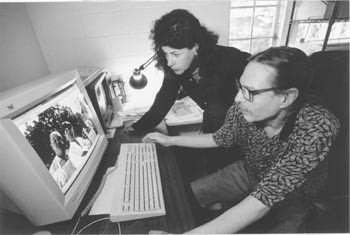
Wide world of art: Dozens of local artists plug into the vast audience available on the Internet with the help of an online art gallery run by Sonoma artist Katherine Spiering and her partner, David Heller.

Web Wonders

Why are artists seeking their net worth in the unrefined world of cyberspace?

By Paula Harris

“MY FATHER was a black polka musician, my mother a Puerto Rican country-western singer who defected from France. Being politically naive, she didn’t know it wasn’t necessary. I was raised by an order of dyslexic nuns in Canada–consequently my confusion with God or Dog! . . . ‘You have one cobra eye, one tiger eye.’ These words whispered to me on the streets of Bombay 20 years ago began my art career. Or maybe not . . .”

Welcome to the vivid virtual reality of art on the Internet. This colorful back-story is an excerpt from the fantastical biography of Sonoma artist and virtual-art-gallery curator Katherine Spiering. Posted on her web site, it serves as Spiering’s counterculture jab at the traditional fine arts establishment–that world of swanky galleries hawking their artists with impressive and increasingly colorful bios.

“They want a shtick,” says the mischievous Spiering, shaking her black curls, dark eyes glinting. “They want some kind of bio that lends to the art world mystique–they want a hook. So this is my response.

“And some people actually believe it,” she adds. “Some people will come over and say, ‘Hey, I didn’t know your father was black!’ ”

Spiering, 43, who formerly co-published an arts magazine in Mendocino with her partner, David Heller, decided to go the Internet route six years ago. She and Heller moved to Sonoma and started a home-based business called Left Coast Art, which offers an online art gallery–one of the first in Northern California–plus an online arts magazine.

The web site, which can be found at leftcoastart.com, showcases the works of some 20 to 40 mainly local artists, including Spiering’s own pieces–a vibrant mix of pastel and acrylic with themes she describes as “urban neurotic.”

The site currently features the work of three sculptors, one potter, and various craftspersons, but the emphasis is on the fine arts. Computer users navigate the site by clicking their way through brief biographies of the artists and thumbnail sketches of their work.

“I’m an artist myself, but more of a facilitator,” explains Spiering, leaning against her desk in the white-walled studio and home office off the kitchen. The space is crammed with computers and multimedia equipment, with a tangle of wires beyond. The room also sports rows of books on technology and on art.

“I like discovering artists and promoting those I think are good,” continues Spiering, who often visits galleries in the real world in the hope of enticing artists online. Those who take her up on the offer pay a nominal fee upfront and then a 20 percent commission to Left Coast for any work sold.

“I like to keep rotating artists through the site, and I like them to keep refreshing their work,” says Spiering. “If an artist loses interest, I don’t like to keep them online.”

The arrangement works well for many artists who don’t want to pay high overheads and would rather circumvent the gallery and go directly to the people. “A lot of my friends won’t even deal with [traditional] galleries,” says Spiering. “By the time they paint it, frame it, schlep it, and schmooze, it’s all too much.”

Heller, 50, a jeans-clad, lanky computer whiz with a ponytail, says the pair decided to go cyber because of the low overhead. Regarding the magazine, he says, “It’s still publishing, but now I don’t have to pay a driver to distribute the magazine, or for a storage locker to hold paper, or printing costs.”

He says the Internet art gallery business–with its low overhead, unlimited access, and high traffic–is paying off, pulling in between 12,000 and 90,000 hits per month. “We’re linked to just about every search engine–and we get a lot of hits from Europe,” he says.

THE PARTNERS like the idea of reaching a larger, more global audience. “You’re walking a lot more people by an image as opposed to a traditional gallery,” Spiering says.

Another advantage to online art is its spontaneity. Spiering recalls an instance when a local man browsing the Web came upon one of her paintings and immediately purchased it as a centerpiece for a cocktail party he was throwing that night.

“The snobbery level is still there, but it’s not so prohibitive,” she adds. “As an online artist, you don’t have to have the proper background or education or be in the right circles, all the things that are traditionally attached to fine art. There’s definitely an underground movement. You can put your own art online if you can’t get into a gallery. It’s great for small-time artists and students.”

THANKS to broad-based sites such as NextMonet.com and Visualize.com, the work of virtually unknown artists shows up on computer screens around the world as big and bright as that of Degas or Picasso. Some web sites are even dedicated to, um, inferior images, such as The Gallery of Very Bad Art, at www.badart.com.

A growing number of artists are soloing–creating their own sites because the overhead isn’t as high and because the egalitarian notion of a virtual gallery appeals to them.

For some artists, the Web is more than a place to market their wares or network with colleagues. It is a liquid canvas for making art itself.

And in this virtual world the cyber artist can use digital media to interact with the user.

“The World Wide Web is a new world, and its artisans are using new tools to create within it. Technology has become a technique, and technique is the result of technology,” says Amy Stone, founder of the Museum of Web Art, an interactive art gallery in Brentwood, Calif., that is designed especially for the Web.

For artists who design their own web sites, the cost is usually minimal. But despite that, some sites don’t do well. Two Sonoma County­based online art galleries display defunct telephone numbers on their Web page.

“It does cost money to keep a gallery online,” Heller says. “Some artists use free sites, but then it gets objectionable when ads pop up. Another problem is if you get too popular and you have a server capacity that can’t handle it.”

Then too, not everyone likes virtual art galleries. At first they aroused significant opposition in the art community. “People weren’t into it,” says Spiering. “They wanted everything done traditionally.”

One of the complaints was about the loss of tactile experience: You can’t get up close and personal to online images. Another was that potential buyers were leery about spending money on something they could gauge only from their computer monitors.

One additional qualm is copyright ownership. “Some images carry digital watermarks, numbers embedded in the file–it puts [artists] on a better footing if they need to sue,” says Heller. “We limit the [on-screen] size to a printable 4-inch-by-4-inch [image] that’s not enlargeable.”

Even with all these difficulties, the majority of art galleries and university galleries are now online. The San Francisco Museum of Modern Art awarded its first SFMOMA Webby awards for excellence in online art in May.

“There’s a good future for Web art because it’s a visual medium in all aspects. There’s a lot of potential for artists,” says Spiering.

“It’s great for the collector too,” adds Heller with a grin. “You can see art at three in the morning in your pajamas!”

From the June 22-28, 2000 issue of the Sonoma County Independent.

© Metro Publishing Inc.

‘God’s Army’

0

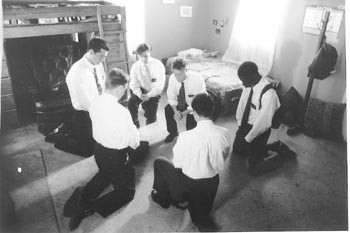
Missionary position: Mormon elders prepare to take on the world in God’s Army.

Meet the Mormons

‘God’s Army’ explores missionary life

By Marina Wolf

FIRST THINGS FIRST: I’m a cranky ex-Mormon. I’ve sat through my share of soggy-eyed speeches from returned missionaries. So I have to confess that I was tempted, on first viewing, to dismiss the Mormon feature film God’s Army as slick propaganda. But after considering the phenomenon of minority subcultures creating characters in their own image . . . well, even this skeptic was able to relax past the religion and enjoy the story within.

Written and directed by Mormon moviemaker Richard Dutcher, God’s Army rallies a stalwart band of earnest actors to a stirring “week in the life” film about LDS missionaries, the foot soldiers in the church’s effort to save the world–or, in this film, just L.A.

Against that backdrop of carnality and chaos, we meet Elder Allen (Matthew Brown), a tousle-headed newbie from Kansas, who fits into the missionary life as well as Dorothy did in Oz. Even his new home, a dorm-style apartment shared with other missionaries, is raucous and noisy, a kind of (un)Real World populated with an assortment of races and backgrounds and even a “bad seed” (Michael Buster), who reads anti-Mormon literature “to keep up with the other side.”

In this strange new world, Elder Allen finds a harsh sort of refuge in the sharp-eyed senior, Elder Dalton (played by Dutcher). He is Obi Wan to Allen’s Luke, Mr. Miyagi to Allen’s Karate Kid. Dalton is one of God’s great salespeople, but he can’t do everything for his protégé. When Allen bottoms out in a sleepless night of spiritual angst, triggered by a fellow elder’s defection, he must find his way alone.

Predictably, the morning after finds Allen a new man. He mysteriously develops his own sense of what to say and when. And he participates in a medical miracle that is audacious in its immediacy. This is the stuff of missionary legends, as are dramatic turnarounds by a hooker and a Latino Catholic father. It’s a whole body of oral folklore that Mormons relish in the retelling.

What the film does for non-Mormons is something else entirely. Diehard atheists and easily irritated individuals may want to stay away or take a sedative: you can pack a lot of prayer into 100 minutes. Still, many viewers will be fascinated by an inside look at the lives of these handsome young men, who are among the most easily identifiable in the religious landscape but are as misunderstood as nuns. They look so self-assured on those bikes, but inside, we learn, many are seething pits of self-doubt.

Missionary life isn’t all psychospiritual drama. In some of its missionary-meets-world material, God’s Army displays wry humor. One scene shows a bedraggled backyard with screaming kids and a shrill wife in the kitchen. Meanwhile, Elder Allen is telling his prospect about eternal family life (one of the key selling points of the LDS faith). “You mean I could be with my family forever?” asks the weary man. “Thanks, I don’t think I’m interested.”

Dutcher has experience in non-Mormon cinema, and it shows in the hip yet restrained use of lighting and music (in-house LDS documentaries use a lot of golden fog and swelling orchestral arrangements).

But it’s not just a matter of mastering the conventions of contemporary cinematography: Dutcher must receive credit for writing a respectable human drama, complete with ambivalent heroes and wrenching dilemmas. As the first filmmaker to present Mormons to the world, and to themselves, he has more than done his duty.

God’s Army opens Friday, June 23, UA Cinemas 6, 620 Third St., Santa Rosa. For details, call 528-8770.

From the June 22-28, 2000 issue of the Sonoma County Independent.

© Metro Publishing Inc.

Usual Suspects

0

Sonoma County supervisors give themselves yet another pay hike

By Greg Cahill

SAYING that they work hard for their money, the five members of the Sonoma County Board of Supervisors voted unanimously on Tuesday to give themselves a 10 percent pay hike over the next three years.

Under the new changes, supervisors–who earn $64,851 a year–will receive a series of three annual raises–4 percent the first year and 3 percent in each of the next two years–totaling $71,336.

That is far short of the 15 to 20 percent raise that Supervisors Mike Cale and Tim Smith had wanted, but still too much for one critic. Bill Pisenti, president of the Redwood Empire chapter of TRIM (Tax Reform Immediately), warned the supes that the salaries of all county employees should be re-evaluated to prevent what he called an inappropriate payout to public servants. “When is the government going to do something for the taxpayers?” he asked the supes during a public hearing on the matter. “You keep raising salaries and pensions. Where we’re headed is for a downfall. The youth of today are going to pay for it.”

For the past 23 years, the supervisors’ salaries have been based on a formula that granted them 55 percent of the earnings of a Superior Court judge, based on rates set by the state Legislature. The new ordinance will set the proportional amount at 80 percent of a judge’s salary.

“There is no rhyme or reason for this approach,” newly appointed Sonoma County Administrator Mike Chrystal said of the existing rate.

While supervisors had received no pay increases for four of the past 10 years, they had gotten two large raises in the past two years. In 1998, the consolidation of the county courts resulted in pay hikes for judges and a 9 percent increase for the supes, whose pay went from $53,768 to more than $58,607. Last year, another judicial raise led to an increase for supes to $64,851, or 11 percent.

The average pay raise for most Americans is 3 to 4 percent a year.

This week’s pay hike had the blessings of the Sonoma Alliance, an influential business group, and the Sonoma County Taxpayers Association.

County Administrator Chrystal said the supes deserved the raise because they were underpaid relative to those in other counties of like size and because they performed many tasks on a full-time basis.

“I don’t do this with any trepidation at all,” Smith said of the salary increase. “There needs to be a fair and equitable salary for doing this job in the future.”

Supervisor Cale echoed those sentiments, adding that “if you want the cream of the crop coming in [to public service] to put up with the flak that we do, then [the raise] is highly justified.”

Not all municipal lawmakers are comfortable with the hefty raises granted by the state Legislature of late. For instance, most of the 15 members of the Los Angeles City Council have announced that they won’t accept their most recent raises, and Los Angeles Mayor Richard Riordan has said he will accept only $1 of his latest raise.

Sebastopol Bans Aerial Spraying

THE POSSIBILITY that the county agricultural commissioner might order aerial spraying to control the glassy-winged sharpshooter–a newly found vineyard pest that could devastate the region’s $2 billion wine industry–has prompted the Sebastopol City Council to call for a ban on the spraying.

While county officials have said they will first consider ground spraying of powerful pesticides designed to kill the pest, Sebastopol City Councilman Larry Robinson proposed the ban to get a jump on the situation before the county acts. In what is seen as a largely symbolic act, the ban also calls on the county to employ nontoxic methods to eradicate the sharpshooter.

The council approved the ban on a 3-0 vote; Robinson was absent.

Earlier this year, Robinson led a successful bid to have Sebastopol designated as the county’s first pesticide-free zone, banning the use of the toxins by city work crews, fashioning the restrictions on a similar ban in the Humboldt County community of Arcata.

On Tuesday, several speakers urged the Sonoma County Board of Supervisors to explore nontoxic control methods for the bug. The supes responded with indifference and even laughs. One speaker told the supes that a proposal to enforce mandatory ground spraying of pesticides in backyards was “not a war against the glassy-winged sharpshooter but a war against our own property owners.”

The ban–which Sebastopol City Council members hope will spur similar measures in other Sonoma County cities–has infuriated county officials, who have accused Sebastopol of stepping on their jurisdictional turf.

From the June 22-28, 2000 issue of the Sonoma County Independent.

© Metro Publishing Inc.

Banking on the River

0

The tide is turning: After years of neglect, the Petaluma River turning basin and various waterfront properties are drawing the attention of developers and city officials, who are considering a nearly $50 million plan to revitalize the area.

Banking on the River

Everyone from boaters to developers has high hopes for the Petaluma waterfront

By Paula Harris

IT’S A MELLOW afternoon as John FitzGerald–a tanned, outdoorsy guy in a paisley shirt and khaki pants, with well-cut graying hair and a crinkly smile–plans to meet his fiancée for an after-work glass of cold lager at Dempsey’s Restaurant and Brewery on the Petaluma River. A slight breeze ruffles the patio umbrellas and ripples the surface of the nearby river.

FitzGerald has a passion for this tidal estuary that flows past sloping farmlands and waterfront neighborhoods, past earthen levees and salt marshes, from San Pablo Bay to the center of the city.

He strolls toward the Great Petaluma Mill and continues behind it to the watery “plaza” that’s the Petaluma River turning basin–the hidden heart of downtown. A couple of dog owners meander with their pets around the historic waterfront, meeting along the gently curving basin and breaking their stride to pause and exchange dog pats and pleasantries.

–John FitzGerald

But the once-bustling turning basin of a century ago has taken on a listless, neglected feel in the past few years. Where once the city turned toward the river for its very life, the opposite has become true. The Golden Eagle Shopping Center, constructed in the 1970s on the site of an old flour mill, literally turned its back on the river–aligning its businesses away from the waterfront. The water itself, often shallow and silted up, languished for years beneath the rotting pilings, broken wharves, and weather-faded signs that lined its banks.

The ebb and flow continue. Steamer Gold Landing, a lively watering hole and riverfront restaurant that closed several years ago, transformed into a health club. And the wildly popular annual Petaluma River Festival, a daylong pack-’em-in celebration that honored the city’s waterfront heritage, folded in 1997, after 12 years, because its organizers, including FitzGerald, got tired of shouldering the huge event with little assistance from the business community or city officials.

The problem-plagued but photogenic Petaluma Queen paddle wheeler–a longtime feature of the turning basin–steamed out for good soon after that, leaving in its wake an echoing trail of calliope music and an uncertain future for the area. A planned replacement steamer scheduled for repairs remains in ruins farther downriver.

Most important, the projected riverfront development and recreational boom that so many have anticipated in recent years hasn’t happened–yet.

While he waits, FitzGerald strolls over to the small structure known as the Balshaw Pedestrian Bridge, constructed in 1989 and named for contentious former City Councilman Jack Balshaw. Standing here on the wooden planks that arch across the murky expanse, joining the Golden Eagle Shopping Center and Steamer Gold Landing, FitzGerald leans forward to rest his tanned forearms on the metal railing that’s still warm from the afternoon sun.

Today, the river is the shade of green olives left out too long at a picnic.

Riverfront development: Haystack Marketplace would replace the ramshackle warehouses and piles of old wooden ties that litter the rail station area.

“WHEN I LOOK out at the river, it’s like looking at a history book,” FitzGerald murmurs, breathing slowly, his eyes intent on the backdrop of gently flowing, muddied water. “I have a vision in my head of what was going on here 50, 70, 100 years ago: the boats, the trains, all the activity, all the changes, except the shoreline–that hasn’t really changed.

“I think about all the thousands of people who got off their boats right here because it was the focus of the city, and I get a warm, fuzzy feeling.”

FitzGerald has long been a Petaluma River advocate. As a civil engineer and land surveyor in Petaluma, he’s been involved with the river in a variety of ways for more than 20 years. He is one of the founding members of the Petaluma River Association, a longtime nonprofit that created the now-defunct river festival. And he’s chairman of the Petaluma Area Chamber of Commerce River Committee and serves on the citizens’ advisory committee for the Petaluma River Access and Enhancement Plan, a $40 million to $50 million project adopted by the council four years ago that still awaits much of its funding.

Besides all that, the river serves as FitzGerald’s liquid playground. He’s kayaked on it, water-skied on it. Even swum in it–a brave feat considering the residential and commercial pollutants that sometimes contaminate the water.

“When I look at the river, I’m encouraged,” FitzGerald continues. “If we can just keep people’s attention focused on [the river] and what a wonderful resource we have, in the next 10 years we’re going to see a tremendous amount of growth along here.”

Ben Stone, director of the Sonoma County Economic Development Board, agrees, saying Petaluma is following a nationwide trend of the last decade in revamping riverfronts as centerpieces to regenerate downtown areas. “The river certainly has great potential, and the prospects can be very bright for Petaluma,” he says of the once-languishing farming community that’s now experiencing a boom through its recent metamorphosis into Telecom Valley.

“There’s a confluence of events: the big concentration of telecom manufacturers in Petaluma, the prosperity of that industry, people like Bill White coming forward from that industry with dramatic plans to revive Petaluma, new eating establishments by the river, and a new creation of awareness and the idea of investment prospects in the area.

“It’s all going hand in hand.”

IT SEEMS he’s right. Petaluma is poised to make some mighty changes in river enhancement and development–changes that could finally open the floodgates to transform a once-sleepy farming community into a major player in the North Bay’s economic picture.

Market rate: Gerald and Gina Pittler envision Haystack Marketplace as a key player in Petaluma’s riverfront renaissance.

*A group of developers–including Kirk Lok, who owns two other hotels in Sonoma County–want to build a $26 million Sheraton Hotel at the city-owned and financially troubled Petaluma Marina, a four-story building in the style of an East Cast resort, complete with 183 rooms, conference and banquet facilities, a restaurant, gym, pool, spa, and telecommuting facilities for business guests. “We’re ready to order the concrete piles now; we’re ready to go,” says Lok. The facility is expected to be completed in 2002. Lok hopes that the hotel, which is expected to create 100 new jobs, will be a Petaluma landmark. “It’s not going to be just for business functions; it’s where your daughter might want to have her wedding,” he says. “The hotel will be an asset by which we can define our community.”

* Bill White, an influential developer who built Petaluma’s Telecom Valley manufacturing hub, the Redwood Business Park, could dramatically change the face of downtown, the turning basin, and the neighboring riverfront warehouse district. White, who has owned the Petaluma Mill building since 1998, has entered escrow to purchase several properties in these downtown areas and plans to construct a three-story office complex; a 120-room 1920s-luxury style Hilton Gardens Hotel; and, eventually, 75 upscale riverfront apartments. The office complex would have a view of the turning basin, with decks overlooking the river. The apartments would be built on the west bank and replace a row of ramshackle corrugated-metal warehouses. “We hope to start work on the hotel and the office this fall,” says White. “Everything we’re doing is consistent with both of the [river] plans for the city. The river is critical to the whole thing. It’s the reason for the changes; it’s the attraction. How many other towns have a river running right through the downtown? It’s the reason Petaluma is such a neat place.”

* Petaluma optometrist Gerald Pittler and his wife, Gina, have big plans to renovate the area surrounding the historic train barns on Weller Street, parallel to the river and near the Lakeville Highway train depot. To create their Haystack Marketplace, the couple purchased the three-acre property three and a half years ago for $680,000 and plan to begin construction later this summer if they obtain the necessary financing and permits.

“Haystack Marketplace will feature a European-style shopping experience with local culinary artisans and their products, courtyard cafes, and specialty retail shops, as well as office spaces,” notes their web site. The three-phase project would transform the barns into an open-air market housing eight to 10 individually owned and operated food-oriented businesses, possibly including wine sales and winetasting.

“We’d like to create a meandering effect,” explains Gina Pittler. “Our goal is to create the type of atmosphere that will support local entrepreneurs, and we’d prefer not to bring in big-box names.”

Phase 2 would involve an additional 60,000 to 70,000 square feet of retail, offices, and residential space, plus cafes and restaurants. Phase 3 would include a hotel and spa.

“It’s really exciting,” says Pittler. “We have a chance to make an extended downtown, something most cities don’t get to do.”

* The Washington-based cruise company American Safari Cruises is ready to set sail on the Petaluma and Napa waterways, which they have trendily dubbed the Wine Rivers, making Petaluma a cruise destination and port of entry for Wine Country tourists. Starting in October, the company’s 21-passenger Safari Quest deluxe “mega-yacht” will sail passengers to the turning basin (the company has a new dock near the River House Restaurant) and then on to Napa.

The upscale Wine Country cruises–which cost from $1,395 to $2,495 per person for three or four nights, respectively–will focus on fine dining and wine tasting, plus such river activities as kayaking and fishing. Also on the itinerary is an afternoon of antiquing in downtown Petaluma. “You’re enjoying the good life today,” notes the company’s slick brochure. A second vessel, Safari Spirit, will join the fleet later in the year.

“We’re 70 percent booked right now for our first trip,” says American Safari Cruises president and CEO Dan Blanchard. “When we first were exploring this project, we knew from the very beginning that Petaluma was going to be a hit. It’s a quaint slice of Americana, and people really enjoy it. Plus, it’s a great way to explore the river.”

But won’t tourist kayakers be a bit disappointed by the Petaluma River’s often brackish, silty water, which looks invitingly clear blue in the brochure photo? Not really, says Blanchard. “Our clients accept this is like a river barge trip in Europe,” he says, “They want to explore all the nooks and crannies.”

Room at the inn: Real estate tycoon Kirk Lok wants to construct a $26 million Sheraton Hotel at the embattled Petaluma Marina.

TOURISM is definitely on the minds of many, since bed-tax revenues are an important contributor to the city coffers. Sondra Costello, promotion coordinator for the Petaluma visitors’ program, asserts the river is not currently a forgotten resource. She says the visitors’ program still stresses the Petaluma River in its public relations efforts.

“The riverfront has always been the focal point of the community, and it definitely still is–it’s where the community started,” she says. “The river is very much a part of us.”

However, FitzGerald says the loss of the Petaluma River Festival has taken the turning basin out of the public eye. The event was partly organized by the Petaluma Chamber of Commerce to get downtown merchants to see what a good resource the river could be, hoping they would realize that if the river could be successful, so could downtown. After the first year, the eight-member Petaluma River Association broke away from the chamber to organize the event by itself.

“We pulled in many people, more and more each year,” says FitzGerald. “The City Council saw the movement and claimed it all as their idea, but that’s OK–that’s how you influence policy. So things started to get done. They constructed the Balshaw Bridge in 1989 and there was attention to maintenance [and] policing, and things seemed to be done. But the past two or three years, it’s lost momentum–they’re not as enthusiastic about the river and the turning basin.”

According to FitzGerald, the festival’s fundraising activities attracted about 250,000 people to the Petaluma riverfront during its 12 years, and the organization used the proceeds to promote downtown Petaluma and enhance the waterfront. Past proceeds have helped purchase and install new docks in the turning basin, add lights to the Balshaw Bridge, renovate the historic schooner Alma, and support related educational and informational programs.

A boater survey completed by the Petaluma River Association, from the late 1980s to the early 1990s, indicated that boaters coming up for the weekend spent an average of $300 per weekend in Petaluma restaurants.

FitzGerald says that boating has declined, but Costello insists the river is still experiencing a lot of boating activity. “The Petaluma River [was] voted one of the top 10 leisure boating destinations in the Bay Area in the May 1999 [issue of the boating magazine] Latitude 38,” she says. “About 1,200 leisure boats travel on the Petaluma River each year.”

Although the Petaluma Queen has relocated to Vallejo and the Petaluma River Festival has ended, Costello says that annual events like Santa’s arrival by tugboat, the Christmas holiday lighted boat parade, the self-guided River Walk, and riverfront dining are still big draws.

“We’re still trying to change our image from ‘Egg Basket of the World’ to ‘Victorian Riverfront Town of Petaluma,’ ” she says.

FitzGerald thinks that city officials can do a lot more to move things along. He would like to see the City Council adopt a 2-year-old central specific plan for Petaluma and help developers carry it out. “If someone has the vision and can capture the right idea for the city, they should encourage them, help them, and speed the process. If you want mixed use [retail, residential, and office spaces], then you’ve got to get out of the way and get on with the process,” he says. “But I know of several projects in which developers walked away from the area because the process was too costly.”

He adds that, under current policy, the financial burden would be on developers–to replace old gas lines and pipelines and basically upgrade an infrastructure more than a century old.

ACTUALLY, an official master plan for the riverfront is in place–sort of. “Petaluma is a river town. The Petaluma River is its lifeblood”–with these words begins the Petaluma River Access and Enhancement Plan, a document adopted four years ago by the City Council. It describes the community’s vision for the river, including its waterfront uses, activities, and development.

The hefty 266-page document goes on to note: “Implementation of this plan will result in a waterfront environment that is the jewel in Petaluma’s crown.”

But such ambitious plans take time to process. Petaluma City Councilwoman Jane Hamilton, who notes that the river was the reason she got into politics almost a decade ago, says one of the council’s top priorities is to implement the River Plan. The obstacle: funding.

Hamilton is optimistic that plans for the river will fall into place in rapid succession once things get started. “Redevelopment needs to happen,” she says. “But state and federal funds need to be sought,” she says.

There’s already a low- to moderate-income housing development under construction on East Washington Avenue on the east bank of the river and also limited development in the Foundry Wharf area, Hamilton says. She also mentions that the city’s River Walk–designed to encourage pedestrian traffic through town and onto the waterfront–is continuing to take shape.

“It’s happening piece by piece,” she says.

In gear: The 63-year-old D Street drawbridge this week closed for 10 weeks of repairs. The $2.4 million renovation project is needed to keep river traffic flowing.

And then there’s the central Petaluma specific plan, completed in September 1998. The document calls for most of the pedestrian-friendly enhancements detailed in the more comprehensive River Plan. It also projects a striking overhaul of the turning basin area, including the addition of an 80-room hotel, an amphitheater suitable for large musical events, and a 2,000-seat multiplex cinema. “A cinema complex that is integrated with restaurants, shops, and public parking, developed around park space surrounding a newly improved turning basin, could prove to be highly successful,” notes the document.

Mike Moore, the city’s newly hired community development director, says his office is trying to get the draft plan back to the City Council to determine the process for final approval, perhaps this summer.

The plan has a lot of river-related redevelopment opportunities, he says, mainly in the downtown area and south of downtown. He adds that there’s also an interest in development of the river warehouses on the west side of the river for office, retail, and residential uses.

Prospective developers have been eyeing residential and commercial opportunities in the largely neglected Foundry Wharf area. Moore says that from a recreational standpoint, there’s still a lot of river use. “People are becoming a lot more aware of the river and wanting to pay attention to it,” he adds.

As a point of comparison, Napa County voters recently approved a $170 million plan to enhance and manage the Napa River. A new waterfront restoration plan is in the works, calling for a flood-protection project, a six-mile Napa River trail, and a waterfront restoration plan.

That plan will create “an extensive system of bridges and walkways to connect the galleries, restaurants, theaters, attractions, historic sites, one-of-a-kind retail shops, open spaces, public places, and other amenities which will fill the area,” boasts the “Downtown Napa Renaissance” blurb from the city’s redevelopment/economic development department.

Petaluma River advocates suggest that the Napa projects could serve as a working model.

MEANWHILE the Petaluma River has had its share of problems. “It hasn’t been a good year for travel on the river,” says FitzGerald. “Word is out that the river is silted up, and the powers that be are not paying attention to the turning basin. They’ve been preoccupied with other matters.”

The U.S. Army Corps of Engineers dredges that stretch of the river every four years [the last time was in 1996], but the project was omitted from the new federal budget, and now officials are scrambling to achieve a “congressional add-on” to secure funding for the task.

“[The siltation] makes it difficult for pleasure craft to come in to dock,” says FitzGerald. “If the tide is out, the boats rest on the bottom.”

The sediment also compounds another of the river’s problems–flooding. The city recently reluctantly agreed to pay $1.5 million to the U.S. Army Corps of Engineers, part of an over-budget bill, to keep the Petaluma River Flood Control Project going, to ease flooding in Payran Avenue neighborhoods on the north end of the river.

Ironically, the funding for the flood control project may have to come from revenue earmarked for river enhancement.

Still, as the sun sets over the muddy gray-green water and FitzGerald heads over to the brewpub for a cold one, he’s optimistic about the future of the beleaguered waterway.

“Inattention has brought us to a point of new awareness. The next big move in Petaluma isn’t going to be the big spread of the east side like we’ve seen in the past years; it’s going to be a huge move in the center of town. In the next 10 years we’re going to see a tremendous amount of growth along the river,” FitzGerald emphasizes, adding a few predictions for good measure.

“I think the River Plan will be implemented quicker than we thought, and buildings and walkways will be opened up for people to enjoy the river. There will be a new trolley running along the riverfront and a small electric ferry from the marina to the turning basin,” he says. “There’re a lot of things in place–it will all eventually happen if everyone keeps the river in mind.”

From the June 22-28, 2000 issue of the Sonoma County Independent.

© Metro Publishing Inc.

Tom Lehrer

0

Slice of wry: Tom Lehrer, the master of social satire and topical humor.

King Lehrer

CD retrospective celebrates godfather of sick humor

By Greg Cahill

HE HAD a dreadfully normal childhood. So how did Tom Lehrer–hailed by the All Music Guide as “one of comedy’s great paradoxes, a respected mathematics professor by day, [who] also ranked among the foremost song artists of the postwar period”–become the godfather of sick comedy?

That is one of life’s little mysteries, though the newly released anthology The Remains of Tom Lehrer (Rhino), a three-CD box set replete with a 78-page hardcover booklet, does a swell job of showcasing the skewed wit that 50 years ago laid the groundwork for such musical parodists as Mark Russell and Weird Al Yankovic.

Maybe it was all that Gilbert and Sullivan that Lehrer ingested during his childhood. Or perhaps it was the hours spent admiring the goofy on-screen antics of actor Danny Kaye. Or maybe his musical lunacy was just an outlet for a bright kid flexing his intellect.

For his part, Lehrer once joked about his scientific “attempt to prolong adolescence beyond all previous limits.”

By the time he entered Harvard University–at the tender age of 15–Lehrer already showed a proclivity for purple prose. Here’s a written sample (a long verse in the style of Gilbert and Sullivan) that he submitted to the Harvard admissions department: “I will leave movie thrillers/ And watch caterpillars/ Get born and pupated and larva’d/ And I’ll work like a slave/ And always behave/ And maybe I’ll get into Harva’d.”

The urbane singer, songwriter, and pianist was already well on his way to entertaining America with hilarious song satires about cannibalism (the corner druggist who kills his grandmother and sprinkles “just a little bit of her” on his ice cream sundaes), nuclear obliteration (sung as a campy cowboy anthem, of course), and obesity.

This ambitious tribute to the silly songster–feted in the popular 1980 musical Tomfoolery–contains Lehrer’s entire recorded output: 1953’s Songs by Tom Lehrer (recorded for $15 worth of studio time and eventually going on to sell 350,000 copies),1959’s More of Tom Lehrer, featuring “Poisoning Pigeons in the Park” and “The Masochism Tango”; 1959’s An Evening Wasted with Tom Lehrer; 1960’s Tom Lehrer Revisited; 1965’s That Was the Year That Was, which featured material written for the NBC news satire program of the same name, including his scandalous “Vatican Rag”; a series of tracks recorded in 1971­72 for The Electric Company kiddie show; and three new songs recorded last year with producer Ron Fisher.

Today, Lehrer remains the second most requested artist on the syndicated Dr. Demento Show–second only to Weird Al.

Lehrer himself–who has stayed largely out of the public eye for two decades, except for contributing an occasional song to NPR demigod Garrison Keillor’s show and conceding to a 1997 Internet chat (reprinted in the anthology’s booklet)–attributes the longevity of his work to the lack of sophistication in the mass media during his formative years.

“The songs spread slowly,” he told participants on the 1997 Internet chat, “like herpes rather than Ebola.”

What do you expect from the godfather of sick comedy?

From the June 22-28, 2000 issue of the Sonoma County Independent.

© Metro Publishing Inc.

Usual Suspects

Petaluma Fever County gives Payran area residents a clean bill of health, despite charges of an official coverup By Dawn Pillsbury RESIDENTS of the flood-plagued Payran area are not ill because of any discernible environmental cause, the Sonoma County Department of Health Services has found. Still a handful of residents reportedly...

Spins

Do-right woman: Candye Kane solidifies her career change. Ear Candye Gut-bucket blues from ex-porn star Candye Kane The Toughest Girl Alive (Bullseye) HERE'S AN antidote to all those squeaky-clean, teeny-voiced teen divas polluting the airwaves. Blues belter Candye Kane--a former topless model and onetime blue-movie queen--returns...

Sonoma Valley Poetry Fest

Word play : Kyrie Dawson is helping with promotion for this annual event. Valley of Verse Poetry seizes high ground at Sonoma Valley Poetry Fest By Daedalus Howell THE MONTH of July is generally reserved for fireworks, fond remembrances of the Revolution, and domestic beer. But in...

Jim Hightower

Texas Twister Lefty-at-large Jim Hightower blows into town By Patrick Sullivan A SEA OF SOFT MONEY swirls like sewage around our ankles as the American public watches a pair of empty-headed presidential candidates twitch feebly at the end of their corporate strings. Our nation's media conglomerates grow fatter on a daily...

Tunes For a Hot Summer

He's got those honky-tonk blues: Country music pioneer Hank Thompson is still swingin'! Honky-Tonkin' Cowpie-kickin' tunes for a hot summer Joe Ely Live at Antone's Rounder TEXAS SINGER, songwriter, and guitarist Joe Ely's brash self-will and decidedly regional sound locked him out of the Nashville...

Local Artists

Wide world of art: Dozens of local artists plug into the vast audience available on the Internet with the help of an online art gallery run by Sonoma artist Katherine Spiering and her partner, David Heller. Web Wonders Why are artists seeking their net worth in the unrefined world of cyberspace? ...

‘God’s Army’

Missionary position: Mormon elders prepare to take on the world in God's Army. Meet the Mormons 'God's Army' explores missionary life By Marina Wolf FIRST THINGS FIRST: I'm a cranky ex-Mormon. I've sat through my share of soggy-eyed speeches from returned missionaries. So I have to confess that I...

Usual Suspects

Sonoma County supervisors give themselves yet another pay hike By Greg Cahill SAYING that they work hard for their money, the five members of the Sonoma County Board of Supervisors voted unanimously on Tuesday to give themselves a 10 percent pay hike over the next three years. Under the new changes, supervisors--who...

Banking on the River

The tide is turning: After years of neglect, the Petaluma River turning basin and various waterfront properties are drawing the attention of developers and city officials, who are considering a nearly $50 million plan to revitalize the area. Banking on the River Everyone from boaters to developers has high hopes for...

Tom Lehrer

Slice of wry: Tom Lehrer, the master of social satire and topical humor. King Lehrer CD retrospective celebrates godfather of sick humor By Greg Cahill HE HAD a dreadfully normal childhood. So how did Tom Lehrer--hailed by the All Music Guide as "one of comedy's great paradoxes, a respected mathematics...
11,084FansLike
4,606FollowersFollow
6,928FollowersFollow