
Spins

0

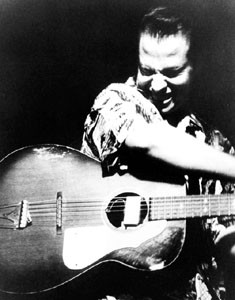
Hard Rockin’ Daddy: Wayne “The Train” Hancock


Hillbilly Heaven

A trio of alt.country gems

By Greg Cahill

Wayne Hancock
A Town Blues (Bloodshot)

Kelly Hogan
Because It Feel Good (Bloodshot)

Robbie Fulks
13 Hillbilly Giants (Bloodshot)

Any alt.country fans worth their faded No Depression T-shirt have a stack of CDs in their library from the good folks at Bloodshot Records, the Chicago-based home to some of the hottest–and weirdest–roots music acts (including Split Lip Rayfield, Neko Case, and the Waco Brothers). This trio of new releases will set you back 45 or 50 bucks and they’re well worth a piece of your hard-earned paycheck. North Bay hillbilly hounds know that Wayne “The Train” Hancock, a Texas-born country swing artist imbued with the spirits of Hank Williams and Bob Wills, is a helluva good rockin’ daddy with one of the most distinctive voices in roots music. The 14 tracks on A Town Blues, a dozen originals and covers of Jimmy Rogers and Fats Waller recorded in Austin and produced by Lloyd Maines (Wilco, Joe Ely), is a swingin’ collection of whacked-out hillbilly barn burners, dusty desert ballads, and dance floor warmers worthy of Hank Sr. It’s as Hancock likes to say: “If you like music that moves and the trash on the radio can’t satisfy your wanderlust,
then try this CD and burn a thousand miles.”

Wanderlust and sweet abandon are what singer Kelly Hogan is all about. Her sluttier label mate Neko Case gets more of the media attention, but Hogan’s angelic, country-drenched vocals and restrained approach haven’t been lost on the critics. The Washington Post recently gushed that Hogan “sings with persuasive passion.” Billboard branded Hogan “one of the most irresistible singers to appear in some time.” And the Chicago Tribune opined that Hogan “has every bit of the vocal power of a Whitney or an Alanis; the difference is she knows how to sculpt a song and build a moment.”

Catch her live on Nov. 10 at the Bottom of the Hill in San Francisco.

As for Robbie Fulks, he ain’t exactly a household name but listeners of KRSH and KRCB radio know that this is one guy who knows what the heart of country music is all about. On his wryly titled new CD 13 Hillbilly Giants (recorded by engineer Steve Albini of Nirvana fame), Fulks delivers a baker’s dozen of cool country covers–novelty tunes, weepers, story songs, and rave-ups. All are obscure songs by famous country artists like Dolly Parton and Porter Wagoner or should-be-famous songs by obscure artists like the Carlisles. Fulks–the creator of such latter-day honky-tonk classics as “The Buck Starts Here” and “She Took a Lot of Pills and Died”–sounds like Dwight Yoakam without the
pop pretensions.

The publicity folks at Bloodshot call Fulks’ latest “an excellent bromide” for what passes as country music these days. Drink liberally from this jug.

Spin Du Jour

Move over, Supernatural, make way for a spiritual immersion. Long before his rebirth as a multi-Grammy Award-winning MTV star who built a new audience by linking up with the likes of pop star Rob Thomas of Matchbox 20 and rapper Wyclef Jean, guitarist Carlos Santana startled fans by recording a pair of pioneering jazz-fusion albums, 1972’s Love Devotion Surrender–on which then Devadip Carlos Santana joined forces with fellow Sri Chimnoy devotee and guitar heavyweight Mahavishnu John McLaughlin–and 1974’s Illuminations, a free-jazz exploration of John Coltrane themes that was the first Santana album not to go gold in the United States. Now bassist/alchemist/producer Bill Laswell has gone into the studio to create Carlos Santana: Divine Light, a Reconstruction and Mix Translation (Epic/Legacy), which reinvents nine tracks from those recordings through studio wizardry. The CD is the follow-up to Laswell’s similar 1998 remix project Panthalassa: The Music of Miles Davis 1969-1974 (Columbia). The new CD is a nice way to revisit some of the most adventurous and most maligned work by this Marin musician who at the time had the courage to put spiritual values and stream-of-consciousness artistry ahead of mainstream commercial success. Such a rarity today.

From the October 18-24, 2001 issue of the Northern California Bohemian.
© Metro Publishing Inc.

Living Well Is The Best Revenge

0


Photograph by Rory MacNamara

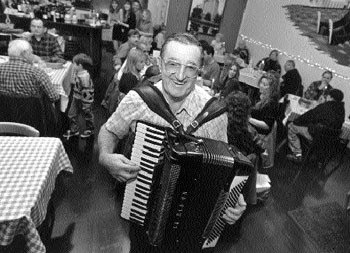
A Feeling of Connection: Dining out is a way of finding solace in times of tragedy. John Volpi of Volpi’s Ristorante and Speakeasy in Petaluma will even provide the soundtrack.


Living Well Is the Best Revenge

Our columnist slaps around anyone who’s not dining out these days

By Christina Waters

“WHAT’S THE POINT?” many of us felt after the morning of Sept 11. Why bother trying to do anything productive? How could we possibly indulge in simple pleasures–laughter, a good movie, or a favorite meal?

Well, how could we not? The point is that not to engage in these quintessential human expressions reduces our value system to something unrecognizable. To limit the space of our enjoyments, even those enjoyments that might be argued as nonessential, is to have been terrorized twice. Our collective sense of survivor guilt might lead us to a vital transformation, the next stage in the post-postmodern American Dream. Or it could perhaps more easily lead to a denial of that attitude of expansiveness, that spirit of shared enrichments that quite simply makes life worth living.

Life, liberty, and the pursuit of happiness. It’s that “pursuit of happiness” part that often gets ditched, seen as somehow too self-involved, too trivial to maintain when things become breathtakingly real and mortal. Certainly I’m talking about that “quality of life” thing. Merely drawing breath isn’t anyone’s idea of living. But I’m also suggesting something more than making sure we don’t sacrifice the full spectrum of experience in the name of fear and uncertainty.

A fundamental expression of our humanity is the seeking out of each other’s company. The handshakes, yes, the embraces that have multiplied over the past few weeks. But also, simply, that solid, silent running sense of community. It got us through the earthquake a decade ago, this coming together as if to show one another that we were all still here, still alive and ready to craft a future. The feeling of connection and mostly the vibrant feeling of social communion that happens when you’re dining in a room filled with people–these are not frivolous or unimportant concerns.

It is surely camaraderie that sustains many uncertain passages on the big river of life. Last week, we went out to eat at a small cafe. The sense of relief was palpable. We were relieved to see other people sitting and ordering dinner, raising glasses of wine, smiling over plates of freshly made food.

And the other diners, as well as the waitstaff and kitchen workers, were also relieved. They were relieved to see us. People still had appetites. Expectations were still in place. It was still important to show up and do a job. These are the deeply embedded patterns of community that keep us sane during even wildly unpredictable circumstances.

If anything, suddenly it all matters so much more. This showing up, greeting, allowing pleasure to unfurl, meeting social agreements.

As you might have guessed, the meal we enjoyed last week tasted better than it might have in a world where every act is taken for granted. That world doesn’t exist anymore. Now the very idea that a tomato could be so ripe, or that someone would greet a stranger at the next table, is priceless and incalculably reassuring.

My friend Angela, a sophisticated observer who works at a popular Bay Area restaurant, told me that it was very like after the 1989 earthquake.

“People come together. They seem to need the camaraderie that a familiar restaurant gives them.”

That is happening now. And yet a recent lunch in Palo Alto made me worry that too many people might be staying away in droves–out of fear. As sci-fi prophet Frank Herbert once observed, fear is the mind killer–the little death. Fear is that worst of adversaries. It can’t be seen, it refuses to take any clear, crisp shape.

But it haunts and taints everything it touches.

Afraid there will be no tomorrow, we stay at home, complain, and vegetate. Afraid that our money will run out, we grasp and hoard what we have. Afraid that we will appear frivolous, we stick to pious pleasures–watching TV and watching TV. Nothing is wrong with any of these things, save that they cause us to abandon our neighbors. And our identities.

The math is fairly simple; even I can do it. America–growing fearful that lightning will strike twice, and in the same way–stops flying. The results are simple and devastating. Airlines fold. Airport concessions fold. People, lots of them, lose their jobs. Every single layoff over the 10 days after the terrrorist attack carried six other jobs with it–the taxi driver, the bus person, the skycap, the parking-lot attendant, the hotel maid, and on and on.

And just as terribly we lose our freedom to move, to connect, to conduct business, to carry out long-made plans. The same can easily happen with restaurants, bakeries, cafes, butchers, farmers, shippers, wineries, field hands, truck drivers, the interlocking chain of people and businesses supporting food service.

When this is all over, this emotional blackmailing, this psychic kidnap we’re all suffering–and it will be over–we’ll be overjoyed and ready for some sensual pleasures. But will those restaurants, cafes, and bakeries still be around?

Some will. Some won’t. My point is simple. And, I hope, obvious. Now is not the time to stop going out to eat. If you fail to support the friend and neighbor who works hard as restaurateurs do, they simply will not be able to stay in business.

The quality of life matters. The quality of the future is in your hands.

From the October 18-24, 2001 issue of the Northern California Bohemian.
© Metro Publishing Inc.

Heavier Than Heaven

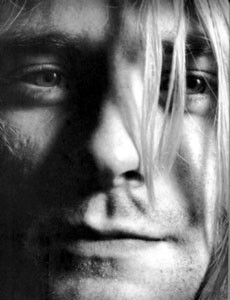
We Hardly Knew Ya: Kurt Cobain – calculating, crazy, and cruel?

All Apologies

New bio besmirches Cobain legacy

By Gina Arnold

IN ADDITION to being a month of treachery and angst, September marked the 10th anniversary of the release of a record called Nevermind by a rock band called Nirvana. The anniversary doesn’t seem to have been especially marked by very many people–unlike all anniversaries to do with the Beatles–but it meant a lot to me.

Unfortunately, what it reminded me of most is the line I consider the most profound in all rock and roll. It comes from Bob Seeger’s “Runnin’ Against the Wind” and it goes, “I wish I didn’t know now what I didn’t know then.”

That phrase applies to all kinds of people, from JFK to Gary Glitter, and judging by Heavier than Heaven (Hyperion; $24.95), the amazingly detailed new biography about rock and roll’s premier suicide of the ’90s, it applies to no one more than Kurt Cobain.

To read this book is to become disenchanted not only with Kurt–who is portrayed as petulant and calculating, crazy and cruel–but with Nirvana, grunge, and rock itself. That being the case, it’s hard to imagine who would want to open it.

This is not to say, however, that Heavier than Heaven is a bad biography. If anything, it suffers from being too good; a phenomenally well-researched account of Cobain’s 27 years. Author Charles Cross has done an almost mind-boggling amount of digging, offering everything from excerpts of Kurt’s own journals to interviews with his elementary school teachers.

Cross is not a dry stylist in the least. But he sometimes errs on the side of exaggeration: it takes him exactly two paragraphs to use the term “rock & roll salvation.” Cross is convinced that Nirvana was one of the most important bands–and Cobain the most important songwriter–of his era. And yet his argument is that Cobain, far from being the saintly outsider he made himself out to be, was deeply into being a rock star, determined from the start to “make it big.”

This doesn’t change the fact that Nevermind and Live Unplugged in New York are two of the best records of the decade, but it does ruin some of the mythic aspects of the Nirvana legend–and not to any good end.

Heavier than Heaven also suffers the same fate as many biographies. In spite of the incredible detail, there is no real explanation either for Kurt Cobain’s genius or for his deep unhappiness at the end of his life (although his miserable marriage, which may have accounted for a lot of it, is sugarcoated by Cross’ unabashed kindness to his main source, the Mrs.).

In the book, Cobain goes from your classic dumb redneck to arty punk-rock philosopher in about one second flat. This is partly because Cross omits a detailed description of the Washington town of Olympia, where Kurt moved after high school, and its peculiar hippie-punk-indie-rock ethos.

The hole is also there because that leap is unknowable, both in Cobain and in every other genius of his order: Dylan, Lennon, Gandhi, whoever. What made them what they are? We’ll never know, and I find the exploration of their origins highly distasteful. I didn’t want to know that Kurt killed a cat when he was a teenager. It doesn’t improve my understanding of Nirvana’s music.

No doubt everyone who ever met Kurt had been hoarding–and embroidering–their stories, waiting to tell them to Cross. But does that make them true? Not only are some of the narrators here as unreliable as Tristram Shandy, but there are some things about these times and this person that I remember differently–nights I spent in Nirvana’s company that shine like pure goddamn gold.

Maybe I’m just in denial. But not only do I wish I didn’t know now what I didn’t know then, but I wish I’d never read this book.

From the October 18-24, 2001 issue of the Northern California Bohemian.
© Metro Publishing Inc.

News Bites

0

Man With A Plan: SRJC instructor and labor activist Marty Bennett.


Photograph by Michael Amsler


Money Matters

Living-wage advocates get to work

By Greg Cahill

THE SONOMA COUNTY Living Wage Coalition is ready to make its first bid at a municipal ordinance establishing–what else?–a livable wage in Santa Rosa. The coalition will present its case on Tuesday, Oct. 23, at 4 p.m., to the Santa Rosa City Council. Supporters of the measure–including the Sonoma County Council on Aging, the Sonoma County Peace and Justice Center, the North Bay Labor Council, and Women in Action–have fashioned the living-wage ordinance on similar measures adopted in San Francisco, San Jose, and Santa Cruz, which now require contractors and subcontractors doing business with those cities to pay workers $15 an hour, plus benefits.

The City Council chambers are located at 100 Santa Rosa Ave., Santa Rosa.

As a member of the coalition organizing committee, Marty Bennett–a history instructor at Santa Rosa Junior College–is helping to organize a phone bank on Oct. 14 and 24 to educate the public about the movement and invite new organizations to join the coalition.

“We’re in the process of crafting living-wage ordinances for Petaluma and Santa Rosa and will be working with those two city councils as we proceed,” says Bennett. “Over time, we will go from one municipality to the next, and ultimately we’ll go to the county Board of Supervisors.”

Petaluma Vice Mayor Janice Cader-Thompson says that while she is concerned that the new council majority will not support such an ordinance, she fully embraces it. “If we just look at the cost of living in Sonoma County, we should see it’s something we need to address–it’s not possible to live and work in this county at a minimal wage,” she says. “I think it’s important for this issue to come to the forefront.”

Bennett believes the time is ripe for building a local living-wage movement at the grassroots level for several reasons. “This movement is sweeping the country,” he says, noting that more than 50 cities and counties in the nation have passed similar ordinances since the movement began in the 1990s.

For more information about the living-wage ordinance, call 707/545-7349, ext. 48.

Bioneering Spirit

It’s billed as “America’s largest gathering focusing on practical solutions to the world’s most urgent environmental and social issues.” And, Lord knows, there will plenty to occupy the nearly 3,000 scientists, educators, authors, activists, business leaders, doctors, policymakers, and artists expected to attend the 12th annual Bioneers Conference.The confab–held Oct. 19-21 at the Marin Center in San Rafael–will zero in on such heavyweight issues as global warming, chemical toxicity and human health, and the destruction of indigenous cultures. Among the speakers are holistic health poster boy Dr. Andrew Weil, housewife-turned-activist Diane Wilson, civil rights attorney J. L. Chestnut, progressive business leader Anita Roddick of the Body Shop, and treesitter-turned-author Julia Butterfly Hill. For registration info, call 877/246-6337 or visit www.bioneers.org.

That Hurts!

Here’s mud in your eye: The feds are taking another look at a controversial pepper-spraying case. The U.S. Supreme Court last week ordered the 9th U.S. Circuit Court of Appeals to reconsider its ruling that lawsuits can be filed against law enforcement officers who dabbed liquefied pepper spray directly into the eyes of logging protesters at the office of Rep. Frank Riggs in 1997. In a lengthy court battle, a federal judge had ruled that the spray caused only “transient pain,” but the appellate court decided the unusual tactic–in which police filled Dixie Cups with liquefied pepper spray and then dabbed it directly into the eyes with cotton swabs–constituted a breach of ethics and made police liable for damages. The U.S. Supreme Court wants a second ruling, noting that a separate case–stemming from a demonstrator pepper-sprayed by federal agents guarding then Vice President Al Gore–may have set the precedent for protection of law enforcement officials who use the chemical weapon in the line of duty. Attorneys for the demonstrators argue that the protesters posed no threat, unlike the man who was pepper-sprayed in the Gore case.

From the October 18-24, 2001 issue of the Northern California Bohemian.
© Metro Publishing Inc.

From Hell


Photograph by Jurgen Vollmer

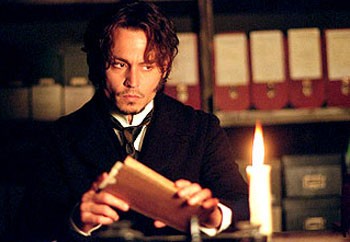
Ripper Tripper: Johnny Depp stalks death in ‘From Hell.’

Jack’s Back

‘From Hell’ offers atmospheric but vague retelling of Ripper legend

By Richard von Busack

JOKERS WHO SAW the sketch film Amazon Women on the Moon already know the identity of Jack the Ripper: the Loch Ness monster did it. However, From Hell re-solves the case, or tries to. It’s a confusing thriller, directed irresolutely by the Hughes Brothers, and based on the Alan Moore/Eddie Campbell graphic novel.

It has its pleasures, thanks to very good CGI and Prague locations: Victorian London under bloody skies, with computer-animated seagulls the size of pterodactyls flapping around St. Paul’s.

No fog shrouds these Whitechapel streets: it’s a bad street party, swarming with violent drunks, echoing with the sounds of bodily fluids slopping against the cobblestones. It’s crowded with houseless people–in one all-night kip the whores are roped together, sleeping sitting up on benches.

In the film’s most lyrical moment, detective Johnny Depp makes himself a fancy absinthe and laudanum cocktail (never mix, never worry) while lounging in his bath trying to hallucinate up some clues.

At this point Depp’s a genre, not an actor. To get to Lugosihood, where he seems to be heading (there are worse destinations), he’s going to need some rich, chewy dialogue–that wounded look is wearing thin. Depp’s Detective Adeline is hauled out of an opium den to solve the killings of prostitutes in London’s red-light district. He romances a streetwalker (Heather Graham, miscast) while penetrating the ghastly secrets of the killing.

While From Hell solves the murders and deals out a fitting punishment for the beast, the motive is obscured by vague direction. A supernatural element is a fitting cap for the story, but what exactly was achieved by the serial killings is vague, right when it needs to be clear. It’s as if the key to this movie doesn’t fit.

Bob Clark’s 1978 Murder by Decree, which pitted Christopher Plummer’s Sherlock Holmes against the Ripper, confounded most who saw it. Yet it still had a clearer explanation of how Masonic ritual murder might have been enacted on the Whitechapel prostitutes. It’s been 20 years since I’ve seen Murder by Decree but I can still remember the sinister grace with which Plummer pantomimed the evisceration of the Three Ruffians–Jubela, Jubelo, and Jubelum–the mythic killers of the Grand Master of the Masons. (I realize this is all just a conspiracy-nut’s blood libel, and that the Masons are about as menacing as the Fraternal Order of the Eagles.)

Also, From Hell‘s gambit around the final murder would have been more dramatic if it hadn’t been used in 1980’s fondly remembered Ripper movie Time after Time, with David Warner as Jack.

Katrin Cartlidge and Susan Lynch, two strongly featured and impressively brusque actresses, play a pair of the Ripper’s choices, but they’re squandered: there’s never a sense of the pathos or the texture of their lives.

The Hugheses go for the squalor every time.

From Hell is a noisy, gabby movie that plays up the butchery. While the heavy mood does get in your bones, the film suffers from what Dr. Gull (Ian Holm, splendid as always) calls “the surgeon’s malady: a want of feeling.”

From the October 18-24, 2001 issue of the Northern California Bohemian.
© Metro Publishing Inc.

Peter Coyote

0

Apostle of grooviness explores the politics of fear

By David Templeton

THERE’S A TRAUMA of fear that has suddenly descended on the United States,” says Peter Coyote. “A fear we’ve been feeling ever since the terrorist attacks. But I don’t think it’s about what people think it’s about.”

With the mention of Sept. 11, the actor-author-activist’s raspy voice takes on a passionate tone.

“The only thing that’s changed is that Americans now realize the ways in which we’ve always been vulnerable,” Coyote says. “Americans, previous to this, were allowed to believe they weren’t vulnerable, and I think the fear we’re feeling really is the fear that the ruling class, the political class, has been attending to other business, other than the protection of American lives.”

Peter Coyote–once dubbed an “apostle of grooviness,” by the Village Voice–can pack more words and ideas into a 20-minute chat than most politicians.

That should come as no surprise. Anyone who has read Coyote’s 1997 memoir, Sleeping Where I Fall (Counterpoint; $14), knows that politics–radically progressive politics–are a big part of Coyote’s personal history.

Of course, Coyote is most famous for his 50-plus movie roles, including E.T.’s sympathetic scientist, the sinister sexual predator in Roman Polanski’s Bitter Moon, the double-talking bureaucrat in Sphere, and the love-struck defense attorney in Sissy Spacek’s Midwives.

But politics came first.

Peter Coyote–originally named Peter Cohon, he adopted the canine surname after a powerful peyote trip in which he experienced being transformed into a free-roaming coyote–was an early member of that counter-cultural shit-disturbance known as the San Francisco Mime Troupe.

In the ’60s and ’70s, he was a certified revolutionary, first working among the Diggers, a band of Haight-Ashbury anarchists that prophesied the end of capitalism and gave away free food and clothes. He then started a commune with some free spirits from the loose-knit Free Family movement.

Even when Coyote was post-hippy, his political roots continued to show. After the last of the communes disintegrated, he ended up being appointed by then Gov. Jerry Brown to head California’s Council of the Arts, which managed to appropriate $13 million for the promotion of the arts and art education. Today, as a full-fledged movie and television star, the Emmy Award-winning Coyote–now a practicing Buddhist–routinely cashes in his famous-guy chips for opportunities to shift the spotlight toward progressive issues.

The North Bay will get an enlightening earful of Coyote’s oratory when he brings the politics of the personal to Santa Rosa Junior College on Monday, Oct. 22, for a free noontime lecture titled “Living Resistance.”

“I’m not really sure what ‘Living Resistance’ means,” Coyote admits with a laugh. “I didn’t pick that title, and I don’t really like it because it suggests taking a defensive action, a rear-guard action. It means that somebody else has initiated the activities that you are in a position of responding to. It doesn’t allow you a lot of impetus to go out and start things on your own.”

That objection aside, Coyote says he’s looking forward to the talk, made all the more important by current circumstances.

“I’ll try to fill an hour with my philosophy of citizenship,” he says. “I’ll try and give a coherent philosophy of what I’m all about, and what being a citizen means.”

A word of warning: To Coyote, citizenship means something besides hanging a flag over your door and having a real hankering to spend American dollars so we can “rid the world of evil.”

(Coyote admits, by the way, that he does not have a flag flying from his house: he says he doesn’t want his patriotic support of rescue workers being misinterpreted as “some jingoistic demand for war.”)

“A citizen,” says Coyote, “is a person who is engaged in the daily life of his locality, his state, and his nation. A citizen is someone who takes the premises of the Constitution and the Bill of Rights seriously. A citizen is a person who takes a watchdog action over the government, which has become, more or less, the handmaiden of the corporate sector.”

Coyote is quick to say that there’s nothing inherently bad about corporations. “But when the corporate sector influences the civic sector by controlling the political process, that’s a very dangerous state of affairs,” he says, “because there’s nothing in the corporate charter that says they must look after the best interests of the people.”

As an example, Coyote points to the terrorist attacks themselves. He describes in detail the safety precautions–reinforced doors, state-of-the-art security measures–that might have prevented the hijackings from occurring. The alarming part, Coyote insists, is that such dramatic (and expensive) measures, initially recommended by Congress to the airline industry after the Lockerbie and Pan Am 103 disasters, were never put into law.

“[That’s] because the airline industry lobbied Congress,” Coyote explains, “and our elected representatives, Democrats and Republicans, colluded in softening those laws.”

All of this, Coyote says, is not as alarming as what those elected officials have done since Sept. 11.

“Suddenly,” he says, “our attorney general is passing all sorts of laws, under the guise of combating terrorism–laws that will allow him to eavesdrop on every American, laws that will give him enhanced political powers.

“Well, if suddenly these laws are necessary to protect us, then how were we being protected heretofore?” he asks. “Does this mean the entire political class has never given thought to the possibility of terrorist attacks in the United States?

“Well, if so, they’re morons–and the people are rightfully afraid. And if these elected officials did think about it, and they misled the people, then they are duplicitous–and the people are rightfully afraid.”

So, whatever “Living Resistance” turns out to mean, Coyote’s discussion will be powered in part by his concerns about the aftermath of Sept. 11 in our country.

“It will certainly have an influence on whatever I say,” he agrees. “Unless we look at this stuff, we are going to keep perpetuating the same dilemmas . . . over and over and over again.”

Peter Coyote speaks on Monday, Oct. 22, at 12:15 p.m. at Santa Rosa Junior College’s Burbank Auditorium, 1501 Mendocino Ave., Santa Rosa. Admission is free, but parking is $2. For details, call 707/527-4372.

From the October 18-24, 2001 issue of the Northern California Bohemian.
© Metro Publishing Inc.

Georgia Kelly

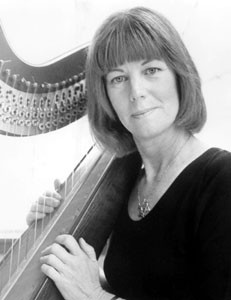
Political Science: North Bay musician Georgia Kelly.


Photograph by Tony Lane


Grace Note

Harpist works for peace in the Balkans

By Tara Treasurefield

Georgia Kelly learned about war and peace the hard way. She lived in Yugoslavia in 1991 when war broke out and literally tore that Balkan nation apart. Kelly’s experiences during that time–which included a massive U.S. air campaign–prompted her to begin studying what she describes as “the cycles that we seem doomed to repeat, unless we learn the lessons of history and actively create alternatives.”

Best known as a composer and harpist, Kelly also is president and executive director of the Praxis Peace Institute in Sonoma, which she founded last year. These days, she spends most of her time nurturing her new nonprofit, with breaks to drink Earl Grey tea, eat Belgian chocolate, and feed peanuts to the blue jays that visit her back deck and, on occasion, her den. “The point of Praxis is to identify conditions that lead to war and conditions that lead to peace,” she says. “We ask questions that are not being asked, expose inconsistencies between rhetoric and action, and link spiritual consciousness with responsible citizenship.”

Praxis offers many ways to prepare for responsible citizenship, through forums, workshops, and local and international conferences. These events bring together leading facilitators and thinkers in conflict resolution, psychology, sociology, political science, economics, history, philosophy, religion, feminist studies, and the arts and sciences.

The next Praxis event, scheduled for Oct. 28, will be a gourmet dinner in Oakville with a talk on the Collective Shadow.

In August, Sebastopol Mayor Larry Robinson, a well-known activist, spoke at a Praxis luncheon. He had just returned the night before from Japan, where he attended the World Conference of Mayors for Peace. “Visiting Hiroshima, listening to survivors, and seeing the exhibits in the museum dispels the fantasy that war can be won,” he says.

Other speakers at Praxis events have included Daniel Sheehan (of Christic Institute fame), Riane Eisler, Angeles Arrien, Sam Keen, Sherry Anderson, and Paul Ray.

The heart and soul of Praxis, and of Kelly’s work, is a biannual conference in Dubrovnik, Croatia. Topics for the next conference, set for June 4-11, 2002, include gender issues, economics, sustainability, media, and propaganda–all in the context of what furthers or hinders peace. “We’ll also learn from people who have experienced war directly,” Kelly says, “and who are now engaged in peace building.”

Stressing that “radical” means “getting to the roots,” Kelly takes every opportunity to practice political radicalism. At a reception for Roots of Peace, a group of Sonoma County vintners that replaces land mines with grape vines, she asked a State Department official, “Why hasn’t the United States signed the International Land Mines Treaty [which has been signed by 133 other nations]?” He replied that when he was a soldier in Vietnam, he was grateful for land mines. She retorted, “We had no business being in Vietnam in the first place!”

Still dumbfounded by the exchange, Kelly says, “He was trying to defend the inhumane use of land mines by invoking an illegal and unjust war. Such disconnected thinking begs for examination.” Meanwhile, U.S. ground troops sent to Afghanistan will find themselves in a country that has been described as “the world’s biggest mine field.”

Commenting on the brutal terrorist attacks of Sept. 11, Kelly says, “Our lives are rapidly changing. We must not be observers. We must have courage and speak out for clarity, for successful solutions, and for a world of cooperation, tolerance, and peace. Empathy is probably the link between spiritual consciousness and responsible citizenship–and we’re coming out of a society that’s very narcissistic.

“That’s not a judgment so much as a statement of fact. In order to be responsible citizens, we have to grow out of the narcissism that makes us consumers instead of citizens. We need to educate ourselves about the issues, discuss them with others, and become actively engaged in creating the changes we wish to see.”

For details about Praxis events, call 707/939-2973 or visit www.praxispeace.org.

From the October 18-24, 2001 issue of the Northern California Bohemian.
© Metro Publishing Inc.

Mulholland Drive


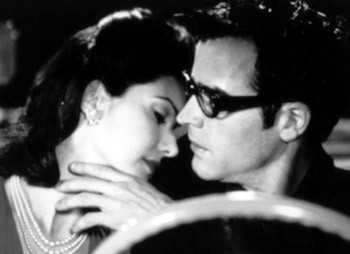
Touch of evil: Laura Harring and Justin Theroux delve into depravity.

Hell’s Highway

Demons take wheel on ‘Mulholland Drive’

By Richard von Busack

NO WONDER David Lynch called his last movie The Straight Story–it presented a total contrast to the director’s usual curlicue plotting. Apart from The Straight Story and 1990’s Wild at Heart, Lynch has spent his last 10 years or so creating a continuing and convoluted epic of demonic interference in human life.

His newest, Mulholland Drive, an erotic horror comedy/ tragedy, features Lynch’s usual blindfold-and-spin method of storytelling, made all the more disorienting through his heavily saturated colors and the hypnotism of Angelo Badalamenti’s music. “There is another world, but it’s in this one,” French director Jean Cocteau wrote. In divining this Other World, Lynch resorts to the ancient idea of humans being the prey of supernatural beings.

In Blue Velvet (1986), the gang members (sexually twisted outlaws led by Dennis Hopper) are so evil that they dwell on the fringes of the supernatural. Lynch’s Lost Highway (1997) also features a devilish “Mystery Man” (Robert Blake) with the ability to be in two places at once. His character fit perfectly with the plot of Lost Highway, a film that turned itself inside out, having neither beginning nor end.

Mulholland Drive is more Q-shaped, a circular narrative with a short epilogue. The film is salvage work, put together from a TV pilot rejected by two networks. In the newer additions, Lynch has changed the story from a kind of Nancy Drew investigation into a tale of the fatal betrayal of two lovers.

Mulholland Drive opens with a frenzied jitterbug contest, sampled, repeated, and projected on a blank violet background. From a spreading haze at the bottom of the screen, two misty faces materialize: a pair of grimacing elderly henchmen in Mr. Roque’s employ, spying on the dancers and selecting a girl for their use.

Like most demons you read about, Roque–a mute creature (played by Michael J. Anderson) who lives in a huge glass tank–prefers virgins. This one is named Betty Elms (Naomi Watts), from Deep River, Ontario, who wins the contest and comes to Hollywood to become a star.

House-sitting her aunt’s Hollywood apartment, Betty encounters a nude woman (Laura Elena Harring) in the bathroom. The woman, who calls herself “Rita,” is the amnesiac survivor of a botched murder attempt. The two–one a complete naive, the other without memory–try to solve the mystery of Rita’s identity.

The most factual parts of Mulholland Drive seem to be supernatural. We can’t tell what the demons are doing, but at least we know they’re doing it. Roque’s men are everywhere: they include a homeless troll behind a coffee shop, who possesses a blue box that’s an interdimensional worm hole; and a frightening albino named Cowboy (Monty Montgomery), who threatens violence with a little speech about attitude.

Perhaps in its complete form as a TV series, Mulholland Drive was intended to be a surreal meditation on the movies themselves. For example, Lynch has cast a living piece of MGM’s golden age, dancer Ann Miller, as Betty’s salty landlady, Coco. Perhaps in the longer version, Adam, a film director on the run, would have been more than the red herring he is in this version of the story.

Even retooled from pilot to movie, with characters jutting out like sawn-off timbers, Mulholland Drive is as sensual, elusive, and abruptly funny as a filmed dream-journal. That the mysteries of Lynch, our corn-fed Cocteau, are insoluble just make them all the more ravishing.

From the October 11-17, 2001 issue of the Northern California Bohemian.

© Metro Publishing Inc.

Second City

0


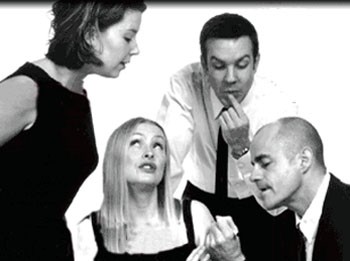
Block party: Second City comics mix classic material with new routines.

City Slickers

Second City troupe delivers comic relief

By David Templeton

“SORRY if I’m out of . . . breath,” gasps Kevin McGeehan, answering his phone after several rings. “I was just doing some pushups.”

Pushups? Wow. Sorry to interrupt.

But, hey–good for you. In these troubled times, we should all endeavor to remain in peak mental and physical form. That’s especially true of folks like McGeehan, whose occupations carry such a high potential for danger, trained professionals whose daily mission involves working with crowds of stressed-out people under unpredictably volatile conditions. Yes, the physically fit fellow on the phone holds what is, these days, one of the toughest jobs in America.

Kevin McGeehan is a comedian.

“Comedy is at a weird point right now,” he says. “Nobody’s sure what’s funny anymore. There’s been a very weird vibe since the attacks, where anything a comedian says can be misconstrued. People really do want to laugh again–there is an audience for comedy–but we really have to be on our toes.”

And they have to know which toes can be stepped on–and how hard.

A member of the legendary Second City comedy troupe–based in Chicago, with theaters in Toronto, Detroit, and Cleveland–the red-haired McGeehan has been slogging knee-deep through the wounded American psyche, traveling the country with one of Second City’s three six-person touring companies.

Today he’s back home in Chicago, winding down (and bulking up) in preparation for a brand-new, West Coast road-tour that will begin with a two-act retrospective show–it’s ‘The Best of Second City”–on Oct. 18 at Analy High School in Sebastopol.

Second City–for those who’ve been living in totalitarian states where laughing isn’t allowed–is the comedy institution that’s produced such superstars as John Belushi, Joan Rivers, Bill Murray, Gilda Radner, Andrea Martin, Dan Castalanetta, Martin Short, and Dan Aykroyd.

According to McGeehan, the current show is an 80/20 blend of classic sketches and songs–tapping into Second City’s 40-plus years’ worth of archival material–and brand-new routines that boast a heavy dose of on-the-spot improvisation.

“It’s part tried-and-true and part anything goes,” McGeehan says.

Representing the tried-and-true is one sketch–an old favorite–in which a boy at a baseball game tries to get the attention of his sports-obsessed dad with increasingly outrageous behavior. An example of something new–a piece written by McGeehan–shows what happens when a Christian rock band is accidentally booked to perform for students at a public high school and is forced to rethink its songs, replacing the word God with the principal’s name, Frank.

“If you take the word God out of a song about God,” says McGeehan, “It makes the song a whole lot funnier.”

Sounds like something that might still qualify as toe stepping.

“Sure, but you can’t avoid it,” he says. “What makes one person laugh makes someone else boo. The point is, people need to allow themselves to have fun, to get their minds on something else–at least for one evening.”

To that end, McGeehan and company are prepared to help.

“We’re ready to start taking some chances,” he says.

From the October 11-17, 2001 issue of the Northern California Bohemian.

© Metro Publishing Inc.

North Bay Public Transit

0

By Greg Cahill

Fasten your seatbelt. The merry-go-round that is North Bay public transit is coming back around, and elected officials hoping to grab that elusive brass ring are telling us to prepare for a November 2002 ballot measure aimed at levying a transportation sales tax to help cope with the region’s worsening traffic.

Last week, at a joint meeting of the Marin and Sonoma County Boards of Supervisors the consensus was that ballot measures will pop up in both communities. Similar measures have a long history of defeat, and were quashed most recently by Marin voters in 1998 and Sonoma County voters just last year.

The difference this time around is that North Bay rail service most likely will be the prominent item on the measures.The boards have agreed to merge authority over the old Northwestern Pacific Railroad right of way–running from Willits to Larkspur–creating one regulatory entity to replace the four agencies that currently control the rail line.

Other items on the proposed ballot measures would include Highway 101 improvements, and ferry service from Port Sonoma and Gnoss Field in Novato (and possibly Petaluma).

Expect a proposed half-cent sales tax hike, requiring two-thirds approval by voters, and a bumpy ride.

From the October 11-17, 2001 issue of the Northern California Bohemian.

© Metro Publishing Inc.

Spins

Hard Rockin' Daddy: Wayne "The Train" HancockHillbilly HeavenA trio of alt.country gemsBy Greg CahillWayne HancockA Town Blues (Bloodshot)Kelly HoganBecause It Feel Good (Bloodshot)Robbie Fulks13 Hillbilly Giants (Bloodshot)Any alt.country fans worth their faded No Depression T-shirt have a stack of CDs in their library from the good folks at Bloodshot Records, the Chicago-based home to some of the hottest--and weirdest--roots...

Living Well Is The Best Revenge

Photograph by Rory MacNamaraA Feeling of Connection: Dining out is a way of finding solace in times of tragedy. John Volpi of Volpi's Ristorante and Speakeasy in Petaluma will even provide the soundtrack.Living Well Is the Best Revenge Our columnist slaps around anyone who's not dining out these days By Christina Waters "WHAT'S THE POINT?" many of us felt...

Heavier Than Heaven

We Hardly Knew Ya: Kurt Cobain - calculating, crazy, and cruel? All Apologies New bio besmirches Cobain legacy By Gina Arnold IN ADDITION to being a month of treachery and angst, September marked the 10th anniversary of the release of a record called Nevermind by a rock band called...

News Bites

Man With A Plan: SRJC instructor and labor activist Marty Bennett.Photograph by Michael AmslerMoney MattersLiving-wage advocates get to workBy Greg CahillTHE SONOMA COUNTY Living Wage Coalition is ready to make its first bid at a municipal ordinance establishing--what else?--a livable wage in Santa Rosa. The coalition will present its case on Tuesday, Oct. 23, at 4 p.m., to the...

From Hell

Photograph by Jurgen VollmerRipper Tripper: Johnny Depp stalks death in 'From Hell.'Jack's Back'From Hell' offers atmospheric but vague retelling of Ripper legend By Richard von BusackJOKERS WHO SAW the sketch film Amazon Women on the Moon already know the identity of Jack the Ripper: the Loch Ness monster did it. However, From Hell re-solves the case, or tries...

Peter Coyote

Apostle of grooviness explores the politics of fearBy David TempletonTHERE'S A TRAUMA of fear that has suddenly descended on the United States," says Peter Coyote. "A fear we've been feeling ever since the terrorist attacks. But I don't think it's about what people think it's about."With the mention of Sept. 11, the actor-author-activist's raspy voice takes on a...

Georgia Kelly

Political Science: North Bay musician Georgia Kelly.Photograph by Tony LaneGrace NoteHarpist works for peace in the BalkansBy Tara TreasurefieldGeorgia Kelly learned about war and peace the hard way. She lived in Yugoslavia in 1991 when war broke out and literally tore that Balkan nation apart. Kelly's experiences during that time--which included a massive U.S. air campaign--prompted her...

Mulholland Drive

Touch of evil: Laura Harring and Justin Theroux delve into depravity. Hell's HighwayDemons take wheel on 'Mulholland Drive' By Richard von BusackNO WONDER David Lynch called his last movie The Straight Story--it presented a total contrast to the director's usual curlicue plotting. Apart from The Straight Story and 1990's Wild at Heart, Lynch has spent his last 10 years...

Second City

Block party: Second City comics mix classic material with new routines.City SlickersSecond City troupe delivers comic relief By David Templeton"SORRY if I'm out of . . . breath," gasps Kevin McGeehan, answering his phone after several rings. "I was just doing some pushups." Pushups? Wow. Sorry to interrupt. But, hey--good for you. In these troubled times, we should...

North Bay Public Transit

By Greg CahillFasten your seatbelt. The merry-go-round that is North Bay public transit is coming back around, and elected officials hoping to grab that elusive brass ring are telling us to prepare for a November 2002 ballot measure aimed at levying a transportation sales tax to help cope with the region's worsening traffic. Last week, at a joint...
11,084FansLike
4,606FollowersFollow
6,928FollowersFollow