Organic Restaurants

0

Photograph by Rory McNamara

Green Kitchens

‘Organic’ is the word in restaurant dining

By Paula Harris

THERE’S NO DOUBT that the phenomenon is taking root; restaurant chefs are becoming more committed to buying organic. According to a 1997 survey by Food and Wine magazine, 76 percent of chefs questioned say they “actively seek out organically grown ingredients.”

The reasoning behind this trend depends on the individual. Some cooks are doing it purely for the enhanced flavor. Ecologically-minded chefs are doing it because it correlates with their own philosophy.

Sometimes it’s for personal choice–a chef who routinely chows down on organic salads and naturally produced meats and eggs at home may question serving anything less to his or her diners. Yet the depth of commitment varies. Some chefs do it for the image factor, touting themselves as serving organic to get recognition and then offering just a couple of token organically produced items on the menu.

On the flip side, research by Patricia Dines, author of The Organic Guide to Sonoma, Napa and Mendocino Counties (see Morsels), indicates that some North Bay restaurants using a high quota of organic fare haven’t even been marketing that potentially customer-building fact. “I’m trying to get the message out that consumers are very interested in organic,” says Dines. “But I’ve had to really network to find the places.”

Some local restaurants are even growing their own organic produce. However, the restaurant business is already so labor intensive that not many eateries pursue creation of a kitchen garden, although several local restaurants do grow some specialty items, such as herbs or heirloom tomatoes, on the premises.

“To go further than that they would need to have a full-time person doing the gardening,” says Dines. “Plus they would need to be growing enough to supply the restaurant.”

Although it’s tough to thrive (Acre restaurant in Healdsburg was attempting to grow some produce and serve organic fare, but recently went belly up), a few restaurants are making it work. At a cost.

“It’s a lot of hard work,” admits Bernadette Burrell, chef-owner of Dempsey’s Restaurant and Brewery in Petaluma, who gets up at 5:30 a.m. to tend the garden and often doesn’t return home from the restaurant until 10:30 p.m. “I decide what I want to grow for the year, buy the seeds, store them, plant them, and go from there.”

While some local restaurants showcase a small specialty garden on the property–mainly to impress diners–Burrell actually grows much of the organic fare served in her popular riverfront restaurant.

The one-acre kitchen garden, dubbed Rooster Ranch, is located at her west Petaluma home. It produces a myriad of pesticide-free goodies, including eight varieties of lettuce, plus tomatoes, zucchini, shell beans, melons, cherry bomb peppers, chilies, figs, berries, apples, flowers, and herbs. The eggs from chickens and ducks on the property are used to make pastries.

Besides the superior flavor aspect, Burrell says, the other advantage to growing her own organic ingredients are that it keeps the restaurant’s menu items within a lower price range, with dishes running between $3.50 and $15. “If I had to buy organically, that would be really difficult,” she explains. “If I had to buy organic arugula at $7 a pound, I’d have to charge $10 for a salad!”

Other restaurant owners are shelling out more for organic goods for philosophical reasons, but at less financial return.

“It costs more and it is a challenge,” says Alex Bury, chef/owner of Sparks restaurant in Guerneville, which serves almost 100 percent organic, vegetarian fare.

“But if we end up making less profit because what we offer is organic, it’s OK with us.”

However, Bury, who buys most of her produce from small local farms such as Sonoma Organics, says she is encouraged that customers are becoming more ecologically savvy.

“I’m seeing organic in more mainstream restaurants and in nonvegetarian restaurants,” she says. “People care, and the word organic is meaning more because people are asking more.”

DINES SAYS she sees the organic restaurant idea being most successful as a partnership between local small-scale farmers and restaurants. However, that too has its drawbacks. The problem, she explains, is that many restaurants follow the super-convenient industrial model whereby chefs receive just one delivery of all products from a single source.

“If you’re getting deliveries from a bunch of people, you have to manage a lot more people, a lot more accounts–it’s a lot more labor intensive,” she explains, adding that she is excited by the prospect of more local organic farm-restaurant connections–and specifically by the idea of a farmer bringing food directly to the restaurant kitchen.

“Imagine,” she muses. “How insanely fresh is that?”

From the September 6-12, 2001 issue of the Northern California Bohemian.

© Metro Publishing Inc.
Organic Wines

0

Fruit of the Vine

Organic wines fight for respect in the marketplace

By Nathan Hill and Nicole M. DiDomenico

PICTURE THIS: On a moonlit night after a hard day, you pour yourself some wine, swirl it around the glass. Raising it slowly to your lips, you notice the crisp redolence of fruit and accents of oak-spice. The wine’s fresh acidity coats the tongue, followed by an aggressively ripe fruit bouquet and dry finish. You polish it off, but instead of finding yourself lulled into a pleasant state of relaxation and calm, you are instead assaulted by a pounding headache.

Unbeknownst to you, it wasn’t your workday beating you senseless, it was the wine. For many people, this is an all-too-common occurrence. Headaches or other ailments that arise after wine consumption usually have less to do with the alcohol and more to do with the unseen chemicals floating in the glass.

On The Shelf: A sampling of North Bay organic wines.

Grapes of Wrath

Studies show that wine grapes are bombarded with a medley of poisons. In fact, 17 different insecticides, herbicides, and fumigants are used in wine production, many containing possible carcinogens. In California, where 90 percent of domestic wines are produced, grapes receive more pesticides than any other crop: 59 million pounds in 1995 alone, according to Californians for Pesticide Reform. In Sonoma County, grape growers applied chemicals to their crops at twice the state average, and anecdotal evidence indicates that the amount is rising in the North Bay in the wake of a possible infestation by the glassy-winged sharpshooter, a pest that carries the vine-withering Pierce’s disease.

So it’s no surprise that grape production accounts for a full third of all pesticide-associated illness in the state, most more serious than headaches. Since tending to the vines involves considerable contact with foliage, most illnesses are suffered by workers exposed to pesticide residue. Typically, grape laborers experience dermatitis, an inflammation of the skin, at a rate 10 times higher than other agricultural workers. But farm hands aren’t the only people suffering: according to a Californians for Pesticide Reform study, there is also a link between pesticide use and increased birth defects among both farmers and nonfarmers residing in these agricultural regions.

The problems aren’t unique to California, either. Pesticide use here is typical of most conventional vineyards worldwide, says Michel Ginoulhac, vice president and winemaker for the Organic Wine Co. What’s more–and here’s where your headache comes in–minute traces of these toxins often find their way into your glass.

“The levels aren’t dangerous in the bottle,” says Ginoulhac, who is also a medical doctor. “The problem is their cumulative effect.” Many pesticides are stored in the body’s tissues and accumulate over time, thereby magnifying the danger. Ginoulhac says this may explain why many people, especially older individuals, experience headaches or other maladies after drinking wine.

“This doesn’t happen with organic wines,” Ginoulhac says, and with good reason. In most organic vineyards, compost has replaced fertilizers, biological control has replaced pesticides, and the use of any synthetic chemical is strictly prohibited. In addition, cover crops, which are commonly used to sustain populations of beneficial predatory insects, promote biological diversity and prevent soil erosion.

For many organic vineyards, this ecological philosophy extends to more than the wine itself. Fetzer Vineyards’ Bonterra wines are bottled in 50 percent recycled glass, and its labels are printed with a soy-based ink on tree-free papers. The Bonterra wines have found a receptive market in Great Britain, where consumers have faced repeated scares over the safety of their food stuff–50 percent of Bonterra wines are sold in England, according to Fetzer spokeswoman Sarah Cummings. To ward off pests, Gallo of Sonoma coats its roads with a natural wood-based resin that deters mites and dust, and develops only half its acreage, leaving the rest untouched to promote biological diversity. And neither Four Chimneys Farm Winery in Himrod, N.Y., nor Fetzer uses any animal products in its wines, including bull’s blood, gelatin, or egg whites, although these are all FDA-approved additives.

Vines of the Times

Veronique Raskin, founder of the Organic Wine Co., can recall a time when the very mention of organic wine would induce either shock or laughter. “Organic was a dirty word,” she says of the early 1980s, when she walked from store to store trying to persuade buyers to carry the stuff. “It was associated with hippies, grass, LSD. Very few people knew what it was.”

Not anymore–well, sort of.

Although organic wine makes up only 1 percent of the total domestic wine market, the industry is experiencing a steady annual growth of 20 percent. Organic winemakers and enthusiasts alike expect, with the recent upswing in environmentally conscious consumers, that organic wines will make up half of the total wine market within the next two decades.

Grape growers throughout California have moved in that direction, industry sources say. Now many grape growers have shifted toward sustainable and, in some cases, complete organic growing. For Raskin, it’s a lot easier than it was a decade ago: “The organic wine industry is expanding in all directions,” she says, “in quality, variety, and countries represented.”

Still, even Raskin admits that some organic winemakers keep their organic bottlings “in the closet” because they fear that consumers perceive commercial wines as a superior product. “It’s really shocking and heartbreaking,” Raskin says of that type of marketing. “These wines stand on their own–they get medals in competitions. It would please me if they were appreciated for being organic.”

White, Blush, or Red . . . Tape

The growth of the industry, however, hasn’t been without its bumps. In a shining example of government bureaucracy, standards for organic wines are controlled by many overlapping departments and inconsistent regulations. The Bureau of Alcohol, Tobacco, and Firearms, the Food and Drug Administration, the U.S. Department of Agriculture, the Federal Trade Commission, and all the states in the country have stepped into the organic fray. Organic growers can suffer roadblock after roadblock attempting to label their wine, while consumers are left in the dark as to what “organic” really means.

But help has arrived. After a seven-year debate in Washington that included considerable acrimony over whether chemical additives, sewage sludge, and bioengineering could be allowed in products certified “organic,” the USDA in 2000 released a set of organic standards. These guidelines–requiring that only organically grown grapes may be used in the bottlings–for the first time provide a consistent process for certifying organic products.

The sulfite issue was a major stumbling bloc in the debate. Conventional winemakers have added sulfites to wine for centuries to prolong shelf life by preventing oxidation and bacterial spoilage. Most wines have sulfite concentrations between 50 and 350 parts per million. Paul Chartrand of Chartrand Imports–a retailer of French, Italian, and some domestic organic wines–says that while most organic wineries use sulfites, there are many who believe the term “organic” should be synonymous with “nothing added.” Under federal regulations, a wine that contains less than 10 parts per million of sulfites is not required to carry a sulfite warning on the label.

Sulfites are also an issue for the estimated 5 percent of the population who are allergic to them–headaches, hives, cramps, or flushing of the skin after drinking wine is a tell-tale sign of an allergy. Unfortunately, a sulfite-free wine does not exist, since sulfites are a natural byproduct of fermentation and are present in wines without having been added. However, organic wineries strive to limit the concentration of sulfites to 40 parts per million or less, making them safer alternatives for people with allergies.

“Making wine without added sulfites is one of the hardest things you can do,” says Tony Marti, owner of the Sebastopol Fine Wine Co. Marti has high praise for companies like the Mendocino-based Frey Vineyard of Redwood Valley, the grandfather of organic wines. “I find many of their organic wines to be bold and innovative,” Marti says. “I have no problem recommending them at all.”

But How Does It Taste?

The organic wine industry has for some time now been cursed with the stigma of producing lower-quality wines, partly owing to short shelf life. But as organic techniques improve and buyers become more accepting, it’s slowly shedding the stereotype. “The wine industry is like fashion because it’s subjective and conscious of trends,” Chartrand says. “There’s still an image problem, but it’s getting better.”

One way to overcome the stigma is to produce a better-tasting wine, and many organic vintners say they’re doing just that. “The quality of wine is getting better every day, and we want to demonstrate that organic wines can compete on a world level,” says Fetzer winemaker Robert Blue. Most growers say organic grapes offer pure flavor, superior aromas, and better fruit intensity than their chemically altered counterparts.

Not only are organic wines competitive on the palette, they’re also competitive in the wallet. Their price ranges from $7 to $30, depending on quality and vintage.

“I think it’s the wave of the future,” says Tony Marti. “People are turned off by the science-knows-everything attitude, since it’s resulted in degradation of the environment and pollution of our bodies. To be honest, I wish there were even more organic wines on the market.”

‘Bohemian’ editor Greg Cahill contributed to this story.

From the September 6-12, 2001 issue of the Northern California Bohemian.

© Metro Publishing Inc.

Kenneth Cleaver

Consumer Correspondent

Gap Inc. One Harrison Street San Francisco, CA 94105

Dear Gap Inc.:

It appears that Gap Inc. has attained a state of cultural prominence seconded only by such venerable institutions as Coca-Cola, McDonald’s, and the Mormon Church. Please do not mistake this letter as an homage to your hegemony or as an encomium to the “easy fit” empire. It is not my style to grovel. My concern is that Gap Inc. must root itself deeper into American culture and history if it expects to sustain the loyalty of future generations. As you are certainly aware, fashion is dictated by seasonal trends. While constant change may be good for business in the short term, it carries the seed of its own destruction. How often do we sneer at the obsolescence of last year’s outfit?

If Gap Inc. can connect itself to a larger historical framework, consumers will feel that their patronage transcends a mere commodity exchange; that khakis don’t just rock, swing, and perform West Side Story, but connect us with something larger than ourselves. The following suggestions outline a methodology from which Gap Inc. can be transformed and transcend itself for the new millennium.

The Great Gap Rebellion of 1988! Like the colonists of old, join with Gap Inc. as it re-creates the glorious days of yore when corporate revolutionaries unshackled themselves from the tyranny of Levis jeans. What sacrifices were made so Gap Inc. could peddle only its own denims?

The Rise and Fall of the Stonewash Confederacy! What social and economic factors led to the birth of stonewash? Why did it fail? And, after so many years, why do so many people still cling to its legacy?

The Brain Trust Just as John Locke theorized the emerging capitalist marketplace in On Liberty, so too might Camille Paglia theorize Gap Inc. in On Corduroy! By employing our great minds to debate the politics of the store’s gender divide, the merits of original vs. easy fit would reinvent Gap Inc. as an intellectual community in itself.

If I can lend my mind in these efforts, do to hesitate to get in touch. Good luck and Godspeed!

Sincerely, Kenneth Cleaver

Dear Mr. Cleaver:

Thank you for your letter and interest in developing marketing ideas with us.

I am sorry for this disappointing response, but because all our promotional campaigns are created in-house, we’re unable to consider or accept unsolicited work. In order to avoid any misunderstanding concerning the origins of work we may develop in the future, we must return your material to you unreviewed.

Again, we appreciate hearing from you and regret we can’t be more responsive in this case.

Sincerely, Christie Allair Corporate Communication

From the September 6-12, 2001 issue of the Northern California Bohemian.

© Metro Publishing Inc.

‘Bread and Tulips’

Canal Zone

Trip to Venice leads to old-fashioned romance

By

THE DIFFERENCE between charm and irritation is like the difference between a person who quotes a few brief lines of Italian poetry and one who sits down and reads Ariosto’s Orlando Furioso in its entirity. The Italian import Bread and Tulips is, on the whole, loaded with charm. Wherever this film is playing, no one over 40 can complain there’s nothing to see at the movies.

And yet, it’s also plainly too damned long; one smart minute would have spared the last half hour.

Until the taxing finale, Silvio Soldini’s film is a much-recommended class act on the lines of David Lean’s Summertime, a Venice romance transforming a neglected woman of middle age. It begins in the middle of a depressing vacation; at a Greek temple, a tour guide tries to inspire love of pagan culture in a busload of bored, glib Italian tourists distracted by their electronic toys.

Under some nicely turned slapstick circumstances, Rosealba (Licia Maglietta) gets marooned in the Italian version of a turnpike Howard Johnson’s. She decides to hitchhike home and detours into Venice, where she’s never been.

There, with the fantasy ease we’re accustomed to from such tales, she finds a job, a room that needs cleaning, and a man who needs a woman’s attentions.

This man calls himself “Girasole” (Sunflower). Played by Bruno Ganz, the brooding angel from Wings of Desire, Girasole is the long-suffering Scan-dinavian proprietor of a dying restaurant, ready to hang himself when Rosealba arrives and distracts him from the noose.

In the meantime, she finds a beautiful accordion, spangled with glitter and rhinestones, sitting unused in a closet. The love of a woman for an accordion is one of the few pure things on this sordid globe, so Bread and Tulips is never sweeter than when Maglietta has her gentle face pressed against the instrument, transported by Rossini’s “The Thieving Magpie.”

Soldini’s kept this tart, though; he’s taken in the forlornness of Venice along with the magic. The magic is there: we’re beguiled by a clever optical shot of the Campanile of St. Marks reflected in Rosealba’s dark glasses. Still, the director’s caught the backside of this paradise-city; it can be a town of dark alleys, scummy canals, and peeling paint.

There’s a clown in Bread and Tulips, played by Giuseppi Battison; he’s an asthmatic mama’s boy hired by the wrathful husband to track down his strayed wife (presumably, he’s not finished yelling at her). This fool experiences the comic/awful side of a trip to Venice. He’s hustled by Serbian sharpies and sold a room on a garbage scow.

While Battison is mildly amusing, his subplot is what stretches this movie past its welcome. Should our heroine stay in Venice where she has an Ariosto-loving landlord/suitor who loves her so much he can barely speak to her? Or should she go back to her bellowing, boorish husband who cheats on her and sells plumbing supplies?

Out of such far from perplexing riddles romantic movies are made. Though Bread and Tulips can be as exasperating as the best of them, it’s far more appealing than most.

‘Bread and Tulips’ screens at the Rafael Film Center, 1118 Fourth St., San Rafael. For details, see or call 415/454-1222.

From the September 6-12, 2001 issue of the Northern California Bohemian.

© Metro Publishing Inc.
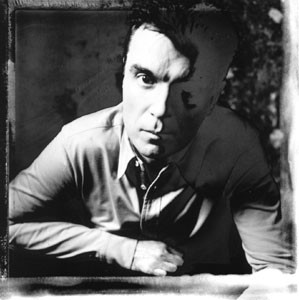
Pat Martino, Russian River Jazz Festival

0

Soul (Jazz) Survivor

The rebirth of Pat Martino

By Greg Cahill

FOR PAT MARTINO, a soul-jazz icon, it was like being “dropped cold, empty, neutral, cleansed . . . naked” into the world. In 1980, Martino–then one of the greatest jazz guitarists in the world–was diagnosed with a brain aneurysm and decided to undergo surgery after being told the condition could prove fatal. When the anesthesia wore off, Martino looked up hazily at his parents and his doctors, and tried to piece together any memory of his life.

“It left me completely empty,” says Martino, during a phone interview from Southern California. “The lengthy period for recovery contained a lot of very interesting conditions, and one of the most interesting of all was depression and a lack of decision to do something about that. That became procrastination and boredom, which became more and more amplified until it became crucial to do anything that could be done. When your back is against the wall and you’re bored to death, you’re even bored with procrastinating. When that takes place, you make a fundamental decision to do something and try to get active, just to cover the pain of it. You get busy.”

In the process, his life became more filled with interests, including the guitar. “When it did re-emerge,” he adds, “it did so on its own terms but with no consideration of career orientation. So it was pure in the sense of not being abrasively interrupted with responsibilities to competitively fulfill other people’s expectations.”

Today, Martino, 56–who performs Sept. 9 at the Russian River Jazz Festival–is once again rated as one of the finest jazz guitarists. His recent CD Pat Martino Live at Yoshi’s (Blue Note), with organist Joey DeFrancesco and drummer Billy Hart, marks a return to the same organ-trio style with which the Philadelphia native first made his name 40 years ago. “Martino’s lines are fast and clean,” Entertainment Weekly opined recently, “propelled more by intelligence than hubris,” adding that his “Blue in Green” is “mystical balladry, from someone safely returned from the dark side.”

FOR MARTINO, who is given to long philosophical discussions about life, his resurrection is the starting point of a spiritual journey from which he continues to learn. “It’s initial for you to understand the simplicity of this and the irony as well,” he says of his ability to remaster the guitar. “We begin to experience life on a continuous level, and it becomes implanted in us subliminally. It remains as a part of us from that time forward.”

Born Pat Azzara, he was first exposed to jazz through his father, Carmen “Mickey” Azzara, who sang in local clubs and briefly studied guitar with Eddie Lang. He took Pat to all the city’s hot spots to hear and meet guitarist Wes Montgomery and other musical giants.

Martino began playing guitar when he was 12 years old and left school in the 10th grade to devote himself to music. During visits to his music teacher, Martino often ran into another gifted student, sax legend John Coltrane, who would treat the youngster to hot chocolate as they talked about music.

Besides firsthand encounters with ‘Trane and Montgomery, whose album Grooveyard had “an enormous influence” on Martino, he also cites Johnny Smith, a Stan Getz associate, as an early inspiration. “He seemed to me, as a child, to understand everything about music,” Martino recalls.

Martino became actively involved with the early rock scene in Philadelphia, alongside stars like Bobby Rydell, Chubby Checker, and Bobby Darin. His first road gig was with jazz organist Charles Earland, a high school friend. His reputation soon spread among other jazz players, and he was recruited by bandleader Lloyd Price to play hits such as “Stagger Lee” onstage with well-known musicians like Slide Hampton and Red Holloway.

Martino moved to Harlem to immerse himself in the “soul jazz” played by Earland and others. The organ-trio concept had a profound influence on Martino’s rhythmic and harmonic approach, and he remained in the idiom as a sideman, gigging with Jack McDuff and Don Patterson. An icon before his 18th birthday, Martino was signed as a leader for Prestige Records when he was 20. His seminal albums from this period include classics like Strings!, Desperado, El Hombre, and Baiyina (The Clear Evidence), one of jazz’s first successful ventures into psychedelia.

IN 1976, MARTINO began experiencing the excruciating headaches that were eventually diagnosed as symptoms of his aneurysm. After his surgery and recovery, he resumed his career when he appeared in 1987 in New York, in a gig that was released on a CD with an appropriate name, The Return. He then took another hiatus when both of his parents became ill, and he didn’t record again until 1994, when he recorded Interchange and then The Maker.

These days, he’s perfectly content with this laid-back approach to his recording career. “Before the surgery, my interests were latent with competitive success. At this particular point, the music is there and it takes care of itself; it’s a vehicle that brings me opportunities to interact with others and to gain insight through social interaction.

“The opportunities that come through these things are a rainbow of color. It’s an ongoing metamorphosis that continuously surprises me–almost a form of existentialism.”

Jazz Fest Schedule

The Russian River Jazz Festival returns to Johnson’s Beach in Guerneville on Saturday and Sunday, Sept. 8-9, for a weekend of straight-ahead, smooth, and soul jazz. This year’s lineup: on Sept. 8, Bobby Caldwell, the Bob James Trio, the Pete Escovedo Latin Jazz Orchestra, the Bobby Hutcherson Quartet, and Dan Hicks and the Hot Licks; and on Sept. 9, the Jimmy Smith Quartet, Pat Martino with Joey DeFrancesco and Billy Hart, and Mark Levine and the Latin Tinge. Tickets are $35-$80 for a one- or two-day pass. 707/869-3940.

From the August 30-September 5, 2001 issue of the Northern California Bohemian.

© Metro Publishing Inc.
California Energy Crisis

0

Power Outrage

What’s an irate ratepayer to do?

By Medea Benjamin

Editor’s note: Last week, Gov. Gray Davis announced the formation of the state Public Power Authority, charged with lobbying for the construction of new power plants, finding new sources of alternative energy in the state, and encouraging consumers to conserve more electrical power. In addition, Davis said he will ask the state legislature to approve a multibillion-dollar bailout for Southern California Consolidated Edison, which critics contend is just the beginning of a much larger and even costlier public bailout for the state’s bankrupt utility companies. Consumer rights advocates say enough is enough–it’s time to give the power to the people.

I HAD LUNCH at St. Anthony’s Church earlier this summer, where they give out hundreds of free meals every day. I sat next to John Dover, a part-time painter making $6.50 an hour, who told me his energy bill had gone up to $300 for the $1,000-a-month apartment he shares with a friend. The bill put him over the edge, and by July he was homeless. On the other side of me was Robert Harper, who works as a cook. When I asked Robert if he was affected by the energy crisis, he said the owner of the restaurant was trying to save money by turning off the kitchen fan, making his time at work hot and miserable.

Finally, across the table were two friends, Donna Miller and Betty Lewis. Donna was a heroin addict, and Betty was trying to get her friend into a methadone treatment center, but there is now a long waiting list due to state budget cuts. Donna, it appears, is another victim of the giant sucking sound of billions of dollars of state budget money going to the generator companies instead of to social services that would better the lives of the people of California.

My conversations at the lunch table reminded me of the concrete ways budget cuts and rising rates created by this crisis have devastated the working poor. And when ratepayers who live in the territory of the investor-owned utilities got socked this summer with the largest rate increases in this state’s history, the impact worsened. This is especially true for larger households and for seniors who tend to stay home more and therefore use more electricity. Their bills have skyrocketed by up to 80 percent.

Sure, there are some programs run by the utility companies or the Salvation Army that offer some relief. But it is partial assistance and less than half of all eligible customers are enrolled in the programs.

It’s not just low-income households that are hurting. Small businesses that squeeze by with a razor-thin profit margin are either going out of business or being forced to pass their increased costs on to consumers. As the summer has rolled on, more and more businesses have either gone under or moved out of the state.

Little wonder so many Californians are irate at being forced to pay for the gross mismanagement of the utility companies and the greed of the energy companies that are manipulating the supply of electricity, charging outrageous wholesale prices, and reaping exorbitant profits. While energy use since 1999 has increased by a mere 4 percent, profits of the energy companies have been astronomical. In the first three months of 2001, Houston-based Dynegy posted revenues of $14.2 billion, nearly triple the $5.3 billion reported in the same period a year ago. Enron’s revenues from January through March nearly quadrupled to $50.1 billion, in contrast to revenues of $13 billion in the first three months of 2000. Compare this to the California Public Utility Commission definition of fair rates when it was regulating utility rates: cost plus 10-12 percent profit!

Pilgrim’s Progress: Medea Benjamin will speak at 4th annual Progressive Festival.

IT IS OBVIOUS that since the onset of the crisis in May 2000, the Federal Energy Regulatory Commission failed to do its job of ensuring that wholesale electricity prices are “just and reasonable.” We must pressure the legislators in Sacramento to pass a windfall profits tax. Or better yet, let’s pressure Gov. Davis to use his power of eminent domain to take over plants that have been manipulating supply.

In addition to fighting for affordable rates, we need to build an energy system that is clean and green. It’s time to wean ourselves from polluting fossil fuels and unsafe nuclear power, and instead shift massive resources into clean, renewable energy such as solar and wind. We are calling on the newly created California Power Authority to invest $2 billion in renewable energy. While this may have seemed like a massive sum a year ago, today, when we just signed long-term energy contracts worth $43 billion, $2 billion is a modest investment. We also need to support the Renewables Portfolio Legislation that is now wending its way through the Sacramento Legislature. This bill says energy wholesalers must sell at least 20 percent of their energy from renewable sources by the year 2010.

In the long term, if we want to break free of the yoke of the energy cartel and build a system of clean, affordable power, we must wrest control away from the corporations and put our energy system into public hands. More and more people are recognizing that energy is too precious a resource to be left to the vagaries of the market. They are also learning that public power is not a new or radical idea–it already exists in over 2,000 cities in the United States. Here in California, there are 31 public-power municipalities, including our largest city, Los Angeles, and our capitol city, Sacramento. These public-power entities have provided, on average, rates that are 20 percent lower than investor-owned utilities, and have run better programs supporting conservation and the use of renewable sources of energy.

If we truly want to put the needs of our people and the health of our environment before the greed of a handful of corporations, we must seriously organize. The good news is that this is starting. Consumer advocates, environmentalists, union members, representatives of religious organizations, and business owners are organizing throughout the state to take actions for a clean, affordable system under public control.

Medea Benjamin, the 2000 Green Party candidate for the U.S. Senate, is the founding director of the San Francisco-based corporate accountability group Global Exchange. She will be the keynote speaker at the Powershift rally for clean, affordable, public power to be held on the steps of the Capitol in Sacramento on Sunday, Sept. 9, from 2 to 6 p.m. For details, call 800/496-1994, ext. 251.

From the August 30-September 5, 2001 issue of the Northern California Bohemian.

© Metro Publishing Inc.

‘Captain Corelli’s Mandolin’

0

‘Italian Affair’ author fiddles with ‘Captain Corelli’s Mandolin’

Writer David Templeton takes interesting people to interesting movies in his ongoing quest for the ultimate post-film conversation. This is not a review; rather, it’s a freewheeling, tangential discussion of art, alternative ideas, and popular culture.

Laura Fraser would take a love story over a war story any day. Blood and gore, it seems, make the San Francisco author cringe and shudder, which is what she does through much of Captain Corelli’s Mandolin, the new Nicolas Cage World War II epic that swings manic-depressively between operatic scenes of misty-eyed romance and frightening moments of blood-soaked slaughter.

A stripped-down version of Louis De Berniere’s best-selling novel, the film follows the war-time romance between an Italian soldier-mandolinist (Cage) and the Greek beauty Pelagia (Penelope Cruz), whose charming little island, Cephalonia, is occupied by the Italian army for several months during the war.

Love occurs. Breasts are exposed. Bullets rip through quivering flesh.

E cosi e finito,” Fraser sighs gratefully when the credits finally roll. “And so, it is over.”

With that, we head out in search of pizza.

Fraser, 40, is the author of An Italian Affair (Pantheon, $22.00). Written in novel-esque second person, the unique travelogue recounts the writer’s sexual and spiritual adventures with a married Italian professor, whom Fraser met while mending a post-divorce broken heart on the little island of Ischia, west of Naples.

During the two-year affair, Fraser met the professor in various romantic locations around the globe. Many of those spots–like Ischia, the Aeolians, and Catalina–were islands.

But more on that later.

“The movie is, as they’d say in Italian, esagerato,” pronounces Fraser, sipping a beer while waiting for our to arrive. “It was a big, operatic tearjerker where every emotion is exaggerated–the love speeches, the earthquakes–everything is overblown.”

Overblown, in particular, are the stereotyped portrayals of the Greeks and Italians.

“Especially the Italians,” she says. “I mean. the first thing out of Cage’s mouth is ‘Bella Bambina!’ Then there’s all that, ‘We Italians, we love food, and wine, and making love’ stuff. Hollywood has a tendency to look at all Italians that way.”

“It’s not just Hollywood,” I point out. “Italian travel brochures tend to push that image as well.”

“True,” she allows. “Don’t get me wrong. Italians do put a high priority on eating and drinking and making love. They live their lives with a sense of gusto that American’s don’t. It’s one of the things I love about Italy. But that’s not all there is to Italians. They have a serious, dark side too.”

“How did Cage rate as an Italian?” I ask.

“Well, of course, he is an Italian-American,” she reminds me. “Actually, his accent wasn’t that bad.”

She asks if I’ve ever seen the film Mediterraneo, the 1991 Oscar winner about a band of Italian soldiers who are transformed from killers into human beings while stationed on a small Greek island. That film, she argues, was a better representation of Italians, and also showed the transformative power of beautiful places, particularly of islands.

“Islands, says Fraser, “are great places to fall in love. In the book, just going to Italy, to get over heartbreak, wasn’t enough. I had to go to an island. On an island, there’s a sense of leaving the rest of the world. It wasn’t until I got on the boat to Ischia that I truly believed I could leave something behind me, could leave some pain behind me.

And, evidently, find something as well.

“I think that, to fall in love, you have to have a sense that you’ve stepped outside your regular world,” Fraser says. “There’s something about a place like Catalina Island or the Aeolian Islands, north of Sicily, that gives you a sense of space, that makes you feel vulnerable, that makes it possible to open up to another person.”

Corelli and Pelagia might agree. Had they met in, say, San Francisco, who knows if they’d have even noticed each other?

“Though, as far as cities go,” Fraser says, “San Francisco is not a bad place to fall in love.”

“I think it’s really hard to fall in love in the middle of daily life,” Fraser muses, sliding a slice of pizza from the platter to her plate. “In daily life, you’re always worried about work and bills and traffic. When you run away to a beautiful place, when you go to the outdoors, those everyday things are placed in a different perspective.

“Every time I’ve ever fallen in love,” she adds, “it was outdoors.”

She makes a quick list of places where, based on her own experiences, falling in love is easy to do. To those places she describes in her book, she adds Canyonlands, in Utah, anywhere in Colorado, and Pt. Reyes.

“Though Golden Gate park works in a pinch,” she laughs.

“When you are in nature,” Fraser says, “you are stripped down to the person you are underneath the person you carry around all day. You need to be in a place where you feel awed. You have to step outside of yourself a little bit to fall in love. Awe does that to you.

“One of the things the professor said to me, when we were on one of those islands, is ‘The most important things never change. The sea, the sky, sex, olive oil, the basic things of life.’

“Finding yourself in a raw and beautiful place brings you back to what’s elemental,” Fraser concludes. “That in itself can heal a heart.”

From the August 30-September 5, 2001 issue of the Northern California Bohemian.

© Metro Publishing Inc.

Open Mic

0

Slow & Steady

By Jim Winston

TO PROTECT our environment and natural resources, we must manage our growth more responsibly. Sonoma County cities have been growing so rapidly that we seem to be outpacing our infrastructure and carrying capacity, which negatively affects our quality of life.

I’m sure this is no surprise to any of us. So‚ how can we responsibly manage our growth? Over the years, we have left growth management up to our elected officials; in return, we have gridlock traffic, reduced air quality, damage to our rivers, urban sprawl, and wastewater and freshwater problems. We must take growth-management power away from our elected officials and shift the power back to the voters. In November 2000, Healdsburg voters did just that. By a 56 percent margin, they passed Measure M, a growth-management initiative that restricted residential building permits to only 30 houses per year.

In past years, Healdsburg built more than 100 market-rate houses annually. Measure M focused only on market-rate housing; it exempted all low-income and affordable housing from the cap. Passage of Measure M brought the strictest slow-growth policies that exist in the state. As the author of Measure M, I am proud to say it’s working. Developers are starting to focus on the construction of affordable housing, which I feel will bring more opportunities to all segments of our population.

Growth-management initiatives are a hard-line approach to getting the attention of our elected officials. Unfortunately, these initiatives seem to be the only tool left to save our cities from urban sprawl. While it’s unreasonable to try to stop growth, we do need to manage growth in a visionary way. I have that vision for Healdsburg and other cities. What vision do you have for your city?

If we think progressively, we can make significant changes and manage growth wisely. I am now consulting with growth-control advocates in Windsor and Santa Rosa to place growth-management initiatives on the November 2002 ballot. I hope growth-management advocates in other cities will also be proactive in bringing real growth management to their cities.

Because I feel passionate about land use and growth management, I offer my services pro bono.

You will find growth-management initiatives are relatively easy to create–and they work.

Jim Winston is a Healdsburg activist.

For more information on the slow-growth movement, click on to citizensinitiative.homestead.com/slowgrowth.html.

From the August 30-September 5, 2001 issue of the Northern California Bohemian.

© Metro Publishing Inc.

Arts Etc

0

HBO Bound

WHAT DOES MARIN County singer-songwriter Roberta Donnay have in common with mobster Tony Soprano? Just this: the Grammy-nominated Donnay may also be appearing on HBO this fall. On Sept. 3, Donnay performs at a special HBO concert being filmed for the network’s Reverb program. The Black Crowes are the focus of the show, but their performance is being shot elsewhere. Orixa is among the Bay Area acts scheduled to perform with Donnay at the Labor Day show, which starts at 8 p.m. at the Paradise Lounge, 308 Folsom St., San Francisco. No word yet on when the show will air.

Erotica Alert

“My intent is definitely to push the boundaries,” Soundscape owner Marc Silver says of his Erotic Art Exhibit. For the seventh year, Silver is using his Santa Rosa audio-video store as a gallery for explicit artwork. The exhibit features some graphic images that even Silver acknowledges may cross the boundaries of good taste–including a piece by an Eastern European artist depicting a nun masturbating with a crucifix. The show opens with a reception on Saturday, Sept. 1, at 5 p.m. at Soundscape’s new location at 1044 Fourth St.

From the August 30-September 5, 2001 issue of the Northern California Bohemian.

© Metro Publishing Inc.

Medea Benjamin

0

Pilgrim’s Progress

Medea Benjamin will speak at 4th annual Progressive Festival

By Greg Cahill

Medea Benjamin will speak Sunday, Sept. 2, at the fourth annual Progressive Festival, at Walnut Park on the corner of Petaluma Boulevard South and D Street in Petaluma. Speakers at this year’s festival will focus on community issues: the energy crisis, a living wage, health care, toxic spraying, and water, as well as perspectives on media reporting of international events. The event is billed as a Labor Day celebration of the people who do the work. About 50 social justice, environmental, and community organizations will have booths/tables with information.

Andrea Lewis, KPFA-FM co-host of The Morning Show, will MC this year’s event. Other speakers include Richard Becker, co-director of the International Action Center, founded by former Attorney General Ramsey Clark; Salvador Mendoza, head of the United Farm Workers in Sonoma County; Peter Phillips, director of Project Censored at Sonoma State University; Betty Woods, a representative of the California Nurses Association; Miguel “Gavilan”Molina, a Graton resident who is the programmer of KPFA’s La Onda Bahita; Joel Beinin, professor of Middle East history at Stanford University; Petaluma City Councilmember Pam Torliatt, who will talk about Sonoma County’s water problems and how to fix them without harming the Russian River; Bohemian contributing writer Shepherd Bliss of the No Spray Action Network; Martin Bennett of the North Bay Living-Wage Campaign; and folksingers U. Utah Phillips and Faith Petrick.

The fourth annual Progressive Festival, running from 11 a.m. to 6 p.m., is sponsored by the Petaluma Progressives and the Peace and Justice Center of Sonoma County. Admission is free. For more information, or if your organization would like to participate with a table at the event, call 707/763-8134.

From the August 30-September 5, 2001 issue of the Northern California Bohemian.

© Metro Publishing Inc.

Organic Restaurants

Photograph by Rory McNamara Green Kitchens 'Organic' is the word in restaurant dining By Paula Harris THERE'S NO DOUBT that the phenomenon is taking root; restaurant chefs are becoming more committed to buying organic. According to a 1997 survey by Food and Wine magazine, 76 percent of chefs questioned...

Organic Wines

Fruit of the Vine Organic wines fight for respect in the marketplace By Nathan Hill and Nicole M. DiDomenico PICTURE THIS: On a moonlit night after a hard day, you pour yourself some wine, swirl it around the glass. Raising it slowly to your lips, you notice the crisp redolence of...

Kenneth Cleaver

Consumer Correspondent Gap Inc. One Harrison Street San Francisco, CA 94105 Dear Gap Inc.: It appears that Gap Inc. has attained a state of cultural prominence seconded only by such venerable institutions as Coca-Cola, McDonald's, and the Mormon Church. Please do not mistake this letter as an homage...

‘Bread and Tulips’

Canal Zone Trip to Venice leads to old-fashioned romance By THE DIFFERENCE between charm and irritation is like the difference between a person who quotes a few brief lines of Italian poetry and one who sits down and reads Ariosto's Orlando Furioso in its entirity. The Italian import Bread and Tulips...

Pat Martino, Russian River Jazz Festival

Soul (Jazz) Survivor The rebirth of Pat Martino By Greg Cahill FOR PAT MARTINO, a soul-jazz icon, it was like being "dropped cold, empty, neutral, cleansed . . . naked" into the world. In 1980, Martino--then one of the greatest jazz guitarists in the world--was diagnosed with a brain aneurysm and decided...

California Energy Crisis

Power Outrage What's an irate ratepayer to do? By Medea Benjamin Editor's note: Last week, Gov. Gray Davis announced the formation of the state Public Power Authority, charged with lobbying for the construction of new power plants, finding new sources of alternative energy in the state, and encouraging consumers to...

‘Captain Corelli’s Mandolin’

'Italian Affair' author fiddles with 'Captain Corelli's Mandolin' Writer David Templeton takes interesting people to interesting movies in his ongoing quest for the ultimate post-film conversation. This is not a review; rather, it's a freewheeling, tangential discussion of art, alternative ideas, and popular culture. Laura Fraser would take a love story...

Open Mic

Slow & Steady By Jim Winston TO PROTECT our environment and natural resources, we must manage our growth more responsibly. Sonoma County cities have been growing so rapidly that we seem to be outpacing our infrastructure and carrying capacity, which negatively affects our quality of life. I'm sure this is no...

Arts Etc

HBO Bound WHAT DOES MARIN County singer-songwriter Roberta Donnay have in common with mobster Tony Soprano? Just this: the Grammy-nominated Donnay may also be appearing on HBO this fall. On Sept. 3, Donnay performs at a special HBO concert being filmed for the network's Reverb program. The Black Crowes are the focus of the show, but their...

Medea Benjamin

Pilgrim's Progress Medea Benjamin will speak at 4th annual Progressive Festival By Greg Cahill Medea Benjamin will speak Sunday, Sept. 2, at the fourth annual Progressive Festival, at Walnut Park on the corner of Petaluma Boulevard South and D Street in Petaluma. Speakers at this year's festival will focus on community...
11,084FansLike
4,446FollowersFollow
6,928FollowersFollow