Cotati Accordion Festival

0

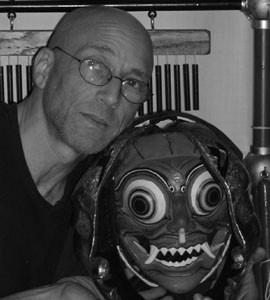
The New Face of the Accordion: Musician Mark Growden wields his accordion with the respect it deserves.

Photograph by Alcina Horstman

Pump and Squeeze

Leave your knickers and your kitsch at home –accordion players take over Cotati

By Jeff Chorney

That the accordion is no longer dorky isn’t really noteworthy to Isabel Douglass or Mark Growden, although it’s good for the rest of us to know. Douglass plays the squeeze box in a romantic ensemble called Amaldecor. Growden leads three eclectic bands in similar, arm-pumping fashion. To them, the accordion is simply a means to make known the music churning through their heads.

Not everyone sees the instrument that way.

A short history of the modern attitude toward accordions would probably begin early last century, well before the electric guitar and well before anything could be called kitsch. Waltz, klezmer, Gypsy, tango–all were spoken in reeds, keys, chords, and buttons, and mostly by men wearing vests and funny pants who wielded their instruments like medicine balls. Fast forward through the decades, and the accordion falls out of favor with popular musicians though remaining a favorite of street and folk artists.

The accordion became less used mostly because popular music itself changed. Rock and jazz took over, and music made with accordions was banished to that section of the music store where most people wind up only when lost.

Its place there shouldn’t be undervalued. Anyone who has ever swung to zydeco or found themselves secretly enjoying Mexican radio while cruising through the Central Valley knows that, for some genres, the accordion never waxed or waned.

But when it comes to innovative, popular music, the accordion’s place is a little more complicated. A couple decades ago, the instrument started creeping back into popular formats, mostly as novelty or kitsch. While not exactly back-of-the-record-store stuff, it wasn’t Top 40 either. On Tom Waits’ 1987 album Frank’s Wild Years, which has Waits playing an accordion on its cover, the instrument is used on a few songs.

Some players, including Growden, don’t think Waits is the best example of accordion mainstreaming. Instead, he points to local musicians taking up accordions for real evidence of newfound popularity.

At any rate, for now we can agree that, Waits excepted, years ago only geeks and goobers played and listened to accordions. And if the rest of us were involved with the things, we did it just because it was kitschy enough to be cool. Cool in the same way that a grown woman carrying a Sesame Street lunch box is cool, or hosting B-movie pizza parties or wearing a Leave It to Beaver T-shirt.

Fast forward to 2002, and the accordion’s reputation has changed again. According to a new generation of players, the kitsch value is gone. Not just gone, but now irritating to artists who, although they don’t need to be taken too seriously themselves, at least want their music to be.

Understand? Go listen to Douglass’ and Growden’s bands. Both are playing at the 12th annual Cotati Accordion Festival, which takes place Aug. 24 and 25.

“Even people onstage can be really kitschy with [the accordion]. That just drives me crazy,” Growden says.

Growden, an energetic 32-year-old who lives in Oakland, reserves particular derision for performers who play up the cheese factor. Throwing on a mock shit-eating, crowd-pleasing grin, Growden rises in his chair to mimic a vest-wearing doofus, pumping bellows in the air in front of him. That brand of performer helps keep the accordion in the realm of the silly, where the instrument no longer belongs, he says.

Mark Growden’s band Electric Piñata, which formed about three years ago, will close the festival’s first day. He has two other backing bands, the Acoustic Piñata and the Prosthetic Piñata (it’s a cover band, get it?). Growden also performs solo.

His sound is hard to pigeonhole. Some have called him a more cabaret Tom Waits. Others have given him an “at-the-crossroads-of” label that places him in between folk, avant-garde, and who-knows-what. A typical show might have him on accordion, banjo, electric guitar, and lap steel guitar.

Growden, who also teaches music to children, is one of those rare musicians who plays a variety of instruments. “When I’m onstage and I’m performing, it’s all about the music; it has nothing to do with the instrument. The fact that I’m playing the accordion is totally irrelevant to me,” he says.

That’s why it irritates him that some still use the instrument as a prop.

Growden was introduced to music in school. For a long time, he concentrated on the saxophone and bass clarinet. He moved to the Bay Area about 10 years ago and came to the accordion after all of his other instruments were stolen.

That was about seven years ago. With nothing at home left to play, Growden found an old accordion in the basement of the elementary school where he was working.

This is Growden’s first year at the festival. It’s also the first time for Douglass’ band, Amaldecor. Don’t bother trying to figure out the name. Douglass says it’s a bastardization of a French phrase that means “heartache.” The five band members play old French and Eastern European tunes, occasionally delving into klezmer and jazz.

Douglass, whose first instrument was the piano, is 23 and has been playing accordion for seven years. She works at Boaz Accordions in Berkeley, and both she and Growden speak highly of owner Rubin Boaz, who repairs and sells accordions. Cotati Festival cofounder Clifton Buck-Kauffman gives much of the credit for the event’s ability to attract high-caliber performers to Boaz and his connections.

After picking up the instrument because she was traveling and wanted something portable, Douglass hooked up with an old Gypsy man in Romania. They played–and drank heavily–about five hours a day for a month, even though they didn’t speak the same language, Douglass says.

“I started playing music with the idea of it being something you do around the fire. It was an easy way to exchange [ideas] and meet people,” she says.

While that sentiment might itself sound kitschy, it’s surely one of the reasons why people continue to flock to Cotati’s festival. Besides modern sounds like Growden and Douglass, this year’s festival features performers playing ethnic music, such as Rahman Asadollahi, from Azerbaijan; Tameem, whose family is from Afghanistan; and Ramon Trujillo and the Mariachi Jalisco.

There are also some more folky gigs, as well as local performers, such as Petaluma’s O’Grady Family, who probably have never heard of Tom Waits and who brag about watching The Lawrence Welk Show together.

And, of course, there’s Dick Contino, who is to the accordion what Dick Dale is to surf guitar–a cheeseball virtuoso who, no matter how old he gets, still gets props for inventing a genre.

If you have trouble finding the festival, just look for the life-size bronze statue of cofounder Jim Boggio, another virtuoso who was playing in a local zydeco band when he met Buck-Kauffman, co-owner of Prairie Sun Studios.

The pair hatched the idea in a local bar. Boggio died a few years later. Buck-Kauffman likes to say that the statue is so realistic because they just dipped Boggio in bronze and mounted him in the park after he passed on.

Now the festival is a small town’s wet dream (it attracts 3,500 to 4,000 people each day; Cotati’s population is about 6,200). Not only does the multicultural event put Cotati on the map, it also raises tens of thousands of dollars each year for several community groups.

Buck-Kauffman says it works so well for a fairly simple reason: “Because the community is involved. When the [nonprofit] beneficiaries get so much money, there’s really an impetus for them to get involved. It’s just interwoven into the fabric of the community.” Among other things, those groups provide volunteers to staff the festival.

By performing there, musicians like Growden and Douglass become part of that community, expanding its boundaries, geographically and otherwise. Look for them onstage, but don’t expect them to be speaking kitsch. Instead, they’ll just be pumping away, all the while improving the reputation of the poor, misunderstood accordion and its reeds, keys, chords, and buttons.

The 12th Annual Cotati Accordion Festival takes place Aug. 24-25, 9:30am-7pm, at La Plaza Park, Cotati. $10 one-day admission, $18 two-day admission; free for children under 15. 707.664.0444. www.cotatifest.com.

From the August 22-28, 2002 issue of the North Bay Bohemian.

© Metro Publishing Inc.

‘Simone’

Real Enough to Touch: The mysterious Simone is a director’s dream: no tantrums or outrageous demands.

Idol Worship

Al Pacino finds his Galatea in ‘Simone’

By

Lately Al Pacino has been responding less and less to his fellow actors; that flickering, lizardlike gaze is clouding up. Pacino is better than usual in the comedy Simone because he has so many scenes in his own company.

Pacino plays Viktor Taransky, a director on the skids, who was fired from his own picture thanks to a conceited star (Winona Ryder). He’s approached by a mad computer genius named Henry Aleno, played by Elias Koteas. The madman has a gob of cotton in his eye, held in by a patch. Metastasized eye cancer, he explains. In his last few days of life, he wants to give this cult director he loves a present: software containing a synthetic performer named “Simone.” (A young actress named Rachel Roberts is the source for the synthetic girl.)

It dawns on Taransky that he can outwit the egotistical stars who have ruined his career–all those “supermodels with SAG cards.” He can use Simone to finish his interrupted project, a movie tautologically titled Eternity Forever.

Simone is an enormous success, and the fact that she won’t appear in public makes her all the more fascinating. A pair of bumbling detectives (Pruitt Taylor Vince and Jason Schwartzman) try to track her down but can’t expose the synthespian.

Simone is based on an old story. In the Greek myth, Pygmalion carves a marble statue of the goddess of beauty, Aphrodite, and falls in love with it. The goddess finds out and grants the statue life. The former statue takes the name Galatea, and creator and creation live happily ever after.

The myth’s happy ending confounds our expectations. We’re raised with the stern warning not to worship idols. And ever since George Bernard Shaw’s play Pygmalion (the source for My Fair Lady), we also suspect that a girl shaped by a mentor must rebel.

Director Andrew Niccol, who did the well-conceived but far too mannered Gattaca and scripted The Truman Show, is satirizing some of his own ideas about artistic manipulation. Taransky isn’t just a misunderstood genius. The clips we see of his films look excruciatingly arty; it’s easy to understand why they’re not selling tickets.

To contrast the grating aestheticism of Taransky’s films, Niccol cleverly uses backgrounds of vintage Hollywood décor, circa the 1920s, when designers went nuts over Spanish colonial. Simone is so full of Moorish tiles and courtyard fountains that it looks like it was shot in Granada.

The 1920s references recall the movie industry in the days when it was most seriously prone to illusion and star creation. That Spanish fanciness also refers to the age of Garbo, when reticence was more exciting than total media exposure.

It’s certain that Taransky’s adoring young daughter (Evan Rachel Wood) will be the one to expose Simone as an electronic phantom, but why does it take so long? And why does her mother (Catherine Keener) also think Simone is so precious?

Keener keeps Pacino off-balance, while his eerily perfect imaginary co-star exposes Pacino’s tendency toward hermetic acting. That’s why the slumping ending is redeemed by the first two acts. For once in a long time, Pacino doesn’t seem like a synthespian himself.

‘Simone’ opens Friday, Aug. 23, in the North Bay.

From the August 22-28, 2002 issue of the North Bay Bohemian.

© Metro Publishing Inc.
Pearl’s Home Style Cooking

0

Look, No Hands: Pearl’s owner, Sylvia Park, pours on the creamy goodness.

Pearl Jam

Pearl’s Home Style Cooking, where the world is not your oyster

By Sara Bir

Before we get too far into this story, I need to say that I bruised my tailbone when I fell out of my raft while white-water rafting recently, and since then I have not been the same. Beyond waddling around in a painkiller-induced head-haze, I’ve noticed that my appetite has altered. Like a TV show where a character gets bonked on the head and assumes a new personality, I get cracked in the ass and crave canned foods. The other night, I went to the grocery store specifically to buy a can of Chef Boyardee beef ravioli. I had been thinking about it all day, in fact.

And I can’t even walk right. I was shuffling around like Tim Conway’s old-man character on The Carol Burnett Show, but since then I’ve discovered that waddling covers more ground. I sure as hell can’t run, and running is my main artillery against my broken ass getting bigger from all these restaurant reviews.

So I go running to defend myself against obesity, but mainly because it feels good to run and because running is the time when I come up with all of my wonderful writing ideas (like, “Hey! I’ll start off this restaurant review by talking about my butt!”). But now I have no dynamic rumination time, only waddling time.

Now you can envision the frame of brain and body I was in during my experience with Pearl’s Home Style Cooking in Sonoma. I craved canned food and my mind was on my behind, not the most professional of composures. Unfortunately, Pearl’s didn’t do much to help either the butt or the composure.

Pearl’s opened up early in 2000 in the Sonoma Market shopping center. Even with joints like the Breakaway Cafe and the Garden Court, I can see how Sonoma could be in the market for clean, unassuming, unfancy, hearty food, what with all the fancy bistros and restaurants there–even wine country tourists need regular American-style breakfasts. And I had heard Pearl’s was a good breakfast place.

I love a big breakfast. I love eggs and potatoes and toast and cured pork products and cups and cups of coffee. Big breakfasts, though, are curious. Like alcohol, they feel wonderful at the time, and you only want more–until suddenly your stomach lurches, and then comes the breakfast hangover that will poison you for the rest of the day.

Combine an alcohol hangover with a big breakfast, however, and the two somehow manage to cancel each other out. I figure it accounts for the English not being extinct by now; they are both drinkers and eaters of the biggest breakfasts in the world.

My first breakfast at Pearl’s was on a weekday, around 9-ish. I strolled in after the morning rush. Most of the folks in there looked to be late-morning regulars or day trippers through town. I like the interior. It has a classic home-cookin’ cafe ambiance, with a few ’50s kitschy doohickeys here and there, but nothing too cheesy or neodiner slick. The bald dude at the counter is very friendly. Everyone there is, actually; it’s quite noticeable.

I got the daily scramble (veggie) and a coffee. The coffee is served in these deep, cobalt-blue mugs, and it’s a big step above typical breakfast-joint coffee. I rooted through the Press Democrat I had bought to keep me company and sipped my good-quality coffee out of the cobalt-blue mug.

And then disaster struck! The food section was missing! You read the paper and look forward to the food section on Wednesday all week long, and then when you actually splurge the 35 cents to buy your own paper instead of borrowing your editor’s copy, the food section is missing!

Muddled and downhearted because of my missing food section, I contemplated my eggs. They were not what I had anticipated. The veggie scramble was more of a frittata than a scramble, retaining the shape of the pan it was cooked in rather than being in loose, creamy curds. And there was a ton of melted cheddar cheese on top. You could have peeled it off in a single layer. Eggs are not pizza! Despite peppers, onions, tomatoes, and mushrooms, plus all that cheese, it didn’t taste like much.

The hash browns were the saving grace. I love hash browns when they are made correctly. When I ordered, the friendly waitress asked, “Would you like your hash browns extra crispy?” And I said, “Why, yes! I would!” It’s actually very difficult to make good hash browns–I can’t, at least. And neither can most breakfast places.

But Pearl’s hash browns were a deep and even golden brown, all fused together in one crispy cake. I dumped tons of ketchup all over them and dug in. But even after only eating about half of my breakfast, I wound up being full all day long–which was economical, yes, but a bummer. Waddling around, I felt like a bursting slug.

A few days later, I returned and got a short stack of French toast with a side of chicken-apple sausage ($6.85). How short is a short stack? Try two little triangles of bread, tiny and stark against the whiteness of the plate. Turns out my shorted stack was just fine being short, because I would not have been able to eat more than one slice’s worth: this French toast looked and tasted deep-fried. That’s what they do with those French-toast sticks at fast-food restaurants. The batter on the outside was unappealingly dark and crunchy, while the inside was oily and not custardy at all. A real drag.

The sausage helped little–four greasy links lined up on the plate next to my deep-fried French toast. I had ordered a side of chicken-apple sausage in the interest of going the extra mile as a working gourmet. The links tasted like regular sausage, only for 90 cents extra. Why is chicken-apple sausage more expensive than regular pork sausage? Both chicken and apples cost less per pound than pork. I don’t see what the big deal is.

Since Pearl’s serves dinner and lunch too, it was only right to have some nonbreakfast food. I was hoping it would be an improvement. I scheduled a Mr. Bir du Jour and we had a late lunch: he, a BLT ($5.50); me, a grilled chicken sandwich ($6.50). Both came with sides of fries.

My sandwich was a big, plump chicken breast with lettuce, tomato, and cheese, just as you would expect. What you would not expect was that it was on focaccia, though it didn’t add any special dimensions to the experience. You can’t dress up a plain chicken sandwich just by throwing it on fancy bread. The chicken itself was tender and moist, but it needed of some kind of seasoning. The fries were pleasing, crisp, and not soggy at all. Pearl’s does seem to have a way with potatoes.

I asked Mr. Bir du Jour how his sandwich was. He said, “Um, fine. The bacon’s a little fatty, but bacon is fatty.” Then he said, “Why are we here again? Why are you reviewing this place?”

I didn’t know the answer anymore. “We could have just gone to Denny’s,” he said. Hmm. Denny’s staff is not as nice, their coffee is not as good and isn’t served in big, cobalt-blue mugs, and their hash browns can no way be as good as Pearl’s. But Denny’s does not deep-fry their French toast. Pearl’s calls itself a “homestyle cooking” restaurant; you might do better to do some home cooking yourself. If you have recently bruised your tailbone, let me suggest a can of beef ravioli. You won’t be at Pearl’s, but the world will be your oyster.

Pearl’s Home Style Cooking, 561 Fifth St. West,Sonoma. Breakfast and lunch daily, 7am-2:30pm; dinner Wednesday-Saturday, 5pm-9pm. 707.996.1783.

From the August 22-28, 2002 issue of the North Bay Bohemian.

© Metro Publishing Inc.
Burning Man

0

B-Man Bylaws

The million commandments of radical self-expression

By Gretchen Giles

“Please keep in mind that you are responsible for yourself at all times in every regard once you enter Black Rock City. . . . Everyone is requested to help ensure our collective survival by following very simple rules relating to public safety and community well-being. Everyone is expected to abide by these standards. . . . Any violation of these requirements could result in ejection from the community.”

–Burning Man Survival Guide, 2002

Before reading any further, please take a moment to rehydrate yourself. That’s right, get a glass or a bottle of water and chug it. Wipe mouth. Repeat. Good, now you’re ready to contemplate living for a week with 25,000 other people on a high desert playa where temperatures swoop up to the occasional three figures and nary a spigot exists.

Burning Man is an outdoor temple to the concept of radical self-expression, but it is emphatically not an exercise in anarchy. Such radicalism is best attained through rigorous adherence to a rather lengthy set of rules and regulations governing behavior, comportment, and self-sufficiency. The Burning Man organization demands that you read their survival guide regardless of how many times you’ve been, and it truly offers more admonitions and tenets for behavior than any other outdoor festival you might ever attend. Those fogies who think that an announcement to avoid the bad acid that’s going around is too restrictive may wish to rethink this summer jaunt to the Nevada desert.

We hereby offer the Compleat Newbie’s Guide to Burning Man, a quick summation of what you will and won’t be doing during this week-long, art-drenched bacchanalia of free-thinking fun. Please do have another sip.

During your stay Aug. 26-Sept. 2 in the instant nation of Black Rock City, you may be purely nude or covered in body paint or draped solely in an obi you’ve fashioned from the flag of the former Czech Republic. Perhaps you’ll be moved to dress as a fetishist soccer player or pagan nun or New Age ancient mariner. There are seven full days to consider, and it’s your call.

You won’t, however, be sporting such little floaty bits as sequins, glitter, or feather boas. At Burning Man, such finery is filed under “trash, other people’s,” and your exploratory dress-up romp will earn you all-around censure and plenty of extra time grubbing about the playa trying to pick it all up again.

You will be wearing shoes with socks. Not just sandals and not bare feet, unless you’d like to get a rampant case of alkali dust chap more commonly known as “playa foot.” Pack some Dr. Bronner’s peppermint soap to soak those dogs; it’s biodegradable and smells nice too. You should also have at least three pairs of clean, new, extra socks–over and above your ordinary sock needs–to give away or wear as you like.

Your dog will remain at home. So will your guns, your drug habit, and your occasional desire to engage in public sex acts.

Feeling a little cranky? Please pause and take another gulp of water.

If you have a menstrual period scheduled for the end of August, pack extra Zip-lock baggies. If you never intend to menstruate again or otherwise, pack extra Zip-lock baggies. If you know no one who knows no one who’s ever even menstruated once, pack extra Zip-lock baggies.

Perhaps for the first time in your life, you’ll be paying lavish attention to single-ply toilet paper. If you wish to be popular with thousands of new friends, you will often have single-ply toilet paper actually upon your person. Single-ply toilet paper will also be the single thing to accompany your exertions into the many problematic port-a-potties that ring the playa.

You won’t sell anything during your stay at Burning Man, nor will you purchase anything with ordinary U.S. currency beyond ice and espresso, the twin staffs of life. Bring the intangible or the useful–socks!–to utilize in the trade, barter, and gifting society you will be joining. Everything that you need to eat, drink, wear, make art with, listen to, read, and sleep on, in, or with will arrive with you. Every pull tab, bit of plastic, food waste, pork rind wrapper, ciggie butt, employed condom, magazine subscription card, and empty sunscreen bottle will depart with you.

Remember that if you give someone a watermelon, they will have to carry, store, eat, and dispose of the remains of said watermelon. Give them a poem or a massage or a kiss or a drink or a handful of sand and a piece of melon instead. Take their chewed rind and spitted seeds gratefully and put them into the compost pile you intend to bring home with you in a special, lidded, plastic garbage can that you’ve brought exactly for this purpose. Consider the brevity of seedless grapes.

If you smoke, carry an ashtray. If you eat, leave extra packaging at home. Recycle in Black Rock City, and have weighted or tied garbage bags–secured so that they can’t blow away–at the ready. Schedule two hours of free time during the lengthy exodus at the event’s conclusion to cheerfully help clean up the desert.

Don’t dump your trash in the nearby towns of Empire and Gerlach, because they can’t handle the influx. Giggle only in the privacy of your car, not in the town grocery store, upon realizing that Gerlach can be correctly pronounced as “Girl Lack.” Consider donating a daughter to that town in the future.

If your garage doesn’t contain an RV or trailer but your desires do, you will cover up the name of the rental company upon arrival. You won’t embarrass yourself and others by sporting a G*P T-shirt that screams its logo across your chest, nor will you wear the ubiquitous N**e check mark on your cap. Such items may be humbly turned inside out or discarded in strict favor of pagan nun gear.

Yet reverse snobbery is to be avoided at all costs. Should some hapless souls stroll misguidedly by clad in such T-shirts or caps, you will not scream obscenities at them or otherwise demean their essential humanity. You will instead offer them from your satchel an extra wimple woven from fresh reeds and sunflowers. Participation is everything, and even those seemingly wandering about in corporate symbols gawking at nekkid people may be subversively attempting an art you don’t know about. Ask.

(The sole exception to the “essential humanity” rule are ravers, who are universally shunned and detested. You, however, will strive to be kind even to them.)

Excuse yourself for a pee. Was it clear? Excellent. Have another sip.

Unless the Department of Mutant Vehicles has designated your vehicle an “art car,” it will remain parked for the entire length of your stay. Gifted people have at least two extra sets of car keys scattered somewhere where they can be easily retrieved. Those most intelligent of all simply keep their keys stored in the ignition, where they belong.

Your funky old cruiser bicycle is the best way to tour the many miles of shimmering Burning Man diaspora. String LED lights on the handlebars or invest in a cheap headlamp. Night biking will be your gig for the next week, and being able to see and be seen is a distinct advantage.

If your shelter is roped, flag those ropes with reflective tape. If your structure is held down with rebar, duct-tape soft Dubya dolls on the steel ends or cover them with liter bottles. Think ugly ankle gashes stinging with alkali dust. Think headlong bikes colliding with night-shrouded tent ropes.

This year’s nautical theme, the “Floating World,” demands that your math mind get a short workout. All directions are laid along the smarty-pants lines of latitude and longitude. Take a minute to figure this out, and save yourself the seasick stomach of someone who can’t find her way home again.

The politics of fire and water–yes, good reminder; please take a drink–are huge. Suffice it to say that neither should touch the playa floor. Fire may only be ignited on the many burn platforms erected for this purpose. And please pick up that fallen match.

Police officers of all denominations are among Burning Man’s bubbling crowd. Some of them will be undercover. They can and will arrest you if so inclined. Your tent, teepee, RV, or yurt, however, is your residence while in BRC, with all the civil rights and liberties–however rapidly devolving–of your residence at home. You do not have to allow entry. The Black Rock Rangers with their distinctive Burning Man symbol are volunteer mediators, not officers. Use them early and often to help diffuse potential problems with other Burners.

When packing, don’t forget your art, a hat, a good camping knife, extra batteries, rope, earplugs, sunscreen, Wet Wipes, warm and cool clothes, something to write with, Vitamin C hard candies, a first-aid kit, scarves, money for ice and coffee, and a well-prepared sense of forgiveness and wonder.

Because after you’ve settled in and adhered to the many, many rules designed to allow almost 30,000 people to be wholly free all at the same time, you’ll find that you can be too. But come on, please–have just one more sip.

Download the Burning Man Survival Guide from www.burningman.com.

From the August 22-28, 2002 issue of the North Bay Bohemian.

© Metro Publishing Inc.

Fall Arts

0

It’s the Season: As a new season blows into town, Ned Kahn’s sculptures (shown here:’Wind Cube’), on display at SMOVA, reflect the changing winds.

Falling . . .

A season’s worth of arts and entertainment

By Davina Baum and Sara Bir

Ahh, fall. It makes you think of art, does it not? And there’s no shortage of culture in the North Bay for you to run out and plunge yourself into. So dive in!

August

Sausalito Art Festival

Sausalito Art Festival

This most celebrated of events has art enthusiasts flocking to little Sausalito over Labor Day weekend, reveling in both the magnificence of the city and the beauty of the art that bedecks it. This year, the festival’s 50th anniversary will be celebrated in style, with 20,000 works of art in one place, as well as 30 performers on three stages. Entertainment includes the revered New Orleans funkster Dr. John, the Blind Boys of Alabama, and the local, hard-working Jerry Hannon Band. Aug. 31-Sept. 2. Downtown Sausalito. $5-$20. 415.331.3757. www.sausalitoartfestival.org.

September

Sonoma County Reads!

The Grapes of Wrath is a long book–455 pages, to be exact. So start now. And why? Well, besides being a hallmark of modern American literature, The Grapes of Wrath is the book at the center of Sonoma County Reads!, a month-long literary event that encourages library usage, promotes good reading habits, and builds community togetherness. The Sonoma County Library has purchased 1,000 copies of the book, so getting your hands on one should not be a problem. Then, as you read, participate in a variety of related activities, including book discussions, movie screenings, and sing-alongs. Information on the related events will be posted at www.sonomalibrary.org.

Marin Poetry Center Summer Traveling Show

So why is this thing listed here if it’s a summer traveling show? I’ll tell you why: Autumn begins on Sept. 23. So in the late summer/early fall, gather with lyrically minded poets as they share eclectic verse in one of the largest poetry reading series to be found. Hear what your neighbors–from workshop addicts to accomplished and well-published writers–are feeling. Call 415.893.1447 or visit www.marinpoetrycenter.com for times, dates, and locations.

Charles M. Schulz Museum

If you ain’t heard already, there is now a big, shiny new museum for the millions of “Peanuts” fans in the world. Remember when the Rock and Roll Hall of Fame opened up in Cleveland and there was all this hype, and then it turned out to be pretty lame and not worth the price of admission? Well, here’s to hoping that Snoopy won’t let us down. Remember: The Rock and Roll Hall of Fame does not have a 51′ by 57′ labyrinth in the shape of Snoopy’s head, nor does it have an ice rink next door (maybe it should). After opening with many bangs, now you can pop into the Charles M. Schulz Museum and see for yourself (though you might want to wait a few months until the fuss dies down). 2301 Hardies Lane, Santa Rosa. 707.579.4452.

Sonoma Valley Museum of Art

Aug. 31-Oct. 20, “Story Cloths of Bali” presents the endangered art form with over two dozen Indonesian embroidered story cloths. Then, Oct. 30-Nov. 3, the SVMA, in cooperation with the La Luz Center of Sonoma, shows “Dia de los Muertos,” commemorative altars celebrating departed family members in the tradition of the Mexican Day of the Dead. Local Latino families and organizations will create the altars in the museum. 551 Broadway, Sonoma. 707.939.SVMA. www.svma.org.

Napa Valley Opera House Cafe Theatre

Shiny and newly renovated, the Napa Valley Opera House has launched right into an impressive fall season of events, held in the cabaret-style seating of its Cafe Theatre. Spend intimate evenings with classical guitarist Paul Galbraith (Sept. 6); Haiku Tunnel monologist Josh Kornbluth (Sept. 7); viola, flute, and harp Marin Trio (Sept. 15); opening night of the San Francisco Comedy Competition (Sept. 17); mezzo-soprano Elena Bocharova (Sept. 21); the Banana Slug String Band (Oct. 13); as well as others too numerous to mention. Whee! Check out this exciting new/old venue. Napa Valley Opera House, 1030 Main St., Napa. 707.266.7372. www.napavalleyoperahouse.org.

Jazz on the River

Kick back on the Russian River for two days of world-class hot and cool jazz. Al Jarreau, Boney James, Peter White, Rick Braun, Joey DeFrancesco, the Benny Barth Trio, Julia Fordham, David Sanchez, and 14-year-old Julian Lage will play, along with Cedar Walton’s tribute to Art Blakey. Sept. 6-7. Johnson’s Beach on the Russian River, Guerneville. $37.50-$180. 510.655.9471. www.jazzontheriver.com

Macbeth

Marin Shakespeare turns out a leather-clad version of the sinister, witchy, and Scottish mainstay of the Bard’s oeuvre as the closer in its 2002 season. Sept. 6-28 (call for specific dates and times). Forest Meadows Amphitheater, Grand Avenue and Acacia, Dominican University, San Rafael. $22 general; $20 senior; $12 18 and under. 415.499.4488. www.marinshakespeare.org.

Occidental Arts & Ecology Center

Learn how to enrich and simplify your life through the OAEC’s events and classes. Sept. 6-8, nationally renowned seed-saving expert Doug Gosling leads “Seed Saving: From Seed to Seed,” an intensive residential course. Sept. 13-15, “Creative Inspiration in Nature” shows how to draw inspiration from nature and become more expressive artistically. The one-day “Cooking from the Garden” on Sept. 22 takes you through the center’s garden and then into the kitchen to create a lunch and dinner. Sept. 28-Oct. 11, get a handle on the basics of sustainable living in “Permaculture Design.” On Sept. 8, the OAEC leads its Green Building Tour, with an emphasis on natural building elements and recycled materials. The Center invites the public for a tour on Sept. 15, or stop by for open house on Oct. 11. Occidental Arts and Ecology Center, 15290 Coleman Valley Road, Occidental. 707.874.1577. www.oaec.org.

Film Night in the Park

Summer’s niftiest film series, held on grassy knolls in various Marin County parks, stretches on into fall. It’s like a drive-in without the car! Which makes it more difficult to neck, as they say, but this is more for families than it is for horny teenagers. Films remaining in the series include Shrek, The Wizard of Oz, Willy Wonka and the Chocolate Factory, North by Northwest, The Parent Trap, Tootsie, and Chicken Run. Sept. 6-28. $5 adults; $2 children. 415.453.4333. www.filmnight.org.

Petaluma Art in the Park

Walnut Park gets arty for two days with many marvelous media by lots of local artists, with watercolor, oil, sculpture, ceramics . . . you know, all the regular stuff. Sick the kids on the playground, and get some of your holiday shopping out of the way. Sept. 7-8, 1-4pm. Walnut Park, Petaluma Boulevard and D Street, Petaluma. 707.769.0429. www.petaluma.org.

Napa Valley Open Studios Tour 2002

Tool around Napa Valley’s art scene and get an up-close look at artists in their natural habitat: their studios. Painters, sculptors, photographers, ceramists, and craftspeople alike throw open their doors to inquisitive tourists and locals. The Napa Valley Museum is hosting its Open Studios Tour Exhibition Sept. 13-Oct. 6 to showcase works by participating artists, so you can go and sneak a look before striking out. Sept. 28-29 and Oct. 5-6, 10am-5pm. Free. 707.257.2117.

Bring a Buddy

The “Bring a Buddy” workshop goes down in September when Guerneville artist Inya Laskowski gives participants a minitour of her “Western States Small Works” show. Then you and your buddy will embark on your own artwork. Buddies ages five to 105 are welcomed with open arms. $25 for you and buddy; $5 each additional buddy (limit four per group). Then take a few moments to visit the sculpture garden in the courtyard, where works by Ned Kahn and Edwin Hamilton will astound you. Saturday, Sept. 14, 2-4pm. Sonoma Museum of Visual Art, 50 Mark West Springs Road, Santa Rosa. 707.527.0297. www.lbc.net.

Mill Valley Fall Arts Festival

After 46 years in the business, this festival has it down. Over 140 artists and craftspeople gather in the shade of Old Mill Park to show their wares. Music plies the ears, food and drink ply the stomach, art plies the eyes (and perhaps the wallet). Sept. 14-15. Old Mill Park, Mill Valley. 415.381.8090. www.mvfaf.org.

30th Annual Trade Feast

The Marin Museum of the American Indian hosts Trade Feast, an event grown out of a long-standing tradition of California indigenous peoples who gathered every year to exchange foods, tools, supplies, songs, stories, and dances. Trade Feast, which brings together contemporary and traditional artists, dancers, weavers, and many different tribes of Native Americans, deviates little from this pattern. Children’s activities include baking bread, beading necklaces, and playing traditional games. Munch down on fry bread and meet actor and artist Michael Horse, who has appeared in Twin Peaks and the 1980 remake of The Lone Ranger. Sept. 14-15. Miwok Park, 2200 S. Novato Blvd., Novato. $5. 415.897.4064. www.marinindian.com.

River Appreciation Festival 2002

Love your river at this benefit for the Friends of the Russian River’s Riverkeeper Project, the Environmental Center of Sonoma County, and the Russian River Environmental Forum. Come for a late summer afternoon at Hop Kiln Winery and hear guest speaker Rick Dove of the Waterkeeper Alliance. Suck back world-class wine and munch on barbecue, wander through informative booths, and bid on items in a silent auction. Sunday, Sept. 15, 3-6pm. Hop Kiln Winery, 6050 Westside Road, Healdsburg. $35. 707.578.0595.

Heritage Homes of Petaluma Biennial Tour

Experience Petaluma’s rich and diverse agricultural heritage (the berg was known as the “world’s egg basket,” yo) with the Heritage Homes of Petaluma Tour. Walk through a two-story Spanish revival and a miniature Tudor cottage, as well as other notable abodes in Petaluma’s historic downtown. Saturday, Sept. 15. $25 advance; $30 day of tour. 707.769.0429. www.petaluma.org.

San Francisco Comedy Competition

Hundreds audition, few are chosen. Only 30, to be exact. And even if it is called the San Francisco Comedy Competition, that does not mean it all happens there. Comedians who are actually funny go through six-minute sets, with celebrity judges scoring the results. This year the Napa Valley Opera House (Sept. 17, opening night), the Marin Civic Center (Sept. 20), and the Luther Burbank Center (Oct. 5) all host installments. www.sanfranciscocomedycompetition.com.

Sonoma County Book Fair

Book nerds, literati snobs, and nice, normal people who just plain like to read can congregate at the third annual Sonoma County Book Fair in Santa Rosa’s Old Courthouse Square. Over 2,500 people attended last year to check out readings, vendors, and storytelling. Guest writers this year include Joelle Fraser, Dorothy Allison, Robert Mailer Anderson, and Sandro Meallet. Saturday, Sept. 21, 10am-3pm, Old Courthouse Square, Santa Rosa. 707.544.5913.

Sebastopol Sustainability Conference

The inaugural year for what could become an annual event, the Sustainability Conference and Festival aims to inform the community on the many aspects of sustainability. Speeches, booths, performances by poets and musicians, gardening demonstrations, an art exhibit, a sustainable film series, and workshops for all ages are slated for the festival. Those interested in pitching in with the creation of the festival are invited to show up each Sunday until the event in the Sebastopol Plaza from 1-2:30pm for a planning committee meeting. The Festival itself goes down on Sept. 21 with a benefit concert, and Sept. 22 with the conference. 707.829.7153.

Petaluma Poetry Walk

Walk and wax poetic in downtown Petaluma. Workshops, readings, neat storefronts to look at, and hella poetry! Sunday, Sept. 22, noon-8pm. Downtown Petaluma. Free. 707.769.0429.

Literary Arts: A Writer’s Sampler

Wielders of ye mighty pen, hone your noble craft with spirited, homework-free sessions with some of the area’s premiere instructors. Join writers Susan Bono, Daniel Coshnear, Robert Pimm, Michele Anna Jordan, John Fox, and Clara Rosemarda in helping focus your skills. Bring a pen and notebook and your wonderful little imagination. Mondays, Sept. 23-Oct. 28, 7-9pm. Sebastopol Center for the Arts, 6780 Depot St., Sebastopol. $15 per class; $65 for all six classes. 707.829.4797.

Art for Life Art Auction & Preview

The region’s finest contemporary artists come together and donate unique and beautiful works whose sale helps raise funds for Face to Face/Sonoma County AIDS Network. Since 1988, Art For Life not only has raised over $1 million for AIDS services to the community, but it has also provided a showcase for the Bay Area’s finest artists. Come by the auction preview to view all 250 submissions and plan your bidding strategy, then show up at the auction to see the action. Preview: Sept. 26-28, noon-5pm (noon-6pm, Sept. 27.) Free. Auction: Sept. 29, 2-6pm. $50. Friedman Center, 4676 Mayette Ave., Santa Rosa. 707.544.1581. www.f2f.org.

Camera Art 4 Photography Festival

Art photographers will share art, ideas, and philosophies with the community at the Camera Art 4 Festival, which welcomes all photographic media, including digital images and experimental forms. Guest speakers will be Amy Saret of the Saret Photographic Gallery in Sonoma, and John LeBaron, retired Santa Rosa Junior College professor. Sept. 28-29, 10am-5pm. Montgomery Village Court Mall, Santa Rosa. 707.539.1855.

Sausalito Floating Homes Tour

Nope, these are not houseboats: a floating home is a legally permitted structure with no means of self-propulsion that occupies a permanent berth (hey, you don’t gotta pay property tax with these things!). Float through this self-guided tour of 20 buoyant abodes. Featured are the “Train Wreck,” built from an antique Pullman car, and “Absolute Magic,” with two stories filled with the owners’ contemporary art collection. Docents will be floating about, too, to describe the history of these overlooked waterfront curiosities. Sunday, Sept. 29, 11am-4pm. $25. 415.332.1916. www.floatinghomes.org.

October

Sonoma County Harvest Fair

Pie, potbellied pigs, potted plants, painted pumpkins–Sonoma County residents enter a cornucopia of homemade and homegrown goodies at the Harvest Fair (and don’t worry, not all of them begin with p). A 10-K run, grape spit, pumpkin toss, craft boutique, and lovable livestock give an active person plenty to stay occupied. Entries close on Sept. 5, so if you want to participate and not just look, pick up a guide book soon (try a Sonoma County library). Oct. 4-5, Sonoma County Fairgrounds, Santa Rosa. $5 general; $2 children. 707.545.4203. www.harvestfair.org.

Savage Jazz Dance Company

The explosive, dynamic dance company led by artistic director Reginald Ray-Savage comes up from Oakland to perform Lullaby, set to the music of George Gershwin. A live jazz orchestra will perform with the company. Oct. 12-13. $21-$25. Spreckels Performing Arts Center, 5409 Snyder Lane, Rohnert Park. 707.588.3434. www.rpcity.org/performingarts.

ARTrails Open Studios Tour

Hit the road and scope out Sonoma County artists from the Russian River to Petaluma. You know the jig: get your map, jump in the car, hang out at a friendly artist’s studio, and nosh on crackers with Brie. Maybe you can even buy something. ARTrails’ opening reception gala gives you a chance to preview work of participating artists while you drink wine out of plastic cups and listen to live music. Ah, culture! Opening Night Gala: Friday, Oct. 4, 5-8pm. Old Town Furniture, 7th and Wilson streets, Santa Rosa. $5. ARTrails: Oct. 12-13 and Oct. 19-20, 10am-5pm. Free. 707.579.ARTS. www.artrails.org.

Di Rosa Preserve Director’s Cut Auction

Award-winning independent filmmaker Les Blank is documenting the di Rosa Preserve’s 2,000-work strong collection of Bay Area art through interviews and intuitive cinematography. To raise funds for both the preserve and Blank’s documentary, the preserve is holding “Director’s Cut,” a silent and live auction that marks the culmination of a special three-month exhibition. Enjoy dinner, dancing, and a 15-minute clip of Blank’s film-in-progress, Absolute Native Glory. Saturday, Oct. 12. Di Rosa Preserve, 5200 Carneros Highway, Napa. $150. 707.266.5991. www.dirosapreserve.org.

Santa Rosa Symphony

The Santa Rosa Symphony hits the big one (or a big one–75!) this year. Help the symphony celebrate harmonious longevity as its 2002-2003 season begins with a bang. Composer John Adams will guest conduct the symphony with his Century Rolls, with SRS conductor Jeffrey Kahane at the piano. Works by Copland and Rachmaninoff–plus preconcert dinners under a grand tent outside–add to the ambiance. October 12- 14. Luther Burbank Center Arts, 50 Mark West Springs Road, Santa Rosa. $30-$55. 707.546.8742. www.santarosasymphony.com.

Russian River Chamber Music

Join RRCM for its 11th season, with ensembles from Boston, Germany, Russia, and beyond. This year’s season kicks off with the Autyn Quartet, featuring Ukranian cellist Natalia Khoma for Schubert’s Quintet in C Minor. Saturday, Oct. 12, at 7:30pm. Healdsburg Community Church, 110 University, Healdsburg. Call for prices. 707.524.8700.

Halloween & Vine Original Folk Art Show

It’s all Halloween all the time at Madonna Estate Winery’s Folk Art Show, quite possibly the only exclusively Halloween-themed folk art show on the West Coast. Celebrate fall with spooky, folky stuff, and skilled folk artists. Saturday, Oct. 19, 9am-3pm, Madonna Estate Winery, 54000 Old Sonoma Road, Napa. 707.255.8864.

Halloween LesBiGay Comedy Night

Oooh! Scary lesbians! Threatening gay men! But combining humor with all that terror will lighten the mood, for sure. Suzanne Westenhoefer, a funny, funny lesbian, will make you scream–with laughter! She was the first lesbian to have her own HBO comedy special (eat that, Ellen) and has been seen at all the right places, including Comedy Central and The Roseanne Show. A costume contest with celebrity judges brings you, the audience, in on the action. Don’t forget your fangs! Oct. 25. Luther Burbank Center, 50 Mark West Springs Road., Santa Rosa. $20-$35. 707.546.3600.

November

Poets Laureate

On Nov. 1, poetry comes to town. Famous poetry, that is. Poetry in the form of the two men who are considered tops in their field, the superstars of American letters. They are, of course, Billy Collins and Robert Hass, who have managed the herculean (and controversial) task of making poetry popular. At this Copperfield’s Books Readers Series event, these two titans of the word will wax lyrical on all matters. Luther Burbank Center, 50 Mark West Springs Road, Santa Rosa. 707.546.3600. www.lbc.net.

Marin Theatre Company

A ’50s hit musical with a score by Leonard Bernstein, Wonderful Town (Nov. 7- Dec. 8) follows two small-town Ohio girls as they cut loose in New York City. Also look for MTC’s January production, a world premiere Tennessee Williams play. Marin Theatre Company, 397 Miller Ave., Mill Valley. 415.388.5208. www.marintheatre.org.

Janeane Garofalo

It’s that cute sneer that gets you, the idea that she’s right with you in thinking that most of the world exists in a state of complete absurdity. It’s her role to expose the absurdity. And she does, and it’s funny. Gen X’s favorite comedian, actress, and reluctant celebrity comes to the Luther Burbank Center to set you afire. Nov. 16, Luther Burbank Center, 50 Mark West Springs Road, Santa Rosa. 707.546.3600. www.lbc.net.

Shanghai Ballet

The acclaimed Shanghai Ballet tiptoes into town on Nov. 17 at the Marin Civic Center. The Chinese company, organized in 1979, performs classical and folk ballets. For this performance–its only in the Bay Area on this tour–the Shanghai Ballet will perform its much-lauded work The White-Haired Girl, a Maoist-period work adapted from the opera of the same name. Marin Center, 10 Avenue of Flags, San Rafael. $18-$45. 415.472.3500. www.marincenter.org.

From the August 22-28, 2002 issue of the North Bay Bohemian.

© Metro Publishing Inc.
Michelle Shocked

0

‘Chelle Shocked

Singer-songwriter still doing it her way

By Greg Cahill

In his newly launched crusade against the oppression of the major labels, Michael Jackson–the self-proclaimed King of Pop and one of the most pampered artists in the recording industry–has spent a lot of time of late crying that he’s getting the shaft from Sony Records, and making allegations that the label’s top exec is racist. But instead of cozying up to the Rev. Al Sharpton, the New York activist who is acting as Jackson advocate, His Eminent Weirdness might want to take a lesson from folk-rocker Michelle Shocked.

DIY, man.

These days, Michelle Shocked’s back with her first full album since 1994, and her entire catalog is back in print on her own label. Seven years ago, she sued her label, Mercury Records, to break free of her contract. Shocked had built a style-jumping career that produced such critically acclaimed albums as 1986’s acoustic-oriented The Texas Campfire Tapes, 1988’s feminist ode Short Sharp Shocked, 1989’s protoswing-revival showcase Captain Swing, and 1991’s bluegrass-tinged Arkansas Traveler.

She also had negotiated a rare recording deal that allowed the singer-songwriter to retain control over her master recordings. That may have irked Mercury execs because, despite Shocked’s reputation as an Americana pioneer and college-radio favorite, the label in 1993 refused to pay the production costs of her next project, Kind Hearted Woman. The supposed reason: Mercury said that Shocked planned to record two songs that were “stylistically inconsistent” with the stylistically adventurous artist. The real reason: Shocked said that Mercury wanted control of those master tapes.

So Shocked got mad–and she got even. She recorded a stripped-down guitar version of Kind Hearted Woman, paying for the production herself and selling the CD at her concerts. Eventually the lawsuit was settled. Shocked kept her master tapes. Mercury cut her loose.

In 1994, Private Music released the band–and banned–version of Kind Hearted Woman. And Shocked had the last word when, in 1996, she released the self-produced Artists Make Lousy Slaves, a collaboration with Fiachna O’Braonain of the Hothouse Flowers.

Then she got kinda quiet.

Shocked continued to tour with an ace band, but her recorded output since her legal battles with the corporate machine has consisted solely of Good News, a limited edition CD sold at concerts.

That all changed last month with the release of Deep Natural, a two-CD set that incorporates pop, gospel, blues, reggae, jazz, soul, and folk. The album is on her own L.A.-based Mighty Sound label, which also has reissued her entire back catalog. One of the two new discs, with a guest list that includes O’Braonain and singer Victoria Williams, features more-or-less instrumental versions of the songs (thus the dub reference in the title).

The set kicks off with the upbeat, gospel-inflected “Joy,” a 20-second a cappella blast that sets the tone of the album and generally reflects the conciliatory side of life. And Shocked doesn’t shy away from lyrics inspired by her own born-again Christian background.

Musically, the album is one of the most far-reaching–and enjoyable–of the summer. Graced by everything from New Orleans R&B to a string section to Jamaican-style dub, it offers an eclectic batch of originals and a cover of Jimi Hendrix’s “House Burning Down.” Just for good measure, there’s a raunchy blues boogie performed with just a solo electric guitar and a tin whistle. According to Shocked’s website, one song on the album was written in a chicken coop in Cotati.

It might come as a shock to the suits at the major labels, but Deep Natural is a solid testimony that you can fight the law and win–a message that couldn’t be more stylistically consistent for Michelle Shocked.

Michelle Shocked performs Thursday, Aug. 29, at 8pm, at the Mystic Theatre, 21 Petaluma Blvd. N., Petaluma. Tickets are $20. 707.765.2121.

From the August 22-28, 2002 issue of the North Bay Bohemian.

© Metro Publishing Inc.
Back to School

0

Going for the Goal

It’s 10:30, and your child knows exactly where she is

By Gretchen Giles

Daniel is a very healthy 15-year-old Petaluma High School student who fully expects to contract adult diabetes at age 42. Don’t be alarmed: He plans to triumph over the disease by age 47. Once cured, he aims to live to 99, soberly aware that he’ll probably have prostate cancer by then, as he’s learned that many men either die of or with this disease.

Having married at 30, retired at 50, written full memoirs by 55, and built two dream houses at ages 53 and 64, respectively, Daniel’s thankfully looks to be a good life. In between he’ll golf (age 37), garden (59), read for universal pleasure (73), and live a quiet life by the ocean for a few years (74).

This young man also knows when he’d first like to have sex and which drugs he plans to take and in what amount, but he’s not quite as forthcoming with that information.

How about you? Got the next several decades all mapped out yet?

For those of us still trying to conduct ourselves by stumbling from accident to epiphany in no discernible order, perhaps it’s time for a high school refresher course in Human Interaction.

Adopted by the Petaluma City Schools District in 1993, Human Interaction is more than just a fancy name for sex education, and it’s absolutely not like any sex ed I remember. Of course, the shocking memory of my elegant sixth-grade teacher suddenly producing an ancient sanitary-napkin belt and hoisting it up over the skirt of her faux Chanel suit, repellently girded for either chastity or battle as she explained the menses, couldn’t be the same as yours. Or so I hope.

We had drug information sessions in which synthetic marijuana smoke was wafted straight up our noses to Pavlov us into virulent rejection of the stuff. We saw dead people’s stupid cigarette-ravaged lungs encased in Lucite, we worried that our DNA would be rearranged by LSD, and we giggled over the innocently persistent questions of one classmate who just couldn’t understand what had happened to his pajama bottoms in the night.

And then, with little more solid introduction to the vagaries of adulthood, we were released into the world. We were making it up ourselves as we stumbled along.

If Petaluma High School English and Human Interaction teacher Bobbin Tobin has her way, this generation of kids isn’t going to stumble a step. They’ll trot because Tobin’s students undergo an intensive 18-week compulsory course that teaches young adults to make choices so well in advance of opportunity that certain things–like sexual activity and drug use–are just simply settled.

“All those programs like ‘Just Say No’ have been shown not to work,” Tobin says emphatically, sitting in the dark afternoon light of her classroom, having spent the morning there teaching summer school.

“What consistently works,” Tobin says, “are positive things. Kids who have goals, kids who are going to college, kids whose parents are involved–those kids make better decisions about their lives. So goal setting is part of the class. They set their own grade goals, they set their food goals for health, and as the class progresses, they set a sex goal.

“They also have to set a drug goal,” she adds. “‘What drugs do you see yourself using and under what conditions? The drug that puts you most at risk for HIV is alcohol. You say that you’re going to remain a virgin, but you’re going to be drinking? How are you going to do this?’

“What the [experts] are saying is that kids are ending up in sexual situations, and they don’t know how they got there,” she continues. “So on a Monday or Tuesday morning at school, they’re asked to set their sex goal: ‘Where, when, under what conditions, how long would you know that person?’ They have to say it! One of the things that our [visiting] speakers present is that if you don’t have a plan for yourself, somebody else can sidetrack you.”

Having a plan for yourself means having a sense of your own history, who you’ve been so that you can more clearly see who you want to be. To that end, Tobin has the class engage in such lifeline exercises as Daniel’s exhaustive delineation of disease, health, marriage, dream homes, and all that reading for universal interest.

“They can’t win the lottery,” Tobin laughs. “They all want the good stuff. The restriction I put on it is that you have to bury your parents. You have to do that because your parents want you to; they don’t want to bury you. You have to face a major illness because most of us do, and I want it to be one you can survive. I don’t want it to be cancer. Again, it’s about going for those goals.”

A student gone astray is what led Tobin to her goal-setting evangelism. Shocked in 1992 to learn that a former student had contracted HIV while attending Petaluma High (“It burst my bubble,” she says), Tobin asked for and received permission to put a one-week AIDS prevention course smack in the middle of her freshman English classes.

The next year the school board formally adopted the Human Interaction program, one that’s unique in the county. Tobin again asked to teach it.

“Abstinence is my battle cry,” she says, admitting that she’s surprised by her own fervor. “I never would have said that it started that way, and I don’t say abstinence until marriage. My urge is for them to make choices after high school, because I see America selling the kids’ teen years away. Abstinence is a way to talk about how to be a kid longer.”

While celibacy may be her battle standard, Tobin also has the county health department in for a frank talk about contraception, plenty of classroom condom passing, and excited discussion of the pending male contraceptive pill.

Tobin’s class is also heavy on family interaction. Students must interview squirming parents who wish they were better liars on the particulars of their own youth, and are even urged to ask their parents what birth-control methods they themselves employ. “‘I don’t want to know!'” Tobin mock-cries, imitating her students, but persists. “I ask them: ‘How many children do you want to have? Thirty-six, one for every year you’re married? Birth control will become an issue in your life. Do your parents have 16 children? Probably not. They’ve made some decisions.'”

Sex education only occupies a third of the program that Tobin has devised with fellow Petaluma High School teacher Peggy Wiley. The other 12 weeks range from apartment hunting to job applications to the food pyramid to–in Tobin’s eyes, perhaps most importantly–learning how the media manipulates young people.

“[Our kids are] seen as Africa–an undeveloped resource,” she says angrily. “Advertisers talk about them as the ideal group because their brains aren’t fully developed, but they’ve got access to money. . . . You ask how sex education has changed? I wish that I could go back and get my degree in media analysis, because the manipulation of the dominant culture to be mindless and instinctual–to go wherever the instinct is–is so counterproductive to the health of our kids.

“If everybody took the TV out of their houses,” she adds, “I would not have to teach this class. The information that comes in because of it targets them and is so sexualized.

“I’m not their life,” she says of her students, energetically gathering up her lunch and briefcase to depart for another appointment. “I have them for 18 weeks. The best I can do is to start a dialogue with each family, but some families are not safe to have dialogues with. I have kids who can get drugs from their parents. If I could get the kids to understand that they are caretaking themselves for their future and that they have to treat themselves very, very thoughtfully, then I’ve done what I’m trying to do.”

From goal to goal, in a very discernible order.

From the August 15-21, 2002 issue of the North Bay Bohemian.

© Metro Publishing Inc.

Yurts

0

Yurt Place or Mine

Nomads for the new millennium

By Nick Williams

I first encountered the Central Asian structure known as the yurt (ger in Mongolian) while visiting Kazakhstan 12 years ago. Stooping to enter through the carved and painted wooden door, the dimly lit interior was pungent with the odors of damp animal hair, smoke, and spices. The Kazakh family alighted on pillows and oriental carpets spread on the tamped earth, their possessions neatly stored in wooden chests around the perimeter. In the middle, a platter of steaming pilaf awaited sharing.

Akin to a teepee, a kiva of the Southwest, an igloo, or a Massai thatched hut, the yurt has something familiar about its archetypal circular form–the primal sphere reflecting the 360-degree horizon, the cycles of seasons, the spiral path of consciousness. Indeed, it was like coming home, and I imagined that one day I’d live in one.

Now one of these circles is my home. It was erected three years ago with the help of friends on land overlooking the Pacific Ocean. Though the underlying architectural structure of this tent/cabin/pagoda is identical to its native predecessor–the framework consists of wooden rafters spanning from expandable lattice walls to a central pressure ring–Kazakh and Mongolian nomads would hardly recognize this up-scale progeny. Where the traditional yurt is swathed in sheets of felt made from pressed animal hair (not skins), mine is covered with laminated canvas punctuated with vinyl windows, wooden doors, and is crowned with an acrylic dome skylight.

The relatively low cost and ease of construction make yurts ideal temporary homes, weekend retreats, guest homes, or studios for art, dance, or yoga. Occidental Arts and Ecology erected two 24-foot yurts as dormitories for their workshop participants. A 30-foot yurt in Sebastopol formerly hosted monthly “Dance Your Prayers” evenings. Two years ago, in a brilliant move to help solve a long-standing problem, Napa County bought a dozen yurts to put up seasonally as housing for migrant farm workers.

On the outskirts of Bodega, weaver and fiber artist Ed (many yurt owners lack permits; last names are omitted to protect their privacy) erected a 20-foot yurt among his apple trees to use as his studio. “Besides being economical,” Ed said, “the main reason I chose a yurt was because I wasn’t sure how long I’d be staying here, and if I were to move, I could pack it up and take the studio with me.”

In hindsight Ed said he would have bought a larger, 30-foot yurt, and the only big problem is that on hot days it’s too warm inside. Though temperate regions such as Northern California, particularly near the coast, are ideal for yurts, on those rare hot days they can become giant porta-ovens. And even with the optional insulation liner, the occasional subfreezing temperatures require keeping the wood-burning stove stoked.

For decades back-to-the-land types have created their own yurts from scratch. Now several companies in the USA are dedicated yurt makers. Depending on the size–typically between 16 and 30 feet–and various options (extra windows, French doors, high walls, insulation liners, opening skylights), a yurt can cost between $1,400 to $7,000. Highly reputable and longest in the field is Pacific Yurts Inc. in Oregon, who sell between 300 and 400 a year.

Fast gaining ground since it began operations eight years ago is Nesting Bird Yurt Company out of Washington state. President Jody Locklear estimates that a total of about 1,000 to 1,500 yurts are sold annually in the United States and that Nesting Bird’s sales have doubled annually for the last four years.

“There are several reasons for the surge of interest in yurts,” Locklear surmises. “Particularly among baby boomers, there’s a trend towards simplifying life. Those wanting a weekend getaway or a significant alternative home in a quiet place might choose a yurt because of the portability factor and its low environmental impact. And yurts are no longer simply an off-the-grid tent. Upscale ones have hard-wood floors, stone hearths, lofts, and full kitchens that appeal to someone unwilling to sacrifice creature comforts.”

Though yurt life hints of a perpetual camp-out, my thoroughly modern yurt with pine-paneled floor is wired with electricity, phone, and hot water; my kitchen is equipped with sink, under-the-counter refrigerator, and a two-burner propane stove; and my bathroom boasts a glass shower, sink, and composting toilet. And even on the frostiest winter nights, it’s warm and cozy with a wood-burning stove.

Like myself, many people in the North Bay have chosen yurts as their primary residence. Wishing to become independent of the rent scene, 10 years ago Jackie Screechfield moved to a meadow in west Sonoma and created an 18-foot yurt. “I read books on yurt making and got blueprints from a woman in Bodega that had a small yurt-making business. I sewed my first yurt on a Singer sewing machine and broke lots of needles!”

She lived in the yurt for three years, birthed two children there, and later built a new 22-foot structure. When friends began requesting yurts, she bought an industrial machine and now creates custom yurts and also consults with those wishing to make their own. Though they lack the fine finish of the larger manufacturers, each is unique and runs at about half the cost.

It’s impossible to estimate the number of yurts dotting the hills and valleys of the North Bay, but it’s easily in the hundreds. Though yurts are structurally sound, can withstand 120-mile-an-hour gales, and are earthquake-proof, obtaining a permit for one still varies in California from county to county. Typically, they are granted on a case-by-case basis and allowed for nonhabitable purposes such as studios, offices, or recreational structures. Napa and Mendocino have granted permits for housing, though Marin does not allow yurts as permanent living spaces.

When I called the Sonoma County Permit and Resource Department, the man I spoke to was entirely ignorant of yurts and claimed (mistakenly) that they’ve never given out permits for them. Despite the laws, a large percentage of yurt dwellers, particularly in remote regions living off the grid, brush off the formalities of codes altogether and live in yurts anyway.

When Robert and Marcie began constructing their dream home in Marin in 1999, they bought a yurt and set it up on their land. It was permitted as a storage building, but their three children used it as a bedroom. The 20-foot yurt, permit, concrete platform, and sun deck cost them a total of about $10,000.

When it came time for Barbara to erect her 24-foot yurt among the redwoods in western Sonoma County, she put out a call to friends for a Northern California version of a barn-raising party. “It was really wonderful to have all this communal support to help create my new home,” she recalls. “A caterer friend’s contribution was a wonderful meal that we shared afterwards.” (One person said, “Only in California could a person have two conflicting invites on the same weekend for a yurt-raising party!”)

The circular deck had been constructed beforehand, and the yurt was fully erected within four or five hours. (Though over a dozen people helped out, only four or five people are needed.) Barbara now uses her 24-foot, high-wall (7-foot tall) yurt as a living room, office, guest room, and a meeting space for her women’s group.

“Being a circle it’s very womblike, centered, and grounding. When you look up at the spokes of the rafter, it’s like living inside a medicine wheel, a mandala, or a sand painting,” Barbara shared. “People love the space, and a couple friends have reported having special experiences. I had a gathering and my friend sat in the center and had this incredible experience of oneness and well-being. The very shape of it may actually draw in energy.”

What Jackie says she loves about yurt life is that with the thinner barrier delineating inside and outside, nature becomes more intimate. “Inside my yurt, I’m totally aware of what’s happening around me. Every rain drop, the sun moving through the seasons, the moon, the birds. . . . And when you sit in the center and sing, play an instrument, or chant, the sound rebounds back to you and creates a special resonance.”

For more information, contact Pacific Yurts (800.944.0240 or www.yurts.com); Nesting Bird Yurts (360.385.3972 or www.nestingbirdyurts.com); and Native Now (707.874.2414), who make custom yurts and consult with those making their own.

From the August 15-21, 2002 issue of the North Bay Bohemian.

© Metro Publishing Inc.

Ray Charles

0

In Praise of Brother Ray

Ray Charles marks a milestone

By Greg Cahill

Forty years ago, America embraced the blindness and the blackness. Ray Charles was already well known to R&B fans and some white listeners in 1962, thanks to “Hit the Road Jack” and “Georgia on My Mind.” But it was the clumsily named Modern Sounds in Country and Western Music, released that year, that captured the public’s collective ear and introduced Charles as a song-interpreter extraordinaire to a broad mainstream audience.

The landmark album, featuring songs by such country legends as Hank Williams and Floyd Tillman, spent 14 weeks in the No. 1 position and nearly two years on the pop charts. The album spun off four singles: “I Can’t Stop Loving You” (lodged at No. 1 for five weeks), “Born to Lose,” “You Don’t Know Me,” and “Careless Love.”

These days Charles–who appears Aug. 25 at the Marin Center in San Rafael–is a pop-culture icon. He has charted on Billboard during six separate decades, won 12 Grammy Awards, earned a star on the Hollywood Walk of Fame, been enshrined in a half dozen halls of fame, and received a bronze medallion from the French Republic.

And then there are the slot machines. You know you’re famous when Bally Gaming Systems creates a slot machine in your honor. Charles has inspired three: Ray Charles’ America the Beautiful, What’d I Pay, and Ray’s Jukebox.

Yet Modern Sounds in Country and Western Music stands as a milestone in Charles’ long career and for American popular culture. At a time when a generation of white kids has co-opted black music, lingo, and dress, it’s hard to appreciate the significance of the release. But in 1962, with America in the throes of a racial meltdown, Charles accomplished the seemingly impossible. The poor, blind (he lost his sight at age five from untreated glaucoma), and orphaned Georgia native bridged the considerable cultural chasm between blacks, whites, and rednecks.

He was no stranger to adventurous musical projects–his collaborations with jazz great Milt Jackson and the Modern Jazz Quartet had earned him the nickname the Genius. But the concept of a country album was unusual, producer Sid Feller recalled in 1988, even for Ray Charles. “He understood country music,” Feller said. “He understood the simple and plaintive lyrics and wanted to give it a new approach. He felt that by giving the music a lush treatment, it would be different from what country singers would do with the material.”

Jazz bandleaders Gerald Wilson and Gil Fuller wrote the charts, and Marty Paich added the string arrangements, but it was Charles’ heartfelt, bluesy vocals that made these tracks so memorable. The original songs ran the gamut from Tillman’s western swing to Williams’ hillbilly laments to Don Gibson’s country pop. But Charles gave all of the songs a soulful sheen.

In fact, Charles was so enamored of the results that he regarded the album as a single work and refused to permit Feller to release a single–an unheard of notion in that era. But when teen heartthrob Tab Hunter covered “I Can’t Stop Loving You” using Charles’ arrangement, the then 31-year-old soul singer capitulated. Charles’ single soon blew Hunter off the airwaves.

The following year, Charles tried to follow up on the album’s success with a second volume of country songs. That album produced the hit version of Louisiana Governor Jimmie Davis’ “You Are My Sunshine,” which featured a soaring vocal break by Raelette singer Marjorie Hendricks, but no Ray Charles album ever topped the success of the original Modern Sounds of Country and Western Music.

“Not only did [that album] gain him millions of new fans, it firmly booted . . . Charles from the R&B category and let general (let’s face it) white audiences know what connoisseurs had taken for granted for several years,” wrote biographer Todd Everett, “that Ray Charles had something to say to virtually everybody and that there’s no one else who can tell it like Brother Ray.”

Ray Charles performs with the Ray Charles Orchestra and the Raelettes on Sunday, Aug. 25, at 3pm, at the Marin Center, Avenue of the Flags, San Rafael. Tickets are $28-$60. 415.499.6800.

From the August 15-21, 2002 issue of the North Bay Bohemian.

© Metro Publishing Inc.
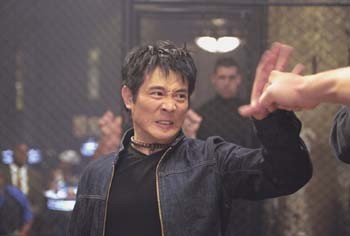
‘Happy Times’

0

Heartbreak Hotel

Poignant ‘Happy Times’ is sweetly understated

By Sara Bir

A lonely older man longing for companionship, a wicked stepmother, a blind girl–Happy Times has all the elements of a melodrama, the kind of setup that network executives would deploy in a Hallmark Presents television special. But director Zhang Yimou’s latest is so sweet and understated that Happy Times comes across instead as a tenderly constructed, bittersweet comedy.

An aging bachelor of little means, Zhao (Zhao Benshan) is so desperate to get married that it’s more pathetic than endearing, as he woos widows only to be promptly dumped. His latest potential bride is a plump, milky divorcée (Dong Lihua) who sweet-talks him into financing an elaborate wedding that he can’t afford.

To make some money, Zhao fixes up an abandoned bus to rent out by the hour to young lovers, and thus the Happy Times Hotel is born. Zhao is too stodgy to allow his customers to enjoy themselves undisturbed, though, and the “hotel” does not wind up generating any money.

Visiting the woman Zhao optimistically calls his fiancée, he meets her fat, bratty son and teenage stepdaughter Wu (Dong Jie), who is blind. Birdlike and quiet, Wu’s presence in the household is ignored. After Zhao brags to his fiancée about his high-profit luxury “hotels,” she demands that he give Wu a job to get her out of the house. As he’s bringing Wu to the Happy Times Hotel, however, he finds his bus being hauled off to the dump.

So Zhao lies and says that the hotel is closed for renovations. He brings Wu back to her stepmother, who again insists that Zhao give Wu a job and points out that Wu is an excellent masseuse. At a loss, Zhao concedes, saying he will employ Wu in another of his hotels.

Zhao consults with his friends, who contend that since Wu is blind, Zhao can easily trick her. They construct a mock massage room in the corner of an abandoned warehouse. His friends all line up to receive massage after massage, tipping Wu with Zhao’s money.

Wu’s on to this, but she doesn’t say anything. As the days pass, her initial resentment toward Zhao turns to affection, especially after Zhao warms up to Wu’s naive charm.

Zhao begins to realize that his fiancée is not what he’d hoped she was. His fake massage parlor scheme is not bringing him any closer to a wedding–and Wu can’t keep up her charade much longer. Everything unravels.

Set in modern urban China, Happy Times takes this Billy Wilderesque setup and humanizes it, letting its characters’ flaws guide the movie. Dong Jie’s Wu never comes across as too precious or too blind; rather than marvel at how convincingly she portrays a blind girl, we simply accept that Wu is blind.

Trained as a dancer, Jie’s movements and mannerisms–her fidgeting, the way she tilts her head close to objects she’s holding, the tiny smile she gradually allows to emerge–reveal more about Wu than any of her lines do. As Zhao, Benshan paints a lovable buffoon whose endless little schemes only serve to bring on more woes.

Zhang Yimou departs from the bleakness of his earlier films, such as 1991’s Raise the Red Lantern, with subtle comic moments and a bright look that dances with splashes of color. He keeps both the humor and the drama from going over the top so that Happy Times stays believable even it when it’s chasing sentimentality. This is a heartfelt movie whose simplicity and earnestness contrast nicely to the rest of summer’s overblown movie crop.

‘Happy Times’ opens at the Rafael Film Center on Friday, Aug. 16.

From the August 15-21, 2002 issue of the North Bay Bohemian.

© Metro Publishing Inc.
Cotati Accordion Festival

The New Face of the Accordion: Musician Mark Growden wields his accordion with the respect it deserves. Photograph by Alcina Horstman Pump and Squeeze Leave your knickers and your kitsch at home --accordion players take over Cotati By Jeff Chorney That the accordion is no...

‘Simone’

Real Enough to Touch: The mysterious Simone is a director's dream: no tantrums or outrageous demands. Idol Worship Al Pacino finds his Galatea in 'Simone' By Lately Al Pacino has been responding less and less to his fellow actors; that flickering, lizardlike gaze is clouding up. Pacino is better...

Pearl’s Home Style Cooking

Look, No Hands: Pearl's owner, Sylvia Park, pours on the creamy goodness. Pearl Jam Pearl's Home Style Cooking, where the world is not your oyster By Sara Bir Before we get too far into this story, I need to say that I bruised my tailbone when I fell...

Burning Man

B-Man Bylaws The million commandments of radical self-expression By Gretchen Giles "Please keep in mind that you are responsible for yourself at all times in every regard once you enter Black Rock City. . . . Everyone is requested to help ensure our collective survival by following very simple rules relating...

Fall Arts

It's the Season: As a new season blows into town, Ned Kahn's sculptures (shown here:'Wind Cube'), on display at SMOVA, reflect the changing winds. Falling . . . A season's worth of arts and entertainment By Davina Baum and Sara Bir Ahh, fall. It makes you...

Michelle Shocked

'Chelle Shocked Singer-songwriter still doing it her way By Greg Cahill In his newly launched crusade against the oppression of the major labels, Michael Jackson--the self-proclaimed King of Pop and one of the most pampered artists in the recording industry--has spent a lot of time of late crying that he's getting...

Back to School

Going for the Goal It's 10:30, and your child knows exactly where she is By Gretchen Giles Daniel is a very healthy 15-year-old Petaluma High School student who fully expects to contract adult diabetes at age 42. Don't be alarmed: He plans to triumph over the disease by age 47....

Yurts

Yurt Place or Mine Nomads for the new millennium By Nick Williams I first encountered the Central Asian structure known as the yurt (ger in Mongolian) while visiting Kazakhstan 12 years ago. Stooping to enter through the carved and painted wooden door, the dimly lit interior was pungent with the odors...

Ray Charles

In Praise of Brother Ray Ray Charles marks a milestone By Greg Cahill Forty years ago, America embraced the blindness and the blackness. Ray Charles was already well known to R&B fans and some white listeners in 1962, thanks to "Hit the Road Jack" and "Georgia on My Mind." But...

‘Happy Times’

Heartbreak Hotel Poignant 'Happy Times' is sweetly understated By Sara Bir A lonely older man longing for companionship, a wicked stepmother, a blind girl--Happy Times has all the elements of a melodrama, the kind of setup that network executives would deploy in a Hallmark Presents television special. But director Zhang...
11,084FansLike
4,446FollowersFollow
6,928FollowersFollow


